European hydrogen programs: from Hydrogen Manifesto to Clean Energy Act

Want to learn more on this subject?

This webinar covers the main trends in the European landscape of hydrogen technology, from roadmaps and charted political commitments, to research and development, and deployment and implementation in the economic fabric of society. The European Council (EC) summer session of 2021 decided to end support for new natural gas and oil projects, and to introduce mandatory sustainability criteria for all current and future projects sponsored by the EC (and by virtue of subsequent preparation through individual states’ legislations by the entire European Union).

EC established a transitional period until the end of 2029, during which “grey” hydrogen derived from natural gas can still be used. For this limited period of eight years, transporting or storing a blend of hydrogen with natural gas or biomethane is allowed.

The speakers review a list of envisioned strategic projects that will be deployed to demonstrate how, by the end of this transitional period, these hydrogen/gas blends will be replaced with clean hydrogen, and by this, natural gas will be dislodged from the EU member states’ economies. This policy clearly supports currently standing EU policies for ending the extraction and use of coal across member states by 2030. This drive towards “green” hydrogen is a hallmark of the EU hydrogen strategy. By proposing the development of a dedicated hydrogen grid and creation of multiple hydrogen clusters across the EU, the EC aims to create a hydrogen market for Europe and hence to help the EU meet its commitment to carbon neutrality in 2050.

Want to learn more on this subject?


Plamen Atanassov

Plamen Atanassov is a Chancellor’s Professor with the Department of Chemical and Biomolecular Engineering at the University of California Irvine (UCI). He holds secondary appointments in materials science and engineering, and chemistry. Dr Atanassov is building a PhD programme in electrochemistry at UCI.

Vito Di Noto

Vito Di Noto is a professor of electrochemistry for energy and solid-state chemistry in the Department of Industrial Engineering at the Università degli Studi di Padova (UNIPD). He is head of the Section of Chemistry for Technology in the same department and founder and team leader of the research group, Chemistry of Materials for the Metamorphosis and the Storage of Energy – CheMaMSE. Prof. Di Noto has more than 30 years of experience in the research and development activities of advanced functional materials for electrochemical energy conversion and storage devices, including ion-exchange membrane fuel cells, and primary and secondary batteries running on alkaline and alkaline-earth elements.

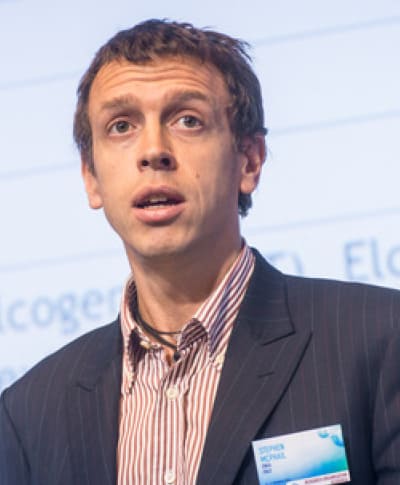
Stephen McPhail

Stephen J McPhail is co-ordinator of the Joint Programme on Fuel Cells and Hydrogen at the European Energy Research Alliance (EERA), and a researcher at ENEA (the Italian national agency for new technologies, energy and sustainable economic development). He serves as the Italian representative to the IEA Energy Technology Network’s Technical Collaboration Programme on Advanced Fuel Cells, and in the International Electrotechnical Commission TC 105. His research focuses on high-temperature fuel cells and electrolysers, cell and system characterization.


Complex numbers are essential in quantum theory, experiments reveal

Complex numbers are essential to achieve the most accurate quantum-mechanical description of nature, according to experiments done by two independent teams of physicists. Both studies were inspired by the Bell’s inequality test of quantum theory and suggest that complex numbers are more than just a mathematical convenience when it comes to the formulation of quantum mechanics.

A complex number comprises a real number plus an imaginary number, which is a multiple of the square root of -1. While the mathematics of complex numbers underlies modern quantum theory, it is also possible to describe the quantum world purely in terms of real numbers. As a result, it had not been clear whether complex numbers play a crucial role in quantum theory, or if they are simply a useful tool.

Until recently, this had been a philosophical debate, but now two independent teams of physicists have devised two separate experiments to test the importance of complex numbers for quantum theory. One team was led by researchers at the Institute for Quantum Optics and Quantum Information (IQOQI) in Vienna, Austria and the Southern University of Science and Technology in China; and the other team by scientists at the University of Science and Technology of China (USTC).

Quantum operations

Each experiment implemented a series of quantum-information operations, manipulating light or a superconducting quantum bit (qubit). In both cases the outcomes of these operations were shown to be impossible to predict accurately by real-number quantum theory.

Miguel Navascués at IQOQI and a co-author of a paper describing one the experiments and the theoretical work that inspired it, draws an analogy between his team’s efforts and the way Bell inequalities, introduced by CERN’s John Bell in 1964, had been used to establish the necessity of quantum physics itself. In a Bell test, scientists can conduct an experiment, calculate a number based on its outcomes and use a Bell inequality to determine whether classical or quantum theory provided the best model of the experiment. Quantum theory always won, and Bell’s work has since had a profound influence on the burgeoning field of quantum information.

“No matter how clever you are or what complicated classical models you come up with, they can’t accommodate the results of these experiments,” Navascués explains. He and collaborators set out to do the same for real-number quantum theory. “If you can conduct this experiment, then you will have refuted real-number quantum physics,” he emphasizes.

A more correct description

USTC’s Chao-Yang Lu, who is a co-author of a paper describing the other experiment adds, “[Our work] uses an inequality to quantitatively distinguish two alternative theories”.  As with Bell inequality experiments, he adds, their study clearly pinpoints the theory that is a more correct description of nature.

Paul Kwiat at the University of Illinois Urbana-Champaign, who is not a member of either team says, “I like that these experiments help clarify exactly how much of the [complex] quantum theory is necessary”. He adds, “It’s interesting to try and ask when we require complex numbers, because complex numbers themselves are kind of a weird thing.”

Both experiments started with a so-called “Bell game”. It included two “players” and a “referee”. Neither of the three was an actual person, but instead they were part of a complex measurement protocol. One player, Lu explains, is on “team complex quantum physics” while the other plays for “team real-valued quantum theory”.

“Black box” players

The theory that they play for determines the measurements they perform on qubits. “The players are sort of in a ‘black box’ and only make measurements on qubits that are sent to them,” Lu says. The referee calculates each player’s score based on the outcomes of their measurements, following specific mathematical rules originally proposed by Navascués and colleagues. “These scoring rules are designed to reveal differences between the two players,” emphasizes Lu.

In the USTC experiment, the Bell game took place in a superconducting quantum computer. It was played with qubits made of quantum states defined by the presence or absence of electric charge and the qubits were controlled by microwave pulses. The experiment done by Navascués and colleagues used a state-of-the-art photonic system instead. Here, players were encoded into a series of beam-splitters and waveplates that altered quantum information carried by photons, which are quantized bits of light.

Scores of both the photonic and the superconducting Bell game showed the complex quantum players “win” very dramatically. Indeed, the difference between real and complex players’ performance could get as high as 43 standard deviations.

Beyond mathematical hair-splitting

Implications of these Bell game experiments may go beyond heady philosophical questions about physical reality. Matthew Pusey at the UK’s University of York who was also not involved with the two studies explains that pitting real and complex quantum theory against each other goes beyond mathematical hair-splitting. Indeed, it could have concrete consequences for the field of quantum information, for instance in quantum key distribution – which is a cryptographic technique. “It’s surprising how much of what’s interesting about quantum theory from a quantum information point of view can be reproduced with real numbers,” he adds.

Navascués further underlines that the new work points to there being real advantages to developing protocols for quantum networks based on complex-valued, instead of real-valued, quantum theory.

Having shown that complex and real quantum physics can be definitively distinguished in light-based and superconductor-based settings, the researchers are now exploring more precise experiments in both systems. Lu and his colleagues, for example, are already working on a stricter test of real-valued quantum physics. In this case the qubits used in the Bell game are separated by a few hundred metres to rule out some potential loopholes. He hopes these experiments will further inspire physicists to examine questions such as the meaning of complex numbers – and to do so through experiments. He says, “We used to ‘shut up and calculate’, but now is a good time to rethink many foundational problems in quantum mechanics and test them with quantum computers”.

Theory of non-reciprocal flow could lead to new quantum devices

A new theory describing how energy and information could be made to flow in one direction around a cluster of three interacting quantum systems has been developed by Charles Downing at the University of Exeter and David Zueco at the University of Zaragoza. Their work could inspire the design of new nanoscale components for manipulating interactions between energy and matter.

The concept of reciprocity can be found throughout nature: from altruism in the animal kingdom, to Newton’s third law, in which every action must have an equal, opposite reaction. Sometimes this two-way flow can be broken, and this can lead to the development of useful components such as diodes – which only allow electrical currents to flow in one direction.

Today, condensed matter physics is seeing an explosion of interest in the fabrication of nanostructures that deliver non-reciprocity on molecular scales. These systems often exploit the laws of quantum mechanics and involve the use of metamaterials, which have revolutionized our control over interactions between light and matter.

Synthetic magnetic fields

In a landmark 2017 study, a team led by Pedram Roushan at the University of California, Santa Barbara (now at Google), created a triangular loop of three superconducting qubits around which photons could only circulate in one direction. In this quantum trimer, the direction of flow could be tuned using synthetic magnetic fields, which were generated by sinusoidally varying the strength of coupling between the three qubits.

Building on this work, Downing and Zueco have designed a more general theoretical description of a quantum trimer based on a triangular cluster of two-level quantum systems. These each exist in a superposition of two quantum states – and could be created in the lab from a wide variety of physical systems. These include superconducting qubits, ultracold atoms, and quantized plasma oscillations (plasmons) in metallic nanoparticles.

The duo showed that by adjusting the synthetic magnetic field, they could control the direction of the energy flow around the cluster. The setup allowed them to study the full range of excitations that are possible in their triangular cluster, rather than just a single excitation. They were also able to consider the pernicious effects of energy dissipation on non-reciprocal quantum currents.

Exotic states of matter

Their results pave the way for new experimental studies of nanoscale directional currents, which could lead to the development of new ways of controlling the flow of energy and information. The research could also lead to new studies of exotic states of matter that feature strongly interacting quantum systems.

“Our calculations provide insight into how one may instigate directional transport in closed nanoscopic lattices of atoms and photons with strong interactions, which may lead to the development of novel devices of a highly directional character,” says Downing.

The research is described in the Proceedings of the Royal Society A.

Hydrogen’s big shot: where we are and where we are going

Want to learn more on this subject?

Please forgive the pun, but the research and deployment world of hydrogen has exploded lately. Much like the 2010s were the decade of wind and solar, the 2020s are setting up to be the decade of hydrogen. It is no longer whether hydrogen will be part of a sustainable energy system solution, but rather how large a role hydrogen will play in a clean, sustainable energy system for the planet.

This webinar highlights the role of hydrogen in a clean energy system; and why it is such a unique and critical element enabling greater renewable energy use while permitting end-use applications to be performed more cleanly and efficiently – also referred to as the H2@Scale vision.

Also discussed is how this vision is being made economically more viable by shifting cost structures and environmental driving forces. One of the primary challenges for hydrogen has always been getting to scale which can enable economic parity/viability. The challenges in getting to a gigaton scale are presented. The Electrochemical Society has a special role in the hydrogen space due to the unique electrochemical characteristics of hydrogen, which are discussed in terms of areas of R&D needs within the hydrogen space.

Want to learn more on this subject?

Bryan Pivovar

Bryan Pivovar is senior research fellow and electrochemical engineering and materials chemistry group manager in the Chemistry and Nanosciences Center at the National Renewable Energy Laboratory (NREL) where he oversees electrolysis and fuel cell and materials R&D. A pioneer in several areas of fuel cell development, he took on leadership roles and organized workshops in the areas of subfreezing effects, alkaline membrane fuel cells (2006, 2011, 2016 and 2019), and renewable hydrogen at the gigaton scale (2019). Pivovar was recently named director of a major US Department of Energy Consortium (minimum of $50m over five years), H2NEW (Hydrogen [H2] from Next-generation Electrolyzers of Water). The consortium focuses on addressing components, materials integration and manufacturing R&D to enable manufacturable electrolyzers that meet required cost, durability and performance targets simultaneously, in order to enable $2/kg hydrogen.

He received his PhD in chemical engineering from the University of Minnesota. Prior to joining NREL, he led fuel cell R&D at Los Alamos National Laboratory. The co-author of more than 150 papers with more than 10,000 citations in the general area of fuel cells and electrolysis, he received the 2021 ECS Energy Technology Division Research Award and 2012 ECS Tobias Young Investigator Award.


The James Webb Space Telescope blazes towards science operations

Described as the successor to Hubble, the $10bn James Webb Space Telescope (JWST) is set to revolutionise astronomy. Among its science goals JWST will explore the atmospheres of exoplanets and peer deep into the history of the universe – we might glimpse some of the earliest galaxies after the Big Bang.

This short video introduces the JWST mission and the next steps before science operations can begin in mid 2022. Since launch on 25 December, NASA engineers successfully deployed a tennis court-sized solar shield, before the scope’s 6.5 metre primary mirror was unfolded without issues at the weekend.

Find out more about the JWST mission in this feature article by Keith Cooper, originally published in the January issue of Physics World.

Studying physics to improve healthcare systems

Suman Shrestha is a PhD student in medical physics at the University of Texas MD Anderson Cancer Center. He is originally from Nepal, where he studied for bachelor’s and Master’s degrees in physics at Tribhuvan University in Kathmandu. In 2015 Shrestha made the move from Nepal to the US to follow his interests in medical physics.

What first sparked your interest in physics and science?

My interest in physics and science developed gradually rather than due to a single event. I was a good student at school, and it was a general expectation of family and teachers in Nepal that top students will go into a scientific field. In the Nepali education system, you tend to specialize as soon as you start high school. If you’re interested in getting into medical school, you choose the biology track. If you’re more interested in understanding how the world works, you choose the physics track. I chose physics.

When you began your physics studies, was there a particular area you were most interested in going into?

During my adolescence, I had an interest in physical sciences and theories, and physical principles made sense to me. Clarity in terms of what specific sub-field I wanted to pursue came much later. I majored in physics during my undergraduate degree with a minor in chemistry and mathematics. By that time, I had had several run-ins with the inadequacy of medical facilities in Nepal, and many of these involved personal hardships and losses. As a physics student, I started looking for opportunities to make a difference in that area. But I had not identified a specific path to follow.

After your bachelor’s degree, you studied for an MSc in physics. What did that involve?

This was around 2010 and only about 120 students were chosen annually to study for an MSc in physics at Tribhuvan University. Students were selected based on an entrance test, with around 1500–2000 students competing for those 120 places. You had to be above the 95th percentile to have a chance of success. I still remember the joy that I felt when I made the merit list on my first attempt. That was a major milestone in my academic career because it meant that I would train with the best professors and the brightest colleagues. In terms of training infrastructure and international exposure, this was the best my country Nepal could offer. It was a tough three years of intense study, but that experience laid a strong foundation on which all my follow-up achievements rest. In 2013 I graduated with a double specialization in advanced solid-state physics and biomedical physics.

What made you decide to then do a Master’s degree in medical physics?

The medical and biomedical physics training that I did during my first Master’s was mostly theoretical except for a few laboratory experiments involving radioactivity. There were no advanced medical-physics degree options available. Also, the practical and clinical training opportunities were almost non-existent for a pure physics student. This level of training was not enough to help me make a substantial impact on the healthcare system, so after graduation, I had plans to pursue a PhD in medical physics. I started preparing for the Graduate Record Examination and Test of English as a Foreign Language, which are required for many postgraduate applications abroad. And during that time, I worked as a physics lecturer at the National Institute of Science and Technology, acquiring experience in teaching and advising undergraduate students.

How did you decide which specific course to enrol on?

In 2015 I had a few admissions offers for Master’s and PhD courses, and I later accepted the fully-funded offer from Louisiana State University (LSU) to do a Master’s. That offer was timely and life changing. In April 2015, when the application decisions were rolling out, one of the most catastrophic earthquakes struck Nepal, taking about 9000 lives and injuring 23,000 more. There was chaos everywhere, and the few hospitals that were left standing were overrun with patients. We did have some outstanding healthcare professionals and volunteers and students stepped up to the plate, but the inadequacy of medical facilities was clear. We lost some of the best and the brightest in that disaster. I was lucky enough to survive and be in a position to make a difference. So, with strong determination to make this life count, I left my home and came to the US to pursue my Master’s in medical physics.

What was it like moving to another country to study for your Master’s?

It was an adventure that I had dreamed of and worked towards for such a long time. I was excited about the future, but sad that I was leaving my home and my home country. It took about 52 hours for me to get from Kathmandu, Nepal to Louisiana, involving four different flights and long layovers. The first few weeks of the transition were tough, getting used to the new place and climate. It was very humid and hot. Staying on top of all the paperwork was not easy, but after starting classes I got to know amazingly compassionate people, outstanding scientists and great friends. I could not have asked for a better environment and it did not take long for LSU to become my home away from home.

During this time, you also had six months of clinical experience at Mary Bird Perkins Cancer Center in Louisiana. How did you find that opportunity and what did it involve?

During my Master’s in physics back home, I had tried to get clinical experience. I went to various diagnostic centres and hospitals and asked to shadow medical professionals. I was interviewed by administrators, engineers and vice-presidents of hospital organizations, but nothing seemed to work. I consider myself extremely lucky that I joined the medical-physics programme at LSU because on top of outstanding didactic and research training, LSU also has a clinical rotation experience for about six months embedded in the programme. You get a second office in a clinic where you rotate from one service to another.

I trained at the Mary Bird Perkins Center at Baton Rouge, its multiple satellite facilities and Pennington Biomedical Center. The level of immersion and training was just outstanding. It helped bolster my understanding of medical physics and also helped me integrate into the clinical environment and hospital culture.

Now you’re studying for your PhD at MD Anderson. What does your PhD project involve?

I work in the Late Effects Research Laboratory led by Rebecca Howell. The primary focus of our research group is the effects that can occur later in a patient’s life due to previous radiation therapy. We want to define the relationship between radiation dose to specific organs and late effects of these treatments in childhood cancer survivors. Then we want to work out how to minimize long-term effects of radiotherapy, particularly for children, who have their whole life ahead of them.

We want to work out how to minimize long-term effects of radiotherapy, particularly for children, who have their whole life ahead of them

I personally focus on developing models to predict the risk of radiation therapy-related late cardiovascular disease. We’ve made significant progress over the past few years. We developed and validated an age-scalable cardiac model that can be used to create dose-response models for the risk of late cardiac disease in childhood cancer survivors. This is the first time that we have that for late effects research.

I gather you already have a postdoc lined up. What will that project involve?

It will involve the clinical implementation of my PhD work. We have plans to integrate the risk-prediction models into existing treatment planning systems and establish their use via computational studies of current patients. Integrating these models into treatment planning systems through coding or scripting will make them readily available, and we plan to publish these scripts so that any centre around the globe can implement and use these tools. The idea is to develop the necessary clinical translation tools for a prospective clinical trial to reduce CVDs or cardiovascular disease in childhood and adolescent cancer survivors. For a newly diagnosed child, validated risk prediction models can be applied to optimize their radiotherapy plans and personalize their risk counselling based on treatment exposure and modifiable risk factors.

Looking further into the future, do you plan to stay in medical physics?

Yes. My goal is to become an independent researcher, a licensed medical physicist and, in the long run, a tenured professor. I plan to have my own research lab and students in the future. In addition, I’m also interested in improving healthcare in lower and middle-income countries. Later in my career, I want to establish research centres in Nepal with international collaboration so that future students can get the necessary training. I’m well aware of problems that one might face while attempting to institutionalize research in a country like Nepal, but I believe with excellent university education, perseverance and collaboration with well-resourced health centres, I will be successful in building a platform for the next generation.

For now, do you have any advice for current undergraduates in physics?

I’m an average student from a public school in Nepal who had big dreams. Now, I’m working towards my PhD while training with outstanding research scientists. It’s been a long journey with lots of ups and downs, failures and successes. I actually have even bigger dreams, bigger goals, and there’s a long way to go. I’m proud of where I am and hopeful for what the future holds.

My advice for current students is that if it’s possible for me, it should be possible for you as well. Your dream is likely to be different from mine, but if you persist and work towards it diligently, it can come true. It won’t be easy, but your hard work will be worth it.

I would also tell undergraduates that there are many hyper-competent and successful people in the world, and they enjoy finding promising young people and opening doors for them. Your job is to work hard and approach these people. My journey has been filled with so many mentors and my successes thus far would not have been possible without them.

My other tip would be to work on your communication skills. There is almost nothing more powerful than someone who can articulate their thoughts well. I’m still working on that and I will try to improve it over the next few years and throughout my life.


Droplets bounce off each other in new triple Leidenfrost effect

A new type of Leidenfrost effect that causes droplets of different liquids to bounce off each other when placed on a hot surface has been discovered by researchers in Mexico and France. Led by Felipe Pacheco-Vázquez at the Autonomous University of Puebla, the team found that this behaviour stems from the three simultaneous points of contact between the two droplets and the surface – creating what the team has called a triple Leidenfrost effect.

When a liquid droplet is placed on a sufficiently hot surface, its evaporation creates a cushion of vapour that separates it from the surface – causing the droplet to levitate. Known as the Leidenfrost effect, this levitation both hinders the evaporation of the droplet and allows it to glide across the surface with little friction. Although this effect has been known for centuries, physicists are still making surprising discoveries about how levitating droplets behave in certain scenarios.

In their study, Pacheco-Vázquez’s team looked at what happens when a series of droplets are placed on a hot, slightly concave surface, where the droplets naturally gravitate towards the lowest point in the centre. When water droplets were used, the researchers saw that they coalesced almost immediately on contact with each other: quickly merging into a single, large droplet. But when water droplets and ethanol droplets were used, the team found that different types of droplets bounced off each other several times, before eventually coalescing.

Three vapour layers

To explain this behaviour, the researchers considered the three separate vapour layers involved in the process. These layers are found beneath each droplet, and between the two droplets as they make contact. This third layer forms due to the difference in boiling temperatures between the two droplets: causing the hotter droplet (water in this case) to act as a surface on which ethanol, with its lower boiling point, will evaporate. This generates a second layer of ethanol vapour which prevents the two liquids from coalescing – and the droplets will bounce away from each other.

Eventually, the faster-evaporating ethanol droplet reaches a size similar to the capillary length, which is related to the density difference between the two liquids, and the surface tension at their interface. At this point, the ethanol can no longer produce enough vapour to withstand its attraction to water, and the liquids finally merge together.

The team repeated this experiment using 10 different types of liquid. As predicted by their new theory, they observed the same bouncing behaviour for droplets with widely differing boiling points. In cases where boiling points were more closely matched, the droplets coalesced without any bouncing.

In reference to the three vapour layers involved in the process, the researchers have dubbed it the triple Leidenfrost effect. They now hope that their theories could open up new applications in microfluidics: including a better understanding of how fuel droplets interact with each other in overheated engines.

The research is described in Physical Review Letters.

Automated radiotherapy planning: a deep transfer learning approach

Another challenging cancer site – another difficult radiation treatment to plan. Scientists at Duke University Medical Center and UNC Charlotte have developed a deep transfer learning model that automates radiotherapy planning for some of these tricky-to-plan cancers. They published their methods in Physics in Medicine & Biology.

Why transfer learning?

Wentao Wang, a medical physics resident at Duke University Medical Center, was a PhD student when much of this research was performed, under the guidance of Jackie Wu. Wang’s deep transfer learning model automatically creates intensity-modulated radiation therapy (IMRT) plans for adrenal stereotactic body radiation therapy (SBRT) cases using user-provided contours and dose constraints.

To avoid having to collect large amounts of high-quality data – something that’s not often available for treatment sites like the adrenal glands – before developing a model, Wang turned to transfer learning. Transfer learning decreases the number of cases and time needed to train a deep learning model by taking knowledge from a model that was trained on a large dataset and applying it to a different, yet related, dataset.

The deep transfer learning model was first trained on pancreas treatment plans. It then applies what it learned to the adrenal cancer cases. Both pancreatic and adrenal cancers must be planned carefully, sparing gastrointestinal organs that are sensitive to radiation. And because pancreatic and adrenal cancers are treated using different beam angles, beam settings and dose constraints, any deep transfer learning model must consider dose prescription differences and learned beam-to-beam interactions.

Wang uses two convolutional neural networks (CNNs) to directly generate fluence maps from patient geometry. The first CNN predicts the dose for every IMRT beam. The resulting beam dose volume is projected onto a 2D dose map that’s then used as the input for the second CNN. This second network predicts the fluence map for every IMRT beam, bypassing inverse optimization, a process that can lengthen manual planning times by hours or more. The fluence map can then be imported into the treatment planning system for multileaf collimator sequencing and final dose calculation.

“This study demonstrated the feasibility of using transfer learning to train deep learning models to create IMRT plans for adrenal SBRT,” Wang says. “It demonstrates that powerful deep learning tools such as transfer learning enable highly efficient learning with sparsely available clinical data.”

Evaluating the deep transfer learning model

Wang and the rest of the team used high-quality IMRT plans to train the deep transfer learning model. Their base framework included 100 pancreas cases. Training, validation and testing of the transfer learning model was performed using 45 adrenal plans. Contours were drawn by dosimetrists and physicians. Final, optimized plans were made using the Eclipse treatment planning system, but the deep learning models, which were written in Python, can interface with any commercial treatment planning system.

The scientists’ deep transfer learning model generated plans in less than one minute. The team evaluated each plan by comparing dosimetric endpoints from plans created with the model to those from manually generated clinical plans. Results showed that the deep transfer learning plans produced plan quality scores approaching 80–90% of those from the clinical plans.

One disadvantage of the approach is that the deep transfer learning model was designed for IMRT cases with fixed gantry angles, while clinical plans at Duke often use a radiation therapy technique called volumetric modulated arc therapy (VMAT). In contrast to IMRT, VMAT delivers radiation dose continuously as the treatment machine rotates.

“For some challenging cases, the predicted plan could have slightly inferior plan quality compared to manually generated plans,” Wang says.

Yang Sheng, a medical physicist at Duke University Medical Center and another author on the study, notes that the deep transfer learning model can be a guide for dosimetrists and help them obtain optimal plans more quickly.

“With the power of deep learning, we are capable of processing dose image data of much higher capacity than dose-volume histograms, which allows us to predict a machine delivery parameter, aka the fluence map,” Sheng explains.

“We can still manually tune the deep learning plans with inverse optimization starting from the deep learning plans,” Wang adds. “In the future, we expect to improve the model performance so that the deep learning plans would be able to replace manual planning.”

The scientists emphasize that their approach isn’t meant to replace dosimetrists and physicists, and final decision-making rests with the care team. This application of transfer learning could be used to adapt the model at institutions with different dose preferences, planning styles and more, they say. First, though, they are analysing their model to better understand its optimal configurations and limitations.

NASA successfully deploys landmark James Webb Space Telescope

NASA has successfully installed the primary mirror of the $10bn James Webb Space Telescope (JWST) – marking a significant step towards a fully functioning infrared observatory. Over the weekend of 8 and 9 January, engineers unfolded the 6.5 m primary mirror, which is made up of 18 hexagonal segments. Over the coming weeks, the telescope will carry out further orbital manoeuvres, with engineers carefully aligning each mirror segment as well preparing the scientific instruments to become operational.

More than two decades in the making, the JWST was launched on 25 December aboard an Ariane 5 rocket from the European Spaceport located near Kourou, French Guiana. It then began making its way to Lagrange point L2 – a point in space some 1.5 million kilometres away from the Earth in the exact opposite direction from the Sun.

The successful completion of all of the Webb Space Telescope’s deployments is historic

Gregory Robinson, NASA’s JWST programme director

For many space probes, launch is the most dangerous part of the mission. Yet for the JWST, it had to survive a series of hazardous deep-space unpacking manoeuvres, which involved unfolding its 6.5 m primary mirror as well as unfurling its tennis-court-sized sunshield. Any issue with the 344 “single-point” failures could hamper the observatory’s mission, or worse, make it unusable.

A day following launch, the JWST deployed its antenna assembly, which will be used to send some 29 Gbytes of data to Earth. The observatory then carried out several orbital corrections to fine-tune its trajectory to L2. Those steps, along with the precision of the launch, went better than expected with officials noting that the fuel saved from the burn should allow the observatory to operate for “significantly more than a 10-year science lifetime,” possibly for as long as two decades.

Coming out of its shell

The first unpacking of the telescope began on 28 December with the front and back sunshield pallets that hold the five layers of sunshield. Measuring 21 m × 14 m, the sunshield is crucial to protect the telescope’s scientific instruments and mirrors from the Sun, which need to operate at temperatures of around –233 °C.

Following the removal of the sunshield covers that protected the sunshield as it was folded for launch, on 1 January engineers began to deploy the two “mid-booms”, or arms, at either side of the telescope that pulls out the five sunshield layers.

After a pause to check the status of the JWST, tensioning those layers individually began on 3 January and was successfully completed a day later. At that point over 75% of the 344 single-point failures had been met.

“Unfolding Webb’s sunshield in space is an incredible milestone, crucial to the success of the mission,” noted Gregory Robinson, NASA’s JWST programme director in a statement. “Thousands of parts had to work with precision for this marvel of engineering to fully unfurl.”

Artist's conception of the James Webb Space Telescope

With the sunshield in place, engineers then turned their attention to the telescope’s secondary and primary mirrors. Deployment of the tripod support structure for the secondary mirror was complete by 5 January. The secondary mirror is supported by three lightweight deployable struts that are each about 7.5 m long and had to unfold and then latch into position.

“[The JWST’s] secondary mirror had to deploy in microgravity, and in extremely cold temperatures, and it ultimately had to work the first time without error,” notes Lee Feinberg from NASA’s Goddard Space Flight Center, who is JWST’s optical telescope element manager. “It also had to deploy, position and lock itself into place to a tolerance of about one and a half millimetres, and then it has to stay extremely stable while the telescope points to different places in the sky.”

The [JWST] is an unprecedented mission that is on the precipice of seeing the light from the first galaxies and discovering the mysteries of our universe

NASA administrator Bill Nelson

Over the weekend, engineers then fixed into place the two “wings” of the JWST’s primary mirror. They were folded back to fit in the rocket and both wings – each consisting of three hexagonal segments – had to rotate into place and be latched onto the main mirror segment. Work on installing the left, or port, side began on 7 January then a day later the right side of the mirror was successfully latched into place.

“The successful completion of all of the Webb Space Telescope’s deployments is historic,” noted Robinson. “This is the first time a NASA-led mission has ever attempted to complete a complex sequence to unfold an observatory in space – a remarkable feat for our team.”

First light

NASA will now carry out a further orbital correction, warm some of the electronic systems and initialize the flight software. The ground team will command 126 actuators on the rear side of the segmented mirrors into position and flex each mirror – an alignment process that will take months to complete. Then the four main scientific instruments, which include spectrographs, imagers and infrared cameras, will be calibrated.

First images from the JWST are expected in June when it will begin its science mission and conduct routine operations. If all goes well during the final stages of alignment and instrument commissioning, then the JWST could revolutionize astronomy by peering back some 300 million years after the Big Bang when some of the first galaxies existed. It will also probe the atmospheres of the planets as they pass between the telescope and their parent stars.

“The [JWST] is an unprecedented mission that is on the precipice of seeing the light from the first galaxies and discovering the mysteries of our universe,” NASA administrator Bill Nelson noted. “Each feat already achieved and future accomplishment is a testament to the thousands of innovators who poured their life’s passion into this mission.”

“We are thrilled that the complex telescope unfolding worked successfully. Now we hold our breath for the optics alignment, the instrument commissioning, and finally the fascinating first science results,” says Günther Hasinger, director of science at European Space Agency, which along with the Canadian Space Agency has provided key components of the JWST.

Electron’s wave nature constructed in the lab at last

Researchers at the University of California at Santa Barbara in the US have reconstructed a representation of the electron’s wave nature – its Bloch wavefunction – in a laboratory experiment for the first time. The work could have applications in the design and development of next-generation electronic and optoelectronic devices.

Like all matter, electrons behave as both particles and waves. One of the main goals of condensed-matter physics is to understand how the wavelike motion of electrons through periodically-arranged atoms give rise to the electronic and optical properties of crystalline materials. Having such an understanding is especially important when designing devices that take advantage of the electron’s wavelike nature, explains Joseph Costello, who co-led the UC Santa Barbara team together with Seamus O’Hara, Mark Sherwin and Qile Wu.

The electron’s wavelike motion is described mathematically by a so-called Bloch wavefunction. Named after the 20th-century physicist Felix Bloch, who was the first to describe the behaviour of electrons in crystalline solids, these wavefunctions are complex – that is, they have both real and imaginary components. For this reason, the value of an electron’s Bloch wavefunction cannot be measured directly.

Heavy and light holes

Certain physical properties related to the wavefunction can, however, be observed. The UC Santa Barbara team exploited this fact to calculate a system’s Bloch wavefunction from these observable properties.

To do this, the researchers used a powerful free-electron laser to create an oscillating electric field within a semiconductor, gallium arsenide (GaAs), while simultaneously using a low-intensity infrared laser to excite its electrons. Whenever an electron is excited, it leaves behind a positively charged “hole”. In GaAs, Sherwin explains that these holes come in two varieties, heavy and light, that behave like particles with different masses.

The team found that if they created electrons and holes at the right time relative to the oscillations of the electric field, the components of these quasiparticle pairs (known collectively as excitons) would accelerate away from each other, slow down, stop, and then accelerate towards each other before colliding and recombining. At the point of recombination, they emit a pulse of light, known as a sideband, with a certain characteristic energy. This sideband emission contains information about the wavefunctions of the electrons, including their phases – that is, the degree to which the waves are offset from each other.

Because the light and heavy holes accelerate at different rates in the electric field, their respective Bloch wavefunctions acquire different quantum phases before they recombine with the electrons. Thanks to this phase difference, their wavefunctions interfere to produce the final emission, which can then be measured. The interference also determines the polarization of the final sideband, which can be either circular or elliptical (even though the polarization of both lasers is linear to start with).

One free parameter

According to Wu, this simple relation between interference and polarization connects fundamental quantum mechanical theory to a real-world experiment via a single free parameter, which is a number with a real value. This parameter fully describes the Bloch wavefunction of the hole they create in the GaAs, O’Hara adds. “We can acquire this parameter by measuring the sideband polarization and then reconstructing the wavefunctions, which vary based on the angle at which the hole propagates in the crystal,” he explains.

Before now, researchers have had to rely on theories with many poorly-known parameters, Sherwin adds. “So, if we can accurately reconstruct Bloch wavefunctions in a variety of materials, then that will inform the design and engineering of all kinds of useful and interesting things like lasers, detectors and even some quantum computing architectures,” he says.

The researchers, who report their work in Nature, note that they didn’t immediately realize that the sideband polarization was key to reconstructing the electron wavefunction. They say they would now like to apply their technique to different materials and to exotic quasiparticles other than excitons.

Copyright © 2026 by IOP Publishing Ltd and individual contributors