Using a technique known as strain engineering, researchers in the US and Germany have constructed an “excitonic wire” – a one-dimensional channel through which electron-hole pairs (excitons) can flow in a two-dimensional semiconductor like water through a pipe. The work could aid the development of a new generation of transistor-like devices.
In the study, a team led by Vinod Menon at the City College of New York (CCNY) Center for Discovery and Innovation and Alexey Chernikov at the Dresden University of Technology and the University of Regensburg in Germany deposited atomically thin 2D crystals of tungsten diselenide (fully encapsulated in another 2D material, hexagonal boride nitride) atop a 100 nm-thin nanowire. The presence of the nanowire created a small, elongated dent in the tungsten diselenide by slightly pulling apart the atoms in the 2D material and so inducing strain in it. According to the study’s lead authors, Florian Dimberger and Jonas Ziegler, this dent behaves for excitons much like a pipe does for water. Once trapped inside, they explain, the excitons are bound to move along the pipe.
Highly anisotropic exciton motion
To monitor the motion of the excitons, the researchers used a combination of techniques. In the first, known as transient microscopy, they used pulses of light to excite the hybrid 1D/2D structure and thus reveal the excitons’ location. The second technique, time-resolved luminescence, involved imaging the electron-hole pairs with a streak camera. In this way, they could observe exciton transport at both cryogenic temperatures and room temperature.
Their results showed that the excitons’ movement is highly anisotropic, occurring only along the direction of the channel. Indeed, the researchers determined the coefficient of exciton diffusion along the nanowire direction to be as high as 13.5 ± 1 cm2/s, corresponding to an effective exciton mobility at room temperature of 540 cm2/Vs. In contrast, exciton diffusion in the perpendicular direction, across the channel, dropped almost to zero.
Controlling excitons in other low-dimensional structures
The tungsten diselenide material used in this experiment is part of a family known as transition metal dichalcogenides (TMDCs). These layered van der Waals (vdW) materials have the chemical formula MX2, where M is a transition metal such as molybdenum or tungsten and X is a chalcogen such as sulphur, selenium or tellurium.
In their bulk form, TMDCs act as indirect band-gap semiconductors. When scaled down to monolayer thicknesses, however, they are direct band-gap semiconductors capable of absorbing and emitting light very efficiently. This property makes 2D TMDCs highly attractive building blocks for devices such as light-emitting diodes, lasers, photodetectors and solar cells. They could also be used to make circuits for low-power electronics and sensors. What is more, unlike bulk semiconductors, which are usually brittle, TMDCs can withstand in-plane strain as high as 11%, making them promising materials for flexible electronic devices and sensors for mechanical deformations.
Excitons in TMDCs are straightforward to create by exciting the material with light. They are also tightly bound and extremely stable, and unlike electrons they do not carry a charge. Being able to manipulate their movement is therefore an important step towards making devices from electrically neutral quasiparticles. Such devices could work at room temperature and might replace certain tasks performed by current transistor technology in a merger of optics and electronics, the researchers say.
The new platform, which is detailed in Science Advances, might also be used to control excitons in a wide range of other low-dimensional structures, they add. These include vdW heterostructures designed to host so-called Moiré-like excitations.
Truly 1D exciton motion
While their present work describes quasi-1D transport of excitons with near 100% anisotropy, the researchers suggest that the same approach could also be scaled down to obtain channel widths on the order of just tens of nanometres. Such narrow channels are expected to exhibit truly 1D exciton motion and could reveal quantum transport phenomena, such as Luttinger liquid behaviour or many-body localization effects.
Looking ahead, the team says it now plans to explore the ability of these excitonic channels to carry spin information. “This knowledge will be an important step for future circuits based on excitons instead of electrons,” Menon tells Physics World.
The Matterhorn, an Alpine peak that straddles the border between Switzerland and Italy, is one of the most iconic mountains in the world. Isolated at the head of the Zermatt Valley, climbing the perfectly shaped mountain, which has a summit height of 4470 m above sea level, is on the to-do list of thousands of climbers – and some physicists. In 2019, an international team of scientists set out to take a closer look at the Matterhorn and installed several seismometers at different locations to record its movement. They found that despite the Matterhorn appearing like a huge immovable mass, it is in fact constantly on the move, swaying gently back and forth about once every two seconds. The researchers say that this subtle vibration, with a fundamental frequency of 0.42 Hz, is stimulated by seismic energy in the Earth originating from oceans and earthquakes, as well as – rather surprisingly – human activity. The mountain’s motion is described in Earth and Planetary Science Letters.
What kind of propulsion system would make it possible to bridge the enormous distances between the stars? Ordinary rockets like those used to travel to the Moon or Mars won’t cut it, which has led to several speculative ideas for interstellar travel. One of which is the “Bussard collector” or “Ramjet propulsion” that was dreamt up in the 1960s by the US nuclear physicist Robert Bussard. It involves capturing protons in interstellar space and then using them for a nuclear fusion reactor.
Peter Schattschneider, a physicist at the Technical University of Vienna, and Albert Jackson from private firm Triton Systems LLC in the US, say that the basic principle of magnetic particle trapping does in fact work. They have shown that particles can be collected in the proposed magnetic field and guided into a fusion reactor. In theory, considerable acceleration can be achieved – up to relativistic speeds. But there is a big caveat. To achieve a thrust of 10 million Newtons – equivalent to twice the main propulsion of the Space Shuttle – the “magnetic funnel” to guide the particles would have to be about 150 million kilometres long – the distance between the Sun and the Earth. After half a century of hope for interstellar travel, the ramjet drive, alas, remains purely science fiction. You can read more in Acta Astronautica.
Gazing goldfish
Can a goldfish drive a car on land? Yes, according to researchers in Israel who have built a fish operated vehicle (or FOV) – essentially a fish tank on four wheels. The car moves according to the actions of the fish, which are captured by a camera. If the fish is at an edge of the tank and gazing outwards, the FOV moves in the direction of the fish’s gaze.
The FOV was placed in an arena with a large pink target that was visible to the fish. If the fish steered the vehicle to the target, it would receive a food pellet. As well as successfully manoeuvring the car to the target after a few days of training, the six goldfish tested were also able deal with changes within the arena that had the potential to confuse them.
“The study hints that navigational ability is universal rather than specific to the environment. Second, it shows that goldfish have the cognitive ability to learn a complex task in an environment completely unlike the one they evolved in. As anyone who has tried to learn how to ride a bike or to drive a car knows, it is challenging at first,” says Shachar Givon at Ben-Gurion University of the Negev. The research is described in Behavioural Brain Research and you can watch a video of a fish operating the FOV here.
One of the biggest challenges in tackling the climate crisis will be to clean up our transportation networks. Electric vehicles already offer a viable route to zero-emission road travel, but more innovation is needed to build better batteries that enable longer journeys and faster charging – and all within an affordable price tag. Meanwhile, hydrogen-powered fuel cells promise high-energy densities and rapid refuelling, and could offer an emission-free solution for heavy-duty transport such as commercial trucks and aviation, but the cost and durability of these systems remain major barriers to widespread market acceptance.
Those critical challenges will require inventive and practical solutions, which is why automotive manufacturer Toyota has teamed up with The Electrochemical Society (ECS) to award a series of research fellowships focused on the development of green-energy technologies that reduce both pollution and carbon emissions. Launched in 2015, the ECS Toyota Young Investigator Fellowship programme has so far awarded some $1.2m in research funding to 19 early-career academics, with each individual receiving at least $50,000 for a one-year research project. Applications for the 2022/23 fellowships are now open until 31 January 2022.
“The fellowship was a fantastic opportunity,” comments Elizabeth Biddinger of The City College of New York (CCNY), who was one of the first fellows to benefit from the scheme in 2016/17. “It kick-started my work on batteries, and what we learnt about electrolytes during that project has enabled me to participate in other major research programmes.” Biddinger is now a co-investigator in the NASA–CCNY Center for Advanced Batteries in Space, a $3m research grant awarded to CCNY in 2019 to study novel electrolytes in metal-anode batteries for use in extreme environmental conditions.
Biddinger also formed some useful collaborations during her fellowship year, not least with a new member of her own faculty who is now the lead investigator on the NASA project. “I enjoyed the experience of interacting with ECS and Toyota,” she says. “I was able to find out about Toyota’s research on novel batteries, and gain an understanding of the challenges and priorities not just for them but for the industry as a whole.”
Building stronger links between talented academics and major industry players is a key goal for the ECS. “The ECS Toyota Young Investigator Fellowships play a vital role in connecting the Electrochemical Society’s global community of renowned researchers, scientists and scholars with the industrial might of one of the world’s premier vehicle manufacturers,” comments Christopher J Jannuzzi, the executive director and CEO of the ECS. “We are proud to partner with the Toyota Research Institute of North America (TRINA) to ensure that the fellows’ brilliant research is properly funded and nurtured to foster sustainability solutions for all.”
That collaboration with Toyota has been particularly important for Christopher Arges at Pennsylvania State University, who is one of the current cohort of 2021/22 fellows. Arges plans to study high-temperature polymer electrolyte membrane fuel cells (HT-PEMFCs), which are an attractive alternative to low-temperature versions because they simplify heat management and cooling of the fuel-cell stack, as well as solving many challenges associated with water management – such as preventing electrode flooding. He hopes to re-engineer the ionomer binders, which hold together the porous electrode materials and shuttle protons to and from the electrocatalyst surfaces, with the overall aim of lowering the operating temperature of the HT-PEMFC from more than 200 °C to 120–160 °C.
Collaboration works: Christopher Arges (left), one of the current cohort of 2021/22 fellows, values the insight that scientists and engineers at Toyota have provided about the requirements for fuel cells in the automotive sector (Courtesy: C Arges)
“Toyota is a leader in fuel-cell technology for vehicles, and they have a lot more knowledge than I do about the requirements for fuel cells in the automotive sector,” comments Arges. “The scientists and engineers at Toyota have explained why this technology is important and what needs to be done, and their input has opened up a whole new dimension for our research.”
For Toyota, meanwhile, the fellowships provide direct access to novel ideas and approaches that they may not be able to pursue through their internal R&D programmes. “Toyota hopes to encourage young professors and scholars to pursue innovative research in sustainability while at the same time connecting these up-and-coming scientists with Toyota professionals,” comments Timothy Arthur, principal scientist at TRINA.
The scope of the fellowships is broadly aligned with the company’s strategic interests of batteries, fuel cells and hydrogen, and future sustainable technologies. However, fellowships have supported inventive ideas in related areas, and the scope is often updated to reflect changing priorities – with mitigation strategies such as carbon capture and conversion added in the last year or so. “Batteries, electrocatalysts, photovoltaics and fuel cells are key components for developing next-generation vehicles and devices to achieve carbon neutrality,” continues Arthur. “Electrochemistry lies at the fundamental core of these technologies, and other innovative and unconventional technologies will emerge from electrochemical research.”
Julie Renner at Case Western Reserve University in Cleveland, Ohio, is one fellow who has benefitted from Toyota’s willingness to explore more creative solutions. Before becoming an academic in 2016, Renner had worked at Proton OnSite, now called Nel Hydrogen, a company that manufactures membrane-electrode assemblies and electrolysers. As a result, she understood first-hand just how difficult it was to control the interactions at the interface between the catalyst and the polymer membrane. “I wanted to see if we could use biomolecules or bio-inspired materials to provide a scaffold that would help to control these interactions,” she explains. “Toyota appreciated the boldness of the proposal, and the fellowship provided the funding, motivation and support we needed to explore the concept in detail. By the end of the year we were able to show that it works.”
Creative thinking: Julie Renner exploited her previous industrial experience of manufacturing membrane-electrode assemblies to propose a novel bio-inspired approach to controlling the interactions between the catalyst and the polymer membrane. (Courtesy: J Renner)
Renner explains that the findings from the year-long project has continued to inform her ongoing research programme. “We found that we were lacking some fundamental knowledge about the interactions of proteins with surfaces,” she explains. “That has inspired several successful research proposals that will hopefully lead to better scaffolds for these electrochemical technologies in the future.”
Renner and Arges point out that the funding provided through the fellowship is enough to support a graduate student for duration of the project. “The fellowship is an investment in my research group, not only to address these global problems but also to train students,” says Arges. “Arguably the most important thing we can do is to provide students with the knowledge and problem-solving skills they need to tackle these challenges in the future.”
Indeed, the student who was working with Renner during her fellowship has now joined Owens Corning, a company that specializes in developing sustainable building materials. “She was always interested in industry, and it really motivated her to know that Toyota was interested in the research,” says Renner. “It was a great experience for her.”
As well as providing valuable funding, Renner says that winning an ECS Toyota Young Investigator Fellowship helps junior academics to raise their profile among the research community. “People know about this award,” she comments. “Being awarded the fellowship felt like a validation of my research, and it amplified my voice and my work at a really useful stage of my career. I have received more invitations to visit other institutions and present my work than I might have otherwise.”
For Biddinger, meanwhile, the fellowship offered an opportunity to get more involved with the ECS, and in 2021 she was invited to join the group of ECS and TRINA representatives who were charged with evaluating proposals for the 2021/22 fellowships. “It was humbling,” she says. “The diversity of thought and level of innovation in the proposals was really inspiring.” While the fellowship programme guarantees that one award is made each year, the quality of applications has been so outstanding that Toyota frequently provides funding for multiple awards. Last year five fellowships were awarded, the highest number so far. “It was tough to choose between the proposals, so it was nice to give out more awards,” says Biddinger.
Having served on the selection committee, Biddinger has some simple advice for any young researcher interested in sustainable energy technologies. “I would really encourage anyone who is eligible to apply, even if the research topic doesn’t fit the scope exactly,” she says. “The innovative topics can be very exciting to the committee and Toyota, it might just be something that hasn’t been thought about before.”
A new way of converting infrared light into visible wavelengths could make it possible to detect and measure mid-infrared signals using cheap and efficient sensors like those found in mobile-phone cameras. The method, which was developed independently by two teams of researchers, could have applications in areas as diverse as personalized medicine, environmental monitoring and security.
Although many molecules emit light in the infrared region of the electromagnetic spectrum, detecting these low-energy spectroscopic “signatures” usually requires expensive cryogenically cooled equipment. In contrast, detecting visible light is relatively straightforward – so much so that even a smartphone camera is good enough to have spectroscopic applications.
In the latest work, international collaborations led by Christophe Galland of the EPFL in Switzerland and Jeremy Baumberg of the University of Cambridge, UK, “upconverted” infrared light to visible wavelengths using optomechanical techniques. Both groups began by creating a nanocavity around 1 nm wide and placing a single layer of biphenyl-4-thiol (BPT) molecules within it. These molecules have a vibrational mode that is excited by mid-infrared (MIR) light, and the presence of the cavity facilitates strong light–matter interactions, creating plasmonic resonances that enhance and support both MIR and visible light.
The next step is to detect the vibrational mode by using a separate beam of visible light to perform Raman spectroscopy, which is an optical scattering technique that measures inelastically scattered photons. The energy of the vibrational mode is then measured directly from the frequency shift in the photons when they lose energy (Stokes shift) or gain energy (anti-Stokes shift) from the scattering. Finally, the strength of the MIR can be read out from the intensity of the anti-Stokes emission.
Nanocavity designs
The two teams’ techniques differ chiefly in the construction of their nanocavities and the nature of the lasers used to excite and detect the vibrational mode. Galland and colleagues created their nanocavity by placing a gold nanoparticle around 150 nm in diameter inside a groove that is etched in a gold film covered by a monolayer of BPT. The presence of the monolayer creates a 1 nm gap between the two gold surfaces that acts as a nanocavity. The infrared resonance frequency is governed by the length of the nanogroove and was chosen as 2 µm to match a vibrational mode of the BPT molecule. The EPFL team used a continuous wavelength laser with an input wavelength of 9.3 µm to excite the BPT, while focusing a second laser tuned to 740 nm onto the sample to measure the anti-Stokes shift.
Baumberg and colleagues, for their part, created their nanocavity using gold discs around 6 µm in diameter that had been deposited onto silicon wafers. The discs were then covered with the BPT monolayer and a gold nanosphere around 60 nm in diameter placed on top, again forming a 1 nm gap. To generate MIR light, the Cambridge team used a pulsed laser source with an adjustable wavelength of between 8 and 12 µm, tuned to match a vibrational mode of the BPT molecule. The team used a 785 nm laser source for Raman excitation and to collect anti-Stokes-shift spectral lines.
On a different wavelength
According to Galland, the two groups’ results demonstrate that combining mid-infrared excitation and Raman spectroscopy on the same nanocavity is a versatile technique, one that works on different nanocavity designs. The biggest difference, he says, is that the Cambridge team uses a pulsed light source, meaning that the peak power impinging on the nanocavity is significantly higher. From the data provided in the other team’s paper, which is published in the same issue of Science as the EPFL result, Galland says he finds it plausible that the upconversion process was not fully coherent, and that thermal effects could have contributed to it, which might reduce the range of applications. The tuneability of the pulsed laser does, however, make it possible to verify which molecular vibrations permit upconversion, which Galland says is an advantage.
In Baumberg’s view, both results represent a big contribution to the field and could lead to practical applications. “This is a very new way to detect mid-infrared light without having to cool detectors, which is what you normally need to do if detecting low-energy mid-infrared photons directly,” he says. However, he suggests that the lack of smooth surfaces in the EPFL team’s cavity could be a stumbling block. “This [uneven surface] traps light differently, and indeed such systems are harder to reproduce,” he explains. “We use nanoparticles on flat gold, and the strong van-der-Waals attraction of more than 200 atmospheres between the metal surfaces anneals the gold facets atomically flat. This helps us get extremely consistent results.”
A bright infrared future
In the future, Galland’s team plans to focus on increasing the number of molecules that contribute to the upconversion. In principle, improvements in conversion efficiency of many orders of magnitude are possible, he says, and the team is exploring several routes to achieve this. Another area of improvement would be to expand spectral coverage across the mid-infrared and down to the THz domain. “Together with chemists and theorists, we are identifying and designing molecules that support vibrational modes with the required properties for upconversion at lower frequencies (longer wavelengths),” he says. “We are also exploring different other designs for dual-resonance plasmonic cavities with improved characteristics and scalability.”
Baumberg’s team is currently focusing on developing better molecules, better mid-infrared antennas, better visible light detection and more compact designs to make the system more practical. In his view, the “right” molecule to use for upconversion is still an open question. While the current two-benzene-ring system is the most stable he and his colleagues have studied over the past six years, they are now using machine learning to explore several million other options – making the effort a truly interdisciplinary collaboration between experts in nano-optics, electromagnetic theory and molecular quantum modelling.
The original deep-field image taken by the Hubble Space Telescope is one of the most iconic images in astronomy. Consisting of a mind-boggling number of distant galaxies set against a blanket of black, the picture is constructed via a series of observations that Hubble made in December 1995 of a small region in the constellation Ursa Major. Inspired by this timeless image, astronomers began planning a new mission to study the early universe – one that would see even further back in time, to 300 million years after the Big Bang when some of the first galaxies existed. But to do so required the biggest observatory ever to be conceived, one much larger than Hubble’s 2.4 m mirror. The answer: the Next Generation Space Telescope (NGST) – a huge spacecraft with a 6.5 m segmented primary mirror that promised a whole raft of new discoveries.
Excited by the NGST’s potential, US astronomers soon selected it as top priority for space-based missions in the 2000 Decadal Survey – a wishlist of future projects compiled by the US National Academies of Sciences, Engineering, and Medicine. Pegged for launch in 2007 at a cost of $1bn, in 2002 it was renamed the James Webb Space Telescope (JWST) after the former NASA administrator. Yet those dreams of a new telescope to study the evolution of galaxies and how stars and planets form quickly turned into a nightmare. The project’s budget spiralled so much that in 2011 the US House of Representatives moved to cancel it entirely, only for the troubled project to receive an eleventh-hour reprieve after scientists, the public and the media rallied to save it. As recently as 2018, when the cost was about to break the $8bn barrier, US Congress had to vote to provide it with more funds.
The JWST is now estimated to cost $9.7bn and part of the reason behind those ballooning costs was building a telescope of its enormous size. At 6.5 m, the JWST’s segmented primary mirror is the largest ever sent into space. “When we started, we knew that we could more safely build a much smaller telescope,” says John Mather, the Nobel-prize-winning cosmologist who has been leading the project at NASA’s Goddard Space Flight Center since the mid-1990s. The problem, though, was that smaller wouldn’t do to carry out the transformative science that astronomers wanted.
The problem, though, was that smaller wouldn’t do to carry out the transformative science that astronomers wanted
And size was not the only tough requirement. The light from those early galaxies has been stretched by cosmic expansion. To see them, astronomers need a scope that can peer into near- and mid-infrared wavelengths. And to do that, the telescope needs to be stationed away from Earth’s thermal glow, around the L2 Lagrange point, with the Moon and Earth behind it. “Another thing is that to reach the infrared sensitivity that we need, the telescope has to be very cold,” Mather says. “Pretty soon you have a heck of a lot of hard technical challenges.”
Two decades of developmental hell have now passed and the JWST is finally ready to make its grand entrance. For most of the astronomy community, the spacecraft could not get off the ground soon enough. The scope was finally launched on 25 December 2021, at 7:20 a.m. EST from Europe’s Spaceport in French Guiana, South America – a long-awaited Christmas present for astronomers everywhere. Yet even once the payload was hurled skyward atop a column of fire aboard an Ariane 5 rocket, mission scientists did not immediately exhale in relief. While launch is usually the most dangerous part of a space mission, that is not the case with the JWST.
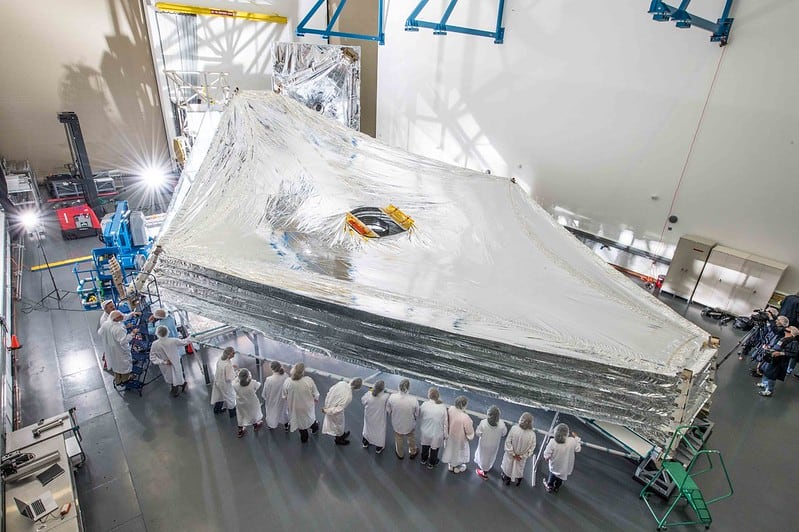
For NASA’s latest and most expensive eye in the sky, launch was the simple part. That is because before it can push the envelope of what science and space technology can achieve, it had to first overcome a dangerous deep-space unpacking: its 6.5 m primary mirror had to carefully unfold correctly and its tennis-court-sized sunshield needed to unfurl – a key step of this task was perfectly achieved on 28 December. During this deployment period – which is still ongoing and will take a total of about 30 days to complete – if any of more than 300 things that could go wrong, do go wrong, the telescope’s capabilities will be limited at best. In the worst case scenario, the entire instrument could have been ruined, setting the field back decades. If it continues to succeed without a hitch, it should transform astronomy – all thanks to several technological marvels that make the JWST a unique and powerful instrument.
Layered protection: A test model of the giant sunshield that will keep the JWST cool. (Courtesy: NASA/Chris Gunn)
Mirror symmetry
One of the biggest challenges facing engineers in building the JWST was the mission’s 6.5 m primary mirror. Constructing a mirror that size isn’t a problem per se, but it is an issue to fit it inside an Ariane 5 rocket that is just 4.57 m wide, without being too heavy to launch into space. The task of solving this particular issue fell to Lee Feinberg, the optical telescope element manager at NASA Goddard. “The primary mirror has a very elegant design,” says Feinberg. The essence of that design, he explains, is that the mirror is foldable: it comprises 18 hexagonal segments, with three of the segments on either side forming “wings” that fold out.
The JWST also has a secondary mirror 0.74 m across, plus a smaller tertiary mirror to remove the scope’s astigmatism and flatten the focal plane ready for its scientific instruments. Together, these three mirrors make up an arrangement known as an “off-axis three-mirror anastigmat” that corrects for spherical, coma and astigmatism errors, while providing the instrument with a larger field of view. But these capabilities contribute launch headaches of their own. “The real trick is that the booms holding the secondary mirror are 8 m long, so you also have to fit that inside the rocket,” Feinberg notes. “And then there’s the sunshield. So we had to fold up for all those reasons.”
The mirrors are made from a new type of gold-plated, optical-grade beryllium that remains stable at the telescope’s operating temperature of 36 K. This material, known as O-30, was created especially for the JWST by the materials firm Materion, and its advantages include a low mass and good technical performance at cryogenic temperatures. The material’s stiffness, for example, means that when the mirror is plunged into the freezing cold behind the telescope’s sunshield, it does not distort too much. Given all these factors, and the size of beryllium billets that were considered reasonable to work with, making a hexagonal segmented system that could fold up was “the best option”, Feinberg says.
A similar hexagonal system has operated on the twin 10 m Keck telescopes in Hawaii since the 1990s, and Feinberg acknowledges that his team learned a lot from Keck’s optical design. As at Keck, all 18 segments of the JWST’s primary mirror, as well as its secondary, have robotic actuators to nudge them into focus. However, while Keck has sophisticated wavefront sensors to align its segments, the JWST optical team decided that such a system would be too complex to operate autonomously in deep space. Instead, the telescope will use its science camera. “The first test image that we’ll get will actually be 18 separate stars, because of the 18 separate segments each acting like a telescope,” Feinberg explains. The telescope will then use its camera and a specially developed algorithm called “phase retrieval” to measure the shape of the wavefront and adjust the shape of the primary mirror until all 18 segments focus as one.
The design of the telescope’s mirrors is typical of the technology and techniques that had to be pioneered to make the JWST workable. “Across the board, we felt that for everything we did, there was no playbook,” Feinberg says. “We were really changing the way we were doing things.” A case in point: while the 2.4 m mirror on Hubble is contained within what is effectively a giant telescope tube assembly, the JWST’s mirrors are open to space. And protecting these mirrors from the heat and glare of the Sun is a tough challenge.
Transforming science – offering new views of other worlds
Harsh environment: The JWST will search the blue ‘hot Jupiter’ exoplanet HD 189733b for evidence of molten mineral rain blown by 8700 kph winds. (Courtesy: ESO/M Kornmesser)
Delays to the James Webb Space Telescope (JWST) may have been a headache for NASA administrators, but they offered astronomers the chance to change the telescope’s mission beyond recognition. In the mid-1990s exoplanet science was in its infancy but during the JWST’s lengthy sojourn in development hell, NASA’s Kepler and TESS spacecraft, among others, got on with the business of discovering new planets outside our solar system. “People were just starting to make the first observations of [exoplanets], so we asked, how can we use [the JWST] to see them?” says John Mather from NASA’s Goddard Space Flight Center. “We now have our list of transiting exoplanets, and we wouldn’t have had that list even a few years ago – that’s a pretty clear benefit of being late.”
The JWST’s main exoplanet task will be to probe the atmospheres of these distant worlds as they pass between the telescope and their parent stars. During these transit events, the atoms and molecules in the exoplanet’s atmosphere will absorb some of the light from the parent star, creating telltale gaps in the star’s spectrum that the JWST can detect. And thanks to that painstakingly compiled target list, Mather says, they won’t have to be lucky to spot one. “We now know where to look for transiting exoplanets, and exactly when to look,” he adds.
Today we know of thousands of worlds beyond our solar system, and – all being well – the JWST will be in prime position to study their atmospheres. Indeed, nearly a third – 70 out of 286 – of the science proposals chosen for cycle 1 of JWST operations are related to exoplanets. One of the worlds that will fall under the JWST’s gaze during its first cycle of science observations is the hot, rocky planet LHS 3844b, which could harbour the first known volcanoes outside our solar system. Then there’s 55 Cancri e, a super-Earth with “weather” that may include lava raining from the sky, and HD 189733b – a hot, Jupiter-like planet that may have clouds and rain made from vaporized minerals. Astronomers are also keen to study a relatively young exoplanet, CT CHa b, which may be surrounded by a disc of gas and dust that is gradually accreting onto its surface.
A further target is the TRAPPIST-1 system, which consists of seven terrestrial exoplanets orbiting a red dwarf star 40 light-years away. Astronomers are planning to use the JWST to scrutinize this system in several ways, including a general reconnaissance of all seven worlds and two sets of observations on its third planet, TRAPPIST-1c, which may be in the system’s so-called habitable zone, where conditions may allow water to exist as a liquid on or near the surface. With many of these transiting, habitable-zone planets, the JWST will be looking for biomarkers – the absorption signatures of oxygen, water, carbon dioxide, ozone, methane and indeed anything else that could be produced by living creatures or indicate a potentially life-supporting environment. But the telescope’s exoplanet studies will go deeper, too. Using its infrared instruments, the JWST will peer into the dusty confines of star-forming nebulae and circumstellar discs around young stars, collecting data that should give scientists a better idea of how new planetary systems form.
Sun factor
As the JWST operates in infrared light, stray thermal emissions from the Sun, Earth and even the spacecraft itself could cloud its vision. To keep them out, mission scientists designed an intricate, tennis-court-sized sunshield that is quite unlike anything NASA has attempted to deploy in space before. The sunshield comprises five layers, or membranes, of an aluminium-coated polymer called Kapton that is widely used in space exploration thanks to its stability across a broad range of temperatures. This stability is crucial: the first, Sun-facing layer of the shield is expected to reach 383 K, while temperatures at the inner fifth layer will drop as low as 36 K. Even with the right material, though, designing the sunshield’s layers to perform in deep space has been “a significant concern” says James Cooper, the JWST’s sunshield manager at NASA Goddard.
Part of the problem is that each membrane in the sunshield will expand or contract to a different degree depending on its operating temperature. Accordingly, the membranes that sat in a clean room at Northrop Grumman – the aerospace firm that designed and built the sunshield – were not the same size as they are in space. “Each membrane is carefully sized for its predicted temperature range,” Cooper explains. “Layer one – the Sun-facing layer – will be the hottest, while layer five will get very cold. So layer five has to be built ‘too big’ on Earth because we know that the material will shrink when it gets cold.”
Another challenge is that each layer of the sunshield is gossamer-fine. The first, hottest layer is 0.05 mm thick, while the other four are 0.025 mm; their aluminium coatings are just 100 nm deep. Keeping the membranes thin saves weight, but it could also leave the sunshield susceptible to damage. Indeed, the shield is designed to cope with some level of damage and engineers expect it to suffer various wounds from micrometeorite impacts during its working life. Cooper says that the odd hole here or there will not affect its performance – especially since they built a grid of seams and rip-stops into each layer to prevent tears from growing larger than approximately one by two metres. “We can meet performance requirements with this size tear in any layer,” adds Cooper.
The greatest risk of damage, though, came, and thankfully passed, soon after launch. Each of the kite-shaped sunshield’s six corners contains a membrane tensioning system (MTS), and each MTS is attached to 15 cables – three for each of the five membranes, amounting to 90 cables in all. To pull the sunshield’s five layers apart, the MTSs had to reel these cables in. A rip or catch at this unfurling stage could have been very damaging and getting the system to work in rehearsals had proved tricky. “The MTS was relatively straightforward when bench-tested alone, but when we put everything together we found complex interactions with the membrane and cable-management systems,” Cooper says. “We had to overcome challenges dealing with alternating tensions and slack in the cables.”
As the sunshield began unfurling three days after the telescope’s Christmas day launch, and took eight days to complete, it was a nervy time for the team, which ended happily, with its successful unfolding. But the sunshield engineers were not the only ones biting their fingernails about keeping the JWST cool. While the sunshield will keep the telescope’s optics and most of its instruments at a frigid 36 K, some components need to be even colder.
Keeping cool
Of the four instruments aboard JWST, three – the Near Infrared Spectrograph (NIRSpec), the Near-Infrared Camera and the Fine Guidance Sensor/Near Infrared Imager and Slitless Spectrograph – operate at near-infrared wavelengths of 0.6–5 μm. For them, the telescope’s general, solar-shielded operating temperature of 36 K is cold enough. The fourth instrument, however, is designed to observe at longer wavelengths of 5–28 μm. For that, it needs even lower temperatures – 29 K colder than the other instruments, to be precise. To keep the arsenic-doped silicon detectors on the Mid-Infrared Instrument (MIRI) at their operating temperature of 7 K, NASA has built the most sophisticated cryocooler ever launched into space. To call it a big refrigerator would be simultaneously accurate and a gross disservice to the innovations required to make it work.
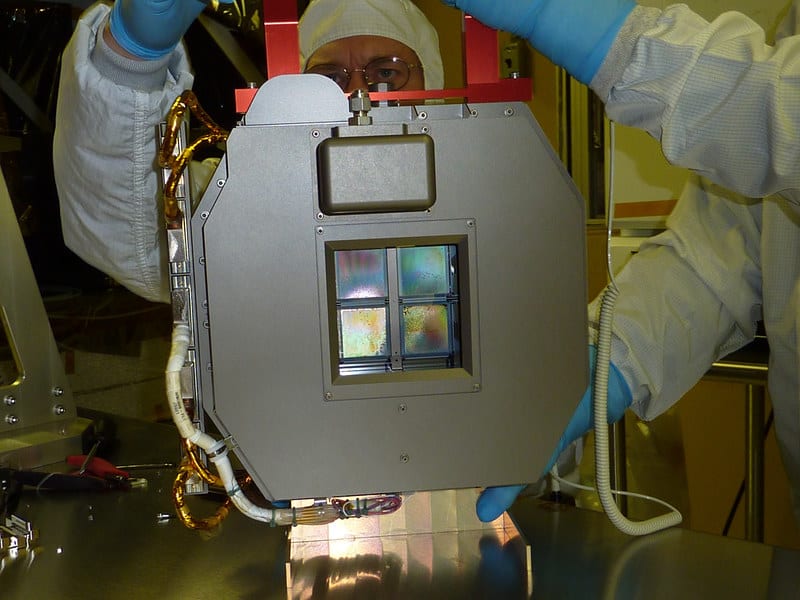
Open and shut: The microshutter array for the NIRSpec instrument. (Courtesy: Astrium/NIRSpec)
However, unlike two of its predecessors, NASA’s Spitzer Space Telescope and the European Space Agency’s Herschel Space Observatory, it will not run out of coolant, because its cryocooler is a closed system. The cryocooler’s main section is its Cryocooler Compressor Assembly (CCA). Housed in the spacecraft bus, on the warm side of the telescope, it uses helium as a refrigerant, and is connected to MIRI (located about 10 m away in the Integrated Science Instrument Module, behind the telescope’s primary mirror) by a labyrinth of tubes. Once the helium has been conductively chilled by a precooler inside the CCA, it gets pumped through these tubes to MIRI via the Cryocooler ColdHead Assembly. This device contains a valve less than a millimetre wide that acts as a “throttle” for the helium. As the helium expands on the other side of the valve, it drops to 6 K (one degree below MIRI’s operating temperature) thanks to the Joule–Thomson effect. It then passes behind MIRI’s detectors, picking up and exchanging their excess heat.
In a terrestrial cryocooler, such a system would be straightforward. In a cooler located on board a telescope in deep space, however, it creates certain challenges. An example is the distance between the pre-cooler and the helium-throttling valve. Normally, these two components are just centimetres apart, but on the JWST they are separated by many metres. Keeping the helium refrigerant cool on its journey though the telescope’s plumbing is therefore vital. Another challenge is vibration. Any cryogenic system that contains moving parts will produce some vibrations, but aboard the JWST these vibrations need to be virtually non-existent, since any jitter from moving machinery could shake the optics and produce blurred images. Consequently, the JWST’s cryocooler contains only two moving parts: a pair of horizontally opposed piston pumps in the CCA that are specially designed to operate with exceptional smoothness.
Transforming science – seeing deeper into the universe than ever before
Even more eXtreme: The Hubble Space Telescope’s eXtreme Deep Field saw galaxies as they were 13.2 billion years ago, at redshifts up to 12. The JWST should see galaxies as far back as 13.5 billion years, possible up to redshifts of 25 to 30. (Courtesy: NASA; ESA; G Illingworth, D Magee, and P Oesch/University of California Santa Cruz; R Bouwens/Leiden University; and the HUDF09 Team)
One of the main scientific tasks on the James Webb Space Telescope (JWST) will be to revisit the Hubble deep fields. These famous images are the product of the Hubble Space Telescope’s most penetrating gazes into our universe’s past, recording light emitted up to 13.2 billion years ago and redshifted by as much as a factor of 12 as the expansion of the universe carries these old, distant galaxies away from us. Thanks to its larger primary mirror (6.5 m compared to Hubble’s 2.4 m), the JWST will be able to see even further back in time, routinely imaging objects at redshift 15 and occasionally seeing some at redshifts between 25 and 30, according to John Mather from NASA’s Goddard Space Flight Center.
Objects at these redshifts will appear as they existed up to 13.5 billion years ago, just 300 million years after the Big Bang. Any galaxies among them would be some of the very first to exist, which could make them hard to spot: the currently favoured model of galaxy formation involves smaller galaxies colliding and merging with each other to form larger ones, meaning that the earliest galaxies are predicted to be small and faint. Nevertheless, Mather is confident that imaging them is within the JWST’s reach. “They’re not expected to be common, they may be a little hard to find, and we may need some luck to find them, but we’ll certainly be looking,” he says.
Seeing the first galaxies is only one part of the equation. Astronomers also want to understand galaxies’ full lifecycle, from their formation all the way through to the present day. The JWST will have a role here, too, making observations of galaxies throughout time that will help build a more complete picture of how elliptical and spiral galaxies develop and how star formation spurs their physical and chemical evolution. The telescope will also explore the role of dark matter in bringing galaxies together, and the effects of feedback from active black holes in controlling star formation.
With so many topics to investigate, Mather says the hardest part for astronomers may be waiting for mission scientists to get to grips with the telescope’s quirks. “The Hubble deep fields will be hard to do better, because we know from Hubble that when you try to take lots of time exposures and average them together, things can go wrong,” he says. “We have to learn what those things might be before we invest the amount of time in something so precious.”
A new vista
The JWST is not the only major astronomy facility due to come online in the 2020s. In fact, it is one of three: the Vera C Rubin Observatory will see first light in Chile in 2022, while the Nancy Grace Roman Space Telescope is currently scheduled to launch in 2027. Both facilities will be leaders in all-sky survey work, where the emphasis is on observing as many objects as possible across a wide swathe of sky. Such surveys are vital for collecting data on large numbers of objects. Among other projects, they will provide the statistics behind efforts to measure the strength of dark energy.
The current leader in this field is the Nicholas U Mayall four-metre telescope at Kitt Peak National Observatory, where the Dark Energy Spectroscopic Instrument (DESI) can make 5000 spectroscopic observations at once. That figure is well beyond the JWST’s capabilities, but the new space telescope will nevertheless do its fair share of astronomical surveying thanks to NIRSpec. This instrument can collect spectroscopic data on 100 objects at once, granting the JWST a capability that no other space telescope has ever had and giving astronomers a fresh eye for their surveys.
To make the JWST fit for survey work, its designers had to look beyond the technology already in use at DESI. In the past, making simultaneous observations was a laborious process, one that involved manually fixing optical fibres at holes punched in an aluminium plate. DESI avoids this thanks to robotic actuators that position the fibres anywhere across the instrument’s field of view and can be moved every 20 minutes, allowing a huge number of observations to take place in a single night. Unfortunately, this solution was deemed unworkable for a space-based observatory. “We looked at DESI’s robotic fibres when we were choosing what to do on [the JWST], and we were completely in awe of the robotic capabilities that it would take to do that in space,” Mather told Physics World.
With robotic actuators unable to operate to extremely high precision at the JWST’s cryogenic temperatures, and no human technicians available to change the position of its optical fibres manually, Mather and his colleagues needed a different solution. In fact, they needed a solution that didn’t involve optical fibres at all, since “there are no optical fibres that would cover the whole range of wavelengths that we want to cover”, he explains.
The NIRSpec team’s answer is an ingenious one. The instrument’s focal plane is divided into four quadrants, each about the size of a postage stamp and filled with 62,000 microshutters. Each microshutter measures just 100 × 200 μm and is made from silicon nitride, which has a high tensile strength and is tough enough for the shutters to open and close many times without fatiguing. During each observation, the shutters that need to open will receive an electrical signal from a magnetic arm that sweeps over the quadrants. This system will allow the JWST to study the spectra of thousands of the most distant galaxies during its mission, learning about their chemistry, star-formation rates, redshifts and more. “There’s a couple of hundred scientific proposals that we’re going to do in the first year,” says Feinberg, “and each one is at a level where they could justify a whole mission in themselves.”
While there are many comparisons between Hubble and the JWST, there are also many differences. Not least of these is where the telescope operates from. When Hubble’s 2.4 m primary mirror had been ground to incorrect specifications – unknown to engineers at the time – it resulted in spherical aberration. NASA astronauts then conducted a daring space walk in 1993 where they successfully installed a new instrument to give Hubble a new pair of eyes. Hubble is in Earth orbit, which is not the case for the JWST’s position at L2 – much too far for astronauts to reach it on a servicing mission.
While there are many unknowns about how long the JWST will operate for, if all goes to plan during unpacking in the coming weeks and months, then at least from a cooling perspective, the JWST should be fit to see out the coming decade. It will then be able to operate alongside many other ground- and space-based instruments that are scheduled to come online in the mid- to late-2020s – just as Hubble had done in previous decades with other observatories. Astronomers may have waited decades for the telescope to be realized, but once it begins transforming our view of the universe, it promises to be worth the wait.
Pluto is less than 20% of the diameter of Earth and is on average six billion kilometres away, yet astronomers have been able to study its tenuous atmosphere since the 1980s. In this episode of the Physics World Weekly podcast the astronomers (and siblings) Leslie Young and Eliot Young talk about Pluto’s atmosphere and how it changes as the dwarf planet follows its elliptical orbit around the Sun.
The Youngs are both at the Southwest Research Institute in Boulder, Colorado and have devoted much of their careers to the study of Pluto. They chat about the joys of making new observations of Pluto’s evolving atmosphere, often by chasing its shadow here on Earth.
Researchers have developed a new way of generating extremely short pulses of visible light using a simple, commercially available laser system. The innovative approach, which exploits nonlinear effects in glass fibres that transmit light beams with different spatial profiles, could make it easier and cheaper to study ultrafast phenomena such as photosynthesis in plants, the dynamics of electron–hole pairs in semiconductors and the chemistry of human vision.
High-energy pulsed lasers have enabled researchers to study and control processes such as chemical reactions that occur on the femtosecond (10-15 s) time scale. Such lasers have also made it possible to accelerate particles using light alone, which is important for many branches of sciences, including nuclear and particle physics, materials science, nuclear medicine and radiography. Extending these capabilities to lasers at visible wavelengths has proved challenging, however, as it is hard to generate coherent visible light at a high intensity over these extremely short timescales due to a complex interplay between different nonlinear phenomena.
Hollow-core glass fibres with multimodes
In the new study, researchers led by Luca Razzari of the Institute National de la Recherche Scientifique (INRS) in Canada took inspiration from recent pioneering work on nonlinear effects in glass fibres that support multiple modes (that is, fibres in which the light beam can take many different spatial shapes as it propagates). Using an industrial-grade ytterbium laser system, they began by propagating a much longer (175 fs) infrared pulse centred at a wavelength of 1035 nm through a 3-m-long hollow-core fibre filled with argon gas at a pressure of about 3 bar. As the different modes mixed with each other, a nonlinear effect within the gas generated intense, 4.6-fs-long pulses of visible light at the fibre output.
Luca Razzari (Courtesy: Christian Fleury)
Unlike previous methods of generating ultrashort visible light pulses (lasting about two optical cycles), this approach does not rely on complex and expensive optical equipment such as optical parametric amplifiers, gratings and chirped mirrors to compress the generated pulses. The researchers say this could make it accessible to scientists who study a broad range of ultrafast fundamental phenomena, including photosynthesis and even the isomerization of rhodopsin, which is key to human vision. “With our pulses, we can study the dynamics of such processes and how they evolve on extremely short timescales,” says Riccardo Piccoli, a postdoctoral researcher at INRS and the first author of a Nature Photonics paper describing the research.
Looking ahead, the team says it now plans to further explore multimode mixing in gas-filled fibres. “Such studies will be an exciting playground for nonlinear optical interactions that can provide us with new tools to tailor optical waveforms at the few-cycle level,” Razzari tells Physics World.
Precise measurements of the motions of antiprotons and protons suggest that antimatter responds to gravity in the same way as matter. The experiment was done at CERN by the international BASE collaboration and involved trapping antiprotons and negative hydrogen ions using electric and magnetic fields. The measurements also provide the best confirmation yet that the antiproton conforms to certain aspects of the Standard Model of particle physics.
Matter is made of baryons and leptons such as protons and electrons. According to the Standard Model, each of these particles has a corresponding antiparticle with identical mass but opposite charge. Just like protons and electrons, these antiparticles can combine to make antimatter. Indeed, physicists at CERN can make antihydrogen by combining an antiproton with an antielectron. These antiprotons are produced in large numbers at CERN in a facility dubbed the “Antimatter Factory”.
Enduring mystery
An important and enduring mystery in physics is why the universe appears to be made up almost entirely of matter and contains only tiny amounts of antimatter. The answer to this question could be found by looking for tiny differences between a particle and its antiparticle – which if successful would reveal physics beyond the Standard Model.
The BASE experiment at CERN aims to measure the magnetic moment of the antiproton to very high precision so that it can be compared to the magnetic moment of the proton. This is done using a Penning trap, which holds a negatively charged antiproton using magnetic and electric fields.
In this latest research, the BASE team focused instead on the charge-to-mass ratio of the antiproton, which can also be measured to high precision in a Penning trap. The antiproton follows a circular path within the trap and the frequency of this cyclotron oscillation is used to calculate the antiparticle’s charge-to-mass ratio.
The experiment was then repeated using a negatively charged hydrogen ion – which is a proton that is bound to two electrons. This ion was used instead of a positively charged proton so the two measurements could be done under the same experimental conditions – and therefore compared to a very high precision.
Identical results
Measurements were made in four campaigns done between December 2017 and May 2019. In total 24,000 comparisons were made, each lasting 260 s. The BASE physicists found that the charge-to-mass ratios of the antiproton and proton were identical to within 16 parts-per-trillion, which is four times better than previous measurements.
“To reach this precision, we made considerable upgrades to the experiment and carried out the measurements when the antimatter factory was closed down, using our reservoir of antiprotons, which can store antiprotons for years,” explains BASE spokesperson Stefan Ulmer, who is based at RIKEN in Japan.
The BASE research backs up the principle that the physics of a system is not affected when its charge, parity and direction of time are flipped. This fundamental symmetry is called CPT invariance, which plays an important role in the Standard Model.
“This result represents the most precise direct test of a fundamental symmetry between matter and antimatter, performed with particles made of three quarks, known as baryons, and their antiparticles,” says Ulmer.
Relativistic test
The experiment also tested the weak equivalence principle, which is a consequence of Einstein’s theories of relativity. This principle says that the behaviour of an object in a gravitational field is independent of its intrinsic properties – including its mass. A familiar example is that in a vacuum, a feather and a hammer will freefall with the same acceleration.
Earth’s orbit around the Sun is elliptical, which means that the gravity experienced at the Penning trap changes slightly over the course of a year. This change affects the cyclotron frequency and the team found that the frequencies of the proton and antiproton changed in the same way. The team therefore confirmed that the weak equivalence principle applies to both antimatter and matter – to a precision of about three parts in 100.
Other experiments at CERN plan to probe the weak equivalence principle by observing antimatter in freefall and Ulmer points out that BASE’s result is “comparable to the initial precision goals of experiments that aim to drop antihydrogen in the Earth’s gravitational field”. “BASE did not directly drop antimatter in the Earth’s gravitational field, but our measurement of the influence of gravity on a baryonic antimatter particle is conceptually very similar, indicating no anomalous interaction between antimatter and gravity at the achieved level of uncertainty.”
Predicting epileptic seizures: Data recorded by wearable sensors are uploaded regularly to cloud storage and analysed using deep learning. Patients also uploaded data from their responsive neurostimulation devices and the intracranial EEG data were reviewed for seizure activity. (Courtesy: CC BY 4.0/Sci. Rep. 10.1038/s41598-021-01449-2)
Data from a wearable wristband monitoring device can forecast epileptic seizures about 30 minutes before they occur, according to research published in Scientific Reports. Researchers at the Mayo Clinic advise that their preliminary study is the first to report successful seizure forecasting with non-invasive devices in ultralong-term recordings of epileptic patients during their normal daytime activities. The study shows that reliable seizure forecasting is possible without directly measuring brain activity.
The unpredictability of seizures is a major factor that limits the activities of people with epilepsy, especially for those who have recurrent seizures throughout the day. Reliable seizure forecasting could potentially enable these individuals to modify their activities, take a fast-acting medication and/or increase neuromodulation therapy to prevent or manage impending seizures.
The study team recruited six patients who had drug-resistant epilepsy and were being treated at the Mayo Clinic with a responsive neurostimulation device (the NeuroPace RNS system) implanted as part of their clinical care. The NeuroPace RNS provides chronic intracranial electroencephalography (iEEG) monitoring, the recording of the electrical activity generated by the brain. The RNS system also uses clinician-defined detectors to trigger storage of iEEG timeseries epochs with suspected seizure activity, and to trigger therapeutic stimulation.
Because the device can only store eight iEEG data clips between uploads, the researchers only recruited patients who had a history of eight or fewer than clips per upload. They also required patients to have stored clips without seizure activity (false positives) to ensure that they were not missing seizure events.
The participants wore a wrist-based recording device (the Empatica E4 wristband) that records physiological data – including 3-axis accelerometry (to track body movement), blood flow, heart rate, body temperature and electrical characteristics of the skin – for a minimum of six months. Uploaded data were processed by a long short-term memory recurrent neural network algorithm designed to analyse data at least 15 minutes before a recorded seizure onset.
Principal investigator Benjamin Brinkmann and colleagues report that the system performed seizure forecasting significantly better than a random predictor for five of the six study participants, with seizure alerts occurring on average 33 minutes before the EEG-recorded seizure onset. The one patient for whom forecasting did not perform significantly better than random had multiple seizures each day, while the other subjects had seizures less frequently.
Looking at the relative contributions of individual data signals from the wristband, the time-of-day input showed the highest contribution to the results. The researchers suggest that patients with a strong circadian pattern may have better results than those without. Other measured signals, including accelerometry, electrodermal activity and temperature, also contributed substantially to the overall accuracy, but their contribution differed on a patient-by-patient basis.
“Seizure alerts in these five patients provided ample warning time to administer fast-acting medication or to increase neuromodulation therapy,” they write. Additional patients have been recruited and are currently recording data to expand the study.
“We hope this research with wearable devices paves the way toward integrating seizure forecasting into clinical practice in the future,” comments Brinkmann. “These findings need to be replicated in a larger cohort in a prospective clinical study, but our study suggests seizure forecasting is possible without invasive devices.”
An artificial intelligence (AI) system that can identify diabetic retinopathy (DR) without physician assistance, including the most serious form that puts patients at risk of blindness, has outperformed expectations in a clinical trial. The commercial system successfully detected the presence and severity of the disease in 97% of eyes analysed. Deployment of such AI systems in primary care facilities for use by non-specialists could significantly increase access to eye exams that include DR evaluation, aiding in the diagnosis and treatment of the disease.
DR is the most common cause of preventable vision loss and blindness in adults aged 20 to 65. More than one third of all diabetic individuals are expected to develop the disease, according to the International Diabetes Federation (IDF). The IDF also estimates that almost half of the approximately 537 million people in 2021 with diabetes are undiagnosed, and therefore may not know that they are at risk of developing DR.
DR occurs as a result of damage to blood vessels and neurons in the retina caused by high blood sugar. Fluctuations in blood sugar cause constriction of the retinal arteries, reducing blood flow and leading to dysfunction of neurons located in the inner retina. This dysfunction tends to spread to neurons of the outer retina and the blood–retinal barrier that protects the retina from toxins. When the barrier begins to leak fluid, damage to vital neurons occur. The early – and most treatable – stages of DR are often asymptomatic, or present as changes in vision that may occur and disappear and be incorrectly attributed to ageing. The risk of developing DR increases the longer a person has diabetes.
In addition, around 80% of all diabetic individuals live in low- and middle-income countries, where access to professional eye examinations and specialists with the expertise to identify DR may be limited or unaffordable. According to the Diabetic Retinopathy Barometer Report Global Findings, 21% of patients with diabetes worldwide have never undergone DR screening.
Assessing AI performance
Researchers at the Lundquist Institute for Biomedical Innovation, in collaboration with 14 other US centres, conducted a clinical trial to evaluate the safety and ability of the EyeArt Automated DR Detection System to autonomously detect more-than-mild DR and vision-threatening DR, using dilated (in which the pupils are widened) and undilated eye imaging regimes.
The trial included 942 diabetic patients (893 of whom completed the study protocol) who underwent eye exams at six primary care centres, six general ophthalmology centres and three retina speciality centres located throughout the US. The participating facilities represent a wide range of geographic locations and an urban/rural mix. The study aimed to incorporate all ethnicities, even though the AI system’s algorithm neutralizes for colour and light differences to minimize racial differences in retinal hues.
The patients initially had eye exams comprising two-field (disc-centred and macula-centred) retinal colour fundus photography (CFP) of each undilated eye. Following dilation, patients then underwent four-wide-field stereoscopic CFP imaging, in accordance with the Wisconsin Reading Center (FPRC) reference standard. Two independent readers masked to the AI results examined the images using standardized procedures to establish the reference standards and categorize images as negative, mild-to-moderate DR or vision-threatening DR. The researchers then compared the readers’ findings with the AI system grading.
Writing in JAMA Network Open, lead author and principal investigator Eli Ipp reports that use of the EyeArt system in both primary care and eye care centres compared favourably with the reference standard in detecting both categories of DR.
With the undilated imaging protocol, the AI system exceeded predetermined end points for both sensitivity (greater than 90%) and specificity (greater than 82.5%) of DR detection. The sensitivity of detecting more-than-mild DR in undilated eyes was 96%, with a specificity of 88%. For vision-threatening DR, the system exhibited a sensitivity of 97% and specificity of 90% in undilated eyes. The AI system was able to grade 97.4% of the eyes, with 87.6% not requiring dilation.
“To our knowledge, this study is the first to investigate the ability of an AI system to identify vision-threatening DR,” explains Ipp. “The system was easy to use at primary care centres, and with standardized training, reliable disease-detection results can be obtained by staff who have no prior retinal imaging experience.”
He points out that the system allows eye exams to be more easily performed, because the majority of patients in the study did not need to have their eyes dilated for the AI system to evaluate the colour fundus photographs accurately.
“By simplifying and improving the efficiency of diabetes retinal screening, this technology has the potential to contribute to saving vision for millions of people around the world,” Ipp concludes. “Our clinical study reinforces the capability of this AI system to diagnose early as well as advanced cases of DR, which should reassure healthcare professionals considering its use.”
The EyeArt system evaluated in this study has received 510(k) clearance from the US Food and Drug Administration, a Health Canada license, validation from the UK National Health Service, and CE Marking as a class 2 medical device by the European Union. It is currently being used globally, including at healthcare facilities in economically challenged countries.