The fastest-spinning white dwarf ever seen is flinging plasma into interstellar space – according to observations made by astronomers in the UK. Ingrid Pelisoli at the University of Warwick and colleagues have combined data from two instruments to show that binary star system J0240+1952 contains a highly magnetized white dwarf, which completes a full rotation in just 24.9 s. Their discovery is the second known example of such a magnetic propeller system.
Cataclysmic variables (CVs) are binary star systems in which a dense white dwarf star accretes matter from its companion star. As the accreted mass falls onto the equator of the white dwarf, it causes the star to spin ever faster. However, if the white dwarf acquires a strong magnetic field, this can deflect some of the infalling matter, which is propelled out into interstellar space in the form of a glowing plasma.
The first such “propeller star” was identified in a pair of studies done in 1943 and 1956, which focussed on unusually strong, irregular flares in the brightness of a CV on minute-long timescales. Called AE Aquarii, this binary system remained unique until 2020, when observations at the LAMOST telescope in China revealed striking similarities between AE Aquarii and a binary system called LAMOST J024048.51+195226.9 (shortened to J0240+1952).
At first, fluctuations in the brightness of J0240+1952 were too rapid and dim to confirm the presence of a rapidly spinning, highly magnetized white dwarf like AE Aquarii. To address this, Pelisoli’s team observed the system using the highly sensitive, high-speed HiPERCAM instrument on the 10.4 m Gran Telescopio Canarias in the Canary Islands.
Bright spots
This measurement confirmed that J0240+1952 does contain the second known example of a magnetized propeller star. Most of the matter that is stripped from the companion star is flung into space at speeds of roughly 3000 km/s. The rest of the matter flows along the white dwarf’s magnetic field lines to accrete onto its surface – where it gathers in bright spots and rotates in and out of view.
By observing the resulting brightness fluctuations, Pelisoli’s team confirmed that the star completes a full rotation every 24.9 s. This makes it the fastest spinning white dwarf observed to date: almost 20% faster than the previous record. In comparison, the Earth rotates once every 24 h and the Sun once every 27 d.
As the second known example of a magnetic propeller system, J0240+1952 offers astronomers the opportunity to confirm models that were developed to describe AE Aquarii. The observation also suggests that rather than being an anomalous occurrence, propellers may readily form under just the right circumstances.
An in-depth knowledge of human organs and how they form is pivotal to understanding how diseases affect these tissues. Unfortunately, it remains inherently difficult to study living organs as they develop inside us. Thus, over the last decade, scientists have developed organoids: three-dimensional organ models that self-organize to mimic true organ behaviour. Such organoids show potential to revolutionize how we study human disease and how organs themselves grow at their genesis.
The functional architectures of organs develop as cells self-organize in response to external stimuli in their microenvironment. Inspired by this concept, a research group led by Matthias Lutolf of EPFL, Switzerland controlled the self-organization process of intestinal stem cells to show how substrate microtopography could be used to control the size and shape of the resulting bioengineered organoids. As detailed in Science, the researchers utilized this understanding to build organoids resembling the geometry of intestinal epithelium and to determine the roles of tissue geometry in cell fates.
As the processes behind organoid formation are largely stochastic, current methods for engineering these complex tissues lack reproducibility. For example, it would be difficult to replicate native intestinal tissues that feature varied cell types across and according to their complex architecture.
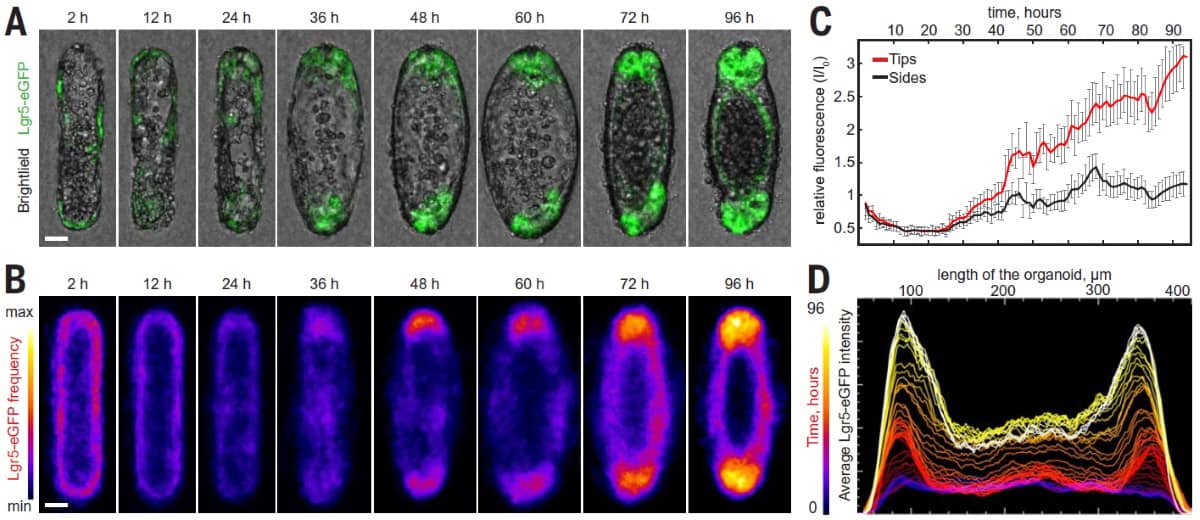
To overcome this obstacle, Lutolf’s group utilized soft lithography to microstructure a 3D hydrogel with cavities of defined size and shape, then filled the cavities with purified intestinal stem cells. The researchers followed the differentiation of and protein expression in these cells to connect cell-type localization to the surrounding tissue geometry. They demonstrated that tissue shape leads to a “prepatterning” of epithelial cells with varying protein activity, which, in turn, drives the formation of specific cell types according to the region’s topography.
Pattern manipulation: The researchers showed how tissue geometry (such as the rod-like shape shown) controls organoid patterning by affecting cells’ regulation of the protein YAP and Notch signalling. The bright areas at the ends of the oval-like rods (A, B) correspond to high protein expression, which changed spatio-temporally (C, D). (Courtesy: Science 10.1126/science.aaw9021)
Having demonstrated the deterministic mechanisms by which tissue geometry governs cell fate, the researchers aimed to exploit the effect to mimic native tissue. They fabricated hydrogel substrates with an architecture that resembled native intestinal mucosa, then seeded the structures with intestinal stem cells. Within 48 hours of seeding, these cells formed a monolayer over the surface. Subsequently, the cells differentiated according to the local geometry and as predicted by the discovered mechanisms.
Mirroring native tissue: A silicone template (left) that mimics native intestinal tissue’s characteristic architecture and a 3D reconstruction of immunofluorescence micrographs (right) showing stem-derived epithelium covering a hydrogel substrate. (Courtesy: Science 10.1126/science.aaw9021)
Finally, the team used these printed organoids to explore shedding, a physiological process that cells use to deal with proliferative crowding. Shedding becomes dysregulated under pathological conditions such as inflammatory disease. The researchers found that shedding was associated with the appearance of an actin ring at the cell interface. They also replicated the excessive shedding induced by an inflammatory factor, showing the efficacy of the approach. The in vitro system allowed tracking of shed cells for downstream analysis, which is not feasible with other approaches.
By connecting the geometry of a cell’s microenvironment to its gene expression, Lutolf’s team realized how substrate patterning might make stem cell differentiation deterministic rather than stochastic. Moving forward, this creative strategy presents a means to examine the development of complex organoids and to use the tissues for translational research. As philosopher Eric Hoffer said: “creativity is the ability to introduce order into the randomness of nature”.
The performance of atom chips could be greatly enhanced by replacing 3D metal wires with 2D conducting sheets of graphene, calculations by researchers in the UK, Germany, and Austria have revealed. Led by Mark Fromhold at the University of Nottingham, the team showed how the move to graphene could significantly reduce electronic noise in the conductors while lowering the attraction between atoms and chip surfaces.
Atom chips contain clouds of ultracold atoms that can be used to detect things like acceleration or magnetic fields at a very high sensitivity. They also have other uses including atomic clocks. The atoms are held in a vacuum using magnetic or electric fields and typically hover between 1 and 100 μm from the inside surfaces of the trap.
In magnetic traps, atoms are held by an inhomogeneous magnetic field created by a copper wire conductor. The wires tend to be about 1 μm in thickness and are mounted on bulky insulating substrates. Unfortunately, using thick wires brings several disadvantages. One is that spatial imperfections within the wires can reduce the quality of the trapping potential. Another is that these wires tend to have high levels of electronic noise, which can induce spontaneous transitions between atomic energy levels. This can result in atoms being ejected from the trap. In addition, the presence of large conductors creates a significant Casimir–Polder force that drives atoms towards chip surfaces, which can lead to further losses. Together, these effects severely limit the length of time that atoms spend in a trap.
Z-shaped graphene
In their theoretical study, Fromhold and team considered what would happen if the metal wire is replaced with a Z-shaped graphene conductor sandwiched between insulating layers of boron nitride. Compared with copper wires, this structure would contain far fewer atoms and conduction electrons, both lowering its thermal noise and its attraction for trapped atoms.
Through a series of calculations, the researchers showed that these graphene wires would likely be able to trap atoms just a few hundred nanometres from chip surfaces. Furthermore, they predicted that improvements from using graphene could lead to atom chips that can confine atoms for more than 10 s – orders of magnitude longer than the times possible with previous devices.
These improvements would make it easier to form a Bose–Einstein condensate (BEC ) in an atom chip. In a BEC, most of the ultracold atoms are in a single quantum state and BECs have a wide range of potential applications including sensing and fundamental physics experiments.
The sci-fi film Don’t Look Up is an end-of-the-world satire that has garnered both praise and scorn from viewers, critics and scientists. In this episode of the Physics World Weekly podcast, we explore the scientific themes of the film and give our verdicts on how A-list actors Jennifer Lawrence and Leonardo DiCaprio played two hapless astronomers who discover a comet that could destroy the Earth.
Also this week, John Allen, professor of biosensors and bioinstrumentation at Coventry University, talks about photoplethysmography (PPG), a simple low-cost optical measurement technique with a myriad of healthcare applications. He also discusses a new focus collection in the journal Physiological Measurement, which examines the state-of-the-art in PPG methods and applications.
Brian Cox’s latest blockbuster television series, Universe, has an ambitious title. In German – a wonderfully to-the-point language – the word for universe is “All”. So perhaps his show could have been called Everything. Indeed, Cox has an awful lot to get through in the five hour-long episodes. We start with Sun and stars before moving on to the search for life on other planets. The Milky Way and other galaxies are next, followed by black holes and the Big Bang.
In turning those vast, mind-bending topics into something watchable, each instalment primarily consists of dazzling CGI depicting astronomical events, interspersed with clips of Cox wandering through scenic landscapes as he explains the relevant astrophysical phenomena. While it isn’t always immediately clear why Cox has ventured to each location – apart from it offering a dramatic backdrop in keeping with the programme’s tone – each spot usually ends up serving as some sort of analogy for the physics.
In the episode about black holes, for example, Cox walks alongside a river, describing how, in the vicinity of a black hole, the “river” of space is “flowing” towards it. If you’re far enough away, the flow of space is slow, so you can swim in the opposite direction and escape. But as you get closer to the black hole, space flows faster and faster – like the river of water as it approaches a waterfall.
Each episode concludes with a short segment about a space mission that has been investigating that episode’s subject. The one about the Sun, for instance, dedicates a few minutes at the end to NASA’s Parker Solar Probe, the closest-ever spacecraft to our closest star. Much as I admire the CGI visuals and the beautiful landscapes that make up most of the show, after 40 minutes of being immersed in them, these few minutes of space mission footage and interviews with other scientists are a breath of fresh air and a return to reality.
They capture the excitement of being part of a huge project with profound potential, and they inspire appreciation for the technological feats that humans have achieved to explore the universe. One scientist who works on the European Space Agency’s Gaia mission to map the Milky Way explains how the observatory takes images from opposite sides of the Sun during its orbit. The difference between them, or “parallax”, is then used to calculate an object’s distance from us (similar to how our own eyes create depth perception).
I would have loved more details like this about how we know what we know – both in terms of the techniques used and the observations that have taught us about the cosmos. The series is, sadly, light on such information, which will disappoint physicists, despite Cox touching briefly on how astronomers use redshift and type 1a supernovae acting as reference points to measure distances. In fact, I’m not sure the show will teach much new physics to someone with a background in the subject, or indeed anyone who has watched similar TV programmes before.
Cosmic drama In Universe Brian Cox often anthropomorphizes astronomical objects, creating a tone of theatrical storytelling. (Courtesy: BBC/Lola Post Production)
A few new ideas intrigued me, though. In the episode about black holes, for example, Cox suggests that having a black hole at the centre of our galaxy might have been necessary for complex life to evolve on Earth. It’s thought that the occasional outpourings of energy from the material surrounding the black hole could have reduced star formation in the outer galaxy, where our solar system lives. This would give the region greater stability – an essential ingredient for life to develop over billions of years.
The theme of life and its importance is a common thread throughout the series. In fact, I felt he labours the point, repeatedly reassuring us that, despite seeming like insignificant specks, we – as conscious matter that can think and wonder – are what gives the cosmos meaning.
Cox repeatedly reassures us that, despite seeming like insignificant specks, we are what gives the cosmos meaning
The tone is also too intense for me at times. Seemingly endless CGI scenes of exploding stars and colliding galaxies are accompanied by dramatic music as if from an epic fantasy movie. The extravagant storytelling begins right from the introduction to the first instalment – “The Sun: God Star” – where Cox explains how we are drawing “ever closer to being able to tell what is surely the greatest story ever told”.
The theatrics peak in the fourth episode with the anthropomorphizing of black holes. As Cox details the growth of the Milky Way’s central black hole, Sagittarius A*, he describes it as developing “a taste for more massive prey” and says it “cannibalized its cousin” when it collided with a similar object. But later, after hearing that its presence might have been necessary for our own existence, we are presented with CGI depicting Sagittarius A* while the accompanying song’s lyrics plead: “I’m just a soul whose intentions are good; Oh Lord, please don’t let me be misunderstood.”
The cynic in me felt that moments like this bordered on overkill. And yet, after watching the final episode I did find myself looking again at astronomical images with a renewed sense of wonder. As one scientist says in a segment at the end of the last episode, “It’s really hard to remember what it was like before we had the Hubble Space Telescope. We’ve gotten so used to these extraordinary photographs.”
As humans living our daily lives, we are bombarded with so much new information that even the most incredible facts cease to amaze us after quite a short time. But I think it’s worth it to occasionally revisit them as if you had never learned them before.
Sure, Universe sometimes feels a bit over the top. But as Cox reminds us, there are over two trillion galaxies in the universe, each with hundreds of billions of stars. How do you even begin to convey that without coming across as a bit over the top? If you just want to be wowed by all the ridiculous magnificence of it then that’s a perfectly legitimate pastime – and this programme is for you.
Proton MR spectroscopy can identify changes in the brains of people with multiple sclerosis (MS), according to a study published in Radiology. The findings could translate to earlier diagnosis and treatment, senior author Wolfgang Bogner of the Medical University of Vienna says in a statement released by the university.
“If confirmed in longitudinal clinical studies, this new neuroimaging technique could become a standard imaging tool for initial diagnosis, for disease progression and therapy monitoring of multiple sclerosis patients, and, in concert with established MRI, might contribute to neurologists’ treatment strategies,” he says.
MS affects the central nervous system and can cause fatigue, pain and coordination problems, the group notes. Almost 3 million people around the world suffer from the condition, and there’s no cure – only treatments such as physical therapy and medication to slow its progression.
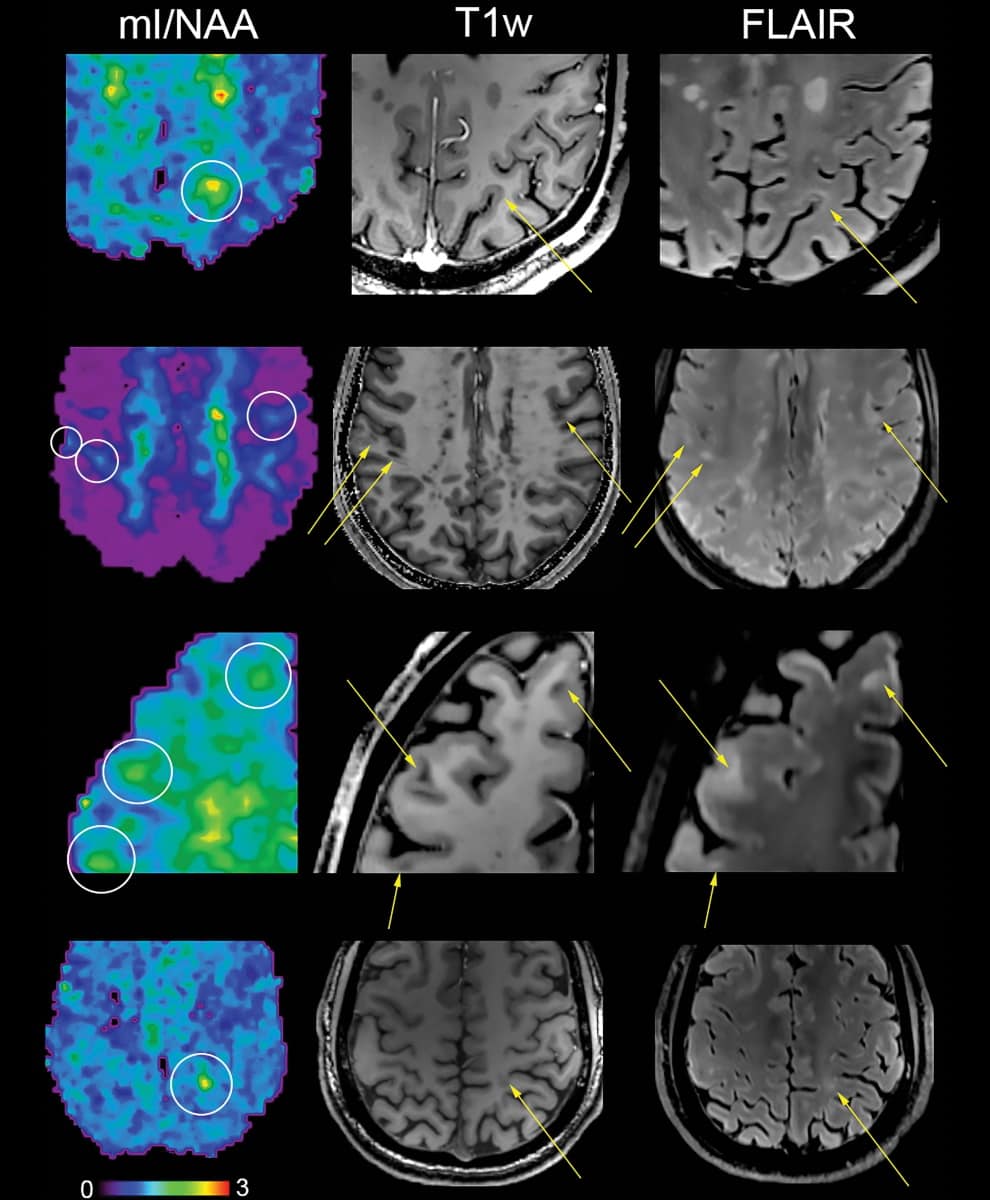
Imaging multiple sclerosis patients: Metabolic maps showing the ratio of myo-inositol to N-acetylaspartate (mI/NAA) clearly depict small lesions (circles) that appear inconspicuous in T1-weighted MRI (T1w)/fluid-attenuated inversion-recovery (FLAIR) imaging. (Courtesy: RSNA)
One of the ways MS manifests is as white-matter lesions in the brain, which are associated with a loss of myelin, a protective coating around white matter fibres. But these lesions represent macroscopic damage, notes lead author Eva Heckova and colleagues: it would benefit patients to be able to identify earlier, microscopic changes in the brain suggestive of MS.
That’s why proton MR spectroscopy shows promise, since it can identify substances produced by a person’s metabolism that could indicate the presence of MS.
In the current study, proton MR spectroscopy was performed on a 7-tesla scanner using a technique called free-induction decay MR spectroscopic imaging, with 2 × 2 mm in-plane spatial resolution. For the study, the investigators used the technique to compare differences in normal-appearing white matter and cortical grey matter in the brains of 65 MS patients and 20 healthy controls.
The group found the following brain differences in patients with MS:
Lower levels of an amino acid derivative called N-acetylaspartate, which is associated with compromised integrity of neurons.
Higher levels of myo-inositol, which is involved in cell signalling; increased levels indicate significant inflammatory disease activity.
Metabolic changes in normal-appearing white matter and cortical grey matter.
The brain changes this MR technique illuminated could have important clinical implications, according to Heckova.
“Some neurochemical changes, particularly those associated with neuroinflammation, occur early in the course of the disease and may not only be correlated with disability, but also be predictive of further progression such as the formation of multiple sclerosis lesions,” she says.
In an accompanying commentary, Peter Barker of Johns Hopkins University cautioned that although proton MR spectroscopy could be an effective way to identify MS earlier, it may be difficult to incorporate it into clinical practice.
“The number of 7-tesla scanners worldwide is tiny compared with 1.5 or 3-tesla, and the cost of installing and operating these systems is steep,” he says. “Thus, for the near future at least … both MRI and MR spectroscopy at 7-tesla are likely to be mainly of use for research studies in MS, where the best possible resolution and highest information content are needed.”
In December 1991 Paul Kunz, a physicist and computer programmer at the Stanford Linear Accelerator Center (SLAC) in Menlo Park, California, set up the very first Web server in North America. I learned of it about a month later, upon returning to SLAC from a year in Washington, DC. “Have you seen the latest?” an enthusiastic colleague asked. “It’s called the World Wide Web!”
At the time, I didn’t grasp the tremendous historical significance of that event 30 years ago, which was the point at which the Web truly became a worldwide system. Until that month, it had been a mostly European project focused upon the CERN particle-physics lab near Geneva, developed there by the physicist-turned-programmer Tim Berners-Lee. In 1991 scientists who came to CERN from across the continent had begun using the Web to share documents and data. An early “killer app” was the CERN phone book, which could now be accessed via the Web from different computer platforms at the lab or externally via the Internet.
The SLAC server now allowed physicists worldwide to access its valuable SPIRES database of particle-physics preprints. Before that, it was challenging for those outside SLAC to log onto this collection of papers. Afterwards, accessing it became easy. Web traffic tripled in the two months after Kunz programmed the SLAC server, making SPIRES the new killer app. “A world of information is now available online from any computer platform,” boasted Berners-Lee in the CERN computer newsletter that December.
Physicists then were largely unaware of its likely impact, but a major rupture in world history transpired late that month. Meeting in Moscow on 26 December 1991, the Supreme Soviet dissolved the Union of Soviet Socialist Republics. The bipolar world order of the Cold War officially ended, to be replaced by one in which democratic Westernized nations predominated, knitted together increasingly by the Internet and Web.
As British historian Eric Hobsbawm observed in his epochal 20th-century history The Age of Extremes: “There can be no serious doubt that in the late 1980s and early 1990s an era in world history ended and a new one began.” Physicists and programmers – especially at CERN and SLAC – were to play pivotal roles in shaping the technological foundations of the emerging world order.
Spreading the Internet
The origins of the Internet trace back to the ARPANET, developed by the US Department of Defense’s Advanced Research Projects Agency during the depths of the Cold War. In the 1980s a variety of computer networks such as the National Science Foundation’s NSFNET appeared in the US. By adopting ARPANET’s software protocols, these networks permitted computers to communicate across one another and led to the “network of networks” or Internet.
CERN, which opened connections to the Internet in January 1989, proved the ideal site for the Web to germinate. During the 1980s hundreds of physicists had been arriving from all over Europe – increasingly from Eastern Bloc nations – as well as from the US to do research on the Large Electron Positron (LEP) collider and its associated detectors. They brought with them a variety of personal computers that communicated with one another over diverse networks set up by the various experimental collaborations.
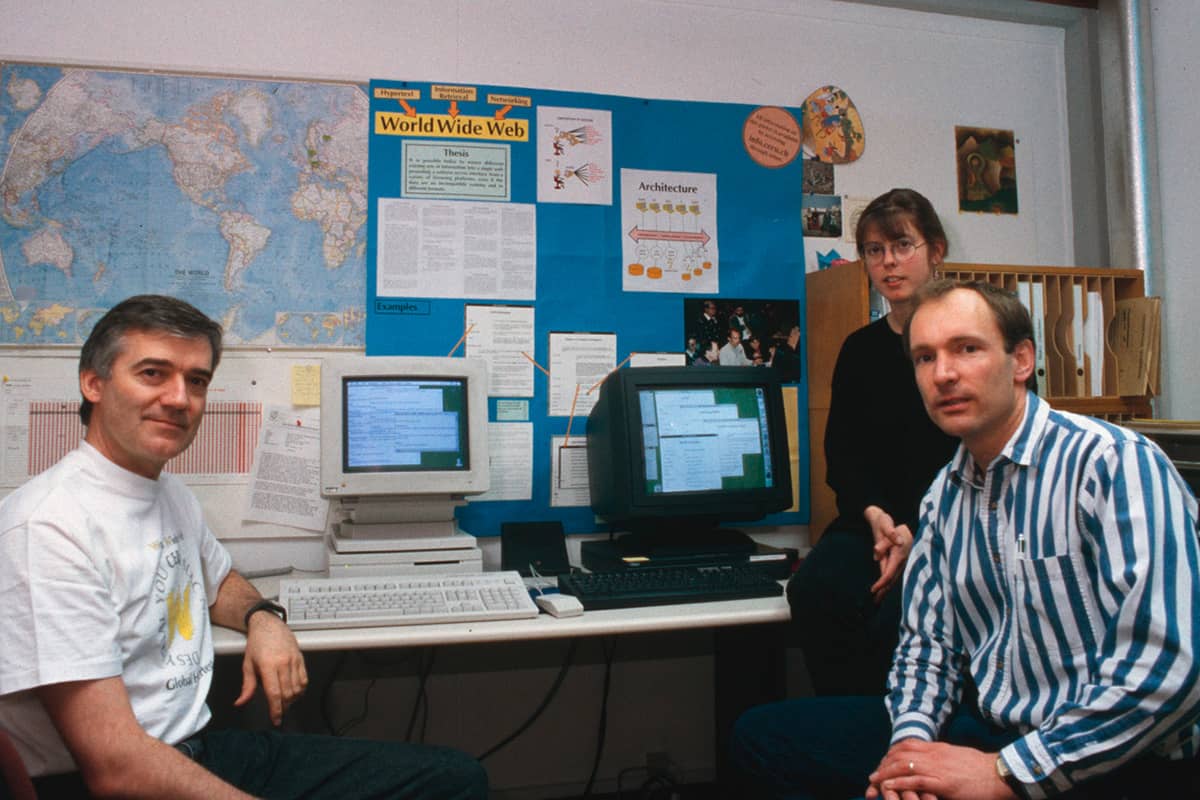
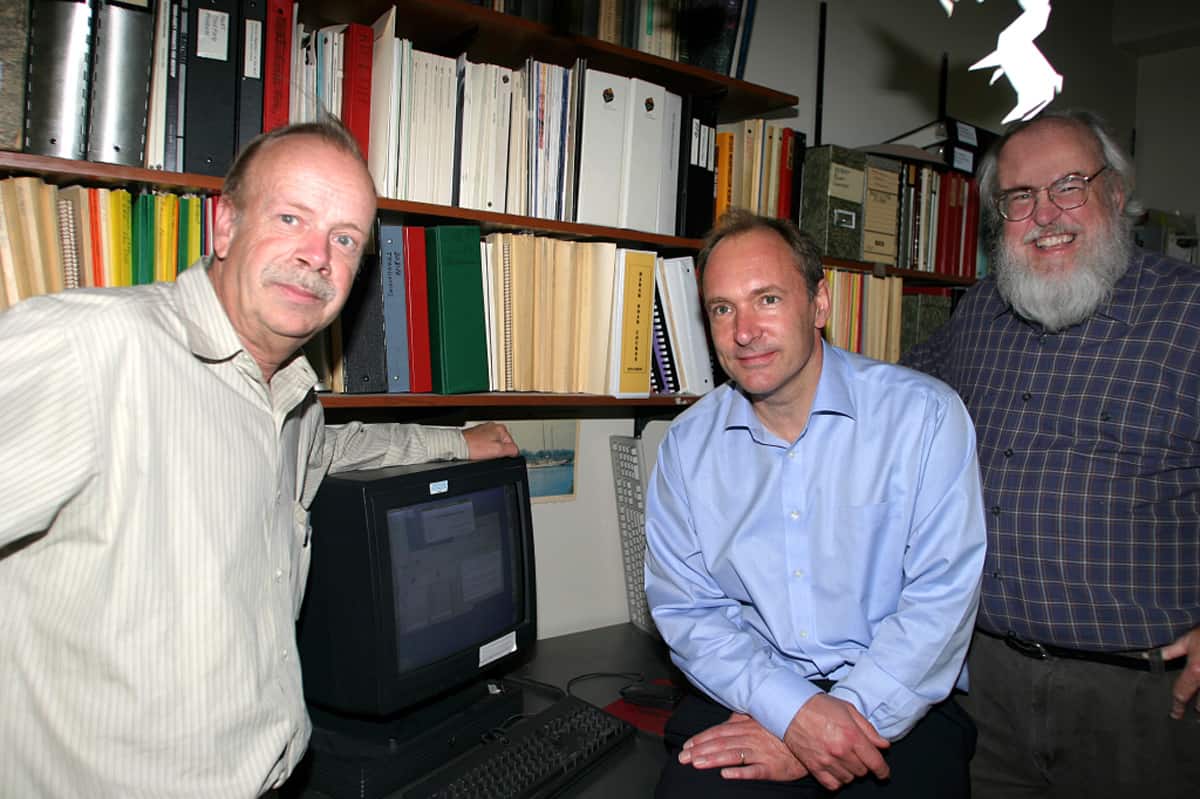
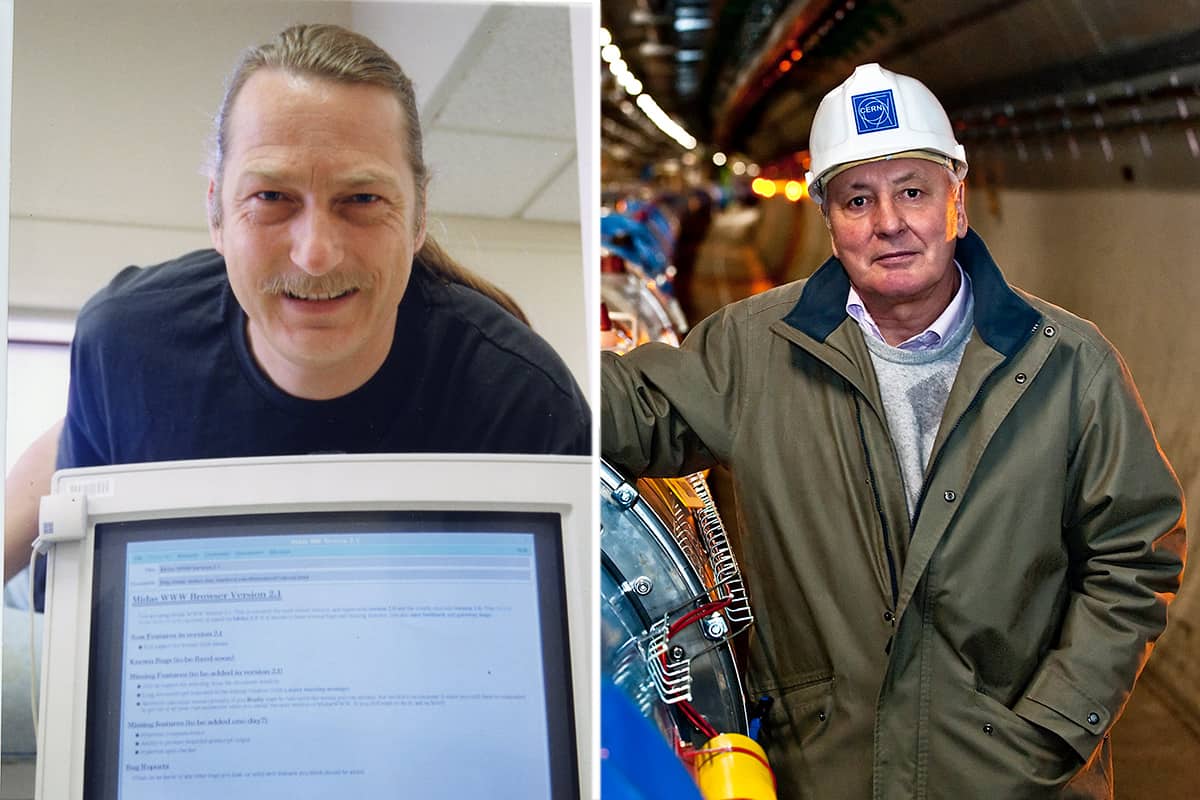
(Courtesy: CERN)(Courtesy: Diana Rogers, SLAC)Web pioneers Top: Tim Berners-Lee (right), Nicola Pellow (centre) and Robert Cailliau at CERN – the birthplace of the Web – in 1993; Centre: Paul Kunz (left), who set up the first Web server in North America in 1991, in his office at SLAC in 2000 along with Berners-Lee (centre) and Web historian Bebo White; Bottom: British physicist Tony Johnson, who developed the Midas Web browser for Unix operating systems in 1992 (left) and Large Hadron Collider project director Lyn Evans (right), who would have had a much tougher job without the Web at his disposal. (Courtesy: B White, courtesy AIP Emilio Segrè Visual Archives; M Brice/CERN)
This environment provided fertile soil for the development of the Web by Berners-Lee and Belgian software engineer Robert Cailliau, between 1989 and 1990. Using a powerful NeXT computer featuring a point-and-click graphical user interface, Berners-Lee programmed the initial Web software in the autumn of 1990. He began communicating via the Internet with Cailliau’s NeXT machine just before Christmas of that year.
“By 1990 CERN had become the largest Internet site in Europe,” recalled CERN network czar Ben Segal in an online article in 1995. “[The lab] positively influenced the acceptance and spread of Internet techniques both in Europe and elsewhere.” Indeed, the Web was soon a primary reason for scientists to access the Internet.
In August 1990 nuclear and particle physicists in Russia established Internet links via phone lines to Finland. And seven months later, it became accessible in Hungary, Poland and the former Czechoslovakia after the NSFNET was extended to these Eastern Bloc nations. In both networking and software, physicists at CERN led Europe onto the emerging “information superhighway”.
California bound
In September 1991 Kunz was passing through CERN on his return to SLAC from Sweden and met up in Geneva with Berners-Lee, who showed him the Web. He quickly grasped its potential after seeing how he could use it to communicate over the Internet with his NeXT workstation back at SLAC. “I was really excited,” he recalled in James Gillies and Cailliau’s 2000 book How the Web Was Born. “I told Tim I was going to put SLAC’s SPIRES database on the Web as soon as I got home.”
After returning, Kunz visited SLAC librarian Louise Addis. “I’ve just been at CERN and found this wonderful thing a guy named Tim Berners-Lee is developing,” he told her. “It’s called the World Wide Web, and it’s just the ticket for what you guys need for your database.” But it took more than two months to set it up, partly because Kunz had delegated the work establishing it on SLAC’s mainframe computer to programmer Terry Hung.
Addis and Berners-Lee therefore pressed Kunz back into service to finish the task. On Thursday 12 December 1991 the first Web server outside of Europe (slacvm.slac.stanford.edu) went online, making SPIRES available throughout the world. Hardly 24 hours later, Berners-Lee announced its existence on the WWW interest-group bulletin board: “There is an experimental W3 server for the SPIRES high-energy physics preprint database thanks to Terry Hung, Paul Kunz and Louise Addis at SLAC.”
A key event was the 1992 Computing in High-Energy Physics Conference at Annecy, France, that September. Cailliau and Berners-Lee gave Web demonstrations and a prominent lecture entitled “World Wide Web”, displaying a map showing the growing number of Web servers in Europe and North America, plus others planned for Asia and Australia – about 20 in all. Their presentation was the principal highlight of the conference for Terry Schalk, a particle physicist from the University of California, Santa Cruz, who in summarizing the meeting to delegates, remarked that “if there is one thing everyone should carry away with them from the conference, it is the World Wide Web”.
By November 1992 there were at least 26 Web servers worldwide, most of them at high-energy and nuclear physics labs in Europe and the US. But what was needed for the Web to gain much wider acceptance were software “browsers” that worked on the personal computers then commonly in use. Cailliau and CERN intern Nicola Pellow had been programming an Apple Macintosh browser on and off for nearly a year, and a group of students there was developing an IBM PC browser. But their efforts suffered from a lack of management support.
And so CERN outsiders ended up developing the first widely useful browsers, mostly at SLAC and the University of California, Berkeley. They included the British high-energy physicist Tony Johnson – a member of an informal group dubbed the “SLAC WWW Wizards” – who in the autumn of 1992 was developing a browser called Midas (or MidasWWW) for computers with Unix operating systems. Like the browser that Berners-Lee had programmed for his NeXT workstation, it displayed graphic images in separate windows. Midas was becoming popular at SLAC, but Johnson was reluctant to make it widely available, given the amount of his time that would require.
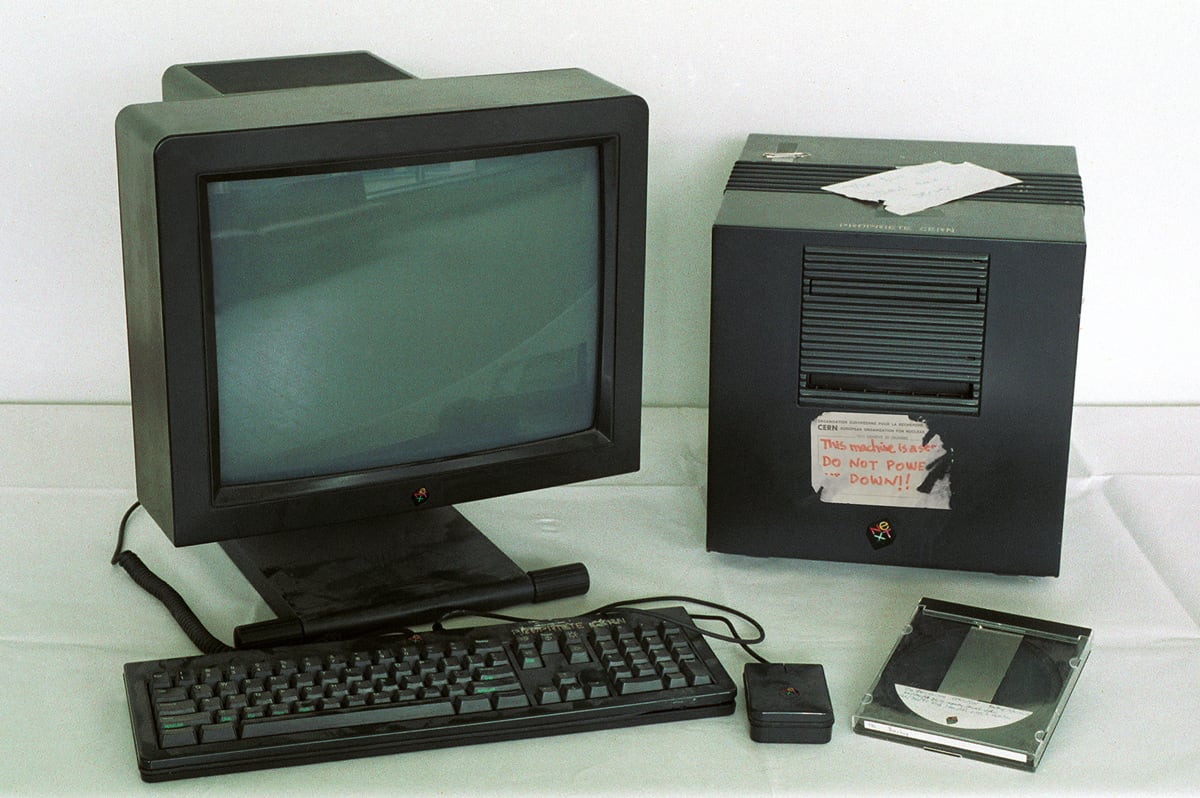
Where it all began This NeXT machine was used by Tim Berners-Lee at CERN in 1990 to develop and run the first World Wide Web server, multimedia browser and Web editor. (Courtesy: P Loïez/CERN/CC BY-SA 4.0)
In mid-November, however, Johnson released the browser on the FreeHEP website, announcing it on the www-talk newsgroup. Among the first to try the software was Marc Andreessen, a computer-science undergraduate at the University of Illinois. He became enamoured of the Web that month while working at the National Center for Supercomputing Applications (NCSA) on campus, developing computer-visualization software. Andreessen e-mailed Johnson about it the very next day. “MidasWWW is superb!” he exclaimed. “Fantastic! Stunning! Impressive as hell!”
He suggested they collaborate on an improved version incorporating colourful graphic images and animations. Intrigued at first, Johnson turned down the offer after considering how such an intensive programming activity would conflict with his physicist day job. Instead, Andreessen teamed up with NCSA staff member Eric Bina to develop a browser for Unix-based computers. After a feverish two months of programming activity, including many pizza-fuelled all-nighters, they released what they dubbed NCSA X Mosaic 0.5 in January 1993. “Brilliant!” Berners-Lee exclaimed after seeing it. “Having the thing self-contained in one file makes life a lot easier.”
Whereas earlier Web pages were dominated by text, they could now resemble glossy magazine pages
Over the next two months, Andreessen and Bina released six more versions of X Mosaic in rapid succession. By early March, their browser could include embedded graphics on computer screens for the first time – rather than having to open a separate window to view them. Whereas earlier Web pages were dominated by text, they could now resemble glossy magazine pages.
That April NCSA officially released its X Mosaic software. But the Unix-based computers on which it functioned were largely the domain of the academic community, or government and industrial laboratories. If the Web were ever to be commercialized, companies and ordinary users needed browsers that worked on Macintosh and IBM personal computers. These were being developed by other programmers at NCSA, and were released in September 1993. Easy to install and with superior graphics capabilities, they were soon being downloaded for free by thousands of personal-computer users every month. (Now I could access the Web from my PowerMac computer, not just on the SLAC mainframe.)
Together, the Mosaic browsers and the Web provided a means for the rapidly growing legions of personal-computer users to access the information superhighway. And with such a burgeoning audience now available, the number of websites exploded. “By 1994 the centre of gravity of the World Wide Web had crossed the Atlantic to a place where the entrepreneurial heart beats stronger,” recalled Cailliau and Gillies in 2000. Specifically, it had moved to Silicon Valley, especially after Andreessen headed there early that year to co-found Netscape Communications and to develop Netscape Navigator, which soon replaced Mosaic as the most popular Web browser.
Worldwide collaboration
High-energy physics had another important contribution to make that year – extending the Internet and Web into China. Before 1994, that awakening giant had international telephone connections with the outside world but no Internet-capable linkage. SLAC physicist Les Cottrell had been trying to remedy the problem, working with computing staff at the Institute of High Energy Physics (IHEP) in Beijing. They finally established a satellite link from SLAC to Beijing Airport, with microwave links and copper landlines relaying signals between the airport and IHEP. On 17 May 1994 the first Internet link to China began operating. Hundreds of Chinese scientists, including those doing research at CERN, could now access the Web via links to IHEP.
That December, the CERN Council decided to proceed with construction of the Large Hadron Collider project, which would transform the laboratory from a European facility into a world centre for high-energy physics. The LHC project would eventually cost nearly €10bn and involve physicists from all over the world – including China, Eastern Europe, Japan, India, Russia and the US. It included the installation of more than 1800 superconducting magnets in the existing LEP tunnel and construction of gargantuan particle detectors at four locations around the 27 km ring.
It is difficult to imagine how the Large Hadron Collider could ever have succeeded without intensive use of the Internet and Web
It is difficult to imagine how this enormous, technologically sophisticated project could ever have succeeded without intensive use of the Internet and Web. And the recent extension of the Internet into Eastern Bloc countries and China allowed their scientists to become equal partners in this globe-spanning enterprise. In fact, the LHC pioneered many of the information-sharing techniques that have since come to characterize the globalized world that emerged after the Cold War ended.
Typical of the international organizations focused on CERN were the huge scientific collaborations that began designing and building the four collider detectors. Here I mention only one of them, the Compact Muon Solenoid (CMS) collaboration, but there are many similarities with the other three. Led at first by CERN physicist Michel Della Negra, it initially involved large contingents from Finland, France, Germany, Italy and Russia – and eventually China and the US too. Of the 1243 scientists listed on its December 1994 technical proposal, there were 236 from nations of the former Soviet Union and 36 from China. Organizing and managing such a sprawling international collaboration would have been nearly impossible without something like the Web to keep members informed of the status of their project.
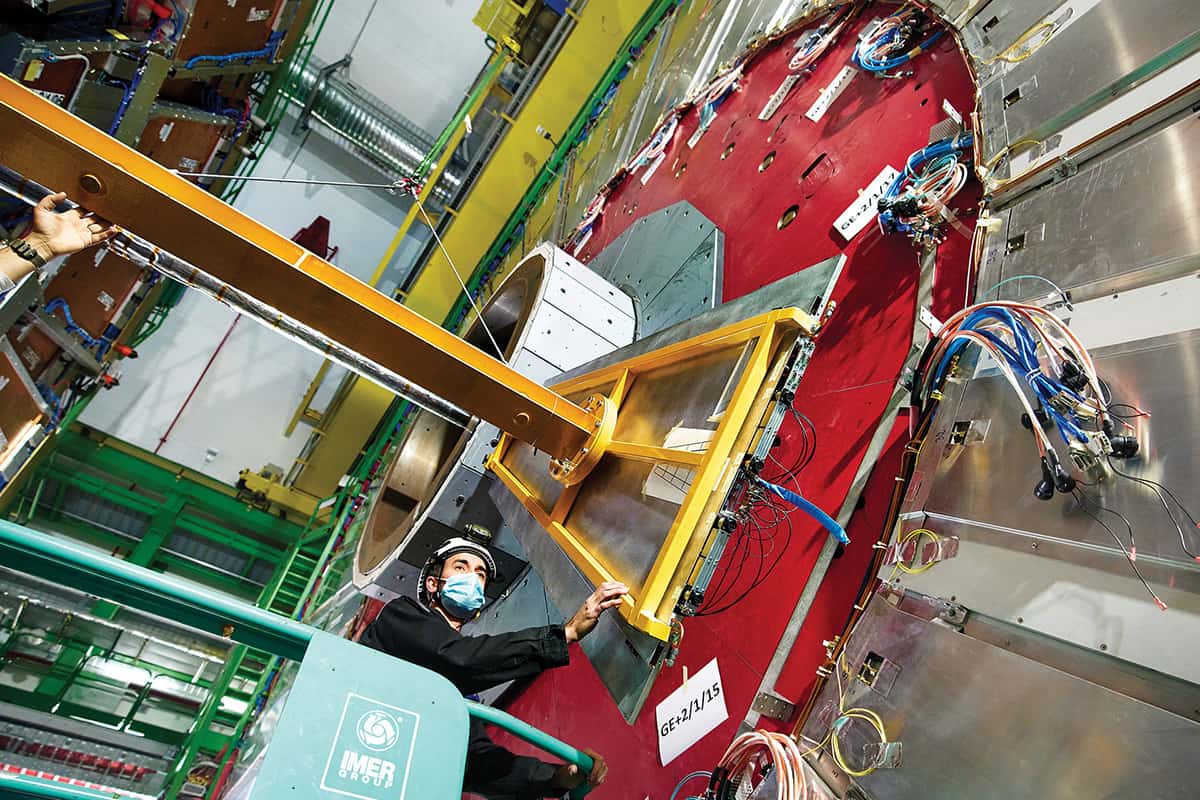
Powerful tool The Web’s ability to let physicists across the world communicate and share data has been invaluable for experiments such as the Compact Muon Solenoid at the Large Hadron Collider, shown here in November 2021 during its high-luminosity upgrade. (Courtesy: J Ordan/CERN )
The Web also permitted individual members to post documents on the CMS website (cms.cern.ch) and get rapid feedback from other members. Managers could seek out and resolve design conflicts before they became serious. As these efforts occurred across three continents and 18 time zones, the Web allowed scientists to coordinate their actions and beliefs at an unprecedented global scale.
The Web proved important, too, in designing and building the collider itself. This really hit home for me in June 2000 when I interviewed LHC project director Lyn Evans at CERN while researching the history of the Superconducting Super Collider (SSC) – the US facility that had been cancelled in October 1993. In his office he showed me a large table-top computer display of the collider project. Using it, Evans could monitor and coordinate many elements of this sophisticated project at a finger’s touch – for example, the superconducting magnet cores then being manufactured by French, German and Italian companies.
Data on testing and performance did not have to await the delivery of paper reports or e-mail attachments; they were immediately available online. Evans could tell quickly whether critical components were encountering problems and devote resources to remedying them. Keeping components on schedule is crucial in project management, for delays in one area can affect many others and lead to large cost overruns. The Web helped high-energy physics to successfully surmount the multibillion-euro scale of accelerator projects – at which level the SSC project had fallen through.
Electronic supply chains
In the early 2000s the Web’s impact began to be felt in industry, too, as management gurus and business schools began preaching the values of “electronic supply-chain management” (e-SCM). Involving intensive use of the Internet and Web to coordinate manufacturing, marketing and sales activities, e-SCM was doubtlessly inspired to some extent by physicists’ uses of the Web in the LHC project. But SCM was hardly a new idea. It derived in part from the management philosophy of “just-in-time” or “lean” manufacturing pioneered by Japanese corporations. These early supply chains typically involved other Japanese firms, making coordination achievable using local computer networks or telephones.
With the advent of the Internet and Web, supply chains could be extended globally to take advantage of cheap labour supplies in developing nations such as China, Mexico and Vietnam. By allowing detailed design and other information to be shared among selected manufacturers and by enabling rapid data and financial exchanges, the Web also permitted supply chains to expand across continents. The Internet and Web made it much easier to outsource labour-intensive activities while maintaining quality control and concentrating on core competencies, thus reducing costs. It is difficult to imagine such a global commercial transformation happening without the ultra-dense, fine-grained information transfers that occur at light speed almost every second over the Internet.
Industrial impact The Web has transformed not just science, but commerce too – although online electronic supply chains have triggered unforeseen economic inequalities. (Courtesy: iStock/B4LLS)
But while these global exchanges have benefitted financial and technological elites, and the corporations that employ them, they helped to export low-skilled labour, taking it from blue-collar workers in developed nations and exacerbating existing inequalities. In the semiconductor industry, for example, there is a set of low-skilled, labour-intensive functions in the production of microelectronic circuits called “assembly, test and package”. These functions were performed initially in such places as Allentown, Pennsylvania, and Mountain View, California. But semiconductor firms have largely offshored this category of work to China, while keeping high-value-added, highly paid functions such as microchip design at home in Silicon Valley or Austin, Texas.
After China joined the World Trade Organization (WTO) in 2001, such exports of low-skilled jobs to this nation exploded. A good barometer of China’s economic activity, and indirectly the amount of labour being offshored to it, is its annual energy consumption. In the decade immediately after joining the WTO, this consumption more than doubled from about 12,500 to over 31,000 terawatt hours. So did its annual coal consumption – from less than 1500 to more than 3500 million tonnes – and its total emissions of carbon dioxide. As Swedish political ecologist Andreas Malm observed, China became “the chimney of the world” literally overnight.
Reliable estimates put the resulting loss of US jobs in the millions. A largely unanticipated result has been the hollowing out of Middle America, particularly in the industrial Midwestern states such as Indiana, Michigan and Ohio. Pennsylvania’s Lehigh Valley, home to Allentown – where the Bell Telephone System’s principal microelectronics manufacturing arm had previously been located – is now a major distribution centre in the north-east of the US for dozens of companies from Amazon to Walmart, whose warehouses dot valley farmlands. Few of the goods being distributed there are “made in America” any more. Europe experienced similar blue-collar job losses too.
A world transformed
There can be no serious doubt that the world has been experiencing a vast economic and cultural transformation since the Cold War’s end. Nor can there be much doubt that the Internet and Web played crucial roles in this most recent globalization wave. In the prior wave, occurring during the 19th and early 20th centuries, fossil-fuelled transportation, electricity generation and telephone communication played similar crucial roles – enabling extensive worldwide trade and cultural exchanges among far-flung nations. That wave ended during the First World War and the ensuing bifurcation of the globe into exclusive capitalist and communist spheres of influence.
Other technologies have enabled the present wave of globalization, among them fibre-optic and satellite communications as well as containerized shipping and trucking. But the Internet and Web have played pivotal roles, for without them one cannot begin to imagine the extent of the scientific, commercial and cultural exchanges that have become commonplace.
The benefits from the Web have not, however, come without tremendous wider economic and social dislocations
The obvious benefits that have accrued from the Web since its emergence in the high-energy physics community in the early 1990s have not, however, come without tremendous economic and social dislocations. Those disruptions have afflicted important sectors of the US and other national economies, leading to angry “populist” reactions in Europe and America. Brexit and the 2016 electoral victory of Donald Trump were two conspicuous outcomes of this surge of anti-globalization fervour on opposite sides of the Atlantic.
The world has indeed been transformed by the Web, but not entirely for the better.
This article is adapted in part from “Digital fire: the origins and impacts of the World Wide Web”, to appear in the forthcoming IOP Publishing ebook Big Science in the 21st Century. The author also discusses the growth of the Web in the 20 January 2022 edition of the Physics World Weekly podcast.
The strategic focus on quantum science and engineering in the UK has over the last few years generated a vibrant community of start-up companies that are aiming to build the quantum computers of the future. “We’re seeing that quantum ecosystem grow very rapidly,” says Michael Cuthbert, director of the National Quantum Computing Centre (NQCC), a new facility that is now being built on the Harwell campus in Oxfordshire. “The start-up companies that have emerged, predominantly, from the UK’s academic sector, are driving excellent technical work. They are starting to raise significant investment on the back of robust and credible business models.”
Many of those early-stage companies were presenting their latest innovations at the National Quantum Technology Showcase, which was held in London at the beginning of November. Since the last in-person event of its kind in 2019, there has been a significant change in the landscape for quantum start-ups. “The ecosystem is flourishing, the technology has moved on, and the market is definitely starting to mature,” comments Ilana Wisby, CEO of Oxford Quantum Circuits (OQC).
We are seeing more people interested in using quantum technologies to help their business.
Ilana Wisby, Oxford Quantum Circuits
OQC is building its own quantum processors based on superconducting quantum circuits, and has recently made its Sophia platform available to end users through a quantum-computing as-a-service (QCaaS) model. The company has also signed an agreement with the NQCC that will provide UK users with priority access to its cloud-based quantum-computing resources. “We are seeing more people who are interested in using quantum technologies to help their business, and we are putting the resources they need at their fingertips,” comments Wisby.
Compared to a year ago, Wisby says that more money is flowing into quantum start-ups – partly through collaborative research projects funded by government-backed programmes, but also from increased interest among investment firms. “The investor community is much more aware of quantum technologies, and over the last year they have become more comfortable about putting their money into the quantum sector,” she says.
One notable development is the announced merger between UK software specialist Cambridge Quantum with Honeywell Quantum Solutions, a US-based developer of quantum processors, to form the world’s largest integrated quantum-computing company. Honeywell made a cash injection of $270–300m into the combined company, called Quantinuum.
Ilyas Khan, chief executive officer of the new company and founder of Cambridge Quantum, believes that bringing hardware and software expertise together will accelerate progress towards a scalable quantum computer. “By uniting the best-in-class quantum software with the highest performing hardware, we are uniquely positioned to bring real quantum computing products and solutions to large, high-growth markets,” he comments.
Other start-up firms report increased interest from venture capitalists, which together with government R&D grants is allowing even very young companies to expand rapidly. At Universal Quantum, for example, which emerged from stealth mode just last year, staff numbers have climbed quickly from a few academics to more than 30 people – and the company plans to reach 100 staff members within the next 18 months.
The challenge for these companies is finding and recruiting enough scientists and engineers to support such rapid growth. “There are very few degree courses in quantum computing,” points out Samantha Edmondson, who is responsible for talent acquisition and development at Universal Quantum. “Our roles need a combination of skills that are not often taught together at university level.”
For that reason, explains Edmondson, Universal Quantum places a strong focus on training. “We recruit people who understand quantum physics but have little experience of computer engineering, and we recruit mathematicians and computer scientists who are unfamiliar with quantum technologies. We provide extensive in-house training and support to fill in the gaps.” That includes regular drop-in sessions with one of the company’s quantum experts, particularly for staff like Edmondson who may not have a scientific background. “You can ask a question, no matter how basic, and have it explained in a way that’s easy to understand.”
We want to help our new recruits gain the skills they need for their future careers.
Samantha Edmonson, Universal Quantum
As well as developing new technical skills, Edmondson says that it’s equally important to prepare hew hires for leadership positions. “I have worked for other tech start-ups where middle management becomes the sticking point,” she says. “We want to help our new recruits gain the skills they need for their future careers.” That people-first approach is also likely to foster a motivated and loyal workforce, which should reduce the need for ongoing recruitment.
Another key challenge for start-up companies is to manage high levels of initial investment against the time it will take to realize a fully fault-tolerant quantum computer. “This is very deep tech,” comments Wisby. “As a hardware company we need to spend a lot of money on equipment and infrastructure, and it will take a long time to generate any significant revenues.” The QCaaS service launched by the company offers a way to gain some return on the significant progress that OQC has made so far, while also making early quantum-computing resources available to end users.
Other companies are juggling long-term ambitions with the need to deliver tangible outcomes over the next few years. Universal Quantum, for example, was founded with the bold mission of building a million-qubit quantum computer, and its focus from the outset is to deliver a scalable solution based on trapped-ion technology. The company’s founders, Sebastian Weidt and Winfried Hensinger, have pioneered a technique that exploits electric-field connections to transfer information around the modules inside a quantum computer, which they say is faster and simpler to engineer than alternative laser-based solutions.
In the near term, the company will be heading up a £7.5m research project to build a scalable quantum computer that will also address the problem of error correction. “Error correction is crucial to achieving anything really useful with quantum computers,” comments Weidt. “This project will help us to go from today’s proof-of-principle machines to scalable quantum computers that can solve some of the world’s most pressing computational challenges.”
Industrial focus: To deliver some near-term quantum advantage, ORCA Computing is building hybrid quantum–classical processors that are fitted with standard interfaces to enable easy integration (Courtesy: ORCA)
Meanwhile, ORCA Computing hopes to offer some near-term quantum advantage by building hybrid systems that combine classical and quantum processors. “In the long term our goal is to build a scalable universal quantum computer that operates at room temperature using optical fibre and industry-standard components,” says Kris Kaczmarek, the company’s head of product. ORCA’s photonics-based system exploits quantum memories to store single photons and release them when they are needed, eliminating the need to use large numbers of components working in parallel to enable error correction. “We have been very fortunate to receive public funding, but we know we need to deliver real products that offer value to our customers.”
One way to demonstrate that value is to show how current quantum computers can be used in industry applications. An important objective for the consortium led by Universal Quantum, which among others includes Rolls-Royce and quantum software specialist Riverlane, will be to use quantum computing to solve computational fluid dynamics (CFD) problems in the aerospace sector. The specific use case for the project is combustion modelling, which is crucial for developing more sustainable aviation fuels and jet engines, although similar algorithms could be applied across many other CFD calculations.
Another collaborative project, this time led by hardware specialist SEEQC, is focusing on drug development. The £6.8m QuPharma project, which includes as a partner the German pharmaceutical giant Merck KgaA, aims to exploit SeeQC’s quantum computing platform alongside a classical supercomputer to radically reduce the time needed to run molecular simulations in drug discovery. “By doing all the optimizations for this specific application, we can develop a scalable and practical quantum platform within a shorter timeframe,” comments Joseph Rahamim, a quantum engineer at SEEQC.
SEEQC’s hardware platform offers a novel solution to the engineering challenge of scaling up quantum computers. Early demonstrations of the technology are notable for the huge bundles of cables that are needed to control and read-out the few tens of qubits installed inside the cryostat. Such complex control systems will not scale to thousands or millions of qubits, and SEEQC believes that the answer lies in integrating the control electronics inside the refrigerator.
“We bond a classical superconducting circuit to our quantum chip,” explains Rahamim. “The superconducting circuit performs logic operations more quickly and with a lower heat load than a conventional silicon-based processor, and having it installed inside the cryostat reduces the time needed to relay information to and from the superconducting qubits.”
Quantum computing is about deriving real value across a range of different applications.
Michael Cuthbert, National Quantum Computing Centre
One important partner in both these projects is Riverlane, which specializes in quantum software – all the way from testing the performance of qubits through to building an open-source operating system for quantum computers. A key focus for the company is to work with end users in the chemical, pharmaceutical and materials industries to develop quantum algorithms for specific applications. “We are seeing more interest from enterprise users in developing use cases for quantum computers,” says Alexandra Moylett, one of the company’s quantum scientists. “In many cases we can provide the connection between end users in industry and the quantum hardware specialists.”
Developing a strong user community in the UK will be one of the most important objectives for the NQCC. “Until now we’ve probably been focused more on the technology development, but ultimately quantum computing is about deriving real value across a range of different applications,” says NQCC director Michael Cuthbert. “The NQCC will be working with different industry sectors to provide the applications support they need to explore the use cases for quantum computing.”
Researchers in California have developed a deep-learning framework that performs in vivo virtual histology of intact skin. The framework rapidly transforms label-free reflectance confocal microscopy (RCM) images into virtually stained images that exhibit similar features to traditional histology of the excised tissue. The first application of virtual histology to intact, unbiopsied tissue, the study provides an important step towards the use of virtual histology technology for clinical dermatology.
“This process bypasses several standard steps typically used for diagnosis – including skin biopsy, tissue fixation, processing, sectioning and histochemical staining,” explains senior author Aydogan Ozcan from the UCLA Samueli School of Engineering in a press statement. “Images appear like biopsied, histochemically stained skin sections imaged on microscope slides.”
The current standard for diagnosing skin disease is based on invasive biopsy and histopathological evaluation. Non-invasive imaging techniques such as RCM could help prevent unnecessary skin biopsies. RCM is an emerging microscopy technology that has been available for use in clinical dermatology over the past decade. It works by detecting light backscattered from structures within the skin and provides in vivo imaging at near-histologic resolution.
Adoption of RCM, however, has not been widespread. The researchers attribute this to various factors: in vivo RCM does not show the nuclear features of skin cells seen in traditional microscopy; and the acquired images are greyscale, limiting contrast between structures. In addition, dermatologists accustomed to interpreting tissue pathology in the vertical plane may have difficulty interpreting images presented in the horizontal imaging axis of confocal microscopy. As such, analysis of RCM images is relatively challenging and requires specialized training.
Ozcan, along with UCLA’s Philip Scumpia and Gennady Rubinstein from the Dermatology and Laser Centre, led the research initiative to virtually stain RCM images into a user-friendly format for dermatologists and pathologists. Their research team trained a convolutional neural network to rapidly transform RCM images of unstained skin into haematoxylin and eosin (H&E)-like 3D images with microscopic resolution.
To train the neural network to correctly stain nuclear features, the team devised a way to provide nuclear contrast to cells within the skin, a feature that’s normally lacking in RCM images. The network was trained under an adversarial learning scheme, which takes ex vivo RCM images of excised unstained tissue as inputs and uses microscopic images of the same tissue stained with acetic acid (to provide nuclear contrast) as the ground truth.
A board-certified dermatologist trained in RCM imaging and analysis used a VivaScope 1500 system to capture RCM images of 43 patients. These included three RCM mosaic scans (in which multiple images are scanned over a large area at the same depth to increase the field-of-view) and two z-stacks (through different skin layers) of both normal skin and suspicious skin lesions for each patient. In addition, discarded Mohs surgery skin tissue specimens from 36 patients with and without residual basal cell carcinoma (BCC) tumour were RCM-imaged ex vivo.
The researchers then applied virtual staining to the greyscale images to match the characteristics of H&E staining, in which cell nuclei and cytoplasm are stained blue and pink, respectively. They describe the processes in detail in Light: Science & Applications.
The final ex vivo training, validation and testing datasets used to train the deep network and perform quantitative analysis comprised 1185, 137 and 199 ex vivo RCM images of unstained skin lesions and their corresponding acetic acid-stained ground truth, obtained from 26, four and six patients, respectively.
Performance assessment
To evaluate their model, the researchers segmented virtual histology images of normal skin samples and their ground truth images to identify cell nuclei. They found that the virtual staining achieved around 80% sensitivity and 70% precision for nuclei prediction. Examining nuclear morphological features in the images revealed that parameters calculated using virtual staining matched well with those using the ground truth images.
The researchers also examined the use of both 2D and 3D image stacks as input to the deep network. They determined that using a 3D RCM image stack containing multiple adjacent slices as input produced a better virtually stained image than using a single 2D stack, which produced suboptimal blurred images.
The trained neural network was tested on new RCM images of unbiopsied BCC and pigmented melanocytic nevi, to determine whether RCM images with virtual histology could be used diagnostically. The researchers report good concordance between the virtual histology and common histologic features, in the areas of skin most commonly involved in pathological conditions. Virtually stained RCM images of BCC showed the same histological features used to diagnose BCC from skin biopsies via H&E histology. The virtual staining also successfully inferred pigmented melanocytes in benign melanocytic nevi.
The researchers note that further investigation is required to understand how virtual histology affects diagnostic accuracy, sensitivity and specificity, compared with the greyscale contrast of RCM imaging. They plan to collect more BCC and additional BCC-subtype data to assess their deep-learning network’s ability to detect cell nuclei inside basal cell tumour islands.
“Future studies will evaluate the utility of our approach across multiple types of skin neoplasms and other non-invasive imaging modalities toward the goal of optical biopsy enhancement for non-invasive skin diagnosis,” the researchers conclude.
Researchers in China and Korea have grown large-scale single-crystal monolayers of a two-dimensional material, tungsten disulphide (WS2), for the first time. The crystals, which were grown on a sapphire substrate, measured more than 3 cm across, and could become an alternative platform to silicon in next-generation semiconductor technology.
Silicon-based semiconductors are fast approaching their performance limits, so researchers are seeking new materials to replace them. Two-dimensional materials such as graphene (the most famous of all 2D materials) and WS2 show great promise in this context. The latter belongs to a family of materials known as transition metal dichalcogenides (TMDs), all of which have the chemical formula MX2 (where M is a transition metal such as tungsten or molybdenum and X is a chalcogen such as sulphur, selenium or tellurium).
The TMDs have a special property. While they are indirect band-gap semiconductors in their bulk form, they become direct band-gap semiconductors when scaled down to monolayer thickness. These monolayers efficiently absorb and emit light, and so might find use in optoelectronics devices such as light-emitting diodes, lasers, photodetectors or solar cells. They might also be used to make circuits for low-power electronics, low-cost or flexible displays, sensors and even flexible electronics that can be coated onto a variety of surfaces.
Difficult to grow as single-crystal structures
The problem is that it has so far proved difficult to grow TMDs as single-crystal structures on insulating wafer-scale substrates – the sine qua non for building ultra-large-scale high-performance semiconducting circuits. This is because the crystalline lattice of TMDS is not symmetrical, which generally leads to islands of the material being aligned antiparallel on most substrate surfaces.
Two teams, led by Kaihui Liu of China’s Peking University and by Feng Ding from the Center for Multidimensional Carbon Materials at the Institute for Basic Science (IBS) in Korea, together with collaborators at Fudan University, have now overcome this problem. Inspired by crystal growth techniques that involve aligned nanotubes on sapphire, Liu, Ding and colleagues grew their WS2 on a single-crystal sapphire substrate cut along a specific plane at an angle of just 0.1°. This sapphire structure is known as vicinal a-plane sapphire (or a-Al2O3). The method, which the researchers call “dual-coupling guided epitaxy growth”, favours a coupling between WS2 and the edges of the sapphire that breaks the antiparallel orientations of the WS2 islands on the substrate. All the TMD single crystals grown on the substrate are thus aligned along a single direction. These small single crystals then coalesce, producing a larger single crystal that matches the dimensions of the substrate.
By showing that it is possible to grow wafer-scale 2D single crystals other than graphene, and on insulating surfaces other than the more common hexagonal boron nitride, the researchers say they have taken a major step forward in 2D-materials-based device design – one that could aid the development of 2D semiconductors in high-end applications of electronic and optical devices. Looking ahead, members of the team are now busy developing next-generation technology and theories for how to synthesize a broad class of 2D materials in wafer-scale single-crystal form. “We will be making a great effort to improve the quality of the synthesized 2D materials and even control their thickness in the future,” Ding tells Physics World.