

Physics teachers inspire the next generation of scientists

According to the latest annual survey of UK graduates by Prospects Luminate, secondary education is the third most popular professional career choice for physics graduates. Indeed, for anyone who enjoys discussing fundamental scientific concepts with young and curious minds, teaching physics at secondary school promises a fun, rewarding and varied work environment.

“I wanted a job that would make me happy,” says Oliver Alexander, who gave up the opportunity to pursue a lucrative career as a patent attorney to become a physics teacher. “I wanted to help and influence people, and teaching physics to secondary school students has the potential to change their whole lives.”

I was miserable in a desk job and I knew I needed to do something else. Being a teacher is crazy in a good way. I haven’t had a dull moment since I started.

Oliver Alexander

Alexander admits to having some reservations about switching tack and taking an extra year to retrain – above all whether he would be good enough to communicate the beauty and complexity of physics to a classroom of teenagers. But now, in his first full year as a trained physics teacher, he has no regrets.

“I was miserable in a desk job and I knew I needed to do something else,” he says. “Being a teacher is crazy in a good way. I haven’t had a dull moment since I started.”

Part of that enjoyment is getting to know his students and classes, and seeing just how quickly they develop their scientific knowledge and skills. Aidan Reynolds, who has also just completed his first term as a physics teacher, can already sense the progress his students are making.

“During my training year I mainly taught A-level students, but now I have some classes who are just starting to tackle some GCSE topics,” he says. “They are newer to the subject, and you can really see them develop their understanding from one day to the next.”

Physics to the fore

Reynolds and Alexander relish the opportunity to discuss and explore physics ideas with their students, and they work hard to devise different teaching approaches to help different  age groups to properly understand fundamental physics phenomena. “It can be tricky to get some of the complex ideas across, particularly when you have studied them in such depth at university,” comments Reynolds. “It’s quite a fun challenge to take something that I know is very complicated, and making it simpler by breaking it down into its key component parts.”

With physics teachers still in short supply, Reynolds often has the opportunity to cover more advanced topics with A-level groups to help them prepare for university admissions. “Tackling those harder questions keeps my physics brain ticking over,” he says.

It’s a fun challenge to take something that I know is very complicated, and making it simpler by breaking it down into its key component parts.

Aidan Reynolds

For anyone thinking about becoming a physics teacher, both Alexander and Reynolds have a simple piece of advice: “Go for it!” Reynolds adds that it can be a good idea to try to spend a day or a week in a school to get a feeling for the environment. “I also did some tutoring, which makes you start thinking about how you would explain key concepts to different age groups,” he says. “When you go and observe some lessons you realize that it’s not as scary as it might seem from the outside.”

Both Alexander and Reynolds were supported through their postgraduate training year by the Institute of Physics (IOP), which runs a scholarship programme funded by the Department for Education for trainee secondary-school physics teachers in England. The Teacher Training Scholarship scheme offers successful candidates tax-free funding of £26,000 to support them through their training year, as well as a structured programme of continuing professional development to help scholars develop more effective approaches for teaching physics. Trainee teachers accepted onto the scheme also benefit from IOP membership during their training year, as well as access to a vibrant community of fellow scholars.

Has this article inspired you to consider a career in teaching? Take our short survey and tell us your views.

“My postgraduate training gave me lots of general teaching skills, but the IOP scholarship provided a more direct connection to the physics,” says Reynolds. “The conferences and lectures organized by the IOP as part the scholarship helped me to apply the general techniques I learnt during my teacher training to physics. Talking to other teachers who are passionate about physics education also really helped me to develop my explanations, particularly for the younger age groups.”

Making a connection

Both Reynolds and Alexander enjoy the social interactions with their classes and, after just a few weeks of teaching in their new schools, they are starting to make personal connections with their students. “They start talking to you about why they are interested in different subjects and what they want to do later on,” says Alexander. “Today a student came to tell me that he’d applied to college, and I was really happy that he had wanted to share that success with me.”

One term into his first academic year, and Alexander can already see the impact his teaching has had on his students. “At the start of year they didn’t know how to go about solving a problem,” he comments. “Now, when I ask a question on a new topic, they know how to approach it even if they don’t get it right first time. They’re thinking more like physicists, and that’s so lovely to see.”

Outside of the scholarship scheme, Reynolds still keeps in touch with a wider network of physics teachers through an e-mail group run by the IOP, the Physics Teaching News and Comment discussion forum (PTNC).

“There are so many teachers on the group who are sharing ideas and collaborating together to solve the same problems,” he says. “It’s absolutely amazing to be a part of that community and get that support, and I’ve found lots of resources on there that I’ve used myself or recommended to my students.”

The IOP also provides plenty of learning materials for physics teachers, including more than 2500 teaching activities that are freely available through its IOPSpark service, and it runs the Talk Physics forum for anyone involved in teaching physics in secondary school.

“Making the leap into teaching has definitely been worth it”, says Alexander, who has found his early days both challenging and rewarding. “There are definitely stressful days, and times when you feel like you’ve messed everything up, but for every day like that there are two or three where everything goes right,” he says. “When it all clicks into place you feel like you have had a huge impact.”

Has this article inspired you to consider a career in teaching? Take our short survey and tell us your views.

Applications for the IOP Teacher Training Scholarship programme are open now. Find out if you are eligible and apply today.
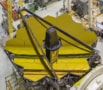
The ten-billion-dollar gamble: How the JWST shields itself from the Sun

Because the James Webb Space Telescope (JWST) operates in infrared light, stray thermal emissions from the Sun, Earth and even the spacecraft itself could cloud its vision. To keep them out, mission scientists designed an intricate, tennis-court sized sunshield that is quite unlike anything NASA has attempted to deploy in space before.

The sunshield comprises five layers, or membranes, of an aluminium-coated polymer called Kapton that is widely used in space exploration thanks to its stability across a broad range of temperatures. This stability is crucial: the first, Sun-facing layer of the sunshield is expected reach 383 K while temperatures at the inner fifth layer will drop as low as 36 K. Even with the right material, though, designing the sunshield’s layers to perform in deep space has been “a significant concern” says James Cooper, the JWST’s sunshield manager at NASA’s Goddard Space Flight Center.

Part of the problem is that each membrane in the sunshield will expand or contract to a different degree depending on its operating temperature. Accordingly, the membranes sitting in a clean room at Northrop Grumman (the aerospace firm that designed and built the sunshield) are not the same size as they will be in space. “Each membrane is carefully sized for its predicted temperature range,” Cooper explains. “Layer one – the Sun-facing layer – will be the hottest, while layer five will get very cold. So layer five has to be built ‘too big’ on Earth because we know that the material will shrink when it gets cold.”

Under tension

Another challenge is that each layer of the sunshield is gossamer-fine. The first, hottest layer is 0.05 mm thick, while the other four are 0.025 mm; their aluminium coatings are just 100 nm deep. Keeping the membranes thin saves weight, but it could also leave the sunshield susceptible to damage. What happens if it rips?

Cooper’s reply is that the sunshield is designed to cope with some level of damage. He and his colleagues expect it to suffer various wounds from micrometeorite impacts during its working life, and the odd hole here or there will not affect its performance – especially since they built a grid of seams and rip-stops into each layer to prevent tears from growing larger than approximately one by two metres. “We can meet performance requirements with this size tear in any layer,” Cooper tells Physics World.

The greatest risk of damage, though, comes soon after launch. Each of the kite-shaped sunshield’s six corners contains a membrane tensioning system (MTS), and each MTS is attached to 15 cables – three for each of the five membranes, amounting to 90 cables in all. To pull the sunshield’s five layers apart, the MTSs have to reel these cables in. A rip or catch at this unfurling stage could be very damaging indeed, and getting the system to work in rehearsals proved tricky.

“The MTS was relatively straightforward when bench-tested alone, but when we put everything together we found complex interactions with the membrane and cable management systems,” Cooper says. “We had to overcome challenges dealing with alternating tensions and slack in the cables.”

With the sunshield scheduled to begin unfurling three days after the telescope’s launch on 25 December, and taking five days to complete, it’s going to be a nervy New Year for Cooper and his colleagues as they wait to see whether the $9.8 billion telescope deploys successfully. But they won’t be the only ones biting their fingernails about keeping the JWST cool. While the sunshield will keep the telescope’s optics and most of its instruments at a frigid 36 K, some components need to be even colder.

Next: Keeping the JWST cool

  • This article was amended on 22 December 2021 to reflect delays to the JWST’s launch date.

Quantum effects make magnetene surprisingly slippery

The ultra-slippery nature of a two-dimensional material called magnetene could be down to quantum effects rather than the mechanics of physical layers sliding across each other, say researchers at the University of Toronto in Canada and Rice University in the US. The result sheds light on the physics of friction at the microscopic scale and could aid the development of reduced-friction lubricants for tiny, implantable devices.

Two-dimensional materials are usually obtained by shaving atomically thin slices from a sample of the bulk material. In graphene, a 2D form of carbon that was the first material to be isolated using this method, the friction between adjacent layers is very low because they are bound together by weak van der Waals forces, and therefore slide past each other like playing cards fanning out in a deck. For magnetene, the bulk material is magnetite, a form of iron oxide with the chemical formula Fe3O4 that exists as a 3D lattice in the natural ore. The bonds between layers are much stronger in magnetene than in graphene, however, so its similarly low-friction nature was a bit of a mystery.

Not just sliding layers

In the new work, which is published in Science Advances, lead author Peter Serles, together with colleagues led by Tobin Filleter, Chandra Veer Singh and Shwetank Yadav, obtained a sample of 2D magnetene by treating magnetite with high-frequency sound waves. This approach separated few-layer samples of magnetene from the bulk material. The team then measured the friction between the sheets using an atomic force microscope probe.

To their surprise, the researchers found that the friction between the tip of the AFM probe and the uppermost layer of magnetene was just as low as it is in the graphene. They therefore suspected that something other than layer sliding was at play. “When you go from a 3D material to a 2D material, a lot of unusual things start to happen due to the effects of quantum physics,” explains Serles. “Depending on what angle you cut the slice, it can be very smooth or very rough. The atoms are no longer as restricted in that third dimension, so they can vibrate in different ways. And the electron structure changes too. We found that all of these together affect the friction.”

To confirm the importance of these quantum phenomena, which include modifications to the charge density of the iron atoms and the emergence of unique low-damping phonon modes (vibrations of the crystal lattice) that are “forbidden” for classical systems, the team compared their experimental results to density functional theory simulations of how the probe slides over the 2D material. They found that the models that included quantum effects best predicted their experimental findings.

New ultra-low-friction materials

The work could help scientists and engineers design new ultra-low-friction materials in the future. Such materials could be useful as lubricants in small-scale applications like implantable devices, the researchers say. “When you’re dealing with such tiny moving parts, the ratio of surface area to mass is really high,” Filleter explains. “That means things are much more likely to get stuck. What we’ve shown in this work is that it’s precisely because of their tiny scale that these 2D materials have such low friction. These quantum effects wouldn’t apply to larger, 3D materials.”

The researchers say they would now like to better understand the role of the quantum effects, since the same low-friction behaviour has not been observed in other recently-synthesized 2D magnetic iron oxides such as hematene (Fe2O3) or chromiteen (FeCr2O4).

The ten-billion-dollar gamble: The JWST’s magnificent mirrors

Building a mirror the size of the James Webb Space Telescope’s (JWST) 6.5-metre primary isn’t a problem per se. Building a 6.5-metre mirror that can fit inside an Ariane 5 rocket fairing just 4.57 metres wide, without being too heavy to launch into space – well, that is a problem, and the task of solving it fell to NASA’s Lee Feinberg, who leads the telescope’s optical team.

“The primary mirror has a very elegant design,” Feinberg tells Physics World. The essence of that design, he explains, is that the primary mirror is foldable: the final version comprises 18 hexagonal segments, with three of the segments on either side forming “wings” that fold down.

The JWST also has a secondary mirror 0.74 metres across, plus a smaller tertiary mirror to remove the scope’s astigmatism and flatten the focal plane ready for its scientific instruments. Together, these three mirrors make up an arrangement known as an off-axis three-mirror anastigmat that corrects for spherical, coma and astigmatism errors while providing the instrument with a larger field of view. But these capabilities contribute launch headaches of their own. “The real trick is that the booms holding the secondary mirror are eight metres long, so you also have to fit that inside the rocket,” Feinberg notes. “And then there’s the sunshield. So we had to fold up for all those reasons.”

All three mirrors are made from a new type of gold-plated, optical-grade beryllium that remains stable at the telescope’s operating temperature of 36 K. This material, known as O-30, was created specially for the JWST by the materials firm Materion, and its advantages include a low mass and good technical performance at cryogenic temperatures. The material’s stiffness, for example, means that when the mirror is plunged into the freezing cold behind the telescope’s sunshield, it does not distort too much. Given all these factors, and the size of beryllium billets that were considered reasonable to work with, making a hexagonal segmented system that could fold up was “the best option”, Feinberg says.

A person in a clean-room suit looks on as one of the segments of the JWST mirror is tested

A similar hexagonal system has operated on the twin 10-metre Keck telescopes in Hawaii since the 1990s, and Feinberg acknowledges that his team learned a lot from Keck’s optical design. As at Keck, all 18 segments of the JWST’s primary mirror, as well as its secondary, have robotic actuators to nudge them into focus.

However, while Keck has sophisticated wavefront sensors to align its segments, the JWST optical team decided that such a system would be too complex to operate autonomously in deep space. Instead, the telescope will use its science camera. “The first test image that we’ll get will actually be 18 separate stars, because of the 18 separate segments each acting like a telescope,” Feinberg explains. The telescope will then use its camera and a specially developed algorithm called Phase Retrieval to measure the shape of the wavefront and adjust the shape of the primary mirror until all 18 segments focus as one.

The design of the telescope’s mirrors is typical of the technology and techniques that had to be pioneered to make the JWST workable. “Across the board, we felt that for everything we did, there was no playbook,” Feinberg says. “We were really changing the way we were doing things.”

A case in point: while the 2.4-metre mirror on the Hubble Space Telescope is contained within what is effectively a giant telescope tube assembly, the JWST’s mirrors are open to space. As the next post explains, protecting these mirrors from the heat and glare of the Sun is a tough challenge.

Next: How the JWST shields itself from the Sun

  • This article was amended on 22 December 2021 to reflect delays to the JWST’s launch date.

Brilliant polymath, troubled person: how John von Neumann shaped our world

Few mathematicians during the last century – perhaps only Bertrand Russell and Alan Turing – were as successfully polymathic as John von Neumann, the subject of the biography The Man from the Future: the Visionary Life of John von Neumann by Ananyo Bhattacharya, a science writer and former medical researcher with training in physics and protein crystallography. His book is well researched with the encouragement of von Neumann’s daughter, Marina von Neumann Whitman. It is also engagingly written, and mostly accessible to non-mathematicians, though it is inevitably intellectually demanding, ranging from the intricacies of quantum mechanics to the origins of electronic computing. As the author himself admits, with reference to a famous comment by Isaac Newton, “This book perches precariously on the shoulders of many giants.”

Born Neumann János in Budapest, Hungary, in 1903, von Neumann helped to lay the mathematical foundations of quantum mechanics in the late 1920s, while working in Germany (where he acquired the German form of his name). After moving to Princeton, US, in 1930, he was among the key scientists who worked on the Manhattan Project to build the atomic bomb. Around the same time, von Neumann published a treatise, Theory of Games and Economic Behavior, with the economist Oskar Morgenstern. Coining the phrase “zero-sum game”, the treatise would change economics and introduce game theory into political science, military strategy, psychology and evolutionary biology.

Post-war, von Neumann helped to design the world’s first programmable electronic digital computer, intended to make calculations about the hydrogen bomb. Then, in 1948, his automata theory launched the idea of information-processing machines capable of reproducing, growing and evolving. In the 1950s, his consideration of the workings of brains and computers made him a visionary thinker in artificial intelligence. Unfortunately, he could take this no further, because he died prematurely in 1957, aged 53, from cancer. Even so, writes Bhattacharya, “His thinking is so pertinent to the challenges we face today that it is tempting to wonder if he was a time traveller, quietly seeding ideas that he knew would be needed to shape the Earth’s future.”

His private life was less productive and rewarding, however. After von Neumann’s death, his second wife, computer scientist Klára Dán, who remarried for the fourth time before taking her own life in 1963, penned an unfinished memoir. Quoted in Marina von Neumann Whitman’s 2012 book, The Martian’s Daughter, the memoir’s chapter entitled “Johnny” opens as follows: “I would like to tell about the man, the strange contradictory and controversial person; childish and good-humoured, sophisticated and savage, brilliantly clever yet with a very limited, almost primitive lack of ability to handle his emotions – an enigma of nature that will have to remain unresolved.”

Von Neumann was one of a group of brilliant Hungarian mathematicians and physicists, including Leo Szilard, Edward Teller and Eugene Wigner, born around the turn of the century, who emigrated to the US and in many cases worked on the Manhattan Project. Most were from Jewish families, and humorously dubbed themselves “Martians” because they were outsiders to American society, apparently superhuman in intellect, speaking an incomprehensible native language and coming from a small obscure country.

Tellingly, von Neumann attributed their academic success to “a coincidence of some cultural factors” that created “a feeling of extreme insecurity in the individuals, and the necessity to produce the unusual or face extinction”. In other words, comments Bhattacharya, “their recognition that the tolerant climate of Hungary might change overnight” – as happened murderously in the White Terror of 1919–1921 – “propelled some to preternatural efforts to succeed”. Mathematics and physics were considered safe choices for Jews who wished to excel academically, because these subjects were viewed at that time as being relatively harmless and reasonably well rewarded. This is why the 1919 experimental proof of Einstein’s theory of general relativity was internationally honoured despite his Jewishness.

Both Einstein and von Neumann, who was 24 years his junior, settled at Princeton’s Institute for Advanced Study after it was established in 1930, and remained there until their deaths. But they responded to the place, and to America, in hugely polarized ways – as illustrated by von Neumann’s habit of playing German marching tunes at top volume on his office phonograph, provoking complaints from neighbouring offices, including Einstein’s. According to his friend Wigner, von Neumann “felt at home in America from the first day. He was a cheerful man, an optimist who loved money and believed firmly in human progress. Such men were far more common in the United States than in the Jewish circles of central Europe.”

Hence von Neumann’s emotional commitment to the atomic and hydrogen bombs and America’s Cold War against the Soviet Union – not to speak of his immunity to McCarthyite witch-hunts of Communist sympathizers. Einstein, by contrast, famously never felt at home in America, had little taste for money and deliberately avoided society in Princeton, including von Neumann’s splendid parties where guests were served by liveried footmen. Never a part of the Manhattan Project, Einstein instead suffered secret investigation by the FBI following his televised attack on the presidential decision to develop the hydrogen bomb in 1950. This revealing comparison deserves mention by Bhattacharya, who barely refers to Einstein in Princeton.

The two of them agreed in at least one key respect beyond science, however: their loathing for Nazism, and its destruction of their earlier love of Europe. Einstein refused to visit the continent after 1933. Von Neumann returned in 1949, but wrote to his wife: “I feel the opposite of nostalgia for Europe, because every corner reminds me…of the world which is gone, and the ruins of which is no solace. My second reason for disliking Europe is the memory of my total disillusionment with human decency between 1933 and September 1938.”

Von Neumann accepted that there was no “complete recipe” for avoiding human extinction by technological means

Towards the end, as cancer got hold of him and just before he received in 1956 a Medal of Freedom from President Dwight Eisenhower for his technical contributions to national defence, von Neumann asked in an article in Fortune magazine, “Can we survive technology?” The article was naturally preoccupied with the destructive potential of more powerful weapons, faster computers and more rapid telecommunications. But it presciently noted the climatic impact of rising carbon-dioxide emissions, too. Von Neumann favoured introducing new geo-engineering technologies, which he thought would unite nations more than the threat of nuclear war. Yet he accepted that there was no “complete recipe” for avoiding human extinction by technological means. “We can specify only the human qualities required,” he wrote, “patience, flexibility, intelligence.”

  • 2021 Allen Lane £20hb 368pp

Magnetic levitation chamber could be used to simulate plant growth on Mars

A new device that uses magnetic levitation to emulate the reduced gravities found on celestial bodies such as the Moon and Mars is 1000 times larger by volume than previous systems of its kind, paving the way for more complex Earth-based tests of low-gravity environments – including growing small plants in simulated microgravity. The new simulator, which was developed at the National High Magnetic Field Laboratory (NHMFL) at Florida State University in the US, will also enable researchers to perform a variety of physics, medical and biology experiments with a view towards future space missions.

Reduced gravity affects biological organisms in many ways. It is known to inhibit cell growth, and can also cause other forms of cellular stress, leading to loss of bone and muscle mass in ways that are detrimental to astronauts’ health. In physical systems, it can affect bubble cavitation, heat transfer in fluids and the sloshing dynamics of cryogenic propellants in spacecraft. In materials research, effects of reduced gravity include changes to the way crystals grow and alloys form.

Ground-based gravity tests

The best way to find out how microgravity will affect a given system is, of course, to send it into space. Such experiments are expensive, however, and must be conducted by astronauts rather than scientists trained in that specific discipline, which limits the types of tests possible. Researchers have therefore developed several ground-based devices that exploit free fall to simulate reduced gravities, including drop towers, aircraft in parabolic flight and suborbital rockets. While useful for many types of experiment, these devices maintain low gravity for a few minutes at best, making them unsuitable for tasks that require long observation times.

Magnetic levitation-based simulators (MLS) are an alternative approach, and researchers have already used them to levitate living organisms without causing them harm. Compared to other low-gravity simulators, researchers at the FAMU-FSU College of Engineering and the NHMFL say that MLSs are cheaper, allow the exact strength of gravity to be adjusted, and offer practically unlimited operating times. The snag is that a conventional MLS can only create low gravity over a small volume. Indeed, when the simulator mimics an environment with about 1% of Earth’s gravity, g, the functional volume is only a few microlitres, which is too small for practical experiments.

Unprecedented functional volume

Researchers led by Wei Guo overcame this problem by adapting the magnet to generate a uniform levitation force that balanced the gravitational force over a much larger volume. They did this by placing a so-called gradient-field Maxwell coil (a configuration first put forward by physicist James Clark Maxwell in the 1800s for producing uniform field gradients) in the 120 mm-bore of a superconducting magnet.

The technique produced an unprecedented functional volume of over 4000 microlitres in a compact coil with a diameter of just 8 cm, explains team member Hamid Sanavandi. When the current in the MLS is reduced to emulate the gravity on Mars, which is 0.38 g, the functional volume can be greater than 20,000 microlitres, or about 20 cm3. Another advantage is that the MLS can be fabricated using existing high-temperature superconducting materials known as rare-earth barium copper oxide (REBCO), he adds.

“The fact that our MLS design offers a functional volume about three orders of magnitude larger than that for conventional solenoid MLSs makes it a potential game-changer in the low-gravity research field,” Guo says. “When this MLS design is used to emulate reduced gravities in extra-terrestrial environments, such as on the Moon or Mars, the resulting functional volume is large enough to accommodate even small plants, making this an exciting tool for medical and biology research.”

Looking ahead, the researchers, who report their work in NPJ Microgravity, say they now plan to further optimize their design by using artificial-intelligence-aided optimization methods. “We will also be securing funds to fabricate the MLS we have designed for experimental testing,” Guo tells Physics World.

Entangling a live tardigrade, radiation warning on anti-5G accessories

Tardigrades are tiny organisms that can survive extreme environments including being chilled to near absolute zero. At these temperatures quantum effects such as entanglement become dominant, so perhaps it is not surprising that a team of physicists has used a chilled tardigrade to create an entangled qubit.

According to a preprint on the arXiv server, the team cooled a tardigrade to below 10 mK and then used it as the dielectric in a capacitor that itself was part of a superconducting transmon qubit. The team says that it then entangled the qubit – tardigrade and all – with another superconducting qubit. The team then warmed up the tardigrade and brought it back to life.

To me, the big question is whether the tardigrade was alive when it was entangled. My curiosity harks back to the now outdated idea that living organisms are “too warm and wet” to partake in quantum processes. Today, scientists believe that some biological processes such as magnetic navigation and perhaps even photosynthesis rely on quantum effects such as entanglement. So perhaps it is possible that the creature was alive and entangled at the same time.

In the preprint, the researchers say that the entangled tardigrade was in a latent state of life called cryptobiosis. They say they have shown that it is “possible to do a quantum and hence a chemical study of a system, without destroying its ability to function biologically”.

Extreme record

And if that is not impressive enough, the team has set a record for the extreme conditions a complex form of life can survive. The tardigrade spent 420 hours at temperatures below 10 mK and pressures of 6×10⁻⁶ mbar and managed to survive

Tardigrades are much more resilient than humans when it comes to exposure to ionizing radiation. So they can ignore a recent announcement from the Netherlands Authority for Nuclear Safety and Radiation Protection (ANVS) warning people against wearing several items that are claimed to “protect” from the microwave radiation used by 5G networks. It turns out that some anti-5G pendants, necklaces, bracelets and sleeping masks sold in the Netherlands emit levels of ionizing radiation that could be harmful if the items are worn next to the skin for long periods of time. One of the items is designed for children.

As well as not wearing the items, the ANVS is advising people to store them in their original packaging and keep them in a closed cabinet. “Do not throw the products away with your household waste,” says the agency, adding that the items “contain radioactive materials or waste”. The agency is currently working on a plan to collect and dispose of the material.


The ten-billion-dollar gamble: What the JWST will do (and why it’s taken so long)

Launch is usually the most dangerous part of a space mission. Once the payload has been hurled skyward atop a column of fire and reached space intact, mission scientists remember they’ve been holding their breath, and slowly exhale in relief.

Not so with the James Webb Space Telescope (JWST). For NASA’s latest and most expensive eye on the sky, launch on an Ariane 5 rocket will be the simple part. What comes next will determine whether the mission is a success or not. That’s because before it can push the envelope of what science and space technology can achieve, it must first overcome a dangerous deep-space deployment. During that deployment, if any of more than 300 things that could go wrong, do go wrong, the telescope’s capabilities will be limited at best. At worst, the entire instrument will be ruined.

This is the scale of the challenge facing the JWST after its launch, which – barring additional delays – is now scheduled for 25 December 2021. Should it succeed, it will transform astronomy. Should it fail, it could set the field back decades.

Part of the challenge has to do with the telescope’s size. At 6.5 metres, its primary mirror is the largest ever sent into space. “When we started off, we knew that we could more safely build a much smaller telescope,” says John Mather, the Nobel-prize-winning cosmologist who has been leading the project at NASA’s Goddard Space Flight Center since the mid-1990s. The problem, though, is that smaller wouldn’t cut it. Inspired by the Hubble Deep Field image of distant galaxies, Mather and his colleagues wondered what it would take to see even further back in time, to 300 million years after the Big Bang and some of the first galaxies that ever existed. The answer was a telescope of the JWST’s size.

“A heck of a lot of hard technical challenges”

Size isn’t the only tough requirement, though. The light from those early galaxies has been stretched by cosmic expansion. To see them, astronomers need a scope that can peer into near- and mid-infrared wavelengths. And to do that, the telescope needs to be stationed away from Earth’s thermal glow, around the L2 Lagrange point, with the Moon and Earth behind it – much too far for astronauts to reach it on a servicing mission.

There’s more. “The other thing that is challenging is that to reach the infrared sensitivity that we need, the telescope has to be very cold,” Mather says. “Pretty soon you have a heck of a lot of hard technical challenges.”

Thanks to these challenges, the launch date slipped, then slipped again and again while the cost of the mission went up and up. In 2011, with the telescope’s budget spiralling, the US House of Representatives moved to cancel it entirely, only for the troubled project to receive an eleventh-hour reprieve after scientists, the public and the media rallied to save it. As recently as 2018, when the budget was about to break the $8bn barrier, the US Congress had to vote to provide it with more funds.

In the meantime, the mission’s science portfolio grew. In the mid-1990s, exoplanet science was in its infancy. Today we know of thousands of worlds beyond our solar system, and – all being well – the JWST will be in prime position to study their atmospheres. Similarly, a host of discoveries about the evolution of galaxies and how stars and planets form have raised new questions for the scope to answer. Should it come through its deployment successfully – its 6.5-metre segmented mirror unfolding correctly, its tennis court-sized sunshield unfurling without a hitch – then it will be ready to answer these questions and many more, utterly transforming astronomy in the process.

Despite the telescope’s hefty price tag and delayed launch, Lee Feinberg, the optical telescope element manager at NASA Goddard, is confident that it will be worth it. “There’s a couple of hundred scientific proposals [286 to be precise] that we’re going to do in the first year,” he tells Physics World, “and each one is at a level where they could justify a whole mission in themselves.”

Next: The JWST’s magnificent mirrors

  • This article was amended on 22 December 2021 to reflect delays to the JWST’s launch date.

Elekta presents the Elekta Unity MR-Linac at ASTRO 2021

In this short video, filmed at ASTRO 2021, Justin Turpin introduces the Elekta Unity MR-guided radiotherapy system. Elekta Unity provides real-time imaging whilst the gantry is rotating and the MLCs are moving, enabling treatments to be tailored according to changes in the patient’s tumour and surrounding anatomy. Turpin explains how new sequencing enables users to see like they’ve never been able to see before in radiotherapy.

Elekta presents QA Solutions at ASTRO 2021

As radiation therapy techniques continue to evolve, and the complexity of those treatments increases, quality assurance (QA) processes become more complex alongside. In this short video, filmed at ASTRO 2021, Elekta’s Heath Britt explains how the company is introducing a range of products to improve the QA workflow. Elekta’s portfolio, which includes machine QA and patient-specific QA, is designed to automate and simplify QA, enabling staff to focus on the results of the tests rather than the test procedures.

Copyright © 2026 by IOP Publishing Ltd and individual contributors