

In this short video with Elekta, filmed at ASTRO 2021, Francisco Nunez introduces ProKnow. The cloud-based ProKnow software is designed to improve quality in radiation therapy. It allows users to perform individual patient analysis, as well as data analysis across large populations of patients, to evaluate treatment outcomes and improve cancer care.
Siemens Healthineers and Varian present AI solutions on the treatment planning pathway at ASTRO 2021
This year’s ASTRO annual meeting saw Siemens Healthineers and Varian focus on artificial intelligence (AI). In this short video, filmed at ASTRO 2021, Lisa-Marie Petzold from Siemens Healthineers explains how AI can support radiotherapy, for example, via the introduction of deep learning-based contouring of organs-at-risk. Varian’s Michelle Nystrom then describes how this autocontouring system integrates seamlessly with the Eclipse treatment planning system. She explains how AI contouring helps provide end-to-end treatment planning that is automated and efficient, without compromising on quality.
Why we need to consider the ethical implications of quantum technologies
Research into quantum technologies has advanced so much over the past decade that the underlying science is rapidly being translated into real-world applications – be it quantum computers, materials or communications systems. But before these innovations are widely rolled out, I believe we must do more to address their ethical, legal and social implications.
It’s easy to think that science has nothing to do with ethics, which is about the creation of universal rules and standards for moral behaviour. But there are ethical questions throughout science, whether it’s artificial intelligence, nanotechnology, biotech or nuclear power. In fact, what’s known as “quantum ethics” is an emerging field within applied ethics, which focuses on moral behaviour in specific domains.
Each of those domains has its own distinct properties, cases and societal impact, in which ethics applies. For example, the Hippocratic Oath taken by doctors exemplifies the moral responsibility of medical professionals towards their patients in upholding ethical standards such as helping the ill and prescribing only beneficial treatments. Similarly, quantum technology has its own specific ethical challenges and dilemmas.
Theories of ethics that are considered useful regarding the values and motives of human conduct can be converted into practical rules, principles and responsibilities. At one level, universal ethical standards will apply to quantum technologies and, when determining those standards, we can use our “normative” ethical theories. Key principles that emerge from these theories are fairness, benevolence, nonmaleficence (avoiding harm), autonomy and sustainability.
In addition, the unique and counterintuitive phenomena that underpin quantum physics – such as superposition, entanglement and tunnelling – will require a tailored approach. Take quantum machine learning. The probabilistic nature of quantum mechanics means that deploying quantum algorithms and quantum data leads to different outcomes in terms of fairness and transparency (obligations and constraints) than drawing on classical methods, which raises ethical questions. In designing applied quantum ethics, cross-disciplinary research must be conducted into the consequences of the distinct features of applied quantum technology.
To see why we urgently need to address the ethics of quantum technology, consider these questions. How can we create equal access to a socially responsible quantum internet in developing countries? How should we use intellectual property and open-source instruments in an ethical way to prevent certain groups or businesses from monopolizing quantum computation and simulation, while still fostering innovation and ensuring equitable outcomes regarding benefits of the technology?
How, moreover, do we prevent human suffering from nefarious use of cryptographic items in the financial and energy sectors? What are the ethical concerns surrounding manipulating biological processes on the subatomic level and how can we make sure quantum machine-learning processes remain fair, democratic and unbiased? And how should we proceed when the principles of open science and innovation conflict with the desire to keep new information – such as discoveries in quantum materials science and engineering – undisclosed?
Coherent pathways
One possible definition of quantum ethics could be: “Quantum ethics calls for humans to act virtuously, abiding by the standards of ethical practice and conduct set by the quantum community, and to make sure these actions have desirable consequences, with the latter being higher in rank in case it conflicts with the former.” Here we employ the old, familiar ethics that apply to all transformative technologies and to information. Due to the unique characteristics of quantum technologies, we also develop a new subtype of context-specific practical ethics.
This proposed definition allows different industries or economic sectors in which quantum systems, products and services operate to have their own sector-specific ethical rules. In the case of quantum-driven tools in neuroscientific medical R&D, for example, “neuroethics” generates ethical considerations about professional responsibility, personal identity and informed consent. Thus, a multi-layered, interdisciplinary ethical framework for quantum technology is formed. Setting the scene for a quantum marketplace: where quantum business is up to and how it might unfold
Read more

The next step is to embed the quantum-specific ethical framework into a more comprehensive concept, dubbed “quantum-ELSPI”, which describes the ethical, legal, social and policy implications of quantum technology. Such an approach would help us to regulate quantum technologies, the benefits and risks of which must be equally distributed across all members of society and across developed and developing countries in equal measure. Regulating quantum technology, therefore, requires a multidisciplinary approach that unifies perspectives from the humanities, natural and social sciences into evidence-based technology governance strategies.
Quantum ethics should not, however, be seen as a trade-off to innovation. Instead, inclusive, values-based, sustainable development will help reduce and remove barriers for translating technology into real-world commercial products. We must therefore develop structured methods that provide a coherent ethical pathway in which physicists can develop their ideas. This methodology should be endorsed by as many interested parties as possible, beginning with the quantum community itself.
We need to build bridges of mutual understanding between disciplines – a move that will involve learning to speak each other’s language. This is easier said than done but the physics community must learn to understand the importance of ethics, its role in physics education and the ethical questions facing society. Bringing stakeholders together in a conference to establish a practical code of quantum ethics would be a crucial first step.
Brain stimulation delivers pain relief without adverse side effects
Worldwide, 1.5 billion people live with chronic pain, with greater prevalence among adults living in poverty, women and the elderly. In the US alone, chronic pain costs an estimated $560–635 billion per year in direct medical costs, lost productivity and disability programmes. Treatment for pain remains a major scientific and clinical challenge: the current portfolio of analgesic drugs such as opioids can relieve pain, but they also have immediate side effects on sensory and mental function and carry the risk of long-term addiction.
That is why researchers at Lund University, led by neurophysiology professor Jens Schouenborg, have developed a method to combat pain via personalized stimulation using micron-thin, tissue-friendly microelectrode arrays. They publish their study in Science Advances.
“We have achieved an almost total blockade of pain without affecting any other sensory system or motor skill, which is a major breakthrough in pain research. Our results show that it is actually possible to develop powerful and side-effect-free pain relief, something that has been a major challenge up to now,” explains Matilde Forni, doctoral student and first author of the new pain-relief study.
Tissue-friendly microelectrode technology
The technique applies electrical stimulation deep inside the brain to two regions called the periaqueductal grey substance (PAG) and dorsal raphe nucleus (DRN). Both the PAG and the DRN are part of the brain’s pain control centres, which makes them key targets for pain-relief treatments. While deep-brain stimulation has been attempted before to relieve pain, previous studies have had variable success due to foreign-body reactions to the electrode technology, which led to loss of local neurons and reduced stimulation efficacy.
To address these limitations, the team developed a highly flexible cluster of microelectrodes coated in hard gelatin needles. The gelatin expands and then dissolves during implantation, enabling insertion of the ultrathin microelectrodes and high-precision stimulation of deep-brain targets with minimal damage to nerves.
“We have been working for more than a decade on developing tissue-friendly technology that can sit in the tissue without irritation,” explains Schouenborg.
The cluster design of the microelectrodes enables a personalized pain treatment approach, as specific subgroups of electrodes can be activated and modulated to provide pain relief to suit an individual’s needs. The researchers tested their procedure on rats and found that electrical stimulation remained effective in treating pain using the same microelectrode subset and stimulation parameters for 11 weeks of testing, showing the high stability of the implanted microelectrodes for long-term pain analgesia. They did not observe visible side effects during the course of treatment, indicating that the technology provided pain relief without causing adverse reactions.
Novel animal model enables pain quantification
The researchers also developed an animal model in which the degree of pain signal could be quantified, enabling them to validate the treatment efficacy. Using a similar cluster recording array, they detected these pain signals in the rat’s brain. “We combine reading out the pain signal to the cortex cerebri with conventional reflex tests, so it’s a much more valid animal model for pain,” says Schouenborg.
The team compared their new technology with morphine-induced pain relief. “The technology was clearly superior,” states Schouenborg, highlighting that the novel stimulation technology yielded stronger analgesia than morphine (as seen through a reduction in pain signal) while at the same time having little to no adverse side effects.
Future of electrical stimulation in brain disease therapeutics
Schouenborg imagines a future where high-efficacy pain treatment can be delivered on demand, depending on the patient’s pain levels. Taking this a step further, patient-controlled interfaces could allow the patient to activate stimulation when they start to feel pain. The team’s current goal is to scale this treatment system up for humans within the next five to eight years. If further validated in humans, the technology could provide greater pain relief than drugs for those suffering from severe pain who currently have no satisfactory treatment.
According to the researchers, the technology could also be employed to treat other neurological conditions. “We recently published a study on a Parkinson’s disease model where we used very similar technology, which in that case restored normal motor movements with no side effects,” Schouenborg explains. In this study, they implanted the cluster technology in the part of the brain that regulates movement. Using personalized stimulation parameters, the team provided powerful, specific therapeutic effects in rat models. They claim that this treatment for Parkinson’s will be ready to test in the first humans within the next two years.
The team anticipates that this technology could demystify currently unknown details about how the brain operates. Through being able to both stimulate and record output signals of relevant brain regions; their technology could enable the development of improved diagnostics for a series of brain diseases.
Introduction to Bipolar High-Power Impulse Magnetron Sputtering
Want to learn more on this subject?
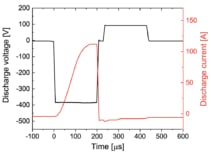 In this webinar, Daniel Lundin will give an introduction to thin film deposition using Bipolar High-Power Impulse Magnetron Sputtering (Bipolar HiPIMS), and how this sputtering technique differs from conventional magnetron processes.
The webinar includes a brief introduction to standard HiPIMS with emphasis on ionization of sputtered atoms, since it enables effective surface modification via ion etching and self-ion assistance during film growth.
Bipolar HiPIMS represents a different approach to increase the energy of the bombarding ions. A positive pulse is applied to the magnetron target after the negative HiPIMS pulse, and the ion energy gain is proportional to the applied positive voltage. We will also look at the important role of the plasma potential for accelerating the ionic species with our goal to identify suitable conditions for achieving ion acceleration independent on substrate grounding.
Experimental results and simulations, based on industrially relevant material systems, will be used to illustrate mechanisms controlling the film growth.
Want to learn more on this subject?

Daniel Lundin is a visiting professor in the Plasma and Coatings Physics Division at Linköping University, Sweden. He is also the co-founder of the Swedish thin film technology company Ionautics. He obtained his PhD in 2010 and his Docent Degree/Habilitation in 2016 at Linköping University, Sweden. He has previously worked as a senior researcher at the National Center for Scientific Research (CNRS)/Paris-Saclay University, France, as a researcher at the Royal Institute of Technology (KTH), Sweden, and as a guest professor at Kiel University, Germany. Throughout his entire career, Daniel has been at the forefront of international research efforts on developing and characterizing new plasma-based methods for synthesizing thin films, in particular the thin film deposition technique High Power Impulse Magnetron Sputtering (HiPIMS). His current research is focused on plasma process control for film deposition using reactive gases, such as oxygen or nitrogen, where he has discovered new ways to enable stable and repeatable high-rate deposition of all types of compound coatings. For his work, he has received several awards and honours including the Institute of Physics Prize for novelty, significance and potential impact on future research and ranked as one of Sweden’s young “Supertalents” by the Swedish business journal Veckans Affärer. He is also the editor and main author of a book from Elsevier on the HiPIMS process (first in its field), published in 2020. He has published approximately 80 papers in refereed journals with more than 2600 citations. Daniel is a national representative in the Plasma Science and Technique Division of IUVSTA, a member of the board of the European Physical Society Technology and Innovation Group (EPS-TIG), and a member of the AVS Advanced Surface Engineering Division Executive Committee.




Quantum 2.0: the cusp of a technology revolution
For several decades we have lived with “quantum 1.0” technology – things like lasers and the transistors inside microchips. But now we’re on the cusp of a “quantum 2.0” technology revolution, which taps into phenomena such as superposition and entanglement. Practical quantum computers, a quantum Internet and exquisitely accurate quantum sensors are among the goals for academic researchers, tech developers and investors.
Find out more about the commercialization of quantum 2.0 in the December issue of Physics World.
Meet the winners of the Physics World 2021 Breakthrough of the Year award
In this episode of the Physics World Weekly podcast, I chat with the winners of the Physics World 2021 Breakthrough of the Year award.
Earlier this week, this year’s award was given to two independent teams for entangling two macroscopic vibrating drumheads, thereby advancing our understanding of the divide between quantum and classical systems.
Appearing in this podcast are Mika Sillanpää and Laure Mercier de Lepinay representing the team from Finland’s Aalto University and the University of New South Wales, Australia. Also on hand are John Teufel and Shlomi Kotler, who led the team at the US National Institute of Standards and Technology (NIST).
This quartet of applied physicists explain the motivation behind their experiments and talk about the challenges of entangling objects that are about ten microns across. They also chat about possible applications for vibrating drumheads such as quantum sensing and quantum networks.
- In last week’s podcast Physics World editors chatted about our Top Ten Breakthroughs of 2021, which served as the shortlist for the Breakthrough of the Year award

Physics World‘s Breakthrough of the Year coverage is supported by Bluefors, a leading supplier of cryogen-free dilution refrigerator measurement systems with a strong focus on the quantum computing and information community. Our aim is to deliver the most reliable and easy to operate systems on the market which are of the highest possible quality.
Proton CT offers low-dose treatment planning with reduced range uncertainties
The use of protons instead of X-rays for treatment planning could improve the accuracy of proton therapy. Now a US-based research team has demonstrated that proton CT could provide low-dose planning with reduced range uncertainties, using the ProtonVDA pRAD, a prototype clinical proton imaging system.
Currently, proton therapy is planned using X-ray CT images of the patient. The CT Hounsfield units are converted into proton relative stopping power (RSP) to calculate proton range in the patient and generate the plan. This conversion, however, leads to range uncertainties and necessitates the use of margins around the tumour target. Proton CT, on the other hand, measures RSP directly, reducing uncertainties and potentially enabling smaller margins.
To investigate this potential, the team, led by researchers from ProtonVDA, Loyola University Stritch School of Medicine, Northern Illinois University and Loma Linda University, used proton CT and X-ray CT to image complex samples. They compared the directly measured proton RSP values to those determined from X-ray CT images, reporting their findings in Medical Physics.
Key comparisons
Senior author James Welsh and colleagues used a proton beamline at the Northwestern Medicine Chicago Proton Center to assess the ProtonVDA pRAD system. To validate the accuracy of proton CT-based RSP measurements, they first imaged a cylindrical phantom containing eight different tissue-equivalent inserts. Comparing the measured RSP with the known values revealed an accuracy of 1% or better for all materials bar the sinus insert (which has extremely low RSP and an absolute discrepancy of only –0.008).
Next, the researchers imaged a pig’s head and a sample of porcine pectoral girdle and ribs using the ProtonVDA pRAD and a clinical vertical X-ray CT scanner. They also scanned the head using a horizontal CT scanner at high- and low-dose settings. They then determined the differences between directly measured RSP and values from X-ray CT scans using HU to RSP conversion.
In the girdle and ribs sample, the researchers found RSP differences of 0.6% or less for all soft tissues, including muscle and adipose. However, they saw a 1.9% difference in the rib trabecular bone and a much larger difference of 6.9% in compact bone. For the pig’s head, they examined 12 regions, observing the largest RSP differences (up to 41%) in the tympanic bullae, which comprise a mixture of air, soft tissue and bone. They also noted discrepancies for the skull (up to 4.3%) and brain stem (up to 4.4%). In the eight other tissues, RSP differences ranged from –2.5% to +2.1%, with a mean of –0.4%.
The results demonstrate that although the measured and calculated RSP values are similar for soft tissues, X-ray CT could prove less accurate for treatment planning in dense bone or cavitated regions.
The team also note that proton CT delivered a far lower imaging dose (0.2–0.7 mGy for the pig’s head) than X-ray CT (3.9 and 39 mGy, for low- and high-dose scans). While the small radiation doses associated with a single scan are unlikely to ever be of harm, Welsh points out that the 10- to 100-fold reduction in dose conferred by proton CT means that such scans could be repeated regularly.
“Thus, if there is a clinical benefit to proton radiography and proton CT, the studies can be repeated as often as necessary to maximize such benefit – without the fear that such benefits will be negated by any detrimental effects from radiation dose,” he explains.
Consistency check
A proton imaging system such as the ProtonVDA pRAD can also be used to perform proton radiography prior to each treatment fraction. Comparing such images with a digitally reconstructed radiograph (DRR) from the planning CT could provide a consistency check of the X-ray CT-derived RSP map, as well as reveal discrepancies due to changes in patient anatomy or alignment.
To demonstrate this application, the researchers acquired a proton radiograph and a high-dose X-ray CT scan of the pig’s head. They then created a water equivalent thickness (WET) difference map by subtracting the calculated DRR from the proton radiograph. In most soft-tissue regions, including the brain and head-and-neck muscles, WET values for the acquired and simulated proton radiographs agreed to within 1–2 mm, equivalent to less than 1% for a total WET of up to 200 mm. The most notable differences were found in the sinus region and the tympanic bullae.
The researchers conclude that proton CT offers potential for low-dose treatment planning with reduced margins, as well as daily pre-treatment range verification. And they have a raft of developments planned, including automating data acquisition, optical tracking of the rotation and integration with an upright treatment system. They also intend to perform more quantitative dose comparisons, and tests with treatment beams and film stacks.
“We will also be embarking on NTCP [normal tissue complication probability] studies, in which we aim to quantify the potential clinical benefits of range uncertainty reduction via proton radiography and proton CT,” Welsh tells Physics World. “In principle, reduction of range uncertainty should allow us to use tighter margins around our clinical targets and thereby reduce unwanted high dose to some normal tissues. Just how much benefit this provides will be the subject of upcoming investigations.”
Brain tumours spread by exploiting fundamental physics

New research in Germany shows that changes to the mechanical properties of cells can cause a brain tumour to become malignant. Josef Käs of the University of Leipzig and Ingolf Sack of the Charité-Universitätsmedizin Berlin and colleagues have shown that a brain tumour is a unique material and its spread is driven by physics as well as biomechanics. Using research conducted on tumours in living patients, they suggest that small changes to the elasticity of cells produce collective effects that impact the prognosis of a tumour.
Sack and Käs are a chemist and a physicist respectively, each researching cancer, on two very different scales. Sack studies the mechanical properties of tissues in living patients. He has pioneered the use of low frequency vibrations combined with magnetic resonance imaging (MRI) to measure the progression of diseases such as cancer. This technique is called magnetic resonance elastography (MRE). Käs is one of the inventors of the optical stretcher, which was also used in this study. An optical stretcher is an optical trap that uses two laser beams to deform single cells and measure their viscoelastic properties.
In 2019, Sack and Käs discovered, using MRE, that glioblastoma, the deadliest form of brain cancer, is softer and less viscous than a benign brain tumour. Glioblastomas are almost impossible to remove because they grow by spreading tiny “fingers” into the surrounding tissue. The researchers realized that this growth could be driven by pure physics because “viscous fingers” are a well-known effect that arises when a low viscosity liquid is injected into another fluid.

Armed with this theory about how glioblastomas spread, the researchers set out to understand why. This meant looking at single cells, for which Käs’s group in Leipzig used the optical stretcher. The researchers recruited eight patients, four with benign brain tumours and four with malignant brain tumours, three of which were glioblastomas. The patients underwent MRE to measure the mechanical properties of their tumours, alongside measurement of individual tumour cells performed with an optical stretcher.
They had no expectations for what they would find, but Käs says that “the surprising thing is that single cell mechanical properties are still reflected in the whole brain tumour”. However, their data shows a more complex picture than viscous cells producing more viscous tumours.
Collaboration allows tumour cells to invade
Consistent with their previous results, the malignant tumours were softer and less viscous than the benign tumours, but puzzlingly, they did not have cells that were less viscous . Instead, it was the stretchiness and elasticity of the cells that was correlated with the fluidity of the tissue. For a tumour to “flow” into the surrounding tissue, the cells must squeeze past each other, and the researchers believe that this makes elasticity, rather than viscosity, the mediator of tissue fluidity.
They also observed that the tumour cells had a much wider range of mechanical properties than would be expected in a healthy sample. This is consistent with what is known about cancer, which breaks down regulation processes in cells. Drawing on the models of other researchers, they theorize that this heterogeneity allows parts of the tumour to fluidize and spread, whilst a rigid backbone of hard cells prevents it dispersing.
Describing the unique properties of malignant tumours, Käs says, “They don’t have to make a genetic change to start viscous fingering. It’s simply that they have these broad mechanical properties, which basically fluidizes, unjams the cells. And with unjamming, the viscous fingering that comes along means the most invasive growth you can imagine.”
Whilst the sample was small, this research indicates the importance of physics in cancer progression. Käs is aware that their conclusions are mixed news from a therapeutic perspective. This is because physics is more difficult to disrupt than a molecular change. But if physics can make a tumour malignant, it can also make it benign, and understanding this would be an important step in the treatment of this disease.
The research is described in Soft Matter.
Shining a light on the nanoscale
Researchers in the US have managed to reveal nanoscale optical and electronic band information of 2D semiconducting materials, using visible light. By employing a hyper-focusing technique they developed previously, the team managed to push beyond the diffraction limits of visible light to achieve a resolution of just a few nanometres. They say that this technique could help characterize the nanoscale properties of 2D and 3D materials to improve our understanding of catalysis, quantum optics and nanoelectronics.
Advanced 2D and 3D materials, such as single-walled carbon nanotubes, hold a lot of promise for next-generation electronics. In use, the electronic and optical properties of these materials are influenced by their environment, such as localized defects, strains, dielectric screening and quantum effects that can alter their performance. Characterizing the nanoscale details that cause these issues can be challenging. But as the colour and optical properties of these nanomaterials are closely related to their electronic structures, a technique known as hyperspectral imaging could offer a solution.
Hyperspectral imaging analyses the spectrum of every pixel in a scene across many wavelength bands. This electromagnetic detail can be used to obtain all sorts of information. For nanoscale materials, there has been some success using such techniques with wavelengths of light outside the visible range. Extending these techniques to the visible spectrum could allow more direct probing and simplify techniques, by eliminating the need for advanced light sources. With wavelengths of a few hundred nanometres, however, using visible light to obtain information from characteristics that are just a few nanometres in size is difficult.

To tackle this problem, Ming Liu, a physicist at the University of California, Riverside, and his colleagues have developed a technique known as super-focusing. The method integrates a tapered glass optical fibre with a silver nanowire condenser. “We can couple almost all the light from an optical fibre into a silver nanowire,” Liu tells Physics World.
Liu explains that as the light travels along the tapered optical fibre its wavelength gradually increases. As it reaches the end of the optical fibre, the wavelength matches that of the electron density wave in the silver nanowire.
Free electrons on the silver nanowire are then driven by the energy of the light and start to oscillate. These electrons then carry the energy along the surface of the silver nanowire. According to Liu, you can imagine this as being like a wave on the ocean being driven by the energy of the wind. At the end of the nanowire, a spot of light is produced – “like waves coming into a bay and its tapered shape producing a tsunami,” Liu adds.
All this means that the possible resolution is no longer limited by the wavelength of light. “We use the electron wave to carry the electromagnetic wave, instead of the light photons,” Liu explains. “Now the ultimate wavelength is restricted by the wavelength of electrons, which is very, very short: nanometre scale.”
In their latest work, described in Nature Communications, the researchers demonstrated that using this super-focusing technique they can achieve a 6 nm spatial resolution using visible to near-infrared wavelengths (415–980 nm) while probing single-walled carbon nanotubes. This allowed them to characterize nanoscale details such as chirality and electrical band structure.
“We showed the colour, but actually the colour is kind of determined by the electrical properties of the material,” Liu explains. “So, what we really want to say is that it can see the electrical band structures.” That is the transitions between the different band structures: how large those band gaps are.
Being able to characterize such nanoscale details – as opposed to the global performance – of 2D and 3D materials will help with the development of advanced semiconductors and newer techniques like twistronics, Liu says. He and his colleagues are now trying to see whether they can push the resolution as low as 1 nm.
Copyright © 2026 by IOP Publishing Ltd and individual contributors