The observation of black holes with unexpectedly high masses could be partly explained by an effect related to the expansion of the universe, astronomers in the US have proposed. The team, led by Kevin Croker at the University of Hawai’i at Mānoa, used comparisons between simulated black hole mergers, and gravitational waves detected by the LIGO–Virgo collaboration, to show how ignoring the expansion of the universe may be limiting our understanding of black-hole physics.
Since 2015, the LIGO-Virgo collaboration has made 90 detections of gravitational waves, mainly originating from mergers of two black holes. These observations are a triumph of experimental physics and have revealed a mystery regarding the black-hole masses that have been seen so far. Current theories suggest that black holes involved in such mergers should be roughly between 8–35 times the mass of the Sun. Furthermore, instabilities in the cores of large stars should leave a gap in black hole masses between roughly 50–120 solar masses.
In contrast, gravitational waves detected by the LIGO-Virgo collaboration point to the existence of black holes within this theoretical gap. Several explanations have emerged to maintain the consistency between theory and observation. These relate to factors including stellar mass loss, metallicity (heavy elements in a star), and the explosion mechanics of stars. So far, however, no one theory has explained the observations.
Introducing “cosmological coupling”
As Croker’s team point out, current theories share the assumption that black holes inhabit a non-expanding universe. This idea greatly simplifies calculations and had not been thought to have any important impact on predictions about black hole physics. Yet in their study, Croker and colleagues suggest for the first time that black hole masses could be growing on cosmological timescales. They reckon the growth rate is linked with the expansion of the universe by an effect they call “cosmological coupling”.
If this occurs, the researchers predict that it would enable black holes within binary systems to expand into the mass range thought to be forbidden by existing theories. To test this idea, Croker’s team simulated the birth, evolution, and death of millions of large stars in binary systems. They then calculated the gravitational waves that would appear when the resulting black holes finally spiralled into each other, following billions of years of growth through cosmological coupling. The astronomers’ predictions agreed reasonably well with real LIGO–Virgo data, without requiring any changes to our current understanding of the stellar lifecycle.
Croker and colleagues acknowledge that their results are still far from solving the mystery posed by the observed diversity of merging black hole masses. On top of this, current observational techniques are not good enough to determine the strength of this cosmological coupling. But with future improvements to the sensitivities of gravitational wave observatories, the researchers soon hope to measure the relationship between black hole growth and universal expansion for the first time.
Physicists love LEGO – indeed, Physics World has published 48 items about the interlocking bricks including the podcast “Physics and LEGO: an enduring love affair”. Now, Brian Anderson of Brigham Young University in the US and colleagues have come up with a way to knock over LEGO minifigures using focused vibrational energy.
The team placed several figures on a plate that was shaken by several strategically placed loudspeakers. Using a technique called time reversal, they worked out the interference between waves from each speaker. This allowed them to concentrate the vibrations at a specific figure, causing it to fall over – while other figures were spared (see video).
Not content to keep their discovery in the lab, the team then used the effect to create a game whereby two players adjust the vibrations to try to knock over their opponent’s figures. Their game has already made its debut at ETH Zurich in Switzerland in an exhibition about waves.
Not surprisingly, the team says that there are other more practical applications of focused sound including the non-invasive destruction of kidney stones and brain tumours. The team described the research at the 181st Meeting of the Acoustical Society of America in Seattle.
Snow tracker
If my childhood memories of Montreal are anything to go by, heavy snowfalls are a regular occurrence in the Canadian province of Quebec. Now, researchers at the Institut national de la recherche scientifique (INRS) have developed a new way of tracking snow depth on a continuous basis – something that could be very useful for avoiding damage to roofs caused by heavy snow and predicting spring meltwater, which can often cause flooding.
Created by Anas El Alem, Karem Chokmani and colleagues at INRS, the technique involves measuring the infrared reflectance of snow lying on the ground, which the team has related to the density of the snowpack. By making regular measurements, the system can track the changes in density that occur over time.
The team says that probes can be installed and left over the winter, communicating data via a mobile or satellite phone connection. This requires much less work that current monitoring, which involves sending people out to take regular core samples of the snowpack.
The Max Planck Society (MPG) – a network of leading German research centres – has defended itself against allegations that it discriminates against female researchers. The claims were contained in an open letter signed by 145 female scientists worldwide, who expressed concern over “the highly publicized dismissals, demotions, and conflicts” that have recently involved female directors at MPG institutes.
The letter, which was co-led by Ursula Keller, a physicist from the Swiss Federal Institute of Technology in Zurich, was triggered by the demotion of archaeologist Nicole Boivin in October as a director at the Max Planck Institute for the Science of Human History in Jena. Boivin was alleged to have bullied junior scientists and appropriated scientific ideas from colleagues, charges that prompted an internal investigation in late 2018.
Boivin, who is currently leading a smaller research group at the institute, denies all charges and filed a lawsuit challenging the demotion. Her current MPG website page states that she “seeks to build an equitable, diverse, and open research environment in the Department of Archaeology, and to support progressive, transparent, and non-discriminatory policies in the Max Planck Society”.
The open letter, which was sent to all members of the MPG’s senate on 18 November, states that the signatories are concerned that highly publicized failures of women at top-level positions in science could have a “chilling effect on young women considering careers in science and engineering”. It claims that female leaders at MPG institutes “are judged more harshly”, and that allegations of leadership shortcomings are “far more often made against female leaders than male ones”.
The MPG must investigate indications of misconduct by its directors in all directions and respond appropriately when violations are found
Christina Beck, MPG spokesperson
The letter adds that that the MPG “has a duty” to ensure that women and foreign researchers who are recruited as MPI directors do not face discriminatory conditions and that the society should “proactively identify and address any issues that might contribute to future failures, including bullying, harassment and mobbing of female leaders themselves”.
Keller says that the goal of the letter is to change the culture at MPG institutes through better governance. “The current culture with informal, mostly male-dominated networks with gender bias, limited accountability and transparency in decisions and resource distribution, negatively affects women in leadership positions, and discourages the next generation to step up into leadership positions,” she adds.
Taking measures
MPG spokesperson Christina Beck, however, disagrees with the contents of the letter. “In the past 10 years, two directors – one man and one woman – have been relieved of their management duties due to misconduct,” Beck told Physics World. “Another female director gave up their management function on her own accord, while another male director did likewise temporarily for several years.”
Beck adds that the MPG is “naturally concerned” to protect directors from unjustified accusations. “In the same way, it must also be a concern of the MPG to protect junior scientists from abuse of power by the leadership,” she adds. “The MPG must investigate indications of misconduct by its directors in all directions and respond appropriately when violations are found. This is not a gender issue. We have a duty of care to all employees, and we naturally fulfill this duty.”
Beck says that MPG has already taken steps to make improvements after a comprehensive employee survey on work culture and work atmosphere published in 2019. Those moves include changing internal reporting channels. “In response to the employee survey, numerous measures were already taken and we are working intensively to implement them comprehensively,” she says.
We definitely see a gender bias in the number of conflicts doctoral researchers experience and report.
Max Planck PhDnet statement
Yet according to a statement issued yesterday by the Max Planck PhDnet – a network representing the 5000 doctoral researchers at MPG – Boivin’s case “makes her the fourth publicized female MPG director facing power abuse accusations in the last years”. The PhDnet statement, co-authored by PhDnet spokesperson and physicist Lea Heckmann, and based on a survey taken in 2020, says that “conflicts with female directors are either more likely to be reported or more likely to be perceived as severe enough to be reported.” It adds that more established directors are less likely to be reported and they are more likely to be male.
“We definitely see a gender bias in the number of conflicts doctoral researchers experience and report,” the statement says. They note that official reporting channels and consequences for those who violate process “are essential” to drive cultural change within academia and protect early career researchers against power abuse. “In doing so we make sure that all leaders regardless of their gender and level of experience justly face the consequences of their behaviour,” the statement adds.
A microelectrode array implanted in the visual cortex of a blind woman enabled her to attain a simple form of vision and identify lines, shapes and letters. In a six month clinical investigation at the University Miguel Hernández in Spain, the Utah Electrode Array (UEA) demonstrated high potential for restoring a useful sense of vision in sightless individuals and increasing their independence.
Berna Gómez, a 60-year old former science teacher who developed toxic optic neuropathy causing total blindness 16 years previously, volunteered to work with scientists from the John A. Moran Eye Center at the University of Utah and Eduardo Fernández from University Miguel Hernández. Gómez is the first person to have the UEA implanted in the visual region of the brain for an extended period of time and to undergo repeated stimulations.
Co-principal investigator Richard Normann, a University of Utah bioengineer, developed the first UEA 30 years ago. The device comprises a 100 microelectrode array implanted into the brain to record and stimulate the electrical activity of neurons, with the goal of restoring useful vision to blind people.
For this study, reported in the Journal of Clinical Investigation, the team used the experimental Moran/Cortivis Visual Prosthesis, which includes a pair of glasses equipped with a miniature video camera that transmits images in real time. The visual data collected by the camera are encoded by specialized software and sent it to the UEA. The array then stimulates neurons to produce phosphenes (flashes of light seen without visual input), perceived by Gómez as white points of light, to create an image.
To optimize the implantation location of the electrode array, the researchers used MR imaging prior to surgery to create a three-dimensional reconstruction of the surface anatomy and neurovascular structures of the subject’s primary visual cortex. They selected a region of the right occipital cortex that could be accessed easily while avoiding major blood vessels.
A neurosurgeon performed a craniotomy centred over the desired location, and implanted the 4 mm square UEA with 96 microelectrodes projecting out from its silicon base. The electrode’s external connector was attached to the skull using six titanium microscrews. Gómez underwent electrical stimulation and multiunit neural recording sessions once or twice daily, five days a week, for up to four hours per session. Over the six month study period, she received approximately 540 hr of stimulation.
Identifying the light
Because blind people often experience random flashes of light, called spontaneous phosphenes, Gómez was trained to differentiate these from the electrically-induced phenomena. In the first days after implantation, she reported one episode ever 5–10 s, but after 12 weeks, these occurred only occasionally. During the nearly two-month training period, she learnt to recognize that the electrically-induced phosphenes were always localized to the same general region of her visual space, and that they appeared in conjunction with a low-frequency auditory tone used to indicate the start of electrical stimulation.
The researchers determined that increasing the number of stimulating electrodes, from two to 16, significantly increased the perceived brightness, clarity and size of the phosphenes. They observed that it was easier for Gómez to “see” spots of light when more than two electrodes were stimulated. Spacing out the stimulating electrodes also improved recognition of shapes and letters, with electrodes spaced 400 µm apart able to generate separate distinct images.
Gómez was then able to identify multiple letters and to differentiate whether they were upper or lower case. She also was also able to discriminate between different patterns and/or groups of electrodes when playing a specially designed video game.
The team found that the colour and brightness of perceived images could be controlled by adjusting the electrical current used to stimulate individual microelectrodes. Currents above 50% of the threshold stimulus level (66.8±36.5 µA for a single electrode) produced brighter and whiter light; lower currents created dim images of a sepia colour. The highest brightness ratings were reached with currents of about 90 μA.
Long-term collaboration: Eduardo Fernández and Richard Normann. (Courtesy: University Miguel Hernandez/John A. Moran Eye Center)
“These results are very exciting because they demonstrate both safety and efficacy,” comments Fernández, who has collaborated with Normann for more than 30 years. “We have taken a significant step forward, showing the potential of these types of devices to restore functional vision for people who have lost their vision.”
“One goal of this research is to give a blind person more mobility,” adds Normann. “It could allow them to identify a person, doorways or cars easily. It could increase independence and safety. That’s what we’re working toward.”
The team hopes that the next set of experiments will use a more sophisticated image encoder system, capable of stimulating more electrodes simultaneously to reproduce more complex visual images. They explain that a single UEA array is unlikely to be sufficient for useful vision. “In the future, we expect that several arrays of intracortical microelectrodes would be tiled across the visual cortex, permitting phosphene induction across a larger area of the visual field and forming the basis for functional sight restoration.”
At the entrance to the quantum physics and information lab at the University of Science and Technology of China (USTC), the country’s premier quantum research centre, visitors are greeted by a message in Chinese: “When I look back on my life, there were many hardships. My only hope is a prosperous homeland with advanced science and technology. We have done all we can, but our country is still poor and lagging behind. We need future generations of selfless and striving youth to carry on this work.”
The quote is from Zhao Zhongyao, who founded the department of modern physics at USTC in 1958. Born in the final days of the Qing empire, Zhao received his doctorate from the California Institute of Technology in 1931. His work was instrumental in the discovery of the positron, for which his colleague Carl Anderson was awarded the Nobel Prize for Physics five years later. After graduation, Zhao returned to China but came back to the US in 1946 with two tasks. One was to observe nuclear testing at Bikini Atoll as one of the two representatives from the Chinese Nationalist government. The other was to learn accelerator technology and acquire equipment for particle-physics research.
Four years later, US authorities interrogated Zhao, detained him for months, and confiscated part of his materials before finally allowing him back to his homeland. The shift in the US government’s view of Zhao had little to do with his actions or beliefs. During his time in the US, the Nationalists lost the civil war to Mao’s Communists. The China that Zhao left had been a major US ally. The China he was returning to was now an adversary in the Cold War. Zhao could have stayed in the US or followed the Nationalist government to Taiwan, but his allegiance lay with the land of his birth and its people.
Great power rivalry
When I was a student at USTC in the late 2000s, the campus buzzed with excitement about an esteemed alumnus named Pan Jianwei, who had just returned from Europe to start a new group in quantum science. I moved to the US in 2009 for my PhD in particle physics and in the decade since have followed the news from my alma mater and from Pan’s group.
My pride in their scientific achievements, however, is tinged with growing unease as the frontiers of quantum computing and secure communications have become a new battleground of “great power” rivalry. Amid rising tensions between my birth country and my adopted home, Zhao’s words – and the story behind them – echo with lessons from history that are pressingly relevant today. Moved by the closing lines in Zhao’s memoir, Pan chose to display them on the front wall of his lab and has often invoked Zhao’s example in essays and speeches. Reading their words from an ocean away, I feel waves of emotion wash over me. Before the dizzying developments in recent years, the China of my childhood and for most of Pan’s life was impoverished and marginalized. For a people emerging from fresh memories of wars and famine, nationalism is a natural sentiment. It can be useful and even necessary to establish a shared identity.
But loyalty to one’s own has its limits. Out of patriotism, naivety, a desire for funding, or direct political pressure, a scientist can become part of the state’s propaganda and even complicit in the state’s actions. Chinese scientists of Zhao’s generation worked for a totalitarian regime and endured brutal persecution. As Beijing tightens its authoritarian grip and seeks new technology for power and control, scientific advancement also comes with a social cost. QuantumCTek, which grew out of USTC, is China’s first commercial provider of quantum-communications technology and works with police bureaus. While there is growing awareness of Beijing’s aggressions, the prevalent discourse in the West is not about ensuring ethical development and peaceful use of technology. Instead, the rhetoric from Washington and Brussels increasingly mirrors that of the Chinese government, where science is a tool of state power, and progress in other countries is perceived as threats to one’s own status and security.
Erecting barriers
While export controls have traditionally focused on preventing weapons proliferation and human-rights abuses, in 2018 US Congress passed laws that curtail technology transfer and foreign investment to preserve America’s technological advantage. “Quantum information and sensing technology” is one of the 14 “emerging and foundational technologies” identified by the US Department of Commerce for controls. The European Union has also placed restrictions on non-EU participation in quantum-computing research, after a proposed ban was met with pushback from the academic community.
As governments rush to assert borders and claim ownership over knowledge, the future of science appears fractured along national and geopolitical divisions. The dangers of a tech race lie in its faulty premise and misguided goal. The important question is not which country gets ahead but how progress is made and whose interest it serves. The recent demonstrations of quantum advantage by Google and Pan’s group respectively have been compared to the Wright brothers’ first flight. Exciting as it is, the history of aviation strikes a sombre note. Before they transported civilians and commerce, planes carried soldiers and bombs. Time and again, nascent technologies have been used for war.
Much of quantum science is still in its infancy. Applications are far on the horizon and the path is not predetermined. Humanity has a choice: to cling to parochial notions of country and creed, or to imagine a different kind of future that transcends artificial boundaries. I am reminded of my first quantum physics class at USTC where I was introduced to another way of seeing – a new concept of motion and space, classical barriers overcome.
The simple addition of nanoparticles to a hydrocarbon fuel can significantly change the characteristics of its combustion, researchers in Canada have discovered. By doping liquid ethanol with tiny particles of graphene oxide under varying conditions, Sepehr Mosadegh and colleagues at the University of British Columbia Okanagan Campus and Zentek in Thunder Bay Ontario showed how the additive can boost the breakdown of the fuel into tiny liquid droplets. Their discovery could one day lead to enhanced fuels for aircraft engines – making them both greener and more powerful.
In several recent studies, researchers have explored how the combustion characteristics of hydrocarbon fuels can be improved by the addition of nanoparticles. Now, Mosadegh and colleagues have studied how nanoparticles enhance atomization in liquid fuels. Atomization involves a liquid forming tiny droplets, which allow for more effective combustion.
There is still much to learn about certain aspects of this process including the rate at which atomization occurs and how atomization affects the rate at which fuel burns. To study the effect further, the team doped a pure ethanol fuel with three different types of graphene oxide nanoparticle – each oxidized to varying degrees. In addition, the team varied conditions including the nanoparticle concentration in the fuel; the fuel’s temperature; and the sizes of the nanoparticles.
Ultra-high-speed camera
For each measurement, the researchers used a combination of infrared spectroscopy, and an ultrahigh-speed camera, to quantify how these variables affected the quality of combustion. They were particularly interested in measuring the ignition delay, which is the time between fuel injection and the start of combustion. They also looked at the rate at which the fuel burned, and the speed at which the ethanol was atomized.
Through their experiments, Mosadegh and colleagues discovered that burning rates could be enhanced by increasing nanoparticle concentrations to 0.1%, while using reduced graphene oxide as the dopant. This provided the best possible conditions for rapid heat transfer throughout the ethanol: triggering intense atomization. In the best cases, the fuel’s burning rate could be enhanced by up to 8.4%.
These results could have important implications for many applications that use hydrocarbons as a fuel source. In particular, Mosadegh’s team proposes that aircraft engines that run on nanoparticle-doped fuels could emit lower amounts of carbon; while simultaneously becoming more powerful. If achieved on commercial scales, this innovation could be a crucial step forward in urgently needed efforts to reduce carbon-dioxide emissions by the aviation industry.
In this episode of the Physics World Weekly podcast, the science writer Philip Ball and Physics World’s Margaret Harris have a lively discussion that cuts through the current hype about quantum computing and focuses on the realities facing the nascent industry.
Also in this programme, the physicist Michael Pepper calls for the Stark effect to be renamed. Johannes Stark was a leading figure in the Nazis’ “German Physics” movement, which persecuted Jewish scientists in the 1930s, and Pepper says it is time to stop using his name.
When the world’s “first quantum computer” hit the market in 2015, the response was decidedly mixed. Perhaps it’s not surprising that demand for the machine was not exactly clamorous, given its price tag of $10m. But some accused the makers, the quantum-computing company D-Wave Systems from Burnaby in Canada, of hyping the abilities of its machine – which was not even unanimously agreed to be making use of quantum principles at all.
It wasn’t an auspicious start to the commercialization of quantum information technologies (QITs). But that’s not unusual for a new technology. The first motor cars, after all, were prohibitively expensive for most people and were considered health-and-safety hazards. Raising great clouds of dust on unsurfaced roads, cars incited such public opposition that drivers sometimes carried guns for self-protection. At least we know now that quantum computers – information-processing devices that exploit the laws of quantum mechanics to develop new capabilities – are possible. “There is no known barrier from the physics side to building such machines,” says physicist Ian Walmsley, provost of Imperial College in London. “But we’re now moving to the very difficult and challenging engineering that you need to make these things work.”
QIT has not yet found its Henry Ford or Bill Gates to democratize the industry with affordable and reliable devices. “At this stage it’s a game of iterative engineering improvement, not conceptual breakthroughs,” says Chad Rigetti, founder and chief executive of the quantum-computer company Rigetti Computing in Berkeley, California. But already the commercial sector is growing fast. “This ramping up of industrial activity has happened sooner and more suddenly than most of us expected,” says quantum theorist John Preskill of the California Institute of Technology in Pasadena.
Private and public investment
Projections for the future size of the quantum computing industry vary – but most are big. “I think quantum computing will represent a $1bn market by the middle of this decade, and perhaps $5–10bn by 2030,” says Doug Finke, who runs the QIT-tracking website Quantum Computing Report. The latter value would be 10–20% of the value of the high-performance computing market today. According to an estimate from Honeywell, QIT could be worth $1 trillion over the next three decades.
Quantum computing will represent a $1bn market by the middle of this decade, and perhaps $5–10bn by 2030
Doug Finke
It’s no wonder, then, that the commercialization of QIT is attracting serious investment, both public and private. The US government is putting about $1.2bn into its National Quantum Initiative (NQI) programme, officially launched at the end of 2018, to provide an overarching framework for quantum information science R&D in academia and the private sector. The UK’s National Quantum Technology Programme (NQTP) kicked off in 2013 with around £1bn promised over a 10-year period, and is now entering its second phase. The level of investment by the Chinese government is largely a matter of rumour, although suggestions that it amounts to a whopping $10bn or so are probably wide of the mark, according to Chao-Yang Lu, a quantum physicist at the University of Science and Technology of China (USTC) in Hefei, near Beijing.
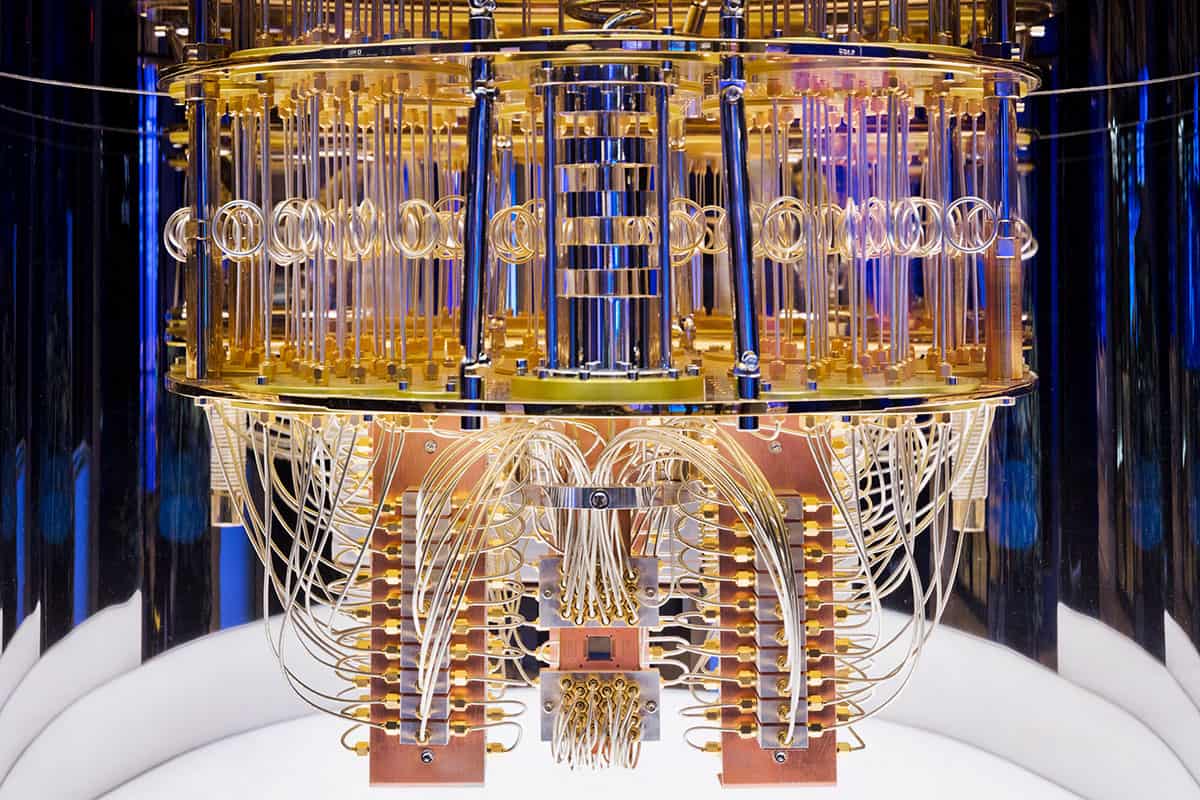
In the private sector, IT giants such as IBM, Google, Hewlett Packard, Honeywell and Microsoft are already heavily invested in quantum initiatives. One recent report claimed there has been more than $1bn of private investment in quantum computing in 2021 alone. In 2019 Google’s quantum-computing team claimed that its Sycamore quantum circuit – with 53 qubits – had demonstrated “quantum advantage” (also referred to as supremacy) carrying out a computation beyond the means of any classical device on a practical timescale. And in mid-2021, Honeywell announced a partnership with quantum-software developer Cambridge Quantum Computing in the UK. The pair came together to form a standalone quantum-computing company that they say will offer “the world’s highest-performing quantum computer and comprehensive quantum software, including the first and most advanced quantum operating system”.
From the cloud to cold atoms
The devices developed by IBM’s quantum- computing division have been made available for use by clients (currently more than 200,000 of them) via a cloud-based service. Users range from academic researchers and companies to schools, and much of it is available for no cost. “You have to get people familiar with this stuff,” says Bob Sutor, who is “chief quantum exponent” at IBM’s T J Watson Research Center in Yorktown Heights, New York state. Those machines have so far been housed mostly on the company’s sites, but IBM has begun to install them elsewhere too, including at one of the Fraunhofer institutes in Germany and at the University of Tokyo, licensed for exclusive use by the clients. However, Sutor thinks that cloud-based services will remain the norm.
Advantageous initiatives Canadian company D-Wave, in collaboration with scientists at Google, has demonstrated a computational performance advantage, increasing with both simulation size and problem hardness, to more than three million times that of corresponding classical methods. D-Wave researchers programmed the D-Wave 2000Q system to model a 2D frustrated quantum magnet using artificial spins (left). (Courtesy: D-Wave Systems Inc)
Rigetti has launched its own cloud-based resource too. “People are using it to do things like developing algorithms for problems in finance, chemistry, logistics, signal and image processing,” Rigetti explains. So, too, has IonQ, a start-up in College Park, Maryland, that has so far run around two billion jobs for customers. The company has produced 32-qubit devices in which the qubits are quantum-entangled ions held in electromagnetic traps in a chip-sized device. Their set-up works at room temperature, with lasers being used for input and output by exciting and probing the electronic states of the ions. The technology was developed by Christopher Monroe and colleagues at the University of Maryland. Having raised $83m of investment funding, IonQ began trading publicly on the New York Stock Exchange in October – the first purely quantum-computing company to do so – and quickly raised well over $600m.
D-Wave, meanwhile, is still producing devices that use superconducting qubits in an approach called quantum annealing, where the qubit resources are pooled to find solutions in an approach similar to the classical method of simulated annealing. The company has announced a new quantum chip called Pegasus, that would be used to make devices with more than 5000 qubits, originally scheduled for 2020 – but which has not yet materialized. There are several QIT start-ups in China too, such as QuantumCTek in Hefei, which specializes in quantum encryption and security, and was spun out from the pioneering lab of Jian-Wei Pan, along with Lu at UTSC – but the level of private investment in these firms remains unclear.
Boom or bust?
Even if the QIT industry grows as its advocates hope, it could be risky for venture capitalists to back a particular horse in a field that is still in flux. “There may be a few winners, but there will be a lot of losers too,” says Finke. Of the more than 200 start-ups in quantum technology that his company is currently tracking, Finke estimates that within 10 years the vast majority of them will no longer exist, at least in their present form. “Some will go out of business, some will be acquired and some will be merged,” he says.
It’s still not clear what the most important technology platform for QIT, and especially quantum computing, will be, says Walmsley (who until 2018 was director of the NQTP’s Networked Quantum Information Technologies hub at the University of Oxford). IBM and Google are placing their bets on qubits made from superconducting devices, while Honeywell is focusing on trapped ions.
I often caution investors not to concentrate their investments in just one quantum company
Doug Finke
Microsoft is taking what some regard as a high-risk strategy of aiming for “topological quantum computing”, in which the qubits are electron quasi particles – called Majorana zero modes – that are protected by their fundamental topological nature from incurring errors that could derail a computation. To pursue these elusive entities, Microsoft has established research partnerships in labs at the Delft University of Technology and the Niels Bohr Institute in Copenhagen. Others are aiming at photonic quantum computing, including the start-ups Orca Computing (cofounded by Walmsley) in Oxford and PsiQuantum in California.
“There is a lot of diversity in these technical approaches, and there could be significant risk in a company pursuing a specific technology,” says Finke. “So I often caution investors not to concentrate their investments in just one quantum company.”
Practical applications and challenges
So who are the first clients of QIT? Finance, oil, energy, automobile and aerospace are some of the sectors showing most interest, with IBM’s high-end quantum computers currently being used by the likes of Exxon, Daimler and JP Morgan Chase. One of IBM’s new installations is at the Cleveland Clinic in Ohio for use in pathogen research. Honeywell says that applications of its new company’s technologies will serve “cyber security, drug discovery and delivery, material science, finance and optimization across all major industrial markets”, as well as natural language processing and quantum artificial intelligence.
Global network IBM’s quantum computer – IBM Quantum System One – has been installed in North America, Germany and Japan. As of 2019, the company launched its Quantum Computation Center in New York, which gives users anywhere in the world access to its advanced cloud-based quantum computing systems. (Courtesy: IBM)
IonQ’s chief executive and president Peter Chapman says that he often only finds out what users have done with IonQ’s cloud-based system when the research is announced later. Volkswagen, for example, has used it for optimization problems in assembly lines, traffic routing and placement of electric-vehicle charging points.
Indeed, quantum computing is well suited to such problems of optimization, where the challenge is to find the “best” solution from a host of other possible ones. That’s a problem faced, for example, in managing supply chains to deliver goods or services to many clients in different locations with differing requirements and deadlines. Typically, there’s no classical algorithm for solving such challenges that doesn’t require trying each option in turn: a number that increases exponentially with the size of the system.
Companies already engaging with quantum computing simply want a head-start with what might soon become possible
Bob Sutor, IBM
Such problems are also common in finance, for example, to work out the optimum pricing of derivatives or to estimate portfolio investment risks. “There is a lot of engagement in quantum computing from the finance industry right now,” says Yianni Gamvros, head of business development at the Palo Alto-based quantum-software company QC Ware. His company has collaborated with Goldman Sachs to develop a quantum algorithm for Monte Carlo simulations, a common optimization procedure that can run on today’s “noisy”, error-prone quantum computers. They claim that the algorithm will be about a hundredfold faster than classical equivalents. IonQ, too, has worked with Goldman Sachs on quantum machine learning. Other possible applications of quantum algorithms in finance, says Gamvros, include fraud detection and trading recommendations. “A lot of the big banks are jumping in with at least one foot, and sometimes two,” adds Rigetti.
IBM’s Sutor stresses, though, that “nobody has a quantum computer that’s doing better than what classical can do yet, so you have to be careful to not sell people on something they think can do more than it can right now”. Companies already engaging with quantum computing, he says, simply want a head-start with what might soon become possible.
Diagnosis to cryptography
Even the most powerful of current quantum computers, such as Google’s Sycamore chip or IBM’s recently announced 127-qubit Eagle circuit, struggle to simulate much more than the simplest of chemical systems, such as small molecules. But it’s hoped that eventually they will be used to predict the properties of new materials and molecules with a precision that can’t be matched by classical simulations. “We expect the market to take off in two to three years for pharma and materials applications,” Gamvros says. But some corporate R&D departments are already laying the groundwork for intellectual-property rights and patents, and to develop the necessary skills. Quantum artificial-intelligence applications that use machine learning, meanwhile, might find uses in biomedical imaging and the detection and diagnosis of disease.
Another growth area for QIT is cryptography. The advent of quantum computers themselves raises the possibility of cracking standard cryptographic methods for secure data transfer via telecommunications networks (such as online credit-card orders) based on the difficulty of factorizing large numbers – quantum algorithms can do that much more quickly. But quantum computing offers a solution to that problem too. Because quantum information can be rendered indeterminate until it is measured, data encoded in this form can be made “tamper-proof”. If information is encoded in entangled quantum bits, such as the polarization states of photons sent along fibre-optic networks or broadcast to satellites, it can be impossible for an eavesdropper to intercept and read the information without being detected.
Quantum cryptography has already been demonstrated and used over long distances. For example, ballot data for regional elections in Geneva were encrypted this way in 2007 by the Swiss company ID Quantique, heralding the wider use of the technology worldwide. The company, founded in 2001, expects to see applications not just for confidential financial and political information but for medical data and as a defence against cyber attacks. A fibre-optic “quantum internet” network has been constructed in China reaching from Shanghai to Beijing, and in 2020 a team led by Pan at UTSC broadcast quantum-encrypted data over a distance of 1000 km within China via satellite.
Dublin-based market-research company Fact.MR has estimated that the quantum-cryptography market will expand at a compound annual growth rate of 30% over the next decade. “From transferring the confidential data of governments to offering secure banking and finance solutions, quantum cryptography is touted to be the future of encryption and security technologies,” say the company’s analysts, adding that the limiting factor in growth is the high cost of installing the necessary infrastructure and hardware, such as quantum-enabled satellites and signal boosters, along the route.
More qubits, less noise
Sutor is confident that the limitations of today’s quantum computers will recede as they get bigger and better. IBM plans to produce a 433-qubit chip in 2022, followed by a 1121-qubit Condor chip in 2023. Sutor forecasts that by the end of the decade there will be some degree of error-correction available from such advances. That’s currently the bugbear of today’s noisy quantum circuits: a fundamental quirk of quantum physics means that errors can’t simply be corrected by keeping multiple copies of each qubit, as in classical devices. Some error-correction schemes look likely to require hundreds or even thousands of physical qubits to make one error-tolerant “logical” qubit.
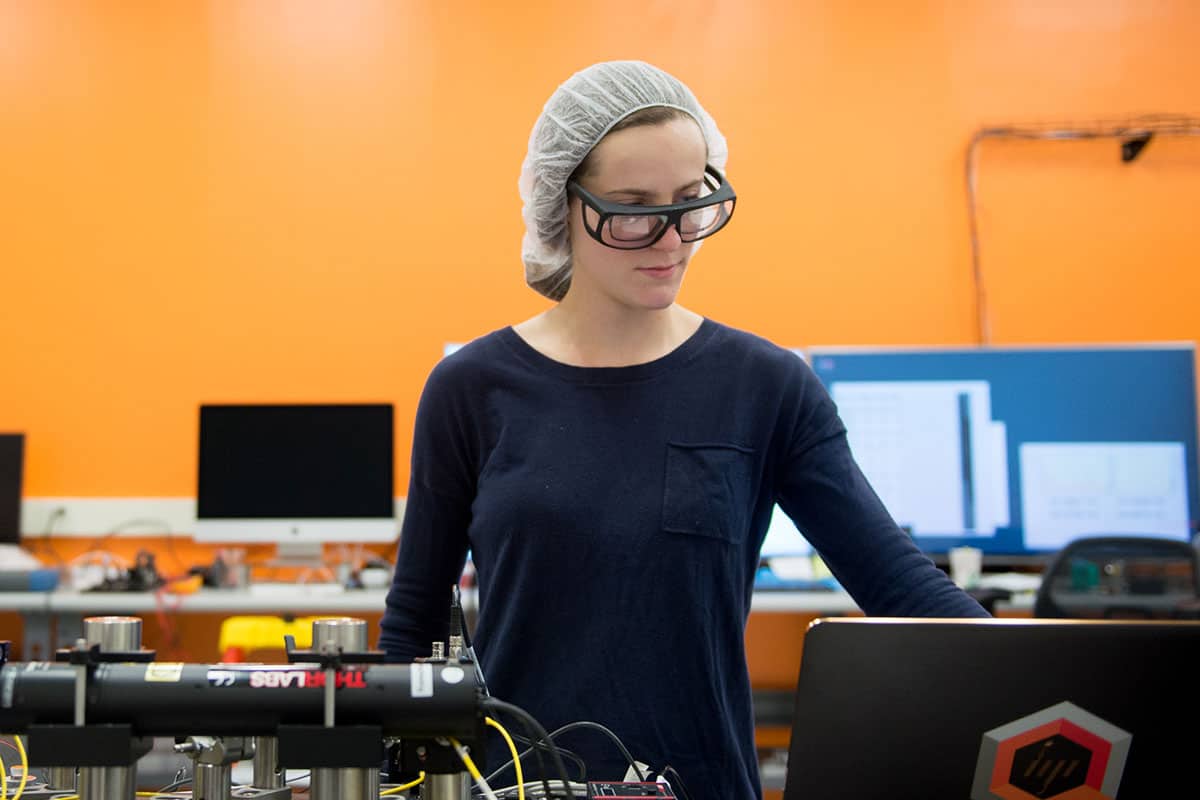
Cold trap IonQ’s Sarah Kreikemeier tunes an optical assembly. Powered by ions in a cold-atom trap, they became the first publicly traded quantum firm as of this year. (Courtesy: Erin Scott/IonQ)
But Chapman says that trapped-ion qubits have already been shown to do much better than that. Recent work at IonQ showed error correction with a physical–logical qubit ratio of just 13:1, he says. He adds that because they don’t need bulky and expensive refrigeration, trapped-ion quantum computers can also be scaled up compactly and relatively cheaply. “Ultimately, the question is about cost per qubit,” he says. “Our plans are about dramatically reducing that. We think quantum computers need to be rack-mounted, low-cost devices that don’t need cryogenic systems of any kind.” That would make them amenable to portable uses, such as on aircraft, as well as accessible to companies that can’t afford the delay or security risk of submitting jobs into a queue on the cloud.
High hopes and expectations
But can this exponential growth and interest be sustained without producing inflated expectations? “I think a bubble is almost inevitable with the level of government funding and the number of hardware and software start-ups – probably more than 150 and counting,” says Gamvros. “We are now going through a rapid growth phase, but that will definitely be followed by a consolidation phase with mergers and acquisitions.” Walmsley hopes, however, that the diversity of both implementations and applications of QITs might avoid a dotcom-style bubble. “It’s important to ensure that things don’t run ahead of themselves, and overheat and spoil opportunities,” he says. “We shouldn’t be expecting that these machines will be available on your sofa tomorrow.”
To avoid such false expectations, Sutor says that IBM is being “painfully public about what our machines are and how they work”. What’s more, he says, you can run your own tests on them yourself. Still, “there is a lot of hype from the media because most of them don’t understand the technology”, adds Finke. “There is quite a bit coming from individuals in the quantum-computing industry too. Entrepreneurs trying to get funding may exaggerate the potential.” Gamvros thinks there is more of that on the software side, “because everybody can still claim to have a really strong algorithm while very little can be tested or proven”.
Lu agrees that claims for the potential of QIT coming from industry, both in China and globally, can be inflated in order to raise venture capital. “A major misleading message from the industry is that quantum computing can speed up the calculation of everything by ‘parallel computing’,” he says. “This is not true. So far, the computational problems that can truly benefit from quantum computing are still quite limited, and even fewer enjoy an exponential speedup – others can have a more modest speedup.” Lu compares some of the hype to that which has plagued artificial intelligence – which, as a consequence, has experienced several “winters” of disillusion and neglect.
Lu also worries about how easy it is to distort the potential of quantum computing. For example, demonstrations of quantum advantage like that by Google (and which he and his colleagues claimed in a photonic system in 2020) don’t show “how brilliant quantum computers can be, but quite the opposite: they show what an early stage quantum computation is at”. He thinks that over the next five years or so, these technologies will largely remain useful tools for basic science.
In the next few years we will see successes being announced and organizations using quantum computing for real-world applications
Doug Finke
But Finke is not too concerned about the prospects of a bursting QIT bubble. “Although there will be some people who are disappointed because their investment does not pan out, I don’t believe there will be a general crash of investment,” he says. That’s because he thinks that in the next few years we will see “successes being announced, and organizations using quantum computing for real-world commercial or scientific applications”. Such successes “should be enough to keep the investments flowing from both the private and public sectors”.
Despite the risks of hype and disillusion, Lu is, overall, optimistic about the future of quantum computing. “We are just at the start. [So far] we may have discovered only the tip of the iceberg for quantum technologies. Even the brightest people have no idea how they are going to change the world.”
Earth might have received a large amount of its water from interplanetary dust grains interacting with the solar wind, according to new research that has picked apart the atoms in water molecules found in samples brought back to Earth from the asteroid Itokawa.
According to Luke Daly of the University of Glasgow, who led the research, there could be what he whimsically describes as “half a glass of sunshine in every cup of water”.
The mystery of the origin of Earth’s water is one of isotope ratios. A percentage of all water contains deuterium, which is a heavy isotope of hydrogen, rather than regular hydrogen. Earth’s water has a deuterium-to-hydrogen (D/H) ratio of 1.56 × 10⁻⁴, but when astronomers look out into the solar system, they find different D/H ratios. The exceptions include a handful of comets and carbonaceous chondrites, or C-type, asteroids. However, additional reservoirs of water with a similar D/H ratio are required to account for all the water in Earth’s oceans.
A sample of dust
In 2010 the Japanese Aerospace Agency’s Hayabusa mission brought back samples from the near-Earth asteroid 25143 Itokawa, which is a stony type of asteroid expected to contain far less water than C-types because it formed much closer to the Sun.
The asteroid Itokawa: Image from the Japanese spacecraft Hayabusa during its close approach in 2005. (Courtesy: CC BY 4.0/JAXA)
Daly’s co-authors, including Hope Ishii and John Bradley of the University of Hawai`i at Mānoa, used a technique called atom probe tomography to analyse the atoms and molecules in the top 50 nm of micron-sized dust grains sampled from Itokawa. Atom probe tomography combines a field ion microscope with a mass spectrometer to study the structure of materials atom by atom. They found that the grains contained water molecules with the same D/H ratio as Earth’s water. Scaled up, it would amount to 20 litres for every cubic metre of rock.
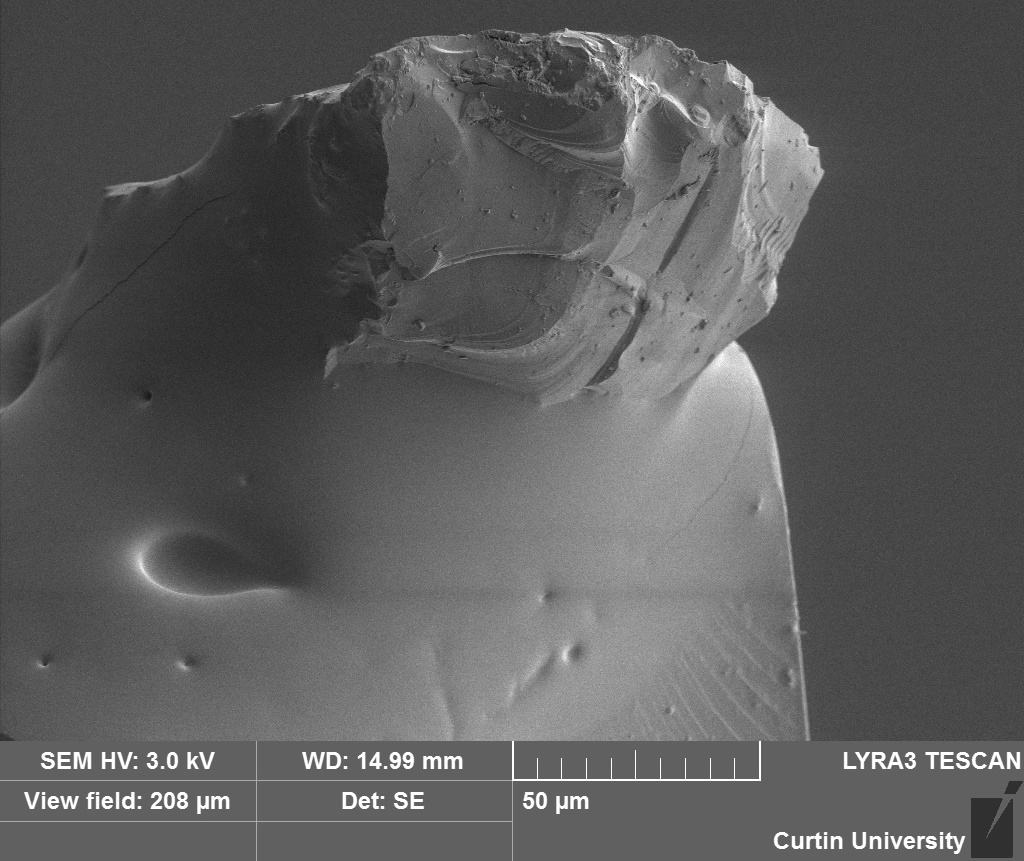
Tiny dust grains: Scanning electron microscope image of an Itokawa fragment. (Courtesy: University of Glasgow/Curtin University)
This water is produced by space weathering. Hydrogen ions – protons – on the solar wind penetrate into the dust grains where they oxidize the minerals, first creating hydroxyl (HO) and then water (H2O). Daly’s team envisages clouds of this water-laden dust raining down on the young Earth in the early solar system, supported by impacts from C-type asteroids.
“Up to around 50% of Earth’s water might have arrived on tiny dust particles affected by the solar wind, and the rest from C-type asteroids,” Daly tells Physics World.
Nebulous problems
Steven Desch, of Arizona State University, who was not involved in the study, finds the results “interesting”, but is “not at all convinced” that dust could have delivered a substantial amount of water to Earth.
The solar system formed from a cloud of gas and dust that astronomers call the solar nebula. In 2018 Desch co-authored a paper suggesting that some of Earth’s water came as a result of hydrogen ingassing from the solar nebula and being soaked up by the early Earth’s magma ocean, where it oxidized minerals to form water.
Desch says that Daly’s team has not properly considered the environment of the solar nebula. To have enough dust to provide the water, he says, it would need to be embedded in the gas of the nebula. “But if there’s gas, it absorbs the solar wind,” preventing it from forming water, he says. Meanwhile, dust itself could block the solar wind from reaching other dust in its shadow.
Instead, “We, and other researchers, feel that there are probably multiple contributors, starting with the major one, the accretion of carbonaceous chondrite material,” says Desch, who argues that the solar-wind process would have contributed only a small amount of water, rather than the significant amount that Daly’s team proposes.
Nevertheless, the space weathering process may have important implications for other bodies in the solar system.
“All the inner planets and moons in our solar system, and potentially across the galaxy, should receive water from tiny dust grains,” says Daly. “Also, water will be forming on the Moon right now from the solar wind hitting the lunar regolith.”
This process has already been observed in action on the Moon by SOFIA, the Stratospheric Observatory for Infrared Astronomy, which is a telescope in the back of a modified Boeing 747. SOFIA has detected water molecules migrating across the lunar surface, water that has formed through space weathering. “It could be a really important resource for future astronauts,” says Daly.
Quantum science and technology is a hot ticket today, with governments, major tech companies and financiers around the world pouring money into research and development. As a result, the need to understand the basics of things like quantum computing and quantum cryptography goes well beyond the academic community. The problem, however, is that the concepts underlying these technologies can be fiendish to understand – even for physicists working in fields other than quantum information.
As a result, there is a growing need for guides to the quantum technology aimed at the layperson who might be interested in investing in a quantum technology company or a businessperson who might want to use the products or services of such a company.
As I read Katwala’s book I imagined myself to be that financier or businessperson and asked: does this book elucidate the basics of quantum science and present a good vision of the myriad technological challenges facing developers of quantum technologies? Despite the book being only about 150 pages, Katwala has succeeded admirably.
He gets off to a good start by providing the reader with enough information to have a basic understanding of the concepts of quantum computing without the danger of having them lose the plot with too much information. The book begins with the standard explanation that a quantum bit (qubit) of information can be in a superposition of two states at one time. Then he pushes his explanation a bit further, writing that the wave nature of quantum mechanics is harnessed by a quantum processor to choreograph the interference between connected qubits such that the wrong answers to a problem cancel each other out and the correct answers reinforce each other. It is this dance that allows quantum computers to solve some problems much more efficiently than conventional, or “classical” computers.
Success is not guaranteed – a very useful bit of information for a potential investor
I think this description is enough for the reader to appreciate the key challenge facing developers today – how to keep that choreographed dance of qubits going long enough to do a useful calculation. Katwala covers this problem in his second chapter, “Building the impossible”. He looks at the challenges of keeping the quantum dance going despite the destructive effects of noise, heat and other environmental factors. This allows him to introduce the very important idea that quantum computing has just entered the noisy intermediate scale quantum (NISQ) era. NISQ describes the nascent quantum processors with 50 or so qubits currently being operated by the likes of Google and IBM.
“It’s all part of a delicate balancing act,” writes Katwala. “Each computation is a frantic race to perform as many operations as possible before a qubit ‘decoheres’ out of superposition.” He then explains that connecting more qubits together to make larger quantum processors worsens this decoherence – thereby identifying the central dilemma facing anyone who wants to build a commercial quantum computer that can solve practical problems and thus make its inventors money. While this challenge is not necessarily insurmountable, Katwala makes it clear that success is not guaranteed – a very useful bit of information for a potential investor.
He explains that most cutting-edge quantum processors today – including those developed by Google and IBM – use tens of superconducting qubits that are coupled using microwaves. Indeed, it is these devices that have been the first to demonstrate “quantum advantage”, whereby a quantum computer can solve a problem in a much shorter time than a supercomputer. Katwala devotes several pages to describing these superconducting processors but makes it clear that there are problems related to coupling, cooling and controlling larger numbers of superconducting qubits.
Qubit numbers are not everything and potential investors in new quantum computing technologies might want to consider a figure of merit called “quantum volume”
The book also points out that qubit numbers are not everything and that potential investors in new quantum computing technologies might want to consider a figure of merit called “quantum volume”, which is a measure of how many useful calculations a processor can do before it succumbs to decoherence.
Katwala explains that decoherence can be addressed in two ways. One is to build better qubits and the other is to use error-correction schemes. The problem with the latter is that it takes many additional qubits to run error correction. He quotes an expert who says that tens of thousands of qubits could be needed to create an error-corrected system with a few hundred “logical” qubits.
Indeed, an investor today might want to eschew conventional superconducting qubits as Microsoft has done. Instead, as Katwala explains, the tech giant is trying to develop topological qubits, which should be much more robust than superconducting qubits – at least in principle. The book also looks at a recent breakthrough in using trapped ions as qubits, making it clear that the winning technology for quantum computing is far from certain – if there ever will be a winner.
Shifting from hardware to software halfway through the book, Katwala presents an overview of the types of problems that are amenable to quantum advantage – and which are not. The upshot is that not all difficult problems are easier to solve on a quantum computer than on a classical processor – so quantum computing is by no means a panacea.
An example of where quantum computers could be particularly useful is Shor’s algorithm, which a quantum computer could use to find the factors of a large number in a much shorter time than it would take a classical computer. Factoring numbers plays an important role in current cryptography techniques to ensure the secure exchange of information – and being able to factor large numbers would be a big advantage to someone trying to crack cryptographic systems. So a practical quantum computer capable of running Shor’s algorithm would be a boon to spies and criminals alike – and would also lead to a shake-up in how confidential information is exchanged.
Another example of where a quantum computer can outshine a classical processor is Grover’s algorithm, which can be used to search databases. Some optimization problems are also amenable to quantum advantage – tasks such as real-time traffic routing and simulating financial markets, which could both benefit from real-time predictions. So, there are several ways that a practical quantum computer could make someone some money.
As well as having the potential to crack cryptography codes, Katwala explains how quantum technology could be used to create secure systems to exchange information. Indeed, practical quantum cryptography systems already exist and are being used commercially.
The book links today’s intense interest in quantum cryptography – particularly in China – with the 2013 release of US classified documents by Edward Snowden. This huge leak revealed the extent to which the US National Security Agency (NSA) had been spying on foreign governments and even American citizens. Katwala claims that the NSA’s capabilities so terrified the Chinese government that it has spent vast amounts of money on developing quantum technologies to keep its secrets secure. This includes the launch of a satellite called Micius, which is an important early step towards the creation of a secure quantum internet. Indeed, if a country could develop a quantum computer capable of cracking cryptography systems, while being able to use quantum systems to secure its own information it would be in an enviable position.
Katwala devotes an entire chapter to how quantum computers are perfectly suited for simulating natural systems – particularly systems such as molecules that are themselves governed by quantum mechanics. The commercial applications of this could be limitless – from designing new drugs to building better batteries. Perhaps this is where a budding quantum investor should be focusing today.
So what is next for the future of quantum computing? Katwala says we should expect much work to be done on improving quantum hardware, hopefully pushing it beyond the NISQ era. He also identifies the need for a much more friendly interface between quantum computers and their users. This will require a move away from the current machine-language approach to higher-level languages such as Q#, which is being developed by Microsoft.
Katwala’s guide to quantum computing is upbeat, but he does end on a cautionary note, pointing out that today, the development of quantum technologies is not at the point where it is a matter of companies competing against each other to create the best quantum processors. Instead, he quotes a quantum researcher at Google who says, “It’s our technology against nature.”
2021 WIRED Guide, Random House Business £8.99pb 160pp