How to prepare for a career in the emerging quantum-technology industry

Whether it’s lasers, nuclear power, computing or IT, one of the most exciting aspects of living through the dawn of rapidly evolving technology is that it creates a lot of jobs. In fact, new industries often open up completely new roles that didn’t exist before, offering fresh career opportunities for those willing to take the plunge. Right now, there’s no better example of a burgeoning area than quantum technology and, fortunately for physicists, this is an area they are a perfect fit for.

But what’s so new about quantum technology, given that everything from lasers and semiconductors to magnetic-resonance imagers and fibre-optic cables use quantum principles? These are often loosely characterized as “quantum 1.0” technologies, which rely on quantum effects like spin, tunnelling and quantized energy. The newer “quantum 2.0” technologies, in contrast, actually produce, exploit and read out quantum states of matter. To do this, they use more complicated quantum phenomena, such as superposition and entanglement.

This second wave of quantum tech is of particular interest to KTN, a UK-based organization that aims to drive innovation by promoting networks between universities, hi-tech firms, funding bodies and government organizations. In fact, Najwa Sidqi, a physicist who is KTN’s knowledge transfer manager for quantum technologies, believes that quantum devices could significantly outperform their predecessors.

Quantum computers, for example, have the potential to handle much more data and to do calculations much more quickly and efficiently,” she says. “A lot of our physical and chemical problems can only be simulated and addressed using quantum models, because nature is quantum. It’s also been proven that photons are the only way to communicate data in a safe and unbreachable way, using the properties of superposition and entanglement.”

Riding the new quantum wave

Quantum 2.0 has three main areas: computing, sensing and communications. Quantum sensing encompasses technologies that use quantum effects to take extremely high-precision measurements, such as atomic clocks for measuring time and trapped ions for detecting electric fields. Quantum communications mostly involves building perfectly secure systems of transmitting information. But it is quantum computing that gets the most attention in the media.

“The main goal of this quantum revolution, which might or might not happen, is a digital quantum computer,” says Ciaran Hughes, a senior research fellow at CERN who recently co-wrote a paper entitled “Assessing the needs of the quantum industry” (arXiv:2109.03601). The paper reports on a survey of 57 US-based quantum companies who were asked about the jobs they would be hiring for in the next few years, as well as the skills and degrees they need employees to have. It is one of the first studies to look in depth at what kind of workforce the quantum industry will require.

Quantum computing is the most ambitious quantum 2.0 area, according to Heather Lewandowski, professor of physics at the University of Colorado Boulder, who co-wrote the report, with potential applications in everything from cryptography and drug design to new materials for carbon capture. In the near term, though, she thinks that quantum sensing is the area with the most immediate promise. Quantum gravity sensors, for example, which measure gravitational gradients very precisely, could be useful for civil engineering projects, and are closer to being ready for use than quantum computers.

Nevertheless, investment is very high across all these areas. That becomes obvious if you look at the interactive tool of the “quantum landscape”, drawn up by Sidqi and her colleagues at KTN, which maps out the UK’s activities in quantum tech. It includes information on publicly funded projects, as well as the six big national centres that house most of the UK’s research capabilities in the area.

The tool also lists 160 research groups and more than 200 businesses that have quantum capabilities, indicating the “main interests” of the businesses. This showcases the huge variety of quantum applications, with companies working in areas from aerospace and cryogenics to geoscience and healthcare. There are familiar names such as Airbus and Leonardo, as well as countless start-ups and smaller companies.

Careers in quantum 2.0

Not so long ago, if you wanted to work on quantum 2.0 technologies, you would probably have had to go into academic research. But, as KTN’s map of quantum industry shows, that is no longer the only option. Indeed, there is a lot of interaction between universities and companies.

“There’s still an important role for fundamental research in academia, but as we’ve seen there have been many spin-off companies from that, such as IonQ and ColdQuanta,” Lewandowski explains. “I think there are increasing partnerships between these companies and academic institutions, probably greater than there has been in a lot of other physics-type disciplines.”

As quantum-tech companies progress towards practical, commercial products that make a return on investment, the number of people working in industry in the sector will grow to outnumber academic researchers. It was the need to understand what kind of workforce this field will require that motivated Hughes, Lewandowski and co-authors to write their paper.

Their study lists the jobs that companies say they will be hiring for, which include many specialized quantum roles, such as error correction scientists and quantum algorithm developers. However, those firms will also be looking for non-quantum roles, but where a science background is needed, such as test and measurement engineers, data scientists, cryogenics scientists and circuit designers. So don’t be put off from the quantum sector if you don’t have a PhD in quantum physics: there’s a lot more on offer.

The arXiv paper also asked the companies surveyed about the level of education needed for each of the roles they are hiring for. For most of the jobs, most companies say they required a Master’s degree or a PhD, but Lewandowski points out that this will change over time. “Right now it’s a bit skewed towards the higher degree levels,” she says. “But as the industry moves from R&D into products you’ll see more at the bachelor’s level.”

According to Sidqi, there are also many jobs needed in the UK quantum industry that don’t require specifically “quantum 2.0” skills. “Photonics and looking at how we generate photons is important for quantum communication, for example, and laser development for atomic cooling is also a big area,” she explains. “Materials science is a focus for building hardware for quantum technologies, as is work on semiconductors. People with a physics background are highly sought after on both the software and hardware sides.”

Skills for the quantum industry

Another finding of the arXiv paper is that there is much more consensus among quantum-tech companies about the skills they need than about the degrees that workers in the sector need. Some require specialized expertise in areas like quantum algorithm development, for example, while others need non-quantum capabilities, such as electronics and software development. Hands-on skills are vital too, including laboratory and experimental experience, as well as knowing how to program and an ability to work in interdisciplinary teams. To develop these skills, Hughes and Lewandowski suggest gaining practical experience through an internship or by contacting an academic who has a lab and might take on a student.

Whatever your background, though, you’re likely to have lots of on-the-job training if you go to work for a quantum company. A 2020 study that Lewandowski also co-authored (Phys. Rev. Phys. Educ. Res. 16 020131), for example, revealed that 95% of quantum companies surveyed expected their employees to learn the necessary skills on the job. “It typically takes many months of training for people hired in these jobs,” says Lewandowski, “so you don’t need to have 100% of the skills walking in on the first day.”

It typically takes many months of training, so you don’t need to have 100% of the skills walking in on the first day

Sidqi echoes this, recalling her own transition from university to working in industry before she moved to KTN. Although she took many courses on semiconductor physics during her Master’s degree, and learned the underlying theory of how electrons move within them, it wasn’t until she went to work at STMicroelectronics that she learnt how you actually make semiconductors and how they function within a finished product.

Since both sides of training are essential, collaborations are springing up between universities and companies to design courses that incorporate both. “There has been an effort across the UK, the EU and the US to launch quantum Master’s programmes, many of which are sponsored by industry,” says Sidqi. Within the UK, you can find much of this information on KTN’s map of the quantum landscape, which includes universities and Centres for Doctoral Training, as well as the industrial partners involved and the funding that the programmes have been given.

One example is the University of Bristol, which has developed a Master’s degree in optoelectronic and quantum technologies. As part of the course, students complete a research project, either based at the university or with one of the industrial partners. On the other side of the world, meanwhile, the University of New South Wales in Sydney, Australia, has even launched a whole undergraduate degree in quantum engineering.

Outside specialized degree programmes, many institutions are also beginning to offer short classes in quantum physics that anyone can take to gain new skills relevant to the quantum sector. There are even some decent free resources available online for anyone who wants to learn more. Qiskit, for example, is an open-source software development kit for quantum software founded by tech giant IBM, and it also has free textbooks and courses on quantum computing.

The UK quantum tech industry at a glance

Information taken from the KTN interactive map of the “quantum landscape”

Six national centres

Biggest public funders

Research groups

  • 160 groups across more than 68 institutions

Businesses 

  • More than 200 businesses with quantum technology capabilities
  • The most common functions of these businesses are technology provision for supply chains or for end users, consultancy and innovation support

Training centres

  • 30 universities, Centres for Doctoral Training and Training & Skills Hubs offering programmes with more than 200 partners from industry and international universities

Keeping your options open

The quantum industry is on the up but it’s still early days and it’s wise not to rush in too fast or try to plan your entire career around it just yet. In fact, Hughes and Lewandowski caution against specializing too narrowly too soon, since there is a lot of uncertainty around if and when this quantum revolution will come to pass.

“This area has some great potential, but I wouldn’t advise people to make career decisions based on the assumption that it will be established in 10 years’ time,” says Hughes. “One problem of going specific early is that you don’t know if the job you’re aiming for is going to be there in that capacity later on.” In any case, your career interests are likely to change over time, so it’s important to be versatile. From the point of view of the quantum industry – or any industry for that matter – it also isn’t healthy to have too many people all wanting to do the same thing.

In fact, more than 50% of the roles that companies are recruiting into require no essential quantum skills at all according to the arXiv paper, and this percentage will probably increase further as businesses expand and progress towards products. On the other hand, non-quantum competencies, such as software and electronics, are required in every role that the paper looked at, highlighting the importance of having a broad set of skills. In light of this, the paper recommends that quantum-specific courses should include more general STEM content, while classical degrees could teach one or two broad quantum courses, so that graduates are quantum-aware, but not trained too specifically too early on.

Above all, says Sidqi, it’s vital for physics students to stay abreast of emerging areas and to be curious and follow developments closely. “There are so many ways you can do this, whether it’s social media, quantum news sites and mailing lists,” she says. “Conferences and job fairs are also a good way to learn.”

So keep an eye on how this field is unfolding, but stay open-minded and strive to develop a broad set of skills. That way, you’ll be versatile and have a lot of career options – whatever the quantum industry landscape looks like when you want to join.

Laser pulses light the way towards killing antibiotic-resistant bacteria

Safe sterilization

The efficacy of conventional antibiotic treatments has been on the decline for years owing to their excessive use. Antibiotic resistance is a growing concern and now poses one of the biggest threats to global health. Without alternative solutions, a post-antibiotic era in which common infections and minor injuries pose serious risks may be inevitable.

Promising emergent strategies are shifting the focus away from traditional chemical antibiotic treatments and towards physical methods, including ultraviolet radiation, gamma-rays and heating. While effective for inactivating pathogens, these techniques also cause extensive collateral damage to human tissue, making them unsuitable for clinical use.

Enter visible light. At low doses, this form of electromagnetic radiation is considered safe for human cells and blood proteins while being capable of inactivating pathogens, including bacteria and viruses.

Of particular interest are ultrashort-pulse (femtosecond) lasers. The germicidal properties of such lasers have been previously explored and demonstrate a unique ability to inactivate pathogens that are challenging to kill by other means.

In collaboration with Shelley Haydel, a professor of microbiology at Arizona State University, researchers at Washington University School of Medicine in St. Louis have shown that an ultrashort-pulse visible (420 ± 5 nm) laser is effective even against tough-to-kill, antibiotic-resistant bacteria and bacterial spores.

Their findings, published in the Journal of Biophotonics, demonstrate the utility of the laser against two bacteria from distant branches of the bacterial kingdom: Staphylococcus aureus (MRSA); and extended spectrum beta-lactamase-producing Escherichia coli (E coli). Both of these bacteria are highly resistant to chemical and physical treatments. In addition, the researchers investigated spores from the bacterium Bacillus cereus, which can cause food poisoning and is capable of withstanding boiling.

Exposure to the laser resulted in 99.9% of bacteria becoming inactivated in all cases, highlighting the impressive efficacy of the treatment.

“We previously published a paper in which we showed that the laser power matters,” explains first author Shaw-Wei (David) Tsen, from Washington University’s Mallinckrodt Institute of Radiology. “At a certain laser power, we’re inactivating viruses. As you increase the power, you start inactivating bacteria. But it takes even higher power than that, and we’re talking orders of magnitude, to start killing human cells. So there is a therapeutic window where we can tune the laser parameters such that we can kill pathogens without affecting the human cells.”

While the wavelength of the laser used in the present study corresponds to violet light, Tsen notes that the technique would be effective in other regions, including near infrared.

Shaw-Wei (David) Tsen

How does it work?

The proposed mechanism of action responsible for the laser’s success is that it forces the densely packed proteins within the bacteria to mechanically vibrate until some of their molecular bonds are dislodged. When the broken ends quickly reattach, it is often not to where they had been attached to before. The result is that regular protein function grinds to a halt and the organism dies.

The study results support the use of such lasers as a replacement for conventional antibiotic treatments in specific scenarios. “Imagine if, prior to closing a surgical wound, we could scan a laser beam across the site and further reduce the chances of infection. I can see this technology being used soon to disinfect biological products in vitro, and even to treat bloodstream infections in the future by putting patients on dialysis and passing the blood through a laser treatment device,” says Tsen.

In addition to preventing and treating bacterial infection in vivo, the laser could be used to aid in sterilizing blood prior to transfusion. “Anything derived from human or animal sources could be contaminated with pathogens,” Tsen says. “We screen all blood products before transfusing them to patients. The problem is that we have to know what we’re screening for. If a new blood-borne virus emerges, like HIV did in the 1970s and 1980s, it could get into the blood supply before we know it. Ultrashort-pulse lasers could be a way to make sure that our blood supply is clear of pathogens both known and unknown.”

The promising results of this study suggest the possible future role of ultrashort-pulse laser treatment in alleviating the healthcare burden posed by antibiotic resistance.

Helium-8 nucleus has unexpected rugby-ball shape

An unexpected deformation has been discovered in the helium-8 nucleus by an international team led by Matthias Holl and Rituparna Kanungo, both at Saint Mary’s University in Canada. The researchers used cutting-edge instruments at the TRIUMF facility in Vancouver to reveal a rugby-ball shape for the neutron-rich nucleus. Theoretical calculations based on the no-core shell model also suggest a deformed shape and the research provides important information about how nucleons (protons and neutrons) interact within atomic nuclei.

The nuclear shell model describes the structure of nuclei in terms of shells of energy levels that are occupied by nucleons. If a nuclear shell is closed, it contains the maximum number of allowed protons or neutrons in that shell. If any further nucleons are added to the nucleus, they are valence nucleons and exist in an unfilled shell surrounding the closed inner shell. The shell model is a work in progress and physicists are improving it by studying the properties of a range of nuclei.

Neutron skin

Within a helium-4 nucleus, both protons and neutrons exist in closed shells of two nucleons each – resulting in a highly stable nucleus. Helium-8 has four extra neutrons that form a “skin” around a helium-4 core. Physicists believe that these neutrons could form a closed sub-shell. This would make helium-8 a doubly-closed-shell nucleus.

So far, the few doubly-closed-shell nuclei studied by physicists are spherical. In their study, Holl and Kanungo’s team investigated whether this holds true for helium-8 by doing proton inelastic scattering experiments at TRIUMF’s 520 MeV cyclotron. They fired an beam of doubly ionized helium-8 nuclei at solid hydrogen target that was cooled to 4 K. Using the IRIS spectroscopy station, which is headed by Kanungo, they analysed the scattered nuclei.

Their results revealed a large energy gap between the ground and first excited states of the helium-8 nucleus. This supports previous predictions that the nucleus contains a closed sub-shell of neutrons. Yet contrary to past predictions, the analysis also revealed that this shell is not spherical. Instead, it has a prolate spheroidal – or rugby ball – shape, being elongated along its central axis.

In parallel with these experiments, teams across several different institutions made their own theoretical predictions of the shape of helium-8 from first principles. When their calculations were based on a no-core shell model, where the nucleus’ inner protons and neutrons are allowed to interact with its outer neutron sub-shell, the results closely matched the TRIUMF measurements.

Holl and Kanungo’s team hope that their work will inspire future investigation into the deformation of helium-8, potentially unveiling new types of nuclear interaction.

The research is described in Physics Letters B.

The causes of science denial and how to combat it

One of the first questions Lee McIntyre, a philosopher at Boston University, poses about those who insist the Earth is flat is: “Can these people be serious?” As one of the most extreme examples of science denial, McIntyre starts his book, How to Talk to a Science Denier: Conversations with Flat Earthers, Climate Deniers, and Others Who Defy Reason, by describing his visit to the 2018 Flat Earth International Conference in Denver, US. The answer to his question, he quickly concludes, is “yes, completely so”.

McIntyre is the author of several previous books, including The Scientific Attitude: Defending Science from Denial, Fraud and Pseudoscience, where he argues that what makes science distinctive is its emphasis on evidence and scientists’ willingness to change theories on the basis of new information. His latest book takes the reader through the current literature on the origins of science denial and the motivations of deniers, both political and personal. He dissects several studies on how we might communicate with those who seem to defy reason, and describes some of his own encounters with people who will not accept what most consider irrefutable scientific evidence.

According to McIntyre the story of science denial starts in the 1950s with the tobacco industry’s campaign to obfuscate the causal link between smoking and cancer. One executive was quoted saying “doubt is our product” and that approach has become a blueprint for science denial, including climate change scepticism, ever since. McIntyre cites a 2018 US poll in which only 29% of respondents believed that climate change is anthropomorphic. He contrasts this with an account of a trip to the Maldives, where the effects of climate change are already clear to see. “Flat-Earthers may have seemed harmless but this kind of science denial could kill us,” he says.

Describing his encounters with flat-Earthers in Denver, McIntyre paints a picture of those attracted to what he sees as almost a cult, finding a mixture of Christian fundamentalists and conspiracy-theory believers. Given his connection to the family of a school shooting victim, one of his most upsetting encounters is with a flat-Earther who also believes that the 2018 Parkland school massacre of 17 people was faked.

McIntyre concludes that many flat-Earthers are emotionally damaged people who harbour resentment and anger towards the elites. What becomes clear to him is that their beliefs are deeply rooted in their identity and sense of belonging – making them much harder to shift. But flat-Earthers are not unique here; McIntyre points out that increasingly many of us support points of view that match the “political team” we feel we belong to, rather than the other way round.

McIntyre provides a useful analysis of how to identify science denial. He describes five elements that are almost always part of the arguments: cherry-picking evidence; belief in conspiracies around the issue; reliance on fake experts; logical errors; and setting impossible levels of evidence for any opposing views. Given this, McIntyre explains that combating science denial can be done by correcting the inaccuracies of the science, but also by pointing out the fallacies in the mode of thinking, known as technique rebuttal.

He also sets out carefully the argument for why we can and should engage with science deniers. A study in 2010 demonstrated a “backfire effect”, where presenting the evidence against a person’s position causes an even stronger adherence to it – leading to the demoralizing idea that there may be no point in fighting back. But McIntyre reports that these results were never replicated. In fact, a breakthrough experiment done in 2019 by behavioural scientists Philipp Schmid and Cornelia Betsch from the University of Erfurt, Germany, showed that several methods of rebuttal were more effective than no response at all.

However, McIntyre concludes that “we’ve outrun the literature” in working out how to talk to science deniers and puts forward his own view that “engagement, trust, relationships and values are the keys to real belief change”. He sets out to do this himself through building trust face-to-face, by listening without attacking, and showing respect. He describes this approach via conversations he has around several issues. Speaking to coal miners in Pennsylvania, McIntyre finds few outright climate-change deniers willing to talk. He then moves on to those who oppose genetically modified organisms (GMOs). He argues this is another form of denial that has caused harm, by preventing the development of nutrient-enriched GM crops that could fight malnutrition in poorer countries.

This brings up the issue of whether science denial is only a feature of right-wing ideologies or if there is also a “liberal war on science”. While there is not an equivalence, McIntyre argues that those on the left have no right to be smug. For example, the rhetoric and claims that Monsanto deliberately caused food shortages to promote the use of GM foods certainly share the conspiracy thinking found in other forms of science denial.

Having written the book during the COVID-19 pandemic, McIntyre tackles the massive amounts of disinformation that have taken root around it, prophetically foreshadowing the anti-vaccination stance that predominates in some parts of the US. Presumably writing in 2020, he expresses some hope that minds will change and points out that when the focus of the pandemic in the US moved from New York to the rest of the country in 2020, there was less support for the politicians who refused to listen to science. But at the end of 2021 this hope now seems outdated, with disinformation clearly impacting vaccination levels and mask-wearing in states like Texas and Florida, where COVID outbreaks re-emerged.

Overall, this book presents an authoritative and entertaining account of science denial and how we might fight it, moving smoothly between theory and the author’s personal experiences of talking to science deniers. Unfortunately, the book is a little light on those conversations, due to limited opportunities for face-to-face meetings during the pandemic, and McIntyre has few examples of success in persuading deniers to change their minds. He does, however, discuss his future plans to engage with flat-Earthers along with retired physicist Bruce Sherwood. Sherwood has produced a 3D computer model that shows how the flat-Earth sky would really look – nothing like reality. It will certainly be interesting to see if their combined approach can make a difference in future.

We need to talk to those with whom we disagree. But we have to be smart about how we do it

McIntyre concludes with a call for scientists to get out of their echo chambers. “We need to start talking to one another again, especially to those with whom we disagree,” he says. “But we have to be smart about how we do it.” No insulting, no shaming, and lots of empathy and respect. Particularly with the existential threats posed by climate change, he says ‘‘We must try to make them understand, we must try to get them to care, but first we have to go out there face to face and begin to talk to them.”

  • 2021 MIT Press $24.95hb 280pp

Sleeping bag for outer space, song for Nobel winners, latest Brian Cox spoof

When you get out of bed in the morning, gravity causes some fluid in your head to drain away. This is important because the pressure associated with this excess fluid can change the shape of the back of the eyeball. This is a problem for astronauts in low gravity environments and is a major health barrier to extended periods of space travel.

Now, researchers at the University of Texas Southwestern Medical Center have created a sleeping bag for the lower half of the body that seems to solve the problem. The device forms a seal at the waist and reduces the air pressure surrounding the lower body. This is enough to suck some fluid out of the brain, doing the job of gravity.

You can read more in JAMA Ophthalmology.

Today is the 125th anniversary of the death of the Swedish chemist and industrialist Alfred Nobel. It is also the day that the latest Nobel laureates receive their prizes. Unfortunately, this year’s event will again be a low-key affair because of the ongoing pandemic, but that hasn’t dampened the spirits of the Chalmers Choir of Sweden’s Chalmers University of Technology, who are singing for science on Nobel day.

In the above video they perform a song that is set to the tune of “Så lunkar vi så småningom” (“So we gradually amble”) by the 18th century Swedish musician Carl Michael Bellman. The song is a tribute to scientific innovation.

Here on Physics World we love a good spoof of the particle physicist and television personality Brian Cox. Indeed, we even published one of our own – which claimed that the famous Mancunian had joined the cast of Coronation Street.  Now, the Irish comedian Seán Burke has done a fantastic send-up of Cox complete with dulcet tones, dewy eyes and shaggy hair. Well, it made me laugh.

Towards quantum 2.0 technology: where the best opportunities for business lie

Physicists have long boasted of their success in what’s known as “quantum 1.0” technology – semiconductor junctions, transistors, lasers and so on. Thanks to their efforts over the last 75 years, we have smart phones, computers, laptops and other quantum-enabled devices that have transformed our lives. But the future will increasingly depend on “quantum 2.0” technology, which taps into phenomena like superposition and entanglement to permit everything from quantum computing and cryptography to quantum sensing, timing and imaging.

The incredible possibilities of quantum 2.0 were brought home to me when I attended the UK’s National Quantum Technologies Showcase in central London last month. The event featured more than 60 exhibitors and I was amazed how far things have progressed. In fact, it coincided with two positive developments. One was an announcement by UK Research and Innovation (UKRI) of a further £50m to support quantum industrial projects. The other was the UK and US signing a joint “statement of intent” to boost collaboration on quantum science and technologies.

The future will increasingly depend on “quantum 2.0” technology, which taps into phenomena like superposition and entanglement

The £50m from the UKRI is part of its £170m Commercialising Quantum Technologies challenge, which has already awarded £103m in grants over the last three years. The challenge forms part of the UK’s National Quantum Technologies Programme (NQTP), which was set up in 2014 to fund and spur on the rapidly growing UK quantum industry. As challenge director Roger McKinlay told delegates: “Quantum is no longer a technology of the future but a technology of today.”

Like many other nations, the UK is keen to turn its scientific prowess in to industrial success, creating jobs, exports and economic benefits. It’s been a rosy picture to date, with management consultants Anchored-In reporting that 41 quantum-tech companies have been created in the UK since 2013, together raising over £245m in investment and employing 590 people. This year has also seen one of the first acquisitions in the sector, with Honeywell buying Cambridge Quantum Computing to form a new joint entity. London-based quantum-encryption start-up Arqit, meanwhile, went public to provide $400m for satellite-based quantum key distribution (QKD) secure communications.

Award winners

The London event showcased some fantastic technology ideas and prototypes from the UK’s four quantum-technology hubs, which the NQTP set up in 2014 to accelerate the commercialization of quantum 2.0 products. I was particularly pleased to see companies that have won business awards from the Institute of Physics (IOP) this year. They included Toshiba, which won an IOP business innovation award for its technology that can protect telecoms infrastructure from cyber-security threats.

The firm used the London event to showcase its QKD system, which is already being used on fibre networks across Europe, the US and Japan. It has the highest key transmission rate on the market and operates along distances of more than 100 km. Toshiba hopes to extend this figure to 600 km by cancelling out temperature fluctuations in the fibre, which otherwise scramble the bits of the key, using a technique called “dual-band stabilization”.

Another firm showcasing its wares in London was Aegiq, which won an IOP business start-up award this year. Spun out of quantum-photonics research at the University of Sheffield in 2019, it has received more than £3.5m of funding to develop its “iSPS” technology, which produces indistinguishable single photons. The first application is expected to be in satellite QKD, with iSPS offering speeds 10 times higher than the best currently available. As satellites have only perhaps a 100 s contact time with base stations, the firm’s technology will allow data to be sent in more secure bursts. Its first product could be out next year.

I was also intrigued by Quantum Dice, which won an IOP business start-up award this year for developing a “true” random-number generator. Emerging from research at the University of Oxford, the firm’s technology, which is device-independent, can securely generate keys for quantum encryption. Its big innovation is its “self-certification” routine, which guarantees that the output numbers have the maximum amount of randomness that can be extracted. Quantum Dice has already raised £2m in investment.

It was great to see past IOP award winners making great progress too. One was Orca Computing, which bagged an award in 2020 and now employs 20 people, has raised more than £3m in funding and recently received coverage from the BBC for its claims to have made the world’s smallest quantum computer. Operating at room temperature – how cool is that! – the four-qubit device fits into a standard-size server rack and was launched at the London event.

Quantum 2.0 is not just a buzzword: it’s reality

Another 2020 IOP business start-up award winner in London was Photon Force, which makes single-photon avalanche detectors for sensor arrays and cameras. Its staff and revenues have doubled over the last year, with the company funded from sales, R&D contracts and grant revenues. Its technology is being used in the £2.6m BP-led HYDRI project, which can spot potentially dangerous hydrogen leaks. The firm is even working with Facebook Reality Labs to use its array in a brain-computer interface project.

Then there was QLM Technology, which won an IOP business start-up award in 2020. It makes low-cost, low-power, tunable-diode LIDAR gas-imaging systems based on infrared single-photon detection. They can monitor leaks of methane – a potent greenhouse gas – from gas and oil wells. QLM’s prototypes can reveal parts-per-million levels of methane at distances of up to 200 m. Having raised £3.1m earlier this year, its first full product is out now.

Despite the great progress on show in London, “deep-tech” firms like these take time to develop and mature. But if we can sustain support for such pioneering firms, they should continue to grow, secure further investment and release products. Quantum 2.0 is not just a buzzword: it’s reality.

CT imaging in radiotherapy: standardization and personalization are the driving forces

Fundamental transformation doesn’t come easy in radiation therapy given the countervailing forces at play within the clinical workflow. On the one hand, there’s the relentless drive among radiation oncology teams for enhanced efficiency and standardization across treatment planning, management and delivery. At the same time, those multidisciplinary care teams are striving to deliver increasingly personalized radiation treatments tailored to the needs of individual patients and their specific cancer indications.

The trade-offs between standardization and personalization are particularly evident when it comes to CT simulation in the radiotherapy suite – chiefly because of the requirement for patient imaging to service the needs of two very different end-users. Radiation oncologists, for example, seek optimized image quality to support contouring and delineation of the tumour volume as well as adjacent critical structures and organs-at-risk (OARs). Medical physicists, for their part, apply the associated tissue density data in the CT scan to calculate accurate 3D dose distributions for 3D treatment planning.

Clinical impact

Squaring that circle – generating a geometrically accurate and qualitative representation of the patient in tandem with robust dose calculations – remains an ongoing priority for the Cancer Therapy Business Line at Siemens Healthineers. The equipment vendor’s DirectDensity algorithm is a case in point, reconstructing images from single-energy CT acquisitions in which the resulting CT values at any given kV setting can be interpreted to show relative electron or mass density for dose calculations. Currently, radiotherapy treatment planning systems (TPS) require a kV-specific calibration curve to carry out this conversion (i.e. where tube voltage is allowed as an extra degree of freedom during simulation, this implies a time and resource overhead as well as a possible source of error in a busy clinical environment).

As such, the core innovation of the DirectDensity algorithm – a single linear relationship that does not depend on the tube voltage of CT acquisition – is something of a game-changer, unlocking the full potential of CT imaging in radiotherapy by dispensing with the traditional practice of scan protocols at a fixed tube voltage (typically 120 kV)1. By extension, the DirectDensity algorithm also reduces the scope for workflow errors that may be introduced if the medical physicist inadvertently selects the wrong TPS calibration curve.

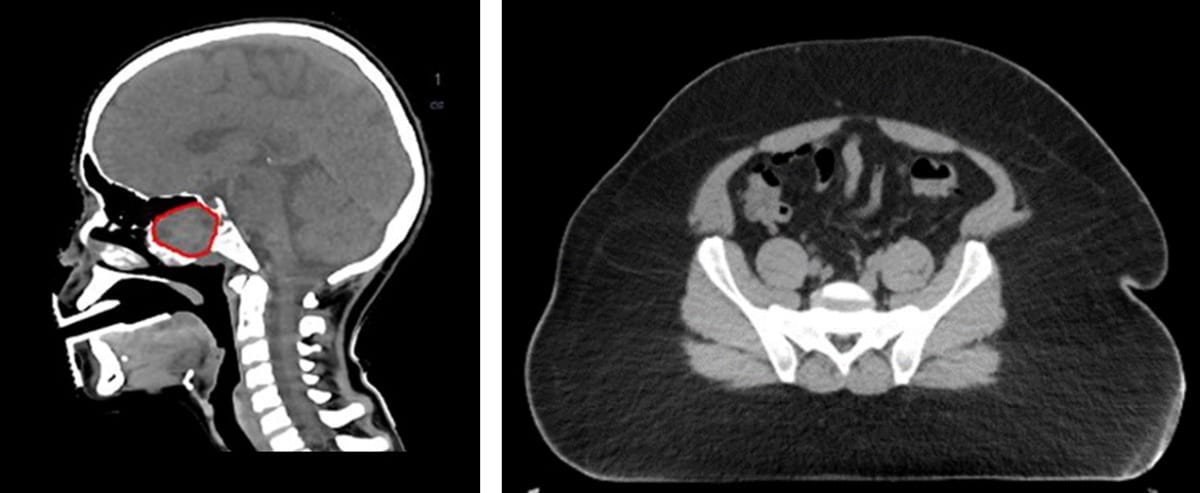
At the clinical sharp-end, the advanced functionality offered by DirectDensity – the option to vary the tube voltage of the CT scanner while using one calibration curve – opens the way for care teams to design scan protocols that are more personalized to the patient. In the case of bariatric patients, for example, who have a higher X-ray attenuation, the output current of the X-ray tube at lower or conventional kV settings may not be sufficient to produce the required contrast-to-noise ratio. Here, higher X-ray tube voltages might be necessary. For paediatric patients or younger breast cancer patients, who might be unnecessarily exposed to higher radiation doses with a conventional 120 kV scan protocol, the contrast-to-noise ratio in the images could be maintained by using a scan protocol with lower kV setting – thereby lowering the received dose during CT simulation.

Educating the care team

Among the clinical early-adopters of the DirectDensity algorithm are medical physicist Enric Fernandez-Velilla Cepria and his colleagues at Hospital Del Mar in Barcelona, Spain. The clinic’s radiation oncology programme treats around 900 adult cancer patients every year – a wide range of disease indications excluding sarcomas – on a suite of three Varian machines (two TrueBeams and a GammaMedPlus brachytherapy system) and an additional intraoperative radiotherapy system for breast cancer patients.

Enric Fernandez-Velilla

“We were the first radiotherapy clinic in Spain to deploy the Siemens Healthineers SOMATOM Confidence RT Pro [in 2017], an advanced CT scanner for patient simulation,” explains Fernandez-Velilla. The timing was such that the Hospital Del Mar medical physics team was co-opted to work with SOMATOM Confidence development engineers on road-testing of the CT scanner’s advanced functionality – and specifically the preclinical validation of the DirectDensity algorithm. In this way, the evidence-based evaluation from the Barcelona team informed subsequent iteration of DirectDensity and its user interface ahead of wider clinical roll-out.

“Bear in mind,” adds Fernandez-Velilla, “DirectDensity was so new at the time that our first task here was an education and training process for the multidisciplinary oncology care team. Up to that point, we were used to working at a single CT tube voltage during CT simulation, so we needed to highlight the clinical advantages of imaging at different kV settings.”

The main beneficiaries of DirectDensity, he notes, are Hospital Del Mar’s radiation oncologists, who take advantage of the flexible kV settings of the CT scanner to fine-tune image quality for enhanced delineation and contouring across the clinic’s diverse patient population. When imaging obese patients, for example, the standard 120 kV setting often means too much noise and artefacts on the CT image, so there are improvements to be had by pushing the tube voltage out to 140 kV. “By the same token,” adds Fernandez-Velilla, “we see that CT image quality in head-and-neck patients is enhanced at 80 kV. So that means dose to the patient decreases, also the motion and registration artefacts as there’s no need for a supplementary 120 kV image series.”

Specific reconstructions for specific tasks

Elsewhere, Ghent University Hospital in Belgium is another Siemens Healthineers customer seeing significant clinical upside following deployment of the DirectDensity algorithm into its radiotherapy workflow. Ghent’s radiation oncology programme treats around 2000 patients annually in a facility comprising four linacs (three Elekta linacs and a Varian Clinac iX) and two brachytherapy afterloaders. In April this year, the clinic also completed commissioning and acceptance of Siemens Healthineers’ latest SOMATOM go.Open Pro CT scanner for patient simulation (including the Direct Density algorithm).

Evelien Bogaert

“The introduction of DirectDensity means that SOMATOM functionalities such as CARE Dose and CARE kV – which can semi-automatically adapt tube current and, of special interest, tube voltage – can be included in our CT scan protocols,” explains Evelien Bogaert, a medical physicist at Ghent University Hospital and project manager responsible for clinical implementation of the SOMATOM go.Open Pro scanner in the radiotherapy suite. “While the image set reconstructed with the DirectDensity algorithm is used for dose calculation,” she notes, “additionally reconstructed data sets at the same tube voltage optimize acquisition and, with the focus on image quality, aid the task of delineation for Ghent’s radiation oncologists.”

It’s worth noting, though, that the enhanced image quality for patient contouring is not just down to the DirectDensity algorithm, rather a portfolio of software and hardware advances within the SOMATOM go.Open Pro scanner. Key innovations include the high-performance Stellar detector; the use of iterative metal-artefact reduction (iMAR) to suppress beam-hardening artefacts caused by artificial joints, pacemakers, chemotherapy ports or dental implants; and SAFIRE iterative reconstruction algorithms to smooth noise and decrease artefacts at lower doses (thereby increasing lesion conspicuity).

The Ghent team also reports significant advantages for patients imaged with contrast media. “Since iodine contrast appearance is supressed in DirectDensity images for dose calculation, there’s no need for an additional non-contrast CT scan in our clinical workflow,” explains Bogaert. Conversely, enhancement of iodine contrast is the priority when it comes to the specific task of contouring. “The fact that there is improved contrast media visualization at lower tube voltages,” she adds, “allows for a reduction in the aggregate contrast burden to the patient when administering kV-dependent iodine contrast volumes.” In this way, a significant patient cohort in the Ghent oncology programme see benefits, without any loss of contrast enhancement, in their image data sets for target and OAR definition.2

“Ultimately,” concludes Bogaert, “the use of DirectDensity means we profit from optimal image quality for delineation and the specific requirements for dose calculation without having to worry about the potential errors introduced by multiple CT conversion curves – something which prohibited us in the past from exploiting kV optimization for CT simulation of the patient.”

The DirectDensity algorithm3 is available on Siemens Healthineers SOMATOM CT scanners compatible with the software version syngo.CT VA30 (or higher).

In pictures: the DirectDensity algorithm

CT acquisition for paediatric and bariatric patients

CT scan optimization

1As shown by measurements with a Gammex 467 Tissue Characterization Phantom comparing standard reconstruction and DirectDensity reconstruction. Image value to relative electron/mass density conversion for the standard reconstruction was based on a two-linear-equations approach with individual calibration for each tube voltage. For DirectDensity images, a single tube-voltage-independent linear conversion was used.
2DirectDensity reconstruction is designed for use in radiation therapy planning (RTP) only; DirectDensity reconstruction is not intended to be used for diagnostic imaging.
3The results by Siemens Healthineers’ customers described herein are based on results that were achieved in the customer’s unique setting. Since there is no “typical” hospital and many variables exist (e.g. hospital size, case mix, level of IT adoption) there can be no guarantee that other customers will achieve the same results.

Processing tweak makes solar cell ‘ink’ more stable

Researchers in China have made lead halide perovskite solar cells more stable by changing the chemical used to process the precursors from which they are made. The switch could make it easier to commercialize this type of solar cell as it makes it less likely for the material to form phases that reduce the cells’ ability to convert sunlight to electricity.

Halide perovskites are crystalline materials with an ABXstructure, where A is caesium, methylammonium (MA) or formamidinium (FA); B is lead or tin; and X is chlorine, bromine or iodine. They are promising candidates for thin-film solar cells because they are easy to manufacture and can absorb light over a broad range of solar spectrum wavelengths thanks to their tuneable bandgaps. Charge carriers (electrons and holes) can also diffuse through them quickly and over long distances. These excellent properties have enabled researchers to make perovskite solar cells with a power conversion efficiency (PCE) that exceeds 25%, placing them on a par with established solar-cell materials such as silicon, gallium arsenide and cadmium telluride.

If all this sounds too good to be true, that’s because it is. Unfortunately, perovskite solar cells are also unstable at room temperature and ambient humidity. This is obviously something of a drawback for solar panels, which need to be exposed to weather to convert sunlight into electricity.

PCEs up to 25.5%

In the new work, a team led by Yaowen Li of the National Science Foundation of China focused on the perovskite formamidinium lead triodide (FAPbI3). This material is one of the best perovskite candidates for making high-performance solar cells, as its small bandgap relative to its chemical cousin methylammonium lead triiodide (MAPbI3) makes it more thermally stable and capable of absorbing solar light over a broader range of wavelengths. In 2019, researchers made solar cells from FAPbI3 with PCEs of 23.7%. More recently, this certificated PCE value was increased up to 25.5%.

High-quality films of FAPbI3 are usually made from a precursor solution, or ink, containing an additive of methylammonium chloride (MACl). The problem is that this additive decomposes into methylamine, forming unwanted phases such as δ-FAPbI3 that destroy the photovoltaic performance of FAPbI3.

Li and colleagues realized that they could overcome this problem by replacing MACl with caesium chloride (CsCl), as this additive does not form unwanted phases. To test their hypothesis, the researchers compared the stability of a solution of FAPbI3 containing either MACl or CsCl precursors. They found that each additive works well for making high-quality FAPbI3 films, resulting in efficient carbon-electrode perovskite solar cells. However, the solution containing MACl is unstable and degrades within a week because it decomposes into methylamine. The solution containing CsCl, in contrast, remained stable for over a month.

“Our work shows that there is a great need to develop non-MACl FAPbI3 perovskite precursor solutions for the cost-effective preparation of perovskite solar cells,” Li says. “These will help bring perovskite solar cells closer to commercialization.”

The researchers, who report their work in Chinese Physics B, tell Physics World that they now plan to print stable and efficient large-area perovskite solar modules based on their durable perovskite ink.

Prompt gamma spectroscopy enables real-time proton range monitoring

Prompt gamma spectroscopy (PGS) is a promising technique for monitoring the range of protons delivered during proton therapy. Its ability to measure absolute range deviations during a course of treatment and provide real-time feedback could allow for immediate changes if organ movement is identified during treatment. For proton therapy of prostate cancer, the use of PGS to monitor rectal radiation exposure in real time could potentially reduce the risk of gastrointestinal toxicities.

Proton therapy is designed to target the most difficult-to-treat and hard-to-reach tumours, and enables higher doses of radiation to be delivered to the prostate using proton beams of less than a millimetre in diameter. Because the energy from a proton beam can damage healthy tissue near the targeted tumour, real-time monitoring is of critical importance to verify the precision of dose delivery. In the case of prostate cancer treatments, for example, high radiation dose to the rectum correlates with increased gastrointestinal toxicity.

A multinational research team coordinated by Joao Seco of the German Cancer Research Center (DKFZ), is investigating the use of PGS to monitor rectal radiation exposure during prostate cancer proton therapy, using an endorectal balloon (employed to stabilize prostate location during treatment) inflated with a silicon dioxide/water mixture.

Seco, together with first author Paulo Magalhaes Martins and Hugo Freitas at DKFZ, and Stephan Brons, Benjamin Ackermann and Thomas Tessonnier from the Heidelberg Ion-Beam Therapy Center (HIT), investigated PGS with both water-filled and silicon dioxide/water-filled balloons inserted into a prostate phantom. They report their findings in Scientific Reports.

Silicon as a range probe

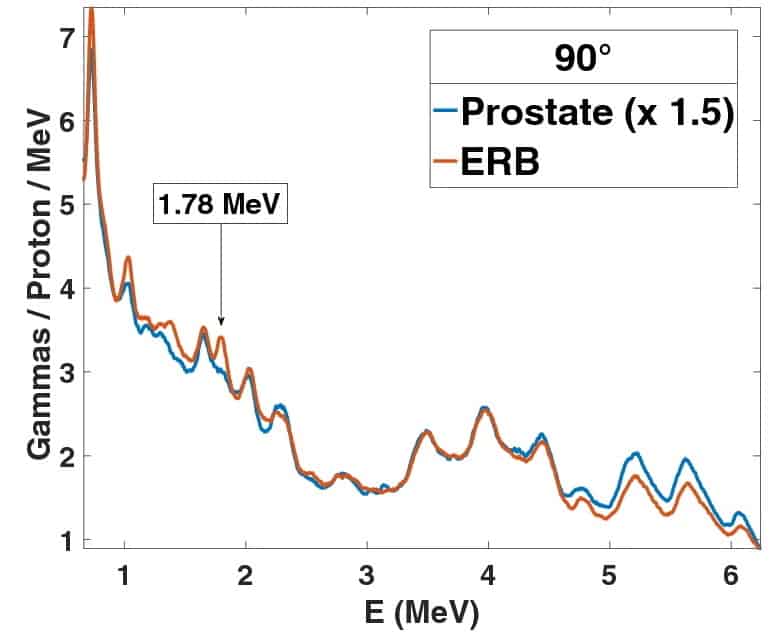
PGS works by analysing the energy spectrum of prompt gamma rays emitted when charged particles such as protons irradiate atomic nuclei within the human body. These gamma rays have characteristic energy lines that reflect the elemental composition of the irradiated tissue. The researchers determined that protons hitting silicon atoms in the endorectal balloon emit prompt gamma rays with a unique energy of 1.78 MeV, which is distinguishable from the tissue spectrum. This finding suggests that the use of a silicon dioxide/water-filled balloon could serve as a real-time range verification probe during a standard 2 Gy proton therapy fraction.

The team initially irradiated various water solutions and mixtures with single-spot proton beams, increasing the beam energy to a level applicable for prostate cancer treatment. Based on their findings and its lack of toxic effects, the researchers continued their investigations with a mixture of water and silicon dioxide (from diatomaceous earth).

Prompt gamma spectra

Next, the researchers irradiated a prostate phantom containing the silicon dioxide/water-filled balloon with horizontal single-spot proton beams at different positions. To replicate a clinical treatment scenario with a rotating gantry, they rotated the phantom by 90° in the transaxial direction at gantry angles of 0°, 90° and 270°. To monitor the ion-beam-induced prompt gamma rays, they used cerium bromide scintillation detectors, which measure the entire prompt gamma emission spectrum.

The team also delivered treatment-like plans to the phantom, with an anterior beam irradiating the prostate either conformally or overlapping with the endorectal balloon. The conformal plans were designed to deliver a maximum rectal dose below 0.3 Gy per 2 Gy fraction, and to prevent any Bragg peak localization within the balloon. The overlapping plans covered an extended target including the prostate and a 1.5 cm extension towards the balloon.

The researchers demonstrated that PGS could identify iso-energy layers crossing the balloon, as well as the columns parallel to the balloon within each iso-energy layer. They also validated the same method using an anterior–oblique field with a gantry angle of 279°. Such real-time feedback would allow clinicians to decide whether to adapt or continue treatment.

Sharing the data

In a related manuscript published in Scientific Data, the team subsequently developed a PGS dataset obtained after irradiating the prostate phantom with the inserted endorectal balloon (filled either with water or a silicon dioxide/water mixture) with 43 single-spot anterior beams of defined proton energies. The data from these measurements, and those described above, provided enough evidence to determine the presence of the silicon in the beam path above a certain beam energy.

“Such evidence is crucial to monitor the irradiation of the rectal wall in anterior beams and may open new possibilities for future control or prevention,” the researchers write. “The energies used are within the range of energies available in most proton centres either with passive scattering or active scanning delivery.”

In both measurement campaigns, the researchers irradiated different regions of the phantom with single spots, increasing the energy of the proton beam in sequential steps from 86.72  to 134.06 MeV and obtaining a prompt gamma energy spectrum for every beam energy.

The researchers have made the dataset available to researchers in the figshare repository. They hope that the dataset will provide other researchers with the tools to reproduce their results and evaluate alternative geometries, beam species and phantoms.

‘Janus textile’ could keep you warm and cool you down

Researchers in Belgium have unveiled the design for a fabric that could keep a person warm when worn one way, while cooling them down if worn inside out. Through simulations, Muluneh Abebe and colleagues at the University of Mons showed how the infrared-emitting properties of their “Janus textile” could allow it to be comfortably worn across a temperature range of 13°C. Although large-scale manufacturing of the material is not yet feasible, the researchers hope their results will inspire further research into similar fabrics.

When at rest in indoor environments, about half of the heat lost by our bodies is transferred to the surrounding air through conduction and convection. To stay warm, we can simply slow these processes by adding layers of clothing. However, the other 50% of heat loss at rest occurs via infrared radiation from skin and from the surfaces of clothing. Therefore reducing this radiative loss – or increasing it to improve cooling – involves modifying the surfaces of clothing.

In previous studies, researchers have shown that some materials can absorb infrared radiation from the wearer’s skin, and then allow it to escape from a highly emissive outer surface. The effect of this is to cool the wearer in warm environments.

Photonic engineered textiles

So far, however, these cooling fabrics have largely been composed of impermeable membranes that trap air and humidity against the skin, making them uncomfortable to wear. To address this issue, Abebe’s team turned to the advanced capabilities of photonic engineered textiles. These involve the of integration infrared-emitting and absorbing elements into mechanically flexible fabrics.

In their study, the researchers present a theoretical design for a 20 µm thick Janus textile – named after the two-faced Roman god.  The two interwoven sides of the material are composed of two different fibres – dielectric and metallic – each with very different infrared-emitting properties. On one side the dielectric fibres can emit large amounts of radiation; while on the other side the metallic fibres have low emissivity.

To test their asymmetrical fabric, the team used a thermal model to calculate the differences between the infrared transmission, reflection, and absorption properties of each side. They discovered that if the Janus textile is worn with its dielectric fibres touching the skin, large amounts of radiation could be prevented from escaping – keeping the wearer comfortably warm in temperatures as low as 11°C. Yet if the fabric is flipped inside-out, it could emit as much radiation as bare skin – keeping the wearer cool in temperatures as high as 24°C.

On top of these passive heating and cooling capabilities, the Janus textile is thin and flexible. Gaps between the fibres should allow moisture to move away from the body – ensuring comfort for the wearer. For now, Abebe’s team acknowledges that high manufacturing costs will mean that such reversible fabrics will not be appearing in our clothes any time soon – but with further research, they hope that new designs could keep us comfortable across a wide range of temperatures.

The research is described in Physical Review Applied.

Copyright © 2026 by IOP Publishing Ltd and individual contributors