How to prepare for the post-pandemic jobs market

As offices, labs and workplaces begin to reopen, it is clear that the COVID-19 pandemic will have a lasting effect on ways of working across industry and academia. It might even alter the careers landscape, in terms of the numbers and types of opportunities available. But the key factors dictating whether physics students will get the jobs they want after university remain broadly the same: access to work experience and professional-skills development, engagement with careers support and informed career-decision processes.

These points are central to the debate about the role of higher education and the growing need for universities to demonstrate that their graduates are getting good, well-paid jobs. An important way of doing so is through career-oriented activities that help them develop “work-ready” skills and learn how they can “fit” their degree to the workplace. Such activities should be designed with the current and future jobs market in mind.

Labour market data suggest that before COVID-19, graduate vacancies that were “hard to fill” included programming, software development and engineering-related roles. The good news for physicists is that these are all career areas that they typically go into. But the reason why these roles are hard to fill, according to a report by the graduate careers organization Prospects, is that applicants often lack relevant technical and practical skills, including advanced problem-solving related to a specific situation, complex numerical or statistical understanding, and role-specific specialist skills. So it’s important that physics students make the most of the practice that their degree offers them to improve in these areas.

While these job opportunities will remain, the growing trend towards online and virtual working might prompt employers to change their priorities when assessing candidates. According to Prospects, businesses want to adapt by placing greater importance on digital skills like effective online communication and the ability to work autonomously using various online platforms. Employers are also increasingly valuing creativity, critical thinking, interpersonal communication and leadership abilities. So if you’re a physics student, developing these competencies, as well as more technical skills, could help you stand out in future applications.

Employer input

Even companies that haven’t been affected much by the pandemic so far are reconsidering their criteria in hiring decisions. This was a point that came up at a one-day physics careers education webinar held last year by the White Rose Industrial Physics Academy and the South East Physics Network – two organizations that support physics students in their transition to graduate-level work. During the webinar, a panel of representatives from defence firms AWE, BAE Systems and Ultra Energy, along with deep-tech company MeVitae said that, although COVID-19 has had a minimal impact on their businesses, it will affect their future needs. That’s largely because it has accelerated the trend towards flexible working. Recruiters will therefore place even more emphasis on qualities such as adaptability, resilience and high-level communication skills.

To ensure that graduates become competent in these areas, it is essential that employers tell universities what sort of people they are looking for, and that institutions adapt their degree programmes accordingly in response. For example, Keele University’s chemistry department worked with industrial partners to redesign its degree course after receiving feedback that its graduates had limited reporting skills.

To teach scientific report-writing to first-year students, the department introduced a new assessment process featuring iterative assessment-feedback cycles. In the first term students analyse an example report, deconstructing it into the constituent parts from the introduction through the experimental phase to the conclusion. They also compare this with “real” published scientific papers.

In the second term, students draft a full lab report and take part in a peer-review workshop and group discussion. This approach enables students to improve their teamworking skills and self-awareness, as well as their scientific reporting. We think such collaborations are vital to help universities understand the changing needs of industry and shape their programmes so that students have the abilities to thrive in future job markets.

What employers can do

One factor that can hinder graduates’ confidence when searching for jobs is a lack of certainty around what employers expect from them. Recruiters can address this by doing the following:

  • Ensure job adverts are clear and specific, as physics students can be put off applying for jobs where information is unclear, for example being asked to apply “as soon as possible”. A higher proportion of physics students have certain disabilities, such as dyslexia, autism/social communication disorder, and struggle with ambiguity
  • Be aware that female students are less inclined to apply for jobs if they don’t feel they have all the skills/experience outlined in the job description
  • Use inclusive language in job adverts. Textio is one handy example of a tool to check adverts meet acceptable standards for inclusivity and clarity

The graduate perspective

But it is not only employers whose decision-making will be altered by the lasting impact of COVID-19; graduates themselves might start to make different careers decisions too.

We know that for many graduates, finding a job in a specific location is more important than finding a particular type of job. After analysing 1.87 million records of students who graduated from UK universities between 2011 and 2017, Alastair Buckley of the University of Sheffield found that physics graduates behave in the same way as other graduates in terms of their work mobility. Approximately 85% of all students choose to study and later find jobs within 100 km of their domiciled address (the address they state as their permanent address, which, in most cases, is their parents’ home). Furthermore, around 65% of all UK graduates, including physicists, end up working within 20 km of their domiciled address.

There is a particularly noticeable divide between the north and south of England, with very few students who are domiciled and study in the south going on to work in the north or vice versa. One exception is London, which sucks graduate talent from the rest of the UK.

This idea that many graduates prioritize location in their career decisions is sometimes called “emotional geography”, and relates to the level of connection they feel towards their home, as well as the influence of family and social networks, and future life plans (see “There’s no place like home” October 2019). One study carried out by researchers at the University of Leeds investigated this through interviews with eight undergraduate physics students completing a physics degree between the years 2016 and 2018. The students were interviewed three times throughout their final year of university and once again six months after graduating.

These interviews showed that, when making career decisions, students think about their individual situation, accounting for both personal and professional elements, and that these don’t necessarily lead them on a linear path from university to a graduate job. This supports the idea that “emotional geography” plays a significant part in many physics graduates’ decision-making, and therefore needs to be taken into account when offering them career support. One way that physics departments could do this is by looking at the skills that local employers need and designing their curricula to help students develop those skills.

However, it could be that businesses reduce office space post-COVID, and that a higher proportion of employees remain working from home. In this case, London might become less of a draw as there will be more opportunities to work remotely. This could enable job-seekers to place more emphasis on the specific role they are looking for, and lead to a more geographically distributed graduate workforce. Nevertheless, the extent to which businesses permanently increase their home-working practices remains to be seen.

What universities can do

Students face many challenges in transitioning from university to employment, but there are lots of ways in which physics departments can help them to prepare for the world of work. Here are some practical examples:

  • Engage students with employability activities through timetabled modules – preferably accredited
  • Ensure students build a portfolio of experiences from first to final year to provide them with evidence of personal development and a tangible track record of performance
  • Maintain alumni contact through student mentoring
  • Understand and minimize the additional invisible barriers to employment facing disabled, BAME and female students
  • Challenge academics on their perception of professional skills and their value
  • Build students’ confidence and help them understand what transferable skills they have and how they can be applied in different job markets
  • Make students aware that employers don’t all want extroverts. They value diversity and students with different abilities
  • Make students realize that employers don’t expect them to hit the ground running, but rather encourage them to learn from failures
  • Help students understand that having technical knowledge is not enough. They also need to demonstrate in an application and interview that they have the ability to apply their technical knowledge, often a key quality to set them apart from others

The “science ego”

Another interesting finding from the physics students who were interviewed in the Leeds study is that they all were very confident that their degree would enable them to easily find a job after graduating. Like all physicists, the Leeds students strongly identified with being “a physicist” and were often told that many career opportunities would be waiting for them when they had finished their studies. In other words, physics students possessed what the authors of the study called a strong “science ego”.

But this strong ego can sometimes work against physics graduates, because not all possess the additional skills and attributes needed to make a successful transition from academia to the world of work. In fact, having a science ego can reduce the perceived need to engage with career-development and job-seeking activities. To put it bluntly, physics students are told they can do anything but often don’t know where to start looking. Students who then struggle to find work can be left confused when turned down for roles and this can lead to them experiencing a lack of confidence and a feeling of “imposter syndrome”.

Evidence also suggests that a “science ego”, along with a lack of confidence or awareness of their skills, can cause many physics students to avoid work-based learning opportunities, such as summer internships and years in industry, which are an important way of developing work-ready skills.

Fortunately, we feel there is a lot that physics departments can do to address this problem and all the other challenges discussed above, from incorporating timetabled employability activities within degree courses to setting up alumni mentoring programmes. Employers can also help students transition to the world of work, not only by communicating their needs to universities, but also by understanding how to write job adverts in such a way that all qualified graduates feel confident to apply. This emphasizes the importance of continuous dialogue between industry and universities to ensure that people leaving higher education are prepared to enter the world of work, whatever that might look like.
3D printing makes a smaller, lighter cold atom trap

A team led by physicists at the University of Nottingham, UK has created a 3D-printed magneto-optical trap (MOT) capable of holding more than 2 × 108 rubidium atoms at temperatures a fraction of a degree above absolute zero. The demonstration shows that 3D printing, which is more formally referred to as additive manufacturing (AM), can meet the demands of highly precise cold-atom experiments, potentially paving the way for portable quantum devices based on this technology.

The starting point for cold-atom experiments is to to trap and cool as many atoms as possible in the smallest possible space. Once this is accomplished, it then becomes feasible to study the atoms’ quantum behaviour, which is only observable at very low temperatures. This behaviour can then be controlled to create some of the most accurate measurement devices in the world, including atomic clocks. A MOT is a key component in this process, bringing together the laser light and magnetic fields that slow the atoms and pin them in place.

Additive manufacturing for optical systems

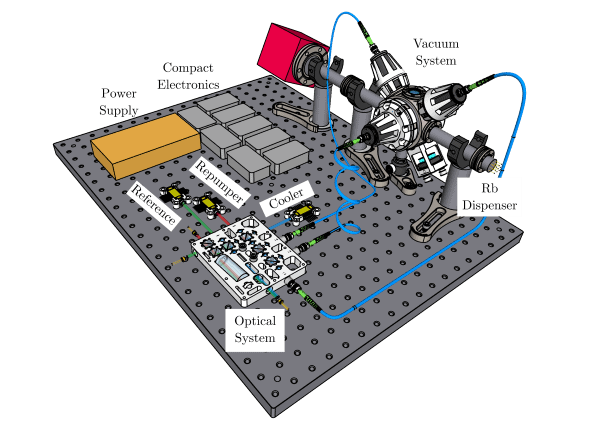
To construct their 3D-printed MOT, which they describe in PRX Quantum, the Nottingham researchers worked with colleagues at a specialist AM consultancy, Added Scientific Ltd. The process starts with a computer design such as the one shown below. The design is then transformed into a set of instructions that a printer uses to construct a physical object layer-by-layer. The printed components can thus benefit from a mathematically optimized design, making them smaller and lighter than conventionally manufactured components.

The new design incorporates several AM elements, including the mounts that precisely direct laser light into the vacuum chamber containing the atoms (see image). The vacuum chamber itself was built using AM techniques, which further assists in trapping the atoms as it allows careful control of the direction of the magnetic fields that hold the atoms in place. Vacuum chambers built using this technique also have a mass of just 245 g, compared to commercial chambers of up to a kilogram, making them desirable for portable applications beyond the laboratory. They are quick to manufacture, too, meaning that long delivery times for highly specialized designs could become a thing of the past.

As well as making components smaller and lighter, the AM process also introduces new capabilities. The positioning of the laser light, for example, is controlled and regulated via a unit known as the spectroscopy and power distribution apparatus. The adjustment-free AM mounts in this unit enable researchers to insert optical equipment into pre-aligned slots instead of having to fine-tune the setup manually – an advantage that anyone who has spent time in a lab painstakingly aligning optical components will welcome.

One big challenge when constructing optical systems is ensuring that the system is stable and the laser light remains aligned. The new AM design addresses this by reducing the number of times the light gets reflected before it enters the vacuum chamber. With fewer reflections, the beam’s position has less chance of deviating and not reaching the vacuum chamber. Another benefit of the AM approach is that the design contains only enough material to hold the components in place. This reduces the system’s overall weight whilst keeping it cool enough to perform the experiment.

The inside of the chamber also incorporates advances. Whereas traditional MOT designs generate magnetic fields by running current through coils of wire, using energy continuously, the Nottingham team showed that it is possible to trap atoms with an array of permanent magnets instead. Borrowing a technique widely used in the field of medical physics for MRI machines, they generated the required magnetic field by optimizing the configuration of the magnets.

System performance and outlook

These AM components combine to produce an MOT that can capture 2.5 × 10⁸ rubidium atoms, demonstrating that 3D-printed parts can be successfully integrated into cold atom experiments. “Our approach enables rapid fabrication of complex optical systems while also improving long-term stability,” says team member and Nottingham PhD student Somaya Madkhaly. She adds that AM technology offers even greater scope for miniaturization and improved system performance in the future, with possible strategies that include further optimizing the magnetic field generation to increase trapping capabilities and the automation of the electronic systems.

“3D-printing has become increasingly popular in recent years as it allows direct implementation of intelligent designs and algorithm-based improvements,” Madkhaly says. “In the future, quantum optical installations or vacuum chambers can be used to create new standards using our AM technology.”

Using RadCalc to verify Gamma Knife treatment plans

Want to learn more on this subject?

Gamma Knife is widely used for a variety of intracranial pathologies from benign and malignant tumours to vascular malformations. With any high-dose radiotherapy, it is necessary to utilize an accurate second check of the treatment plan.

The RadCalc Gamma Knife module is an accurate, efficient second check of the Leksell Gamma Planning system.

RadCalc performs point dose verification calculations for various Gamma Knife versions and the Leksell GammaPlan (LGP) planning system. RadCalc computes the dose and percent difference for each target utilizing proprietary TMR data, OAR data, and source position information. It utilizes a virtual machine to perform the dose computation – no physics setup is necessary. RadCalc’s virtual machine automatically selects the data based upon the type of plan.

This webinar will review the workflow and benefits of using the RadCalc Gamma Knife module to verify treatment plans.

Want to learn more on this subject?

Kathie Carrington is director applications and training at LifeLine Software, Inc. Company of LAP Group. She has more than 25 years radiation oncology experience, having positions from radiation therapist, dosimetrist and department director. She joined Lifeline Software in 2012 and has been connecting radiation therapy departments with software that increases productivity and safety ever since.

How fast does sound travel through 2D materials? It depends on how their layers stack

A new ultrasound technique that measures the strength of atomic bonds within two-dimensional (2D) materials, as well as the weaker forces between layers, has shown that the velocity of sound within these materials depends on the layers’ stacking arrangement. The technique, which was developed by researchers in the UK, could be used to craft “designer” 2D compounds by stacking layers in different ways while monitoring their bonding forces and studying how these relate to the materials’ physical and chemical properties.

2D materials such as graphene and metal chalcogenides are made up of stacked layers, or sheets, just one atom thick. While the sheets are bonded to each other only weakly, via van der Waals (vdW) forces, the atoms within each sheet form extremely strong covalent/ionic bonds. These dramatically different bonding strengths make it possible to exfoliate, or peel off, perfect single layers of these materials from bulk samples. Indeed, this was how graphene was first isolated from bulk graphite in 2004.

Techniques that can measure the strength of these atomic bonds and vdW forces in a non-destructive way are, however, lacking. This restricts scientists’ ability to explore various unusual phenomena (such as capillary condensation, the quantum anomalous Hall effect and even room-temperature superconductivity in monolayer sheets) that make 2D materials so promising for next-generation electronics. What is more, previous measurement efforts have produced conflicting results.

Technique similar to medical ultrasound

Researchers at the University of Nottingham and Loughborough University have now developed a technique that uses fast laser pulses to generate and detect tiny, transient strains in the crystalline lattice of indium selenide (In2Se3). This unique approach, backed by theoretical analyses by Alexander Balanov and Mark Greenaway at Loughborough, makes it possible to measure both the strong covalent bonds and weak vdW forces in the different phases of In2Sewithout damaging the material, says team member Wenjing Yan, a physicist at Nottingham.

Yan goes on to explain that the technique works in a similar way to medical ultrasound, but at a much higher, sub-terahertz, frequency. It involves sending a “pump” laser pulse just 120 femtoseconds long into flakes of In2Se3 to generate coherent phonons (quantized sound waves) that then travel through the material, interacting with its atomic bonds. The properties of these phonons reveal information about the strength of the atomic bonds, and they are measured by a second “probe” laser pulse with picosecond time resolution.

The technique is non-invasive because the laser pulses merely deform the crystal slightly, rather than destroying it. Indeed, the system may be considered as a sequence of springs: by knowing the speed of sound from measurements and how these springs respond to the deformation, the researchers can extract the relative strength of the covalent forces between the atoms and the vdW forces between the layers. “If we apply so-called density function theory with the help of high-performance computers, we can numerically estimate these forces for different stacking configurations and suggest how to tune the elastic, electric and even chemical properties of different polymorphs of vdW materials,” Greenaway explains.

Different phases, different properties

The researchers chose to study In2Se3 because it has a range of technological applications, including solar cells, photodiodes, ferroelectric field-effect transistors, and non-volatile memory elements. It also exists in several phases, denoted α, β, β′, γ and δ, each with a different crystalline structure.

The α- and β-In2Se3 phases are particularly interesting for materials designers. The α-phase is ferroelectric, with different ferroelectric properties for its hexagonal (2H) and rhombohedral (3R) arrangements in which the individual (quintuple) layers are stacked in an AB and ABC arrangement, respectively. In contrast, β-In2Se3(3R), which forms when α-In2Se3 is annealed, is not ferroelectric, and behaves as a superconductor at high pressures.

The researchers, who report their work in Advanced Functional Materials, found that sound waves travel at very different speeds in these different phases. Yan compares the team’s findings to the differences between pancakes and Yorkshire pudding. “Both foods are made from the same mixture: egg, flour and milk, but their different cooking processes give them different structures and properties,” she explains. “Although this is obvious in the macroscopic world, finding such differences in nanostructured materials due to subtle differences in vdW forces is surprising and exciting.”

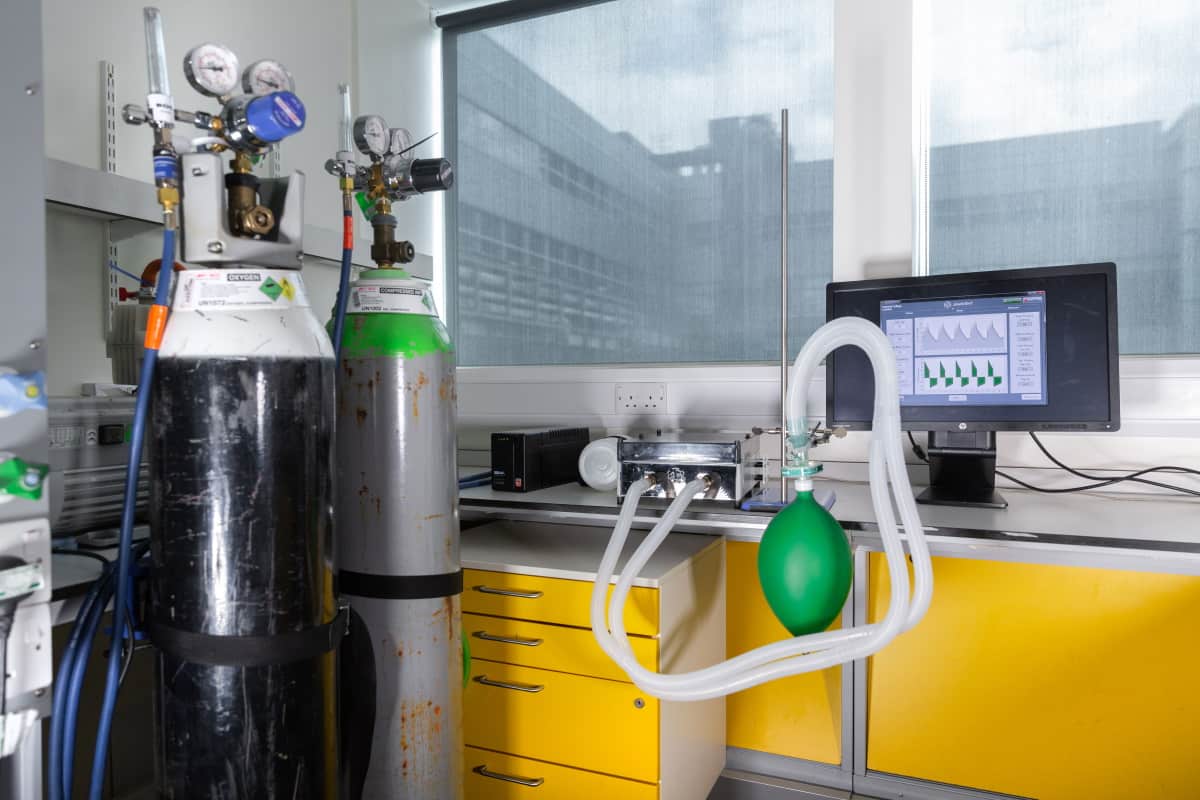
Low-cost device invented for COVID-19 patients could address global ventilator shortage

Researchers at Imperial College London have shown that the low-cost ventilator they developed for COVID-19 patients meets the international standard for critical care ventilators. This means that it could be used for other conditions and to address the shortage of ventilators in developing countries, where respiratory illnesses such as tuberculosis, malaria and influenza result in millions of deaths every year.

Ventilators are commonly used in intensive care. They supplement breathing when natural respiration is unable to provide the patient with enough oxygen. By delivering pressurized air or oxygen-enriched gas to the lungs they increase the amount of oxygen in each breath. The positive pressure created by the pressurized gas can also open collapsed areas of the lungs.

Most ventilators use proportional valves and flow sensors to control the pressure differences. These specialist parts can be expensive and suffer supply-chain problems. Such issues were laid bare at the start of the SARS-CoV-2 pandemic as countries struggled to meet ventilator demand. Initially, around a third of patients hospitalized with COVID-19 needed ventilation. Estimates suggested that more than 800,000 new ventilators would be needed worldwide, but in 2019, annual ventilator production was less than 80,000.

To address this shortfall, teams of scientists started working on low-cost ventilators to meet the emergency short-term need created by the pandemic. At Imperial College London, one group of researchers led by bioengineer Joseph van Batenburg-Sherwood created a prototype ventilator based on on–off valves. Unlike proportional valves, these off-the-shelf components are widely available from various manufacturers.

The ventilator uses four on–off solenoid valves, a two-litre reservoir, an oxygen sensor and two mechanical pressure sensors. Unlike most current ventilator designs it does not require pressurized gas supplies, which can be in short supply, particularly in low resource settings. Instead, it can utilize a portable home-use oxygen concentrator.

Proportional valves provide a continuous flow, but on–off valves are unable to do this as they can only be open or closed. To get around this, the researchers used two on–off valves to charge the two-litre reservoir with a mixture of air and oxygen. By controlling the time and sequence in which the valves are open, they were able to regulate the oxygen concentration and volume of each breath stored in the reservoir. Once ready, a third valve opens to deliver the pressurized gas to the lungs. The fourth valve controls the exhalation breath, which is driven by the pressure difference between the patient’s lungs and the ventilator.

The team previously showed that the ventilator can carry out the critical functions of intensive care ventilation for COVID-19 patients. In their latest work, published in Frontiers in Medical Technology, the researchers used a flow analyser and test lungs to demonstrate that the design achieves all the performance requirements set out in ISO 80601, the international standard for critical care ventilators. This includes the ability to maintain pressure during suction to clear the patient’s airways, and a spontaneous breathing mode that supports breaths triggered by the patient – a critical part of the recovery process that helps wean patients off ventilation.

“Ventilators made by big manufacturers have always been too expensive and complex for developing countries to buy and maintain, so many of the less affluent parts of the world simply have minimal access to ventilators. In addition, most of the new ventilator designs created for COVID-19 were based on emergency short-term manufacturing and are not appropriate for long-term intensive care support, which is desperately needed in low-and-middle income countries and newly emerging economies,” says van Batenburg-Sherwood.

“Our ventilators are inspired by the beauty of simplicity. Rather than using the complex control valves used in most ventilators, we conceived a way to use simple on–off valves to provide the high-level performance required of ventilators. This way, we have made the technology much cheaper and less expensive to make and maintain.”

New periodic table focuses on sustainability, gaining a physics PhD age 89

We do love an alternative periodic table here at Physics World, so I was chuffed to discover that the European Chemical Society has put a sustainable twist on its version of the table that displays the elements in terms of their abundance here on Earth

Any guesses regarding the most abundant element on Earth? Judging from the table it is oxygen, followed possibly by silicon and then maybe hydrogen. You might be wondering why I am not certain about the order. The reason, as you can see above, is that there are no numbers associated with the abundances. It is also not clear to me whether the abundances are given in terms of numbers of atoms on the planet or by mass – however, a little digging reveals that the areas are proportional to the numbers of atoms of each element on a logarithmic scale.

New in this latest version is the security of supply of the elements. This is important if they are used in key technologies such as mobile phones, which is designated in the table using an icon. Also highlighted is whether the production of an element occurs in areas of conflict.

Contentious carbon

The one element that had me scratching my head is carbon. According to the table there is a serious threat to some of the global supply of the element and that some of the global supply comes from conflict zones. According to the European Chemical Society this reflects the serious threat to the environment that the burning of carbon-based fossil fuels poses and the fact that some oil is extracted in areas of conflict.

Something I would like to see in the next version of this table is which elements are crucial to developing green technologies, and if we have enough of them.

Manfred Steiner

As someone who is getting a little long in the tooth, I’m always on the lookout for stories of physicists who have scored major achievements later in life. Meet Manfred Steiner, who at the age of 89 has just completed a PhD in physics from Brown University in the US. In his youth, Steiner loved physics but put that aside to follow his family’s advice and become a medical doctor. He first trained in his native Vienna before moving to the US, where he had a distinguished career in haematology before retiring in 2000.

That is when he rekindled his passion for physics and enrolled in Brown first as an undergraduate, completing his degree part time in 2007.  Now he has completed his PhD with the approval of his thesis “Corrections to the geometrical interpretation of bosonization”.

By the way, this is Steiner’s second PhD, he had already done one in biochemistry. So, he is a doctor three times over.

“It is important not to waste your older days,” says Steiner. “There is a lot of brainpower in older people and I think it can be of enormous benefit to younger generations.”

Plastic aerosols in the atmosphere could affect the climate

Tiny particles of plastic in the atmosphere can affect Earth’s climate, according to Laura Revell at the University of Canterbury in New Zealand and colleagues. New calculations of the heating and cooling effects of airborne microplastics reveal that the overall influence on climate is strongly dependent on the distribution of microplastics in the atmosphere – which is currently poorly understood.

Today, roughly 5 billion tonnes of plastic waste have accumulated in landfills and natural environments. As the material breaks down over time, it releases vast quantities of microscopic particles – which due to their small size and low density, can be transported across the globe by winds and ocean currents. Although the threats these microplastics pose to natural ecosystems are now being studied extensively, their influence on Earth’s climate is still virtually unknown.

Climate scientists know that aerosols like dust, pollen, and soot will alter temperatures on Earth’s surface as they scatter and absorb sunlight. As a result, the effects of these particles are quantified in climate models that predict future changes in global temperatures. Yet even as airborne microplastics become an ever-larger part of the mix of atmospheric aerosols, their radiative influence is still virtually unknown.

Altitude matters

In their study, Revell’s team present the first detailed calculations of the optical properties and radiative effects of airborne microplastics. Assuming that microplastics are present in atmosphere up to altitudes of 10 km, the team’s models predicted a small positive effective radiative forcing. This means that the particles reflect slightly less solar energy back into space than they absorb, which has a slight warming effect on the surface of the Earth.

However, exactly how microplastics are distributed in the atmosphere is not well known. If instead, the particles are entirely confined to the 2 km layer of the atmosphere lying directly above the Earth’s  surface, Revell and colleagues calculate a larger negative effective radiative forcing – and therefore a small cooling effect. This effect, however, is much smaller than that known to be caused by other types of aerosols in the atmosphere.

Regardless of which prediction is more accurate, the researchers found that the influence of microplastics on Earth’s surface temperature is currently far weaker than other types of atmospheric aerosol.

Amounts of plastic waste accumulated in landfill and natural environments has risen rapidly over the past 70 years. It is expected to double over the next 30 years unless significant, global-scale action is taken. As climatologists learn more about how microplastic pollution is being distributed throughout the lower atmosphere, the team’s results will allow for more accurate predictions of how microplastic aerosols could affect the climate.

The research is described in Nature.

Wearable pressure sensors extend their range

Wearable pressure sensors are commonly used in medicine to track vital signs, and in robotics to help mechanical fingers handle delicate objects. Conventional soft capacitive pressure sensors only work at pressures below 3 kPa, however, meaning that something as simple as tight-fitting clothing can hinder their performance. A team of researchers at the University of Texas has now made a hybrid sensor that remains highly sensitive over a much wider range of pressures. The new device could find use in robotics and biomedicine.

The most common types of pressure sensors rely on piezoresistive, piezoelectric, capacitive and/or optical mechanisms to operate. When such devices are compressed, their electrical resistance, voltage, capacitance or light transmittance (respectively) changes in a well-characterized way that can be translated into a pressure reading.

The high sensitivity and long-term stability of capacitive pressure sensors make them one of the most popular types, and they are often incorporated into soft, flexible sensors that can be wrapped around curved surfaces. Such sensors are popular in fields such as prosthetics, robotics and biometrics, where they are used to calibrate the strength of a robot’s grip, monitor pulse rates and blood pressure, and measure footstep pressure. However, these different applications involve a relatively wide range of pressures: below 1 kPa for robotic electronic skin (e-skin) and pulse monitoring; between 1 and 10 kPa for manipulating objects; and more than 10 kPa for blood pressure and footstep pressure.

Electrically conductive and highly porous nanocomposite

In the new work, researchers led by Nanshu Lu tackled the trade-off between the sensitivity of soft capacitive pressure sensors and the limited range of pressures over which they can operate. The device they created uses an electrically conductive and highly porous nanocomposite as its sensing layer, while incorporating an extra layer that acts as an insulator. This approach gives the sensor the properties of both piezoresistive and piezoelectric sensors, resulting in a hybrid device that boasts a high sensitivity as well as a large sensing range. Indeed, the researchers found that when they applied the sensor to a person’s forehead and then strapped a tight-fitting virtual reality headset over it, the sensor experienced only a negligible loss in sensitivity.

The new sensor can be wrapped around almost any object, Lu says, and it could be made into an array for pressure mapping. “The most obvious application is wrapping it around robotic hands and fingers to give them the ability to recognize objects by touching them,” she says, “but there are many other things it could do.”

The researchers now plan to address the next biggest bottleneck for soft capacitive pressure sensors: the coupling between their response to in-plane deformations and out-of-plane pressure. “Due to the coupled responses, conventional soft capacitive pressure sensors are not able to offer accurate pressure readings when stretched in plane,” Lu tells Physics World. “The combined high sensitivity and large sensing range of the new hybrid response pressure sensor could help overcome this long-term obstacle.”

The new sensor is detailed in Advanced Materials.

COP26 special: energy innovation, sustainable cities and carbon capture

With the COP26 climate summit underway in Glasgow, Physics World Weekly is bringing you a two-part series on climate change. Last week’s episode explored how extreme heat will affect global health and the challenges faced by climate modellers. Today’s episode is focussed on climate solutions.

First up I look at some of the latest developments in energy research – wind, solar, nuclear and energy storage. I’m joined by Daniel Kammen from the University of California, Berkeley, in the US, whose research interests span renewable energy, nuclear power and public policy.

Next, I turn my focus to buildings and infrastructure. Smart meters and sensors might be helping to reduce building energy usage. But what’s harder is knowing the carbon footprint of building materials throughout their entire lifecycles. Fortunately, researchers such as Arpad Horvath, an environmental engineer at the University of California, Berkeley, are starting to tackle these data gaps.

Finally, I look at carbon capture and storage (CCS), the process of capturing CO2 and sequestering it in geological formations. I speak with Martin Blunt an engineering physicist at Imperial College London and Juan Alcalde Martín, a geoscientist at the Geo3bcn research lab in Barcelona. As both guests explain, CCS has been around for decades but there are still big challenges in scaling up the technology to have a significant impact on carbon emissions.

Learn about the latest climate science by signing up to Environmental Research 2021, a free to attend virtual conference 15–19 November hosted by IOP Publishing.

How to build tiny robots from stretchy sheets

New research shows that microscale robots can be made from shape shifting 2D sheets. Itai Cohen and Itay Griniasty of Cornell University in the US have developed a mathematical technique for encoding the motion cycle of a tiny robot onto the surface of a flat material. Working alongside Cyrus Mostajeran of the UK’s University of Cambridge, they believe that their work will make it possible to design microscale swimming robots from materials such as liquid crystal elastomers and hydrogels.

Cohen is confident that microscale robots will one day perform many of the same tasks as their macroscale counterparts. He believes however, that at the micro and nanoscale, “We have to completely reimagine the way that we make machines”.

“The way that we’re going to do it is we’re going to manufacture everything in 2D and then release it from the substrate and get it to fold or assemble itself into some 3D object that can then do work on its environment.”

Microscale manufacturing challenges

Liquid crystal elastomer (LCE) sheets are a leading candidate for making microscale soft robots in this way. These flat materials deform into 3D shapes in response to light, heat and electromagnetic fields, with the initial alignment of the molecules determining the final curvature.

Designing functional machines from these sheets however remains a challenge. To perform useful work such as swimming, a robot needs to have more than one deformation programmed into it when it is manufactured. As an example, Cohen suggests a robot where some molecules respond to blue light and some to red light. However, the deformations would be coupled together, making it incredibly difficult to predict the final shape.

A mathematical solution

Griniasty joined the Cohen lab as a postdoc, bringing with him a mathematical technique that he, Cohen and Mostajeran have adapted to make their breakthrough. Griniasty had been using differential geometry to reverse engineer LCE- type sheets that deform into a single target shape. He predicted that the same method could be applied to a much more complex system, one where he was designing a robot that could deform into all the shapes in its motion cycle depending on the stimulus.

Researchers have experimented with origami-like sheets that fold into multiple shapes, but Cohen says that the advance in this latest work, “is the ability to form multiple shapes without going back the initial flat state… and that’s what opens up being able to do work and locomotion”.

Flat uniaxial sheet deforming

The researchers found that in most cases, this theoretical technique could find an analytical solution; an alignment pattern that should cycle through an entire sequence of target shapes when deformed. They demonstrate as an example, a sheet that deforms first into a sphere, then a wavy pattern, and finally a face (see above figure).

As proof of concept, they also propose a simple microswimmer that can move through a viscous fluid. The swimmer is a flat LCE type disk made up of two layers with orthogonal molecule alignments. When the layers are stimulated one after the other and then relaxed, the swimmer exhibits a cycle of conical and flat shapes, which the researchers predict will allow it to move through a fluid.

Whilst they have yet to test their theories in the lab, the team is optimistic about the results. As well as LCEs, they are investigating experimental realizations in inflatable and kirigami (cut and folded) sheets. The team has also released a software package that allows researchers worldwide to design shape shifting robots using their theory.

The research is described in Physical Review Letters.

Copyright © 2026 by IOP Publishing Ltd and individual contributors