Open-access journal uncovers the intricacies of scientific research

Rebecca Peer

Building useful datasets, devising novel experiments, and creating new computer programs are all critical elements of modern scientific research. Yet these fundamental building blocks of the scientific process are often buried away, either as add-on supplementary information to a broader research study or – worse still – hidden from view in someone’s private archives.

IOP SciNotes, an open-access journal introduced by IOP Publishing in 2019, aims to bring that valuable work into the light. Unlike traditional journals, it offers an outlet for publishing concise research notes that provide a rigorous explanation of a novel methodology, dataset or computer algorithm, as well as descriptions of pilot or small-scale studies that have yielded interesting results. “Having a citable, peer-reviewed, and freely available source of this information allows other researchers to build on previous work, improve experimental approaches, and use these important research outputs to enrich their own scientific endeavour,” comments Rebecca Peer, one of the journal’s executive editorial board members.

Peer, who specializes in civil systems engineering at the University of Canterbury in New Zealand, believes that sharing the inner workings of an academic project will ultimately improve the quality of research. For a start, making this information more accessible can allow other scientists to repeat and refine experimental techniques, improving the rigour and robustness of a new research approach. “We need to be explicit about the methodologies and datasets we develop for our work, as well as the results we come up with along the way,” she says. “It’s all part of good science to ensure that our work is transparent and repeatable.”

Accelerating scientific progress

With a word limit of 2500 words and a focus on publishing work with a specific outcome, Peer also believes that IOP SciNotes has the capacity to accelerate scientific progress. “It takes time to collect enough results to publish a complete research study,” she says. “In the meantime someone working on a related issue might really benefit from having access to information about a novel dataset or methodology, or some preliminary findings from a pilot-scale project.” Rapid publication of early results is particularly important in fast-moving fields, she says, when large numbers of scientists may be tackling similar research questions from different angles.
Emily Grubert

Emily Grubert, a civil engineer and environmental sociologist at Georgia Tech in the US, agrees that the journal can play a vital role in helping researchers to discover interesting results and datasets, and to understand what they mean and how they can be used. “Sometimes a dataset might be posted to a repository with a DOI on it, but you don’t get the discussion of what the data is, or the methods that were used to collect and manipulate it,” she explains. “Publishing that information in SciNotes allows researchers to find methods and datasets they didn’t know existed, and the extra context makes the dataset much more useful in the longer term.”

Grubert has already published two articles in IOP SciNotes. The first one highlighted a dataset analysing the capacity and efficiency of US power plants, which she had assembled for several different research projects. While it took a lot of time and effort to build the dataset, it wasn’t associated with one particular research output that would eventually have been presented in a traditional journal publication. “SciNotes enabled me to publish the dataset along with a short but direct description of what it is and why it is important,” she explains. “Otherwise, it would probably not have been published, and the dataset would have been very difficult for someone else to discover.”

All the information in IOP SciNotes is published on an open-access basis, which is crucial for making novel methods and approaches more available to more researchers. Peer says that these intricacies of the research process are often relegated to appear as supplementary information to a larger study, which generally does not receive the same attention or scrutiny as the main publication. “SciNotes allows researchers to cite a specific piece of work and give it the light it deserves,” she says. “It’s the perfect outlet for communicating the details of this supporting work to the wider research community.”

The journal also offers a valuable forum for publishing the results from small-scale or pilot projects, particularly for young scientists who are just starting out on their careers. For Grubert’s second article, for example, she worked with one of her undergraduate students to describe a model he had developed for calculating and comparing the fuel costs of gasoline and electric vehicles in the US. “It might have taken another year or so of research to gather enough information for a full journal article, but he was ready to put together 2500 words on what the model is, why he built it, and what it could be used for,” she explains. “He was thrilled to be able to publish something without a multi-year time commitment, and I was thrilled because he did a really nice piece of work that other researchers might find useful.”

Academic stamp of approval

While IOP SciNotes enables rapid publication of specific research results, all the information contained in the journal is fully peer reviewed – unlike similar work that might get posted to data repositories or preprint servers. That academic stamp of approval ensures that the information contained in the article is useful and reliable, and Grubert says that the referees for her two papers provided valuable feedback that improved the quality of the finished publications. “The peer-review process was friendly and constructive, and in both cases it elevated the quality of the paper.”

Like other titles owned by IOP Publishing, IOP SciNotes operates double-anonymous peer review, which means that referees are not given any information about the authors of the work. This approach, which has been adopted to help eliminate bias in scholarly publishing, has proved particularly popular with early-career researchers and those from geographic regions that are not well represented in the scientific literature. “Knowing who people are and where they’re from has no relevance on the quality of the research,” comments Peer. “There’s not that many journals where you can submit a dataset or preliminary results and get a double-blind peer-reviewed citation.”

While Peer and Grubert are both interested in environmental issues, IOP SciNotes has a broad reach that extends across engineering, computation, and the biomedical and physical sciences. That’s a key advantage, believes Peer, for researchers who are tackling some of the biggest research questions of our day, such as climate change and sustainability. “There is some really interesting transdisciplinary and interdisciplinary research that’s going on right now, especially when we start to think about the intersection of human and natural systems,” she comments. “Datasets or preliminary results published by ecologists, for example, could be useful for food scientists, environmental engineers  and many other research areas.”

Peer cites the example of an article published in IOP SciNotes that analysed the socio-economic development of the coal industry in India. “That dataset could inform studies across so many different fields, all the way from engineering to social science,” she says. “It has been downloaded more than 6000 times since it was published earlier this year, which clearly demonstrates its value to the research community.”

Superconductor reveals new state of matter involving pairs of Cooper pairs

Cool a material below its superconducting transition temperature and you’d expect it to start conducting electricity without resistance and expelling magnetic fields. But an international group of physicists has found that a certain kind of iron-based material doped with negative charges does the opposite at around the same temperature – producing spontaneous magnetic fields and retaining resistance when chilled. The researchers say that the results point to a new state of matter in which electrons flow in correlated groups of four, rather than two.

According to the Bardeen-Cooper-Schrieffer (BCS) theory, superconductivity occurs when electrons get together to form what are known as Cooper pairs. Whereas in a vacuum two electrons would repel each other, when moving through the crystal lattice of a superconducting material, one of these particles shifts the positions of surrounding atoms to leave a small region of positive charge. This attracts the second electron to create the pair.

The creation of many such pairs yields a collective condensate, which results in frictionless electron flow. This occurs below a certain temperature – the superconducting transition temperature (Tc) – at which point atoms lack the thermal energy to break up the pairs.

The formation and condensation of Cooper pairs involves breaking what is known as gauge U(1) symmetry. But some more complex superconducting materials have been shown experimentally to also break temporal symmetry. This occurs because below a certain temperature persistent current loops form in the material. Those loops can circulate in either a clockwise or anticlockwise direction, and will switch direction if time is reversed. Above the transition temperature, in contrast, there are no persistent current loops and no breaking of time-reversal symmetry.

BCS theory dictates that the transition temperature of this type of symmetry breaking will always be below – or in very specific circumstances equal to – Tc. But in the latest work, Egor Babaev of the KTH Royal Institute of Technology in Sweden, Vadim Grinenko of TU Dresden in Germany and colleagues have shown that it is possible to invert the two temperatures – requiring, they say, a new state of matter known as a quartic bosonic metal, in which Cooper pairs pair up but frictionless flow is destroyed.

The material studied by the group is a compound of barium, potassium, iron and arsenic, with varying amounts of the first two elements. Last year, some of the current group provided evidence that this material should exhibit time-reversal symmetry breaking when doped with just the right amount of holes, but implied that the breaking of that symmetry would occur at Tc. Now the collaboration has demonstrated that the break happens above Tc.

They achieved this by measuring a range of thermal and electrical properties while cooling the material down at temperatures around ten degrees above absolute zero. In particular, they found that in the absence of any external magnetic field, the material’s specific heat capacity started to rise a couple of degrees above its Tc – interpreting that point as the onset of bound states of electrons. By also observing a spontaneous transverse voltage when applying a heat gradient to the sample, they conclude that there is a phase transition involving the breaking of time-reversal symmetry.

Electron quadruplets

The researchers describe their results using a phase diagram that plots temperature on the y axis against the degree of hole doping on the x axis. The diagram includes a line showing Tc dropping as the doping is increased, as well as a dome-shaped region lower down, within which time-reversal symmetry is broken. They point out that according to BCS theory, all of the dome lies beneath the Tc line. In contrast, they say that their results imply that the tip of the dome pokes through the Tc line – doing so over a narrow range of dopages within which the make-up of their material lies.

Babaev and colleagues say that the phase inside the tip of the dome is a bosonic metal. They conclude that this phase comes about because the electrons in the material, rather than pairing up as they do in a normal superconductor, instead are correlated in groups of four. This “fermionic quadrupling”, they argue, implies that long-range order exists between pairs of Cooper pairs, rather than single pairs.

The researchers add that fermionic quadrupling may be present in other superconductors with multiple broken symmetries. In particular, they say that the phenomenon may occur at very high pressures in hydrogen, deuterium and hydrides. Other potentially rich pickings, they reckon, could be had by studying thin films of superconductors displaying time-reversal symmetry.

The research is published in Nature Physics.

How Vera Rubin broke barriers and convinced the astronomy community that dark matter exists

Vera Rubin

In the early 2000s, I sat down at a desk in Durham University library and, behind a tower of ageing books, I began researching my undergraduate dissertation. My topic was the discovery that the matter in the Milky Way galaxy, and indeed the universe, is mostly composed of a mysterious and invisible substance called “dark matter”. I chose the subject out of curiosity. Who had figured dark matter out? How could we have missed it? Well, the answer to the former is Vera Rubin, and the answer to the latter is that, in her words, the universe had been “unkind” and “played a trick” on us all.

But perhaps Rubin was the subject of another trick too. “A flip of a switch, and astronomer Vera Rubin disappeared.” This is the first line of the biography Bright Galaxies, Dark Matter, and Beyond: the Life of Astronomer Vera Rubin by Ashley Jean Yeager, associate news editor at Science News. The line directly refers to Rubin beginning a cold night of observations, but it also hints that the book will not shy away from Rubin’s struggle to gain visibility in the astronomical community. This is Yeager’s first book, and it benefits from her background in journalism and science writing, leaving no stone unturned as it rigorously illuminates Rubin and her discoveries.

As Yeager shows, Rubin – who died in 2016 at the age of 86 – was not a scientist who was content for her career path to be steered by more powerful figures, even her own supervisors. She declared she had no interest in the PhD project she was assigned, which was identifying the Sun’s spectral lines. Instead, Rubin wandered around for something else, searching out the infamous George Gamow and settling on exploring faraway galaxies. The subject of galaxies was one she would stick with long-term, eventually focusing on the motion of stars within them.

The stars in a galaxy orbit its centre of mass, which is usually a supermassive black hole, and Rubin could measure the speed at which those stars were orbiting using the spectrum of light they were emitting. The laws of gravity are clear on how the speeds should change: they should travel more slowly with increasing distance from the galactic centre, as the mass of luminous matter decreases. No-one was interested in proving something so obvious. Why would anyone question it?

Well, Rubin did, and for two reasons. First, she did not accept assumptions readily, and second, because it was a nice, quiet research topic. She liked to work at her own pace because she “would rather drop dead than have another astronomer find I made a mistake”. Rubin measured these stellar speeds with no small contribution from Kent Ford, who built the required technology and observed alongside her for years. What they found came as a shock: the plots of observable speeds versus distance (rotation curves) were flat, implying there was a lot of invisible mass at outer radii, changing the field of astronomy forever.

This is one of the most significant, paradigm-shifting events in astrophysics, and Yeager follows the discovery in a way I have not come across before, keeping me hooked on each page. Most coverage suggests that Vera Rubin discovered dark matter by observing flat rotation curves in 1978 and that was that. A singular event with a singular character. This is an understandable perspective. Women in science have so often had their work co-opted and their contributions diminished, not to mention endure and face blatant sexism on many occasions, and Rubin is no exception; one of the observatories that refused her access to its telescopes barred her with the excuse that the toilet was only for men. So in hindsight, there is a strong temptation to put hers as the only role.

Yet I appreciate how Yeager presents Rubin’s discovery in a more complex context, giving credit to all those who contributed over the years, while never diminishing Rubin’s towering achievement. There had been suggestions of a hidden form of matter before, primarily from Fritz Zwicky in 1933. Zwicky observed the Coma galaxy cluster and noticed that the rotational velocity of the luminous matter was far greater than that implied from the luminous mass. He even referred to this as dark matter.

Zwicky’s observations were riddled with legitimate uncertainties, though, such as his estimate of the distance to the cluster (he had overestimated the fraction of mass quite significantly, but his method was sound). The field was aware of his results, but not convinced. In addition to Zwicky’s optical observations, the radio community had made observations of flat rotation curves similar to Rubin’s – something that she took pains to acknowledge.

What the book also conveys tangibly is the time it took Rubin to convince the astronomy community of her results, and it is here that her fierce persistence shines through. She produced flat curve after flat curve for over a decade, until her colleagues could no longer fight against such an accumulation of evidence, and the scoffing and denial petered out. Did it take so long only because they were being asked to believe in something they could not see? Or was it also because those contentious observations had been taken and presented by a woman?

Her contemporaries must have thought the latter was probable – her Master’s thesis adviser, William Shaw, had previously offered to present results on her behalf. But she turned this offer down, curtly and firmly. Rubin was bold and undeterred by criticism. Interested only in presenting meticulous results, her voice was loud, and she was in fact an established, if controversial, figure in the astronomical community at the time.

I have never admitted to this before, but an undiscovered gender bias ran deep within me when I sat down at that book-laden table in Durham to write my essay. I had heard the name Vera Rubin before, but despite “Vera” typically being a female name, it surprised me to find out that this legend of astronomy was a woman. This is unbelievable to me now, but it shows how much I had internalized the idea that only men led the history of my chosen subject. I’m pretty sure that my later activism in gender equality is a subconscious penance for this unforgivable blunder.

The thread of sexism faced by Rubin pops up in the book where relevant, and there is a more detailed discussion of it towards the end, but it is Rubin’s love of astronomy (an “extra family member”, as she called it) that Yeager prioritizes. I like this. Rubin would want to be remembered for the science, and Yeager honours that wish.

There is one voice I would have liked to hear a little more of, and that is of the author herself. In giving so many others their rightful place, the passion that drove Yeager to write the book gets a little lost. It was only within the acknowledgments that I realized her dedication, interviewing Rubin over a decade ago, and even accompanying her on an observing trip. Yeager’s website mentions that Rubin “didn’t just teach me about dark matter, she taught me how to live life”. I would have loved to hear a bit more of this personal insight, but this is my only gripe of substance.

Bright Galaxies, Dark Matter, and Beyond is a mesmerizing read, and a book I will continue to dip into. Serving first and foremost as a biography, it provides more than enough information for the non-expert to understand the scientific aspects, while even someone well-versed in the story will learn something new on every page (I’m in this game and I counted 60 page-markers by the end). Rubin’s research may have revolved around dark matter, but Yeager has flipped the light switch back on and presented her as an astronomer and human being, leading her out of the shadows for good.

  • 2021 MIT Press $24.95hb 256pp

Elements may have been forged on Earth, as well as in space

Creating elements lighter than iron might not require the extreme conditions found inside very massive stars. According to a group of physicists in Japan and Canada, it is possible that oxygen, nitrogen and all other elements with atomic numbers up to 25 have also been produced inside the Earth. Their eye-catching claim relies on the idea that fusion reactions occur in the Earth’s lower mantle, where they are catalyzed by neutrinos and excited electrons.

According to the Big Bang model, the only elements present in the early universe were hydrogen, helium and tiny amounts of lithium. It is thought that elements with atomic numbers between four (beryllium) and 25 (manganese) are instead made through the progressive fusion of heavier nuclei inside massive stars. This process comes to a halt because the generation of iron (atomic number 26), in contrast with that of lighter elements, does not give off excess energy and so is unable to prevent stars from collapsing under their own weight. The resulting supernovae, however, yield high-speed neutrons that are captured by nuclei to create elements heavier than iron.

In the latest work, Mikio Fukuhara of Tohoku University and colleagues in Japan and Canada propose that these lighter elements can also be produced deep inside the Earth. The inspiration for this idea comes from the evolution of Earth’s atmosphere. As the researchers point out, the atmosphere is thought originally to have been made up almost exclusively of carbon dioxide. But its composition then changed radically, resulting in the dominance of nitrogen – which today accounts for about 78% of the molecules in the atmosphere – as well as large amounts of oxygen (some 21%), while carbon dioxide is a mere 0.2%.

Accumulation of nitrogen-14

Many scientists, says Fukuhara, reckon that much of the nitrogen was contained in material from the solar nebula, a gaseous cloud that condensed and conglomerated to form the Sun and its planets. Additional nitrogen then came as planetesimals rich in the element crashed into our planet. But he argues that that hypothesis cannot explain the rapid accumulation of nitrogen-14 which is thought to have taken place between 3.8–2.5 billion years ago.

The answer, Fukuhara believes, might be terrestrial nuclear fusion. In a model published last year, he proposed that nitrogen, oxygen and water – concentrations of which have also shot up over time – could have been forged in endothermic reactions inside the Earth’s mantle. Those reactions would involve carbon and oxygen nuclei confined inside the crystal lattice of calcium carbonate rocks.

As he pointed out, even the very high temperatures and pressures at depths of several thousand kilometres would not be enough to force those nuclei together against their mutual repulsion. But he claims that the presence of subatomic particles known as neutral pions can increase the nuclear attraction to the point where fusion occurs. Those pions, he says, would be generated by electrons excited by the rapid fracturing and sliding of carbonate crystals – caused by volcanic eruptions. Alongside the excited electrons would be neutrinos, captured as they stream through the Earth in large numbers from the Sun or other stars, or alternatively from nuclear reactions in the Earth’s core.

The latest work builds on this research by showing how such catalyzed fusion reactions could explain the production not only of nitrogen, oxygen and water, but all of the 25 lightest elements. To demonstrate the plausibility of this mechanism, the researchers calculated the minimum energy required to initiate the reaction in each case and then analysed the crystal structure of a mineral found in the mantle that contains the reacting elements.

Temperature, pressure and catalysis

As they report in a paper published in AIP Advances, they carried out the latter part of the analysis for three sets of nuclei – magnesium and iron, aluminium and magnesium, and aluminium and silicon. In all three cases they concluded that the combination of temperature, pressure and catalysis would indeed reduce the interaction distance between the nuclei such that they could fuse – yielding sulphur and titanium, sodium and silicon, and oxygen and potassium, respectively.

Fukuhara and colleagues point out that their proposed fusion mechanism remains a hypothesis and should be put to the test in experiments carried out at high temperatures and pressures. But they maintain that if confirmed their results would have a profound impact on geophysics. “To the best of our knowledge,” they write, “theories of element creation have not been previously developed in the context of an ‘Earth factory'”.

They add that they are performing additional calculations to work out whether the mechanism they have identified also applies to elements heavier than iron. Plus, they hint at a possible application of their work, arguing it offers the potential to create elements needed for space exploration. “We need not to look for oxygen, water and other elements in planets and satellites,” says Fukuhara.

Physics World sought comment on the research from several experts in nuclear physics and geoscience but received no substantive replies.

All-in-one quantum key distribution system makes its debut

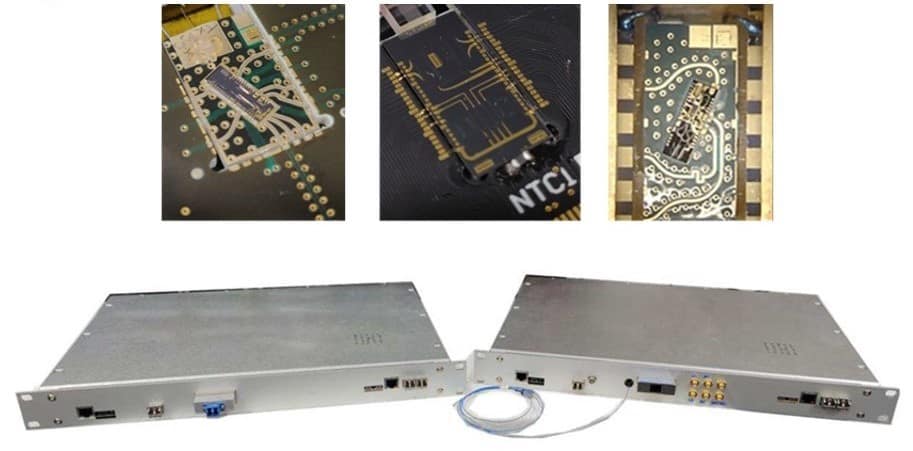
A future in which quantum computers are commonplace might seem like an optimistic fantasy, but it could also involve hackers using those computers to steal important information. To thwart would-be bad actors, researchers developed a cryptographic protocol known as quantum key distribution (QKD) that uses the laws of quantum mechanics to enhance communication security. A team from Toshiba Europe Ltd has now combined a set of chips into compact modules order to build an entire standalone QKD system for the first time, miniaturizing and integrating key components and showing that the resulting system can transmit information autonomously, stably and securely for days, and over tens of kilometres.

One of the miniaturized components in the Toshiba team’s system is a credit-card-sized pluggable module containing a 2 mm x 6 mm transmitter chip that encodes quantum information into light. To do this, a laser produces a very faint pulse that contains, on average, one photon. Information is then “written” into this photon’s precisely tuned quantum mechanical properties in a way that can be decoded by a receiver chip. Importantly, scientists designed the quantum decoding process to be sensitive to any potential eavesdroppers. In other words, had someone intercepted the communication between the two chips, the system would have recognized that “attack” every time.

The new system also includes two photon-based quantum random number generators (QRNGs). These devices govern how the transmitter chip prepares the photonic quantum bits, or qubits, that encode information, and the way the receiver decodes that information. By producing numbers that are so random that they are essentially impossible to guess, QRNGs provide another valuable contribution to the security of the new QKD system, explains Taofiq Paraiso, a research scientist at Toshiba and the first author of a new paper in Nature Photonics that describes the company’s system.

All-in-one package

According to Paraiso’s colleague Thomas Roger, previous demonstrations of QKD systems often did not perform quantum random number generation in real time, or at the same time as they transmitted information. The Toshiba system, in contrast, combines multiple processes, including QRNG, into an all-in-one package that is smaller and more cost-effective than many of its predecessors. “This is the first time that the three chips – quantum transmitter, quantum receiver and QRNG – work together to distil a key from a QKD system,” agrees Marco Lucamarini, a physicist at the University of York, UK, who was not involved with the experiment. Lucamarini also notes that the experimenters removed all the usual supporting lab equipment to test their system, leaving only the chips themselves and the fast electronics that connect them.

Photo of the Toshiba QKD system

While photonic chips have been used in quantum information applications before, Paraiso says it was not previously clear that full system integration was possible. “We put a whole lot of effort into integrating all chips into one system and developing the electronics interface so that all the chips can talk to each other,” he says, adding that the team designed its chips and electronics to be as simple as possible while minimizing the overall power consumption and bulkiness of the setup. Additionally, the designers placed all chips involved in security-critical quantum processes inside pluggable modules already used in conventional optical communications systems.

The importance of integration

The future of quantum communication networks will hinge on the practicality of such integration efforts, says Paolo Villoresi, director of the Padua Quantum Technologies Research Center at the University of Padua, Italy. He explains that researchers like himself and members of the Toshiba team are working to move quantum information systems out of the “unwieldy collections of discrete components” stage of their development by using photonic integration technology that has been shown to work well for standard optical communication networks. “Integrated photonics is sort of following the steps of integrated electronics,” he says. He takes the comparison further: “Nowadays no one is considering going back to bulk transistors.”

Lucamarini agrees, identifying integration as one that is most important issues for practical and commercial uses of QKD. “Scaling bulky QKD systems down to the size of a coin and integrating them in pluggable modules reduces size, energy consumption and cost, therefore bringing this technology much closer to the market,” he says, adding that integrated photonic chips could be mass produced via methods that are already standard in the semiconductor industry.

Although the Toshiba system is still a prototype, members of the team are enthusiastic about the progress their interdisciplinary group of scientists – who specialize in areas ranging from optics to QRNG – has made. The new experiment showed that the system not only works alongside commercially available encryption systems, but can also operate for weeks or even months at a time without significant errors. In future, they hope to make it yet more compact and, eventually, integrate it into existing conventional communications networks. “There are some subtleties about classical communications networks so you can’t just put in a QKD system and expect it to work across the whole network,” Roger says. “We need to add infrastructure, but that’s something that’s happening.” Villoresi concurs: “Integrated quantum photonics is a field that is currently very alive and vivid.” The new experiment, he says, is an example of how a complete, integrated photon based QKD systems can work in the world outside the lab.

  • This article was amended on 3 November 2021 to clarify the size of the chip and module.

Radiation can reverse heart rhythm disorders by reprogramming damaged cardiac cells

Researchers at Washington University School of Medicine in St. Louis have found that radiation may reverse heart rhythm disorders, such as arrhythmias, long-term by reprogramming damaged heart cells.

“There are many ways to stop an arrhythmia. One is with catheters; another is with drugs. But no treatment previously has been shown to modulate how fast that [electrical] impulse travels,” says Stacey Rentschler, a physician scientist. “What we’ve seen is that radiation therapy can modulate how fast the impulse travels by changing the expression of genes and proteins in the heart.”

Rentschler is a member of the Center for Noninvasive Cardiac Radioablation, an interdisciplinary research team at Washington University School of Medicine that is working to treat life-threatening heart rhythm disorders safely and noninvasively. The team’s latest study, published in Nature Communications, begins to unravel how photon irradiation reduces ventricular tachycardia, a disorder caused by abnormal electrical signals in the heart’s lower chambers.

A puzzling result

Unlike catheter ablations, which are invasive and time-consuming, or drugs, which have side effects and are only moderately effective, radiation therapy noninvasively delivers ablative doses of radiation to specific regions of the body and could replicate the effects of catheter ablations. Catheter ablations destroy tissue quickly to create a fibrotic response that stops arrhythmias by preventing re-entry of electrical impulses into the ventricles.

The researchers found that a one-time delivery of 25 Gy of photon radiation to the whole hearts of mice – and to segments of ventricles containing scarring in humans – reduced the frequency of arrhythmias in only a few weeks.

And that puzzled them. They had presumed that radiation would prevent arrhythmias by creating fibrosis in areas of ventricular scarring, but their studies on human hearts showed that fibrosis alone wasn’t enough to explain the therapeutic effect.

Then, they realized that anti-arrhythmic effects could be achieved through elevated levels of cardiac conduction proteins and improved conduction of electrical impulses in the heart. They confirmed this hypothesis by looking at the structural and physiologic changes to mouse hearts observed after irradiation.

The team’s next step was to identify which biological pathways are implicated in this electrophysiological reprogramming. They identified a reactivation of Notch signalling – known to play a critical part in human development and a role in the response of several tissue types to radiation – as a potential mechanism whereby radiation may reprogramme conduction.

Patients at Washington University School of Medicine in St. Louis receiving cardiac radioablation have experienced reductions in arrhythmias for two years and counting.

New avenues for cardiac radioablation

With this latest research, Rentschler and colleagues have embarked on a new line of radiobiologic inquiry.

“For the longest time, radiation oncologists avoided [irradiating] the heart to avoid cardiotoxicity,” explains first author David Zhang, a medical and PhD student in the Medical Scientist Training Program at Washington University School of Medicine in St. Louis. “What we’re starting to understand now is that because cardiomyocytes are not actively dividing, they don’t really undergo the same radiobiologic processes in response to double-stranded DNA breaks from radiation as actively-dividing cells.”

Zhang notes that while the single-arm, single-centre study design, the low number of patients enrolled and narrow patient selection are limitations of the study, this work demonstrates that clinical cardiac radiotherapy is associated with molecular and functional changes in electrophysiology.

“The Notch pathway is generally a strong regulator of epigenetics in the heart. And we now have a very strong suspicion that radiation is leading to many epigenetic changes in the heart that could cause or explain why these effects are persisting for longer periods of time,” says Zhang. “It’s really led us towards that epigenetic pathway to understand what this radiation-induced cardiac reprogramming is actually doing.”

Clifford Robinson, a radiation oncologist involved with the study, commented that treatment plans incorporate total cardiopulmonary motion measured from simulation 4D-CT scans and that motion margins are asymmetric. Target volume margins are symmetric. Results from additional preclinical studies may impact this protocol, Robinson said.

In these studies, Robinson, radiation oncologist Julie Schwarz, and other members of the team are studying how dose impacts therapeutic effects: preclinical studies in mice suggest that a lower dose of 20 Gy may produce similar improvements in conduction as a 25 Gy dose, meaning that reactivation of the Notch pathway could be induced at lower levels of radiation and may be preferred for large treatment volumes.

“I think [this study] has opened up a new thought of how to treat arrhythmias that might be possible to, instead of destroying tissue, to rejuvenate unhealthy tissue…I think there’s a lot of excitement and a lot of interest in understanding the mechanisms even more so that we can make this therapy safer, more effective and potentially expand to other populations of patients, as well,” says Rentschler.

The importance of publishing null results

A colleague and I recently conducted an intricate experiment. It used a 33 T static magnetic field together with a terahertz free-electron laser (FEL) to study a high-temperature superconductor. Under certain conditions in high fields, the intense light can ionize the helium gas in the sample space, obscuring the sample and creating a false signal. Although the experiment was designed to minimize the chances of that happening, we unexpectedly discovered a new set of conditions that favoured it, thus concealing the genuine signal from the sample under investigation.

We eventually found a means of establishing a plasma-free condition, but unfortunately that sacrificed our ability to reach the desired high temperatures. The measurement did not provide the results that we needed and the whole endeavour could have been seen as a failure. Yet we were able to discuss the issues and potential solutions with other users so that their experiment time with the combined high-field FEL facility could be used wisely.

A scientist who fails isn’t a failure if they learn from their actions. It is time that the physics community recognizes this and makes a collaborative effort to prevent future researchers from replicating mistakes

Failure in science can come in several forms, from coding syntax errors to lacking the necessary motivation or money to pursue a goal. Most disappointments can be overcome, perhaps with someone’s help, so that next time you learn from your mistakes and do not do it again – as we found out in our FEL experiments. Yet one must taste failure to appreciate the success that follows. In both one’s professional and personal lives, it is crucial to retrospectively judge a situation and assess the origin of its shortcomings and the source of the solutions. That is how progress occurs and stagnation is suppressed.

Sometimes failure can bring out the best in people, pushing them beyond their perceived limitations. But sometimes it can take its toll, unearthing a cascade of emotions and a river of rants. Breakthroughs may arise practically in the form of new skills, deeper critical thinking or a renewed understanding of one’s limitations. They can also occur from our ability to persevere and carry on even when all instincts are screaming at us to stop. Failure breeds experience and wisdom that may be shared so others do not tread the same path.

Too often, however, failure carries connotations of shame and guilt, and we hide our lack of success away. This is counterproductive, particularly when the outcome is neither trivial nor a direct consequence of avoidable error or ritual learning processes. We shouldn’t be overjoyed by failure, but does concealing our mistakes hinder progress in the wider scientific community? Should we only publish our best and most supportive results when most of our experiments didn’t work because the samples broke or failed?

The number of unpublished results by multiple researchers carrying out similar experimental or theoretical mishaps is likely to be vast. Reproducing such outcomes is a colossal waste of resources when scientists may not have been entirely up front in their publications about how fortuitous their results may be. It is high time to publicly acknowledge and criticize our own misfortune and blunders; if not for yourself, then for the benefit of others.

Null hypotheses

Researchers in biomedicine and psychology often share their null results. For instance, The Journal of Articles in Support of the Null Hypothesis is a biannual peer-reviewed psychology journal that aims to “reverse the perception that null (non-significant) results are necessarily bad”, or according to the journal’s editor-in-chief Stephen Reysen, lead to “wasting time and money”. Yet physics boasts only the most profound and satisfying outcomes. There have been several attempts to follow suite in the physical sciences, but these have so far been unsuccessful themselves, producing perhaps a single volume in the mid-2010s, for example, The All Results Journals: Phys. So, what would be required to lower our guard?

Perhaps a fully fledged peer-reviewed journal would be too much. After all, editors and reviewers would need to decipher whether failures were legitimate and had definite causes while authors would have to write up the “results” and go through the review process for something that simply didn’t work. Perhaps an online platform like arXiv could be the place for such findings, or would it be an incentive for scientists if journals such as Science, Nature or the New Journal of Physics produced annual rapid-communication “failure” issues?

An entire “unsuccessful” paper may feel unnecessary but including one-or-two lines into a “method” section, supplementary materials or appendix would be a transparent and discrete way of reporting background challenges. Such transparency may be useful in decreasing doubt and rebuttals from rival groups and turn one group’s troubles into a community’s lesson for those who attempt to reproduce the results.

A scientist who fails isn’t a failure if they learn from their actions. It is time that the physics community recognizes this and makes a collaborative effort to prevent future researchers from replicating mistakes. It might well prove to advance scientific efficiency, reduce wasted time, and provide a useful learning tool so that we may meet other, more complex unanticipated failures on our long and rocky road to success.

Cooper pairs spotted above critical temperature for superconductivity

The most direct evidence so far that Cooper pairs of electrons can exist in a material above the critical temperature for superconductivity has been claimed by Koen Bastiaans and Milan Allan of Leiden University in the Netherlands and colleagues. Their work builds on previous research suggesting that electron pairs could be responsible for the mysterious pseudogap state in unconventional superconductors. In the new work, however, researchers have detected Cooper pairs in a superconductor above the critical temperature, but without a pseudogap.

The classical (or BCS) theory of superconductivity states that, below a specific critical temperature, the fermionic electrons in a metal pair up to create bosons called Cooper pairs. These bosons form a phase-coherent condensate that can flow through a material without scattering – the result being superconductivity.

However, BCS theory does not explain the superconductivity of unconventional superconductors such as cuprates, pnictides and disordered materials. Whereas the resistance of a metal usually drops as the material cools down, many of these unconventional superconductors experience a sudden change in their electronic band structure that can cause their resistance to rise at temperatures just above the critical temperature.

Breaking pairs

This change is known as a pseudogap and some physicists have proposed that it occurs because electrons form pairs at temperatures above the critical temperature – but these pairs do not form a superconducting condensate. “One argument is to say that if the electrons are paired and you want to take one out with a [scanning tunnelling microscope (STM)] probe, you need to pay the energy of breaking a pair,” explains Allan.

Previous research has found evidence for the existence of paired electrons above the critical temperature in various systems. In 2015, for example, Jeremy Levy of University of Pittsburgh and Pittsburgh Quantum Institute, both in the US, and colleagues created a single-electron transistor that, when the electron density was high enough, behaved as a superconductor. As the electron density was lowered, however, the transistor left the superconducting regime, but the electrons continued to pass through the device in pairs.

Allan and colleagues have taken a different approach as they have described in a paper in Science. They cooled a titanium nitride surface to below its critical temperature and measured the tunnelling current between the surface and an STM tip at various bias voltages. This allowed them to map out the band structure of the material. More specifically, as the bias voltage – and hence the tunnelling current, increased – they focused on changes in the “shot noise”. This is the random fluctuation in the current arising from the fact that charge is quantized, either as single electrons or as pairs of electrons. Cooper pairs carry double the charge, and therefore their presence can be identified by greater shot noise. “My opinion is that our probe is cleaner and more direct,” says Allan.

“Two paradigms”

The researchers found clear evidence that, though the sample ceased to be a superconductor at 2.95 K, the shot noise only dropped from that of Cooper pairs to that of electrons when the temperature rose above 7.2 K. The bizarre aspect is that titanium nitride does not have a pseudogap. “From a physics point of view, I find this very fascinating, because there are these two paradigms – one is electron pairs in a superconductor, the other is a good metal made out of fermions,” says Allan. “Ours is a good metal: it doesn’t have a gap. But it looks like our metal is made out of pairs, which are more like bosons than fermions. We didn’t discover anything new about the pseudogap, but we put some of these discoveries in context.”

Kamran Behnia of EPSCI Paris Tech in France does not find the results as surprising as the researchers. “As [they] mention [in their paper], other experiments have documented that short-lived Cooper pairs survive in the normal state of a superconductor despite the destruction of the superconducting order,” he says. “In the standard theory of superconductivity short-lived Cooper pairs are expected. However, in the context of the cuprate superconductors, the expression ‘preformed pairs’ has been used as a shorthand for a conjecture according to which the pseudogap is a precursor to superconductivity”.

Levy, however, believes the findings are notable. “In this disordered system I think it was expected that there would be a strong correlation between the gap phase and the existence of these pairs,” he says. “I hope that in the future we’ll say ‘Oh, it’s not surprising because of our increased understanding’ and that’s how science should work – it goes from being a paradox to being explained or incorporated into a larger understanding. That’s why experimentalists do their experiments.”

Turning over a new leaf: a round-up of the best new environmental-science books

With the much-anticipated COP26 having kicked off in Glasgow yesterday, we can expect to see a lot of news about the climate plans that world leaders are discussing. But to make sense of the coverage, it’s useful to have some background knowledge of the problems and potential solutions that are likely to come up.

Physics World has recently reviewed five new books that can help you get up to speed on these timely topics. Two of them – Small Gases, Big Effect by David Nelles and Christian Serrer, and 99 Maps to Save the Planet by KATAPULT – take a candid and scientific look at the situation, using infographics to present the physical mechanisms underpinning climate change, the effects we are already observing and the future we might be headed towards if we don’t take action.

The other three – Under a White Sky by Elizabeth Kolbert, How to Avoid a Climate Disaster by Bill Gates and Brave Green World by Chris Forman and Claire Asher – look at the full spectrum of solutions and mitigation strategies that have been suggested. They cover the well-known and already in use (nuclear and solar power) to the outlandish-seeming (spraying the sky with particles to reflect sunlight) and everything in between.

So whether you want to bolster your understanding of the science behind climate change, catch up on all the potential solutions, or spur yourself into action with some sobering information, there’s a book here for you.

Raman and PL at the nanoscale: why it’s important for 2D materials

Want to learn more on this subject?

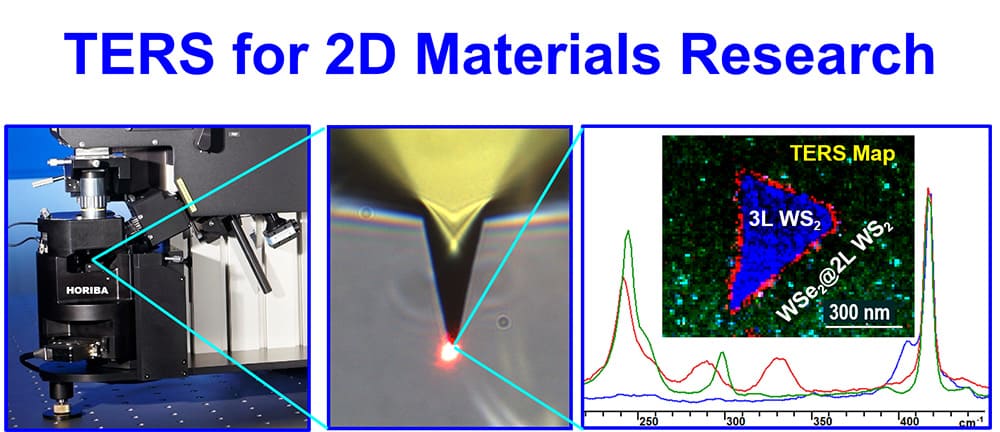
From graphene to TMDCs and beyond, Raman spectroscopy and Raman imaging proved to be extremely useful for characterization of 2D materials and visualization of various heterogeneities that occur naturally or are created on purpose. Quite often the scale of structural, electronic or morphological heterogeneity in these materials is on the order of a few tens of nanometres or less, which is beyond the spatial resolution of conventional Raman microscopy. Tip enhanced Raman scattering (TERS) and tip enhanced photoluminescence (TEPL) can address the problem of spatial resolution.

In this webinar we’ll demonstrate how TERS can enable Raman imaging of MXenes, a new class of 2D materials; probe number of nanoscale heterogeneities in 2D crystals: growth related, including lateral and vertical heterostructures, substrate induced, and the morphological heterogeneities that appear (intentionally or not) in the process of exfoliation/2D crystal transfer. Finally, we’ll discuss recent results on TERS imaging of reconstructed Moiré patterns in twisted bilayers of graphene.

Want to learn more on this subject?

Andrey Krayev is the US AFM-Raman Product Manager at HORIBA Scientific. Andrey Krayev received his master’s degree from the Moscow Institute of Physics and Technology, in 1991. In 2001, he started to use SPM, while working as an application scientist for QPT, Inc. Since 2008, he was the CTO at AIST-NT, Inc. and was actively involved in the development of the TERS technique and its implementation for real-world applications. Since the acquisition of AIST-NT technology by HORIBA in July of 2017, Andrey has held the position of the US AFM-Raman manager at HORIBA. He continues active development of TERS-related applications for advanced characterization of 2D materials and beyond.

Copyright © 2026 by IOP Publishing Ltd and individual contributors