Holiday hotspots for physicists

Throughout the seasons of her life, Marie Curie famously enjoyed going on leisurely hikes in the mountains or on strolls by the seaside during regular family vacations. No stranger to a summer sojourn himself, Albert Einstein once joined the Curies in the Swiss Alps. On another occasion, he set off on a placid Panamanian cruise “for maximum calm and reflection on ideas from a different perspective”.

We often think of scientists as hopeless workaholics, confined to their labs or libraries, just waiting for their next “Eureka!” moment to strike. But while genius may never rest, many of our greatest scientific minds did – and they often found their best ideas while enjoying a little R&R. Werner Heisenberg revolutionized quantum mechanics not in a university, but on a North Sea retreat. Wave theory was the result of one particularly productive Christmas holiday for Erwin Schrödinger. And although he was no longer an active researcher at the time, when word came out that Peter Higgs had won the Nobel Prize for Physics, he too was on vacation.
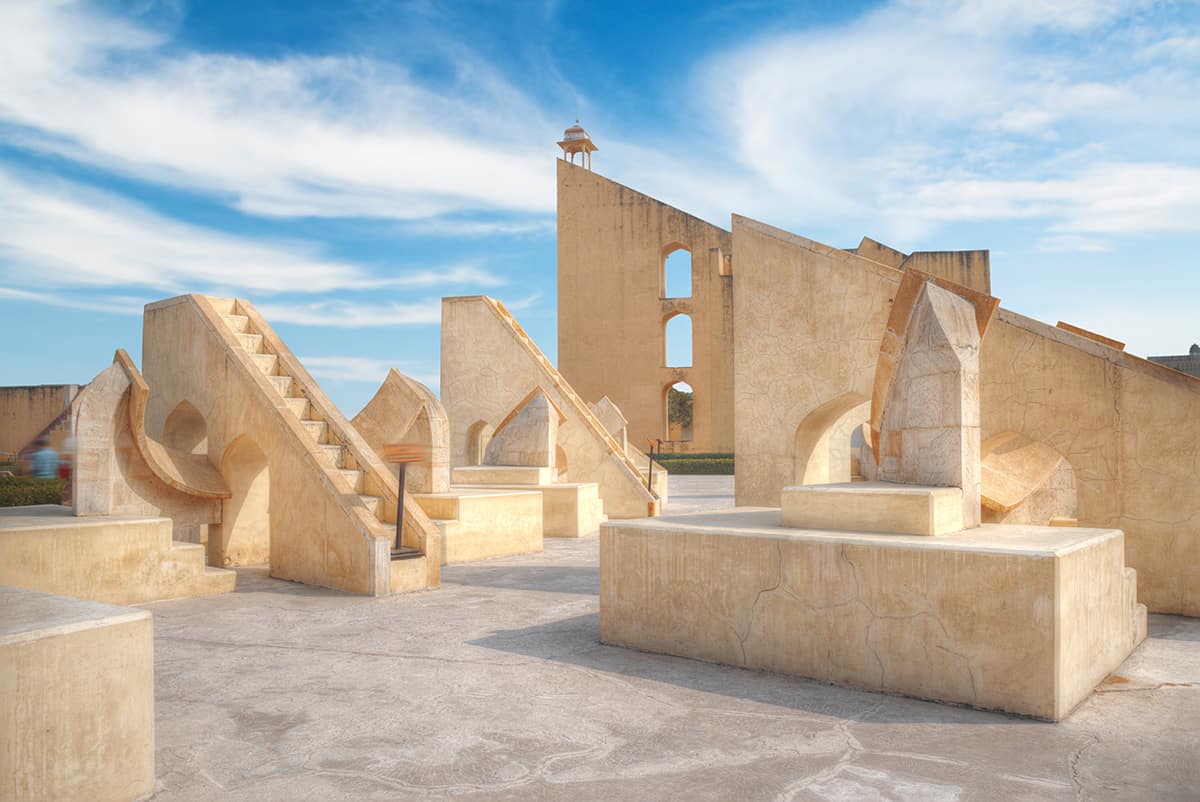
Jantar Mantar observatory in Jaipur India

There’s a lesson here for all the budding Bohrs out there: whether you use a holiday to pen the next ground-breaking paper in quantum mechanics or simply unwind, there is much to be gained from taking some time to recharge. Scientists can find inspiration anywhere and similarly science can also be found everywhere. A physics-themed vacation may conjure up images of beautiful libraries and awe-inspiring science museums, but it can also take you to some of the most extreme parts of the world. No matter what kind of traveller you are, there are all sorts of physics-infused destinations tying together science, history, culture and the world’s natural wonder.

Eclipse hunting

For some trips, it’s about being at the right place at the right time. That’s certainly true of solar eclipses, a handful of which take place every year, with a total eclipse occurring about once every 18 months. The beauty of “eclipse hunting” is that you know exactly when and where they will happen, meaning you can plan your trip well in advance. But as a traveller, you also need to be prepared to readjust to unpredictable weather and large crowds.

For Tami Freeman, an online editor with Physics World, the urge to observe eclipses goes back to 1999. It was the last time a total eclipse passed through the UK, although to avoid the crowds Freeman headed to north-east France, which also lay along the line of totality – where the eclipse is most visible. In August 2017 Freeman had her next shot with the so-called “Great American eclipse”. The US is prime eclipse-hunting territory because the path of totality covers a wide area on land.

But despite planning her trip nearly a year ahead, she found almost all of the locations in Wyoming were full up, so booked a hotel in Scottsbluff, Nebraska instead. “It cost us an absolute fortune,” she says. As it turned out, on the actual eclipse day, the family woke to find it was foggy, “so we drove west until we found a patch of clear sky, and ended up in Wyoming anyway!”
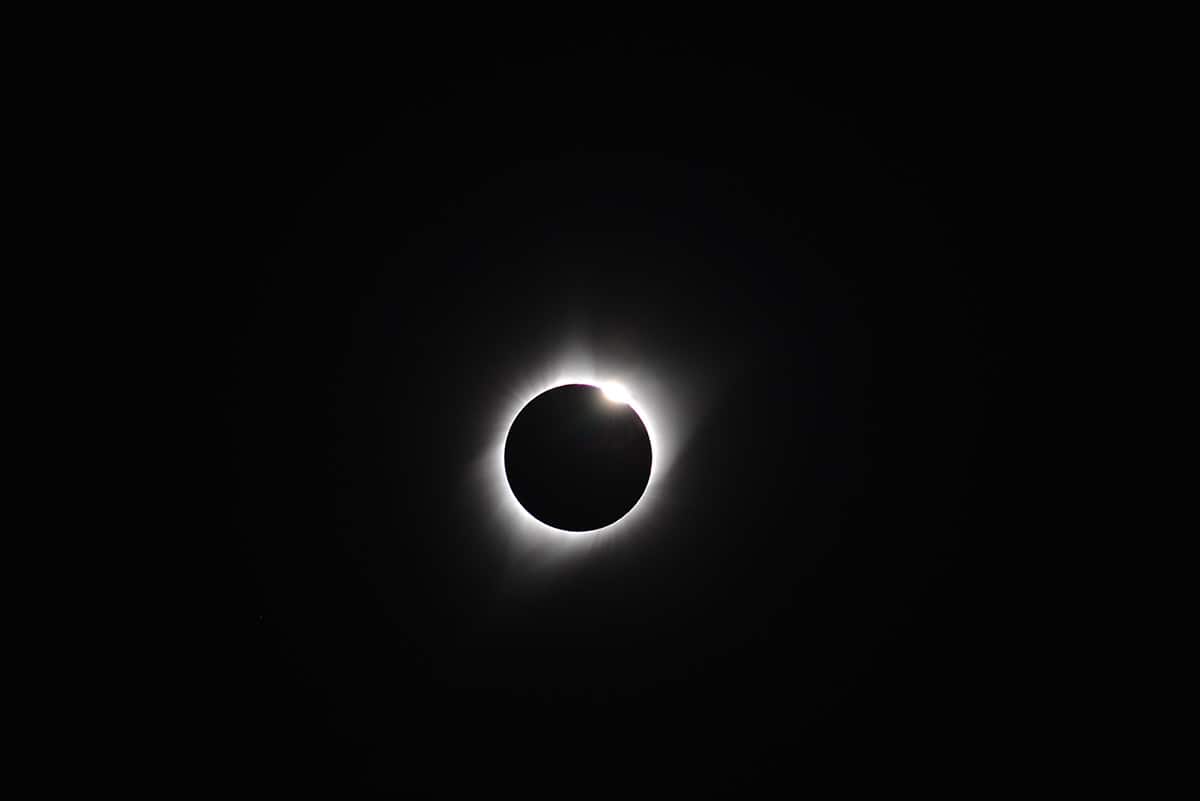
Solar eclipse

After waiting for a few hours, the solar eclipse began and they watched the Sun slowly disappear into a sliver of a “diamond ring” of light (see photo, above). “It’s like nothing you’ve ever seen. We were in the middle of nowhere, we had a 360-degree horizon and it was like a sunset all the way round, it was very strange,” says Freeman. “You could start to see the stars appearing in the middle of the day and it was all very quiet.”

The next total solar eclipse to cross the UK won’t be until 2090 – when most of you current readers will be long gone – but on 8 April 2024, North America will once more be graced by an eclipse with a path that will cut across a vast swathe of the country. For those planning a trip, Freeman recommends booking travel and accommodation as far in advance as possible, and being flexible.

If you’re not yet ready to commit to that journey, there are also regular partial eclipses to be enjoyed closer to home. Part of the benefit of eclipse hunting – or stargazing more broadly – is that besides travel costs, all you need is to have is the right conditions and some gear to capture the moment. Depending on what type of equipment you buy and where you want to watch from – your backyard, a local dark sky reserve or aboard a stargazing yacht at sea – it’s a trip that can suit all budgets.

Science, culture and nature

To tap into the growing demand for science-themed holidays, in 2019 New Scientist magazine launched a series of “Discovery Tours” – holidays with set itineraries to explore the astronomical, cultural and historical side of destinations with a scientific twist – after several successful one-off trips. The tours are usually led by science journalists or famous scientists like Richard Dawkins. Unfortunately, thanks to the global pandemic, only one of the tours took place before most of the world went into lockdown. Now, as things begin to open up, director Kevin Currie is hopeful for the delayed trips to take off.

According to Currie, the audience for the trips ranges from academics, students and active researchers, to those who are just interested in science and looking for an intimate and unique experience. “One of the big changes that the whole travel industry is seeing is that it’s not so much about volume of travel. Now, it’s more about travelling with purpose, going and doing something immersive or experiential, rather than just lying on a beach,” he says.

Woolsthorpe Manor and Lake Baikal frozen over

Whether you go on a themed tour or tag a stop onto your vacation, there are always ways to work in some science to a holiday. Physics sites are tied with many of the natural wonders of the world, from taking in the Aurora Borealis and volcanoes in Iceland, to visiting the birthplaces of discoveries.

Indeed, much of the great science of the world is inseparable from the history of specific locations – there’s Marie Curie’s Paris; the Museo Galileo in Florence; the Jantar Mantar complexes of 18th-century astronomical instruments in four cities in northern India; and even the Chernobyl exclusion zone in Ukraine (see box below for more). Closer to home for readers in the UK, you could take a day trip to Jodrell Bank Observatory in Cheshire; Woolsthorpe Manor – Isaac Newton’s home – in Lincolnshire; or Bletchley Park, the once top-secret location of Allied codebreakers during the Second World War, in Buckinghamshire, to name a few.

Seven dream destinations where physics and culture collide

Prague astronomical clock and the Hoba meteorite in Namibia

Prague, Czech Republic Walk across the cobblestones of Old Town Square to marvel at the medieval Prague Astronomical Clock. Next, make your way to the gothic Church of Our Lady before Týn, where you can find the tomb of Danish astronomer Tycho Brahe. Prague was also the home of Brahe’s assistant and revolutionary astronomer Johannes Kepler – you can learn more about the pair at the National Technical Museum’s astronomical section.

Bern, Switzerland A trip to the Swiss alps may lead you through its capital Bern, and you would be remiss to not visit “Einstein Haus” – home of legendary theoretical physicist Albert Einstein from 1903 to 1905, when he worked on his special theory of relativity. The city also boasts an Einstein Trail where you can follow in the great thinker’s footsteps, as well as the world’s largest Einstein museum.

Siracusa, Italy This idyllic Sicilian town was home to Greek mathematician, physicist, engineer, inventor and astronomer Archimedes. Follow in his sodden footsteps (though you may wish to be more modestly dressed) and have your own “Eureka!” moment at the Museum of Leonardo Da Vinci and Archimedes.

Belgrade, Serbia This city hosts the Nikola Tesla Museum, an expansive account of the life and work of the famous electrical engineer and inventor, and is also his last resting place. Opened in 1955, it was the first technical museum in former Yugoslavia, and is home to Tesla’s extensive archive, including 160,000 original documents, more than 1200 historical technical exhibits, and some 1500 photographs and photo plates of his original apparatus.

Grootfontein, Namibia Unearthed on a farm in central Namibia, some miles outside the city of Grootfontein, lies the largest intact meteorite on the planet. The 66 tonne Hoba meteorite has never been moved, only fully excavated, after it was discovered by landowner Jacobus Hermanus Brits in 1920, while ploughing his field. Thought to have crashed into the Earth some 80,000 years ago, the behemoth is particularly interesting as its impact left no preserved crater.

Lonar Lake, India A day’s drive from the busting metropolis of Mumbai lies the tiny township of Lonar, home to Lonar Lake – a meteorite crater created in the Pleistocene epoch, some 35—50,000 years ago. Lonar is one of four identified hyper-velocity impact craters in basaltic rock found anywhere on Earth, with the other three located in Brazil – but Lonar is the world’s only salt-water lake in basaltic rock. The remote location also makes it an excellent dark-sky stargazing spot.

Kobe, Japan Stretching across the Akashi Strait and linking the mainland city of Kobe to Iwaya on Awaji Island is the Akashi Kaikyo Bridge – the world’s longest suspension bridge. Completed in 1988, the bridge is 3911 m long, with two main supporting towers that stand 297 m above the water, making it also one of the tallest bridges in the world. Thanks to the seismic instability of the area, the bridge makes use of a complex system of counterweights, pendulums and girders to withstand severe storms and earthquakes.

Extreme physics

For thrill-seeking travellers, some of the most exciting labs and experiments are nestled in the most far-flung parts of the world. When author and physicist Anil Ananthaswamy was writing his 2010 book The Edge of Physics: Dispatches from the Frontiers of Cosmology, he was in search of the most extreme places where physics is carried out. His journey drew him to some impossibly exotic locations – from Antarctica, where he travelled to watch the launch of an antimatter experiment into the atmosphere; to the Atacama desert in Chile, home to the Atacama Large Millimeter Array radio telescope.

While some of the locations he visited were harder to reach, Ananthaswamy says that Lake Baikal in Russia was perhaps the most memorable. Considered to be one of the deepest lakes in the world, Baikal made for the perfect spot to build the Deep Underwater Neutrino Telescope. “I went there in the peak of winter, and going to Siberia in winter is nuts,” recalls Ananthaswamy. “[However], it’s the only time to go if you want to see the physicists working on their experiment.” Ananthaswamy is currently based in California, but would like to return to South Africa to visit the Square Kilometre Array network of telescopes, which was still in the planning stages when he visited in 2007.
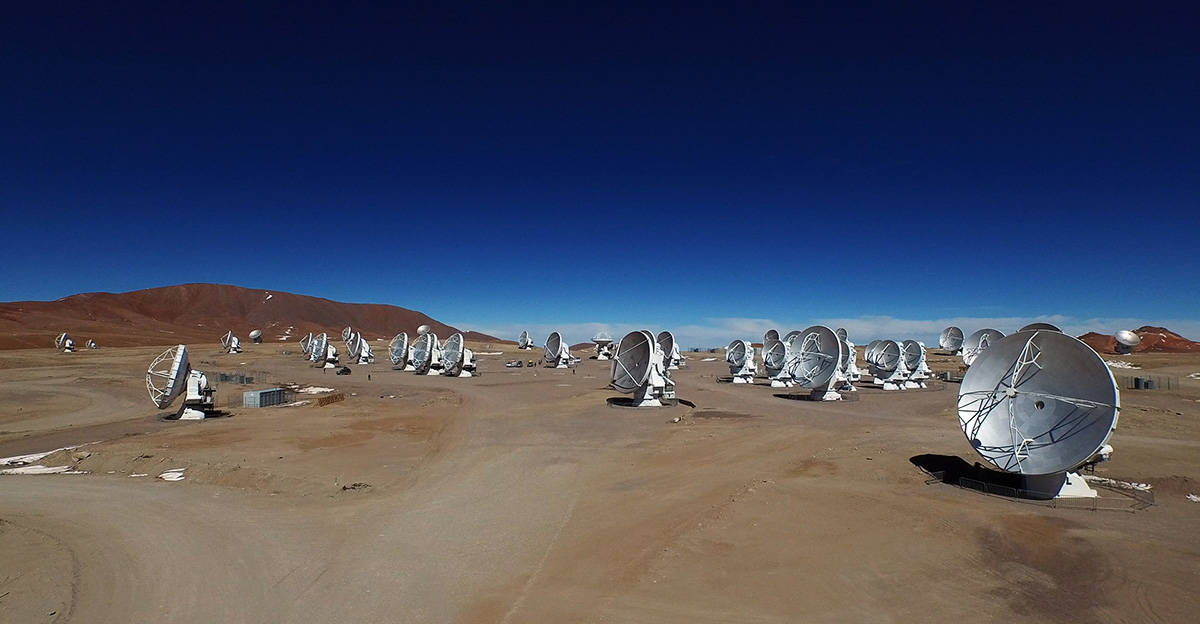
Atacama Large Millimeter Array

While the sites in his book are remarkable and far flung, that is exactly why more people shouldn’t visit them, he says. “The reason why these experiments, these telescopes, are in these remote places, is precisely because they have to be away from humanity. All of the noise that we bring as people – whether it’s mobile phones or light pollution or just noise of all sorts. These experiments are where they are because they are silent.”

For tourists, the best option is to visit scientific sites that are geared for visitors such as historical observatories that are no longer in active use. One example is Mount Wilson Observatory in Pasadena, California, which is the focus of the historical chapter in The Edge of Physics. Other major facilities open to the public include the CERN particle-physics lab in Geneva, which sees some 120,000 visitors in a typical year. Underground tours of the Large Hadron Collider are only possible during the long shutdowns that happen every 4-6 years, during which the lab usually organizes open days for the public. But anyone can sign up for a guided tour to see other parts of this massive experimental site, including areas of the detectors, the computing centre and CERN’s permanent exhibitions.

The final frontier

While there are plenty of exciting and magical holiday spots here on Earth, some intrepid travellers want something even more exotic – a trip beyond the bounds of our planet. The idea of travelling to space for pleasure has been around since before the first rocket launches, but it has been slowly shifting from the realm of sci-fi and into reality.

It’s now two decades since the American entrepreneur Dennis Tito became the first space tourist to fund his own trip when he paid $20m for a seat on a Russian Soyuz spacecraft to visit the International Space Station in 2001. Since then, commercial space travel has advanced, yet it is still limited to millionaires who can afford the pricey tickets on their own.

Recently, the commercial space sector has seen investment from more private companies including Blue Origin and Virgin Galactic. Wendy Whitman Cobb, a political scientist at the School of Advanced Air and Space Studies in Montgomery, Alabama, says she hopes this signals the start of a new era in space tourism. While the tickets would be cheaper, they would also be buying suborbital flights, meaning the rockets won’t get up high enough or go fast enough to get into orbit. Passengers will experience a few minutes of weightlessness before coming back down to Earth.
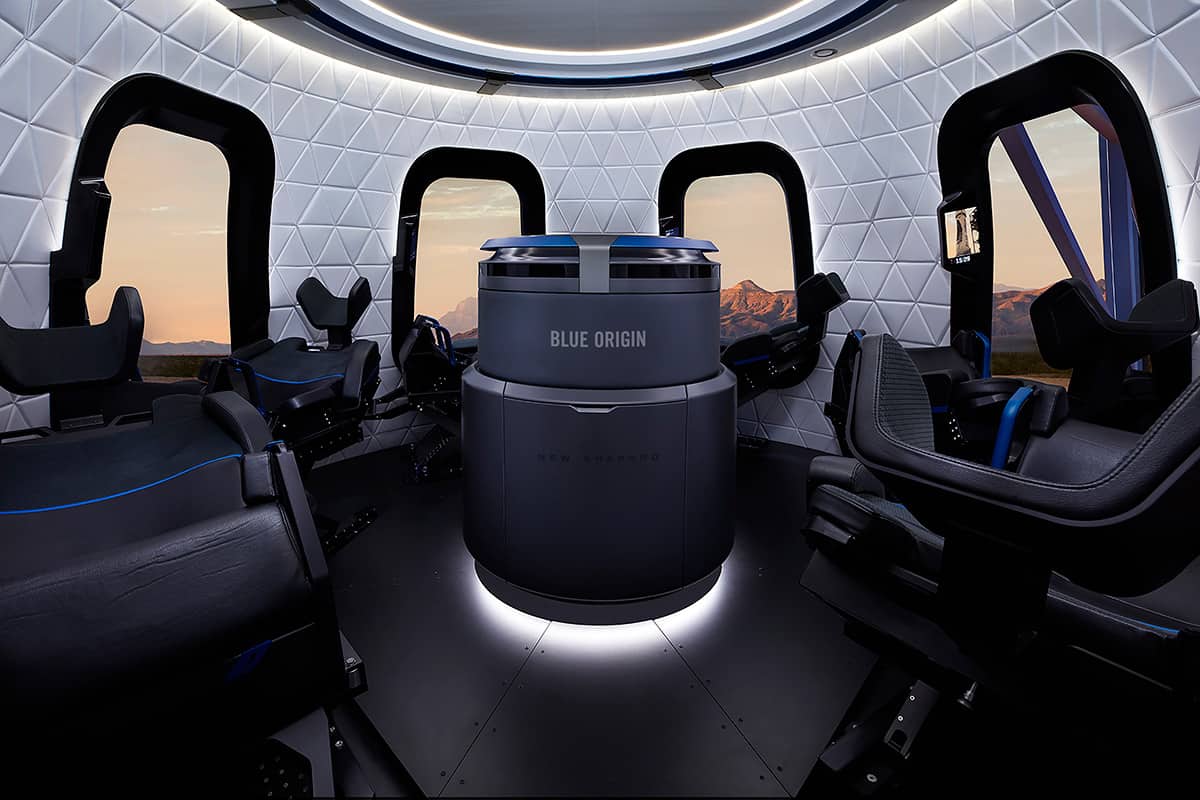
Blue Origin crew capsule interior

“I think this is an interesting entry point into that space tourist idea. It is a first step to making space accessible to the ordinary everyday person,” says Whitman Cobb. The next step, she says, is to earn the public’s trust by showing that space travel can be safe and reliable. Together with the development of reusable rockets and parts, and increased numbers of trips, these advances could help bring costs down and establish a viable space tourism industry.

While a trip to space is not yet in the cards for most of us hopefuls, Whitman Cobb does believe it is coming closer into reach. In the meantime, she likes to turn to the wonders of space that you can experience on Earth. Growing up in Florida, Whitman Cobb would regularly visit the Kennedy Space Center and watch rocket launches. “I think any place you can go to see the enormity and the complexity of these machines is just my day at Disney.” Most recently, she had a chance to see a SpaceX launch from a nearby beach. Whitman Cobb recalls the awestruck crowds as the rocket took off and then heard the engine’s delayed roar. She says instances like this are key to understanding the science. “It’s very hard sometimes for people to appreciate space and what we do up there because you can’t see it, you can’t wrap your arms around it. [US Space Force general] John Raymond once said ‘You can’t reach out and hug a satellite’, and it’s very true.”

Dream vacations on Earth and in space

  • Exodus Travels, Solar Eclipse Holidays (17 days from £13,800): Can’t wait for the next total solar eclipse near you? Head to Antarctica later this year for a combined vacation and solar eclipse tour, as well as visits to South Georgia and the Falkland Islands.
  • Northumberland Dark Sky Park (free, approx. £74 per night for accommodation): This UK county is home to many Dark Sky Discovery Sites where you can stargaze independently. There is a variety of accommodation, including glamping pods around the park.
  • Space Adventures: As the top broker for space tourism, Space Adventures is the only company to have organized tourist flights. Costs are not disclosed but there are a range of options from the first tourist space walk and circumlunar missions, to low Earth orbit trips with SpaceX.
  • Blue Origin: A suborbital trip with Jeff Bezos was recently auctioned off for $28m. This is the first seat sold aboard Blue Origin’s commercial spacecraft New Shepard, but future trips will reportedly be in the range of $200,000–300,000.
  • Space for Humanity: While space tourism has been largely confined to millionaires, this charity aims to make it accessible to leaders from different walks of life. It is planning the first sponsored citizen astronaut mission and is open for applications.
Newly discovered planetary nebulae could improve cosmic distance measurements

Planetary nebulae as far away as 40 Mpc (about 130 million light–years) have been observed by astronomers for the first time. The objects had been too distant to see until an international team of astronomers used a new filter on data from the Multi-Unit Spectroscopic Explorer (MUSE) instrument – which operates on European Space Agency’s Very Large Telescope (VLT).

The team was led by Martin Roth at the Leibniz Institute for Astrophysics (AIP) in Potsdam, Germany and it applied a differential emission-line filter (DELF) to archival data collected by MUSE. This revealed 15 planetary nebulae that were previously too faint to be seen. The technique could prove to be a useful tool for studying the cosmos and could even help resolve a mystery about the expansion of the universe.

“Planetary nebulae are like Swiss Army Knives for extragalactic study,” says team member Robin Ciardullo at Penn State University in the US. “You can use them to learn about stellar dynamics, dark matter, stellar evolution, galactic chemical evolution, the history of galaxy clusters and, of course, measure extragalactic distances.”

Shedding layers

A planetary nebula occurs at the end of a star’s red giant phase when helium has been exhausted and can no-longer be fused to create carbon and oxygen. At this point, a star that began life at less than 8 solar-masses will shed its outer layers leaving behind a stellar core surrounded by a cloud of material. Eventually, the star will become a white dwarf.

Light emitted by the star will ionize atoms in the cloud, freeing electrons that can then collide with electrons still bound in atoms, kicking them up to higher energy states. When these bound electrons decay to lower energy states they emit light at very specific wavelengths.

“Now that its outside is gone, the star is very hot. The high-energy light from the star slams into the material that just came off the star and lights it up,” explains Ciardullo. “We see what the star ejected into space — the ‘planetary nebula’. It is a terrible name since it has nothing at all to do with planets!”

Standard candles

It is the uniformity of the light emitted by planetary nebulae that make them excellent yardsticks for the measurement of extragalactic distances. Such yardsticks are known as standard candles because they have known luminosities and therefore their distances can be inferred from how bright they appear in the sky.

Along with George Jacoby and Holland Ford, Ciardullo introduced the planetary nebula luminosity function (PNLF) in 1989 and it has been used as a distance indicator for galaxies up to around 15 Mpc ever since.

Using planetary nebulae to look further than about 15 Mpc had not been possible because the luminosity of objects drops as the square of the distance, making more distant objects significantly fainter and therefore harder to observe. Now, however, the application of DELF and the power of MUSE/ VLT has extended this limit considerably allowing precision distance measurements to be made for galaxies up to around 40 Mpc.

Bigger and better

“By the turn of the century, we had explored planetary nebulae in nearby galaxies and had pushed the PNLF distance measurement technique about as far into the universe as we could,” says Ciardullo. “Now telescopes are bigger, and the instrumentation is better. Observations that were extremely difficult 20 years ago are trivial, and we can extend the technique out to much larger distances”

With this boost, PNLF could help soon help astronomers solve one of cosmology’s most troubling puzzles. This is the apparent mismatch between the local rate of expansion of the universe that astronomers observe using standard candles and the value that is calculated using the lambda-cold-dark-matter (ΛCDM) model of cosmology. Dubbed the Hubble Tension, resolving this discrepancy could point to new physics beyond the ΛCDM.

The idea is to use planetary nebulae as a complementary distance measurement to other standard candles.

“One way to address [the Hubble tension] is to double-check the local measurements with other precision ways of measuring distances,” explains Ciardullo. “Until now, planetary nebulae were not bright enough to observe deep enough into the universe to test this tension. Our [research] shows that with MUSE and the VLT, we can get to these necessary distances.”

The observations are described the Astrophysical Journal.

Best in physics: multidimensional MRI and FLASH proton therapy

Multi-task MRI

The “Best-in-Physics” presentations at the AAPM Annual Meeting highlight the conference’s 15 top scoring abstracts. In a previous article, we examined dose-optimized MLC tracking of multiple targets and radio-immunotherapy dose-painting. In our second look at the 2021 winning studies, we describe a new multi-contrast, motion-resolved MRI technique for radiotherapy planning and examine whether the spread-out Bragg peak can be used for FLASH proton treatments.

Multi-task MR lines up for radiotherapy planning and real-time tracking

MR imaging has recently been adopted for planning radiation treatments due to its superior soft-tissue contrast compared with CT. For radiotherapy in the abdomen, however, the process is complicated by respiratory motion and the large number of nearby organs-at-risk (OARs).

Junzhou Che

“MR techniques with multiple contrast weightings and motion-resolving capabilities are needed to address these challenges,” explained Junzhou Chen from Cedars-Sinai Medical Center and the University of California, Los Angeles.

Existing MR protocols, however, use separate scans to achieve multiple contrasts, making them susceptible to inter-scan misalignment. Motion-resolved 4D MR scanning, meanwhile, only uses a single contrast weighting. To address these limitations, Chen and colleagues are developing a multi-task MR technique that generates multi-contrast and motion-resolved volumetric MR images to enable MR-based treatment planning in the abdomen.

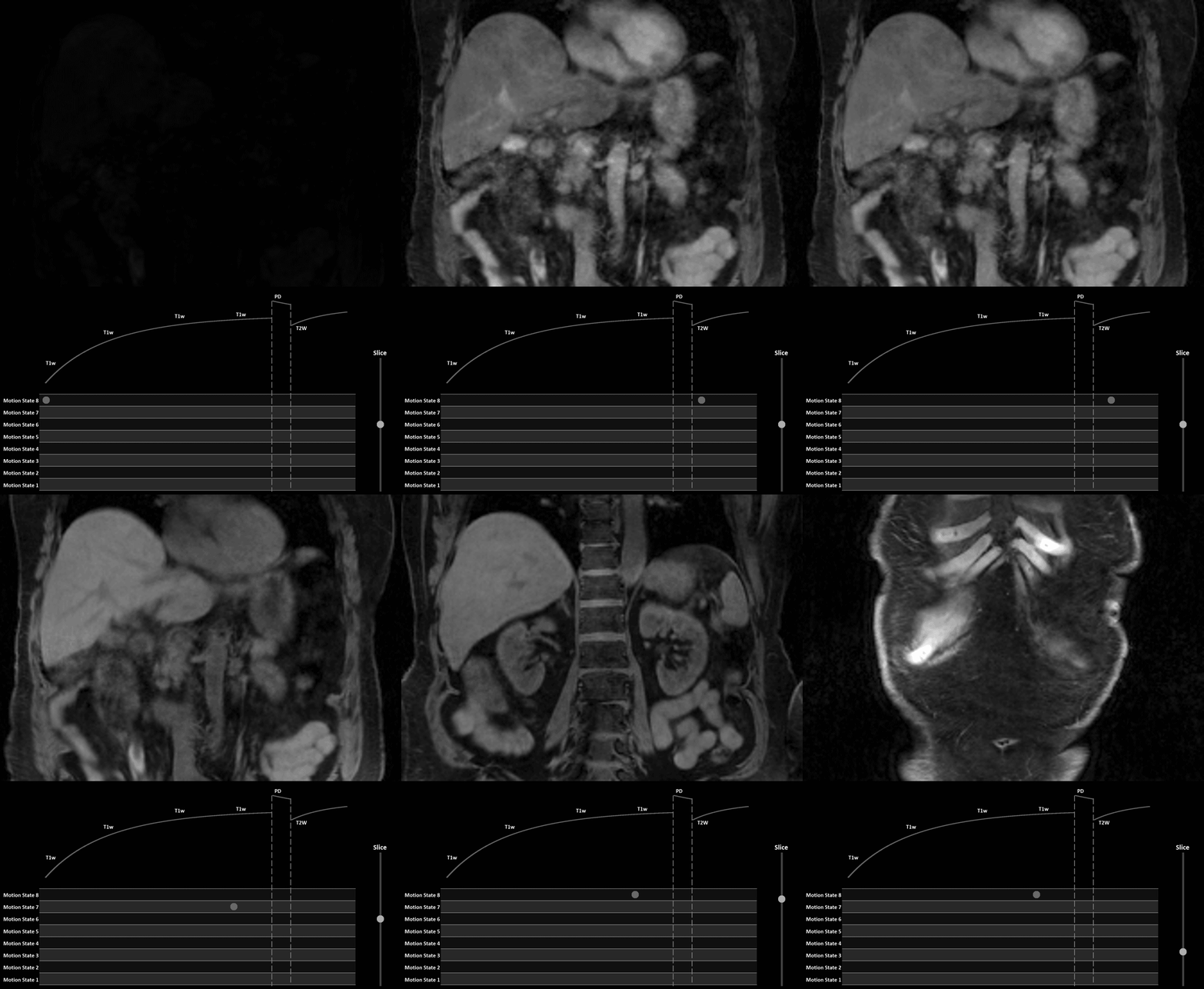
The researchers developed a multi-contrast pulse sequence that successively generates T1-weighted, proton density-weighted and then T2-weighted contrast in each repetition time. For data acquisition, they chose a cartesian spiral-in sampling trajectory, which reduces reconstruction time, achieves a higher sampling density in the central k-space region and avoids large gradient jumps before sampling the k-space centre. The multidimensional (spatial, contrast, motion states) images are made possible by the use of a MR-multitasking low-rank tensor framework.

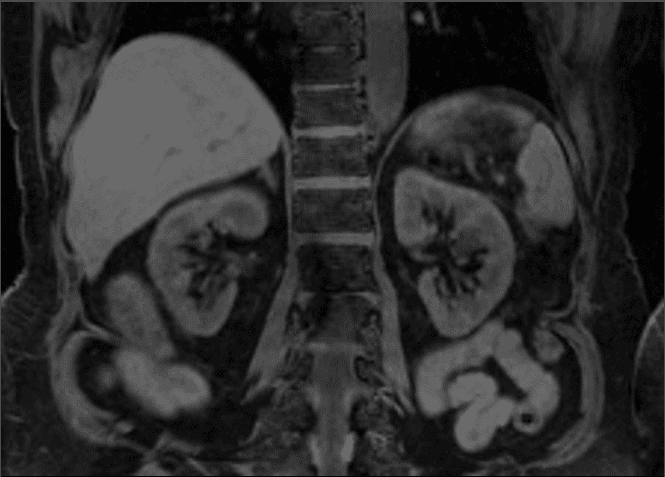
Chen shared an example using the proposed multi-task MR to scan a healthy volunteer. The multidimensional images generated had a resolution of 1.6 (superior–inferior) x 1.6 (left–right) x 3.2 (anterior–posterior) mm, a field-of-view of 256 x 358 x 256 mm, and the respiratory motion could be resolved into eight phases. “Here, we demonstrated that a user can choose to view any contrast, any slice and any motion states they desire,” he explained.

Multi-task MRI

The researchers validated the technique using simulations of a digital abdomen MR phantom with a random breathing pattern. The reconstructed images showed good agreement with the digital ground truth, for all three contrast weightings. They also validated the motion-resolving accuracy in scans of four healthy volunteers, observing a difference between the motion range resolved in the multi-task MR image and a 2D real-time MRI reference of within 0.2 mm.

“We think that this MR framework is very useful for abdominal radiotherapy because it can potentially help to improve tumour and OAR delineation,” Chen concluded. “The MR-multitasking framework can also enable volumetric, multi-contrast, real-time tracking during radiation treatment, potentially enabling real-time treatment adaptation. “This protocol can be further developed as an integrated MR platform for both radiotherapy planning and real-time treatment monitoring.”

FLASH treatments using a spread-out Bragg peak spare normal tissue

FLASH radiotherapy, in which radiation is delivered at ultrahigh dose rates, shows great promise for reducing normal tissue toxicity while maintaining anti-tumour activity. Proton beams are of particular interest for FLASH treatments due to their improved dose distribution compared with photons and electrons.

Michele Kim

Most proton FLASH studies to date have employed the entrance plateau for irradiation, but researchers at the University of Pennsylvania are now investigating the potential of FLASH proton therapy using the spread-out Bragg peak (SOBP). “The goal of this study was to see if there was any FLASH normal tissue sparing at the SOBP, similar to that observed for transmission shoot-through studies,” explained Michele Kim.

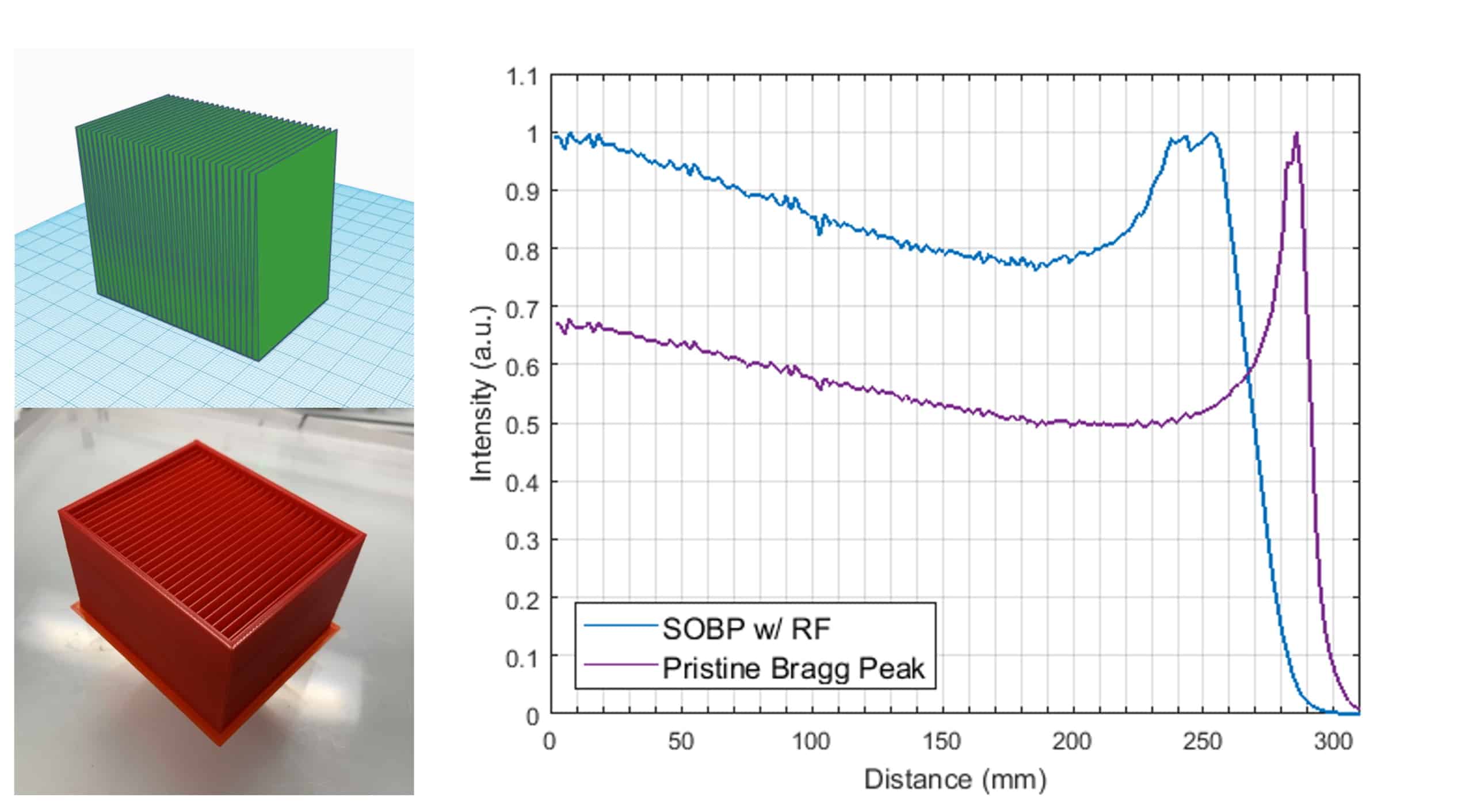
To create a SOBP at a FLASH dose rate, Kim and colleagues 3D printed a custom ridge filter with small triangular peaks and placed it between the first and second scatterers in the research beamline at the Roberts Proton Therapy Center. As the proton beam travels through various thicknesses of material in the filter it generates a SOBP. The team used this setup to irradiate mice, modifying the beamline to ensure that the animal’s entire abdomen was situated within a 2.5 cm SOBP.

Ridge filter

The researchers randomly assigned the mice to receive 15 Gy irradiation using one of four treatment regimens: FLASH with the SOBP; FLASH using the plateau; standard dose rate with the SOBP; or standard dose rate with the plateau. They measured dose rates of around 108 Gy/s for the FLASH beams and 0.82 Gy/s for the conventional proton treatments. Following the various treatments, the team assessed radiation damage by quantifying the number of proliferating intestinal crypts in the animals.

“The SOBP-irradiated mice exhibited similar FLASH normal tissue sparing to the shoot-through irradiated mice,” said Kim. “Additionally, the FLASH-irradiated mice showed a significantly higher number of proliferating cells per crypt compared with standard dose rate-irradiated mice, using both the SOBP and the entrance region, which reinforces the normal tissue sparing seen previously.”

Next, the researchers plan to investigate the tumour control capabilities of SOBP-based proton FLASH. Kim noted that in future they will deliver conformal SOBP FLASH treatments to the mice, as all studies to date have involved the entire beam irradiating the entire abdomen.

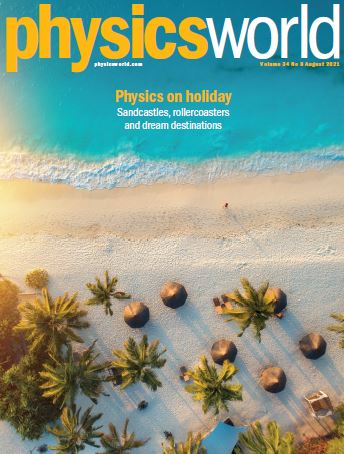
Sandcastles, rollercoasters and dream destinations: Physics World goes on holiday

Cover of August 2021 issue of Physics World

We physicists like to see ourselves as a breed apart. We’re intellectuals teasing out nature’s secrets, developing critical technologies, or educating the next generation of scientists. Holidays? They’re a pointless frippery, a waste of time, an unproductive and lazy indulgence.

I’m caricaturing physicists, of course. But as the August special issue of Physics World reminds us, holidays are vital for our wellbeing. And with all of us having spent so long in lockdown, we perhaps realize more than ever why that’s the case.

Holidays recharge your batteries  and, by letting your mind wander in different surroundings and with different people, you can think some amazing thoughts, whether in the academic or business worlds.

If you really can’t switch off from science while on vacation, even a beach holiday has physics all around you. Build a sandcastle and you’ve created a compacted granular material mixed with a liquid (sea water). As to how the water helps the sand grains stick together, well that’s a question that touches on the ancient Egyptians, Lord Kelvin and the Nobel laureate Andre Geim, as Ian Randall discovers.

Once off the beach, maybe it’s time for some candyfloss – those extortionately priced wispy filaments of sugar sold on the seafront. Fun fact: there are “superpuff” exoplanets in the cosmos that are as fluffy and light as candyfloss itself.

Or perhaps you’d prefer a ride on a rollercoaster, which immerses you in Newtonian mechanics like nothing else can. As you hurtle down into the abyss, there’s physics coming at you from every direction as Michael Allen explains: G forces, kinetic energy and speeds of almost 120 km/h on a ride like The Big One at Blackpool Pleasure Beach.

If none of that scratches your science itch, you can always take a science-themed holiday. Packing our choice of summer reading, you could journey to the Arctic Circle to see the Northern Lights, chase an eclipse along the path of totality, or visit meteorites, museums or monuments. Those destinations might be off-limits right now, but our guide, Juanita Bawagan, will at least help you dream about your next big break.

If you’re a member of the Institute of Physics, you can read the whole of Physics World magazine every month via our digital apps for iOSAndroid and Web browsers. Let us know what you think about the issue on TwitterFacebook or by e-mailing us at pwld@ioppublishing.org.

For the record, here’s a run-down of what else is in the issue.

• China enters the space race – With construction of its first dedicated space station set to be complete next year, China is now firmly becoming a major space power, as Ling Xin reports

• 21st-century holidays – Do you use vacations to unwind from physics or to focus on it without distraction? Robert P Crease wonders what holidays mean to physicists in the 21st century

• The business of holidays – Can a holiday make you money? James McKenzie explains how business ideas – both big and small – often arise when you’re away on vacation

• On returning to work – With the pandemic resulting in widescale burnout among academics, Karel Green says that taking time out of the office has never been so essential

•  Top tips for super sandcastles Whether it’s just an upturned bucket or a towering edifice, there is a time-honoured tradition of building sandcastles on the beach. But, as Ian Randall discovers, there are many secrets to unravel when it comes to the granular science of sand 

• Holiday hotspots for physicists – After a difficult year spent largely indoors, we’re all in need of a getaway. Juanita Bawagan explores some dream destinations – from scientific wonders in our backyard to flights into outer space

• Twists, turns, thrills and spills – A ride on a rollercoaster is a perfect example of physics in action. But there is much more at play than simply gravity and speed when it comes to the thrill of rollercoasters, as Michael Allen discovers

• Hot topics – Philip Ball reviews Einstein’s Fridge: the Science of Fire, Ice and the Universe by Paul Sen

• Elusive answers – Sabine Hossenfelder reviews Shell Beach: the Search for the Final Theory by Jesper Grimstrup

• Infitesimal to infinite – David Appell reviews Probable Impossibilities: Musings on Beginnings and Endings by Alan Lightmann

• Curiosity killed the (Schrödinger’s) cat – Laura Hiscott reviews the play The Mirror Trap and speaks to its writer and star, Simon Watt

• Spending your summer wisely – As a student, you don’t have to spend your summer sunbathing on the beach or bingeing on reality TV. Laura Hiscott speaks to some early-career physicists who did summer internships in different places, from start-ups to university departments, and shares their advice for making the most of these opportunities

• The candyfloss cosmos – Laura Hiscott gets a taste for sugary stuff

Electrochemistry-based and -coupled characterization of energy storage materials

Want to learn more on this subject?

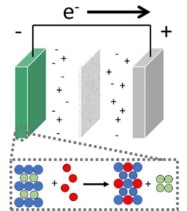
Batteries are ubiquitous in our everyday lives and often appear as black boxes. However, the chemistry inherent to their function is diverse and complicated.

This talk highlights progress and opportunities employing electrochemical energy storage to build a green energy future. Examples of mechanistic insight gained from electrochemistry-based and electrochemistry-coupled characterization of energy storage materials and systems are highlighted, emphasizing in situ and operando methods. Characterization approaches to spatially locate and resolve insertion and conversion processes, and distinguish productive and parasitic processes in functional systems are discussed.

Want to learn more on this subject?

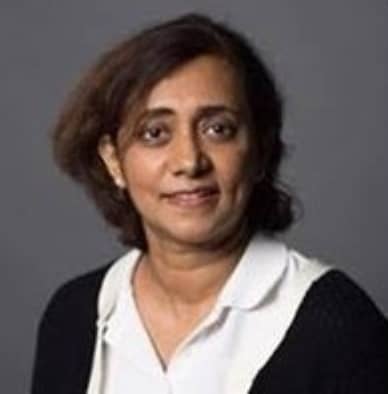
Amy Marschilok is an associate professor in the Department of Chemistry at Stony Brook University, where she holds an adjunct faculty position in the Department of Materials Science and Chemical Engineering, and serves as co-director of the Institute for Electrochemically Stored Energy. She holds a joint appointment as scientist, energy storage division manager, and energy systems division manager in the Interdisciplinary Science Department at Brookhaven National Laboratory. Prof. Marschilok also serves as deputy director for the Center for Mesoscale Transport Properties, an Energy Frontier Research Center funded by the U.S. Department of Energy. Currently, her research focuses on materials and electrode concepts for high-power, high-energy density, extended-life batteries. She is also interested in electrochemistry-based approaches for materials synthesis and characterization.


Prof. Marschilok completed her PhD at the University at Buffalo, US. She has mentored more than 50 student researchers and co-authored more than 200 publications. While previously employed as a senior scientist in the Medical Battery Research and Development group at Greatbatch Inc., she was recognized as a 2006 Visionary of the Year. She received a Woman of Distinction Award in the Education Category in 2011 from the Girl Scouts of Western New York, and 2010 Early Career Travel Award from the ECS Battery Division.


China embarks on a decade of human space exploration

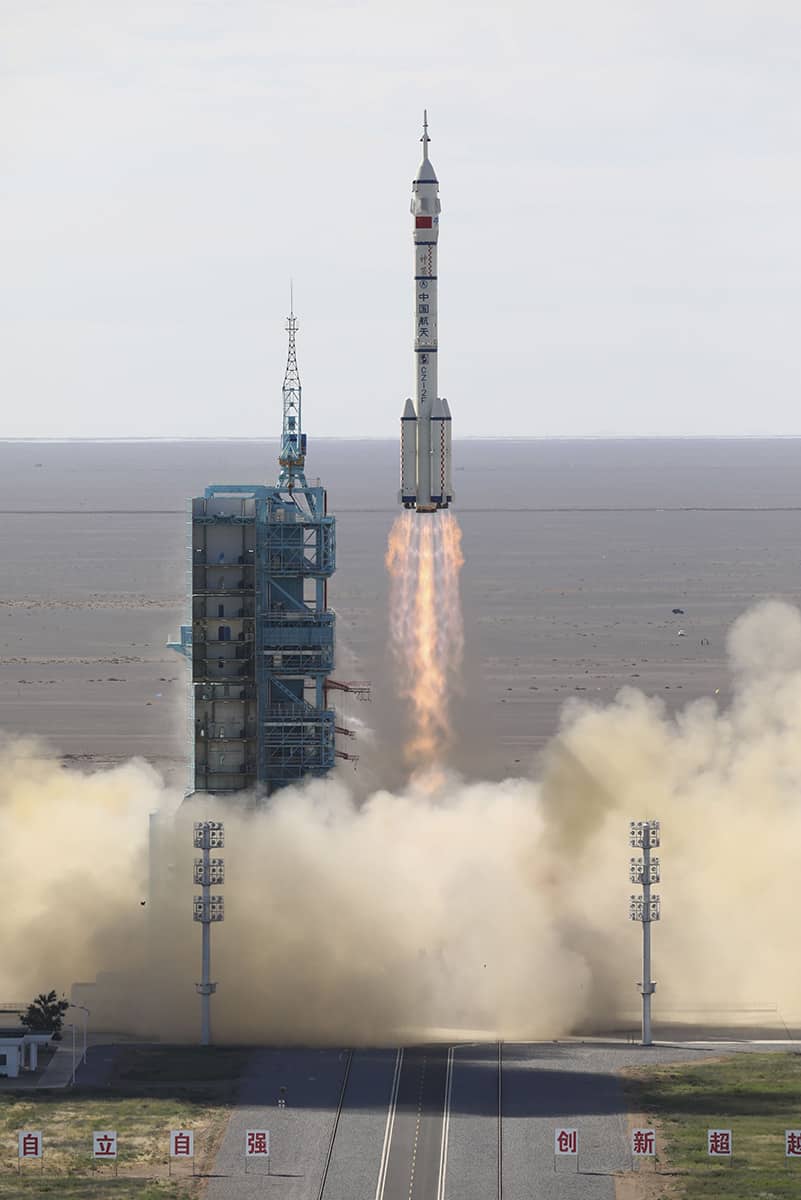
At precisely 07:54 UTC on 17 June 2021, China passed the latest milestone in its quest to become a global space power. It was then that China’s Shenzhou-12 spacecraft, which had lifted off from the Gobi Desert just hours earlier, docked with the core module of the China Space Station (CSS). The three astronauts – Haisheng Nie, Boming Liu and Hongbo Tang – quickly set to work setting up a new home in low-Earth orbit. As well as marking the start of the longest crewed mission in the country’s fledgling space history, the moment signalled China’s first continuous presence in space orbit.

When the 100 tonne CSS is completed by the end of 2022, this T-shaped structure, floating 400 km above the Earth, will consist of three main building blocks. At the centre of the CSS will be the 16 m-long Tianhe (“Harmony of the Heavens”) core module, while two 14 m-long experimental modules – Wentian (“Quest for the Heavens”) and Mengtian (“Dreaming of the Heavens”) – will be permanently docked to Tianhe on opposite sides. Launched in April, Tianhe can accommodate three astronauts at a time for stays of up to six months and has a robotic arm to monitor the space environment, as well as grab and put modules in place.

The three astronauts who arrived in June have already carried out tests and experiments. They even spoke briefly with Chinese president Xi Jinping, telling him how they had adapted quickly to their new surroundings. The astronauts’ activities were also widely covered in the Chinese media, ranging from details of their meals of rice dumplings and Kung Pao chicken to how they were sorting out some 160 packages that had arrived earlier with the cargo vessel, “Tianzhou-2”. In July the astronauts did their first space walk, during which they tested their Chinese-built spacesuits, installed a work platform on the space station’s robotic arm, and mounted a panoramic camera.

With the first crewed launch complete, a further eight launches will now be required for China to complete construction of the CSS. First up will be another cargo vessel flight to replenish the CSS, followed by another mission towards the end of the year carrying crew who will swap places with the current team. Next year will be even busier, with the launch of two experimental modules, two cargo missions, and two further crewed missions before the space station is finally complete.

Experiment focus

Throughout its lifetime, the CSS is expected to be home to thousands of scientific experiments, exploring microgravity effects, space medicine, fundamental physics and astronomy, among others. They will be placed on 14 “experiment racks” spread among the Tianhe, Wentian, and Mengtian modules. But the experiments are far from a Chinese-only affair. In 2019 the first batch of nine international experiments were selected in a partnership between the China Manned Space Agency and the United Nations Office for Outer Space Affairs (UNOOSA). “The collaboration shows that China is really trying to open up the possibility for everyone in the world to use the facility that China is developing,” UNOOSA director Simonetta Di Pippo told the Beijing-based Xinhua news agency in 2018.

Photo of Shenzhou-12 launch

Research will soon start on the two experiment racks on Tianhe. One rack will be used to conduct experiments in which metal and non-metal samples are electrostatically levitated in the “air”, heated with lasers to as high as 3000 °C and then cooled back down to allow their physical properties to be studied. These experiments could have industrial applications in everything from aeroplane engines to smartphone cameras. The “high-microgravity” rack, meanwhile, will feature a suspended experimental platform, in which vibrations from the space station are blocked out and the microgravity level reduced by 2–3 orders of magnitude to 10–7g to look for evidence of new physics.

As for the “two-phase system” experiment rack on Mengtian, it will be used for research concerning evaporation, condensation and other heat-transfer processes in a microgravity environment to develop smaller, more efficient cooling devices for spacecraft. “Chinese scientists started working on this subject in the 1970s, but it was mostly fundamental research,” says Liu Qiusheng, the rack’s chief scientist, from the Institute of Mechanics at the Chinese Academy of Sciences in Beijing. “[Now] our focus has shifted to the application side, and we are building the biggest rack of its kind on a space station.”

But work won’t just go on inside the CSS, with the surfaces of Wentian and Mengtian featuring more than 50 docking points to host external experiments too. One of them will be the Spectroscopic Investigation of Nebula Gas (SING) – an experiment jointly proposed by researchers from the Indian Institute of Astrophysics and the Institute of Astronomy of the Russian Academy of Sciences. Working in the ultraviolet waveband, SING will observe emission lines of several elements – including carbon, nitrogen and oxygen – from nebulae and interstellar gas in our galaxy and beyond to infer their temperature, density, abundance and pressure.

The door is now open to all new projects China wants to do in space

Jonathan McDowell

According to SING’s co-chief scientist Jayant Murthy, the probe is expected to cover excited regions (such as supernova remnants), cold areas (gas clouds) and the general interstellar space. “The entire payload will be built for about $50,000 – a fraction of the cost of most space missions,” says Murthy. His team is now completing the basic design and plans to get the payload manufactured in the next few months, before finishing assembly and calibration by October 2022 in time for delivery to the CSS at the end of 2022.

“The door is now open”

According to a recent article by Gu Yidong, chief scientist of the China Manned Space programme, the CSS is set to be the most “important research infrastructure” for China in low-Earth orbit before 2035 (Chinese Journal of Space Science 41 10). With a minimum 10-year lifespan, the CSS could end up being the only space station in operation if the International Space Station (ISS) retires, as intended, in the mid to late 2020s. The ISS has supported nearly 3000 experiments but is ageing and requires almost constant maintenance. John Logsdon, a space-policy expert from George Washington University in Washington DC, says that the construction of the CSS underlines the need for the US and its partners to decide on the future of the ISS – including whether it should be deorbited, continued or perhaps replaced by a station run by the private sector.

Jonathan McDowell from the Harvard-Smithsonian Center for Astrophysics stresses that technological advancements from building the CSS will hugely benefit China’s space endeavours in the future. Indeed, China already has a long to-do list for future science-based exploration beyond Earth orbit. Chang’e-6, for example, aims to return samples from the Moon’s south pole, while Chang’e-7 will survey its south pole in detail and Chang’e-8 is a technological precursor for the construction of a permanent lunar research base. And following its recent successful landing on Mars, China is already planning a sample-return mission from the red planet by 2030. Missions to return samples from a near-Earth asteroid, visit Jupiter and explore the edge of the solar system are also in the pipeline.

“I’m very impressed by the scope of Chinese space exploration in both science and applications, and that China has now deployed operational systems in every aspect of space technology,” says McDowell. “The door is now open to all new projects China wants to do in space.”

China’s first major space telescope gathers pace

Illustration of Xuntian

Inspired by the success of NASA’s Hubble Space Telescope and the Sloan Digital Sky Survey, China is set to soon launch the Xuntian (“Survey the Heavens”) telescope. It will map the sky from the same orbit as the China Space Station (see main text) and seek answers to fundamental questions about the universe such as how and why the expansion of the universe is accelerating and the nature of dark energy.

As China’s first space-based large-aperture optical telescope, Xuntian will be about the same size as Hubble but with 300 times the field of view. It will have five instruments, including a 2 m-aperture survey camera, a spectrograph and coronagraph. Collectively, the instruments will not only carry out imaging and spectroscopy, but also look for black holes, exoplanets and other objects. Unlike Europe’s Euclid craft or NASA’s Roman Space Telescope, however, Xuntian will have an “off-axis” mirror, allowing it to take better measurements of “weak” gravitational lensing. About 70% of observing time over its first decade will be focused on surveying the sky.

According to Hu Zhan from the National Astronomical Observatories, Chinese Academy of Sciences, who is leading the development of the telescope’s survey camera, Xuntian’s design has gone through major changes. When first approved in 2013, the plan was to mount the telescope on one of the CSS’s experimental modules. But when astronomers in China realized that the space station and its astronauts could hinder the telescope’s observations, they instead turned to the current “co-orbital” design, in which Xuntian will fly a distance away from the CSS. Still, Xuntian could be made to dock with the space station, which according to Zhan would “service the telescope and take advantage of human resources [on the CSS]”.

Zhan and colleagues are finalizing the design of Xuntian and have started building the telescope. They hope to launch the mission in late 2023 or early 2024 and to get the telescope operational later that year. Once Xuntian’s 10-year mission is over, it could be pushed into a higher Earth orbit to undertake new science. But things will not all be plain sailing. Apart from the fact that China has never built such a large space-based optical telescope before, Xuntian will face many technological hurdles. When the telescope approaches the space station, for example, rocket fuel could contaminate the telescope lens. “There are lessons from Hubble, and it’s tricky to fix the telescope without ruining it,” says Jonathan McDowell, an astrophysicist at the Harvard-Smithsonian Center for Astrophysics.

Sprinkling basalt over soil could remove huge amounts of carbon dioxide from the atmosphere

Sprinkling powdered basalt over natural ecosystems would remove vast amounts of carbon dioxide from the Earth’s atmosphere while also improving soils. That’s the finding of a new study that evaluates this proposed geoengineering scheme and estimates the costs involved.

Worldwide, nations are pledging to reach net zero emissions of greenhouse gases by 2050, if not earlier. But even in best case scenarios for renewable energy and industrial decarbonization, it looks certain that significant carbon dioxide emissions will continue for decades. Therefore, most proposed routes to net zero also bank on our ability to capture carbon – at source or directly from the atmosphere – and store it securely over the long term.

An obvious option is to plant more trees, which brings other ecological benefits. But there are parts of the world where soils are unsuitable, or new forests would compete with other land uses such as agriculture. Another possibility is carbon capture and storage (CCS) whereby carbon is extracted from industrial exhaust gases or directly from the air and then pumped into rocks underground. The reality, however, is that CCS facilities currently store just a few million tonnes each year from annual global emissions of 35 billion tonnes.

Enhanced weathering

A new study described in Nature Geoscience and led by Daniel Goll at the University of Augsburg in Germany considers a different approach known as enhanced weathering. The idea is to boost the natural process by which carbon dioxide in precipitation reacts with soils and rocks to form bicarbonate ions, which eventually find their way into oceans via rivers. Adding basalt dust to soils increases the surface area available for these reactions, speeding up this chemical weathering process and drawing down more carbon.

At the same time, amending soils with basalt makes them more productive – boosting the carbon sink – and improves drainage and reduces acidity levels. “We know that plants can enhance the weathering of minerals, so we believe there might also be an acceleration of this weathering process when more vegetation is present,” says Goll.

Goll’s team used a land surface model to the simulate the effects of applying 5 kg/m2 of basalt dust over a vegetated area of 55 million square kilometres (about one third of the land on Earth). They found it has the potential to remove 2.5 billion tonnes of carbon dioxide per year, where roughly half was stored in the biomass. The biggest effect was predicted for tropical regions where soils are often impoverished compared to higher latitudes.

Realistic costs

Costs for distributing basalt on a sufficiently large scale would include mining and crushing the rock, transport and distribution. Goll says that a cost of roughly $150 per tonne of removed carbon dioxide is realistic, assuming that basalt is applied to land reasonably close to human infrastructures using aircraft. That compares with $5–50 per tonne for afforestation and re-forestation, $100–200 for bioenergy with carbon capture and storage and $100–300 for directly capturing carbon from the air – all figures estimated in a 2017 paper in Environmental Research Letters.

“The good thing about crushed silicate rock, such as basalt, is that it can be applied to managed land – crops, grazing land, forest – without tying up the land,” says Peter Smith, a soil scientist at Scotland’s University of Aberdeen.

Impacts on human health

Field trials of enhanced weathering are taking place in the UK, Germany, the US, Australia and Malaysia . Jessica Strefler, a researcher at Germany’s Potsdam Institute for Climate Impact Research, says studies should assess impacts of basalt dust on human health, whether heavy metals are present, and the risks of overloading land and water ecosystems with nutrients. “All carbon removal options are limited in some way, and the negative side effects increase with deployment,” she says.

Jens Hartman, a biogeochemist at Germany’s University of Hamburg, says that one potential positive side effect of amending soils with basalt is that bicarbonate ions might help to counteract ocean acidification. “Future research should also assess how enhanced weathering can be combined with biochar (charcoal) to improve soil hydrology, making soils and plants more resistant to droughts,” he added.

Goll’s team is working with economists to get a clearer picture of deploying basalt at scale. It is the most common volcanic rock type on Earth and near-surface basalt reserves are available on all continents. The researchers suggest that basalt mining could help to replace jobs in the declining coal mining sector, playing a role in the just transition away from carbon-intensive industries.

Neutrons cluster in nuclear reactors

The first ever live “snapshot” of an operating nuclear reactor has revealed a surprise: the neutrons in the reactor tend to cluster rather than spreading evenly. The observations, which were made by researchers in France and the US, could help improve reactor safety.

The road to this result began almost a decade ago with advances in reactor modelling at France’s Atomic Energy Commission (CEA) and the Institute for Radiological Protection and Nuclear Safety (IRSN). According to team member Eric Dumonteil of the CEA, these advances made it possible to realistically simulate the paths that neutrons take through nuclear reactors. As a result, the researchers were able to simulate all the neutrons in a reactor one by one – a major feat because reproducing the behaviour of even a low-power (milliwatt-scale) experimental nuclear reactor means simulating a staggering 1010 neutrons.

These simulations suggested not only that neutron clustering happens, but also that it could, in principle, be observed in an experimental nuclear reactor. A few years later, researchers at Los Alamos National Laboratory in the US developed a neutron detector capable of making such observations. This detector, known as Nomad (for Neutron Multiplicity 3He Array Detector), has an excellent time resolution and can therefore measure how neutrons are spatially distributed within a small reactor at a given time.

“Lineages” of clusters

In the latest work, carried out in the US at the Rensselaer Polytechnic Institute’s Reactor Critical Facility, data from the Nomad system showed that when reactor fuel undergoes fission, the results are far from uniform. While some fission events go on to produce long “lineages” of neutrons, others quickly die off. This lack of uniformity means that energy is produced asymmetrically within the reactor, the researchers explain.

By modelling the lifetime of each neutron in the reactor, the researchers built up “family trees” for each. These family trees showed that even if the number of fission events from one generation to the next remains constant (a situation known as reactor criticality), bursts and die-offs still occur. In small reactors, however, the spontaneous (that is, not induced by neutrons) fission of radioactive nuclei such as uranium-238 prevents a complete die-off, since spontaneous fission also creates more neutrons. The balance between induced and spontaneous fission tends to smooth out the energy bursts created by clustering neutrons.

Implications for safety

Dumonteil says that the team’s results could help improve the safety of nuclear reactors – especially when the reactors are started up with fresh fuel. “Nuclear reactors can be operated under safe conditions only when the neutron population no longer fluctuates in space and time,” he explains. “This stable fluctuation state is required to monitor the spatial distribution of the reactor’s power. It is therefore important to know the reactor power at which this deterministic regime appears.”

Below this stable threshold, it is also crucial for scientists to know how power is distributed within the reactors – that is, either smoothly or through neutron clusters, Dumonteil adds. Indeed, the appearance of strong spatial correlations in large reactors might, for instance, screen parts of the nuclear core that could be overreactive and would require the reactor to be shut down.

Like an epidemic outbreak

Dumonteil goes on to explain that the start-up phase of a nuclear reactor is very similar to the outbreak of an epidemic. Just as one infected individual can create other infected individuals through contamination, one incoming neutron can give rise to other neutrons through fission. The neutrons can also disappear (by being captured by nuclei), just as people can recover or die from the virus-caused disease (in which case they can’t infect others anymore).

Dumonteil says it is not surprising that both epidemics and nuclear reactors can exhibit random fluctuations. However, these fluctuations and the related emergence of patchy spatial patterns can, in some cases, be extremely important and persist over time.

“Again, comparing to the current COVID-19 epidemic: just before global events like the onset of the disease spread around the world (in ‘waves’), it is often possible to observe spatial clusters of infected individuals that appeared (almost) at random and in particular locations, while the rest of the territory remained untouched,” Dumonteil tells Physics World. “The neutron clustering phenomenon follows the same logic: before the appearance of a large wave (the deterministic regime), strong spatial patterns appear in the neutron population.”

The researchers, who report their work in Communications Physics, say they would now like to focus on another safety-related question. “The theoretical model predicts that the phenomenon will increase in proportion to the square of the size of the core,” Dumonteil says. “We want to find out, in an experiment, if this is indeed the case.”

Olympian physicists compete in Japan, test your knowledge of the physics of the decathlon 

Fancy doing a PhD in physics while training for the Olympics? I can’t imagine how much hard work and commitment is involved, but the Irish runner Louise Shanahan knows. She is doing a PhD in atomic, mesoscopic and optical physics and competed today in the 800 m race in Tokyo. Sadly, Shanahan was eliminated in the first heat but she can still look forward to completing her PhD – a task that she describes as “much more manageable” than training while studying for her bachelor’s degree.

You can watch an interview with Shanahan in the above video.

Also competing in Tokyo is mathematician Anna Kiesenhofer, who works on partial differential equations that are used in theoretical physics — so she’s a physicist in my books. As well as doing a postdoc at the Ecole Polytechnique Federale de Lausanne, she is a world-class cyclist who has won gold in the road race in Tokyo.

A quick scan of Kiesenhofer’s publication list doesn’t reveal any papers about the mathematics of bicycle racing, but I wonder if she looks at all the variables associated with cycling in terms of partial differential equations. Perhaps that was the secret to her spectacular performance in Japan, where she single-handedly outpaced a legendary Dutch team.

If you can’t get enough of the Olympics, we have put together a fun “Physics of the decathlon quiz” that looks at some of the science behind this classic Olympic event. The Physics World editor-in-chief took the quiz in our weekly podcast. Have a listen and see if you can do better than him.

Best in physics: dose-optimized MLC tracking and radio-immunotherapy

Multi-target tracking

The “Best-in-Physics” presentations are always a highlight of the AAPM Annual Meeting. With this year’s event once again a fully virtual experience, the traditional crowded poster session was replaced by a series of online talks showcasing the 15 top scoring abstracts. Here is part one of my selection from this year’s award winning studies. Keep an eye out for a second report appearing soon.

Dose-optimized MLC tracking deals with multi-target motion

Patients receiving radiotherapy for advanced cancers often have multiple tumour targets that require simultaneous irradiation. Each target, however, can exhibit large, independent motion. Emily Hewson from the University of Sydney’s ACRF Image X Institute described a new method for tracking multiple targets, using multileaf collimator (MLC) apertures optimized according to the accumulated 3D dose.

The Image X Institute team previously developed a real-time tracking method in which MLC apertures are adapted to individual target motion by shifting the aperture shape for each target to match its new position. They successfully applied this geometric-based approach to perform independent motion adaptation in real time on both an MRI-Linac and a standard linac.

Emily Hewson

However, the finite speed and leaf width of an MLC can cause dosimetric errors to accumulate during the treatment. “Geometric-based tracking has also been seen to be insufficient for multi-target tracking,” Hewson explained. “Complications from adapting the aperture to each individual target separately can result in dosimetric errors where the two targets overlap with each other.”

To improve motion tracking for multiple targets, the team developed an MLC tracking method that optimizes the adapted apertures based on the delivered dose – the most meaningful metric for radiotherapy. The technique works by calculating the accumulated 3D dose to the targets during treatment. If a target moves, the MLC apertures are adapted to minimize the difference between the planned and delivered doses accumulated up to that point. The dose delivered with the adapted aperture is then updated in real time.

To evaluate this approach, the researchers simulated radiation treatments of locally advanced prostate cancer using three methods: dose-optimized multi-target tracking; geometric-based tracking and no motion tracking. They simulated treatment plans for three prostate cancer patients and three different motion traces, and calculated the gamma failure rates for each method for the moving prostate and static lymph nodes.

“Dose-optimized tracking successfully reduced the failure rates compared to when no tracking was used for both targets,” said Hewson. “While geometric-based tracking did perform better than no tracking, dose-optimization was able to improve upon geometric-based tracking.” She noted that the dose-optimized tracking consistently showed the lowest errors for all three motion traces.

Examining the delivered dose distributions for the different plans revealed that geometric-based tracking caused overdosing to the regions where targets overlap. This error was eliminated with the dose-optimized tracking.

Hewson concluded that the dose-optimized tracking could improve upon the previous MLC tracking method for multi-target treatments. “Future work will look at integrating this method with a more advanced dose calculation algorithm. We will also include features such as further penalizing overdose to heathy tissue,” she said.

Radio-immunotherapy dose-painting boosts survival

In patients undergoing radiotherapy, the abscopal effect can lead to regression of tumours outside the radiation field, such as distant lesions or metastases. However, for “immunologically cold” tumours, such as castration-resistant prostate cancer, for example, such abscopal responses are rare. In an attempt to boost the abscopal effect, researchers at Harvard Medical School are investigating an approach known as radio-immunotherapy dose painting, or RAID.

Sayeda Yasmin-Karim

Sayeda Yasmin-Karim described a series of investigations to assess this innovative approach using the SARRP small-animal radiation research platform. In one study, the team implanted mice with prostate cancer tumours on both flanks, irradiating one tumour and observing the other for signs of the abscopal effect. In some animals, the irradiated tumour was also treated with immunogenic biomaterial (IBM) loaded with anti-CD40 antibodies.

“We demonstrated that 5 Gy radiation to one of the tumours with intra-tumoural implantation of IBM to the same tumour caused the highest response to radiation for the treated, as well as the abscopal side,” Yasmin-Karim explained.

The researchers also irradiated a subvolume of the primary tumour and compared the outcome with irradiation of the full planning target volume. Sub-volume irradiation significantly reduced radiation damage to surrounding tissue, without impacting the tumour regression. Mice receiving the subvolume treatment also exhibited far longer survival.

Having demonstrated that the RAID technique can substantially boost the abscopal response, Yasmin-Karim and colleagues next examined whether adding checkpoint inhibitors (anti-PD1 and anti-CTLA4) to activate the animals’ immune response could further enhance the abscopal effect. They observed a significant increase in survival in the cohort receiving IBM plus checkpoint inhibitors, particularly anti-PD1, where some mice survived for more than 250 days, compared with less than 50 days for the other treatment combinations.

“We have shown that radiotherapy plus IBM can significantly reduce castration-resistant prostate cancer growth, with radiation to the subvolume of the PTV or adding anti-PD1 further enhancing survival duration,” Yasmin-Karim concluded.

Copyright © 2026 by IOP Publishing Ltd and individual contributors