Promising quantum spin liquid candidate may fall short

Quantum spin liquids (QSLs) – materials that display no magnetic order, even at the lowest temperatures – are widely regarded as important testbeds for condensed-matter physics. The electron–electron interactions that characterize them play a vital role in high-temperature “unconventional” superconductors, and QSLs themselves have promising applications in information technology and quantum computing.

There’s just one problem: it is very hard to prove that such materials exist, and new research by physicists at the University of Stuttgart, Germany, has now cast doubt on one of the more promising candidates. Using a broadband electron spin resonance (ESR) spectroscopy technique they developed themselves, the researchers studied the behaviour of electron spins along different directions in a crystal at ultracold temperatures. Their results showed that a key QSL signature – a gap-free spectrum of electron spin excitations – is absent in a material that was previously considered a strong possibility to be a QSL.

Predicted behaviour

The late physicist and Nobel laureate Philip W Anderson proposed the existence of QSLs in the early 1970s while studying the ground state of antiferromagnetically interacting spins (magnetic moments) in a triangular crystal lattice. In this geometry, any two neighbouring spins can align in opposite directions, but the third will always end up parallel to one of them and not the other – no matter which way the spins are turned.

This situation, known as “geometrical frustration”, implies that one of the three spins must remain unpaired, and so create a defect in the lattice. It also implies that a material with this structure should behave very differently from an ordinary antiferromagnet in which spins point “up” and “down” in an alternating fashion.

Quantum mechanics solves this (literally) frustrating problem by suggesting that the orientation of the spins is not rigid. Instead, the spins are constantly changing direction in a fluid-like way, forming an entangled ensemble of spin-ups and spin-downs. Thanks to this behaviour, a material with this structure will remain in a liquid state even at temperatures near absolute zero, where most materials freeze solid. A further consequence is that the freely moving spin excitations, or spinons, can be considered as (uncharged) analogues to electrons in a metal.

Promising candidates

So far, only a few real materials have been put forward as candidates for meeting Anderson’s criteria. One promising example is a complex organic charge-transfer salt with the chemical formula k-(BEDT-TTF)2Cu2(CN)3. However, its ground-state properties are puzzling, and several advanced techniques – including methods that measure magnetic torque, muon spin rotation (mSR), thermal transport, specific heat and nuclear magnetic resonance (NMR) – have produced conflicting conclusions.

According to Martin Dressel, who led the new study, the confusion arises because it is so challenging to measure the properties of electron spins at extremely low temperatures – especially along different crystal directions and in variable magnetic fields. The new broadband ESR spectroscopy technique he and his colleagues developed makes such measurements possible because it is sensitive to unpaired magnetic moments of any kind.

Dressel goes on to explain that the spins of individual atoms or molecules have a preferred orientation in an external magnetic field. When his team applies a time-varying microwave electric field to the material under study, the microwaves cause the spins to rotate. This rotation gives rise to a resonance with a frequency and quality that yields important insights into the local properties of the spins.

Spin gaps emerge

When the physicists tested their technique on a sample of k-(BEDT-TTF)2Cu2(CN)3, they found that at 6 K, the material’s spins do not arrange themselves in the up-down pattern of a typical antiferromagnet – but nor do they form a dynamic state resembling a liquid. Instead, the pairs of spins have different energies, forming a “gap” in the spectrum of spin excitations. This gap means that k-(BEDT-TTF)2Cu2(CN)3 may not be a QSL after all, Dressel says.

The new results are in line with recent thermal conductivity measurements that indicated a similar spin gap in another QSL candidate, b′-EtMe3Sb[Pd(dmit)2]2. “Even larger spin defect effects are expected for the inorganic QSL candidate herbertsmithite, ZnCu3(OH)6Cl2, in which 5–10% of Cu and Zn atoms randomly exchange positions in the crystal lattice,” says study co-author Andrej Pustogow, who is now at the Vienna University of Technology, Austria.

According to the researchers, who present their results in Science, such defects may in fact prove crucial to the low-temperature magnetic properties of all quantum spin systems that lack magnetic order. Indeed, there are now only a few QSL candidates in which a spin gap has not been proven beyond any doubt, they explain. The broadband low-temperature ESR spectroscopy they have developed “provides a versatile tool to tackle these and related issues”, they write.

“No experimental smoking gun”

Pustogow cautions that their results do not mean that spins in these non-QSL materials cannot be used to transfer or store information. He also says that other materials may yet emerge that can realize a true QSL. “In these, one will have to think about suppressing the unwanted effects of spin-lattice coupling (in which spin pairs form and the lattice distorts) that make the movement of spin excitations impossible,” he tells Physics World.

Qingming Zhang of the Chinese Academy of Sciences in Beijing, who was not involved in this work, hopes the new technique can indeed be used to study other QSL candidates. “An experimental multi-check for QSLs is a common and fundamentally important practice, since unlike superconductors, there is no experimental smoking gun for QSLs at this stage,” he says.

Measuring geometric distortion with sub-millimeter accuracy in MRgRT QA using the QUASARTM MRID3D

Want to learn more on this subject?

With the increasing interest in MRI-guided interventions, treatment accuracy requires more advanced QA tools to measure distortion and establish accepted thresholds. The QUASARTM MRID3D Geometric Distortion System is an advanced time and workflow-efficient method for measuring a full 3D distortion vector field.

The QUASARTM MRID3D is a lighter, larger, hollow boundary phantom that uses harmonic analysis to achieve sub-millimeter accuracy. Full setup, scan and analysis workflow can be completed in less than 10 minutes.

In addition to automated distortion quantification, the phantom software offers advanced features, including phantom susceptibility distortion correction, patient table roll pitch yaw and offsets, spherical harmonic coefficient output and separate B0/GNL distortion quantification.

This webinar, presented by Enzo Barberi, will highlight the advanced features of the MRID3D Geometric Distortion Analysis System, including a demonstration of the data analysis and workflow within the hardware and software platform.

Want to learn more on this subject?

Enzo Barberi is the director of MR QA Technology at Modus QA. Enzo focuses on early stage R&D through to new QA technology acceptance and commercialization, working with all stakeholders including early adopters and collaborators, MR Linac and MR SIM OEMs, NEMA/MITA and IEC Standards bodies, government funding agencies involved in public/private partnerships, as well as with late adapting clinicians.

 

Why quantum technologists and materials scientists need to talk, lockdown silence is a boon to seismologists

This episode of the Physics World Weekly podcast features an interview with Jason Smith, who leads the photonic nanomaterials group at the University of Oxford, UK, and is the founder and director of the spin-out Oxford HighQ. Smith talks about some of the practical challenges faced by those creating quantum technologies and how having a solid background in materials science can be an asset in the field. He also calls for greater communication between the quantum technologists and materials scientists. Indeed, Smith facilitates this communication as editor-in-chief of the journal Materials for Quantum Technology, which he also talks about.

Many places around the world have been much quieter as people stayed at home during COVID-19 lockdowns. This relative silence was a boon to Jordi Diaz of Geosciences Barcelona, who had installed a network of seismic detectors in and around the city prior to the pandemic. Diaz chats about what he learned from listening in on a quiet Barcelona and explains how seismic sensors can provide important information about human activity.

Novel carbon electrodes for neurochemistry

Want to learn more on this subject?

This webinar discusses the latest strategies in making customized carbon electrodes for neurotransmitter detection. Various carbon nanomaterials are reviewed, including carbon nanotube yarns and carbon nanospikes.

In addition, the presenter, Jill Venton, will examine how 3D printing can be used to make small, custom geometry carbon electrodes.

You will:

  • Gain knowledge of how carbon electrodes are used and customized for neurochemistry applications.
  • Learn about 3D printing of carbon micro and nanoelectrodes.
  • Learn about carbon nanomaterials and how surface structure influences their electrochemical behaviour.

Want to learn more on this subject?

Dr B Jill Venton is professor and chair of the Department of Chemistry at the University of Virginia (UVA), US. She is also affiliated with the Neuroscience Graduate Program and UVA Brain Institute. She received her BS in chemistry from the University of Delaware, US; her PhD in chemistry from The University of North Carolina at Chapel Hill, US; and did postdoctoral research at the University of Michigan, US. Jill started her career at UVA in 2005 and became chair of the Department of Chemistry in 2019. The Venton Group’s research focuses on developing analytical chemistry tools for neuroscience research. The lab studies many neuroscience diseases, from Parkinson’s, to addiction, stroke and ageing.


Personalized brain temperature maps created using MRI and biophysical models

Mapping brain temperature

When you’re sick, you may reach for a thermometer to take your body’s temperature. But what if you need to take your brain’s temperature?

Events like ischemic stroke can increase brain temperature by several degrees Celsius and can lead to brain malfunction. These large changes are linked to worse patient outcomes and recovery and don’t always correlate with body temperature.

A team of researchers in the United States is working to help doctors understand and monitor brain temperature in sickness and health by creating personalized temperature maps of the brain using magnetic resonance (MR) thermometry and a new biophysical model. Results of the researchers’ proof-of-concept study are published in Communications Physics.

“You cannot assign a single temperature to a brain”

The brain is a highly sensitive and finely tuned organ that requires a sizeable fraction of the body’s energy to function and produces heat in doing so. How well a patient’s brain recovers after injury and returns to normal is critical.

“We’ve known for decades that brain temperature is important for [patient] recovery,” says Candace Fleischer, from the Emory University School of Medicine and Georgia Institute of Technology. But, she adds, “there’s no clinical standard for measuring brain temperature”.

In addition, brain temperature varies throughout the brain as blood flow and metabolic demands change. This means that “you cannot assign a single temperature to a brain,” explains Andrei Fedorov from Georgia Tech.

Today, doctors may attempt to measure brain temperature directly by implanting a probe called a thermocouple in the brain. But because this technique is invasive and gives a measurement of brain temperature only at a single point, it isn’t suitable for every patient, particularly those who are not in critical care. Furthermore, doctors might be able to make more informed monitoring and treatment decisions if they can use a non-invasive technique that provides them with a precise, three-dimensional map of temperatures throughout a patient’s brain.

Going back to basics

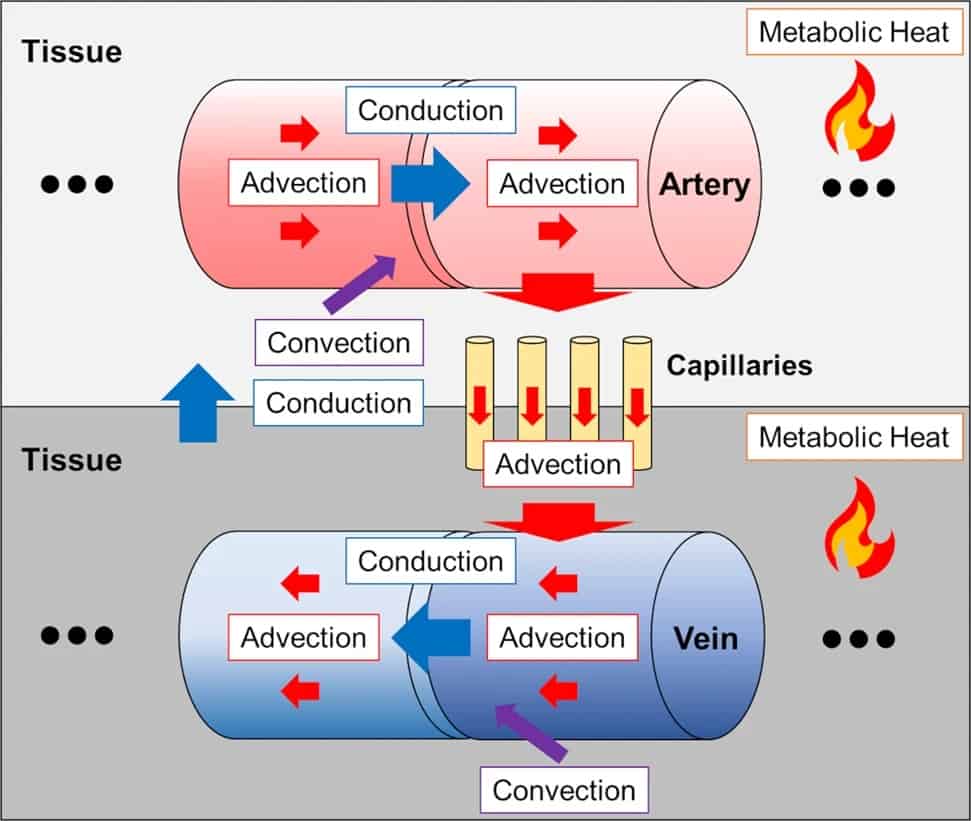
In their study, the researchers collected structural MR brain images from three healthy volunteers and developed a biophysical model to predict brain temperature. After a couple of hours of data analysis and simulations, the model computes a three-dimensional distribution of brain temperature that the researchers visualize as three-dimensional brain temperature maps.

Model construction

The model itself relies on two fundamental principles of physics – conservation of energy and conservation of mass – and incorporates all the ways in which heat is generated through metabolism and dissipated via blood flow throughout the brain (conduction, convection and advection). These features of the model allowed the researchers to predict brain temperature without using any empirical information about how the brain behaves under individual conditions.

To validate their brain temperature predictions, the researchers collected temperature measurements using whole-brain MR thermometry, compared these measurements to the model’s predictions, and found that they agreed.

Marrying fundamental science with clinical applications

Fleischer and Fedorov, along with their graduate student Dongsuk Sung and research engineer Peter Kottke, are pursuing several projects that expand upon this study in collaboration with Emory clinicians. They are validating their model in a large group of healthy people, incorporating the behaviour of local blood flow to predict how brain temperature responds to changes in blood supply to different brain regions, and creating temperature maps after injury.

“By combining fundamental physics, experimental measures of brain temperature and direct clinical application, model development and accurate brain temperature predictions in patients are propelled forward,” Fleischer says.

Though their technique is limited to individuals who can receive an MRI, the researchers are confident in its utility.

“All of the complexity [in the brain’s functioning] results in a very unique personal temperature map that actually tells us a lot about what may be happening to us, what may have happened in the past, or what may happen if we somehow perturb us as a human,” Fedorov says.

Polymer-based insulator could help maintain Moore’s law

A polymer-based insulator that conducts heat well and has an ultralow dielectric constant – two properties seldom seen in the same structure – could help dissipate waste heat in computer chips. The new material would be particularly beneficial in next-generation integrated circuits with components smaller than 10 nm, which generate more heat per unit area than current technologies can easily manage.

Materials with a small dielectric constant, known as “low-k” dielectrics, are crucial for minimizing electrical crosstalk between transistors on computer chips. All known dielectrics have low thermal conductivities, however, which means they can’t efficiently dissipate waste heat. The problem worsens as chips become smaller because not only are there more heat-generating transistors in a given area, they are also closer together, which makes it more difficult for heat to escape.

2D covalent organic frameworks

In recent years, researchers have searched for low-k dielectrics that can deal with this more demanding chip environment. Two-dimensional covalent organic frameworks (COFs) are one promising class of material on account of their highly porous structures and relatively high thermal conductivities. These properties make them different from conventional polymers in that they have low densities and are mechanically stable at high temperatures.

The drawback is that these materials are usually produced in the form of a polycrystalline, insoluble powder with physical properties that are very difficult to characterize. To overcome this challenge, researchers have fabricated COFs as thin films using techniques such as direct growth, exfoliation and interfacial polymerization. Unfortunately, all these techniques produce crystalline films that are contaminated with COF powder.

High-quality films

Researchers led by Patrick Hopkins of the University of Virginia and William Dichtel at Northwestern University have now overcome this obstacle by producing high-quality wafer-scale 2D COF films linked via sheets of a polymer (boronate ester) just one atom thick. The nitrile co-solvents they used in their templated colloidal synthesis technique prevent the COF powder from precipitating out of the suspension and contaminating the crystalline films. Importantly, the properties of the films can be controlled by layering the sheets in a specific architecture with nanometre-scale precision – something that was not possible for materials made using traditional techniques.

Using atomic force microscopy, the researchers found that all their 2D COF films were smooth, crystalline, less than 75 nm thick, and oriented parallel to the substrate on which they were produced. This consistent high quality enabled the team to measure the films’ thermomechanical and optoelectronic properties, and thus to confirm that the material was indeed electrically insulating. Thermoreflectance and impedance spectroscopy measurements further revealed that despite its low density of 1 g/cm3, the material has a high thermal conductivity of 1 W/m/K as well as an ultralow dielectric permittivity of k=1.6.

The researchers, who report their work in Nature Materials, say their findings demonstrate the promise of 2D COFs as ultralow-k dielectrics with desirable heat management characteristics. They also note that this combination of properties was recently identified in an industry-wide report as a prerequisite for next-generation integrated circuits.

Collaboration has mission to build UK’s first commercial quantum computer

The mission to build the UK’s first commercial quantum computer is gathering pace in Abingdon, Oxfordshire, at the facility of Oxford Instruments NanoScience. The UK-based manufacturer of specialist scientific equipment, including the state-of-the-art dilution refrigerators needed to operate quantum systems and other condensed-matter experiments at ultralow temperatures, is part of a consortium that is seeking to deliver a quantum computer that will start running the first end-user applications by the beginning of 2022.  

The consortium, backed by a £10m investment that includes funding from the UK government’s Quantum Technologies Challenge, is headed by Rigetti Computing. Headquartered in Berkeley, California, Rigetti has built a series of quantum processors based on superconducting quantum circuits that customers can program via a cloud-based platform. The latest version – the Aspen-9, which was first deployed in February – incorporates 32 qubits, and in this project the company aims to scale up the design still further. 

Photo of Anna Stockklauser, Rigetti's technical lead for quantum engineering

“The system we will build here will be larger than anything we currently have available in the US,” says Anna Stockklauser, Rigetti’s technical lead for quantum engineering. “An initial version of the machine will be available for our UK partners to use early next year, and we will then iterate the design over time. We want to make sure that each part of the machine has been carefully proven before we build a new part of it.” 

As well as hosting the hardware installation, Oxford Instruments is responsible for delivering and installing the latest version of its Proteox family of dilution refrigerators, the ProteoxLX, which has been designed to provide the capacity and cooling power needed to operate large-scale quantum computers. Meanwhile, three other partners in the consortium are focused on developing quantum software and applications. The University of Edinburgh is developing new ways to test quantum hardware and the performance of quantum algorithms, and is also working with Standard Chartered Bank to advance quantum-based machine learning applications for the finance sector. The fifth partner, start-up company Phasecraft, is using its expertise in quantum software to develop near-term applications in materials design, energy and pharmaceuticals. 

Rigetti will be the first US quantum company to put a commercial quantum computer here in the UK, and it’s amazing for us to be part of the project.

Harriet van der Vliet, Oxford Instruments NanoScience

The three application-focused partners are already producing results using Rigetti’s US-based installations, and will switch to the UK machine as soon as it goes online. “Rigetti will be the first US quantum company to put a commercial quantum computer here in the UK, and it’s amazing for us to be part of the project,” says Harriet van der Vliet, product segment manager for quantum technologies at Oxford Instruments NanoScience. “It is particularly exciting to be hosting the build here at our facility, and to know that customers will be accessing the installation via the cloud.” 

Photo of Harriet van der Vliet, Oxford Instruments NanoScience

For Rigetti, establishing a physical presence in the UK offers improved access both to local talent and expertise, and to customers – such as those in financial and government institutions – who for legal and security reasons need to keep their data within the UK. “This is a wonderful opportunity for us to get connected to the vibrant and growing quantum ecosystem in the UK,” says Stockklauser. “It gives us lots of valuable links to great talent and infrastructure, as well as end users located in the UK that we hope will be able to use our machines for new purposes. It’s really good to be a part of the UK’s quantum sector while it is still in the making.” 

Stockklauser is also excited to be working with Oxford Instruments for the first time. “Oxford Instruments is one of very few companies who can build machines that are suitable for running superconducting quantum computers,” she continues. “For this programme we knew we would have to do a lot of custom design work to integrate our system into the dilution refrigerator, and Oxford Instruments is a great partner for developing these custom pieces.”  

Quantum advantage 

The ProteoxLX that Rigetti will be using to build its quantum computer is a new model in Oxford Instruments’ product range, formally released just before the March Meeting of the American Physical Society in March 2021, which has been specifically designed to support quantum scale-up. It offers a significantly larger dilution unit and sample space than the original ProteoxMX, as well as more cooling power at its base temperature – which extends as low as 7 mK. “The mixing chamber plate as the sample stage of the LX has a diameter of 530  mm, compared with 360  mm for the MX,” explains van der Vliet. “It also has two pulse tubes to provide more cooling power at the 4 K stage, which is useful for quantum applications that require large numbers of amplifiers.” 

An even more significant advantage for building large-scale quantum computers is the extra capacity the LX provides for installing quantum experiments. All the dilution refrigerators in the Proteox family are equipped with a side-loading “secondary insert” that enables an entire experimental set-up – including samples, communications wiring and signal-conditioning components – to be configured outside the refrigerator and then installed and changed whenever necessary. This modular approach allows experiments to be turned around more quickly, particularly in a multi-user environment, or where a research team might want to test different versions of a quantum chip. 

We need a system of the size of the ProteoxLX, and the cooling power it comes with, to be able to scale to systems with large numbers of qubits.

Anna Stockklauser, Rigetti

What’s more, the secondary inserts can be fully customized to meet the needs of the installation. “Researchers who need a number of signal-conditioning components, such as amplifiers, circulators and isolators, often want to configure their wiring in a specific way for their experiments,” explains van der Vliet. “With our customizable solution we share the design drawings of the insert and work with our customers to configure the components exactly how they want them.”

an image of the packaged quantum processor made by Rigetti

The LX goes one step further by incorporating two of these secondary inserts into the design, rather than one. This essentially doubles the experimental space, offering a combination of flexibility and scalability that has proved to be a winner with Rigetti. “We need a system of the size of the ProteoxLX, and the cooling power it comes with, to be able to scale to systems with large numbers of qubits,” says Stockklauser. “Rigetti is a full-stack quantum computing company – we build the control electronics, the entire software stack, and the hardware that goes into the fridge – and the secondary insert technology has allowed us to work with Oxford Instruments to easily integrate our hardware in the dilution refrigerator with the required customizations.” 

One key advantage of this approach is that the secondary inserts can be configured and fabricated before the system is installed, which reduces the time needed to get a quantum experiment up and running. Since the consortium started work in the autumn of 2020, the US and UK companies have been sharing design files to perfect the layout of the two secondary inserts, which has allowed Oxford Instruments to install the ProteoxLX – complete with the customized secondary insert – just six months after the project started.  

In the cloud 

Now the ProteoxLX has been installed and the final checks have been completed, the system has been fully handed over to Rigetti for the build phase of the project. Quantum engineers from Rigetti’s UK team, including Stockklauser, will be working at the Oxford site. “It’s a great set-up for us because we can run our lab with all of the infrastructure that’s already in place,” says Stockklauser. “Plus we have the expertise right here on site to provide any help we might need with operating the machines.”  

For Oxford Instruments, meanwhile, the close collaboration with Rigetti offers a valuable entry point to the world of large-scale quantum computing. “It is great for the UK to have a quantum computer that will be used by customers via the cloud as the majority of commercial quantum computers are based in North America,” says van der Vliet. “This project will be great for quantum in the UK, and it’s fantastic for us as a UK company to be so heavily involved in the project. With the Rigetti team on site, we will continue our collaboration as we build our knowledge of the user experience and ensure that the ProteoxLX meets our evolving customer needs.”

‘Flat-pack pasta’ morphs into 3D shapes when cooked

Flat sheets of fresh and dried pasta that morph into tubes or spirals when cooked have been created by researchers in the US and China. The team hopes that the invention could reduce both the amount of packaging needed for pasta and the carbon emissions associated with cooking and transporting it.

Pasta shapes such as penne (tubes) or fusilli (spirals) contain a lot of air. This empty space is great for soaking up sauce, but it makes pasta inefficient to package, store and transport. Now, researchers at the Morphing Matter Lab at Carnegie Mellon University and colleagues have created a flat pasta that morphs into familiar 3D shapes when cooked.

“We were inspired by flat-packed furniture and how it saved space, made storage easier and reduced the carbon footprint associated with transportation,” says Carnegie Mellon’s Lining Yao, who led the research.

Groovy dough

The technique involves inscribing grooves into flat pasta dough that cause it to curl when cooked. The morphing technique relies on the fact that it takes longer to cook parts of the pasta that contain grooves. As a result, the side of the pasta that has a groove expands less when cooked than the opposite side of the pasta, causing the flat pasta to curl. By placing the grooves in specific patterns, the researchers can control what shape of pasta forms when it is cooked.

The team points out that the technique exploits two changes that already occur to pasta when it cooks – it swells up in size and it softens.

The pasta was field tested by Ye Tao, who was then a postdoctoral researcher at Carnegie Mellon and took the pasta on an overnight hiking trip. She found that it took up less space in her pack than conventional pasta and did not break in transit. What is more, the pasta assumed its intended shape when cooked on a portable stove.

Taste and feel

“The morphed pasta mimicked the mouthfeel, taste and appearance of traditional pasta,” says Tao.

Another potential benefit of the flat-pack pasta is that it should cook faster than some conventional pasta shapes, which means less energy is required. That could be significant because about 1% of greenhouse gas emissions in Italy are associated with cooking pasta, according to the researchers.

The team has also shown that the same grooved technique can be used to morph the shape of flat silicone sheets. “This could potentially be used in soft robotics and biomedical devices”, says team member Wen Wang, who was a researcher at Carnegie Mellon.

The pasta is described in Science Advances.

Why quantum technologists need materials scientists (and vice versa)

What are the main materials used as platforms for quantum technologies?

In terms of building quantum computers (which is perhaps the application that people think of most readily), superconducting materials are very important. Most of the work so far has been done using aluminium, because it’s easy to make into devices, and you can also get a nice oxide off it, which is required to make the Josephson junctions that turn a superconducting circuit into a qubit.

Other materials are used as hosts for qubits. Semiconductors like silicon have been researched for a long time, and silicon is obviously a very important material for computing. There are different ways that you can use silicon to build quantum devices. You can do it by implanting impurities like phosphorous into the silicon, but you can also make qubits from silicon quantum dots. The ability to make these devices very reproducibly and very accurately in silicon drives a lot of the research into this area.

Diamond is another potentially important host material, primarily because the defects in diamond can have very nice coherent spin properties that you can use as qubits. So you can start to think about engineering those defects within the diamond to be able to make devices.

A fourth area for materials in quantum computing is ion traps. When trapped ions are used as qubits, they’re floating in free space, held in electromagnetic traps, so the materials element is a little bit more distant. Even so, silicon is important for making the chips on which the electrode structures and circuits are deposited to make suspended circuits of trapped ions. Other materials are becoming important in trapped ion quantum computing as well, primarily in photonics. If you want to be able to integrate devices, there’s lots of materials challenges to address.

What other materials are emerging?

For each of the areas of quantum computing that I’ve mentioned, there are new materials coming on the scene. But if you want to think about the number and richness of these new materials, the areas where people are using defects as qubits are particularly important, because there’s a lot of different materials they could use. There are also some very new ideas being explored, such as topological qubits, where the qubit is protected by the topological state of the system.

For quantum sensing, the main development is in superconductors, which are becoming very popular for single-photon detection. For example, niobium nitride is used for single-photon detectors based on superconducting nanowires. But nitrogen vacancy defects in diamond are also being used for quantum sensing applications, and once you start to include quantum communications in the picture, you open up a whole field of photonics-related semiconducting materials. That includes everything from indium gallium nitride, which can be used to make single-photon sources for quantum communications (and potentially quantum computing as well) to materials used for waveguides – if you have materials that are optically transparent, you can start to build complicated optical circuits in them.

How do we get these materials to reach their potential?

On the research front, you find a very wide range of materials being studied for different things. But the field tends to narrow when you start to build technologies, because exploring and developing new materials is hard work, and it can take years before a new material gets refined to the point where you can build devices out of it.

Jason Smith

An example might be defects in materials. For quantum technologies, and particularly quantum computing, you want your materials to be extremely quiet. This tends to mean that you need to minimize the number of defects, because they can cause noise that would affect the coherence of your qubit. This challenge encompasses not just the material’s bulk, but also its surface and the interfaces between different materials, which can be particularly difficult to passivate. That’s a recurring topic that is relevant to most materials being used in quantum technologies.

In addition, if you want to fabricate devices, the processes you use have to be very precise, especially if you’re making microscopic devices. You want very pure materials that have very low inhomogeneity so you can make lots of qubits that are all the same.

There are also challenges related to our theoretical understanding of some of these systems. In these systems, modelling needs to go hand-in-hand with materials development to make sure we fully understand all of the different phenomena at play, and indeed to make better materials that will perform these difficult functionalities more effectively.

If you could communicate just one lesson to quantum technologists on the one hand, and to materials experts on the other, what would it be?

It would be the same message to both groups, and it would be, “Talk to each other.” When you have a research community and an industrial community, there can be a tendency for those communities to talk slightly different languages, and they may come from different backgrounds as well. So dialogue is vital, because people have to know what the relevant concepts are, and they have to be able to benefit from the experience of people who are working in the other camp. A lot of people ask us, “Why would we publish in Materials for Quantum Technology rather than in other journals?” and the answer is that we want to have this conversation between the different communities who are working in quantum technologies. We are trying to do something a little bit different.

If you want to have a quantum technologies industry that’s built on solid foundations and can keep growing and developing into the future, there needs to be communication with the research base. But the research base also needs to understand what the important things are to work on, so they can do research that supports both the existing industry and the next generation of companies.

It’s interesting that you mention industry, because until recently the field of quantum technologies has been dominated by physicists in universities and research labs. What are the challenges of entering a more commercially oriented world?

Once you move out of a research lab, things have to work much more reproducibly. In research, we often report on things that work occasionally, because they reveal new science and a new understanding, and that’s enough to be able to publish a paper. It has to be reproducible, of course. We have to check that it can be done again. But it doesn’t necessarily have to work every single time, because you can get variations in the fabrication of devices that are quite difficult to pin down.

These things become very important when you go into industry. The risk profile has to change, and it might be that the yield of a device is not high enough for it to become a product. In small companies, especially, you have to be very focused on bringing a product or products to market. You have to focus on the things that you know work. It’s a very different style of working, I think, particularly in spin-outs, compared with university research labs and other research labs, in the sense that the risk profile changes a lot. And of course with that comes the possibility that, as I said before, the conversation diverges and people don’t talk to each other quite as much as they should. So I think that’s one of the main risks.

What’s your advice for someone wanting to get into areas of quantum technologies that connect with materials science?

Read widely. That’s always good advice for anyone at the beginning of their career. And it is such a broad and exciting field that getting an overview of what’s going on, finding out what excites you the most and discovering which areas you want to work on is something that you should take the opportunity to do early on.

Materials science has a very strong experimental emphasis, but there’s a lot of theoretical work that goes into it. Some people gravitate more towards experiments. Some people gravitate more towards theory. But there’s a huge range of opportunities for early-stage, early-career researchers to find their niche in terms of what they want to do.

  • Jason Smith leads the photonic nanomaterials group at the University of Oxford, UK, and is the founder and director of the spin-out Oxford HighQ, which is developing next-generation chemical and nanoparticle sensors. You can hear more from him in the Physics World Weekly podcast.

Recycled plastic bags make sustainable fabrics

Polyethylene is one of the most common plastics in the world, but it is seldom found in clothing because it cannot absorb or carry away water. (Imagine wearing a plastic bag – you would feel very uncomfortable very quickly.) Now, however, researchers in the US have developed a new material spun from polyethylene that not only “breathes” better than cotton, nylon or polyester, but also has a smaller ecological footprint due to the ease with which it can be manufactured, dyed, cleaned and used.

The textile industry produces about 62 million tonnes of fabric each year. In the process, it consumes huge quantities of water, generates millions of tonnes of waste and accounts for 5–10% of global greenhouse gas emissions, making it one of the world’s most polluting industries. Later stages of the textile use cycle also contribute to the industry’s environmental impact. Textiles made from natural fibres such as wool, cotton, silk or linen require considerable amounts of energy and water to recycle, while textiles that are coloured or made of composite materials are hard to recycle at all.

Hydrophilic and wicking

Researchers led by Svetlana Boriskina of the Massachusetts Institute of Technology (MIT) set out to produce an alternative. They began by melting powdered low-density polyethylene and then extruding it into thin fibres roughly 18.5 μm in diameter (as measured using scanning electron microscopy and micro-computed tomography imaging techniques). This process slightly oxidizes the material’s surface so that it becomes hydrophilic – that is, it attracts water molecules – without the need for a separate chemical treatment.

Next, the researchers passed the fibres through a second extruder, creating a yarn made from bunches of 200+ PE fibres. The bunching process leaves spaces between the individual fibres in the yarn, forming capillaries through which water molecules can travel and allowing strips of fabric woven from this yarn to wick moisture when dipped in a liquid. When the researchers measured how long it took the liquid to travel up test strips, they found that the new PE material was faster than cotton, nylon and polyester samples of the same size.

To better understand the wicking process, and thus design higher-performance PE-based fabrics, the team modelled the internal structure of the PE yarn as an infinite assembly of identical parallel fibres with a circular cross-section, tightly packed into a periodic structure. The yarn fibres are arranged either in a hexagonal or square lattice with the wicking process occurring in the direction along the yarn. The model predicted that for fibres that contacted the water at an angle of 71.3°, the optimal fibre radius and porosity in both lattice shapes would be 15–20 μm and 45%.

Lower environmental impact

In addition to the new material’s promising moisture-transport properties, the researchers note that it can be dyed in a “completely dry fashion” by incorporating colour particles – either of conventional dyes or unconventional inorganic nanoparticle colourants – into the PE powder before the melting/extruding stages. In such a process, dye particles would be encapsulated within the fibres from the start, avoiding the need for traditional dyeing methods that require fabrics to be immersed in solutions of harsh chemicals. At the end of the fabric’s life, the dye particles could even be recovered for reuse by melting the material down and centrifuging it.

Members of the MIT team say that this dry-colouring process helps make the PE fabric more environmentally friendly than conventional textiles. They add that PE has a lower melting point than other synthetic polymer materials, meaning that it can be spun into yarns at lower temperatures. Synthesizing PE from raw materials also releases less greenhouse gases and waste heat than producing polyester or cultivating cotton. The latter, especially, requires a lot of land, fertilizer and water.

PE fabric might also have a lower environmental impact while it is being used because it is easier to wash and dry than other textiles. “It doesn’t get dirty because nothing sticks to it,” Boriskina says. “You could wash polyethylene on the cold cycle for 10 minutes, versus washing cotton on the hot cycle for an hour.” It can even be “refreshed” by rubbing it against itself or exposing it to UV light – a process that helps maintain its hydrophilic properties too.

The researchers say they are now exploring ways to incorporate PE fabrics into lightweight, passively cooling sportswear and military uniforms. Spacesuits might be another possibility, they add, since PE shields against harmful radiation.

The PE fabric is described in Nature Sustainability.

Copyright © 2026 by IOP Publishing Ltd and individual contributors