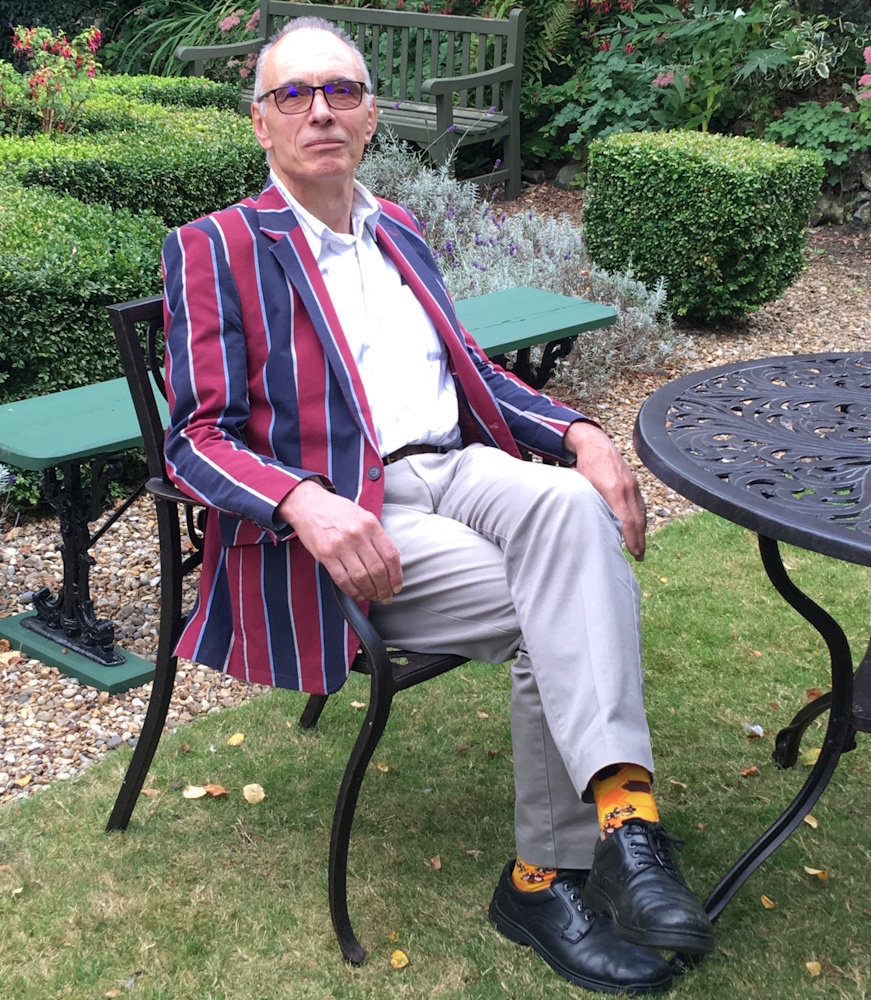
Gleb Zilberstein is my guest in this episode of the Physics World Weekly podcast. A physicist by training, Zilberstein applies the principles of proteomics to the study of historical objects including Renaissance manuscripts.
He is also a director of Israel-based SpringStyle Tech Design, which has created a special film that lifts proteins from the surfaces of historical objects. Analysis of these proteins provides important information about how those objects were used.
In a recent paper, Zilberstein and colleagues studied protein residues on a well-thumbed book of medical recipes that was published in Germany in 1531. He explains how their analysis provides a new view into how medical practitioners used the book and what sorts of concoctions they were making. Astonishingly, the team found evidence that European readers had access to ingredients derived from hippopotamuses.
Some papers about the application of proteomics to historical research:
For radiotherapy centres, daily quality assurance (QA) provides the final safety check before each day of patient treatments – ensuring that all linear accelerators (linacs) deliver radiation safely, accurately and as expected.
But as radiotherapy technologies evolve, the required QA procedures become increasingly complex, with verification tests often performed in isolation using multiple phantom set-ups. New treatment techniques – such as surface-guided radiotherapy (SGRT), which is more widely used now than ever – also introduce new QA requirements. And the ongoing adoption of adaptive radiotherapy, where measurement-based pre-treatment QA is not possible, increases the emphasis on machine QA, in which daily QA plays a key role.
What’s needed is a comprehensive QA approach that incorporates the dosimetry, imaging and positioning checks required for all radiotherapy modalities. Addressing this challenge, US manufacturer Sun Nuclear has launched Daily QA 4 Pro, a new device that simplifies daily machine QA by combining dosimetry and positioning verification via imaging into a single indexed, imageable platform.
“The main motivation for launching the Daily QA 4 Pro was to create a product that not only met the current needs of clinicians, but also future needs, based on our vision of the radiotherapy QA field,” explains Rajiv Lotey, technical product manager for the Daily QA 4 Pro.
The next-generation platform builds on the company’s Daily QA 3 beam quality analysis product, which was introduced more than a decade ago and is now standard in many radiotherapy departments. “The biggest difference between the Daily QA 4 Pro over the Daily QA 3 is the end-to-end QA functionality – representing the patient workflow – achieved by integrating a 3D high-resolution array, fiducials, an SGRT-compatible surface, an imageable architecture, and the ability to correlate all imaging and mechanical isocentres together onto one device,” says Lotey.
Enabling new modalities, expanding clinical applications
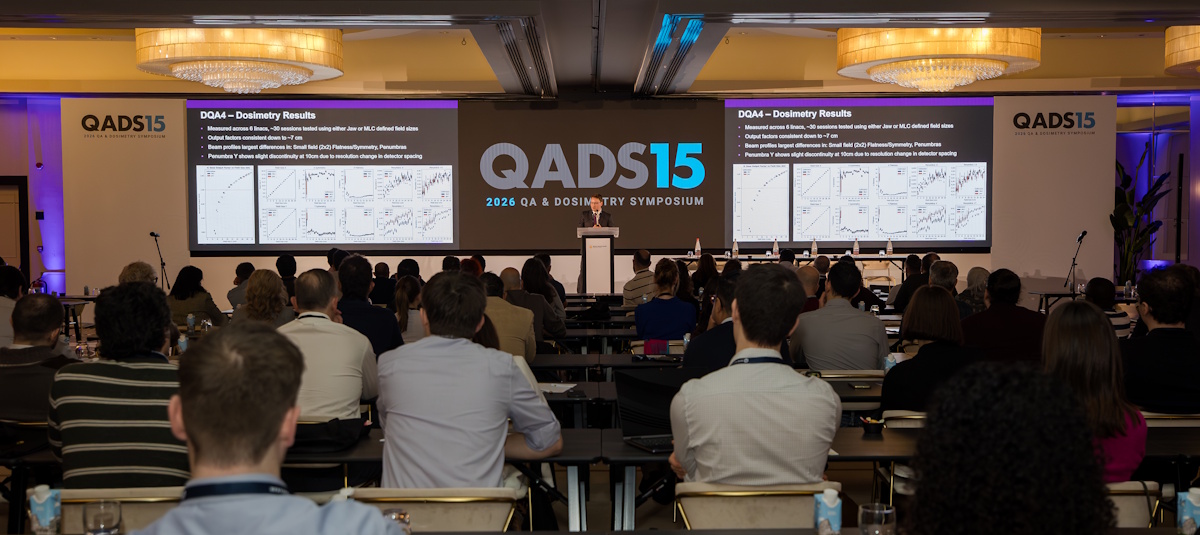
David Barbee, Director of Technology and Innovation in Radiation Oncology at NYU Langone Health, was one of the first to adopt this technology. Speaking at the recent QA & Dosimetry Symposium (QADS) hosted by Sun Nuclear, he described his early experiences of using the next-generation Daily QA 4 Pro.
“The first thing I wanted to do was evaluate surface-guided radiation therapy, because we don’t currently do this during daily QA,” Barbee explained.
To perform this test, the team defined a region-of-interest in the hospital’s VisionRT SGRT system that covered the entire surface and edges of the Daily QA 4 Pro and tested it over the full range of couch motion. The maximum translation range that it could detect was about ±4.5 cm in the lateral (side to side) and longitudinal (along the couch length) directions, and +13 to –17 cm vertically.
“For pitch and roll, we tested the 3°/3 mm limits and 90° couch rotations, and it observed them perfectly,” he added. “This is the first time we’ve ever run this test and compared our SGRT system to our image guidance system,” he noted. “This is very, very helpful.”
Quality and patient safety in radiotherapy Attendees at the QADS15 event shared best practice strategies and clinical insights with colleagues practicing worldwide. (Courtesy: Sun Nuclear)
For dosimetry, Barbee noted that many parameters are carried over from the Daily QA 3 – including the output profile constancy, the field size and shift, and the flatness and symmetry – but added that the Daily QA 4 Pro can measure at a much wider range, anywhere from 2 to 20 cm square fields. “There are also new metrics, such as the penumbra, beam shape constancy for FFF [flattening filter-free] fields, the beam centre and the dose-per-pulse,” he explained. “And there’s a new dose output correction factor for when you need to move this device to a different unit.”
Barbee and colleagues performed a range of dosimetry assessments using the Daily QA 4 Pro, measuring 30 sessions on six linacs using both jaw- and multi-leaf collimator (MLC)-defined field sizes. They found that the output factors were consistent down to about 7 mm, after which the MLC gave slightly higher output factors, while the largest beam profile differences were seen in flatness and symmetry for very small fields.
Integrating Winston–Lutz
The Daily QA 4 Pro incorporates active measurement Winston-Lutz tests – a standard procedure for evaluating isocentre accuracy – using the system’s onboard 3D detector array to directly measure the radiation isocentre. The NYU Langone team used the Daily QA 4 Pro to quantitatively assess the mechanical isocentres and their response to gantry, collimator and couch motion for six linacs, again using both jaw- and MLC-defined fields.
Barbee noted that the system runs the gantry and collimator checks automatically. “You can basically hit play on SunCHECK and then you don’t touch anything again until you get to the couch, which you have to move from the console,” he explained.
To test the accuracy of the results, Barbee compared them with two years’ worth of Machine Performance Check (MPC) and traditional Winston-Lutz measurements of all of the centre’s linacs. Daily QA 4 Pro measurements agreed well with previous isocentre results across all machines tested. “It’s a little bit early to say, but it looks commensurate, there are no concerns,” he noted.
A look inside the device
The Daily QA 4 Pro measures 30 x 50 x 6 cm, weighs 6.2 kg and sits on a 4.1 kg six degrees-of-freedom base. It incorporates four ion chambers that measure field sizes down to 5 x 5 cm, as well as 249 diodes spaced at high resolution in the x– and y-directions, the diagonals and along both sides. There are also eight 3 mm tungsten carbide BBs positioned off-axis, factory-calibrated to enable micron-level corrections.
The Daily QA 4 Pro.
Externally, the device incorporates scribed laser alignment marks with 2 mm tolerance on its sides and surfaces, plus a crosshair for collimator alignment. There are also field size markings for 5 x 5, 10 x 10 and 20 x 20 cm fields, as well as eight symmetric reliefs designed specifically for SGRT.
The Daily QA 4 software is designed to integrate into the SunCHECK environment and can be controlled using either SunCHECK Local via a standalone laptop or (starting in version 6.0) the SunCHECK Server.
The team also ran active imaging Winston-Lutz tests, which evaluate system geometry by analysing the position of a known target in images acquired using the linac’s imaging panels. The Daily QA 4 Pro device detects the image fiducials (tungsten carbide BBs) and compares their positions to expected values for each gantry angle. These tests allow users to assess factors such as device positioning, gantry angle accuracy and overall alignment.
“This is all summarized into a report showing the maximum error in any one of those parameters across all gantry angles,” explained Barbee. “It will tell you which gantry angle was the worst and what the value there was.”
Used together, the two Winston-Lutz methods combine direct radiation measurement with imaging-based verification to provide a more complete understanding of system health and to help identify, quantify and correct any errors.
Efficiency analysis
Barbee notes that while the Daily QA 4 Pro generates a comprehensive set of dosimetry and positioning verification data, at first glance, it looks like a lot more work. An efficiency analysis, however, proved the opposite – demonstrating significant gains in workflow efficiency.
Currently, Daily QA 3 and IGRT tasks take about 16 min to perform. “Daily QA 4 Pro cuts about five minutes off that time, because you’re not going in and out of the room and doing multiple setups,” he explained. “Adding Winston-Lutz currently doubles the time to over half an hour. But with Daily QA 4 Pro, you only add five minutes. And it’s a simple setup that your therapist can run as part of their morning QA.”
“The Daily QA 4 Pro integrates image-guided radiotherapy, SGRT, beam dosimetry and Winston-Lutz verification into a single device, enabling comprehensive daily QA in a single setup and session,” Barbee concluded. “This provides an independent, interpretable alternative to vendor black-box QA systems, with comparable isocentre and imager tests, and superior beam quality constancy tests. It really can consolidate a lot of phantoms that you might not need anymore.”
India’s first prototype fast-breeder reactor (PFBR) has achieved criticality, marking a significant boost for the country’s nuclear programme. The 500 MW reactor, which is based at Kalpakkam, about 70 km south of Chennai, is intended to be a forerunner for a fleet of six similar fast-breeder reactors.
India’s currently has almost 9 GW of nuclear capacity from 24 plants, which are mainly pressurised heavy water reactors (PHWRs) that use domestic and imported natural uranium. Long-term, the Indian government wants to expand nuclear capacity to 100 GW by mid-century, quadrupling its share in electricity generation from 3% to 12%.
An Indian parliamentary panel examining the country’s nuclear programme warned earlier this year, however, that current capacity expansion is falling “significantly short” of the 100 GW target. The panel called for a “ring-fenced” funding mechanism and a clear roadmap and timelines to scale up fast-breeder reactors.
The PFBR uses uranium–plutonium mixed oxide (MOX) fuel and is designed to generate more fuel than it consumes. It does this by using a blanket of uranium-238 that surrounds the reactor’s core, absorbs neutrons and is transmuted into fissile plutonium-239. Work started on the PFBR in 2004 and it was originally supposed to open in 2010.
Despite delays and technical issues, the PFBR successfully achieved its first criticality on 6 April. “This is a historic moment,” says Anil Kakodkar, former secretary of India’s Department of Atomic Energy (DAE) who is now chancellor of the Homi Bhabha National Institute, told Physics World.
Three-stage solution
India has a three-stage nuclear strategy, in which PHWRs are the first stage, with the second involving spent fuel from PHWRs bring reprocessed into MOX fuel for fast breeders.
The third stage seeks to exploit India’s abundant thorium reserves – estimated at over a million tonnes of thorium compared to 433 000 tonnes of uranium – to produce uranium-233, potentially supporting energy demand for centuries.
Other countries, such as France, Japan and the US, have scaled back or deprioritised fast-breeder programmes due to technical and economic challenges.
Kakodkar cautions that the pace of future expansion will hinge on a shift from MOX to metallic fuel fast reactors, which use metal alloys and fast neutrons to breed new fuel. This could reduce the fuel doubling time in fast breeders from roughly 30 years to about a decade.
In parallel to the PFBR programme, the Bhabha Atomic Research Centre in Mumbai, has designed an Advanced Heavy Water Reactor (AHWR) to use thorium-based fuels. Kakodkar says that advancing the AHWR would “expedite transition” to the thorium fuel cycle by building institutional and industrial capability.
A description of the evolution of metal-oxide-semiconductor device architectures and the corresponding requirements on epitaxial growth schemes will be followed by a discussion of the obtained material properties of Si/SiGe multilayer stacks used for logic and 3D DRAM devices, grown on 300 mm Si (001) wafers.
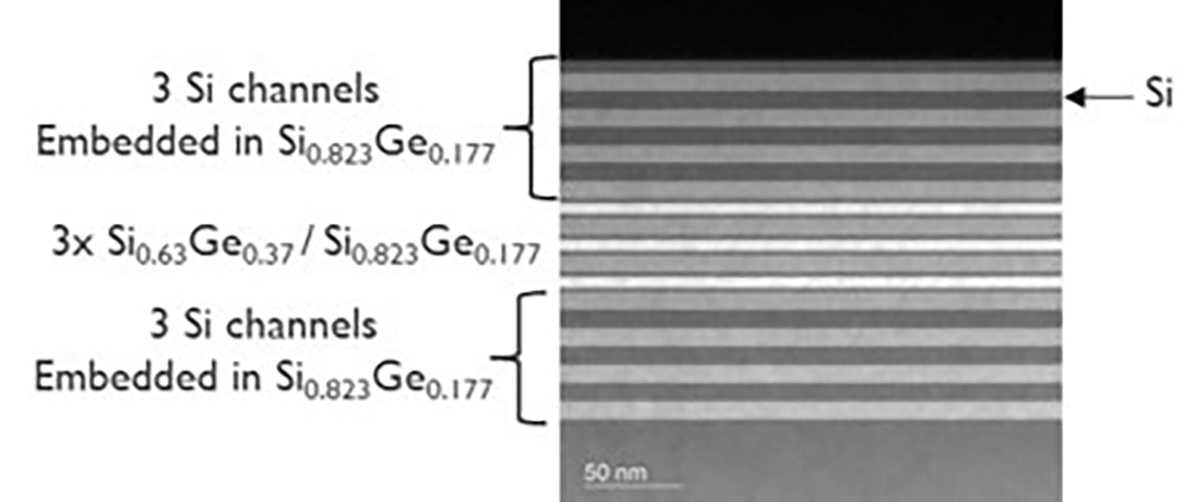
The process used to deposit Si/SiGe multilayers for Nano-Sheet devices has been extended to 120 pairs (241 sub-layers) of {65 nm Si/10 nm strained Si0.8Ge0.2} for 3D DRAM concepts [1]. A more complicated layer stack with two different Ge concentrations is required for the monolithic fabrication of complementary field effect transistor (CFET) devices, where gate-all-around nFETs and pFETs are stacked on top of each other [2]. A relatively high growth temperature provides acceptable Si and SiGe growth rates while still suppressing 3D island growth for SiGe growth with up to 40% Ge. Excellent structural and optical material properties of the epi stack will be reported, with up to 3 + 3 Si channels in the top and bottom part of the stack, respectively. For all layer designs, the absence/presence of lattice defects has been verified by several techniques including photoluminescence (PL) measurements at both room-temperature and low temperature.
[1] R. Loo et al., JAP 138, 055702 (2025), https://doi.org/10.1063/5.0260979
[2] R. Loo et al., ECS SST 14, 015003 (2025), https://iopscience.iop.org/article/10.1149/2162-8777/ada79f
Roger Loo joined imec in January 1997. Since October 2013 he has been a principal scientist (principal member of technical staff) in the group IV epi team. Since September 2023, he has also been a visiting professor (5%) at the Ghent University. He has authored or co-authored more than 240 articles in peer-reviewed journals. He has been co-editor of eight journal special issues, (co-)authored more than 250 articles in proceedings listed in Web of Science and has given more than 30 invited talks at international conferences. Loo regularly gives invited research seminars and tutorials at universities, institutes and companies. Loo has co-authored more than 90 patent filings (including provisional filings), among which more than 50 patents have been granted and are maintained. He has also (co-)organized about 24 international conferences.
Reservoir computing is a computational approach well suited to time‑dependent tasks such as speech recognition, because it relies on internal dynamics, nonlinear responses, and short‑term memory of recent inputs. However, most hardware implementations consume too much power and lack the rich dynamics needed for complex problems. In this study, the researchers introduce a new reservoir‑computing device made by connecting a ferroelectric capacitor (FC) in series with a linear capacitor (LC). This FC-LC device naturally provides the two essential ingredients of a reservoir: nonlinearity, through polarization switching and back‑switching in the ferroelectric layer, and fading memory, through slow charge accumulation and relaxation.
The device offers several advantages over existing reservoir hardware. It operates at extremely low power, produces a direct voltage output without extra circuitry, and has widely tuneable time constants, allowing it to respond quickly or slowly depending on the task. It also supports bidirectional operation, which increases the richness of its internal states and improves performance on classification tasks. By combining FC-LC devices with different time constants, the researchers create a hybrid reservoir with even greater computational capacity.
The system performs exceptionally well on a range of benchmarks, including heartbeat anomaly detection, waveform classification, multimodal digit recognition, and prediction of chaotic time‑series data. Because the device can be fabricated using established semiconductor processes and can be extended to widely used ferroelectric materials such as hafnium oxide, it is well positioned for large‑scale integration and future commercial reservoir‑computing hardware. This work lays the foundation for scalable, energy‑efficient reservoir systems that could enable fast, on‑chip processing in next‑generation electronics.
The concept of turbulence is one of physics’ most persistent challenges, defying a simple description despite decades of research. Adding quantum mechanics into the mix only makes things more complicated.
BECs are formed when atoms are cooled down to close to absolute zero. In this state they behave as a single coherent quantum fluid. They enable the observation of quantum behaviour on a macroscopic scale, enabling breakthroughs in fundamental physics and ultra‑precise technologies.
Waves can form within a BEC when it’s disturbed, just like in any other fluid. These can travel through the material, interacting, cascading and ultimately forming turbulent patterns.
When the turbulence is weak, and the chaotic interactions are small, perturbative wave‑interaction theories work well. A complete, simple theory of strong turbulence, however, remains elusive. Nonlinearities dominate and approximations break down.
The new paper sets out the conditions for a BEC to shift from weak to strong turbulence, offering a clearer way to interpret experiments and simulations. The work explains how nonlinear interactions, external driving, and dissipation help to shape the turbulent cascade. This process is analogous to classical turbulence but is fundamentally altered by quantum mechanics.
The authors emphasise that distinguishing the two turbulent regimes is essential for interpreting modern ultracold-atom experiments, where turbulence can be intentionally engineered using a shaking potential trap.
As BECs continue to serve as pristine platforms for simulating complex fluid behaviour, understanding their turbulent states is becoming increasingly important. The results of this paper will be invaluable for future investigations into quantum turbulence, non-equilibrium statistical physics, and the boundary where order gives way to chaos in quantum matter.
The discovery of X-rays and radioactivity in the late 19th century gave rise to a surge of interest from the scientific community, shortly followed by the realization of the adverse effects of ionizing radiations on health. By about 1910 the dangers were widely recognised and some basic protection measures were being adopted. It was not until 1934, however, that the first quantitative standards of radiological protection were published.
Of course, protection against the adverse effects of ionizing radiation is as important today as ever, particularly for those working within nuclear and defence-related industries, medicine and R&D, as well as hospital patients undergoing radiation-based procedures and members of the general public. As such, the last century has seen the development of a complex international regulatory system, with recommendations on occupational and public exposures to radiation – from organizations such as the International Commission on Radiological Protection (ICRP) and others – continually revised and updated.
A new book, Principles and Techniques of Radiological Protection, provides a comprehensive overview of the current regulatory context for radiological protection. The text also provides an overview of the scientific issues relating to radiological protection and the current state-of-the-art tools used to comply with the relevant legislation and guidance.
Targeted at postgraduate students and new entrants to the field, the textbook is designed to cover a wide range of topics that an early-career radiation protection professional might need, or want, to know about. It also serves as a day-to-day reference work for specialists such as radiation protection advisors (RPAs) to identify appropriate techniques to address radiological protection issues as they arise.
“I aimed to produce a book that I would have liked to have had available when I started work in radiological protection just over 50 years ago,” explains the book’s editor Michael Thorne. “As I come towards the end of my career in the field, I aimed to include information, tools and techniques that I would have liked to have had readily accessible in a single volume.”
History, theory and practical applications
Thorne begins the book with a brief history of radiological protection and how historical developments continue to influence the discipline today. The next chapters examine the physical aspects of radiological protection, including an overview of basic nuclear physics and the sources of radiation, radiation transport through and interactions with matter, and the instruments used to detect and monitor radiation. Later chapters cover the principles of internal dosimetry, phantoms and biokinetic models, and mathematical modelling of radionuclide transport.
Michael Thorne A chartered radiation protection professional with 50 years of experience, Thorne is editor-in-chief of the Journal of Radiological Protection and consultant at Mike Thorne and Associates Limited. (Courtesy: Michael Thorne)
“I have also given a detailed account of natural background radiation and modelling the transport of radionuclides in the environment; and I have included a chapter on the effects of radiation on the environment, with specific emphasis on non-human biota,” says Thorne. “Throughout, I have recruited co-authors with decades of relevant experience to capture their expertise in each of the specialized areas.”
The book also provides examples of how this information is employed practically within various fields, including the nuclear industry and industries handling naturally occurring radioactive materials. Several chapters and themes are of particular relevance to those working within medical physics.
“There are two chapters specifically on radiology and nuclear medicine, written by Colin Martin, who is well known internationally for his work in this area,” Thorne tells Physics World. “There are also specialized chapters on biokinetic modelling, the nature and use of both mathematical and physical phantoms in radiation dosimetry, and on the use and abuse of instruments for radiation monitoring.”
The book rounds off with a look at the some of the major and minor accidents that led to exposure of members of the public and workers using radioactive sources. The final chapter addresses emergency planning and response for such incidents, including suggested protective actions and the roles and responsibilities of various organizations.
“Throughout, the emphasis is on broad principles and widely applicable techniques,” says Thorne. “It is considered that an individual who gains a clear understanding of these principles and techniques will be readily able to apply that understanding to the diverse and changing set of challenges that arise.”
Individual copies of Principles and Techniques of Radiological Protection can be purchased at the IOP Publishing Bookstore.
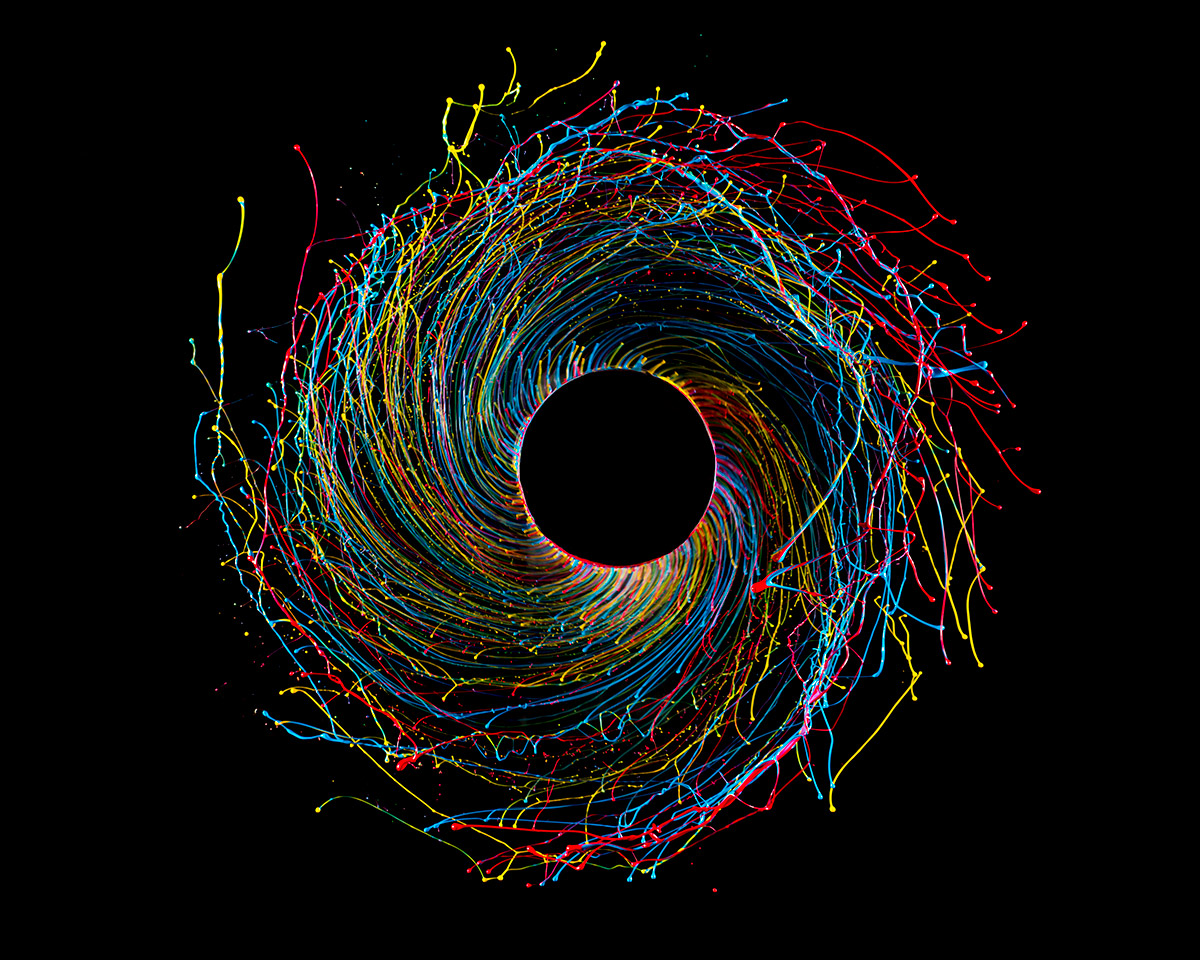
Black Hole, no. 2 Fabian Oefner made this image of gas swirling around a black hole by putting liquid paint on a drill bit and letting the paint spray out by centrifugal force while photographing it with a high-speed camera. (Fabian Oefner 2014. Inkjet print, 80 × 120 cm. Courtesy of the artist)
Black holes, as their name suggests, are veiled in darkness and mystery. These brooding celestial behemoths are regions of space–time that consume not just stellar dust and light but the attention of astronomers, artists and non-scientists too. Often depicted as shadowy maws ringed by fire, these inescapable pits intrigue us all.
“Science has produced a wealth of information about black holes that has been popularized worldwide,” says author, curator and art historian Lynn Gamwell. “This has prompted artists to delve deep into their creative imaginations to find the significance of black holes within a broad cultural context.”
Unable to escape from the lure of black holes herself, Gamwell – who teaches the history of art, science and mathematics at the School of Visual Arts in New York – has written and compiled Conjuring the Void: the Art of Black Holes. The stunning coffee-table book is a definitive – and near-exhaustive – collection of black-hole art, including 155 colour illustrations, perfectly mixed with information about the science and history of these objects.
Readers will undoubtedly fall into the pull of the book’s gravity, in which Gamwell skilfully weaves together our scientific understanding of black holes along with interpretations of these regions of space–time by artists around the world. Indeed, the book uses every medium available to decipher these objects.
With a background in the arts and humanities, Gamwell’s interest in science came while studying modern art. “The explanations of abstract, non-objective art that were taught to me never made sense,” she says. “While it seems so obvious now, I finally figured out that artists express their worldview and the modern worldview is shaped by science, which discovered invisible forces – such as electromagnetism – that can’t be pictured.”
Gamwell’s previous books – Mathematics and Art (2015) and Exploring the Invisible (2020) – both focused on the more abstract aspects of maths and science that are often complex and difficult to visualize. A few years ago, she was invited by physicist Peter Galison, director of Harvard University’s Black Hole Initiative (BHI), to give a talk at its annual conference.
“In researching for the talk, I was amazed to learn how many artists had done art about black holes,” Gamwell recalls. “So I decided to write a book about the artistic phenomenon and why black holes have captured the public imagination.” Gamwell is now an affiliate of the BHI, which brings together scientists, mathematicians and philosophers of science to deepen our understanding of black holes.
Given the interdisciplinary nature of her work, Gamwell regularly meets artists interested in science as well as scientists interested in art, including the Event Horizon Telescope’s Shep Doeleman, whom this book is dedicated to. “Artists and scientists arrive at similar ideas by different paths,” she says. “Both benefit from looking at each other’s work.”
The art – and, by extension, the artists depicted in Conjuring the Void – shows how the human conceit of “nothingness” links us to black holes. “On the one hand, the black hole provides artists with a symbol to express the devastations and anxieties of the modern world,” Gamwell writes. “On the other hand, a black hole’s extreme gravity is the source of stupendous energy, and artists such as Yambe Tam invite viewers to embrace darkness as a path to transformation, awe, and wonder.”
Below is an edited extract from chapter three of Conjuring the Void, illustrated by a selection of images of art from the book. They depict everything from colliding black holes and their gravitational waves to a black hole’s accretion disc and even a sonic wormhole. We hope they also take you on a journey of awe and wonder.
Artistic and scientific images of invisible objects
In the early 1970s the existence of black holes was reported in scientific papers and newspapers around the world, starting with the discovery of Cygnus X-1, introducing the phenomenon to the culture’s imagination. Scientists symbolized data in charts, graphs and mathematical formulae and attempted to make images of black holes. But seeing an object requires light, so rather than depicting a black hole itself, scientists imagined what matter surrounding it would look like. Artists, in turn, subjected scientific data to the transformation of the imaginative process and created something completely new: artworks.
Seeing an object requires light, so rather than depicting a black hole itself, scientists imagined what matter surrounding it would look like. Artists, in turn, subjected scientific data to the transformation of the imaginative process and created something new
Lynn Gamwell
In the decades before scientists showed that black holes exist, several artists in the West –including the American Barnett Newman, the Argentine-Italian Lucio Fontana, the American Lee Bontecou, and the Englishman John Latham – made abstract art about dark voids.
As scientists were confirming the existence of black holes, Frederick Eversley was imagining sculptures of them. He graduated in 1963 from the Carnegie Institute of Technology (now Carnegie Mellon University) in Pittsburgh with a degree in engineering and worked in the aerospace industry building acoustic laboratories for NASA. Around 1970 he transitioned to being an artist, creating abstract sculptures in cast polyester. With his background in science, Eversley understood the significance of the discovery of Cygnus X-1 in 1971.
That same year, the Brazilian artist Anna Maria Maiolino began a series of artworks about her life under Brazil’s military dictatorship. Whereas most artists in the early 1970s didn’t pay much attention to black holes because there were no visualizations of them to fire their imaginations, Maiolino became fascinated with holes filled with darkness.
Black holes were a metaphor for resistance to political repression in the work of Rudolf Sikora – in his case, from the Communist government of Czechoslovakia. In the early 1970s he began a series called Concentration of Energy featuring black holes.
Early scientific images of black holes
While Eversley, Maiolino and Sikora were in their studios making artworks about black holes, the US physicists C T Cunningham and James Bardeen were in their laboratory creating an illustration of the deformations in space–time around a black hole. They imagined a distant observer seeing a star orbiting a black hole at a uniform distance. They knew that the rapidly rotating black hole’s gravity affects light passing through its gravitational field in a manner similar to a powerful lens, hence the observer would see light that is distorted by what astronomers call gravitational lensing. Cunningham and Bardeen calculated these optical deformations and in 1973 produced the first scientific visualization of space–time around a black hole.
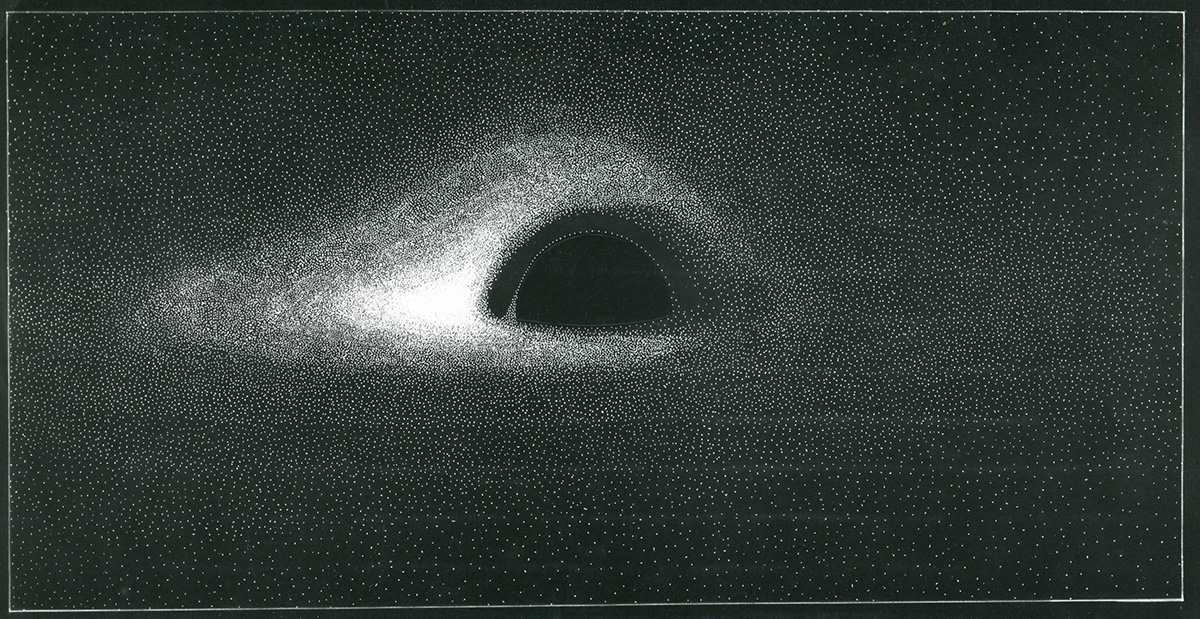
Spherical Black Hole with Thin Accretion Disk One of the earliest scientific images of a black hole, this drawing shows the curvature of space–time in the vicinity of the black hole. Jean-Pierre Luminet is an astrophysicist at the Laboratoire d’Astrophysique in Marseille. (Jean-Pierre Luminet 1979. Ink on paper, reversed photographically, in Astronomy and Astrophysics75 231, fig. 11)
What would gravitational lensing do to the cloud of dust and gas that orbits a black hole called the accretion disc? The French astrophysicist Jean-Pierre Luminet wanted to make a realistic picture of an accretion disc. Associating realism with photography, he imagined the black hole “as seen by a distant observer” taking a “photograph” from a stationary, authoritative viewpoint. In Luminet’s diagram (see above), the accretion disc forms a flat, circular disc of dust and gas. Friction and magnetic forces heat the accretion disc to hundreds of billions of degrees until it becomes an incandescent plasma emitting radiation. The observer looks down on the disc from a slightly elevated position (at a 10-degree angle, labelled “observer’s direction”). While the accretion disc and stars emit light in all directions, for simplicity’s sake Luminet imagined parallel light rays coming from the observer’s direction.
Luminet made his drawing with tiny dots of black ink on white paper and then photographically reversed the image so that it reads white against a black background to create a “simulated photograph” of a luminous object in the darkness of space. His drawing shows one additional optical deformation lacking in Cunningham and Bardeen’s line drawing. The accretion disc displays a dramatic Doppler effect since it’s rotating close to the speed of light. Light appears closer to the blue or red end of the spectrum depending on whether the source is moving toward or away from the observer. In Luminet’s drawing, the disc’s left side appears to be moving toward the observer, so the observed frequency (hence the energy) of the electromagnetic waves is very high. Since Luminet’s image is black and white, he shows all radiation in the electromagnetic spectrum in what photographers call a bolometric photograph.
In Luminet’s image, the innermost stable circular orbit is the smallest circular orbit in which matter can stably orbit the black hole; it’s the inner edge of the accretion disc. If matter goes inside that orbit, it quickly falls past the black hole’s event horizon. Since light has no mass, it can orbit within the innermost stable circular orbit. If light crosses the event horizon it will not escape, but some photons circle on a narrow path between the innermost stable circular orbit and the event horizon. Scientists call this structure a photon ring (some call it a photon sphere because it’s three-dimensional).
Luminet published his work in 1979 and concluded with these prophetic words: “Thus our picture could represent many relatively weak sources, such as for instance the supermassive black hole whose existence in the nucleus of M87 has been suggested recently.” Forty years later, the black hole in the centre of galaxy M87 was imaged by the Event Horizon Telescope.
Added colour
Jean-Alain Marck – Luminet’s colleague at the Paris-Meudon Observatory – was an expert in general relativity, computer programming and calculating geodesics around a black hole. A geodesic is the shortest distance between two points on a curved plane. In 1989 Marck calculated the geodesics describing the accretion disc in Luminet’s drawing from various angles and, for dramatic effect, added colour. An image of a black hole from 1997 shows the far side of the accretion disc’s top side and underside. Marck and Luminet’s image had shown this view earlier, but it remained unpublished.
In the early 1990s Marck and Luminet collaborated on a sequence about black holes for a television documentary that was broadcast across Europe. Luminet had drawn his image by hand in the late 1970s because computer graphics programs were not available, but by the 1990s the technology had advanced and Marck was able to write the animation program himself. Marck’s calculation is unusual because it shows what a moving observer – riding a magic carpet and wearing a bow in her hair – would see flying past a Schwarzschild black hole on an elliptical trajectory.
While Luminet’s monochrome picture depicted the total radiation in all wavelengths, astronomers Jun Fukue and Takushi Yokoyama imagined a visible-light photograph of an accretion disc. Luminet, Fukue and Yokoyama visualized thin accretion discs around Schwarzschild (stationary) black holes and a thick accretion disc around a Kerr (rotating) black hole from an almost edge-on viewpoint. Artist Fabian Oefner created an artwork that is a metaphor for a multicoloured accretion disc, representing the visible light from a rotating black hole (see artwork at the top of this article).
Black Holes Merging Eric Heller’s interpretation of gravitational waves from two black holes. (Eric Heller 2020. Digital image. Courtesy of the artist)
If a black hole is rotating, the speed at which it spins affects the diameter of the innermost stable circular orbit; the faster it spins, the smaller its diameter. If a Kerr black hole spins extremely fast, it will distort space–time at the inner edge of the accretion disc. A thin accretion disc around a maximally rotating Kerr black hole from an elevated viewpoint shows asymmetry of the disc’s inner edge as the result of frame-dragging; the rotating black hole “drags” space–time along.
Melissa Walter created a sculpture that is a metaphor for gravitational lensing. Light passes through cut paper that sways and curves, distorting the light like a gravitational lens. Walter, unlike many artists, understands the crucial distinction between a science illustration and an artwork. Under her maiden name, Melissa Weiss, she works for NASA, executing science illustrations of how a black hole might actually appear, such as the widely used image of Cygnus X-1 and its companion star. Under her married name, Melissa Walter, she creates artworks. Speaking about the development of her oeuvre, she said: “Abstraction has been the common thread throughout that evolution as it relates to humanity’s place in the cosmos.”
Eric Heller is a physicist who studies wave phenomena in quantum mechanics, acoustics and oceanography. He’s also a practising artist who creates digital images about scientific subjects. In Black Holes Merging he imagined the pattern two black holes might make when they spiral into each other (see above left).
The popularization of black holes
In the late 1970s popular-science books about black holes began appearing, including Isaac Asimov’s The Collapsing Universe: the Story of Black Holes (1977). Having earned a PhD in chemistry, Asimov drew on a deep knowledge of science and was a skilled storyteller. Another title that contributed to the popular fascination with black holes was Stephen Hawking’s A Brief History of Time: From the Big Bang to Black Holes (1988) and the 1991 film based on it. Inspired by the words of Hawking, the Italian art collective Opiemme painted letterforms surrounding a long shape that symbolizes an event horizon.
Carl Sagan’s book Cosmos (1980) sold five million copies internationally. The related TV series, Cosmos: a Personal Voyage (1980), was hosted by Sagan and shown in 60 countries to 400 million viewers. A sequel, Cosmos: a Space–time Odyssey (2014), hosted by Neil deGrasse Tyson, was shown in 125 countries to 135 million viewers. Sagan and Tyson described many scientific topics, including black holes, which were brought to life by animators.
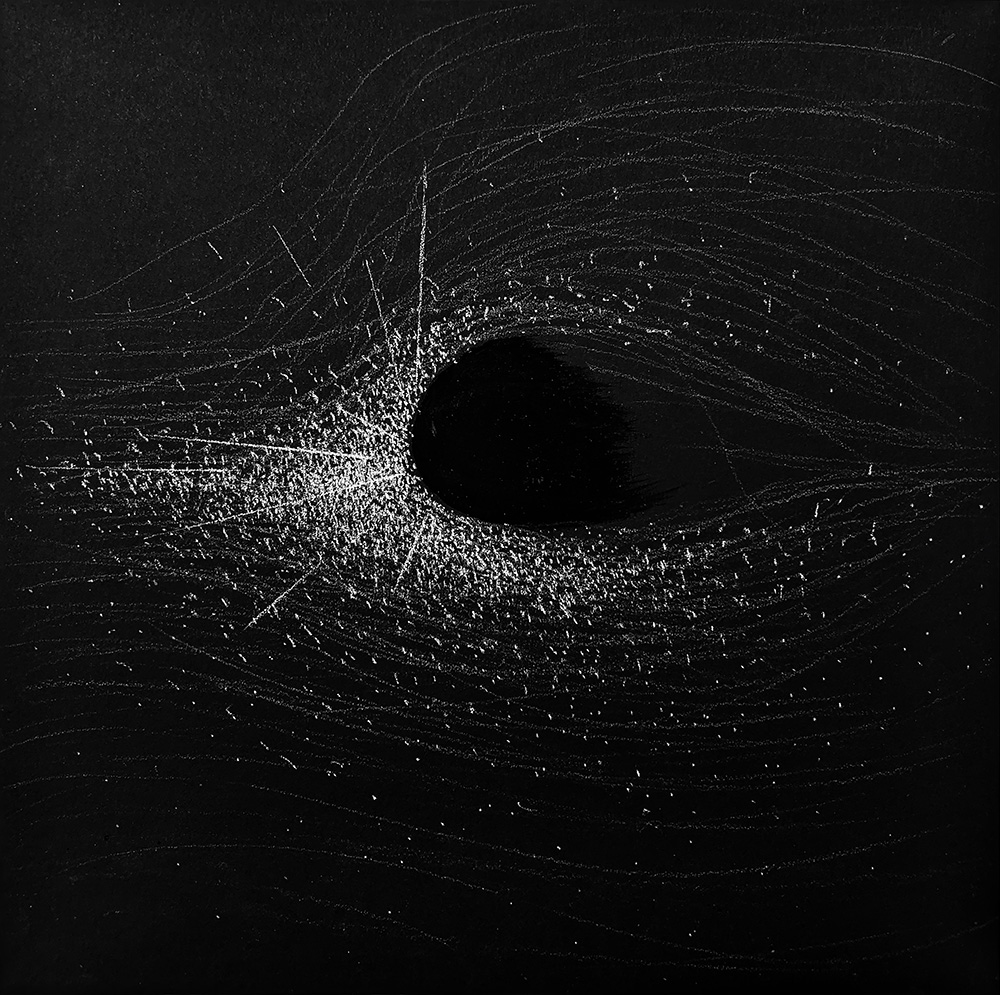
Light Particles Against a Black Hole Artist Lucas J Rougeux says: “This [work] displays the balance and ever-presence of life and death through the overlapping lenses of religion and astrophysics. Symbolic through lines [in my work] include the amorphous space cloud, the soul as recycled energy, the mysterious finality of death, and the void of black holes.” (Lucas J Rougeux 2021. Charcoal and acrylic on paper, 20.3 × 20.3 cm. Courtesy of the artist)
The impact of these popularizations was felt around the world, and artists in Asia mixed Western science with Eastern philosophy and history. Cai Guo-Qiang was in his 20s when he began experimenting with gunpowder as an artistic medium. When you explode a small amount of gunpowder on paper, it leaves a mark. Cai called these works “gunpowder drawings”. In 1986, at age 29, he moved from his native China to Japan and became enthralled by popular books about astrophysics, especially A Brief History of Time and Cosmos, which he read in translation.
Cai said: “When I came to Japan, my encounters with the theories of 20th-century astrophysics were very significant to me. The concepts of the Big Bang, black holes, the birth of stars, what is beyond the universe, time tunnels, how to leap over great distances of time and space and dialogue with something infinitely far away – these ideas were still not commonly in circulation in China at the time. They were an eye-opener for me. At the same time, many of these ideas have similarities with traditional Chinese views, with which I was familiar, of metaphysics and the universe.”
Lucas J Rougeux was inspired when in 2014 astronomers watched as what appeared to be a cloud of dust (G2) approached Sagittarius A*. They expected the space cloud to be sucked into the black hole, but it survived the encounter. (Astronomers now believe that G2 was a binary star system that orbited the black hole in tandem, eventually merging into an extremely large star.) After learning about G2, Rougeux created a series of artworks about black holes (see above) that were shown in a 2022 exhibition titled The Soul Gravity—Guided to Black. The artist said, “The delicacy and amorphous nature of a space cloud is directly connected to my own sense of queer identity…I am a cloud of space dust. I am a collection of particles dealing with depression. I am weaving through waves of space–time and isolation. My work is the product of this existentialism, loneliness and search for a connection to the sublime.”
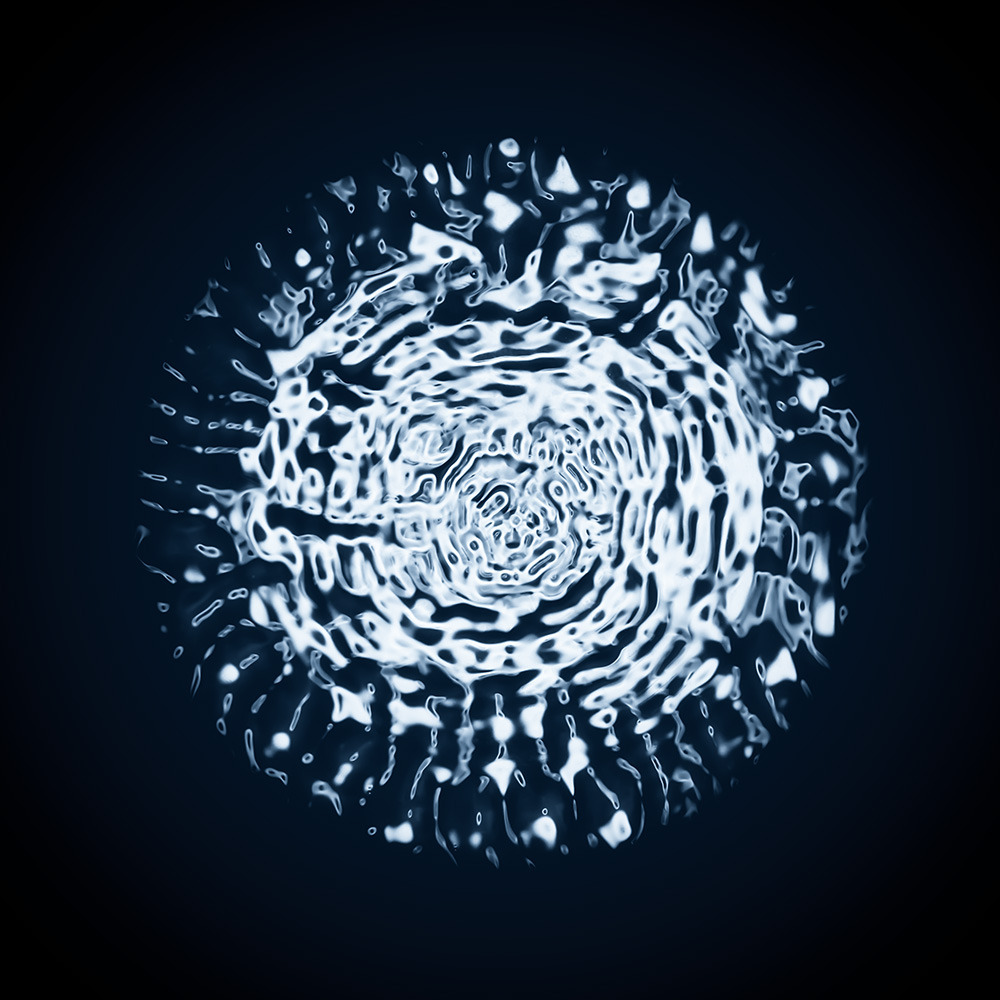
Black Echo In 2022 NASA scientists detected pressure waves produced by a black hole and translated them into sound waves that humans can hear. John White photographed water vibrating in response to the sound waves – a musical note 57 octaves below middle C. (John White 2023. Digital photograph. Courtesy of the artist)
In 2022 NASA released a new sonification of the black hole at the centre of the Perseus galaxy cluster, which inspired the photographer John White. He painted the bottom of a petri dish black, filled it with water, and set it on top of a speaker. As he played the sound of the black hole through the speaker, the water began to vibrate. Shooting directly down at the petri dish with a macro lens and a halo light in a darkened room, he captured the vibration in a photograph titled Black Echo (see above).
Immersive art about black holes
Artists create immersive art – artworks the viewer can walk into – to enhance the immediacy of the experience. In 2016 the choreographer Wen-chi Su was an artist-in-residence at CERN, where she met the theoretical physicist Diego Blas, and they discussed the meaning of gravity in dance and astronomy. Su imagined what happens when a body falls into a black hole. Together with her production team, she directed a film in which the sets were animations and the movements of the dancer were captured by motion sensors. Additionally, a surround-sound system immersed the audience in a three-dimensional sound field.
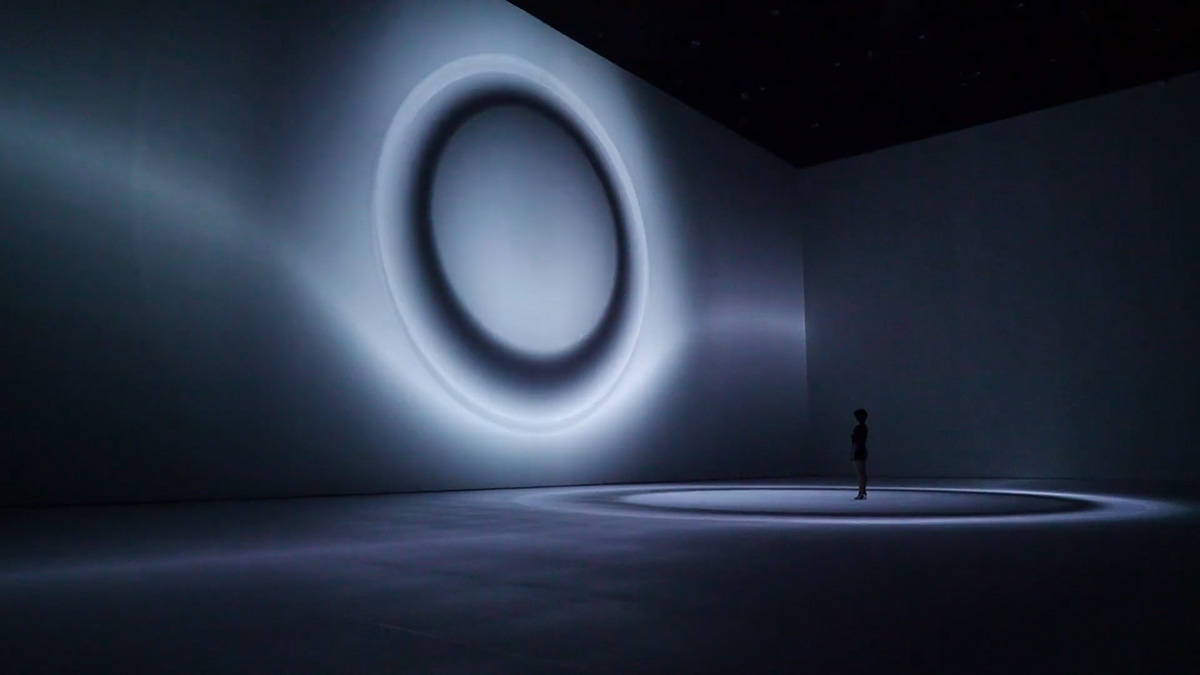
Oriens: Immersive Black Hole Yuxi Cao (James Cao) created this installation where the viewer can walk around in the video projection of a black hole. (Yuxi Cao 2017. Sound and video installation. Installation view at Today Art Museum, Beijing. Courtesy of the artist)
Cao Yuxi (James Cao) is a computer artist who created an artwork about a black hole that he titled Oriens (Latin for “Orient”), giving it the subtitle Immersive Black Hole because the viewer is able to walk around in the space of the artwork (see above). His projection of a sphere on the wall suggests a black hole. A circle symbolizing the event horizon is projected on the floor, and flashing, curving lights communicate distortions in space–time near the black hole.
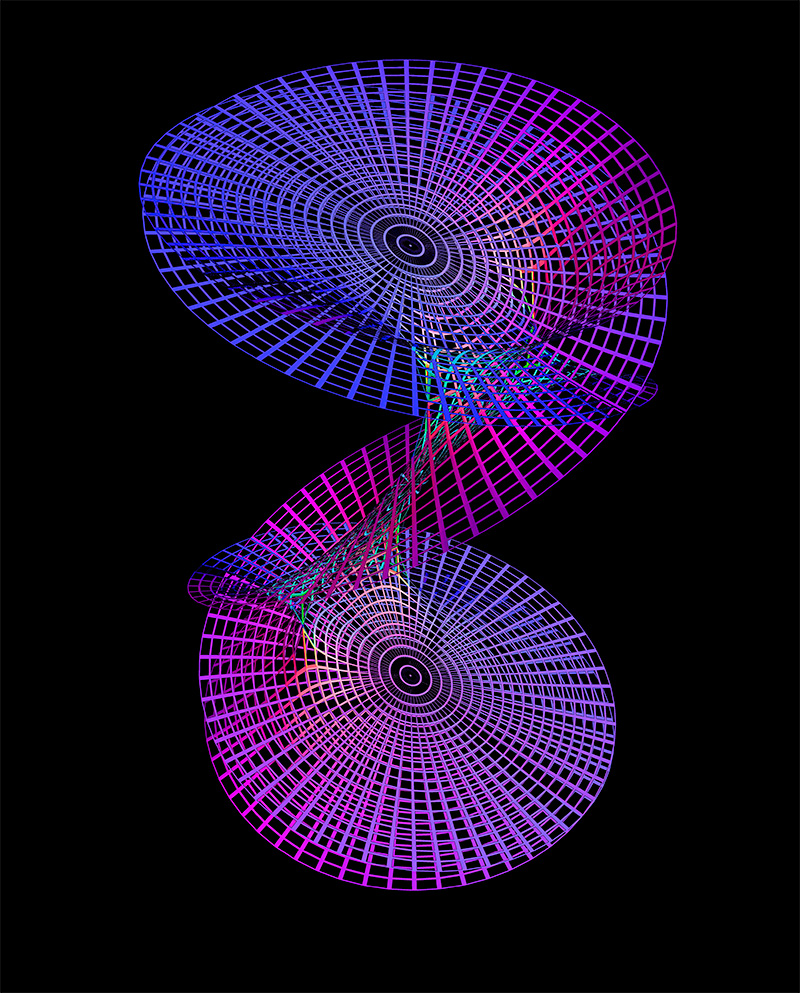
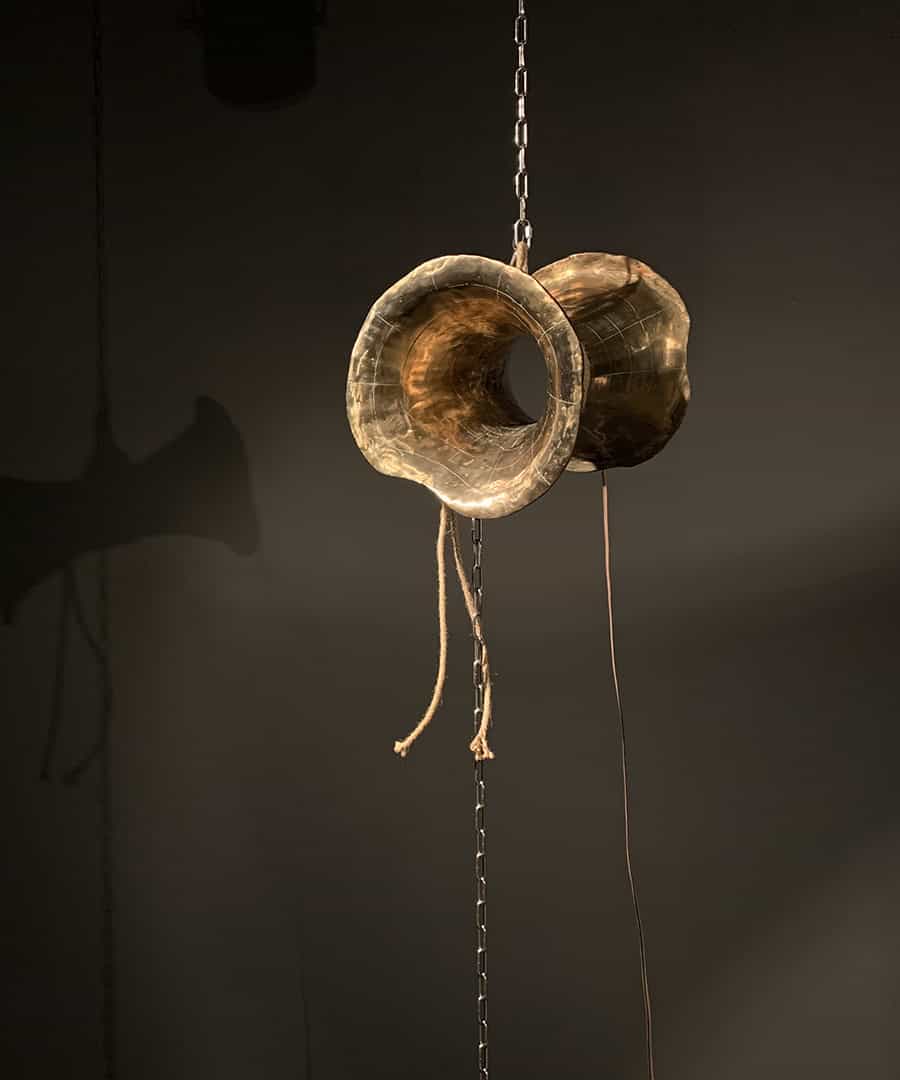
Wormhole Bell Yambe Tam’s sculpture of a wormhole has feedback microphones that turn it into a bell. (Yambe Tam 2018. Cast bronze, 30 × 30 × 36 cm. Private collection. Photo: Albert Barbu)
The American artist Yambe Tam, who merges Western science with Chinese philosophy, has said: “Black holes are a reoccurring theme in my practice. Beyond my interest in theoretical physics, I see connections to the Buddhist philosophical concept of the void/emptiness/nothingness, which is shared more widely with other Eastern spiritual traditions. Rather than signifying a negative space or absence of something, void/emptiness/nothingness is a space of infinite potentiality. It is during the practice of zazen [silent meditation] that I most feel an embodied sense of this – the emptying of oneself, or dissolution of form and ego into pure being.”
Tam’s Cosmic Garden was created to resemble a Buddhist dry garden. From the ceiling hang several of the artist’s sculptures that take the form of bells. One of these sculptures, Wormhole Bell (see above left) has feedback microphones that turn the object into a self-resonating instrument, which helps induce a deep state of meditation. In astronomy, a wormhole is a hypothetical tunnel that connects separate regions of space–time. Tam says: “To me, black holes and the speculative, double-ended form of the wormhole are symbols of transformation – whether the breakdown of classical Newtonian physics to general relativity or the spiritual transcendence one feels in contemplative practices like zazen. Physically, travelling into a black hole is obliteration – a return to pure atomic matter. However, in more philosophical and spiritual terms, a wormhole is an unknowable space of no return, a portal to another side of reality.”
This is an edited excerpt from Lynn Gamwell’s book Conjuring the Void: the Art of Black Holes (2025 MIT Press 208pp £41 hb). Reproduced with permission, copyright MIT Press. All rights reserved
A major research institution in Russia is “deeply embedded” in the Russian military and the country’s military-industrial complex. That is the claim of a report by particle physicist Tetiana Berger-Hrynova, who argues that the activities of scientists belonging to the Joint Institute for Nuclear Research (JINR) in international collaborations should be limited as it poses a security threat to Europe (arXiv:2603.21896).
The JINR is an international research centre for nuclear science with 5500 staff members and prior to 2022 over 1000 scientists from JINR-collaborating organizations visited Dubna each year.
Berger-Hrynova, who is based at the CNRS’s Annecy Particle Physics Laboratory in France, told Physics World that her research was triggered by an article in December 2022 in the New York Times, which found that Kh-101 missiles – a Russian air-launched cruise missile – were produced in Dubna.
“I found that JINR scientists have played a critical role in developing Dubna into a major centre for Russia’s military-industrial complex — through dual-use research, knowledge-transfer programmes and personnel training,” says Berger-Hrynova.
According to Berger-Hrynova, who was born in Ukraine and educated at Liverpool University before doing a PhD at Stanford University, the lack of awareness of the issue has enabled scientists from Dubna to maintain their participation in international collaborations.
“JINR personnel can travel freely to scientific institutions in the EU and the UK, retain access to advanced technologies that can then be transferred to military and security actors through Dubna’s tightly connected research-industrial ecosystem,” claims Berger-Hrynova.
Indeed, JINR is also participating in the Russian Regional Center for Processing Experimental Data from the Large Hadron Collider (LHC) — a critical component of the Worldwide LHC Computing Grid.
JINR also still maintains links with nearly 700 research centres and universities in 60 countries and provides scholarships to physicists from developing countries.
The JINR is in addition actively involved in international and national scientific conferences, hosting up to 10 major conferences, over 30 international meetings as well as international schools for young scientists. Scientists from France, Italy, Germany, Latvia and other EU countries are also still on the JINR governing committees.
Ukraine applied sanctions against JINR in August 2025 given its alleged connections to military research and Berger-Hrynova now calls on other countries to do likewise.
“The JINR case illustrates how Russian scientific research institutions are used to circumvent sanctions, underscoring the need for coordinated enforcement among Ukraine, the EU, and the G7, as well as greater awareness within the international scientific community,” writes Berger-Hrynova.
Evgeniy Bragin, an official spokesperson for JINR told Physics World that “nobody from the administration of the Institute can provide comment”.
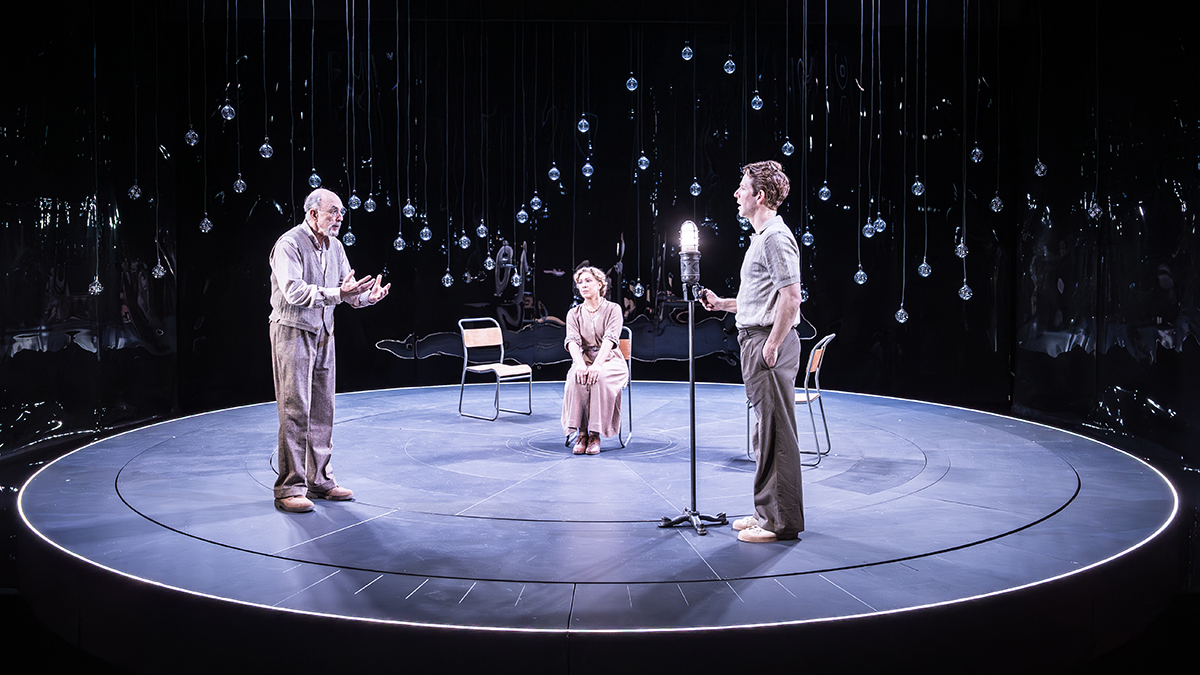
Stage success Damien Molony (as Werner Heisenberg), Richard Schiff (Niels Bohr – with cardigan) and Alex Kingston (Margrethe Bohr) in the revival of Michael Frayn’s Copenhagen at the Hampstead Theatre in London. (Courtesy: Marc Brenner)
When Werner Heisenberg retreated at daybreak to an isolated rock on the island of Helgoland in June 1925 to contemplate his development of quantum physics, he might well have been surprised to know that this moment would be recreated by an actor perched on the back of a chair in a pool of water on a stage over 100 years later.
The play explores Heisenberg’s visit to see Niels Bohr in Nazi-occupied Copenhagen in 1941 and features just three characters, Heisenberg, Bohr and Bohr’s wife Margrethe. The intentions surrounding Heisenberg’s visit have always been unclear, with this uncertainty being central to the play, which was first staged to critical and popular acclaim at the National Theatre, London, in 1998.
The initial success of Copenhagen came even as a surprise to its writer Michael Frayn. “When I wrote it, I didn’t think it would even be staged,” he admitted in an interview with Physics World. Eventually, Copenhagen went on to receive many accolades, including a Tony Award for Best Play and enjoyed over 300 performances in London and New York.
The new production at the Hampstead Theatre is directed by Michael Longhurst, who told me how struck he was by the level of detail in the play.
“While Frayn is super conscious of this as an act of fiction and theoretical imaging, I don’t think I’ve ever worked on a play that feels like it’s been as rigorously researched,” he says.
“I think there’s a real pleasure and opportunity as a director, when you’re staging plays that are tapping into scientific principles. There is a beautiful probing parallel between the uncertainty of intention and Heisenberg’s uncertainty principle.”
Round and round The revival of Copenhagen, which focuses on the 1941 discussion between Niels Bohr (left) and Werner Heisenberg (right), with Margrethe Bohr looking on. (Courtesy: Marc Brenner)
Heisenberg’s involvement in what became the German nuclear-bomb programme is likely to have been a significant factor in his seeking to meet with Bohr, but the beauty of the play is the uncertainty behind the real motivation for the meeting.
As Frayn told Physics World: “The play is about the elusiveness of human intention, so I don’t claim to have a settled view of Heisenberg’s.”
However, Frayn hints that he is most persuaded by Heisenberg’s own account, which he gave many years later, that he wanted to warn the Allies about Germany’s plan to build a bomb, rather than trying to get information from Bohr to help the Nazi programme.
“Bohr’s confirmation in his unsent letter [in 1957],” says Frayn, “that Heisenberg had in fact overridden all normal obligations of wartime secrecy to tell him that Germany was doing research on a nuclear weapon – and that he now believed it was in theory possible to build one – seems to me to go some way to reinforcing the account that Heisenberg himself gave later of his intentions in seeking the meeting in 1941.”
As for the new revival at Hampstead, Longhurst says it is a chance “to engage with an incredible play that hasn’t been seen in London since that original production”.
“I’m very proud of the cast that we’ve assembled in Damien Molony, Richard Schiff and Alex Kingston, who I think are individually and collectively brilliant. I guess what is thrilling about the play when you see it live, and it is three bodies in a contained space, is watching them shift between prosecutor, witness and judge. That triangle of relationships is constantly shifting. I like to imagine them as three entangled souls with an unanswered question.”
Copenhagen runs at Hampstead Theatre, London, UK until 2 May.