Streamlined optics pave the way for miniature atom traps

The magneto-optical trap, or MOT, is the workhorse of cold-atom physics. Without this complex arrangement of laser beams and magnetic fields, the act of cooling atoms to just above absolute zero – and observing the quantum effects that emerge – would be nigh-on impossible. But before cold atoms can become part of a quantum sensor, quantum computer, or any other device that puts their quantum nature to practical use, this bulky old workhorse needs to become more like a pit pony: robust enough to do the job, yet much, much smaller.

Physicists at the US National Institute of Standards and Technology (NIST) have now taken an important step towards this goal. Led by William McGehee, the researchers used flat, lithographically-produced optics to create a MOT optical assembly just 15 cm long. While this is still too big for a practical cold-atom-based device, it is significantly smaller than the dinner-table-sized sprawl of ordinary MOTs, and a sign of how integrated photonics enables new designs. “Ultimately, what we’re trying to develop is something that is not just a small version of a laboratory experiment,” McGehee says. “You have to find different ways of doing the same things.”

Components working together

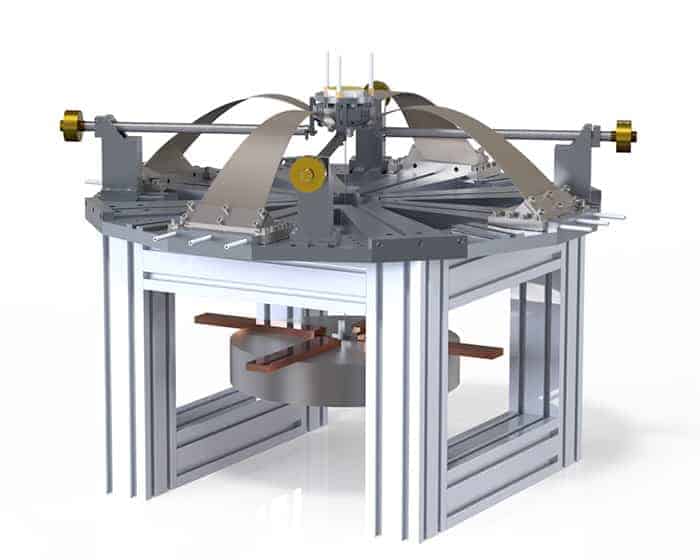
Like all MOTs, the NIST team’s device uses beams of precisely-tuned laser light to cool atoms within the region where the beams overlap. Unlike traditional MOTs, though, the beams in the new mini-MOT are generated, shaped and directed using planar optical elements. First, light from a laser is coupled into a nanophotonic waveguide on a photonic integrated circuit (PIC). Because the PIC’s output beam has a diameter of just 140 µm, and laser cooling is inefficient for beam sizes smaller than a few millimetres, the next task is to make the beam bigger. The NIST design does this with an optical metasurface that expands the beam and gives it a uniform intensity across its width after a distance of 15 cm. At this point, the beam strikes a diffraction grating and splits into the three pairs of equal-intensity but oppositely-directed beams required for laser cooling.

While none of these optical components is new, James McGilligan, a physicist at the University of Strathclyde in the UK who was not involved in the NIST study, is impressed by the way they work together. “The overlapping of these technologies is by no means straightforward,” he says. Although physicists have made progress on miniaturizing other elements of the MOT, McGilligan notes that the optical delivery system “remained a bulky and elusive component on the miniaturization checklist”. The NIST group’s planar-optics system is, he says, “a key step forward in cold-atom instrumentation”.

From mini to micro

To make a truly portable MOT, McGehee thinks the optical assembly will need to shrink still further, down to perhaps 1 cm. This would be tricky with the NIST team’s current setup, since it would mean that the laser beam’s intensity is no longer uniform in the region where it interacts with the atoms. McGehee notes that this would be “complicated” to fix. “With the appropriate simulation, you could figure out what you needed and build that, but it would take a couple of years,” he says.

Still, both he and McGilligan are confident that further shrinkage is on the cards. “It is highly likely that [this technology] will be adapted by research teams around the globe to aid in the miniaturization of their cold atom experiments,” McGilligan says. If combined with a compact vacuum system to isolate the atoms from their environment, he adds, the new optical assembly “has the potential to finally take cold-atom systems out of the lab environment and into chip-scale devices where their precision and accuracy can have the largest impact on our technological capabilities”.

The miniaturized optics are described in New Journal of Physics.

Nanophotonic biosensor tests for COVID-19, hot topics in medical physics

In this episode of the Physics World Weekly podcast, we meet Laura Lechuga, who is coordinating the EU-funded CONVAT programme to develop a nanophotonic biosensor for detecting the coronavirus responsible for the COVID-19 pandemic. Based at the Catalan Institute of Nanoscience and Nanotechnology near Barcelona, Lechuga explains how the biosensor works and talks abouts its benefits compared to existing coronavirus tests.

Also in this week’s episode is medical physicist Katia Parodi of Ludwig Maximilian University of Munich, who is the new editor-in-chief of the journal Physics in Medicine & Biology. Parodi talks about her plans for the journal and identifies hot topics in medical physics such as artificial intelligence. She also chats about some of her current research interests including range verification for particle therapy

Improved microscopy technique sees living cells with seven times more sensitivity

Uncovering the mysteries of how cells function requires advanced imaging techniques to look inside the cells themselves. Research from the University of Tokyo introduces a new microscopy technique that allows us to see cellular structures in much more detail than before, without the need to use any dyes or high-power lasers that may alter the cell.

Taking images inside living cells using only light relies on the very small differences in the phase of the light as it passes through different parts of the cell’s architecture. Creating more detailed pictures requires the ability to detect even the most subtle of these changes with the highest possible sensitivity. This latest work, published in Light: Science & Applications, unveils ADRIFT-QPI – adaptive dynamic range shift quantitative phase imaging – a technique that promises to push the boundaries of sensitivity further than was previously thought possible.

Taking a second look

ADRIFT-QPI uses two steps to capture both the major features and small details of the cell in one image. The first step employs a phase imaging method that’s already widely used, in which a sheet of light is sent towards the cell and the resulting phase shift of the light provides an initial outline of what the cell looks like.

The key development lies in the second step. Another, brighter, sheet of light is used that mirrors the features of the cell captured in the first step. If the first exposure captured a perfect image, the changes caused by the second light sheet passing through the cell would create a completely blank image. By using a much brighter light source and filtering out all of the major features already detected, this second image captures the fine details that previously would have been drowned out in the first step. Combining these two steps ensures that a much wider range of cellular features can be captured in a single image.

“This is the interesting thing: we kind of erase the sample’s image. We want to see almost nothing. We cancel out the large structures so that we can see the smaller ones in great detail,” explains Takuro Ideguchi, whose research group led this work.

Illuminating the smallest details

The significant increase in sensitivity over conventional phase imaging that this method provides (almost seven times greater) allows even the smallest features, such as viruses, to be seen using just light. “Our ADRIFT-QPI method needs no special laser, no special microscope or image sensors,” says Ideguchi. “We can use live cells, we don’t need any stains or fluorescence, and there is very little chance of phototoxicity [an effect often seen when high-powered laser light damages or kills the cells].”

Ultimately, this method could open the door to a closer understanding of the behaviour of small particles on the nanoscale – objects that are hundreds of times smaller than the width of a human hair. Ideguchi offers the following example: “small signals from nanoscale particles like viruses or particles moving around inside and outside a cell could be detected, which allows for simultaneous observation of their behaviour and the cell’s state.”

Ask me anything: Erik Bakkers

What skills do you use every day in your job?

I think one of the main skills that I use on a daily basis in my life and work is creativity – mainly to solve a lot of problems, but also to stimulate people. The role of a PhD student can be quite tough, and it’s my job to keep them motivated. Creativity is also important in science – we have to think about new research topics, and try to look ahead to estimate what will be important in the field within a few years.

As a researcher, your scientific skills and knowledge are very important, so a good background and a firm foundation will always be useful. But there are some soft skills that are also important. For example, if you work in research you have to collaborate with many people. Often you have to keep them interested and motivated, especially when things may not be working as expected, and people are frustrated. Sometimes you have to convince others that something is a good idea, when it’s maybe not obvious, so good communication skills are important.

What do you like best and least about your job?

What I like best about my job is having the opportunity to work at a university with so many young people at the start of their careers. They are always enthusiastic and full of energy and I know they all have the potential to have brilliant careers. Helping them along the way is something I really like. The other thing I enjoy is the freedom to use and express my creativity, which is really the key to working and succeeding in academia.

I do not enjoy administrative tasks, especially when it is simply for the sake of administration, but I guess that is the same for everybody.

What do you know today, that you wish you knew when you were starting out in your career?

That’s a really interesting question, and my answer is that I do not regret any step in my career so far. Of course, there have been difficult moments. But it would have been a pity, I think, to have avoided them thanks to prior knowledge. I think this is also the beauty of life – it’s good to learn to solve your own problems, and try to shape your future without knowing everything in advance. Otherwise it’s a bit like watching a movie for the second time! My advice to students is to do what you like the most. Don’t worry about careers and salaries, these will come automatically, if you are enthusiastic and full of passion.

Gamma Knife® Image Distortion Analysis with the QUASAR GRID3D

Want to learn more on this subject?

The QUASAR™ GRID³ᴰ Image Distortion Analysis System is designed to evaluate MR and CT imaging data on Leksell Gamma Knife® platforms, including PERFEXION™ and ICON™.

Understanding the integrity of your system’s spatial accuracy provides the confidence of accurate and precise Gamma Knife® stereotactic radiosurgery delivery. Using the valuable data obtained with GRID³ᴰ, you can optimize imaging sequences and manage image distortion on your planning systems.

This webinar, presented by Joanne Tang, will highlight the advanced features of the GRID3D Image Distortion Analysis System, including a demonstration of data analysis and visualization within the software platform.

Want to learn more on this subject?

Joanne Tang is an application specialist at Modus QA. Having joined Modus QA after completing her BSc and MSc in medical biophysics at the University of Western Ontario, she is currently involved in customer application support of the QUASARTM GRID3D phantom.


Nanodiamonds measure thermal conductivity in living cells

A nanodiamond-based sensor that measures the thermal conductivity of living cells at subcellular resolution could help researchers better understand how organisms generate and control heat. By combining heat delivery and sensing into a single device, the new nanosensor could also aid the development of heat-based cancer therapies.

All mammals and birds produce their own internal heat. So, too, do certain plants and fish. However, the mechanisms that organisms use to generate and control this heat – which arises from intracellular biochemical sources and then flows through cells to warm up the entire body – are not completely understood.

A technique known as luminescence nanothermometry is often used to measure heat flow in living cells because its resolution is high enough for researchers to pinpoint temperature variations within cells. These variations can be significant, with recent studies indicating that the temperature in one part of a cell may be as much as 1 K warmer or cooler than another.

Measuring local intracellular thermal conductivity

There is, however, a problem with these measurements: the temperature increase observed in laboratory experiments is several orders of magnitude larger than the increase predicted using physics-based models of cellular heat generation. To investigate this disparity, researchers at Osaka University, Japan; the University of Queensland, Australia; and the National University of Singapore created a two-in-one device that acts as a temperature sensor while also generating heat at the same location. This device enabled team members to measure the local intracellular thermal conductivity – an essential parameter of cellular heat-generation models.

The new device, which was made by a team led by Madoka Suzuki of Osaka’s Institute of Protein Research, consists of fluorescent nanodiamonds coated with a heat-releasing polymer called polydopamine (PDA). When irradiated with laser light, the nanodiamonds emit light while the PDA heats up.

The researchers placed their hybrid device inside two types of biological cells, HeLa and MCF-7. They found that the PDA heated up more in cells with a low thermal conductivity than in those with a higher thermal conductivity. This is because heat dissipates more slowly in the former than in the latter. Since the fluorescence of the nanodiamonds depends on their temperature, the researchers were able to use this fluorescence to calculate the rate of heat flow from the device to its surroundings. The technique’s spatial resolution of 200 nm also allowed them to make measurements at different points inside the cells.

Nanodiamond quantum sensor

Suzuki and colleagues calculated that the mean thermal conductivity values for the two cell lines were roughly 0.11 W/m/K. Team member Taras Plakhotnik, a physicist at Queensland, describes this as a “fascinating” result because it is much smaller than the mean thermal conductivity of water, which is about 0.6 W/m/K. Since water is an important component of living cells, this result needs a comprehensive theoretical explanation, Plakhotnik says.

Therapeutic uses

As well as a tool for studying cellular conductivity, the researchers believe that their PDAs could also prove useful in heat-based (photothermal) treatments for cancer. Such treatments work by raising the temperature of cancerous cells high enough to kill them, but doing so often kills nearby healthy cells in the process. Understanding heat flow in both types of cell would make the treatments safer, Suzuki says. The heating effect of the PDAs could also be made more efficient by attaching gold nanoparticles to their surface. These nanoparticles are good absorbers of electromagnetic radiation, and heat up thanks to a phenomenon called surface plasmon resonance in which surface electrons play an important role.

Members of the team now plan to improve the accuracy and spatial resolution of their measurements. “We would like to understand why we have observed such a low thermal conductivity for the two cell lines we studied,” Plakhotnik and Suzuki tell Physics World. “Such fundamental work may allow us to explain the origin of ‘hot spots’ observed in biological cells.”

The research is detailed in Science Advances.

Quantum dots light up when fish have spoiled

Fluorescent carbon quantum dots have been used to determine when fresh mackerel have spoiled. The low-cost, selective and highly sensitive technique was developed by Tae Jung Park and colleagues at Chung-Ang University in South Korea, who say that their technique is better than existing methods at detecting certain harmful chemicals associated with food spoilage. Their approach could become an important tool for ensuring the safety and freshness of food.

As food spoils, it can produce a wide variety of harmful chemicals that can be difficult to detect. Spoiling mackerel, for example, gives off a colourless, odourless compound called histamine at levels that can trigger harmful allergic reactions including rashes, vomiting and diarrhoea. It can sometimes be difficult to identify spoiled fish based on their look and smell, so a practical way of monitoring histamine levels would be very useful. Unfortunately, current detection methods are either expensive and time-consuming, or are ineffective at targeting histamine over other chemicals.

To develop a more sophisticated approach to detection, Park and colleagues synthesized a batch of carbon quantum dots (CQDs). These are fluorescent nanoparticles that behave like artificial atoms and emit visible light when irradiated with ultraviolet light. The CQDs were then coated with a compound called NAC, which is then coated with a peptide molecule called Hisp3.

Fluorescence quenching

Because of an effect called fluorescence quenching, the presence of Hisp3 reduces the amount of light emitted by the CQDs. However, Hisp3 bonds more strongly to histamine than it does to NAC, which means that exposure to histamine will remove Hisp3 from the CQDs – restoring the fluorescence of the CQDs

In their experiments, Park and colleagues showed how the intensity of this fluorescence was highly sensitive to histamine levels; accurately detecting concentrations ranging from 0.1 to 100 parts-per-million. In addition, the technique is highly selective to histamine, meaning CQD fluorescence was not restored when molecules with similar structures as histamine were introduced.

The team says that its detection method has a greatly improved performance compared with existing techniques. If applied to mackerel on supermarket shelves, the CQD/Hisp3 mixtures could provide a convenient way for consumers to gauge quality and freshness of the fish, they claim.

Park’s team now plans to expand its approach by identifying peptides that bind to other chemicals emitted by spoiling food. The team also points out that its technique could also be used to develop medical diagnostics.

The research is described in Biosensors and Bioelectronics.

Learning physics from migrating bacteria

Myxococcus xanthus is a rod-shaped soil bacterium with the ability to move on surfaces. Under starvation conditions, individually migrating bacteria switch their motile behaviour and cooperate to form dome-shaped multicellular structures known as fruiting bodies. The physics behind the creation of these multilayer structures, however, is not well understood.

Intrigued by the densely packed and aligned structure of such M. xanthus colonies, a group of researchers at Princeton University in the US investigated the physics underlying fruiting body formation. The study, published in Nature Physics, reveals that the collective dynamics of migrating bacterial colonies resembles the physics underlying active nematic liquid crystals.

Topological defects in bacterial colonies

To record a wide range of motility-driven collective dynamics of M. xanthus colonies, Katherine Copenhagen at the Lewis-Sigler Institute for Integrative Genomics at Princeton University imaged the colonies using a laser scanning confocal microscope. Copenhagen and group leader Joshua Shaevitz placed the colonies on an agar substrate in the presence of nutrients and, without labelling the cells, used the light reflected from the colony’s surface to measure cell alignment.

Since nutrients were present, no fruiting bodies appeared. However, the researchers observed that new cell layers and holes spontaneously appeared and disappeared. These layers and holes appeared preferentially at points known as topological defects – singularities in the cell orientation field where cells oriented in all directions meet.

These observations motivated the researchers to study this non-equilibrium collective behaviour using the physical framework of active nematic liquid crystals. Active nematics are a class of material made up of elongated particles that align with each other and are able to move on their own – precisely like the bacteria.

To dig into the theoretical physics aspects of active nematics, Ricard Alert at the Princeton Center for Theoretical Science worked with Ned Wingreen to develop a theory for the bacterial colony. Impressively, the experimental data and the theoretical predictions went hand-in-hand.

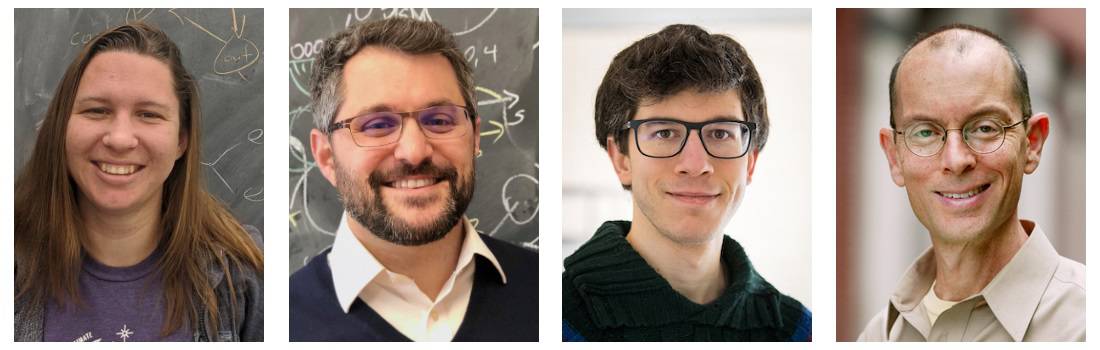
The study authors

“A moment that I remember quite vividly,” Alert says, “is watching these videos at the very beginning of this project and starting to realize, wait, do layers form exactly where the topological defects are? Could it be true?” This motivated him to explain the experimental observations via analytical calculations.

“The orientation of rod-shaped particles induced an increased friction from the front to the tail of the defect, leading to cell accumulation at the front and eventually cell extrusion in the third dimension”, explain Marc-Antoine Fardin and Benoît Ladoux from CNRS, in their news and views article for this study.

The researchers propose that cell motility and mechanical interactions between the cells are two key drivers of the formation of multilayered structures. However, since these studies were performed while nutrients were available, future studies under starvation-induced conditions will be important to fully understand the role and characteristics of fruiting bodies.

From physicist to patent attorney

I never intended to become a physicist. My experiences of racism and sexism in and outside school shaped who I thought I could be. Having grown up in London too, my parents understood the effects of institutionalized racism and so enrolled my siblings and me in community-based supplementary schooling provided by the Claudia Jones Organisation in Hackney. The school aimed to support, encourage and inspire Black children by providing them with access to Black teachers across all subjects during weekends and school holidays. Although the school closed in 2010 after a 24 year run, citing a lack of funding as a key contributing factor, the organization still serves its local Black community today. With this support, I chose to study maths, further maths, chemistry and physics at AS level. However, I struggled to get the grades I was predicted. For instance, I achieved a C in my physics AS level. Despite this, by the time it came to choosing a subject to study at university, I decided to apply for courses in chemical physics.

I secured a place on the integrated Master’s course at the University of Sheffield, UK, and completed one year of it before switching to physics, which had a larger cohort. Interestingly, had I applied to study physics directly, I wouldn’t have had the grades to secure a place, but my performance in first year put me in good stead. Despite it never being my plan, I enjoyed the challenge of studying physics. However, I did end up making my way back towards chemical physics, opting for a Master’s research project with the solid-state physics group, and then applying for PhDs in materials physics research.

Unlikely path

Obtaining a PhD was yet another thing I hadn’t ever intended to do – but in the final year of my undergraduate degree I started considering it for myself. I realized that although I was on track to achieve a 2:1, which made me an eligible candidate, one of the main reasons I hadn’t considered doing a PhD in physics was because of how very unlikely a path it was for me, a Black woman – or more specifically a Black woman educated through British state school education. Between that realization, my (undying) interest in chemical physics and my love for coursework, I thought “What the heck, I can do this!” I put in a few applications, eventually securing a PhD studentship investigating resistive memory storage mechanisms in multilayer thin film oxide devices with the materials and condensed matter group at the University of Glasgow, UK. My research was lab-based, so I had the pleasure of learning to use a variety of deposition and materials characterization techniques, namely pulsed laser deposition and electron energy loss spectroscopy.

I hadn’t considered doing a PhD in physics because of how very unlikely a path it was for me, a Black woman educated through British state school education

I graduated in 2019, and I was the first Black woman to obtain a PhD from Glasgow’s physics department. It’s an achievement to obtain a PhD for any candidate, but the fact that I was the first Black woman to do so in a university where there has been a chair of natural philosophy since 1727 is a clear indication that Black students, let alone Black academic staff, are still under-represented in physics in academic institutions across the UK. Although I didn’t have much access to other Black physicists while at university, I’m glad to have met many more since graduating. I’d like to give a special mention to the Blackett Lab Family, a relatively new collective of UK-based Black physicists – it’s great to be a part of this community.

Career considerations

I’d always considered studying physics and physics research to be a pursuit of interest (and not necessarily a pursuit of passion) so I invested a lot of time researching careers outside of academia. At the time, there was surprisingly little careers support available for STEM PhD students at Glasgow.

Luckily, a close friend and fellow woman PhD student was just as enthusiastic as me to do something about it. Together we ran a speed-networking event for PhD students from STEM fields, where attendees could come and meet PhD graduates who were now working in a variety of industries outside of academia. With the support of the graduate school, we proudly ran this event for the benefit of ourselves and our peers for two years in a row, until our PhDs came to an end. Both of us were interested in intellectual property: my friend pursued a career in knowledge transfer in academia, whereas I decided to pursue a career as a patent attorney with an intellectual property firm, which I began while still completing my PhD.

Becoming a patent attorney is an interesting and rewarding pursuit for any scientist, but I found that it wasn’t widely advertised to undergraduate STEM students. I first heard about it a few years into my PhD, but trainee positions are in fact open to those holding bachelor’s and Master’s degrees in technical subjects too.

Patent process

I’m currently two years into my training at Venner Shipley LLP, since I joined as an associate in its electronics and engineering team. Patent attorneys are scientists by training who have qualifications in patent law that enable them to help inventors gain legal protection for their inventions. For instance, an inventor can hire a patent attorney to draft a patent application, which includes a technical specification describing and depicting how the invention works, as well as a list of claims that define the scope of the legal protection sought. The application then goes through a “search and examination” process during which a patent examiner may raise objections to the application. These objections correspond to different areas of patent law, such as those relating to a lack of novelty or inventiveness.

A patent attorney’s role is to respond, mostly via letter, by both presenting counter-arguments that overcome some of the objections and carefully amending the application to address the rest of objections. The approach used here depends on how reasonable or well justified the objections are; the content of the patent application when it was filed; and on the inventor’s preferences, each of which change on a case-by-case basis. This means that much of the training undertaken by patent attorneys involves learning to make the best decisions for each case and improving our use of language so as to better express technical and scientific ideas and arguments. Although I’m still developing these skills, I’m certainly enjoying the challenge.

Hollow-core fibre boosts optical gyroscope performance

nodeless antiresonant fibre

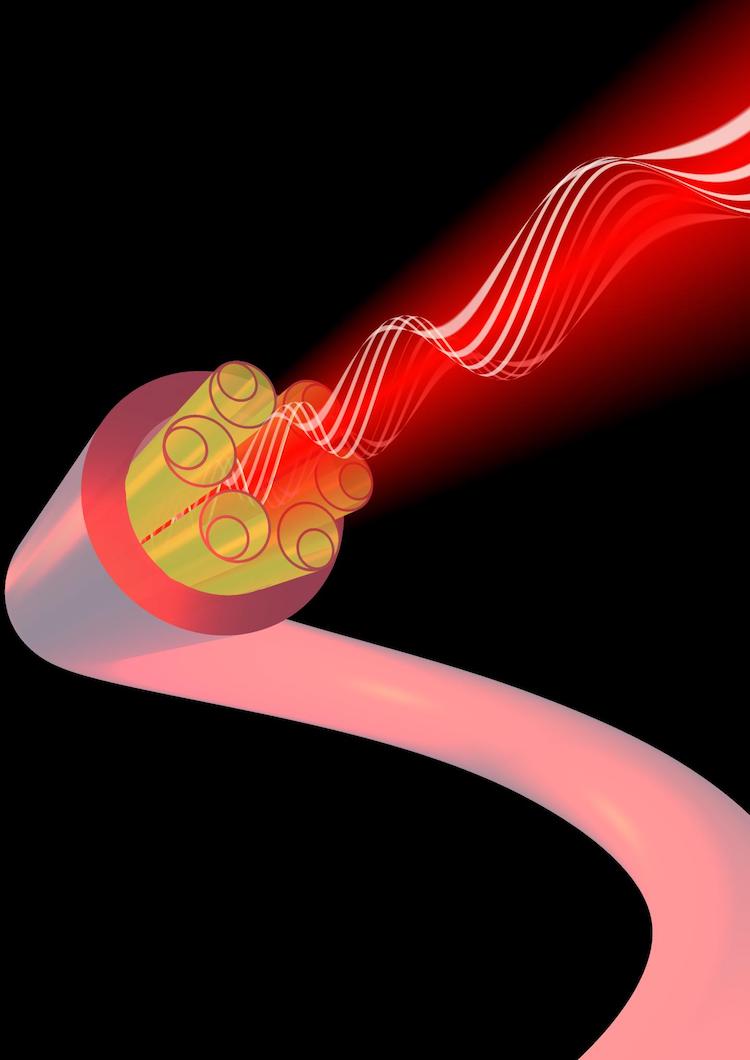
A new type of hollow-core optical fibre makes light-based gyroscopes up to 500 times more stable by eliminating sources of noise. If optimized, devices based on these so-called nodeless anti-resonant fibres could find use in next-generation civil navigation systems.

Fibre-optic gyroscopes (FOGs) rely on a pair of laser beams travelling in opposite directions around the same fibre-optic coil. If the reference frame of the beams is not inertial – that is, if the gyroscope is rotating – the beam travelling counter to the direction of the rotation will experience a slightly shorter path. This path-shortening phenomenon is known as the Sagnac effect, and when the two light beams are made to interfere, their interference signal can be used to calculate the difference in path length. This, in turn, shows how the gyroscope (or the vehicle upon which it is mounted) changed its orientation.

Recirculating light

The sensitivity of FOGs can be enhanced by increasing the distance the light travels, for example by sending the light down a longer fibre-optic cable. Resonator fibre-optic gyroscopes (RFOGs) exploit this principle by connecting the ends of the optical fibre to form an optical resonator. Because most of the light takes multiple trips around the fibre coil, RFOGs are more sensitive than simple FOGs, and any rotation-induced difference in path lengths manifests itself as a difference in the resonance frequencies in each direction.

Certain nonlinear optical effects can, however, degrade an RFOG’s performance. Identifying optical fibres that are immune to such effects has proved challenging, says project leader Glen Sanders, adding that he and his team at Honeywell International had previously examined whether hollow-core fibres that confine light in a central or gas-filled void might overcome the problem.

Even fewer nonlinear effects

In the latest study, which appears in Optics Letters, researchers co-led by Austin Taranta of the University of Southampton in the UK employed a type of hollow-core fibre known as a nodeless anti-resonant fibre (NANF). This type of fibre shows even fewer nonlinear effects than other hollow-core fibres, and it also has a low optical attenuation, which improves the quality of the resonator because the intensity of light remains steady over a longer propagation distance. Indeed, NANFs have the lowest optical loss of any hollow fibre – and for many parts of the electromagnetic spectrum, the lowest loss of any optical fibre, Taranta says.

Sanders adds that using a NANF eliminates optical errors caused by effects such as backscattering, polarization coupling and modal impurities, all of which can produce errors or extra noise in the gyroscope. “Eliminating these effects allows the light to travel along a single path through the fibre, a prerequisite for RFOGs,” he explains.

The Honeywell researchers tested their new gyroscope by mounting it on a stable static pier, which eliminates all rotation effects apart from the Earth’s rotation. This allowed them to determine that the “bias stability” for the instrument is just 0.05 degrees per hour, for observation times between 1 and 10 hours. This is 500 times better than previous measurements on hollow core fibre-based RFOGs for periods of longer than an hour, and close to the level required for civil aircraft navigation, the researchers say.

The team now plans to build a prototype gyroscope with a more compact and stable configuration that employs the latest generation of NANFs.

Copyright © 2026 by IOP Publishing Ltd and individual contributors