Algorithm tracks elephants from space, synchrotron sheds light on heat-damaged hair

Back when I was a lad, “so big it can be seen from space” was a superlative reserved for truly massive features that can be seen with the naked eye from an orbiting space capsule. These days, imaging satellites can routinely achieve sub-metre resolution or better – and researchers in the UK and the Netherlands have used high-resolution images taken by the Worldview 3 and 4 satellites to track African elephants as they move through forests and grasslands.

The algorithm for tracking the pachyderms was created by computer scientist Olga Isupova at the University of Bath, who explains that it is the first system to track animals through a heterogenous landscape – that is countryside that varies between open grassland and woodland. Previous systems have been used to track animals in homogenous environments such as snow-covered landscapes or blue oceans.

According to Isupova, the technique can scan vast areas of land in minutes, which eliminates double counting – something that can occur when elephants are counted by humans in low-flying aircraft. Satellites do not disturb the animals and are not limited by national borders; which elephants can cross.

The team now plans to train its algorithm to track  animals smaller than elephants. The research is described in an open access paper in Remote Sensing in Ecology and Conservation.

Repairing damaged hair

Curling wands and hair straighteners can damage hair by overheating the keratin proteins that make up about 85% of our luscious locks – turning hair dry and brittle over time. Scientists know that this degradation involves the keratin hardening much like an egg as it is cooked – but observing the process as it occurs had been difficult because the keratin becomes opaque to light as it hardens.

Now, researchers in Japan have studied the process using vacuum-ultraviolet synchrotron radiation, which provided enough illumination to determine the structure of hardened keratin proteins. The scientists from the Milbon Company and Hiroshima University’s Hiroshima Synchrotron Radiation Center are now using the technique to develop haircare products that reverse or prevent heat damage to hair.

“By monitoring protein’s structural changes, we could rapidly and accurately judge which ingredients can effectively inhibit the structural change of keratin proteins from various candidates of compounds,” explains Hiroshima’s Koichi Matsuo.

Life at CERN during the pandemic

In this episode of the Physics World Stories podcast, scientists and engineers from the CERN describe how the pandemic has affected the particle physics lab and the way they collaborate with colleagues.

CERN’s large hadron collider (LHC) is currently in shutdown ahead of its third run scheduled for later in 2021. José Miguel Jimenez, head of CERN’s technology department, explains how engineers have adapted in order to limit the delays brought about by the pandemic.

Jimenez also looks ahead to the LHC’s next long shutdown – scheduled for 2025 – when the particle accelerator will undergo a major upgrade. The transformed high-luminosity machine (HL-LHC) will generate 10 times more collisions than at present.

Also in the podcast is Archana Sharma, a physicist who’s been working as a project manager on the GEM experiment at the LHC’s CMS detector. Her team has designed gas electron multipliers that will improve the muon-detection abilities of CMS in the HL-LHC era.

Glester’s final guest is Sahal Yacoob of the University of Cape Town. Yacoob’s year-long sabbatical at the LHC’s ATLAS experiment coincided with the pandemic, changing the experience somewhat. As Yacoob explains, CERN researchers were accustomed to virtual communications, but he is sorely missing those informal coffee-break chats, which can lead to unexpected developments.

For another personal account of CERN during the pandemic, take a look at this feature from the January 2021 issue of Physics World. Dave Barney describes how despite lockdown he has continued his important work on developing a new calorimeter for CERN’s CMS experiment – a piece of equipment that will be pivotal to the success of the HL-LHC.

US president Joe Biden sets out his science agenda

US president Joe Biden has signed a raft of executive orders to begin reversing several initiatives by former US president Donald Trump. On Wednesday, Biden – in his first day in office – re-joined the Paris climate accord and set out a national strategy to get the coronavirus pandemic under control.

The moves follow the appointment of the geneticist Eric Lander last week as his science adviser and director of the Office of Science and Technology Policy (OSTP). In a further sign of Biden’s focus on science, which is expected to differ from that of former presi­dent Donald Trump, Biden also elevated the science adviser position to the cabinet.

[Lander] is an outstanding choice

Neal Lane

Lander earned a DPhil in mathe­matics from the University of Oxford and taught managerial economics at Harvard Business School. He then moved into life science, founding the genome centre at the Massachu­setts Institute of Technology (MIT) Whitehead Institute, playing a sig­nificant role in the Human Genome Project in the 1990s and early 2000s.

In 2003 he founded the Broad Insti­tute, a collaboration between Har­vard and MIT that applies genomics to human health. Lander also co-chaired Barack Obama’s President’s Council of Advisors on Science and Technology (PCAST).

In a letter released by his office, Biden asked Lander to focus on five priorities including the impact of the pandemic; climate change; and how the US can ensure its scientific leadership. “He is an outstanding choice,” former presi­dential science adviser and physicist Neal Lane told Physics World.

Biden has also announced that Francis Collins will remain as direc­tor of the National Institutes of Health, a position he has held since 2009. Both his and Lander’s appoint­ments will require confirmation by the Senate. In addition, Biden has named chemistry Nobel laureate Frances Arnold from the California Institute of Technology and Maria Zuber, a planetary scientist who is MIT’s vice-president of research, as external co-chairs of PCAST.

Focus on the climate

Before the science adviser announcement, Biden had already signalled his intention to focus on climate change. Former secretary of state John Kerry, who helped to negotiate the Paris climate agree­ment, has been nominated as a cli­mate envoy for national security, while former Environmental Pro­tection Agency (EPA) administrator Gina McCarthy has been appointed “climate tsar” in the White House. Jennifer Granholm, a former gover­nor of Michigan, is pegged as energy secretary.

“She is a proven leader and advocate for renewable energy tech­nology, like research into advanced battery technology at Argonne National Laboratory that is essential in our fight against climate change,” says Illinois Democratic Congress­man and physicist Bill Foster.

Other nominees include Michael Regan, secretary of North Carolina’s Environmental Quality Depart­ment, for EPA administrator. He previously held positions in the EPA under presidents Bill Clinton and George W Bush.“

In the past, cli­mate policy has often been confined to the EPA and the Department of Energy,” says Pennsylvania State University climatologist Michael Mann. “Biden’s appointments sug­gest a multi-agency approach, incor­porating climate-forward policies in other government departments.”

Yet the new administration will face problems fulfilling its scientific agenda. “Repairing the damage done by the Trump administration will take time,” says Lane, an emeri­tus professor at Rice University. Indeed, the Trump administration continued to loosen environmental regulations during its final days in a way that makes it difficult to reverse the decisions.

The 50–50 division of the Senate will also make the admin­istration vulnerable to demands from the Democratic Party’s pro­gressive wing as well as Republicans suspicious of government deficit financing.

“We’ll have to make some concessions if we are to win climate legislation in the US over the next couple of years,” says Mann. How­ever, Lane points out that most sci­ence and technology policy issues, such as R&D funding, have usually been bipartisan. “So working across party lines on science-related issues should be easier,” he says

Microbiologically influenced corrosion: tips, myths, skills

Want to learn more on this subject?

Microbiologically influenced corrosion (MIC) is an electrochemical form of corrosion that involves living organisms, both micro- and macro-organisms. The cost of MIC to industries is estimated to be between 15–40% of corrosion economic loss. There is currently no cost estimation for MID (microbiologically influenced deterioration) of non-metals such as concrete, composites and polymers (such as but not limited to PE) against groups of corrosion-related bacteria (CRB) and corrosion-related archaea (CRA).

MIC can be expected in various industries and assets, it can be a significant problem in pipelines (gas and oil), heat exchangers, clarifiers and thickeners, wet cooling towers, fire water rings (metal and non-metal) and hydrant parts, water and waste-water systems, offshore platforms, jetties, ships and submarines, desalination units and the like. Besides, MIC can be a hidden source of problems in routine practices such as hydrotesting and pigging.

It is a must for industries to get updated skills and knowledge about MIC, new theories currently being considered, and pros and cons of routine treatment strategies applied to control MIC. It is also necessary to briefly explain the possible adverse effects of routine practices such as applying intelligent pigging on making the asset more susceptible to MIC.

This webinar, presented by Dr Reza Javaherdashti, undertakes to deliver a comprehensive review of some of most important points regarding issues related to MIC and MID and their research and industrial practical aspects.

Want to learn more on this subject?

Dr Reza Javaherdashti has more than 20 years of consulting and field experience as a corrosion expert in various industries, including oil and gas, pipeline, marine, chemical, power plants and mining industries. He has taught more than 5000 hours about electrochemical corrosion, corrosion management, and microbial corrosion to various industries worldwide.

Reza has been the international expert witness on legal disputes related to corrosion and MIC (water treatment, hydro tests). He is the author of seven internationally referenced books on corrosion and MIC published by CRC Press, Springer, and Elsevier.

Reza is also the MIC instructor at the Society of Petroleum Engineers (SPE US), and American Society of Mechanical Engineers (ASME), given successful webinars on MIC for the Australasian Corrosion Association (ACA). He is a long-standing member of NACE (US), ACA (Australia), and Institute of Corrosion (UK).


Stacked molecules create efficient and stable pure-blue OLEDs

Researchers in Japan have developed pure-blue organic light-emitting diodes (OLEDs) with high efficiency and long lifetimes. They say that this blue light source matches the excellent performance of red and green OLEDs, overcoming one of the major hurdles hindering the development of OLED displays. The team achieved this by stacking two novel emitter molecules on top of each other and splitting the energy conversion and emission processes between them.

OLEDs utilize carbon-containing molecules that emit light in response to an electrical current. They produce vibrant colours and can form thin and even flexible devices. This makes them promising light-source technologies for future displays. While liquid crystal displays (LCD) use liquid crystals to selectively block emission from a filtered backlight covering many pixels, OLED displays use separate red, green and blue emitting pixels that can be individually turned on and off. This produces deeper blacks and reduces power consumption.

However, while red and green OLEDs with excellent performance exist, producing efficient blue OLEDs with long, stable lifespans has proved challenging.

“Stable blue emitters based on a process known as fluorescence are often used in commercial displays, but they suffer from a low maximum efficiency,” Chin-Yiu Chan, of the Center for Organic Photonics and Electronics Research at Kyushu University, tells Physics World. “On the other hand, so-called phosphorescent emitters can achieve an ideal quantum efficiency of 100%, but they generally exhibit shorter operational lifetimes and require an expensive metal such as iridium or platinum.”

Recently research has focused on molecules that emit light using a process known as thermally activated delayed fluorescence (TADF). In most OLED materials, around 75% of the electrical charge produces triplet energy states that do not fluoresce. But TADF molecules can use thermal energy to convert these triplet states into singlet states that do emit light.

In 2019, researchers led by Takuji Hatakeyama, at Kwansei Gakuin University, reported a very efficient TADF material that produces ultrapure-blue light with a narrow emission of just 14 nm. But the molecule, named ν-DABNA, is quite slow at converting triplet states into singlets. This means that it degrades quickly under operation because the high-energy triplet states affect its electro-chemical stability.

Working together, researchers from Kyushu University and Kwansei Gakuin University have now developed a new TADF molecule, as they report in Nature Photonics. This new molecule rapidly converts triplet states to singlets, which helps it maintain its electro-chemical stability. The researchers found that by using this molecule as an intermediate, high-speed energy converter in combination with ν-DABNA, they can drastically improve the lifespan of the latter, while maintaining its narrow emissions.

The new intermediary molecule produces a wide emission spectrum of pure blue. Much of this energy is then absorbed by ν-DABNA, which in turn emits its narrow emission of ultrapure blue. The researchers have dubbed their two-molecule approach hyperfluorescence.

“We achieved longer operational lifetimes at high brightness than previously reported for highly efficient OLEDs having a similar colour purity,” Chan says. “Furthermore, adopting a tandem structure that basically stacks two devices on top of each other effectively doubles the emission for the same electrical current, hence lifetime was nearly doubled at high brightness.”

The researchers estimate that lifespans of 10,000 hours are possible.

Chan tells Physics World that although their results demonstrate one of the best pure-blue OLEDs in the literature, it is still far behind the commercial standard for a blue pixel. He hopes, however, that with continued materials research and device engineering these hyperfluorescence OLEDs can replace current blue fluorescence OLEDs in ultrahigh-definition displays.

“Organic materials used in these OLEDs can be easily prepared in gram to kilogram scale,” Chan adds. “Moreover, vacuum-deposited technique used to fabricate these OLEDs in this paper has been commonly utilized for manufacturing OLED displays in current markets.”

Tiny particles produce huge photon avalanches

photon avalanching

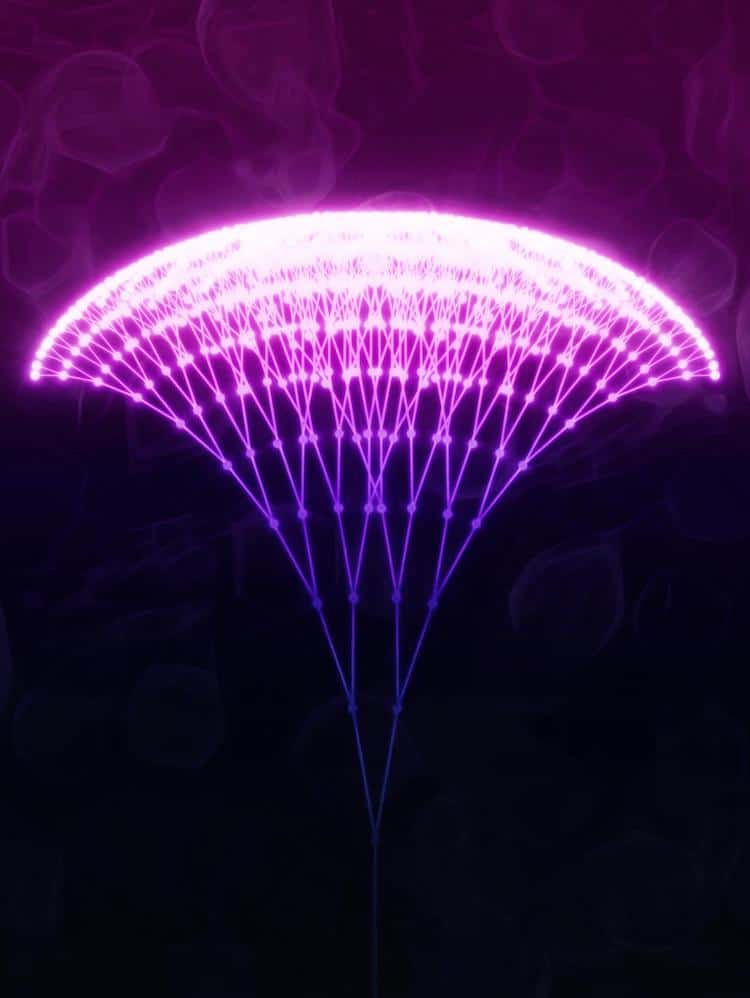
Researchers in the US, Poland and Korea have observed photon avalanching – a chain-reaction-like process in which the absorption of a single photon triggers the emission of many – in tiny crystals just 25–30 nm in diameter. This highly nonlinear phenomenon had previously only been seen in bulk materials, and team leader James Schuck says that replicating it in nanoparticles could lead to “revolutionary new applications” in imaging, sensing and light detection.

Photon avalanching involves a process known as upconversion, whereby the energy of the emitted photons is higher than the energy of the photons that triggered the avalanche. Materials based on lanthanides (chemical elements with atomic numbers between 57 and 71) can support this process in part because their internal atomic structure enables them to store energy for long periods of time. Even so, achieving photon avalanching in lanthanide (Ln) systems is difficult because high concentrations of Ln ions are needed to keep the avalanche going, and the relatively large volume of material required has previously restricted applications.

Add more lanthanide

In the latest work, Schuck and colleagues at Columbia University, together with collaborators at Lawrence Berkeley National Laboratory, the Polish Academy of Sciences and Sungkyunkwan University, observed photon avalanching in Ln nanocrystals after exciting them with a laser at near-infrared wavelengths of either 1064 or 1450 nm. The crystals are based on sodium yttrium fluoride (NaYF4) in which 8% of the yttrium ions have been replaced with thulium. This doping fraction is much higher than the 0.2–1% typically found in previous work on photon avalanching.

Schuck and colleagues found that in their best-performing devices, the intensity of the upconverted emission from their doped nanocrystals scales with the 26th power of the intensity of the exciting lasers – meaning that a 10% change in incident light produces more than a 1000% change in emitted light. This extreme nonlinearity far exceeds previously reported responses for Ln crystals and is not possible in other nonlinear optical materials.

And that’s not all. Co-team leader Arthur Bednarkiewicz tells Physics World that an effect that occurs due to a phenomenon called concentration quenching, and that is usually detrimental in upconverting lanthanide-based luminescent materials, appears in this material as a positive chain reaction, similar to optical gain. It thus enables photon avalanching.

Unprecedented nonlinear response

According to the researchers, the unprecedented nonlinear response they observed means that avalanching nanoparticles might be used to create an optical imaging system with a resolution of just 70 nm. This would be well below the diffraction limit, which dictates that features smaller than about half the wavelength of the illuminating light cannot be resolved.

“In such an application, the particles would effectively be employed as luminescent probes and the technique could work using a simple scanning confocal microscope,” says Changhwan Lee, the study’s lead author and a member of Schuck’s group.

Bednarkiewicz adds that the “perfect photostability” of the photon avalanching nanoparticles gives them an advantage over alternative probe particles such as organic dyes or fluorescent proteins. Whereas the fluorescence from these other materials tends to fade away under prolonged illumination, Bednarkiewicz says that emissions from the nanoparticles “can last almost infinitely and may enable long-term sub-diffraction observations.”

The nanoparticles do have some drawbacks. At 25 nm in diameter, they are larger than the organic fluorophores routinely employed in biological sensing applications. Their surface also needs to be functionalized (that is, it needs to have certain chemical groups incorporated to promote desired reactions) before they can sense specific biological molecules. A further drawback is that the nanoparticles emit just a single colour of light, and the avalanching process has a relatively long onset time (from tens to hundreds of milliseconds). However, Schuck and colleagues say that – as with any new technology – further optimization is possible, and some of these drawbacks may be overcome in later work.

For now, the researchers are focusing on ways to use the nonlinear behaviour they have observed for biological and environmental sensing – for example, to detect pathogens such as viruses, bacteria and fungi in biological fluids, blood or tissue. Other possible uses might include sensing changes in temperature, pressure and humidity.

Bednarkiewicz adds that the photon avalanching nanoparticles may also find applications more broadly, in areas ranging from mid infrared photon detection and nanolasers to optical neuromorphic computing and optogenetics. “Our present and past studies will certainly be of interest to the scientific luminescence community since they redefine the fundamental concepts and requirements for achieving photon avalanching at the nanoscale,” he says.

The research is detailed in Nature.

Cosmic-ray detector might have spotted nuggets of dark matter

A series of mysterious events recorded by a cosmic-ray observatory a decade ago could be the signature of an unusual form of dark matter called “axion quark nuggets” – according to Ariel Zhitnitsky of the University of British Columbia in Canada. These nuggets are hypothetical bundles of antiquarks (or quarks) wrapped inside a layer of axions that would only reveal their presence when passing through dense regions of the universe such as stars and planets.

Zhitnitsky proposed axion quark nuggets in 2003 to explain a property of dark matter that otherwise requires artificial tuning of certain physical parameters – the fact that the densities of dark matter and visible matter in the universe are very nearly the same, when they could in principle be completely different.

Axion quark nuggets are an adaptation of the idea of strange matter, put forward by Edward Witten in 1984. Particles containing up, down and strange quarks are usually unstable and decay rapidly, but the Pauli exclusion principle leaves open the possibility that a large enough number of such quarks could create dense stable entities known as stranglets – since more of the quarks would occupy lower energy states than is the case in normal matter containing only up and down quarks.

Encased in axions

Zhitnitsky built on this by encasing these particles with a layer of axions. Axions are hypothetical particles postulated in the late 1970s to ensure that neutrons could be described in terms of the strong force without breaking charge-parity (CP) symmetry. Later, axions became a candidate for dark matter. In the case of axion quark nuggets, they would enclose dark matter made up of quarks rather than forming the dark matter themselves.

The idea is that the universe would contain equal quantities of matter and antimatter at all times. Early on in cosmic history, CP-violating axions would have led to the creation of more nuggets containing antiquarks than those containing quarks. Conversely, there would have been more quarks available for nucleosynthesis than there were antiquarks. The net result would be a visible universe dominated by quark matter while most of the mass inside nuggets – the dark matter – would consist of antiquarks.

With the density of nuclear matter, these nuggets could have macroscopic masses — perhaps about 10 g — while measuring less than a thousandth of a millimetre across. They would interact extremely weakly with other matter and in the rarified environment of deep space would remain almost entirely inert. Only in the presence of more dense matter, such as at the centre of galaxies or in planetary atmospheres, could they reveal their presence.

Anomalous bursts

According to Zhitnitsky, the Telescope Array in Utah, US, might have seen such interactions. The observatory, run by an international collaboration, uses hundreds of scintillation detectors spread out over nearly 700 km2 to detect the air showers produced when very high-energy cosmic rays interact with nuclei in the Earth’s atmosphere. However, a small part of the data collected by the array between 2008 and 2013 appears anomalous.

In 2017, the collaboration reported having observed what it described as 10 short bursts of detections that looked different to normal cosmic-ray air showers. It calculated that there was less than a one in 10,000 chance that these bursts, involving the recording of at least three microsecond-long air shower events within a millisecond, could have been due to the random coincidence of individual air showers. What is more, all of those events took place during thunderstorms – the bursts being strongly correlated with lightning strikes in both time and space.

In a paper accepted for publication in Journal of Physics G, Zhitnitsky explains that these events can be very naturally explained by axion quark nuggets. He says that some of the antiquarks inside nuggets streaming in from outer space would annihilate with atmospheric quarks, generating a range of particles including positrons. He argues that is only when the nuggets pass through the strong electric fields beneath thunderclouds that these positrons would be liberated in sufficient quantities and then accelerated to the high energies that allow them to travel several kilometres through the atmosphere and into the detectors on the ground.

As to why the nuggets lead to clusters of detections, he says that the thunderclouds’ electric fields fluctuate continuously. In other words, a nugget must pass through a region of the field aligned with the detector array to yield detectable positrons. From other regions there will be no signal.

Lower-altitude origins

In his paper, Zhitnitsky lists several other characteristics of the bursts that he claims point to their being generated by axion quark nuggets. These include the fact that the bursts originate at much lower altitudes than conventional cosmic-ray showers. In addition, he says, the measured energies of the individual events are five to six orders of magnitude higher than would be expected from their rates – given that more energetic cosmic rays tend to be rarer.

Beyond the anomalies seen by the Telescope Array, Zhitnitsky argues that a range of other astrophysical and experimental data also point to this type of nugget. These include a very pronounced, but much debated seasonal variation in events recorded by the DAMA/LIBRA detector in the Gran Sasso National Laboratory in Italy – which he reckons could be due (indirectly) to the nuggets rather than weakly interacting massive particles.

Establishing whether these particles really are responsible for the strange-looking air showers should be relatively straight forward, he reckons. For one thing, he says, tens of kilometres of optical fibre could be used to try and pick up the acoustic and seismic signals that would accompany any incoming nuggets. Another tell-tale sign would be a very short radio pulse with a frequency of up to a few hundred megahertz that would be generated alongside the accelerated positrons.

Others, however, doubt that the Telescope Array has seen axion quark nuggets. Pace VanDevender, who leads the MQN Collaboration also investigating quark-nugget dark matter, reckons that the positrons would be annihilated long before they could reach the detectors on the ground – estimating their range in the atmosphere to be about 1 mm rather than several kilometers. He thinks that seismic detectors could potentially pick up a signal from nuggets reaching Earth but cautions that event rates “will need to be carefully calculated” before setting up an array of such sensors.


How can wildfires trigger thunderstorms?

Spectacular fire-driven storm clouds can form when extreme wildfires occur in certain conditions.  Scientists are only beginning to understand this phenomenon – known as pyrocumulonimbus – and its implications for the global climate system. Listen to this episode of the Physics World Weekly podcast to hear the full interview with David Peterson – a meteorologist at the US Naval Research Laboratory, in Monterey, California.

Severe wildfires create towering thunderstorms, how to launch a new scientific society

Some wildfires produce so much heat that they create their own thunderstorms, which drive huge amounts of smoke high up into the atmosphere. In this episode of the Physics World Weekly podcast, the meteorologist David Peterson of the US Naval Research Laboratory describes how these pyrocumulonimbus events occur and why it is important to understand how the resultant smoke plumes affect the atmosphere on a huge scale.

Science is everchanging with new fields of study emerging at an increasing pace. As a result, researchers working in new areas can find themselves without a scientific society that meets their professional needs. The solution for Amy Berrington of the US National Cancer Institute and Suman Shrestha of the University of Texas MD Anderson Cancer Center was to join forces with like minded colleagues to form the International Society of Radiation Epidemiology and Dosimetry, or ISoRED – as they explain in this week’s podcast.

Multimodal spectroscopy detects brain tumours in vivo

Glioblastoma is the most common and aggressive malignant brain tumour in adults. Treatment relies mainly on surgical resection, but complete resection is difficult and improved methods for detecting regions of brain tumour are key to a positive outcome. Researchers in Italy have performed a proof-of-concept study showing that a combination of three different optical spectroscopic techniques has potential to improve the in vivo detection and delineation of malignant brain tumours and to guide their surgical removal.

The team used a multimodal optical fibre probe combining fluorescence, Raman and reflectance spectroscopy for in vivo examination of glioblastoma tumours in laboratory mice. The approach was able to classify malignant and healthy brain tissue with up to 97% accuracy. These preliminary results represent an additional step toward eventual clinical use.

In research published in Neurophotonics, principal investigator Riccardo Cicchi, of the National Institute of Optics (CNR-INO) and the European Laboratory for Non-Linear Spectroscopy, and co-authors (also at the National Enterprise for nanoScience and nanoTechnology) conducted a study to discriminate healthy brain from glioblastoma tissues through the combination of Raman and reflectance spectroscopies. They used label-guided fluorescence to detect areas of tumour, followed by Raman and reflectance spectroscopies to examine and classify healthy and diseased tissues based only on their intrinsic molecular composition and oxygenation.

Laser-induced fluorescence spectroscopy has been widely used to discriminate malignant from healthy tissues. The researchers believe that diffuse reflectance and Raman spectroscopies could provide supplemental information. Diffuse reflectance is based on the ratiometric measurement of the spectrum of light backscattered by the tissue compared with the illumination spectrum. The measured spectrum characterizes tissue chromophores and scatterers related to the physiologic conditions of the tissue under investigation. Raman spectroscopy, based on inelastic scattering processes, generates a vibrational spectrum that’s characteristic of specific molecules in the imaged sample.

In vivo investigation

For the study, the researchers implanted EGFP-GL261 tumour cells into the brains of eight laboratory mice. EGFP-GL261 is a murine glioma cell line similar to human glioblastoma that expresses enhanced green fluorescent protein (EGFP). A cranial window provided optical access to the implantation site, while a second window placed nearby provided access to healthy brain tissue.

Simplified experimental scheme

The researchers used fluorescence spectroscopy to localize cancerous areas in real time, by detecting the EGFP emission peak from 378 and 445 nm excitation. After placing an optical fibre probe at the point of maximum EGFP intensity, they then acquired fluorescence, Raman and reflectance spectra from the same region, and also performed spectral measurements on the healthy control tissue. They also developed a classification algorithm based on principal component analysis and linear discriminant analysis to discriminate the two tissue types based on their spectral profiles.

The tissue classification accuracies of Raman spectra and reflectance spectra were 92% and 93%, respectively. Combining both techniques improved the discrimination accuracy between healthy and tumour tissues up to 97%, due to the complementary information provided by the two techniques.

“Surgical resection plays a major role in current glioblastoma treatment, hence improving the detection of brain tumour areas in a fast and reliable way is key to a positive prognosis,” the authors write. “Our findings suggest that these spectroscopic techniques are able to recognize the altered metabolism of mouse glioma and its hypoxic environment.”

The researchers suggest that further investigations of brain tissues should also involve measuring absolute absorption, because tumours typically stimulate the formation of new blood vessels. They add that their successful use of EGFP labelling to precisely localize murine glioblastoma areas for recording Raman signatures could be a beneficial approach for other oncologic studies based on animal models.

With respect to use in humans, lead author Enrico Baria thinks that optical spectroscopy will be used to complement MRI. “A preoperative MR image will tell a surgeon where the tumour is grossly located,” he explains. “Then, a fibre-optic probe combining multiple spectroscopic techniques will be used for quasi-real-time detection of diseased areas, or – at least – for obtaining a quick diagnosis of suspicious tissues before their excision.”

“Optical spectroscopy will be used also for obtaining a fast diagnosis of the excised biopsies, in order to complement the results from standard intraoperative histopathology. In the far future, once the instrumentation and the analysis have been significantly improved, maybe optical spectroscopy will be used alone for some of these tasks,” Baria tells Physics World.

Copyright © 2026 by IOP Publishing Ltd and individual contributors