Several years ago Channel 4 in the UK broadcast an educational experiment called Jamie’s Dream School in which eminent experts in their field – including actor Simon Callow, historian David Starkey and journalist Alastair Campbell – delivered lessons to school students. As expected by almost every teacher in the country, they failed miserably to inspire and educate in the way that they intended. It is true that having physics graduates teach physics brings huge benefits to students and I agree with my fellow Physics World contributing columnist Jess Wade when she stated that “the importance of physics teachers has never been more critical”. However, the recent government drive in the UK to hire teachers with PhDs in physics or a technical subject leaves me feeling uncomfortable at best.
I often see a pattern with professional teachers in which the better they know the subject, the harder they find communicating it to students
I joined the teaching profession after studying geology at university, specializing in geophysics in my fourth year. I now have more than a decade of experience teaching in a range of schools and I value my undergraduate degree more than ever. After all, most of my A-level students study more than one science and the beauty of a geology degree is its breadth. As any earth scientist will tell you, geoscience is the most holistic of all the sciences. It includes everything from geochemistry, geomorphology, hydrogeology and geophysics to mineralogy, palaeontology, petrology, volcanology and stratigraphy. They each use aspects of biology, chemistry and physics to draw out the information from the clues left behind in the Earth. Indeed, I remember a petrology lab in which we used rudimentary detective skills to discern the order of crystallisation of minerals. It helped me see that my degree was not in one branch of science – it was in all of them.
After graduating I became a seismologist, but quickly began to miss the breadth of science that I had studied. So, I went into teaching where I taught all three sciences for younger pupils up to GCSE level and now aspire to do the same for 16–18-year-olds studying for A level. Many of my A-level students are learning several different science subjects at the same time, which in some cases means learning different simplifications of the same topics.
A good example is orbital shells. In A-level physics, we teach students that these are spherical and cloud-like, or in quantum physics, step-like. We do not attempt to address s, p, d and f shell configurations because that would be beyond the scope of the curriculum. But in A-level chemistry these shells are studied in more depth, including the order in which they are filled. If you are a physicist who specialized early, you may never have studied this phenomenon in the context of chemistry. Our students studying both A levels are exposed to both the chemistry explanation and the physics explanation, which are dramatically different.
Another example is in A-level biology, where students may find it easier to understand ventilation and gas exchange if they have studied pressure or similar examples in physics. A pure physicist will often not have been exposed to the range of topics covered by their students and will often miss opportunities to embed such examples into their teaching. Students therefore increasingly see the divide between the subjects rather than the overlap. They can struggle to see that one reinforces the other if their teachers are unable to show them where to start.
A ‘holistic’ approach
I often see a pattern with professional teachers in which the better they know the subject, the harder they find communicating it to students. The reason for this is the gulf that exists between the expert and the novice. To be a good educator, a teacher needs to understand the starting point of the student. They need to have an appreciation of the pitfalls and the common misconceptions that many students fall into and a range of different techniques to get them out.
A physicist with a deeply engrained specialism is simply further from the students’ position on the timeline of learning and typically finds it harder to identify with their position and help them out of it. A graduate with a more holistic degree, however, who has self-studied hard to revise those topics that they are less familiar with, is closer to the level of the student. Their subject knowledge isn’t as robust, but once established as teachers, the breadth of their knowledge is more inclusive, and the depth of knowledge is closer to what the student needs.
This thinking can also be applied to school and sixth form physics departments. You want teaching staff to be flexible and in touch with the needs of your students, but you also need the expertise to establish academic rigour and guide high-achieving students. A good department has a mix of both kinds of teacher: those with subject expertise and those with broad experience of the sciences. Give them time and space to support one another and the benefits will be plain to see.
New insights into how brain injuries occur have been gleaned from a simple study of how an egg yolk is deformed when rotational forces are applied to its outer shell. The experiments were done by Ji Lang, Rungun Nathan and Qianhong Wu at Villanova University in the US, who conclude that brain injuries are far more likely to result from rotational impacts on the skull than from direct translational impacts. Their work provides new insights into how soft matter behaves and could lead to a better understanding of how certain sports injuries occur.
In living organisms, it is common to find highly deformable soft matter that is bathed in a liquid and enclosed in a rigid container. A familiar example is the human brain, which is surrounded by a thin layer of cerebrospinal fluid and encased in a hard skull. It is now widely believed that sudden translational and rotational impacts on the skull will temporarily deform the soft brain, potentially causing serious injury as intricate networks of neurons are disrupted. To study these impacts in further detail, Wu’s team exploited the similarities between the brain with a simpler system: a soft egg yolk surrounded by fluid white and encased in a hard eggshell.
Past studies have explored how soft matter deforms in response to rapidly changing shear and spinning forces in surrounding fluids. Wu and colleagues extended this research by looking at how egg yolks deform during non-destructive translational and rotational impacts on their outer shells. To do this, they devised a simple experiment involving a kitchen gadget that scrambles an egg in its shell. This allowed the team to subject yolks to a variety of shear and spinning flows and image their deformation over time.
Expanding yolk
The images revealed that the yolks only deformed slightly in response to translational impacts but were highly sensitive to rotational impacts – particularly those involving deceleration. In this case, the researchers determined that the fluid pressure outside the yolk initially becomes larger than the centrifugal force of the fluid enclosed by its delicate membrane, leading to compression at the centre of the yolk. However, if the outer shell’s rotation suddenly stops, these centrifugal forces will become far greater than the outside pressure. This means the yolk will no longer hold its shape and will expand into the surrounding fluid.
The team’s results offer new insights into why brain injuries appear to be more likely to occur after certain types of impact, particularly in sports. Here, rapid rotational decelerations can occur in situations ranging from a boxer’s uppercut to the chin, to impacts on irregularly shaped helmets, like those used in ice hockey. The research may also inform future studies of membrane-enclosed soft matter, including red blood cells and spinning droplets.
Kathie Carrington is director of applications and training at LifeLine Software, Inc. Company of LAP Group. She has more than 25 years of radiation oncology experience, having held positions from radiation therapist, dosimetrist and department director. She joined Lifeline Software in 2012 and has been connecting radiation therapy departments with software that increases productivity and safety ever since.
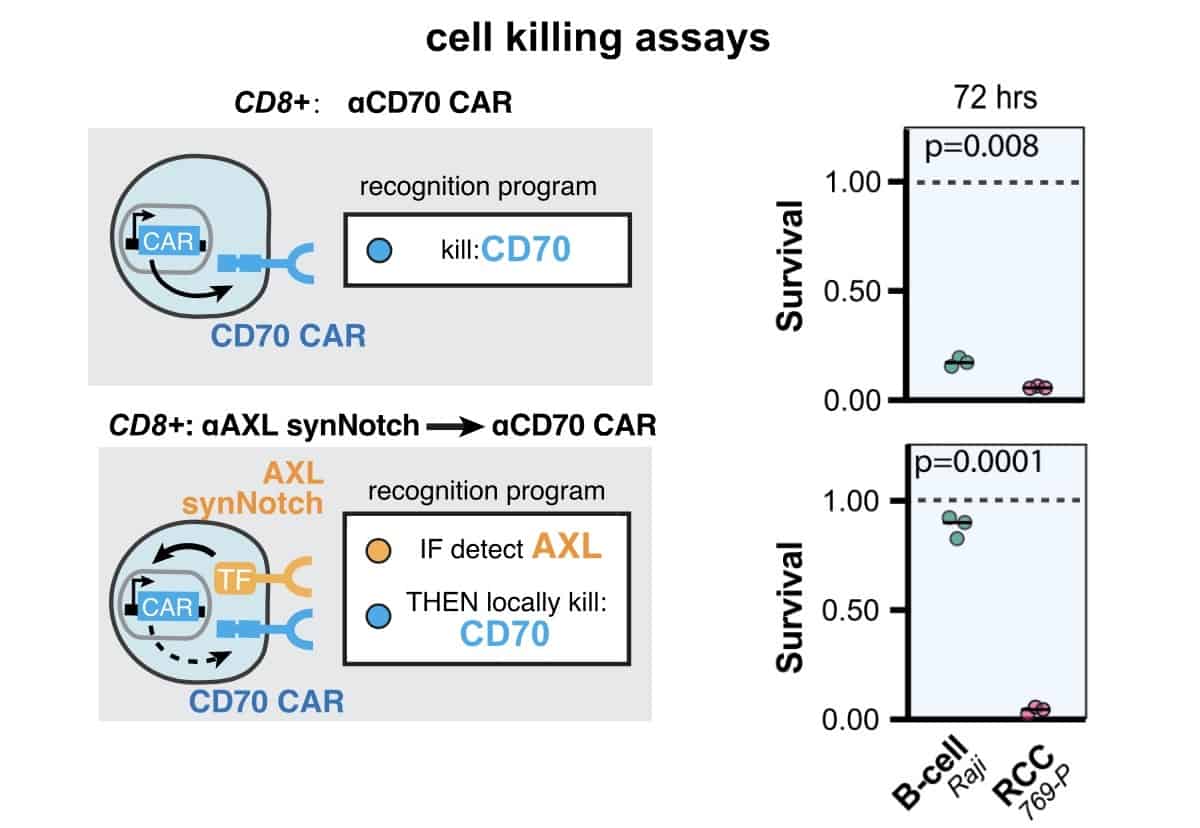
The marker CD70 is found both in kidney tumours (RCC) and healthy blood B cells. Only targeting CD70 results in off-target killing of B cells. Adding the need to first identify another kidney tumour marker, AXL, that’s absent in B cells led to a drastic increase in their survival. In both cases, cancer cells are killed. (Courtesy: Cell Systems 10.1016/j.cels.2020.08.002)
One of the biggest challenges in cancer therapy is to develop drugs that are as selective as possible, so as to target cancer cells while leaving healthy surrounding tissues intact. Over the last decade, the development of chimeric antigen receptor (CAR) T cell-based immunotherapies has brought us significantly closer to solving this challenge. These therapies involve collecting from a patient’s blood the immune system T cells responsible for identifying and killing cancer cells, and engineering them to produce new surface proteins (CAR) that recognise specific markers – antigens – on the tumours. Once reinjected into the patient’s bloodstream, these CAR-T cells can identify and attack cancer cells more effectively.
While CAR-T cells have proved efficient for treating blood cancers such as leukaemia and lymphoma, solid tumours, such as found in the breast, liver or lung, have been more difficult to vanquish. Many of the markers characteristic to those tumours are also found in normal tissues, causing the destruction of both, as CAR-T cells do not distinguish between healthy and diseased cells. The challenge has hence shifted from “how do we target cancer cells” to “how do we do this while ensuring healthy tissues are left unharmed”.
A possible approach has recently been presented in two complementary articles by Wendell Lim’s research group at University of California San Francisco and Olga Troyanskaya’s group at Princeton and the Flatiron Institute of the Simons Foundation. The researchers combine machine learning and cell engineering techniques to create CAR-T cells that, instead of recognising just one antigen, use Boolean logic (AND, OR and NOT operators) to target combinations of up to three antigens. For example, if antigens A and B are mostly found in tumours but can also be present in healthy cells, while C is only found in normal tissues, the combination “A” OR “B” AND NOT “C” would help differentiate the tumour from normal tissues.
“Currently, most cancer treatments, including cell therapies, are told ‘block this’ or ‘kill this’,” explains Lim. “We want to increase the nuance and sophistication of the decisions that a therapeutic cell makes.”
Preventing off-target killing of healthy cells
In the first article, published in Cell Systems, the researchers investigated the efficiency of antigen combinations to distinguish normal and cancerous tissues in a database of the human genome containing 2358 antigens. A clustering-based score sorted over 2.5 million antigen pairs and approximately 60 million triple antigens. Pairing antigens using either AND or NOT logic gates significantly improved tumour recognition, outperforming well-established single antigens already investigated clinically, in 33 tumours and 34 normal samples.
These Boolean instructions can be programmed into CAR-T cells via synthetic Notch receptors (synNotch), one of the latest developments in cell engineering. Briefly, when a protein binds the Notch receptor, a portion of the receptor breaks off and heads for the cell nucleus, where it acts as a switch to turn on other genes. This allows cells to behave like molecular computers that can sense their environment and then integrate that information to make decisions.
To prove the accuracy of the method, the researchers programmed synNotch receptors to recognise two markers found in kidney tumours, CD70 and AXL, using an AND gate. Targeted separately, CAR-T cells would result in off-target damage, as CD70 is also widely present in healthy blood cells and AXL can be found in healthy lung tissues. But targeting both using an AND gate not only suppressed their expression in tumours in vitro, it also ensured that normal tissue containing just one of these antigens were left unharmed. For example, Raji B cells, which are found in the blood and express CD70, had a survival rate close to 100% with the two antigens, while only around 20% survived when only CD70 was targeted.
Adding a third antigen in the combination helped improve the overall performance across several types of tumour. It also revealed the importance of NOT gates, with 92 of the top-100 combinations of gates for each cancer having at least one such gate. This further highlights the importance of NOT gates in preventing toxic cross reactions, while also significantly improving the correct identification of challenging tumours, such as cholangiocarcinoma, a type of cancer that forms in bile ducts.
New killing strategies
In a second study, published in Science, Lim’s research team expanded on their initial work and daisy-chained multiple synNotch receptors to create a host of complex cancer recognition circuits. The “plug-and-play” nature of synNotch enabled them to customize circuits with diverse Boolean functions, allowing for precise recognition of diseased cells and a range of responses when those cells are identified.
Such circuits can be used in complex scenarios. For example, an antigen localized on the surface of a cell can be targeted, and the decision whether or not to launch the killing process would then be tied to the presence of a second cancer antigen inside the cell. Since CAR-T cells are usually restricted to recognising extracellular antigens, which only represent about 25% of a cell proteome, resorting to this Boolean logic enables targeting of new cancer antigens. As the researchers demonstrated in vitro with melanoma cells, this dual intracellular–extracellular targeting approach both improved specificity and reduced off-target killing.
In vivo experiments also showed promising results. The researchers injected a mouse presenting different tumours in each flank – one with two antigens, one with the same two antigens plus an additional third – with a three-antigen-AND-gate T cell composed of three sequentially linked receptors. Allowed to autonomously explore and act on both tumours, the T cells rapidly cleared the three-antigen tumours while ignoring the two-antigen tumours on the opposing flank, similarly to the results observed in vitro.
The possibilities are endless as these smart cells can be designed to fight all kind of tumours. Lim’s group is now exploring how these circuits could be used in CAR-T cells to treat glioblastoma, an aggressive form of brain cancer that is nearly always fatal, using conventional therapies.
“You’re not just looking for one magic-bullet target. You’re trying to use all the data,” Lim says. “We need to comb through all of the available cancer data to find unambiguous combinatorial signatures of cancer. If we can do this, then it could launch the use of these smarter cells that really harness the computational sophistication of biology and have real impact on fighting cancer.”
The morning of Saturday 7 November 2020 was bright and sunny in Manhattan. I was working in my apartment when I heard a growing clamour outside. At first it was only shouts, but soon I heard whistles, blaring horns, and the banging of pots and pans. People began dancing in the streets and on fire escapes, and hanging out of windows. Others congregated on rooftops. An amplifier began booming Stevie Wonder’s “Signed, Sealed, Delivered”, then Three Dog Night’s ebullient “Joy to the World”. It was like a spontaneous New Year’s Eve celebration, but in the morning and without fireworks.
I knew immediately. After four uncertain days since Americans had gone to the polls, the US presidential election had just been called, thanks to the results of the vote tally from Pennsylvania. Joe Biden had clinched victory over Donald Trump (though it was still to take several weeks before he begrudgingly and gracelessly began the transition of power). Non-US citizens may not appreciate just how emotional the moment was to people such as myself, nor why the joy was so intense. A man who had, in my view, ravaged the country he was supposed to govern was heading for the exit – and not a moment too soon.
Later that evening in his victory speech, Biden mentioned science twice, referring to the need to “build on bedrock science” to help fight “the great battles of our time”, among which he included fighting the pandemic and climate change. A few moments later, vice-president-elect Kamala Harris told viewers that they had chosen “hope, unity, decency, science – and, yes, truth”. Biden, who the next day appointed eminent scientists to develop plans to cope with COVID and climate change, would replace the man who had labelled each a hoax.
Politicians can evoke science as facilely as they do the Bible. Even Donald Trump did so
The one who all but failed to act on a virus that had affected over 15 million Americans and killed more than a quarter of a million would be replaced by one who would. Biden is to be inaugurated as the 46th US president on 20 January.
“Science returns to the White House,” said a friend.
Not so fast, I thought.
Means to an end
Politicians can evoke science as facilely as they do the Bible. Even Trump did so. After accepting the Republican nomination last summer, Donald Trump claimed that his own administration was “focusing on the science, the facts and the data” and accused his opponent Biden of not “following the science” – remarks that brought to mind my favourite anti-Trump lawn sign last year: MAKE ORWELL FICTION AGAIN. Even supposedly respectable politicians can ignore scientific findings if the science points to sufficiently unpopular actions. Imagine the reception if one of today’s politicians were to defend a plan to fight climate change by building hundreds of new nuclear-power stations because “the science” said so.
Wisely incorporating science into policies requires three abilities. First, it requires knowing how to listen. Politicians don’t read journal articles but hear voices, and scientific voices are only a tiny subset of the ones clamouring for attention. Those “following the science” know to listen differently to the voices reporting findings that have been checked and cross-checked by peers, and know how to pick out advice from advocacy. Science literacy, it is said, means the ability to choose one’s experts wisely. It’s like the discernment required when choosing a guide to take you to the top of a challenging mountain.
Trump, notoriously, lacked that discernment. Instead, he treated hearsay – and the voices inside his head – as more authoritative than those of respected scientists. He fired the head of his Climate Assessment Panel, as well as the director of the Department of Health and Human Services’ Biomedical Advanced Research and Development Authority, for voicing results that challenged own opinions. He actively sought to destroy the integrity of scientific institutions, and regarded science as a mere “special-interest” group. Over half his term elapsed before he had a science adviser.
Using science effectively requires recognizing the range of policy alternatives suggested by the findings
Second, using science effectively requires recognizing the range of policy alternatives suggested by the findings. There are almost always more than one, and the findings are often imprecise, underdetermined or conflicting – which is most overt when models are involved, as in climate-change predictions. This is like understanding the full range of possible routes up the mountain.
Finally, there’s judging which of the possible paths you can take given your abilities, limited budgets and allies. “Politics is the art of the possible, the attainable,” as the German statesman Otto von Bismarck famously said, “the art of the next best.”
That point was brought home to me when I attended a conference on how to handle a situation that seemed intractable given the radically different and incompatible demands of scientists, politicians, administrators and community members. I remember a scientist outlining his carefully worked out approach, then concluding, “It’s the perfect solution, but it’s not implementable.” The room fell silent. Then, from the back, a voice said softly and clearly, “If it’s not implementable, it’s not a solution.” The pause reflected the participants’ discomfort with the decisive role that politics plays in such situations.
Donald Trump was unable to listen, recognize or judge, while Joe Biden seems to be able to do all three.
The critical point
Several months ago I spoke to a former science administrator of the Department of Energy (DOE) about a disastrous episode in which a valuable scientific instrument was terminated in the wake of disagreements between politicians, DOE officials, laboratory scientists and community members. I asked her what would have made things turn out better. “Trusting relationships,” she said, “between each of those parties.”
Trusting relationships provide the background that allows one to listen, recognize and judge in the first place. Such trust takes a long time to develop – and you can’t vote it in.
Gases flow through a porous membrane at ultrahigh speeds even when the pores’ diameter approaches the atomic scale. This finding by researchers at the University of Manchester in the UK and the University of Pennsylvania in the US shows that the century-old Knudsen description of gas flow remains valid down to the nanoscale – a discovery that could have applications in water purification, gas separation and air-quality monitoring.
Gas permeation through nano-sized pores is both ubiquitous in nature and technologically important, explains Manchester’s Radha Boya, who led the research effort along with Marija Drndić at Pennsylvania. Because the diameter of these narrow pores is much smaller than the mean free diffusion path of gas molecules, the molecules’ flow can be described using a model developed by the Danish physicist Martin Knudsen in the early decades of the 20th century. During so-called Knudsen flow, the diffusing molecules randomly scatter from the pore walls rather than colliding with each other.
Until now, however, researchers didn’t know whether Knudsen flow might break down if the pores became small enough. Boya, Drndić and colleagues have now shown that the model holds even at the ultimate atomic-scale limit.
Measuring gas flow through atomic-sized holes
The Manchester-Pennsylvania team performed their experiments on 0.3 nm-wide holes drilled in a monolayer of tungsten disulphide (WS2), a two-dimensional material. Until recently, the only way to check that such holes were present and of the right size was to inspect finished samples using high-resolution aberration-corrected scanning transmission microscopy (AC-STEM). While this “manual inspection” method is accurate, it is also painstaking, says team member Ashok Keerthi. As an alternative, Drndić and colleagues developed a technique for making hole-filled samples using focused ion beam (FIB) irradiation, which they demonstrated last year.
In the present work, the researchers created a system for measuring gas flow through atomic-sized holes and used their flow measurements to quantify the density of holes in a sample. To do this, they mounted their samples on silicon chips and placed them between two vacuum chambers: one at variable pressure and the other held at high vacuum and connected to a mass spectrometer. The samples were sealed in with O-rings, so that the holes in the WS2 membrane were the only connecting path between the two chambers through which gas molecules (helium, in this case) can flow, Boya explains.
Close to values predicted by Knudsen theory
The researchers found that the WS2 monolayers containing atomic-sized pores are mechanically robust and that helium gas flows through them rapidly. The flow values they measured are within an order of magnitude of the values predicted by Knudsen theory and, surprisingly, there is no (or only a minimal) energy barrier to the flow through the pores.
“Our work has enabled a robust method for confirming the formation of atomic apertures over large areas using gas flows,” Boya says. This method is, she adds, “an essential step for pursuing their prospective applications in various domains, including molecular separation, sensing and monitoring of gases at ultra-low concentrations”.
Members of the teams say they now plan to further investigate the pores’ stability over time. “We also plan to look into gas separation through these tiny structures,” Drndić tells Physics World.
A new device that produces entangled pairs of electrons by the application of heat has been unveiled by international team of researchers led by Pertti Hakonen at Aalto University in Finland. The device works by splitting up Cooper pairs of electrons in a superconductor — and then collecting the entangled electrons. This ability to produce entangled, tuneable electrical signals could be an important step towards creating new electron-based quantum technologies and research applications.
Entanglement is a purely quantum-mechanical phenomenon that allows two or more particles, such as electrons, to have a much closer relationship than is predicted by classical physics. Once considered an exotic consequence of quantum physics, entanglement now has very practical applications in quantum computing and quantum sensing. As a result, physicists are very keen on developing new and better ways of creating entangled particles.
Temperature gradient
When a temperature gradient is applied across a conducting material, its electrons will diffuse from the hot side to the cold side, generating a voltage. Known as the Seebeck effect, this phenomenon is widely exploited in modern technologies, including thermoelectric power generators and temperature sensors.
A Cooper pair comprises two entangled electrons that are bound together within a superconductor. Because Cooper pairs are bosons, they can condense at very low temperatures and flow with zero electrical resistance. The interaction that binds the electrons is long range and therefore the electrons in Cooper pairs do not necessarily have to be very close together.
In their study, Hakonen’s team created a tiny section of aluminium superconductor that is sandwiched between two tiny graphene electrodes that functioned as quantum dots – these are semiconductors that behave like artificial atoms with electron energy levels that can be tuned separately.
Nonlocal Seebeck effect
When the researchers applied a temperature gradient across their device, Cooper pairs within the superconductor split up. Thanks to the nonlocal Seebeck effect, electrons could then leave the superconductor by tunnelling through different quantum dots – which is encouraged by setting different energy levels on the two quantum dots. These electrons can then be extracted from the device by separate metal electrodes, one connected to each quantum dot. Because the two electrons were quantum-mechanically entangled in a Cooper pair, they maintain this special relationship when separated.
By tuning the quantum dots, the team could vary relative contributions to the currents of electrons from Cooper pair splitting and another process called elastic co-tunnelling. This gave the team control over the two output signals of their device.
The new device could have a wealth of potential applications in electron-based quantum technologies. Furthermore, the tuneability of the device could soon facilitate fundamental tests of theoretical concepts in entanglement and thermodynamics.
Computed tomography (CT) and X-ray images can be used to determine whether bullets embedded in patients are ferromagnetic or nonferromagnetic, researchers in the US claim. This means doctors can now identify whether it is safe for a patient with gunshot wounds to undergo MRI scans, they say.
According to the Small Arms Survey, 40% of firearms in the world are owned by Americans. In 2017 a survey by the Pew Research Centre found that 44% of Americans know someone that has been shot, either accidentally or intentionally, with 3% of adults saying they have been shot.
Being shot can have important implications for medical diagnostics, even years later, as people with gunshot wounds are frequently denied MRI scans. This is because the composition of embedded bullet fragments cannot be identified to determine whether they are nonferromagnetic, or not.
Ferromagnetic materials are not safe in MRI scanners because the high-powered magnets that the machines use can heat or move them. This could burn the patient. And if the material is near a critical structure, such as the spinal cord, even small movements could cause significant damage.
Jason Allen, a neuroradiologist at Emory University in Atlanta, says that issues arise more frequently with patients that have been shot in the past. “They survive that injury and then they come along later, and they have a new problem,” he explains. “It is particularly problematic at that point because there is really zero chance of us knowing what kind of bullet they were shot with.”
MRI is important, Allen says, because there are clinical questions that doctors are unable to answer with other imaging techniques, particularly for issues related to the brain and spinal cord. “In terms of traumas, if we need to look for damage to those tissues, or someone may have had a stroke or a suspected stroke, these are things that we really need to define with MRI,” he explains.
Allen and his colleagues wondered whether bullets made from ferromagnetic and nonferromagnetic metals deformed and broke up in different ways on impact, leaving identifiable differences in the debris embedded in those who had been shot. This could allow the composition of the bullets to be determined from images taken using non-magnetic radiological techniques, to check MRI safety.
To test this, the researchers fired handgun and shotgun ammunition commercially available in the US into blocks of ballistic gelatin – a material that is an analogue for human tissue and is used to simulate the effect of bullet impact. They then took CT and X-ray images of the gelatin blocks.
The team were able to distinguish between ferromagnetic and nonferromagnetic fired bullets, they report in the American Journal of Roentgenology. They found that a bullet that leaves a metallic debris trail from entry to final position or has been appreciably deformed is of copper, copper-alloy or lead composition, or represents lead shotgun shot. These nonferromagnetic materials deform more because they are softer than ferromagnetic metals. Based on this, the researchers created a simple triage algorithm for patients with retained ballistic fragments that doctors can follow to determine MRI safety. “This can be done by any radiologist of any background,” Allen says.
Proposed algorithm for triage of patients with embedded ballistic projectiles who need to undergo MRI, with recommendations for MRI shown in bold. MRI conditional indicates imaging is safe at 1.5 T; ferromagnetic precautions indicate risk-benefit analysis is required before proceeding with MRI. (Courtesy: ARRS, AJR)
Allen and his colleagues also took MRI scans of unfired bullets suspended in ballistic gelatin blocks, and assessed magnetic attractive force, rotational torque and heating effects. Although ferromagnetic bullets showed evidence of having moved or rotated during the scans, nonferromagnetic bullets did not. None of the bullets tested showed heating above the US Food and Drug Administration limit of 2 °C. This shows that nonferromagnetic bullets do not pose a significant risk for MRI scans, regardless of when the injury occurred, the researchers say.
“We’ve scanned hundreds of these patients over the years, we’ve not had any cases where the patient has gone into the scanner based on this algorithm and had an injury of some sort, had a heating of the bullet or had a movement of the bullet,” Allen tells Physics World.
Theoretical physicists stare at blackboards, do calculations and make predictions. Experimental physicists build equipment, gather observations and analyse data sets. (At least, that’s how it goes at the best of times.)
The two groups are reliant on each other – experimentalists may be trying to prove a theory is right (or wrong), or perhaps theorists are trying to explain experimental observations. As the British theoretical physicist Arthur Eddington once wryly put it, “Experimentalists will be surprised to learn that we will not accept any evidence that is not confirmed by theory.”
But often, everyone is somewhat lost in a world of big ideas that cry out for clarity. It is only every once in a while that someone from one of these groups produces a piece of work that cuts through the murkiness, delivering a crystalline result that instantly advances their field, and sometimes even creates it.
In this article I have chosen what I think are the 10 greatest theoretical physics predictions of all time, presented in chronological order. Of course, any such list is somewhat arbitrary and depends on the author’s predilections, opinions and knowledge. Any reader will no doubt disagree with some, maybe all. We’d love to hear your own thoughts, comments and opinions, so get in touch at pwld@ioppublishing.org.
Kepler’s three laws, by Isaac Newton (by 1687)
British physicist and mathematician Isaac Newton was an early proponent of prediction through mathematical calculation. By creating his “fluxions” in 1665 – what we today call calculus (Gottfried Wilhelm Leibniz did so too independently at about the same time) – he made it possible to predict the motion of objects through space and time.
To do so, Newton took ideas from Galileo Galilei about force and acceleration, from Johannes Kepler and his three laws of planetary motion, and from Robert Hooke about how a planet’s tangential velocity compares to the radial force it experiences, with the gravitational force an inverse square law directed towards the Sun. Newton united all these notions and added ideas of his own to devise his three laws of motion and his universal law of gravity.
These four laws brought order to the study of the physical universe and, just as importantly, the mathematical tools to model it. In particular, Newton was able to derive Kepler’s three laws – which famously indicated that planets move in ellipses not circles – from pure mathematics, at the same time using them as a test bed for his various assumptions. For the first time straight mathematics allowed calculations about, and predictions of, the motions of celestial objects, the tides, the precession of the equinoxes and more, while making it at last clear that terrestrial and celestial phenomena were ruled by the same physical laws.
The Arago spot, by Siméon-Denis Poisson (1818)
The French mathematician and physicist Siméon-Denis Poisson once made a prediction he was convinced was wrong. Instead, his prediction about the prediction was wrong, and he had accidentally helped demonstrate that light was a wave.
In 1818 Poisson was among a number of scientists who proposed that the French Academy of Science’s yearly competition should be about the properties of light, expecting the entries to support Newton’s corpuscular theory – that light was made up of “corpuscles” (little particles). However, Augustin-Jean Fresnel – a French engineer and physicist – submitted an idea that built upon Christiaan Huygen’s hypothesis that light was a wave, with each point on its wavefront the source of secondary wavelets. Fresnal proposed that all these wavelets mutually interfered with one another.
Poisson’s chagrin The Arago spot can be seen at the centre of an interference pattern created by light from a point source diffracting around a circular object. The small bright spot demonstrates that light behaves as a wave. (CC BY SA Thomas Reisinger)
Poisson studied Fresnel’s theory in detail. He realized that Fresnel’s diffraction integrals implied that, at least for a point light source illuminating a disc or sphere, a bright spot would lie on the axis behind the disc. Poisson thought this was absurd as corpuscular theory clearly predicted there would be total darkness.
Poisson was so confident that, a version of the story goes, when the time came for the competition’s presentations, he stood up during Fresnel’s lecture and confronted him. François Arago – the mathematician and physicist who headed the competition’s committee – swiftly carried out the experiment in his laboratory with a flame, filters and a 2 mm metal disc attached to a glass plate with wax. To everyone’s surprise, and Poisson’s chagrin, Arago observed the predicted spot. Fresnel won the competition, and the speck has since been known as the Arago spot, Poisson spot or Fresnel spot.
Speed of light, by James Clerk Maxwell (1865)
In 1860 at King’s College London, UK, the Scottish physicist James Clerk Maxwell began to make deep progress in the fields of electricity and magnetism, converting the experimental ideas of Michael Faraday into mathematical form.
A series of publications culminated in the 1865 paper “A dynamical theory of the electromagnetic field” (Philosophical Transactions of the Royal Society of London155 459). Here, Maxwell derived a set of 20 partial differential equations (they were not yet cast into the vector calculus notation familiar to us until Oliver Heaviside in 1884), alongside six wave equations, three for each spatial component of the electric field, E, and the magnetic field, B. Maxwell concluded that he could “scarcely avoid the inference that light consists in the transverse undulations of the same medium which is the cause of electric and magnetic phenomena” – that is to say, he had predicted that light is an electromagnetic wave.
The wave (phase) speed, v, Maxwell derived was:
where μ is a medium’s permeability and ε its permittivity. Maxwell took the permeability μ of air to be 1, and using a value of ε for air established by a charged capacitor experiment, Maxwell calculated that the speed of light in air is 310,740,000 m/s. He compared this favourably to Hippolyte Fizeau’s measured value of 314,858,000 m/s and Jean Léon Foucault’s 298,000,000 m/s, concluding his inference that light was an electromagnetic wave was correct.
Anomalous perihelion precession of Mercury, by Albert Einstein (1915)
In the 1840s the French astronomer Urbain Le Verrier carefully analysed the orbit of Mercury. He found that, instead of a precise ellipse as predicted by Newton’s laws, the perihelion of the planet’s elliptical orbit – its closest point to the Sun – is shifting around the Sun. The change is very slow, just 575 arcseconds per century, but astronomers at the time could only account for 532 arcseconds from interactions with other planets in the solar system, leaving 43 arcseconds unaccounted for.
The difference, however small, bothered astronomers. They proposed a range of solutions – an unseen planet, a near infinitesimal change to the exponent of 2 in Newton’s gravitational law, an oblate Sun – but everything seemed ad hoc. Then, in 1915, as he was finishing his general theory of relativity, the German theorist Albert Einstein was able to calculate the influence of curved space on Mercury’s orbit, deriving this additional shift of the perihelion precession as:
where a is the semimajor axis of the planet’s ellipse, T its period, e its eccentricity and c the speed of light.
For Mercury, this comes to exactly 43 arcseconds per century, precisely the missing amount. While strictly speaking this was a postdiction, it was nonetheless impressive. “Can you imagine my joy,” Einstein wrote to Paul Ehrenfest that year, “with the result that the equations of the perihelion movement of Mercury prove correct? I was speechless for several days with excitement.”
Second series of rare-earth elements, by Maria Goeppert Mayer (1941)
It’s not every day someone adds a new element to the periodic table, but German physicist Maria Goeppert Mayer went one step further and added an entire row.
While at Columbia University in the US – where she had to work without a salary because her husband was employed there – Mayer met Enrico Fermi and Harold Urey. Fermi was trying to puzzle out the decay products of uranium and elements that might lie beyond it, as element 93, neptunium, had just been discovered by Edwin McMillian and Philip Abelson. Fermi asked Goeppert Mayer to calculate the eigenfunctions of Erwin Schrödinger’s equation for the 5f electron orbitals of atoms near uranium (atomic number Z = 92) using the Thomas–Fermi model for the potential energy – a numerical statistical model developed independently by Llewellyn Thomas and Fermi in 1927 to approximate the distribution of electrons in high-Z atoms.
Numerically solving Schrödinger’s equation with the Thomas–Fermi potential for the radial eigenfunctions, Goeppert Mayer found the f orbitals start to be filled at critical values of Z (Z = 59 for 4f, and Z = 91 or 92 for 5f), with inaccuracies of a few units of Z expected due to the statistical nature of the model. At these critical values the atom ceases strong participation in chemical reactions. Mayer’s prediction verified Fermi’s suggestion that any elements beyond uranium were chemically similar to the already known rare-earth elements, thereby predicting the transuranic row. Goeppert Mayer would later share the 1963 Nobel Prize for Physics for development of the nuclear shell model.
Anomalous magnetic moment of the electron, by Julian Schwinger (1949)
During the Second World War, American theoretical physicist Julian Schwinger worked on wartime radar and waveguide technology, where he developed methods based on Green’s functions – a way of solving complicated differential equations by solving a simpler one giving the Green’s function, which can then be integrated to give the solution to the original. Complex in practice, it often can only be done perturbatively, but Schwinger was a master.
After the war, Schwinger turned his skill with Green’s functions to the pressing physics of the day, quantum electrodynamics (QED) – the interactions of electrons and light. After the work of Schrödinger and Paul Dirac, theorists now needed to include the self-interactions of the quantum, relativistic electron and photon fields to obtain the fine details of their behaviour. But calculations gave nasty infinities for measurable quantities like mass and charge. Schwinger was the first to hack through at least some of the mathematical minefields by using Green’s functions, and in a 1947 paper he gave his result for the so-called first-order radiative correction to the electron’s magnetic moment. His full theory culminated in a 1949 paper, with pages of dense equations predicting the first-order correction to be:
where α is the fine-structure constant (≈ 1/137) and μ0 the electron’s classical magnetic moment. This was quickly confirmed by experiment, and today the fraction α/2π resides atop Schwinger’s tombstone.
The establishment of QED – the most precise theory in science, whose fifth-order prediction for δμ for the electron has now been experimentally verified to 3 parts in 1013 – is important for the understanding of lasers, quantum computing and Mössbauer spectroscopy, and is the prototype on which the Standard Model of elementary particle physics is based on. Richard Feynman called QED “the jewel of physics”.
7.65 MeV energy level in carbon-12, by Fred Hoyle (1953)
In 1953 English astronomer Fred Hoyle made a prediction that he realized later in life was required because he, and all life, existed.
In the 1930s scientists such as Hans Bethe had established that stars get their energy from the fusion of atomic nuclei – of protons (hydrogen ions) into helium nuclei (alpha particles), then pairs of these into beryllium-8 (8Be). Beyond that process, scientists had figured out that nitrogen, oxygen and other nuclei formed from carbon-12 (12C). However, no-one knew how 12C arose from the unstable 8Be nucleus. The full path of how the elements arose from burning within stars or after the Big Bang were a mystery, yet 12C is all around us.
While the highly unstable 8Be nuclei would quickly decay back into two alpha particles, calculations proposing that three alpha particles combine to form 12C seemed to be ruled out, as the reaction’s probability is too low to explain the amount of carbon produced. However, Hoyle boldly predicted a new energy level in 12C, at 7.65 MeV above its ground state. This excited 12C state, known as the “Hoyle state”, was at just the right resonance to have been formed by 8Be reacting with an alpha particle. While the Hoyle state nearly always decays back into three alpha particles, on average once in 2421.3 decays it goes to 12C’s ground state, giving off the extra energy as gamma rays. The 12C atoms then either stay as they are or fuse with an alpha particle to make oxygen, and so on up the chain. When the star explodes in a supernova, carbon and other nuclei cool into atoms and populate the universe.
Some months after, an experimental group at the California Institute of Technology, led by Ward Wahling, found such a 12C state at 7.68 ± 0.03 MeV by doing magnetic analysis of the alpha particle spectrum from nitrogen-14 decay as they impacted 12C, thereby proving that Hoyle had correctly predicted the origin of one of the most important elements in the universe.
Parity violation in the weak interaction, by Tsung-Dao Lee and Chen-Ning Yang (1957)
Parity conservation – the idea that the world looks and behaves the same way whether viewed in a mirror or not – had been firmly established for electromagnetic and strong interactions by the 1950s. Almost all physicists expected the same to be true of the weak force. However, some decays of particles called kaons could not be explained using existing theories if parity conservation were true. The Chinese-American theorists Tsung-Dao Lee and Chen-Ning Yang therefore decided to look more closely at the experimental evidence for parity conservation in the known results of weak interaction physics. Surprisingly, they found none.
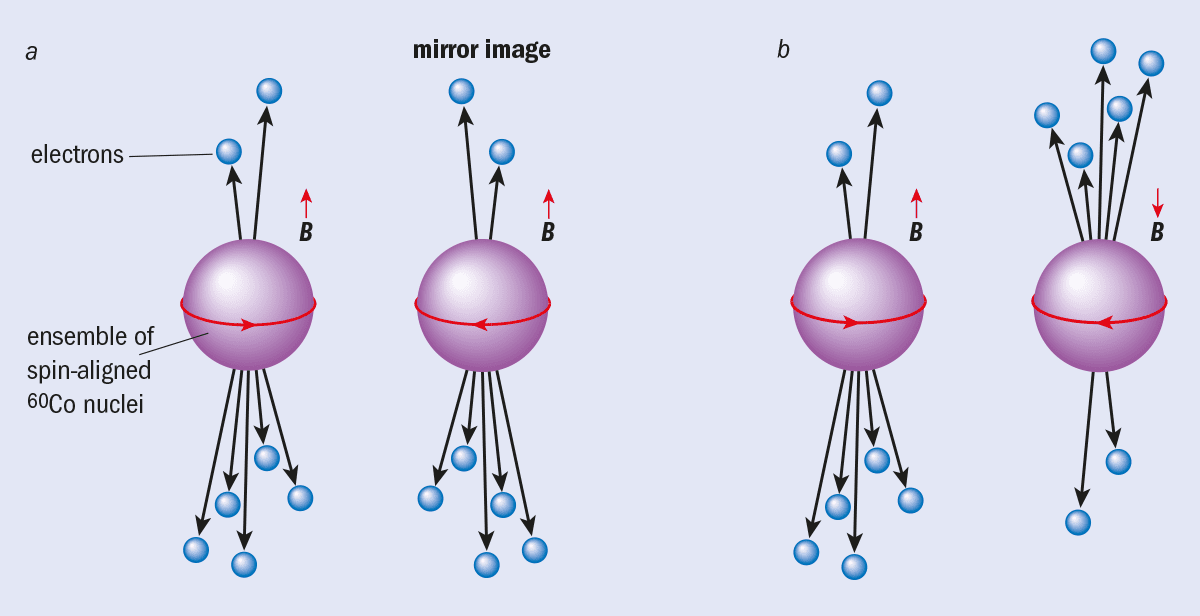
Parity violation To test Tsung-Dao Lee and Chen-Ning Yang’s theory, Chien-Shiung Wu looked at the emission of beta rays from cobalt-60 nuclei. It was first found that electron emission was concentrated downward relative to the particle’s spin. When the magnetic field, B, was reversed to change the spin direction, rather than seeing a mirror image of emission (a), they found that there were more electrons going upwards (b) – thereby proving parity violation for weak interactions.
As a result, the pair formulated a theory that left–right symmetry is violated by the weak interaction. Working with experimentalist Chien-Shiung Wu, they devised several experiments to look at different particle decays that proceeded via the weak force. Wu got on the case straight away, and by testing the properties of beta decay in cobalt-60, she observed an asymmetry that indicated parity violation and therefore confirmed Lee and Yang’s prediction.
The 1977 Nobel-prize-winning physicist Phillip Anderson once recalled teaching Brian Josephson as a graduate student at the University of Cambridge: “This was a disconcerting experience for a lecturer, I can assure you, because everything had to be right or he would come up and explain it to me after class.”
But because of this relationship, Josephson was quick to show Anderson calculations he had made about two superconductors separated by a thin insulating layer or a short section of non-superconducting metal. He predicted that a “DC supercurrent” composed of pairs of electrons (Cooper pairs) could quantum tunnel from one superconductor to another, right through the barrier – an example of a macroscopic quantum effect.
Josephson calculated the form of the current and phase rate of change for such a junction to be:
J = J1 sin (ΔΦ)
where J1 is a parameter of the insulating junction called the critical current and thus J is a dissipationless current. Φ is the phase difference between the Cooper pair wave functions on opposite sides of the barrier, e is that charge on an electron and V the potential difference between the superconductors.
Experimental observation of the DC tunnelling current appeared in print about nine months later by Anderson and John Rowell of Bell Telephone Laboratories (now Nokia Bell Labs), and Josephson would go on to win the 1973 Nobel prize for his prediction. Josephson junctions are now used in a variety of applications, such as in DC and AC electronic circuits, and to build SQUIDs (superconducting quantum interference devices) – technology that can be used as extremely sensitive magnetometers and voltmeters, as qubits for quantum computing, and more.
Dark matter, by Vera Rubin with W Kent Ford Jr (1970)
“Great astronomers told us it didn’t mean anything,” the American astronomer Vera Rubin once told an interviewer.
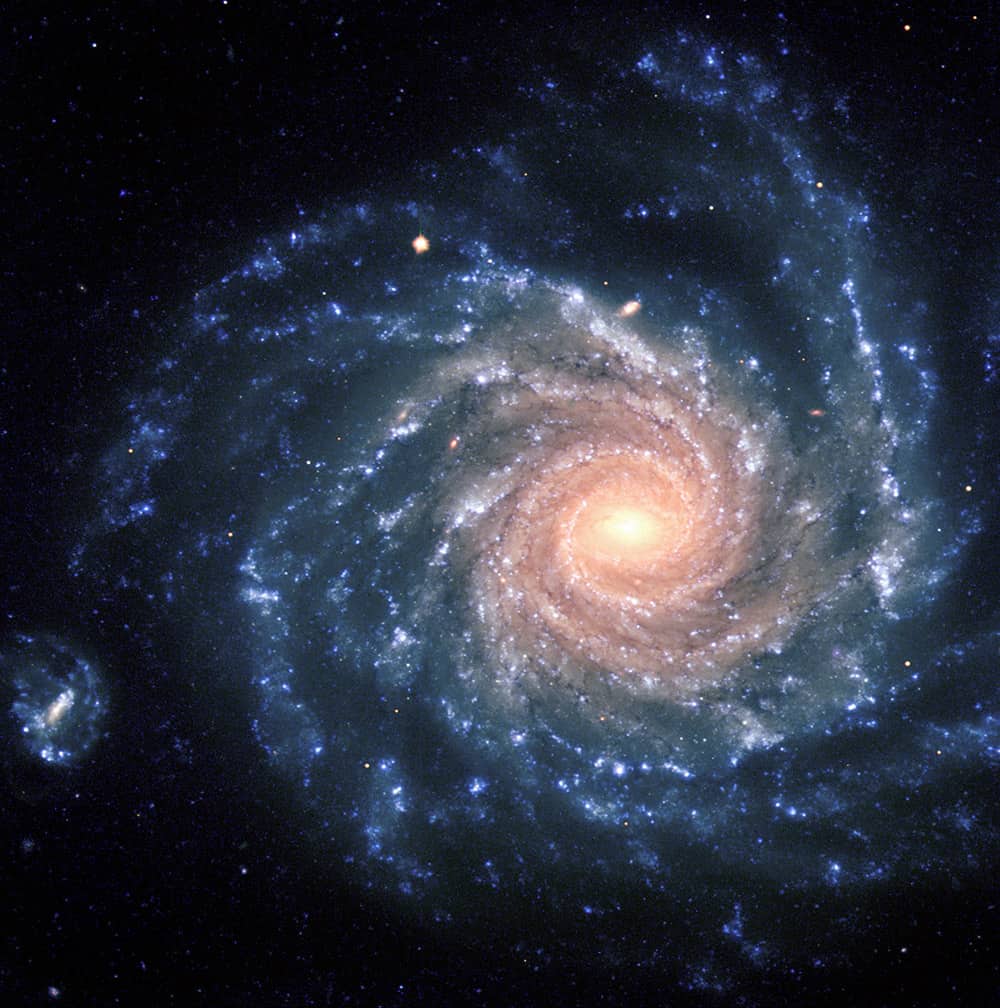
She was talking about her and Kent Ford Jr’s 1970 observation that outer stars orbiting in the Andromeda galaxy were all doing so at the same speed. They were told to look at more spiral galaxies; the effect persisted. The galaxies’ rotation curves (the plot of orbital speed of visible stars within the galaxy versus their radial distance to the galaxy centre) were “flat”, in seeming contradiction to Kepler’s law. More alarming still, stars near the outer edges of the galaxies were orbiting so fast they should be falling apart.
Spinning too fast Vera Rubin and Kent Ford Jr’s observation that the outer stars in a spiral galaxy – like NGC 1232 here – were orbiting at the same speed, led them to predict dark matter. (Courtesy: ESO)
Rubin led a team in which Ford built new observational instruments – in particular an advanced spectrometer based on an electronic photomultiplier tube that allowed their precise astronomical observations to be captured in digital form for analysis.
Rubin and Ford Jr’s observation led them to predict that there was some mass inside the galaxies responsible for the anomalous motions, something their telescopes couldn’t see but was there in quantities about six times the amount of the luminous matter present.
Not even emitting photons, it was dubbed “dark matter” in a suggestive study by Swiss astronomer Fritz Zwicky of the Coma galaxy cluster back in 1933, but Rubin and Ford had now provided the first strong evidence for what is sometimes also called “missing mass”. Calculations of temperature fluctuations in the cosmic microwave background, using the standard ΛCDM model of cosmology, reveal that the total mass-energy of the universe is 5% ordinary matter and energy, 27% dark matter and 68% dark energy. While a full 85% of the matter in the universe is non-luminous, it is still a mystery to us today and there are many experiments now trying to identify it.
A letter to the editor by Barbarina Zwicky (the daughter of Fritz Zwicky) and another by Johannes Meyling concerning the final prediction in this article appeared in the May 2021 issue of Physics World magazine.
“Science gives birth to technology, and technology gives birth to societal change. And it’s the societal change, especially ethical aspects of that, that interests me,” says Hugo- and Nebula- award-winning sci-fi author Nancy Kress. The quote features in an interview with Kress by Georgia Tech professor of science-fiction studies Lisa Yaszek, in the fascinating new book Entanglements: Tomorrow’s Lovers, Families, and Friends, an anthology of original sci-fi short stories about artificial intelligence (AI). For Kress, while the science is fascinating, it only makes for a good narrative when she can explore its impact on people. “Because stories are made out of and for people.”
The many facets of AI – from machine learning and virtual reality, to deep learning and neural networks – are becoming heavily intertwined in physics, whether it’s using AI to do better physics, or using physics to build better AI. There are countless new research papers on the subject, from the applications of machine learning in materials discovery to the plethora of applications in medical imaging and diagnostics. As we are (nearly) poised on the brink of a quantum-computing revolution, the AI one is (almost) already here, with all its opportunities and obstacles. But perhaps what we don’t talk about as much is the impact this ultramodern tech will undoubtedly have on human relationships, which are often dominated by emotion and not cold hard logic.
We don’t talk about the impact that AI will undoubtedly have on human relationships, which are dominated by emotion and not cold hard logic
AI and sci-fi also have a long and interlinked relationship. Indeed, the word “robot” was first used to denote a fictional artificially intelligent humanoid in the 1920 play Rossum’s Universal Robots by Karel Čapek, shortly followed by Isaac Asimov’s Robot series of short stories, in which he developed the Three Laws of Robotics. But often these stories focus on dystopian worlds that seem far from our reality. In Entanglements the stories all explore a futuristic world where human and machine are more closely linked than ever, focusing on the emotional and artificial overlap as AI evolves and grows.
Consummate sci-fi readers will be pleased to know that the collection was put together by Sheila Williams, who is editor of Asimov’s Science Fiction magazine, and also has a couple of Hugo awards under her belt. Part of MIT Press’s Twelve Tomorrows series, the book consists of a dozen tales by well-known authors in the field including the likes of Sam J Miller, Suzanne Palmer and Xia Jia (translated by Ken Liu). Entanglements also includes a number of specially commissioned artworks by Tatiana Plakhova, which she describes as “infographic abstracts” and perfectly add to the weird, wonderful and complex stories.
Kress is the featured author in this anthology, and the opening tale is her story “Invisible People”, which attempts to deal with a number of ethically complex topics including genetic alteration, adoption, governmental control and, indeed, even individualism versus altruism. While Kress is undoubtedly a formidable writer, and her story is a fascinating read, I feel that she spends too long in setting up a complex backstory, and then rushes the story’s ending, ambiguous though it is. Despite this, it left me pondering many an ethical dilemma, and I enjoyed the longer interview with her that followed the tale.
A short and sharp story that I particularly like is Palmer’s “Don’t Mind Me”, which explores the always-ripe intersection between censorship and technology – only this time using an implant in the (literal) minds of children. While this is a tried and tested concept, Palmer has a fresh take – the implant in the children is used by parents to control everything their offspring see and learn in school, thereby perfectly passing on their biases. Topics deemed unfit (be it Roman history or Maya Angelou’s works) are automatically deleted from children’s memories, making it virtually impossible for the protagonist to pass high school, not to mention have any free-thinking opinions of his own.
I also enjoyed Jia’s “The Monk of Lingyin Temple”, which explores faith and science; while Rich Larson’s “Echo the Echo” is equal parts funny and heart-breaking.
My favourite story in the collection though is undoubtedly Mary Robinette Kowal’s “A Little Wisdom”, a lovely and sweet story that highlights the many ways in which AI could truly benefit humankind, while also realistically pointing out some potential issues. The slice-of-life story follows an elderly art historian and her robot support dog (she suffers from Parkinson’s disease) through what begins as a regular work day, but soon morphs into an emergency thanks to a tornado. The warm and cheering tale deftly interweaves technology and art, and the positive impact they have on human beings, especially when afraid. It left me feeling optimistic about the future, even one with AI overlords.
For those who are fans of science fiction as it applies to human beings on Earth, and enjoy humorous and ominous offerings such as Charlie Brooker’s TV series Black Mirror, this is a book to add to your reading list and later discuss with your book club. Oh, and Netflix: if you’re listening, I’m waiting for the mini-series.



 Participants to this webinar will learn how RadCalc can improve accuracy, efficiency, and safety in the QA process for MR-Linacs Unity and ViewRay.
 Kathie Carrington is director of applications and training at LifeLine Software, Inc. Company of LAP Group. She has more than 25 years of radiation oncology experience, having held positions from radiation therapist, dosimetrist and department director. She joined Lifeline Software in 2012 and has been connecting radiation therapy departments with software that increases productivity and safety ever since.