

The 10 greatest predictions in physics

Theoretical physicists stare at blackboards, do calculations and make predictions. Experimental physicists build equipment, gather observations and analyse data sets. (At least, that’s how it goes at the best of times.)

The two groups are reliant on each other – experimentalists may be trying to prove a theory is right (or wrong), or perhaps theorists are trying to explain experimental observations. As the British theoretical physicist Arthur Eddington once wryly put it, “Experimentalists will be surprised to learn that we will not accept any evidence that is not confirmed by theory.”

But often, everyone is somewhat lost in a world of big ideas that cry out for clarity. It is only every once in a while that someone from one of these groups produces a piece of work that cuts through the murkiness, delivering a crystalline result that instantly advances their field, and sometimes even creates it.

In this article I have chosen what I think are the 10 greatest theoretical physics predictions of all time, presented in chronological order. Of course, any such list is somewhat arbitrary and depends on the author’s predilections, opinions and knowledge. Any reader will no doubt disagree with some, maybe all. We’d love to hear your own thoughts, comments and opinions, so get in touch at pwld@ioppublishing.org.

Kepler’s three laws, by Isaac Newton (by 1687)

British physicist and mathematician Isaac Newton was an early proponent of prediction through mathematical calculation. By creating his “fluxions” in 1665 – what we today call calculus (Gottfried Wilhelm Leibniz did so too independently at about the same time) – he made it possible to predict the motion of objects through space and time.

To do so, Newton took ideas from Galileo Galilei about force and acceleration, from Johannes Kepler and his three laws of planetary motion, and from Robert Hooke about how a planet’s tangential velocity compares to the radial force it experiences, with the gravitational force an inverse square law directed towards the Sun. Newton united all these notions and added ideas of his own to devise his three laws of motion and his universal law of gravity.

These four laws brought order to the study of the physical universe and, just as importantly, the mathematical tools to model it. In particular, Newton was able to derive Kepler’s three laws – which famously indicated that planets move in ellipses not circles – from pure mathematics, at the same time using them as a test bed for his various assumptions. For the first time straight mathematics allowed calculations about, and predictions of, the motions of celestial objects, the tides, the precession of the equinoxes and more, while making it at last clear that terrestrial and celestial phenomena were ruled by the same physical laws.

The Arago spot, by Siméon-Denis Poisson (1818)

The French mathematician and physicist Siméon-Denis Poisson once made a prediction he was convinced was wrong. Instead, his prediction about the prediction was wrong, and he had accidentally helped demonstrate that light was a wave.

In 1818 Poisson was among a number of scientists who proposed that the French Academy of Science’s yearly competition should be about the properties of light, expecting the entries to support Newton’s corpuscular theory – that light was made up of “corpuscles” (little particles). However, Augustin-Jean Fresnel – a French engineer and physicist – submitted an idea that built upon Christiaan Huygen’s hypothesis that light was a wave, with each point on its wavefront the source of secondary wavelets. Fresnal proposed that all these wavelets mutually interfered with one another.

Poisson spot

Poisson studied Fresnel’s theory in detail. He realized that Fresnel’s diffraction integrals implied that, at least for a point light source illuminating a disc or sphere, a bright spot would lie on the axis behind the disc. Poisson thought this was absurd as corpuscular theory clearly predicted there would be total darkness.

Poisson was so confident that, a version of the story goes, when the time came for the competition’s presentations, he stood up during Fresnel’s lecture and confronted him. François Arago – the mathematician and physicist who headed the competition’s committee – swiftly carried out the experiment in his laboratory with a flame, filters and a 2 mm metal disc attached to a glass plate with wax. To everyone’s surprise, and Poisson’s chagrin, Arago observed the predicted spot. Fresnel won the competition, and the speck has since been known as the Arago spot, Poisson spot or Fresnel spot.

Speed of light, by James Clerk Maxwell (1865)

In 1860 at King’s College London, UK, the Scottish physicist James Clerk Maxwell began to make deep progress in the fields of electricity and magnetism, converting the experimental ideas of Michael Faraday into mathematical form.

A series of publications culminated in the 1865 paper “A dynamical theory of the electromagnetic field” (Philosophical Transactions of the Royal Society of London 155 459). Here, Maxwell derived a set of 20 partial differential equations (they were not yet cast into the vector calculus notation familiar to us until Oliver Heaviside in 1884), alongside six wave equations, three for each spatial component of the electric field, E, and the magnetic field, B. Maxwell concluded that he could “scarcely avoid the inference that light consists in the transverse undulations of the same medium which is the cause of electric and magnetic phenomena” – that is to say, he had predicted that light is an electromagnetic wave.

The wave (phase) speed, v, Maxwell derived was:

v=1με

where μ is a medium’s permeability and ε its permittivity. Maxwell took the permeability μ of air to be 1, and using a value of ε for air established by a charged capacitor experiment, Maxwell calculated that the speed of light in air is 310,740,000 m/s. He compared this favourably to Hippolyte Fizeau’s measured value of 314,858,000 m/s and Jean Léon Foucault’s 298,000,000 m/s, concluding his inference that light was an electromagnetic wave was correct.

Anomalous perihelion precession of Mercury, by Albert Einstein (1915)

In the 1840s the French astronomer Urbain Le Verrier carefully analysed the orbit of Mercury. He found that, instead of a precise ellipse as predicted by Newton’s laws, the perihelion of the planet’s elliptical orbit – its closest point to the Sun – is shifting around the Sun. The change is very slow, just 575 arcseconds per century, but astronomers at the time could only account for 532 arcseconds from interactions with other planets in the solar system, leaving 43 arcseconds unaccounted for.

The difference, however small, bothered astronomers. They proposed a range of solutions – an unseen planet, a near infinitesimal change to the exponent of 2 in Newton’s gravitational law, an oblate Sun – but everything seemed ad hoc. Then, in 1915, as he was finishing his general theory of relativity, the German theorist Albert Einstein was able to calculate the influence of curved space on Mercury’s orbit, deriving this additional shift of the perihelion precession as:

ε=24π3a2T2c2(1e2)

where a is the semimajor axis of the planet’s ellipse, T its period, e its eccentricity and c the speed of light.

For Mercury, this comes to exactly 43 arcseconds per century, precisely the missing amount. While strictly speaking this was a postdiction, it was nonetheless impressive. “Can you imagine my joy,” Einstein wrote to Paul Ehrenfest that year, “with the result that the equations of the perihelion movement of Mercury prove correct? I was speechless for several days with excitement.”

Second series of rare-earth elements, by Maria Goeppert Mayer (1941)

It’s not every day someone adds a new element to the periodic table, but German physicist Maria Goeppert Mayer went one step further and added an entire row.

While at Columbia University in the US – where she had to work without a salary because her husband was employed there – Mayer met Enrico Fermi and Harold Urey. Fermi was trying to puzzle out the decay products of uranium and elements that might lie beyond it, as element 93, neptunium, had just been discovered by Edwin McMillian and Philip Abelson. Fermi asked Goeppert Mayer to calculate the eigenfunctions of Erwin Schrödinger’s equation for the 5f electron orbitals of atoms near uranium (atomic number Z = 92) using the Thomas–Fermi model for the potential energy – a numerical statistical model developed independently by Llewellyn Thomas and Fermi in 1927 to approximate the distribution of electrons in high-Z atoms.

Numerically solving Schrödinger’s equation with the Thomas–Fermi potential for the radial eigenfunctions, Goeppert Mayer found the f orbitals start to be filled at critical values of Z (Z = 59 for 4f, and Z = 91 or 92 for 5f), with inaccuracies of a few units of Z expected due to the statistical nature of the model. At these critical values the atom ceases strong participation in chemical reactions. Mayer’s prediction verified Fermi’s suggestion that any elements beyond uranium were chemically similar to the already known rare-earth elements, thereby predicting the transuranic row. Goeppert Mayer would later share the 1963 Nobel Prize for Physics for development of the nuclear shell model.

Anomalous magnetic moment of the electron, by Julian Schwinger (1949)

During the Second World War, American theoretical physicist Julian Schwinger worked on wartime radar and waveguide technology, where he developed methods based on Green’s functions – a way of solving complicated differential equations by solving a simpler one giving the Green’s function, which can then be integrated to give the solution to the original. Complex in practice, it often can only be done perturbatively, but Schwinger was a master.

After the war, Schwinger turned his skill with Green’s functions to the pressing physics of the day, quantum electrodynamics (QED) – the interactions of electrons and light. After the work of Schrödinger and Paul Dirac, theorists now needed to include the self-interactions of the quantum, relativistic electron and photon fields to obtain the fine details of their behaviour. But calculations gave nasty infinities for measurable quantities like mass and charge. Schwinger was the first to hack through at least some of the mathematical minefields by using Green’s functions, and in a 1947 paper he gave his result for the so-called first-order radiative correction to the electron’s magnetic moment. His full theory culminated in a 1949 paper, with pages of dense equations predicting the first-order correction to be:

δμ=(α2π)μ0

where α is the fine-structure constant (≈ 1/137) and μ0 the electron’s classical magnetic moment. This was quickly confirmed by experiment, and today the fraction α/2π resides atop Schwinger’s tombstone.

The establishment of QED – the most precise theory in science, whose fifth-order prediction for δμ for the electron has now been experimentally verified to 3 parts in 1013 – is important for the understanding of lasers, quantum computing and Mössbauer spectroscopy, and is the prototype on which the Standard Model of elementary particle physics is based on. Richard Feynman called QED “the jewel of physics”.

7.65 MeV energy level in carbon-12, by Fred Hoyle (1953)

In 1953 English astronomer Fred Hoyle made a prediction that he realized later in life was required because he, and all life, existed.

In the 1930s scientists such as Hans Bethe had established that stars get their energy from the fusion of atomic nuclei – of protons (hydrogen ions) into helium nuclei (alpha particles), then pairs of these into beryllium-8 (8Be). Beyond that process, scientists had figured out that nitrogen, oxygen and other nuclei formed from carbon-12 (12C). However, no-one knew how 12C arose from the unstable 8Be nucleus. The full path of how the elements arose from burning within stars or after the Big Bang were a mystery, yet 12C is all around us.

While the highly unstable 8Be nuclei would quickly decay back into two alpha particles, calculations proposing that three alpha particles combine to form 12C seemed to be ruled out, as the reaction’s probability is too low to explain the amount of carbon produced. However, Hoyle boldly predicted a new energy level in 12C, at 7.65 MeV above its ground state. This excited 12C state, known as the “Hoyle state”, was at just the right resonance to have been formed by 8Be reacting with an alpha particle. While the Hoyle state nearly always decays back into three alpha particles, on average once in 2421.3 decays it goes to 12C’s ground state, giving off the extra energy as gamma rays. The 12C atoms then either stay as they are or fuse with an alpha particle to make oxygen, and so on up the chain. When the star explodes in a supernova, carbon and other nuclei cool into atoms and populate the universe.

Some months after, an experimental group at the California Institute of Technology, led by Ward Wahling, found such a 12C state at 7.68 ± 0.03 MeV by doing magnetic analysis of the alpha particle spectrum from nitrogen-14 decay as they impacted 12C, thereby proving that Hoyle had correctly predicted the origin of one of the most important elements in the universe.

Parity violation in the weak interaction, by Tsung-Dao Lee and Chen-Ning Yang (1957)

Parity conservation – the idea that the world looks and behaves the same way whether viewed in a mirror or not – had been firmly established for electromagnetic and strong interactions by the 1950s. Almost all physicists expected the same to be true of the weak force. However, some decays of particles called kaons could not be explained using existing theories if parity conservation were true. The Chinese-American theorists Tsung-Dao Lee and Chen-Ning Yang therefore decided to look more closely at the experimental evidence for parity conservation in the known results of weak interaction physics. Surprisingly, they found none.
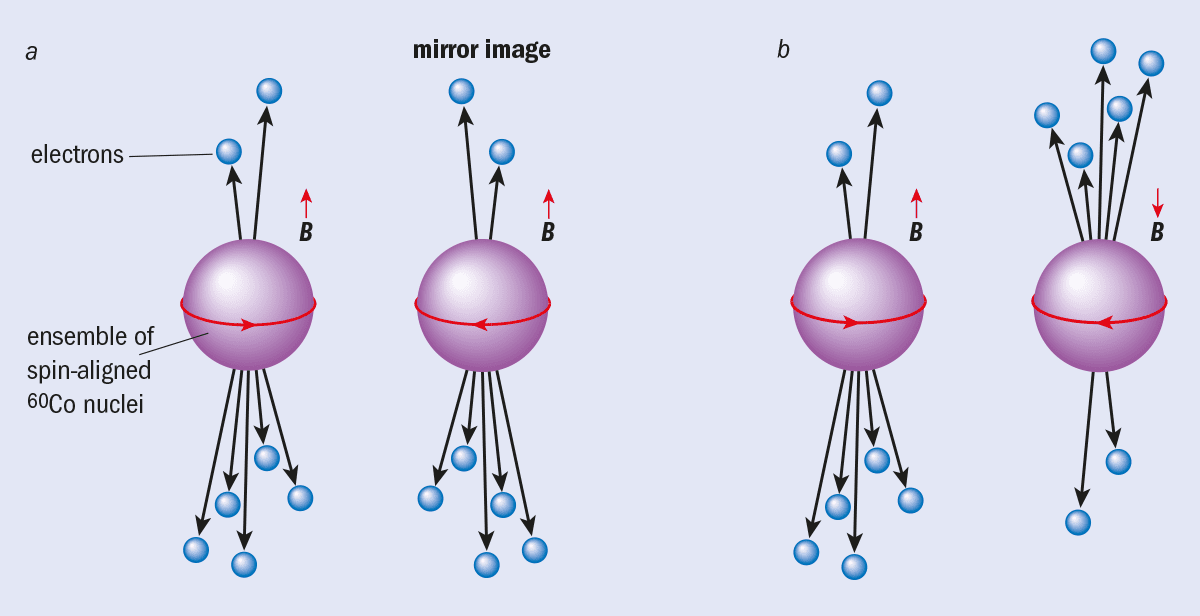
Figure showing parity violation

As a result, the pair formulated a theory that left–right symmetry is violated by the weak interaction. Working with experimentalist Chien-Shiung Wu, they devised several experiments to look at different particle decays that proceeded via the weak force. Wu got on the case straight away, and by testing the properties of beta decay in cobalt-60, she observed an asymmetry that indicated parity violation and therefore confirmed Lee and Yang’s prediction.

Lee and Yang won the 1957 Nobel Prize for Physics for their prediction only 12 months after their paper was published, one of the quickest Nobel prize awards in history. Wu, however, did not share in the prize despite confirming the theory, an oversight that has only grown more controversial as time has passed.

Josephson effect, by Brian Josephson (1962)

The 1977 Nobel-prize-winning physicist Phillip Anderson once recalled teaching Brian Josephson as a graduate student at the University of Cambridge: “This was a disconcerting experience for a lecturer, I can assure you, because everything had to be right or he would come up and explain it to me after class.”

But because of this relationship, Josephson was quick to show Anderson calculations he had made about two superconductors separated by a thin insulating layer or a short section of non-superconducting metal. He predicted that a “DC supercurrent” composed of pairs of electrons (Cooper pairs) could quantum tunnel from one superconductor to another, right through the barrier – an example of a macroscopic quantum effect.

Josephson calculated the form of the current and phase rate of change for such a junction to be:

J = J1 sin (ΔΦ)

ddt(ΔΦ)=2eVh

where J1 is a parameter of the insulating junction called the critical current and thus J is a dissipationless current. Φ is the phase difference between the Cooper pair wave functions on opposite sides of the barrier, e is that charge on an electron and V the potential difference between the superconductors.

Experimental observation of the DC tunnelling current appeared in print about nine months later by Anderson and John Rowell of Bell Telephone Laboratories (now Nokia Bell Labs), and Josephson would go on to win the 1973 Nobel prize for his prediction. Josephson junctions are now used in a variety of applications, such as in DC and AC electronic circuits, and to build SQUIDs (superconducting quantum interference devices) – technology that can be used as extremely sensitive magnetometers and voltmeters, as qubits for quantum computing, and more.

Dark matter, by Vera Rubin with W Kent Ford Jr (1970)

“Great astronomers told us it didn’t mean anything,” the American astronomer Vera Rubin once told an interviewer.

She was talking about her and Kent Ford Jr’s 1970 observation that outer stars orbiting in the Andromeda galaxy were all doing so at the same speed. They were told to look at more spiral galaxies; the effect persisted. The galaxies’ rotation curves (the plot of orbital speed of visible stars within the galaxy versus their radial distance to the galaxy centre) were “flat”, in seeming contradiction to Kepler’s law. More alarming still, stars near the outer edges of the galaxies were orbiting so fast they should be falling apart.
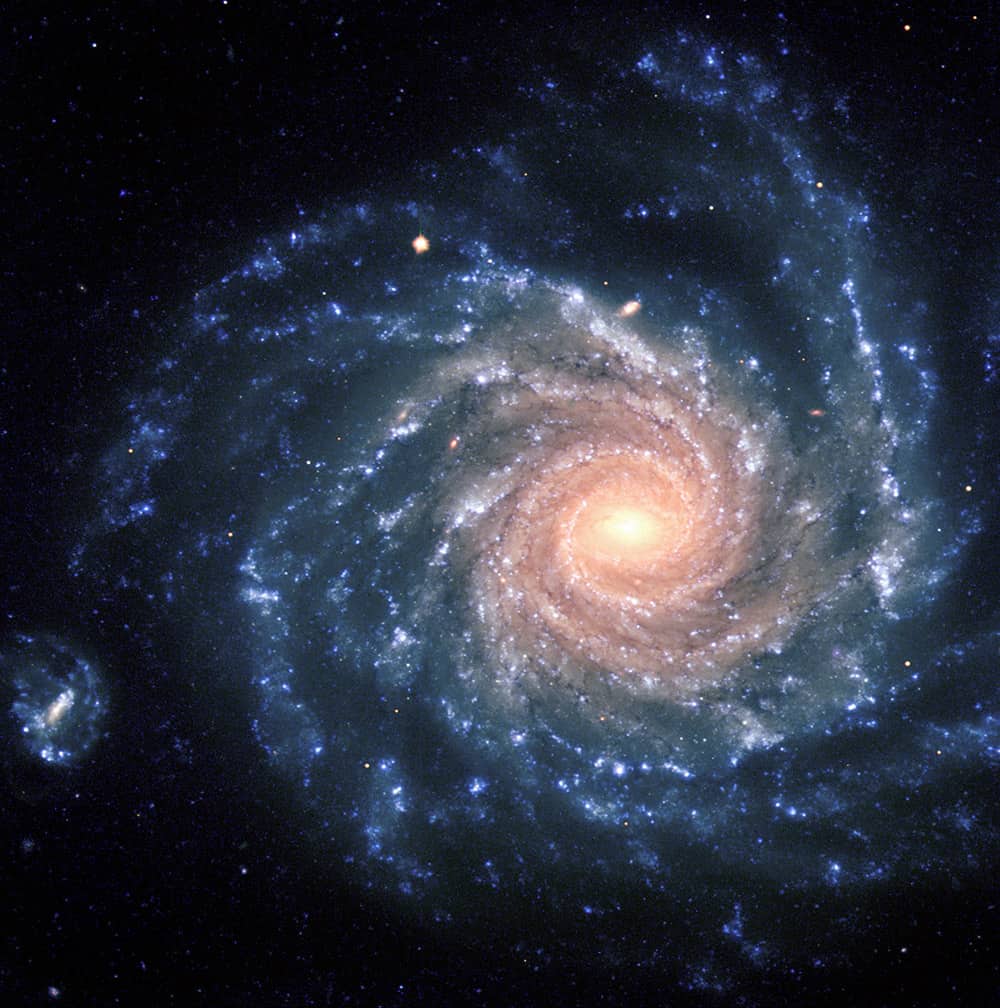
spiral galaxy

Rubin led a team in which Ford built new observational instruments – in particular an advanced spectrometer based on an electronic photomultiplier tube that allowed their precise astronomical observations to be captured in digital form for analysis.

Rubin and Ford Jr’s observation led them to predict that there was some mass inside the galaxies responsible for the anomalous motions, something their telescopes couldn’t see but was there in quantities about six times the amount of the luminous matter present.

Not even emitting photons, it was dubbed “dark matter” in a suggestive study by Swiss astronomer Fritz Zwicky of the Coma galaxy cluster back in 1933, but Rubin and Ford had now provided the first strong evidence for what is sometimes also called “missing mass”. Calculations of temperature fluctuations in the cosmic microwave background, using the standard ΛCDM model of cosmology, reveal that the total mass-energy of the universe is 5% ordinary matter and energy, 27% dark matter and 68% dark energy. While a full 85% of the matter in the universe is non-luminous, it is still a mystery to us today and there are many experiments now trying to identify it.

  • A letter to the editor by Barbarina Zwicky (the daughter of Fritz Zwicky) and another by Johannes Meyling concerning the final prediction in this article appeared in the May 2021 issue of Physics World magazine.
Intertwined entities: sci-fi anthology explores the impact of AI on human relationships

“Science gives birth to technology, and technology gives birth to societal change. And it’s the societal change, especially ethical aspects of that, that interests me,” says Hugo- and Nebula- award-winning sci-fi author Nancy Kress. The quote features in an interview with Kress by Georgia Tech professor of science-fiction studies Lisa Yaszek, in the fascinating new book Entanglements: Tomorrow’s Lovers, Families, and Friends, an anthology of original sci-fi short stories about artificial intelligence (AI). For Kress, while the science is fascinating, it only makes for a good narrative when she can explore its impact on people. “Because stories are made out of and for people.”

The many facets of AI – from machine learning and virtual reality, to deep learning and neural networks – are becoming heavily intertwined in physics, whether it’s using AI to do better physics, or using physics to build better AI. There are countless new research papers on the subject, from the applications of machine learning in materials discovery to the plethora of applications in medical imaging and diagnostics. As we are (nearly) poised on the brink of a quantum-computing revolution, the AI one is (almost) already here, with all its opportunities and obstacles. But perhaps what we don’t talk about as much is the impact this ultramodern tech will undoubtedly have on human relationships, which are often dominated by emotion and not cold hard logic.

We don’t talk about the impact that AI will undoubtedly have on human relationships, which are dominated by emotion and not cold hard logic

AI and sci-fi also have a long and interlinked relationship. Indeed, the word “robot” was first used to denote a fictional artificially intelligent humanoid in the 1920 play Rossum’s Universal Robots by Karel Čapek, shortly followed by Isaac Asimov’s Robot series of short stories, in which he developed the Three Laws of Robotics. But often these stories focus on dystopian worlds that seem far from our reality. In Entanglements the stories all explore a futuristic world where human and machine are more closely linked than ever, focusing on the emotional and artificial overlap as AI evolves and grows.

Consummate sci-fi readers will be pleased to know that the collection was put together by Sheila Williams, who is editor of Asimov’s Science Fiction magazine, and also has a couple of Hugo awards under her belt. Part of MIT Press’s Twelve Tomorrows series, the book consists of a dozen tales by well-known authors in the field including the likes of Sam J Miller, Suzanne Palmer and Xia Jia (translated by Ken Liu). Entanglements also includes a number of specially commissioned artworks by Tatiana Plakhova, which she describes as “infographic abstracts” and perfectly add to the weird, wonderful and complex stories.

Kress is the featured author in this anthology, and the opening tale is her story “Invisible People”, which attempts to deal with a number of ethically complex topics including genetic alteration, adoption, governmental control and, indeed, even individualism versus altruism. While Kress is undoubtedly a formidable writer, and her story is a fascinating read, I feel that she spends too long in setting up a complex backstory, and then rushes the story’s ending, ambiguous though it is. Despite this, it left me pondering many an ethical dilemma, and I enjoyed the longer interview with her that followed the tale.

A short and sharp story that I particularly like is Palmer’s “Don’t Mind Me”, which explores the always-ripe intersection between censorship and technology – only this time using an implant in the (literal) minds of children. While this is a tried and tested concept, Palmer has a fresh take – the implant in the children is used by parents to control everything their offspring see and learn in school, thereby perfectly passing on their biases. Topics deemed unfit (be it Roman history or Maya Angelou’s works) are automatically deleted from children’s memories, making it virtually impossible for the protagonist to pass high school, not to mention have any free-thinking opinions of his own.

I also enjoyed Jia’s “The Monk of Lingyin Temple”, which explores faith and science; while Rich Larson’s “Echo the Echo” is equal parts funny and heart-breaking.

My favourite story in the collection though is undoubtedly Mary Robinette Kowal’s “A Little Wisdom”, a lovely and sweet story that highlights the many ways in which AI could truly benefit humankind, while also realistically pointing out some potential issues. The slice-of-life story follows an elderly art historian and her robot support dog (she suffers from Parkinson’s disease) through what begins as a regular work day, but soon morphs into an emergency thanks to a tornado. The warm and cheering tale deftly interweaves technology and art, and the positive impact they have on human beings, especially when afraid. It left me feeling optimistic about the future, even one with AI overlords.

For those who are fans of science fiction as it applies to human beings on Earth, and enjoy humorous and ominous offerings such as Charlie Brooker’s TV series Black Mirror, this is a book to add to your reading list and later discuss with your book club. Oh, and Netflix: if you’re listening, I’m waiting for the mini-series.

  • 2020 MIT Press 240pp $19.95

Perovskite sensor sees more like the human eye

A new type of sensor that closely mimics how the human eye responds to changing visual stimuli could become the foundation for next-generation computer processors used in image recognition, autonomous vehicles and robotics. The so-called “retinomorphic” device is made from a class of semiconducting materials known as perovskites, and unlike a conventional camera, it is sensitive to changes in levels of illumination rather than the intensity of the input light.

The eyes of humans and other mammals are incredibly complex organs. Our retinas, for example, contain roughly 10photoreceptors, yet our optical nerves only transmit about 106 signals to the primary visual cortex – meaning that the retina does a lot of pre-processing before it transmits information.

Part of this pre-processing relates to how the eye treats moving objects. When our field of view is static, our retinal cells are relatively quiet. Expose them to spatially or temporally varying signals, however, and their activity shoots up. This selective response – transmitting signals only in response to change – enables the retina to substantially compress the information it passes on.

Mimicking mammalian visual processing

In recent years, this mammalian optical sensing process has caught the attention of computer scientists. Traditional computer processors – known as von Neumann machines after the mathematical physicist John von Neumann, who pioneered their development in the mid-20th century – deal with input instructions in a sequential fashion. In contrast, the mammalian brain processes inputs via massively parallel networks, and studies have shown that computers that follow suit – neuromorphic computers – should outperform von Neumann machines for certain machine-learning tasks in terms of both speed and power consumption.

Retinomorphic sensors – optical devices that attempt to mimic mammalian visual processing – are a potential building block for such computers, and thin-film semiconductors such as metal halide perovskites are considered good candidates for making them. Materials of this type are attractive because they can be tuned to absorb light over a wide range of wavelengths. They have also already proved themselves in artificial synapses that react to light, albeit in structures that are generally designed for transmitting and processing information rather than for optical sensing. However, while researchers have previously used perovskites to make optical sensors that mimic the geometry of the eye, the fundamental operating mode of these sensors still requires sequential processing.

Spiking sensor

A team led by John Labram at Oregon State University in the US has now shown that a simple photosensitive capacitor can reproduce some characteristics of mammalian retinas. The new device is made from a double-layer dielectric: the bottom layer, silicon dioxide, is highly insulating and hardly responds to light, while the top layer is the light-sensitive perovskite methylammonium lead iodide (MAPbI3).

The team found that the capacitance of this MAPbI3-silicon dioxide bilayer changes dramatically when exposed to light. When Labram and his student Cinthya Trujillo Herrera placed it in series with an external resistor and exposed it to a light source, they observed a large voltage spike across the resistor. Unlike in a normal camera or photodiode, however, this voltage spike quickly decayed away even though the intensity of the light remained constant. The result is a sensor that responds, like the retina, to changes in light levels rather than the intensity of the light.

Filtering out unimportant information

After measuring the light response of several such devices, the team developed a numerical model based on Kirchoff’s laws to show how the devices would behave if they were arranged in arrays. This model enabled them to simulate an array of retinomorphic sensors and predict how a retinomorphic video camera would react to different types of input stimuli. One of their tests involved analysing footage of a bird flying into view (see https://aip.scitation.org/doi/10.1063/10.0002944 for image). When the bird stopped at a (static, and therefore invisible to the sensor) bird feeder, it all but disappeared. Once the bird took off, it reappeared – and, in the process, revealed the presence of the feeder, which became visible to the sensor only when the bird’s take-off set it swaying.

“The new design thus inherently filters out unimportant information, such as static images, providing a voltage solely in response to movement,” Labram explains. “This behaviour reasonably reflects optical sensing in mammals.”

The researchers, who report their work in Appl. Phys. Lett., say they now plan to better understand the fundamental physics of these devices and how their signals would be interpreted by image-recognition algorithms. They also hope to address some of the challenges associated with scaling these devices up to sensor arrays. “Going from a brand-new device paradigm to a working array is almost certainly going to expose challenges we haven’t yet considered,” says Labram. “There are also quite a few operation-related questions we will have to answer – in particular as regards performance limits, stability, predictability and device-to-device variability,” he tells Physics World.

How to cool ion beams using electron pulses

Physicists in the US and China have studied how a pulsed beam of electrons can be used to cool a beam of high-energy ions – a task that is normally done by a continuous beam of electrons. Researchers led by Max Bruker at the Thomas Jefferson National Accelerator Facility in the US, alongside a team at the Institute of Modern Physics (IMP) of the Chinese Academy of Sciences, modified a continuous-beam electron cooling system to operate in pulsed mode. Their results suggest that it should be possible to cool much higher energy ion beams using pulsed electron beams – which is good news for physicists designing the next generation of ion storage rings.

Storage-ring facilities that accelerate and store beams of protons and ions at low to medium energies use a technique called “electron cooling” to prevent their beams from degrading. This involves merging the ions with a beam of electrons, with both beams moving at roughly the same speed. Over time, the ions exchange momentum with the electrons until equilibrium is reached. This cools the ions down, preventing them from straying away from the centre of the beam.

Normally, this is done using this continuous electron beams with energies as high as 4.3 MeV. However, technological limitations on using static electric fields to accelerate electrons mean that creating continuous electron beams at higher energies is extremely difficult. This poses a challenge to the designers of future storage rings such as the US’s Electron Ion Collider, which will require electron beams as energetic as 50 MeV or more.

RF fields

To reach higher energies, electron beams are accelerated using radio-frequency (RF) fields, which results in a pulsed beam. Recently, the first pulsed electron cooling system has been installed at the Relativistic Heavy Ion Collider at Brookhaven National Laboratory in the US – operating at a modest electron energies of about 2 MeV.

Studies using computer simulations suggest that the cooling effects of pulsed and continuous electron beams are different – and therefore it is important that pulsed cooling be studied experimentally before it is implemented in higher-energy, next-generation facilities.

Physicists at Jefferson Lab and IMP first teamed up in 2012 to study how pulsed electron beams could be used for cooling. Between 2016 and 2019, they performed four pulsed-beam cooling experiments at the CSRm storage ring at the IMP’s Heavy Ion Research Facility in Lanzhou. Instead of using an RF system to accelerate cooling electrons, they modified an existing continuous-beam system to deliver pulses of electrons. The researchers then measured how the profile of the cooled ion beam evolved over time, both in transverse and longitudinal directions.

Crucially, the teams’ experiments revealed that ions can be lost through transverse heating caused by uneven electron bunch lengths, highlighting the need for electron bunches with highly stable properties. Yet if bunch timings and lengths can be reliably maintained, the dynamics of the ion beams they interact with will not be adversely affected by their non-continuous nature. The results now pave the way for a new generation of ion ring facilities, capable of cooling ion beams at higher energies than were ever previously possible.

The research is described in Physical Review Accelerators and Beams.

‘Ultrasound drill’ and nanodroplets break apart blood clots

A precision “ultrasound drill” combined with specially engineered nanodroplets could soon be used inside the body to break up stubborn, impenetrable blood clots – according to Leela Goel, Xiaoning Jiang  and colleagues at North Carolina State University. The team has done in vitro experiments demonstrating the technique, which if approved for clinical trials, could lead to promising new treatments for dangerous forms of thrombosis.

If blood clots do not break down quickly enough, they can retract over periods of several days, forming dense, non-porous clumps of cells. Each year, up to 600,000 people in the US alone can be affected by these clots – known as deep vein thromboses. In the past, their treatment has largely involved drugs that activate certain enzymes in the blood to break down the structures of the clots. However, the high drug doses and long treatment times required in this approach can cause significant damage in surrounding tissues.

More recently, a technique called sonothrombolysis has emerged. This uses ultrasound waves to cause microbubbles surrounding a clot to oscillate – enhancing both mechanical erosion and drug diffusion in the clot. However, this technique relies on large external ultrasound transducers, and cannot be used to treat veins that are obscured by ultrasound-blocking organs like the lungs or ribs.

Low boiling point

In their study, the North Carolina State team delivered nanodroplets to a clot created in an experimental apparatus. Because of their small size, the nandroplets easily penetrate retracted clots. Alongside the tube that delivers the nanodroplets is a catheter-based ultrasound “drill”, which produces precisely-aimed acoustic waves via a tiny, forward-viewing transducer.

The nanodroplets are specially engineered to have a low boiling point. The small amount of energy delivered by the drill is enough to vaporize the nanodroplets forming gas-filled microbubbles that rapidly expand and contract. These oscillations break down the clot through the process of cavitation – the creation of microscale streams and jets that weaken the clot’s mechanical structure. At the same time, the vibrations open up holes in the clot that enable enzyme-enhancing drugs to penetrate more easily. This enhances breakdown even further, while avoiding the need for high drug doses and long treatment times.

Over 30 min timescales, they found that clot masses could be reduced by around 40% – much more than the 17% for treatments that combine ultrasound, microbubbles, and enzyme-activating drugs. Although the team’s approach is still a long way from entering clinical practice, their results suggest that a breakthrough in the treatment of deep vein thromboses could be just over the horizon.

The technique is described in Microsystems & Nanoengineering.

Electronic nose sniffs out cooked chicken, chilli spices up solar cells, PhD theses for sale on Amazon

Researchers at the Skoltech Institute of Science and Technology in Russia have used chemical sensors and imaging software to determine – in a contactless way – when a chicken has been grilled to perfection. Their system includes an “electronic nose” containing eight sensors to detect smoke, alcohol, carbon monoxide and other compounds, as well as a camera that photographs the chicken as it cooks.

The scientists then got 16 PhD students and researchers to taste test their grilled supermarket chicken to rate its tenderness, juiciness and intensity of flavour on a 10-point scale. They reckon their technique can be used to identify undercooked, well-done and overcooked chicken “quite well” and they now plan to now test their sensors in restaurants where it could be used to automate the cooking process. They even say the method could be integrated into domestic ovens, promising to purge the dinner plate of overcooked, dry chicken or even worse, salmonella. Find out more in this paper in Food Chemistry.

Instead of using electronics to improve food, researchers in China and Sweden have used a chemical found in food to boost the performance of solar cells. They found that that a pinch of capsaicin, the chemical that gives chilli peppers their kick, boosts the number of current-carrying electrons in perovskite solar cells.

Spicy cells

Their chilli-enhanced solar cells had an efficiency of 21.88% compared to 19.1% in control devices that did not contain the spicy chemical. That might not sound like a big improvement, but every little increase in solar cell efficiency is hard won. The team describe their work in Joule.

How much would you pay to read a PhD thesis? Recently the online retailer Amazon was found to be selling over a thousand PhD theses from the UK’s Durham University as Kindle ebooks under the name “Durham Philosophy”. This was rather cheeky because the tomes are available for free via Durham’s e-thesis repository.

Indeed, the theses were apparently being sold without the authors’ permission and according to Palatinate – the Durham student newspaper – the university had been aware of this since November and had been filing “take-down notices” ever since. Amazon has since removed the theses from sale  but whether anyone forked out £7.66 for “The impersonal modes of Ezra Pound and Wallace Stevens” is unknown.

Nanotubes show their true colours

Why do some thin films of single-wall carbon nanotubes take on colourful hues even though as-synthesized films are usually black? A team of researchers in Finland, the US and China has now come up with a possible answer in a development that could prove useful for future display screens and solar cells.

Single-wall carbon nanotubes (SWCNTs) are rolled-up sheets of carbon just one atom thick, with a diameter of about 1 nm. Atoms in these sheets are arranged in a hexagonal lattice and the direction in which the sheet is rolled – its chirality – dictates whether the tube is a metal or a semiconductor. When these SWCNTs are sorted by their diameter or chirality – two traits denoted by an “(n,m)” numbering system – and suspended in a solvent, the resulting solutions are strikingly different in colour. Indeed, each (n,m) type of nanotube has a characteristic colour. Until now, however, the mechanism responsible for this colouration was not fully understood and no theoretical model could successfully predict the colour of a given SWCNT film. Even predicting the range of likely SWCNT colours had proved impossible.

A team led by Esko I Kauppinen of Aalto University in Finland recently took a step towards understanding nanotube colour by directly fabricating thin films of SWCNTs that were green, brown or silver-grey. The researchers synthesized these nanotubes from carbon monoxide gas using iron nanoparticle catalysts in a reactor heated to 850 °C. They deposited the tubes directly onto a substrate to form the thin films, which did not require any post-solution processing. They made nanotubes with different colours and (n,m) labels by adding carbon dioxide to the reactor.

Quantitative relationship

In their latest work, members of the Aalto team studied dry nanotube films of various (n,m) distributions and analysed the quantitative relationship between the films’ colours and their optical absorption spectra. They then developed a mathematical model based on this relationship that can describe and even predict the colour of films made up of nanotubes with different (n,m) labels.

The Aalto team calibrated and verified its model using a (6,5) nanotube film made by Junichiro Kono and colleagues at Rice University in the US via a technique known as solution (n,m) separation. Together with co-workers at Peking University, China, Kauppinen and colleagues evaluated the light absorption characteristics of the Rice film and its colour. Their analyses revealed that the colour of the film was indeed similar to the colour predicted by their model. “This result proves that the atomic structure – that is, the (n,m) of the tubes in the thin film – and the colour of the nanotube it contains affects how the film absorbs light,” Kauppinen tells Physics World.

By then combining the data from different tubes, the researchers were able to build up an “atlas” of 466 different colours of nanotube films. The resulting chart shows that films with diameters of less than around 2.3 nm are more strongly coloured than those with larger diameters.

The work, which is detailed in Advanced Materials, shows that SWCNTs can exist in a range of colours across the visible spectrum. This means they could come in useful for electrochromic devices – for example in displays – and in solar cells, especially as they are electrically conductive, pliable and ductile too. Kauppinen explains that the colour of a screen could be modified with the help of a tactile sensor that could be placed in mobile phones, other touch screens or on top of window glass. They might also be used to make new kinds of environmentally friendly permanent pure-carbon dyes. In the immediate future, however, the researchers plan to use their thin films to manufacture flexible, coloured thin-film field effect transistors with high carrier mobility and fast operation times.

Deep learning sharpens near-infrared images for cancer diagnostics

NIR imaging

Fluorescence imaging is a valuable method for examining biological systems. To achieve the maximum tissue penetration depth and minimum light scattering, detecting near-infrared (NIR) fluorescence in the long-wavelength end of the second NIR window (1500–1700 nm), known as NIR-IIb, provides the best results. Unfortunately, NIR-IIb imaging relies on nanoparticle fluorescent probes that often contain toxic elements, hindering its clinical translation.

Biocompatible small-molecule NIR fluorescent probes do exist. Indocyanine green (ICG), for example, is approved by the US Food and Drug Administration and has already been used for clinical applications. Such small-molecule fluorophores, however, emit in the shorter-wavelength NIR-I and NIR-IIa windows (700–1000 and 1000–1300 nm). And light scattering at these wavelengths limits the imaging depth and causes low contrast images.

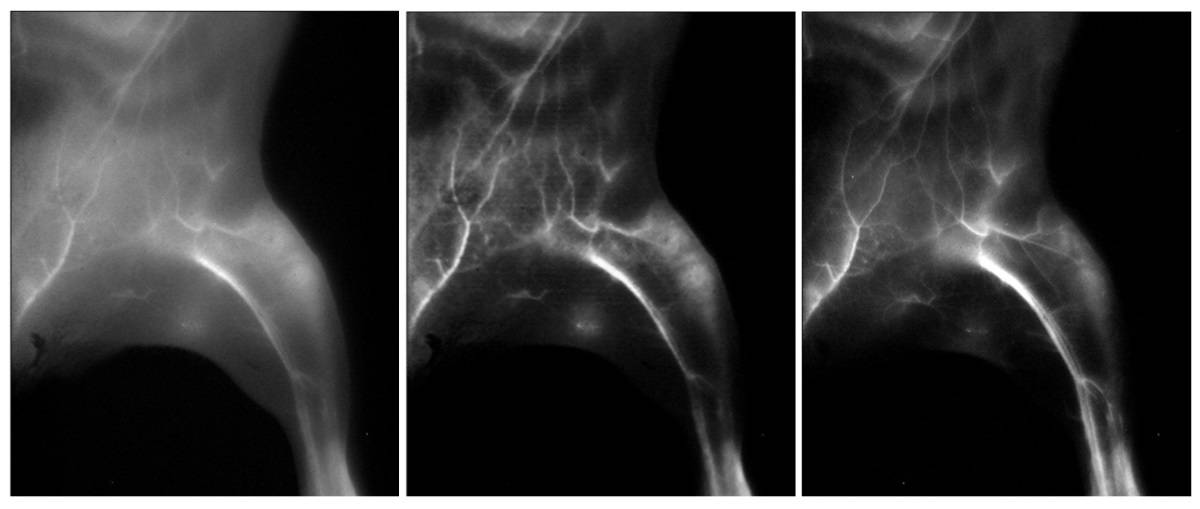
To achieve high image contrast and clarity while using biocompatible probes, Zhuoran Ma, his PhD adviser Hongjie Dai, and colleagues at Stanford University turned to deep learning. Using roughly 2800 in vivo images of mice taken in the NIR-IIa and NIR-IIb windows, they trained artificial neural networks to transform blurred NIR-IIa fluorescence images into higher-resolution images previously only achievable using NIR-IIb.

“The main application for NIR imaging will be diagnosis of cancer and image-guided tumour surgery,” explains Ma. “Compared to other imaging modalities such as CT or MRI, NIR imaging allows real-time imaging, which can help pinpoint the tumour site during surgery.”

In vivo investigations

To assess their image-processing method, the researchers injected a mouse with a NIR-IIa probe and an NIR-IIb fluorophore, and recorded fluorescence images of the animal’s blood vessels in the NIR-IIa and NIR-IIb windows. Processing the NIR-IIa image with the trained neural network generated an image that resembled the ground-truth NIR-IIb image, demonstrating that the generator could reliably enhance image contrast without introducing artefacts.

Next, the team used the trained neural network to transform wide-field NIR-IIa fluorescence images of lymph nodes in a mouse injected with the FDA-approved small-molecule dye ICG and an NIR-IIb nanoparticle probe. The neural network increased the signal-to-background ratio of superficial sacral lymph node images from 8.44 to 117.0, a level that could enable sentinel lymph node mapping in the clinic. The researchers note that the generated high-resolution images closely resembled the NIR-IIb images.

Interestingly, the signal-to-background ratio of lymph node images in the NIR-I window, a modality that’s currently being used in clinical trials, was also improved by the neural network, even though NIR-I images were not used for training.

Ma and colleagues also demonstrated that the neural network significantly enhanced molecular imaging of a mouse tumour model using a tumour-targeting fluorophore–antibody complex. The transformed images had tumour-to-normal tissue ratios of 18.2 in the NIR-I window and 25.3 in the NIR-IIa window, up to five times higher than in the original images. Such results could one day enable fluorescence imaging for cancer diagnosis or guided resection of tumours.

Finally, the researchers showed that their translation algorithm could enhance NIR-II light-sheet microscopy (LSM), a recent development that provides non-invasive in vivo volumetric optical imaging of mouse tissues. They demonstrated that generated LSM images exhibited similar signal-to-background ratio and vasculatures sizes to ground-truth NIR-IIb LSM images, increasing the depth limit of one-photon LSM in the NIR-IIa window from below 2 mm to around 2.5 mm.

The researchers conclude that this ability to generate high-resolution images from scattering-blurred NIR images could open new opportunities for clinical translation. “Instead of trying to improve the biocompatibility and alleviating the toxicity of the nanoparticle-based NIR-IIb fluorophores, one could apply FDA-approved molecules directly and transform the low-resolution images to high-resolution ones, which would be an excellent application of artificial intelligence,” they write.

The team is now aiming to extend this method for use in larger animals such as rats. “Ultimately, we hope this can be applied in real clinics for human use,” Ma tells Physics World.

The research is described in Proceedings of the National Academy of Science.

‘Lattice surgery’ entangles fault-tolerant topological qubits

“Lattice surgery” has been used to quantum-mechanically entangle fault-tolerant topological qubits – an achievement that could lead to the production of more reliable quantum logic gates. Created by researchers in Austria, Switzerland and Germany, the entanglement technique could prove useful in the development of quantum error correction algorithms and ultimately to achieve scalable, large-scale quantum computation.

In principle, quantum computers can quickly solve certain problems that would take an eternity to compute on even the most powerful conventional computer. While this “quantum advantage” has been established experimentally using small-scale quantum computers to solve highly specialized problems, it remains a significant challenge to scale-up these devices to create larger, practical quantum computers that can solve a range of different problems.

A big problem with today’s quantum devices is that errors are quickly introduced to a calculation via interactions with noise, heat and other disturbances from the surrounding environment. In classical computers, errors can be measured and corrected, but in quantum computers the very act of measuring a quantum bit (qubit) of information causes it to collapse. This build-up of errors puts severe limits on the size of a quantum computer and the size of the computation it can achieve. Indeed, the largest quantum computer to date – Google AI’s Sycamore – contains just 53 qubits, whereas a standard PC contains billions of conventional bits.

Sophisticated storage

To create much larger quantum processors, physicists are trying to develop more reliable qubits as well as “quantum error correction” protocols to deal with the inevitable faults that will occur. Most of these correction schemes involve encoding each “logical qubit” (the quantum equivalent of the 1 or 0 in a classical bit) into the states of several physical qubits such as individual trapped ions or superconducting circuits. “In the classical case, if you want to store logical information, you can just write it on several pieces of paper, and if you lose one you won’t be affected as much,” explains Nicolai Friis of the University of Innsbruck. “For quantum information, the problem is that you cannot write this information down, so you need a more sophisticated way of storing it.”

In one of the most promising implementations, the logical qubit state is stored as the topological relationship between multiple physical qubits on the edge of a mathematical 2D lattice. There is a hitch, however: useful qubits must be robust against noise but still able to interact controllably with other qubits. Whereas a single trapped ion will interact readily with another ion, controlling the interactions between qubits based on two topological lattices has not proved possible.

“People take a collection of physical qubits, they impose some code structure to create a logical qubit, and then they show that you can do operations on that single logical qubit,” explains Friis. “But in order to obtain a universal gate set that will enable you to do quantum computation on any number of logical qubits, you need entangling operations on two logical qubits.”

Surgical stitching

In their new work, Friis and colleagues produced two topologically-protected logical qubits, each encoded into the topological surface state of four ions. The ions were held in an ion trap containing ten ions. By tuning the laser frequencies to alter interactions between the ions, the team performed a technique called lattice surgery, stitching the surface states together into one large state. Finally, they divided this state into two states once again. The final topological state of one qubit was conditional on the initial state of the other. Innsbruck’s Thomas Monz explains, “Depending on how you merge them, what you do and how you bring them apart again, that depends on what kind of gate you get”. Logical qubits that were corrupted by an error in one of the physical qubits could be detected, although the error could not actually be corrected.

The researchers now hope to increase the size of the logical qubits, which would boost their robustness to errors in the physical qubits, as well demonstrating more complex interactions involving more than two qubits. “Ultimately, you want to perform error correction,” says Friis.

The research is described in a paper in Nature.  

“I think it is a very neat paper because it does show fault tolerant or robust entangling gates,” says Raymond Laflammme, the founding director of the Institute for Quantum Computing at the University of Waterloo in Canada, “but it does this for only two encoded qubits and it doesn’t show the [full] family of gates. This paper is really interesting from the physics point of view because it shows that they have enough control to do these gates very well. If you’re not a researcher in a university but you’re in a company that wants to use a device to quantum compute, this falls well short of what you want…It’s the first milestone in a family of experiments that will end up producing a reliable quantum computer.”

Pursuing a career in science communication, commercializing single-photon detectors

In this episode of the Physics World Weekly podcast we hear from Shi En Kim, who is doing a PhD in molecular engineering at the University of Chicago. Kim is also a student contributor to Physics World and she explains that writing about a wide range of research in materials and nanoscience fits in with her penchant for interdisciplinary science – and has inspired her to consider a career in science communication.

Also in this week’s podcast is Sander Dorenbos, cofounder and chief executive of the Netherlands-based start-up company Single Quantum. He explains how demand for a single-photon detector that he developed for his PhD led to the creation of the company.

  • The Institute of Physics, which publishes Physics World, produces a podcast series called Looking Glasswhich explores how physics can help solve problems facing society. The podcast is hosted by journalist and author Angela Saini, who talks to thought leaders and innovators in fields including health inequality, climate change, cancel culture and artificial intelligence.
Copyright © 2026 by IOP Publishing Ltd and individual contributors