The most precise measurement ever of the fine-structure constant has placed new constraints on theories that predict the existence of “dark sector” particles. The new value, which researchers in France measured using clouds of cold rubidium atoms, provides a stringent test of the Standard Model of particle physics while also further limiting the properties of dark matter – the substance thought to make up more than 90% of the matter in our universe.
The fine-structure constant α is a composite of several physical quantities (including e, the charge on an electron, and c, the speed of light) that, together, characterize the strength of the electromagnetic interaction. This makes α ubiquitous throughout the universe. Because it is a dimensionless number, it is in some sense more fundamental than physical constants such as the strength of gravity or Planck’s constant ħ, which change depending on the units in which they are measured.
Electromagnetic interaction is weak
The relatively low value of α – it is approximately equal to 1/137 – implies that the electromagnetic interaction is weak. The main consequence of this is that electrons orbit some distance from their atoms, so they are free to form chemical bonds and build up molecules. This property made it possible for matter and energy to form stars and planets. Indeed, some physicists have argued that we owe our very existence to the exact value of α, because if it were slightly bigger or smaller, stars might not been have able to synthesize heavier elements like carbon, and life as we know it wouldn’t exist.
Precise measurements of α make it possible to rigorously test relationships between elementary particles. These relationships are described by the equations that make up the Standard Model of particle physics, and any discrepancy between the model’s predictions and experimental observations may provide evidence of new physics.
Determining the recoil velocity of atoms
Measurements of α generally begin by determining how strongly atoms recoil when they absorb photons. The kinetic energy of this recoil (or its velocity) reveals how massive the atoms are. Next, the electron’s mass is calculated using the precisely known ratio of the atom’s mass to that of an electron. Finally, α is calculated from the electron’s mass and the binding energy of a hydrogen atom, the value of which is likewise well known from spectroscopy measurements.
In the new work, researchers led by Saïda Guellati-Khélifa at the Kastler Brossel Laboratory in Paris cooled atoms of rubidium to a few degrees above absolute zero in a vacuum chamber. They then created a quantum superposition of two states of the atoms using laser pulses. The first state corresponds to atoms that recoil when they absorb photons and the second state to atoms that do not recoil.
The two possible versions of each of type of atom propagate through the experimental chamber along different paths. The researchers then applied a second set of laser pulses to “re-join” the two halves of the superposition.
The more an atom recoils after absorbing photons, the more out of phase it will be with the version of itself that does not recoil. By measuring this difference, Guellati-Khélifa and colleagues extracted the mass of the atoms, which they then used to determine the fine-structure constant. Their result shows that α has a value of 1/137.035999206(11) – a measurement that, with an accuracy of 81 parts per trillion, is 2.5 times more exact than the previous milestone, which was made in 2018 by Holger Müller and colleagues at the University of California at Berkeley, US.
Improved experimental setup
The Paris researchers say that improvements to their experimental setup were key to the new result. By controlling effects that can create perturbations in the measurement, they were able to reduce sources of inaccuracies. For example, the researchers considered, and compensated for, the gradient in the local strength of gravity across their experimental set-up and the Coriolis acceleration created as the Earth rotates. They also meticulously characterized properties such as laser beam alignment, frequency, wave-front curvature and the second-order Zeeman effect, which account for many errors in such experiments.
The new measurement, which is reported in Nature, differs from the value obtained in the 2018 Berkeley experiment in its seventh digit. This result surprised the Paris researchers, since it implies that either one or both measurements has an error currently unaccounted for. However, the two groups’ measurements do agree closely with the value of α calculated from precise measurements of the electron’s so-called g-factor, which relates to its magnetic moment. In a related News and Views article, Müller notes that the Paris result “confirms that the electron has no substructure and is truly an elementary particle”.
The Paris researchers say they now plan to back up their results by measuring the recoil velocity of a different rubidium isotope. “We also plan to build an even more precise instrument,” Guellati-Khélifa tells Physics World.
Intuition is a funny thing. Loosely defined as the ability to know something without recourse to “conscious reasoning”, it is the notion that we can rely on “gut instinct” or the depths of our unconscious mind, to instinctively intuit knowledge. As the world we live in becomes more and more complex, knowing when to trust your gut and when to follow expert, rational discourse (especially of the scientific sort) is a difficult decision for many. Throw into that mix a subject as notoriously complicated, and often (wilfully) misconstrued, as quantum mechanics, and the brightest of human minds can be convinced that there exist connections, correlations and patterns between random events – whether or not they do.
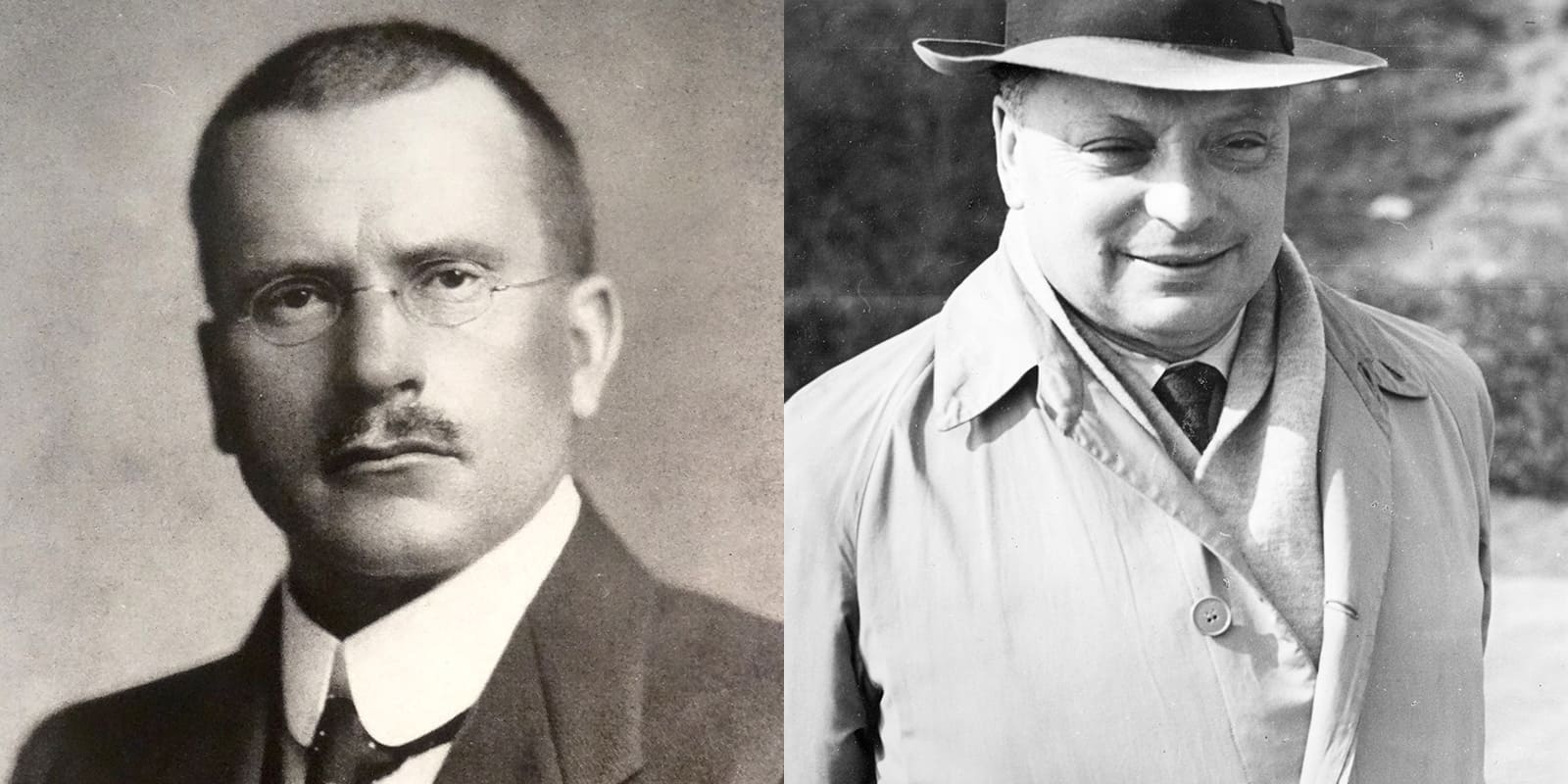
Physicist and author Paul Halpern explores this and other themes in his latest popular-science book, Synchronicity: the Epic Quest to Understand the Quantum Nature of Cause and Effect. If you, like me, are a bit unsure as to what exactly the word “synchronicity” means, the concept is rooted in psychology, not physics. First proposed in the 1920s by famed analytical psychologist Carl Jung, synchronicity referrers to the idea that some events are meaningfully linked or related, despite having no causal relationship. Jung wanted to encompass his idea that the collective unconscious of human experience is linked to our dreams, thoughts and behaviours. Indeed, he was “hoping to establish the reality of an acausal connecting principle”, writes Halpern. Jung’s inspiration for this came from the exciting new physics of relativity and quantum mechanics, via Albert Einstein and Wolfgang Pauli.
Carl Jung’s inspiration for synchronicity came from the exciting new physics of relativity and quantum mechanics
In a letter he sent to Einstein’s first biographer Carl Seelig in 1935, Jung wrote that “It was Einstein who started me thinking of a possible relativity of time as well as space, and their psychic conditionality. More than 30 years later, this stimulus led to my relation with the physicist Professor W Pauli and to my very thesis of psychic synchronicity.” As it is neither testable nor falsifiable, it’s easy to think of synchronicity as pseudoscience – and indeed Wikipedia dubs it so. With its “spooky” correlations and possible “hidden” mechanics, it’s no surprise that quantum theory inspired Jung to dream up a reality in which the laws of cause and effect could be avoided.
Add in the complexities of the “observer effect” and the “measurement problem” – which, depending on your quantum-mechanical interpretation of choice, suggests that the mere act of conscious observation changes the outcome of a quantum experiment – and you can see why it’s a ripe playground for a psychologist. (For a detailed discussion on the subject, see the feature “Thirty years of ‘against measurement’”.) But many readers may be surprised to know that Pauli – a seemingly staunch realist – was as keen as Jung to explore the principle, and thought it a credible means of explaining a variety of so-called paranormal phenomena from entanglement to telepathy.
Apart from his significant contributions to physics, Pauli is perhaps best known for his lancing wit and brutal take-downs of people and ideas he deemed foolish or careless. It’s hard to reconcile the Pauli who once famously put down a young physicist’s paper with the phrase “not even wrong” (now synonymous with “non-falsifiable”) with the Pauli whom Halpern describes as an “emotional wreck”. By the 1930s, thanks to troubles in the physicist’s personal life, combined with mental health issues and an alcohol problem, Pauli’s father suggested he seek help, in the form of therapy from Jung. The psychoanalyst first and foremost attempted to help Pauli navigate those turbulent times through the medium of a very detailed dream journal. It was a fortuitous coincidence for Jung, who was at the time developing his idea of synchronicity (then mainly based on relativistic concepts), to be able to run his thesis past Pauli.
Influencers Wolfgang Pauli (right) and Carl Jung inspired each other’s work. (Courtesy: AIP Emilio Segrè Visual Archives, Physics Today Collection; Ortsmuseum Zollikon)
From what I’ve mentioned in this review so far, it would be fair to think that Halpern’s book is based purely on the tale of Pauli and Jung, but that’s far from the case. In fact, the dense subject matter of the duo, their relationship and their academic collaboration is all packed into three chapters out of nine in this 300-page book. The rest is devoted to everything from a detailed view of relativity and particle physics, to cosmology and modern-day quantum computing. This is simultaneously both a strength and weakness of Synchronicity. For the uninitiated, the book gives an excellent if broad look at some of the key concepts and ideas of 21st-century physics.
Halpern does fall into the seemingly too-tempting pop-sci trap of beginning his book with the ancient Greeks and their ideas of cosmology and philosophy; though it must be said that he is much more discerning in these three chapters than other authors who attempt to squeeze a couple of millennia of scientific advancement in the West into one chapter. For those of us who would much rather have delved deeper into the backgrounds of Jung and his contemporaries, and read about synchronicity, and the Jung–Pauli partnership, the book is more of a jumping-off point, rather than a treatise. Despite these quibbles, Synchronicity is an absolutely fascinating read, and Halpern is an excellent writer and researcher, despite (or perhaps indicated by) the dizzying number of names and dates in the book.
As physics stands at the precipice of a technological quantum revolution, many physicists, philosophers and even psychologists are grappling more than ever with how quantum mechanics truly reflects our everyday reality, if at all. While entanglement between photons across thousands of kilometres is an experimental reality, what this means for our ideas on cause and effect, the speed of light in the universe, and “meaningful” correlations remains unclear.
Over the course of his career, Jung described synchronicity in a number of ways – “acausal connecting (togetherness) principle”, “meaningful coincidence”, “acausal parallelism” – all of which seem vague, but maybe that’s the point. I couldn’t help but wonder why “correlation does not imply causation” wasn’t more of a guiding philosophy for the Jung (or indeed, latter-day Pauli). AsAlanis Morrissette sagely sang about chance and coincidence, “It’s like ten thousand spoons when all you need is a knife; It’s meeting the man of my dreams, and then meeting his beautiful wife; And isn’t it ironic, don’t you think?”
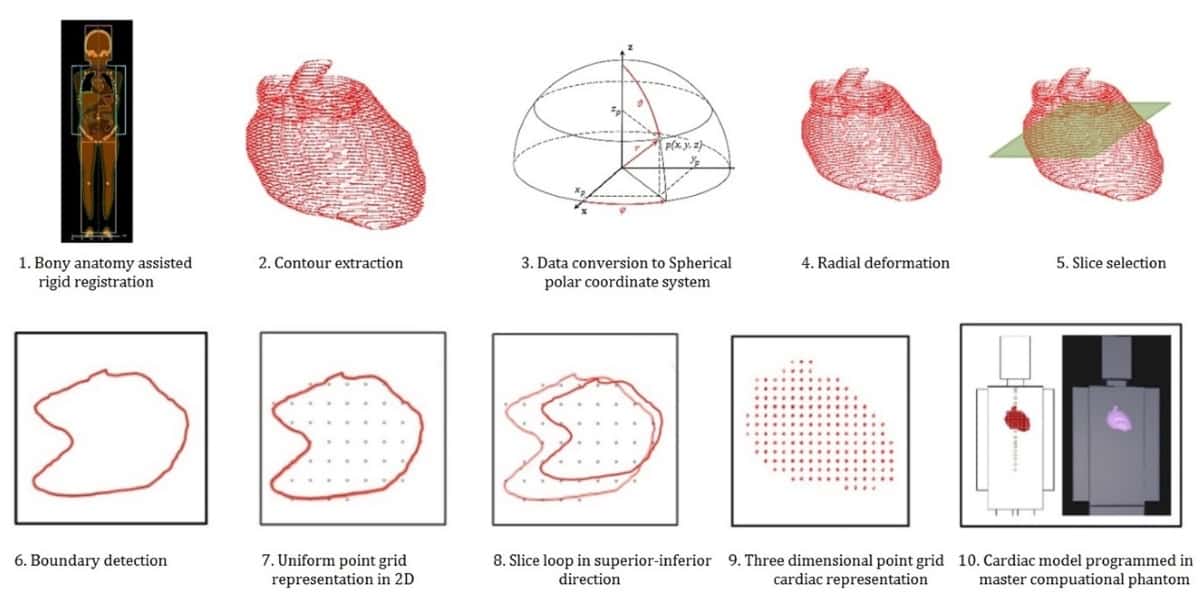
Workflow showing the development of the new heart model. (Courtesy: Suman Shrestha)
Improved radiotherapy techniques and technologies allow an increasing number of children diagnosed with cancer to survive long into adulthood. Unfortunately, the very treatments that save their lives are associated with several severe, life-threatening, or even fatal chronic health conditions. For example, children who received radiation therapy are at a heightened risk of developing heart disease later in life. Further improving radiation treatments to minimize this risk requires a deep understanding of the relationship between radiation exposure and heart disease that is currently lacking. A multi-institutional team of researchers in the US has enhanced a critical computational tool to enable new insights into this relationship.
Our current understanding of how radiation exposure contributes to heart disease comes from several studies of childhood cancer survivors. These studies, which correlated radiation dose to the heart with various cardiac conditions, demonstrated a positive correlation, or that risk generally increases with increasing cardiac dose. All these studies, however, considered the whole heart as a single unit.
In reality, the heart is a complex organ made up of several substructures including valves, arteries, ventricles and atria. Similarly, heart disease refers to a diverse collection of conditions, including narrowed or blocked blood vessels and heart rhythm problems, among others. Recent evidence suggests that each of these unique conditions is associated with radiation dose to specific heart substructures, rather than to the heart overall. Existing research infrastructure, however, is insufficient to elucidate these associations.
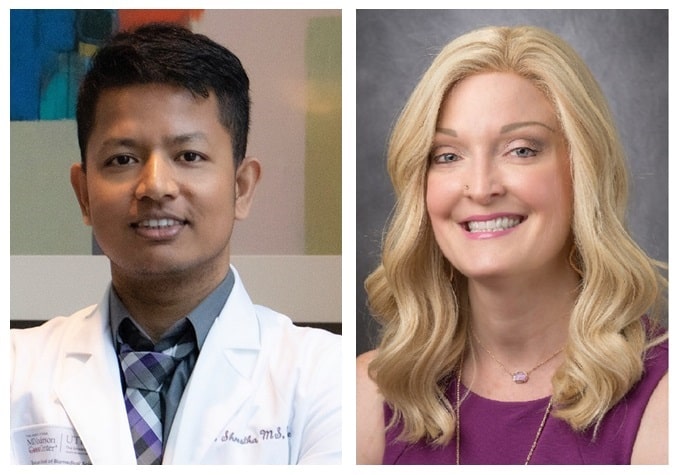
Doctoral research fellow Suman Shrestha (left) and his PhD advisor Rebecca Howell (right).
Correlating radiation therapy exposures to observed health effects requires comprehensive knowledge of the delivered treatment. Critically, studies of long-term health effects rely on historical medical records that often lack computed tomography (CT) scans of the patients. Therefore, researchers must simulate the treatments on representative patient surrogates, known as phantoms, to estimate the delivered dose.
Howell’s lab at MD Anderson performs these simulations using a computational phantom that can be scaled in size based on the patient’s age at the time of treatment. This scaling is particularly important for simulating paediatric cancer treatments because of the large variation in size from infancy to early adulthood. The heart model in this age-scalable phantom, however, represented the heart as a single structure and did not delineate its distinct substructures.
The University of Florida (UF) and National Cancer Institute (NCI) maintain a different set of computational phantoms that include 10 heart substructures, representing the most comprehensive heart model available for radiation simulations. This set of phantoms, however, only includes six distinct ages and cannot be scaled to match a particular patient’s age at treatment.
Their powers combined
The research collaboration combined the age scalability of the MD Anderson phantom with the detailed completeness of the UF/NCI phantoms to create a hybrid heart model. Their new heart model includes the 10 heart substructures represented in the UF/NCI phantoms, as well as four additional heart substructures, for a total of 14 substructures that can be scaled to any age.
The team tested the hybrid heart model in three ways and found it to be anatomically accurate across children ranging from infants to adolescents, clinically acceptable and dosimetrically viable – all crucial factors for widespread research use.
Moreover, the methods used to enhance this heart model can be applied to other organs and tissues to further improve outcomes research. “This work was paradigm shifting for our team in how we will approach organ development and validation in future studies,” says Howell. “We are using methodologies similar to those developed here to develop additional organs in our computational phantom, for example, the colon, with the ascending, transverse and descending colon substructures defined.”
The new heart model is already enabling researchers to consider the unique relationships between radiation exposures and complications associated with specific heart substructures.
“We have used the heart model developed in this study to calculate dose to [the] heart and its substructures for over 13,000 survivors in the CCSS treated with radiotherapy. Analyses are ongoing to determine relationships between specific late cardiac diseases and dose to specific substructures, for example, relationships between coronary artery disease and coronary artery dose,” says Howell.
This understanding will facilitate future studies seeking to refine radiation treatments to avoid distinct heart complications and improve the long-term quality-of-life of cancer survivors.
Since 10 March 2020, when Latvia went into lockdown, my 11-year-old daughter Vija has attended only 16 in-school sessions. It’s an understatement to say that my work as a space entrepreneur and senior scientist at the Planetary Science Institute and the University of Latvia has been impacted. I am a solo parent, and I never imagined that I would become a many-hours-per-week teacher. But while it’s not strange these days for kids to do distance learning, it is a little bit strange for children like my daughter to be learning remotely while their friends are in class – as was the case for most of this autumn.
The story of how this happened is both complex and sobering. Within two weeks of Latvia’s spring lockdown, teachers were augmenting existing electronic course materials. With broadband speeds among the best in the world – including in the countryside, where many Latvians rode out the first wave – “online everything” was relatively easy. Thanks to this and the cohesiveness of Latvian society, our management of the first wave of the pandemic was among the best in Europe. In the summer, the Latvian Investment Agency even trumpeted the country’s achievements with a series of promotional videos entitled Ahead of the Curve.
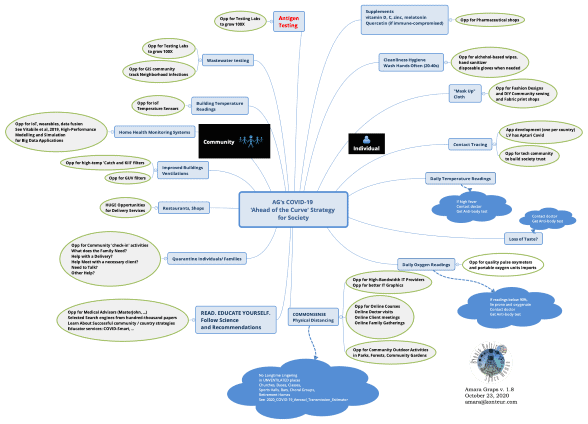
They weren’t the only ones who were optimistic. I was, too. I filled pages in my journal and created elaborate mind maps, brainstorming ways to fight the disease and improve society. Because countries all over the world were experiencing disruptions, formerly siloed groups had an incentive to listen to each other and think creatively about solutions. I cherished, especially, the Foresight Institute’s “Global Online” discussions, which took place every night at 9 p.m., Riga time, for about six weeks.
Causes for concern
From these discussions, though, I also picked up medical information about the virus that made me concerned – first for myself, a person in her late 50s who had major surgery in January, and then for my daughter, who has allergies that neither I nor her doctors fully understand. It seems that Vija may have something called mast cell activation syndrome (MCAS), which has implications for her COVID-19 risk; a leading MCAS researcher has said that some of the most severe COVID-19 infections may be rooted in undiagnosed MCAS-like conditions. This information made me extra cautious about returning her to school in the autumn, when in-person classes were due to resume.
Big plans Amara Graps’ mind map of disease-fighting strategies. (Courtesy: Amara Graps)
While I was immersed in learning more for my family’s health, Latvia had a lovely, long and relaxed summer – as long as one didn’t think about the pandemic. Latvia and the other Baltic countries, Lithuania and Estonia, formed a “Baltic Bubble” to facilitate summertime travel without quarantine or isolation. People had parties. Restaurants and gyms reopened. No-one wore masks. Social distancing disappeared. And parents who hadn’t coped well with distance learning in the spring – either because having kids at home made it challenging to manage their own work, or because they didn’t have the electronic devices they needed for their kids to follow online courses – lobbied the government to keep schools open in the future, no matter what. Faced with their strong opinions, the education minister agreed.
In the meantime, the rest of the government acted as if its pandemic work was finished. Our main infectious disease expert, who was on our airwaves constantly in the spring – explaining the science, the what, the how and the why – faded into the background. He and the experts who followed him spoke of the need to prepare for a second wave, but at the government level no serious preparations were made. And thanks to the relative ease with which our country “flattened the curve” in the spring, with minimal impact on the medical system and few deaths, disinformation and disagreement entered our formerly cohesive society.
Falling behind
The most vocal and proud among this dissenting faction stated that Latvians lived through three military occupations in the last century. Why should we be scared of a virus? People began to say that we had “done enough” already, and that masks and social distancing were not necessary. A split formed between native speakers of Russian and Latvian about the virus’s risks. Conspiracy theorists even claimed that COVID-19 was created in the US to further Bill Gates’ business interests, then brought to China during a military sports competition.
By August, infection numbers were creeping up due to holes in the “Baltic Bubble” and, later, to traditional singing excursions that proceeded without restraint. Still, schools opened on 1 September, and my daughter’s large government-funded school was among them, complete with a hand sanitizer machine at the door and a plan for pupils to spend four days a week in school and one day at home, to approximate a separation strategy. The school also provided an elaborate flu/COVID-19 symptom flowchart describing when to keep a child at home.
Yet inside my daughter’s classroom, kids were not separated by large distances. The windows were not opened regularly. Neither teachers nor students wore masks. Kids were not encouraged to wash their hands regularly. And so the super-spreader events began.
Two and a half weeks into the new semester, a bad (but normal) flu passed through Vija’s classroom. We were both ill for two weeks – an experience I considered a warning. In the next few days, my concern grew. As we were recovering from this normal flu, the novel coronavirus rode into Vija’s school on its tail. A singing excursion that a couple of the teachers took in September ended up infecting nearly half of their 60 colleagues, who tested positive in the first week of October. From there, the disease spread to students, siblings and parents. Eventually, the cluster grew to 150, including 14 of the 29 students in my daughter’s class. We thought we might be among them, especially after our cat had some symptoms (yes, cats can catch COVID-19), but on 12 October our tests came back negative. We had dodged a bullet.
Lessons (not) learned
With Vija’s school quarantined in late October and early November, a few teachers in the hospital, and a high prevalence of the virus in Latvia’s capital, Riga, I felt sure that the principal would implement distance learning. But when they polled the parents, two-thirds voted to send the younger kids back to school, overruling the rest of us. So I chose to keep my daughter at home while her classmates continued attending – until 7 December, when the Latvian government finally bowed to the inevitable, and ordered all schools to implement distance learning again.
In the past nine months, I have gone from feeling safe and happy in Riga to feeling as though people in my town want my daughter and me to die of a preventable disease. Yes, that is an exaggeration – but my winter solstice in Latvia will nevertheless be a time of reflection and emotional transition. If Latvian society follows the rules currently in place, we should be on the other side of the second-wave peak by late January 2021, with vaccinations planned to start in February. Yet the main thought on my mind is this: if the Baltic nations cannot manage a small crisis like this pandemic, what does that say about the looming existential crisis of climate change?
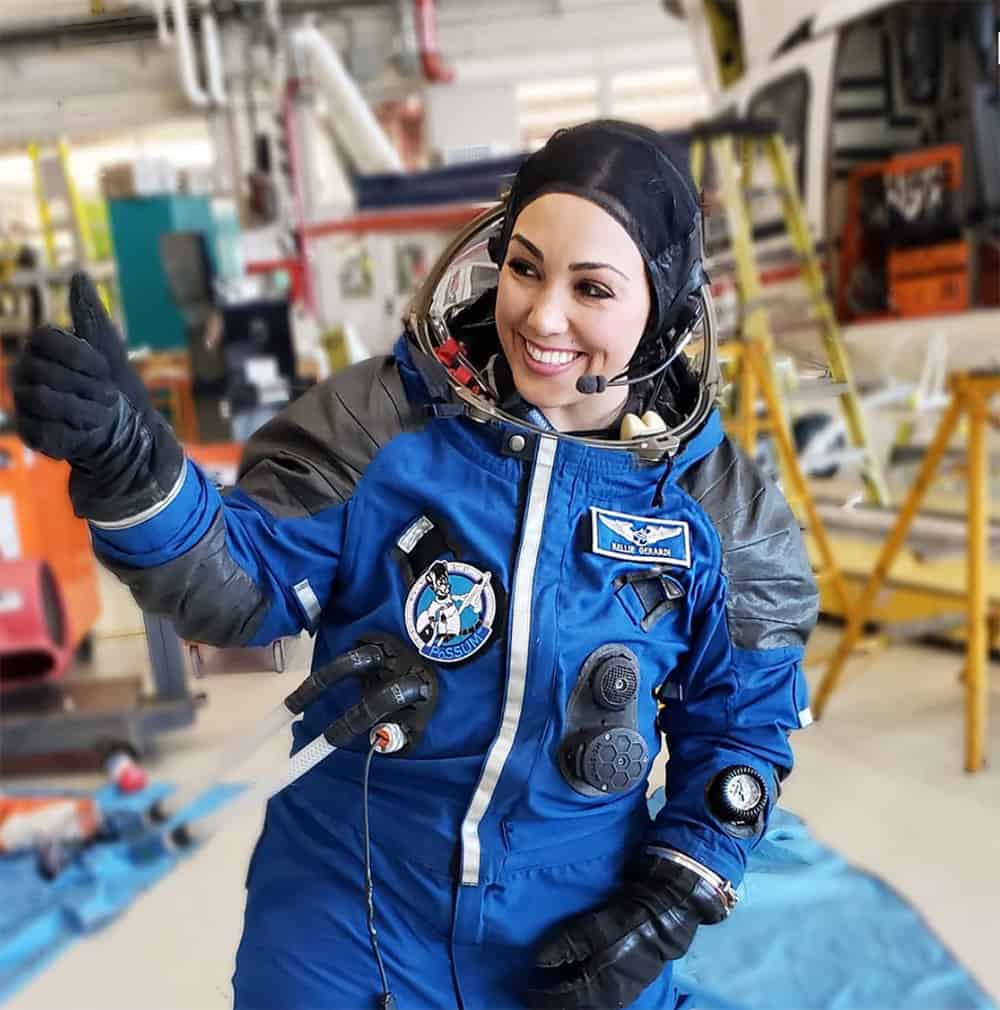
Inside view Kellie Gerardi returning from a successful microgravity research flight. (CC BY 4.0 Kellie Gerardi)
When the Apollo 11 astronauts landed on the Moon in 1969 the whole world stopped, just for a moment, and looked up. We stepped out into the universe and firmly entered the Space Age, which had begun with Sputnik just 12 years earlier. For many Physics World readers, the scientific and engineering exploits of those early achievements are a source of intrigue and no little excitement. From those crackled first words on the Moon, to images of the boot print in the lunar surface, or the new perspective of our world – the fragile blue marble suspended in darkness – humanity’s most impressive engineering effort has had a huge impact on our collective consciousness.
Commercial spaceflight industry professional and science communicator Kellie Gerardi was one of the many who wanted to be part of the nascent Space Age. But with a degree in film studies rather than aerospace engineering, her non-traditional path in the space industry is a key theme of her new book Not Necessarily Rocket Science: a Beginner’s Guide to Life in the Space Age. With more than 122,000 followers on Instagram, Gerardi is something of a social-media star, and her book serves as part mission statement, part witness statement and part manifesto. They say that those converted to a cause are often the most evangelical and Not Necessarily Rocket Science brims with Gerardi’s passion – not just for the science and engineering of space exploration, but also for its democratization.
The reader is greeted in the opening chapter by a whistle-stop tour of the history of space flight. Gerardi’s experience as a copywriter and communicator imbues the text with an urgency and personality that bubbles throughout the book. It is subtitled “a beginner’s guide” but even the most seasoned space reader will find nuggets in this opening chapter, which is set up to deliver the reader to where the industry is now. But it is Gerardi’s experience and insight into the space exploration of today, and tomorrow, which really set this book apart.
Gerardi conducts bioastronautics research and spacesuit evaluation in microgravity with the “Polar Suborbital Science in the Upper Mesosphere” Project PoSSUM – the first crewed suborbital research programme. Having previously worked in business development, she now also serves in an advisory role to Masten Space Systems, an aerospace-manufacturing start-up company in Mojave, California. Indeed, NASA is set to pay Masten $75.9m for the company to build and launch a lander called XL-1. It will take NASA and other customer payloads to the south pole of the Moon, in a mission scheduled for late 2022.
Gerardi recounts her experiences as part of the 149th crew rotation of the Mars Desert Research Station, a simulated Mars analogue habitat owned and operated by the Mars Society. She also talks about her numerous parabolic flights as a Suited Test Subject, flying fully pressurized in a spacesuit while carrying out microgravity experiments on fluid configuration, solid body rotation and biometrics. Gerardi’s sense of humour and passion are evident throughout, along with an interest in science fiction. Her excitement is palpable as she recounts the time when Lucasfilm turned up at Masten Space Systems to record its rocket engine sounds to use in Star Wars: Episode VII – the Force Awakens.
Gerardi’s broad and deep knowledge of the commercial space industry makes Not Necessarily Rocket Science a fascinating read, even for those for whom the words “thousands of followers on TikTok” are either meaningless or not really a selling point. Social media is often maligned, and often justifiably so, for its lack of depth or for celebrating the less salubrious aspects of humanity. Gerardi’s first foray into social-media success came as a teenager in the early days of YouTube. She filmed her father excitedly opening his Christmas present (an Xbox) and uploaded it to the then new but burgeoning video-sharing site. A family Christmas lunch later and the video had hundreds of thousands of views. These days, YouTube is awash with people unboxing tech items and make-up packages. That Gerardi turned her gaze (and those of her viewers) to science, engineering and space exploration is surely something to celebrate.
The mainstream media became aware of Gerardi when she was selected for the (now cancelled) Mars One project. The idea was to raise money from investors to send a mission to Mars with human occupants to establish a permanent base for humanity. The project was much maligned in the media and Gerardi appeared on a host of television and radio programmes to defend it. The chapters covering this experience in her book offer a fascinating insight into the process. Gerardi has a strained, if not broken, relationship with Mars One and regrets the media spotlight being on the foolishness of the idea rather than the exciting prospect of the possibilities of space flight. Her book turns the attention squarely in the right direction.
Space is no longer the preserve of all-male, all-white flight test pilots or people with PhDs in orbital mechanics
If we truly are in the Space Age then the next steps for space exploration include space tourism with Virgin Galactic and others. With that comes the need for baristas, chefs, guides and more. Space is no longer the preserve of all-male, all-white flight test pilots or people with PhDs in orbital mechanics. Space exploration will be covered by social-media stars and, in the right hands, could reach perhaps even more of humanity than those pictures of the Apollo missions did over 50 years ago. It would be something of a tragedy if the science and engineering of those missions were lost to the vacuities of social media and it is something of a relief that there are social-media stars with a depth of passion and understanding like that of Kellie Gerardi.
The clinical introduction of MR-guided radiation therapy has brought high-contrast soft-tissue imaging into the radiotherapy workflow. MRI can visualize tumour targets and surrounding organs with high accuracy, delivering the ability to “see what you treat” and, ultimately, the potential for real-time treatment adaptation based on anatomical changes observed during treatment.
But how prevalent is the need for online adaptive radiotherapy (ART)? And is the MR-linac a necessity to achieve this – or could other technologies fulfil future requirements just as well? These questions were examined at the recent ESTRO 2020 congress, where four experts debated the motion that “there is no future for ART in external-beam radiotherapy without an MR-linac”.
Optimizing advances
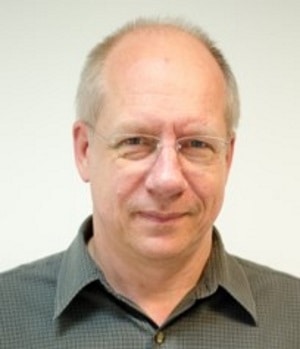
The first speaker, Uwe Oelfke from the Institute of Cancer Research/The Royal Marsden, argued for the motion, albeit with a more modest take: “We believe that there will be significantly less improvement for radiotherapy patients without an MR-linac,” he stated.
Uwe Oelfke.
Looking at future requirements for radiotherapy, Oelfke suggested that these will include safe hypofractionation, development of response/physiology-guided radiotherapy and, further ahead, increased application of radiotherapy for treating advanced, non-localized disease.
“For this, we urgently need new technologies,” said Oelfke. “We need ultra-hypofractionation guided by real-time ART, we need to exploit imaging signals that have a different quality of information, such as biological imaging, and we need more patient-friendly treatment schedules. Step one is the introduction of technology like the MR-linac.”
Oelfke argued that the MR-linac is key to enabling safe, anatomically-driven ultra-hypofractioned treatments, delivered in one to three fractions. By reducing the number of required hospital visits, this approach will improve both patient comfort and treatment efficiency, as well as offering overall economic benefits.
The MR-linac also removes the need for implanted fiducials, enabling surrogate-free anatomy monitoring in a few hundred milliseconds. High-quality MR images acquired at the time of treatment improve both treatment safety and quality, and simply cannot be achieved by X-ray guidance, emphasized Oelfke. Meanwhile, online dose reconstruction will provide “the ultimate treatment QA while the patient is treated,” he added.
Oelfke next considered the development of biologically-driven radiotherapy. When a radiation treatment is unsuccessful, is this failure due to missing the target, he asked, or could it be due to incorrect correlation of the dose with the underlying tissue biology? “By definition, X-ray imaging is biology blind,” he said. “Functional MRI, however, is closer to biology and can monitor physiology. Hypoxia imaging, diffusion imaging and fingerprinting are tremendous opportunities. The MR-linac is needed so that we can see these signals at the time of treatment.”
Further into the future, radiotherapy may move from being a symptom-driven technique that treats localized tumours to a mechanism-driven therapy that can tackle disseminated disease. “Currently, there is no real bridge between local radiotherapy and immunotherapy, biologically-targeted therapy and chemotherapy. The MR-linac can be part of this bridging technology,” said Oelfke.
Sensible selection
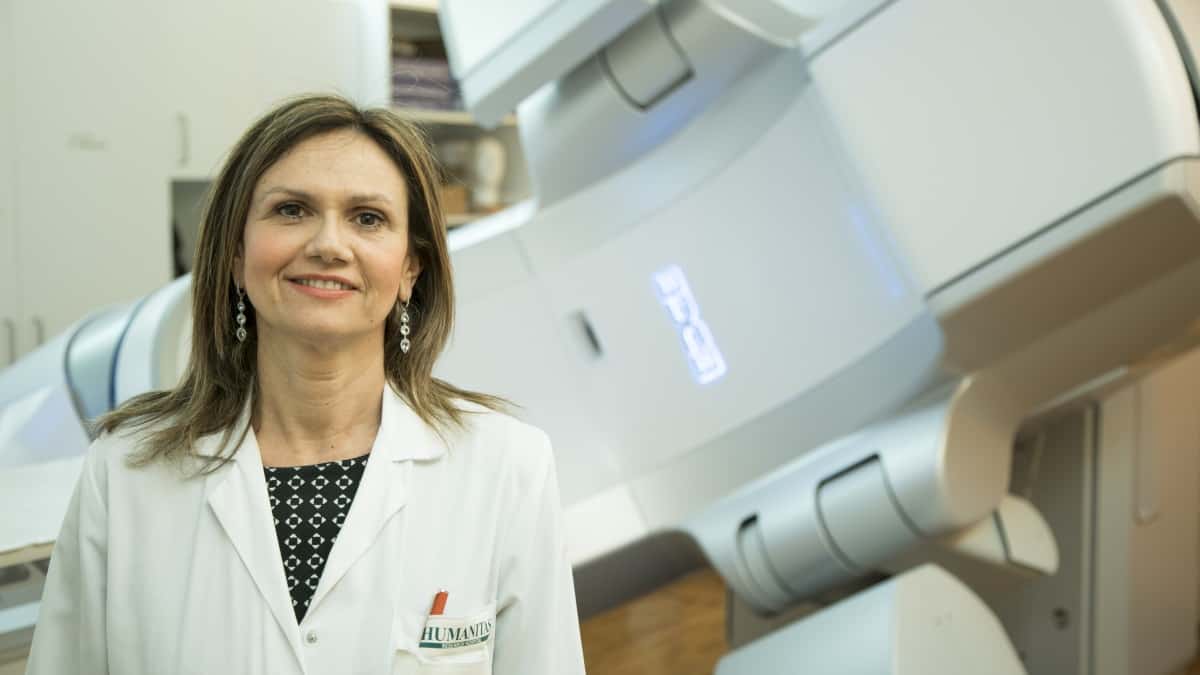
“I believe there is a future for ART without MR-linac,” declared the second speaker, Marta Scorsetti from Humanitas University.
Marta Scorsetti from Humanitas University.
Scorsetti explained that while the need for ART is increasing, it is not yet part of routine clinical practice, likely due to the challenge of performing the full planning workflow while the patient is on the couch. The MR-linac could indeed address this unmet need for daily plan adaptation and possibly also enable tumour tracking during treatment. “This should be a dream for radiation oncologists,” said Scorsetti. “But in my mind, there are some points that deserve clarification.”
One major obstacle is time. Scorsetti noted that in a centre-of-excellence in Italy using an MR-linac, the mean treatment time is 50 minutes, limiting the number of patients that can be treated each day. This contrasts with other recent radiotherapy advances that reduce beam-on times, enabling more treatments per day and lowering intrafraction motion.
By 2025, the number of radiotherapy courses needed in Europe is expected increase by 16%. And even now, not all patients that need it can get radiotherapy. “So would online adaptation really benefit patients or further reduce the ability to treat all of them?” Scorsetti asked. “We can’t treat all patients we would like to with an MR-linac, or we will not be able to treat all patients who need radiotherapy. Patient selection criteria are urgently needed.”
Scorsetti also pointed out that the MR-linac is not the only technology available for daily adaptation. For example, the new ETHOS radiotherapy system offers online ART based on cone-beam CT (CBCT). “Using ETHOS, the treatment time should be five to 10 minutes, compared with 30 to 50 minutes for the MR-linac,” she said.
But rather than focusing on which technology to use, what’s more important is defining which patients would benefit most from online adaptation and using this opportunity to make real clinical improvements. Scorsetti concluded by quoting Henry Ford: “Real progress happens only when advantages of a new technology become available to everybody,” she said.
Biological benefits
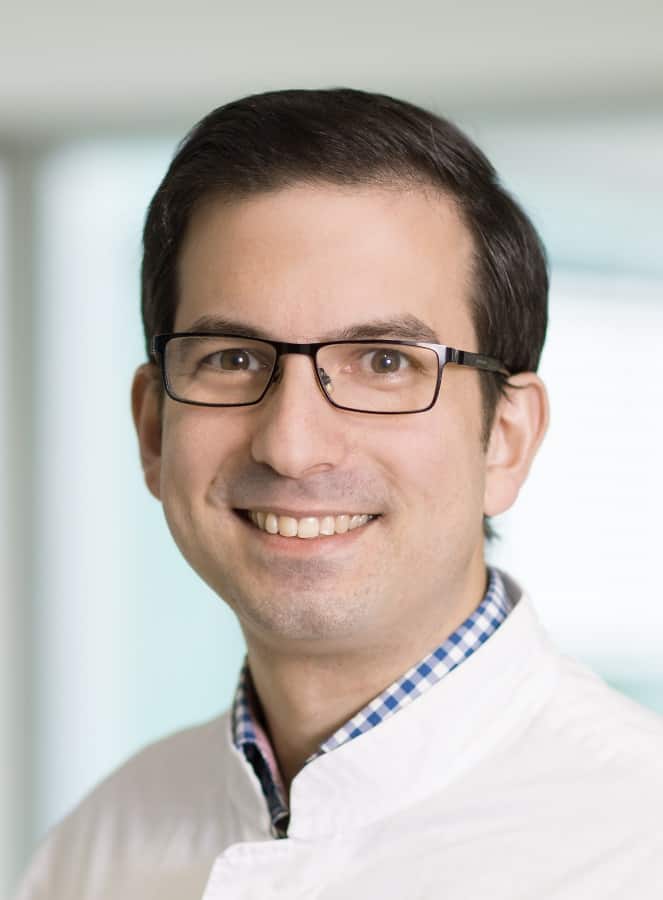
“We have been working with the 1.5T MR-linac for more than two years now,” stated Cihan Gani, a radiation oncologist at University Hospital Tübingen.
Cihan Gani.
The main advantage, Gani said, is the ability to record an MR image for every fraction and use these to create plans optimized to the anatomy of the day. The most intuitive application is adapting treatment plans for tumour shrinkage. Gani shared an example of a head-and-neck tumour that shrank with each week of treatment. He noted that while CBCT can visualize air–tumour interfaces (although these are clearer on MRI), within soft tissues, it is far harder to see tumour borders using CBCT. Here, MR imaging is the only option for tracking tumour volume.
The adaptation workflow is also far simpler with an MR-linac. Images are recorded immediately before treatment and the plan adapted accordingly, using one device. Without an MR-linac, images must be recorded on a separate scanner, at imaging times reserved in advance. Critically, as it’s not known exactly when a tumour will shrink, such pre-defined imaging sessions may miss important changes.
Another reason to employ an adaptive workflow is for treatments near organs-at-risk (OARs) with high anatomic variability. In pancreatic cancer, for example, it is beneficial to be able to adapt the treatment plan based on the current position of the small bowel, which is hard or impossible to see using CBCT.
And MRI has another advantage: functional imaging, which provides information on tumour biology and could enable biological plan adaptation. Gani described an example in which a rectal cancer patient treated on an MR-linac had diffusion-weighted imaging MR scans twice weekly. While the tumour did not shrink over the course of treatment, suggesting that it had not responded, the apparent diffusion coefficient (ADC) values increased with time, indicating tumour response. ADC maps could potentially also be used to identify areas of residual tumour to boost the dose to such regions.
“With the MR-linac, you have the possibility to adapt without relying on anatomy that was there weeks ago. Plus you have many more possibilities for novel treatments if you also include biological information,” Gani concluded. “So yes, there is a future for ART without an MR-linac, but the options are limited. It clearly depends on how the future shall look like, and it looks best if you do ART with an MR-linac.”
Cost considerations
Rounding off the debate, Stine Korreman from Aarhus University Hospital suggested that the motion under consideration was actually a little biased. “Of course MR-linacs will be part of ART in future,” she said. “Maybe the more relevant questions are whether all linacs will eventually be replaced by MR-linacs. Or will all images for ART eventually be MR images? Or will all major ART research be directed towards MR-linacs?”
Stine Korreman.
These questions address different considerations: cost effectiveness, benefit and innovation potential, respectively. Looking first at cost, Korreman noted that the MR-linac is at least four times more expensive than a CBCT-equipped linac – and cannot treat as many patients per hour. “What is gained with one MR-linac compared with the four CBCT-linacs you could get for the same price?” she asked.
Korreman next examined potential improvements in outcome, noting that the main objectives of ART are to monitor treatment response and reduce margins. Response monitoring enables adaptation of either the spatial dose distribution or the fractionation regime. “But for both these, the role of MR is not entirely clear; both are at an early stage with little clinical evidence, though there is interesting potential,” she said.
Previous studies have demonstrated that ART can reduce margins by up to 5 mm. “But removing 5 mm of high-dose volume corresponds to just 5% reduction of the integral dose to the patient,” Korreman said. Even looking at the extreme of margin reduction, such that radiotherapy approaches surgery, treatments are still limited by knowledge of what to cut out or where to aim. “Geometric margin reduction has limited potential and response monitoring seems to be premature. So the benefits don’t seem to make up for the large cost,” she said.
Looking at the potential of imaging-related developments in radiotherapy, there are many other important imaging objectives unrelated to ART – such as target and OAR identification, biological target differentiation or proton range verification. Further ahead, the introduction of techniques such as FLASH radiotherapy, grid therapy and immuno-radiotherapy may lead to completely different image guidance and adaptation needs.
“Given that cost will not be reduced enough to be competitive, there will not be enough clear benefits to balance this cost, and innovation will continue to happen at a more rapid pace for other modalities for some time to come,” said Korreman. “The conclusion must be that, in the foreseeable future, MR-linacs will not replace other modalities for adaptive radiotherapy.”
With the ESTRO congress a totally online event this year, the traditional show-of-hands vote at the end of the debate did not take place. I will leave it to the readers to make up their own minds as to how the future of ART will pan out.
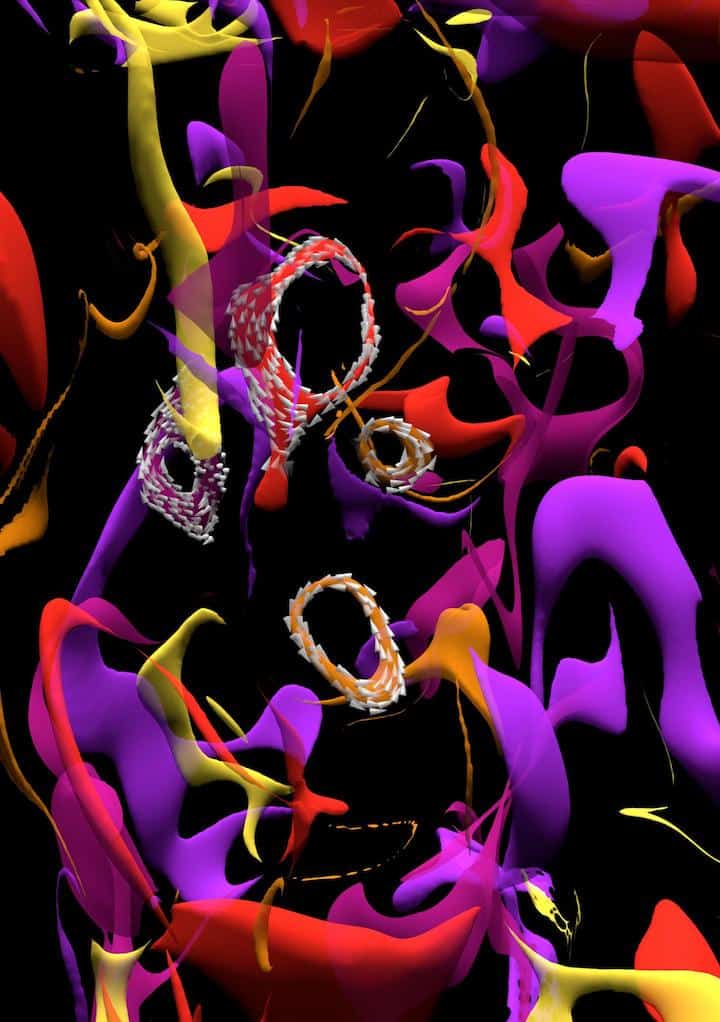
Reconstructed vortex rings inside a magnetic micropillar. Credit: Claire Donnelly
Researchers have observed three-dimensional magnetic vortex rings in a real-world magnetic material for the first time. Contrary to theoretical predictions, these rings – which are spin configurations within the material’s bulk – are remarkably stable and could move through the material like smoke rings move through air. If such movement can be controlled, they might have applications in energy-efficient 3D data storage and processing.
In a ferromagnetic material, the spatial distribution of the local magnetization is responsible for the material’s magnetic properties. These spatial distributions can be very complex, and intricate magnetic “textures” are behind many modern technologies, including hard disk drives. A vortex is one such distribution, and it forms when the material’s magnetization circulates around a central core.
Vortex rings are more sophisticated still, and occur naturally in physical systems such as fluids, plasmas and turbulent gases in the Earth’s atmosphere. However, while they have long been predicted to exist in ferromagnets, they have never been observed there until now.
X-ray magnetic tomography
Scientists led by Sebastian Gliga of the Paul Scherrer Institute in Switzerland discovered these doughnut-shaped ring patterns in nanoscale structures of gadolinium cobalt. The result comes thanks to a technique the group developed in 2017 called X-ray magnetic tomography, which enables them to observe nanoscale magnetic configurations in 3D, deep within a micron-sized sample. Before this advance, researchers were only able to visualize magnetization structures a few layers below a material’s surface.
Claire Donnelly, the study’s co-lead author and a physicist at the University of Cambridge in the UK, says that new data analysis techniques were also crucial. These new techniques allowed the researchers to pick out topological structures – such as rings – within their dataset via calculations of the magnetic vorticity vector. “Calculating this quantity and observing that it circulates around loops (just as a smoke ring’s vorticity vector would) allowed us to identify the magnetic vortex rings,” Donnelly says.
The stability of these rings was unexpected, notes Konstantin Metlov, the study’s other co-lead author and a researcher at the Donetsk Institute for Physics and Engineering and the Institute for Numerical Mathematics RAS in Moscow, Russia. This is because they were predicted to be dynamic, moving objects. Their stability appears to come from the long-range interaction between electron spins in the material – a phenomenon that had not been considered before. “This is very exciting, since it implies that such complex 3D magnetic structures – and possibly other more topologically non-trivial ones – may be easier to stabilise than originally thought,” the researchers tell Physics World.
Practical applications
According to Gliga, Donnelly, Metlov and colleagues, the rings’ stability could be important for practical applications because it means they could move through magnetic materials. Learning how to control these structures within the volume of a magnet might thus aid the development of 3D magnetic data storage and processing.
The researchers, who report their work in NaturePhysics, say they plan to extend their investigations using, for example, time-resolved techniques they developed earlier this year. This would give them a glimpse of how vortex rings actually move. “We also want to find out how they are created in the first place – and how they collapse,” Donnelly says. “Now that we can observe these systems in experiments, we’ll also be looking out for more complex structures, like knotted vortex rings.”
A new technique to cool reactive molecules to temperatures low enough to achieve quantum degeneracy – something not generally possible before – has been created by researchers in the US. In this temperature regime, the dominance of quantum effects over thermal fluctuations should allow researchers to study new quantum properties of molecules. As a first example, the researchers demonstrated how a slight change in applied electric field can alter the reaction rate between molecules by three orders of magnitude. The researchers hope their platform will enable further exploration of molecular quantum degeneracy, with potential applications ranging from quantum many body physics to quantum information processing.
When atoms are cooled close to absolute zero, the blur created by thermal effects that govern their behaviour in the classical world around us is removed, making their quantum nature clear. This has led to some fascinating discoveries. In ultracold quantum bosonic or fermion-pair quantum gases, for example, all the atoms in a trap can simultaneously occupy the quantum ground state, resulting in a wavefunction that is macroscopic.
Cooling and trapping molecules is much trickier because they are inherently more complex than atoms. Whereas atoms can only contain quanta of energy in electronic excitations, the chemical bonds in molecules can stretch, rotate and bend – and cooling molecules involves removing energy from all of these degrees of freedom. Moreover, the complexity of molecules increases the complexity of their collisions. Although elastic collisions are necessary to knock the fastest-moving molecules out of a trap and cool it, inelastic collisions dissipate heat in the trap.
Huge rewards
The rewards for success, however, are huge according to Jun Ye at JILA in Boulder, Colorado. “As is always the case in life, something negative has a positive side. Once you have molecules under control, you suddenly have so much more flexibility to control their quantum state.”
This week, Ye and colleagues published two new papers – one in Nature and one in Science. In the Nature paper, they applied an electric field to compress potassium and rubidium atoms in a 3D optical trap, inducing the atoms to pair up and thereby forming a 2D cloud of polarized potassium-rubidium molecules. Side-to-side collisions were elastic, whereas the head-to-tail ones were inelastic. As the molecules were polarized and confined to two dimensions, they were much more likely to collide side-to-side than head-to-tail. This allowed the researchers to achieve about 200 elastic collisions for every inelastic one, driving out the hotter molecules and cooling their sample to quantum degeneracy.
Scientific milestone
“When my former colleague Deborah Jin [who died in 2016] was still alive, we had a collaboration showing that, when you turned on the electric field, the molecules just got lost because you were enhancing the inelastic collisions,” explains Ye, “This year, we were able to reverse that process, and that’s the milestone that the scientific community has been looking forward to.”
In the Science paper, the researchers studied the effect of electric fields on the reaction rates of the cooled molecules with each other. They allowed the molecules to collide at multiple orientations in 2D, and monitored the number of potassium-rubidium molecules in the trap. As the researchers had suppressed simple inelastic collisions effectively to zero, the only remaining way for a particle to leave the trap was to react with another potassium-rubidium particle to form K2 and Rb2 molecules.
As expected from theoretical predictions, the researchers found that, as they tuned the electric field by a few per cent across a specific resonant frequency, the rate of reaction increased by three orders of magnitude as two energy levels became degenerate, reducing the activation energy barrier.
The researchers now intend to study other, more exotic phenomena using the new tool they have developed. “We are very interested in studying collective behaviour of molecules and quantum correlations in these fantastic low entropy systems,” says Ye. “That’s something we’re working on right now.” Further into the future, he says, “quantum information might be a really interesting direction to look. If you can control quantum coherence, if you can synthesize a system with low enough entropy that you have quantum control, and now you have this extra ingredient that we can tune the interaction – which is always really important to program a computer – all these ingredients are falling into place. We are certainly not there yet, but one can dream big.”
John Doyle of Harvard University in Massachusetts sees two major advances in the works: “One is this sample of Fermi-degenerate molecules that are kept away from each other due to long-range interactions…This opens up the door to polyatomic quantum gases,” he explains. “The other is the more fundamental idea that you can control chemistry exquisitely by tuning these long-range interactions. Their results showing that if you change the field by just a teeny amount you can drive a system from unstable to stable will, I think, be viewed as an archetypal achievement.”
In this episode of the Physics World Weekly podcast, Jun Ye is in conversation with Physics World‘s Hamish Johnston about another of his research interests, atomic clocks.
Protein folding is a process that is crucial to life and understanding its intricacies is an important challenge of computational biology. In many fields of science, converting data into sounds has helped researchers deal with complex patterns. Now, an international team of researchers has created a method to represent folded protein nanostructures as musical compositions.
“We explore different avenues of artistic creation, interpolating between human design, natural or evolutionary design, and designs from a deep recurrent network model that was trained against musical scores of known three-dimensional protein structures,” they write in a paper that has been accepted for publication in Nano Futures.
“Artistically, our work offers a new perspective on the limits of scientific understanding, and allows human players to interact with nanoscale phenomena, providing a tool for STEM outreach, and use of nanoscopic phenomena for artistic expression.”
Personally, I love Star Trek – well, the original series – so I have no problem with scholarly papers on the subject. But perhaps not in a journal described as being “concerned with the continuity of foetal and postnatal life”.
Indeed, I would like to see a paper on the most pressing philosophical question facing Star Trek fans – who is better, Captain Kirk or Captain Picard?
Recruitment and retention of specialist physics teachers remains a long-standing problem in England, with supply consistently falling short of national demand. Official figures from the Department for Education (DfE) in England, for example, show that there were 29,580 new entrants to postgraduate initial teacher-training (ITT) courses in the academic year 2019/20 – a slight increase on the 29,215 postgraduate trainees in 2018/19. Yet while subjects like biology, history and geography exceeded government recruitment targets, it’s notable that take-up was well below par in other subjects such as computing (79% to target), mathematics (64%) and physics (43%). What’s more, the shortage of physics teachers is even more acute for schools serving low-income communities with a history of academic underachievement.
As part of its strategy to address the shortage of candidates for physics ITT programmes, the Institute of Physics (IOP), which publishes Physics World, is aiming to encourage talented graduates and postgraduates in physics and engineering disciplines to enter the teaching profession via its Teacher Training Scholarship scheme. Funded by the DfE, the scholarships represent a compelling proposition, headlined by a tax-free financial package that helps would-be teachers transition through their one-year ITT course in England.
Support is substantial, wide-ranging and sustained. The IOP’s 2021/22 scholarship scheme, for example, is now open for applications and has 200 scholarships on offer to the next ITT cohort. Successful candidates will each benefit from tax-free funding of £26,000, with payment being phased throughout the training year and reinforced by a structured programme of continuing professional development (CPD) to complement trainees’ core ITT learning.
From industry to teaching
With the emphasis fixed squarely on recruiting outstanding physics teachers, it’s clear that IOP is casting the net wide, aiming to attract not just recent physics and engineering graduates into teaching but also established professionals with experience across diverse physics-based industries. A case study in this regard is Alastair Miatt, an IOP Teacher Training Scholar who completed his ITT course over the summer ahead of taking up a new physics teaching post in September.
After graduating with a mechanical engineering degree from the University of Cambridge in 1991, Miatt spent just short of three decades working in the automotive industry – a career that spanned a range of engineering management roles at Jaguar Land Rover (JLR) in the Midlands and the north of England. It was when Miatt turned 50, however, that he arrived at what he describes as one of those stereotypical “what am I going to do with the rest of my life?” junctures. Turns out the answer was teaching, a decision informed by his experience of voluntary work in the classroom – part of a JLR collaboration with All Saints Catholic High School in Knowsley that saw him mentoring sixth-form students with their engineering, design and technology projects.
Alastair Miatt: “The IOP combines this deep understanding of physics education with great ideas about how to engage young people.” (Courtesy: Alastair Miatt)
“I’m a naturally conservative character, but my motivation was to do something fresh and take a leap with the next stage of my career,” he explains. “Although I’m an engineer by training, physics teaching was the natural choice. The fascination of physics is in helping young people to understand how the world works at a more fundamental level – that’s a powerful thing.”
For other mid-career scientists and engineers considering a similar transition, Miatt says the key is to recognize how all that accumulated professional experience can underpin success in the classroom – and, longer term, in making science relatable to young people. “There’s all sorts of expertise that you build up throughout your career and it’s easy to take that for granted or underestimate it,” he explains.
In Miatt’s own case, the industry perspectives from JLR offer so many different ways of relating fundamental physics concepts to real-world scenarios – the use of ultrasound sensors in self-driving cars, for example, as an applied case study illustrating the principles of wave theory. “The move into teaching is a big challenge for sure,” he adds, “but all the domain knowledge and skills from my time at JLR – whether that’s technical know-how, project planning or public speaking – has helped me rise to the challenge and embrace the change.”
A framework of support
For Miatt, and other career-changers like him, it’s evident that the journey from manufacturing plant back to the classroom would be that much harder – if not impossible – without access to the IOP Teacher Training Scholarship scheme. On a purely practical level, there’s the financial buffer to support industry professionals through ITT and into their formative years as newly qualified teachers. Equally important, notes Miatt, is the validation and recognition from one of the world’s foremost learned societies: “IOP is very supportive during the application process. Securing the scholarship was the real clincher – a massive vote of confidence in my potential as a physics teacher.”
That IOP support continues throughout the ITT year, with a series of physics-based online CPD events running alongside the day-to-day inputs that scholars get from their university ITT provider (the University of Chester in Miatt’s case) and in-school teaching placements. Prior to the coronavirus lockdown in March, for example, Miatt attended a masterclass on space science and gravity at the National Space Centre in Leicester. As well as providing an opportunity to compare notes and discuss common challenges with fellow IOP teaching scholars from around the country, he says the masterclass showcased the benefits of “venue-driven learning”, yielding all manner of simple, creative teaching ideas to incorporate into his lesson plans. “The IOP combines this deep understanding of physics education with great ideas about how to engage young people and communicate physics more effectively and creatively,” he adds.
With the pandemic forcing school closures nationwide throughout the Spring, Miatt concedes that the disruption made for “a teacher training year like no other”. Nonetheless, with schools back open again and readjusting to the “new normal” since September, Miatt remains excited – and optimistic – after completing his first term as a newly qualified physics teacher – a post at Neston High School in Cheshire. “The notion that physics teaching can unlock a new world for young people is not too idealistic – it’s possible,” he concludes.