MRI is the standard modality for assessing neurological disorders, due to its ability to image intracranial anatomy with unparalleled soft-tissue contrast. Conventional high-field MRI scanners, however, are costly, immobile and require dedicated power and cooling infrastructure. As such, MRI is unavailable to critically ill patients who cannot be safely transported to the scanner or patients in low-resource settings.
A low-cost, portable brain MRI scanner could expand access to MR neuroimaging, as well as enabling point-of-care diagnostics for neurological emergencies. With this aim, researchers at Massachusetts General Hospital/Harvard Medical School are developing a portable scanner based on a compact, lightweight permanent magnet. Writing in Nature Biomedical Engineering, the researchers describe the design and testing of their prototype system.
“There are cases where MR brain imaging would be diagnostically useful, but it is not feasible because of the logistical burden and cost,” says first author Clarissa Cooley. “To address this, we wanted to develop a truly portable MRI brain scanner that could be used in new locations, like a patient’s bedside or rural clinic. Our design is meant to be a very accessible MRI option for detecting brain abnormalities that are visible at a lower field and lower resolution.”
Optimized design
The team’s portable MRI scanner is based around four key design points. First, by creating a dedicated brain scanner with a small-diameter bore that fits around the head, rather than a full-body system, the scanner size and cost can be reduced.
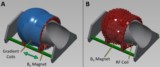
At the heart of the scanner is a permanent magnet made from an array of neodymium (NdFeB) rare-earth magnets that generate an 80 mT static field. Unlike the bulky superconducting magnets used in conventional MRI systems, or previously used electromagnets, the permanent magnet does not require external power or cryogenic cooling.
Arranging the magnet segments in an optimized Halbach cylinder configuration creates a transverse field inside the magnet and zero field outside the magnet. This intrinsic self-shielding is ideal for portable applications where stray fields could pose safety hazards. The constructed magnet assembly is 49 cm long, with an outer diameter of 57 cm and 27 cm bore opening.
The third design factor is that, rather than designing a homogeneous magnet, the team shaped its magnetic field variation into a built-in field gradient (of 7.6 mT/m) for readout encoding. This reduces magnet size and cost, and eliminates the need for a traditional readout gradient coil, lowering the acoustic noise, power and cooling requirements. With the built-in field variation used for image encoding in the x dimension, switchable gradient coils provide phase encoding in the y and z directions. The RF transmit/receive coil is incorporated into a compact helmet.
Finally, the researchers used advanced reconstruction techniques to correct for image distortions that arise from the non-linear field gradients used to encode the image. “Our image reconstruction method utilizes measured magnetic field maps to correct for these distortions,” Cooley explains.
Proof-of-principle
The prototype scanner – including the 122-kg magnet, coils, amplifiers, console and cart – weighs approximately 230 kg. Replacing the general-purpose console, amplifiers and cart with custom lightweight designs could reduce this to roughly 160 kg, the team notes. With no refrigeration systems for a superconducting magnet, power requirements are low, enabling the scanner to be operated from a standard power outlet.
Cooley and colleagues used their prototype scanner to record MR images from three healthy volunteers. The scanner successfully generated T1-weighted, T2-weighted and proton density-weighted brain images – standard brain scans routinely used for detection, diagnosis and monitoring of clinically important brain pathology. Each image was acquired in roughly 10 min and had a spatial resolution of 2.2 × 1.3 × 6.8 mm.
Although the scanner’s spatial resolution and sensitivity are both lower than that of a high-field MRI, the researchers emphasize that its performance is sufficient to detect and characterize serious intracranial processes, such as haemorrhage, hydrocephalus, infarction and mass lesions. Preliminary work also suggests that diffusion-weighted imaging, which is critical to applications such as acute stroke detection, should also be possible.
These initial images were acquired in an RF shielded room to eliminate external electromagnetic interference (EMI). “For true portable imaging, we are integrating EMI detectors into our scanner for EMI mitigation,” says Cooley. “This will greatly increase the image quality when our scanner is operated at the point-of-care.”
“We are also excited to begin work on a point-of-care MRI scanner specially designed for neonatal patients in the [neonatal intensive care unit] NICU,” she tells Physics World. “The transport and scanning of sick neonates is logistically very difficult and can be dangerous. The availability of a bedside MRI scanner in the NICU could have tremendous benefits for diagnostics and monitoring of neonatal brain injury.”
Balloon-borne telescopes can observe a wealth of astrophysical phenomena that ground-based instruments cannot, but onerous cooling requirements limit how much equipment can be taken aloft. Researchers at NASA’s Goddard Space Flight Center found a way to minimize this problem by drastically reducing the weight of a telescope’s cooling system. The researchers have tested their approach on a mission called the Balloon-Borne Cryogenic Testbed (BOBCAT) and have a follow-up mission planned to study it further.
Distant galaxies and star- and planet-forming clouds of gas and dust emit photons in the infrared region of the spectrum. Because the Earth’s atmosphere blocks most of this infrared radiation, these objects are hard to study from the ground. While space missions are the ideal option, they are extremely expensive. Balloons that carry telescopes way up into the stratosphere are a good alternative because they cost much less.
Near absolute zero temperatures required
The mirrors of balloon-borne telescopes can be huge, measuring up to 3 to 5 m across – “the size of a living room”, says team leader Alan Kogut. This presents a challenge because the mirrors, like the rest of the telescope, need to be cooled to near absolute zero during the mission. If they aren’t, their heat can wipe out the infrared light from deep space “like overexposing a camera”, Kogut says.
“Liquid helium can easily cool the telescope, but keeping it cold means putting the entire telescope into a giant thermos bottle called a dewar,” he says. “A thermos bottle the size of a living room would weigh several tonnes – more than even the largest balloons can carry.”
Standard dewars need to be this heavy because their walls must sustain a vacuum against sea-level air pressures, Kogut explains. However, he and his colleagues reasoned that a balloon-borne dewar could be much lighter since the pressure at the balloon’s operating altitude of 40 km is only 0.3% of that at sea level.
Extremely thin stainless-steel walls
The dewars developed for the BOBCAT mission comprise an inner cup, which contains the liquid coolant, surrounded by an outer shell. The gap between the two layers is under vacuum, preventing air from carrying heat from the outside into the cold interior. This “bucket” design is conventional, but the walls of the cup and shell are not, being made of stainless steel which, at 0.5 mm thick, is “not much thicker than a soda can’s”, says Kogut.
The new dewar can be launched at room temperature, and it has an integrated valve that allows the vacuum gap between the inner cup and outer wall to vent continuously during ascent. This permits air to escape, thereby eliminating any pressure gradient across the walls.
Once the balloon reaches an altitude of around 40 km, the valves closes to seal the dewar’s vacuum, explains Kogut. The telescope is cooled by pumping liquid nitrogen or liquid helium into the ultralight dewar from separate storage tanks, which themselves are of standard construction, are small and don’t weigh much.
Successful first test
The team tested the new design on an 827-kg-payload flight launched in August 2019. The goal of this initial test was two-fold. First, it was meant to prove that cryogenic liquids (14 litres of liquid nitrogen and 268 litres of liquid helium in the test) could indeed by transferred at float altitudes. Second, it was designed to measure the total amount of heat leaking to the receiving dewar. The researchers calculated this to be around 2.7 W, which is larger than the 1 to 2 W measured for the same dewar in ideal laboratory conditions. This value will be compared in a follow-up flight using a lighter dewar of identical size, they say.
Each December, Physics World selects its Top 10 Breakthroughs of the year. Watch this video to find out which research has made it onto this year’s shortlist. On Thursday 17 December, one of the ten will be crowned Physics World’s Breakthrough of the Year 2020.
In addition to having been reported in Physics World in 2020, our selections must meet the following criteria:
Significant advance in knowledge or understanding
Importance of work for scientific progress and/or development of real-world applications
Of general interest to Physics World readers
Come back next week to discover the winning breakthrough – and in the meantime you can read about the Top Ten, or listen to Physics World editors discuss their choices in the Physics World Weekly podcast.
This episode of the Physics World Weekly podcast features a lively chat about some of the best physics done this year as we unveil our Top 10 Breakthroughs of 2020. Our choices run the gamut from medical physics to particle astrophysics – and we even have two “Holy Grails” in the fields of superconductivity and semiconductor physics.
The Top 10 serves as the shortlist for the Physics World Breakthrough of the Year award, which will be announced on 17 December. Links to all the nominees, more about their research and the criteria for the awards can be found here.
One of the highlights in the Physics World calendar is the announcement of our Breakthrough of the Year, which will be made this year on Thursday 17 December.
Today, we are revealing the 10 finalists for 2020, which serves as a shortlist from which we will pick the Breakthrough of the Year.
This year’s Top 10 Breakthroughs were selected by a crack team of five Physics World editors, who have sifted through hundreds of research updates published on the website this year. In addition to having been reported in Physics World in 2020, our selections must meet the following criteria:
Significant advance in knowledge or understanding
Importance of work for scientific progress and/or development of real-world applications
Of general interest to Physics World readers
Here are the Physics World Top 10 Breakthroughs for 2020, in no particular order. Come back next week to find out which one has bagged the Breakthrough of the Year award – and in the meantime you can listen to four of the judges talk about the Top 10 in the Physics World Weekly podcast.
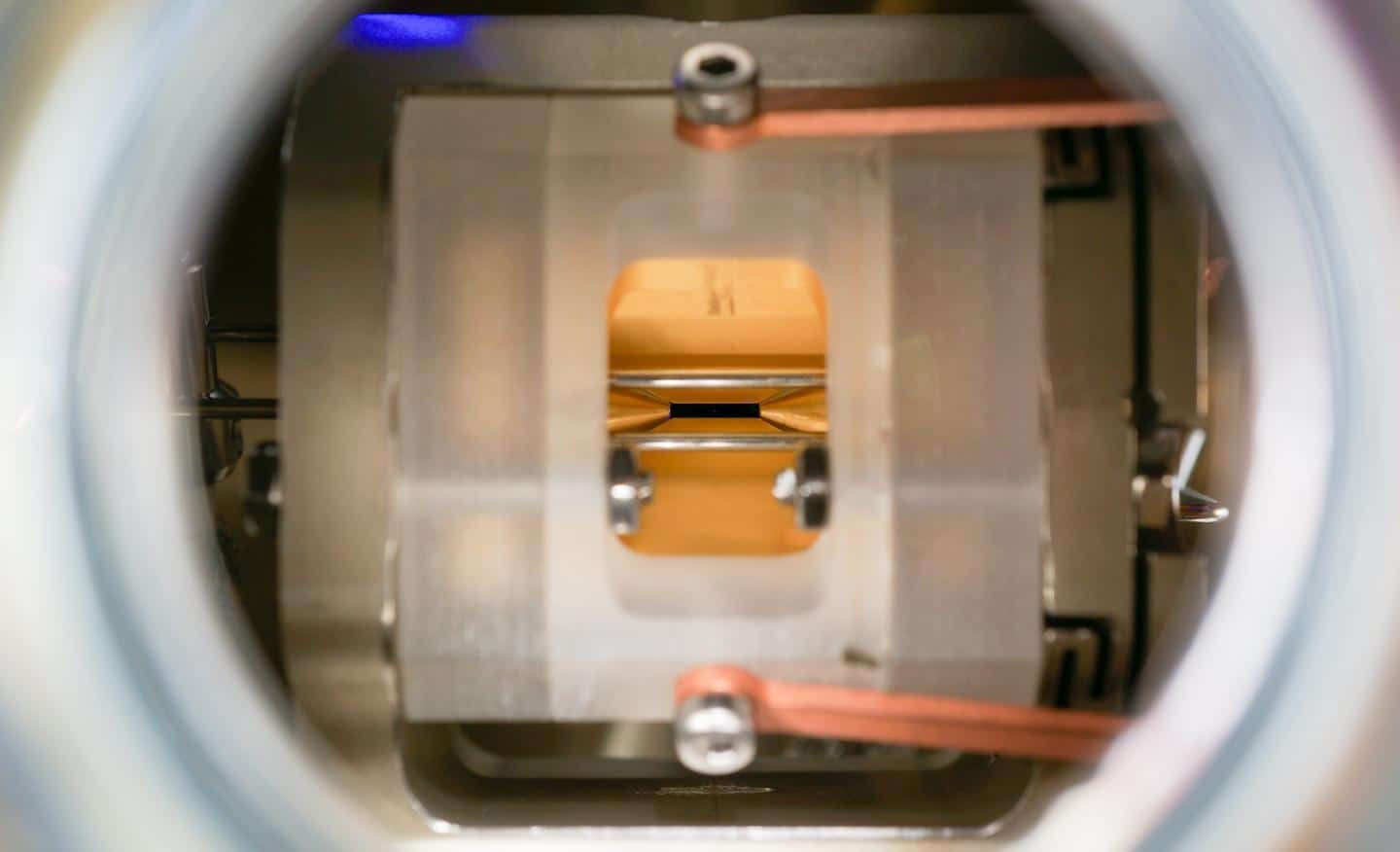
Ideal system: A strontium ion trapped in an electric field. The measurement on the ion lasts only a millionth of a second. (Courtesy: F Pokorny et al., Stockholm University)
To Markus Hennrich and colleagues at Stockholm University, Sweden, together with researchers at the universities of Siegen in Germany and the Basque Country and Seville in Spain, for using a series of “weak” measurements (the subject of Physics World’s 2011 Breakthrough of the Year) to probe the nature of superposition collapse in quantum mechanics. While the act of measurement usually forces quantum systems into definite classical states, the work of Hennrich and colleagues showed that some measurements do not destroy all quantum information. By taking a series of “snapshots” during experiments on a single ion of strontium, the team revealed that measurements are not instantaneous, but instead gradually convert superposition states into classical ones. Because weak measurements could in principle allow errors to be detected in quantum states without destroying those states in the process, the work might be used to improve error correction in quantum computers.
To Haocun Yu and Lee McCuller of the Massachusetts Institute of Technology and their colleagues on the LIGO Scientific Collaboration for showing that quantum-scale correlations can leave their mark on macroscopic objects weighing tens of kilograms. The researchers explored the exquisite interplay between the laser beam of a LIGO interferometer and its mirrors – each of which weighs 40 kg. They observed that radiation noise contributes to the motion of the mirrors, which is a result of Heisenberg’s uncertainty principle. When using squeezed vacuum states of laser light they showed that the quantum noise drops below the standard quantum limit, which demonstrates quantum correlations between the laser beam and the mirrors. The research could lead to the improved detection of gravitational waves by LIGO, Virgo and future observatories.
To the Borexino collaboration for observing neutrinos from the carbon–nitrogen–oxygen (CNO) cycle in the Sun. To do so the team had to first painstakingly minimize the effects of background radiation in the Borexino detector, which comprises 278 tonne of ultrapure liquid scintillator located deep inside a mountain at Italy’s Gran Sasso Infn Laboratories. The observation confirms a theory of stellar nucleosynthesis first proposed over 80 years ago. It should also encourage physicists to use the next generation of neutrino detectors to try to resolve the “metallicity puzzle” of the Sun – a mystery regarding the abundance of carbon, nitrogen and oxygen in the star.
To Noel Clark and colleagues at the University of Colorado Boulder and the University of Utah in the US, for observing a ferroelectric nematic phase of matter in liquid crystals more than 100 years after it was predicted to exist. In this phase, all the molecules within specific patches, or domains, of the liquid crystal point in roughly the same direction – a phenomenon known as polar ordering that was first hypothesized by Peter Debye and Max Born back in the 1910s. Clark and colleagues found that when they applied a weak electric field to an organic molecule known as RM734, a striking palette of colours developed towards the edges of the cell containing the liquid crystal. In this phase, RM734 proved far more responsive to electric fields than traditional nematic liquid crystals. Although further work is required to identify materials that display the phenomenon at room temperatures, ferroelectric nematics could find applications in areas from new types of display screens to reimagined computer memory.
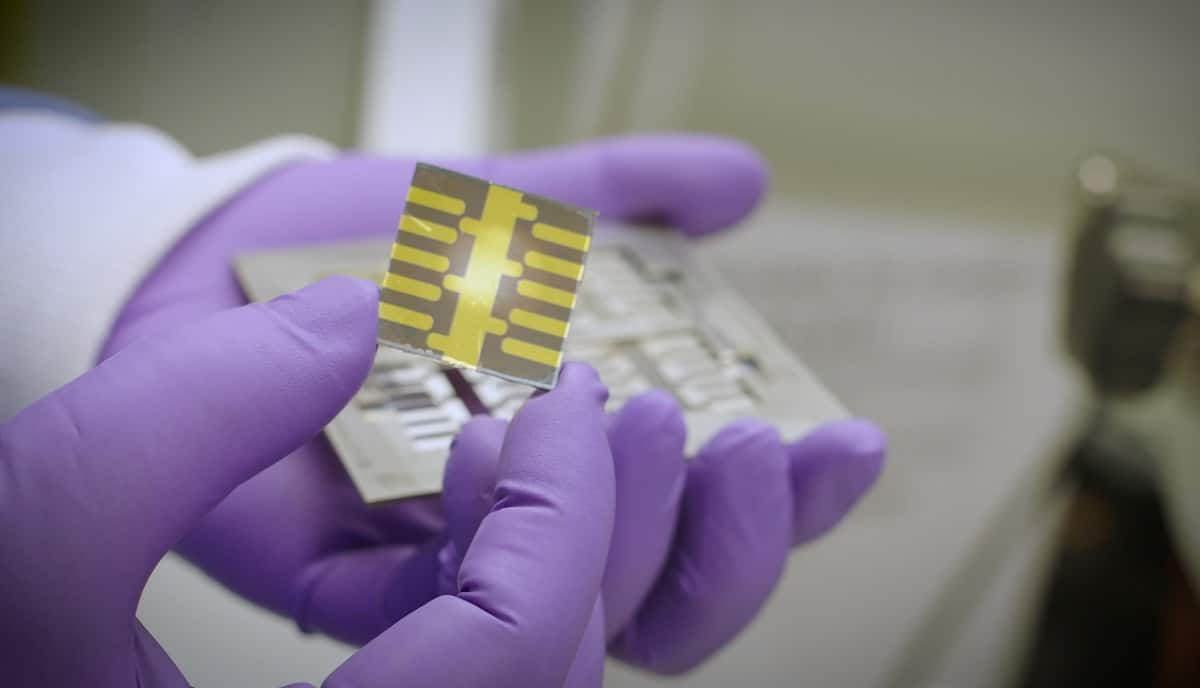
The perovskite thin-film X-ray detector is 100 times more sensitive than conventional detectors and requires no outside power source. (Courtesy: Los Alamos National Laboratory)
To Wanyi Nie and colleagues at Los Alamos National Laboratory for using thin-film perovskites to create an extremely sensitive X-ray detector. Using a synchrotron beamline to characterize their thin-film perovskite detectors, the researchers found that the X-ray absorption coefficients of the perovskite materials were on average 10 to 40 times higher than that of silicon for higher-energy X-rays. They also demonstrated that the new X-ray detectors are 100 times more sensitive than conventional silicon-based devices. This new type of solid-state X-ray detector could enable medical and dental imaging at extremely low radiation dose, enabling the same quality image to be generated using a much-reduced X-ray dose, making scans safer for patients. Nie also notes that it should be possible to fabricate large-scale detector arrays at far lower cost than for semiconductor detectors.
To Kostya Trachenko of Queen Mary University of London, Bartomeu Monserrat and Chris Pickard of the University of Cambridge and Vadim Brazhkin of the Russian Academy of Sciences for calculations showing that the upper limit on the speed of sound in solids and liquids depends on just two dimensionless quantities – the fine structure constant and the proton-to-electron mass ratio. The team’s theoretical prediction is backed up by experimental data of the speed of sound in a range of solid materials and a calculation of the speed of sound in metallic hydrogen – a material that is yet to be created in the lab but should have the fastest speed of sound. The research provides insight into how fundamental constants impose bounds on physical properties.
To Andrea Alù, Qiaoliang Bao, Cheng-Wei Qiu and an international team of collaborators at the City University of New York, National University of Singapore, Monash University, China University of Geosciences and the University of Texas at Austin, for showing that dispersion- and diffraction-free propagation of light is possible, with a resolution that beats the diffraction limit by more than an order of magnitude, in twisted layers of 2D molybdenum trioxide. Their work builds on the discovery of “magic-angle” graphene – Physics World’s Breakthrough of the Year in 2018 – by using twisted layers of 2D materials to change the behaviour of propagating photons, rather than electrons. Just as the electron version of twistronics has led to a flurry of research on superconductivity and electron states, the new photonics variant has important implications for nano-imaging, quantum optics, computing and low-energy optical signal processing.
Silicon sees the light: Elham Fadaly (left) and Alain Dijkstra in their Eindhoven lab. (Courtesy: Sicco van Grieken/SURF)
To Elham Fadaly, Alain Dijkstra and Erik Bakkers at Eindhoven University of Technology in the Netherlands, Jens Renè Suckert at Friedrich-Schiller-Universität Jena in Germany and an international team for creating a silicon-based material with a direct band gap that emits light at wavelengths used for optical telecommunications. Normally, silicon has an indirect electronic band gap, which means that it is a poor emitter of light and must be integrated with other semiconductor materials to create optoelectronic devices. To create a direct band gap, the researchers had to grow crystals of silicon-germanium alloy with a hexagonal crystal structure, rather than the usual diamond-like structure. They did this by creating nanowires of the alloy, which emitted infrared light. As well as having applications in optical telecoms and optical computing, the new silicon-based material could be used to create chemical sensors.
To a team headed up by Joao Seco at the German Cancer Research Centre in Heidelberg and Simon Jolly at University College London, for demonstrating how a mixed particle beam could enable simultaneous cancer therapy and treatment monitoring. The idea is to use a beam containing both carbon ions, which provide therapeutic irradiation of the target tumour, and helium ions, which travel straight through the patient and can therefore be used for imaging. In experiments at the Heidelberg Ion Beam Therapy Center using pelvis phantoms, the researchers showed that even small inflations of an air balloon inside the phantom caused an observable change in helium range. They also demonstrated that small phantom rotations changed the measured signal. The experiments reveal the potential of using a mixed beam to monitor intra-fractional anatomy changes, enabling more accurate delivery of particle therapy and, ultimately, providing better outcomes for cancer patients.
This research by Ranga Dias and colleagues is described in a paper in Nature. The paper has since been retracted by the journal.
To Ranga Dias and colleagues at the University of Rochester and the University of Nevada Las Vegas in the US for observing superconductivity at temperatures up to 15 °C in a hydrogen-rich material under immense pressure. Superconductors carry electrical current with no electrical resistance and have a range of applications from the high-field magnets used in MRI scanners to particle accelerators. Practical devices based on superconductors must be chilled to very cold temperatures, which is costly and can involve the use of helium, so a long-standing goal of condensed-matter physicists has been to develop a material that is a superconductor at room temperature. The carbonaceous sulphur hydride material made by Dias and colleagues shattered the previous high-temperature record by about 35 degrees and is the first to claim room-temperature superconductivity. While a pressure of 2.6 million atmospheres was required to achieve room-temperature superconductivity, the researchers think it may be possible to reduce the pressure by changing the chemistry of the material.
China has successfully launched a space telescope to study some of the most energetic events in the universe. Lifting off today from the Xichang Satellite Launch Center at 4.14 a.m. local time, the Gravitational wave high-energy Electromagnetic Counterpart All-sky Monitor (GECAM) represents one of the first new “all-sky” devices that will monitor fast-radio bursts, high-energy neutrinos and magnetars. The craft is set to begin operations as soon as it enters orbit, doing so for three years.
We’re really excited to see GECAM fly on time, as we overcame numerous technical difficulties and made it through the pandemic
Shaolin Xiong
To study these events, GECAM consists of two satellites – each weighing 160 kg – that will orbit on opposite sides of the Earth at an altitude of about 600 km. Each GECAM satellite features a dome-shaped array of 25 gamma-ray detectors and eight charged particle detectors. They will search for cosmic events happening in the energy range of 6 keV – 5 MeV and, within a couple of minutes of detection, GECAM will send out alerts to telescopes around the world for follow-up observations.
The idea of GECAM emerged following the announcement in February 2016 of the first detection of gravitational waves by the US-based Laser Interferometer Gravitational-Wave Observatory (LIGO). A year later and LIGO, working together with the VIRGO gravitational-wave detector in Italy, spotted the first gravitational wave produced by the merger of two neutron stars – an observation that was followed up by the Fermi Gamma-ray Space Telescope and other observatories around the world, kick-starting the era of multimessenger astronomy. Likewise, GECAM spot the gamma-rays bursts that are related to the production of gravitational waves by such comic mergers.
“We’re really excited to see GECAM fly on time, as we overcame numerous technical difficulties and made it through the pandemic,” says GECAM’s principal investigator Shaolin Xiong from the Institute of High Energy Physics, Chinese Academy of Sciences (CAS) in Beijing.
GECAM is the first of a line-up of space science missions to be launched by China in the coming five years. Other missions include the Advanced Space-based Solar Observatory, the Einstein Probe as well as the Solar wind Magnetosphere Ionosphere Link Explorer – a joint mission between CAS and the European Space Agency.
Identifying anatomic changes shown on MRI scans during a course of pencil-beam proton therapy, and adapting treatment plans accordingly, could improve the treatment quality, effectiveness and safety. In a retrospective study, researchers at St. Jude Children’s Research Hospital determined that 27% of paediatric patients, the majority with brain tumours, would have benefited from mid-treatment plan changes.
Pencil-beam proton therapy delivers radiation doses to a target with high accuracy, but if the target shifts, the dosimetric advantage afforded by the Bragg peak may be compromised and the risk of toxicities to adjacent tissue increased. Prior clinical trials comparing outcomes of paediatric patients treated with either proton or photon therapy have produced mixed results with regard to toxicity.
The researchers hypothesized that adherence to the treatment plan without adjusting for anatomic changes may have compromised the ability of proton therapy to maximally spare normal tissue while adequately covering the target volume. As such, they investigated whether altering treatment plans to compensate for changes in tumours or adjacent organs-at-risk (OARs) could improve target dose delivery and reduce normal tissue dose. They published their findings in the International Journal of Radiation Oncology, Biology, Physics.
The study included 73 children with a variety of cancers who received proton therapy at St. Jude during a 30-month period starting January 2017. The patients had between one and seven MRI exams, most of which were performed between weeks two and four of their treatments. Children with low-grade gliomas or rhabdomyosarcomas underwent weekly MRI exams.
The researchers evaluated 230 MRI scans acquired in the treatment position during the patients’ proton therapy courses, recording patterns of temporal and spatial anatomic changes. To identify scenarios that would benefit significantly from re-optimization, they compared the calculated radiation dose for the anatomy-of-the-day without treatment adaptation with the dose that would have been delivered with an adapted plan.
The majority of patients had brain tumours (79%) or tumours located in the head-and-neck (12%). They were prescribed a median dose of 54 Gy(RBE) in 1.8 Gy(RBE) per fraction. MRI analysis revealed that 20 patients had anatomic changes in their gross tumour volume (GTV) and/or changes in the tissue density within the beam path. This included all eight patients with rhabdomyosarcomas and 24% of patients with low-grade gliomas.
Led by radiation oncologist Sahaja Acharya, the researchers determined that 11 of the 20 re-optimized treatment plans had significantly changed plan quality, defined as a 5% or greater decrease in CTV V95 (clinical target volume receiving at least 95% of the prescription dose) or a 5% or greater increase in the dose–volume parameter used as an OAR constraint.
Because of anatomic changes, seven patients experienced a significant reduction in CTV coverage with the delivered plan, ranging from 5–16% decrease in CTV V95. Four patients experienced a significant increase in dose to the brain stem, hippocampus and/or optic apparatus, which could have been prevented if the delivered plan had been adapted. The team note that none of the patients who had re-optimized plans experienced local or distant failures. Additionally, none experienced grade 3 or higher toxicities or developed radiation necrosis.
“Of the 27% of patients who demonstrated anatomic change during proton therapy, more than 50% had suboptimal delivered plans,” write the authors. “Re-optimization of these plans resulted in an improvement of CTV coverage up to 16% and a decrease in OAR dose up to 46%.” Because most changes were identified during the second or third week of a six-week course of treatment, the re-optimization effect would have been significant.
“Certain tumour histologies and locations might derive more benefit than others from this type of approach. Specific patterns of anatomic change, unrelated to tumour or patient characteristics, might help in selecting patients for MRI-based adaptive therapy,” the researchers write.
“We are planning to conduct a prospective pilot study that will specify timing and frequency of on-treatment MRI for different disease categories,” Acharya tells Physics World. “Through this study, we seek to understand the number of patients we need to image in order to detect one plan deviation.”
Acharya is also the principal investigator of an accruing phase II study (NCT04065776) investigating the feasibility of reducing radiation doses to the hippocampi by using proton therapy for midline or suprasellar low-grade gliomas. Children enrolled in this study also undergo a weekly MRI scan, and treatment plans are adapted to shrinking tumour volumes if there is more than a 20% change in GTV. All children are also followed with longitudinal neurocognitive testing.
“This study might provide some insight on whether adapting to a smaller target volume can spare critical regions of the brain, such as the hippocampus, for children with midline or suprasellar low-grade gliomas, and whether sparing such regions will preserve neurocognition,” explains Acharya.
You know what the scientific method is until you try to define it: it’s a set of rules that scientists adopt to obtain a special kind of knowledge. The list is orderly, teachable and straightforward, at least in principle. But once you start spelling out the rules, you realize that they really don’t capture how scientists work, which is a lot messier. In fact, the rules exclude much of what you’d call science, and includes even more of what you don’t. You even begin to wonder why anyone thought it necessary to specify a “scientific method” at all.
In his new book The Scientific Method: an Evolution of Thinking from Darwin to Dewey, the University of Michigan historian Henry Cowles explains why some people thought it necessary to define “scientific method” in the first place. Once upon a time, he writes, science meant something like knowledge itself – the facts we discover about the world rather than the sometimes unruly way we got them. Over time, however, science came to mean a particular stepwise way that we obtain those facts independent of the humans who follow the method, and independent of the facts themselves.
Cowles’s story of this transformation begins with the naturalist Charles Darwin, who worried that professional scientists would regard his mixture of observing, recording and analysing things like barnacles, birds and worms as not rigorous enough to count as legitimate science. Darwin’s account of scientific method, in short, was largely motivated by his own professional anxiety. That anxiety motivated him to reflect on, as Cowles says, “how you thought what you thought”. Darwin found the answer in what he was studying – nature itself.
A natural view
Just as nature takes alternative forms of life and selects among them, Darwin argued, so scientists take hypotheses and choose the most robust. Nature has its own “method”, and humans acquire knowledge in an analogous way. Darwin’s scientific work on living creatures is indeed rigorous, as I think contemporary readers will agree, but in the lens of our notions of scientific method it was hopelessly anecdotal, psychological and disorganized. He was, after all, less focused on justifying his beliefs than on understanding nature.
In the lens of our notions of scientific method, Charles Darwin’s scientific work was hopelessly anecdotal, psychological and disorganized
Robert P Crease
Following Darwin, the American “pragmatists” – 19th-century philosophers such as Charles Peirce and William James – developed more refined accounts of the scientific method that meshed with their philosophical concerns. For Peirce and James, beliefs were not mental judgements or acts of faith, but habits that individuals develop through long experience. Beliefs are principles of action that are constantly tested against the world, reshaped and tested again, in an endless process. The scientific method is simply a careful characterization of this process.
For Cowles, though, the turning point into the modern conception of scientific method occurred in 1910 when fellow pragmatist John Dewey published a book called How We Think. In it, Dewey specified five steps that epitomize what we now think of as the scientific method, which was no longer intimately connected with the experience of the individual scientist but instead became a set of rules that turns those who adopt them into scientists. These rules were: “(i) a felt difficulty; (ii) its location and definition; (iii) suggestion of possible solution; (iv) development by reasoning of the bearings of the suggestion; (v) further observation and experiment leading to its acceptance or rejection; that is, the conclusion of belief or disbelief”.
While Dewey intended these steps to describe organic human thinking and how they can function in education, it was all too easy to interpret them as a special way to think, and to calcify them into what Cowles calls “a manual for technical practice”. Authors of textbooks seized on the idea as a way of explaining what science was and why it worked. Dewey’s steps, Cowles says, were quickly turned into “a symbolism of the separation of science from everyday thinking, a talisman of scientific exceptionalism”. The result, he argues, was “a shared method that seemed less and less natural as the 20th century wore on” though seemingly confirmed by episodes carefully selected from the history of science.
While the ruminations of Darwin and the early pragmatists on method had assumed that it was a way of thinking, in the end professional anxieties and the desire to elevate and insulate scientific knowledge above other kinds of knowledge transformed it into something apart from thinking, something potentially programmable into a computer. In this way “the scientific method” – an abstract set of rules purporting to be about scientific practice – had been turned into a logo; an identifier and attestation.
The critical point
Reviewing Cowles’s book, the Stanford University historian Jessica Riskin recently argued that the “scientific method” originated not within science itself, but “in the popular, professional, industrial, and commercial exploitation of its authority” (New York Review of Books 2 July 2020). Integral to this idea, she writes, was the claim that “science held an exclusive monopoly on truth, knowledge, and authority, a monopoly for which ‘the scientific method’ was a guarantee”. Yet it is possible, Cowles argues, to reject such a view of scientific method and to think of science “as the flawed, fallible activity of some imperfect, evolving creatures and as a worthy, even noble pursuit”.
To me, the scientific method is a good example of how philosophers and others create a problem by overstressing the orderly and formal character of scientific practice, and then set themselves the task of solving the problem they have created. As I argued in my own book The Workshop and the World, scientists working in a laboratory should be compared to a jury who place themselves for a short time in isolation to evaluate evidence. The jury members bring their experience to the deliberations, which is essential to being able to judge fairly. Those who think that hard-and-fast rules can be drawn up to guarantee justice have never been on a jury.
3D printing techniques are transforming many areas of manufacturing. One such technique, laser powder bed fusion (LPBF), is particularly attractive because it can be used to make complex metal parts that would be difficult or impossible to manufacture conventionally. However, it suffers from a major drawback in the form of tiny voids that weaken and degrade the metal. Researchers in the US and China have now identified how these voids are generated, and how they become trapped as the metal solidifies – findings that could help manufacturers find ways to control them, and thereby improve 3D metal-printing processes.
In LPBF, a high-power laser, guided by a digital computer-aided design and drafting model, is scanned across a thin layer of metal powder. The heat from the laser melts the metal powder in localized regions and fuses it to the layer of metal directly underneath. While this process is highly versatile and fairly speedy, the objects it creates are often riddled with microscopic, vapour-filled pores that drastically limit the material’s toughness and fatigue resistance.
“Keyhole” structures
When a high-power laser boils molten metal, it often generates deep and narrow gaps. These gaps are known as keyholes, and it had long been suspected that they were related to defects in the finished 3D-printed part. The exact relationship between keyholes and porosity was not, however, fully understood.
If this bubble never reconnects to the main keyhole, Rollett explains that it can instead collapse, generating an acoustic shock wave as it does so. This shock wave pushes the remaining pores away from the keyhole, thereby ensuring that they survive long enough to become trapped in the re-solidifying metal.
Despite the role that keyholes play in creating voids, Rollett and colleagues emphasize that keyholes themselves are not flaws. In fact, they have a positive role to play in LPBF, as they increase the efficiency of the laser: once inside a keyhole, the beam undergoes multiple reflections that enhance laser light absorption. It is only under certain conditions that the keyhole changes shape and becomes unstable, generating unwanted pores in the process.
Stay out of the “danger zone”
To find out what these conditions are, the researchers studied how the speed at which the laser is scanned over the metal power relates to keyhole instability. They found that keyholes become more unstable if the laser is scanned too slowly across the metal powder. Such slow scanning speeds increase the laser’s power in a localized region, allowing the metal there to overheat.
The team found that there is a well-defined boundary between stable and unstable keyholes. “You can think of the boundary as a speed limit, except it is the opposite of driving a car,” Rollett says. “In this case, it gets more dangerous as you go slower. If you’re below the speed limit, then you are almost certainly generating a defect.” However, he continues, “As long as you stay out the ‘danger zone’ (that is, too hot, too slow), the risk of leaving defects behind is quite small.”
The researchers, who report their work in Science, say they now plan to investigate ultrafast keyhole dynamics as well as other modes of instability in the laser melting process. “We also plan to study the development of microstructure from the rapid solidification and cooling inherent in LPBF additive manufacturing,” Rollett tells Physics World.
While world events are often difficult to predict, true randomness is surprisingly hard to find. In recent years, physicists have turned to quantum mechanics for a solution, using the inherently unpredictable behavior of photons to generate the truly random numbers that underpin many modern cryptographic protocols. Now, a new study promises to make this process of quantum random number generation more accessible, by showing that it is possible to produce certifiably random numbers quickly using a system built with off-the-shelf components.
When numbers are used to securely encode information, the randomness of those numbers is crucial: a string of truly random numbers is one that a hacker can never guess. In classical physics, however, all processes – even chaotic ones – are deterministic, making true randomness impossible. To illustrate this, study lead author David Drahi, a physicist at the University of Oxford, UK, notes that classically, a simple coin flip is about as random as it gets. However, he continues, “if you know the mass of the coin, if you can see the coin, if you can look at the wind, you can predict where it is going to land”. Classical randomness is therefore limited by the existence of information about the physical process meant to produce it.
In the quantum world, in contrast, “there are these fundamentally non-deterministic processes,” says Nathan Walk, a physicist at Freie Universitat Berlin, Germany and a co-author on the study. The results of quantum measurements, he adds, are inherently unpredictable, because their outcome does not exist in any meaningful way until the measurement has been made and the wavefunction of the system has, famously, collapsed.
Certifiably random
In developing their random number generator (RNG), the study’s authors focused not only on producing randomness, but also on confirming that this randomness originates from a non-deterministic quantum process rather than some incidental classical noise in the experiment. “There is not a test you can do on a string of numbers to tell if it’s random,” Walk notes. “You can’t certify strings. But you can certify processes.”
Drahi, Walk and collaborators built such a quantum certification process – essentially an additional measurement – into their protocol for generating random numbers. They also developed rigorous theoretical proofs of its effectiveness and demonstrated that it can be implemented in practice by performing experiments using quantum light. According to Renato Renner, a physicist at ETH Zurich in Switzerland who was not affiliated with the study, such steps are important for creating a practical system. “You really want to have a device that produces some certificate, otherwise you don’t really profit from any quantum advantages,” he says.
In their experiments, the researchers send laser light (a photonic state) into one input of a beam splitter while the other input is kept void, resulting in a zero signal (a vacuum state). The consequent pair of output beams is then measured using two separate detectors. Because each photon that arrives at the beam splitter has an equal (50%) chance of being reflected or transmitted, the difference between the numbers of photons recorded by each detector is unpredictable. It is bound to be a random number, Drahi explains.
To confirm that randomness generated in this way is reliable and useful, the researchers performed another measurement on the photonic state before it reaches the beam splitter. In this certification measurement, the light signal is discarded if it would not generate the desired amount of randomness at the end of the experiment. This can happen if the laser signal contains either too few photons or too many. Too few, and the number of possible unpredictable events will be too low for the measurement to be sufficiently random. Too many, and the detectors will hit their maximum value, making the measurement fully predictable.
The inclusion of this certification measurement means that the researchers have theorized and built a device that not only produces randomness at a fast rate of 8.05 gigabits per second, but also ensures the quality of that randomness in real time. According to Feihu Xu, a physicist at the University of Science and Technology of China who was not involved in the work, this “development of a formal framework to monitor and certify the randomness” stands out even though some other ideas in the study have been explored before.
“Untrusted” light source
The researchers’ inclusion of real-time randomness certification in their experiment also has consequences for its possible future applications, because the study’s theoretical framework proves that the RNG protocol is partly independent of the devices used to implement it. For instance, the light source used can be “untrusted” – the randomness analysis is independent of any information about it. As long as the light signal passes the certification measurement, the properties of the device that produced it do not affect the quality of final randomness. This flexibility means that the group’s quantum RNG could in principle be used by “a person or a computer that knows nothing about quantum physics”, Walk notes. The numbers obtained in this fashion would be reliably random regardless of operator’s expertise, he adds, since the protocol automatically ensures its own performance.
As a bonus, the research team managed to construct their experiment using affordable off-the-shelf components – a feature that allowed Drahi to ship the experimental setup from Oxford to some of his co-authors in Moscow. “It got there and it worked,” he says, noting that it would have been virtually impossible to ship all of the components for a more exotic quantum device across a continent, have a different researcher assemble them upon arrival, and then successfully generate random numbers at the same high speed. This level of practicality, combined with the rigorous approach to confirming the randomness of their random numbers as well as generating them, sets up this study as a promising starting point for the development of real-world quantum devices providing reliably true randomness. “It could have very broad applications,” Renner concludes.