Fostering academic debate in an online world

The past six months have seen scientists shift from working in the lab to conducting their research and collaborations online using tools such as Zoom. Conferences, which had almost always been held in-person before the COVID-19 pandemic, have also had to switch to online-only. This move has led some to warn of the long-term dangers for science, especially those fields in which there is “much disagreement and passion”. Face-to-face meetings, they contend, are the “only way to propel science forward”.

We disagree. We recently co-organized an online conference devoted entirely to controversy. Held in early July over three days, the Quantum Battles in Attoscience event had more than 300 registered participants from 34 countries. Attoscience is a fairly new branch of physics and deals with some of the shortest times in nature (10–18 s). At these time scales, researchers can image the real-time movements of electrons. And since electrons carry energy in systems from biomolecules to nanostructures and metals, attoscience may impact many areas of science and even lead to “optoelectronic” computers.

Despite – or perhaps because of – its vibrancy, the attoscience community is very divided on almost all issues, siloed into factions without a co-ordinated effort toward constructive debate. We have seen plenty of “street fights” at major international conferences and in journals, with not much respect being held between the different parties. The idea of embracing, instead of avoiding, conflict emerged when we were writing a workshop proposal. Privately, some of us had practised martial arts, where rigorous codes of conduct are enforced. Breaking them will result in your being expelled for tarnishing your school’s reputation. In extreme cases, you may even have your belts revoked. This approach is very different from academic street fights, so we asked: “If people want to fight, why not go for the scientific equivalent of a martial-arts tournament?”

If people want to fight, why not go for the scientific equivalent of a martial-arts tournament?

Mortal combat 

We initially intended to host a “battle” event at University College London, but moved it online when the pandemic hit. This posed several challenges, but also gave us plenty of opportunity to test this debating format with a specific code of conduct that was  developed especially for the event. We invited early-career researchers – who we dubbed “combatants” – from opposing groups to participate in three “battles” on contentious topics. Every combatant was promoted on the workshop website and on social-media platforms leading up to the conference. They also became co-organizers of the conference, invested enormously in the planning of the battles and passed on the excitement to their groups

Bringing these people together to trust each other in a virtual environment took around three months. This was done via Zoom meetings and dedicated channels on Slack. Two organizers – Bridgette Cooper and Andrew Maxwell – managed the interaction between participants. Once the arguments had been agreed and prepared, we then carried out several mock battles. Traditionally, panel discussions happen on the fly and involve leaders in the field, who would not have the time for such a lengthy preparation. We heard from our combatants that as early-career researchers they wanted the practice as well as the reassurance that they would not be caught off guard. The preparation allowed them to explore controversial points, let go of their impostor syndrome and step outside their comfort zones to discuss more “fringe” topics. The mock battles helped to set boundaries and timing, ensuring that everyone was equally represented. The battles were mediated by leading scientists in the field who were not affiliated with the panelists. They met a few times to establish how the battles would be conducted. 

Our conference still boasted big names but they were invited to give more traditional talks. By focusing on early-career researchers we could avoid a lot of politics and ego: the combatants were willing to invest in the process precisely because they had more to gain from it. During the conference, it was also much easier to poll people online as anonymity helped to increase audience participation. In a real conference we would only have the usual suspects asking or replying to questions.

Culture change

Current conference culture is built to encourage the participation of principal investigators. This needs to change – why do we need the same lectures every year from the same people? We would like to see fresh faces and ideas, but this is a double-edged sword: a conference with no big names may not attract interest and may even look suspicious. With this new initiative we wanted to change this mindset. Furthermore, an onsite conference requires a huge investment in terms of local resource, sponsorship and infrastructure, both for the participants and the organizers. This poses further barriers and favours those with privilege and time. Online meetings avoid some of these issues. 

The meeting was a huge success and by subverting a few paradigms, we hope to have shown that alternatives are possible. Not only can debate happen in an online forum, but it can be done while maintaining respect for those involved. 

White papers: Mad City Labs and Edinburgh Instruments


This time we are featuring two white papers from Mad City Labs and Edinburgh Instruments

Making sense of viruses

Single-molecule microscopy techniques allow researchers to directly study molecular mechanisms, enabling them to boost our understanding of, for example, how biological viruses assemble, disassemble and interact with their hosts. In the new white paper from Mad City Labs, entitled Understanding Virus Mechanisms – One Particle At A Time, you can discover how Tijana Ivanovic from Brandeis University in the US has been using the company’s equipment to understand cell entry mechanisms and the relationship between the structure and organization of a virus particle and the early steps of infection. With her lab having studied viruses ranging from those responsible for Ebola to COVID-19, the white paper shows how these single-molecule techniques allow you to measure the “trajectories” of individual molecules in a population.

Studying quantum dots

Semiconductor quantum dots have unique tuneable photoluminescence properties, which make them ideal for a range of important technological applications including solid-state lighting, displays, photovoltaics, and biomedical imaging. Indium-phosphide quantum dots are of particular interest as an environmentally friendly and non-toxic alternative to traditional heavy metal-based quantum dots containing cadmium and lead. Although indium-phosphide quantum dots do not emit light on their own, they can do this if coated with a layer of zinc sulphide. In this latest white paper from Edinburgh Instruments, entitled Emission Tail of Indium Phosphide Quantum Dots Investigated using the FS5 Spectrofluorometer, you can find out how one of the company’s spectrofluorometers was used to characterize the absorbance, emission and lifetime of such indium-phosphide/zinc-selenide quantum dots, thereby helping to establish important structure–property relationships.

Ice-core mission in the Swiss Alps abandoned due to surprisingly hard glacier

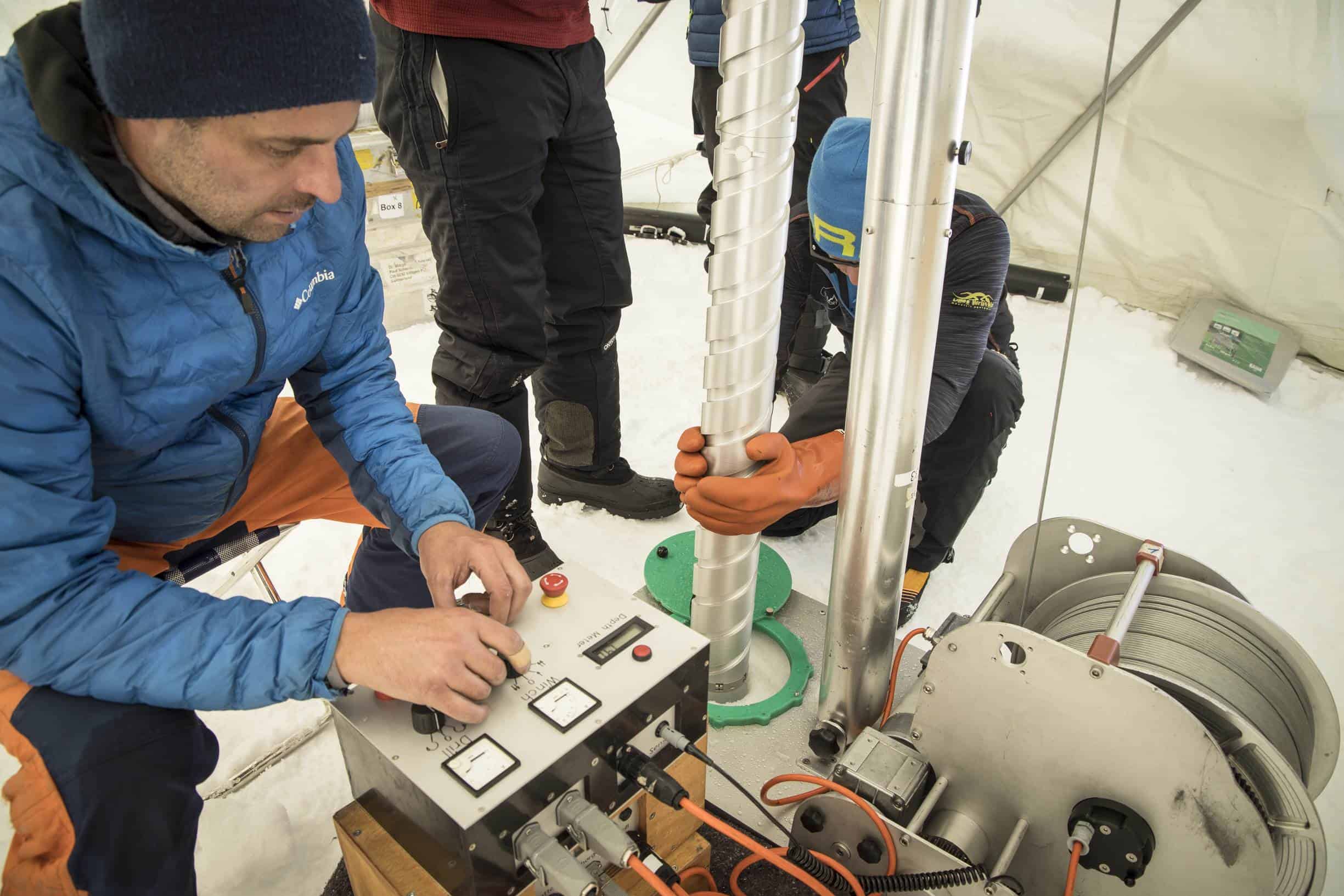
If you’re into home improvement, you may have experienced that sinking feeling of drilling into a wall and hitting something very hard. Whether it’s a metal support or stubborn brickwork the result is the same: you can’t drill any deeper and you may have damaged your drill. Last week, an Italian-Swiss group of climate scientists experienced a similar drilling defeat played out on a grand scale when they were forced to abandon attempts to drill ice cores from a glacier in the Swiss Alps.

The mission was part of Ice Memory, a UNESCO-backed project in which ice cores from several of the world’s threatened glaciers will be extracted and ultimately stored in an “ice sanctuary” in Antarctica. The project’s main goal is to provide future scientists with access to this ice record before it vanishes due to climate change. Tiny bubbles of gas, ancient pollen and possibly even microbes frozen within the ice can reveal information about Earth’s climate history.

“The ice cores also certainly contain still other deposits and residues that could help us answer scientific questions – which ones, we don’t even know yet – in the future”, said Margit Schwikowski, an environmental chemist at the Paul Scherrer Institute, who led the recent expedition.

Breaking the ice

Things began well for Schwikowski’s eight-person team. On Monday 14 September the group set up base camp at an altitude of 4100 m on the Corbassière Glacier, on the Grand Combin mountain massif 90 km east of Geneva. The mission was to extract three ice cores – each with a 7.5 cm diameter – which could extend as far as the underlying rock 80 m below.

But the group soon ran into difficulties. In two closely separated drilling locations, the scientists encountered an unexpected transition at a depth of just 20 m, which halted progress and damaged the drill. In early reports, the researchers suggest they may have encountered ice “lenses” – extremely resistant blocks of ice largely free from sediment.

Ice drill

Not to be deterred, the team managed to transport the equipment to the manufacturer’s lab in Bern to get it fixed. For the third attempt, during the weekend of 19–20 September, the scientists started drilling 10 m away from the previous holes, but progress was yet again halted at the same shallow depth. With harsh weather conditions forecast, the team decided to leave the mountain and postpone the mission.

“The water has complicated the whole operation. We weren’t expecting to find the glacier like this,” said Carlo Barbante, director of Italy’s Institute of Polar Sciences and researcher at Ca’ Foscari University of Venice. “We will need to change the way we drill the ice and hope it’s not too late to extract a full ice core from the Grand Combin.”

A challenging laboratory

Although the scientists will be disappointed, it is not surprising to face setbacks when working in extreme mountain environments. Harsh weather conditions also restricted the number of ice cores retrieved from earlier Ice Memory missions in Bolivia and Russia in 2017 and 2018 respectively. However, both of those missions ultimately resulted in successful ice-core extractions, as did expeditions in the French Alps (2016) and a Russian site in the Altai Mountains (2018).

Ice drill

Barbante is also the co-ordinator of Beyond EPICA, which seeks to drill ice cores in Antarctica, providing a climate record for at least the past 1.5 million years. That project is the follow-up to the European Project for Ice Coring in Antarctica (EPICA), where researchers drilled 3270m deep into the Antarctic ice between 1996–2005, which enabled them to reconstruct the climate history of the past 800,000 years.

So although this latest mission my have hit a metaphorical brick wall, it is part of a wider programme to preserve the world’s ice record. Undoubtedly there will be further challenges ahead, but climate scientists are depending on it.

Unprecedented ice loss is predicted for Greenland Ice Sheet

Over the next eighty years global warming is set to melt enough ice from the Greenland Ice Sheet to reverse 4000 years of cumulative ice growth – with rates of ice-loss more than quadruple even the fastest melt rates during the past 12,000 years. These stark conclusions come from new simulations which, for the first time, put current and projected future rates of ice-loss into context; comparing them directly with historical rates of ice-loss. These latest results are consistent with previous research that shows that if we continue our current high trajectory of greenhouse gas emissions we can expect Greenland to become ice-free in as little as 1000 years.

A couple of weeks ago a massive chunk of ice – equivalent in size to the Caribbean island of Montserrat – broke away from north-east Greenland. It serves as yet another indicator of the rapid pace of change in this region, with rising temperatures currently driving ice-loss at a rate of around 6100 billion tonnes per century. But how unprecedented is this? How quickly did the Greenland Ice Sheet melt during warm periods in the past?

The Greenland Ice Sheet currently stretches across 1,710,000 square kilometres and geologists have used ice-core data to understand how it has waxed and waned in the past. Until now, however, no-one had compared how ice-sheet activity in the past matched up with what scientists expect to see in the future. Jason Briner, from the University at Buffalo in New York, and colleagues have made use of recent reconstructions of climate and ice-sheet thickness to simulate the evolution of a portion of ice-sheet in southwestern Greenland, running their simulations from 12,000 years ago, through to eighty years into the future.

“Shocking” pace of ice loss

The scientists found that the highest rates of ice melt during the Holocene (the last 12,000 years) occurred during a warm period between 10,000–7000 years ago when it was 3–5 °C warmer than today. This resulted in ice being shed at a rate of around 6000 billion tonnes per century, which is similar to the loss rate seen over the last 20 years.

But as their simulation ventured into the future they discovered that the rate of ice-loss is likely to dwarf anything seen in the past. Under a high-emissions “business as usual” scenario Briner and his colleagues show that ice loss could reach an eye-watering 35,900 billion tonnes per century by 2100, whilst under a low-emissions scenario it is likely to rise to around 8800 billion tonnes per century. “It was a shocking to me to see that even with low emissions the pace of ice loss is going to be faster than it was during the warmest period in the past,” says Briner, whose findings are published in Nature.

Under a low emissions scenario the global sea-level rise associated with the melt from this segment of ice sheet is around 2 cm by 2100, whilst under high emissions it adds around 10 cm. Scaling this up to include the rest of the Greenland Ice Sheet suggests that Greenland ice-melt will produce at least 4–20 cm of sea level rise by 2100.

“Centuries of sea level rise”

“The findings of this study are no surprise, but they highlight that we should do everything in our power to slow the rate of melt,” says Timothy Lenton, Director of the Global Systems Institute at the University of Exeter. “Buying time for ‘managed realignment’ of the worlds coastlines and several major cities is a huge deal. When we are talking about centuries of sea level rise, we are considering a timescale where the global human population could conceivably be declining (as affluence leads couples to have fewer children, below ‘replacement rate’). That could make a realignment easier if it is further in the future. Whereas with currently growing population and growing coastal megacities it could be a nightmare,” he adds.

Previous research has suggested that we have already passed the point of no return for the Greenland Ice Sheet, with no hope of preventing a complete meltdown, but Briner and his colleagues are not convinced that this tipping point has passed. “It is clear that we are now committed to a lot of ice loss through this century, but our simulation shows that if we follow a low-emissions pathway the rate of ice-loss may slow as we approach 2100. It is possible to leave future generations with a healthy Greenland Ice Sheet,” he says. Lenton concurs and thinks there is still time to act. “Even if tipping points have been passed, because the ice sheet dynamics are relatively slow, it is possible to ‘overshoot’ an ice sheet tipping point temporarily and still recover the situation. That of course requires bringing greenhouse gas levels down, which is going to require deliberate greenhouse gas removal on top of stopping greenhouse gas emissions.”

Overlooked for the Nobel: Jocelyn Bell Burnell

I’ve met Jocelyn Bell Burnell twice.

The first was when I sat next to her at a dinner in London in 2007. The other occasion was last year when I interviewed her about her incredibly generous donation of $3m to set up the Bell Burnell Graduate Scholarship Fund.

Run by the Institute of Physics, which publishes Physics World, the fund supports PhD students from under-represented groups at universities in the UK and Ireland, with the first recipients having recently been announced.

On both occasions, I resisted the temptation to ask Bell Burnell why she feels she was never awarded a share of the Nobel Prize for Physics for the discovery of pulsars.

Famously, her PhD supervisor Antony Hewish won the 1974 Nobel prize for the pulsar discovery – sharing it with his astrophysicist colleague Martin Ryle – while Bell Burnell was left empty-handed.

The omission might appear to be due to her gender. But speaking at the International Conference on Women in Physics in Birmingham, UK, in 2017, Bell Burnell attributed it to the fact that she was a PhD student at the time of the discovery in 1967 at the University of Cambridge.

Bell Burnell and five colleagues had built a radio telescope in a huge field outside the city, which she then operated and ran. Combing through the mountains of data, Bell Burnell saw regular peaks in luminosity that she and Hewish attributed to a pulsar – a rotating neutron star that emits a regular ticking signal of radio waves. Their paper announcing the finding was published in Nature in January 1968.

Still, as described in this feature by Sarah Tesh and Jess Wade from 2017, Bell Burnell doesn’t think such an injustice could happen again, pointing to the 1993 Nobel Prize for Physics for binary pulsars. It went to Russell Alan Hulse, who was a student at the time of the discovery, along with his supervisor Joseph Hooton Taylor Jr. “At least they don’t make the same mistake twice,” Bell Burnell told delegates at the Birmingham meeting.

However, we won’t have to wait too long to find out the real reason for Bell Burnell’s omission. The Nobel archives always remain sealed for a period of 50 years after the award of a Nobel prize, which means that details of the 1974 prize will be available in just over three years’ time in January 2024. The archives contain not just data on who was nominated, by whom and when, but also information about the committee’s thinking.

I, for one, will be fascinated to find out what was going through the minds of that year’s Nobel Committee for Physics. We’ve recently learned a lot more about how they operate, but why they make their choices still remains a mystery. However, I’d lay a fair bet that, consciously or subconsciously, Bell Burnell’s gender played a role too in their deliberations.

Commissioning and QA workflows of MR-Linac with the THALES 3D MR SCANNER

Want to learn more on this subject?

The market introduction of the MR-Linac technology improves the quality of patient care via the real-time imaging of the targeted PTVs. The online control of the PTVs permits the gating process of the radiation beam delivery reducing the amount of delivered dose on healthy and sensitive tissues. Conventional water phantoms with ferromagnetic material becomes prohibited due to the presence of the static magnetic field of MR-Linacs. To overcome this situation, LAP introduces the MR-compatible water phantom, THALES 3D MR SCANNER, to support the end users with the measurements of dosimetry distributions necessary to commission the beam model of the MRIdian Linac from ViewRay.
The key products specifications and end-user benefits will be presented by Dr Thierry Mertens (business development manager for LAP). Daan Hoffmans, MSc, physicist in Amsterdam UMC will share his clinical experience with the THALES 3D MR SCANNER including first evaluations presenting the use of the THALES 3D MR SCANNER with the Ethos™ (Varian) machine.

Want to learn more on this subject?

Thierry Mertens has a PhD in physics and has nearly 15 years of experience in medical physics and radiotherapy, with his major commitment being to develop innovative quality assurance solutions to support the medical end users with their clinical tasks. As business development manager for LAP since 2016, Thierry has been instrumental with the development of the THALES 3D MR SCANNER and had the opportunity to work closely together with pioneer users of the MRIdian system. Thierry has been instrumental in ensuring that the end-user needs are fulfilled by feeding back to the LAP R&D team.
Daan Hoffmans, physicist in the Department of Radiation Therapy of Amsterdam UMC, has been closely involved in acceptance, commissioning and defining QA strategy for state-of-the-art radiation units for 15 years. In 2016, Europe’s first MRIdian (ViewRay) system was installed in Amsterdam UMC. In that time, the market of QA equipment for MR-guided radiotherapy was still at an early phase, which demanded the maximum of Daan’s creativity and improvization skills. In the years following, a second MRIdian was placed, and both systems underwent several upgrades. During this period, Daan had plenty of opportunities to test and validate prototypes of what became THALES 3D MR SCANNER.
Have dark bosons been spotted in ytterbium isotopes?

Promising evidence for the existence of a hypothetical dark matter particle has been uncovered in an experiment done by a team led by Vladan Vuletić at the Massachusetts Institute of Technology. However, a related measurement by Michael Drewsen at Aarhus University in Denmark and colleagues found no signs of the so-called “dark boson”.

Physicists know that the Standard Model of particle physics cannot be complete in its current form. For one thing, it does not describe dark matter – an elusive substance that has a profound influence on the evolution of galaxies and larger-scale structures in the universe. Current theoretical candidates for dark matter include hypothetical particles like axions and WIMPs – but decades-long attempts at the direct detection of such particles have come up short.

If dark matter particles behave in a broadly similar manner to known massive particles such as electrons, then interactions between dark matter particles should be mediated by a dark boson. In June 2020, physicists on the XENON dark matter detector observed excess light flashes in an underground liquid-xenon chamber, which may have been related to a dark boson.

Interacting neutrons and electrons

It is possible that a dark boson could mediate interactions between known particles – for example between neutrons and electrons in an atom. This would have a tiny effect on the energy levels of the atom, which could be revealed by making high-precision spectroscopy measurements.

Now, the Vuletić and Drewsen teams have searched for evidence a dark boson in the atomic spectra of isotopes of ytterbium and calcium, respectively. Isotopes were used because their nuclei have different numbers of neutrons and therefore potentially different dark-boson interactions with electrons.

Using high-resolution spectroscopy, each team measured shifts in the atomic spectra of five different isotopes of the atoms, as their electrons transitioned between two specific hyperfine energy levels. They then produced “King plots” of these transitions – which graph the observed frequency of one transition against that of the other.

According to the Standard Model, these King plots should be perfectly linear – which is what Drewson and colleagues found in their study of calcium isotopes. However, Vuletić and colleagues measured a distinct shift from linearity with a statistical significance of 3σ – which is much too low to be considered a discovery. The team says that the shift could be evidence for the existence of dark bosons, but that it is also in line with another proposed modification of the Standard Model.

Both teams now plan to make more accurate measurements of hyperfine electron transitions.

The studies are described in papers in Physical Review Letters by the Vuletić and Drewsen teams.

Tumour compression could be responsible for chemotherapy resistance

As tumours progress and grow, they undergo mechanical alterations such as changes in extracellular matrix rigidity and build-up of compressive stress. A European research team has now proposed that this compression of solid tumours may help explain why some cancers are resistant to chemotherapy drugs.

To test their hypothesis, the researchers examined tumour spheroids formed from pancreatic cancer cells. Under normal free-growth conditions, the spheroids increased in size to reach diameters of hundreds of microns. They also embedded spheroids in agarose gel. This confinement reduced cell proliferation, slowed the spheroid growth and after a few days, led to growth-induced pressure in the kilopascals range.

“We chose to work on pancreatic cancer because it is both one of the deadliest cancers, and one where the impact of compressive stress is very important, as pancreatic tumours are highly compressed,” explains Morgan Delarue from LAAS-CNRS. “We chose to examine the link between mechanical stress and chemotherapy efficacy.”

In a study described in Physical Review Letters, Delarue and colleagues – also from HZI, Claude Bernard Lyon 1 University and CRCT – treated both types of spheroid with 10 μM of the chemotherapy drug gemcitabine. They found that compressed spheroids were less sensitive to the drug than freely growing ones. The unconfined spheroids decreased in size by 30–40% after drug exposure, while spheroids treated after two days of confined growth shrank by less than 10%.

As gemcitabine targets proliferating cells, this reduced drug efficacy under compression may well be due to the decrease in cell proliferation. However, compression could also trigger mechanosensitive pathways that act directly on the drug, such that it does not reach the cells, is exported out of the cells or de-activated by the cell, for example.

To explore these potential mechanisms, the researchers developed a mathematical model to predict the combined effect of compression and drug exposure on spheroid growth. The model made two assumptions: that cell growth rate is affected by pressure; and that the drug only kills proliferating cells, with a killing rate that does not depend on pressure.

“We could not selectively test all these parameters experimentally, so we opted for a mathematical model with just two ingredients,” Delarue explains. “We can calibrate both parameters independently: proliferation under pressure, and drug killing without pressure. We also assumed a linear coupling between growth and drug-induced death.”

The model accurately predicted the experimental data – implying that tumour resistance arises solely from the effect of compression on cell proliferation. “We observed an outstanding prediction,” says Delarue. “This strongly suggests the aforementioned mechanism, as other impacts of the mechanics on the drug would not be predicted by this model.”

This interpretation also implies that lowering compressive stress should increase cell proliferation and thus improve drug efficacy. To test this, the researchers examined gel-embedded spheroids treated over 6–7 days, after which time they had decreased in size such that they were no longer compressed. The model captured the experimental data exactly: a slow initial death velocity during compression, followed by a faster one in the unconfined phase.

This mechanical form of drug resistance should be independent of the type of drug used and the type of mechanical stress applied. The researchers confirmed both of these predictions. Firstly they treated spheroids with a different chemotherapeutic, docetaxel. The model accurately predicted the experimental results, with docetaxel efficacy reduced in compressed spheroids.

They next applied a different kind of mechanical stress: osmotic compression with dextran. Osmotically compressed spheroids treated with gemcitabine showed a similar modulation of drug efficacy as seen with growth-induced pressure. Again, the model accurately predicted these effects, further reinforcing the premise that mechanics decreases drug efficacy by modulating cell proliferation.

The team is continuing to work on this question of how compressive stress impacts cancer progression and treatment. “Additionally, we are seeking to understand how exactly compressive stress plays a role on cell proliferation,” Delarue tells Physics World. “We know it stops proliferation, but how? Understanding this point would help us to develop coupled therapies: a drug which would force cells to proliferate under pressure, plus a chemotherapeutic to kill them.”

Continuous upgrades keep Institut Laue–Langevin at the heart of Europe’s neutron community

ILL has been upgraded continuously since 2000. What enhancements have been made and how are they currently being exploited by researchers?

Our Millennium upgrade programme ran from 2000 to 2016 and had a budget €100m. To put this into context, we were spending close to 10% of our overall budget every year on upgrades. Millennium was a continuous process of upgrading the services we provide to our users in terms of instrumentation and software. An example of one instrument that was upgraded is WASP, which is a spin echo spectrometer. We gained orders of magnitude in performance, which allowed our users to do completely new kinds of experiments.

We are currently in the Endurance upgrade programme, which began in 2016. It will see €60m invested over eight years ending in 2023 – again, that is about 10% of our total budget spent on upgrades each year.

The continuous upgrading of instrumentation is essential because technology changes rapidly – you wouldn’t buy a car today that had the performance of a 2000 model. Also, the scientific problems that our users tackle are becoming increasingly more complex. As a result, users expect equipment to deliver higher throughput; achieve shorter measuring times; study faster kinetic processes; smaller samples; and much more. We are in an international competition with other neutron facilities – as well as other probes of matter such as X-ray sources and electron microscopes – so upgrading keeps us highly competitive.

We have nearly 40 instruments at ILL – 28 of these are public instruments and the rest are what we call collaborating research group instruments. All together they support about 800 experiments and 1500 scientists per year. The lifetime of an instrument is about 10 years – then it needs a major upgrade or a complete rebuild. Sometimes an instrument is phased out because the science moves on and we replace it with a new instrument for a different community. This is what we did during the Millennium upgrade and we will continue to do in Endurance.

How do you plan for upgrades?

We run ILL a bit like a business. When planning the Endurance upgrade, we had to anticipate the needs of our future scientific clients. For example, neutron imaging had not been done at ILL but we realized that it is becoming increasingly relevant. We were able to gain competence in imaging from other facilities such as BER II in Berlin, which has just shut down, or the local university here in Grenoble. We plan to install some BER II instrument components here and aim to have a top-notch neutron-imaging facility here at the ILL – hopefully the best in the world.

Another thing that we identified in the consultation for Endurance is the need to support more research in structural biology. We have an instrument called LADI that did some nice work on the HIV virus, for example. We are now in the process of installing a second upgraded version of LADI, called DALI, that should be ready for the users as soon as our neutron source has started up after the lockdown. We will use that instrument immediately to do COVID-19-related research.

Our neutron source is a reactor, which must be maintained and upgraded to ensure that it is compliant with the highest safety standards. While this is less visible to our user community, we have spent ?30m over 2000–2016 keeping the reactor in the best possible shape.

Grenoble is also home to the European Synchrotron Radiation Facility (ESRF). What are the benefits to science of having these facilities right next to each other?

It’s definitely a benefit to have such facilities on the same site and many of our users also use X-rays at ESRF. This co-location has been copied in several places around the world including the UK and Switzerland.

Sometimes users make separate research proposals to each facility. Some measurements, however, must be made in a very co-ordinated way. In small-angle scattering, for example, it could be advantageous to do the neutron measurements after the X-ray measurements. In such cases scientists can make a joint proposal for beam time at both facilities. Grenoble is home to the Partnership for Soft Condensed Matter and the Partnership for Structural Biology, which encourage research that uses both ILL and ESRF. 

When it comes to structural biology, Grenoble hosts a site of the European Molecular Biology Laboratory (EMBL) and the French Institute for Structural Biology (IBS). These institutes have complementary capabilities in microscopy and nuclear magnetic resonance (NMR).

It is also very important that we have strong links to academia and industry, both in Grenoble and throughout Europe. We currently have 40 PhD students at ILL and about 20 of those are linked to industry. 

Helmut Schober.

The European Spallation Source of neutrons will open in Sweden in 2023. What roles will the ILL and the ESS play in the European and international neutron communities?

Europe today has the highest performing neutron community in the world because of the high quality of its national and international facilities. It is very important that the ESS succeeds in becoming a flagship facility for Europe. The Spallation Neutron Source (SNS) in the US is up to full performance and is currently engaged in boosting the power of its accelerator while equally talking about a second target station. The Americans are also thinking about either upgrading or replacing their High Flux Isotope Reactor (HFIR). Elsewhere, the Chinese have just commissioned their spallation source and Japan has a powerful spallation source. In this competition, Europe must not lose out.

The ESS will have its first neutrons around 2023. Routine operation with a large part of the instruments in place should occur by 2025. It is crucial, therefore, that ILL maintains a high-quality service to Europe’s neutron community until at least 2030. User communities can be volatile and if there is a shortage of neutron capacity, scientists will turn to other probes to get the information they need. 

Unfortunately, several reactor-based national and regional neutron sources have closed recently worldwide. Should these facilities be replaced, or does the future lie in upgrading major international sources like ILL?

Regional neutron sources are definitely needed but there is a political dimension to the closure issue – it depends on whether or not a country is still willing to build a reactor. Europe has a great deal of expertise in building and operating research reactors and this must be preserved because there are some neutron experiments that simply can’t be done using spallation sources. This is the approach that the US, Japan and China are taking. Furthermore, research reactors fulfil a very important role in society because they make medical isotopes. 

In Europe, no single country can afford to have it all so it is important that we share the load. We already do this because both the ESS and ILL rely on financial input from many countries. However, there is a danger that when a country runs into financial difficulties and cuts back on spending on neutron research their research communities will suffer.

A case in point is Italy, which has a strong neutron community, but for various financial reasons is not currently able to contribute to ILL in a way that would allow Italian scientists to develop their full potential. Fortunately for us, this missing income has been compensated by contributions from other countries and the financial damage was limited. It is really tough, though, for Italian scientists because we have to turn down their excellent research proposals. I regret this as a scientist, but we cannot separate scientific strategy from the financial and political environments.

SuperSUN is a new high-density source of ultracold neutrons at ILL.

COVID-19 could result in a short-term crisis in scientific funding that could impact both direct funding of ILL and the funding of your user community. What worries you the most?

Both worry me. In the recession of 2007–2009, university funding was cut in some European countries. We noticed, for example, that demand from Spain’s large and high performing neutron community was going down. Access to ILL was guaranteed because Spain is a partner, but the community did not have enough PhD grants and other research funds – so scientific activity was reduced. We also had a budget cut after 2009 at ILL and this delayed the Millennium programme, which finished a bit later than originally planned.

In the face of a possible recession, we must ensure that ILL is properly funded so we can provide neutrons to our users – and we must also ensure that the ESS is not delayed by cutbacks. We operate in a research ecosystem and if financial difficulties occur in one area, it can affect the whole system. We need to limit the negative effects that this crisis could have on science budgets across Europe. This includes doing a holistic analysis of national facilities used by our community because delays in upgrades to national facilities could have significant overall effects on how ILL is used. It is really a complex matter.

On a positive note, COVID-19 has made governments realize how important research is. I hope that the promises that have been given in terms of maintaining research budgets will materialize. Also, I hope that this money is not directed only to research related to the virus – because the next crisis may be completely different. 

Some physicists might be surprised to hear that ILL also has fundamental physics programme. What does that entail?

Our reactor produces large quantities of neutrinos and we have an experiment called STEREO that measures neutrino oscillations with the hope of discovering a fourth type of neutrino called a sterile neutrino. We are currently considering a proposal for an experiment called RICHOCHET that would measure how neutrinos scatter from nuclei in a solid target. 

We also do fundamental physics by creating beams of cold neutrons – and by trapping and storing ultracold neutrons. This allows us to make very precise measurements of the neutron lifetime, which is important because the decay of the neutron to a proton offers the cleanest way to study the weak interaction. We can also measure the electric dipole moment of the neutron. This should be zero according to the Standard Model of particle physics, so a non-zero measurement would be very significant. And last but not least, the precise determination of the neutron’s gravitational states is a valuable test bed for models trying to explain dark matter or dark energy.

Lattice layabout in the park: an epitaxial guide to social distancing

In these tough times of the COVID-19 pandemic, one of the safest ways of mixing with friends is to meet up in a local park. But what 2D configuration, lattice or otherwise, offers the best way to maintain the appropriate social distance? Many years ago, I did a PhD on properties of 2D atomic lattices, so I thought I might have the answer to that question – how wrong I was. My rather unsatisfactory answer is, “it depends”.

One criterion you might consider when advising people where to sit is simplicity – after all, most folks are not familiar with crystallography and may not be able (or indeed willing) to create a 2D Bravais lattice in their local park. So, perhaps it is best to go with a familiar square lattice. But there are two problems here – one is that you only have four nearest neighbours to chat with, and if you extend your social circle out to next-nearest neighbours, there are just four of those as well. The second problem is that a square lattice does not make efficient use of our precious green space – it delivers a 78% efficiency when it comes to packing in personal bubbles of fixed diameter.

In contrast, a hexagonal lattice makes use of 91% of available space – which is why this is called a “close-packed” arrangement. The hexagonal lattice is also 50% more social than a square lattice, because everyone has six nearest neighbours. There’s also more room for the party to grow, because you also have six next-nearest neighbours. A possible downside of this structure is that it could be more difficult for people to arrange themselves in a hexagonal lattice – ensuring that your six nearest neighbours are all at 60˚ from each other seems trickier than arranging your four nearest neighbours at right angles. However, if everyone carried a metre-stick, then you could take advantage of the close-packed nature of the lattice by having people trace out a circle around them so that their circle touched on the circles of six other people.

Just as we have 2 m markers on the floor to tell us how to space ourselves in a 1D queue, humans probably need a bit of help to crystallize in 2D

Just as we have 2 m markers on the floor to tell us how to space ourselves in a 1D queue, humans probably need a bit of help to crystallize in 2D. I think social distancing in a park is best done as an epitaxial process, where someone from the parks department provides a suitable substrate by painting a lattice of close-packed circles on the grass before everyone arrives with their picnic baskets. But human epitaxy has its challenges because interactions between individuals could cause something akin to a surface reconstruction. This occurs when atoms deposited on a surface sit where they want, rather than adhering to the underlying lattice structure. This process is referred to as “relaxation”, which is exactly the sort of thing you would expect to occur on a sunny Saturday afternoon in the park after the consumption of many gins-in-a-tin.

So, if you want to socially distance in an efficient way with 12 friends, then a hexagonal lattice is the winner. But are there downsides to close packing? How would you, for example, join a group of friends in the middle of a busy park who have kindly left a space for you? If the park is not too full, you might be able to hop like a highly correlated electron from one empty lattice site to the next. I’m not sure if a partially full square or hexagonal lattice is the easiest to navigate in this way – I will leave that calculation to you – but one way of getting through a partially full park would be to rearrange people back and forth as you move through, much like those moving-tile puzzles of numbered squares that you find in Christmas crackers. I don’t know if such a solution can be computed, but working out the best route and rearrangement of people on a 2D lattice is probably best addressed by a quantum annealer.

On a warm sunny afternoon, however, hopping like an electron through a crowded park is impossible. The lattice is in the insulator state, and the only way to get to your friends is to defy the laws of physics, and social-distancing, and charge on through. This is where the square lattice could offer an advantage because the lower packing density means you could manage to stay further away from people than you could in a hexagonal lattice – but you would still break the 2 m rule.

Glass on the grass

So do any other 2D arrangements offer benefits? One problem with lattices is that people tend to line up along specific directions, which means that your near neighbours tend to block your line of sight to friends who are further away. This could be a moot point because shouting across 4 m or more is not particularly sociable. But if you wanted a direct line of sight to lots of faraway neighbours, the solution could be a glass-like structure in which people are scattered about the park, at a minimum 2 m distance between individuals. I suspect that this arrangement would naturally emerge in a park if people sat where they wished. And perhaps there would be some sort of phase transition to a hexagonal lattice at a critical density?

The finite nature of a park also comes to bear on social distancing. Lattices, after all, are infinite constructs and a close-packed arrangement is not always the most efficient way to pack spheres within a confined space. If a square garden only has room for 12 people, for example, a hexagonal arrangement works best – but a garden with room for 16 is best filled by a square lattice. And between these two, the most efficient configurations are jumbled and do not have a lattice structure.

Park boundaries are a problem because they break a lattice’s translational symmetry – so why not choose a quasicrystal arrangement that does not have translational symmetry? I’ll leave that thought for the reader to ponder after a few cold ones in the blazing sunshine.

Copyright © 2026 by IOP Publishing Ltd and individual contributors