‘Multifaceted radiomics’ predicts cancer metastasis risk

An improved data-mining technique combines information from multiple imaging modalities and other clinical parameters to predict the risk of cancer metastasis. In the new approach, imaging data from cancer patients are fed into a deep neural network whose output is processed by three different classification algorithms. A novel way of fusing the results from the three classifiers then yields a prediction of whether, by the time of a follow-up consultation months or years later, the cancers will have spread. The US-based researchers who developed the method demonstrated its effectiveness using diagnostic and treatment-planning images acquired for 188 patients with head-and-neck cancer.

As with cancers elsewhere in the body, early-stage cancers of the head and neck are treated using radiotherapy, with increasing success. When treatment fails, it is often down to the growth of new tumours far from the site of the initial disease. Predicting which patients are most likely to develop distant metastasis (DM) is vital, so that low-risk patients can be spared the severe side effects that accompany the systemic treatments used to control cancer proliferation.

One method of categorizing patients in this way is by extracting DM risk indicators from large imaging datasets — an approach known as “radiomics.” But while this technique has been shown to make good use of quantitative features found in single-modality datasets (see CT-based radiomics reveals prostate cancer risk), multi-modality datasets have not yet been used to their best advantage, due to the relatively simple way that disparate features from each image type are combined.

Now, writing in Physics in Medicine and Biology, Zhiguo Zhou at UT Southwestern Medical Center  and University of Central Missouri and colleagues describe a technique – which they call multifaceted radiomics (M-radiomics) – that makes more effective use of a dataset comprising positron-emission tomography (PET) and X-ray CT images.

The team compiled PET and CT images of 188 head-and-neck cancer patients who had follow-up consultations between six and 112 months after scanning. The images, which were acquired at various institutions, had already been studied by physicians, and 257 features – such as textural and geometrical characteristics – had been extracted for each patient. Also included in the dataset were other clinical parameters such as patient age and gender, and the extent to which the disease had already progressed at the time of imaging.

Zhou and colleagues inputted a subset of these data points into a deep neural network, which fused them into a single feature set. They then used this combined feature set to train a predictive model that could be tuned to optimize both sensitivity (the likelihood of making a true positive prediction of DM) and specificity (the likelihood of making a true false prediction of DM) simultaneously depending on clinical need. Usually, the outputs of this model would be sorted by a single classification algorithm to predict outcome: DM or no DM. The researchers note that combining three different classification algorithms improves the reliability of their approach.

Tested against a separate subset of patient data, the researchers found that their M-radiomics approach outperformed versions of the technique that lacked either the deep neural network, sensitivity–specificity optimization, or classifier-combination steps. They think that the method could be improved further by including image features outside of the physician-delineated tumour boundaries, and by developing a standardized, automatic feature-extraction procedure to minimize variability between images captured at different institutions.

Zhiguo Zhou and Jing Wang

Zhou and colleagues plan to validate their method with a multi-institutional prospective study – in contrast to the retrospective dataset that they used for their demonstration – which should show its value for aiding clinical decision making in similar high-risk head-and-neck cancer patients.

“Once validated, we hope clinical adoption of the model can be realized in two to three years,” says Zhou’s co-author, Jing Wang, at UT Southwestern Medical Center. As M-radiomics is a generalized framework, the approach could also be extended to predict treatment outcomes for primary cancers in other anatomical sites.

The emotions of discovery, the quantum TV thriller Devs, nanosponges take on COVID-19

In this episode of the Physics World Weekly podcast the philosopher of science Bob Crease chats about how physicists react when they have discovered something new – the topic of his latest column in Physics World: “The feelings you get when you discover something new”.

Murder and the interpretations of quantum mechanics feature highly in the plot of the television series Devs, which is set on the campus of a fictitious quantum computer company in Silicon Valley. Science writer Phil Ball joins Physics World editors for a lively discussion about how quantum physics is portrayed in Devs and whether it works as a physics thriller.

One way of treating people with COVID-19 is to prevent the virus from attacking healthy cells. We chat about how researchers in the US are developing nanosponges that do this by soaking up virus particles.

How lasers make the difference in MRI in RT – MRI solutions from LAP

Want to learn more on this subject?

There have been enormous improvements in MRI over the last 20 years. MR-only workflows and the invention of MR-guided linacs brought new perspectives into radiation therapy. Are lasers still important for the alignment of patients on MRI? What kind of different workflows are currently practised in RT?

(Courtesy: Royal Philips)

The webinar presented by Raphael Schmidt and Michael Uhr will help the audience to: 

  • Learn more about workflows in MR
  • Get to know the relevance of lasers for patient alignment
  • Get an overview on different solutions for MRI and MR-linac

Want to learn more on this subject?

Raphael Schmidt is responsible for the product management of laser systems for CT and MRI from LAP. During his studies at the Karlsruhe Institute of Technology (KIT) he gained broad experience in different workflows in radiation therapy while analyzing them. The topic of his final thesis dealt with the improvement of workflows in RT trough new information and assistance systems. Schmidt holds a degree in industrial engineering and management.

Michal Uhr is the responsible product manager for the APOLLO, APOLLO MR3T and ASTOR room lasers from LAP. Before switching to product management, Michael gained extensive experience in LAP service over many years at customer sites worldwide.


 

Four-charm tetraquark has been spotted at CERN

The first tetraquark comprising all charm quarks and antiquarks may have been spotted by physicists working on the LHCb experiment on the Large Hadron Collider (LHC) at CERN. The exotic hadron was discovered as it decayed into two J/ψ mesons, each of which is made from a charm quark and charm antiquark. The particle appears to be the first known tetraquark to be made entirely of “heavy quarks”, which are the charm and beauty quarks (but not the top quark, which is the heaviest quark but does not form hadrons).

“Particles made up of four quarks are already exotic, and the one we have just discovered is the first to be made up of four heavy quarks of the same type, specifically two charm quarks and two charm antiquarks,” explains Giovanni Passaleva, who is just stepping down as spokesperson for LHCb. “Up until now, the LHCb and other experiments had only observed tetraquarks with two heavy quarks at most and none with more than two quarks of the same type.”

The new tetraquark is dubbed X(6900), with the number referring to its mass of 6900 MeV/c2 (6.9 GeV/c2). The X denotes the fact that LHCb physicists are not yet certain about key properties of the particle including its spin, parity and quark content.

Hadrons are made of two or more bound quarks or antiquarks. Mesons comprise a quark and antiquark, whereas baryons such as protons and neutrons comprise three quarks. However, nature does not stop at three quarks and several tetraquarks (two quarks and two antiquarks) and pentaquarks (four quarks and an antiquark) have been discovered.

Predicted mass

Evidence for the X(6900) tetraquark comes as a bump in the mass distribution spectrum of pairs of J/ψ particles produced by proton-proton collisions at the LHC. The bump has a statistical significance of more than 5σ, which is considered a discovery in particle physics. The bump is centred at 6.9 GeV/c2, which is well within the 5.8–7.4 GeV/c2 mass range predicted for a tetraquark comprising two charm quarks and two charm antiquarks.

An important question surrounding tetraquarks and pentaquarks is the nature of their internal structures. This is defined by strong-force interactions between quarks, which are extremely difficult to calculate.  In a tetraquark, for example, the quarks and antiquarks could all be tightly bound together – or they could be arranged as two quark–antiquark pairs loosely bound in a molecule-like structure. Or indeed, a tetraquark could have a configuration somewhere between these two extremes.

“This new result provides further crucial evidence on the behaviour of quarks and how they interact through the strong force,” says Tim Gershon of the University of Warwick and spokesperson for LHCb-UK, adding “It will undoubtedly be of great interest to theorists working to better understand exotic hadrons.” “Data that we will collect with an upgraded [LHCb] detector in the coming years will allow us to widen the search for further such particles, and may resolve once and for all the debate over their substructure.”

X(6900) is described in a preprint on arXiv.

Specialist manufacturing: gearing up for growth in the research marketplace

Frazer-Nash Manufacturing is a company that’s always been intent on playing to its strengths. In this way, the specialist UK-based workshop has carved out a niche by providing design, precision engineering and low-volume manufacturing services to a range of international customers – most notably in the food processing and space industries. Now, diversification is on the agenda and Frazer-Nash is eyeing long-term growth opportunities as a supplier of custom engineering and manufacturing services to the scientific research community – whether that’s “big science” facilities, academic research groups or technology start-up ventures.

Put simply, Frazer-Nash is putting itself out there, supporting researchers in the physical sciences with custom parts requirements that cannot be sourced off-the-shelf or from a standard product range. The Hampshire-based outfit offers a broad portfolio of precision manufacturing capabilities – traditional milling, turning, grinding as well as wire electrical-discharge machining (EDM), surface treatments and 3D printing of custom metal parts – and, as such, is able to deliver one-off projects, prototype development and small-volume production runs.

Paul Mortlock

“We specialize in low-volume manufacturing for customers with high-quality expectations,” explains Paul Mortlock, managing director of Frazer-Nash. Whether it’s a complex metal part or something more straightforward, the formula remains the same: a rigorous approach to materials traceability (from raw material to finished part), work-in-progress product inspection, and delivery versus customer specifications and tolerances.

“We handle everything in-house,” Mortlock adds, “and that gives us 100% control over our production process and the quality of our final output.” Underpinning that operational model, the company is fully certified to the ISO9001:2015 and AS9100 Rev D quality-assurance standards as well as the ISO14001 standard for environmental management.

Pivoting for growth

Beyond the day-to-day operation, the strategic priorities are clear. Frazer-Nash’s manufacturing capabilities are characterized by a relentless focus on continuous improvement that spans materials quality, digital inventory management and ongoing investment in new machines, control software and staff training. “The whole ethos here is based on long-term capital investment and year-on-year improvement across our processes, our people and our workflows,” says Mortlock.

That mindset is mandatory given the exacting requirements of Frazer-Nash customers. A case in point is the food processing industry, for which Frazer-Nash produces a range of proprietary equipment – extruder heads, cutting systems, filling systems and the like. “Our food-industry solutions conform to the latest international food-safety specifications with open-access structures, sloping surfaces and crevice-free design,” explains Mortlock. “We also ensure that the correct grades of stainless steel or other approved materials are used for our EU and US customers.”    

 Yet while the food industry will remain a core revenue stream, Mortlock and his colleagues are increasingly pivoting their business-development efforts towards the scientific research market and the space industry. There’s plenty of momentum already, with Frazer-Nash routinely providing specialist metal parts to satellite manufacturers and rocket-engine developers – the likes of Skyrora and Reaction Engines in the UK, for example – while also making significant inroads with research customers across the physical sciences. The latter include big-science facilities like CERN, the particle physics laboratory in Geneva, and ITER, the next-generation fusion research facility in southern France, as well as smaller academic groups at the University of Southampton and the University of Surrey in the UK.

“They all need a reliable, trusted partner to make their system parts,” explains Mortlock. “We’re providing vacuum chambers, waveguide ports, beam targets and pressure vessels – typically metal parts and systems with demanding requirements for cleanliness, dimensional tolerances and high- or ultrahigh-vacuum capabilities.”

It’s all about dialogue

While every project is unique, Frazer-Nash’s research customers invariably kick off with a variation on the same theme: “This is what we want – can you help us make it?” From that staring point, the requirements-gathering evolves into a granular dialogue between supplier and customer, covering off key metrics like manufacturability, cost, performance, reliability, even materials.

To a large extent, it’s then about prioritizing tolerances against those metrics – which ones matter the most. The same goes for materials specifications, with the choice of US or EU-grade steels, for example, often making a big difference to product lead-times. “Generally we’ll offer advice on manufacturing,” notes Mortlock, “but we don’t tend to be involved with design of the customer’s parts. They are the design authority.”

Even so, all customers get to tap a deep seam of accumulated and learned experience – a result of Frazer-Nash successfully tackling all sorts of complex manufacturing challenges across the food and aerospace industries over the years. This “assimilated savvy“ could be as fundamental as the metallurgy – whether a generic stock material or a proprietary grade of stainless steel will deliver the required performance – or something more specific – such as the finishing and surface treatment needed if a part is destined for an abrasive environment.

“In a lot of cases,” says Mortlock, “customers are coming to us with a v1.0 prototype and they want an enhanced version that’s built to last. Our task is to make that part more reliable, more robust and more readily manufacturable.”

The answers, inevitably, lie in the technical capability and domain-knowledge of the Frazer-Nash engineering team. With this in mind, the company’s long-term investment programme doesn’t just cover plant and machinery, it prioritizes training, development, staff progression and, crucially, retention. The Frazer-Nash wellness programme is a case in point, with even a consultant dietician on hand to advise staff on all aspects of their nutrition, sleep and exercise.

“This is a high-performing team of engineers, technicians and support staff and we take a holistic approach to their personal development and welfare,” Mortlock concludes. “After all, they’re why we don’t just promise high-dependability in low-volume manufacturing – we deliver.”

Frazer-Nash Manufacturing: built to last

While its commercial focus today is realigning towards customers in scientific research and the space industry, Frazer-Nash Manufacturing can trace a diverse legacy of engineering innovation that stretches back more than a century.

Quality control

  • In 1910, English mechanical engineer and designer Archibald Frazer-Nash jointly developed a lightweight automobile, the GN Cycle Car.
  • Some 12 years later, the British inventor set up the Frazer-Nash sports car company to develop a successor to the GN.
  • Various Frazer-Nash models were introduced over the following decades, creating a classic sports car marque that’s still admired around the world.
  • In 1929, Frazer-Nash turned his attention to other areas of engineering, setting up a separate company to service the needs of the emerging commercial and military aerospace industry.
  • Further diversification followed in the second half of the 20th century, with Frazer-Nash businesses expanding into a wide range of sectors, including postal machines, special-purpose equipment and consultancy services.
  • In 1990, the wider Frazer-Nash group was rationalized into several smaller specialist companies, with Frazer-Nash Manufacturing comprising a significant portion of the manufacturing and design departments of the former group.
  • In 2011, Frazer-Nash Manufacturing moved to its current production facility in Petersfield, Hampshire.
  • The company’s workshop plant includes CNC milling machines (five-axis, four-axis and three-axis); CNC turning and mill turn machines; wire EDM systems; and an additive manufacturing system.

The danger of scientific meetings going online only

The COVID-19 pandemic has forced the cancellation of countless conferences and workshops across the globe since the start of the year. Some, such as the American Physical Society’s March and April meetings, managed to move online and others are now planning likewise. With the possibility that international face-to-face meetings could be at least a year away, online seems set to become the “new normal”.

Despite some initial technical hiccups, online tools such as Zoom have been shown to offer many advantages. They’re cheap to use and we can reduce our carbon footprint by not travelling unnecessarily to distant international locations for meetings that usually last several days. Online tools also let people with, say, child-care issues or visa restrictions take part in conferences that they may have otherwise have found difficult to attend.

At first sight, it looks like the pandemic – together with increasing concerns over climate change – could lead to a new and more efficient form of doing science. But could a wholesale shift online turn out to be misguided? While there are many positives of such a move, there are many dangers too. A world based entirely on online interactions could hamper the progress of science and damage its relationship to society.

We need to be aware of these issues now before they potentially take hold. If we don’t, then it may be difficult, or perhaps impossible, to unravel the long-term effects given that they could take a generation to emerge.

Building trust

Before COVID-19, face-to-face communication at physical conferences was the norm. It is not only quick and efficient (once you’ve made your way to the location that is) but it also plays a fundamental role in the social aspects of science. At such meetings, scientists often develop a common “language” that is not only learned by students but also developed and improved upon by researchers.

It is this process of “socialization” that teaches values central to science and the distinctions between acceptable and unacceptable criticisms. And, of course, face-to-face meetings are where new topics, collaborations and communities emerge. This is because when people meet, they are – consciously or unconsciously – more likely to commit to fresh ideas or new approaches.

There is a kind of “spinning flywheel” here that is based on the trust and mutual understanding that has already built up. This makes it possible to easily move online, at least in the short term, without much difficulty so that the early online experiences are likely to be good.

An obvious example was the confirmation of the discovery of gravitational waves, which was announced at a press conference in February 2016. All the previous five months’ worth of work had been done via teleconference and thousands of e-mails without any face-to-face international meetings. But there is one crucial element: it was all based on decades of trust that had been built up in hundreds of face-to-face meetings beforehand.

The dangers, then, of a wholesale shift to online meetings will only arise as science develops and changes. When that happens, old languages and relationships become irrelevant – older scientists leave the profession and new ones enter: the flywheel loses momentum. This means that new generations need to be inducted into the fundamental norm of integrity, which defines the social institution of science and the foundations of the scientific discipline. It starts with education, where at meetings the relationship of authority and truth in science is revealed because a PhD student can, and sometimes does, criticize a Nobel laureate. That truth must be seen to trump authority is another crucial value of science.

In the current wholesale shift to online we expect to see success in the short term but increasing difficulties for the development of new science in the medium term. In the longer term, if online becomes the new norm, the challenges could extend far beyond science itself. Such a move will erode the boundary between scientific expertise and online tools such as social media.

The aspects that make science special are all developed through face-to-face socialization and it doesn’t seem to happen naturally over the Internet. Indeed, if the boundary between information and misinformation comes to be fought out over the Internet rather than the seminar or workshop, science will lose the battle, as it nearly has, for example, in the revolt against the MMR vaccine, or, in some locales, the acceptance of climate change.

The rise of populism in Western countries and the attack on scientific expertise has put society in danger. The way that science deals with decision-making in the face of uncertainty is a vital lesson for decision making by elected governments. At the same time, scientific expertise acts as one of the checks and balances in pluralist democracies. Respect for scientific expertise prevents a political leader from insisting on anything they like such as the truth about climate change. Without science as an exemplar of how to make difficult decisions in an uncertain world – such as with the effect of COVID-19 – we will find ourselves living in a dystopia. We have to get this right.

We need to travel less, and of course, take advantage of what online has to offer and seek to improve it. But the new enthusiasm for virtual meetings must not turn the current short-term successes into a long-term disaster. For areas that are well established there is perhaps less danger for a shift to an online world, but for those that involve much disagreement and passion, face-to-face will be the only way to propel the science forward.

Webinars and white papers: Oxford Instruments presents seven webinars on nanoscience

This time we are featuring a series of seven webinars from Oxford Instruments.

featured webinar hostThe company’s headline “guest presentation” is from Sheng Ran from the University of Maryland and the National Institute of Standards and Technology in the US, who won the 2020 Lee Osheroff Richardson science prize for North and South America. Specializing in the discovery and characterization of exotic quantum materials, Ran’s webinar is entitled “Spin-triplet superconducting state in the nearly ferromagnetic compound UTe2. The superconducting state of UTe2 is like that in ferromagnetic superconductors, but the normal state is paramagnetic and shows no indication of magnetic ordering. Along with a very big anisotropic upper critical field, temperature independent NMR Knight shift and a large residual normal electronic density of states, these facts strongly suggest its superconductivity is carried by spin-triplet pairs.

Other presentations

Javad ShabaniIn “Transport properties of low dimensional semiconductors”, Javad Shabani from New York University describes how near-surface quantum wells with strong spin-orbit coupling  can be interfaced epitaxially with superconducting films and have proved as a robust platform for exploring mesoscopic and topological superconductivity. Shabani shows he used a 12T Teslatron top-loader system to study transport properties of such quantum wells, quantum Hall effect, Shubnikov de Haas mass measurements and spin orbit coupling in these 2D gas systems.

Sanjeev KumarIn “Conductance quantisation in one-dimensional fractional electrons”, you can hear from Sanjeev Kumar from University College London, whose group looks at quantum transport in low-dimensional semiconductor nanostructures. In the talk, Kumar present results on recently discovered zero-magnetic fractional conductance quantisation in quasi-1D electrons in GaAs/AlGaAs semiconductor heterostructures. He also shows how these non-magnetic fractional states could have applications in future quantum technologies.

Deshmukh MandarThe fourth webinar is from Mandar Deshmukh from the renowned Tata Institute of Fundamental Research in Mumbai, India, where he’s been a faculty member since 2006. In “Studying the flow of electrons in few-layer graphene”, Deshmukh describes his fascination with 2D materials, not just monolayer graphene but also few-layer graphene systems, which let researchers study how electrons interact in such systems. Few-layer graphene also lets you break simple symmetries and study their consequences.

Michael HatridgeNext up is Michael Hatridge from the University of Pittsburgh, where his group – the “Hatlab” –  builds quantum circuits for quantum information processing and exploring fundamental physics, especially quantum measurement. In his webinar “Parametrically driven gates and loss operators in superconducting circuits”, Hartridge explains how “third-order” nonlinearities can power parametrically-driven microwave amplifiers for measuring superconducting qubits, presenting two new experiments that can control and couple transmon qubits and high-Q cavities.

James RobinsonIn “Quantum computing and qubit scale-up applications with Proteox”, you can hear from James Robinson, a product manager at Oxford Instruments NanoScience in the UK. Robinson provides an overview of the company’s new Proteox dilution refrigerator, highlighting the key features and how it’s suitable for many quantum computing and qubit scale-up applications.

Mengqiao SuiThe final Oxford Instruments webinar is given by Mengqiao Sui, application manager at Oxford Instruments NanoScience in Beijing, China, who is speaking on “Cryofree magnet system for low temperature transport measurement”. In the webinar, Mengqiao discusses the measurement probes, sample protecting units and the quantum transport measurement system, which are vital for measuring electrical transport at low temperatures. As well as describing Oxford Instruments’ TeslatronPT superconducting magnet system, he also explains how the company’s Demolab in Shanghai is helping researchers and customers.

LIGO reveals quantum correlations at work in mirrors weighing tens of kilograms

Physicists working on the LIGO gravitational-wave observatory in the US have shown that quantum-scale correlations can leave their mark on macroscopic objects weighing tens of kilograms. The team explored the interplay between the interferometer’s laser beam and its huge test masses, showing that the instrument’s quantum noise could be reduced below an intrinsic limit. This, the researchers say, could boost the future rate of discoveries with such observatories.

Gravitational waves are light-speed disturbances in space–time that are generated by massive objects accelerating somewhere in space. They can be observed by monitoring the interference between two laser beams propagating at right angles to one another, given that the waves’ passage through the Earth lengthens the path of one beam very slightly compared to the other.

The sensitivity of these instruments is limited by Heisenberg’s uncertainty principle, which stipulates a minimum combined uncertainty in an object’s position and momentum. To have sufficient sensitivity to detect the minute distance changes caused by a passing gravitational wave, an observatory’s laser beams must each bounce many times between a pair of suspended mirrors before they meet and interfere. But the photons exert pressure on the mirrors as they bounce off them, causing the mirrors to deflect and the laser path-length to change very slightly. “The light measures position yet disturbs momentum, thus imposing the Heisenberg limit,” says LIGO group member Lee McCuller of the Massachusetts Institute of Technology.

Standard quantum limit

In practice, the interferometer’s sensitivity has a minimum determined by the discrete, random nature of this and another quantum-mechanical process – the arrival time of photons at the photoelectric detector. Normally, the best that can be achieved comes as a trade-off between the uncertainty in these two quantities called the standard quantum limit. However, that limit can in theory be beaten if there is a correlation between these uncertainties, which are known as shot noise and quantum radiation pressure noise.

The latest work provides the first experimental proof that the standard quantum limit can be beaten in a gravitational-wave observatory. The research was carried out by Haocun Yu, McCuller and other members of the LIGO collaboration on one half of the LIGO observatory – a pair of 4 km-long interferometer arms located in Livingston, Louisiana.

To make their measurements, Yu and colleagues used the interferometer in two different modes. In both, the laser light was subject to ever-present vacuum fluctuations that create uncertainties in measurements of its phase and amplitude – giving rise to shot noise and radiation noise. But in the first mode those vacuum fluctuations were entirely natural, and on average the two sources of noise were equally large. In the second, in contrast, the fluctuations were manipulated so that one noise source was suppressed while the other expanded – creating a “squeezed” vacuum state.

Classical noise

Using five hours’ worth of data collected last year, the researchers plotted the variation in the uncertainty of the interferometer’s distance measurement over a range of frequencies in the output signal. To deduce the detector’s total quantum noise, they subtracted from this distribution classical noise sources – such as thermal fluctuations in the mirror coatings – which they had quantified in a reference measurement. They then compared the resulting data against model predictions.

Reporting its results in Nature, the LIGO group says that its work marks two important milestones in quantum measurement. One, it says, is having directly observed that radiation noise contributes to the motion of the interferometer’s mirrors – each of which weighs 40 kg. This, they write, indicates that an effect brought about by Heisenberg’s uncertainty principle “persists even at human scales”.

The researchers’ second key finding is having shown that when using squeezed vacuum states the resulting quantum noise does indeed drop below the standard limit at frequencies of about 30–50 Hz. This, they say, proves the existence of quantum correlations between the laser beam and the mirrors.

Room temperature result

Writing a commentary piece to accompany the paper, Valeria Sequino of the University of Naples and Mateusz Bawaj of the University of Perugia in Italy point out that the LIGO group is not the first to have reduced quantum noise below the standard limit. But they note that much previous work, which did not involve gravitational-wave observatories, required cryogenic conditions to reduce thermal noise. One impressive aspect of the latest research, they say, is the fact it was carried out at room temperature.

Sequino and Bawaj also point out that LIGO and the Virgo observatory in Italy already use squeezed vacuum states to enhance the sensitivity of their interferometers at high frequencies. But in an e-mail to Physics World, they explain that the quantum correlations introduce a “frequency dependent squeezing”. This suppresses the noise source that creates the biggest problem in a certain region of the spectrum – meaning phase noise above 100 Hz and amplitude noise below it. And they add that since this squeezing simultaneously boosts the other type of noise in each region, the uncertainty principle remains intact.

However, they stress that this improvement in broadband detection has not yet been achieved – noting that the LIGO group obtained its result by “a software subtraction of classical noise”. Reducing this noise in practice will require further work, they say.

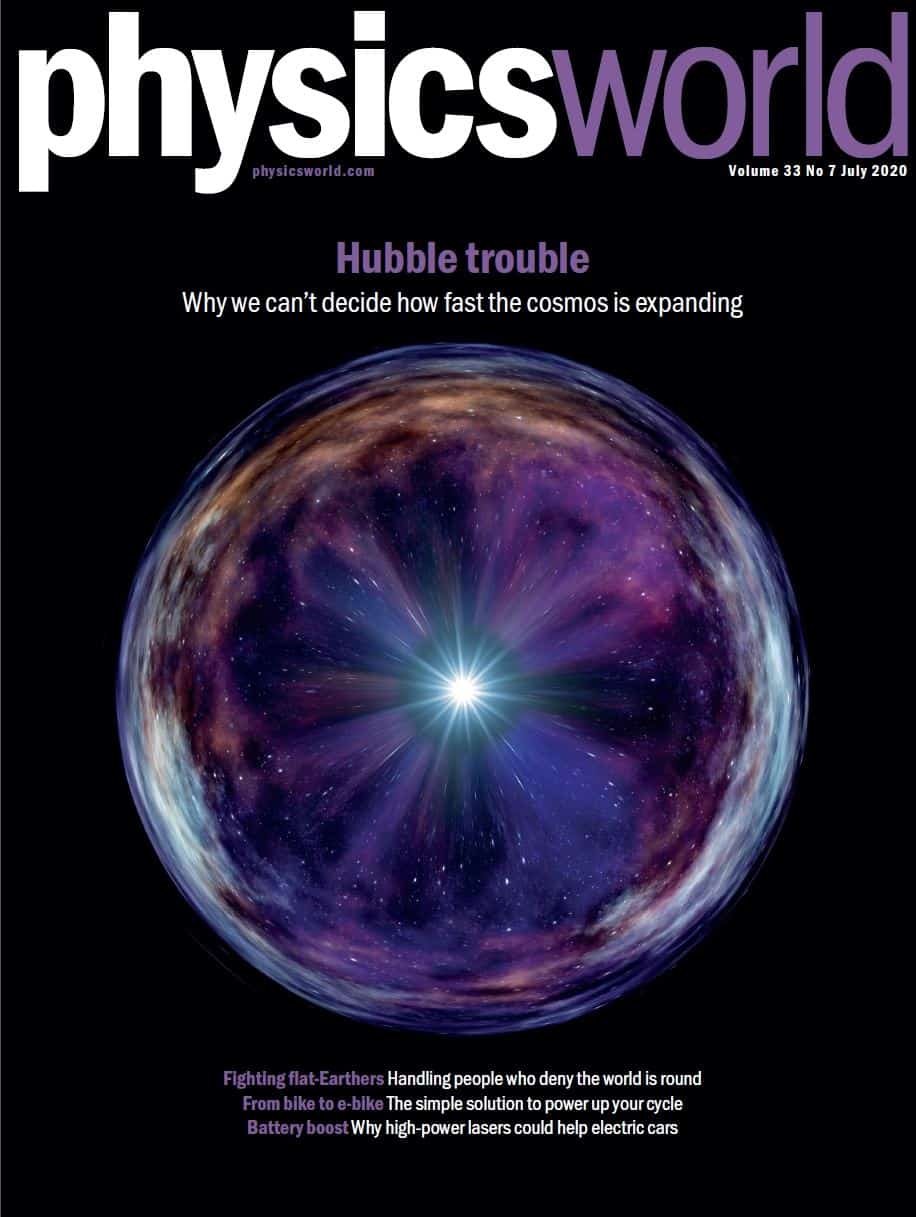
Hubble trouble, fighting ‘flat-Earthers’ and blue lasers for batteries: the July 2020 edition of Physics World is now out

July 2020 Physics World cover

Europe’s Planck mission famously measured the Hubble constant to the greatest precision ever, finding it to be 67.4 km/s/Mpc, measured to an uncertainty of less than 1%.

In other words, every stretch of space a million parsecs (3.26 million light-years) wide is expanding by a further 67.4 km every second – and suggesting the universe is 13.8 billion years old.

So how come more-recent measurements of our “local universe” yield a different figure of 73.3 km/s/Mpc, with an uncertainty of 2.4% – suggesting the universe is not as old as we thought.

In the July 2020 issue of Physics World, Keith Cooper’s cover feature investigates the discrepancies and examines what the implications could be.

If you’re a member of the Institute of Physics, you can read the whole of Physics World magazine every month via our digital apps for iOSAndroid and Web browsers. Let us know what you think about the issue on TwitterFacebook or by e-mailing us at pwld@ioppublishing.org.

For the record, here’s a rundown of what else is in the issue.

• Scientists strike in racism protest – Researchers, scientific societies and publishers took part in a one-day strike last month to consider how to combat racism and discrimination in science, as Peter Gwynne and Matin Durrani report

• Growing the gravitational-wave network – David Reitze, executive director of the Laser Interferometer Gravitational-Wave Observatory, talks to Richard Blaustein about how gravitational-wave observations are set for a multi-detector boost

• The danger of going online only – Harry Collins, Bill Barnes and Riccardo Sapienza warn againsta wholesale shift to virtual workshops and conferences following the COVID-19 pandemic

• The e-bike revolution – Electric bikes are all the rage, but James McKenzie wonders if the future lies with a minimalist kit that can be retrofitted to an ordinary bicycle

• Transmogrified physics II – Robert P Crease reports on your latest work in the exciting new scientific field he discovered

• Finding a consistent constant – The Planck mission gave us the most precise value of the Hubble constant to date by measuring the cosmic microwave background. But studies made since using different methods provide different values. Keith Cooper investigates the discrepancies and asks what it might mean for cosmology

• Fighting flat-Earth theory – Physicists will find it shocking, but there are plenty of people around the world who genuinely believe the Earth is flat. Rachel Brazil explores why such views are increasingly taking hold and how the physics community should best respond

• The blue solution – Powerful blue lasers are producing the high-quality copper welds needed to make batteries for electric vehicles, as Richard Stevenson reports

• Cracking the quantum code – Kate Gardner reviews FX/BBC TV quantum-tech series Devs

• Net entanglement – Andrew Robinson reviews The System: Who Owns the Internet, and How It Owns Us by James Ball

• Training a computer to fight cancer – Medical physicist and entrepreneur Maryellen Giger talks to Margaret Harris about how she established the use of AI in breast cancer imaging

• Ask me anything – Sabine Hossenfelder from the Frankfurt Institute for Advanced Studies gives her advice to early-career physicists

• Lateral thoughts  – Summer quiz 2020

HOT technique produces clear 3D images of biological structures

A collaborative team from Colorado State University and University of Illinois at Urbana-Champaign has developed a new type of nonlinear microscopy, called harmonic optical tomography (HOT), that can produce 3D images of biological tissues in minutes.

Nonlinear microscopy techniques have several benefits over traditional microscopy, as they can image deeper into a sample and are able to visualize many biological features without dyes or markers. One variety of nonlinear microscopy – second-harmonic generation microscopy – is particularly good at imaging molecules that are organized into filaments, such as collagen or muscle fibres.

The team, which specializes in producing holographic images of biological samples, combined this expertise with second-harmonic generation microscopy to produce the HOT microscope.

Making a microscope

The researchers began by developing theoretical models describing how to image the sample. While creating these models, they found that using out-of-focus laser light would actually provide a unique capability for 3D imaging.

They then constructed a microscope that could use these models to image samples. Crucial for development of this microscope was a custom-built high-power laser, which was then integrated into a custom holographic microscope. To achieve the specific illumination conditions to form the required second-harmonic generation signal, the researchers used unfocused light. This also allowed a larger field of the sample to be illuminated at any one time.

The team tested the microscope on myosin fibres in skeletal muscle samples. The wide-field second-harmonic generation microscopy alone was insufficient to produce high-quality data, as the images were corrupted by out-of-focus light and appeared blurry. The HOT microscope, however, uses computational algorithms to reconstruct the image to remove the stray light and produced clear artefact-free images. The HOT reconstruction revealed the distinctive fibre structure of the myosin.

Quicker and better images

Typically, producing these types of 3D images requires a laser scanning technique that sweeps through a sample pixel-by-pixel to produce a 2D image. These images are then stacked up to produce a 3D image. The HOT microscope still collects 2D images but is not restricted to pixel-by-pixel scanning. This means that HOT is considerably faster than traditional methods. As well as saving time, this makes the technique less vulnerable to unwanted vibrations and natural drift of microscope focus.

This type of microscopy can be used to image a variety of biological features and is sensitive to orientation of fibres within the sample. This could be particularly useful to image collagen in tumours, for example, where the orientation of the fibres can indicate disease prognosis. “Most investigators look at it in 2D and not 3D,” says senior author Gabriel Popescu. “Using this technique, we can use the orientation of the collagen fibres as a reporter of how aggressive the cancer is.”

This work is describe in Nature Photonics.

Copyright © 2026 by IOP Publishing Ltd and individual contributors