Speed of spreading epidemics is predicted using analytical technique

Two UK-based mathematicians have developed an analytical technique that can be used to calculate how fast an infectious disease can spread on a global level. Sam Moore and Tim Rogers at the University of Bath have shown that their calculations are better than computationally-intensive numerical models at predicting how infections will progress within real-world scenarios. Their work could lead to the development of protocols that could help authorities to prevent the rapid spread of diseases such as the COVID-19 coronavirus.

Ever increasing global and regional travel is a reality of modern life and provides infectious diseases with the opportunity to spread rapidly throughout the global population. The burgeoning field of “network epidemiology” aims to understand how this spreading occurs using a wide range of mathematical techniques. These methods have yielded useful results when applied to smaller-scale outbreaks. However, model networks become vastly more complex as they increase in size and huge computational resources are often needed to simulate epidemics on a global scale.

In their study, Rogers and Moore have taken an analytic approach to predicting the speed of disease, with the aim of reducing the need to do huge numerical simulations. They used a concept in network epidemiology that uses branching, tree-like networks to define the degrees of connection separating individuals from a central source. Even in our highly connected world, most people will come into close contact with a small number of other individuals. This sparseness of contact has been characterized using a “message passing” approach, which captures important aspects of how real diseases spread. While this approach had yielded important insights into disease outbreaks, until now it had not been used to calculate the speed of spread.

Updated equations

The duo adapted current message-passing analysis to account for the mean delay in infection between individuals, at different degrees of connection from the central source. Their updated equations allowed them to determine the times at which a simulated infection is most likely to arrive at certain individuals. Their showed excellent agreement with numerical simulations of real-world networks; even for densely populated communities, where webs of interaction become more complicated.

Moore and Rogers demonstrated the versatility of their approach by successfully modelling the particularly complex case in which individuals only become infected after interacting with multiple people with the disease. In addition, they showed that the time taken for an infection to spread throughout the bulk of a population shows no dependence on network size. Rather, the jump from just a few, to many infected individuals can happen almost instantaneously.

The duo hopes that their results will pave the way to more detailed multi-layered and time-varying models. If achieved, they predict that routes towards the development of monitoring and prevention protocols for real-world diseases could soon emerge.

The research is described in Physical Review Letters.

FDG-PET displays its prowess in dementia detection

© AuntMinnieEurope.com

In a direct comparison, FDG-PET proved superior to MRI with arterial spin labelling (ASL) for diagnosing and differentiating various forms of dementia; however, there remains a need for the latter modality, according to a Belgian study published in the European Journal of Nuclear Medicine and Molecular Imaging.

Two readers achieved higher sensitivity and greater diagnostic confidence using FDG-PET against MRI with enhanced multiplane tagging ASL (eASL), which is used to quantify cerebral blood perfusion. Yet, despite the differences, the researchers still believe MRI with eASL can play an important role in dementia diagnosis.

“Within the setting of this clinical study on subjects referred for suspicion of neurodegenerative dementia, the main finding was that F-18-FDG-PET should still be seen as the primary choice, as it performed better compared with eASL in terms of sensitivity, reader confidence, and lower variability in key regions in dementia diagnosis,” wrote lead author Jenny Ceccarini and colleagues at University Hospitals Leuven.

“Moreover, eASL could be considered a potential alternative to F-18-FDG-PET to assess neurodegeneration in patients with cognitive impairment when the latter is unavailable, or in case dual-parameter evaluation may still serve as complement to neuroreceptor or protein deposition PET studies when a single simultaneous investigation is performed,” they noted.

Diagnosing Alzheimer's disease

Diagnosing dementia

PET with FDG and various other radiotracers has been used to attempt to diagnose the early onset of Alzheimer’s and dementia. At the same time, perfusion MRI with ASL has been used to indirectly measure neuronal functioning, but its diagnostic value in clinical dementia diagnosis has not been determined, the researchers noted. They cited previous studies in which sensitivity ranged from 53% to 80% and specificity from 62% to 84%, “probably due to differences in ASL techniques, type of comparative analysis, and due to the heterogeneity of small cohorts”.

Given that few PET/MRI studies have compared FDG-PET with MRI using ASL, Ceccarini and colleagues sought to conduct a head-to-head comparison between eASL and F-18-FDG-PET in the clinical context of subjects who were referred for suspected neurodegenerative dementia, they added.

The prospective study included 27 patients (mean age, 64.3 ± 11.2 years) referred for a brain scan between December 2016 and June 2017 due to recent cognitive decline and possible dementia. The routine, 20-minute PET/CT scan was performed 30 minutes after injection of 150.5 (± 11.5) MBq of F-18-FDG; this was followed immediately by a PET/MRI scan on a simultaneous 3-tesla system (Signa, GE Healthcare), which featured an eASL sequence.

The patients also underwent routine clinical, neurological and neuropsychological exams, with some also undergoing structural MRI with T1-weighted and fluid-attenuated inversion recovery (FLAIR) sequences. In all, 14 patients had a neurodegenerative cognitive disorder – Alzheimer’s disease, Lewy body dementia or frontotemporal dementia – and 13 had no evidence of neurodegeneration.

In addition, the study included 30 healthy control subjects who were matched by age and gender to the patient cohort. The control subjects underwent a 60-minute PET/MR scan some 60 minutes after injection of 152.2 (± 11.1) MBq of F-18-FDG.

Seeing is believing

The two readers, who were blinded to the final diagnoses, evaluated the MRI-eASL and FDG-PET results by determining the presence and degree of dementia. The readers also rated their diagnostic confidence in using the two approaches on a scale of 1 to 4.

In the visual read of images to distinguish between normal results and neurodegeneration, the duo achieved a mean sensitivity of 93% with FDG-PET, compared with a significantly lower mean sensitivity of 64% with MRI-eASL (p = 0.03). Mean specificity was fairly consistent between the two modalities, with FDG-PET at 70% and MRI-eASL at 71%. Mean accuracy was 75% with FDG-PET, compared with 68% for MRI-eASL, but the difference was not statistically significant.

One reader diagnosed nine (64%) of the 14 patients with confirmed cases of dementia using FDG-PET, while the other reader accurately called eight (57%) of those patients. The pair had less success with MRI-eASL, correctly diagnosing seven (50%) and four patients (29%), respectively, with confirmed dementia.

Reader confidence

For several regions of the brain associated with dementia, the readers’ diagnostic confidence waned with MRI-eASL. They were less confident in their conclusions when using eASL to rate blood flow, compared with FDG metabolism, in the temporal cortex, occipital cortex, striatum and thalamus among all patients with a suspected diagnosis of dementia and among the entire control group.

Ceccarini and colleagues cited several factors that distinguish these results from previous research. First, the prospective study was conducted “in a true clinical context of patients with cognitive impairment referred for exclusion/confirmation of a neurodegenerative disorder after careful clinical and paraclinical workup,” they wrote.

“Moreover, we included an age- and gender-matched healthy control set acquired on the same instrumentation that was evaluated in a blinded fashion and the heterogeneity of final diagnoses represents a true clinical scale of uncertain cases with cognitive impairment,” the authors added.

  • This article was originally published on AuntMinnieEurope.com ©2020 by AuntMinnieEurope.com. Any copying, republication or redistribution of AuntMinnieEurope.com content is expressly prohibited without the prior written consent of AuntMinnieEurope.com.

Tackling the grand challenges

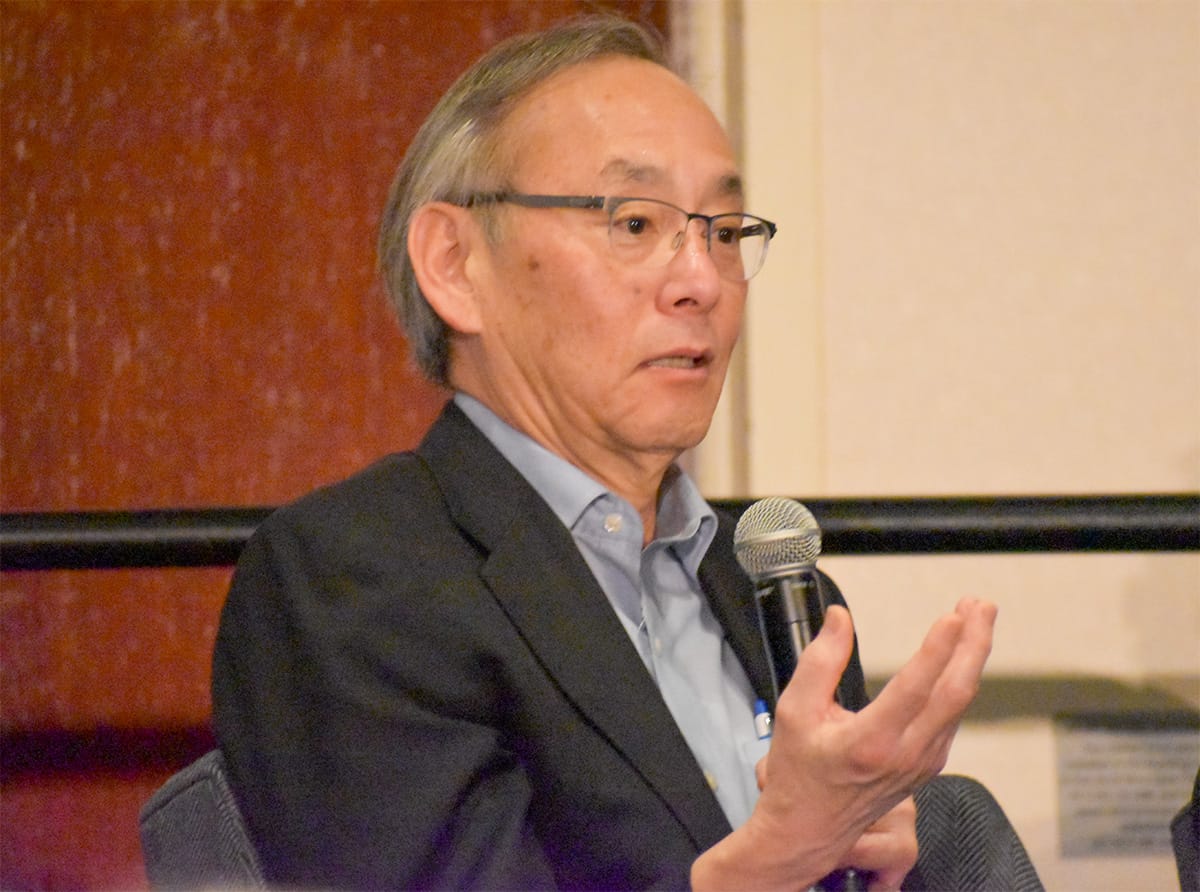
Steven Chu

At the American Physical Society’s recent annual leadership meeting in Washington, DC, you spoke about collaboration and international competition. Given that some US scientists are encountering issues by having ties with China, how is it possible to balance the two?

We need to appreciate that there are costs and benefits of collaborating with some countries. The benefits are that we need smart people to create new knowledge and we want the US to attract the world’s best scientists – after all, that is what gave us our scientific excellence. There is nothing wrong with that, but sometimes you have a very small fraction of people who are bad apples, so what do you do? If most scientists are ethical then you can use peer pressure, but sometimes it may take more, such as training and coaching.

Is there anything that scientific societies can do to help?

Yes. I am currently president of the American Association for the Advancement of Science and I am working with other societies to define what good standard behaviour is. It is not acceptable to make fraudulent data and cherry pick your data. Honesty in publication is essential as is the replication of results. If it is not possible to repeat the experiment, then say why. These are things you can teach, even if standards on what is acceptable sometimes differ from field to field.

So how might we protect ideas and intellectual property?

Basic research is good for the country and good for the world and I believe that if you have good people you can make the most out of shared knowledge. If you have an original idea and someone wants to undercut you and throw more resources at it before you get published, then we need to have a consensus among the worldwide science community that this is not right.

As former head of the US Department of Energy, you helped to launch the Sun Shot programme. Do you think it has been a success?

Sun Shot had the goal of reducing solar-energy costs by 75%. The idea was to look at whether that would be possible via research but also by talking with solar manufacturers. We found that while module costs were plunging, installation costs were going much slower. So we looked at Germany’s success with roof-top solar panels. We knew that Germany’s labour market costs were similar to the US, so we studied what they did. We saw that they were spending a third of the time to install such systems compared to here in the US. Due to this technical focus on the whole-systems costs, we reached the Sun Shot goal within seven years, although this was also partly due to China getting active and driving down prices for solar panels.

What about another programme you helped launch – the Advanced Research Projects Agency–Energy (ARPA-E)?

ARPA-E is more complicated than Sun Shot to gauge its success. For ARPA-E we are “swinging for the fences” – to coin a baseball term for hitting a home run – looking at what sort of technology to focus on that could be a decade or two before it becomes transformative. If you are swinging for the fences, you want radical proposals, not incremental ones. If you are willing to accept that just one in 10 are going to succeed, then you need a different kind of review process than peer review as well as programme managers who need to stay on top of the research.

What came out of the programme – any early successes?

There were some radical new things. One example is drilling. When you think about drilling you normally think about natural gas, but there are other areas such as tapping into geothermal. One group had the idea of using a laser, in which case you do not need to put as much weight on the drill bit to grind through the rock. It could be transformative in lots of ways but it’s too early to tell whether it will be successful. Another area is in electric vehicles, which are currently working at 600 V. If you could go higher in voltage, the wires can be lighter and therefore more efficient.

What are some of the energy challenges currently facing the US?

We don’t yet have substitutes for cement, chemicals or plastics, and we have to consider aeroplane emissions, so it has become urgent to install carbon capture and sequestration. You don’t want to start by capturing carbon out of the atmosphere – it costs three times as much as capturing it from concentrated sources. So you need to target point sources such as fossil-fuel plants. But we first need to get experience doing it and creating business models.

What about other urgent issues?

We need to tackle high-temperature refrigerants – those that can work in South Asia and sub-Saharan Africa. Why do we care about that? As South Asia and sub-Saharan Africa get richer, they will want air conditioning. Yet the air-conditioning efficiency in these regions decreases because the refrigerants are not optimized for temperate climates. Western refrigerator companies aren’t going to do this research because rich countries are in temperate zones.

Are you optimistic for the future?

I am hopeful that things will get better and I see more smart people recognizing the need to solve problems around climate change.

  • You can watch Steven Chu’s plenary talk at the APS leadership meeting in full on YouTube.

Delegates react after last-minute cancellation of American Physical Society March Meeting

Thousands of delegates to the March Meeting of the American Physical Society (APS) in Denver have had to cancel flights to Colorado or rearrange their journeys home after the decision to cancel the world’s biggest physics meeting.

The APS’s decision to abandon the event was taken late on Saturday 29 February, less than 36 hours before the meeting in Denver was due to start. It was cancelled “with deep regret” due to what the society said were “rapidly escalating health concerns” over the spread of the coronavirus COVID-19.

The March Meeting – the biggest in the physics calendar – is usually attended by about 10,000 delegates from all corners of the globe, including many from China, where the virus originated.

“The health and well-being of our meeting attendees, staff, vendors, and the Denver community are our primary concern,“ said APS president Phil Bucksbaum in a statement released on Sunday afternoon. “We recognize and sincerely regret that the timing of this decision has significantly inconvenienced many members of our community.”

Concerns raised

Photo of noticeboard at cancelled APS 2020 March meeting

But the late cancellation prompted a strong reaction from many attendees, especially those from overseas who only found out once they were on their to way Denver or who had already arrived.

“I completely understand this decision taken, but the timing on this is appalling,” tweeted Ilana Wisb, chief executive of the UK firm Oxford Quantum Circuits. “Our team have just flown half way across the world to learn that this is cancelled on landing.”

Matthew Wright, a physicist at Adelphi University in New York, said the last-minute cancellation had led to a “chaotic shit storm of travel changes for me and my undergrad students”. He claimed on Twitter that the APS will get “some serious heat” for the decision, but admitted “it was likely the right thing to do”.

Other delegates, like Zhe Li, a biophysics PhD student at Purdue University, wondered why other international events, such as the Geneva Motor Show, were cancelled weeks or months before they were due to take place. “APS should have done the same thing,” he tweeted.

Meanwhile, Santiago Núñez-Corrales, a PhD student at the University of Illinois Urbana-Champain, expressed concern over the financial impact on students. “This tardy cancellation, while responsible in terms of wider health concerns,” he said, “has profound consequences for us graduate students by increasing financial vulnerability as many people paid out of pocket from limited stipends, and will have to contend further expenses to get back.”

But others on Twitter defended the APS’s decision. Masaki Oshikawa, a solid-state physicist from the University of Tokyo in Japan, tweeted that “given the current situation in the US and in the world, this is a right decision. It must be very hard to cancel such a big and important meeting at the very last minute, but kudos to APS for the swift decision.”

Eerie and empty

Over at the Denver Convention Center, where the March Meeting was due to take place, the corridors were eerily silent on Sunday morning as delegates who were in Denver took stock of the cancellation.

“Cancelling the event didn’t surprise me but this would have been a big decision for the APS to make and not one they would have made lightly,” Daniel Lathrop from the University of Maryland told Physics World.

As chair of the APS’s topical group on statistical and nonlinear physics, Lathrop and colleagues had organized more than 50 sessions, each featuring about a dozen different speakers. He particularly regretted the fact that eight talks by students and postdocs who had won prestigious awards from the group were unable to take place.

“The APS March Meeting is an important event that leads to the exchange of ideas, especially among young scientists,” Lathrop said. “Some of our awards stipulate that winners have to give a talk, which is a real chance for them shine and advance their careers. We need to find a new venue for them to appear.”

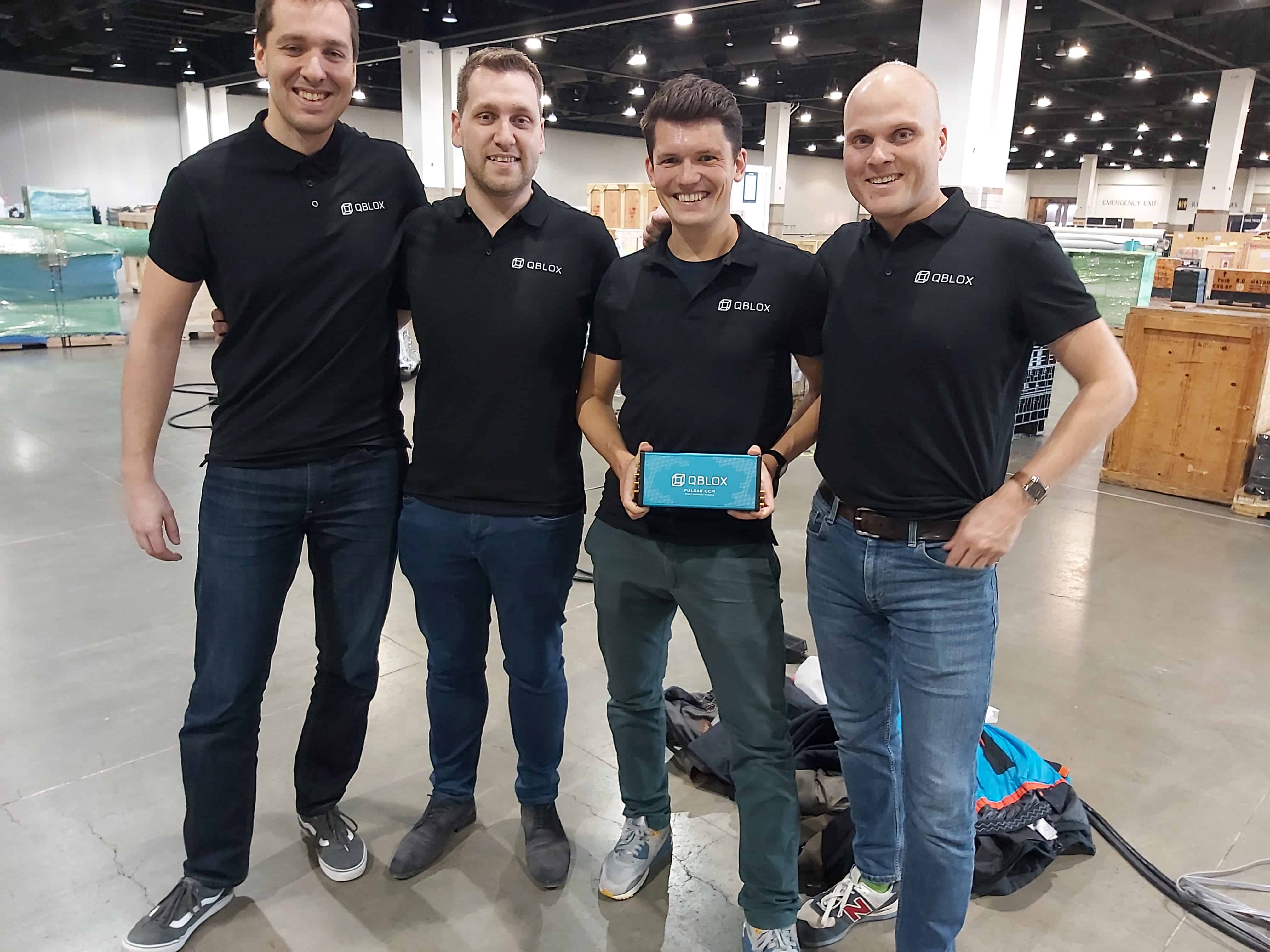
Photo of staff from QBlox at the cancelled 2020 APS March meeting in Denver

In the cavernous exhibition hall, fork-lift trucks spent Sunday shifting packing cases out of the building, while a handful of staff from physics-based companies loitered wondering what to do next.

One of those firms affected by the cancellation was Qblox, a start-up business from the Netherlands, which makes electronics to control quantum chips.

The company’s five staff had spent three weeks working flat-out to create a demonstration for the exhibition and had spent more than €18,000 on exhibition space, flights, travel, hotels and shipment.

“I can fully live with the decision to cancel the meeting, which makes perfect sense, but if we had been told just 24 hours earlier, that would have made a tremendous difference, not just financially but in terms of time,” says quantum physicist Niels Bultink, who founded Qblox in 2018.

Despite his disappointment, Bultink still thinks that the March Meeting is vital for firms like his to showcase their wares. “I hope the March Meeting can be postponed till the summer – that would be the best outcome. The event helps to focus our minds as a company and fortunately all the time we invested is not wasted.”

American Physical Society cancels March meeting in Denver due to coronavirus outbreak

The American Physical Society (APS) has cancelled the world’s biggest physics conference, which had been due to take place in Denver, Colorado, from 2-6 March.

It decided to cancel the meeting late on Saturday 29 February due to “rapidly escalating health concerns relating to the spread of the coronavirus disease (COVID-19)”.

The APS said it took the decision “with deep regret” and admitted that the timing of the decision will have “significantly inconvenienced” many delegates. The APS March meeting is normally attended by some 10,000 physicists from around the globe.

Previous statements from the APS had said the meeting would be going ahead, although a “no-handshake” policy had been in place and physicists were given other health advice and tips.

However, the APS decided to cancel the meeting “based on the latest scientific data being reported” about the virus’s spread. The decision was also made based on the fact that many attendees come to the APS March meeting from outside the US, “including countries where the Centers for Disease Control and Prevention (CPC) upgraded its warning to level 3″. These are currently China, Iran, Italy and South Korea.

APS delegates have been promised “a full refund” of registration fees, while the society will investigate whether delegates can be reimbursed hotel fees.

The APS was founded in 1899 and is the world’s biggest organization of physicists. The annual March meeting is one of the highlights in the physics calendar, attended by thousands of physicists in areas such as condensed matter, materials, atomic physics and quantum physics.

There is also a big exhibition of hi-tech companies attended by physics-based firms such as Oxford Instruments, Kimball Physics, Q-CTRL and Quantum Design.

Journalists and other staff from Physics World, which publishes an annual careers guide in partnership with the APS, had already travelled to the meeting.

Freeman Dyson dies age 96

The mathematical physicist and public intellectual Freeman Dyson has died at age 96 today. He spent most of his professional career at the Institute for Advanced Study in Princeton, New Jersey where he was Professor Emeritus.

Born in Crowthorne, Berkshire in 1923, Dyson obtained a BA in mathematics from the University of Cambridge. He then moved to the US where he studied for a doctorate with Hans Bethe at Cornell University. However, he did not complete his degree and went on to be one of the world’s most famous physicists despite not having a PhD.

Dyson’s early work focused on quantum electrodynamics and he also applied mathematics to the study of nuclear reactors, solid state physics, ferromagnetism, astrophysics and biology. He is the author of several popular books on physics.

In 2006 Dyson published The Scientist as Rebel in which he questioned the science of global warming, putting him in conflict with the scientific consensus.

Dyson has several concepts named after him including the “Dyson tree”, which is a hypothetical genetically-modified plant that lives inside a comet. He also popularized the idea of a huge artificial structure that could be built around a star by an advanced civilization – now known as a “Dyson sphere”.

In 2000 Dyson won the Templeton Prize for his writing on the intersection of science and religion.

Robotic octopus reaches out, peppermint and walnuts enhance solar cells, gravity’s effect on how we think


Scientists have long been fascinated by the ability of an octopus to grab objects. Indeed, we have covered several octopus-inspired gripping systems over the years. But according to August Domel and colleagues at Harvard University, these systems have either mimicked an octopus’s suckers or the curling of the creature’s arm – but not both.

But now Domel and colleagues claim to be the first to create a robotic arm that mimics both aspects of the creature’s grip. Check-out the video above, but beware if monster movies give you nightmares. You can read much more about their research here.

Peppermint oil and walnut aroma could be something you use the next time you are baking cookies — so you might be surprised that researchers in Korea have used these two ingredients to boost the performance of perovskite solar cells. Both substances were used to dissolve polymers that both improve the performance of the cells and prevent them from leaking lead as they age – with the walnut aroma performing slightly better than the peppermint oil.

The food additives could replace toxic solvents that are currently used in the production of solar cells, says the team at the Pohang University of Science and Technology.

People have been travelling to space for nearly 60 years and it looks like we are at the early stages of an era of commercial human space travel. In “This is your brain on space: how gravity influences your mental abilities”, the psychologist Elisa Raffaella Ferrè of Royal Holloway University of London explains that the effect of gravity on human cognition has been a neglected field of research. She is trying to change this by doing experiments during parabolic flights that simulate the low-gravity environment of space. While the tests only last about 20 s, Ferrè explains that lots can be learned.

Photonis Scientific presents the Mantis3 camera

During this year’s edition of Photonics West in San Francisco, Photonis Scientific launched the Mantis3 camera. Evert van Gelder, global director of sales and business development, and René Glazenborg, product manager, explain the unique benefits of this nanosecond time-stamping camera, which is complete with the Cricket intensifier adapter from Photonis.

Biggest explosion since the Big Bang spotted by astronomers

Evidence for the largest known explosion since the Big Bang has been reported by astronomers in the US and Australia. Using four telescopes, the team spotted a huge hole that the blast punched in the plasma that envelopes a galaxy cluster.

The researchers reckon that the hole was made by a colossal burst of energy from a supermassive black hole at the centre of one of the cluster’s galaxies. They estimate that the explosion involved the release of 5×1061 erg (5×1054  J) – which is the energy that 1020 Suns would output in a year. This is five-times more energy than the previous record holder for the biggest known explosion since the Big Bang.

The event occurred in the Ophiuchus galaxy cluster, which is 390 million light-years from Earth. Unlike the supernova explosion of a star, which occurs over a matter of months, the Ophiuchus event seems to have occurred over hundreds of millions of years.

Huge rift

Evidence for the explosion was observed using NASA’s Chandra X-ray Observatory, ESA’s XMM-Newton X-ray telescope, the Murchison Widefield Array radio telescope in Western Australia and the Giant Metrewave Radio Telescope in India. The multiple observations confirmed previous X-ray studies that suggested there was a huge rift in the cluster plasma. That X-ray evidence had been discounted because of the huge size of the structure. It was only when radio observations were made that astronomers became convinced of its existence.

“You could fit 15 Milky Way galaxies in a row into the crater this eruption punched into the cluster’s [plasma],” says Simona Giacintucci, from the Naval Research Laboratory in the US, who is one of six astronomers involved in the study.

Her colleague Melanie Johnston-Hollitt, from Curtin University adds “We’ve seen outbursts in the centres of galaxies before but this one is really, really massive…and we don’t know why it’s so big”.

The discovery was made using the first phase of the Murchison telescope, which had comprised 2048 antennas. The facility is being expanded to 4096 antennas, which Johnston-Hollitt says will make the telescope “ten times more sensitive”. As a result, she believes that many more such explosions will soon be discovered.

The explosion is described in the Astrophysical Journal.

Facing up to friendly fire: why radiation oncology still neglects stray radiation

Whole-body exposure to stray radiation can now be calculated accurately and efficiently for patients undergoing radiotherapy. Researchers in the US and Germany modified a treatment planning system (TPS) – the software used to predict patient dose distribution – to include unwanted doses from scattered and leaked radiation. The additional calculation, which adds an average of 7% to the computation time required for a standard treatment plan, could lead to better radiation treatments that avoid radiogenic secondary cancers and other side effects later in life. This is especially important for survivors of childhood cancer (Med. Phys. 10.1002/mp.14018).

External-beam radiotherapy has come a long way since its inception in the first half of the last century. In that time, most of the developments that have occurred have been with a view to improving the way the technique targets tumours – typically by delivering greater doses with ever increasing accuracy. Nowadays, patients undergoing radiotherapy can usually expect to survive their primary cancers, with five-year survival rates exceeding 70%.

But as post-treatment lifespans grow longer, late side effects of radiotherapy – such as damage to the heart, fertility issues and secondary cancers – are becoming increasingly prevalent. These side effects can be caused by radiation that is delivered to non-target tissue outside of the main therapeutic beam, much of which is not modelled by clinical TPSs.

To address this shortcoming and model the stray-radiation dose for the whole body, Lydia Wilson at Louisiana State University (LSU) and colleagues (also from LMU Munich, PTB and BsF) set out to modify the research TPS CERR (Computational Environment for Radiotherapy Research).

“Typically, commercial systems are proprietary and we can’t get sufficient access to the source code to integrate our algorithms,” says Wayne Newhauser, at LSU and Mary Bird Perkins Cancer Center. “CERR is open and we can get our grubby little hands on every line of code.”

Various methods exist for calculating treatment doses. The most accurate way is to model the process using a Monte Carlo simulation, but the computational expense of this technique limits its utility, particularly for stray radiation doses to the whole body. As these are exactly what Wilson and colleagues intended to calculate, they chose a much more efficient method – a physics-based analytical model.

The team’s algorithm calculates, for every location, a total dose that is the sum of four components: the primary therapeutic dose intended for the tumour; the dose contributed by radiation scattered from the head of the linear accelerator (linac); the dose from radiation leaking from inside the linac; and the dose from radiation scattered in the patient’s own body.

For regions within the primary radiation field, the researchers used the dose calculated by the baseline TPS. For regions far from the target, not modelled by the unmodified system, they calculated the dose with their analytical algorithm alone. For regions near to the target, they used a combination of the two.

To compare the performance of the baseline CERR and their extended version (which they call CERR-LSU), the researchers used both systems to calculate dose distributions for two X-ray energies – 6 and 15 MV – and two phantom geometries: a simple water phantom and a prostate-cancer treatment delivered to a realistic, human-shaped phantom. They then implemented the treatment plans on physical versions of the phantoms and measured the delivered doses at various locations.

Where the dose predictions of the two systems diverged – in regions outside of the treatment field – the team found that CERR-LSU was more accurate in every case. The locations where CERR-LSU offered the least accuracy were those within the treatment field, where both systems used the baseline dose calculations. The improved performance of CERR-LSU came at a modest increase in computation time, with the extended system taking only 30% longer than CERR in the most extreme case.

So when can we expect these improvements to show up in the commercial TPSs used in the clinic? Newhauser thinks that it all depends on the priorities of the TPS vendors and their customers. When the demand is there, however, adoption could be quick – given that the physics is now well understood and other algorithms have been integrated successfully into multiple TPSs.

“The biggest challenge to commercialization has been the continuation of a historical focus on short-term outcomes,” says Newhauser. “As disease-specific survival rates gradually continue to increase, patient, clinicians and vendors will eventually become more interested in treatment-planning features that improve long-term outcomes. We could begin to see basic capabilities appear in commercial systems in two to three years.”

Copyright © 2026 by IOP Publishing Ltd and individual contributors