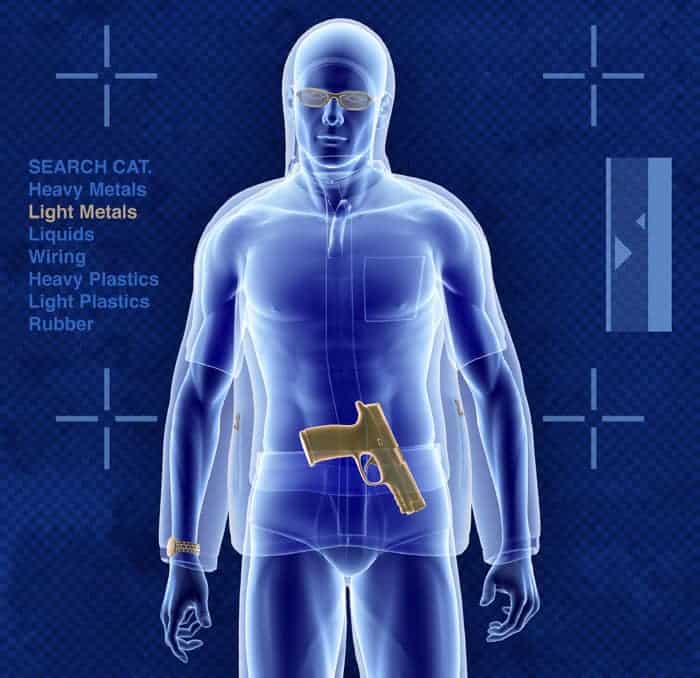
A compact, low-cost and low-power metal detector that can identify the unique magnetic fingerprints of small metallic objects has been created by a team led by Huan Liu at the China Institute of Geosciences. Comprising micrometre-scale sensor arrays, the instrument is sensitive to subtle disruptions of the Earth’s magnetic field that are caused by metallic objects. The new design could allow for significant reductions in the size and energy requirements of security screening systems.
The ability to detect hidden metallic objects is a critical requirement of public security systems. This is currently done by metal detectors that use inductor coils to transmit alternating electromagnetic fields, which inducing eddy currents within metallic objects. These eddy currents generate secondary fields of their own, which are picked up by the coils. While effective, such systems are bulky and consume large amounts of energy.
Liu’s team has developed an alternative technique that focuses on time-dependent variations in the Earth’s magnetic field, which are affected by the presence of nearby metal objects. The effect gives an object its own unique magnetic “fingerprint”, which depends on factors including the object’s shape, size, and composition. These fingerprints can be identified using a technique that the team has dubbed “weak magnetic detection”’ (WMD). This is a passive detection technique that does not transmit a probe signal — which means it has very low energy requirements.
A downside of WMD had been that the fingerprints of smaller objects are difficult to distinguish from background noise, and this had precluded its practical use in security scanning applications.
Central processing
Now, Liu and colleagues have shown that the signal-to-noise ratio of WMD can be improved using microelectromechanical systems (MEMS). These are arrays of micrometre-scale components that are highly sensitive to ambient electromagnetic fields and send information to a central unit for processing.
The detection mechanism is anisotropic magnetoresistance (AMR), whereby the electrical resistance of a detector component is a function of the strength and direction of an external magnetic field. This means that when the arrays are placed in a planar cross arrangement, noise can be significantly reduced.
The team’s metal detector integrates three sets of magnetic sensor arrays with a microcontroller, a battery, and a PC that provides a noise-suppressing data processing framework. With this setup, the physicists successfully identified the magnetic fingerprints of metal objects smaller than 50 cm; and could distinguish between multiple objects separated by under 20 cm. Specifically, they picked up the characteristic field mutations induced by objects including a phone, a hammer, and a knife. Larger objects such as the hammer could be detected at distances up to 80 cm.
Liu’s team now hopes to improve the accuracy of their sensor arrays to detect magnetic fingerprints from even further distances, and to higher resolutions.
Reading Christopher Pinney’s 2018 book The Waterless Sea: a Curious History of Mirages, I was struck by a phrase he used to describe mirages, and indeed all illusions: “real, but not true”. There is no watery mirror reflecting light above a hot road, no fairy castle hovering above the polar horizon, no doppelgänger of you behind the mirror, no little people inside your TV. These interpretations are false, but our perceptions are real.
It occurs to me that with physics it’s the opposite. We compare our theories with observation or experiment, and if they agree (albeit sometimes tentatively), we justifiably declare that the physics is true. But the question “Is it real?” is a slippery one. Possible answers depend on the level at which something is modelled.
Consider this simple question: “How do your glasses work?” There are at least four answers, corresponding to the hierarchy of concepts with which we understand light. The first describes the rays from whatever you are looking at: how the lens deflects the rays to form the focused image we perceive. The second describes the focus in terms of the coherent interference of light waves. The third considers the electric and magnetic fields, propagating according to Maxwell’s equations. The fourth is in terms of the photons: the quantum excitations of the modes corresponding to the Maxwell fields.
Which answer explains what is “really” happening? None of them. Each is useful to us at a different level and for different reasons. Each gives a quantitatively accurate account of some of the phenomena, so it is true – but it fails for others. The ray explanation is the most immediate – lens designers still use ray-tracing algorithms (now sophisticated and computer-based) to compensate for astigmatism and optimize our varifocals. But to understand how diffraction blurs the focus of a lens it is necessary to consider the underlying waves. Even this is insufficient to understand the intricate polarization structure of the electromagnetic vector fields near a focus. And the quantum level? I doubt this has any application in designing lenses or understanding how they work, but it does connect our glasses with the vast world of quantum phenomena in nature and technology. Each deeper level explains more but takes us further from direct connection with the original phenomenon.
When I look at a rainbow, I see beyond the Descartes–Newton ray explanation
When I look at a rainbow, I see beyond the Descartes–Newton ray explanation in terms of refraction, reflection and dispersion of sunlight encountering raindrops. I look for the supernumerary bows: interference fringes that allow us to see, vastly magnified, the inadequacy of the ray theory of light and its replacement by the physics of waves. And, behind the waves, I see how Airy’s and Stokes’s contemplation of this kind of interference led to fundamental insights into the mathematics of divergent series, which is now being further developed by the quantum field theorists, who find they need it.
When I look through a sheet of Polaroid and rotate it, the rainbow acquires a dark region that moves, revealing the transverse (vector) nature of light: its polarization. And at night, when I see a (rare) moon rainbow, it appears white, because in dim light it is the colour-blind rods in my eye, whose quantum excitations enable the effects of the light to reach our brains, that dominate the colour-sensitive cones.
None of these levels describes the real rainbow. We physicists might be tempted to claim that the quantum level is real because it underlies the others: the earlier levels are mere approximations, often based on entities (rays of light, for example) that are non-existent in the deeper physics. This should be resisted, for two reasons. First, because it would make reality history-dependent; that is, based on whatever physics we currently regard as the most fundamental. And second, because using the term “real” in ways so remote from the perceived phenomenon is discordant with common-language usage.
This “true, but not real” way of thinking applies more widely. It is common-language usage to say that my solid kitchen table is a real thing. But look closely and its distinctive shape dissolves into an arrangement of atoms in the molecules of the wood. Closer still, and the solidity dissolves into empty space. The whizzing electrons, when detected as particles, have no size yet determined, and the impenetrability of matter is revealed as a consequence of quantum identicalness, in the form of the Pauli exclusion principle – itself a consequence of the relation between the spins of quantum particles and their behaviour under exchange. Zooming further, we encounter the nuclei, with their protons and neutrons, and finally, perhaps, their quarks. Ever deeper, and all true, but where has the table gone?
Straying into matters discussed at length by philosophers (especially in the more restricted context of quantum mechanics), I am uncomfortably aware of being an amateur, vulnerable to being dismissed by professionals as Duke Ellington dismissed some jazz critics: “Too much talk stinks up the place.” Nevertheless, I find “real/true but not true/real” surprisingly pregnant with perspectives and sidelights on what we physicists do.
Descartes taught us that rainbows are illusions: there are no coloured arcs in the sky. Each raindrop emits light focused into a bright cone, and we, looking up, see, brightly lit, only those droplets whose light-cones intersect our eyes. Each person – and each of their eyes (as I noticed in the sunlit Victoria Falls many years ago) – sees a different rainbow. So, although rainbow physics is true, but not real, the rainbow we see is real, but not true.
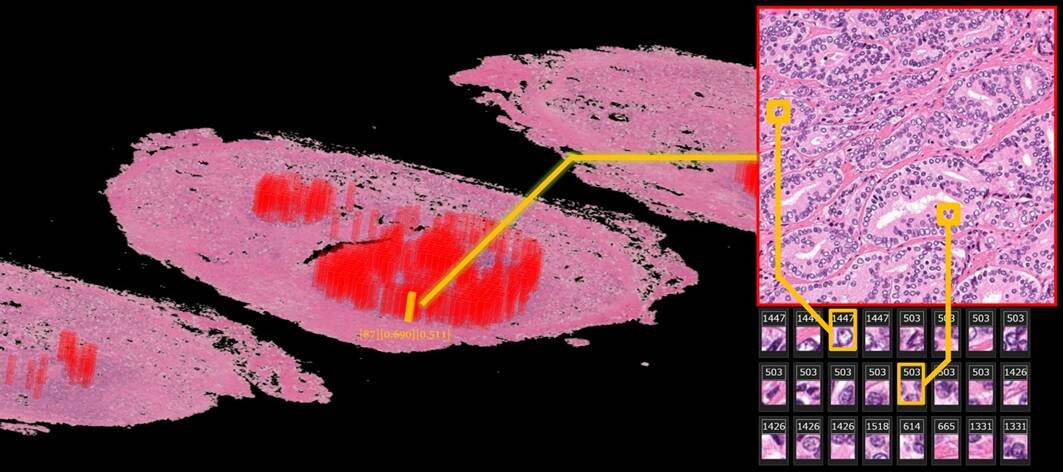
The deep-learning algorithm automatically annotates a 3D whole-mount pathology image and presents the discovered features in an understandable way. The patches with high probability of cancer recurrence are shown by colour and height. (Courtesy: RIKEN)
Researchers from the RIKEN Center for Advanced Intelligence Project (AIP) in Japan have shown that a deep-learning algorithm can be used to extract interpretable features from annotation-free histopathology images from prostate cancer patients. Their framework outperformed the prediction of biochemical recurrence using conventional, Gleason Score-based methods (Nature Commun. 10.1038/s41467-019-13647-8).
Prostate cancer is the second most common cancer affecting men worldwide, with an incidence rate of 13.5%, according to the World Health Organization. Expert pathologists diagnose this type of cancer through a transrectal biopsy, following the results of a prostate specific antigen (PSA) test. The extracted samples of tissue are examined under a microscope and, if cancerous cells are found, divided into risk groups assigned through the Gleason Score. This grading system is considered the gold standard in cancer medicine, as it determines the aggressiveness of prostate cancer and helps doctors establish the right course of treatment.
This type of diagnostic pathology, however, requires expert knowledge, is time consuming and can suffer from inter-observer variability. Even though automated machine learning tools capable of accurately classifying histopathology images exist, these methods have not yet gained clinical approval – mainly because deep-learning algorithms suffer from a lack of interpretability, making their decisions hard to visualize or even explain.
AI-generated features deliver high accuracy
Paving the way towards interpretable clinical analyses, the group developed an artificial intelligence (AI) framework capable of acquiring interpretable features from annotation-free histopathological images. To achieve this, the researchers used whole-mount pathology images acquired at three different centres. This included images from 842 patients at Nippon Medical School Hospital (NMSH), plus 95 patients from St. Marianna University hospital (SMH) and Aichi Medical University Hospital (AMH).
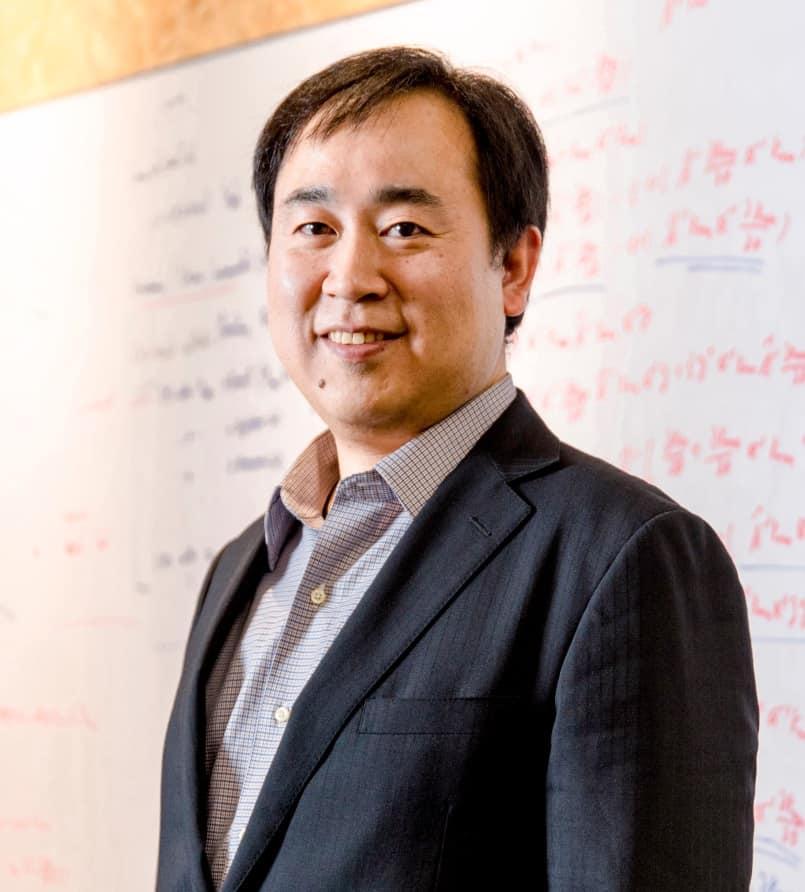
First author Yoichiro Yamamoto.
The team used images from 100 patients at NMSH to extract the features, while the rest of the NMSH dataset was used to validate their method. Lead researcher Yoichiro Yamamoto and his team trained two unsupervised deep neural networks, known as deepautoencoders, to reduce the 10-billion-scale pixel data into 100 features. They achieved this by using both low-resolution and high-resolution histopathology image patches, inspired by the diagnostic process of pathologists. The computation was performed on AIP’s RAIDEN supercomputer.
To validate their work, the researchers used the 100 generated features to predict cancer recurrence in the remaining NMSH dataset. At the same time, they used the human-established cancer criteria, the Gleason score, to make the same predictions. Their results showed that predictions of biochemical recurrence were more accurate with AI-generated features, than when using the conventional method.
Moreover, when combining the Gleason score with the machine-generated features, the accuracy further increased. Furthermore, this framework delivered similar accuracies when used with the SMH and AMH datasets, revealing the potential for broad use.
Finally, the researchers evaluated the AI-generated features. They retrieved the most representative images for each of the features and asked an expert pathologist to examine them. “In summary”, they say, “the pathologist found that the deep neural networks appeared to have mastered the basic concept of the Gleason score fully automatically, generating explainable key features that could be understood by pathologists.”
The researchers point out that the deep neural networks identified features of stroma in the non-cancerous area as prognostic factors, and that such features typically have not been evaluated in prostate histopathological images. This is a key result as it raises the possibility of a tool capable of discovering new and uncharted disease characteristics. As future work, the team plan to further validate the framework by conducting clinical trials and by applying it to other diseases including rare cancers.
Physicists working at the SLAC laboratory in the US have shown they can detect radar echoes by bouncing radio waves off a cascade of high-energy particles. Their achievement could lead to a new and inexpensive type of neutrino telescope – one capable of detecting neutrinos with energies currently outside the range of both optical observatories and radio antennas.
For around a decade, an unusual telescope in Antarctica called IceCube has been scouring the sky for neutrinos. Comprising dozens of kilometre-long strings of photomultiplier tubes buried in the ice, the observatory detects the Cherenkov radiation emitted by the cascade of charged particles that are created when neutrinos travelling up through the Earth interact with the ice. Since 2013, some of those faint flashes of light have been identified as coming from high-energy “cosmic” neutrinos – which originate from deep space rather than from the Sun or Earth’s atmosphere.
IceCube has detected neutrinos with energies up to 10 PeV (1016 eV), but is unlikely to reach much higher energies. That is because Cherenkov radiation at optical wavelengths is heavily attenuated in ice – travelling at most for about 200 m – which limits the detector volume. Since neutrinos are rarer at higher energies a limit volume imposes an upper limit on energy.
Radio emissions
The charged-particle showers generated by neutrino interactions also emit radio waves, which travel far greater distances through ice than does light. Indeed, the ANITA balloon-based detector searches for neutrinos by detecting radio emissions from a vast swathe of Antarctic ice. However, ANITA has the opposite problem as IceCube – it struggles to detect neutrinos with energies less that about 100 PeV because the strength of radio emission scales with the energy of the incoming particle.
In the latest work, Steven Prohira of Ohio State University and colleagues exploit an “active” means of radio detection – in the form of radar echoes. This relies on the fact that a particle cascade moving through a material at near the speed of light will kick out electrons from atoms within the material. In the brief period before those electrons are re-absorbed, they can be made to oscillate by externally applied radio waves. Antennas can then be used to detect the radio waves that are emitted by the oscillating electrons – the “echo”. A benefit of the technique is that it is mostly independent of the incoming particle’s energy.
Prohira was part of a group that tried to demonstrate this technique in the field, using a donated television transmitter and a set of radio antennas positioned close to a cosmic-ray telescope in Utah. The aim was to detect radar echoes from air molecules ionized by passing cosmic-ray showers, confirming that they could observe a signal at the same time as the telescope. But after three years of data-taking, a limited detection efficiency caused in part by the very short lifetime of free electrons in air meant that no radar signal was forthcoming.
Test for echo
Seeking definitive proof of the effect, Prohira and colleagues have now completed a laboratory experiment at End Station A at the SLAC National Accelerator Laboratory in California. There they set up a 4 m-long plastic target serving as a proxy for Antarctic ice and blasted it with a beam containing about a billion electrons, each having an energy of around 1010 eV. The idea was to represent the effect of a neutrino with 1019 eV (somewhat higher than the ideal energy, but a value fixed by other users in the lab).
After directing radio waves at the target and using a second antenna to monitor any echoes, the researchers observed a signal lasting less than 10 ns. Such a signal is predicted by simulations so after accounting for several background sources, the team concluded that it was indeed a radar echo produced by ionization inside the target.
Francis Halzen at the University of Wisconsin-Madison and principal investigator of IceCube, says that while testing echo detection in the field has been “challenging”, researchers have been able to make progress in radio techniques using the SLAC beam. “This is one more example of the power of these beam experiments,” he says.
Prohira and colleagues are now planning a new experiment in Antarctica, at a high enough altitude to detect radar echoes from cosmic-ray showers that reach the ice. If funding is forthcoming, they hope to have the detector up and running within the next couple of years. They aim then to complete a neutrino observatory before the end of the decade. “We first want to show that the technique is viable with a known source before building a full-sized array,” explains Prohira.
The virtue of such an observatory would be its simplicity. Relatively few detector holes in the ice and fairly straightforward radar equipment should, estimates Prohira, mean a price tag of just a few million dollars, as opposed to IceCube’s $275m. Such economy, he claims, will not compromise the science; indeed he reckons that a radar-echo facility could yield important results in identifying sources of high-energy neutrinos as well as in flavour physics. “We would want to be complementary to IceCube,” he says.
A paper reporting the research has been accepted for publication in Physical Review Letters and a preprint is available on arXiv.
Researchers at CERN have placed new limits on the timing performance of state-of-the-art systems for time-of-flight positron emission tomography (TOF-PET). Their tests show that the best photodetectors and scintillation materials can achieve a timing resolution far below 100 ps – a five-fold improvement on standard commercial systems. If implemented in the clinic, these advances would enhance the quality of PET images, enabling doctors to reduce the dose of radioactive tracer they administer to patients.
TOF-PET is a highly sensitive imaging technique that reconstructs a 3D view of tissues using precise measurements of the times at which two simultaneously-emitted gamma-ray photons arrive at a scintillator-based detector. These photons are produced when the decay of a radioactive tracer triggers electron–positron annihilations inside the patient’s body.
Most commercial TOF-PET systems, which exploit silicon photomultiplier photodetectors (SiPMs) and the fast scintillator lutetium oxyorthosilicate (LSO:Ce), achieve a timing resolution of around 500 ps for whole-body scans. For more localized imaging, 200 ps seems within reach. But a group of more than 40 scientists – including several authors involved in this work – have launched a competition called the 10 ps Challenge that aims to push the limits even further. Imaging on this timescale could deliver a 16-fold improvement in sensitivity and avoid the need for computational techniques to reconstruct the image.
Comparing photodetectors
In this study, reported in Physics in Medicine and Biology, Stefan Gundacker and colleagues have made the most precise measurements yet of the timing performance of leading scintillation materials and photodetectors. They first measured the intrinsic single-photon timing resolution (SPTR) of eight industrial and research SiPMs, with the best value of 70 ps achieved by the NUV-HD device from Italian research institute FBK. By combining this detector with a small crystal of LSO:Ce co-doped with calcium, they demonstrated an overall timing resolution of 58 ps, increasing to 98 ps for the 20 mm-long crystals typically used in TOF-PET.
The team then used the FBK device to measure the timing response of different scintillating materials, including bismuth germanate (BGO), which is cheaper than LSO:Ce and slightly safer for clinical environments. High-frequency readout electronics were able to capture extremely fast scintillation processes, revealing a pronounced peak in the light emitted from BGO within just a few picoseconds. This is caused by Cherenkov emission, and the team estimates that BGO emits 17 prompt Cherenkov photons from each gamma-ray interaction.
The measurements also show a direct correlation between the timing performance of the TOF-PET system and the intrinsic SPTR of the photodetector, with simulations indicating that this fast Cherenkov emission could improve the timing resolution of BGO-based systems if the SPTR of the photodetector can be reduced. For example, an idealized detector with an SPTR of 20 ps – which has been measured on research devices – would enable BGO systems to reach a timing resolution of around 30 ps for small crystals, compared with 158 ps measured for the FBK photodetector used in this study.
“We are still far from having a perfect photodetector in PET,” Gundacker tells Physics World. “But there are other intermediate solutions to investigate, especially in the case of BGO where we have shown that detecting the first photon with high time precision would already be sufficient.”
Pushing boundaries
The tests also reveal that BC422 plastic scintillators are even faster than LSO:Ce, although their low detection efficiency rules them out for PET applications. The most promising alternative is the ultraviolet emitter barium fluoride (BaF2), which achieved a timing resolution of 51 ps when combined with a UV photodetector from FBK – with further improvements possible by pushing the performance of the UV detector.
The team concludes, however, that current devices and materials will not be good enough for practical, commercial TOF-PET systems to break the 100ps barrier, let alone the more ambitious 10ps challenge. To make further progress towards this target, researchers will need to investigate novel approaches such as quantum-confined systems, as well as better methods for collecting and detecting the light.
Some 20,000 optical scientists and engineers will be converging in San Francisco at the beginning of February for SPIE’s flagship Photonics West and BIOS events. Delegates will be spoilt for choice, with three international conferences presenting more than 5200 technical papers, and two world-class exhibits featuring the latest products from around 1400 international companies.
Each of the conferences will headlined by impressive plenary speakers, including Nobel-prize winner Eric Betzig, David Payne from the Optoelectronics Research Centre at Southampton University, and Google’s Trond Wuellner – who promises to share his vision for the future of computing. A parallel programme for entrepreneurs and investors will feature the popular Startup Challenge, in which early-stage companies compete to win funding from some of the largest companies in the photonics industry.
Many of the exhibitors on the show floor will be launching their latest product innovations, some of which are highlighted below.
TOPTICA takes optical frequency measurement to the 21st significant digit
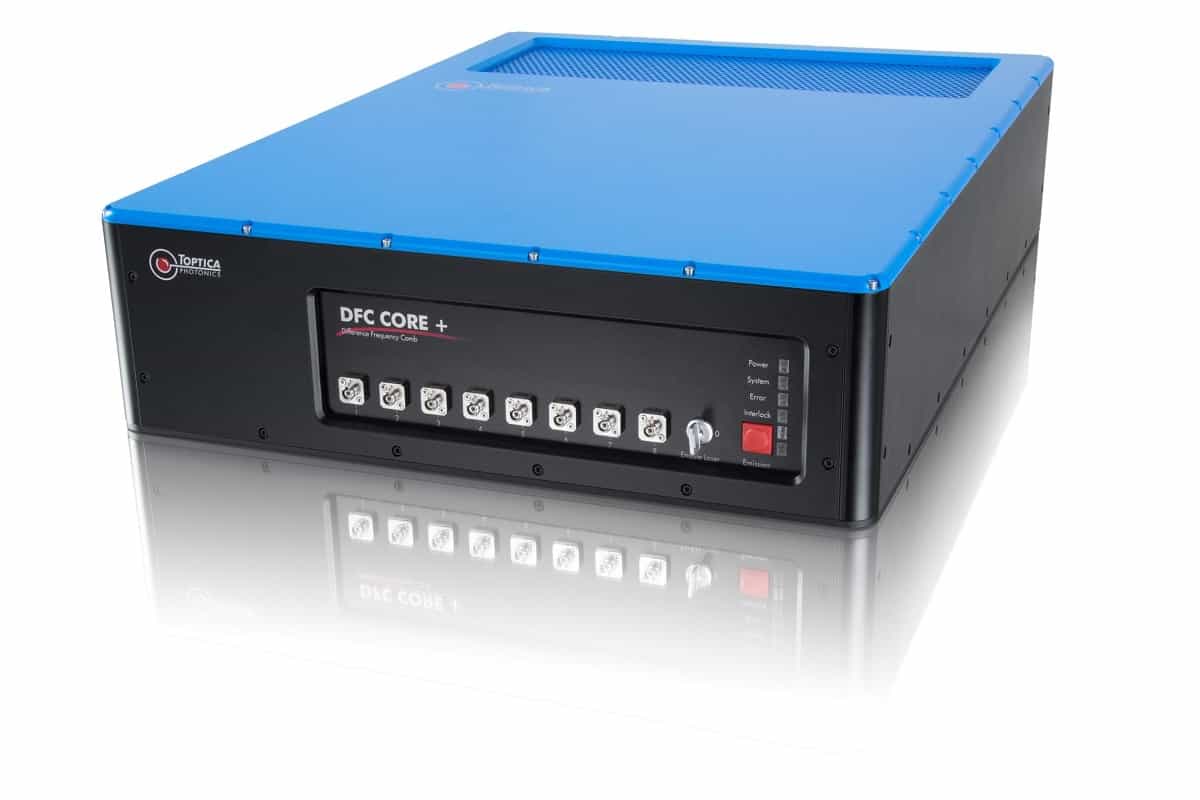
The DFC Core+ frequency comb (Courtesy: TOPTICA)
TOPTICA’s frequency comb DFC CORE+ has demonstrated world-record stability in a joint research project with the Physikalisch-Technische Bundesanstalt (PTB) in Braunschweig, Germany. The frequency comb is designed for use in atomic clocks, which rely on probing optical transitions in cold atoms with very stable and narrow-linewidth laser light. The probed atoms provide the long-term stability and accuracy of the clock, but the most stable lasers have a different wavelength from the best atomic references. Frequency combs are used to transfer the stability from the wavelength of the narrow-linewidth laser to the wavelength of the cold-atom transition.
Tests by PTB and TOPTICA researchers have demonstrated the DFC CORE+ can achieve a stability transfer at a record level of 10–21 over an averaging time of 105 s. This was achieved by suppressing the influence of optical path-length fluctuations through a combination of active phase-stabilization and common-path propagation, a scheme that is technically simple and robust against environmental changes. The frequency ratio was measured with an accuracy of 9.4×10⁻²², equivalent to the 21st significant digit.
The advance paves the way not only for further improvements in atomic clocks, but also more sensitive gravitational wave detectors.
The DFC CORE+ will be displayed at BiOS at Booth #3209 and Photonics West at Booth #8209. An open access article describing the research is available for download, while more information about TOPTICA’s frequency combs can be found on the company’s website.
Motion systems deliver speed and precision
A gantry and hexapod for industrial photonics alignment and automation (Courtesy: PI)
PI will be showcasing the latest generation of its gantry systems and motion subsystems for automated high-speed photonics alignment and laser processing applications.
The company’s Silicon Photonics Alignment product line addresses the requirement of aligning multiple optical paths with multiple interacting inputs and outputs, each of which requires optimization. The automated alignment engines include between three and twelve-axis mechanisms, controllers with firmware-based alignment algorithms, and the software tools needed to achieve the accuracy for markets such as packing, planar testing, and inspection.
Hexapod six-axis parallel positioning systems are instrumental to fast alignment for silicon photonics due to their lower inertia, improved dynamics, and smaller package size, as well as higher stiffness and programmable pivot point. Fast, linear-motor-driven systems that exploit industrial motion controllers will also be shown.
Tunable mid-IR laser combines speed with performance
The MIRcat-QT mid-IR laser
DRS Daylight Solutions, a leading supplier of mid-infrared quantum-cascade lasers, will be featuring the MIRcat-QT, its flagship broadly tunable laser. Now incorporating the company’s proprietary ZeroPoint technology, the laser provides improved beam pointing accuracy and stability for applications such as nanoscale imaging, point-scanning microscopy, photothermal and photoacoustic imaging, stand-off detection, and single-mode fiber-optic coupling.
The MIRcat-QT offers tuning ranges approaching 1000 cm–1 with wavelength coverage options spanning 3 µm to more than 13 µm. The system’s flexible, modular design allows factory configuration of up to four pulsed or continuous-wave/pulsed modules, plus the option to add or upgrade modules later.
Modules are available that can deliver output peak powers up to 1 W and/or average output power up to 0.5 W. Peak tuning speeds exceed 30,000 cm–1/s, while a high-precision tuning mechanism provides wavelength repeatability of less than 0.1 cm–1. MIRcat’s TEM00 output beam quality enables high-efficiency fibre coupling, and the new ZeroPoint technology ensures this high efficiency is maintained across the entire tuning range.
To find out more about the MIRcat-QT system, visit DRS Daylight Solutions at Booth #2327
Software speeds up the design of laser-based optical systems
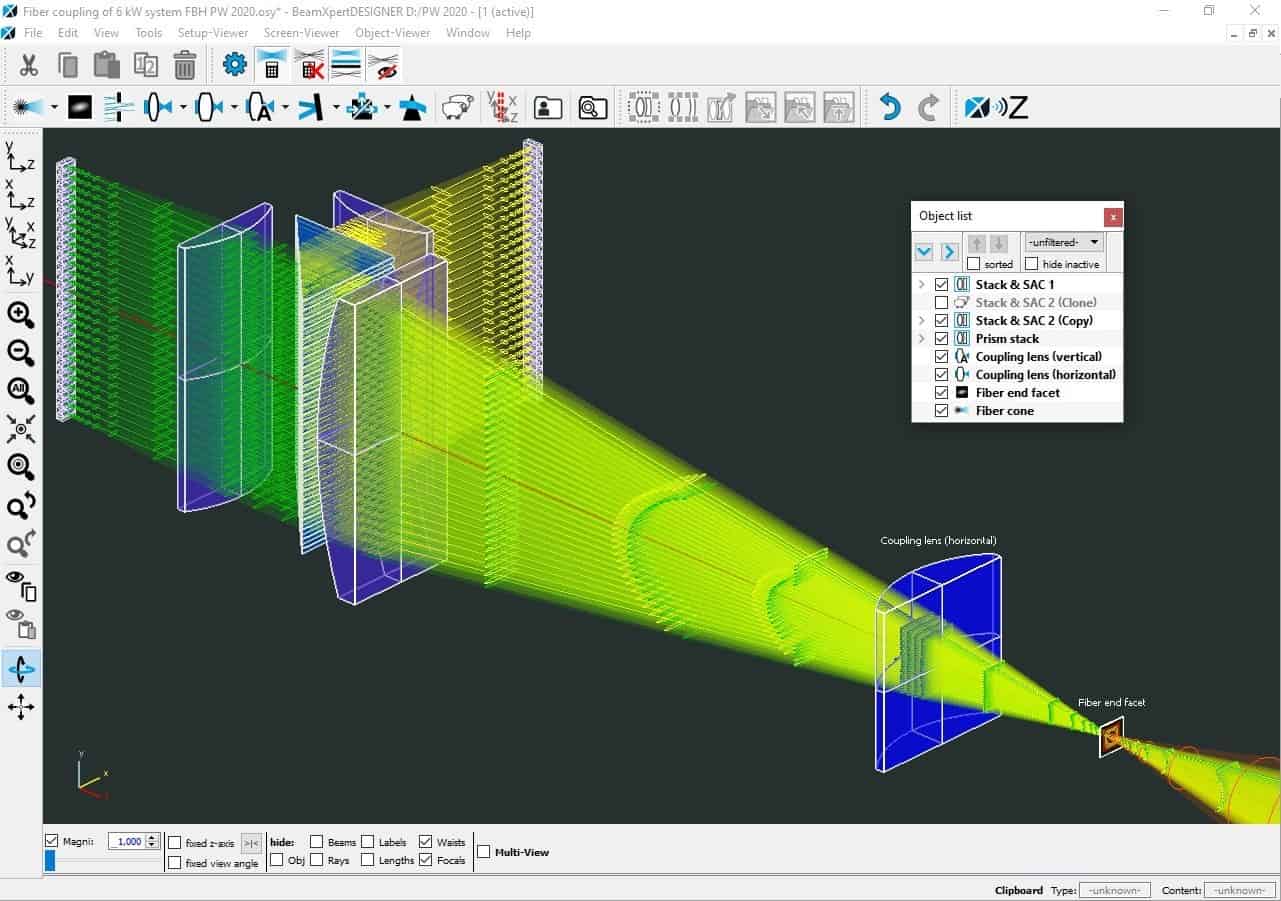
BeamXpertDESIGNER models the propagation of laser radiation through an optical system (Courtesy: BeamXpert)
BeamXpert, a spin-off from the Ferdinand-Braun-Institut, Leibniz-Institut für Höchstfrequenztechnik (FBH), will be introducing its software BeamXpertDESIGNER at this year’s Photonics West.
BeamXpertDESIGNER allows laser users and developers to design optical systems based on laser radiation. It combines two simulation models that together offer real-time calculations and sufficient accuracy for most practical design tasks.
An extremely fast first-simulation algorithm enables real-time prediction of beam-propagation parameters such as the beam diameter and position, along with Rayleigh lengths, divergence angles and other properties defined in the ISO standards for lasers. The second model determines the aberrations that may degrade the beam quality, helping the user to choose the most appropriate optical components for the system.
BeamXpertDESIGNER is supplied with a lifetime license that includes support and updates during the first year. The software is quick and intuitive to learn, and is delivered with more than 16,000 components, a comprehensive glass library, and compatibility with ZEMAX formats.
Visit BeamXpert at Booth #4545-18 on the German Pavilion to test the software for yourself.
DPSS lasers for high-precision applications
Scottish laser manufacturer UniKLasers will be showcasing an expanding range of single-frequency diode-pumped solid-state (DPSS) lasers for high-performance applications such as metrology, spectroscopy, holography, quantum sensing and optical trapping.
The company will be presenting its second-generation Solo 640 series of lasers, which deliver impressive output powers of up to 1000 mW. Customer-focused specification enhancements include advanced remote-control operation and extended power and wavelength stability, enabling more than eight hours of non-stop operation.
Meanwhile, the Solo 780.24, Solo 689.4 and Solo 698.4 lasers have been designed for quantum applications such as cold atom interferometry, gravimetry and atomic clocks. UniKLasers is a member of the Pioneer Gravity consortium, which is currently developing a commercial quantum gravitometer. This is the company’s fourth quantum project to be sponsored by Innovate UK, in which UniKLasers is focusing on the development of higher power lasers and new quantum wavelengths. The next anticipated release will be the Solo 813, the “magic wavelength” laser for use in strontium lattice clocks.
To find out more, visit UnikLasers at the UK Pavilion at Booth #5053. On Tuesday 4 February the company will present a spectral performance analysis of DPSS and ECD single-frequency lasers at the LASE & BiOS poster session, and will also provide an update on its high-power red at the Holography Technical event.
An Italian approach to CO2 lasers
The Blade-Self-Refilling laser.
The Italian laser manufacturer El.En. is a pioneer in the development of rechargeable CO2 laser sources. Unlike conventional CO2 lasers, the company’s Blade Self-Refilling lasers are equipped with a special slot in which to insert the CO2 gas-mix cylinder, allowing an operator to easily replace the cylinder and regenerate the laser source in just a few seconds – which ensures that the laser is always working at its full potential.
The laser sources in the Blade Self-Refilling series also have one of the highest energy efficiency in their category. Power options range from 350 to 1200 W, with all versions except the most powerful supplied in the same form factor to simplify the engineering of different models with different power solutions.
Alongside its portfolio of laser sources, El.En. also supplies a series of high-performance laser-scanning heads. These include the Gioscan series of galvo motors that offer the fast acceleration needed to provide an immediate and precise response in all beam steering applications. As an independent producer that builds all of its products in-house, El.En. offers full technical assistance as well as the ability to build customized solutions for specific applications.
To find out more about this Italian company and its products, visit Booth #5470 at Photonics West or go directly to elenlaser.com
Researchers in the US have combined artificial intelligence (AI) with an advanced laser-based imaging technique to create a system that can identify different types of brain cancer from surgical samples with a similar accuracy to pathologists, but much, much faster. The test could enable surgeons to bypass the pathology lab and receive real-time diagnostic information during operations, to inform their decision-making (Nature Med. 10.1038/s41591-019-0715-9).
Every year around 15.2 million people around the world are diagnosed with cancer. More than 80% of those will undergo surgery, and in many cases this involves removing and analysing a proportion of the tumour during the operation. This provides a preliminary diagnosis, ensures that the specimen is adequate to achieve a final clinical diagnosis later, and helps guide surgical management.
In the US alone, more than 1.1 million tumours are biopsied annually. These are typically analysed using a histology workflow that is more than a century old. The tissue sample is taken to a laboratory, processed and prepared by skilled technicians, and then interpreted by a pathologist – all while the patient and surgical team wait in the operating theatre. But, both globally and within the US, there is a shortage of pathologists to provide such intraoperative diagnosis.
In recent years, Daniel Orringer, a neurosurgeon at NYU Langone, has been involved in the development of a novel laser-based technique that provides rapid, high-resolution images of unprocessed biologic tissue, known as stimulated Raman histology. By using laser light to excite the tissue, this technology generate contrast between the different components, such as lipids and proteins, revealing diagnostic features that are poorly visualized or can’t be seen with other histology methods.
Orringer and his colleagues have demonstrated that stimulated Raman histology can be combined with computer-aided diagnosis to classify brain tumours. However, they believe that matching the accuracy of the pathology laboratory in a clinical setting using this technique could be challenging – particularly with the current shortage of trained pathologists. But, as clinical-level accuracy has been achieved for image classification in other medical fields, such as ophthalmology, radiology and dermatology, using deep learning, they wondered if AI could help.
The researchers trained the deep convolutional neural network behind their AI-tool on stimulated Raman histology images of more than 2.5 million samples from 415 patients. It was taught to classify tissues into 13 histologic categories, focused on the 10 most common brain tumours, and offer a diagnostic prediction.
In a clinical trial at three medical centres in the US, the team tested the system on 278 patients undergoing brain tumour resection or epilepsy surgery. Brain tumour biopsies were collected from the patients and then split so that they could be sent for diagnosis via both the pathology laboratory process and the AI-based test.
The results for the two trial arms were very similar. The AI system classified 94.6% (264 of 278) of the tumours correctly, while the pathologists achieved a diagnostic accuracy of 93.9% (261 of 278). But imaging with stimulated Raman histology and AI diagnosis was significantly faster, providing a classification of brain tumour type in the operating room in less than 150 s. Typically, the pathology laboratory takes around 20–30 min.
There were also interesting differences between the errors made by the pathologists and the AI-based test. The AI correctly classified all 17 of the tumours that the pathologists diagnosed incorrectly, while the pathologists correctly diagnosed all 14 of the cancers that the AI misdiagnosed. The study authors say that this suggests that pathologists could use the new system to help them classify challenging specimens.
“As surgeons, we’re limited to acting on what we can see; this technology allows us to see what would otherwise be invisible, to improve speed and accuracy in the operating room, and reduce the risk of misdiagnosis,” says Orringer. “With this imaging technology, cancer operations are safer and more effective than ever before.”
“Stimulated Raman histology will revolutionize the field of neuropathology by improving decision-making during surgery and providing expert-level assessment in the hospitals where trained neuropathologists are not available,” adds Matija Snuderl, neuropathologist at NYU Langone, who was involved in the study.
As far back as I can remember I had an interest in how things worked, from items around the house, to the planets and stars. I’ve always enjoyed dismantling and building things, and having a working knowledge of the basics of physics helped with that. In my early years at high school I had a particularly good physics teacher. He was rather loud and outspoken on all subjects, not just physics, and his outbursts to students would be considered politically incorrect today. I actually found this rather refreshing. That, coupled with his fabulous practical demonstrations, kept me engaged and looking forward to physics lessons.
What did your BSc in physics focus on?
My degree was in applied physics, so the slant was towards practical applications, which suited me well. As I took a “sandwich” course, I spent a year in industry working for a company making mass spectrometers. This gave me a good grounding in some new areas including materials science, surface science, vacuum technology and electronics. I was even sent abroad to install an instrument at a steel works.
Did you ever consider a permanent academic career in the physical sciences?
It never occurred to me to stay in academia. By the time I graduated I was keen to get out into industry or the practical side of research and development. A recession was under way, so jobs were thin on the ground. I managed to get funding to do an MSc in surface science. From there I made a contact at the Royal Signals Radar Establishment (now QinetiQ) in Malvern, UK, where there was a renowned crystal growth department. When a vacancy arose in the materials characterization department, I applied and was offered the job piloting the two magnetic sector mass specs.
How did you get into technology journalism?
My work at Malvern was mostly with the semiconductor growth teams. As well as bulk-crystal growth there was a big effort in thin-film growth for semiconductor devices, and a lot of this was in compound semiconductors, which back then was a niche technology compared with silicon. A former colleague went to the US to work for a small publishing company that produced a magazine on the compound semiconductor industry. When that company was sold to IOP Publishing [which also publishes Physics World] I was asked if I’d like to work alongside the editor in the UK office.
I really enjoyed the work on Compound Semiconductor. At the time there was a buzz around compound semiconductors. The industry was gearing up to supply devices for the low-energy lighting revolution; emerging smartphone devices; and the roll-out of faster fibre-optic networks, which were starting to replace copper cable networks in towns and cities globally.
You retrained as an electrician – what were the challenges in doing that?
I started studying electrical installation courses out of interest through evening classes at my local college. By then my contract at IOP Publishing was coming to an end and I’d decided to work part-time for another publisher. I also had freelance editorial work for a government department and via business contacts that I’d made through the magazine. I was lucky because I had a reasonable income from this, and could work a little with a friend who was an electrician to gain important practical experience. I was able to grow the electrical business while still doing some freelance editorial work to plug the gaps.
Converting what’s studied in the classroom, to designing and fitting actual installations, is a steep learning curve. Then of course you need to build a customer base. I’ve been very fortunate to have some good regular business, including several companies that spun out of QinetiQ. I wanted to be self-employed for the flexibility it offered but you also need great discipline and time management when you’re running your own business.
How has your physics background been helpful in your work, if at all?
It definitely has been helpful, because it gives you an intuitive understanding of what’s going on or what might be going wrong, as well as the ability to step back and think things out logically. Electricians spend most of their time battling against Ohm’s law. The wiring regulations are a minefield, but the industry simplifies this down to an array of standard methods for doing most tasks. Unfortunately, this also leads to rigid adherence to these without really considering their origins. I recently saved a customer a lot of money by calculating that the existing main earthing conductor for the installation was of a sufficient size when another company wanted to pull the building apart to get a bigger cable in because “that’s the size we always use in these sorts of installations”.
Any advice for today’s students?
Stay curious. Not just about your own particular niche of physics, but also about what others are doing. Try and move around within your organization, as I did in Malvern. It’s increasingly rare for anyone to stay in the same field or with the same organization for all of their career. A well rounded and adaptable individual is far more employable.
All things are possible, it seems, when fundamental and applied physics are put to work solving the multidisciplinary science and technology challenges facing the food-manufacturing sector. Think new approaches for compelling product innovation, reduced costs as well as the scientific insights that will enable the food industry to reimagine best practice to ensure a more sustainable world. That, give or take a few embellishments, is the key take-away message from the Fourth IOP Physics in Food Manufacturing (PiFM) Conference in Leeds, UK, earlier this month.
“The PiFM conference is a unique forum, bringing together an unusually diverse range of academics and students with R&D scientists from the food-and-drink industry,” explained John Bows, R&D director at PepsiCo Global Snacks in Leicester, UK, and chair of the IOP PiFM group, which co-sponsored this year’s event along with the IOP’s Liquids and Complex Fluids Group. “We strive to educate physics academia on why food is so interesting [from a scientific perspective], while informing the food industry why they need physics,” he added.
In search of solutions
The meeting was the most international PiFM conference to date with speakers from Australia, China and Europe. Delegates who talked to Physics World commended the depth and breadth of the presentations – from the biomechanics of swallowing to new kinetic models of shear thickening to acoustic measurements in food processing (see box below). “It is good to know that there is a science cadre, by no means all physicists, who can address complex problems in the processing of the heterogeneous materials and almost all states of matter that make up foods,” noted Megan Povey, chair of the PiFM 2020 conference and a food physicist at the University of Leeds.
It appears that many of those complex problems land routinely on the desk of Martin Whitworth, technology lead for strategic knowledge development at Campden BRI, one of the world’s foremost food science and research centres, headquartered in the UK. In a call to arms to the assembled PiFM community, Whitworth showcased “a few industry problems perhaps amenable to physics solutions”. These included the need for enhanced diagnostic techniques to detect foreign bodies in food – especially impurities such as wood, plastic and glass fragments – as well as a requirement to evaluate the uniformity of thermally assisted high-pressure food processing (an emerging technique which uses pressures up to 600 MPa to reduce the thermal load of sterilization). Whitworth also highlighted the need to search for more stable and repeatable foaming capabilities in plant-based and vegan food products.
Our approach to physics must become far more inclusive if it is to make the contribution necessary to meet the tests we face as both a scientific and industrial community
Megan Povey
Given such wide-ranging demands for product and process innovation, it was disappointing that small and medium-sized enterprises (SMEs) were largely noticeable by their absence. “It is important for us, as a special interest group, to address this issue because the food industry is dominated by SMEs, both in terms of employment and turnover,” Povey acknowledged. One option for next year’s event is collaboration with other learned societies — such as the Society of Chemical Industry — or food industry bodies like the Food and Drink Federation.
The next generation
The conversation at the meeting also turned to careers and professional development, with the role of mentorship a prominent talking point in a lively panel debate featuring five early-career scientists from research and industry. “[As a student] you need senior people to champion you for funding, as well as giving you independence and the opportunity to strike out,” explained Zachary Glover, a PhD student at the University of Southern Denmark.
His point was amplified by panel chair Beccy Smith, head of the modelling and simulation group at Mondelēz International, who noted the importance of identifying the right mentor – someone who will give credit where it is due. “They’re easy to spot at conferences,” she added, “as they’ll always recognize the efforts of their co-workers and students first.”
While other panellists fretted about the near-term industrial relevance of their PhD research, it fell to a more experienced voice – Alessandro Gianfrancesco of Nestlé Product Technology Centre in the UK – to provide the necessary reassurance. “Your PhD is about the training, about tackling a complex problem, developing your research approach and how you present that research,” he said. “You cannot predict what will be useful in 20 years’ time, so just keep an open mind and keep on learning.”
For her part, Povey sees greater openness – individually and collectively – as the only way to go. “PiFM 2020 for me demonstrated the unifying power of physics in helping to understand the world,” she concluded. “The diversity of participants, in particular, is something that we must build on for the future. Our approach to physics must become far more inclusive if it is to make the contribution necessary to meet the tests we face as both a scientific and industrial community.”
Brief tasters from the PiFM 2020 conference and poster sessions
Of couscous and chocolate
A UK-Dutch team presented experimental findings that point to rheology-based design principles for industrial granulation — a ubiquitous operation in food manufacturing in which a small amount of liquid is incorporated into dry powers. Examples of the process include so-called “wet granulation”, in which a minimal amount of liquid is added to produce matt solid granules , for example in couscous and baby food. In “overwet” systems, a larger amount of liquid is added and the mixture turns into a flowing suspension, such as with liquid chocolate. The team’s experiments, using an industrially realistic model powder called Spheriglass, indicate the two regimes of granulation “may be amenable to a single, unified description”. Daniel Hodgson (University of Edinburgh) received the best student presentation prize for this work.
Targeted emulsions
Particle-stabilized emulsions, also known as Pickering emulsions (PEs), are attracting significant research interest as “biodegradable delivery vehicles” for a range of active compounds and micronutrients. Andrea Araiza-Calahorra and colleagues at the University of Leeds described the use of novel protein-based soft-gel particles as stabilizers in a new class of “gastric-stable” PEs. They used complementary techniques – among them static and dynamic light scattering, cryo-scanning electron microscopy and gel electrophoresis – to compare the behaviour of the PEs pre- and post-digestion. The studies provide new design principles for PE-based delivery systems for compounds that require targeted intestinal release. Andrea Araiza-Calahorra from the University of Leeds received the best student poster prize for this research.
Age-appropriate food and drink
A major reason why old people get ill is that they no longer salivate properly, to the point that they stop enjoying their food and in turn stop eating altogether. Marco Ramaioli, a senior scientist at INRAE in Paris, reported work that he and his colleagues have carried out to understand the biomechanics of swallowing to develop safer and more appropriate food and drinks for this group. Their mixed-methodology approach includes in vivo ultrasound observations, simplified fluid-mechanical analysis, novel biomimicking experiments and studies of the flow of a food bolus containing solid inclusions.
In the weeks since the Physics World team kicked off the new year by testing a pair of graphene headphones, we’ve received a steady stream of comments about our review and a related segment on our weekly podcast. A few people have asked our opinion of other graphene headphones, and one man went so far as to question whether the “graphene” label he found on an inexpensive pair of headphones was anything more than “misleading click-bait”.
I can’t judge any product I haven’t tried, and I also can’t judge a product’s graphene content without taking it apart and getting experts to analyse it. However, with those two caveats firmly in place, here are two facts to consider should you happen to be in the market for graphene headphones (and, by extension, graphene anything).
First, a lot of things contribute to how a pair of headphones will sound. The physical composition of the headphone drivers (graphene, PET, cellulose, or whatever) is only one factor. Others include the method by which those drivers create sound (this blog post explains a few of the possibilities, and their trade-offs); the quality of the other electronics; and simple things like how well the headphones fit over/in your ears. Some of these things are more expensive to optimize than others. The graphene headphones I tested are a high-end product with, it appears, a high-end price, so I suspect they are pretty good at the non-graphene-related aspects of headphone design – and that much of their cost comes from that, not from the graphene.
Second, graphene exists in many forms, with many price points. A lot of physicists are interested in ultra-pure, single-layer graphene, which has amazing electronic properties. This “physicists’ graphene” is difficult (and expensive) to make in macroscopic quantities. However, others are more interested in graphene’s mechanical properties, such as strength and rigidity. To get these properties, you don’t need ultra-pure single-layer graphene. You can get by with a cheaper type, which for argument’s sake I will term “materials scientists’ graphene” (this is an oversimplification, but it conveys the right feel). The proprietary graphene-based material in the headphones I tested was most likely in this category.
But even this type of graphene is expensive relative to a third type of graphene, which is cheap enough to be added in bulk to substances like paint or resin to improve their heat transport and/or electrical conductivity. As I understand it, this “engineers’ graphene” functions like a superior version of graphite, and manufacturers are selling it by the kilo (and maybe, soon, by the tonne).
I’m not trying to start a three-way brawl between physicists, materials scientists and engineers about which type of graphene is better. They all have their uses, and they all qualify as graphene. But here’s the problem: a product can advertise itself, accurately, as containing graphene even if the graphene it contains is not of a type or quantity that’s going to make a difference to its performance. What’s more, if an unscrupulous manufacturer wants to put graphite in its product and call it “graphene”, it’s hard for ordinary consumers to know the difference. To the naked eye, graphene and graphite both look like gritty black powders. You need more sophisticated testing equipment to distinguish between them, and between the various grades of graphene.
Certification is a huge issue for the graphene industry, and a lot of people are working on it. However, until there’s a strong framework for regulation, the next best thing is probably to look for independent endorsements by people and organizations who know what they’re talking about. The headphones I tried were endorsed by the co-discoverer of graphene, Kostya Novoselov, as making good use of the material. Since then, I’ve learned of a different make of graphene headphones that has been endorsed by an industry body called the Graphene Council. However, until someone gives Physics World its own product-testing lab and qualified technicians to run it, that’s about all I can say – except to add that there are some graphene products I definitely won’t be testing with my colleagues.





 Scottish laser manufacturer