Advanced imaging reveals suction secrets of midge larvae

Modern imaging techniques have yielded fresh insights into how insect larvae use powerful suction organs to move around fast-moving alpine waterways. The work, by researchers in the UK and Germany, reveals the internal structure of the organs in three dimensions and highlights features that could aid the design of bio-inspired tools for attaching to smooth and rough surfaces in wet and dry conditions.

The aquatic larvae of net-winged midges beat all records of insect attachment strength. The six suction cups on the bottom of their streamlined bodies attach so tightly that forces greater than 600 times their body weight are needed to dislodge them. This allows the larvae to graze on algae in alpine streams and rivers that can flow as fast as three metres per second.

“The force of the river water where the larvae live is absolutely enormous, and they use their suction organs to attach themselves with incredible strength. If they let go they’re instantly swept away,” says Victor Kang, a zoologist at the University of Cambridge and lead author of the study. “They aren’t bothered at all by the extreme water speeds – we see them feeding and moving around in all directions.”

Multiple imaging modes

While the powerful adhesion and lifestyle of net-winged midge larvae have fascinated entomologists for decades, most work on their suction organs has used light microscopy. In the latest research, published in BMC Zoology, Kang and others at Cambridge teamed up with imaging experts at the Karlsruhe Institute of Technology to take a closer look. Together, they used confocal laser scanning microscopes, X-ray microtomography, scanning electron microscopes and interference reflection microscopy to study the morphology of the suction cups and record them in action.

The images revealed tens of thousands of microscopic hairs covering each suction disc. These hairs appear to increase contact and friction on rough surfaces, helping the larvae cling on in their high-drag environment by increasing resistance to shear forces. The team also identified a second type of specialized hairs on the rim of the disc, which may help form a tight seal on rough surfaces.

Behind the suction disc is a circular chamber with a cone-shaped central piston. When the piston is pulled away from the surface, the volume in this suction chamber increases. This reduces the pressure relative to the water outside, generating a powerful suction force. Imaging showed that the fibres of the muscles controlling the piston are characteristic of slow-moving powerful muscles, suggesting they are optimized for attachment strength, not speed.

Quick-release valve

The suction discs also have a feature that hasn’t been seen elsewhere: a V-shaped notch on the rim. When this opens, the suction chamber depressurizes rapidly, enabling the larvae to lift and reposition the sucker near another patch of algae.

Video footage of moving larvae on a glass surface, taken using interference reflection microscopy, demonstrated the animals’ fine control over the V-notch. Each notch has its own pair of dedicated muscles that can be used to open it independently at various speeds.

Imaging also suggests that flaps on the V-notch are arranged in a way that creates a valve when they are closed. This prevents water from flowing into the suction chamber during attachment, helping to maintain the pressure difference.
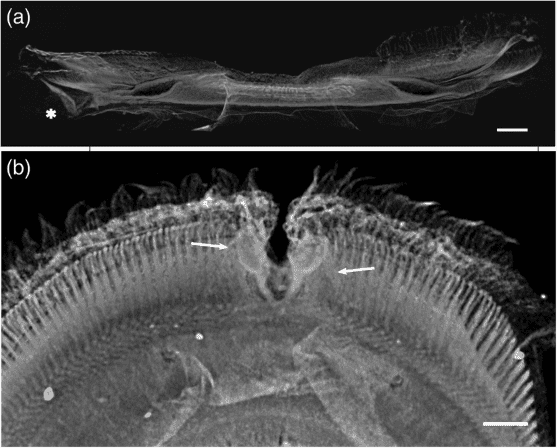
Black-and-white image showing a side view and a top-down view of the suction organ. The edge of the disc-shaped organ is covered in fine hairs and there is a prominent v-shaped gap in the ring.

Inspiration for engineers

Human-engineered suction cups only work well on smooth, clean surfaces, and the team hope their findings will enable them to develop more adaptable alternatives. “By understanding how the larvae’s suction organs work, we now envisage a whole host of exciting uses for engineered suction cups,” says Cambridge’s Walter Federle. “There could be medical applications, for example allowing surgeons to move around delicate tissues, or industrial applications like berry-picking machines, where suction cups could pick the fruit without crushing them.”

Jessica Sandoval, a materials scientist at the University of California, San Diego, who studies the suction cups of clingfish but was not involved in the present work, called the research an “exciting model” for bio-inspired suction cups. “Whether it is mimicking the microscopic microtrichia to mimicking the ‘V-notch,’ there is much to learn from the suction organ of this larvae,” she tells Physics World.

While wet environments generally make adhesion challenging, Sandoval believes that bio-inspired versions of these suction discs could make it easier to affix objects to wet, rough surfaces. Other applications are also possible. “Bioinspired suction cups that can withstand highly directional forces could be used across a wide variety of fields, from robotics to sensing,” she says. “In the field of robotics, such suction cups could be applied to manipulation or locomotion, especially in unstructured or rough terrain.”
ASTRO showcase: XECAN presents advanced facial recognition

In this short video with XECAN, filmed at ASTRO 2019, CEO and founder Bin Yang presents the company’s advanced facial recognition system.

Transmogrified physics: we want your examples of this new field of science

Screwdrivers

As a new decade dawns, you will be thrilled to learn that I have come across a new field of physics. It involves surprising, near-magical and hitherto unnoticed connections between the micro and the macroworld. I therefore call it “transmogrified physics”.

A prime example is screwdriver oscillation – an important phenomenon that often shows up when you’re doing home improvement. There you are, assembling a cabinet, when you suddenly discover you need a Phillips head screwdriver. You go to your toolbox but find only flatheads. Frustrated, you drive to the hardware store and buy one, chastising yourself at being so unprepared. You return to your project and continue working.

Evidently, the fact that screwdrivers, like neutrinos, have mass means that they’re able to oscillate from one state to another.

Two hours later, you find you need a flathead. You go back to your toolbox and discover it now contains only Phillips heads. I have witnessed this phenomenon several times – and you surely have encountered it as well without realizing its significance. Evidently, the fact that screwdrivers, like neutrinos, have mass means that they’re able to oscillate from one state to another. Further exploration of this property is bound to shed more light on the nature of oscillation itself.

Superfluidity and condensates

Another example of transmogrified physics is political superfluidity. This manifests itself when an inept politician creeps upwards career-wise in ways that defy expectations and even rationality. The US currently has a sterling example, and I understand that the UK does too. More research into this phenomenon will have immediate and positive applications in understanding political behaviour.

Then there’s the phenomenon of human condensation. This occurs in situations where otherwise distinct and astute individuals enter social environments in which they lose their identifying properties and enter an energy state of low intelligence in which they become interchangeable. Such environments include campaign rallies, student parties and university departmental meetings. Study of this familiar phenomenon may allow these social environments to be restructured to promote more lucid and level-headed behaviour.

I also present you with the Van Damme effect, which is the impossibility for matter and its time-dilated identical twin to occupy the same space. This phenomenon is inspired by the movie Timecop, in which the character played by Jean-Claude van Damme confronts two versions of the villain – one being a time-travelled version of the other – and pushes the two together. The pair vanish from existence in a screaming conflagration, giving off lots of energy (the villain being a politician, of course).

Such an event, which does not involve matter and antimatter but pairs of identical time dilated particles, has not yet been detected in the microworld, but if it has appeared in the movies there must be some truth in it. Physicists should look for this phenomenon, and when they find it, they should name it after Van Damme. I’m also pleased at the thought that this is surely the first time that his name has ever been mentioned in a physics magazine.

Or how about the Yalu River Effect. Have you ever noticed that physicists, speaking honestly and informally, will tell you that they do science because it’s intellectually and personally rewarding, and that they can’t think of anything more interesting and fun to do. But the moment they talk to politicians, these same scientists claim they do science for the technological spinoffs, practical applications, military uses, social benefits, national pride and other patriotic things it brings?

This effect is named after a phenomenon in the Korean War, in which North Korean troops retreated behind the Yalu River when they landed in trouble. The river separates North Korea from China, and the troops knew that they were safe on the other side because South Korean, US and UN troops would never cross into Chinese territory to attack them. Similarly, scientists know that they are not politically vulnerable when they defend their work with reasons linked to national defence and competitiveness.

Pioneers required

Some of my other real-world physics phenomena can be more quickly described.

Asymptotic freedom in relationships. Second thoughts about your ex. Impossible to live with, but more attractive after moving out.

Parity violation of the sexes. When the male/female ratio in parallel administrative posts, or of salaries in identical positions, has a value of >1. This number is unity in advanced civilizations.

Outgassing. Enough said.

Attention scattering. What happens at parties when physicists begin to explain what they do.

Dark energy. Your phone is somewhere in the house but you can’t find it, so you a have your neighbour call you, but then you remember it’s on soft-vibrate and probably under a thick cushion or pile of clothes. You know the phone is somewhere out there, vibrating yet unable to be detected.

Gravity waves. What you emit when somebody at a meeting you’re chairing makes a humorous but embarrassingly awkward and politically incorrect joke, and you have to stifle your laugh yet convey to everyone both verbally and by your demeanour that the comment was unacceptable.

The critical point

“Transmogrified physics” has been overlooked by working scientists, no doubt because they are so obsessed with the microrealm that they pay little attention to its often astonishing connections with the macroworld. Exploring this new branch of science is bound to be richly rewarding, and I am sure that it will lead to several Nobel prizes.

I have only begun to explore this new realm, and much remains to be discovered.

I realize that I have only begun to explore this new realm, and much remains to be discovered. I therefore invite you to join me in becoming pioneers, and to e-mail me phenomena that you have encountered. I will discuss the field’s progress in a future column.

Gel dosimetry provides end-to-end QA for the Unity MR-linac

The introduction of MR-guided radiotherapy into clinical practice enables direct visualization of structures-of-interest in the treatment position, with high soft-tissue contrast. This opens up the possibility of adaptive re-planning to compensate for changes in the patient’s anatomy or position. It also creates an urgent need for dosimetry protocols and tools that are unaffected by the presence of a magnetic field.

With this aim, researchers in Greece have developed a method for overall dosimetric evaluation of the Elekta Unity MR-linac. Their approach combines 2D film measurements with 3D dose read-out using passive polymer gel dosimetry. They have now demonstrated treatment plan verification of a cranial intensity-modulated radiotherapy (IMRT) case following virtual couch shifting (Phys. Med. Biol. 10.1088/1361-6560/ab52ce).

Virtual couch shifts (or equivalent isocentre shifts) are used in MR-linac systems to account for patient set-up errors. The required shift is calculated by registering a pre-treatment MR scan with the planning CT, and a new plan is created using either an adapt-to-position or an adapt-to-shape method. This adapted plan should provide a dose distribution as close as possible to the original plan. But this is not always the case. Adapted plans may fail to meet the clinical dose constraints, necessitating extensive quality assurance (QA) of any new plan.

Polymer gels provide an ideal platform for MR-linac QA, since they are not affected by magnetic fields. In addition, the MR component of the treatment system can be used to read out the irradiated gels.

“Gel dosimeters ‘trap’ dosimetric information in 3D within their irradiated volume; this information can then be extracted by MR-scanning the irradiated gels,” explains first author Evangelos Pappas from the University of West Attica. “The 3D spatial resolution can reach values of 1 mm3. In addition, there are no wires or any ferromagnetic components that could introduce uncertainties.”

Personalized process

The proposed QA protocol is based on the use of PseudoPatient head phantoms, in which a bone-equivalent phantom is 3D printed based on the patient’s planning CT. In this study, the researchers used two identical phantoms: one incorporating an insert for 2D film dosimetry; the other filled with polymer gel that acts both as a 3D dosimeter and a soft-tissue equivalent.

“The PseudoPatient is probably the only phantom that provides both CT and MRI contrast,” says Pappas. “Therefore, a PseudoPatient filled with polymer gel can be used to test the whole clinical MR-linac workflow, including adaptation. Moreover, since this phantom is constructed using human CT scans, one can incorporate realistic organs-at-risk, allowing the whole process to mimic a clinical case.”

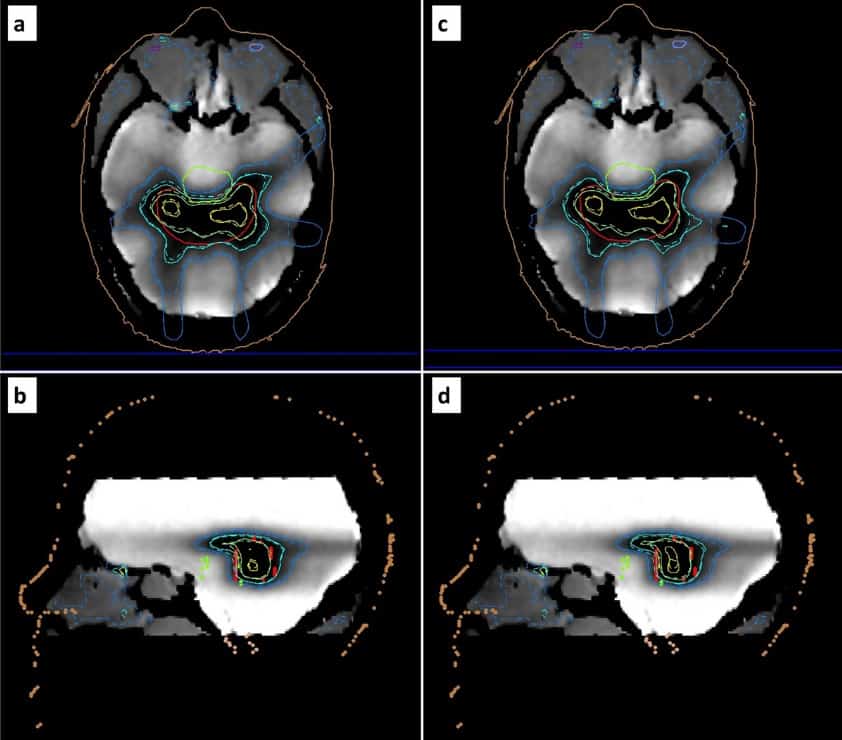
To test their approach, Pappas and collaborators created a 7-beam IMRT plan for a hypothetical C-shaped brain lesion partly surrounding the brainstem (the organ-at-risk). They placed each phantom on the Unity’s treatment couch and acquired MR images. The treatment planning system calculated the required virtual couch shifts and created an adapted treatment plan, using the adapt-to-position strategy. Finally, they delivered the adapted plan to each respective phantom.

For the PseudoPatient with the film insert, measurements agreed well with dose calculations for both the adapted and the original plans.

Reconstructed dose maps

Prior to the gel measurements, the researchers evaluated the dose–response characteristics of the gel under irradiation and read-out conditions, and saw a linear response in the investigated dose range. Immediately after plan delivery, they MR scanned the phantom to read-out the dosimetry gel. Measurements corresponded well with the adapted and original calculated dose distributions. Dose-volume histograms were in excellent agreement with calculations for the planning target volume (PTV), though minor discrepancies were seen for organs-at-risk.

The team also calculated several relative dose–volume metrics for the PTV. These confirmed the good agreement (within ±4%) between adapted and delivered plans. For this specific case and adaptation method, no considerable discrepancies were detected between the adapted and original plans.

Real-time video

As a proof-of-concept, the researchers also monitored dose accumulation in real time by continuously MR-scanning the gel-filled phantom during radiation delivery.

“This is the world’s first video demonstrating experimentally in quasi-real-time the dose deposition process within the PTV, during delivery of a clinical IMRT plan,” Pappas tells Physics World. “Elekta Unity users can not only ‘see’ the human anatomy during treatment, but they can also ‘see’ the dose deposition as it accumulates during irradiation within a passive/integrating dosimeter.”

The researchers conclude that polymer gel is an excellent candidate for end-to-end MR-linac QA, and that the study demonstrates that the Unity can deliver treatments with superb spatial and dosimetric accuracy. They note that all tests were completed within approximately 30 min (plus 30 min of MR scanning for the 3D dosimetry read-out), suggesting that this method could be used for routine QA. Next, the team plans to develop solutions for adapt-to-shape plan adaptation and for moving targets.

Diamond defect takes 3D image of 27-atom cluster

A new atomic-scale spectroscopy technique has produced 3D images of a 27-atom cluster with a spatial precision of less than 0.1 nm. Created by Tim Taminiau and colleagues at QuTech of Delft University of Technology in the Netherlands and Element Six in the UK,  the technique uses a defect in the crystal structure of a diamond and could be extended to determine the structures of complex individual molecules.

Nuclear magnetic resonance (NMR) spectroscopy has long been a powerful tool for the study of chemistry, biology and materials. It works by measuring the characteristic signals produced by the nuclear spins of target atoms in samples that are subjected to strong magnetic fields and resonant radio waves. As well as revealing the presence of target atoms, changes in NMR signals caused by surrounding atoms provides important structural information about a sample.

Normally, the technique involves averaging the signals produced by macroscopic samples, but recent advances have allowed isolated nuclear spins and interacting spin pairs to be identified. However, the situation is more complicated for individual molecules and nanostructures, which can comprise large clusters of nuclei. This means that many more interactions between nuclei must be characterized, which involves the formidable challenge of making very precise measurements of complex spectra of weak NMR signals and then untangling the results.

Magnetic sensor

The QuTech team has addressed this challenge using a “nitrogen vacancy” (NV) centre, in which two adjacent carbon atoms in a diamond crystal are replaced by a single nitrogen atom. An NV centre is essentially an electron spin with a long coherence time and a spin state that can be measured very efficiently using laser light. This set-up can be used as an extremely sensitive magnetic sensor that can make NMR measurements on nearby nuclei.

Taminiau and colleagues developed a NV-based NMR technique for imaging a cluster of 27 carbon-13 atoms within a diamond sample. Most carbon atoms comprise carbon-12 nuclei, which have zero nuclear spin (and hence no NMR signal), whereas carbon-13 has a nuclear spin of 1/2.

The carbon-13 atoms were distributed randomly in a tiny region surrounding the NV centre. The new technique measures the couplings between pairs of nuclear spins using a three-step process. First, the NV spin is used to polarize one nuclear spin in a pair (called the probe nuclear spin). Then two radio-frequency signals are applied to couple the probe spin to the other nuclear spin in the pair – called the target. Finally, the effect of this coupling on the probe is measured using the NV spin.

After measuring pair-wise couplings within the cluster at high accuracy and high resolution, the team used algorithms to build up 3D images of the structure to a precision of better than 0.1 nm. This is smaller than the distance between neighbouring carbon atoms in diamond.

The next step for the Taminiau’s team is to use the technique to study nanoscale structures located outside of diamond – which the group is trying to do by creating NV centres just below the surface of diamond. If successful, the technique could soon enable researchers to gather accurate 3D images of structures including quantum devices and large, complex proteins for the first time.

The research is described in Science.

Get the new decade off to a great start with the January 2020 issue of Physics World magazine

Physics World January 2020 cover.png

Happy new year and welcome to the start of what, I hope, will be a fantastic new decade for you, your friends and family.

To get the 2020s off to a cracker, why not check out the new edition of Physics World magazine, which is available in digital and print formats.

There’s something for everyone, including Rachel Brazil on physicists trying to gauge changes in public opinion, Jonatan Pena Ramirez and Henk Nijmeijer on the mystery of why pendulums can swing in synch, and Kate Ravilious examining whether biomass is as green as you might at first glance think.

Plus we’ve got an exclusive interview with Didier Queloz, who shared last year’s Nobel Prize for Physics for discovering the first exoplanets, while Robert P Crease unveils a new research field in the decade ahead. And James McKenzie looks at Juicero and other bad business models.

Remember that if you’re a member of the Institute of Physics, you can read the whole of Physics World magazine every month via our digital apps for iOSAndroid and Web browsers. Let us know what you think about the issue on TwitterFacebook or by e-mailing us at pwld@ioppublishing.org.

For the record, here’s a run-down of the full issue.

• Searching for new worlds – After sharing the 2019 Nobel Prize for Physics for the discovery of the first exoplanet, Didier Queloz talks to Rebecca Pool about the future of planetary exploration

• Towards a sustainable future – Dave Elliott says that, while renewable energy has rapidly progressed over the past decade, more needs to be done to help limit the impact of climate change

• Bad business models – Some business models might seem crazy. But they’re not mad if they work, as James McKenzie explains

• Transmogrified physics – Robert P Crease seeks your input on an entirely new realm of phenomena

• The physics of public opinion – Rachel Brazil investigates how physicists are trying to predict the dynamics of shifting opinions using laws that describe the physical world

• Biomass energy – green or dirty? – The conversion to biomass energy has played a key role in reducing our dependence on fossil fuels. But is this renewable energy source really as green as we first thought? Kate Ravilious investigates

• The secret of synchronized pendulums – The fact that pairs of moving pendulums can become synchronized was first observed by the great Dutch scientist Christiaan Huygens back in the 17th century. But as Jonatan Pena Ramirez and Henk Nijmeijer explain, synchronized pendulums still have today’s researchers scratching their heads

• We still don’t understand physics – Chanda Prescod-Weinstein reviews Cosmological Koans: a Journey to the Heart of Physics by Anthony Aguirre

• Agustina Ruiz Dupont: the greatest physicist you’ve never heard of – James Dacey reviews the documentary film El Enigma Agustina directed by Emilio J García and Manuel González

• You are what you eat – Joe McEntee visits Leeds to talk to Megan Povey about a career devoted to the science of food

• Once a physicist – Jon Newey, from physics to electricals

• True, but not real – Michael Berry on truth, reality and rainbows

Cooking with the Sun

Photo of Alan Bigelow

“Concentrate all of your thoughts upon the work at hand. The Sun’s rays do not burn until brought to a focus.” That’s a quote from the great inventor Alexander Graham Bell, emphasizing that technological breakthroughs don’t happen without hard work and concentration.

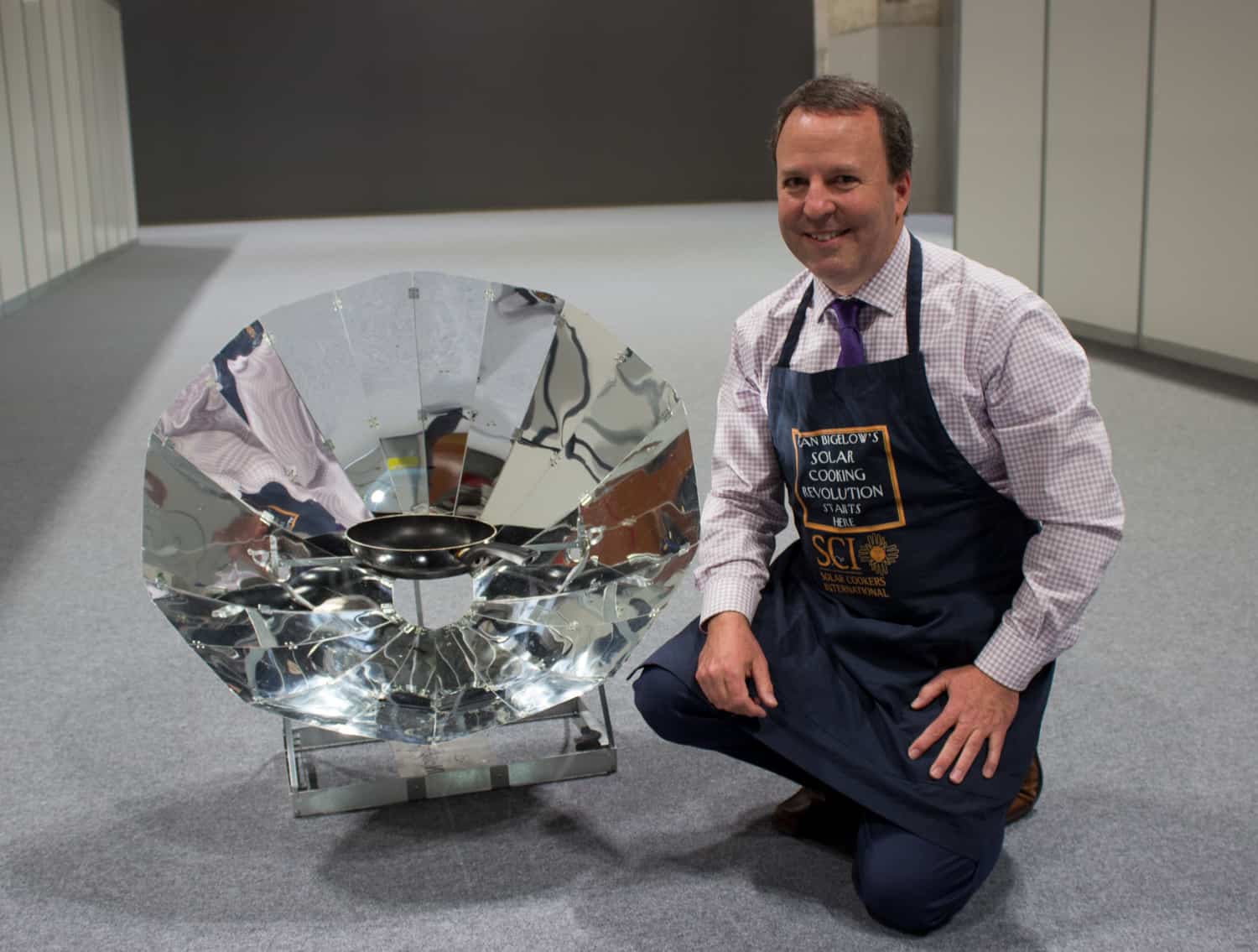
It seems the US physicist Alan Bigelow has taken Bell’s advice quite literally, in becoming a leading advocate for solar cooking – a way of heating food by focusing the Sun’s rays onto cookware. Bigelow is the science director of Solar Cookers International (SCI), a non-profit organization that researches and promotes solar cooking, while building its capacity across the world. In December Bigelow and SCI colleagues were at the UN climate summit in Madrid (COP 25) speaking about the technology’s potential, especially in developing countries.

Coming in different shapes and sizes, solar cookers directly harness thermal energy from focused sunlight. They feature silvered surfaces that reflect sunlight onto blackened surfaces, which then efficiently absorb the heat. So-called “panel” and “parabolic” varieties focus the heat directly onto cookware, whereas the “box oven” includes an insulating chamber – making them useful for baking.

SCI provides guides for communities to build their own cookers and advocates the use of local materials where possible. “A solar cooker is a very simple device, this is what you would call appropriate technology, not high technology, not necessarily low technology,” said Bigelow.

The key intended users of solar cookers are the nearly 3 billion people who currently cook over stoves and open fires that use wood, animal waste or charcoal as fuel. Mainly based in rural areas in the developing world, these people are inhaling smoke and soot, which can lead to a range of health problems. Some end up spending a large chunk of their income on fuel, while those searching for wood and other natural fuels can put themselves in danger, especially women who can be at risk of gender-based violence.

According to SCI figures, there are currently more than 3.7 million solar cookers worldwide, used by 13.4 million people, providing an estimated 7 billion meals. Part of the reason SCI attended COP 25 was to highlight the associated climate benefits of solar cooking, given that it produces no air pollution and zero greenhouse-gas emissions. Eliminating the need for fuel also helps to reduce deforestation.

A solar cooker is a very simple device, this is what you would call appropriate technology, not high technology, not necessarily low technology

Alan Bigelow

Bigelow himself has an interesting background. Part of his childhood was spent in west Africa in the Republic of Upper Volta (now Burkina Faso). He went on to do a physics doctorate at the University of North Texas before working at Colombia University Medical Center where he developed technology for radiation-biology studies. Bigelow says that upon first encountering a solar cooker in 2008, he immediately saw both the physics potential and the humanitarian impact it could have in some of the communities he experienced in Africa.

“From the physics side, I have to say there’s a lot of common ground between what I’m doing now and my work with particle accelerators and lasers, because we were managing light energy.”

Now based in New York where he regularly demonstrates solar cooking in outreach events, Bigelow is SCI’s main representative to the United Nations. SCI attends events such as COP 25 to forge partnerships with local organizations and government representatives. For instance, SCI recently collaborated with the Kenyan organization Ecomandate Foundation to provide solar cookers for Kakuma refugee camp in the north of the country. Established in 1992, the camp now has more than 190,000 registered refugees and asylum-seekers, many of whom rely on wood and charcoal stoves.

SCI’s executive director, Caitlin Hughes, says that the power of solar cooking is its ability to address multiple and interconnected global issues including environment, health and equality. “We are encouraging countries to include solar cooking in their plans to address climate change,” she said. “It positively impacts all 17 of the United Nations’ sustainable development goals.”

Hughes and Bigelow will be featured in an upcoming episode of the Physics World Weekly podcast. In the meantime, you can see how a solar cooker is assembled by watching the video above.

Machine learning could reveal graphene oxide’s real structure

What is the actual structure of graphene oxide nanoflakes? This question is important for optimizing the properties of the carbon material in real-world applications, and researchers at CSIRO in Australia have now tried to answer it using machine learning. Their approach uses over 20,000 possible structure candidates to find truly representative models and is very different to existing predictive techniques, which are often based on single or limited numbers of model structures.

Graphene oxide (GO) is a hydrophilic, 2D oxidized form of graphene (a sheet of carbon just one atomic layer thick) with oxygen functional groups decorating and disrupting the spbasal plane of the material, which ranges in size from a few nanometres to a few millimetres. The first model of GO’s structure, proposed in 1939, suggested that the oxygen was bound to a hexagonal carbon sheet by epoxy (1,2-ether) and had the formula C2O. Researchers have been revising this model ever since, taking into account sheet wrinkling, for example, and the presence of axially-bound functional groups that distort the flat GO structure.

In 1998, scientists proposed the Lerf-Klinowski model. In this description of GO, all the carbon rings are perfect (six-membered), and out-of-plane spatial distortions caused by functional groups or intrinsic ripples are essentially ignored. Although instructive, this model is rather limiting, and it it is also largely inconsistent with structures obtained either by computational modelling of GO or by electron microscopy images.

Unsupervised machine learning techniques

Researchers led by Amanda Barnard of Data61 at CSIRO have now revisited the structure of GO using a new clustering algorithm developed in their laboratory and have predicted centroid structures that are truly representative of the material. To extract archetypes, they performed analyses based on the unsupervised algorithm first put forward in 1994 by Cutler and Breiman.

“Theoretically, the archetypal analysis technique finds points in the feature space of the material that are on the boundary of the convex hull of the data cloud,” explains study lead author Benyamin Motevalli. “This means that all possible candidate materials can be described as linear combinations of these archetypal (pure) points. The approach can even predict archetypal structures not included in the data set.”

Clustering is also an unsupervised technique that finds patterns in the data set and group structures based on similarity, he tells Physics World.

The input data

The researchers gathered their input data by creating a wide range of flake sizes, and shapes. They then varied the oxygen concentrations in the flakes and added different chemical groups, distributed in different ways.

The data set contains 20,396 samples in all with surface areas ranging from 320 Åto 2457 Å2. These samples contain hydroxyl, ether, double bonds, aliphatic (cyclohexane) groups, and significant out-of-plane distortions (caused by defects) that go beyond the Lerf-Klinowski model.

The team included four different flake morphologies: hexagonal (49.5 %), trigonal (14.3 %), rectangular (30.5 %), and rhombic (5.7 %). The total number of atoms in each sample varies from 191 to 1949 and includes C, H, and O atoms. Different ratios of armchair and zigzag edges were also incorporated into the data set.

“The density and distribution of oxygen groups have a significant role in deriving GO properties, so for each of the 24 primary pristine graphene nanoflakes, we sampled numerous O/H concentrations, each with hundreds of random distributions,” explains Motevalli. In each case the O/C ratio was between 4.05% to 52.08%, and the H/C ratio between 2.22% to 49.26%.

28 structures can replace 20,396 samples

Using this method, the researchers identified three representative GO nanoflakes that are effectively the “average” structure in 223-dimensional space.

The say they also identified 25 “pure” GO nanoflakes structures that capture all of the complexity and diversity of the entire 20396 data set they begin with. These 25 structures can be used as linear combinations to represent the whole set.

“Together these 28 structures (the 25 structures and the three porotypes) can replace the 20,396 samples with no loss of information,” says Motevalli. “They can also be used as single model structures with the right chemical composition.”

Each structure is available for download at: https://doi.org/10.25919/5d1304152364a.

Removing guesswork and bias

“Our 20396 GO nanoflake structures required years of work and over 30 million core supercomputer hours to generate at the electronic structure level,” he explains. “Reducing this set to the 28 most important structures will enable other research groups to make predictions on GO that are representative and reliable in a fraction of this time.”

The approach also removes the guesswork and bias in computational models of GO and provides the consistency necessary for benchmarking, he adds. “If all researchers working on GO used the same model structures, we could then easily compare and correlate results from laboratories all around the world.”

The researchers plan to use supervised machine learning to explore GO structure and property relationships and predict how different types of samples should perform under different conditions and in different applications. “Examples include electronic charge transfer properties, or studying the role of defects and distortions and how they affect fault tolerance,” Motevalli says.

The group’s findings appear in Nano Futureswhich (like Physics World) is published by IOP Publishing.

Smart contact lenses power up

Flexible contact lenses that incorporate supercapacitors and wireless-charging components are now possible, thanks to newly formulated printable inks that serve as the electrode and electrolyte. Researchers in the Republic of Korea showed that a specific mixture of carbon molecules, polymers and solvent can be used to print a supercapacitor’s electrodes onto a lens with micron-scale precision via a technique called direct ink writing. The same process deposits a UV-cured ionic liquid that functions as the supercapacitor’s electrolyte. As a proof-of-concept, the work could one day lead to smart contact lenses with sensors for health monitoring, or with integrated displays for augmented reality applications (Science Advances 10.1126/sciadv.aay0764).

While smart glasses have yet to catch on, there might still be a niche for wearable electronics that project information or images directly into the user’s field of view. If such a device could be miniaturized to fit into a contact lens, it could offer the added advantage of being able to sample certain biomarkers in the wearer’s tears, which can diagnose diseases including diabetes and glaucoma.

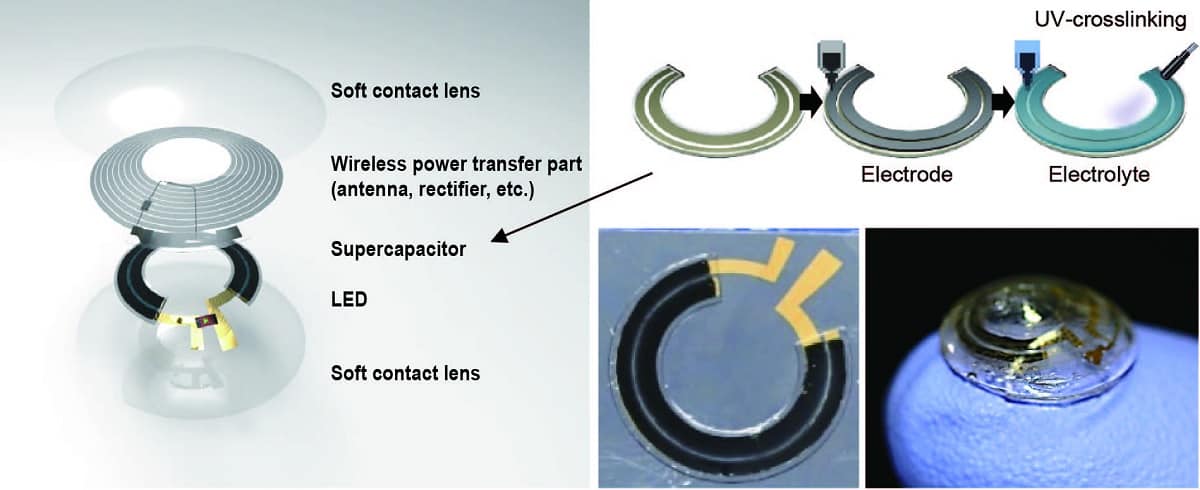
Before that can happen, researchers must come up with a way to deliver a ready supply of energy to the sensors, displays and the information-processing and communication infrastructure that supports them. Trailing wires from one’s eyes to a battery pack is obviously unacceptable, so smart lenses will need a store of electrical charge incorporated into the lens, as well as a way to replenish it wirelessly. For Jang-Ung Park of Yonsei University, Sang-Young Lee of Ulsan National Institute of Science and Technology (UNIST) and colleagues, the solution was to integrate a miniature, flexible supercapacitor and an energy-harvesting antenna to recharge it.

“Commercial supercapacitors are composed of sheet-type components that are stacked in fixed cylindrical or rectangular cases, which make them too bulky and rigid to fit into a tiny, soft smart contact lens,” explains Park. “The breakthrough was to make the supercapacitor components printable in an ink form. The component inks were drawn around the edge of the smart contact lens, so they won’t block the optical view of the user.”

Microscale direct ink writing (DIW) is already established as a method for fabricating components with the precision required for this application. The challenge lay in deriving a set of compatible inks that could print structures with the necessary electrical and mechanical properties, but that were also fluid enough to be extruded smoothly from the print nozzle.

To form the supercapacitor’s electrodes, the researchers mixed activated carbon and multiwalled carbon nanotubes (MWCNTs) with the polymers polyvinylpyrrolidone (PVP) and polyvinylidene fluoride (PVDF), and an organic solvent. The composite ink was thixotropic, meaning that when a shear stress was applied, the ink’s viscosity was low enough for it to flow through the print nozzle, whereas under static conditions the printed structure remained solid.

For the electrolyte, the researchers combined an organic ionic liquid with a mixture of thiol-ene monomers. After the necessary electrolyte pattern had been deposited by DIW, the team cured the mixture with UV light, securing the ionic liquid within a polymer skeleton.

Smart contact lens

So that the device could be recharged wirelessly, on top of the supercapacitor the team deposited an antenna consisting of an array of electrospun silver nanofibres (around 400 nm in diameter) and electrosprayed silver nanowires (15–25 nm in diameter). They fabricated a rectifier for the antenna conventionally using a silicon wafer, which made up the one rigid component in the lens.

The researchers found that the smart lens survived repeated cycles of flexing, and could withstand stretching of up to 30% in two axes simultaneously. In trials with rabbits and a human subject, the device proved comfortable and safe, maintaining a stable temperature during wireless charging and when used to power an integrated light-emitting diode.

The team’s results are an encouraging demonstration of what’s possible, but don’t expect to be wearing smart contact lenses any time soon. For one thing, their supercapacitor just doesn’t have the endurance to handle the power demands of a realistic device.

“Our integrated supercapacitor is eligible for electronic devices which need a fast power supply in a few minutes,” says Lee. “For devices with longer working times, high-energy-density batteries are required, for which further studies are needed.”

Embedded DNA used to reproduce 3D-printed rabbit

Information encoded in DNA has been embedded within ordinary objects using a new technique that could lead to self-replicating machines.

The breakthrough was made by a team led by Yaniv Erlich of Erlich Lab LLC and Robert Grass at ETH Zurich. They used the technique to incorporate replication instructions into a 3D-printed rabbit. They then reproduced five successive generations of rabbits from tiny extracted fragments containing DNA. The result paves the way for new applications in a diverse array of fields including the storage of medical information and self-replicating machines.

Humans are creating rapidly-growing amounts of data and even the latest, most compact storage systems such as hard drives struggle to keep up. DNA could be a solution because it offers a versatile, robust and efficient way of storing and replicating information. DNA, for example, is the only known storage medium that can exist as a liquid.

Tiny silica beads

The team’s technique begins with encoding information onto molecules of DNA, and then encapsulating them within nanometre-scale silica beads. Then these beads are fused into functional materials, where they could remain indefinitely. The information is retrieved by taking a sample of the DNA and sequencing it (see video).

An important feature of the technique is that all of the stored information can be retrieved from just a tiny fragment of the material. This means that data could be stored throughout an object in a highly redundant manner.

Furthermore, the protective silica minimizes any degradation of the DNA structures over the material’s lifespan. Unlike current hardware devices, whose storage capabilities can be compromised by physical damage the memory stored in these materials could never be altered.

Reproducing like rabbits

Once they had established their storage technique, Elrich, Grass and colleagues pushed the DNA paradigm further to embed an object with DNA that encodes instructions for reproducing that object – in analogy to living organisms They made a 3D-printed rabbit containing 45 kbyte of printing instructions within embedded DNA.

By extracting just tiny fragments containing DNA from the rabbit, they had the blueprint for producing a next-generation object. They were able to repeat this process to create five generations of the rabbit – each replicating the memory of the previous generation, without the need to synthesise new DNA.

The team’s achievement could lead to significant new advances in data storage. Since 1 g of DNA can store up to 215 Pbyte of data, their technique could allow for storage densities orders of magnitude higher than current hard drives. They predict applications ranging from embedding electronic health records in medical implants, to constructing buildings which contain their own blueprints. With further research it could be possible to create machines that use raw materials to automatically replicate themselves over many generations.

Copyright © 2026 by IOP Publishing Ltd and individual contributors