Endangered elements

Quiet nights in are better than ever. The move from cathode-ray tubes to flat screens has given us TVs that are slimmer and bigger, with a far clearer picture. We have a much greater choice of what to watch, too. No longer restricted to whatever’s showing on four or five terrestrial channels, we can pick from hundreds or even thousands of programmes thanks to Internet streaming services such as Netflix. And if we are not fully engrossed in what we are watching, we can always keep an eye on the news and communicate with friends by tapping away on our smartphones.

All these benefits, however, depend on chemical elements that rarely, if ever, get a look-in on the nightly news or high-profile documentaries. One such element is indium, which is alloyed with tin and oxygen to form the transparent, conductive oxide that coats the screens of TVs, mobiles and laptops. Indium is also used in infrared lasers, which transmit data down the optical fibres that enable the Internet. In combination with gallium, it is used to make the LEDs that backlight our screens and illuminate our homes. Gallium is also found in smartphones, in lasers providing facial recognition, and in amplifiers that strengthen the signals sent to base stations. Finally, many of these devices feature integrated circuits containing a very thin layer of hafnium dioxide as an insulator. This layer has superseded silicon dioxide-based insulators, which cannot prevent electrons from leaking out of today’s advanced transistors.

Unfortunately, the long-term availability of all three of these critical elements – gallium, hafnium and indium – is in doubt. The American Chemical Society lists nine elements as facing a “serious threat” to supplies within the next 100 years (the other six are arsenic, germanium, gold, helium, tellurium and zinc). Although some reports of imminent shortages – including a 2014 claim, first reported by the BBC, that indium could run out as early as 2025 – have proven overblown, serious questions remain about future supplies of elements found in smartphones and other hi-tech devices.

At first glance, these questions appear easy to answer. Just find out how much material is out there, divide this figure by the projected consumption per year, and the result will tell you how long the element will last. Unfortunately, this “back of the envelope” approach will not give you the right answer, for three reasons. It fails to consider the processes that generate the material; it assumes that it is financially viable to extract all the material that exists; and it ignores where the deposits are, and how little is known or reported about them.

With indium, gallium and hafnium, predicting the future is particularly complex because these elements are not mined directly. Instead, they are by-products. Indium comes from zinc mining; gallium is predominantly extracted from bauxite during alumina refining; and hafnium is found in zirconium deposits. In all three cases, questions about production weigh heavily in discussions of future shortages.

Indium’s volatility

The law of supply and demand suggests that if indium is about to run out, its price should be getting higher. The good news is there is no evidence of this happening over the past decade or so. However, this does not mean that TV, smartphone, lighting and laser manufacturers should breathe a sigh of relief, because a cursory glance at raw price data does not reveal the true drivers of price changes in a small market.

The global production of indium is only about 800 tonnes per year – an amount so small that this soft, silvery metal is not traded on any of the world’s metal exchanges. Because of this, the actions of a single supplier can have a significant impact on price. Between 2002 and 2005, the price of indium rocketed from $100 per tonne to around 10 times that figure due to the closure of a major French refinery coupled with rising demand. More recently, indium’s price fell from around $500 per tonne to $300 per tonne after the Fanya Metal Exchange, a trading platform backed by the Chinese government, collapsed in 2015 amid allegations of large-scale fraud. Max Frenzel, a researcher at Germany’s Helmholtz-Zentrum Dresden-Rossendorf who has studied indium, gallium and germanium supplies, explains that the Fanya failure was significant because the exchange was reported to have amassed a very large stock of indium. The official figure is 3600 tonnes, although Franzel warns that it is hard to know whether this number is realistic. For the figure to be accurate, he notes, the exchange “would have had to amass all the production in the whole of China for more than 10 years”.

Since the Fanya collapse, demand for indium has stagnated, and production has easily fulfilled industry requirements. China and South Korea are each producing about one third of what is needed, with further contributions coming from Canada and Japan. Should production need to increase in future, one relatively easy option would be to increase the proportion of zinc smelters that produce indium. Frenzel estimates that primary zinc production could, if necessary, generate two or three times as much indium as it does today. Upping zinc production would not, however, be an instant solution, as it typically takes between two and five years for a smelter to install new capacity.

An alternative to increasing the production of indium is to recycle and reuse more of it. Most indium is used to make indium tin oxide films for screens, and when these coatings are applied, 90 percent or more of the indium ends up in the sputtering machine itself. This waste material is recycled because doing so makes economic sense for the manufacturer. However, when TVs, laptops and mobiles are thrown away, it’s a different story. As there is so little indium in each of these units, recovering it is not viewed as worthwhile.

Considering levels of recycling, trends in indium demand, and the production of the raw materials that provide its source, Frenzel predicts that in 20 to 30 years the available supply may struggle to satisfy demand. At that point the price will rise, which could lead to additional supplies coming on line. For example, if the price of indium went up by an order of magnitude, some zinc mines could become indium mines.

Gallium over-supply

Gallium is produced on an even smaller scale than indium, with a global total of just 410 tonnes in 2018. The majority of this is used to make lasers, LEDs and radio-frequency power amplifiers.

Like indium, gallium is produced in locations that do not reflect the global distribution of its source materials. Although 95 percent of the global supply of gallium comes from China, Chinese suppliers produce only about half of the world’s refined alumina, the precursor from which most gallium is derived.

Gallium production peaked at 470 tonnes in 2015, leading to an over-supply for the last few years. This surplus is helping to bring down prices that have, for various reasons, been falling steadily for more than 40 years. Adjusting for inflation, gallium prices have plummeted from around $3000 per tonne in the 1970s to just $300 to $400 per tonne today.

Falling prices are one sign that concerns over future supplies of gallium are far less than they are for indium. “We are currently at one-fifth to one-twentieth of [the gallium] we could produce, whereas indium is one-third to half,” explains Frenzel. Even if gallium demand increases, which Frenzel agrees is the long-term trend, he believes it will be at least 40 years before the supply of gallium from alumina and other by-products is unable to satisfy demand. Even if that happens, a rise in gallium prices would enable more production. “For the next fifty years there should not be a problem,” he says.

Mining more hafnium?

Unlike indium or gallium, the world’s hafnium producers are not geared towards consumer goods. Silicon integrated circuits consume only 3-5 percent of annual production. The lion’s share, three-fifths, is used for making superalloys that withstand extremely high temperatures and high pressures. These alloys are deployed in the aerospace industry, featuring in the outer casing of rocket exhausts and in turbine blades. Additional uses of hafnium include plasma cutting tips for welding, nuclear control rods, and catalyst precursors – applications that account for 15 percent, 10 percent and 7 percent of global production, respectively.

The primary source for hafnium is zirconium oxide, which in its raw, mined form always contains about 1.8 percent hafnium. For most users of zirconium oxide, a bit of hafnium makes little difference. For the nuclear industry, however, it is essential that the hafnium be removed to produce pure zirconium. Because of this, makers and users of control rods exert a strong influence over hafnium production levels.

Photo of a wooded area near the site of the proposed hafnium mine

To free hafnium production from this constraint – and establish an alternative to existing, predominantly China-based, producers – a firm called Alkane Resources is trying to establish a new source of hafnium. The Australia-based company hopes to construct a mine in New South Wales and build a processing plant alongside it. According to Alkane’s technical director, Ian Chalmers, the mine could produce between 150 and 200 tonnes of hafnium per year. That is a substantial amount: in 2025, the global market is projected to be 100 to 160 tonnes per year. Alkane’s project has received government approval, and pilot production has taken place at a demonstration plant (see photo). The final hurdle, says Chalmers, is to win investment for a scaled-up facility.

Overall, the available evidence suggests that supplies of indium, gallium and hafnium should hold out for several decades. Beyond that, it’s harder to say – and harder for investors or independent experts like Frenzel to predict.

However, even if these sources do run dry, it may not matter. History attests that when one material is in short supply, alternatives often emerge. In the 1970s, for example, wars in Zaire disrupted the mining of cobalt, which was an essential ingredient in the first permanent magnets. Afterwards, rare-earth magnets came in to replace them. Similarly, efforts are already underway to find alternatives to indium’s conductive oxide, with silver nanowires, silver nanospheres, metal meshes, polymers and allotropes of carbon all showing promise. It is therefore hard to imagine a scenario where technology takes a long-term step backward due to shortages of certain elements. So if you enjoy a good night in, relax: your future viewing experiences may be even better than today’s.

Red and green in the US

US presidential hopeful Senator Bernie Sanders’ Green New Deal climate and social action plan for “100% renewables” for power and transport by 2030 in the US is pretty breathtaking. It also calls for a fully decarbonized US economy by 2050 at the latest, an even larger challenge. A radical plan, given that, at present, renewables only supply around 18% of US power. Can it be done? And what will it all cost?

The Green New Deal plan says “we will spend $1.52 trillion on renewable energy and $852 billion to build energy storage capacity. We will spend $526bn on a modern, high-volt, underground, renewable, direct current, smart, electric transmission and distribution grid [to] ensure our transition to 100% sustainable energy is safe and smooth. We will provide $2.18 trillion for sliding-scale grants for low- and moderate-income families and small businesses to invest in weatherizing and retrofitting their homes and businesses. Weatherization will reduce residential energy consumption by 30%.” And it adds, “we will fund a $500bn effort to research technologies to fully decarbonize industry”. That will certainly be crucial for the longer-term post-2030 phase.

Crucially though, the Sanders plan says that “to get to our goal of 100% sustainable energy, we will not rely on any false solutions like nuclear, geoengineering, carbon capture and sequestration, or trash incinerators”. Specifically, the plan “will stop the building of new nuclear power plants and find a real solution to our existing nuclear waste problem. It will also enact a moratorium on nuclear power plant license renewals in the US to protect surrounding communities”. Likely to be even more contentious, shale gas fracking would be banned outright, so would offshore drilling, along with the export and import of fossil fuel. A very big shift.

On the transport side, there’s over $3.5 trillion earmarked to support EV take-up in all sectors: domestic ($2 trillion), school buses ($440bn), and haulage ($200bn), along with new high-speed rail ($607bn) and measures to increase public transport usage ($300bn). The plan also adds that there will be a “$150bn effort to fully decarbonize aviation and maritime shipping and transportation”.

Can it be done?

What to make of it all? Some of the costs may be underestimated. The smart grid power supply proposals include High Voltage Direct Current (HVDC) supergrids — put underground. It’s good to see grid upgrades and balancing being taken seriously, but buried HVDC links will be costly: maybe more than the $526 billion budgeted, if that’s done nationwide. Though that’s tiny compared to the $16.3 trillion in public investment Sanders is proposing in all, as part of the aim to “reduce domestic emissions by at least 71% by 2030 and reduce emissions among less industrialized nations by 36% by 2030 – the total equivalent of reducing our domestic emissions by 161%”.

However, it is claimed that “this plan will pay for itself over 15 years”, with the fossil fuel industry paying for its pollution through “litigation, fees, and taxes, and eliminating federal fossil fuel subsidies”. He envisages the expansion of the existing federal Power Marketing Administration system but while revenues for sales of wholesale power from the regional Power Marketing Authorities will be collected from 2023 to 2035, “after 2035 electricity will be virtually free, aside from operations and maintenance costs”. That takes some believing.

Can it really all be paid for, even with “scaling back military spending on maintaining global oil dependence” and “collecting new income tax revenue from the 20 million new jobs created by the plan”? Sanders says there is no choice. If no action on climate is taken, the US will lose $34.5 trillion in economic activity by the end of the century. Whereas “by taking bold and decisive action, we will save $2.9 trillion over 10 years, $21 trillion over 30 years, and $70.4 trillion over 80 years”.

Will Sanders win?

It’s clearly an ambitious plan, with some major policy shifts proposed that may be hard to achieve in reality. Will Sanders win the Democratic Party nomination on this basis, and then the Presidency? The other Democratic candidates have put forward their own plans, although they are generally less radical – and some are against Green New Deals.

The political situation in the US is volatile but the Sanders vision on this and other issues seems to be quite widely supported by many young people. We may be seeing a generational political change, with support rising for more radical ideas, though that may also open up some fault lines. The strategy underlying most “green plans” around the world is to switch from centralised power production using fossil and nuclear fuels in large complex plants to smaller-scale decentralised power using renewables. That can make local control and even ownership easier, weakening the power of the big energy companies. To that extent it is also a leftish “red” programme, although there are debates about how much local control, as opposed to state control, is viable/needed, and over the role of markets and competition.

There’s an even bigger debate over growth. Some greens think it must stop, some reds do not. And in the short term there is the issue of jobs. Some US trade unions have objected to earlier versions of the Green New Deal, fearing that their job security would be undermined by a rapid energy transition. The Sanders plan stresses the job creation and “just transition” aspects, looking to create 20 million jobs, with $1.3 trillion allocated “to ensure that workers in the fossil fuel and other carbon intensive industries receive strong benefits, a living wage, training, and job placement”. Specifically, it says “we will guarantee five years of a worker’s current salary, housing assistance, job training, health care, pension support, and priority job placement for any displaced worker, as well as early retirement support for those who choose it or can no longer work”.

Costs assessment

Changed politics is clealy a central focus of the plan, globally as well as nationally. Sanders proposes to provide $200 billion to the Green Climate Global Fund, rejoin the Paris Agreement, and reassert US leadership in the global fight against climate change. But it’s the national financial commitment that may worry many people. Big changes have big costs.

If no action on climate is taken, the US will lose $34.5 trillion in economic activity by the end of the century

Leading consultants Wood Mackenzie had earlier said that “the transition to a 100% renewable US power grid will need investment of up to $4.5 trillion over the next 10 to 20 years, require the installation of 900 GW of energy storage as well as building 1600 GW of new wind and solar capacity”. However, it added that extending the time horizon to 2040-2050 would make it easier, allowing new technologies to develop and reach commercial scale. And having 20% of the power mix coming from existing natural gas-fired generation would reduce renewable energy costs by roughly 20%, and energy storage costs by at least 60%. So the consultancy suggests going slower. WoodMac’s Wade Schauer said: “Our analysis of the data suggests that reaching 50% of supply from intermittent renewables system wide is relatively straightforward in most of the US”. But he added “above 50%, integration challenges accelerate rapidly. Achieving full decarbonization will require long-duration energy storage, and the electric grid will need to roughly double its capability”.

Nevertheless, a comment on Sanders’ 100% power plan from WoodMac’s Dan Finn-Foley was fairly supportive. Finn-Foley was worried about the ability to scale up storage as fast as would be needed, but said the US had achieved rapid technology expansion programmes before, so it wasn’t impossible. Certainly, the US has been good in the past at major federal energy and transport infrastructure programmes – that is what the original 1930s New Deal was partly about.

Although it will cost, getting to near 100% renewable power by around 2030 may therefore be just about credible for a crash programme, especially if more attention is given to cutting demand: it has been falling and could do more. The Sanders plan could have had more on that, beyond its proposed 30% cut in residential energy use, although big energy – and cost – savings in other sectors should follow on from its other programmes.

What about moving on to net zero emissions by 2050 across the board? There are scenarios suggesting that obtaining 100% of all energy from renewables is possible by 2050 in the US and now, in this plan, we have an attempt to map it out in reality. It seems that it may be technically possible and it is certainly environmental desirable — and actually urgent. But both phases, to 2030 for power and to 2050 for all energy, will be economically challenging and may be politically tough to win support for. Arguably worth a try though, given that, if successful, the programme would phase out the economic, social and environmental costs of using fossil fuels, as well as the costs and risks of nuclear power. However, unsurprisingly, Trump sees Green New Deals as very undesirable. The battle continues.

My favourite Nobel prize: a universal theory for phase transitions

Phase transitions underpin much of physics – from the everyday freezing of liquid water to the esoteric symmetry-breaking that occurred in the very early universe.

Indeed, I think that many physicists view the world in terms of phase transitions – both real and metaphorical. The spontaneous stopping and starting of heavy traffic on a motorway looks like a phase transition to a physicist – and some physicists argue that it actually is one.

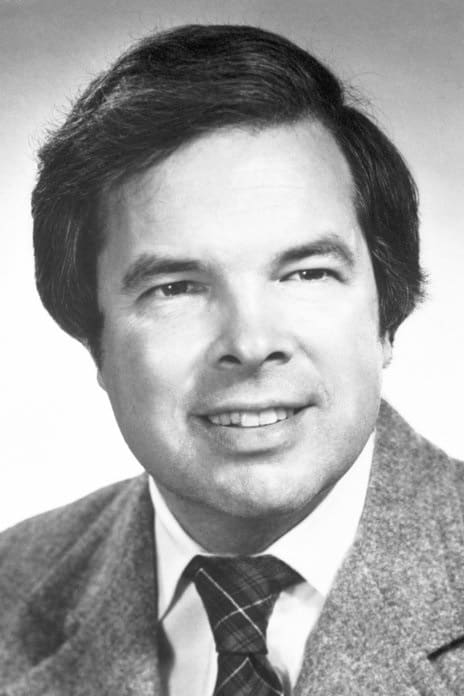
Kenneth Wilson

That is why my favourite Nobel prize was given in 1982 to Kenneth Wilson for “for his theory for critical phenomena in connection with phase transitions”.

Prior to Wilson’s work in the early 1970s, physicists had no successful general theory for how phase transitions occur – although they did know that very different systems (such as liquids and magnets) seemed to behave in similar ways.

Phase transitions were difficult to describe at a fundamental level because they involve fluctuations on many different length scales. When liquid water is chilled to the freezing point, for example, tiny pieces of ice just a few molecules in size will form and then disappear alongside millimetre and centimetre sized pieces. If the water is a large lake, kilometre-sized pieces of ice can coexist with similar sized regions of water.

A common strategy in physics is to work within a specific length scale, which often makes it easier do calculations. This does not work in the case of phase transitions because fluctuations at all length scales are important.

Wilson addressed this problem by adapting an existing framework called renormalization group theory, which allowed him to fold the physics at all relevant length scales into a manageable calculation. A profound result of this technique is that it revealed that the nature of a phase transition is defined by just two parameters: the dimensionality of the system (1D, 2D or 3D) and the dimensionality of a key quantity called the order parameter. This explained why very different physical systems underwent phase transitions in identical ways.

So, the next time you are driving along the motorway and traffic comes to a screeching halt, see if you can work out what the order parameter is – and thank Kenneth Wilson for giving you something to do while you are stuck in traffic.

Oxford Instruments logo

Physics World‘s Nobel prize coverage is supported by Oxford Instruments Nanoscience, a leading supplier of research tools for the development of quantum technologies, advanced materials and nanoscale devices. Visit nanoscience.oxinst.com to find out more.

Single-nanowires make powerful spectrometers

The miniaturization of instruments to make them portable and convenient for use outside the laboratory is one of the greatest challenges for developing analytical tools. Reporting in Science, researchers from the UK, China and Finland, led by Tawfique Hasan at the University of Cambridge in the UK, present a device that measures the energy of incoming photons, yet is only a few micrometres long with a width of a couple of hundreds of nanometres. The ultracompact microspectrometer could benefit a wide range of applications, from centimetre-scale samples down to microscopic biological samples, such as single cells.

For the spectrometer, the researchers used a nanowire made from a semiconductor with a composition that gradually changes from one end to the other. Semiconductors only absorb photons with higher energy than a threshold determined by physical properties that depend on the chemical composition. As a result, the gradually changing composition of the nanowire along its length leads to different energy thresholds at different positions. The energy resolution is achieved by placing closely spaced electrodes along the nanowire each probing a different position over the gradient of bandgaps.

Spectrometers generally work with monochromatic (i.e., single-colour) or broad-band (i.e., multi-colour) light sources. The new single-nanowire spectrometers show excellent performance in both cases despite their very small size. In addition, the study shows that the technical specifications, such as the spectral resolution, are comparable with those of commercial instruments. Moreover, the researchers discuss that by using different materials to make the semiconductor nanowires, it is possible to cover a wide range of the electromagnetic spectrum from ultraviolet to infrared light sensing.

How far do the wires reach?

The researchers used the spectrometer on a centimetre-scale object. After reconstructing the signals, the data provided was consistent with the imaged object and in good agreement with commercial spectrometers.

To satisfy the demands of biomedical applications, the spectrometer also needs to work well on micrometer-scale samples, which the researchers demonstrated using naturally coloured red onion cells. Even though the step size in imaging is limited to about one micrometre, the researchers believe that by combining their spectrometer with advanced scanning systems, much higher image resolutions are possible within the same amount of time.

“The primary significance of our result is not the demonstration of the nanowire-based spectrometer itself but that it represents, arguably, the simplest possible spectrometer platform,” says Hasan. “Any family of light-sensitive materials with closely spaced bandgaps can now be used in a spectrometer. By using these simple platforms, we can also bypass the need for miniaturizing other optical elements in the spectrometer.”

Full details are reported in Science.

High-performance transfer arms secure sample delivery in ultrahigh vacuum

Vacuum-based instruments provide a wealth of insight into new materials and more, but the quality of the results doesn’t just depend on the analysis. Clean and secure sample transfer from the loading chamber into the heart of the apparatus is critical to making a successful measurement.

A popular solution is to use a PowerProbe, produced by UHV Design – a developer of ultrahigh vacuum motion and heating products. Featuring a shaft-based mechanism, the flange-mounted unit allows users to rotate, slide and lift samples into position simply by adjusting a magnetically coupled actuator.

The original version, launched in 2001, includes a series of toroidal magnets that facilitate linear coupling of the shaft. Alongside them are several rectangular bar magnets, which give rotary torque. “The combination allows you to move a sample securely from A to B under vacuum – for example, when you want to transfer material from a load lock into the main chamber,” explains Jonty Eyres, engineering director at the UK-based company.

Performance push

Having a strong magnetic link between the external slider and the internal shaft makes the transfer arm extremely responsive to the user’s input and resists decoupling. “The motion feels very positive without any delay in positioning,” Eyres confirms.

PowerProbes offer 4 Nm break-away rotational torque, which the firm claims is four times the level offered by more conventional units. Axially, devices can withstand a break-away force as high as 140 N, emphasizing the security of the design.

Another big advantage of the assembly is bakeability. Preparing a PowerProbe for use in vacuum is straightforward as the whole unit, including the magnetic coupling, can be heated safely to 250 °C.

The X-range of PowerProbes from UHV Design

Building on the PowerProbe’s long-term success, UHV Design has recently added new models to its line of sample transfer arms. Known as the “X-range”, these upgraded products are designed specifically for demanding ultrahigh vacuum applications.

“One of the trade-offs to higher levels of torque and thrust in the original design was a higher level of out-gassing,” Eyres comments. By streamlining the transport layout and reducing the side-load on the structure, the engineering team was able to fit precision-ground roller bearings – which run along specially hardened internal walls – into the upgraded assembly.

Switching from a configuration based on sliding friction to one that featured much smoother rolling friction yielded a big improvement in outgassing performance.

Residual gas analysis of the new XPP devices under vacuum confirmed the cleaner operation of the transfer arm mechanism. In the data, this is seen as a low rise (less than an order of magnitude) in residual pressure upon movement of the probe followed by a quick recovery in vacuum conditions. “This will particularly benefit surface analysis applications, which can be especially sensitive to contamination,” Nick Clark, technical director at UHV Design, points out.

Looking further at performance, the developers note that the rolling friction enabled by the bearings is around half that compared with a sliding mechanism and is well-suited to fine sample positioning. What’s more, careful modelling of the magnetic coupling allowed UHV Design to come up with an actuator that felt just as responsive as the original, despite the compact nature of the layout.

Telescopic option 

Shrinking the device footprint a step further is the firm’s Linear Telescoping Transfer Arm (LTTA), which has been optimized for installations where space is extremely limited – for example, when a vacuum chamber already supports a large number of analysers or where a mounting flange is close to a wall.

Instead of a single shaft, the transport arm consists of a series of interlinked telescopic elements that can be extended via a system of wires and pulleys. This allows an LTTA unit measuring just 460 mm in length to provide 914 mm of reach.

Linear Telescoping Transfer Arm

In comparison, a regular transfer arm offering the same performance would require more than 1 m of clearance outside the chamber. “You can picture the mechanism as several telescoping drawer slides, but with ultrahigh vacuum capabilities,” says Eyres.

Again, the product line supports a full range of add-ons such as lift and load attachments and motorized drivers, as well as switches that can report on the status of the various telescopic arms. “The rails are made of aluminum as we want the mechanism to be as light as possible to minimize drooping when the unit is fully extended,” Eyres points out.

It’s a clever, space-saving design that has allowed customers to continue their instrument development in scenarios that would have otherwise required moving large vacuum chambers or costly adjustments to the building. And while the mechanism as a whole is certainly more intricate and expensive than a regular PowerProbe device, the configuration is more cost-effective to automate, according to the firm.

Motorized drivers benefit users in a number of ways. They can help to simplify the operation of large probes with more than an arm’s reach of sample travel. Automation is also useful when a probe has to be mounted on the other side of the chamber to the main viewing port, making hands-on alignment more complicated.

Full details of UHV Design’s secure sample transfer solutions are available on the company’s website.

How vulnerable is China’s water?

In 1972, for the first time in recorded history, China’s Yellow River ran dry. Since then the Yellow River, which is the sixth longest in the world, has dried up more than 30 times, including an episode in 1997 when the river failed to flow for 226 days, denying water to 7.4 million acres of farmland .

Drying rivers are an increasing problem across China, thanks to a combination of climate change, high population density, intensive agriculture and rapid urbanisation. Over half the nation’s 50,000 rivers have completely dried up in the last 20 years and some areas have among the most serious water scarcity problems in the world. But it isn’t all bad news: adaptive capacity is growing in many regions. Now a study maps out freshwater vulnerability across China and reveals which areas have the greatest resilience.

Olli Varis and Matti Kummu from Aalto University in Finland used open-access geospatial datasets to analyse freshwater availability across China between 1990 and 2015. They estimated ecological vulnerability using indicators such as natural hazards and water scarcity. Meanwhile, governance, economy and human development indicators revealed the adaptive capacity of different regions.

The greatest water scarcity occurs in the North China Plain, which includes a large area from the capital to the Yellow River basin, and Xinjiang, the findings showed. Very low rainfall and high population density have exerted extreme pressure on water reserves, resulting in groundwater levels dropping by several tens of metres in some areas.

“Around 450 million people live in this region and it ranks as one of the world’s most troublesome 10% in terms of water scarcity,” says Varis. However, the findings also show that greater control of water use over time has helped adaptive capacity to grow here.

Human footprint and natural hazards are greatest in the east of the country and lowest in the west, according to the results. And coastal areas have good adaptive capacity.

“Coastal regions tend to have greater wealth, high levels of education, a well-functioning governance system, and economic resources, putting them in a better position to develop their society and tackle environmental issues than regions that do not have such capacities,” says Varis, whose findings are published in Environmental Research Letters (ERL).

There has been a general trend of increasing adaptive capacity across much of China over the time period in question. The east coast has developed the strongest resilience, but strong positive trends in adaptive capacity have also been witnessed across much of the northeast, excluding Heilongjiang, and large areas in central parts of China from Inner Mongolia to Sichuan. In a parallel study, currently under review, Varis and Kummu have shown that China has improved its adaptive capacity more than many other parts of the world over this period.

But having good adaptive capacity doesn’t always translate into taking sensible action or implementing good environmental and water management practices. Add to this the additional challenges that climate change may bring – including more extreme weather and increasing natural hazards – and it is clear that China’s freshwater resources remain vulnerable. Mapping freshwater vulnerability across China and observing changes over time shows which regions require most support and the particular challenges they face.

My favourite Nobel prize: X-ray diffraction to deduce crystal structure

I love the 1915 Nobel Prize for Physics because it was so simple and yet so profound. It was awarded to William Henry Bragg and his son William Lawrence Bragg for realising that X-rays can be used to determine the structure of crystals. It’s an idea so straightforward that it features on many school science syllabuses – and how often can you say that about other Nobel prizes?

The pair famously showed that X-rays of wavelength λ fired at an angle θ through a crystal create bright spots on a photographic plate, according to the famous Bragg equation nλ=2dsinθ, where d is the distance between the crystal planes.

William Henry and William Lawrence Bragg

The prize therefore revealed that substances such as sodium chloride don’t contain molecules of NaCl (as had been thought) but sodium and chlorine ions arranged in a regular, geometric structure.

The Braggs’ work in other words opened the door to the modern science of crystallography, which has revolutionzed drug discovery and materials science. Without X-ray diffraction, we’d never have worked out the structure of DNA.

It’s also my favourite prize because it’s a beautiful mixture of fundamental scientific principles, bringing in wave-particle duality, geometrical reasoning, crystal structure and simple mathematics.

And it’s a supremely practical prize too. The Braggs used photographic plates to record their diffraction spots, but the desire to detect the diffracted X-rays with greater and greater precision and sensitivity have led to a myriad of clever detection technologies. Crystallography these days is a massive endeavour, spawning advanced computational techniques and more than 50 synchrotron-radiation sources around the world.

I also love this prize because it’s unique for Nobel watchers. It was the first time a father-and-son pair won a Nobel award for work done together, while Lawrence Bragg is still the youngest person ever to win a Nobel Prize for Physics, being just 25 at the time. Sadly, he heard he’d won just after news came through of his brother being killed serving at Gallipoli during the First World War. There’s also a whole side story about why his father didn’t fully recognise his son’s contributions at the time, which only goes to show how science is and always has been about the people as much as the prizes themselves.

Oxford Instruments logo

Physics World‘s Nobel prize coverage is supported by Oxford Instruments Nanoscience, a leading supplier of research tools for the development of quantum technologies, advanced materials and nanoscale devices. Visit nanoscience.oxinst.com to find out more.

Google reports quantum supremacy in draft paper

Quantum supremacy, whereby a quantum computer solves a problem in a significantly shorter time than a conventional (classical) computer, may have been achieved for the first time.

Reaching this longstanding goal in physics and computer science is described in a draft paper that appears to be written by scientists at Google and the Quantum Artificial Intelligence Lab collaboration, which includes NASA researchers. The document appeared briefly on a NASA website before it was taken down. It is believed to be an early version of a paper that has been submitted to a leading scientific journal.

The paper describes how a quantum computer comprising 53 programmable superconducting quantum bits was used to determine the output of a randomly-chosen quantum circuit made from a sequence of quantum gates. The output is a string of binary numbers and if the process is repeated many times, the results can be described as a probability distribution that resembles an interference pattern. This arises from the quantum interference that underlies the operation of quantum circuit.

The interference pattern was determined by Google’s Sycamore quantum processor by making one million measurements on a quantum circuit, which took about 200 s. The authors say that a state-of-the-art supercomputer would take about 10,000 years to calculate the same probability distribution.

While the problem solved by the quantum computer is not particularly useful for any practical applications, the team writes that their achievement “provides an experimental realization of quantum supremacy on a computational task and heralds the advent of a much-anticipated computing paradigm”. They add, “To our knowledge, this experiment marks the first computation that can only be performed on a quantum processor”.

If this is indeed the first demonstration of quantum supremacy, it does not mean that practical quantum computers will soon be available. Ashley Montanaro of the University of Bristol explains: “There’s still a long way to go between a demonstration of quantum supremacy and genuinely practical applications of quantum computing, but in my view reaching this milestone is a genuinely exciting moment”.

A PDF of the paper is available on the DocDroid document sharing platform.

Gold nanoshell-based cancer treatment is safe for the clinic

Prostate cancer can be treated using nanoparticle-based photothermal therapy without triggering severe side effects. This is the conclusion of a year-long clinical trial conducted at Icahn School of Medicine at Mount Sinai, where prostate-cancer patients were injected with gold–silica nanoparticles and irradiated locally using near-infrared lasers.

In the 90 days post-treatment, none of the subjects suffered serious side effects, fulfilling the aim of the trial. Although the treatment’s efficacy was not formally measured, the results are encouraging: biopsies showed that 13 of the 16 patients who underwent the procedure were cancer-free after 12 months (PNAS 10.1073/pnas.1906929116).

Current non-surgical treatments for prostate cancer are highly effective but can cause damage to healthy tissue surrounding the tumour. Thermal therapies like focused ultrasound and focal laser ablation, for example, can raise temperatures outside of the treatment volume, while even precisely targeted radiotherapy imposes an unavoidable radiation burden along the length of the beam path. This damage can lead to quality-of-life-limiting side effects such as erectile dysfunction and urinary incontinence. In order to avoid such adverse effects, Ardeshir Rastinehad and colleagues across the US are exploring an alternative method that is intrinsically harmless to tissue outside of the tumour.

The approach taken by the team exploits a phenomenon called surface plasmon resonance, whereby surface electrons in a metal strongly absorb electromagnetic radiation. Nanoparticles consisting of gold shells around silica cores can be tuned to absorb a given frequency of radiation by fabricating them with specific dimensions. When the gold shells are 150 nm across, they absorb in the near-infrared (NIR), a frequency at which tissue is nearly transparent.

The researchers injected solutions of these gold–silica nanoshells (GSNs) into patients intravenously. Prostate tumours typically have abnormally formed vascular systems, making them “leaky”. This means that, although the GSNs are introduced into the patient’s general circulatory system, within the tumour they pass through gaps in the vessel walls and become concentrated in the cancerous tissue.

Next, guided by a combination of MRI and ultrasound, the team inserted enough optical fibres to achieve full coverage of the tumour volume (between four and 21 fibres in this trial). When the tumour is illuminated by NIR lasers via the optical fibres, the GSNs absorb the radiation and heat up. The aim is to ablate the tumour by increasing its temperature to 55–65 °C for a minute and a half. As the surrounding healthy tissue is less thoroughly perfused with GSNs, it absorbs the NIR radiation much less strongly, and therefore suffers no permanent effects.

As the researchers hoped, side effects from the procedure were relatively minor, with no cases reaching the level of “severe” according to the Common Terminology Criteria for Adverse Events (CTCAE) in the first three months. Throughout the entire year-long follow-up period, participants reported no significant changes across a range of criteria including measures of quality-of-life, erectile dysfunction and urinary symptoms.

As well as effectively sparing patients from severe adverse reactions, GSN-based photothermal therapy also performed well at tumour control: at three months, the lesion sites tested negative for cancer in ten of the 16 subjects, and by 12 months this had risen to 14 of the 16. Despite these promising results, Rastinehad and colleagues can report no formal assessment of the treatment’s efficacy, as the clinical trial involved too few subjects.

“The reason efficacy was not the focus of this paper was that we need 45 patients to be completed to be able to reliably report efficacy,” says Rastinehad. “We have actually accrued the patients needed and are currently waiting for all the data to be collected. That data should be available sometime next year.”

Supporting those in conflict

Physics Without Frontiers

When I first started working in Palestine in 2012 some colleagues had reservations about going to a country that was still at war. “Until peace is in place, how can one seriously and sustainably build up institutions and infrastructure in order to do scientific research?” they warned me. I was there as part of the Physics Without Frontiers programme run by the International Centre for Theoretical Physics (ICTP) in Trieste, which promotes physics and supports physics students and faculty in developing countries.

They had a valid point. The first time I visited the Islamic University of Gaza in 2013 – a very good university that has produced several top physics students, many of whom came through the ICTP’s programme – the physics labs had only just been rebuilt after being bombed in 2008 during the Gaza War. The new building was still lacking fundamental equipment and less than a year after my first visit in 2012, the next war brought more bombs. The effort to rebuild had to begin again.

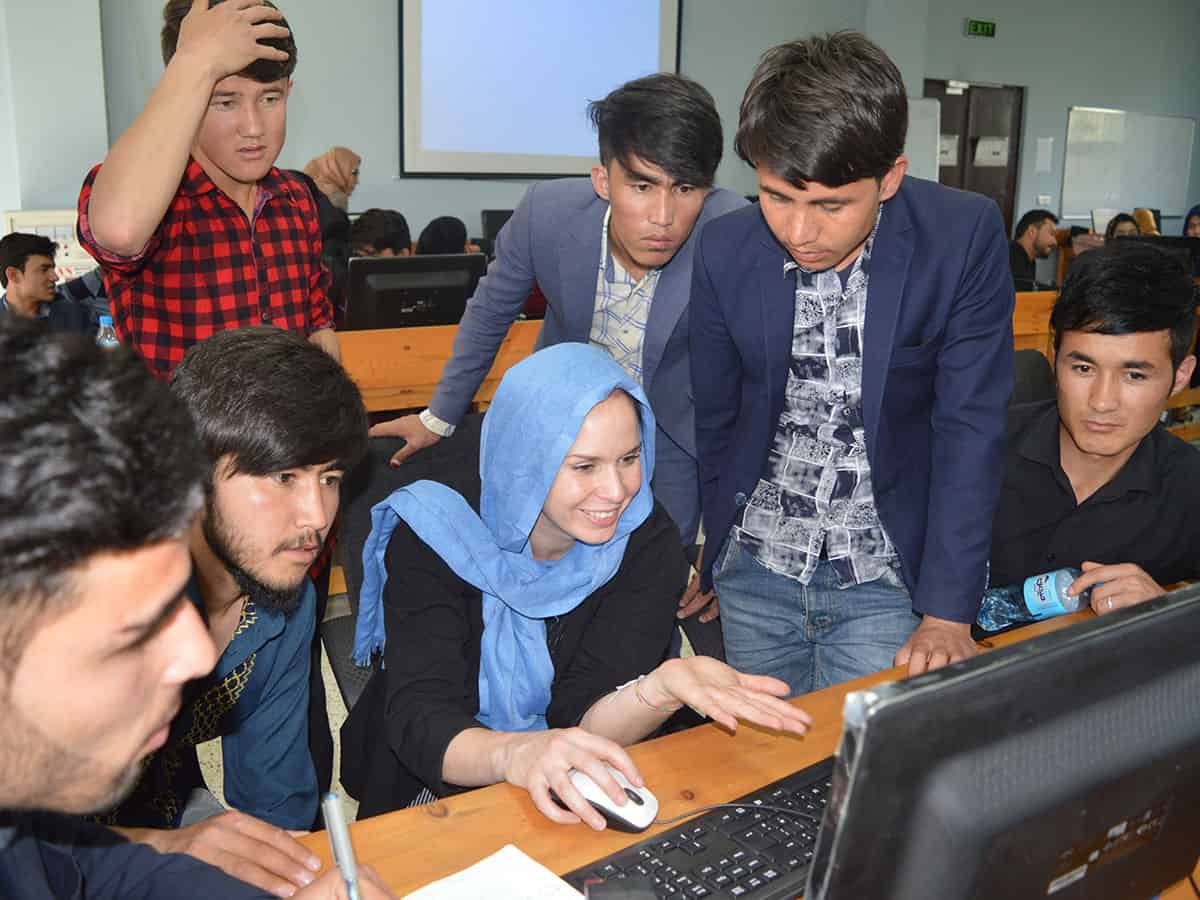
In March 2018, when I said that I was going to work on a similar programme in Kabul, Afghanistan, I received the same remarks. “Afghanistan is still at war. It makes no sense to be trying to build physics research when the country is in conflict,” they said. The physics faculty at Kabul University was first established in 1942, but the labs were completely destroyed in the 1990s during the 30 or more years of continuous war that the Afghan people have endured. Attacks occur often – even in the government-controlled capital, security is a constant problem. Yet the department reopened in 2016.

If we ignore nations in conflict, the scientific capacity of those countries will nosedive

I was involved with teaching more than 100 physics students at the university and I was struck by their resilience and dedication. Indeed, it is a source of constant inspiration that people who study physics in such unimaginably difficult environments, have such a love and passion for the subject and a dedication to their studies. This is what the Physics Without Frontiers programme is all about – supporting and promoting physics and mathematics in developing countries where governmental support, infrastructure and funding is lacking.

Since 2018, the programme in Afghanistan has gone from strength to strength. We have run two physics schools in Kabul with a third planned for next year. We are working with two faculty members as they do their Master’s degree with ICTP and we partnered with the Institute for Advanced Studies in Basic Sciences in Iran to give five top Afghan students scholarships to study a Master’s in physics. At the same time, we are supporting Kabul University to create its own Master’s programme in physics – the first in the country – and will be working with Iranian collaborators to help provide training for Afghan lecturers. The success is only possible thanks to the hard work and passion of our volunteers from Iran, Italy, Sweden, the UK and elsewhere.

Expanding support

Universities in other nations that are in conflict – for example, Iraq, the Democratic Republic of Congo, Somalia and Yemen – suffer similar problems to those facing Palestine and Afghanistan. Day-to-day security problems mean universities struggle to function, as they could be attacked or otherwise forced to close. Students risk their lives travelling each day to classes. Little collaboration can develop between universities within the country due to the lack of infrastructure and security.

Students who choose physics instead of more directly employable subjects such as medicine, engineering, law or journalism, are torn between a love of their subject, and a lack of future opportunities. There are often no Master’s degree options and rarely PhD positions, nor are there research opportunities or jobs in industry.

Physics Without Frontiers is looking to expand its support of physics programmes in conflict areas. We aim to work with volunteers from every country to organize schools, courses and roadshows, combined with mentoring and support for faculty and institutions, to help build the next generation of scientists. It is working with these passionate students that clearly shows why we must support research institutions in conflict countries. Helping to build scientific capacity supports the development of the country, during and after conflict.

The research gap is widening between richer and poorer countries. If we ignore nations in conflict, the scientific capacity of those countries will nosedive. Not only will we lose a whole generation of scientists but, once the conflict has ended, building scientific institutions from scratch without local scientists will be near impossible.

The scientific community is bound together by a shared passion for our subject and the goal of advancing it. Therefore, we must support each other, especially when our colleagues are operating in conditions that we would find impossible. They risk their lives each day to pursue knowledge, working with little or no resources, funding or collaboration, in a country at war. We must reach out to them and collaborate.

Copyright © 2026 by IOP Publishing Ltd and individual contributors