Women are under-represented in senior positions within scientific societies and are disproportionally overlooked for high-profile society awards. That is according to an analysis of the leadership roles at 31 scientific societies in four countries – Australia, New Zealand, the US and the UK. Despite the gender imbalance at higher positions, the researchers found, however, that women are well represented in lower-status roles as well as with early-career society awards (Royal Society Open Science 10.1098/rsos.190633).
The study was carried out by Alex James, Rose Chisnall and Michael Plank from the University of Canterbury in Christchurch, who noted the genders of people who had served as society presidents, won various awards and prizes since 2000, or been appointed “chief” or “associate” editors at society-published journals. The societies covered five disciplines: astronomy, ecology, economics, mathematics and statistics (though not physics).
Prestigious senior awards are still going disproportionately to men, even after allowing for the lower numbers of women in senior positions in these fields
Michael Plank
Overall, the researchers found that as the seniority of awards and positions increased, the proportion of successful women dropped. For example, women received between 38% and 91% of student prizes, but just 13–46% of early-career awards and only 6–32% of late-career awards. To see how these results were linked to differences in the proportions of men and women eligible for the awards and positions, the team compiled data on the gender mix of postgraduate students as well as various levels of academic staff in the different countries and disciplines. They found that the gender imbalance did not reflect the gender ratios at different career stages.
Among associate editors, women were found to be under-represented in 26% of country and discipline groupings, relative to the gender ratio of those eligible, but at the higher-status chief editor role they were under-represented in 50% of groupings. A similar pattern was found for awards. Women were under-represented in 25% of country and discipline groupings for student prizes, but this increased to 53% and 60% for early- and late-career awards, respectively. “Prestigious senior awards are still going disproportionately to men, even after allowing for the lower numbers of women in senior positions in these fields,” Plank told Physics World.
Being vigilant
Women were over-represented, compared with discipline gender ratios, as society presidents. But the researchers warn that their sample size was small, adding that a single female president since 2000 can be enough to make women appear over-represented in fields with few senior women. “When we think about excellence in science, too often we think it has to fit into established moulds, such as high-citation rates and being a plenary speaker at international conferences, which are more likely to be associated with male career trajectories,” James told Physics World. “There’s also a strong tendency for researchers to recognize and reward ‘people like us’, which can perpetuate a cycle of dominance by the same types of people”.
One society included in the study was the American Astronomical Society (AAS), in which nine of the 13 members belonging to its board of trustees are female and four of the last five society presidents have been women. “The future of the field looks more balanced in gender, but we need to be vigilant and continue to pay attention,” Megan Donahue from Michigan State University, who has been AAS President since 2017, told Physics World.
Robert Massey, deputy executive director of the UK’s Royal Astronomical Society (RAS), which was also examined as part of the research, told Physics World that his society’s awards panels have equal numbers of men and women “who work hard to encourage the nomination of women” for the society’s prizes. “The society is in no sense complacent about the challenges in encouraging women to pursue careers in science,” he says. “The RAS has a long-standing commitment to tackle the significant under-representation of women in UK astronomy, particularly at senior levels of employment.”
On 20 August 2018 a lone Swedish teenager started her school strike for climate outside the Swedish Parliament. Roughly six weeks later, the Intergovernmental Panel on Climate Change (IPCC) published its Special Report on Global Warming of 1.5 °C. And at Halloween, roughly 1500 people assembled in London’s Parliament Square for the very first Extinction Rebellion (XR) demonstration.
All three of these events made atmospheric chemist Scott Archer-Nicholls of the University of Cambridge, UK, question his assumptions about the future. “The rate these movements [the school climate strikes and XR] grew took me by surprise, I did not think I would see their like until it was too late,” he told Physics World.
When Archer-Nicholls read the IPCC 1.5 °C report, it became clear to him that he “did not want to live in a 2° C warmer world, and it would be a betrayal of both my future and present generations of children to stand idly by and let that happen”. Although the report contains little new science – it’s an overview and synthesis of already published findings — Archer-Nicholls believes it marks a step change in communication by the IPCC, laying out “the stark outcomes of our choices in a much more direct way to previous reports”. As he read the differences between a 1.5° and 2° C warmer world, one fact really affected Archer-Nicholls: that 70-90% of coral reefs would be wiped out at 1.5 °C, while more than 99% would be wiped out at 2 °C of warming. “Aside from the devastating impact this would have on the fishing industry and the many people who depend on fish to get enough protein, it is simply a tragedy that keeping the warming to a limit considered ‘safe’ in climate negotiations would completely wipe out the most diverse ecosystems in the world’s oceans,” he says. “And we would do so knowingly, with the technological capability to prevent it.”
Many climate scientists I have spoken with over almost a decade are deeply pessimistic about seriously addressing emissions, but publicly make positive noises
Kevin Anderson
As well as this IPCC report, the school climate strikes and XR, the rise in extreme weather events around the world also made an impression on Archer-Nicholls. These have, he says, been coming much faster than expected even a few years ago and it has become undeniable to attribute them to climate change. “It was the last two summers where I felt in my gut that it was too hot for the UK,” he adds. “These really put me on edge and made me not know but directly feel that climate change is here already.” To date the planet has only warmed around 1 °C. “If that alone could make me feel so psychologically out of place in my own country I did not want to experience anything more, yet I know that more is coming.”
Like a true scientist, over Easter 2019, Archer-Nicholls set out to make some observations — of Extinction Rebellion’s April protests in London. He describes the experience as enlightening. “I found the mix of people there to be much broader than I was expecting, many not typical activists,” he says. “People seemed genuinely worried about climate change and were involved for good moral reasons. I was impressed with the organisation of the movement, the commitment to nonviolence and an excellent relationship with the police, all of which meant the protests had a remarkable amount of public support given the disruption.”
But there’s a but. Archer-Nicholls also found “a distinct lack of other scientists involved, a generally quite low level of understanding of climate science and the politics around it, and the proliferation of a lot of alarmist misinformation, signs of which I had seen before [when] reading news reports of XR, which had partly put me off getting involved sooner”. That said, Archer-Nicholls also saw that this movement “was going to keep growing whether scientists were involved in it or not”, and that it had done more to shift the debate on climate change in two weeks than he’d seen from any of the official discussions on climate change in the 10 years he’d spent as a researcher.
Human vs scientist?
From these observations, Archer-Nicholls drew some conclusions. More on that later. Not every climate scientist sees taking a view on what society should do as part of their professional remit; a factor that’s perhaps responsible for the lack of scientists involved in XR that Archer-Nicholls observed. Although scientists have a human face too.
“In our professional roles as scientists we should not at all be advocates for change,” Ken Caldeira of the Carnegie Institution for Science, US, told Physics World. “I am an academic research scientist and my role is to generate useful information, and not to opine about what should or should not be done.” In his role as a human being, however, Caldeira is sympathetic to the broad goals of Extinction Rebellion. “It is both laudable and inspiring when people put what they see as the well-being of the planet ahead of short-term personal self-interest,” he says. “In our roles as humans on this planet, we [scientists] have the same responsibilities as everybody else. When you see the possibility of your society going down a better path, it seems that there is a civic responsibility to argue that society consider going down that path.”
Greta Thunberg (By Anders Hellberg – Own work, CC BY-SA 4.0, https://commons.wikimedia.org/w/index.php?curid=77270098)
Simon Lewis, a global change researcher at University College London and the University of Leeds, UK, also has thoughts on this scientist/human duality. “In my view it is fine for scientists to advocate for change, but they must take care,” he says. “Scientists must do their best to be as scrupulously honest in analysing the data and reporting it as is humanly possible. But that should not be traded-off against expressing political opinions in a separate arena. Being clear when you are speaking as a scientist and separating when you are speaking as a citizen, or on behalf of a group can help.”
Terry Rankin, an XR local organizer from Orlando, US, whose interests include philosophy of science, believes that value-free science “leav[es] scientists on the horns of a dilemma – be a scientist or be fully human, but not both”. Rankin has seen scientists in XR say that as advocates of change, they must act only as persons, not as scientists. “Science, in other words, has no voice in ethical conviction or in moral action, and conversely, ethics and morality have no place in science,” he says. Rankin sees the truth as the opposite. “The strongest evidence supporting ethical principles and consequential moral values and actions is the scientific evidence.”
Kevin Anderson, a professor of energy and climate change at the University of Manchester, UK, feels that climate change is an issue on which scientists cannot be politically neutral. “For many years I have been deafened by the silent roar of academics unprepared to speak out, and consequently, through their silence, [they] vociferously support the status quo; that is a deeply political position,” he says. “Others have been more actively co-opted by the established system, believing that we need to keep our advice in line with current economic thinking, or we will be ignored.” And then there are those who see climate change as a deeply political issue and openly engage with it through a political as well as technical/scientific lens, according to the researcher.
I have always found the huge gulf between what scientists say is needed to mitigate climate change and what politicians are prepared to do about it so obviously mismatched it would make me feel sick
Scott Archer-Nicholls
Anderson reckons the academic community has broadly abdicated its responsibility to speak truth to power, choosing instead to care about political and economic sensibilities and fine tune its assumptions to ensure its conclusions on mitigation fit within the existing economic paradigm. “Privately, many climate scientists I have spoken with over almost a decade are deeply pessimistic about seriously addressing emissions, but publicly make positive noises,” he says. “The Integrated Assessment Models repeatedly mask the scale of the mitigation challenge, and ignore the clear equity language and steer in the Paris Agreement.”
Archer-Nicholls too has views on the mismatch between science and politics. “I have always found the huge gulf between what scientists say is needed to mitigate climate change and what politicians are prepared to do about it so obviously mismatched it would make me feel sick,” he says. “Yet there seemed to be a strange double-think going on in most of the profession to not openly acknowledge it and praise any attempt to address climate change, no matter how insufficient. In that light, I found the candid approach of XR and the school strikes to call out this hypocrisy and not accept anything short of what scientists say is needed quite cathartic.”
Lorraine Whitmarsh, an environmental psychologist at Cardiff University and director of the UK Centre for Climate Change & Social Transformations (CAST) agrees that neutrality is tricky. “I don’t think planetary and human health are things which one can be neutral about – they are surely unambiguously good!” she says. “So while as climate scientists, we may need to stop short of advocating specific policy solutions to climate change – which is something that society, via elected politicians and deliberative democracy, should ultimately decide on – we can shape that debate through research showing the impacts of different options, e.g. if we adopt low-carbon diets, we reduce climate change risks and improve health.” According to Whitmarsh, while some argue that scientists should remain “neutral” to retain their credibility, evidence from Attari and colleagues in the US shows that climate scientists are less credible if they have high-carbon lifestyles. Whitmarsh believes that if scientists personally demonstrate those behavioural changes required to mitigate and adapt to climate change, this not only improves their scientific credibility but also helps demonstrate what is possible. And that changes social norms and attitudes. As, indeed, may the XR protests, as we’ll hear from several researchers later.
As we’ve seen, there’s a range of views on the intersection between scientists’ roles as professionals and as citizens. Each much choose their own path. Lewis moved to action on the XR front ahead of Archer-Nicholls (and ahead of Gardner and Wordley’s call to join the fight). Back in December 2018, this UCL professor signed a letter of support for XR to UK newspaper The Guardian, alongside 99 other academics from a range of fields, authors, politicians and campaigners. “Scientists often bemoan that their interests are not reflected in parliaments, but if we want more scientists to engage in the policy work then we will need to be more welcoming of scientists expressing political views,” he says. Lewis has attended XR protests and blockades as well as a neighbourhood families meeting near his home. “I believe that a lot of important social change comes from grassroots movements of people working together, from the decolonisation movements in the last century, to the women’s rights campaigners, to anti-racist struggles,” he adds. “Tackling the escalating environmental crisis will require similarly escalating and enduring grassroots action.”
Science, in other words, has no voice in ethical conviction or in moral action, and conversely, ethics and morality have no place in science
Terry Rankin
Four months after Lewis signed the letter, Archer-Nicholls’ observations at the April XR protests led him to a firm conclusion. He should act. He believes that the core premise of XR and similar movements is correct. “We have delayed for too long without sufficiently tackling the causes of climate change, which means urgent action is now needed; governments and media have not been honest enough to the general public about the risks; and if we don’t address the issues soon the climate and ecological crises have the potential to become existential threats, justifying the use of nonviolent direct action to effect change, and meaning failure to address it in time is an ethical failure on future generations,” he says. “The inaccuracies, exaggerations and misinterpretations of the science are largely details against this broader backdrop of a legitimate call for action. However, I think they can do real damage by undermining the credibility of the movement, putting off important actors from being involved and basically contradicting the first demand – ‘tell the truth’.”
Extinction too far?
Other scientists have expressed reservations about XR’s understanding or use of the science too. “Some of the science claims made by Extinction Rebellion activists go a bit over the top,” says Caldeira. “Even the name — while many species are threatened with extinction, climate change does not threaten human extinction. This raises the question of the extent to which people are motivated by accurate facts and how much they are motivated by extreme, and very likely false, claims. I would not like to see us motivating people to do the right thing by making them believe something that is false.”
Whitmarsh thinks some of XR’s views seem unrealistic. “In particular, they appear to call for net zero [carbon emissions] much earlier than most scientists say is possible (or necessary),” she says. That said, the researcher does support many of the aims of Extinction Rebellion, including the need for urgent action on climate change and the importance of citizen involvement in decision-making. Archer-Nicholls is also not convinced that net zero is possible by 2025. “Having said that, I do think it plays an important role in shifting the debate toward considering emission cuts that might be enough,” he says. “As a proposal I think it less ridiculous than countervailing arguments from climate deniers that we don’t need to have any policies to mitigate emissions, views which until recently have had an unreasonable level of coverage in the media and undue influence on global politics, particularly in countries such as the US, Brazil and Australia. At this point in time the risks of not addressing climate change fast enough are both more dangerous and more likely than the risks of overcommitting.”
Fridays For Future protest, Berlin, December 2018 (Image By Leonhard Lenz – Own work, CC0, https://commons.wikimedia.org/w/index.php?curid=75106634)
Archer-Nicholls also has concerns about the “12 years to save the climate” message and “emergency” language echoed by both XR activists and school strikers. “One of my main worries with this messaging is that it can give people the false impression that if we fail to address it soon there will be a cliff-edge disaster, and that these views might fuel anxiety and depression or lead to rash decision making” he says. “I find this really concerning, the world is not going to suddenly end in 2030 if we don’t reduce carbon dioxide emissions, and the global heating that does happen over that time-frame is largely insensitive to whether or not we reduce emissions in that period.” The next 5-10 years, he believes, are critical if we are to prevent the worst impacts of climate change, but so are the 10 years after that. “We won’t know [until] several decades after that whether we have done enough to actually prevent disaster,” he explains. “This lag between action and outcome is a key reason why it is such a difficult problem to deal with politically, especially in democracies with 4-5 year election cycles.”
Anderson, on the other hand, sees XR and other campaigning organizations as being more in tune with the science. “Very sadly, I think XR and indeed much of the language forthcoming from the Youth Climate Strikes, is more in line with the science and commitments enshrined in the Paris Agreement than the public statements made by many climate academics, ‘experts’ etc.,” he says. “XR and the Youth Strikes are helping academics, particularly earlier career colleagues, find the courage to speak out publicly the views they hold privately.” [CLARIFICATION 23 September: Archer-Nicholls also feels that the messaging of the school strikes and XR, if anything, conveys the urgency of the situation better than official reports or experts. His comments regarded some of the specific language used and the misplaced ideas this could lead to.]
From worry to action
For Archer-Nicholls, worries about the portrayal of the science were part of his decision to act. “I felt that there was an imperative for more scientists such as myself to get involved to try and help keep the messaging on point, correct misinformation and help XR stay on track,” he says. His support of the campaigning movements is largely pragmatic. “They have shown themselves to at least be able to change the public conversation faster than any other movement I have seen,” he explains. “While I don’t think they are perfect or agree with everything that is coming out of them, they are the only players in town I can see which are organising with the scale and vision needed to have a chance at preventing the worst impacts of climate change in time.”
The Cambridge-based researcher feels that the scientific community, including himself, as well as media and government, have failed to adequately communicate the urgency of the problem to the public. “This is not all the fault of the scientists, it has been made much more difficult by the spread of disinformation and climate denialism, but it has created a space into which other groups are now stepping in to up the ante,” he says. “If scientists don’t put their voices into that debate, we risk protests being fuelled by misguided understanding of the issues, which could lead to irrational decisions being made.”
Some of the science claims made by Extinction Rebellion activists go a bit over the top
Ken Caldeira
Zion Lights, UK media coordinator and national spokesperson for XR, says that science communication is a rapidly growing area with a lot of room for debate. “Of course it’s imperative that Extinction Rebellion gets the facts right, and this is a work in progress as many of the people involved are not scientists or academics, and nor should they have to be,” she says. “However, we must accept that the two aspects of this – both the rigidity of science, and the fluidity of communications – must be married together so that meaningful dialogue can take place with people who are not necessarily science-literate, to achieve the number one goal here of addressing the climate and ecological crisis that the world currently faces.”
Archer-Nicholls himself has offered advice on documents about climate science for the XR website. “I’m part of a group of scientists and communicators who review new scientific articles coming out and work out ways to make their message accessible,” he says. When he has called out XR spokespeople for presenting scientific messages badly, they have taken the criticisms on board. “I would not work with them if I thought the organisation was too dogmatic, but there does seem to be a genuine desire to learn from mistakes and present scientific knowledge as truthfully as possible.”
This has provided an unexpected shift in viewpoint for Archer-Nicholls – he’s realised how narrow a field of expertise he’d fallen into. “This process has been quite eye-opening, bringing me into contact with and forcing me to catch up on reading about a much wider picture of the climate and ecological crisis,” he says. “I feel I have developed a better grasp of the current science but also a much greater sense of the emergency situation we are in. It’s made me reflect on how the high degree of specialisation of scientists does not well equip them with the tools to understand or find solutions to a problem as big as climate change.”
I don’t think planetary and human health are things which one can be neutral about – they are surely unambiguously good
Lorraine Whitmarsh
Rowena Diamond, a PhD student at Cardiff University investigating the effects of extreme climatic events on rivers and fish in the salmon family, also believes it’s vital for scientists to get involved. “I’m interested in the actions of XR as they have a big presence and I think, if done in a correct way, they could help encompass positive change that will benefit climate and ecology,” she says. “It’s important that … the work done is based on solid research and science so that it is evidence-based, and the benefits of the actions of XR can be demonstrated.” That’s why Diamond thinks it’s useful for scientists to be involved in the movement — they will be able to provide the research needed for the group to be taken seriously. Diamond has joined XR’s community of scientists [link to Facebook page] to see if she wants to take part. She also teaches climate change in schools as part of The Brilliant Club.
School’s out
XR is not the only new kid on the block. What about another factor behind Archer-Nicholls’ decision to act – the school strikes? According to Caldeira, some have criticized the Youth Climate Strikes as naive, and there is a fair amount of naivete in the statements of some of the participants. “But a bit of idealistic naivete is perhaps a needed balance to the pessimistic realpolitik that permeates the halls and meeting rooms of many of our national governments,” he says. “We have seen in the United States, with the protests against the Vietnam War, how large numbers of people, many of them naive and idealistic, can help powerful governments to do the right thing, or at least not do as much of the wrong thing.”
“I don’t think the big protests and school strikes will change policy,” says Diamond. “I think they have been excellent for raising awareness but…I feel that if we really want to implement change, we need to be more inclusive and begin to focus on creating a global education system in which children learn about climate change and global warming, so that everyone grows up with an understanding of how the climate is changing.”
XR and the Youth Strikes are helping academics, particularly earlier career colleagues, find the courage to speak out publicly the views they hold privately
Kevin Anderson
Archer-Nicholls, who is in his early thirties, thinks Greta Thunberg has done an amazing job of articulating the injustice her generation faced. “It made me realise that my generation would the last one to have the influence to make the changes needed to prevent catastrophic climate change,” he says. “For Greta et al. it would be too late by the time they were old enough to effect change.”
Archer-Nicholls believes the school strikes hold a mirror to the ugly hypocrisies in our political response to climate change, and put a human face to those most impacted by our failure. “Their moral argument is almost impossible to combat, hence opponents end up resorting to ugly ad hominem attacks,” he says. “The school strikers also do an essential job in communicating to people across the political and social spectrum by having a direct line to many who otherwise might not pay attention, namely their parents and family.”
Chances of success?
So what are the chances of these campaigns succeeding? On this, again, there’s a range of views. It’s tricky, after all, to predict how people will act. Much harder than projecting the climate from the amount of greenhouse gases in the atmosphere is predicting how much more of these gases we’ll put there. Sometimes a single action by a single individual, like Greta Thunberg’s lone climate strike one day in August 2018, starts a cascade of consequences. Sometimes repeated actions by many professionals over many years fall on stony ground.
Some feel concerned that Extinction Rebellion could alienate some of the very people it’s trying to win onside. “Those who want to protest will,” says Diamond. “However, there are a large group of people who don’t like the large protests and I think, when talking about climate change, we really have to be careful not to exclude people. There are so many ways to engage the world about nature and ecology and climate, and I truly urge XR and non-XR scientists to find a way that suits them to communicate their passion for our planet.”
“What is perceived of as the ‘extremism’ of Extinction Rebellion could be counterproductive,” says Caldeira. “We need to reach the hearts and minds of the average working person, and the tactics and imagery used by Extinction Rebellion could come across as off-putting to these people. It is not clear to me that Extinction Rebellion is winning over Trump supporters rather than simply alienating them.”
But, Caldeira adds, there is the “Overton Window” — the range of what is considered socially acceptable debate. “By staking out a more extreme position, Extinction Rebellion may be giving more political space to people who say that the need to act on climate change is real, even if some of the fears expressed by Extinction Rebellion are unfounded.” Archer-Nicholls also namechecks the Overton window, with regards to the call for net-zero emissions by 2025. “By putting a demand out there in the public consciousness that is both direct and has a short timeframe to respond to, it moves the Overton window to include responses that might just be able to prevent climate disaster, whilst highlighting just how unambitious the targets put forward by politicians have been up to now,” he says.
Anderson appears to agree. “For the first time in many years, I see some glimmers of hope through an opening up of the debate by XR and the youth movements, leaving new space for academics, again particularly those not so locked into the prestige of seniority, to be more honest and direct about their analysis and conclusions,” he says.
Lewis feels similarly. “These strikes, protests and marches are driving climate change and biodiversity loss higher up the political agenda which is where they need to be to get new policies enacted,” he says.
As does Whitmarsh. “I think XR – along with [the] school strikers/Greta – have done a lot to raise public and political attention to climate change,” she says. “They appear also to have had some influence in the UK parliament’s decision to hold a Citizen’s Assembly on climate change. It’s unclear, though, how much their influence has been in isolation of other factors, including Greta, IPCC 1.5 [° C] report, extreme weather events, etc.”
As yet, nobody has been successful at instituting good climate policy at the scale needed, according to Caldeira. “It would be one thing to criticize a group’s strategy if you had a strategy that worked,” he says. “But none of us has a political strategy that has been able to move the needle anywhere near to where it needs to be moved. When we criticize the political strategy of others, we have to understand that we are criticizing them from the standpoint of our own failure.”
According to Archer-Nicholls, the onus is on “those scientists that think we need to reduce carbon dioxide emissions fast but don’t agree with the methods and/or demands of XR and their ilk” to find other options that can work in the time that we have and push a counterargument. “Either way, something needs to change,” he says. “Business as usual is not a viable medium-to-long term option.”
And what’s next for this researcher who has told us about his journey from scientist to XR contributor over the last year? “I have not put myself at risk of arrest and am unlikely to in the near future,” says Archer-Nicholls. He does plan to take part in a 30-minute walkout through his union (the UCU) for the climate strike on 20th September and to support the XR protests in October. “I don’t think all scientists should be going out on the front line or getting arrested,” he adds, “that is very much a personal choice and there are many good reasons not to, but it could send a powerful message if more scientists were prepared to take action.”
Physics World would like to thank those climate scientists and others who took the time to tell us their views. These views are their own and do not necessarily represent the opinions of the institutions they work for.
This story is part of Covering Climate Now, a global collaboration of more than 250 news outlets to strengthen coverage of the climate story.
Carbon dioxide can be reduced to carbon monoxide with 100% selectivity in an electrochemical reaction using a cerium oxide catalyst. So say researchers at Stanford University in the US and the Technical University of Denmark (DTU) who have found that the process does not produce undesired solid carbon either – unlike conventional CO2 electrolysis technologies.
Re-using CO2 is an alternative to burying the greenhouse gas underground and could help in the development of a carbon-neutral sustainable energy economy. Electrochemically reducing CO2, for example, is a promising way to store the intermittent electricity produced from solar and wind power as chemicals such as synthetic hydrocarbons. These energy-dense carbon-neutral liquid fuels are compatible with existing petrol and diesel infrastructures and so could be employed in real-world applications.
The solid-oxide electrochemical cell
The most efficient CO2 electrolysis technology today is the solid-oxide electrochemical cell (SOC), which produces CO and O2. The key drawback to this technique, however, is the competition between CO generation and the deposition of solid carbon in the cell. The nickel electrocatalysts employed in the electrodes in this cell also encourage carbon formation during electrolysis and this carbon eventually fractures the porous electrodes, reducing their effective lifetime.
Researchers recently proposed using cerium oxide as an alternative to nickel in such fuel cell electrodes. A team led by Christopher Graves, William Chueh and Michal Bajdich has now found that cerium oxide inhibits the formation of carbon by trapping the carbon produced in the electrochemical reaction in a stable oxidized form.
Cerium oxide electrodes remain stable
The researchers obtained their result using X-ray photoelectron spectroscopy measurements during CO2 electrolysis using thin-film electrodes made of samarium-doped cerium oxide. They also performed density-functional theory calculations of CO2 reduction at elevated temperatures in this system. To compare, they repeated the same experiments on fuel cell electrodes made from conventional nickel-based materials and found that the cerium oxide electrodes remain stable while carbon deposits destroy the nickel ones.
Both the experiments and calculations show that carbon atoms are energetically trapped as oxidized carbon species relative to solid carbon, something that delays the formation and build-up of solid carbon, say the researchers. The abundant carbonates present on cerium oxide (which are absent in nickel-based materials) could also react and remove transiently deposited carbon to produce carboxylate in a surface-reverse Boudouard reaction, they add.
Improving device lifetime and lowering costs
“This remarkable capability of ceria has major implications for the practical lifetime of CO2 electrolyzer devices – both for fuel production on earth and for oxygen production on Mars,” says Graves, who is at DTU and who was a visiting scholar at Stanford during the study. “I’m on the science team for NASA’s Mars 2020 rover, which will make the first demonstration of oxygen production from Martian CO2. Replacing the current nickel electrode with our new ceria electrode in the next generation electrolyzer would improve device lifetime.”
Eliminating early cell death could significantly lower the cost of commercial CO production too, he adds. And that is not all: suppressing carbon build-up also allows the new type of device to convert more of the CO2 to CO, which is limited to well below 50 percent CO product concentration in conventional cells. This could also reduce production costs, he says.
Charging from friction. Flexoelectricity and tribology may explain how. Credit: Laurence Marks/Northwestern University
The electric shock you get from shuffling along a carpet might be the first experiment in electrostatics and tribology in most people’s lives, but what causes it remains an open question. “A lot of people had worked on what was taking place, for instance that electrons or ions were getting transferred from one material to another,” says Laurence Marks, a professor at Northwestern University in the US. “However, why this should occur in the first place was not understood.”
Despite this gap in understanding, the triboelectric effect plays a key role in a variety of fields. One perk is that the electricity generated could replace batteries, which tend to be heavy and need constant recharging. However, triboelectricity can also provide unwanted static charge, which as well as a nuisance when it builds up on clothes, can cause more serious problems when it leads to sparks and potentially fires during aircraft refuelling or in chemical processing plants.
Now Marks and his students Christopher Mizzi, who works in flexoelectricity, and Alex Lin, who specializes in tribology have come up with a convincing explanation for the effect. “When you combine tribology and flexoelectricity, you end up with an explanation of why and how triboelectricity happens that agrees exceedingly well with a wide range of different experimental results, including some which were puzzling before,” Marks tells Physics World. “We can even trace triboelectricity all the way down to how electrons behave around atoms, without invoking any ad-hoc approximations.”
Classic electrostatics demo. Static charge build can make your hair stand on end. Credit: Ken Bosma, CC BY
Putting two and two together
Marks’s research interests span an unusually wide range from direct methods, surface structures, and density functional theory (DFT), to hip replacements, environmental catalysis, and tribology. His interest in the triboelectric effect kindled on reading a paper with what felt to him to be an unsatisfactory explanation of the effect. As fortune would have it, he had students working in both flexoelectricity and tribology at the time.
Tribology traditionally concerns the way surfaces in contact interact and the resulting friction and wear, or lack of it with lubricants. It is a long-established field, but the focus on nanomaterials in the past few decades has introduced new tools and perspectives. Discovered in 1964, flexoelectricity on the other hand, which relates strain gradients to a resulting potential difference, has “remained largely unexplored,” as Mizzi puts it.
Marks, Mizzi and Lin modelled strain gradients that arise as a rigid sphere pushes into an elastic surface and then pulls away, what is called a Hertzian model. Although the values and distributions of these strain gradients depend on material compositions and structures, the researchers noted that the average values are more universal, and that the average effective strain gradient associated with Hertzian indentation is on the order of 108 m−1 in all materials at the nanoscale. Further analysis revealed that flexoelectric coupling to these gradients would lead to surface potential differences of 1–10 V or more, enough to drive charge transfer.
“We now have formulae that can guide one to make better triboelectric devices for wearable electronics, for instance you want small sizes, soft but somewhat sticky materials,” says Marks. “At least as important, one can also think of ways to avoid producing static electricity, for instance by changing the texture of the fibres used in clothes so we no longer need to add fabric softeners or cloths to dryers which end up in our water or land fills.”
This episode of the Physics World Weekly podcast is part of our participation in the Covering Climate Now initiative.
In the host’s chair is our environment and energy editor Liz Kalaugher, who is in conversation with John Cook of George Mason University in the US. They chat about his work on consensus in climate science and why he needed to prove that climate change is real.
Next up is Daniela Schmidt of the University of Bristol, who explains to reporter James Dacey how climate change is disrupting food chains in the oceans.
Finally, Iain Dale-Trotter reviews Robert Macfarlane’s latest book Underland: a Deep Time Journey, which looks at the long and complicated relationships that humans have with underground environments.
The vast quantity of data generated by global monitoring initiatives and large-scale research facilities present both new opportunities and challenges for scientists. Results that can be captured in minutes may take years to fully understand.
To help researchers review and analyse this growing volume of information, cloud-based platforms are now being developed to combine distributed access with shared high-power computing resources. These tools are opening the door to massively collaborative projects, including citizen science, and are providing a manageable route for making publicly-funded research available to the wider world.
Catherine Jones, based at the STFC’s Rutherford Appleton Laboratory in Oxfordshire, UK, leads the software engineering group at the Ada Lovelace Centre – an integrated, cross-disciplinary, data intensive science centre supporting national facilities such as synchrotrons and high-power lasers.
In her role, Jones is closely involved with providing researchers with access to tools and data over the cloud – an approach known as Data Analysis as a Service.“Traditionally, researchers using our facilities would have taken the data with them, but as data volumes increase you need to look at other solutions,” she says.
Our experiences encourage us to think about simple and easy pathways and not to make our solutions overly complicated
Catherine Jones
Using internal cloud facilities at the STFC, Jones and her colleagues offer researchers access to virtual machines designed to simplify working with large amounts of scientific results.“The virtual machines are aimed at a specific scientific technique,” Jones explains. “Whenever a user spins one up, they have access to their data and to the routines that they’ll need for that analysis, together with the right amount of computing resource.”
The cloud-based tools require testing and documentation to make sure that the platform meets not just the researchers’ immediate needs, but also provides a robust solution long term. In other words, a product that can be serviced, supported and transferred.
Access to powerful computing infrastructure has become a vital component of modern research (Image courtesy: STFC)
Currently, the system supports scientists conducting research using one specific experimental technique at the STFC’s ISIS neutron spallation facility, with plans to roll it out further. It’s a model that could be applied across different research communities, although each one will have its own specific needs. Detailed requirements gathering is essential to understand the machine learning and AI needs across multiple labs.
The benefits of a cloud-based approach to data analysis include streamlined administration and maintenance. For example, the use of virtual machines makes it easier to roll out software upgrades and apply version control so that scientific models can be re-run, and their results reproduced in the future.
There are advantages too when it comes to configuring the work environment. “It’s easier to match the computing resources to the analysis, as a cloud setup is more flexible,” says Jones. “It’s a more elastic resourcing mechanism.” The hope here is that researchers will gain more time to spend on the analysis, with less to worry about in terms of the hardware under the hood.
Different fields, different requirements
As Jones points out, different scientific fields can have different requirements when it comes to dealing with the demands of big data. John Watkins, who is head of environmental informatics at the Centre for Ecology & Hydrology (CEH), gives an example.
“With particle physics, the challenges are likely to be more in terms of data volume and the analytics of a particular data flow,” he says. “However, with environmental science you are often assessing a very broad variety of data. This needs to be pulled from multiple sources and can be very, very different in nature.”
Watkins’ colleague, Mike Brown – who is head of application development at CEH – refers to the so-called Vs of big data (a list that includes volume, variety, velocity, and veracity) to emphasize the multiple challenges associated with providing scientists with easy access to data and analytical tools.
It’s not just about providing easy-to-use interfaces, it’s also about enabling the dialogue between researchers with a shared aim
John Watkins
A key objective for Brown and Watkins is to connect environmental scientists who understand the data with experts in numerical techniques who are developing cutting-edge analytical methods. Once again, the solution has been to provide collaborative facilities in the cloud – this time through a project known as DataLabs, funded by NERC.
“It’s not just about providing easy-to-use interfaces, it’s also about enabling the dialogue between researchers with a shared aim,” Watkins comments. “The provision of collaborative tools such as Jupyter Notebooks or R-Shiny apps are a way of achieving this over time.”
To break down the DataLabs project into user stories, an approach that helped the team to capture the key features of the platform and quickly pilot its ideas, Watkins and Brown worked with experts at Tessella.“The aim in the first 12 months was to build a proof-of-concept to show that all the different elements could work together and would be useful for the community,” says Jamie Downing, a project manager at Tessella who has been supporting the programme’s core partners.
Today, the group has the essential elements in place from end-to-end, and the first case studies show that Data Labs has got off to a flying start. As an example, researchers are now using the cloud-based environment to run much more detailed CEH land-cover models. The leap in performance (a jump from 1 km to 25 m resolution), coupled with significantly reduced execution time, is a huge improvement on what was possible under the previous physical workstation-based approach.
Digital twin
Other fields get to benefit too. The experience in developing DataLabs has provided a springboard for rolling out similarly collaborative platforms such as solutions supporting the Data and Analytics Facility for National Infrastructure (DAFNI). This is a project that aims to integrate advanced research models with established national systems for modelling critical infrastructure.
“Led by Oxford University and funded by the EPSRC, the initiative aspires over the next 10 years to be able to model the UK at a household level, 50 years into the future,” explains Nick Cook, a senior analyst at Tessella. Here, the firm is involved in conceptualizing DAFNI’s capabilities and implementation roadmap.
One of the project’s early goals is to create a “digital twin” of a UK city such as Exeter – in other words, to virtually describe a city with a population of several hundred thousand people together with its transport infrastructure, utility services and environmental context. This digital twin would, for example, help planners to decide where to invest in new road or rail networks, and to identify the best sites for housing, schools and doctors’ surgeries.
Cook cautions that such a hyperscale systems approach will succeed only if it performs in a reliable, repeatable and provenanced way. “When users deliver their findings, they need to be able to justify how the results that have been generated in an analogous way to applying scientific best practices of high energy physics or life science research – engendering a sense of trust in their outcomes to perhaps skeptical or hostile audiences,” he emphasizes.
DAFNI is looking very closely at what DataLabs is doing as a way of providing the interface and the virtual research spaces within its own cloud. Both proposals share requirements to store the results in a traceable way that preserves the integrity of the data and protects it against tampering, inadvertent corruption, or malicious use. It’s an area that could one day see digital ledgers, or block chains, playing an important role – particularly when dealing with the sensitive nature of critical national infrastructures.
More food for thought
As well as supporting collaborative number crunching, cloud-based big science solutions make it much easier to reach out and share knowledge and expertise – for example, through webinars and workshops.
Today, more and more of us have experience of operating in the cloud, collaborating on projects at work, and watching movies and sharing photos at home. Popular online platforms have become easier to use and more personalized to our requirements. But as expectations rise, so can our demands in terms of what an interface can do and the features we’d like to see.
“It can be a challenge when you don’t have the resources of giants like Google, but it’s all to the good as our experiences encourage us to think about simple and easy pathways and not to make our solutions overly complicated,” says Jones.
Goodbye USB
Summing up, the days of doing an experiment and being able to carry the full data set back to your PC on a USB stick are over. And while it’s unlikely to surprise many that cloud storage and online data access has risen to the challenge, the devil is in the detail. Get it right and platforms can do so much more for the scientific community – providing scalable computing resource, simplifying maintenance and upgrades, and enabling multidisciplinary collaboration to spur on research progress.
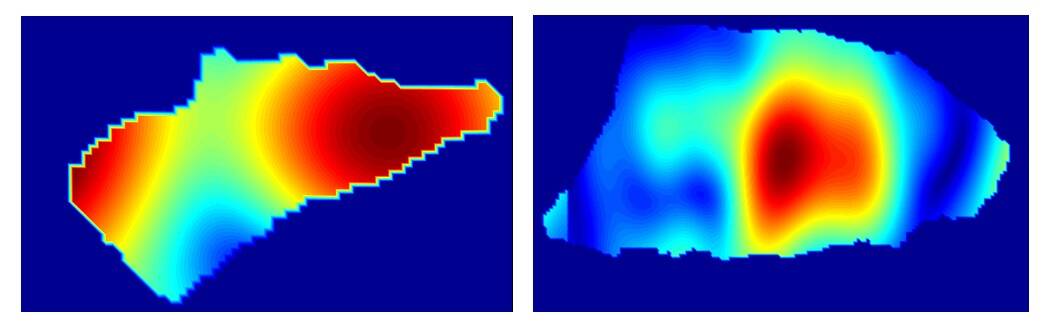
Millimetre-wave reflectivity images can distinguish multiple forms of skin cancer, including basal cell carcinoma (left) and squamous cell carcinoma (right). (Courtesy: Stevens Institute of Technology)
Diagnosing skin cancer is a tricky task – even highly skilled dermatologists rely on magnifying dermatoscopes to examine suspicious blemishes and excise tissue for analysis. Now, researchers at Stevens Institute of Technology have developed a millimetre-wave imaging technique that can detect skin lesions and determine whether they are cancerous or benign. In future, they plan to incorporate the technology into a handheld device that will rapidly diagnose skin cancers without the need for biopsy (IEEE Trans. Med. Imag. 10.1109/TMI.2019.2902600).
The non-invasive diagnostic method, developed by Negar Tavassolian, director of the Stevens Bio-Electromagnetics Laboratory, and postdoctoral fellow Amir Mirbeik-Sabzevari, offers the potential to halve the number of unnecessary biopsies. “This could be transformative,” says Mirbeik-Sabzevari. “No other technology has these capabilities.”
The imaging system uses millimetre waves (30–300 GHz), which penetrate up to 1.3 mm into tissue, making them highly effective for sensing pathological changes in different skin layers. To improve the resolution of the acquired images, the team developed an approach called “synthetic ultrawideband millimetre-wave imaging” to create an imaging system with a synthetic bandwidth of 98 GHz.
The researchers used their system to examine 21 skin cancer samples: 13 basal cell carcinoma (BCC) and eight squamous cell carcinoma (SCC) specimens. They found that millimetre-wave imaging could produce high-contrast, high-resolution 3D images of the skin, which identified the locations of the tumours as accurately as histological imaging.
Both types of cancerous cells showed higher reflectivity than normal skin tissue, enabling identification of diseased tissue by looking for reflectivity hotspots. Over all 21 samples, the average percentage reflectivity was 74% and 30%, for tumour and normal regions, respectively, indicating that millimetre-wave reflectivity is a reliable marker for cancerous tissue.
“We’ve shown proof-of-concept that this technology can be used for rapidly detecting skin cancer,” says Tavassolian. “That’s a major step forward toward our ultimate goal of developing a handheld device, which would be safe to use directly on the skin for an almost instant diagnostic reading of specific kinds of skin cancer – including lethal melanomas – based on their individual reflectivity signatures.”
Since millimetre-wave imaging does not require tissue processing or staining, it can be performed promptly, enabling diagnosis of tumours at an early stage. A handheld scanner could also be used to generate real-time 3D images of tumours to guide surgeons, eliminating the need for multiple biopsies to fully remove cancerous tissue.
The devices could also be configured to interpret images automatically and deliver basic diagnostic information without needing a trained operator. “We could place these devices in pharmacies, so people can get checked out and go to a doctor for a follow-up if necessary,” says Tavassolian. “People won’t need to wait weeks to get results, and that will save lives.”
Crucially, the underlying technology is inexpensive. “It should be possible to keep manufacturing costs below $1000, even at low production volumes,” says Tavassolian. “That’s about the same as the magnifying tools already used by dermatologists, and an order of magnitude cheaper than laser-based imaging tools, which also tend to be slower, bulkier and less accurate than millimetre-wave scanners.”
Mirbeik-Sabzevari, who has been working on the technology for five years, is confident that this invention will prove a hit and plans to launch a start-up to commercialize the scanners.
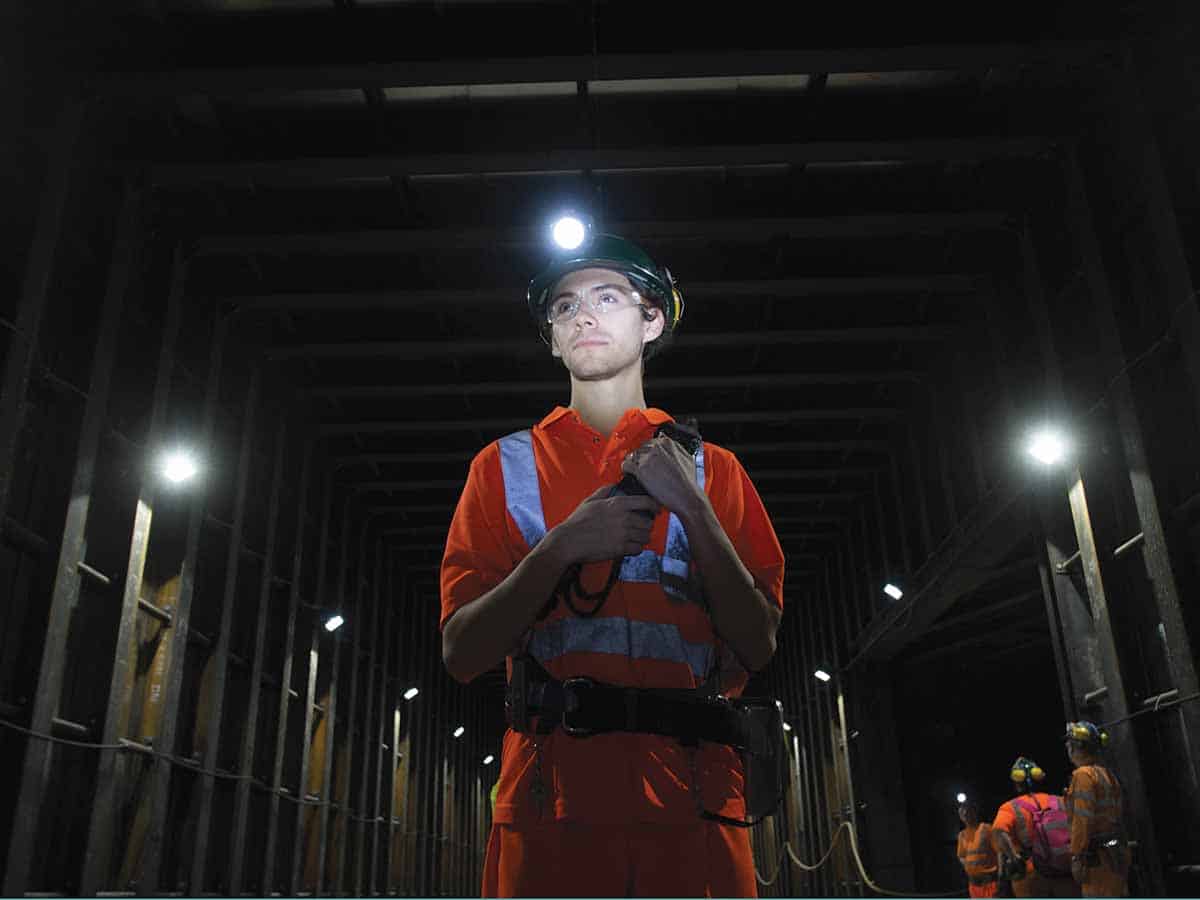
Deep thought: Facility scientist Chris Toth during construction of the STFC Boulby Underground Laboratory, which is one of the spaces explored physically and metaphysically in Robert Macfarlane’s latest book. (Courtesy: STFC Boulby Underground Laboratory)
In his exploration of the world beneath our feet, author Robert Macfarlane weaves together cutting-edge science and thousands of years of our history into an emotive portrait of how humanity affects – and it affected by – the lowest places it has ever reached. In his latest book Underland: a Deep Time Journey, the seed around which the rest of the narrative clusters is the concept of the Anthropocene – the proposed name for the current geologic epoch, defined by humanity’s significant impact on Earth’s ecosystems. It is the ghost that haunts Macfarlane throughout all of the travels that make up this book, and ultimately motivates his central question: “Are we being good ancestors?”.
Early on, Macfarlane states that “Underland is a story of journeys into darkness, and of descents made in search of knowledge.” Two subterranean landscapes intrinsically linked to physics bookend this story, which “moves over its course from the dark matter formed at the universe’s birth to the nuclear futures of an Anthropocene-to-come”.
The first of these two sites is what Macfarlane introduces as a cosmic “breath-catcher” – the large silver cube better known as the DRIFT (Directional Recoil Identification from Tracks) experimentdeep under the Yorkshire coast at Boulby. It is one of the many global detectors hoping to catch a glimpse of the dark matter that is thought to make up 85% of the mass in the universe, but which is yet to be detected. Macfarlane’s description of our attempts to balance the books is some of the most beautifully poetic writing about the search for dark matter I’ve come across, such as the great challenge of “how to weave such a net that might catch these quick fish”.
Perhaps unsurprisingly, when discussing such ethereal particles, Macfarlane asks if this search requires something like an act of faith – a question he asked his physicist guide Chris Toth at the Boulby lab. The response, and their surprising quixotic discussion of how knowledge can lead to wonder, will resonate with many readers’ personal sense of awe at the cosmos.
A particularly affecting passage in the book is set in the “Hollow Land” of the Karst plateau, extending across the border between Italy and Slovenia. Here, Macfarlane meditates on the scars left on subterranean spaces during times of war, and the trauma inflicted on people in underground spaces. In this region, with its long and painful history of sectarian violence, the local word for sinkhole, foiba, is now synonymous with the killings that took place at these sites during and after the Second World War.
Throughout the book, Macfarlane underlines the importance of the idea of the underworld over much of human culture and mythology, and classical tales of Orpheus and Aeneas are used to illustrate man’s obsession with “katabasis” – a descent to the underworld.
In the final third of the book, classical mythology gives way to other folk traditions. Indeed, it is his reading of Kalevala, the 19th-century collection of Finnish epic poetry, that brings us to the second physics-heavy landscape, at the other end of the world. Macfarlane characterizes this folk epic, akin to the Iliad or Odyssey, as being “fascinated by the underland; by the safe storage of dangerous materials” – an eerily apt allegory for his final destination, the Onkalo nuclear waste repository on Olkiluoto Island in western Finland.
The culmination of Underland’s Anthropocene narrative – which has its twin peaks in Macfarlane’s expeditions to the Knud Rasmussen Glacier in Greenland and at Onkalo – highlights two of the human era’s most chilling consequences and gives us a view down both ends of the deep-time telescope. We can now witness, in “real time”, changes that we have effected on systems that are used to working on geological time scales. We have also now ensured that our legacy will live on, long after our cities and cultures have disappeared, but that this legacy will be mausoleums of radioactive waste – designed to remain impenetrable for tens of thousands of years.
The dense layers of meaning in Underland extend to its attention-grabbing cover too; the latest of several collaborations between Macfarlane and Stanley Donwood, best known as Radiohead’s artist-in-residence. Taken from Nether, a 2013 addition to Donwood’s “Holloway” series, the cover shares an eerily symbiotic relationship with the book it encloses. Macfarlane recalls being immediately taken with the artwork’s mesmerizing Technicolour tunnel of tangled branches – leading to a saturated yellow opening – and keeping it in mind as a sort of graphic talisman when working on the book over the following five years. Intriguingly, the causal relationship turns out to be even more muddled, as Donwood subsequently revealed that the bright centre of the piece “isn’t the Sun. It’s the last thing you’d ever see. It’s the light of a nuclear blast that has just detonated.” Whether or not this revelation came before or after Macfarlane’s trip to Onkalo, it adds yet another level to a story already dense with influences and references.
Macfarlane roots every space with humanity – vivid portraits of friends and acquaintances, sketches of historical or imagined figures from the vast stretches of human history
Underland –which in August won the 2019 Wainwright Book Prize for nature writing – is also psychedelic with characters, and this is as much a story of the people whom Macfarlane shares his adventures with, as it is of the places they take him. This is one of the real triumphs of Macfarlane’s writing. Although his descriptions of place are as evocative as any other nature writing I have read, his success comes from rooting every space with humanity – whether vivid portraits of the authors’ friends and acquaintances, or sketches of historical or imagined figures from the vast stretches of human history the book covers.
Underland has shared a place in time with a summer of climate action protests. Irrespective of your take on this, readers should not worry about the tone of Macfarlane’s advocacy. Although it certainly doesn’t pull any punches, he is never preachy or prescriptive – rather choosing to observe and faithfully report what he has seen, giving the reader time to reflect and come to their own conclusions. Macfarlane does include a call to action for all those reading the book. He hopes that the appreciation of the concept of deep time that the subterranean world affords us should not leave us feeling insignificant – rather it should provide a “radical perspective, provoking us to action not apathy”.
“At its best,” he writes, “a deep time awareness might help us see ourselves as part of a web of gift, inheritance and legacy stretching over millions of years past and millions to come, bringing us to consider what we are leaving behind for the epochs and beings that will follow us.” A challenge to all of us, to be better ancestors.
This story is part of Covering Climate Now, a global collaboration of more than 250 news outlets to strengthen coverage of the climate story.
With the reality of climate change looming, the importance of realistic green energy sources is higher than ever. Solar cells are one promising avenue, as they can convert readily available visible and ultraviolet energy into usable electricity. In particular, perovskite materials sandwiched between other support layers have demonstrated impressive power conversion efficiencies. Current challenges reside in optimizing perovskite/support layer interfaces, which can directly impact power conversion and cell degradation. Researchers Antonio Agresti et al. under the direction of Aldo Di Carlo at the University of Rome Tor Vergata in Italy have investigated how cells containing two-dimensional titanium-carbide MXene support layers could improve perovskite solar cell performance.
Tuned MXenes as buffer layers
To obtain good power conversion within a perovskite solar cell, all layers and layer interfaces within the cell must have good compatibility. Typical cells contain the active perovskite material sandwiched between two charge transport layers, which are then adjacent to their corresponding electrodes. Support layers may also be added. Charge mobility, energy barriers, interface energy alignment, and interfacial vacancies all impact compatibility and subsequent cell performance and stability. Thus, engineering well-suited interfaces with the cell is paramount to cell success and long-term stability, an important criterion for potential commercialization.
Two-dimensional buffer materials could help to modify and promote useful interface interactions. MXenes, a growing class of two-dimensional transitional metal carbides, nitrides, and carbonitrides, have shown impressive electronic properties that are easily tuned via surface modification. For example, the band gap of an MXene can be modified by changing the surface termination group from an oxygen atom to a hydroxide molecule. Additionally, MXene composition impacts the overall material performance. This type of fine-tuning allows impressive control over MXene properties and makes them ideal for interface adjustments.
A complicated MXene/perovskite sandwich
Agresti et al. utilized titanium-carbide MXenes, Ti3C2Tx, where T can be oxygen, hydroxide, or fluoride, as buffer layers within perovskite solar cells. By inserting these MXenes in between active material layers in their functional perovskite solar cell, they demonstrated an impressive cell efficiency of 20.14%. The fill factor, a quantification of the maximum power generated by a solar cell, was 77.6%. The short circuit current density, or largest current to be drawn from the cell, was 23.82 mA/cm2. The maximum possible voltage, called the open circuit voltage, was 1.09 V. For comparison, commercially available silicon solar cells have a typical cell efficiency of 25%, a fill factor of about 83%, a short circuit current density of 43 mA/cm2, and an open circuit voltage of 0.706 V.
The crafted perovskite solar cell also demonstrated improved stability during irradiation, a criterial property for commercial cell development. While the reference perovskite cell devoid of MXene layers degraded within 10 minutes when exposed to 1 sun of irradiation, the complex perovskite/MXene sandwich cell retained 83% efficiency after 30 minutes of exposure. Agresti et al. state “The stabilization effect due to MXene can be related to the improved charge extinction, since trapped charges at the interfaces are known to trigger degradation.” Commercial stability standards requires less than 2-3% degradation in the first year, meaning additional research is necessary to address long-term perovskite cell stability even with MXene helper layers.
Modelled interfacial interactions yield insights
Density functional theory calculations supported these results, as calculated band profiles and Fermi levels matched well with those directly measured using ultraviolet photoelectron spectroscopy. Accounting for additional unexpected absorbance and an increased number of carriers within the calculations yielded excellent agreement and an appropriate model of MXene/perovskite interfacial interactions.
Using such a model and the supporting experimental results could help fine-tune future MXenes via surface modification to improve perovskite solar cell performance without mitigating or significantly altering other material properties.
Mechanical turbomolecular pumps are nothing if not versatile. They’re a workhorse technology for analytical instrumentation OEMs – providing a core building block in mass spectrometry, electron microscopy, thin-film deposition systems and plenty more besides. They also enable diverse applications in frontline research – whether that’s in a “big science” particle physics facility or a university materials laboratory focused on nanoscale surface science and engineering. Either way, vacuum specialist Edwards reckons its nEXT family of mechanical turbomolecular pumps can only benefit from the vendor’s twin focus on these distinct – and very different – customer bases.
Over the past three decades, Edwards has shipped more than 320,000 turbomolecular pumps and pumping stations into a wide range of applications and markets – with significant sales growth over the past 10 years in particular. “We’re not only at the forefront of primary vacuum-pump technology, but we are also a technology and innovation leader in turbomolecular pumping,” claims Daniel Reinhard, manager, divisional product management, at Edwards.
“We have always addressed a good balance between the OEM instrumentation and scientific end-user markets,” he adds. “Because our pumps are used extensively by the analytical instrument OEMs, we get plenty of transferable advantages for the scientific end-user – including economies of scale, compact footprint, robustness and reliability.”
Daniel Reinhard: “We have always addressed a good balance between the OEM instrumentation and scientific end-user markets.” (Courtesy: Edwards)
Those scientific customers are very much front-and-centre for Reinhard, who highlights field serviceability of the nEXT pumps as a significant win in terms of research productivity. Specifically, the nEXT design is such that the customer can change the lower bearing in the pump themselves using a simple toolkit (plus instructions on a YouTube video). “It’s a straightforward process and takes around 10 minutes to change the oil reservoir and bearing,” claims Reinhard. “This ‘design for serviceability’ translates into a lower cost of ownership – because there’s no need to send the pump back to a service hub when the bearing needs replacing – and also minimizes experimental downtime for our research customers.”
Another notable innovation within the nEXT range is the integration of an infrared sensor into the pump to measure the temperature of the rotor directly, whereas previously this measurement was based on a best estimate. “How far you can push your pump comes down to that rotor and how hot it’s getting,” explains Reinhard. “In the past, pump operation had to be fairly conservative, reducing pump speed to avoid overheating and potential damage to the rotor. Now, because we no longer have to estimate shaft temperature, users can push the pump harder – which means a bigger performance envelope, while providing peace of mind when it comes to robustness and reliability.”
Listening to the customer
As for the bigger picture, product development of Edwards’ turbomolecular pumps and pumping stations is shared between the company’s Global Technology Centre (GTC) in Burgess Hill, UK, and three specialist product companies located in Lutin, Czech Republic; Cologne, Germany; and Yachiyo, Japan. Within a diversified and global R&D effort, the GTC employs a team of scientists and engineers dedicated to core technology development and validation across all of Edwards’ product lines, including nEXT pumps. Effectively the GTC is the engine-room of new product innovation at Edwards, with the focus squarely on next-generation enabling technologies and product platforms.
While part of the GTC’s remit is to address requirements coming in from the end-users, the centre spends at least half of its time working on longer-range blue-sky R&D. “Some of this will be driven by direct market needs and really listening to customer requirements,” says Reinhard, “while some of it will be driven by the GTC team thinking there’s a new technology opportunity.”
The Edwards product companies, meanwhile, concentrate on development and evolution of existing product lines. A typical example of their role is the recent addition of an onboard micro USB port to the nEXT pumps, allowing users to configure, control and monitor the pumps remotely from a personal computer.
“We have really strong links from the sales teams into the core business,” says Reinhard. “That market intelligence helps us to understand what the customers want and what they don’t want, allowing market sector managers and product managers to define the priorities for continuous improvement of our nEXT pumps for the product companies. Next year, for example, we will be launching more nEXT variants to extend the pumping speed ranges covered by this platform.”
Another significant player in the Edwards innovation ecosystem is its product company in Eastbourne, UK, which specializes in the design, development and manufacture of electronics for use across the Edwards product range. All the electronics in the nEXT pumps, for example, are designed and manufactured in-house at Eastbourne – including the TIC and TAG controllers that support the pumps, as well as the controller in the T-Station pump carts. Engineering staff from Eastbourne are also part of the development and introduction teams for the nEXT pumps, “ensuring an incredibly close bond between pump and electronics that’s only possible with a full in-house electronics design and manufacturing capability”, says Reinhard.
nEXT generation: the Edwards Global Technology Centre (GTC) in Burgess Hill, UK, employs a team of scientists and engineers dedicated to core technology development and validation across all of Edwards’ product lines, including nEXT pumps. (Courtesy: Edwards)
“This means that nEXT pumps are optimized for this pairing, and we have full control and flexibility on our electronics,” he adds. “We can do variants for our analytical instrument customers very easily, something that is much harder if you purchase your electronics from a third party. Because we specialize in the electronics, we also can bring reliability and functionality benefits to our customers much faster and more easily than if the electronics were outsourced.”
Vacuum made easy
For many research scientists, of course, vacuum technology will always remain a means to an end – an essential enabler that works best when it does its job unnoticed and uninterrupted. A case in point is Felix Hofmann, whose group at the University of Oxford, UK, uses a range of experimental and analytical techniques to study the role that atomic-scale defects play in the mechanical, physical and failure properties of structural alloys.
“It’s usual to think of defects as something detrimental, something bad,” says Hofmann. “We’re interested in what sorts of defects are created under different conditions – whether mechanical deformation, chemical changes or irradiation – and also how we can control and tune those defects to deliver improved material functionality.”
For his part, Hofmann is typical of many scientific end-users of vacuum products. “What I want to do is think about vacuum as little as possible,” he explains. “Essentially I want a system that pulls the vacuum and is 100% reliable, 100% of the time – it’s that simple. We’ve got two of Edwards’ turbomolecular pumping stations in our lab for that reason.”
So what role does vacuum play in Hofmann’s science? One particular area of interest is thermal transport in very thin surface layers – and specifically the use of ion implantation to mimic the kinds of degradation that materials will undergo in future fusion reactors. The damaged layer thickness that this technique creates is only a few microns thick, which means that special laser techniques are needed to measure the material properties – in particular, thermal conductivity – within the very thin surface layer.
What’s more, those laser measurements need to be carried out in vacuum to avoid spurious signals from air next to the sample surface. “We’ve built a bespoke vacuum chamber that also gives us flexibility when it comes to inserting different types of sample environments,” says Hofmann. “For example, we’re currently in the process of building a heating stage; there will also be a deformation rig with the ability to do some electrical loading.”
Hardware aside, Hofmann says a key benefit of the relationship with Edwards is the active dialogue after the point of sale. “What’s been really important is having, in some sense, real flexibility in terms of the vacuum chamber configuration,” he explains. “It turns out the original vacuum system design we came up with was not optimal. But working together with Gavin [our sales engineer at Edwards] helped us to realize that we can separate the turbomolecular pump from the pumping station and attach it directly to the chamber, while still getting the push-button functionality that the pumping station offers.”
Edwards will feature the nEXT range of mechanical turbomolecular pumps on booth W10 at the Vacuum Expo in Coventry, UK (9-10 October 2019).
nEXT turbomolecular pumps are hybrid bearing pumps with a compound drag stage and integrated controllers for pumping speeds from 47 to 400 l/s. All nEXT pumps feature a permanent magnetic upper bearing, which eliminates hydrocarbons at the top of the rotor, and an oil-lubricated lower bearing for reliable high-speed operation. The on-board controller interfaces directly with Edwards’ TIC and TAG controllers to facilitate system integration.
The T-Station 85 is a compact turbomolecular pumping station combines an nEXT85H turbomolecular pump with either a dry-diaphragm or oil-sealed backing pump and a simple controller. Pumping speeds range from 47 to 84 l/s. The T-Station 85 comes with an integrated turbo and active gauge controller to enable single-button start/stop of the system and control of one active gauge in general laboratory applications.
nEXT turbomolecular pumping stations are configurable with turbomolecular pump speeds ranging from 47 to 400 l/s and a choice of oil-sealed or dry backing pumps ranging from 1 to 20 m3/h. All nEXT pumping stations feature an integrated TIC turbo and instrument controller, offering full system control (including up to three active gauges) via an intuitive user interface. The pumping stations are supplied ready to run straight out of the box and include RS232 serial communications and Windows software for monitoring and control.