50th anniversary of Apollo 11 – returning to the Moon and going beyond

Throughout July the world has been celebrating 50 years since Apollo 11, when Neil Armstrong took those historic first steps on the Moon. In this episode of the Physics World Stories podcast, Andrew Glester looks to the future, at the prospects of returning humans to the Moon before setting our sights on Mars.

Glester reports from the Blue Dot festival at the Jodrell Bank Observatory in Cheshire, UK. There, he enjoyed a lively mix of contemporary music, scientific talks, and plenty of other creative performances. In the podcast, you will also hear from:

  • Monica Grady, professor of planetary and space science at the Open University
  • Michaela Musilova, an astrobiologist and director of the Hawaii Space Exploration Analog and Simulation (HI-SEAS).
  • Libby Jackson, director of human space flight at the UK Space Agency.
  • Kerry Sanz, operations director of MDA, a company offering LiDAR mapping technologies.

This podcast follows on from the June episode of Physics World Stories, which looked back at some of the lesser known stories from the Apollo era. For a comprehensive view of the Apollo legacy and future space travel, take a look at the July special issue of Physics World.

Vacuum solutions: it’s good to talk

Like many big-science research facilities, the European X-ray Free Electron Laser (European XFEL) has the numbers to impress. The €1.2bn facility, which is located in Hamburg, Germany, uses superconducting linear accelerator technology to generate 27,000 X-ray flashes per second, with a pulse duration of less than 100 fs and a brilliance that’s orders of magnitude greater than any other conventional X-ray source.

That unique radiation is put to work in the European XFEL’s underground experimental hall, where six scientific instruments enable international teams of researchers and industrial users to carry out a diverse programme of basic and applied materials research – from mapping the atomic details of cells, viruses and biomolecules to time-resolved investigations of chemical reactions and structural imaging of nanoelectronic materials.

Underpinning that collective endeavour and spanning the 3.4 km long facility (XFEL accelerator, X-ray beamlines and the experimental hall) are all manner of enabling vacuum technologies, including chambers and end-stations, CF flange systems, feedthroughs, sample manipulators, valves, pumps and a range of associated hardware and instrumentation.

Building the relationship

The European XFEL’s High-Energy Density (HED) instrument is a case in point. Here the XFEL’s ultrashort X-ray laser pulses enable fundamental studies of matter at extremes of temperature and pressure – simulating conditions in the interiors of large planets – and at extreme electric or magnetic field strengths.

“Scientists will use the HED instrument to investigate what happens to a material when it’s compressed to very high density and changes state from a solid to a plasma,” says Ian Thorpe, instrument engineer for the HED programme.

Back in May, Thorpe and his colleagues initiated a series of in-house experiments with the HED instrument – effectively a user-assisted commissioning programme to ensure that the set-up is fit for purpose ahead of full go-live later in the summer. “The first of these experiments successfully characterized the focus,” explains Thorpe. “This is critical because we’re working on very small samples and you get the highest detail and pressure if you focus the X-ray and optical laser beams into a very tight spot.”

In terms of its vacuum specifications, the HED instrument requires a mix of ultrahigh-vacuum and high-vacuum technologies for the X-ray optics/diagnostics enclosure and sample chamber. Many standard catalogue parts are available via the European XFEL’s online ordering system, with Kurt J. Lesker Company (KJLC) among the registered suppliers approved by the facility’s procurement department.

However, it’s KJLC’s capabilities in the manufacture and supply of custom vacuum parts, subsystems and chambers that sets the working relationship apart. None of the European XFEL’s demands are straightforward, and the delivery of custom vacuum orders relies on a robust feedback loop between manufacturer and customer.

Design and manufacturing engineers at KJLC

In this way, product specialists and engineers at KJLC review the customer’s designs to fully understand the European XFEL’s technical requirements and scientific objectives. The design review, tighter tolerances, cleaning, vacuum test and bake-out are all part of that collaboration with KJLC.

Connected customers

Luis Lopez is a systems integration engineer on another European XFEL experiment, the Single Particles, Clusters and Biomolecules and Serial Femtosecond Crystallography (SPB/SFX) instrument. SPB/SFX is primarily focused on 3D diffractive imaging and structural dynamics (on timescales of milliseconds to femtoseconds) of biological samples such as macromolecules, viruses, organelles and cells.

Although the scientific and vacuum system requirements for SPB/SFX differ from the HED experiment, the SPB/SFX experimental team clearly values the same close working relationship with the KJLC manufacturing division. “We have a direct connection with the product specialists and engineers,” says Lopez. “On custom-made parts, that interaction is welcomed, with KJLC staff often coming up with alternative options, improvements and work-arounds to our original designs.”

It's all about relationships

Dialogue, trust and, most important of all, listening to your customer. Jonathon Ward, product specialist at KJLC, tells Physics World about the vacuum vendor’s forward-looking take on the manufacturer-customer relationship.

What are your priorities when dealing with a big-science customer like the European XFEL?

We want to be the preferred partner for all things vacuum – from a commercial, manufacturing and technology perspective. For me and my colleagues in the manufacturing division, the task is to build relationships and trust with the scientists and engineers at the European XFEL – finding out what they’re working on right now but also what they’re going to need in three, four, even five years’ time. They’re thinking about budgets on that timeframe now and that’s where we want to position ourselves. Put another way: we’re not here for the short term, we’re here for the long term.

On a day-to-day basis, what does the operational interaction look like?

It’s all about listening to the customer, understanding requirements and ongoing dialogue. For contracts involving bespoke vacuum parts, subsystems and chambers, we’ll review the customer’s sketches before talking to them about what they’re trying to achieve. The job then is to deliver as closely as possible against the technical specifications, delivery time and price. It’s often an iterative process – that’s what’s good about this working relationship. Some technical features we may be able to compromise and trade-off versus others where we might be able to do better than specification.

Are there other ways you look to reinforce the manufacturer-customer relationship?

We recently organized a one-day workshop on fundamental aspects of vacuum science, technology and engineering for the staff at the European XFEL. This is something we’ve run previously at other European institutions, helping to shape best practice in vacuum applications. It’s typically a diverse audience: early-career scientists and engineers as well as staff with lots of experience. There was even someone from purchasing and procurement at the European XFEL event. Our technical director of education, J R Gaines, has years of experience in the field of vacuum science and engineering and this type of forum enables us to share our technical capability, expertise and domain knowledge more widely. At the same time, we’re learning new things from our customers. It’s a two-way street.

What are the commercial benefits of working with a high-profile customer like the European XFEL?

The European XFEL is at the leading edge of scientific endeavour. If you’re a trusted supplier for a customer like them, it opens doors with other big-science initiatives.

  • The European XFEL gets no commercial advantage from its participation in this article.

Improvements in brain organoids open new doors in neurological research

Researchers from Harvard University and the Broad Institute’s Stanley Centre for Psychiatric Research have developed reproducible brain organoids for the first time. This could potentially lead to advances in developing treatments for neurological diseases.

Modelling neurological disease is a complex task, and researchers lack appropriate models to achieve this. The goal is not to grow a synthetic brain, but to produce a simple representative model with which to understand it. In recent years, brain organoids have gained popularity as ways to model neural cells. These organoids are 3D self-assembled cultures of stem cells that are directed to develop into neurological cells. However, getting these cells to grow in the right way and in the correct order every time has so far eluded researchers.

The team has now developed a method that allows researchers to grow organoids that develop in a similar way each time (Nature 10.1038/s41586-019-1289-x). Additionally, under specific conditions, they managed to develop the organoids for long enough to produce the broad spectrum of cell types seen in a developing brain. This feature is crucial for developing these organoids as viable experimental tools for research.

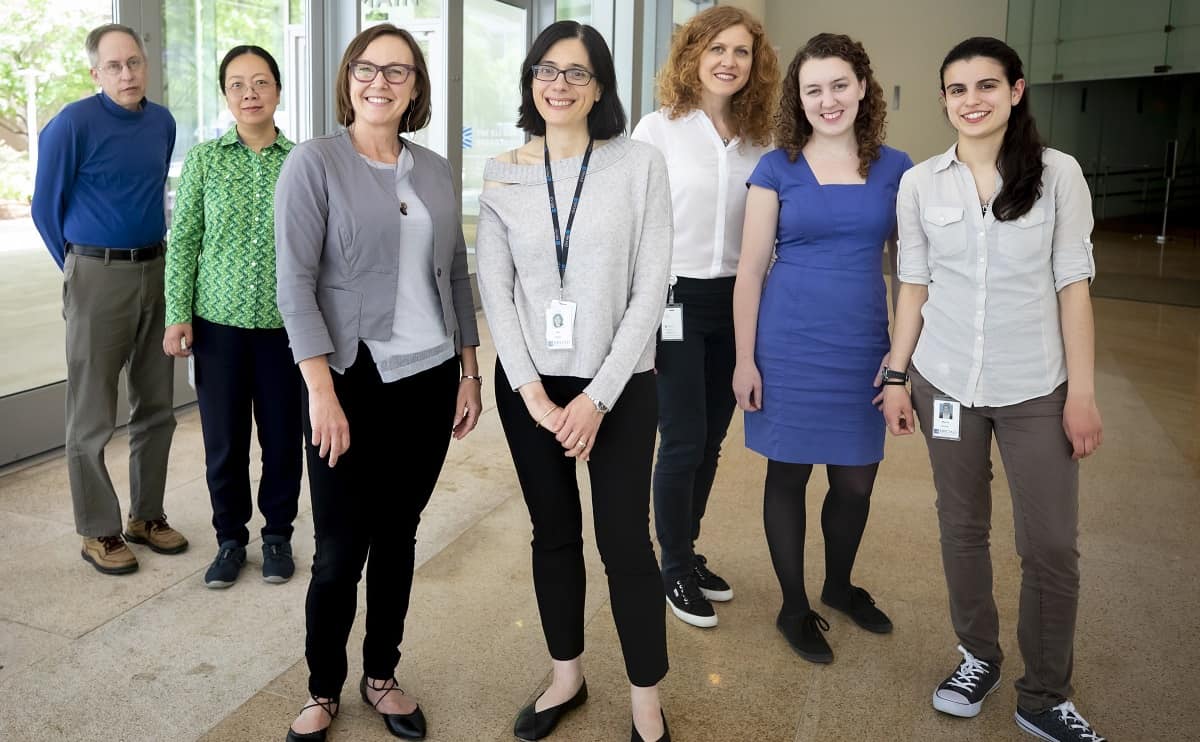
Team members

Changing things up

The group modified four well-known methods for growing organoids, enabling them to be grown in a spinning-flask bioreactor. By using this type of bioreactor, the researchers could grow the organoids for longer, as less interference was needed to provide the cells with enough oxygen.

After six months, the researchers assessed the organoids. They found that their version of the dorsally patterned organoid, an organoid directed to grow like the region of the brain at the back of the head, was the most uniformly large and regularly shaped out of the four.

However, simply looking the same as each other is not necessarily a guarantee of success; the wide distribution of cell types and their organisation is also important. The researchers used single cell RNA-sequencing to analyse hundreds of thousands of cells from 21 dorsally patterned organoids.

Comparing the cell types that developed with development in embryos revealed a remarkable degree of similarity. The organoids had similar growth trajectories and their variability was comparable to the normal diversity expected in human brains.

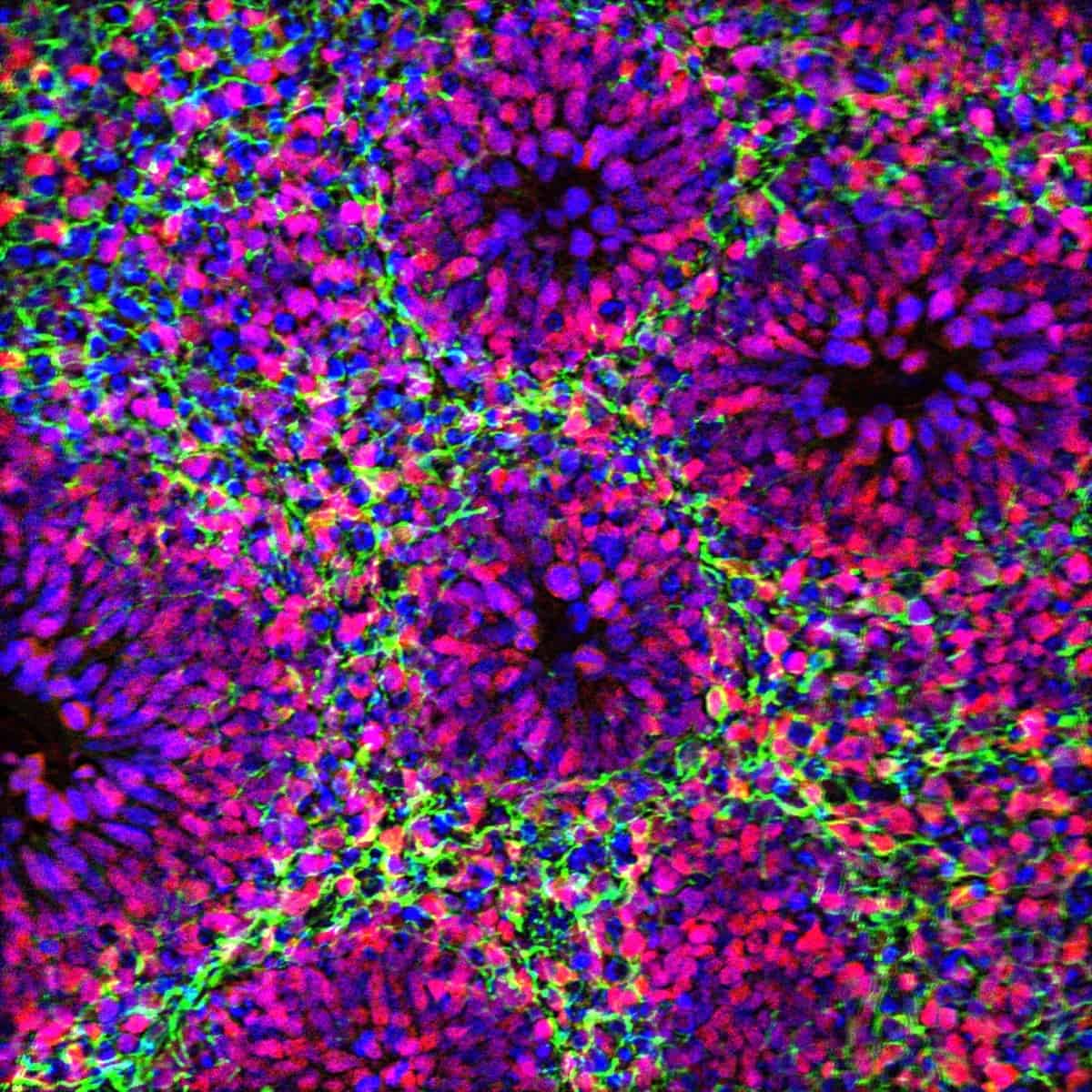
Brain organoid at one month

Lead author Silvia Velasco explains: “We made organoids from multiple stem cell lines, from both male and female origins — so their genetic backgrounds were different.”

“Despite the different genetic backgrounds, we saw that the same cell types were made in the same way, in the correct order and, most importantly, in each organoid,” says Velasco. “We were really excited that this model gave us such consistency.”

The optimized method of producing organoids could change the way that researchers look at psychiatric illnesses. These organoids could be used to study genetic origins of such diseases by creating spheroids with specific mutations.

Senior author Paola Arlotta explains: “Having reproducible organoids will help us move much more swiftly towards concrete interventions, because they will direct us to the specific genetic features that give rise to the disease. In the future, I envisage we will be able to ask far more precise questions about what goes wrong in the context of psychiatric illness.”

Oversizing renewables to avoid shortfalls

As the capital cost of wind and solar photovoltaics (PV) falls, some say it makes sense to oversize their installed capacity, to ensure that a greater proportion of energy demand can be met during lower wind or PV-availability periods. Even if it means that, at other times, there would be too much power output and a need to dump, or curtail, it. As I noted previously, the UK Energy Research Centre (UKERC) made that point years ago — curtailment of excess output is not necessarily economically irrational. “Some level of curtailment may be both economically rational and sensible from a system operation perspective — so, in isolation, a degree of curtailment is not necessarily an indicator of the unsuitability of any particular form of variable renewable generation,” the centre said.

Double capacity

A recent article on The Conversation website, also developed at energypost, claims that this could be the case with renewable capacity doubled — presumably over what’s needed to mostly meet average annual demand — and significant curtailment of output accepted. It says “overcoming the natural variability of solar and wind can be accomplished at costs below current grid costs (so-called ‘grid parity’) by overbuilding solar and wind resources and adopting a grid operating strategy of allowing about 20% to 40% curtailment of excess energy generation”.

However, curtailment is still a waste of potentially valuable green power, even if it is only valuable if it can be used at some other time. Hence the attraction of storage, and, in particular, “Power to Gas” (P2G) conversion of surpluses to hydrogen, which can be stored if necessary over long periods and later be converted back to power to meet demand peaks and/or long lulls in wind and solar output.

The Conversation article, which is based on a US solar PV study, argues that curtailment will be cheaper than storage, which would obviously be true if demand could still be met, but it is less clear if it can’t, e.g. at peak times or during long wind and solar lulls. It also mentions demand side management (DSM) in passing i.e. delaying peaks. That may also be a cheaper option than storage/P2G if any residual demand at that point can still be met. But if not, then the value of power from backup generators fed from stores, or from grid imports from areas where there is excess green power at that point, would be high.

The optimal economic mix of curtailment, storage, imports and DSM will vary by location and time of day but, although storage/P2G is currently relatively costly, it looks like that will change, so curtailment may become decreasingly attractive. However, compensating for that, as PV and wind get increasingly cheap, the cost of providing overcapacity will fall.

Even so, no amount of overcapacity, curtailment, or DSM will help when there is no wind or sun. What’s more, when there is some input, as capacity/load factors improve (63% is claimed for GE’s new offshore wind turbine) there will be fewer times of low generation, so less need for overcapacity — and compensatory curtailment.

Nevertheless, in some high renewables scenarios, there would be a large wind and PV capacity and some of the output would be used to make hydrogen for later use for balancing, and for vehicles and heating, this share being temporarily reduced when demand for power was high. So there would be high capacity, but no need for curtailment.

However, there are issues around the economics of just using expensive electrolysers part time. It’s a little complicated since, firstly, electrolysers run more efficiently part-loaded and secondly, the best time to run them is when there is cheap surplus power. However, some reckon we should have full-time dedicated hydrogen production from electrolysers, using continuous renewable power, not just surpluses. For example, Navigant says “once all the demand for direct electricity is satisfied with renewable energy, you can build additional wind turbines and solar panels specifically dedicated to producing green hydrogen”.

A possible problem with this idea is that the power input from the extra renewables, just like the directly used renewable power, would be variable so it wouldn’t support continuous hydrogen production. We are back where we started…Though it may be that some surplus power could be stored short-term in batteries to be used later, when there was a lull in power availability, so that hydrogen could be produced on a continuous basis.

That may be too complex and, in any case, it may not be necessary. There are more efficient electrolysis technologies emerging that may change the whole thing, some with new feedstock inputs, others with new synfuel outputs, potentially opening up new markets and new balancing options. There certainly should be plenty of demand for hydrogen, however or whenever it is generated. For example, given the need for extra heat in winter, if too much hydrogen is made in the summer it could be fed to inter-seasonal cavern stores. There would also be more continuous demand for hydrogen, for example for vehicles and to replace the use of fossil hydrocarbons in industrial processes such as paint manufacture. With a lot of cheap low-carbon power potentially available, all sorts of new batch production chemical process options may also be developed. So there may be new possible uses for hydrogen, short- and long-term, continuously produced and/or batch produced.

Reality bites

Is any of this realistic? The UK Committee on Climate Change (CCC) is not too optimistic about either P2G approach — using surpluses or going for continuous supply. “While there is some opportunity to utilise some ‘surplus’ electricity (e.g. from renewables generating at times of low demand) for hydrogen production, our modelling shows that the quantity is likely to be small in comparison to the potential scale of hydrogen demand,” the committee says. “Producing hydrogen in bulk from electrolysis would be much more expensive and would entail extremely challenging build rates for zero-carbon electricity generation capacity.”

That seems very conservative. But then the CCC only proposes a relatively limited amount of new wind and PV capacity, and most of its hydrogen (225 TWh) is derived from steam reformation of fossil gas, coupled with carbon capture and storage (CCS) to make it low carbon. “If all hydrogen in our scenarios were produced via electrolysis this would increase electricity generation by over 305 TWh,” it says.

Well yes, that’s roughly what The Conservation article implies but, as argued above, rather than leading to massive power surpluses at times, renewables could be used, via P2G conversion, for grid-balancing and a range of other valuable new end-uses. The CCC does see 70 TWh of its fossil gas-derived hydrogen being used for transport, mostly shipping having been converted to ammonia, and 120 TWh for industry, but only has 2 TWh assigned to peak power support.

With much more being available via P2G from the much larger renewable capacity proposed in The Conversation article, much more could be used for balancing, without the need for the use of fossil gas, or any need for CCS.  Assuming, of course, that P2G/electrolysis does get cheaper. If that does happen, there will be lots of interesting trade-offs and options to consider as we seek to find an optimal mix for balancing and new end-uses.

The bottom line? Overcapacity may be sensible, especially if the resultant surpluses are converted to hydrogen to help with balancing and/or for heating, vehicle and industrial applications. If the cost of P2G electrolysis is low, overcapacity and P2G combined would limit the need to have fossil backup plants to deal with renewable variations, and also reduce the economic problem faced by renewables — that they cannot always generate power at peak demand times, when prices are high, and may generate at times when demand and prices are low. Instead, with P2G, they may be able to expand even more, while providing their own balancing and finding a range of new markets, so helping to cut emissions even more. Sounds too good to be true? In my next post I look at some of the problems with P2G and hydrogen gas distribution.


Distance between spacecraft measured at the atomic scale

A laser ranging interferometer (LRI) has been used to measure changes as small as 200 pm in the distance between two Earth-orbiting spacecraft. The LRI monitors the distance between the GRACE Follow-On (GRACE-FO) satellites, which occupy the same orbit and are separated by about 220 km. By measuring such tiny changes in separation, scientists can map the gravitational field of the Earth to even higher resolution.

In 2002 the GRACE satellites were launched into orbits about 450 km above the surface of the Earth. For 15 years, microwave signals were sent back and forth between the spacecraft, measuring changes in their separation as small as a few microns.

Some of these changes are a result of variations in the local gravitational field of the Earth caused by the mountain ranges, tides and even the presence or absence of groundwater. When the GRACE mission ended in 2017, it had provided a wealth of information about the distribution of mass at or near the surface of the Earth.

Laser demonstration

GRACE Follow-On (GRACE-FO) is the next generation mission and was launched in May 2018 by NASA and the German Aerospace Center. While most measurements by GRACE-FO are being done using a similar microwave ranging system, the mission also aims to demonstrate the ability of an LRI to make even better measurements.

The LRI is created by equipping both GRACE-FO spacecraft with a neodymium:YAG laser that produces 25 mW of infrared light. Each satellite fires a laser beam at the other, and interferometry is used to measure the phase of the two beams – which will fluctuate when the distance between the spacecraft changes.

The LRI was operated continuously for 50 days as the spacecraft followed polar orbits around Earth, recording changes in their separation. These measurements agreed with those taken by the microwave ranging system, but with much less noise and uncertainty. Indeed, the LRI was able to detect changes in distance of about 200 pm occurring periodically on a timescale of about 1 s. This change in distance is roughly the same as the “van der Waal radius” of a typical atom – which defines the volume occupied by a single atom.

Before these latest results were announced, a similar laser technique was used over a distance of about 40 cm on board the LISA Pathfinder spacecraft. This is a testbed for the LISA gravitational-wave detector, which in the 2030s is expected to use lasers to measure the distances between three spacecraft separated by 2.5 million km.

The LRI results are described in Physical Review Letterswhere the mission scientists say that their success with GRACE-FO suggests that it should be possible to use laser interferometry on the LISA mission.

Can native superorganisms keep invasive species at bay?

A new model of how an invader competes against a pair of co-operating native species provides insights into ecosystem takeovers and even the proliferation of cancer cells. Developed by a team in the US, the model investigates competition for resources and how ecosystems can switch to different combinations of species.

The model, from Samuel Bray and colleagues at Stanford University, remains analytically solvable despite its relatively complex treatment of environmental resources. It explains the phase transitions that can occur between states with different combinations of species.

Generally, the more accurately a model tries to describe reality, the more elaborate the model itself must be. “The trade-off in most models is between tractability and complexity,” says Bray.

The simplest models of predator and prey populations, for example, can be solved analytically, but require assumptions about static resource conditions that mean they don’t work for ecosystems that are out of equilibrium. Models that reflect reality more closely, on the other hand, quickly become unsolvable when describing complex ecosystems with multiple agents and interactions.

Bray and colleagues compromised by allowing multiple environmental resources to change but assuming that animal populations grow so much that these resources are always limited. This meant that transitions between states were constrained to specific pathways, making the model much more tractable.

The researchers applied their model to scenarios where an invasive species used different strategies. In all situations, the native ecosystem comprised a pair of species, each relying simultaneously on a generally available energy source and a specific metabolite produced only by its counterpart. The invading species was either a competitor for the general energy source, a parasite consuming the native species’ metabolites, or some combination of these.

Continuously varying the invader’s fitness and the native species’ mutualism – the degree to which they benefited from their interactions – resulted in discrete combinations of species, the team found. In some cases, the invasion failed and the system maintained its initial state; in others the invader dominated while the native species vanished. Some parameters describing a parasitic invasion yielded a stable coexistence of all three species.

The model illustrates how hard it can be for an invasive species to thrive even if its fitness is greater than that of any of the native competitors. When native species have a mutualistic relationship, the community needs to be treated as a superorganism that the invader must compete with as a whole.

Mutualistic relationships might seem incompatible with a nature red in tooth and claw, but they arise from the struggle for advantage.

“Mutualism is actually very abundant across and between scales,” says Bray. “On evolutionary timescales organisms often give up the ability to produce specific but costly traits like amino acid or lipids if they can obtain them from other species or their environment. A famous example is nitrogen fixation by symbiotic bacteria in plant root nodules.”

The concepts of mutualism and competition can be applied even more widely. “Invader” can describe the emergence of a mutation within a species or even the appearance of cancer cells within a single organism.

So as well as helping researchers understand and manage transitions in ecosystems on a regional scale, the work could also lead to cancer treatments that block tumour growth by promoting mutualistic interactions between healthy cells.

Bray and colleagues reported their findings in Physical Biology.

Small-animal irradiation platform performs preclinical proton studies

Proton therapy is becoming an established precision cancer treatment. Studies comparing outcomes of proton and X-ray therapy, however, are mostly retrospective clinical or in vitro cell studies — preclinical investigations of proton therapy are relatively rare. A small-animal irradiation platform that can deliver both photons and protons could enable comparative in vivo research into the biological differences between proton and X-ray beams.

With this aim, researchers at the University of Pennsylvania have coupled an image-guided small-animal X-ray irradiation platform (Xstrahl’s SARRP) to a proton beamline at the Roberts Proton Therapy Center and designed a quality assurance (QA) protocol for the system (Phys. Med. Biol. 10.1088/1361-6560/ab20d9).

“The main difficulty for preclinical studies is access to the proton beam treatment rooms and equipment, which are primarily dedicated for clinical use,” says senior author Eric Diffenderfer. “We chose to move the department’s SARRP to the dedicated proton research beamline, therefore providing both the imaging and alignment functions of the SARRP instrument and access to the system during clinical treatment hours.”

The SARRP was mounted on rails so it could be moved into and out of the path of an experimental proton beamline from the centre’s clinical cyclotron. “This affords easier access to the robotic animal positioning stage, which is useful when the instrument is being used for X-ray studies, and allows us unimpeded access to the proton beamline with the SARRP positioned out of the way,” Diffenderfer explains. It also enables the proton system to employ the SARRP’s on-board cone-beam CT (CBCT) for soft-tissue delineation and alignment.

Spread-out Bragg peaks

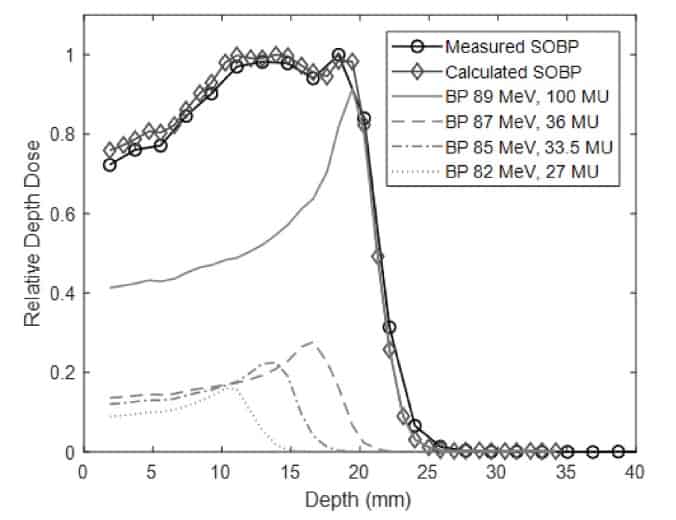
The researchers designed a collimation system to shape the proton field from 0.5 to 10 mm in width. They commissioned the beamline to deliver 77–96 MeV proton beams, with Bragg peak ranges of 4–30 mm in water. For each energy, the distal dose fell to below 10% of its peak within 2 mm. The system could also create spread-out Bragg peaks (SOBPs) with a range of up to 29.5 mm and a width of up to 24 mm.

“We showed that a high-energy clinical proton beam could be degraded and collimated to a range and beam size appropriate for preclinical studies, with minimal degradation of beam characteristics,” says Diffenderfer. “Furthermore, the energy switching capabilities of the clinical system can be easily used to generate arbitrary width SOBPs.”

QA protocol

The researchers developed a dedicated QA protocol based on a 3D printed phantom that holds two Gafchromic films: one to verify proton beam alignment with the SARRP and one to verify depth–dose characteristics. A small high-Z insert affixed to the front face enables CBCT targeting.

To align the SARRP with the proton beam, the researchers placed the QA phantom on the robotic positioning stage and acquired a CBCT. They used the stage to move the SARRP to the centre of the high-Z insert and delivered a proton beam to the front film. The stage was then shifted to align the centre of the proton field with the insert. Finally, to verify the co-linearity of the SARRP isocentre with the proton field, they delivered a second proton beam onto a second film on the phantom.

Performing this QA procedure improved the discrepancy between the SARRP and proton beam isocentres from 2.67±0.38 mm to 0.12±0.04 mm. The researchers note that the QA protocol, which should be performed prior to any small-animal experiments, takes 10–15 minutes and is easy to implement.

Animal irradiation

One key objective of this study was to determine whether the set-up could restrict tissue damage to a specified depth. To investigate this, Diffenderfer and colleagues used a 5 × 5 mm collimator to deliver an 89 MeV beam to a flank tumour on a mouse. They placed bolus in front of the target to locate the Bragg peak 3 mm deep into the tumour.

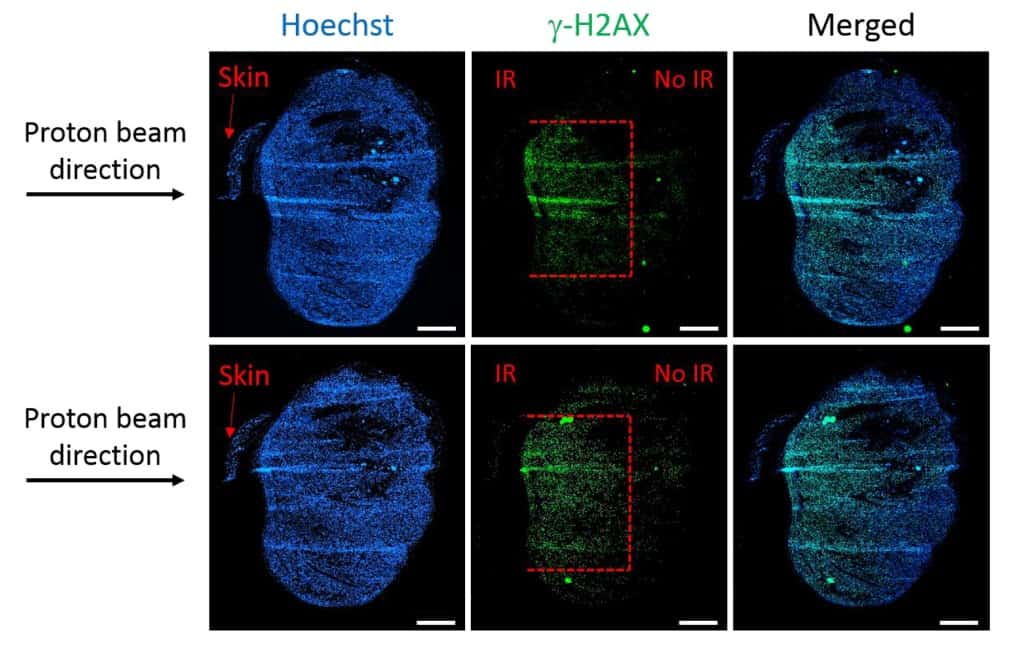
To analyse the post-irradiation damage, they used immunofluorescence staining to detect double-strand breaks. Staining tumours harvested one hour after 4 Gy of proton irradiation showed that the depth of damage was restricted to 3 mm, equivalent to the Bragg peak depth. The width of the damaged area (4–5 mm) corresponded to the size of the collimator, while the remainder of the tissue exhibited no visible DNA damage.

Immunofluorescence staining

The researchers concluded that this system is the first to deliver a SOBP from a clinical cyclotron combined with a commercial SARRP for X-ray irradiation. They suggest that the coupled proton–SARRP system will become an important tool in proton radiobiological studies and that this study shows how integrated X-ray/proton systems can be developed at clinics, rather than relying on dedicated facilities.

The team has a number of proton versus photon studies planned and underway, in collaboration with the radiation biology group at University of Pennsylvania. “Of particular interest are preclinical studies to investigate FLASH radiation with protons and connections between immunotherapy and radiation,” Diffenderfer tells Physics World.

Microbes and the Moon

After watching the 2018 film First Man – which depicts eight years in the life of astronaut Neil Armstrong leading up to the legendary Apollo 11 mission – my wife, who is a microbiologist, remarked to me that she hadn’t realized that the astronauts were quarantined. She was referring to the final scene of the film, wherein Armstrong and Buzz Aldrin are shown behind a large glass wall, depicting the pair in quarantine, as they watch a replay of John F Kennedy’s famous speech.

My immediate response to my wife was that what I found more surprising is that only two of the three astronauts appeared in the quarantine scenes. Michael Collins was nowhere to be seen.

His absence led us to reflect on the ways in which biological material could have been transferred to the astronauts and how any contamination on either Armstrong or Aldrin could easily have been passed to Collins during the three-to-four days they spent together in a tiny capsule on its way back to planet Earth. What were the possible sources of contamination? In any case, why wasn’t Collins depicted as also being quarantined? They breathed the same air in the capsule and there was proximity of their spacesuits.

After digging into these questions some more, I found half a dozen reviews of the film that mentioned the quarantine. They confirmed my observation that Aldrin and Armstrong were both quarantined, but none of them mentioned the missing Collins, nor asked why he wasn’t there. This puzzled me, and I decided to find out what happened to all three astronauts in reality.

I eventually came across the Smithsonian National Air and Space Museum, whose archives include a photograph depicting the newly returned space-travelling trio, all three of whom were indeed quarantined upon their return. The Smithsonian website captions the above photograph: “President Richard M Nixon was in the central Pacific recovery area to welcome the Apollo 11 astronauts aboard the USS Hornet, prime recovery ship for the historic Apollo 11 lunar landing mission. Already confined to the Mobile Quarantine Facility are (left to right) Neil A Armstrong, commander; Michael Collins, command module pilot; and Edwin E Aldrin Jr, lunar module pilot.” The First Man depiction is therefore an oversight.

We no longer need to worry about the risk of lunar microbes, which might have been brought back to Earth by Collins, causing a threat for the past half-century. But why were the astronauts quarantined? What were the possible sources of nuclear, biological or chemical contamination? It’s hard to remember that our own knowledge of the Moon is relatively recent. In the early days of lunar exploration, we didn’t know that the Moon was sterile. We didn’t know whether there would be water on the surface or some form of biological life. We were simply driven by a desire for exploration.

To deal with the unknown, the “Extra-Terrestrial Exposure Law” was enacted in 1969 to guard against “the remote possibility that they are harbouring unknown lunar organisms that might endanger life on Earth”. This regulation remained in force in the US until 1977, following data obtained from many quarantines, when it was concluded that “There is no hazard to man, animals or plants in the lunar material.”

Nowadays, astronauts are quarantined before voyages to reduce the chance of an infection developing that would affect their ability to perform their duties effectively. However, there is also a discussion to be had about whether the Moon itself should be quarantined, to avoid biological contamination by objects from Earth. First Man depicted the deliberate contamination of the Moon, when Armstrong left behind a bracelet, in memory of his late daughter. I don’t know if that’s a true story, but it is well-known that during later Apollo missions, some of the astronauts played golf on the Moon under relatively low gravity – I doubt that the golf balls were recovered and returned to Earth.

Three decades after the first lunar landings, the Moon became the final resting place for the geologist and planetary scientist Gene Shoemaker, when some of his ashes were carried there by the Lunar Prospector space probe in 1999. He is best known for co-discovering the Shoemaker–Levy 9 comet, together with his wife Carolyn S Shoemaker and David H Levy. I am not sure how Shoemaker got this privilege, but to date, he is the only person whose ashes have been buried on a celestial body that is not the Earth.

Perhaps the lesson to learn is that, occasionally, popular media help us look at our science in a new way

We are constrained to live our lives on Earth and look up at the Moon on a regular basis, so it’s no surprise that we have a natural fascination with our nearest neighbour. Perhaps the lesson to learn is that, occasionally, popular media help us look at our science in a new way. Sometimes, as we are busy protecting ourselves from the obvious, we may not realize the threats we ourselves pose. It’s not so much that we need fear extraterrestrial lifeforms – at least those that are locally based – but rather the impact of humans, which now reaches beyond the confines of our immediate home.

  • Readers are invited to submit their own Lateral Thoughts. Articles should be 900–950 words, and can be e-mailed to pwld@ioppublishing.org

Diamonds are a physicist’s best friend

Pascal Gallo is a physicist who has had a passion for crystals and gemstones since childhood, thanks to his grandfather, a mine prospector in Africa who discovered the minerals marokite and gaudefroyite. As a youngster, Gallo would often gaze at the collection of minerals they had at home, and even trade precious stones in school. Today, he is the chief executive of Switzerland-based start-up company LakeDiamond, which manufactures ultrapure diamonds that can be harnessed for various technologies – from laser-power beaming, autonomous vehicles to rapid battery-charging and medical imaging.

Gallo’s initial interest in physics was piqued by reading Stephen Hawking’s A Brief History of Time, and by having developed a strong set of strong mathematical skills. He graduated from the National Institute of Applied Sciences (INSA) in Toulouse, France, with a Master’s degree in engineering physics and management in 2002. “This engineering school had a branch dedicated to physics, but we would also learn law, finance and economy,” he recalls.

Growing crystals

Gallo continued his studies at the INSA and earned his PhD on quantum physics and crystal growth in 2006. “My PhD focused on spin dynamics – how the spin of electrons will evolve during transport within materials. And to test those properties, we needed to grow pure semiconductors by a technique called molecular-beam epitaxy,” he says. Gallo’s research was carried out in collaboration with Albert Fert who shared the 2007 Nobel Prize for Physics for his work on spintronics. After his PhD, Gallo then spent around half a year working at the Laboratory for Analysis and Architecture of Systems, also in Toulouse, where his research involved developing new semiconductor lasers, before joining Eli Kapon’s research group at the Ecole Polytechnique Fédérale de Lausanne (EPFL) in Switzerland, later that same year, as a postdoc.

Over the next six years, Gallo worked on the interactions between light and matter in semiconductor nanostructures, at EPFL. During that time, he developed diamond-based lasers and smashed a world record for laser-energy transmission. “We developed a certain class of lasers called VCSELs [vertical-cavity surface-emitting lasers], and we got a world record by putting diamonds in the cavity of those lasers,” explains Gallo. “Diamond is the best conductor of heat, so when you evacuate the heat you can increase the power without destroying your laser.”

It was shortly after this breakthrough that Gallo had the idea to launch a start-up company. He was, however, disappointed that he couldn’t find a good supply of ultrapure diamonds. “There was no reliable source and so we had two options: either drop the project or manufacture our own diamonds.” It wasn’t until 2011, when he met his business partner Theophile Mounier (LakeDiamond’s current chief financial officer), and the company NeoCoat, that together they developed both a single-crystal chemical vapour deposition reactor to grow artificial diamonds and a business plan for what would become LakeDiamond.

Starting up

Between 2012 and 2014 Gallo worked with Kapon at BeamExpress, a Swiss start-up company that made ultrafast lasers for telecommunications. Among his duties as a research engineer and operation planner was to organize, plan and set up research projects with business partners and customers. He then worked at photonics start-up company Novagan as chief business development officer, before eventually co-founding LakeDiamond in 2015.

Gallo points out that he was lucky in that Kapon, who is now LakeDiamond’s head of photonics, knew a lot about business and had previously raised large amounts of venture money. “It showed me that it was possible as a scientist to start a company.” What also helped was EPFL’s technology transfer office (TTO), especially as researchers there are encouraged to write patents. “When you found your company, you can go to the same TTO and exploit the patents that you wrote as a researcher,” Gallo says. “That’s exactly what I did with patents on the use of diamonds in lasers.”

Once Gallo and his team managed to grow diamonds in the lab – purer than natural ones – by layering carbon atoms in a crystalline pattern, he was approached by several physicists and companies that brought new ideas to LakeDiamond. Together, they are now addressing a wide range of innovative applications in micromechanics, photonics, electronics and biotechnology. “When you’re a physicist, you really understand what your product can bring and how you have to design the product to make something useful, which will be adopted by the market,” he says. At the same time, Gallo is collaborating with many of his former colleagues and professors. “It’s really important to keep a good relationship with other researchers you work with or study with as a student because you build up a network,” he says.

In 2018 LakeDiamond launched its own initial coin offering, issuing virtual “crypto tokens” that can be exchanged for diamonds or part of the turnover. “It turned out to be a very good idea,” says Gallo. “We managed to raise a substantial amount of money and to make the company grow.” The company now employs 12 people and Gallo is still involved in all the technical aspects. “I really love the idea that as a CEO who is a physicist I can go really deep into the development of all the products the company’s making. It gives credibility when we talk to investors or potential partners.”

Role variation

As LakeDiamond’s chief executive, Gallo’s job is intense but he enjoys the varied work that constantly keeps him on his toes. “I really love this aspect of the job, but it requires a lot of energy,” he says. “When I was working in the lab, I could choose the pace. Now I have to do a little bit of this, a little bit of that, and the rhythm changes all the time.”

Having coincidentally ended up in a similar career as his grandfather – although avoiding the human and environmental toll of diamond mining – Gallo believes today’s physics graduates have a wide variety of opportunities, as long as they are open-minded and flexible. “You have to choose your career path to be flexible. You can have an idea in mind of where you want to go and in which field, but the exact path that you follow will be subject to who you meet, and so you really have to stay open and meet as many people as you can.”

Why carbon is an amazing material – part two

Nanocarbon structures, such as graphene and carbon nanotubes, have superlative mechanical and electronic properties. In Why carbon is an amazing material – part one, Anna Demming described the pioneering studies that led to the discovery of these materials and some of the applications that exploit their mechanical strength. In part two, Demming explains how the remarkable electronic qualities of nanocarbons relate to its atomic and molecular properties.

Indeed, plenty of applications are already under development and in certain cases carbon is threatening to outperform the current king of electronics, silicon. However, several key challenges remain. Not least, we need to develop ways of mass-producing electronic-grade graphene, without introducing unwanted defects that can hinder performance.

What’s more, this revived interest in carbon has opened up an exciting new research field involving two-dimensional materials and combinations known as 2D heterostructures.

These carbon explainers are part of a new series of animated videos called Physics World Explains. The first looked at dark matter and why it is so elusive.


Copyright © 2026 by IOP Publishing Ltd and individual contributors