Machine learning: a roadmap for clinical validation

Quietly, assuredly, relentlessly – RaySearch Laboratories is busy shaping a data-driven revolution in radiation oncology. The Stockholm-based oncology software company has, for the past decade and some, been making strategic investments in machine learning, automation and big-data technologies. Its vision: fundamental transformation of the radiation-therapy workflow – improving efficiency and consistency in treatment planning and delivery, while freeing up specialist clinical staff to dedicate more time to patient care.

If the vision is clear, so too is RaySearch’s laser focus on delivery against that vision. Back in April, at the annual congress of the European Society for Radiotherapy and Oncology (ESTRO 38) in Milan, two much-talked-about machine-learning innovations – automated organ segmentation and automated treatment planning – received top billing at the official European launch of RaySearch’s RayStation 8B treatment-planning software.

In combination, these new machine-learning applications represent core enabling technologies for the clinical implementation of online adaptive radiotherapy, with the end-game of personalized treatment plans (tailored to the unique needs of each patient) delivered in minutes rather than hours. “As a vendor, we can point to the efficiencies of automation and we can point to the consistency inherent to machine learning in radiation oncology,” says Fredrik Löfman, head of machine learning and algorithm at RaySearch. “But in terms of treatment quality and patient outcomes, it’s the clinics that will need to provide the real-world evaluation and validation.”

Machine learning visions

With that in mind, RayStation’s machine-learning capabilities are currently being road-tested and co-developed by a number of clinical partners, with more and more data emerging daily on the benefits for the radiation oncology workflow. Among those machine-learning early-adopters is the Laboratory of Artificial Intelligence in Radiation Oncology (LAIRO) at Massachusetts General Hospital (MGH) in Boston.

Yi Wang

LAIRO’s team of eight clinical staff – three medical physicists and five medical dosimetrists – is headed up by Yi Wang, who prioritizes the clinical orientation of the laboratory’s research programme. “Our goal at LAIRO is to develop an intelligent platform for the whole radiation oncology workflow – segmentation, treatment planning, as well as outcomes and clinical decision support,” he explains. “We have this ‘explorer mindset’ to exploit emerging technologies – cloud computing, big data and machine learning among them – for greater workflow efficiency, lower healthcare costs and enhanced treatment outcomes.”

RaySearch is LAIRO’s main industry partner, and exclusively so on R&D for treatment planning. Right now, Wang and his colleagues are carrying out clinical studies using the machine-learning optimization (MLO) capabilities in RayStation to enhance treatment planning for liver stereotactic body radiotherapy (SBRT).

“We have provided a lot of clinical insight leading to the construction and integration of our MLO ‘auto plan’ models in RayStation,” explains Wang. “This latest study is a golden opportunity for us to build and test the first liver SBRT MLO model trained with multicriteria optimization [MCO] plans for RayStation.”

It helps, says Wang, that the liver SBRT is a well-defined problem. “With this treatment, we have many prior cases with a sufficient level of similarity and diversity to construct a good machine-learning model – simple enough that the machine can learn it, and meaningful enough that it can lead to improvements in workflow efficiency, also greater operator uniformity when the model is used by different treatment planners.”

The work has progressed to the point where the liver SBRT machine-learning model is now ready for prospective clinical evaluation. In parallel, the LAIRO team is working on several more challenging problems. For starters, there’s a machine-learning model to support radiotherapy treatment planning for pancreatic cancer addressed with simultaneous integrated boost (SIB) in the same fraction (i.e. a lower radiation dose to a larger treatment volume with a boost dose to a smaller volume, which can have variable size, shape and location within that bigger volume).

Other machine-learning models under development at LAIRO include lung SBRT with more complex tumour locations than the liver; SIB for head and neck cancers with more complex anatomy and dose pattern than the pancreas; and prostate cancer treated in sequential boost (i.e. a lower dose to a larger volume followed by a boost course to a smaller volume).

“We designed this roadmap with increasing complexity of anatomy and dose pattern,” explains Wang. “Ultimately these machine-learning models will help the treatment planners working across our network of clinical facilities, giving them a robust baseline and universal starting point based on prior clinical experience and data.”

It’s all about outcomes

The machine-learning applications in RayStation utilize models that have been trained on historical data – typically around 100 patients and plans are used for the training and validation. What’s more, deployment of the machine-learning models is independent from the version of the treatment-planning software – the models are effectively decoupled from RayStation – which creates unique opportunities for collaboration and knowledge-sharing between cancer centres.

Fredrik Lofman

For Wang and the LAIRO team, it’s workflow efficiencies and aggregate time-savings that are the biggest selling points of MLO. “With RayStation,” says Wang, “we can do one-click automated planning to generate clinically acceptable treatment plans with a quality very similar to the manual plans generated by our best treatment planners using multicriteria optimization.” In most cases, he adds, these auto plans are indistinguishable from manual plans when viewed by the attending oncologist.

Yet while MLO is all about statistical solutions based on prior clinical experience, there are also compelling opportunities to individualize radiation therapy so that that specific patients receive maximum benefit. Wang says this “multi-strategy” approach enables automated planning to create auto plans with different emphasis. One planning strategy, for example, might favour greater coverage of the target, while another might prioritize the sparing of healthy tissue.

“With one click, you can run different strategies and let the physician pick among them,” Wang explains. “It’s like you have four different planners creating four different plans, and the best auto plan can be further refined and personalized by post-processing. We’re heading towards personalized, precision medicine based on prior clinical knowledge and experience accumulated over decades. Machine learning is a great tool to make this happen.”

Continuous improvement

Meanwhile, Löfman and his RaySearch colleagues will continue to prioritize data-driven product innovation in tandem with clinical validation. That starts here and now by pushing machine-learning models beyond the quality of the historical treatment plans on which they are trained.

“It’s not just about capturing the best from the historical plans, it’s about continuous improvement going forward,” Löfman explains. “You don’t want to reach a point over time where machine learning is not progressing. For each new plan generated, machine learning needs to push as hard as possible – for example, in terms of reducing dose to organs at risk.”

Down the line, Löfman identifies data-driven treatments as the “next big thing” in radiation oncology. “This is where the whole field is heading – a greater emphasis on availability, accessibility and standardization of data to support optimized treatments and enhanced clinical outcomes. There are new roles for clinical staff here and a requirement for new infrastructure and greater collaboration between clinics.”

Equally significant for Wang is the opportunity to level the playing-field with a joined-up and networked approach to MLO. “In time, machine-learning models will be accessed by multiple clinics around the world – so that every clinic can start from the same baseline,” he concludes. “We are democratizing the accumulated knowledge and experience in radiation oncology and pushing that out across borders to a global user base.”

RaySearch Laboratories will be exhibiting on booth 600 at the American Association of Physicists in Medicine Annual Meeting (San Antonio, TX) on 14–17 July.

Planting more trees could cut carbon by 25%

Swiss scientists have identified an area roughly the size of the United States that could be newly shaded by planting more trees. If the world’s nations then protected these 9 million square kilometres  of canopy over unused land, the new global forest could in theory soak up enough carbon to reduce atmospheric greenhouse gas by an estimated 25%.

That is, the extent of new tree canopy would be enough to take the main driver of global heating back to conditions on Earth a century ago.

And a second study, released in the same week, identifies 100 million hectares of degraded or destroyed tropical forest in 15 countries where restoration could start right now – and 87% of these hectares are in biodiversity hotspots that hold high concentrations of species found nowhere else.

The global study of the space available for tree canopy is published in the journal Science. Researchers looked for land not used for agriculture or developed for human settlement. They excluded wetlands and grasslands already fulfilling important ecological functions.

Huge canopy increase

They left existing forests out of their calculations. And they identified enough degraded, wasted, or simply unused land to provide another 0.9 billion hectares – that is, 9 million square kilometres – of tree canopy.

Such new or restored forest could store 205 billion tonnes of carbon. This is about two-thirds of the 300 billion tonnes of extra carbon humans have pumped into the atmosphere since the start of the Industrial Revolution 200 years ago.

“We all knew that restoring forests could play a part in tackling climate change, but we didn’t really know how big the impact would be. Our study shows clearly that forest restoration is the best climate change solution available today,” said Tom Crowther of the Swiss Federal Institute of Technology, now known as ETH Zurich.

“But we must act quickly, as new forests will take decades to mature and achieve their full potential as a source of natural carbon storage.”

Forecasts for the future start with the data available now: the Swiss team worked from a dataset of observations of 80,000 forests, and used mapping software to predict possible tree cover worldwide under current conditions.

The big unknown is: what will global heating and climate change do for future forest growth? If nations go on burning fossil fuels at the present rates, then parts of the world could begin to experience harsher conditions and by 2050 the area available for tree cover could have dwindled by 223 million hectares, much of this in the tropics.

Forests are an integral part of the answer to the climate crisis. But forests worldwide, and particularly in the tropics, are also vulnerable to extremes of heat and drought and windstorm that are likely to come with ever higher average temperatures.

Where and when and how nations act to restore forests involves political decisions that must be based on evidence. So researchers have for years been trying to establish the extent of the global tree inventory, and its variety.

Unrecorded forest

They have confirmed the importance and value of urban forests. They have identified huge areas of woodland  hitherto not mapped or recorded. They have tried to make an estimate of the number of trees on the planet and the rate at which they are being felled, grazed, burned, or even extinguished.

They have identified threats to tropical forests, monitored the increasing damage to or degradation of what are  supposed to be protected areas, much of them forested, and they have measured changes in forests as the temperatures rise.

Right now, the world has 5.5 billion hectares of forest or woodland with at least 10% and up to 100% of tree cover: altogether this adds up to 2.8bn hectares of canopy. It also has a challenge to get on with: the Bonn Challenge to extend national forest areas by 350 million hectares by 2030 has been accepted by 48 countries so far.

The Swiss researchers calculated that there were up to 1.8 billion hectares of land of “low human activity” that could be reforested. If half of this was shaded by foliage, that would yield another 900 million hectares of canopy to soak up and store atmospheric carbon, and more than half of this potential tree space was in just six countries: Russia, the US, Canada, Australia, Brazil and China.

Best restoration options

But a second study, led by Brazilian scientists and published in the journal Science Advances, used high-resolution satellite studies to find that the most compelling opportunities for forest restoration exist in the lowland tropical rainforests of Central and South America, Africa and south-east Asia.

Almost three-fourths of the restoration hotspots were in countries that had already made commitments under the Bonn Challenge. The five nations with the largest areas in need of restoration are Brazil, Indonesia, India, Madagascar and Colombia. Madagascar is also one of six African nations – the others are Rwanda, Uganda, Burundi, Togo and South Sudan – that, on average, offer the best immediate opportunities for forest restoration.

“Restoring tropical forests is fundamental to the planet’s health, now and for generations to come,” said Pedro Brancalion, of the University of Sao Paulo in Brazil, who led the study.

“For the first time, our study helps governments, investors and others seeking to restore global tropical moist forests to determine precise locations where restoring forests is most viable, enduring and beneficial. Restoring forests is a must-do – and it’s doable.”

  • This article first appeared at Climate News Network

Augmented reality helps transform minimally invasive surgery

© AuntMinnieEurope.com

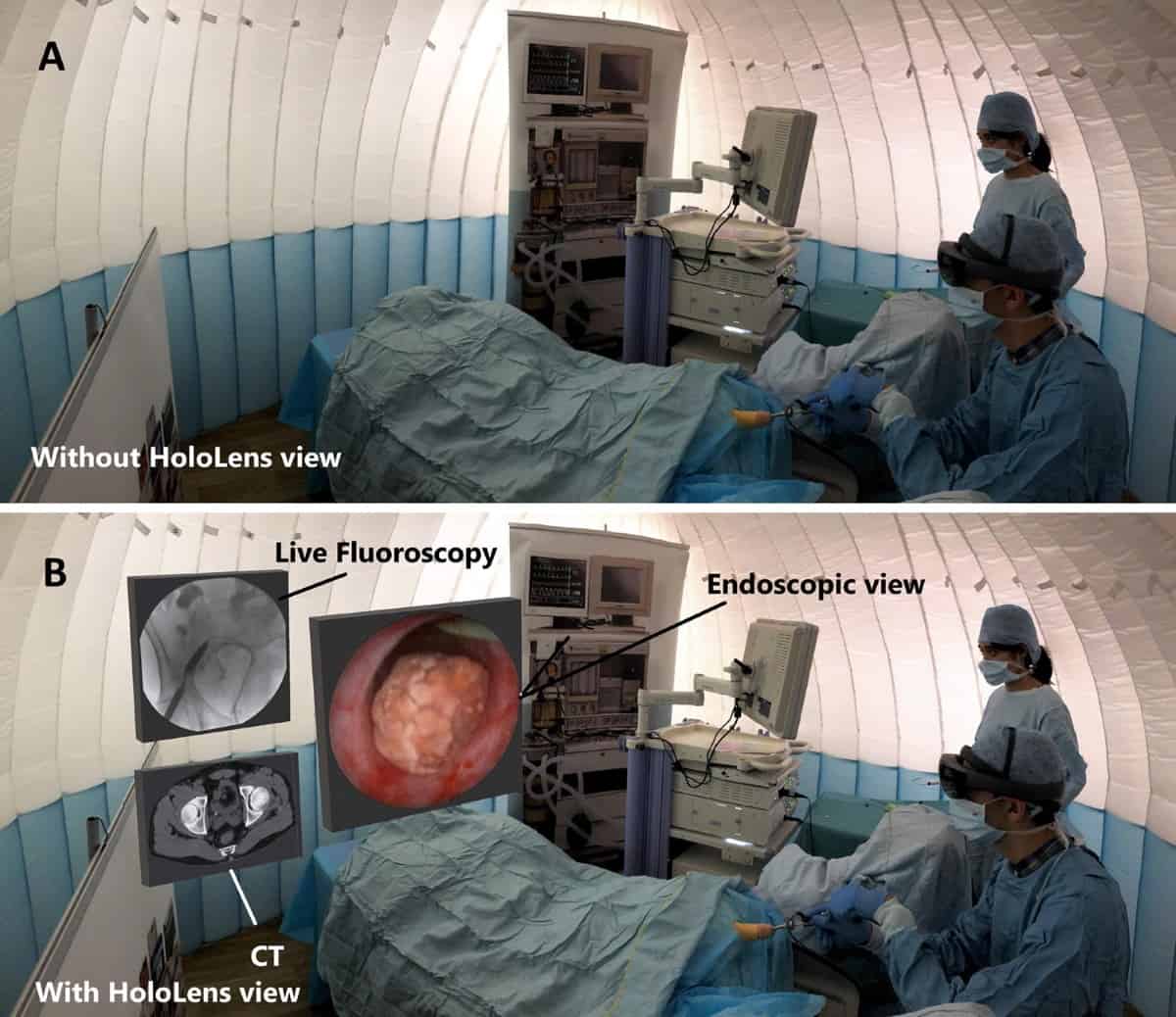
A team from a leading London facility has used an augmented reality (AR) headset to examine CT images alongside an endoscopic video of patient anatomy while simulating minimally invasive surgery. The technology led to improved operating times and surgical proficiency.

First author Hasaneen Al Janabi, from King’s College London, and colleagues explored the feasibility of using AR as an alternative to conventional image guidance for ureteroscopy, a common procedure for addressing urinary stones (Surg. Endosc. 10.1007/s00464-019-06862-3).

For minimally invasive surgeries such as ureteroscopy, operating clinicians generally examine a live endoscopic video of the patient for guidance during the procedure. A downside with this technique is that it requires clinicians to switch their gaze between the surgical site and a computer monitor displaying the endoscopic view. This disruption to the visual-motor axis during surgery has been associated with a variety of problems, from restricting surgical performance to increasing the risk of injuries, the authors note.

Augmented reality

In the current study, Al Janabi and colleagues tested the effectiveness of using augmented reality to address the limitations of standard ureteroscopy. They specifically evaluated the capacity of an AR headset (HoloLens, Microsoft) to facilitate ureteroscopy simulations for 72 participants of varying expertise – including medical students (novice), urological residents or trainees (intermediate), and endourology specialists (expert).

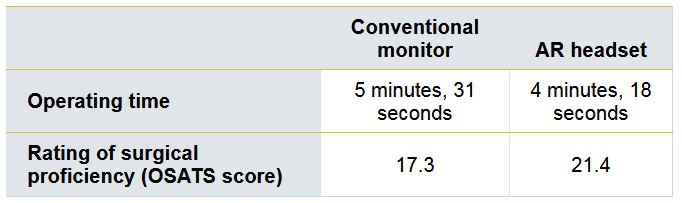
The researchers tracked the participants’ operating times, and an expert endourologist scored the participants’ performance on a 35-point rating scale based on the Objective Structured Assessment of Technical Skills (OSATS).

Overall, they found that using AR led to improvements in the participants’ technical proficiency as well as in the amount of time it took them to complete the procedure simulation. On average, the AR technique was associated with a decrease in operating time of 73 s and an increase in proficiency score of 4.1 points, compared with the conventional method.

AR versus standard method

Furthermore, the participants completed follow-up questionnaires regarding their experience; the vast majority claimed that the ability to see CT scans with AR technology during the procedure was a useful feature. In addition, 95% of the participants agreed or strongly agreed that AR will not only have a role within surgical practice but also be feasible for clinical application. Roughly 97% of the participants also affirmed that they agreed or strongly agreed that AR will have a role in surgical education.

“The [AR] device facilitated improved outcomes of performance and was widely accepted as a surgical visual aid by the study participants,” the authors wrote. “HoloLens represents a feasible alternative to conventional endoscopic monitors, possibly by aligning the surgeon’s visual-motor axis. The device is operated using gestures, and thus sterility is not compromised and can support safe practice.”

  • This article was originally published on AuntMinnieEurope.com ©2019 by AuntMinnieEurope.com. Any copying, republication or redistribution of AuntMinnieEurope.com content is expressly prohibited without the prior written consent of AuntMinnieEurope.com.

Nanophotonic structures enable artificial vision

A simple, passive photonic structure made only of glass and air bubbles could perform artificial neural computing for applications in areas like facial recognition. The new proof-of-concept device consumes very little energy and since it distinguishes between different images by distorting light waves, it also works extremely fast.

Artificial neural networks (ANNs) simulate the human brain, which comprises neurons that are connected in a network by synapses. They are very good at learning how to perform a task when provided with many examples of how the task should be completed.

Although ANNs could be used in a host of applications, they do unfortunately require a lot of computing power. Researchers are thus looking for alternative computing methods that are more energy efficient. One promising approach is optical neural computing – an analogue computing technique that requires little energy to work, and which is extremely fast.

Most optical neural computing processors made to date are based on the same architecture as digital ANNs and contain a layered signal feedback network connected via diffraction devices or integrated waveguides. Just like the signals in digital ANN, the signals in optical neural computing pass through optical networks in the forward direction just once, and reflected light propagating in the backward direction is avoided or neglected. However, it is this very reflection that has allowed researchers to miniaturize optical devices, such as laser cavities, photonic crystals, metamaterials and ultracompact beam splitters.

A team led by Zongfu Yu of the University of Wisconsin-Madison thus decided to make use of this optical reflection too to overcome the limitations of layered feed-forward networks and make more efficient artificial neural computing devices. In their nanophotonic neural medium (NNM), light emanating from the object to be imaged enters from the left side of the medium and then focuses to specific spots of different light intensities on the right side. These spots can then be analysed to reconstruct an image of the object.

Glass NNM distinguishes digits

The NNM is made from glass (SiO2) containing numerous sub-wavelength-sized inclusions. These can be bubbles of air, or any other material (for example, graphene) with a refractive index different to the glass, and they strongly scatter light in both the forward and backward directions.

To see if their glass could recognize different images, the researchers tested it on handwritten numbers, from 0-9. Light emanating from an image of a digit enters from one end of the glass and the output waves then focus to 10 specific spots on the other side. Each spot has a different light intensity at its respective location and corresponds to the individual digits.

“We found that the glass was able to detect, in real time, when a handwritten 3 was altered to become an 8,” explains team member Erfan Khoram.

Completely passive computation

The computation is completely passive and intrinsic to the glass, which means that the material could be used hundreds of thousands of times. It also works at the speed of light since it distinguishes between different images by distorting light waves.

“We could potentially use the glass as a biometric lock, tuned to recognize only one person’s face,” says Yu. “Once built, it would last forever without needing power or internet, meaning it could keep something safe for you even after thousands of years.”

The researchers, reporting their work in Photonics Research 10.1364/PRJ.7.000823, say they will now be looking into how different features of their NNM compare to a digital neural network. “We will be studying the shape and size of the medium compared to the depth of the network with different layer sizes,” Khoram tells Physics World, “and how the different types of photonics nonlinearly affect the performance of the neural medium.”

“The true power of this technology lies in its ability to handle much more complex classification tasks instantly without any energy consumption,” says team member Ming Yuan of Columbia University. “These tasks are the key to create artificial intelligence: to teach driverless cars to recognize a traffic signal, to enable voice control in consumer devices, among numerous other examples.”

Unlike human vision, the smart glass could excel in specific applications – for example, one piece of glass for recognizing numbers, a different piece for identifying letters, another for faces, and so on, he adds.

“We’re always thinking about how we provide vision for machines in the future, and imagining application specific, mission-driven technologies,” says Yu. “This changes almost everything about how we design machine vision.”

Battle of the Elements winner revealed, Chernobyl revisited, and the quest for metallic hydrogen

The votes have been counted and in this episode of the Physics World Weekly podcast we can finally reveal what is the greatest element of them all. After three well-fought group contests, silicon, carbon and iron qualified for the grand final, in which they did battle on this podcast last week. Over the past seven days, you have been given the chance to vote for a winner on Twitter, so listen to the podcast to find out the results.

Also in the podcast, the epidemiologist Richard Wakeford is in conversation with Physics World’s James Dacey about the challenges of determining the public health risks relating to radiation. High-profile events such as the 1986 accident at Chernobyl show that exposure to high doses can bring about fast and lethal outcomes. But the impacts becomes much less certain when it involves low to intermediate levels of radiation. Find out more in this extended Q&A with Wakeford published earlier this week.

Finally, Hamish Johnston and Matin Durrani ask whether a metallic form of hydrogen has been produced in a lab for the first time. That is the claim of a research group in France that have used a diamond anvil cell to squeeze hydrogen to incredibly high pressure. Others in the field, however, remain sceptical about the claims, which would represent a holy grail for condensed matter physics.

If you like what you hear then please subscribe via your chosen podcast app and we’re also available now to follow on Spotify.

Why carbon is an amazing material – part one

Carbon is the building block of life and its uses have shaped human history, from fossil fuels to the diamond trade. Today, carbon once again promises revolutionary applications, thanks to the discovery of nanoscale carbon structures over the past three decades. In this animated video, Physics World’s Anna Demming describes the pioneering studies of Buckminster fullerene, carbon nanotubes and graphene.

Demming explains why the unique mechanical attributes of these nanostructures have led to the proposal of applications including drug delivery and even a “space elevator”. Part two of the video – coming soon – will go into more detail about the fundamental science of carbon atoms and why it has such special mechanical and electronic properties. Indeed, plenty of research is already underway and, for certain applications, carbon is threatening to outperform the current king of electronics, silicon.

This video is the second in a new series of animated videos called Physics World Explains. The first looked at dark matter and why it is so elusive.


Sorghum yields in Ethiopian highlands could fall by 40%

Sorghum yields in the Ethiopian highlands could decrease as intense El Niño events become more common, a team from the US and Ethiopia has found. Climate change is expected to increase the region’s rainfall overall but droughts are likely to become more prevalent early in the growing season when crops are vulnerable.

Although the researchers acknowledge uncertainty around the precise pattern of the changes, their predictions indicate that sorghum yields in the worst-affected years could fall by as much as 40%—an effect that is overlooked by studies that focus only on annual changes.

As a drought-resistant grass that can thrive in unimproved soils, sorghum is the grain of choice in semi-arid environments where fertilizer inputs are economically unfeasible. The plant has become especially important in sub-Saharan Africa, where it’s grown as a subsistence crop on small farms and on fields not suited to other species.

Sorghum’s tolerance to drought might suggest that its reliability as a food crop will continue even as climate change alters patterns of rainfall. The way that dry periods are distributed through the growing season, however, is at least as important for the crop as the amount of rainfall over the season as a whole.

To assess the influence of drought on sorghum yields, Michael Eggen of the University of Wisconsin Madison in the US and colleagues employed a computer model that links plant growth to weather conditions.

The simulations showed that, though robust to rainfall deficits at the seasonal scale, sorghum yields are acutely sensitive to water shortages in June, when seeds are planted and early growth takes place. Such conditions occurred in 2015, when a particularly strong El Niño led to harvests that farmers consider to be as bad as or worse than those associated with the famines of the 1980s and 90s.

Eggen and colleagues combined the simulation results with climate forecasts from 14 general circulation models chosen for how well they relate rainfall in the Ethiopian highlands to the El Niño Southern Oscillation. The researchers applied the models to two scenarios: one in which the concentration of carbon dioxide in the atmosphere levels off at around 600 parts per million (ppm), and one in which it rises to well over 1000 ppm by 2100.

The models suggested that, in general, precipitation in the Ethiopian highlands will rise over the course of the century, but June droughts will become more prevalent. Temperatures will also increase, although their effect on sorghum yield is likely to be small compared to the changes in early-season rainfall.

“Somewhat higher temperatures are not necessarily a major problem if they are accompanied by higher rainfall,” says Eggen. “What our study shows is that it is really those extreme dry June events that could lead to catastrophically lower yields.”

Given sorghum’s unusual resilience to drought and poor soil, farmers in the region tend to persist with the crop even when early-season water deficits cause seedlings to fail. This means that strategies to avert food shortages in strong El Niño years are limited.

Eggen and colleagues suggest that the best way to increase food security in the short term is to develop varieties of the plant that cope with dry periods in June, either because of an innate resilience to drought, or because they grow more quickly and can be planted later in the season.

“The problem with shorter season varieties is they often need more inputs to deliver similar yields in the shorter time frame,” says Eggen. “More drought-tolerant varieties might exist, because sorghum is grown in drier parts of Ethiopia and Sudan. Farmers in our study area have not needed them because rain in the highlands is generally more plentiful.”

Eggen and colleagues reported their findings in Environmental Research Letters (ERL).

Smartphone-based telemedical eye screening could save sight

Diabetic retinopathy, a disease of the retina caused by diabetes, is a common cause of blindness in working-age adults worldwide. Early diagnosis and treatment are essential, but millions of people in developing and emerging countries are at risk of impaired sight due to insufficient access to ophthalmic care.

To address this shortfall, the Eye Clinic at University Hospital Bonn and the Sankara Eye Foundation in India have started a collaborative project to introduce unique smartphone-based telemedical screening for diabetic retinopathy. The idea is to use the smartphone’s camera to look into the eye, providing a highly mobile and inexpensive method of fundus photography.

“So far, there have often been no examinations to diagnose diabetic retinopathy in developing and emerging countries,” explains Maximilian Wintergerst, physician at the Eye Clinic of the University Hospital Bonn and director of the project in Germany.

Two years ago, Wintergerst and a team from Sankara Eye Hospital in Bangalore performed a pilot study to test this method of fundus photography. They used retrofitted smartphones to examine 200 patients with diabetes, recording images of patients’ eyegrounds. The smartphones were modified by using an adapter to focus the beam path of the camera and the light source in such a way that the phones function as ophthalmoscopes.

The study showed that ocular fundus examination was possible with all tested smartphone-based procedures. “We therefore have an easily accessible and very cost-effective process,” says Wintergerst.

The smartphone ophthalmoscope can be quickly and easily assembled, enabling trained, non-physician staff to take pictures of a retina, even when they are not within a medical centre. An ophthalmologist can then evaluate images sent from the phone to the hospital, providing immediate diagnosis as to whether the patient has diabetic retinopathy and requires treatment.

Establishing eye screening in India

The project is funded by a two-year grant of around Euro 50,000 from the Federal Ministry for Economic Cooperation and Development and the Else Kröner-Fresenius Foundation. The cash will be used to establish telemedical screening for diabetic retinopathy in poorer districts of Bangalore and surrounding rural areas.

Wintergerst recently visited India to begin training 20 optometrists in smartphone-based funduscopy. He will return several times over the next two years to supervise training at Sankara Eye Hospital and the screening camps. “What is important to us is a sustainable transfer of knowledge so that telemedical screenings can be continued in the long term after the end of the project,” he explains.

In addition, six ophthalmologists and employees of the Sankara Eye Hospital will travel to the University Hospital Bonn, where local experts will introduce them to the particular requirements of evaluating fundus images taken with a smartphone and share their know-how on operating a telemedical reading centre.

If all works as planned, Wintergerst plans to extend the diabetic retinopathy screening programme to other hospitals of the Sankara Eye Foundation, with the telemedical reading centre in Bangalore as the coordinating site. The concept could also be transferred to other emerging and developing countries. “This could significantly improve eye care for many people with diabetes, especially in rural areas with poor medical infrastructure,” he says.

Defending the lunar landscape

When the team behind the Event Horizon Telescope (EHT) released the first images of a black hole in April, the observation made headlines around the world. The spectacular picture of the black hole at the heart of the Messier 87 galaxy was made possible thanks to a worldwide network of radio telescopes, which painstakingly combined their signals to give the necessary resolution to take that first image.

Since its conception in the 1930s, radio astronomy has gone from strength to strength. Just witness the success of the Low-Frequency Array (LOFAR), which is mainly based in the Netherlands, or the excitement around the planned Square Kilometre Array – a huge radio telescope that is being constructed in southern Africa and Australia. Both these observatories are expected to reveal vast new areas of the universe that have never been seen before.

The Moon offers a unique vantage point that is free from atmospheric effects and human-caused interference

While all these facilities are Earth-based, the Moon, however, offers a unique vantage point that is both free from atmospheric effects and human-caused interference. Some areas on the Moon are ideal because radiofrequency and thermal noise – both of which are radio astronomers’ greatest enemies – could be lower there than even on Pluto. Indeed, China is already planning to create a prototype Earth–Moon–space very-long-baseline experiment that will study solar bursts, space-weather events and the near-Moon low-frequency radio environment (see “Exploring the far side”).

It seems only a matter of time before humans once again step foot on our nearest neighbour, with many space agencies and even private firms planning manned missions within decades. And that’s before we get to actual space colonization and the need to mine water for the conversion into rocket fuel – hydrazine – or for drinking. However, all these endeavours may be a threat to conducting radio astronomy on the Moon. That’s why I believe that we must protect certain areas for radio astronomy – much in the same way as we reserve electromagnetic quiet areas on Earth for terrestrial radio astronomy.

Treaty changes

The most attractive places on the Moon for radio astronomy are the so-called permanently shaded regions (PSRs). These include the Shackleton crater, which is located close to the lunar south pole. Research shows that there is little evidence of exposed ice in this crater, which makes it less attractive for manned mining objectives. A further bonus of the Shackleton crater is that it is bounded by a crater rim that is sunlit for 92% of the year thus providing a platform for a solar-power station to feed systems within it.

All in all, the Shackleton crater is ideal for a lunar equivalent of LOFAR, which could operate within 1–10 MHz and be deployed by unmanned rovers. This so-called Shackleton low-frequency antenna array would have little value to astronomy in isolation because of its low resolution of between 0.1° of arc at 10 MHz and 1° at 1 MHz. But we could also build a network of precision-timed very-long-baseline interferometry – much like that used for the EHT. This long-baseline array would be able to search for sources of cosmic magnetism ranging from nearby galaxies to pulsars. It would also be used to conduct whole-sky surveys.

This network would consist of telescope arrays located at four other PSR basins in the southern polar region – namely Amundsen, Hedervai, Idel’son, Wiechert. The Bosch basin, which is nearer the lunar north pole could also be used, if required. Like Shackleton, all these areas show little evidence of having deposits of water ice so would hopefully be of little interest to mining syndicates.

Choosing locations, however, will be the easy part – we need to do much more. The Moon treaty section of international space law allows the Moon to be mined –specifically for the extraction of natural resources. But this same treaty also prohibits any rights over territories on the Moon. I believe the treaty must now be revised to exclude these six lunar areas from mining activity and to reserve them solely for radio astronomy. If mining starts in the proposed areas, the resulting machinery and infrastructure will swamp these PSRs with thermal heat and radiofrequency noise – rendering them useless to the astronomy community.

The process of amending the Moon treaty is likely to be far harder than funding the lunar vehicles and rockets to set up these radio arrays. After all, just look at what is happening to the environment here on Earth. Despite the best efforts of environmentalists, many critical areas on our planet are quickly disappearing, mostly from the pressure to exploit natural resources. The lunar polar regions are even more remote and out of sight, so protecting them is going to be even harder.

Time is running out. Scientists need to start voicing their concerns to make sure we can exploit these areas and build on the recent success of radio astronomy. The work is vital as extending such endeavours to the Moon will greatly expand our understanding of the universe.

Hyperbolic lattice appears in a coplanar waveguide array

Building on previous work that realized Euclidean lattice models using circuit quantum electrodynamics (QED) and interconnected networks of superconducting microwave resonators, researchers at Princeton University and the University of Maryland have now made a coplanar waveguide array in which photons move as if they are in hyperbolic, negatively-curved, space.

Euclidean geometry describes the flat space of the non-relativistic physics world. It can describe Newtonian gravity, but it fails to describe gravitational radiation or strong gravitational fields that require general relativity in which gravity appears as a curvature of space-time. Non-Euclidean geometry is obviously difficult to study because of the, literally, astronomical distances involved so physicists are trying to reproduce it in experiments in the laboratory.

The most intuitive way to consider curved space is to think about the behaviour of straight lines in this space. In flat Euclidean space, two parallel lines are always a constant distance apart. In positive curvature, parallel lines converge. Negative, or hyperbolic curvature is more difficult to imagine, however, since the lines diverge. The resulting scale is thus much bigger than in flat space.

Although positive spatial curvature is easy to realize – it can be represented by the surface of a sphere – negative curvature is more difficult because it cannot be easily reproduced in our Euclidean world without distorting the physical system in which it is being studied.

Previous attempts to do this have involved hyperbolic metamaterials in which the dielectric constant is varied to reproduce the effects of negative curvature, but such experiments are purely classical. Researchers have also managed to make analogues of event horizons and Hawking radiation using acoustic waves, ultrashort optical pulses and Bose-Einstein condensates. They have even put forward techniques to realize the Dirac equation in curved space-time by using ion traps, optical waveguides and optical lattices with so-called non-Abelian artificial gauge fields.

Cavity QED

Researchers have been studying cavity QED with superconducting circuits for 20 years now. Here, they use lattices of coplanar waveguide resonators as artificial materials for microwave photons whose interactions they can then study either by directly using nonlinear resonator materials or by coupling them to superconducting qubits.

The Princeton and Maryland team has now exploited a previously overlooked property of such resonators: that they are highly unique lattice sites that can be deformed without changing their properties.

A coplanar waveguide is a 2D analogue of a coaxial cable and consists of a central conductor surrounded by a dielectric gap. The researchers made a resonator from this waveguide by cutting the end of the cable, which then forces microwaves to bounce back and forth off the ends and form standing wave modes.

“Like a coaxial cable, the waveguide can be stretched out or coiled up without changing its total length,” explains team leader Alicia Kollár. “This allows us to make lattice sites that are identical from the point of view of the solid-state physics we wish to study, but occupy different-shaped regions on the device and connect differently to their neighbours.

“This flexibility allows us to produce lattice models that would otherwise be impossible.

“An analogy I like to make here is a football with a large atom at the centre of every patch (essentially the configuration of C60 buckminsterfullerene). Now, even if you cut the football in half, there is no way to get it to lie flat without tearing or stretching it. What we can do with coplanar waveguide resonators, however, is to stretch a structure without changing the physics.”

Unique table-top experiment

The result is a device that is 2D, planar and Euclidean, but which has the physics of non-Euclidean geometry, she tells Physics World. The example described above is the case of spherical (positive) curvature, but it can also be realized for negative curvature.

“This device provides us with a unique table-top experiment in which to produce hyperbolic geometry,” she says. As well as being useful for studying general relativity, hyperbolic lattices are also important in mathematics – for example to study non-commutative groups, graph theory and random walks. Computer scientists also study hyperbolic networks since they can be used for robust and efficient communication. Indeed, the connectivity of the Internet is a hyperbolic map.

Heptagon kagome

Because of some technicalities of these resonators, the easiest lattice to form is a “kagome” lattice (named after a Japanese basket-weaving technique), she explains. This lattice is characterised by six-pointed stars (hexagons surrounded by equilateral triangles). “Curved-space versions of this lattice occur if we use pentagon and five-pointed stars or heptagons and seven-pointed stars instead of hexagons and six-pointed stars.”

The researchers say they chose to make the heptagon kagome in their work because, as well as being curved, it also boasts another highly unique feature: a large fraction of degenerate states completely separated from all the other eigenstates of the lattice. “Such a feature is known as a flat band and in solid-state physics is known to give rise to many-body physics phenomena,” says Kollár. “There are, however, only a very few naturally-occurring cases (and some theoretically known ones) in which this flat band occurs by itself, rather than in the immediate vicinity of a more conventional band.”

In follow-up to this work, the team has already started looking into how to maximize the gap surrounding the flat band to optimize experimental performance.

“We would now also like to incorporate qubits and non-linearity into our coplanar waveguide,” reveals Kollár. “The device discussed in the present work contains only linear resonators, but by adding qubits we can start to introduce effective photon-photon interactions and engineer photon-mediated spin models.”

The research is detailed in Nature 10.1038/s41586-019-1348-3.

Copyright © 2026 by IOP Publishing Ltd and individual contributors