Black holes and revelations

Science journalist Ron Cowen’s brief but rewarding book – Gravity’s Century: From Einstein’s Eclipse to Images of Black Holes – celebrates two great scientific events concerning gravity that occurred almost exactly a century apart. The first was the November 1919 confirmation of Albert Einstein’s general theory of relativity. This was made possible by British telescopic observations from West Africa and Brazil of a solar eclipse in May 1919, which revealed the deflection of light rays from the Hyades star cluster by the gravity of the Sun. These had been organized by Astronomer Royal Frank Dyson with Arthur Eddington. Analysis of the data proved tricky – hence the delay in announcing the result until a joint meeting of the Royal Society and the Royal Astronomical Society in November of that year. The second event was the 2017 observation, publicised in 2019, by the worldwide Event Horizon Telescope (EHT) of a phenomenon long predicted by general relativity: a black hole. Located 55 million light-years from Earth, in the centre of the Messier 87 galaxy of the Virgo galaxy cluster, the black hole has a mass 6.5 billion times that of the Sun, with an uncertainty of 0.7 billion solar masses. The EHT’s photographs of this esoteric object were published in April 2019 – a month before the publication of Cowen’s book.

Ironically, “Einstein had never liked the idea of black holes; it made his elegant equations blow up and lose their meaning,” writes Cowen. “For decades, he and other physicists could afford to ignore the concept.” Indeed, in 1939 Einstein published a paper – not mentioned by Cowen – in a leading US journal, Annals of Mathematics, which repudiated black holes altogether. In the words of Freeman Dyson, commenting in 2015, the centenary of general relativity: “Einstein constructed a very artificial model of a static black hole, with a cloud of particles of matter orbiting in a hollow spherical shell held together by their mutual gravitational attraction. He showed that this model was impossible because the particles on the outside of the shell would have to travel faster than light.”

When, that same year, J Robert Oppenheimer and his student Hartland Snyder published a paper showing in detail how a massive star, once it had exhausted its nuclear fuel, would naturally collapse into a black hole as a consequence of general relativity, Einstein ignored their joint paper. “How could he have been blind to one of the greatest triumphs of his own theory?” asks Dyson. “I have no answer to this question. It remains one of the inexplicable paradoxes in the life of a genius.”

Almost inevitably, the life and ideas of Einstein provide the thread that binds together Gravity’s Century

Almost inevitably, the life and ideas of Einstein, and his unique scientific legacy, provide the thread that binds together Gravity’s Century. However, the book’s later chapters also describe the discoveries of many currently active physicists – for example, those of Sheperd Doeleman, the lead astronomer of the EHT, who is based at the Haystack Observatory at the Massachusetts Institute of Technology.

There are occasional slips about Einstein’s life, such as a reference to the “science-fiction writer Aaron Bernstein”, whose books strongly influenced the teenaged Einstein towards studying the physics of light in 1890s Germany. Bernstein was in fact a successful popularizer of science, whose 21 small volumes (in German) of People’s Books on Natural Science reported in great detail on current scientific experiments, especially those in Germany. According to Einstein – who wrote a preface to a new edition in 1923 of Bernstein’s The Stars and the Earth – he read Bernstein’s science series “with breathless attention”.

But Einstein’s ideas are well explained by Cowen, as he tracks the still-challenging evolution of relativity from the special theory of 1905 to the much more mathematically sophisticated general theory of a decade later. Thus he writes: “In Newtonian gravity, space and time are the featureless backdrops, the silent and immutable stage upon which the universe’s actors – humans, bowling balls, planets, and stars – strut their stuff. Even in Einstein’s special theory of relativity, which wove space and time into a single fabric, the ticks of a clock and the markings of a ruler are spectators, exerting no influence on the comings and goings of the cosmic players. Einstein’s general theory, however, demands that the stage is an equal partner in the action, a malleable and dynamic participant.”

The book’s description of the EHT is particularly awe-inspiring. In effect, says Cowen, the EHT “freezes the light” from its constituent observatories by creating electronic copies of all the radio waves that fall in Chile, Mexico, Spain, Greenland, the South Pole, Hawaii and Arizona. The arrival time of every radio signal at each of these telescopes/telescopic arrays is recorded with high precision, using atomic clocks that lose only a second every 10 million years. “That’s the only way supercomputers can determine the difference in arrival time between radio signals recorded in each array, and identify which pairs of signals should be combined to create an interference pattern.”

From the intensity and spacing of the interference fringes, the shape and size of the distant stars and objects emitting the signals can then be reconstructed. No wonder that two years of demanding computer analysis were required after the EHT received the data from the M87 galaxy before astrophysicists could confidently publish their celebrated black hole photograph. If only Einstein were still around to give us his personal reaction.

  • 2019 Harvard University Press 176pp £19.95hb
  • To read more of Andrew Robinson’s writing about Einstein, see “Einstein in Oxford

Tiny motion is measured by quantum squeezing and amplification

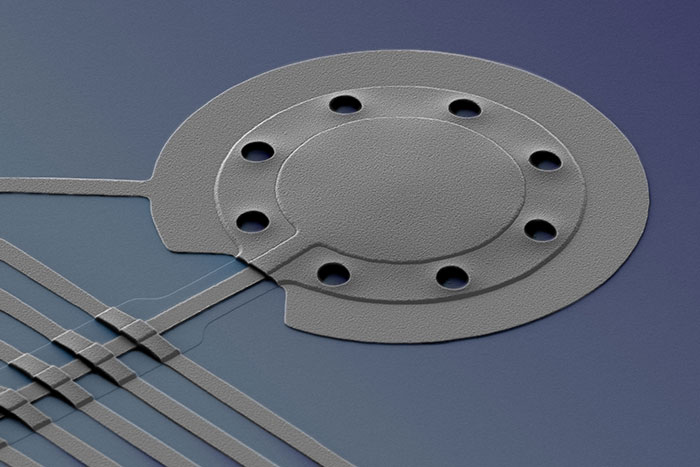
A quantum squeezing and amplification technique has been used to measure the position of a trapped ion to subatomic precision. The method was developed by Shaun Burd and colleagues at the US’s National Institute of Standards and Technology (NIST) in Boulder, Colorado and could be used to develop quantum sensors and quantum computers.

Heisenberg’s uncertainty principle puts a fundamental restriction on how precise a measurement can be made on a quantum object such as a single ion. It requires that the product of the measurement uncertainties in the position and momentum of the ion must be larger than a specific value. The only way to decrease the uncertainty in the position of the ion is to boost the uncertainty in the momentum. This process is called squeezing because much like a balloon, squeezing along one direction in position-momentum space creates a bulge in the other direction.

Squeezing is not a new idea and squeezed light is currently used by LIGO and Virgo to measure extremely small changes in length that occur when gravitational waves pass through the detectors.

Caught in a trap

In the NIST experiment, a magnesium ion is trapped using electric fields and then cooled to its ground state by applying a sequence of laser and microwave pulses. Even in this ultracold and confined environment, the uncertainty in the position of the ion (the extent of its “zero-point oscillation” within the trap) is about 70 times the size of the ion itself.

Making a more precise measurement of the position of the ion requires squeezing, which is done by oscillating one of the trapping fields at twice the oscillation frequency of the ion. This has the effect of amplifying the uncertainty in the momentum of the ion whilst shrinking the uncertainty in position.

The team then apply an oscillating “test” field that displaces the position of the ion within the trap. Next, a third oscillating field that is 180° out of phase with the initial squeezing field is applied. This “unsqueezes” the ion and amplifies the displacement caused by the test field. Finally, the amplified displacement is measured by shining light on the ion and observing its fluorescence.

Repeat for smaller displacements

The result is that the measurement is about 7.3 times more sensitive to small displacements of the ion compared to when squeezing and amplification are not implemented. This allowed the team to measure ion displacements of just 50 pm, which is about 10% of the diameter of a hydrogen atom. Even smaller displacements can be measured by repeating the process several times.

Monitoring the displacement of a trapped ion provides a very sensitive way of measuring acceleration and external fields so the technique could find use in quantum sensors. With further improvements, such sensors could be used to study the effects of gravity on quantum objects.

Trapped ions also function as qubits in quantum computers and the squeezing and amplification process could be used to transmit quantum information between ions.

Another possible application is photon recoil spectroscopy, which involves measuring the tiny change in momentum that occurs when an ion absorbs a photon. Such studies could reveal that fundamental constants vary over space or time – thereby pointing to new physics beyond the Standard Model.

The research is described in Science.

How to play catch while skydiving, overzealous plagiarism bot, Star Trek insignia spotted on Mars

Suppose you and a friend are skydiving and want to toss a ball back and forth while freefalling, what type of ball would you use? The answer, of course, is a ball with the same terminal velocity as a skydiver. In “The right ball for playing catch while skydiving” physicist Rhett Allain calculates the terminal velocities of popular sporting balls and finds them all lacking. Read his article to discover how it can be done.

Allain seems a bit obsessed with flying this week as he has also written an article about the physics of flying in an Iron Man suit – complete with free body diagrams.

Jean-François Bonnefon is a researcher who studies the interactions between humans and artificial intelligence (AI) systems. He became his own case study this week when a paper he had cowritten and submitted to a journal was thoroughly rejected by an AI system.

Some of the reasons for the rejection are hilarious. Bonnefon was accused of plagiarism, for example, because his paper contained journal references that had also appeared in other papers.

In a tweet he says “It would have taken 2 min for a human to realize the bot was acting up. But there is obviously no human in the loop here. We’re letting bots make autonomous decisions to reject scientific papers. I’m so excited to be at the forefront of this new era!”

Scientists using the HiRISE camera on NASA’s Mars Reconnaissance Orbiter have spotted structures on the surface of the Red Planet that bear more than a passing resemblance to the Starfleet insignia from Star Trek. According to the researchers, the structures were made when lava flowed around crescent-shaped sand dunes on the surface of Mars. You can read all about it in the Independent.

AI converts low-dose CT images to high-quality scans

CT images

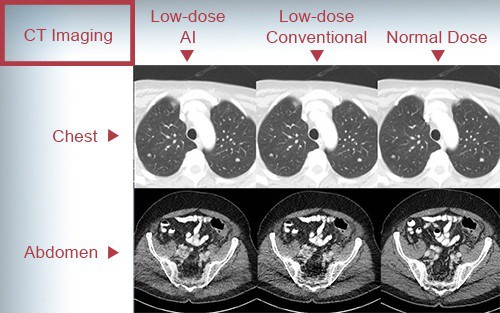
An artificial intelligence (AI) algorithm can transform low-dose CT (LDCT) scans into high-quality exams that radiologists may even prefer over LDCT studies produced via commercial iterative reconstruction techniques (Nature Machine Intelligence 10.1038/s42256-019-0057-9).

A team of researchers from Rensselaer Polytechnic Institute (RPI) in Troy, NY, and Massachusetts General Hospital (MGH) in Boston developed a deep-learning model called a modularized adaptive processing neural network (MAP-NN), which progressively reduces noise on LDCT images with guidance from the radiologist until the optimal level of image quality is achieved. Testing on images from three different vendors, three radiologists found the algorithm produced images that were either better or comparable to images processed with iterative reconstruction. The deep-learning method also processed images much faster.

“The deep-learning approach can thus already effectively compete with iterative reconstruction solutions and potentially replace the iterative reconstruction approach,” wrote the group, led by Hongming Shan of RPI.

Although commercial iterative reconstruction methods have helped to lower radiation dose in CT studies, they can also alter image appearance and add artefacts. To see if deep learning could yield improvements, the researchers tested the MAP-NN model on 60 low-dose CT scans performed at MGH.

The 60 scans, including 30 routine abdominal studies and 30 routine chest exams, were acquired on scanners from three different vendors: GE Healthcare, Philips Healthcare, and Siemens Healthineers. For each of the LDCT scans, the sinogram data were reconstructed separately using each vendors’ specific commercial iterative reconstruction algorithm, as well as filtered back projection (FBP) methods.

The researchers then applied the deep-learning model to the FBP-reconstructed studies in order to produce three denoised images for all cases. Next, three radiologists independently evaluated and scored the best deep learning-generated images and the best iterative reconstruction studies for two features: noise suppression and structural fidelity.

The radiologists preferred the best deep-learning reconstruction in two of the three vendors for the abdominal imaging cases. For the third vendor, the two image types were deemed statistically comparable. In chest exams, the deep-learning images and the iterative reconstruction images were judged to be statistically comparable for all three vendors.

Delving further into the data, the researchers found that the deep-learning method earned significantly higher mean scores for noise suppression and structural fidelity than the iterative reconstruction methods.

The researchers noted that their deep-learning method was applied to CT images without access to the raw data. More powerful methods will require access to the sinogram data, however.

“In collaboration with a vendor, our algorithm could be specifically trained with their data and achieve an even better performance than what we have described here using our agnostic algorithm,” they wrote. “With the availability of raw data, CT denoising can be performed from the sinogram domain to the image space, utilizing all the information for the best denoising results. Clearly, it is now time for CT vendors to open their data format, perform machine learning, and develop the next generation of CT image reconstruction algorithms in the deep-learning framework.”

  • This article was originally published on AuntMinnie.com. ©2019 by AuntMinnie.com. Any copying, republication or redistribution of AuntMinnie.com content is expressly prohibited without the prior written consent of AuntMinnie.com.

Comet mission given green light by European Space Agency

The European Space Agency (ESA) is to launch a probe to visit a comet originating from the outer solar system. The €150m Comet Interceptor spacecraft, proposed by a team led by UK-based researchers, will launch in 2028. It will be the space agency’s first so-called “fast” or F-class mission, which take under a decade from selection to launch and weigh less than 1000 kg.

The mission will take off together with ESA’s Ariel satellite, which will scrutinise the atmospheres of extrasolar planets. Once in space, the Comet Interceptor will travel to the L2 Lagrange point– a gravitational-balance point over a million kilometres beyond the Moon’s orbit – where it will lie in waiting for its quarry: a comet on its first dive in from the very farthest reaches of our planetary neighbourhood.

Unusually for a space mission, however, Comet Interceptor does not yet have a target in its sights. But by being placed at the L2 point it can wait, for several years if need be, until the right comet is spotted on an inward trajectory. Once an object has been selected, the Comet Interceptor will observe the comet using a collection of cameras and a mass spectrometer mounted on three separate spacecraft, enabling astronomers to build a detailed picture of its composition and shape.

The first mission to a body from another solar system would immediately give us accurate data on these objects

Alan Fitzsimmons

“We’ve learnt a huge amount about [comets], however, all of these past targets have been affected by their numerous passages past the Sun,” says Geraint Jones from University College London’s Mullard Space Science Laboratory, who is Comet Interceptor’s lead proposer. Indeed, each swoop into the inner solar system warms a comet’s frozen surface, alters its shape and causes ice-obscuring dust to accumulate on its nucleus. “A comet nearing the Sun for the first time since its formation should be pristine and unprocessed, providing a much greater insight into the nature of these ancient bodies and their role in the formation of Earth and the other planets,” adds Jones.

Astronomers will search for an object that could be studied by Comet Interceptor using sky surveys like Pan-STARRS, ATLAS and the forthcoming Large Synoptic Survey Telescope (LSST). “With LSST observing more than three magnitudes deeper than current surveys, we will routinely pick up new comets at a greater distance than ever before, well outside the orbit of Saturn,” says mission team member Michele Bannister from Queen’s University Belfast. “So for the mission target, we’ll have years to study it with telescopes on Earth before Comet Interceptor flies across to it. It’s possible the mission target could be discovered even before Comet Interceptor launches.”

From another system

One exciting possibility is that the mission will be able to intercept a comet or asteroid that originates from beyond our solar system. The first interstellar object of this kind, dubbed ‘Oumuamua, was observed wandering through our neighbourhood in 2017. But its discovery occurred much too late to arrange a spacecraft fly-by and it duly left the inner solar system, leaving many unanswered questions.

“The first mission to a body from another solar system would immediately give us accurate data on these objects,” says Alan Fitzsimmons, an astronomer from Queen’s University Belfast who is not part of the Comet Interceptor team. “Comparing this with our detailed knowledge of asteroids and comets in our own Solar System will clarify what these objects are truly like and how they might be altered by their voyages between the stars.”

Post-Soviet food system changes led to greenhouse gas reductions

Changes in agriculture, trade, food production and consumption after the collapse of the Soviet Union led to a large reduction in greenhouse gas emissions, a new study has found.

From 1991 to 2011, there was a net emissions reduction of 7.61 gigatons (Gt) of carbon dioxide equivalents – the same as one quarter of the CO2 emissions from deforestation in Latin America in the same period.

However, the team behind the research cautioned that ongoing changes in food systems in former Soviet Union countries suggest the reduced emissions will ultimately rebound.

They published their results today in Environmental Research Letters.

Dr Florian Schierhorn, from the Leibniz Institute of Agricultural Development in Transition Economies, Germany, is the study’s lead author. He said: “The global food system contributes significantly to greenhouse gas emissions, so understanding the source of greenhouse gas emissions from the different components of food systems is important. A key aspect of this is assessing how changes in international trade patterns affect regional greenhouse gas emission balances.

“When the former Soviet Union collapsed, the transition from a planned to a market economy had drastic consequences for the region’s agricultural sector and food systems. Higher prices and lower purchasing power reduced the consumption of meat, particularly beef.

“This fall in demand, coupled with a reduction in state support for agriculture, led to a halving in pig and cattle numbers. This collapse in the livestock sector led to widespread agricultural abandonment.”

To assess the impact this had on greenhouse gas emissions, the researchers used a database of land-use change and the associated changes in soil organic carbon stocks to quantify the emissions from agricultural production, including livestock and the emissions from the trade of agricultural goods.

They then estimated the net cumulative change in greenhouse gas emissions of all years from 1991 to 2011, minus the average emissions by the end of the Soviet Union.

Dr Schierhorn said: “The post-Soviet changes in greenhouse gas emissions from food production, food trade, and cropland led to a cumulative net reduction of 7.61 Gt CO2e from 1992 to 2011, compared to a scenario where emissions stayed at the late Soviet level.

“The most important reasons for this reduction were the decline in domestic livestock production, and soil organic carbon sequestration on abandoned cropland, particularly in Russia and Kazakhstan.”

However, the researchers noted that the ongoing carbon balance remains unresolved. Their analysis suggests several further developments, including the potential for abandoned cropland to sequester additional significant carbon until mid-century, but with these gains likely being mitigated by an increase in agricultural development.

In addition, importing agricultural commodities such as beef may compromise these gains through embodied carbon emissions.

Dr Schierhorn said: “Once economies in the former Soviet Union had stabilised in the late 1990s, domestic food demand in the region started to rebound. The consumption of beef, for example, increased by 15 per cent between 2000 and 2008.

“However, beef production in the region had stagnated, and shows no signs of recovering. The demand meant it became the second largest importer of beef globally, with 80 per cent coming from South America. This is significant, because South American beef exports embody high greenhouse gas emissions, due to deforestation and inefficient production systems.

“This relationship shows how negative emissions due to agricultural land abandonment can be compromised by increasing emissions from rising agricultural imports. This situation is likely similar in many industrialized and emerging regions where agricultural land use has been contracting in the recent past.”

Tunnel barrier disappears in a topological superconducting state

Researchers have seen Klein tunnelling – a rare relativistic phenomenon in which a tunnel barrier disappears – in a topological superconducting state for the first time. The result sheds more light on a previously overlooked aspect of topological superconductivity and could even help in the development of a new family of spintronic and superconducting devices, they say.

In 1928, Paul Dirac put forward his wave equation to describe relativistic particles. A year later, Oskar Klein solved the so-called simple potential step problem in quantum mechanics for the Dirac equation and found that, for relativistic particles, the transmission coefficient is always one regardless of the potential barrier height that particles tunnel through.

This perfect transmission of electrons through a finite barrier results in a doubling of the conductance at a superconductor/normal metal interface. This doubling effect, first predicted by Alexander Andreev in 1964, is very rarely observed in an experiment because it is extremely difficult, in practice, to make a “perfect” interface free of naturally forming barriers and defects.

Researchers led by Ichiro Takeuchi of the University of Maryland in the US say they have now observed Klein tunnelling in the form of Andreev reflection. They saw the effect as electrons travel through the interface between a metal and a topological superconducting state – that is, the superconducting surface state of a topological insulator.

Backscattering completely forbidden

“Some sort of barrier usually forms at the interface between a metal and a superconductor, which results in backscattering of some of the electrons travelling through the interface and a reduction in the Andreev reflection effect,” explains Takeuchi. “This backscattering is completely forbidden at our metal-topological interface, however, thanks to the topologically protected electronic states in the topological insulator.

“The result is that every electron has to travel through the interface to the superconductor, giving rise to perfect electron transmission and perfect Andreev reflection,” he tells Physics World. “Klein tunnelling thus essentially ‘removes’ the barrier at the interface.” This effect could be used to make more efficient superconducting devices in the future, since it is such barriers that adversely affect device performance and produce variations in device parameters.

Takeuchi and colleagues performed their experiments on heterostructures made of the superconductor YBplaced underneath samarium hexaboride (SmB6), which is a topological Kondo insulator. Kondo insulators are strongly correlated materials, which develop a narrow energy band gap at low temperatures due to the Kondo effect. This energy gap means that there is an insulating bulk sandwiched between topologically protected conducting surface layers.

Kondo insulating nature of SmBis important

“It is this Kondo insulating nature of SmBthat was crucial in our experiments,” explains Takeuchi. “In other topological insulators, such as Bi2Se3, the bulk is sometimes not insulating, which means that we cannot probe the conducting surface state because it is ‘contaminated’ with conductivity from the bulk.

“In our study, the Kondo gap of SmBat low temperatures provides the ‘extra protection’ against bulk conduction that would have otherwise masked the spin-momentum locking (the topological effect) in the surface states.”

Proximity effects

The researchers were able to induce superconductivity in the surface states of SmB6 thanks to the proximity effect of YB6. To then carry out the Andreev reflection experiment, they injected electrons into this topological superconducting state from a metal – in this case a metal tip made of a platinum-iridium (PtIr) alloy. This arrangement is a standard “point contact” spectroscopy set up.

“We bring the PtIr tip into contact with the surface states of SmB6, so that the electrons in the tip region ‘pick up’ the helical (spin-momentum locked) states of SmB6,” explains Takeuchi. “This is the second proximity effect at work in our experiment. The third ingredient is the presence of 1D conduction channels that are present on the surface of SmB6.

“Klein tunnelling is an inherently 1D effect and these nanostructured 1D channels are necessary. So, for a seemingly simple point-contact experiment, we have many factors coming together in a ‘perfect storm’ to allow us to observe Klein tunnelling.”

The researchers say they repeated their experiment many times and kept getting the same result: the normalized differential conductance gap was exactly two in the superconducting gap.

Towards a new family of spintronic and superconducting devices

The effect could be used to make an entirely new family of spintronic and superconducting devices in which complete spin-momentum can produce unique device functions and properties, he says. “For example, the fact that we have observed perfect Andreev reflection means we can now imagine making a spintronics device with an inherently perfect spin filter with magnetic layers. What is more, the SmBcould be fabricated using relatively simple RF sputtering techniques, so devices and circuits made from them could be readily scaled up.”

The disappearance of a tunnel barrier at the metal/superconductor interface could also be exploited, in principle, to make arrays of Klein Josephson junctions that should all have the same junction parameters without any variations, he adds. “This is a much-coveted feature for superconducting electronics, including quantum information processing devices.”

The team, reporting its work in Nature 10.1038/s41586-019-1305-1, says that it will now try to make such devices. “We will also be looking for other materials that might have similar properties to SmB6,” says Takeuchi.

Battle of the Elements round two, reliving the Chernobyl disaster, smaller habitable zones for alien life

In the latest Physics World Weekly podcast, we present the second round in our Battle of the Elements contest. To celebrate 2019 as the International Year of the Periodic TablePhysics World editors have been arguing the cases for their favourite elements over the past few weeks. First up, Tami Freeman makes the case for technetium, Michael Banks argues that helium is no lightweight, and Anna Demming argues for carbon. To cast your vote for one of these elements visit our Twitter page and three more Physics World journalists will make the case for their element next week.

We also chat about how reactor physics is depicted in the television miniseries Chernobyl and learn why habitable zones for alien life could be smaller than previously thought.

Chernobyl is magnificent despite its flaws

I have just finished watching the Sky/HBO television miniseries Chernobyl and I loved it – as much as you can love a tragedy. I know that it is a somewhat flawed depiction of what happened when a Soviet nuclear reactor exploded in 1986, but I am pleased that two of the main characters are physicists and that the final episode gets into the nitty gritty of reactor physics.

For me, the highlight of the miniseries is episode 5, in which chemist and physicist Valery Legasov (played by Jared Harris above) testifies at the trial of three officials responsible (in part) for the tragedy. Armed with a minute-by-minute account of what happened in the control room provided by physicist Ulana Khomyuk (Emily Watson), Legasov reveals that a fatal flaw in reactor design contributed to the disaster – a flaw that the Soviet authorities are desperate to cover up. He does this heroically, with the knowledge that it will end his career and indeed his life.

Brilliantly, Legasov charts the final hours of the reactor using coloured cards to represent physical processes that either increase (red) or decrease (blue) the power of the reactor. The effect of the graphite moderator is a red card, for example, while neutron absorption by the control rods is blue.

I have a limited understanding of reactor physics, but there was nothing in Legasov’s presentation that set off any alarm bells. And what really pleased me, is that the explanation was so clear and so simple that millions of viewers will now have a pretty good idea of how a nuclear reactor works.

Indeed, the Metro newspaper proclaimed “Nuclear physics has never been so compelling” in its five-star review of the episode.

Chernobyl has also inspired physicists to give their own explanations of what went wrong at the reactor. The best I have seen is Scott Manley’s description below – which provides much more information than Legasov’s but remains compelling.

Although the reactor physics in Chernobyl appears to be accurate, some of the miniseries is indeed fiction. While Legasov was a real person, Khomyuk never existed. Rather she is a fictional embodiment of all the Soviet physicists that investigated the disaster.

Some critics have also identified errors in how Soviet politics are depicted: see, for example, this article in the New Yorker. If you are looking for a review of the miniseries from someone involved in the immediate aftermath of the disaster, Robert Peter Gale is in the process of writing an epic four-part critique of Chernobyl. Gale is an American haematologist and researcher who travelled to the Soviet Union shortly after the disaster to advise on treatments for radiation exposure.

Tracking pelagic thresher sharks

Pelagic thresher sharks visit the Monad Shoal seamount in the Philippines so that cleaner wrasse eat the parasites that infest their skin and gills. Within this zone, they are well protected because the local economy near Malupascua Island receives 80% of its income from dive tourism. But when the sharks venture further afield, they are at risk from fishing lines set for smaller fish, and from capture for their meat, fins, skin, and liver oil. Combined with the animals’ slow reproduction, these pressures mean that numbers of pelagic thresher sharks are declining. For that reason, scientists have been monitoring the sharks’ whereabouts using acoustic trackers. Journalist and photographer Louise Murray tells the full story in the June 2019 issue of Physics World.

Copyright © 2026 by IOP Publishing Ltd and individual contributors