Smart sensors and novel nanomaterials draw crowds in Berlin

Silicon nanomaterials that squeeze 40% more energy into batteries. A smart watch that gives people with diabetes a pain-free way of tracking their blood glucose levels. “Smart” sensors that help prevent repetitive strain injuries and diagnose faults in remote equipment. A replacement for toxic chemicals in flame-retardant materials. These are just a few examples of the innovations discussed in Berlin last week at IDTechEx Europe, an annual conference that focuses on some of the hottest topics in science and technology.

On 10 April, while the rest of the physics community (judging from Twitter, at least) was cooing over the first image of a black hole, scientists from two start-up companies, SiLiB and Sila Nanotechnologies, outlined their plans for manufacturing lithium-ion batteries with silicon anodes instead of conventional graphite ones. The idea of replacing graphite with other materials, including silicon, isn’t new, and it’s easy to see why it’s attractive: the specific capacity (roughly, how much energy a material can store) of silicon is 4200 milliamp hours per gram (mAh/g), compared to graphite’s measly 372 mAh/g. Other factors, such as the make-up of the cathode, limit the expected improvement in storage capacity to 40% rather than a factor of 10, but that’s still significant. I’d love it if my mobile phone battery lasted 40% longer, and an electric car that travelled 40% further between charges would be a game-changer for many consumers.

There’s a problem, though: silicon anodes swell and shrink by up to 300% during charge-discharge cycles, causing irreversible damage to the battery. SiLiB’s solution is to make its anodes from silicon nanowires grown on an ultrathin stainless-steel mesh that is flexible enough to cope with the swelling. The results seem promising: CEO Arnon Blum presented data showing that SiLiB’s batteries retain 70% of their capacity after 300 charge cycles, and there were audible sighs of disappointment from the audience when he said that the product is still in development.

Sila Nanotechnologies, in contrast, hopes to launch its first commercial product later in 2019, albeit for smart watches rather than the electric vehicles its CEO (Gene Berdichevsky, an early Tesla employee) had in mind when he co-founded the company in 2011. Sila’s anodes are made from a silicon-dominant nanocomposite material, and while the company’s business-development manager, Craig Weich, declined to give details (“My slides were a lot more interesting before our IP folks reviewed them,” he joked), the basic idea is that the nanocomposite incorporates enough space in its structure for the silicon to swell inside it. According to Weich, the main thing delaying the material’s commercial roll-out is that it’s difficult to manufacture it in large quantities – which is why Sila is targeting the market for smart watches rather than mobile phones or electric vehicles.

Pain-free glucose monitoring

Another company hoping for a piece of the smart-watch market is PKVitality, a Paris, France-based start-up that aims to give people with diabetes a pain-free way of monitoring their blood glucose levels. PKVitality’s smart watch fits over (and communicates with) an adhesive patch containing millimetre-long microneedles that sample the interstitial fluid in the upper layers of the skin. This interstitial fluid reacts with glucose oxidase enzyme in the patch, liberating electrons and making it possible to infer blood glucose values from the resulting electric current. Because nerves in the wrist are more than 1mm below the surface, PKVitality CEO and founder Luc Pierart claims that applying the patch is no more painful than running a fingernail over the skin – a huge improvement over the several-times-daily fingerprick tests that most people with diabetes use to monitor blood sugar.

Photo of a watch with an adhesive patch underneath it.

PKVitality’s watch isn’t commercially available yet, and some aspects of it still need work. During the question-and-answer session, Pierart acknowledged that the watch needs to be worn pretty much continually to keep the patch in place and avoid damaging the microneedles. Its accuracy as a glucose monitor has also so far only been tested in animals. However, a preliminary study on pigs found that blood-glucose results were 99% accurate, and Pierart claims that the smartwatch interface also helps to reduce the stigma that some people with diabetics feel when using fingerprick tests and conventional glucose monitors.

Sensors for the workplace

Another company that aims to use innovative sensors to reduce pain is Myontec, a Finland-based start-up founded by a physicist, Pekka Tolvanen. Myontec bills itself as “the world’s first comprehensive out-of-the-lab muscle monitoring system provider”, and its system consists of a shirt and shorts fitted with conductive textile sensors that measure activity in 14 muscle groups at once. A mobile app records data on the wearer’s movements, and by comparing these data to reference data, Tolvanen claims that Myontec’s scientists can identify potential causes of repetitive-strain injuries.

Work-related musculoskeletal disorders are a major contributor to global ill health, and they also cost the world’s economy around €400bn a year in lost work time. Tolvanen has calculated that Myontec’s services could save a 1000-employee company up to €1.5m a year in reduced sick days, and he and his colleagues have carried out several test projects. In one study, Myontec’s experts found that the forearm muscles of workers in a meat-cutting factory were being heavily overloaded by the long-bladed knives they had to use. After the factory’s owner switched to medium-sized blades, instances of carpal tunnel syndrome among workers fell by 100%.

Reducing pain isn’t the only way that smarter sensors can improve people’s lives. On the conference’s second day, I spoke to scientists at a start-up called Flicq that makes sensors for industrial installations. According to business development manager (and physicist-by-training) Ikenna Gaius, Flicq’s sensors make it possible to identify and diagnose problems with machinery remotely, rather than waiting for the apparatus to fail or sending out engineers to perform maintenance on a fixed schedule. For equipment in hard-to-reach locations, that can be a godsend. Gaius’ previous career was in the oil and gas industry (he describes himself as an “oilhead” rather than a physicist), and he told me that he once had to fly an engineer out to an oil rig just to change a fuse. This, he says, was “crazy”, and he doesn’t like to think about how much it cost.

Humble products, big rewards

Curiously enough, both Myontec and Flicq started out by making sensors for athletes before deciding to enter the market for industrial applications. Hearing this put me in mind of another stand-out IDTechEx talk, this one on graphene. As the speaker, Nikolaus Nestle, pointed out, many of the first commercial applications of graphene were in high-end sporting goods such as running shoes and golf balls. For some of these products, adding graphene made a real, measurable difference to performance. For others, however, it was essentially a marketing gimmick, one that risked undermining graphene’s reputation.

Nestle – a physicist and principal scientist at BASF Advanced Materials and Systems Research in Ludwigshafen, Germany – thinks that some of the most promising future applications of graphene will instead be found in unglamorous areas that don’t get much attention in scientific papers. One example is flame-retardant materials. Existing flame-retardant additives are pricey and sometimes toxic, and a growing body of evidence suggests that graphene could be a workable replacement. Although no-one is entirely sure why graphene inhibits the spread of flames, one possible explanation is that the material’s structure creates a “labyrinth effect” that prevents combustible gases from escaping. Applications like these, Nestle thinks, could be just the thing to shift graphene out of the proverbial “valley of disappointment” and onto the “plane of productivity” – thus keeping it among the hottest topics in science for years to come.

More black-hole mergers from LIGO–Virgo

From the APS April Meeting in Denver, Colorado

The April Meeting of the American Physical Society kicked off today with about 1600 particle, nuclear and astrophysicists gathering in Denver, Colorado. I thought I would start the conference by learning a bit more about the other big black-hole news story this month – the 1 April start-up of the upgraded LIGO and Virgo gravitational wave detectors.

From what I heard in a session called “What we are learning from the population of detected binary black hole mergers“, in less than two weeks the detectors have already bagged two potential black-hole merger events, so the future looks promising.

Indeed, according to Eva Huang of MIT, several black-hole mergers per month should be seen by the detectors — and up to one neutron star merger per month as well.

But what can we learn from the 10 black-hole mergers already spotted, as well as from the many more likely to come?

One important measurement is the rate at which these mergers occur in the universe, which was the subject of a talk by Shasvath Kapadia of the University of Wisconsin — Milwaukee. Knowing this rate should yield a wealth of information about how black holes are formed, how they find themselves in binary systems and how they gradually move close enough together to merge.

Another interesting issue is a black-hole mass gap that is expected to arise from an astrophysical instability that occurs when stars of certain sizes explode as supernovae, which was discussed by Daniel Finstad at Syracuse University. The prediction is that black holes between 50 and 130 solar masses should not be produced by supernovae. The big question is whether LIGO–Virgo has the mass resolution to see this gap?

If you have been following LIGO–Virgo, you know that a merger has already been seen that probably involved a black hole in the gap. Also, many of the observed mergers created black holes with masses well within in the gap. So establishing the existence or otherwise of the gap could be tricky.

And with the first-ever image of a black hole now taken by the Event Horizon Telescope, it looks like it is going to be a very interesting year for black-hole physics.

Black hole simulations, delicate molecules in space and more from the University of Colorado

I spent yesterday at the University of Colorado in Boulder at the physics department and JILA, which is a joint institute of the university and nearby NIST — a US government institute that focusses on standards and technology. Unlike my recent visit to NIST, which looked at some of the incredible challenges that have been overcome in order to turn cutting-edge technology into practical devices, yesterday was very much about big ideas in physics.

I spoke with black-hole expert Mitch Begelman about the significance of this week’s unveiling of the first-ever image of a black hole and you can hear that conversation in an upcoming episode of the Physics World Weekly podcast. Begelman also told me about his research doing computer simulations of the magnetic plasmas that surround black holes. These are done on one of the world’s most powerful supercomputers and are providing insight into the extremely violent environment that surrounds black holes and creates the radiation that we detect with our telescopes.

Marino and Zimmerman

In a warm up to the April Meeting of the American Physical Society, which starts today in Denver and covers particle physics, I spoke to Alysia Marino and Eric Zimmerman (above) about their involvement in neutrino detection experiments including T2K in Japan. In an upcoming podcast you will hear them explain how the humble neutrino could help us solve on of the big mysteries of physics — why is there much more matter than antimatter in the universe?

Jun Ye

Boulder is famous for its physicists who study and control systems of ultracold atoms and I was very keen to speak to  Jun Ye, who is one of the world’s leading experts on atomic clocks. In an upcoming podcast you will here Ye explain why he is fascinated by the precision timekeepers and what the atomic clocks of the future could look like.

What is the difference between an optical lattice of atoms and an array of atoms held in optical tweezers? Mark Brown, who is doing a PhD in Cindy Regal’s lab at JILA, explained the differences and how atoms trapped in optical tweezers could be used for quantum simulations and quantum computing — stay tuned for more from Brown.

I also spoke to  the theorist Jose D’Incao, who is doing calculations that should help his Colorado colleagues (including Nobel prize winner Eric Cornell) create delicate three-atom molecules that can form in ultracold gases. Normally these molecules are a nuisance because they decay quickly and exit the gas, reducing experimental lifetimes. D’Incao wants to study their formation because it could provide important insights into how chemical reactions occur. The molecules are so sensitive to external perturbations such as gravity that they will be studied in an experiment that is now aboard the International Space Station.

Nico Hernández Charpak

And perhaps ending on a more practical note, I had lovely chat with physicist and podcaster Nico Hernández Charpak. That surname sounded familiar so I had to ask — yes, he is the grandson of the physics Nobel laureate Georges Charpak. Hernández Charpak is involved in a programme called STROBE, which aims to transform the imaging science and technology of functioning nanosystems. The problem is that our ability to create nanotechnologies has outpaced our ability to characterize the devices, which he is keen to help solve as Associate Director of Research and Knowledge Transfer for the organization.

I also chatted to  Hernández Charpak about his passion for podcasting and LatinoLabs, which is a bilingual podcast he produces in both Spanish and English. So far he has recorded a behind-the-scenes visit to a research machine shop and chatted to scientists working on the Cassini mission to Saturn.

Returning to the Moon with gusto

Space gateway

Astronauts from the Apollo era needed “fast reactions like cowboys”. But the astronauts retuning to the Moon will need a much deeper understanding of the science and technology, especially the geology.

That’s the opinion of Matthias Maurer, a freshly trained astronaut with the European Space Agency, who was speaking today at the 2019 general assembly of the European Geosciences Union.

Maurer – a materials scientist who became certified for space travel space in 2018 – was the keynote speaker in a session on lunar science and upcoming lunar missions. The return of humans to the Moon is a question of when, not if, with all the major space players investigating the possibilities. Maurer says his preference is the creation of a permanent base in the same way humans have explored Antarctica.

He acknowledges, however, that there are many technical challenges to overcome. Some of these will be addressed at a new Luna facility due to open at ESA’s Astronaut Centre in Cologne, Germany. Researchers at that centre will design the technology needed for the future lunar village, tackling questions such as: What’s the best way to produce oxygen and energy for a Moon base?; How can astronauts live and work for longer periods of time in reduced gravity?; and how can we to improve communication between astronauts, operations teams, and the research scientists on Earth?

Matthias Maurer

It was interesting to hear Maurer speak about it taking “10 times as long” to carry out basic tasks in the rigid pressurised space suits currently worn by ESA astronauts. Improvement may be coming though in the form of flexible skin suits where the textile itself would have to maintain the pressure.

Lunar challenges

Following Maurer was Chris Russell, who led the team designing the magnetometer on the SpaceIL mission, which unfortunately crashed into the Moon during its landing manoeuvre yesterday.  Considering the circumstances, Russell was in good spirits and applauded the Israeli private organisation for its endeavour on a limited budget. “They fell victim to the fact it’s very hard to go land on the Moon,” he said. Russell had no further information about the causes of the crash or whether SpaceIL will have a second attempt at a Moon landing, though he  believes they could be successful should they get the funding.

In the meantime though the Moon missions are now coming thick and fast with China and India both launching robotic missions before the end of 2019. As a stepping stone to a permanent lunar base, ESA is currently working with the Japanese and Canadian space agencies on the HERACLES project. The concept is to land a 1800 kg rover, which will be controlled by astronauts located in the Deep Space Gateway – a lunar-orbitting space station currently being developed by NASA and partners.

Russia returns

Finally, it was also interesting to hear about Russia’s plans, from Igor Mitrofanov of Russia’s Institute for Space Research (IKI) in Moscow. Over the next 5 years, Russia has three Moon missions to investigate the cold southern polar region.  Astrobiologists believe that the chemistry of the lunar permafrost may reveal clues to the origins of life on Earth.

Although the origins of life is still a highly contested question, some believe that it could have been seeded by complex molecules contained in asteroids that bombarded the Earth. The mechanism through which life then emerged is not clear, but any “preorganic” molecules preserved in the lunar ice may provide clues.

LUNA-25 scheduled for 2021 will be Russia’s first mission to the Moon since the USSR launched LUNA-24 in 1976. It will be swiftly followed by an orbitor mission (LUNA-26) in 2023, then another lander (LUNA-27) in 2024. In addition to the science goals, these missions will also test a new “soft lander” technology, which Mitrofanov compared to a reverse parking system you find in cars. If successful, this technology could assist future astronauts to guide themselves to a safe landing, clear of hazards such rocks and steep slopes.

I caught up with Mitrofanov after the event, so you can hear all about Russia’s return to space in an upcoming episode of the Physics World Weekly podcast.

Seeing the unseeable: the impact and legacy of the first black-hole images

For the last two decades, we’ve been living through a “golden age” in astronomy. We’ve mapped fluctuations in the cosmic microwave background, spotted thousands of extrasolar planets and measured the accelerating expansion of the universe. And then, in 2016, gravitational waves were detected for the first time, opening an entire new window on the cosmos, including the sight of colliding black holes and neutron stars.

But those breakthroughs have been matched – and possibly even eclipsed – by the first-ever image of a black hole, which were released earlier this week.

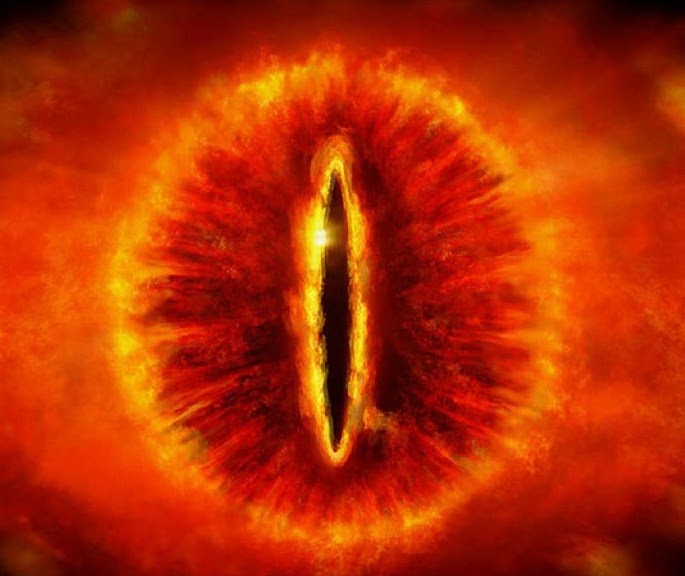
Likened by some to the eye of Sauron from Lord of the Rings, this instantly iconic image – which will grace the cover of the May 2019 issue of Physics World magazine – shows the glowing disc of hot matter surrounding the event horizon of the supermassive black hole M87* at the heart of the Messier 87 galaxy. The dark region at the centre is the “shadow” of the black hole, roughly three times larger than the (invisible) event horizon. Predicted by general relativity, the shadow is significant as it’s a feature of the horizon, while its size and shape gives clues to the mass and spin of the black hole.

But the images of M87* aren’t just scientifically significant. Obtaining them was an experimental tour-de-force too. As the smallest angle that a telescope can resolve is inversely proportional to its diameter, you’d need a dish as big as the Earth to see a black hole, the largest of which would fit snugly inside our solar system.

Astronomers’ solution was the Event Horizon Telescope – a network of 8 radio telescopes, whose signals are combined using very-long-baseline interferometry. Atomic clocks had to be installed at each location to perfectly “time stamp” the images, while data banks from the telescopes had to be flown to a common data centre for processing.

The ensuing image, which hit the headlines and went viral on social media, was also a triumph of data analysis. Astronomers observed the black hole over four days in April 2017, generating a staggering five petabytes of data they’ve spent the last two years crunching through, with Katherine Bouman – who’s soon moving to Caltech – given main billing by many news reports. Their heroic efforts have paid off, transforming the event horizon from a purely mathematical concept, scrawled on blackboards and written in lecture notes, to a measurable, physical entity.

Astronomers are now hoping for even better images of M87* by adding more telescopes to the EHT. And we could soon see Sagittarius A* – the black hole at the heart of our Milky Way. It’s nearer than M87* but harder to resolve, changing over minutes rather than days.

To find out more, I urge you to explore the research behind the image, which appears in a series of free-to-read papers in the Astrophysical Journal (875 L1-5), published by the Institute of Physics (which publishes Physics World) on behalf of the American Astronomical Society. Within two days of publication, the papers had been read and downloaded more than 376,000 times.

Our view of the cosmos will truly never be the same.

• For more on how the black hole was imaged, listen to the latest episode of the Physics World Weekly podcast.

Black hole image sparks Internet memes, unsavoury behaviour and a Google Doodle

Pi day is on 14 March while 31 October marks dark-matter day, but surely 10 April is now set to become “black hole day” following the landmark publication of the first-ever image of a black hole. Taking hundreds of astronomers belonging to the Event Horizon Telescope years to painstakingly piece together, the blob-like picture is likely to become an iconic image of modern science.

You can can find out all about the discovery by reading our news story, watching our video as well as listening to Physics World journalists discuss the results, which have been published in a special issue of Astrophysical Journal Letters.

The finding made it onto most newspaper front pages the next day and for those in the UK it almost eclipsed the latest Brexit news. Although the Metro newspaper cunningly combined the two with the image accompanied by “What Brexit looks like from space”.

While some claimed — much to the dismay of many — that the image wasn’t that impressive, it was perfect fodder for an Internet meme. Hundreds duly obliged by creating and sharing their creations on social media with even the Royal Institution getting in on the act.

Some of our favourites include the black hole being compared to the eye of Sauron…

…a bagel

…and being combined with that other rich source of memes: cats.

It is even sparked a Google Doodle that was quickly put together on the day.

Unfortunately, the news also brought out the less humourous side of the Internet, with fake Twitter accounts being created for Katie Bouman – one of the key people behind the algorithm that produced the image. The accounts contained posts that looked fairly convincing, but once found out to be fake were quickly deleted.

There was also editing to her newly created Wikipedia page that downplayed her contributions in creating the image. But that has not deterred the page from being translated into 20 languages. And if you want to learn more about her work, then check out this TEDx talk she gave in 2016 about how to take images of black holes.

Keep an eye out for more coverage in the coming months.

Language learning in children is like a phase transition

New research suggests that the sudden ability of young children to understand and form complex sentences is comparable to a physical phase transition. Using principles from statistical mechanics, Eric DeGiuli at the École Normale Supérieure in Paris has explained the abrupt transition by comparing a child’s learning of language with the freezing of water.

A key stage of a child’s development is the point at which they switch from seeing language as a random jumble of words to a highly-structured system for conveying information. After this transition – which happens remarkably quickly – they can for the first time use grammatical structures to construct meaningful new sentences, even if they have never heard them before. The cause of this sharp transition has mystified linguists for many years, and in this study DeGiuli tackled the problem from the angle of statistical physics.

DeGiuli took his inspiration from the hierarchical tree structure that describes how sentences are formed in almost all human languages. In this model, the sentence forms the “trunk” of the tree, with the branches representing smaller elements of the sentence, such as noun or preposition phrases. The tree continues to branch for successively smaller subdivisions of the sentence, eventually to the point where individual words form the “leaves” of the tree.

As very young children listen to people talking around them in fully-formed sentences, they are exposed to the “surface” of this tree-like network. They start to identify and learn individual words – the leaves of the tree – but cannot yet discern the deep branching structures underneath the leaves.

At this stage, proposes DeGiuli, all possible arrangements of the individual words are equally likely – even nonsensical arrangements that don’t convey any valuable information. This, he says, is similar to the microstates in statistical mechanics, the set of all possible particle configurations in a physical system.

Reducing the possibilities

As children learn, they instinctively reduce the number of possible word arrangements. They assign “weights” to different branches, continually adjusting them in response to the sentences they hear. Eventually, nonsensical branches acquire small weights compared to information-rich branches, effectively “pruning” the tree to discard random word arrangements while retaining those with meaningful structure.

This pruning process can reduce both the number of branches both near the tree’s surface, and those deeper down. According to DeGiuli’s analysis, this plays a similar role to lowering the temperature of a physical system, which at a certain point leads to a phase transition. When water freezes, for example, the reduction in temperature at both the water’s surface and in its interior reduces the number of possible microstates, causing the system to transition rapidly to a more ordered solid.

The theory appears to be consistent with psychologists’ observations of language acquisition in young children. DeGiuli hopes that his results could help to inform neurological studies, potentially enabling researchers to discover how language learning is inhibited in children with learning disabilities.

The research is described in Physical Review Letters.

Metrology marathon at NIST

I had a fantastic visit on Thurdsay to NIST in Boulder, Colorado, where I spoke to some of the many talented folks who work there developing new technologies for metrology. There was no shortage of passion and enthusiasm so I don’t really know where to start, but here goes.

I met with Sae-Woo Nam and colleagues, who you may recall have used superconducting nanowires to try to detect dark matter and dark photons. Listen out for our conversation in an upcoming Physics World Weekly podcast.

Then I spoke with Liz Donley about her atomic gyroscope that is so sensitive it can detect the rotation of the Earth. The detector is based on atomic interferometry and Donley and her colleagues are now working on further miniaturization. You can read more in this preprint on arXiv: “Multi-axis atom interferometer gyroscope with a single source of atoms“.

A big theme for Donley, Nam and many other people at NIST is how to take a complicated technology like an atomic interferometer and package it in a chip-like system that can be taken out of the lab and used for practical applications such as navigation in the case of an atomic gyroscope.

I also met with John Kitching who leads an effort called “NIST on a Chip”, which aims to make metrology technologies used in labs like NIST available to the wider world. So instead of a company having to send a measurement apparatus to NIST or another lab for calibration, the equipment  would have a NIST chip built-in, which would do the calibration locally.

NIST on a Chip

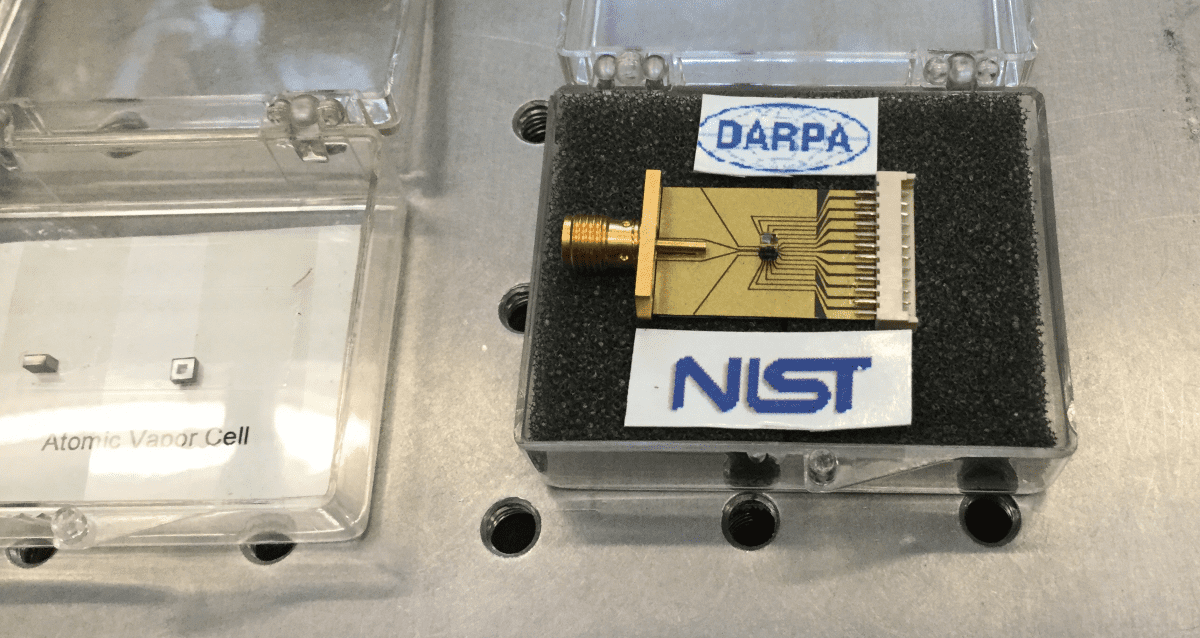
John showed me some atomic clocks on a chip (see image above) and explained that while the devices are nowhere near as accurate as national time standards, they do the job — and that seems to be a credo of NIST on a Chip.

Aluminium clock

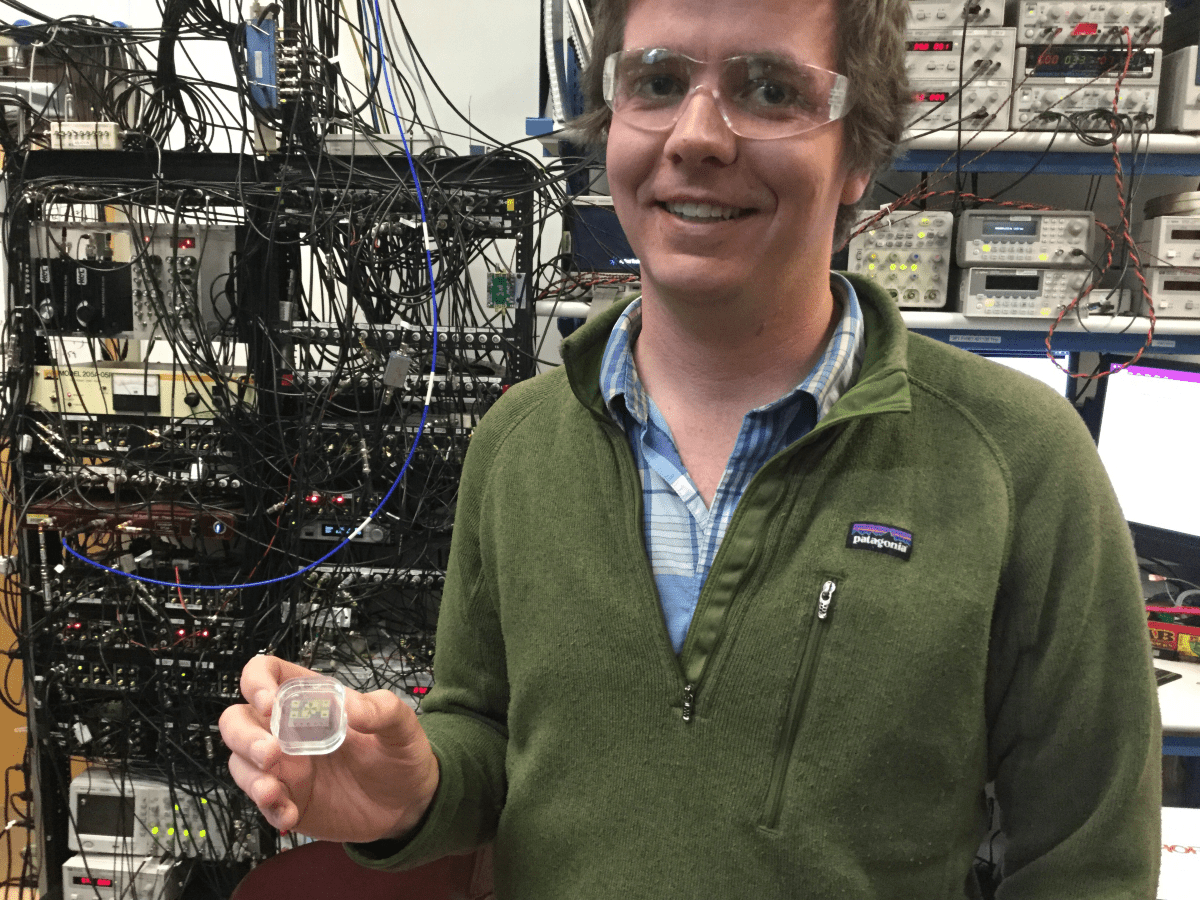
Speaking of national time standards, I also saw the most accurate optical clock in the world — which could be a contender to be a time standard of the future. That clock uses an aluminium ion to keep time, but because aluminium is tricky to work with, it is paired with a second species of ion and a quantum-information technique is used to read out the time. That clock was built by David Hume, Sam Brewer and colleagues and in the above photo, Brewer holds a chip that is used to trap the ions — yes even a clock that is accurate to better than one part in 1018 is on a chip! There is more about this clock in an upcoming podcast.

Laser mirror

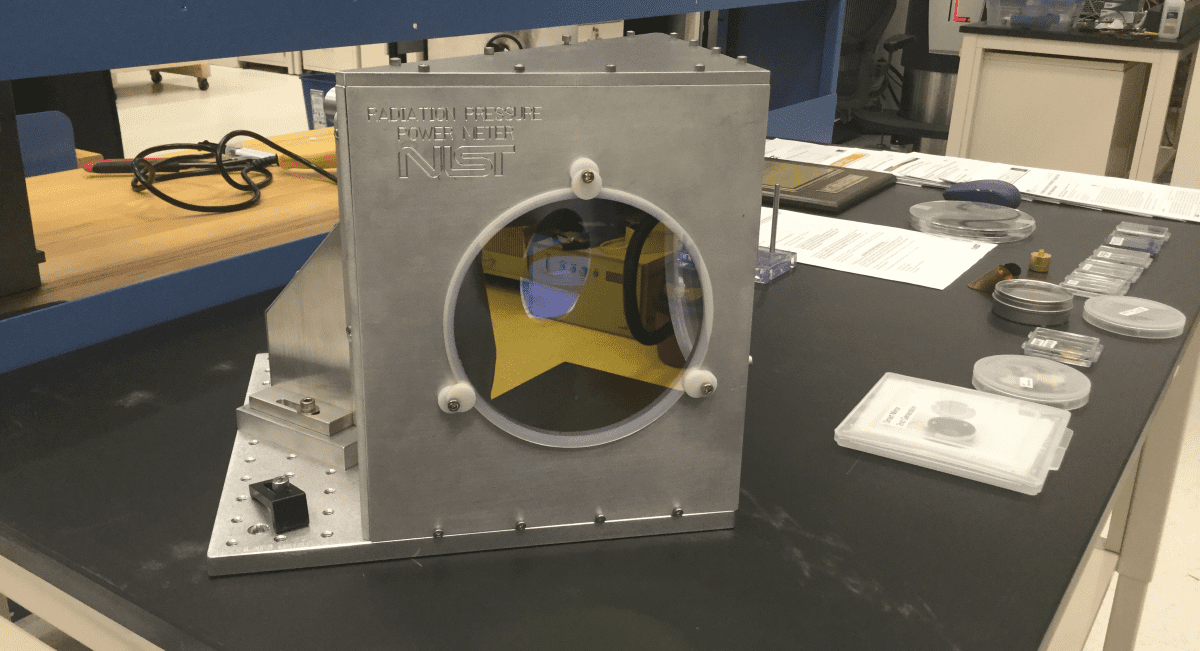
I finally found something that was not on a chip when I chatted with Paul Williams and Michelle Stephens, who are both experts in detecting light — but a very different power levels. Williams calibrates kilowatt lasers, which can easily blast a hole through a thick piece of metal. Power is normally measured by firing the laser at a huge target, which can safely absorb the energy by heating up. In NIST’s new method, the laser beam is reflected from a mirror that is mounted on a spring. The pressure of the light deflects the mirror and this is used to calculate the power. Pictured above, the device is about the size of a four-slice toaster.

Stephens develops technologies for measuring very dim light, right down to the single photon level. As well as using superconducting nanowire detectors, she also creates tiny bolometers that are coated with carbon nanotubes to make them as black as possible. She currently has devices in space on a mission that studies light from the Sun and hopes that someday a similar set up could be used to study light emitted from Earth into space.

Neural nets

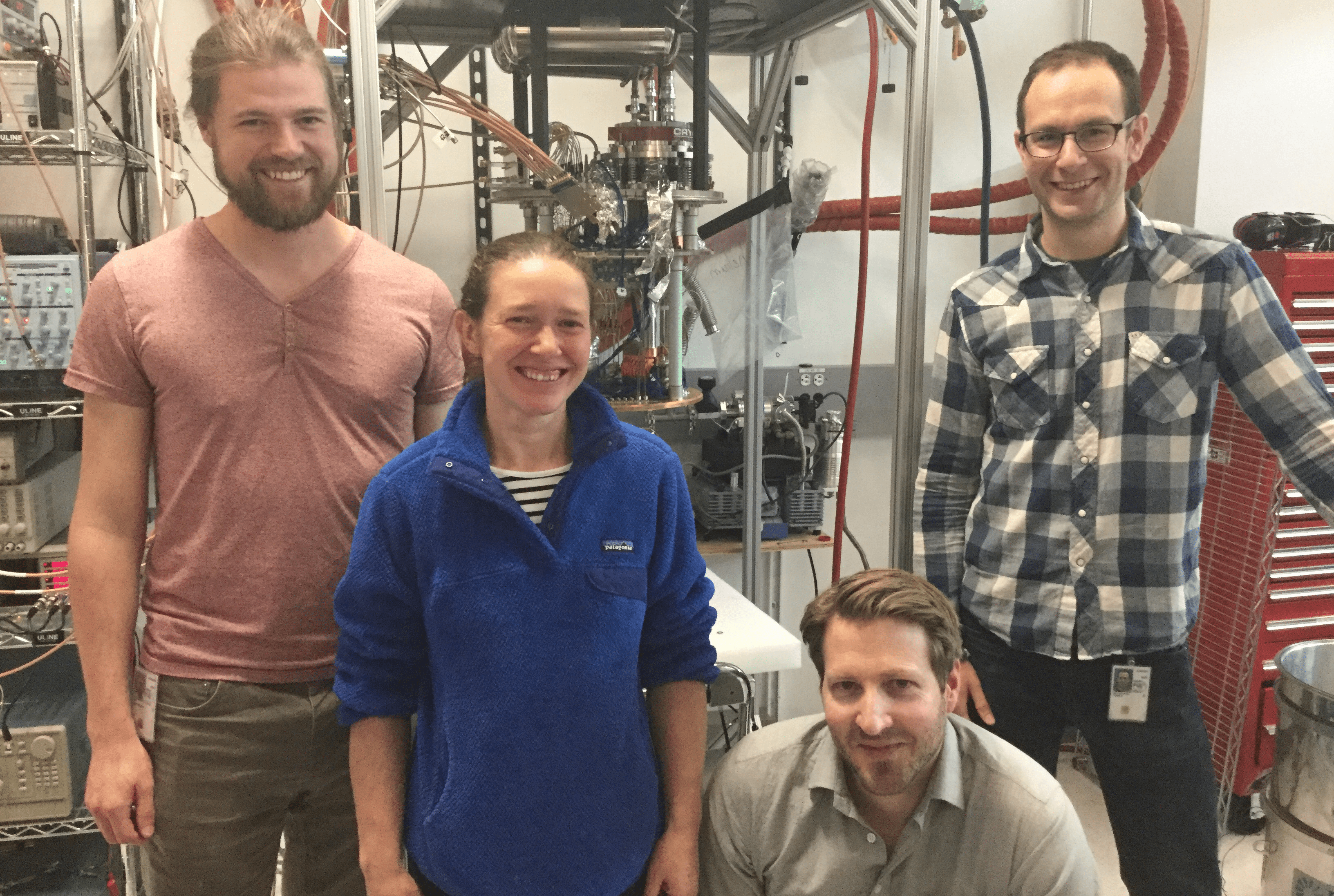
Why would you want to make an artificial neural network that combines photonics, superconducting circuits and silicon-based light emitters? After chatting with Alex Tait, Sonia Buckley, Jeff Shainline and Adam McCaughan (pictured above) I was convinced. You can find out more about their system at SOEN.SYSTEMS.

Then it was a quick dash to the University of Colorado, where I met with Ana Maria Rey — who is based at JILA, which is a joint institute of NIST and the university. She is a theorist who is focussed on how interactions between trapped atoms and light can be used gain insight into a wide range of physical phenomenon. These include using trapped atoms to gain a better understanding of the quantum mechanics of black holes. Stay tuned for more from Rey about that.

There is no stopping for me, in a few hours I will be meeting people at the university’s physics department and JILA as well.

  • Hamish Johnston recorded audio interviews with several of the scientists mentioned in this article. You can listen to some of those interviews in this Physics World Weekly podcast.

Molecular healing gives record perovskite LED efficiency

The efficiency of perovskite LEDs (PeLEDs) is limited by electron traps that form due to structural defects. While defect passivation – the science of neutralizing these traps often with molecules – has improved PeLED efficiency, exactly how this works remains unclear. But now, work led by researchers at Linköping University reveals that hydrogen bonding plays a critical role in passivation. Their findings have huge implications for the commercialization of perovskite LEDs and solar cells.

Defect management

In the perovskite FAPbI3, defects are formed at the grain boundaries, which terminate the continuous arrangement of Pb2+, I and CH(NH2)2+ (FA+) ions. Specifically, Pb2+ ions that are coordinated to six I ions in the bulk of the crystal, end up unsaturated at the surface. This is bad news for PeLEDs as the resulting positive charge works to ‘trap’ electrons before they can release a photon and produce light.

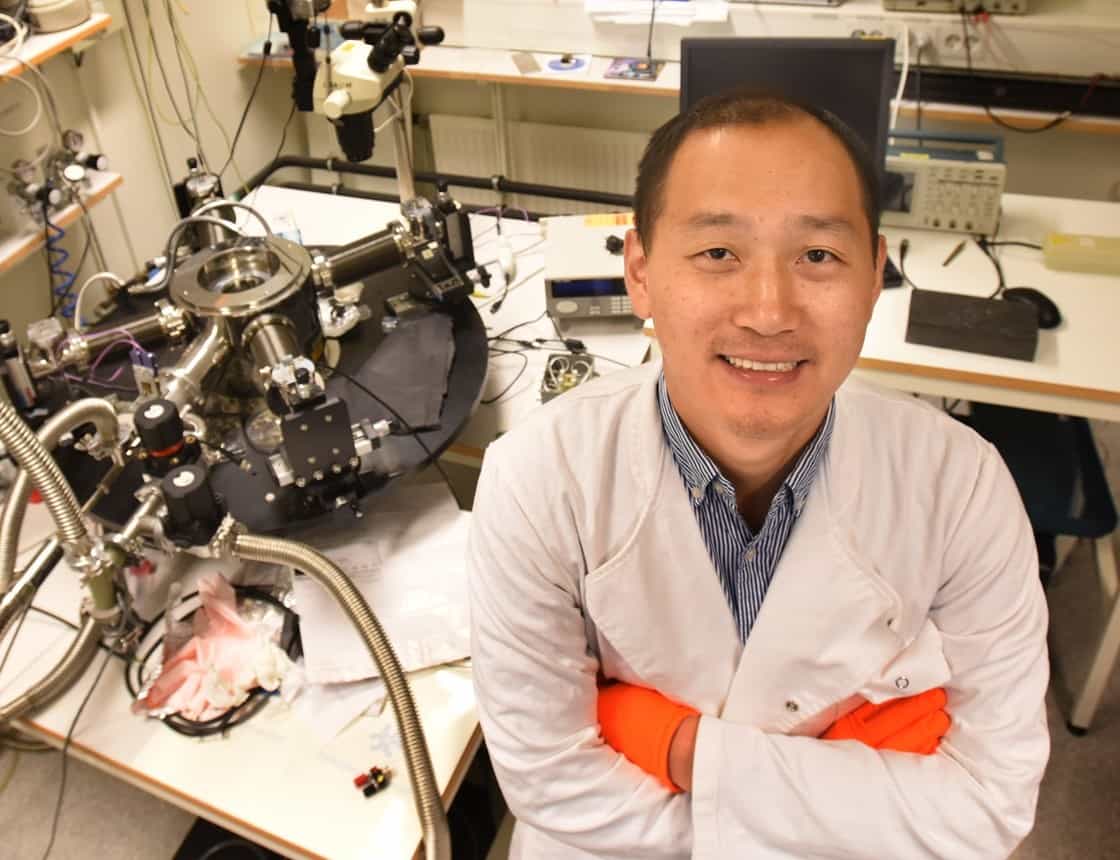
Weidong Xu and Pengpeng Teng
Feng Gao

Scientists have tried to alleviate this effect by treating the perovskite with electron-donating passivating agents (PAs), to bond to the unsaturated Pb2+ and neutralize the positive charge. It follows from this basic model that PAs with a strongly electron-donating character should offer the best passivation capability and lead to the most efficient devices.

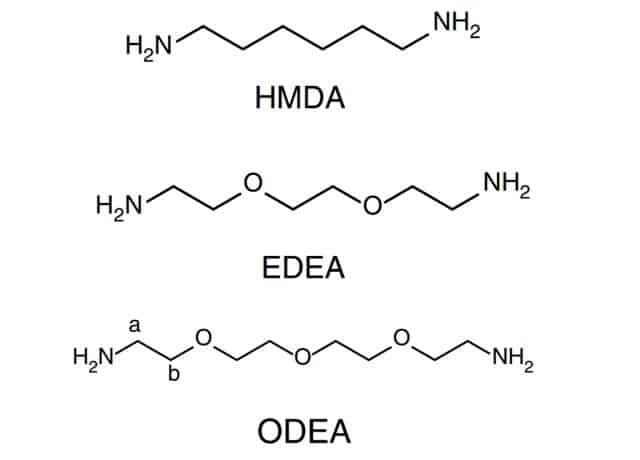
It was therefore to the surprise of Weidong Xu and Feng Gao of Linköping University that they observed quite the opposite behaviour when comparing two PAs: HMDA and EDEA. These molecules are identical save for the two oxygen atoms in EDEA, which work to move electron density away from the passivating amino (-NH2) groups.

Based on popular understanding in the field, one would expect HMDA to coordinate more strongly to Pb2+. Nevertheless, it was the EDEA-passivated perovskite which performed best, with an external quantum efficiency (EQE) of 18% compared with just 11% when HMDA was used.

Light bulb moment

So what causes this unexpected behaviour? “After endless hypothesis and experiments we finally arrived at a possible explanation,” says Xu with relish, “Hydrogen bonding.” He proposes that the ability of the PA to bind with Pb2+ at the perovskite surface is just half the story. What’s missing is that if the electron-donating ability of the PA becomes too high, it is more likely to interact with neighbouring FA+ ions via hydrogen bonds, leaving the Pb2+ traps unpassivated. The researchers had unravelled the key to effective passivation of PeLEDs.

Passivating agent structures

“Based on this new understanding, we set about designing new molecules to further boost the LED performance” explains Xu. To do this they made use of the inductive effect, adding extra alkyl groups (-CH3) or O atoms to increase or decrease the electron density at the passivating amino group.

After playing with the PA composition in this way the group landed on ODEA, a molecule that gave them a record PeLED EQE of 21.6%; a giant step forward given the previous record was just 14%. This impressive performance adds to the commercial viability of PeLEDs, which already exhibit lower fabrication costs and finer colour quality than OLEDs.

But Xu asserts that there is more work to be done before we see PeLEDs on our screens, “The next step for us is to apply similar principles to improve the efficiency of perovskites that emit in the visible region.” Certainly, with the record EQE of blue-emitting PeLEDs at just 6.7%, their passivation technique could be central to the development of next-generation lighting and displays.

The impact of these PAs doesn’t just stop at PeLEDs either. “We believe the concept should work for improving the efficiency of perovskite solar cells, and our initial work on this looks promising,” says Xu. In any case, the key insights from this work should lead to a bright future for perovskite optoelectronics.

Further details can be found in Nature Photonics.

EGU delegates map Zimbabwe to help Cyclone Idai recovery

Delegates at the EGU meeting labelled more than 200 buildings in pre-cyclone aerial images of Zimbabwe at the EGU’s first mapathon on Thursday evening. As Faith Taylor of the University of Portsmouth, UK, explained, adding this information to OpenStreetMap helps disaster relief services plan their response to Cyclone Idai, which hit Mozambique, Zimbabwe and Malawi in late March.

The EGU attendees mapped buildings near the Zimbabwe border as part of Humanitarian OpenStreetMap Task 5907. At the start of the mapathon this area was around 65% mapped. Roughly an hour and a half later around 80% was completed, by both EGU delegates and volunteers online.

Most of Mozambique, where the cyclone first hit, has already been mapped in OpenStreetMap, with volunteers labelling buildings, roads and waterways.

Maps are essential to relief organizations looking to get shelter, food, water, health services and sanitation to survivors of disasters, as Edith Rogenhofer of MSF Austria told delegates. Staff from the Austrian Red Cross also visited to assist the mapathonners.

Conventional maps are expensive to make, go out of date, may have a commercial focus and aren’t always an exact representation as they may not include informal settlements, Taylor explained. OpenStreetMap is “Wikipedia meets GoogleMaps” and is often the most up to date map for the global south.

Taylor hopes that there will be a mapathon at next year’s EGU meeting and that delegates will organize mapathons in their own institutions too.

Copyright © 2026 by IOP Publishing Ltd and individual contributors