3D topological insulators go photonic

Researchers in China and Singapore say they have made the first ever 3D photonic topological insulator using a stack of thin plastic sheets embedded with metal nanoantennas. The insulator works at microwave frequencies, but if extended to terahertz or optical wavelengths, it could find use in applications such as high-power lasers, optical diodes and photonic computer chips.

2D topological insulators, also known as 2D quantum spin Hall insulators, are materials that are electrical insulators in the bulk but can conduct electricity extremely well on their edge via special, topologically protected, electronic states. Electrons can only travel in one direction along these states and do not backscatter. This means that they can carry electrical current with near-zero dissipation of energy and so could be used to make energy-efficient electronic devices in the future.

Structures made from photonic crystals

In recent years, researchers have started looking at making topological insulators that work using light rather than electric currents. These structures are made from photonic crystals – materials in which the periodic variation of the refractive index means that only certain wavelengths of light are able to pass through. One of the advantages of these photonic topological insulators is that they can operate at room temperature, unlike their electronic counterparts.

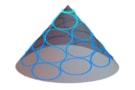
Another is that the space through which photons can travel can be engineered so that it is curved like the surface of a cone. These structures thus mimic a 2D quantum spin Hall insulator that naturally contains so-called surface Dirac cones. These are the sharp single points in a 2D material at which the valence and the conduction bands meet at the Fermi level, and at which electrons behave as though they are relativistic particles with no rest mass.

Until now, however, researchers have only been able to make 2D photonic topological insulators, and despite much theoretical work over the years 3D versions have remained elusive. Such insulators are qualitatively different from the 2D versions. Whereas 2D photonic topological insulators host topologically protected one-way edge states, 3D photonic topological insulators exhibit topological surface states that are not unidirectional. Indeed, they should be able to channel topological surface states along all possible spatial directions and not just along the planar direction.

Conventional printed circuit board technology

The new 3D topological photonic insulators were made by a team from Zhejiang University (ZJU) in China and Nanyang Technological University (NTU) in Singapore using conventional printed circuit board technology. “In our experiment, we etched dielectric laminate sheets with double-sided copper cladding,” explains study lead author Yihao Yang. “Each printed layer is paired with a dielectric spacer.”

The sheets are embedded with metal nanoantennas acting as split-ring resonators. The researchers succeeded in tailoring the resonators so that they interact with electromagnetic waves in a specific way, which allows them to give the structures the topological characteristics they require.

“The 3D photonic topological insulators have unit cells consisting of three connected metallic split-ring resonators,” says Yang. “Each is formed by arranging the unit cells in a triangular lattice in the x-y plane, and stacking identical layers along the z-direction.”

To confirm that the structure was indeed a 3D topological insulator, the researchers constructed detailed maps of how electromagnetic waves travel through it. “We did this by inserting an electromagnetic field probe into the structure and measuring the field distributions inside it and at domain walls. We then applied a Fourier transform to obtain the bulk and surface dispersion of the field distributions respectively. The latter are the physical tell-tale signatures of 3D topological insulators,” says Yang.

Extremely wide 3D topological bandgap

The researchers found that the 3D photonic topological insulators have an extremely wide 3D topological bandgap as well as gapless Dirac-cone-like topological states on their surface. “Such a wide bandgap, which exceeds even the widest ever demonstrated in 2D photonic topological insulators, will be important for future applications,” says co-team leader Hongsheng Chen of ZJU.

“On a fundamental level, we have made the first 3D topological insulator phase for bosons (photons),” says co-team leader Baile Zhang of NTU. “Because of the fundamental differences between fermions and bosons, whether a 3D bosonic photonic topological insulator could be realized was still an open question prior to our work,” he tells Physics World.

“From a technology viewpoint, such a topological insulator may be used in advanced photonic applications, such as topological photonic cavities, circuits and lasers, in previously inaccessible 3D geometries.”

The universality of physics

The new 3D structures are also a good example of the universality of physics, adds co-team leader Yidong Chong of NTU.“A phenomenon arising in one setting, like quantum materials, can be reproduced in another setting, in this case an artificial medium for electromagnetic waves,” he explains. “The key ingredient is that they obey the same equations and theoretical concepts.” Indeed, Chong suggests that the 3D photonic topological insulator could make for an interesting platform in which to study fundamental physics since the topological surface states are governed by the same equations as massless 2D electrons that obey Einstein’s theory of relativity.

The 3D photonic topological insulators made in this work, which is detailed in Nature 10.1038/s41586-018-0829-0, is currently limited to microwave wavelengths, but its design principles should be applicable to other frequencies, such as the terahertz or optical. The researchers say they are now busy looking into making structures that work at these frequencies.

“The present study also focused on a photonic crystal for electromagnetic waves, but a similar lattice design might be extended to other bosonic systems, such as acoustic and even mechanical structures,” says Chong.

A macramé periodic table, medieval nun’s teeth illuminate her artisanship, elements through the ages

This year marks 150 years since the Russian chemist Dmitri Mendeleev created the world’s first periodic table and to celebrate UNESCO has designated it the International Year of the Periodic Table of Chemical Elements. But now biochemistry graduate Jane Stewart has created her own tribute: a macramé version of the table. The ancient art of macramé — the art of knotting string in patterns — originated in Arabia where the word comes from the Arabic migramah, which means “fringe” and was used to finish off a weaver’s work. Stewart used a metallic crochet thread, which is about the same thickness as embroidery thread, to create the table, which measures 100 x 60 cm. The table contains about 200,000 “half hitch” knots and with each element taking over two hours to complete, Stewart spent at least 240 hours putting it together.

“I learnt there are a heck of a lot of transition metals,” Stewart says, “and needed a lot of moral support to keep going through them for more than a month.” If you want to see the table for yourself, then it will be appearing at several events throughout the year including at the opening ceremony in Paris later this month.

Another story this week that combines art and chemistry comes from The Atlantic, where Sarah Zhang describes how researchers in the UK and Germany have found evidence that nuns illustrated medieval manuscripts. Anita Radini, now at the University of York, and Christina Warinner at the Max Planck Institute for the Science of Human History discovered tiny amounts of the pigment ultramarine in the dental plaque of a German nun who died about 1000 years ago. The pigment was made from lapis lazuli from a mine in Afghanistan and would have been rare and very expensive back then. Ultramarine was used to illustrate manuscripts, providing further evidence that nuns as well as monks were involved in producing the books. The discovery has some archaeologists very excited, because it suggests that clues about the occupation of a person could be gleaned from their plaque.

The above video was made by Jamie Gallagher and shows the elements in order of discovery from 1718 to 2018. It takes 99 s to watch and it is interesting to see the table fill-in rapidly throughout the 19th century. See if you can spot an error or two in the table (pay attention to the actinides and lanthanides).

We will be celebrating the periodic table throughout 2019 and coming up in the February issue, our regular columnist Bob Crease will describe how more than a thousand different versions of the table have been crafted since 1869. We are still putting the final touches on the article, which will be published online next month. As a taster, take a look at the “The Internet database of periodic tables”, in which chemist Mark Leach documents hundreds of tables.


Ocean warming speeds vary with depth

Climate scientists who have found a new way to chart temperature change in the world’s seas over time say ocean warming speeds are much slower in deep water than on the surface.

Planet Earth is mostly ocean. Human-linked changes have started to raise global temperatures to what could be alarming levels and, as the thermometer rises, so will sea levels. So detailed understanding of temperature and ocean is vital. But two separate studies confirm that the connection is far from simple.

One study of the Atlantic confirms that in the last 150 years, the oceans have taken up 90% of the excess energy released by the combustion of fossil fuels to drive human economic growth and power − and to fuel potentially-catastrophic global warming and runaway climate change.

But what the oceans will actually do with that colossal burst of heat has yet to be fully explored. And a separate examination of the deep history of the Pacific Ocean confirms that change may be inexorable, but it is also very slow: the deeper parts of the Pacific are still registering the onset of the so-called “Little Ice Age” several centuries ago.

These waters are so old and haven’t been near the surface in so long, they still ‘remember’ what was going on hundreds of years ago

Jake Gebbie, Woods Hole Oceanographic Institution

Both studies are reminders that oceanography is still a relatively new science and researchers still have a lot to learn about the fine detail of the ways in which temperature, atmosphere and ocean interact to affect climate over the world’s continents.

But repeated research has confirmed that the oceans are warming in response to human-triggered changes on land, that this warming presents several different kinds of hazard  to marine life, and that there is a link between overall ocean temperatures and the behaviour of the ocean’s currents, a link that plays out in dramatic shifts in regional climates.

So the rewards for a more precise understanding are considerable. But understanding starts with accurate and comprehensive data, and systematic measurement of ocean temperatures began only with the voyage of the British research ship HMS Challenger in 1871.

So Laure Zanna, a physicist at the University of Oxford, UK, and her colleagues, report in the Proceedings of the National Academy of Sciences that they deployed sophisticated mathematical techniques to calculate the heat uptake of the oceans and the way the blue planet has responded since 1871.

Huge heat uptake

Altogether, in the last 150 years, the deep waters have absorbed 436 zettajoules: a joule is the unit of energy required to deliver one watt for one second and a zettajoule is a number followed by 21 zeroes. This is an enormous amount of heat, roughly 1,000 times the energy consumed by 7 billion humans in the course of a year.

The researchers’ results so far show that roughly half the observed warming of the last 60 years – and the associated sea level rise – is linked to changes in ocean circulation. They were able to reconstruct two considerable bouts of warming, over the years 1920 to 1945 and between 1990 and 2015. What they have yet to do is sort out what this means for the behaviour of the oceans over the decades to come.

“The technique is only applicable to tracers like man-made carbon that are passively transported by ocean circulation,” Professor Zanna said. “However, heat does not behave in this manner as it affects circulation by changing the density of seawater. We were pleasantly surprised by how well the approach works. It opens up an exciting new way to study ocean warming in addition to using direct measurements.”

What the research also underlines is that the oceans have a long memory: so extensive and so deep are the five oceans that the surface waters may respond to 20th century greenhouse gas emissions while the deepest trenches contain water that last warmed more than 1,000 years ago in the reign of Charlemagne, the first Holy Roman Emperor.

Still adjusting

US oceanographers report in the journal Science that they matched predictions from computer models and modern data and ancient evidence with readings from the Challenger expedition to show that two kilometres under the waves, the Pacific Ocean is still adjusting to cooling that began with the onset of the Little Ice Age centuries ago.

Such studies count as basic research: as a way of testing techniques and establishing ground rules from which more discovery could follow. They also offer new ways to understand oceans as registers of climate change over long intervals.

“These waters are so old and haven’t been near the surface in so long, they still ‘remember’ what was going on hundreds of years ago when Europe experienced some of its coldest winters in history,” said Jake Gebbie, of the Woods Hole Oceanographic Institution.

“The close correspondence between prediction and observed trends gave us confidence that this is a real phenomenon.”

Machine learning provides insight into the human brain

A research collaboration headed up at the National University of Singapore (NUS) has successfully employed machine learning to investigate the cellular architecture of the human brain. The approach uses functional MRI (fMRI) data to automatically estimate brain parameters, enabling neuroscientists to infer the cellular properties of different brain regions without having to surgically probe the brain. The researchers say that their technique could potentially be used to assess treatment of neurological disorders or develop new therapies (Science Advances 10.1126/sciadv.aat7854).

“The underlying pathways of many diseases occur at the cellular level, and many pharmaceuticals operate at the microscale level,” explains team leader Thomas Yeo. “To know what really happens at the innermost levels of the human brain, it is crucial for us to develop methods that can delve into the depths of the brain non-invasively.”

Currently, most human brain studies employ non-invasive approaches such as MRI, which limits examination of the brain at a cellular level. To bridge this gap between non-invasive imaging and cellular insight, researchers around the world have used biophysical brain models to simulate brain activity. However, many of these models rely on overly simplistic assumptions, such as assuming that all brain regions have the same cellular properties, which is known to be incorrect.

Yeo and his team, working with researchers from Universitat Pompeu Fabra, Universitat Barcelona and UMC Utrecht, analysed imaging data from 452 participants of the Human Connectome Project. In contrast to previous modelling work, they allowed each brain region to have distinct cellular properties and exploited machine learning algorithms to automatically estimate the model parameters.

“Our approach achieves a much better fit with real data,” says first author Peng Wang. “Furthermore, we discovered that the micro-scale model parameters estimated by the machine learning algorithm reflect how the brain processes information.”

The researchers found that brain regions involved in sensory perception, such as vision, hearing and touch, exhibited cellular properties opposite to those from brain regions involved in internal thought and memories. The spatial pattern of the human brain’s cellular architecture closely reflects how the brain hierarchically processes information from the surroundings. This form of hierarchical processing is a key feature of both the human brain and recent advances in artificial intelligence.

“Our study suggests that the processing hierarchy of the brain is supported by micro-scale differentiation among its regions, which may provide further clues for breakthroughs in artificial intelligence,” says Yeo.

Moving forward, the NUS researchers plan to apply their approach to examine the brain data of individual participants, to better understand how individual variation in the brain’s cellular architecture may relate to differences in cognitive abilities. They hope that these latest results will provide a step towards the development of individualized treatment plans with specific drugs or brain stimulation strategies.

New nanocarbon hits the scene

Porous crystals: pNT molecules aligned in parallel in a crystal. Credit: 2019 Hiroyuki Isobe

“We were shocked to see the crystal structure of the molecule,” says Hiroyuki Isobe, a research professor in the Department of Chemistry at the University of Tokyo, Japan, as he describes his latest work to synthesize phenine nanotubes (pNTs). The nanotubes are analogues of carbon nanotubes (CNTs) – rolled up sheets of honeycomb carbon lattice whose discovery by Sumio Ijima in 1990 generated sustained excitement for decades. In pNTs Isobe and collaborators at the University of Tokyo, the Japan Science and Technology Agency, Riken, and Tohoku University in Japan, have replaced the atoms of a CNT with phenine rings – derivatives of benzene where each molecule is a six-membered carbon ring. The result is a nanotube with periodic vacancies giving a porous crystal structure that Isobe describes as “simply and astonishingly, beautiful”.

The pores change the electronic properties of the nanotubes and may have interesting functions for entrapping other molecules – 63% of the material is void and the researchers have already successfully entrapped C70 molecules in pNTs. Furthermore, Isobe highlights the significance of some of the fundamental differences between pNTs and their CNT forebears.

“The pNT is a molecular entity, and when you have it in your hands, all the molecules in the powders have an identical length, diameter and molecular weight. The CNT is not a molecular entity – they are chemical species that comprise a mixture of various structures.” As he explains, this distinction opens up the opportunity to understand chemical characteristics that studies of the properties of CNT mixtures cannot provide.

Pore chemistry

The chemistry of nanotube pores is of particular interest to Isobe, who published several papers in the 2000s on molecular transport through nanopores based on studies of carbon nanotubes. This kind of transport is fundamental to understanding a wide range of biological, chemical and physical processes.

“At that time, we discussed a lot about the chemistry at the pore, which ended up with very speculative discussion,” he tells Physics World, as he describes how the mixture of various structures inherent to samples of CNTs made it impossible to learn anything about the chemical characteristics of CNT pores. “I was naturally motivated for design of the “pore on CNTs” with molecules.”

Synthesis and beyond

The route the researchers take to produce pNTs begins with commercially available 1,3-dibromobenzene, where bromine atoms replace the hydrogens linked to each carbon atom in the benzene molecule at the first and third positions around the ring. They then follow a concise nine-step procedure resulting in pNTs. Although the molecular structure was the result of tailored design and produced through carefully elaborated synthetic strategies, Isobe was still struck when he saw its crystal structure.

Despite the multiple stages of the process the researchers calculate the average efficiency of each phenine ring they bond to another at 91%. However, this still leaves the overall yield of pNTs from dibromobenzene at 0.7%. Exploiting the recently renovated lab in the University of Tokyo’s Graduate School of Science, Isobe and collaborators have already successfully synthesized milligrams of the product but are looking at ways to improve the procedure so that hundreds of milligrams and even grams may be possible.

Another avenue of interest is the possibility of polymerizing the pNTs. Using the same length index used to describe carbon nanotubes, the pNTs commonly have an index of seven (that is, they are seven benzene rings long). While this is more than twice the longest CNTs with no defects, which were limited to an index of three, polymerization could achieve yet longer pNTs.

“Theoretical investigations of an infinite version of the pNT indicated that the nanotube should have semiconductor characteristics,” says Isobe, explaining that the periodic pores on CNTs open a band gap. “Although it is a challenging subject, “polymerization of pNT” should also be an interesting target.”

Full details are available in Science.

100 Hours of Astronomy seeks to ignite the public’s passion for the skies

From exoplanets in Ecuador to stars in South Korea, today sees the start of a special global science-outreach event called “100 Hours of Astronomy”. Running from 10-13 January, the event is taking place over three nights and four days at more than 500 different venues in 79 different nations around the world.

First held in 2009 as part of the International Year of Astronomy, this year’s 100 Hours of Astronomy event will bring together amateur and professional astronomers, astronomy enthusiasts and members of the public to share their knowledge and enthusiasm for the subject. You can find out exactly what’s going on in your country at the 100 Hours of Astronomy list of registered events.

The self-styled “global starparty” is the first in a series of initiatives being held throughout 2019 to mark the centenary of the International Astronomical Union (IAU).

Going under the banner “Under one sky”, the IAU’s year-long celebrations are designed to “increase awareness of a century of astronomical discoveries as well as to support and improve the use of astronomy as a tool for education, development and diplomacy”.

The IAU centenary initiatives includes exhibitions, teaching tools and outreach activities – as well a flagship meeting on 11–12 April 2019 at the Palace of the Academies in Brussels, Belgium.

Scalable wearable piezoelectric materials prove elementary

Technology that can scavenge mechanical energy from biological or environmental vibrations and movement is in hot demand for self-powered devices, ranging from sensors and consumer electronics to defence. While piezoelectric materials have demonstrated great promise for converting mechanical energy into electrical, challenges remain.

“There is a lack of options for scalable manufacturing and integrating piezoelectric nanomaterials at a high-production rate and with good reproducibility,” says Wenzhuo Wu, the Ravi and Eleanor Talwar Rising Star Assistant Professor of Industrial Engineering at Purdue University in the US. “Obstacles concerning scalable, economical production of related materials continue to prevail, which limits the application potential of related materials.”

In his latest work, Wu and colleagues at Purdue University, The University of Texas at Dallas and Idaho National Laboratory in the US use scalable nanomanufacturing and self-assembly techniques to produce tellurium nanowire piezoelectric devices. Exploiting the high piezoelectric response and deformability of their devices they demonstrate their application for monitoring the inflation of a balloon catheter as well as a wearable cardiovascular sensor.

Nano benefits scaled up

As Wu points out, researchers had studied similar aspects of bulk tellurium before in the 60s and 70s, but the results did little to encourage much further investigation for exploiting the material in piezoelectric applications. “I think the main reason for the lack of studying the piezoelectric property of tellurium is probably because of its narrow bandgap and high carrier concentration in the bulk form, which would screen the effect of piezoelectricity,” he adds.

Key to the success of the current devices is the use of nanowires. Building on work reported in 2013 by Zhong Lin Wang at Georgia Tech in the US, Jae Min Myoung at Yonsei University in Korea and coworkers, Wu and his collaborators were able to produce tellurium devices with a vastly improved performance by exploiting the size-dependence of the bandgap and piezoelectric response.

In addition they controlled the diameter of the nanowires through the choice of solvent in the synthesis and demonstrated improved performance for nanowires with thinner diameters. They then produced single layer thin films of nanowires with a diameter of 7nm and an aspect ratio of 1000:1 using a standard “Langmuir-Blodgett” chemical process. Both synthesis and self-assembly are scalable.

On the pulse

Optical image of the wearable device attached on the human wrist. Credit: Nano Futures

As well as demonstrating the ability to monitor biaxial strain in the nanowires with the inflation of a balloon catheter, the researchers incorporated the nanowire films into a wearable cardiovascular monitor. They were able to detect not just the main pulse but could also distinguish its three components:  the main wave as the heart ventricle ejects blood; the “inflection point” of the tidal wave generated by the decreased ventricle pressure; and the reflection of the blood as the aortic valve closes and the ventricle becomes diastolic.

“I was a bit surprised by the good sensing performance of our devices as we did not put too much effort in device structural engineering and optimization,” Wu tells Physics World. “We think such superior sensing performance is primarily due to the strong piezoelectricity and good mechanical deformability of Te nanowires.”

Next steps

Most piezoelectric materials are compounds, which makes these tellurium nanowire devices unique and Wu is keen to better understand their fundamental piezoelectricity. Further investigations will also explore how to improve the devices and the possibility of other applications of tellurium nanowire piezoelectric devices in wearable devices, human-machine interfaces, biomedical treatment, and human-status monitoring. In addition Wu suggests another material that may share tellurium’s promise.

“There is another chiral chain material with the same structure to tellurium. It is selenium! Selenium has a larger bandgap and is expected to exhibit a stronger piezoelectricity than tellurium.” Hot on the trail Wu and his colleagues have already reported on the synthesis, integration, and application of Se nanowires for similar self-powered human-integrated monitoring.

Full details of the tellurium nanowire piezoelectric devices are reported in Nano Futures

Optogenetics implant is good news for incontinent rats

Normal bladder function in rats has been restored by researchers in the US, who have developed an implantable, closed-loop system that exploits optogenetics. Nerve cells in the rats’ bladders were modified to respond to the light emitted by implanted LEDs, which allowed bladder function to be controlled by an external wireless device. The technique could be used to develop sophisticated treatments for people suffering from bladder problems such as overactive bladder (OAB) syndrome and urinary incontinence – and could be extended to treating other organs.

Serious bladder-control problems can be treated with implanted bioelectronic devices that stimulate and control nerve cells in the bladder using electrical signals. While the signals can control bladder activity very precisely, they also affect the region surrounding the bladder and this can lead to unwanted side-effects including pain and inflammation.

The new control technique overcomes this problem and was developed by a team led by Robert Gereau at Washington University in St Louis and John Rogers  at Northwestern University near Chicago. The team also included researchers at the University of Illinois at Urbana-Champaign. Their system uses light to control bladder activity, thereby eliminating the need for a disruptive electrical signal.

Team makes use of optogenetics, which involves using a virus to bind a protein called opsin to nerve cells in the bladders of live rats. Opsin converts light into electrochemical signals and the researchers hypothesized that the activity of these modified cells could be regulated precisely by developing shining light on them using a closed-loop control system.

Strain sensors

The implantable system includes a stretchable, high-precision strain sensor that is placed around the rat’s bladder. The sensors measure bladder circumference continuously, while transmitting data on a wireless link to an external interface device. If the sensor data indicated that a rat’s bladder was emptying abnormally frequently, the external device would then send a signal back to the base station, which instructed microscopic LEDs attached to the sensor to turn on. Subsequently, activity in the surrounding light-sensitive nerve cells prevented the bladder from emptying.

Mickle and colleagues tested their device in rats injected with cyclophosphamide, which induces OAB. The frequency of bladder emptying was restored to normal and the rats displayed no significant inflammation or behavioural changes in response to the implant.

The team is confident that further improvements and the appropriate scaling could make their technique a ground-breaking treatment for OAB in the coming years. With additional adaptations, it could also be used to treat conditions related to other organs. Potential applications include influencing nerve cells in the bowels to reduce incontinence and also inducing a feeling of fullness in the stomach to combat obesity.

The research is described in Nature.

Winters are ‘getting sick’

The snowpack in California’s Sierra Nevada mountains has declined in volume and duration over the past 37 years, according to a new study. The implications range from more devastating forest fires to overflowing or dried-out reservoirs.

“Our winters are getting sick, and we know the reason why,” says Amato Evan of the Scripps Institution of Oceanography, US. “It’s global warming. It’s rising temperatures, and that’s the only logical explanation for what’s happening.”

Evans participated in a session on the Sierra snowpack at the Fall Meeting of the American Geophysical Union (AGU) in Washington, DC, in December 2018.

There is great variability in mountain precipitation from year to year. 2015 was an “amazingly horrible year” in terms of the snowpack, Evan said, while in 2017 there was “a lot more snow than anyone expected”.

In California and other western states, the availability of melted snowpack water, held in reservoirs, is critical during the dry summer months. Evan and colleagues established a network of 400 observation stations across virtually every major watershed in the Sierra Nevada and other western ranges. Each station is equipped with a large rubber pillow filled with antifreeze.

“That pillow measures, every hour, the weight of the snow that’s on top of it,” Evan said. “It is an incredibly accurate measure of snowpack.”

Evan defined a mathematical function to smooth out the day-to-day fluctuations as the snowpack builds up in winter and swiftly declines in the spring. That way he could determine long-term interannual trends. After analyzing the results from those 400 stations over the western US, Evan came away with two main conclusions.

Firstly, the amount of snowfall does not shows a declining trend. Rather, “the annual cycle of snowpack is being squeezed on both sides,” Evan says, with fall ending later and spring arriving earlier. “The snowpack is being squeezed in.”

The other major finding is more subtle. The graph of snowpack build-up and release is becoming more bell-shaped in the high mountains. Rather than steady winter buildup and rapid spring decline, as was typical in the past, both buildup and release are more gradual, and earlier. Previously this was the norm only at lower elevations.

“The mountains are, in effect, kind of shrinking, with regard to how much snowpack,” Evan said.

Such results had been modeled before but the monitor pillows are the first to record them. The most significant changes, Evan finds, are in April through June, with a smaller snowpack melting earlier, when the water is less needed at lower elevations.

The declining snowpack means earlier filling of reservoirs, with possible overflows that waste water that could have supplied drinking and agricultural needs later in the year.

Wildfire seasons have lengthened in recent years, and California experienced its most extensive and destructive wildfires in 2017 and 2018. Forest fires are most deadly when the soil and ground-level brush are dry, a result of early snowpack runoff. According to Donal Seán O’Leary III of the University of Maryland, US, at the AGU meeting, if the snowpack is low in April, plan for fires in November.

Government shutdown begins to bite US science

A partial shutdown of the US government continues to affect science in the country almost three weeks after it began on 22 December. The shutdown has been caused by disagreements between President Donald Trump and the Democratic party over the administration’s plan to budget funds for building a wall along America’s southern border with Mexico. It has left NASA to lay-off most of its employees, while requiring some, including those involved in functioning space missions and the International Space Station, to work without payment.

The shutdown has also hit this week’s 233rd meeting of the American Astronomical Society (AAS) in Seattle. It had received a total of 3200 registrants, but more than 300 delegates — mostly NASA employees — have been unable to attend. This forced the cancellation of NASA town hall-style meetings at the conference and other programme sessions as well as organized tours of NASA’s Stratospheric Observatory for Infrared Astronomy. The society did, however, live stream all plenary sessions to registrants who could not travel to Seattle as well as allow co-authors of failed attendees to make presentations or stand-ins to produce interactive multimedia posters. The AAS will also explore ways to provide all registrants after the meeting with the contents of cancelled sessions.

It is a true disappointment that hardworking scientists seeking to explore and understand the universe on behalf of the American public and to share their results with their colleagues are basically being prevented from doing so by political impasse

Kevin Marvel

Another meeting hit by the government deadlock is this week’s annual conference of the American Meteorological Society in Phoenix, with very few of the 700 government scientists due to attend being able to do so. “It is a true disappointment that hardworking scientists seeking to explore and understand the universe on behalf of the American public and to share their results with their colleagues are basically being prevented from doing so by political impasse,” says AAS executive officer Kevin Marvel.

Disruption and delay

While the Department of Energy continues to run normally as its financial year 2019 budget had been agreed before the shutdown, other agencies have been severely hit. NASA, the National Science Foundation (NSF), the National Oceanic and Atmospheric Administration, the Department of the Interior as well as the Environmental Protection Agency (EPA) have all run out of funds and are only carrying out the most critical operations.

“Any shutdown of the federal government can disrupt or delay research projects, lead to uncertainty over new research, and reduce researcher access to agency data and infrastructure,” Rush Holt, chief executive of the American Association for the Advancement of Science, noted in a statement.

At the EPA, the collection of environmental data has been halted, leaving irreplaceable gaps for future researchers and analysts. The NSF, meanwhile, is preparing to cancel meetings to review proposals for funding grants if the shutdown continues. Taking to Twitter, atmospheric scientist Andrew Dressler from Texas A&M University says that he will not accept new graduate students because he has grant proposals pending with NASA and the NSF.

Scientists who lead facilities supported by NASA or the NSF – such as the Large Synoptic Survey Telescope and the Laser Interferometer Gravitational-Wave Observatory – say that while their funding is currently secure, if the shutdown continues then it could disrupt their operations.

Copyright © 2026 by IOP Publishing Ltd and individual contributors