Deep learning enables automatic radiotherapy planning

Dose distributions

A multi-institutional team in Shanghai has developed an automated treatment planning system for intensity-modulated radiation therapy (IMRT) based on 3D dose prediction and dose distribution-based optimization. The researchers demonstrated that the deep-learning-based method shows promise for generating highly individualized radiotherapy plans optimized for precision and quality (Med. Phys. 10.1002/mp.13271).

Treatment planning software packages that use knowledge-based techniques to estimate dose–volume histogram (DVH) objectives are commercially available. But according to the authors, such methods do not provide reasonable estimates of patient-specific achievable dose distributions. They point out that because a large number of dose distributions satisfy the same DVH objectives, this may result in plans with acceptable DVH objectives but unacceptable dose distributions in some areas of clinical concern.

Lead author Jiawei Fan from Fudan University Shanghai Cancer Center and co-authors have presented a deep-learning method for 3D dose prediction for head-and-neck cancer treatments. The system provides estimates of DVH objectives, as well as giving voxel-level feedback to planners showing where the dose distribution could be improved.

To predict the achievable dose matrix for a given patient anatomy, the researchers developed a residual network-based framework trained to correlate voxel geometry to voxel dose. The input data for the network were acquired from individual trans-axial CT slices of the patient’s anatomy; the output was the dose matrix for each slice.

The model also included data from two additional images: an image of the planning target volume (PTV) describing its region, shape and size; and an image describing the shape, size and relative position of 12 organs-at-risk (OARs). These OARs included the brainstem, spinal cord, right and left parotid glands, right and left temporal lobes, right and left lenses, right and left optic nerves, chiasm and oral cavity.

Each training sample included one CT image, two delineation images and one dose distribution image. The researchers utilized data from 270 patients who underwent IMRT for head-and-neck cancers. They subdivided the dataset into a training set of 195 patients, a validation set of 25 patients and a testing set of 50 patients.

After training and testing their deep-learning model, the researchers compared the predicted dose distributions and DVH curves with results calculated by the treatment planning system. The results demonstrated that the deep-learning method could predict clinically acceptable dose distributions. Tests on a range of different prescription patterns with a large number of plans revealed that the automated plans were comparable to those that had been manually generated by dosimetrists.

The authors note that one distinctive feature of their method is its ability to obtain acceptable predictions for prescription doses that were not included in the training set. The model can also be used on patients with several PTVs that have different prescription doses.

The researchers are currently investigating the applicability of voxel-based dose prediction for other cancer cases. They are also working to improve the predicted results for small-volume OARs by using a training set with consistent clinical priorities and plan qualities to train the deep-learning network.

“The proposed automated treatment planning strategy opens up the possibility of a voxel-by-voxel cost optimization system and eliminates the need to convert a desired dose distribution to DVH values,” the authors conclude. “In the future, it would be a dramatic improvement if a physician’s clinical intent could be directly reflected in the target dose for each voxel through a treatment planning interface designed to make use of the predicted 3D dose distribution.”
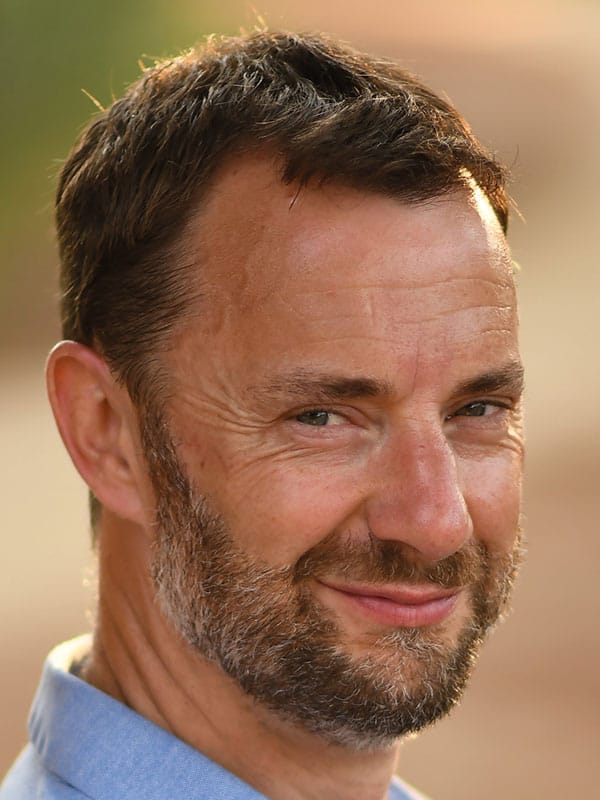
Once a physicist: Paul Bate

Paul Bate

What sparked your initial interest in physics?

My mum left a Doctor Who book on my bed when I was about six, and casually mentioned that it was probably a bit too old for me. She’d worked out my psychology – I read it just to prove I could. I was hooked on the characters, but most of all on the possibilities that travelling in space and time brought. At the same time, I was busy idolizing my older brother and sister, who were both pretty good at school, particularly my brother who focused on maths and science, so I copied what they did.

It wasn’t until I got to A levels (age 16–18) that the power of physics really kicked in for me. I had a chaotic but inspirational teacher. I had to do a lot of reading of my own to cover the syllabus, but the passion with which he described his PhD was something else. I went to the University of Manchester to study physics and ended up staying there to do a PhD in particle physics.

Did you ever consider a permanent academic career after completing your PhD?

Only very briefly. I’d figured out by then that while I was decent enough when it came to learning, I didn’t particularly enjoy the day-to-day coding and detector maintenance that was part of being a researcher in particle physics. I preferred learning and applying the concepts that others had discovered, rather than doing the primary research itself.

How did your interest in healthcare policy develop?

I went into management consulting with McKinsey & Co after my PhD, and after three years there I took a secondment to the Prime Minister’s Delivery Unit in the Cabinet Office. They gave me the title of “senior problem solver”, which sounded very grand. It was 2003 and Tony Blair was trying to reform health and justice in the same way that he’d done in education during his first term. After a spell looking at prolific offending, I was asked to look at waiting times in the NHS and that was it. I was fascinated by how healthcare – one of the most basic needs in society – was being delivered and how that could be improved. The excitement of presenting ideas to the prime minister and his team was intoxicating.

After three years in the Cabinet Office, I joined a couple of friends from McKinsey to set up and run our own consultancy – 2020 Delivery – focusing on solving problems for NHS organizations and government. I kept the links with people in central government, though, and when four years later I heard that a role was going at 10 Downing Street, I put my application straight in. I landed the government health adviser job, working jointly for David Cameron and Nick Clegg.

What was it like working at 10 Downing Street?

It’s hard to describe the feeling of going through that iconic black door each morning. There’s a strong sense of history, of responsibility and, most of all, of the need to deliver fast. 24-hour news cycles and five-year parliaments force the discipline of providing advice quickly and accurately. I worked as hard as I’ve ever done, and rarely switched off, even at weekends. I don’t think I’d have done the job if I’d known how tough it would be, but it was one of the most exciting times in my professional life and I enjoyed (almost) every minute of it.

What was the main motivation for you, when it came to this demanding role?

There’s always a buzz in being part of a team, and all the more so when the results of the team are very much in the public eye. And every so often it’s possible to do something that really improves people’s lives – like doubling the research money for tackling dementia, or ensuring that all hospitals and GPs can easily get feedback on how they are doing from their patients. I used to be fairly cynical about politicians, but my time working with them changed that – almost without exception, they want to make the world a better place and put in long hours to do so.

How did you become interested in improving healthcare services using AI technologies?

I joined the Care Quality Commission after leaving Number 10, helping design how hospitals, care homes and GPs should be regulated, and how their quality can be compared. GP practices fascinate me – there’s very little outcome data, and what is discussed between a patient and their GP is intensely private. How could we understand which practices were performing well, and why was it that so many surgeries had such long waiting times? I wanted to find better and more transparent ways to deliver primary care, and I moved to Babylon Health because it brings together machine learning, remote consultations and clinicians, to change the way people can see a doctor or get advice.

What does your current role as director of NHS services at Babylon Health involve?

I look after the NHS side of Babylon – my team and I are a bit like a snow plough for the rest of the company, in that we’re there to create a clear path for our technology and clinical services teams to deliver. We’re trying to give people choice about how they access healthcare.

What are some of the projects you are working on at the moment?

Just over a year ago we launched the UK’s only digital-first NHS GP practice. More than 35,000 people in London have already switched their NHS practice to “Babylon GP at hand”, as it’s called. They get appointments with NHS GPs, usually within two hours, 24/7 – all free like any other NHS practice. The difference is that in-person consultations are the exception, not the rule. People can check their symptoms and build their “digital twin” using our AI, with GP appointments on the smartphone. There are Babylon clinics around London, but more than 85% of the time, a smartphone appointment is all that’s needed.

How has your physics background been helpful in your work, if at all?

It’s hugely helpful, but in slightly less obvious ways than applying field theory or doing redshift calculations. It’s given me the confidence to break down problems into a structure and work through the analyses needed to find solutions. I’ve done a lot of quantitative work in my career, and the ability to manipulate numbers and apply them to real-world issues is a big positive.

More subtly, I’ve found that people change the way they discuss things with me once they know I was a particle physicist. The scientists I work with are willing to explain their work in more detail, and the medics tend to respect the work that goes into a quantitative PhD. It’s a sort of badge that says “go on, try me – I might understand”.

Any advice for today’s students?

I’ve got plenty of health-policy advice, but that may not be so interesting. Maya Angelou once said that people will forget what you said, people will forget what you did, but people will never forget how you made them feel. I’ve loved that from the moment I heard it – physics is a hardcore, conceptually tough subject, but it’s still a very human endeavour. And humans need to feel good to do their best.

One other thing – it’s best not to wear luminous trousers or sport a mullet haircut. I’m generally happy with where I’ve got to, but the less said about my student fashion-sense the better.

Farmers face double trouble as world warms

US researchers have confirmed that continued global warming means farmers face double trouble: a heightened possibility of a suddenly hungrier world, as ever-higher average global temperatures increase the probability of devastating heat and drought in two great agricultural regions of the world simultaneously.

This is not the first such warning. In October, a separate team of researchers used a different approach to find that continued climate change could increase the possibility of a return of the conditions that triggered the global drought and famine of 1875-78, which may have claimed 50 million lives.

Also in October, researchers at the University of Washington focused on the possible recurrence of three shifts in regional climate that combined to cause colossal harvest failure in India, China and Brazil.

This time, Californian scientists report in the journal Science Advances that they simply looked at the record of temperature change and the mathematical probabilities associated with it.

In the last century, thanks to profligate combustion of fossil fuels and the consequent increase of greenhouse gases in the atmosphere, the world has warmed on average by around 1°C.

“If it’s getting warmer everywhere, then it’s more likely to be hot in two places at once, and it’s probably also more likely to be hot when it’s also dry in two places at once,” said Noah Diffenbaugh, of Stanford’s school of earth, energy and environmental sciences.

“When we look in the historical data at the key crop and pasture regions, we find that before anthropogenic climate change, there were very low odds that any two regions would experience those really severe conditions simultaneously,” he said.

“The global marketplace provides a hedge against localised extremes, but we’re already seeing an erosion of that climate buffer as extremes have increased in response to global warming.”

For most of human history harvest failure has been a hazard, but losses in one region have usually been balanced by gains in another. The global famine that began with the Asian monsoon failure of 1875 was a rare event, made more damaging by imperial mismanagement by the European powers.

Lengthening odds

But climate change brings with it the double jeopardy of low crop yields in two great zones of agricultural production at the same time. The odds of both low rainfall and high temperatures in the same year in both China and India – two great farming nations, with the two biggest populations – were, in 1980, just one in 20. These have now increased to more than one in seven.

“So what used to be a rare occurrence can now be expected to occur with some regularity, and we have very strong evidence that global warming is the cause,” said Professor Diffenbaugh.

The researchers found that, if the world continued burning fossil fuels under the notorious business-as-usual scenario, the chances that average temperatures would rise well beyond the range normally experienced in the mid-20th century would, in many regions, increase by 75%.

The researchers also found that – were the world to honour the promise of the Paris Climate Accord of 2015, to contain global warming to well below 2°C by 2100 – the risk of double trouble for two separate regions simultaneously is curbed.

Extremes increase

Extremes of heat by themselves pose a risk to crop yields and, increasingly, more parts of the world are more at risk  of harvest losses.

The Californian scientists looked at multiple risks in one region at the same time – high winds, storm surges, calamitous tropical cyclones, and also low humidity, high temperatures, high winds and lethal wild fires – and then the probability that similar or slightly different multiple hazards could overtake another region in the same year.

The implication is that with increasing average global temperatures, the kinds of hazards farmers and communities expect to confront could be about to change. For centuries, societies made decisions based on the probabilities they already understood.

“The default is to use historical probabilities,” said Professor Diffenbaugh. “But our research shows that assuming that those historical probabilities will continue into the future doesn’t accurately reflect the current or future risk.”

A quantum threat gets its moment of fame

I first heard the phrase “quantum Y2K moment” in March, at a conference sponsored by the University of Bristol, UK. The idea that a quantum computer could break the cryptographic systems that protect Internet traffic was news to me, and I thought at the time that it would be an interesting thing to write about. But I had other things on my plate, so I noted it down as a possibility for later in the year and turned my attention elsewhere.

Fast-forward a few months, and all of a sudden it seemed like everyone else wanted to write about this problem, too. By chance, my article came out on the same day as a piece in the New York Times, and (somewhat to my chagrin) about six weeks after articles in the Economist and the University of Cambridge’s public-relations newsletter.

So why is this topic — which was until recently the exclusive preserve of quantum physicists and cryptographers — suddenly getting so much attention? “I think it’s partly that people have woken up to cybersecurity and network security in the last year or two,” says Chris Erven, a Bristol physicist who kindly sat down to discuss the quantum Y2K problem with me. Well-publicized data breaches at companies from TalkTalk to Facebook have helped raise awareness, he adds. So have the EU’s General Data Protection Regulations (GDPR), which came into force in May and allow companies to be fined up to 10% of their annual revenue for mishandling data.

Technological advances have played a part, too. Quantum computers are much more of a “thing” now than they were a couple of years ago (though powerful ones are still a long way off), and nothing concentrates minds like a looming threat. But cryptographic systems that rely on quantum physics to keep data secure have also improved. Another person I spoke to for my article, Rob Thew of the University of Geneva, Switzerland, told me that he’s been trying to get companies interested in quantum cryptography for 10 years, but has only recently had much response. “There’s been a real shift in the last few years now that this technology is sufficiently mature,” he told me. “Industry people are realizing that, okay, it’s quantum technology, but I don’t need to care about that. It’s a black box. It functions. It does what I need it to do.”

The next step, he says, will be to get these quantum “black boxes” certified by national standards agencies, so that non-experts know the hardware is doing what it’s supposed to. “For an engineer to come in and plug into the device and be able to put a stamp on it and say, ‘this is certified quantum’ – this is something that I think a lot of industries are still waiting for,” Thew says.

Christopher Chunnilall, a senior research scientist at the UK’s National Physical Laboratory, concurs. “These devices are physical devices and the security very much depends on the hardware implementation,” he says. Before quantum cryptography can enter the wider consumer market, he says, agencies like his will need to develop protocols for testing large volumes of devices.

All in all, it seems like the quantum Y2K story will remain relevant for a good while yet, and I’m sure you’ll see even more articles about it in the future. In the meantime, if you’re intrigued by what you’ve read here, and want to learn more about the problem from the dozen or so scientists I’ve spoken to over the past couple of months, please do have a look at both the article itself and at Physics World’s “Quantum horizons” collection, which delves deeper into quantum technologies and their potential impact on the commercial world.

Twistronics pioneers win Physics World 2018 Breakthrough of the Year

In this episode of Physics World Weekly we’re celebrating the Physics World 2018 Breakthrough of the Year. Announced today, the honour has gone to Pablo Jarillo-Herrero of the Massachusetts Institute of Technology (MIT) in the US and colleagues for making the discovery that led to the development of “twistronics”. The researchers discovered Mott insulator behaviour in pristine bilayer graphene when the orientation of the two layers were twisted by a specific angle.

Physics World journalists discuss the award-winning work, along with other 2018 research highlights across core physics, materials science, environment and energy research, as well as medical physics and biophysics.

If you enjoy what you hear, then you can subscribe via the Apple podcast app or your chosen podcast host.

Discovery of ‘magic-angle graphene’ that behaves like a high-temperature superconductor is Physics World 2018 Breakthrough of the Year

Graphene is a layer of carbon just one atom thick that has a honeycomb lattice. Bilayer graphene is a stack of two layers in which the two lattices are usually oriented in a specific way. Twistronics began when Jarillo-Herrero and colleagues discovered Mott insulator behaviour in pristine bilayer graphene when the orientation of the two layers were twisted by a magic angle.

The team, a collection of researchers from MIT, Harvard University and the National Institute of Materials Science (NIMS) in Japan, then showed that by adding electrons to the twisted bilayer using an applied electric field, they could make it superconducting.

The development of twistronics has already triggered several important follow-up discoveries in graphene research. Scientists at Columbia University devised a way to finely tune the angle between adjacent layers of 2D materials and thereby control the electronic properties. This highlights the potential for twistronics as an alternative paradigm for device engineering.

Further theoretical investigations have provided insights into the electronic transitions in bilayer and multilayer graphene systems. Theorists have highlighted the potential for unconventional superconductivity, including topological superconductivity and the existence of topological “Majorana states” at the edge of the material. These states could be particularly useful for creating quantum bits in quantum computers because they are more robust to environmental perturbations than many of the alternatives.

More recently, adding a twist between layers of 2D materials has also helped prevent Umklapp scattering, which degrades carrier mobility at high temperatures.

The Physics World Top 10 Breakthroughs of 2018 are awarded to research reported in 2018 in physicworld.com. The winners are chosen by Physics World editors and the criteria for judging included:

  • Significant advance in knowledge or understanding
  • Importance of work for scientific progress and/or development of real-world applications
  • Of general interest to Physics World readers

Now for our nine highly commended breakthroughs, which are listed below in no particular order.

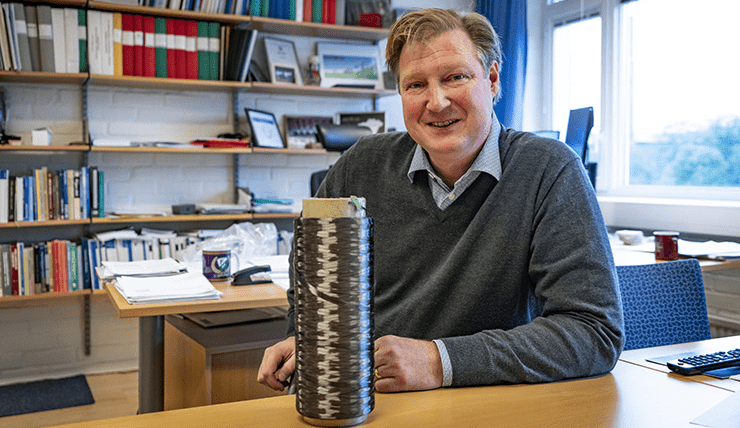
Leif Asp

Multifunctional carbon fibres enable “massless” energy storage

To Leif Asp at Chalmers University of Technology and his collaborators in Sweden, Italy and France for demonstrating the potential for effectively massless energy storage using multifunctional carbon fibres. Despite progress in energy storage technology, batteries still make up a significant part of the weight for devices such as laptops and even cars. Rather than focussing solely on optimized battery materials to tackle lightweight demands, Leif Asp and co-authors demonstrated that exploiting the electrochemical properties of carbon fibres used for structural support could drop device masses by as much as 50%.

Compensator expands global access to advanced radiotherapy

To Eric Ford from University of Washington Medical Center and his colleagues for creating a low-cost method for implementing intensity-modulated radiotherapy (IMRT). IMRT is a precision treatment technique that uses complex multileaf collimators (MLCs) to shape the photon beam and spare more healthy tissue. But while IMRT is available in essentially all radiotherapy clinics in high-income countries, it is largely absent in vast regions of low- and middle-income countries. To address this shortfall, Ford and a multi-institutional team developed a cost-effective alternative to the MLC, replacing it with a ring of compensators made from lightweight plastic moulds filled with attenuating beads such as tungsten beads. The proposed device can be retrofitted to existing linac and cobalt teletherapy units – allowing clinics to add IMRT without having to purchase a new treatment system.

IPCC Special Report on 1.5 °C climate change

To the Intergovernmental Panel on Climate Change (IPCC) for its Special Report on 1.5 °C climate change, which was released in October. The work of 91 authors and review editors from 40 countries, the report resulted from the Paris climate talks in 2015 and highlights the climate-change impacts that could be avoided if the world gets its act together and limits global warming to 1.5 °C. “Every extra bit of warming matters, especially since warming of 1.5 °C or higher increases the risk associated with long-lasting or irreversible changes, such as the loss of some ecosystems,” said Hans-Otto Pörtner, co-chair of IPCC Working Group II. Read more in our special collection on climate change at 1.5 °C.

EXPLORER PET/CT produces first total-body scans

To the EXPLORER consortium for producing the first human images using their total-body PET scanner. The EXPLORER PET/CT is the world’s first medical imaging system that can capture a 3D image of the entire human body simultaneously. Developed by UC Davis scientists and a multi-institutional consortium, EXPLORER can scan up to 40 times faster, or use up to 40 times less radiation dose, than current PET systems, making it possible to conduct repeated studies in an individual, or dramatically reduce dose in paediatric studies. The high-sensitivity scanner can also create movies that track radiolabelled drugs as they move around the body.

Combustion-free, propeller-free plane takes flight

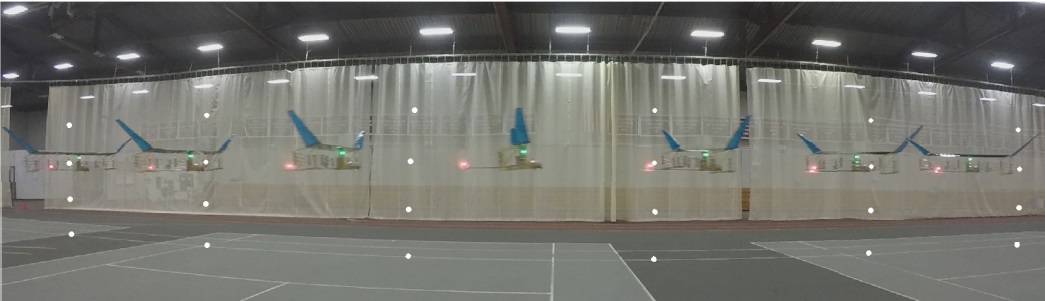
To Steve Barrett and colleagues at MIT for demonstrating the first flight of a propeller-free plane that is not powered by a combustion engine. The plane, which has a five-metre wingspan, is instead propelled by an “ionic wind” of charged ions generated by wire electrodes running off a battery. Announcing the flight, Barrett said he was inspired by a childhood love of Star Trek: “The future looked like it should be planes moving silently with no moving parts – maybe a blue glow but certainly no propellers or turbines or anything like that. So I started looking for what physics would make flight with no moving parts possible.”

Time-lapse image of the EAD aeroplane in flight. Credit: Nature

Quantum mechanics defies causal order, experiment confirms

To Jacqui RomeroFabio Costa, Kaumudibikash Goswami, Christina Giarmatzi, Michael Kewming and Andrew White of the University of Queensland and Cyril Branciard of the University of Grenoble Alpes for their experimental demonstration that quantum mechanics can allow events to occur with no definite causal order. This is unlike classical physics – and everyday life – in which there is a strict causal relationship between consecutive events. To observe indefinite causality the team created a “quantum switch”, in which a photon can take two paths. One path involves the photon being subjected to operation A before operation B, while in the other path B occurs before A. If the operations are performed close together in time, then it becomes impossible to tell which was done first. Indefinite causal order – along with team’s quantum switch – could prove useful for processing quantum information.

Activating retinal stem cells restores vision in mice

To Bo Chen from Icahn School of Medicine at Mount Sinai and an international research team for successfully restoring vision in mice by activating retinal stem cells. In cold-blooded vertebrates, Müller glia cells (MGs) act as retinal stem cells that can replenish damaged retinal neurons and restore vision. In mammals, however, MGs do not have regenerative capability. In this study, Chen and colleagues aimed to reactivate the MGs by performing a two-step gene transfer process to reprogram MGs in blind mice. Between four and six weeks after the reprogramming, the mice could sense light and regained their vision. While further tests are needed to determine the degree of sight improvement, the approach could one day transform treatment for patients with retinal degenerative diseases, which currently have no cure.

Ancient hydrogen reveals clues to dark matter’s identity

To Judd Bowman, Raul Monsalve, Thomas Mozdzen and Nivedita Mahesh of Arizona State University Arizona State University and Alan Rogers of the Massachusetts Institute of Technology for using the EDGES radio telescope to observe colder-than-expected hydrogen gas that existed just 180 million years after the Big Bang; and Rennan Barkana, of Tel Aviv University for calculating that this could be the first direct observation of a non-gravitational interaction between dark matter and conventional matter. While further observations are needed to back-up this hypothesis, the research could help resolve one of the most important unsolved mysteries of physics: what is the nature of dark matter?

Illustration of the early universe

Superconductivity spotted in a quasicrystal

To Keiichiro Imura, Kazuhiko Deguchi, Tsutomu Ishimasa, Keisuke Kamiya, Nobuo Wada and Noriaki Sato of Nagoya University, Tsunehiro Takeuchi of the Toyota Technological Institute, Tsutomu Ishimasa of the Toyota Physical and Chemical Research Institute and Noriyuki Kabeya of Tohoku University for discovering the first superconducting quasicrystal – a metal-alloy that is a superconductor a temperatures lower than 0.05 K. Conventional superconductivity arises when pairs of electrons form via an interaction with phonons, which are particle-like deformations that propagate through crystalline lattices. Quasicrystals do not have translational symmetry and therefore do not have crystalline lattices – and should therefore not be conventional superconductors. Since the first quasicrystals were discovered in 1984, some physicists have suggested that superconductivity could occur in quasicrystals and now this discovery could lead to the creation of new materials that display fractal superconductivity.


‘Father of X-ray astronomy’ Riccardo Giacconi dies at 87

Riccardo Giacconi

The Italian astrophysicist Riccardo Giacconi, who shared the 2002 Nobel Prize for Physics with Raymond Davis Jr and Masatoshi Koshiba, has died at the age of 87. He pioneered the field of X-ray astronomy working on a mission that lead to the first detection of a cosmic X-ray source outside our solar system.

Giacconi was born in Genoa, Italy, on 6 October 1931 and obtained a PhD in physics from the University of Milan. After working as an assistant professor at the University of Milan in 1956 he moved to the US first working at Indiana University and then Princeton University.

In 1959 Giacconi began work at the start-up firm American Science and Engineering (AS&E) in Cambridge, Massachusetts, which at the time was mostly involved with military research. At AS&E, Giacconi started work on an X-ray astronomy programme. Since X-rays from the Sun and other sources are absorbed by the atmosphere, X-ray astronomy can only be carried out from space. In the late 1940s Herbert Friedman from the Naval Research Laboratory in the US had observed X-rays from the Sun using a rocket. But given the strength of the solar X-rays, it was thought that X-rays could not be detected from more distant stars.

That was overturned in 1962 when Giacconi and his team began producing scientific payloads for rockets. One such rocket took off on 12 June 1962 and managed to detect the first cosmic X-ray source outside our solar system as well as proving that the universe contains an X-ray background. This discovery opened a new window on the universe and resulted in a burgeoning programme of X-ray astronomy. Indeed, in 1970, Giacconi’s group launched the first X-ray satellite – Uhuru – that led to the discovery of black holes.

Pioneering contributions

In 1973 Giacconi’s group moved to the Harvard-Smithsonian Center for Astrophysics (CfA) in Cambridge, Massachusetts. It was there that they worked on the Einstein X-ray Observatory — the first imaging X-ray telescope – that launched in 1978. The probe, which ended in 1982, discovered that all types of astronomical objects and systems emit X-rays. Giacconi was also instrumental in Einstein’s successor — NASA’s Chandra X-ray Observatory – that was launched in 1999 and is now in its 20th year or operation.

Giacconi moved from the CfA to the Space Telescope Science Institute in Baltimore in 1981, becoming its first permanent director. In 1993 he then became director general of the European Southern Observatory, in Garching, Germany; a position he held until 1999. Giacconi then moved back to the US to become president of Associated Universities where he worked on the Atacama Large Millimeter Array before retiring in 2004.

Giacconi was awarded one half of the 2002 Nobel Prize for Physics for his “pioneering contributions to astrophysics, which have led to the discovery of cosmic X-ray sources”. The other half was divided between Davis and Koshiba for discovering cosmic neutrinos.

Proton minibeams tackle aggressive brain tumours

Proton minibeams

High-grade gliomas such as glioblastoma multiforme (GBM) pose one of the biggest challenges in clinical oncology. The gold standard treatment for these aggressive brain tumours — resection followed by radiotherapy and chemotherapy — is limited by high recurrence rates, therapy resistance and devastating side effects. One potential alternative could lie in proton minibeam radiation therapy (pMBRT).

Minibeam radiotherapy uses an array of parallel, submillimetre-sized radiation beams to deliver spatially fractionated dose. Proton minibeams have already demonstrated a remarkable reduction in neurotoxicity compared with standard proton therapy. Now, a French research collaboration has evaluated the outcomes of pMBRT in glioma-bearing rats (Sci. Reports 10.1038/s41598-018-34796-8).

The team used a passive scattering beamline at the Orsay Proton Therapy Center to irradiate the animals with the plateau region of a 100 MeV proton beam. They note that this energy could be used to treat a tumour located at the centre of the human brain. “The experiments were performed in conditions that can be compared with, or translated directly to, possible human irradiations,” points out first author Yolanda Prezado, from the IMNC laboratory at CNRS.

To generate the minibeams, the researchers used a multi-slit brass collimator with 400-μm-wide slits, spaced 3.2 mm apart and positioned 7 cm from the rat skin. This set-up produced minibeams with a width of 1.1 mm at 1 cm depth in the rats’ brain. Prezado notes that clinical irradiations could use a pencil-beam scanning system with multi-slit collimators adapted to fit the tumour size. “The beam widths and spacing to be used in potential clinical trials are the same as those being used in small-animal experiments,” she explains.

Efficacy and safety

To evaluate the tumour control efficacy of pMBRT, Prezado and colleagues treated nine rats with aggressive RG2 glioma tumours. The animals received one fraction of pMBRT to the whole brain (excluding the olfactory bulb) with peak doses of 70 Gy at 1 cm, corresponding to a mean dose of 30 Gy.

The 3.2 mm spacing between the beams exposes the rat’s brain to a highly heterogeneous proton dose distribution, with large areas of tumour receiving non-lethal radiation doses. Dose–depth profiles revealed peak-to-valley dose ratios of 6.1 at the tumour position and 6.5 in the centre of the brain.

Treatment with pMBRT provided significant tumour control. The mean survival time of the irradiated rats was 32.5 days, compared with 18 days for a control group of seven non-irradiated tumour-bearing rats. Two irradiated animals survived for the entire study duration and were sacrificed six months after irradiation, at which point no tumour was seen in MR images or histopathological analysis. The authors emphasize that tumour eradication was achieved despite delivering a highly heterogeneous dose distribution in just one fraction.

Any rat showing adverse neurological signs related to tumour growth was humanely killed. The non-irradiated tumour-bearing rats displayed large gliomas at the moment of the sacrifice. Irradiated rats sacrificed less than three months after irradiation (due to symptoms of tumour growth) also had large gliomas plus necrotic foci in the tumour and peripheral brain tissue.

Safety check

The researchers also investigated the long-term normal-tissue toxicity of pMBRT, comparing the outcome of nine normal (tumour-free) rats that received pMBRT with a second control group of five non-irradiated normal rats.

The irradiated normal rats gained weight as expected and did not show any external clinical symptoms or skin damage, just a reversible epilation in the minibeam path. Six months after irradiation, the researchers performed MRI on five irradiated normal rats. They found no visible lesions in these animals and no significant differences from the non-irradiated controls. Histopathological analysis performed six months after irradiation revealed only minimal lesions. Four rats that were followed up for one year exhibited a similar profile.

The team concluded that pMBRT provides significant tumour control in RG2 glioma-bearing rats, achieving 22% long-term tumour-free survival. In addition, the 70 Gy proton minibeams did not induce the side effects, such as radionecrosis, that would have resulted from standard proton therapy at lower doses.

This combination of increased tumour control and reduced neurotoxicity widens the therapeutic window for high-grade gliomas, possibly enabling more aggressive irradiation schemes. The fact that large areas of the brain could be irradiated without significant side effects may overcome one of the major difficulties of treating gliomas: its infiltrative nature. Furthermore, as pMBRT does not require homogeneous target coverage to achieve tumour control, it could reduce positioning and targeting precision requirements.

As for the mechanisms underlying these results, the team suggest that non-targeted effects, such as cell signalling or changes in the immune microenvironment, may play a role. Another possibility may be a preferential effect on the tumoural versus normal vasculature. The team’s next challenge will be to “unravel the biological mechanisms involved,” Prezado tells Physics World.

Newton: egomaniac or troubled genius?

Isaac Newton illustration

Albert Einstein’s final interview, two weeks before his death in 1955, was preoccupied with Isaac Newton, whose physics Einstein revered, next only to that of James Clerk Maxwell. But when the interviewer, an American academic historian of science, touched on Newton’s personality, and particularly Newton’s notorious refusal to publish any acknowledgement of the ideas of Robert Hooke in the preface to his Principia Mathematica (1687), Einstein responded: “That, alas, is vanity. You find it in so many scientists. You know, it has always hurt me to think that Galileo did not acknowledge the work of Kepler.” Later in the interview, Einstein added with a booming laugh that a man might often say that he had no vanity, but this too was a kind of vanity because he took such special pride in the fact. “It is like childishness,” said Einstein. “Many of us are childish; some of us more childish than others. But if a man knows he is childish, then that knowledge can be a mitigating factor.”

Florian Freistetter, once an academic astronomer in Germany and Austria and now a science writer, would surely agree with Einstein about Newton’s vanity. He does not, however, refer to this conversation in his brief new book – Isaac Newton: the Asshole Who Reinvented the Universe – which focuses on Newton’s personality. “I worship Newton more than almost any other scientist of the past,” Freistetter comments in his introduction, “even though he was such a jerk.” At the end, the author sums up Newton as “an eccentric, an egoist, a troublemaker and a mystery-monger, who tolerated no criticism; was uncompromising, vengeful and conniving, but was also the greatest genius ever to have lived.” According to Freistetter, “No other scientist has had such an important, wide-ranging and enduring influence on the entire world as Newton did. Sometimes, it would seem, if you want to change the world, you have to be both a genius and an asshole.”

Plenty of evidence for this portrait is cited in the book. Much of it will be familiar to those interested in Newton, though it is freshly written and engagingly presents the state of scientific ignorance about the world, pre-Newton. One chapter deals with Hooke, and Newton’s arrogant indifference to making the Principia comprehensible to non-mathematicians. Another looks into Newton’s manipulative dispute over access to the astronomical data of the astronomer royal, John Flamsteed. Yet another covers his long and devious battle with Gottfried Leibniz as to which of them first invented calculus.

Then there is Newton’s ruthless pursuit of counterfeiters, when he was warden and master of the Royal Mint, which led to the hanging of William Chaloner in 1699, despite Chaloner’s letters begging Newton for mercy. And, of course, his perplexing fascination with theology and alchemy, which occupied far more of Newton’s time than is generally recognized, even today. He wrote some 650,000 words on alchemy. This was far from being merely a hobby, notes Freistetter: “If anything, it would be closer to the truth to call Newton’s research into physics a ‘hobby’ that he fitted in between his theological and alchemistic studies” – as demonstrated in Rob Iliffe’s erudite study, Priest of Nature: the Religious Worlds of Isaac Newton (2017), which goes surprisingly unmentioned by Freistetter.

The most original aspect of Freistetter’s book is its regular comparison of Newton’s methods of doing science with those of today’s scientific world. Clearly, Newton’s pathological solitariness (echoed by Einstein at his scientific best in 1905 and 1915–1916) has little relevance to today’s collaborative groups.

Could Newton have settled his quarrels with colleagues more constructively?

What about his lifelong disputatiousness? Could Newton have settled his quarrels with colleagues more constructively? “One thing is clear: it’s impossible to avoid disputes in science,” writes Freistetter. “Science isn’t democratic. What happens isn’t necessarily what the majority wants, and the truth is not always to be found in the middle. Even if all of your colleagues and peers are ranked against you, it is still possible that you are right.”

Vigorous scientific discussion is both inevitable and desirable. “You just don’t need to take this to extremes as Newton did,” Freistetter points out. As for Newton’s unwillingness to interact with the public or even the Royal Society, “He would still get along very well in the world of science today. But I still wouldn’t recommend basing oneself too much upon him in this regard.” Better, thinks Freistetter – who has published more than 5000 articles on his science blog – for scientists to find time to educate society about what they are doing.

But is Newton accurately described as an “asshole”? That is, “a stupid, irritating or contemptible person”, according to the Oxford English Dictionary. If he was a genius who reinvented the universe, by definition he was not stupid. On the other hand, his behaviour was frequently irritating and sometimes contemptible. Like many a genius, these characteristics originated in his childhood. Without doubt, Newton had a troubled upbringing. Sent to his grandmother at the age of three by his mother after his father’s premature death and her subsequent remarriage, he noted in a youthful diary: “What shall become of me? I will make an end of it. I can only weep. I do not know what to do.” As Einstein perhaps intuited – maybe thinking of his own introverted childhood and adolescence – the adult Newton was probably still a self-absorbed child, dependent on lifelong academic research for preserving his sanity.

Electric vehicles need a little help from their friends

It’s easy to assume that we’ll all switch to electric vehicles once the technology is better but for many of us, recommendations from friends play a greater role in trying something new. By modelling the interactions between technological change and social learning, researchers reveal that for electric vehicles to become mainstream, both technological improvements and the influence of others are essential.

“For the electric vehicle, range and refuelling stations are barriers to market deployment but also the car is often associated with identity, which might be more difficult to overcome,” says Oreane Edelenbosch from the Politecnico di Milano in Italy.

The adoption of advanced transport technologies such as electric, fuel-cell and biofuel vehicles could reduce transport’s significant amounts of greenhouse gas emissions. If these new technologies are to compete with conventional vehicles, they’ll need improved performance and reduced production cost. But until now few climate change mitigation studies have considered the social barriers to adopting electric vehicles. How much do aesthetics, performance, attitude, lifestyle and social norms matter in persuading us?

To find out, Edelenbosch and colleagues developed a modelling framework that included both technological and social learning. The study considered four different social groups: early adopters who like to try new technologies and don’t mind taking a risk; early majority who represent the first popular wave; late majority who avoid risks and like to wait so they can check the experience of early adopters; and laggards, who tend to resist new technologies until they really have to use them.

The researchers considered 18 scenarios, including differing carbon tax regimes, subsidies targeted at consumer groups, and varying rates of decline in technology costs. The results show that technological and social learning can mutually reinforce each other.

“When people see other people using a technology they become more familiar with it,” says Edelenbosch, who published the findings in Environmental Research Letters (ERL). “At the same time, new electric vehicle models will come on the market which makes the technology more flexible for different types of uses.”

But the model shows that if social learning doesn’t occur, the technology is unlikely to spread beyond enthusiastic early adopters because the perceived risks remain too high for later adopters. Similarly, if technological learning doesn’t occur, electric vehicles remain too expensive for most people and only attract those willing to take a significant risk.

For policy makers the message is clear. Supporting the research and development of technologies is important, but this alone will not result in adoption. Behavioural change needs to be considered too, and can be encouraged with measures like financial incentives and information campaigns.

The adoption of new technologies could play a significant role in fighting climate change. Whether in solar photovoltaic panels, heat pumps or energy-efficient lighting, both technological improvements and social learning must work in tandem to ensure that even the laggards make the switch in the end.

Copyright © 2026 by IOP Publishing Ltd and individual contributors