Physicists find new ‘control knob’ for the quantum topological world

A “topological” alloy of iron and tin has been found to respond surprisingly strongly to magnetic fields, according to research carried out by Zahid Hasan at Princeton University and colleagues in the US, China and Taiwan. The material, which is layered, can be easily cleaved to create surfaces with honeycomb crystal structures with six-fold rotational symmetry. When studying the surface, Hasan and colleagues found that the symmetry of the electronic structure does not match that of the atomic lattice.

Materials with properties that respond strongly to electric or magnetic fields are interesting because they are so useful for technological applications. Those boasting giant magnetoresistance (GMR), for example, are used in a wide range of magnetic-field sensors, notably in hard-disk drives. These materials have a resistance that changes dramatically when subject to a magnetic field.

We found a new control knob for the quantum topological world

Zahid Hasan

Topological properties can arise in materials with a strong quantum-mechanical coupling between the spin and orbital angular momentum of electrons. On the surface of some materials, this spin-orbit coupling can lock the motion of an electron to its spin, preventing the electron from scattering. This results in a topological insulator that conducts electrons on its surface, but not in its bulk. Given that electron spin is related to the magnetic properties of a material, any magnetic materials with strong spin-orbit coupling could have exotic and potentially useful topological properties.

Cleaved crystal

In an ordinary crystalline solid, the electronic structure normally has the same symmetry as the surrounding atomic lattice. But instead of having the expected six-fold symmetry, the researchers found the electronic structure on the surface of the iron-tin alloy has two-fold rotational symmetry.

“We had expected to find something six-fold, as in other topological materials, but we found something completely unexpected,” says Princeton’s Songtian Sonia Zhang. “We kept investigating, and we found more unexpected things. It’s interesting because the theorists didn’t predict it at all. We just found something new.”

Big surprise

The next big surprise was that that the axis defining the two-fold symmetry can be rotated by applying a magnetic field. Furthermore, the electronic structure could be aligned in any direction that the researcher chose.

Hasan’s team is unable to explain why a magnetic field has such a dramatic effect on the electronic properties of the material. Indeed, the response to the magnetic field is about 100 times stronger than predicted by current theory. The implication is that the g-factor of the material’s electrons – which relates the magnetic moment of a particle to its spin – is about 100-times greater than for electrons in free space.

“Nobody predicted that in topological materials,” says Hasan, “This gigantic and tunable quantum effect opens up the possibilities for new types of quantum technologies and nanotechnologies.” He believes his team has found “a new control knob” for the quantum topological world. “We expect this is tip of the iceberg,” he adds. “There will be a new subfield of materials or physics grown out of this.”

David Hsieh from Caltech, who was not involved in the research, adds that the research could be evidence of a new quantum phase of matter. “That’s, for me, exciting,” he says. “They’ve given a few clues that something interesting may be going on, but a lot of follow-up work needs to be done, not to mention some theoretical backing to see what really is causing what they’re seeing”.

The research is described in Nature.

Spider silk, bone and wood inspire 3D printed polymers

Although stiff, lightweight materials are needed in many applications (aircraft and biomedical implants are just two examples), they are costly and time-consuming to make. A team of researchers at ETH Zurich in Switzerland has now taken inspiration from how lightweight and tough biological materials, like spider silk, bone and wood, naturally form, to 3D print liquid-crystal-polymer structures with properties that rival the highest performance lightweight composite materials around today.

Natural materials like spider silk, bone and wood boast complex and exquisite multiscale structures that are formed through directed self-assembly, explain the Complex Materials and Soft Materials teams at ETH. Spider silk, for example, forms thanks to the alignment of silk proteins along the direction of the fibres.

Molecules self-assemble into highly oriented domains

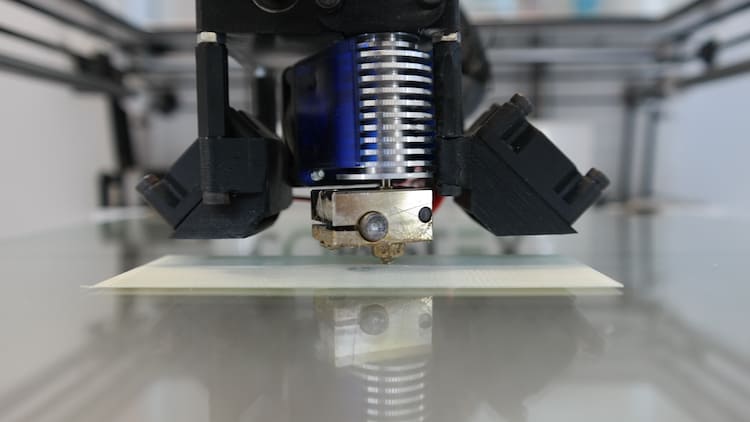
“We reproduced this high alignment (which is normally coded within the molecular structure of building blocks secreted by tissue-forming living cells) by extruding a thermotropic liquid crystal polymer (“Vectra A950”) from a fused deposition modelling (FDM) nozzle. FDM is just another way of saying 3D printing, and it is being touted as the future of manufacturing. The structure we produced has exceptional mechanical properties in the direction that it was deposited.” These properties come from the fact that the LCP molecules self-assemble into highly oriented domains during the extrusion step.

Samsung FDM extruder

By then orienting these molecular domains along the path that the structure was being printed, the researchers say they were able to reinforce the polymer structures in the direction that a mechanical load was applied. “Such a design principle is inspired by the ability of living tissue like bone to deposit mineral phases only along the stress lines developing throughout the structure – during bone growth, for example,” they explain. “This is also known as Wolff’s Law.”

High stiffness and strength

The (maximum reported) Young’s modulus (of 34 GPa) of the printed LCPs is much better than that of common lightweight composites such glass fibre-reinforced polymers, they add. It is also better than 3D printed continuous fibre composites.

“Indeed, the stiffness and strength (as high as 400 MPa) of our printed laminates is not far off from that of carbon-fibre reinforced polymers, with the added bonus of their being recyclable. We can produce unparalleled levels of hierarchical structural complexity and application-specific shapes thanks to the way our 3D printing works. And in contrast to conventionally FDM-printed polymer parts, we can design our anisotropic filament architectures to make them stiffer and tougher than the best polymer materials known.”

Loop test

“A game-changer”

“We expect our technology to be a game-changer in several structural, biomedical and energy-harvesting applications in which lightweight materials are employed to reduce fuel consumption, provide better interfaces with biological tissues or enhance longevity and sustainability of structural components,” the researchers tell Physics World. “Because we conducted our experiments using a readily available polymer and a commercial desktop 3D printer, we have also shown that the technique might be repeated by anyone in this research field.”

The team, reporting its work in Nature 10.1038/s41586-018-0474-7, says that it is now busy developing structural components using its 3D printing technique for real-world applications.

Publishers look to improve diversity in peer review

Women who are corresponding authors on scientific papers have slightly less chance of having their articles accepted in IOP Publishing journals. That is according to a 30-page report released today by IOP Publishing, which publishes Physics World. The report, which examines the diversity of authors, referees and board members of journals owned by IOP Publishing, also finds that women are invited less than men to peer review papers.

The report has some good news in that journal article submissions from female corresponding authors to IOP Publishing journals as well as the number of women on the editorial boards of its journals are both increasing. Indeed, the report notes that IOP Publishing is “ahead of the global trend for female authorship in physics”, with 22% of papers accepted for publication being from women compared to the global average of 17% in physics.

There were a lot of positives in the report, but we also weren’t surprised that we found some issues, which also tend to be industry-wide

Kim Eggleton

However, the report finds that there is still “considerable room for improvement”, notably that female researchers who are corresponding authors have a 40% chance of having their articles accepted compared with 43% for men. The report also finds that around 85% of those invited to peer review research papers are men and that women account for just 12% of board members in plasma-physics journals and 15% in mathematics. IOP Publishing journals linked to environmental science have the highest representation of women with 44% on average.

The report also finds that there is an over-representation of scientists from Europe and the US on IOP Publishing editorial boards. US-based scientists make up 28% of board members compared to 8% from China — with authors from the US and Europe being more likely to have their papers accepted for publication than authors from countries such as China or India.

Next steps

The report outlines 12 recommendations to boost diversity and inclusion in the publisher’s peer-review process, many of which are already being introduced. These include training for peer-review staff on implicit bias; increasing the use of double-blind peer review on journals; and including a gender-neutral title “Mx” on IOP Publishing’s manuscript submission system.

“We wanted to be honest and open about what we found,” says Kim Eggleton, senior managing editor at IOP Publishing. “There were a lot of positives in the report, but we also weren’t surprised that we found some issues, which also tend to be industry-wide. It’s also important to remember that none of this analysis proves any causal relationship, so conclusions must be drawn tentatively.” Eggleton adds that the next steps will be to fully implement the report’s recommendations.

IOP Publishing’s report follows a similar study by Publons that analyses thousands of articles in the Web of Science database and ScholarOne, a peer-review management platform. It finds that, across many scientific disciplines, researchers in the US carried out peer review on over 22 million papers while submitting 10 million manuscripts between 2013 and 2017. Researchers based in China, however, reviewed just six million papers despite submitting almost nine million manuscripts.

Polymer transducer paves the way for low-cost ultrasound

Engineers at the University of British Columbia (UBC) have developed and fabricated a novel ultrasound transducer that could lower the cost of ultrasound scanners to as little as $100. Their patent-pending device is portable, can be powered by a smartphone and could pave the way for creating wearable ultrasound devices (Microsystems & Nanoengineering 10.1038/s41378-018-0022-5).

Conventional ultrasound scanners use piezoelectric crystals to create images. The UBC team replaced the piezoelectric crystals with tiny vibrating drums made of polymer resin, called polyCMUTs (polymer capacitive micro-machined ultrasound transducers). CMUTs exhibit certain advantages over their piezoelectric counterparts, such as wider bandwidth, better integration with electronics and ease of fabricating large arrays. The use of inexpensive polymers, meanwhile, lowers the cost of manufacture.

“Transducer drums have typically been made out of rigid silicon materials that require costly, environment-controlled manufacturing processes, and this has hampered their use in ultrasound,” explains lead author Carlos Gerardo, a PhD candidate at UBC. “By using polymer resin, we were able to produce polyCMUTs in fewer fabrication steps, using a minimum amount of equipment, resulting in significant cost savings.”

To test their technology, Gerardo and colleagues used a 64-element polyCMUT array to image a phantom made from 12 aluminium wires in a tank of mineral oil. The generated B-mode image showed that all of the wires could be identified, down to a depth of 85 mm. For the first five wires (down to a depth of 50 mm) the full-width at half-maximum revealed a lateral resolution of better than 1.5 mm.

Sonograms produced by the UBC device were as sharp as, or even more detailed than, traditional sonograms produced by piezoelectric transducers, says co-author Edmond Cretu. “Since our transducer needs just 10 volts to operate, it can be powered by a smartphone, making it suitable for use in remote or low-power locations,” he adds. “And unlike rigid ultrasound probes, our transducer has the potential to be built into a flexible material that can be wrapped around the body for easier scanning and more detailed views — without dramatically increasing costs.”

The authors note that the technology has the potential to be extended to flexible substrates to create conformal and wearable health monitoring systems. Another advantage is that the maximum processing temperature is 150 °C, potentially enabling polyCMUTs to be fabricated directly on top of substrates containing pre-existing components.

The next step in the research is to develop a wide range of prototypes and eventually test the device in clinical applications. “You could miniaturize these transducers and use them to look inside your arteries and veins. You could stick them on your chest and do live continuous monitoring of your heart in your daily life. It opens up so many different possibilities,” says co-author Robert Rohling.

Talent spotting: secrets for a successful job interview in industry

When I was invited to write the foreword to the 2018 Physics World Careers guide, I decided to remind readers how vital the skills and knowledge gained during a physics degree are to a successful career. A physicist’s logic, analytical ability and accuracy, I pointed out, are attributes that employers prize very highly. It’s why physicists end up in such a wide variety of roles from captains of industry to partners in law firms and from entrepreneurs to world-class engineers and scientists.

That’s all true, so why do we often read about a shortage of talented people in science, technology, engineering and mathematics (STEM)? Why are physicists not being lapped up if there are so many jobs waiting to be filled? This mismatch between the lack of staff and the difficulty scientists have in getting jobs is what Physics World called the “STEM shortage paradox”.

Part of the problem, I feel, is the recruitment process, at the heart of which is the good old job interview. Employers use them to find people who can help their organization or business to grow, prosper and strengthen, which means that any interview is all about finding out whether the candidate in front of you is going to be part of the solution (or not). However, not all physicists do themselves justice in interview. Sometimes they even apply for roles that just aren’t right for them.

As an employer, you’ll probably have prepared an advert outlining the skills and experience candidates will need, and included links to your company website. You should therefore be pretty certain, based on their application forms or CVs and their covering letters or e-mails, that the candidates you’ve invited for interview are all a decent match. It’s then just a case of picking the “right” person.

If only it were so easy.

If you have ever been grilled in a job interview, you know they can be can be nerve-racking experiences for candidates. But interviewing candidates is just as challenging.

James McKenzie

If you have ever been grilled in a job interview, you know they can be can be nerve-racking experiences for candidates. But for those on the other side of the table looking to hire people for jobs, interviewing candidates is just as challenging.

You’re a busy person and recruitment is probably not your main job. After all, if you weren’t busy, you wouldn’t have been given the budget to hire someone to help you. That’s why you’ve paid candidates expenses to turn up for interview. All you want is for one of them to be the answer to your needs.

So if you’re the person being interviewed, never forget how it feels from the employer’s point of view. And never forget that one of the most vital skills being tested in an interview is how well you can communicate, which is essential to so many jobs.

Top tips

Another important attribute I look for in candidates is honesty. I remember one applicant I interviewed who claimed he could use all sorts of software packages, including a 3D computer-aided design package called Solid Works. He sounded convincing, but just to check, I drew a simple engineering drawing on a piece of paper and gave him 10 minutes to sketch it on a PC in the next-door office. It didn’t go well and I politely showed the candidate out.

So remember: employers want people in their organization who can be trusted. Do not make things up because if you do, it’ll catch up with you sooner or later.

Then there was another applicant, who told me how he lost his previous job. Now you might think he’d have wanted to cover his dismissal up, but he was happy and open enough to explain events. It turns out that the candidate had worked all hours for a whole week to meet a project deadline, except the boss hadn’t told him the project had been cancelled two weeks previously. When the manager showed no concern, an altercation broke out and the person now sitting in front of me was fired.

The candidate regretted the sacking but he was passionate about his work and, moreover, had the skills I needed. So I contacted his references, who confirmed the story. I instinctively felt he was a hard worker who I could rely on to get the job done. I hired him and I was proved right.

Another bugbear is that many applicants don’t do enough homework before an interview, which is no excuse these days with so much information online. One applicant for a product-design job even asked me to explain what the company did and what the products were. That was a short interview. Employers aren’t expecting in-depth knowledge but there’s no excuse for not knowing what’s in the public domain. If you can’t take the time to find out about a company, why are you even bothering with the interview?

Physicists are highly skilled people who will be at the core of a hi-tech firm’s future and I – as an employer – want people who care about their work. A single incorrect line of code, a wrong choice of material, an error in a calculation or an electrical component poorly specified can make or break a product or even a business. I want people who are obsessive, focused and pay attention to detail.

I want people who are obsessive, focused and pay attention to detail.

James McKenzie

And finally, remember you could be in your job for quite a while. It’s therefore important to choose something that really gets you engaged and excited. You want to get out of bed each day knowing that you enjoy what you do. Everyone is different but given that physicists are so in demand, you may as well be honest and be yourself in interviews. You’ll then stand more chance of getting the job that’s right for you.

Climate data exhibit pink noise

Climate data from the last century and paleoclimate information from the last 100,000 years both exhibit pink noise, according to a team from the US, Sweden and the UK. The finding indicates that the pink noise is a feature of natural climate variability.

Pink noise is random, with every octave containing the same amount of energy; it also occurs in earthquakes, stellar luminosity and electronics. Pink noise has more low-frequency components than white noise and gets its name as visible light with that energy spectrum would appear pink.

“We find that the observed pink noise behaviour is intrinsic to Earth’s climate dynamics, which suggests a range of possible implications, perhaps the most important of which are ‘resonances’ in which processes couple and amplify warming,” says John Wettlaufer of Yale University, US. “A central question in contemporary climate science concerns the relative roles of natural climate variability and anthropogenic forcing – climate change related to human involvement – which interact in a highly nonlinear manner on multiple timescales, many of which transcend a typical human lifetime.”

The pink noise could resonate with low-frequency forcing such as that from manmade effects, Wettlaufer and colleagues believe.

Their analysis revealed that the timescale at which pink noise appears in the climate signal depends on geographic location. The noise may arise because of Earth’s rotation – the team will continue to investigate the mechanism.

Wettlaufer and colleagues from Yale, the University of Oxford and Stockholm University analysed monthly-averaged surface temperatures from 1901 to 2012 provided by the Goddard Institute for Space Studies, US, along with data from climate proxies such as isotope measurements in ice cores and cave formation dating back more than 100,000 years. Both the pre-industrial and post-industrial data showed fluctuations in temperature that could be described as pink noise.

The team reported the findings in Physical Review Letters.

  • This article is based on a press release from Yale University.

US societies join forces in $10m drive to tackle diversity

Five leading US scientific societies have come together to launch a new programme to boost the number of women and people from underrepresented racial and ethnic minorities in science. The Inclusive Graduate Education Network (IGEN) will receive $10m over the next five years from the National Science Foundation (NSF) to improve diversity in astronomy, chemistry, geoscience, materials science, engineering and physics. The five societies are the American Astronomical Society (AAS), the American Chemical Society, the American Geophysical Union, the American Physical Society (APS) and the Materials Research Society.

While many scientific fields struggle with diversity, physics is among the worst. According to the APS, about 9% of all students receiving bachelor’s degrees in physics are from underrepresented racial and ethnic minorities  backgrounds – which includes African Americans, Hispanic and Latino Americans, Indigenous Americans and Pacific Islanders – while just 6% of PhD students come from such groups.

Exceeding expectations

In 2012 the APS began a “bridge progamme” to undertake new methods of recruiting and retaining underrepresented minorities. These include improving the mentoring of undergraduates, modifying admission practices for graduates, recruiting minority students who would not otherwise have entered graduate studies, and providing mentoring and monitoring for such students in the programmes.

“The APS bridge programme far exceeded its original goals,” says APS chief executive Kate Kirby. “Having seen that the programme can be successful in physics, we are confident that the approach can yield similar results across the spectrum [other] fields.”

The other IGEN members will now adapt and implement these methods as well as contribute their own ideas. The AAS, for example, has recommended that graduate programmes make optional or eliminate the use of examinations to evaluate graduate applicants because they are poor predictors of a student’s success.

The financial contribution to IGEN is overseen by the NSF’s Inclusion across the Nations of Communities of Learners of Underrepresented Discoverers in Engineering and Science (INCLUDES) programme. This aims to create a national network to enhance US leadership in STEM subjects “by broadening participation in those disciplines”.

Smart self-setting material improves bone implants

Cement images

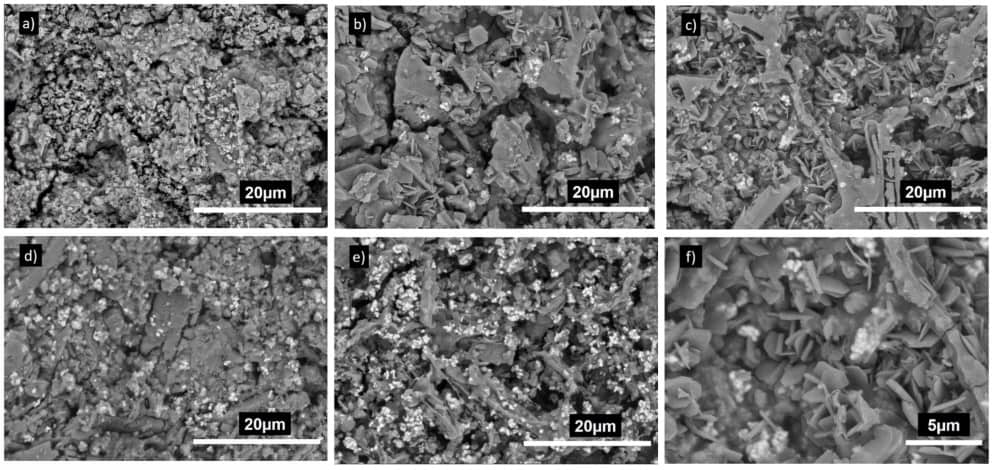
Researchers at the University of Toledo have developed a smart injectable material for use in bone implants (Materials 11 1258).  The new material incorporates varying concentrations of barium titanate (BT) in calcium phosphate (CaP) cements. The “smart” capabilities of this material come from the piezoelectric properties of BT: with applied pressure, the material develops surface charges. This electromechanical property has been shown to play a valuable role in healing fractured bone and integrating implant materials into the surrounding bone.

Natural bone exhibits piezoelectric behaviour – making this a valuable feature to incorporate into materials for bone implants. Including BT in bone cement forms a novel material: one that provides the beneficial piezoelectric properties directly to the bone defect site to promote fracture healing. However, as with all implant materials, this new bone cement must be methodically characterized before it can be successfully applied to orthopaedic defects.

University of Toledo researchers

The team synthesized smart CaP bone cement mixtures with 0, 20 and 40% BT (by weight). They then thoroughly characterized each formulation for its setting time, compressive strength, injectability, washout resistance, biodegradation and biocompatibility – all important factors for an implantable bone material.

In order to inject the material into bone defects, it is important to have sufficient handling and working time before the cement sets. For this reason, the team optimized the cement composition to achieve a setting time of about 15 minutes. Once set, it is critical that the compressive strength of the cement is comparable to that of natural bone, in order for it to serve as a suitable bone graft.  The team aimed for a compressive strength of at least that of spongy bone (10 MPa). The smart CaP cement exhibited strengths higher than 15 MPa, demonstrating its suitability for orthopaedic applications.

The smart CaP cement formulations showed good injectability for up to 5-6 minutes after mixing. When placed in a saliva-like solution, all formulations showed excellent washout resistance, i.e., they did not deteriorate or disperse in solution. Remarkably, the team observed no disintegration even after 24 hours.

Though it is ideal for the implant material to stay intact while setting, it is also important that the material slowly degrades over time while natural bone grows to fill in the defect. The 20% BT formulation showed favourable degradation rates, but the 40% BT composition showed significantly less degradation over seven days, as determined by weight loss, making it a less desirable implant composition.

The toxicity of an implant material to the surrounding cells in the body is of utmost importance. The team tested the biocompatibility of the smart CaP cements using osteoblastic (bone) cells. After 24 hours, cell numbers were comparable on all formulations. However, after 72 hours, there was a significant decrease in cell numbers on the 40% BT formulation, indicating lower biocompatibility. More favourably, the 20% BT formulation showed enhanced cell proliferation after 72 hours. After five days, all cells on the smart CaP cement remained viable, indicating that the formulations were not toxic to the cells.

Overall, the smart CaP compositions were bioactive, biocompatible and biodegradable. All behaved similarly regarding setting time, mechanical strength, bioactivity, injectability and washout resistance.  Based on biocompatibility and biodegradability, the most favourable smart CaP cement composition was 20% BT. Combined with its piezoelectric properties from the incorporated BT, this novel material is a possible candidate for a new generation of smart biodegradable CaP bone cements for orthopaedic applications that enhance fracture healing.

The trouble with beauty

Is physics lost?

Surely not. Physicists are busy everywhere, with quantum entanglement and sterile neutrinos and climate change and exotic materials. This decade has seen two historic discoveries – the Higgs boson and gravitational waves – that shore up our best theories of the universe large and small. Often prophesized, the end of physics is nowhere in sight. There is plenty to work on – the nature of dark matter and dark energy, a quantum theory of gravity, topological materials. But “lost?” Surely not.

Sabine Hossenfelder begs to differ, and in her book Lost in Math: How Beauty Leads Physics Astray she explains why. A theoretical physicist at the Frankfurt Institute for Advanced Studies who researches possible experimental signatures of quantum gravity, Hossenfelder is not at all satisfied with many of the ideas in today’s physics of particles and space–time. These are the topics that make the covers of science magazines: supersymmetry, string theory, branes, M-theory and extra dimensions. The landscape and its 10500 false vacua. The multiverse of universes we may never reach, or even know. Axions. These ideas have no experimental backing, but, like zombies, they never die. “The LHC hasn’t seen anything that would support our newly invented laws of nature,” she writes about CERN’s king of particle accelerators, the Large Hadron Collider (LHC). Elementary particle physics is in a rut, and, Hossenfelder says, even a full-blown crisis.

There have been times in the history of physics where experimental particle data poured out of laboratories like candy, which theorists gobbled up and turned into conjectures, papers and finally models. The 1950s and 1960s was such a time, when new baryons such as the Σs and Δs were being discovered. Theorists rolled up their sleeves, puzzled through the data avalanche and created the quark model, quantum chromodynamics, electroweak unification and the now widely accepted Standard Model.

But every decade can’t be Christmas, and such bounties of new, unexplained data haven’t appeared since. Unmoored by experiments, theorists have come to rely on values other than matching reality – notions like beauty, elegance, simplicity and naturalness, to name some of the most prominent. They’ve worked before, physics students learn (even if these qualities are never defined) and are good stars by which to sail your boat. But “why should the laws of nature care what I find beautiful?” Hossenfelder asks. “The more I try to understand my colleagues’ reliance on beauty, the less sense it makes to me.”

Why should the laws of nature care what I find beautiful?

Sabine Hossenfelder

The recent experimental triumphs are the fruit of old science. The Higgs was predicted 48 years before its experimental discovery in 2012; gravitational waves, a full century ago. But today’s particle physics has experimentalists and theorists locked in a conundrum – theorists need experimentalists to validate or rule out their models, but particle experiments have become so large and so expensive – by one estimate, it cost $13.25 billion to find the Higgs particle – that the experimentalists need the theorists to tell them where to look and what to look for. There’s little spontaneous discovery as in the golden period. “Who ordered that?” Isidor Rabi said upon the discovery of the muon, but today’s menus are buffet only, no deviations allowed.

Take supersymmetry (SUSY), a theoretical space–time symmetry that pairs a bosonic, integer-spin particle to every half-integer spin fermion. It’s been studied to exhaustion but refuses to show up at the LHC. Many theorists were sure it would. SUSY is too beautiful, they say, too elegant not to show up in nature. It solves big problems, like predicting a mass for the Higgs boson without having to “fine-tune” – explain – how large numbers cancel out, to about one part in 1015. Only “natural” numbers of order one appear in the SUSY prediction for the Higgs’ mass; there is no fine-tuning. (Naturalness is the idea that dimensionless ratios of quantities in a theory’s equations should not be much different from one, and no parameters should be fine-tuned to supply miraculous cancellations.) Yet every energy upgrade at the LHC yields zilch.

Hossenfelder confronts physicists to ask them why their ideas aren’t working. Michael Krämer, who heads the new-physics group at the LHC and works on supersymmetry, tells her that he is “honestly confused”. He adds, “I thought something must happen. But now? I’m confused.” She travels to the US to show up at the offices of luminaries including Nobel laureates Frank Wilzcek and Steven Weinberg. She considers Weinberg the greatest living physicist – his office in Austin, Texas is half the size of hers, she notes, “an observation that vaporizes what little ambition I ever had to win a Nobel prize”. While he gives her a near-perfect lecture on all his various musings and ideas – including saying that he’s had “a whole career without knowing what quantum mechanics is” – he too is disappointed in the dearth of new particles from the LHC. In the end he grows hoarse and ends her visit by walking out of his own office.

Perhaps physics has slipped into a post-empirical era, beyond our technical abilities, with ideas judged by what ex-physicist now-philosopher Richard Dawid calls “non-empirical theory assessment”. Hossenfelder shudders at such talk. “I can’t believe what this once venerable profession has become,” she writes. She criticizes bias in the funding arena, when scientists work on what’s in vogue to keep the grant money flowing. “Almost all scientists today have undisclosed conflicts of interest between funding and honesty.” That’s startling if true, but who doesn’t wonder?

Hossenfelder is a good writer, funny and self-deprecating, scientifically astute, and not afraid to give umbrage. Despite its title, her book doesn’t contain a single equation. As a reader I felt I was along on her journey to make sense of her chosen profession, and I enjoyed the ride. “While I witnessed my profession slip into crisis, I slipped into my own personal crisis,” she admits. Hossenfelder has had a nomadic career of short-term research positions, but it would be good if she could find a permanent home and some security. Today’s theoretical physics needs a few malcontents asking questions that other scientists only ask themselves.

  • 2018 Basic Books 304pp £23hb

The long goodbye to fossil fuel: what’s the best strategy for renewable energy?    

While coal use is being challenged around the world, renewable energy is roaring ahead and those who back renewables often feel that any talk of finding ways to reduce the impact of continuing to use fossil fuel risks deflecting or slowing the growth of renewables. It is certainly the case that fossil fuel interests want to stay in the game as long as they can and they will see ameliorative clean-up options as a way to extract as much value as possible from the major investments they made in the past. Some will also see emission clean-up technology as more viable than renewable energy technology, with the latter sometimes being depicted as far off and even utopian. We hear less of that nowadays, with renewables supplying around 25% of global electricity, but it is still the case that fossil fuels remain the dominant energy suppliers, and they will be so for some while. In which case, if carbon emission reduction is seen as urgent, then clean-up options are also urgent, if only perhaps as an interim measure.

That’s the topic of a forthcoming Palgrave book, The Long Goodbye to Fossil Fuels edited by Geoff Wood et al. As my chapter in it makes clear, of the many technical clean-up/ameliorative options, some may complement rather than undermine renewables, so that conflicts might be reduced somewhat. For example, while carbon capture and storage (CCS) might be seen as just a way to allow for the continued use of fossil fuel (see my last post), its initial development for that purpose might also be seen as an interim step toward the adoption of “negative carbon” biomass with carbon capture and storage (BECCS). However, there are issues. Some see enthusiasm for BECCS as misplaced – and unwelcome anyway given its large-scale land use – and as a smokescreen for continued fossil fuel use with CCS.  So, although there might be some complementarity, the potential for conflicts still remains.

if we are to move successfully to a sustainable future, [greens] may have to learn to ‘deal with the devil with a long spoon’

Dave Elliott

For another example of potential conflicts, but also of possible strategic complementarity, some see the idea of converting fossil gas into hydrogen by steam reformation, with CCS added to reduce emissions, as, variously, a diversion from a switch to genuinely green hydrogen, produced using renewable sources (with no need for CCS), or as a way to establish greener gas in the heating market, ready for later replacement by fully green gas when that becomes available on a wide scale. The point being that, at present, steam reformation is much more economically viable than (renewable) power-to-gas conversion.

While that may be true, a key strategic problem then emerges. If we continue to focus on the cheaper short-term ameliorative options, the longer-term renewable options will always remain longer term: they must be promoted before they can (hopefully) become competitive. That was to some extent the fate of renewables in the past, often being faced with objections from those seeking support for ameliorative measures for fossil fuel use, which usually look cheaper and easier in the short term.

Changing times

That is changing – renewables are winning. Nevertheless, it is clear, even if we are looking to near 100% renewable scenarios, that fossil fuel use will continue for some while, particularly in the heating, industrial and transport sectors. While ideas are emerging for dealing with these using renewables, they will take time to develop fully, so some fossil fuels will have to continue to take the strain for a while. In which case they need to be cleaned up.

In a context of diminishing reliance on fossil fuels, that should not be a problem in principle, even for the most devoted renewable energy enthusiasts, but the key issue will be the timeframe – how fast can renewables be expanded, and how much can energy efficiency help slow and ideally reduce demand? What do we need to do to get emissions down rapidly, so as to keep temperature rises below danger levels? And, not incidentally, what role might nuclear power play in all this?

There are a range of scenarios addressing such issues. Some are optimistic about the potential for renewables, others less so – and some look to fossil CCS, nuclear and even geo-engineering as being needed urgently. For example, IRENA, the International Renewable Energy Agency, has produced a scenario in a joint report with the IEA, with renewables supplying 82% of global electricity by 2050, and 65% of global primary energy by 2050, with CCS use limited mainly to industry.

There are some more optimistic scenarios. For example, Jacobson et al. at Stanford University, US, look to wind, water and solar power supplying nearly 100% of all energy by 2050 globally with no CCS or nuclear. However, even in an ambitious scenario like that, fossil fuels are still likely to play a key role for a while, with, in some countries, that probably being unavoidable. For example, 90% of South Africa’s electricity comes from coal plants. That is changing but it will take time. In which case, although change must be a high priority, we need to decide which interim ameliorative technologies to adopt in parallel.

Options

Carbon capture is clearly an option although, at present, it is not doing too well. As noted in my last post, the UK abandoned its £1bn CCS competition in 2015 and the latest UK government Department for Business, Energy and Industrial Strategy (BEIS) projections have it only at 1 GW by 2035 in the UK. Major CCS projects have also been abandoned in the US and Norway. BECCS obviously depends on CCS being available, so that too is stalled – and the case against seeing it as a backstop option grows: see my next post. The more exotic idea of direct air capture from the atmosphere is still being looked at, but it is a long shot – although it would be carbon negative, and can be done anywhere, the proportion of CO2 in air is much less than that in power station exhausts.

However, if some type of CCS is developed successfully then that might play a role, e.g. in Asia, where coal looks likely to continue for a while, although its high cost seems likely to make it of limited use in the energy sector: there will be diminishing returns from building major new long-lived fossil plants. CCS is perhaps more suited to the chemical and industrial sector, which we will need into the future. Although carbon capture and utilization (CCU) seems a better option than storage – creating value from captured carbon by making synfuels from it. Though then, since they will be burnt, it is no longer a carbon negative option.

In the power sector, and also in industry, combined heat and power/cogen arguably makes more sense than CCS, or even perhaps CCU, getting more value from the fossil fuel input, with biomass feedstock, green gas and geothermal heat in some cases being able to augment or replace fossil fuels over time. So CHP is a valuable potential transitional option for heat as well as power – and its power-to-heat ratio is flexible, so it can aid grid balancing, thus complementing variable renewables. So of course do basic energy efficiency improvements; lowering demand makes it easier to meet with renewables, as well as reducing emissions. There are many opportunities in all sectors and they need to be addressed urgently.

So there is a range of options. The technical and economic details are maybe less important than the strategic context. If fundamental conflicts over strategy persist, fuelled by climate denial and/or doubts about renewables, then it will be hard to pursue a rational supply mix of renewables and abated fossil plants. All fossil projects may be resisted by green zealots as “backsliding”, and opportunities for complementarity may be lost – even in the case of the interim use of fossil gas for back-up plants for balancing variable renewable energy. For some greens, perhaps understandably, having anything to do with fossil fuel will remain an anathema, but if we are to move successfully to a sustainable future, they may have to learn to “deal with the devil with a long spoon”, at least for a while. But does that mean that BECCS is still in with a chance? See my next post –  it may not be needed.

Copyright © 2026 by IOP Publishing Ltd and individual contributors