An experiment has confirmed that quantum mechanics allows events to occur with no definite causal order. The work has been carried out by Jacqui Romero, Fabio Costa and colleagues at the University of Queensland in Australia, who say that gaining a better understanding of this indefinite causal order could offer a route towards a theory that combines Einstein’s general theory of relativity with quantum mechanics
In classical physics – and everyday life – there is a strict causal relationship between consecutive events. If a second event (B) happens after a first event (A), for example, then B cannot affect the outcome of A. This relationship, however, breaks down in quantum mechanics because the temporal spread of a particles’s wave function can be greater than the separation in time between A and B. This means that the causal order of A and B cannot be always be distinguished by a quantum particle such as a photon.
In their experiment, Romero, Costa and colleagues created a “quantum switch”, in which photons can take two paths. One path involves being subjected to operation A before operation B, while in the other path B occurs before A. The order in which the operations are performed is determined by the initial polarization of the photon as it enters the switch.
The experiment involves using a polarizing beam splitter, which sends photons of different polarizations along different paths. The photon source is diagonally polarized with respect to the beam splitter, which means that there is a 50% chance that a photon will take either route.
Out of order
The two paths are then recombined, and the polarization of the photons are measured. The operations A and B are designed such that the order in which they are applied to the photons affects the polarization of the output photons – if the system has definite causality.
The team did the experiment using several different types of operation for A and B and in all cases they found that the measured polarization of the output photons was consistent with their being no definite causal order between when A and B was applied. Indeed, the measurements backed indefinite causal order to a whopping statistical significance of 18σ – well beyond the 5σ threshold that is considered a discovery in physics.
As well as making an experimental connection between relativity and quantum mechanics, the researchers point out that their quantum switch could find use in quantum technologies. “This is just a first proof of principle, but on a larger scale indefinite causal order can have real practical applications, like making computers more efficient or improving communication,” says Costa.
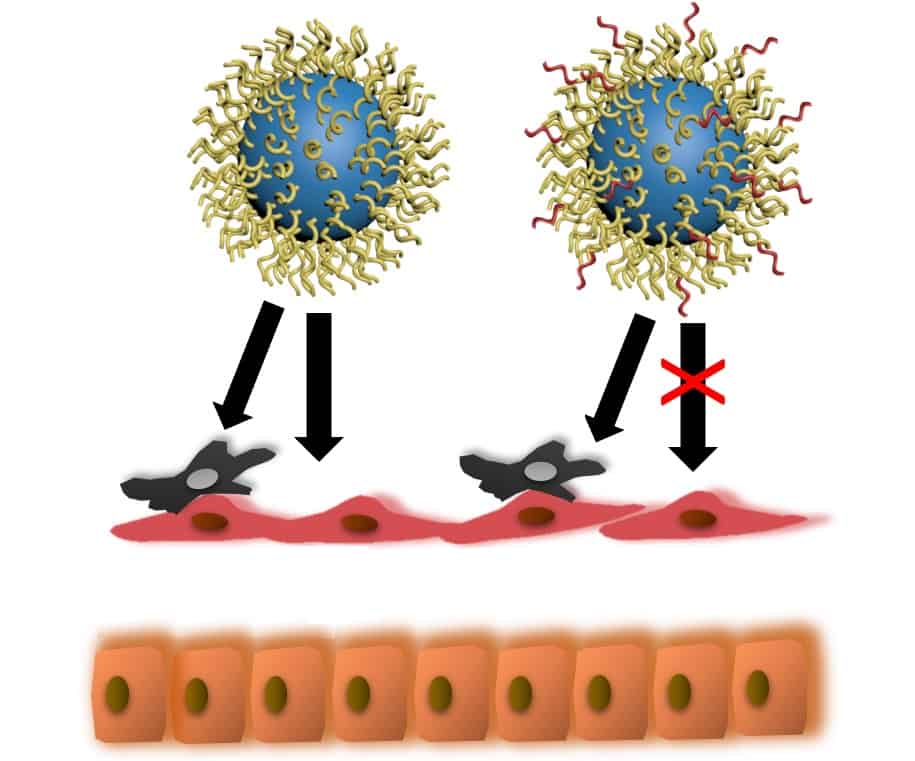
Nanoparticles avoid liver cells thus circulating longer in the bloodstream. Courtesy ACS Nano
Nanoparticles are promising vehicles for drug delivery in biomedical research. Their biggest limitation is that the immune system recognizes them as foreign and quickly removes them from the bloodstream. In a paper recently reported in ACS Nano, a team led by Hao Cheng at Drexel University in the United States explored solutions to this problem by creating a new type of polyethylene glycol (PEG) coating for nanoparticles. While previous coatings have focused on shielding nanoparticles from macrophages, this coating has the benefit of making the nanoparticles largely invisible to liver endothelial cells, which filter foreign objects out of the bloodstream. The team hopes that these new coatings can be used to improve drug delivery in clinical applications.
PEG stealth
Avoiding detection by the immune system is a key issue for drug delivery. Immune recognition is accomplished by proteins in the bloodstream that flag foreign objects (such as nanoparticles) by sticking to their surfaces. Cells of the immune system such as macrophages (immune cells which scavenge the body for foreign objects) can then engulf or take up the particles, preventing them from reaching their destination. One of the most popular methods of creating a “stealth particle” is by coating their surface with a neutral polymer such as polyethylene glycol (PEG).
Scientists have found that the shape of the PEG polymer affects how it prevents protein binding. For example, a high-density PEG layer – one that is closely packed together – prevents protein binding by crowding the surface and taking up potential protein binding sites. In contrast, low-density PEG, or PEG that has more space in between the bound polymer chains, hinders protein binding via its flexibility; each polymer chain has more freedom to rapidly wiggle around, making it difficult for proteins to squeeze past them to the nanoparticle surface.
Liver dodger
Cheng’s team has found a way to maximize PEG shielding of nanoparticles by combining the benefits of both high and low-density PEG. They were able to create a PEG coating with a dual layer: a short inner PEG layer that is highly dense and a longer outer layer with more flexibility.
Nanoparticles covered in the team’s specially designed PEG coatings could circulate in the bloodstream for roughly three times longer than previous nanoparticle designs. The reason for the increased circulation time was unexpected: the PEG coating prevented uptake by liver endothelial cells, but not macrophages. Macrophages in the liver still consumed the particles but because the liver endothelial cells ignored them, the particles circulation time was increased overall. Previously, the importance of preventing liver cell uptake was not well understood.
Because part of liver function is metabolizing drugs and filtering the blood, it is a primary route for nanoparticle removal. Making nanoparticles that are invisible to the liver is a big step towards producing a universal drug delivery vehicle.
The Cheng Lab is excited to see how this knowledge about PEG coatings on nanoparticles can be applied to benefit drug delivery applications, especially for cancer therapy. Future work will explore creating coatings that can block uptake by both liver cells and macrophages to produce ultra-long circulating nanoparticles.
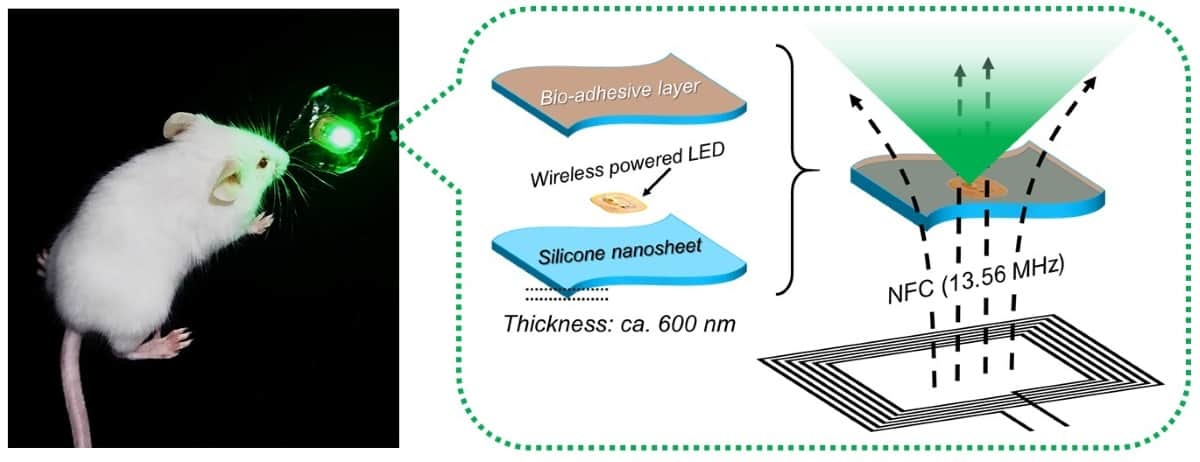
The bioadhesive, wirelessly-powered optoelectronic implant. (Courtesy: Toshinori Fujie, Waseda University)
Photodynamic therapy (PDT) kills cancer cells using a photosensitizing drug that localizes within tumours. When irradiated with a specific wavelength of light, the drug produces reactive oxygen species that kill nearby cells.
In recent years, metronomic PDT, which uses long-term (hours to tens of hours) and low-dose photoirradiation, has shown promise in treating cancers within internal organs. Metronomic PDT can employ miniaturized optical devices to emit light anywhere in the body. To ensure continuous, localized light delivery, however, this approach, requires stable fixation of such devices to internal tissue surfaces.
Surgical suturing — the standard choice for device fixation — is unsuitable for use with fragile tissues or organs, or those that change shape or move. If the light source shifts even slightly away from the tumour, the drug will not be activated and the antitumour effect will not occur. To address this challenge, scientists from Japan have developed a bioadhesive light-emitting device for minimally-invasive metronomic PDT of cancers in delicate organs (Nature Biomed. Eng. 10.1038/s41551-018-0261-7).
The team created an implantable optoelectronic device that can be stably fixed onto the inner surface of animal tissue using elastic poly(dimethylsiloxane) nanosheets. The nanosheets were modified with the mussel protein-inspired bioadhesive polydopamine, which can stabilize the device onto wet tissue for more than two weeks without suturing or medical glue. The device contains light-emitting diode chips that are wirelessly powered by near-field-communication technology, enabling continuous light delivery to the tumour.
To test its effectiveness, the researchers subcutaneously implanted the devices into tumour-bearing mice and injected them with the photosensitizing agent photofrin. They then exposed the animals to red and green light (with peak emission at 630 and 530 nm, respectively) at approximately 1000-fold lower intensity (below 100 μW/cm2) than used for conventional PDT, for 10 consecutive days.
The experiment showed that tumour growth was significantly reduced overall. In addition, the tumour was completely eradicated, in six of 10 tumours irradiated with green light and one of 10 irradiated with red light. The researchers note that the temperature increase of the device (for both red and green light) was less than 1 °C even after 24 h of continuous operation, conferring negligible risk of thermal tissue damage.
“This device may facilitate treatment for hard-to-detect microtumours and deeply located lesions that are hard to reach with standard phototherapy, without having to worry about the risk of damaging healthy tissues by overheating,” explains Toshinori Fujie from Waseda University. “Furthermore, because the device does not require surgical suturing, it is suitable for treating cancer near major nerves and blood vessels, as well as for organs that are fragile, change their shape or actively move, such as the brain, liver and pancreas.”
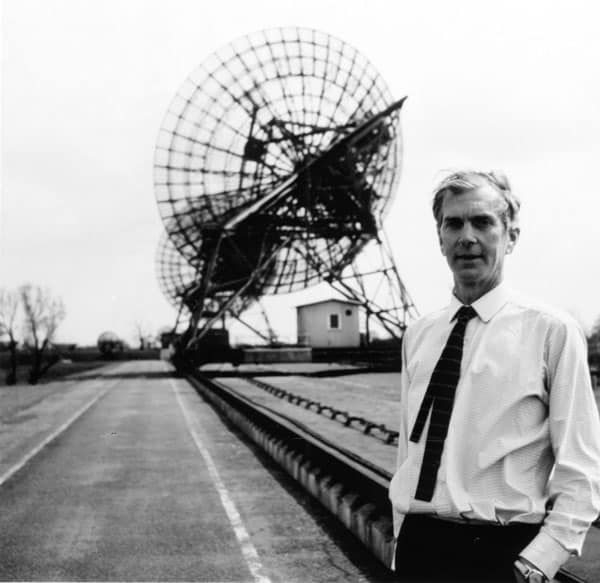
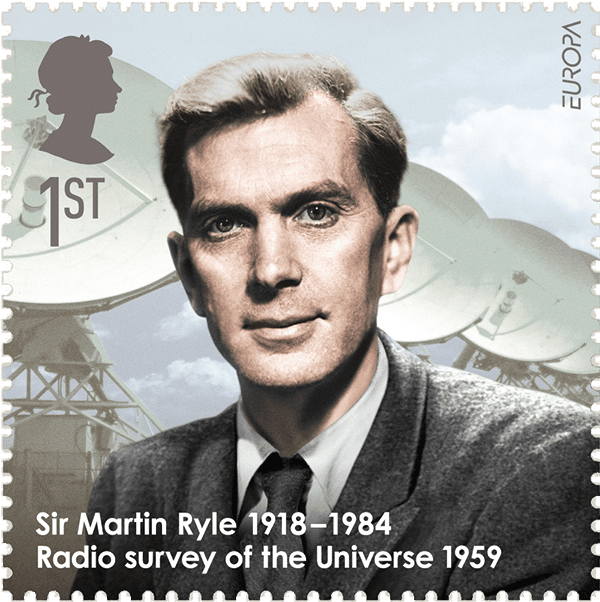
Martin Ryle, who was born a century ago on 27 September 1918, was one of the most successful scientists of his generation. In a glittering career, he was granted many of the most prestigious awards and appointments a scientist may gain. Apart from sharing the 1974 Nobel Prize for Physics with his University of Cambridge colleague Antony Hewish, Ryle was a fellow of the Royal Society and professor of radio astronomy at Cambridge. He served as Astronomer Royal and was knighted in 1966.
These recognitions were for his pioneering work in radio astronomy, to which he devoted himself with intensity, creativity, speedy physical insight, charismatic leadership and practical engineering skill. Ryle recognized the potential of radio interferometry, built successively larger interferometers, and applied the new instruments to astrophysics and cosmology. He received his share of the Nobel prize for his “observations and inventions, in particular of the aperture synthesis technique”, which mixes signals from an array of small detectors to yield images with the same angular resolution as an instrument the size of the entire collection.
Ryle recognized the potential of radio interferometry, built successively larger interferometers, and applied the new instruments to astrophysics and cosmology
For various reasons, though, Ryle moved away from astronomy in the 1970s. He became a harsh critic of both nuclear energy and nuclear weapons, and a strong advocate of renewable energy – especially wind energy – as well as of energy storage and heat insulation. Despite ill health, Ryle and a team of close colleagues produced three short papers on energy use. While these publications might seem a drop in the ocean compared with the vast amount of R&D carried out in the intervening four decades, I believe Ryle’s ideas are still important – and that some of his programmes should be taken much further than they have to date.
“An excessively conscientious fellow”
Born in the English coastal resort of Brighton, Ryle came from a liberal intellectual family. His mother was born in South Africa to Irish parents, and Ryle is described in the Biographical Memoirs of the Royal Society as having absorbed something of his mother’s “typically Irish antipathy to The Establishment”. Members of his family also relate Ryle’s passionate nature to his Celtic heritage. His father was a distinguished physician and highly idealistic.
Astronomy pioneer: Martin Ryle in 1968 with the three-mile interferometer he helped to develop at the Mullard Radio Astronomy Observatory, Cambridgeshire, UK. (Courtesy: Photograph by John T Scott, courtesy of AIP Emilio Segrè Visual Archives, Physics Today Collection)
From an early age, Ryle developed useful practical skills in woodworking and amateur radio. In 1936 he went to the University of Oxford, graduating with a first-class degree in physics in the summer of 1939. It was just before the outbreak of the Second World War and Ryle soon found himself contributing to the British military effort, working on radar counter-measures at the Telecommunications Research Establishment. Radar was to play a vital role in the war – especially for Britain – and Ryle’s abilities flourished.
A team leader at just 23, Ryle was an inventive worker who completed urgent technical developments at great speed. He inspired loyalty in his team and learned how to get what he needed from those above him – skills that were to serve him well in his illustrious post-war research career. He hated war but felt equally keenly the need to defeat fascism, and worked himself to near-exhaustion. When Ryle visited his parents in 1941, his father was so alarmed about his health that he wrote privately to his son’s boss, the radio physicist J A (Jack) Ratcliffe. (In the small world of leading British intellectuals of that time, people knew each other.) In the letter, which is in Ryle’s papers at the Churchill Archives Centre in Cambridge, his father advises that Ryle be given “two or three weeks leave pretty soon”, fearing otherwise that the “excessively conscientious fellow…may crack up more seriously”.
In some respects, Ryle had a “good” war but with the conflict over, he was adamant he did not want to continue in military science. Almost everyone involved in that gruelling war felt a strong desire to put it behind them and to build a better world (even if almost everyone soon relapsed, to a greater or lesser extent, into conventional behaviour). For Ryle, astronomy seemed about as far away as he could get.
War is over?
In 1945 Ryle returned to Cambridge to resume his pre-war graduate studies under Ratcliffe, who initially suggested that he should study the ionosphere. But Ryle was not happy and before long Ratcliffe suggested examining solar radio emissions instead. Many items of captured German radar equipment were offered to university research groups and Ryle knew what he wanted from the spoils of war – two large Würzburg radars and a quantity of low-loss coaxial cable – which suggests that he may already have had radio interferometry in mind.
Despite his anti-war idealism, however, Ryle continued his association with the Atomic Energy Research Establishment and the Services Electronics Research Laboratory. Correspondence in the Ryle papers shows he had good relations with both. He also worked with the Admiralty Surface Weapons Establishment on sonic radar (sonar), which led to one of Ryle’s numerous important innovations – the phase-switching interferometer. Later, though, Ryle dissociated himself from the military world. In 1953 he ended his links with the science advisory committee of the Ministry of Supply, which allocated equipment to the armed forces. Ryle also returned secret papers.
With his skills extended by war experience, Ryle quickly became the world’s leading pioneer of radio astronomy. His group at Cambridge developed much of the relevant science, as documented, for example, in An Introduction to Radio Astronomy (3rd ed.) by Bernard Burke and Francis Graham-Smith (2010). From today’s perspective, one might wonder if Ryle really was so special. Surely a radio interferometer is simply an optical interferometer adapted to work at longer wavelengths? After all, Albert Michelson had determined the first ever diameter of a star (apart from the Sun) using an optical interferometer back in 1920.
In fact, the “adaptation” involved important scientific insights made by Ryle (notably aperture synthesis and the related Earth-rotation synthesis technique) and significant developments in telecommunications and data-processing. Furthermore, in 1945 when Ryle started the interferometric approach to what would become known as radio astronomy, there was a wide gulf – both conceptual and professional – between “radio” and “astronomy”. The former meant antennas and was practised by electrical engineers; the latter meant optical telescopes and was practised by astronomers.
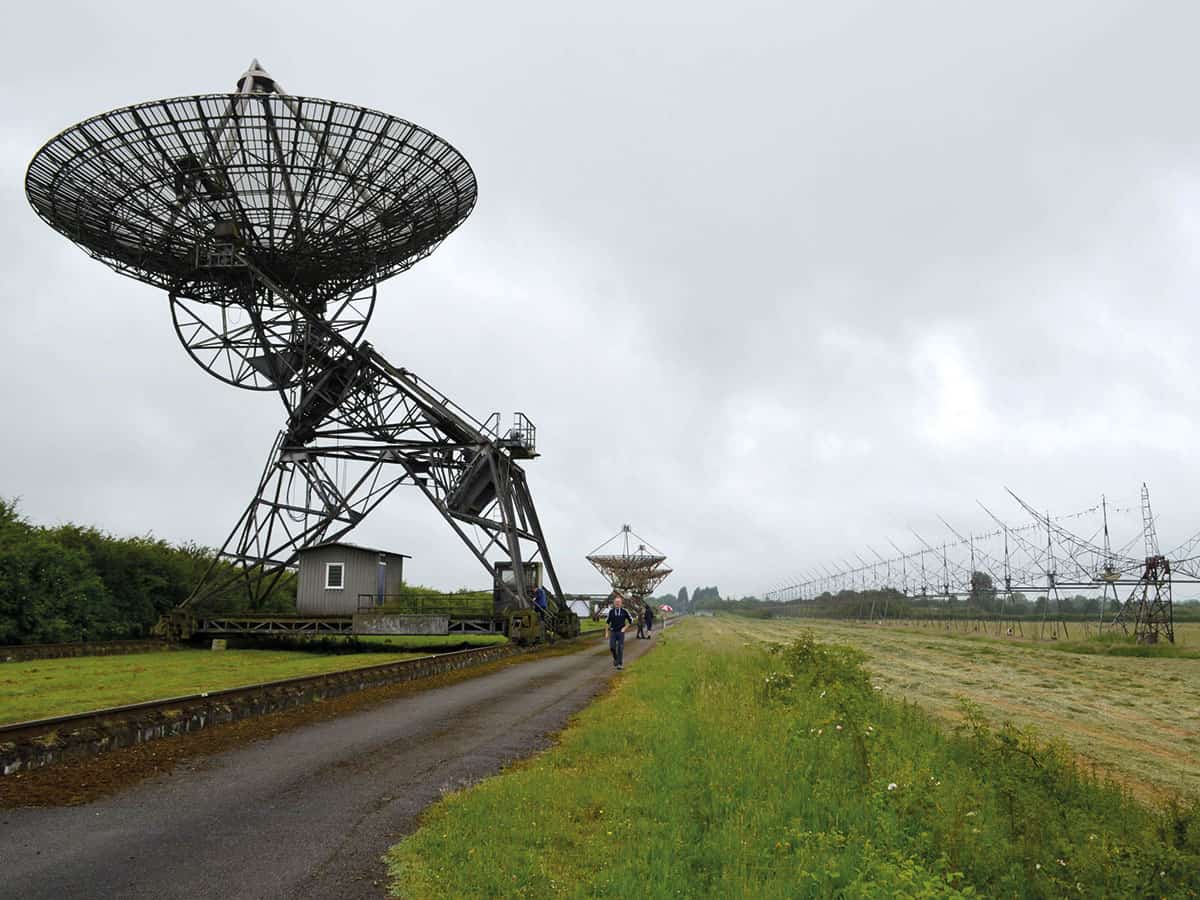
One antenna of the One-Mile Telescope, two of the Half-Mile Telescope and the remains of the 4C Array at the Mullard Observatory in 2014. (Courtesy: CC BY SA Cmglee)
State of conflict
Within his group of radio astronomers at Cambridge, Ryle inspired great loyalty and love. But his brilliance, ambition and idealism were mixed with impatience that often led to explosive – and occasionally violent – outbursts. Once, during the war, he was called in to a small meeting with Lord Cherwell – a friend and scientific adviser of prime minister Winston Churchill – to discuss a pet scheme of Cherwell. Undaunted by his lofty companions, Ryle was not afraid to remark that the idea was “utter bloody rubbish”.
The strongly tribal nature of his research group led to something of a “fortress Cambridge” mentality that triggered disputes with outsiders. Ryle also did not enjoy attending or travelling to meetings and conferences, despite the numerous prestigious positions he held that put him in much demand. These attitudes were at odds with a note found in Ryle’s papers, which opens with: “Our world is one”. That may have been his credo, but Ryle’s idealism did not always match the reality.
In October 1957 the world, and especially the US, was startled by the Soviet Union’s launch of the first artificial Earth satellite. Ryle was interested in the technical possibilities, publishing a proposal in 1958 with Graham Smith on the use of artificial satellites as a navigation aid.
A few years later, the pair led astronomers in protest against the US’s “rainbow-bomb” experiments – explosions of nuclear weapons at high altitude. They joined radio astronomers around the world in opposing the disturbance of the Earth’s van Allen belts and the consequent disruption of radio astronomical observations. This lobbying was, however, far from Ryle’s passionate denunciations of his later years.
An urgency for energy
Ryle’s doubts that he had begun to have about his escape to astronomy came to a head in the 1970s. By then radio astronomy had become “big science” practised internationally by large groups and, although Ryle was in principle in favour of international co-operation, it did not fit his style. Now in his 50s, Ryle’s health began to deteriorate and he had at least one operation for lung cancer. He gradually became less involved with radio astronomy and, with a few close colleagues, began to carry out research into wind energy.
Back in the 1970s, our views on energy were very different to now. In particular, it was generally believed that oil and gas reserves would be exhausted within a few decades. And while a few scientists took anthropogenic climate change seriously, most – if they had even heard of the idea – considered it too speculative to pronounce upon. Ryle, though, entered the energy debate with characteristic urgency. He insisted that burning oil and gas for energy (heat, electricity or motive power) must be curtailed, drastically and quickly. These precious resources, he argued, should be reserved as raw feedstock to make chemical products, especially plastics.
Feeling urgent action was essential, Ryle recommended our top priority should be to use energy more efficiently. Little had been done on this at the time and Ryle believed it would be quick and easy to improve how we insulate buildings, store heat and run machines. From today’s perspective, we may say that Ryle was right, but for the wrong reason. Large reserves of oil and gas – albeit more expensive to exploit – were subsequently found, but burning them is, as he argued, still not a rational option. After all, the environmental cost – climate change – will be (and arguably already is) catastrophic.
As for coal, Ryle was not enthusiastic although he did not rule it out entirely. He considered it to be a necessary stopgap as oil and gas ran out. He believed that a modern coal system, with improved pollution control of sulphur compounds and particulates, could provide electricity plus district heating with high efficiency.
Ryle felt nuclear power was totally unacceptable – expensive, dangerous, and inextricably connected with nuclear weapons
But it was nuclear power to which Ryle had the strongest objections. He felt it was totally unacceptable – expensive, dangerous, subject to long lead-times and inextricably connected with nuclear weapons. Ryle resented the vast sums of research money ploughed into this field compared with the paltry amounts targeted on efficiency improvements and alternative energy. He became an activist, writing articles in the mass media denouncing nuclear energy, the gross nuclear-weapons arsenals, and the irrational policies of the nuclear era.
Wind and Sun
Ryle was a visionary when it came to renewable energy. In the 1970s wind and solar energy sources were generally viewed as too expensive and intermittent, which meant they could make only a small contribution to our energy needs. His decision to make wind power his new area of analytical and experimental research was a switch that was doubtless influenced by a love of sailing that he had acquired in childhood. Ryle, in fact, was able to build boats to original designs, revealing that his practical skills extended far beyond creating electronic circuits and large aerials.
His effective involvement in wind energy research lasted only a few years but led to two key publications – one in 1977 in Nature (267 111) and the other in 1982 in Electronics and Power (28 496). Some may wonder if Ryle was prejudiced in favour of wind energy and he was accused by, among others, Charles Clement of the Atomic Energy Research Establishment of making optimistic assumptions. He advocated, for example, building a huge number of inland wind turbines in the UK, with possibly up to one for every square kilometre of suitable land.
It was a radical idea, especially given that a 1977 report from the UK government concluded wave power was the most promising source of alternative energy. Solar heat was ranked second, followed by geothermal and tidal energy. Wind power was bottom of the list and Ryle’s bold ideas were squashed in the 1980s by an anti-environmental backlash.
Ultimately, however, Ryle proved correct even if not entirely for the right reasons. Much of the growth in wind power has come from off-shore wind farms, which Ryle, like many others, did not anticipate fully. Wind power accounted for a remarkable 34% of the 161 GW of renewable power capacity newly installed across the world in 2016, according to the 2017 edition of the international REN21 renewable-energy report.
Solar power, meanwhile, made up 47% of the total. Ryle – like most others in the 1970s – had not fully anticipated the rapid progress that would be made in this area. Back then, solar cells were widely regarded as inefficient and expensive, with photovoltaics not even making the UK government’s 1977 list of most promising alternative-energy sources. Ryle did, though, see the potential of solar-powered water pumping in remote places. He was also an advocate of solar-panel water heaters, which were then important even in temperate or cool climates.
Such systems, he felt, when combined with heat storage, could be scaled up until interseasonal heat storage was economic. The serious mismatch between supply and demand, however, meant that interest dwindled. It may yet revive, when the need for all reasonable forms of energy is fully recognized. Ryle appears to have said nothing about solar heat concentrated by paraboloidal reflectors, which seems surprising in view of his earlier involvement with radio wave collectors, though there is no reason to suppose that he thought such systems impractical. Probably he simply did not have time.
Based on his wide-ranging energy studies, Ryle concluded that the only satisfactory way forward was to use numerous forms of renewable energy in combination. Efficiency gains and heat storage (to deal with mismatches of supply and demand) were also major elements of his programme. Although Ryle’s proposals were widely considered over-optimistic, they have now been largely vindicated at a technical level, even if the political will for rapid change remains weak. The partial complementarity of wind and solar energy, along with improved weather forecasts, combined heat and power, “smart” grids and smart usage patterns, have made the vision of a wholly renewable energy future realistic.
Ryle’s work on energy remains of interest today and his sense of urgency speaks to us still. Responses to current energy and related problems exist but are woefully insufficient
Ryle’s work on energy remains of interest today and his sense of urgency speaks to us still. Responses to current energy and related problems exist but are woefully insufficient, especially for storage and insulation. The success of energy-efficient buildings that meet or exceed the “Passivhaus” standard vindicate Ryle’s vision. Radical improvements on a larger scale are also known to be feasible, including district heating. Poorly regulated implementations, notoriously at Grenfell Tower in London, which burned down in 2017 with the loss of 72 lives, would surely have enraged Ryle.
His work was also significant because it was compressed into a few short years that straddled the end of the environmental movement in the late 1970s and the start of the 1980s backlash. It illustrates how fast our thinking can change and why it is important to listen to ideas that challenge conventional wisdom. Ryle’s energy work was comprehensive too: it addressed the harvesting, use and storage of energy, and viewed the economics and politics thereof as an interconnected system.
Last, and perhaps most important, Ryle saw the study of energy as a moral issue. For him it was a personal imperative to help resolve what was – and still is – one of the great practical problems of our age.
The third Martin Ryle Lecture, on “Research and the public good”, will be given by Sir Paul Nurse on 31 October at Conway Hall, London.
“I wander’d lonely as a cloud…,” wrote William Wordsworth in the early 19th century, but didn’t specify what type; all we know is that it “floated on high o’er vales and hills”. That’s fine for a poem but not enough detail for today’s climate modellers – the size, shape and composition of a cloud all alter the way it reflects light and heat. And clouds vary widely. Some help cool the Earth by reflecting heat back to space, others act like a blanket, trapping warmth at the surface. Time is a factor too; some clouds persist whilst others are ephemeral.
All this makes clouds tricky. Arguably some of the most vexing form at the ends of the Earth – over the Southern Ocean and the Arctic. They appear to be made to an unconventional recipe and climate models struggle to reproduce them. But in recent years there’s been progress in understanding how these clouds develop.
Let’s start with the south. At any one moment clouds blanket about 90% of the Southern Ocean. Given that this ocean – situated roughly between 40°S and 70°S – covers around 15% of the Earth’s surface, that’s a serious amount of cloud. It’s generally low-lying, a formation that bounces the Sun’s rays back to space and keeps the Earth cool. Over the course of one year, low clouds above the Southern Ocean reflect around one third of the solar energy that falls there: that’s 5320 TW or roughly 350 times mankind’s annual power consumption.
Climate models, however, tend to underestimate how reflective these clouds are. So they overestimate ocean surface temperatures in this region by as much as 3 °C. In turn this leads to errors in estimates of sea ice, biochemical cycles in the ocean, the jet stream path, storm tracks and future climate predictions. That’s quite an escalation and it warranted investigation.
Clean air
Ben Murray, from the University of Leeds, UK, and colleagues had a hunch that these Southern Ocean clouds may be unusual because of the purity of the air. The lack of land here, along with the prevailing wind patterns, means that air is very clean compared to other regions.
Clouds are created when warm air rises, expanding and cooling as it goes. Cooler air can’t hold as much water vapour so some of the vapour condenses onto pieces of dust, creating water droplets or ice crystals. Once billions of droplets have formed the cloud becomes visible. Crucially, the minute pieces of dust and air pollution found in most parts of the world act as a focal point for ice crystals, and actively aid cloud formation. But the clean air over the Southern Ocean means clouds have to follow a different recipe.
“The Southern Ocean clouds have 1000 to 10,000 times less ice-nucleating particles than in terrestrial environments,” says Jesus Vegara-Temprado, who did his PhD at Leeds and is now at ETH Zurich, Switzerland.
A carpet of twinkling green lights in front of them, something like the effect produced by a ‘disco’ ball
Ryan Neely III
Vegara-Temprado explored how clouds in this region evolve using a high-resolution numerical weather prediction model together with microphysics calculations and estimates of atmospheric particle concentrations. The team’s simulations, published in PNAS, showed that this low-particle environment most commonly produced bright and reflective stratus clouds, like those seen on satellite photos of the region, but until now poorly represented in climate models. The low concentration of ice-nucleating particles inhibits the formation of ice crystals, which reduces the chance of precipitation because ice crystals are particularly effective at gathering more moisture and helping droplets grow big enough to fall as rain. The researchers also found that the large number of liquid droplets increases the amount of reflection back to space, making the clouds brighter and longer-lasting.
Although some of the clouds can be large – up to the size of the UK – it’s too expensive to include the detailed microphysical processes that produce them in today’s climate models. “Many climate modellers are currently trying to improve the representation of these particles and the way different processes happen in clouds, but this will take some years,” says Vegara-Temprado.
Up north
It isn’t just the Southern Ocean where these “clean” clouds cause strife for climate modellers. Ice formation processes are also critical over the Arctic region, as Ryan Neely III from the University of Leeds and colleagues from around the world have discovered. Since 2010 Neely has studied clouds from one of the most extreme places on Earth: the summit of the Greenland ice cap.
Ryan Neely at Summit Station, Greenland. (Courtesy: Robert Stillwell)
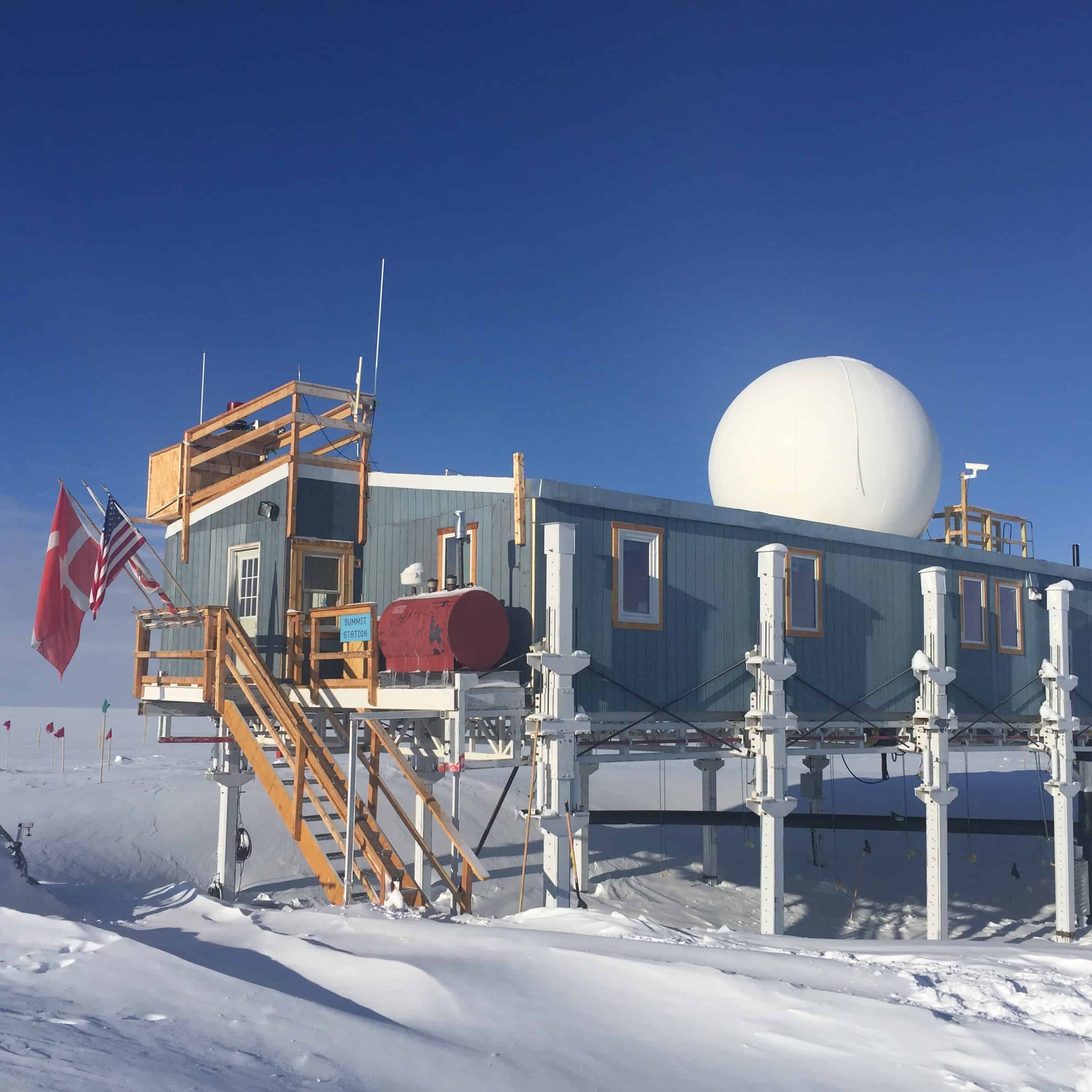
Here, at 3216 m above sea level, lies the highest altitude observatory in the Arctic. The Greenland Ice Sheet is such a large and distinctive feature that it has a strong influence on atmospheric currents such as the jet stream. Satellites struggle to distinguish clouds from the highly reflective ice surface, so there’s a need to make observations from the ground. Following an ice core drilling program in 1989, the Greenland summit became a hub for regional science projects, and its distinctly continental position – more than 400 km from any coastline – makes it an ideal location to study the atmospheric structure and clouds over the ice sheet.
“Logistically it is hard to get there because you either have to fly specialised aircraft when the weather allows or take [a] month-long journey with a convoy of large tractors and other machinery across the ice sheet,” says Neely. Transporting Neely’s equipment, including a portable laboratory on skis that holds an array of state-of-the-art lidar and radar kit, was a major challenge, requiring the US military’s LC-130 – a plane with retractable skis. “The LC-130s only work in the summer when it is warm enough for them to land,” says Neely. “Besides the cold, it is also difficult for the planes to land because Summit is so high and the air is thin. Summit has the longest runway in the world.”
Summit Station, Greenland. (Courtesy: Ryan Neely)
Since 2003 the Summit Station has been a year-round observatory. For the past eight years, Neely and his team have measured the clouds, precipitation and state of the atmosphere here. Twice a day they send up a radiosonde balloon, which records temperature, pressure, relative humidity and windspeed at a range of altitudes. Various lidar and radar systems monitor the sky continuously, enabling scientists to build up a picture of the atmosphere from the reflection patterns of their laser beams and sound waves.
Just right
During 2012 a summer heatwave resulted in a major melt event on the Greenland Ice Sheet. Neely’s colleagues were able to show that the warming was enhanced by “Goldilocks” clouds overhead, which contained just the right amount of supercooled liquid water to encourage formation of large ice crystals and help let the Sun’s radiation travel through the cloud, but also happened to be just thick enough to trap the heat underneath them. As in the clouds in the Southern Ocean, the proportion and type of ice-nucleating particles were a crucial part of the recipe for these clouds; any fewer and the cloud might not have formed; any more and the droplets might have grown too fast and created rain.
Subsequently, the scientists monitored how common these Goldilocks clouds are. “We observe them at the Summit Station over a third of the time during summer, and in other Arctic locations vulnerable to warming, such as over the Beaufort Sea and east Siberian Sea, we see them occurring 20 to 50% of the time in summer,” says Neely, who published his findings in Nature in 2013.
During the winter of 2016/17, a strange phenomenon enabled the team to gain a greater understanding of what makes some clouds more prone to warming the Earth’s surface. “One evening the scientists emerged from the mobile laboratory to see a carpet of twinkling green lights in front of them, something like the effect produced by a ‘disco’ ball,” says Neely. Ordinarily cloud reflects only a small fraction of the green lidar beam back to Earth; most light is reflected and bounced around in other directions. But on this particular evening the ice crystals in the cloud above were mainly orientated horizontally, producing “rave ice”, as the scientists like to call the phenomenon.
“The patterns that we observe on the ground tell us about the shape, size and orientation of crystals and how perfectly formed they are,” says Neely. The team has now observed rave ice on numerous occasions during the winter. “It’s interesting because we think that clouds with more horizontal crystals like this are associated with warming, because they are more likely to reflect visible light and heat,” explains Neely, who published the discovery in Applied Optics.
For Neely and his team it is still early days – it will take many more years of measurements and analysis before it becomes clear what is normal for clouds, and what is exceptional. This year the team is back up north, travelling on a Swedish ice-breaker ship and measuring clouds and aerosols up near the North pole. “These clouds are critical for the sea ice, but we do not understand where the ice particles come from,” says Murray. Back on dry land the scientists are working with climate modellers to improve the way that climate models represent these unconventional yet important clouds.
Titanium-based materials are widely employed in medical implants because they are biocompatible and have excellent mechanical and corrosion properties. Dental implants are a good example because titanium quickly ossointegrates into surrounding tissue, thus building a good barrier to bacterial infection. In recent years, researchers have discovered that coating the surface of titanium materials with biologically active molecules, such as peptides, improves ossointegration and so further reduces the probability of the implants loosening and falling out. Scientists at Deakin University in Australia have now made an important advance in this field by studying how positively-charged calcium ions present at the interface between titanium oxide and tissue affect how well certain peptides bind to the titanium.
Their experiments and calculations reveal that the calcium ions act as “bridges” between the titanium oxide and aspartate (Asp8), which is a residue within one of the titanium-binding peptides studied. The ions thus improve titanium-bone adhesion.
The researchers, led by Tiffany Walsh, used molecular dynamics simulations to model the behaviour of two titanium-binding peptides, known as Ti-1 and Ti-2, in 0.15 M solutions of calcium chloride and sodium chloride (as a control). They also used a Hamiltonian-based “replica exchange with solute tempering” technique that they previously developed in their lab that simulates the interactions between the different molecules in the system. The simulation cell comprises one peptide chain, a five-layer titania slab (containing 6100 atoms) solvated with 6952 water molecules and calcium and chloride ions. They backed up their findings with experimental quartz crystal microbalance measurements of how well titania binds to the Ti-1 and Ti-2.
The Deakin University team used supercomputing resources provided by the National Computational Infrastructure, based in Canberra, to carry out its simulations.
“In simple terms, we used computer models to provide us with the most detailed simulations of the interface between molecules that could be found in the body and the kinds of surfaces that you might find on the exterior of a joint implant,” explains Walsh. “We hope these detailed simulations will help other research groups understand how these implant surfaces might be improved to deliver a more reliable implant.”
Bridges between the titanium and asparagine
The researchers found that positively charged calcium ions helps Ti-1 adhere to the surface of titanium (which is negatively charged) by acting as bridges between the titanium and Asp8. This process then enhances the adhesion of other residues such as Lys12 to the titania surface. In contrast, the Ti-2 does not adhere so well.
“Our work contributes to the long-running and ongoing effort to improve load-bearing implant materials,” Walsh tells Physics World. “What is more, the simulation procedure we used is generalizable to any complex molecule interacting with a complex solid surface in the presence of a solvent, so the type of problem this kind of modelling can address can range from catalysis and energy applications through to self-assembly.”
So, where next? Walsh says that she would like to use the findings from this study to test chimeric molecules containing two distinct binding domains, one at either end of a molecule. “These molecules could contain one domain for titania recognition and another that could carry out another function – for example, one that would bind integrins, transmembrane receptors that facilitate cell-extracellular matrix (ECM) adhesion.”
The research is detailed in a special issue of the AIP journal Biointerphases that highlights work by women in the field of biointerfaces science and engineering.
The sound of a human voice singing “Mary had a little lamb” has been played by a radio receiver that exploits the quantum properties of a cloud of atoms – 140 years after the nursery rhyme was famously recorded by Thomas Edison. In Edison’s case, sound was recorded by using a stylus to rearrange the positions of vast numbers of aluminium atoms on a foil-wrapped cylinder. Now, David Anderson, Rachel Sapiro and Georg Raithel at Rydberg Technologies in Ann Arbor Michigan have used a cloud of highly-excited caesium atoms to store and playback AM and FM radio signals.
The concepts behind their feat promise to address some of the underlying challenges of creating radio communication systems that offer information security and resilience against electromagnetic interference. In principle, quantum radios based on clouds of atoms could be immune to intense interfering fields while transmitting clear signals that cannot be tampered with.
The receiver built by Anderson and colleagues uses Rydberg atoms. Such atoms are in highly-excited quantum states in which some electrons spend most of their time relatively far away from the atomic nucleus. As a result, Rydberg atoms can function as tiny antennas that are extremely responsive to electromagnetic fields.
Information storage
Indeed, the resonant frequencies of Rydberg atoms match the radio and microwave frequencies commonly used in communications. The atoms are strongly coupled to these fields, making them ideal for storing information encoded in radio-frequency (RF) and microwave signals. Furthermore, this stored information can be converted back to RF and microwave signals using spectroscopic techniques
In their experiment, the Ann Arbour-based physicists replaced the antenna of a radio receiver with a cloud of caesium Rydberg atoms contained in a centimetre-sized glass cell. Their goal was to demonstrate how the system could receive, record and play-back signals in the audio range.
Spanning four octaves
Their system could receive multi-band AM and FM signals carried by microwaves. The sound frequencies encoded in the signals spanned over four octaves – representing most of the frequency range of the human voice.
Operating the system involved making real-time, quantum-optical measurements of how the Rydberg atoms respond to the AM and FM signals. This meant that there was no need for any electronics to demodulate the signals. With virtually no circuitry required, the team’s setup was remarkably compact, which they say makes it highly resistant to interfering electromagnetic fields.
While the dynamic range of the receiver falls slightly short of the standards of modern devices, the trio plan to address in this shortcoming in future experiments.
Physics World‘s Hamish Johnston talks about the Rydberg radio, a “light sabre” and other wonders of Rydberg physics in this week’s edition of the Physics World Weekly podcast. There are also lively discussions about boosting diversity in peer review and Physics World’s latest Special Report on China.
Researchers from China and the USA have developed a novel bioink that can efficiently bioprint, culture and expand human induced pluripotent stem cells (hiPSCs). The discovery offers a novel and powerful tool for the expansion of hiPSCs for applications such as biofabrication and tissue engineering (Biofabrication 10 044101).
HiPSCs can be generated from adult cells of any individual and can be subsequently turned into any cell type in the body. This is reminiscent of the ability of embryonic stem cells, but hiPSCs avoid rejection by the patient’s immune system (as they are derived from the patient’s own cells) and are not subject to the same ethical concerns. As a result, hiPSCs have generated considerable hype as a means to create bespoke stem cell or tissue-engineered therapies for patients.
For this to be realised, however, hiPSCs have to be scaled up substantially. The cell numbers required to generate micro-tissues in the laboratory range from 100 million to one billion cells. To repair solid tissue or organs, this figure would be closer to 10-100 billion cells, which is no small task economically or practically.
Current culture methods for hiPSCs are mainly conducted in two dimensions, where expansion efficiency is poor, and cells may begin spontaneously maturing into adult cells. Therefore, generating many millions or billions of hiPSCs is a slow process, which is unacceptable when a patient may require them in a timely manner.
To overcome this, researchers led by Wei Sun at Tsinghau University and Drexel University have devised a novel, three-dimensional scaffold to support the culture and proliferation of hiPSCs in a more biomimetic environment. The scaffold is composed of hydroxypropyl chitin (HPCH) and Matrigel. HPCH can be gelled and liquefied by changing its temperature and operates as the scaffold “backbone”, while Matrigel is a known bio-supportive material that promotes cell adhesion inside the scaffold.
While encapsulation and 3D culture of hiPSCs has been performed previously, the HPCH scaffold has unique properties. As it only requires temperature change and not additional components to cross-link the gel, constructs are more homogenous and cell viability is not affected. The concentration of HPCH required to gel is also low, allowing a highly porous material that is ideal for cell proliferation and nutrient exchange.
Bioprinting hiPSCs has been notoriously difficult as they are fragile and easily damaged. Here, by tightly controlling printing parameters such as print speed and nozzle diameter, the researchers were able to define the optimal conditions for maintaining cell viability. They also assessed a range of HPCH and Matrigel combinations in the bioink to support the cells.
The cells were left for 10 days post-printing and their proliferation was assessed in the various bioink mixtures. Cell growth was higher in the printed, HPCH scaffolds than the scaffold-free or 2D cultures. Interestingly, the researchers also noted that varying the density of HPCH changed the variability and overall size of the cell aggregates that formed: lower concentration gave larger, more variable aggregates; higher concentration gave smaller but more consistently sized aggregates.
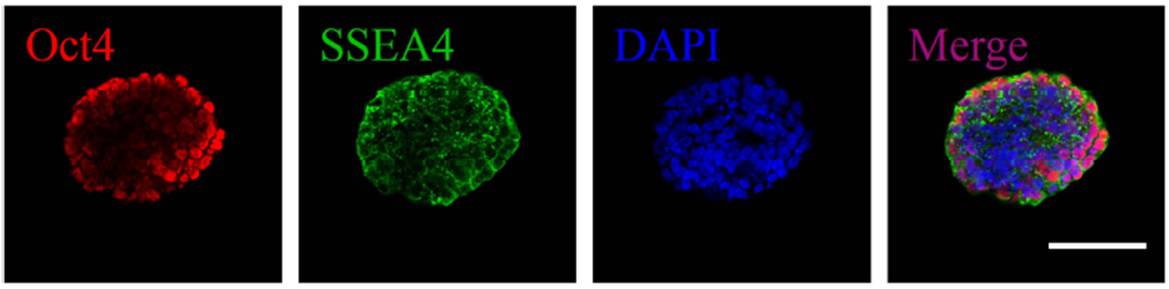
Critically, hiPSCs must remain in their pluripotent state while in culture and not mature spontaneously. Pluripotent cells are often cultured on specific substrates to maintain this pluripotency, and the radical shift to a 3D culture can instigate this uncontrolled change. The researchers evaluated the encapsulated cells over 10 days and through comprehensive characterization and showed that the cells retained their pluripotency.
Expression of pluripotency markers (Oct4, SSEA4) in hiPSCs aggregates in HPCH bioink. Nuclear DAPI are shown in blue. Scale bar: 100 μm. (Courtesy: Biofabrication10 044101)
The HPCH/Matrigel bioink could prove to be a boon in the developing field of pluripotent stem cell printing and cell scale-up for tissue engineering. The researchers showed that encapsulated cells maintain viability and pluripotency, and that the gel can be easily dissolved to facilitate culture expansion. Its 3D nature provides a more physiologically relevant environment for cell culture than 2D approaches, while also providing more space for cell growth.
By controlling the bioink composition, aggregates can be formed with high uniformity in size, which is necessary for well controlled maturation. Further investigation into the long-term culture, passage, and upscale of hiPSCs may lead the way to improved micro-tissue fabrication and differentiation.
What is the Broadband Network and Digital Media Lab (BBNC)?
The BBNC was founded in 2001 to carry out pioneering research into the basic theories and key technologies in computational photography and future media. Early work at the lab focused on multimedia processing including computer vision, computer graphics and signal processing. In 2002 the research scope of the lab was extended to include computational photography. This covers several areas such as computer graphics, computer vision and applied optics as well as optical processes like computational illumination, sensing and reconstruction.
What is the current focus for research?
In the past few years, we have further broadened computational photography to “smart imaging” via the integration of computation algorithms. To carry out this expanded programme we began recruiting new staff members and collaborating with researchers around the world who work in fields such as life sciences, medicine and applied optics.
Can you give some examples of these new research areas?
One is gigapixel videography. This aims to break the limitation of human visual perception for a more comprehensive and realistic videography of large-scale dynamic scenes. There are a number of challenges to overcome such as developing the optical, electronic and micro-mechanical design of such systems as well as handling the massive amount of data processing required. However, we believe gigapixel videography will greatly promote developments in both computational photography and computer vision, enabling more potential applications in fields such as national security, surveillance, aerial robots and autonomous driving. Another area is multispectral imaging for agricultural and industrial applications. Current techniques are not dynamic enough to detect real-time changes, but we are developing new methods that are better at pinpointing and controlling crop pests or plant diseases. For example, when it comes to evaluating soil productivity, which is critical for crop growth, the technique can be used to estimate nitrogen, phosphorus, and potassium content.
How big is your research group?
The group currently comprises 11 faculty and staff members, five postdoctoral researchers and around 40 postgraduate students.
What do you look for when recruiting scientists?
Our team members come from different professional fields but they all must have several attributes: passion, a strong sense of responsibility, a rigorous attitude to research, excellent teamwork skills, the ability to innovate and an international outlook. They also need to be able to carry out world-leading cutting-edge research. Our laboratory provides internationally competitive remuneration and stipends to attract the best researchers from home and abroad.
How does collaboration help you to tackle research problems?
International exchanges between students and researchers broaden academic horizons and ensure that we are working in the right direction. By visiting other leading institutions and universities worldwide our students can quickly familiarize themselves with new research areas as well as establish cooperative relationships. Of course, this continues when our researchers return.
What percentage of papers are published with international collaborators?
Almost 20% of our research papers are published with researchers from universities including the Massachusetts Institute of Technology, Stanford, Berkeley and Carnegie Mellon.
Do you work much with industry?
Yes, we collaborate locally, regionally and nationally. For example, our lab and Zhejiang province co-founded the Zhejiang Future Technology Institute, which has incubated tens of companies and created hundreds of jobs.
How do you approach entering new research areas?
Our research into computer vision and computational photography has led us to tackle the urgent need in optical microscopy for large-scale, high-resolution imaging of biological dynamics. We realized that novel tools are indispensable to biomedical discoveries especially in neuroscience and cancer research. In 2012 we proposed developing multi-dimension, multi-scale, computational photography instruments and a year later we received funding from the National Natural Science Foundation of China. So far we have achieved exciting progress in developing a video-rate, giga-pixel imaging system at centimetre-scale and micron-resolution, which enables large-scale, subcellular imaging of neural network dynamics and tumour metastasis.
What potential topics will you tackle in future?
One is virtual-reality and augmented-reality technologies, which still fail to provide a vivid 3D experience for users. They also require heavy and expensive hardware that prevents wide usage in our daily lives. Holographic displays, for example, are not good at displaying dynamic scenes with realistic colours so we want to work on how to directly display the 360 light field to users, which contains almost all the visual information of a scene and gives users the experience of viewing a real scene in our real lives. In addition, we will work on making compact and cheap equipment, for example, perhaps via a pair of glasses.
Dense cities are by no means the only form of built environment. “Rural areas like farms, towns, and villages, and transport networks such as roads, railways, and canals are all major contributors to society,” says María José Andrade-Núñez of the University of Puerto Rico. “As our population and global interaction increases, human infrastructures will inevitably expand into natural environments.”
Andrade-Núñez and colleague Thomas Mitchell Aide analysed night-time US Air Force satellite images from 2001 to 2011 to discover how land use is changing across the continent. Despite South America’s highly urbanised population, the built environment didn’t expand significantly around its 30 largest cities. Rather, the bulk of expansion was seen in towns with under 50,000 inhabitants, and in remote rural regions.
Increases in population and the global economy have driven expansion in South America, with projects including extension of pasture and croplands, and mines and hydroelectric dams that need extensive new infrastructure. In a continent containing 39 of Earth’s 137 “most irreplaceable areas for biodiversity conservation”, according to the International Union for Conservation of Nature, the expansion could have significant, potentially irreversible consequences for natural ecosystems.
Andrade-Núñez and Aide believe their work provides a valuable baseline for informing major organisations about the environmental implications of an increasingly globalized economy.
“Our work reveals the huge implications which built-up expansion has for South America’s biodiversity, including deforestation, fragmentation, and degradation within valuable ecosystems,” says Andrade-Núñez. “Through these findings, we hope to promote sustainable development approaches and land use policies which mitigate the undesired effects of the built environment.”
Previous research aimed to evaluate changes in the built environment by focusing on developments in large cities; South America has 30 cities with over 1 million inhabitants.
“These studies are useful for mapping urban areas, forecasting their expansion, and assessing their environmental impacts, but haven’t yet considered how infrastructures in rural areas and smaller cities are expanding,” says Andrade-Núñez. “This information is valuable as cities are connected to other urban and rural areas through complex webs of social, economic and environmental variables.”
Andrade-Núñez and Aide concluded that examining built-environment expansion requires studying all infrastructure related to humans and their activities.