Maxwell model optimizes motion energy harvesters

Ishara Dharmasena interview

From wind and wave energy to machine vibrations and the simple act of walking down a street, mechanical movement of any kind can be fuel with the aid of triboelectric nanogenerators (TENGs). Now researchers at the University of Surrey in the UK led by S. Ravi P. Silva have used a description of TENG behaviour based on the fundamental equations of electromagnetism – the Maxwell equations – to optimize TENG designs to maximize their efficiency.

Maxwell-based models

“TENGs were first invented by Prof Zhong Lin Wang’s research group at Georgia Tech,” says Ishara Dharmasena, a final year PhD student at Surrey University, and lead author of the report on these results. TENGs generate electric potentials through the transfer of electrons, charged particles or charged material as two dissimilar surfaces come into contact. Anyone who has rubbed their feet along a carpet to give their friend an electric shock will be familiar with this type of phenomenon.

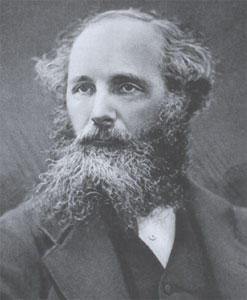
In the latter half of the nineteenth century James Clerk Maxwell laid out four equations that could sum up all electrostatic and magnetic behaviour in his theory of electromagnetism. Since the invention of TENGs in 2012 it has been possible to show how their output signal relates to Maxwell’s displacement current,  as Wang pointed out in Materials Today. Dharmasena and colleagues were keen to take this further.

“In my research I developed a whole theoretical framework covering these devices and then I studied how the electric fields in these devices behave using Maxwell’s equations,” Dharmasena tells Physics World. “Now in this Advanced Energy Materials paper, we used the basic theoretical model to develop and describe how the output power behaves inside a TENG device.”

In the report the researchers point out that optimizing the TENG performance requires maximizing both the source current which Is proportional to the frequency of the TENG layer movement – and matching the TENG impedance with the external load the TENG is transmitting its power to. Dharmasena describes how he characterized the output power of different TENG devices and devised a method – “TENG impedance plots” – to describe the time variant impedance and power output characteristics of these devices. Using these tools he analysed different motion parameters, including frequency, amplitude and the nature of the contact. “This basic model was expanded to analyse the effect of each motion and device parameter,” explains Dharmasena. “I then devised a rule to optimize all these parameters to make more efficient triboelectric devices.”

TENG models could help optimize motion energy harvesters including wind energy.


Getting the most bang per buck

There are a number of considerations to take into account in TENG design, and there may be limited control for some of the conditions of their operation. However, the researchers were able to highlight the benefits of higher input motion frequencies, and, amplitudes up to a saturation point. They also found that the outputs improved with the larger device size, and thinner layers, provided the layer is thick enough to hold the triboelectric charges. These criteria can help to guide the choice of device structure to optimize frequency and amplitude for a given environment such as machine vibration or vehicle movement.

Wang, the original inventor of TENGs, who was not directly involved in these latest results, commented on the importance of these results. “The displacement current was first introduced by Maxwell in 1861, which later predicted the existence of the electromagnetic wave. By adding a surface charge density contributed polarization term in the displacement current, I successfully derived the output of piezoelectric and triboelectric nanogenerators (2016). In this paper, Silva’s group has fully analysed the power output characteristics of TENGs by vigorously analysing their impedance behaviour as a function of excitation source and device parameters, which will guide the design and performance optimization of TENG. This is important progress toward the future applications of TENG.”

Dharmasena and Silva are now working with a leading international apparel manufacturer, MAS Holdings from Sri Lanka,  to develop wearable technologies based on TENGs. “We are producing fabric-based triboelectric structures using printing techniques and other mass-manufacturing techniques so we can address largescale manufacturing problems themselves,” says Dharmasena.

Challenges remain, such as the potential need to encapsulate the devices to protect them from water, as well as the issue of sporadic output, which need modifying and modulating. However, Dharmasena and Silva hope to address these issues while developing the potential application of the devices.

 

Nobel prize predictions: invisibility cloaks, slow light and quantum phases

Nobel square

On Tuesday morning Physics World editors will be glued to their computer screens in eager anticipation of the Nobel Prize for Physics – which will be announced at or after 10:45 UK time.

I have to admit that my past predictions have been pretty wide off the mark. I think I was right twice in 12 years, and that was with the rather obvious prizes associated with the Higgs boson and LIGO’s measurement of gravitational waves.

But I will never learn, so here are a few more predictions.

Yakir Aharonov and Michael Berry for their seminal work on geometric phases in quantum mechanics. This award is long due – Aharonov and Berry did their work in the 1950s and 1980s respectively – and the Swedish Academy must surely have the pair on their shortlist.

My second tip is Lene Hau for her work on slow light. Hau’s work involves slowing light down to a snail’s pace by passing it through an atomic gas – even getting the light to stop. This is amazing enough, but the principles involved could play important roles in quantum computers of the future. And let’s face it, it’s time that a woman won the physics prize. There are only two female physics laureates and the last time a woman won was 55 years ago when Maria Goeppert Mayer shared the prize for her work on nuclear shell structure.

Finally, here is a pick from my colleague Matin Durrani, editor of Physics World magazine. He goes for three physicists who developed the basic physics of “metamaterials” – engineered structures that can bend light in unusual ways and that can be used as invisibility cloaks. His choices would be Victor Veselago, David Smith and John Pendry who defied the sceptics to show that invisibility cloaks could indeed be built.

  • UPDATE: Physics World has learned that Victor Veselago, whom we tipped as a possible winner of this year's Nobel Prize for Physics, died on 15 September 2018.

Hotter planet faces more killer heat

Once again, researchers have confirmed that limiting global warming will save lives by reducing the impact of killer heat.

An international team has checked predictions for heat-related deaths against some of the global average temperatures likely later this century, to issue this warning: it will be a safer world if temperatures creep up by only 1.5 °C over historic levels. Fewer people will die in the ever more intense heat extremes that will go with average global temperature rises.

And a second, separate study of the impact of forest, bush and wildfires on human health has warned that – in the US alone – deaths linked to smoke could more than double, to perhaps 40,000 a year.

The world has already warmed by around 1 °C in the last century: the limit of “well below 2 °C” set by 195 nations when they met in Paris in 2015 looks increasingly close.

Scientists from Britain, Europe, Australia, the US, Brazil, Chile and China report in the journal Climatic Change that they looked at records for temperature-related deaths from 451 places in 23 countries and then projected likely deaths as global average temperatures rose by 1.5 °C, and then up to 3 °C and 4 °C.

They found that at the higher forecasts, hazards rose steeply: in the worst instances, by almost 9%.

Alarm about the impact of heat waves on human health is not new: in the last few years researchers have warned that by 2100, around 75% of humanity will be at some risk of death by heat extremes. Another group has measured suicide statistics and seen a rise with temperature extremes.

A third group has focused on the double hazard of ever greater heat and humidity, and a fourth has identified at least 27 different ways in which heat waves can claim lives.

So the latest study is separate confirmation, this time by medical scientists who need to know what to expect as the thermometer rises.

Limiting fatalities

“Our projections suggest that large increases in temperature-related deaths could be limited in most regions if warming was kept below 2 °C,”explains Ana Maria Vicedo-Cabrera, who led the study.

“Under extreme changes in climate, large parts of the world could experience a dramatic increase in excess mortality due to heat. This would not be balanced by decreases in cold-related deaths. Efforts to limit the increase in global temperature to below 1.5 °C could provide additional benefits in tropical or arid regions, including the most populous and often poorest countries.”

With ever higher temperatures there will be ever more prolonged droughts, and inevitably greater risk of wildfire, and particularly in the US.

Right now, wildfires in the US claim an estimated 15,000 lives a year, chiefly through smoke inhalation that can worsen chronic pulmonary conditions, or hasten death in people with heart conditions.

By 2100, scientists report in the American Geophysical Union journal Geohealth, the death count in the contiguous US could reach 40,000 a year.

Particulate menace

The study recognizes that wildfire hazard has a number of causes and that climate change is only part of the story. But in the first six months of 2018, the US government’s own National Oceanic and Atmospheric Administration recorded 37,718 fires that burned almost 20,000 square kilometres.

In 2017, wildfire fighting cost the US Forest Service a record $2.4bn. And each fire hurled high levels of particulate matter – soot and other detritus – into the atmosphere, and into a nation’s eyes and lungs.

“We know from our own research and many, many other groups that smoke has negative impacts on human health,” said Jeff Pierce, an atmospheric scientist at the University of Colorado, and one of the authors.

“With the knowledge that fires have been increasing in parts of the US, we wanted to look at how bad this might get.”

Explore your options with the Physics World Careers guide

It's that time of the year, when students across the UK and in many other countries around the world head off to university. But whether you're about to begin your degree or start your final year at university before joining the "real" world, it's never too soon to be thinking about what path your career will follow. Perhaps a PhD or a postdoc is your next plan; or maybe you want to put your training to practical use and seek a role in industry?

Either way, the 2018 Physics World Careers guide can help you decide which route is the best for you, and introduce you to a few options you've perhaps never thought of before. The free-to-read 118-page guide includes articles advising on career development, case studies showcasing many different areas of physics in academia and industry, as well as a  comprehensive employer directory.

The case studies have been penned by real physics graduates currently working in fields across the spectrum – from astronomical imaging and nuclear science, to fabricating lasers and cryogenics. So you'll meet physicists such as Rami Barends, who works on quantum computing for Google. If working at accelerators excites you, there's diagnostic physicist Lorraine Bobb. She is based at the UK's national synchrotron Diamond Light Source, who – as you can see from their profile – have 600 researchers on their books.

But if you'd rather spend your time building designer lasers in the lab, check out the day in the life of Lucian Hand. If this appeals, then Laser Quantum may have the job for you.

If you're a physics student with an eye on a career in teaching and education, then have a look at companies such as Sparx, who build online educational content, or find out what training and development the Researchers in Schools programme could offer you. In fact, as physicist and teacher Mark Whalley points out, your many years spent in a research lab could have given you the skills to be a leader in education.

We also have a series of career-development articles, which will help you with everything from writing up the perfect CV for an industrial role, to helping you pick a meaningful research topic.

From defence and security to data analysis to healthcare, the message of the 2018 Physics World Careers guide is that employers across the world are interested in hiring people who have the technical and problem-solving skills that a physics degree provides. You can read Physics World Careers for free online here or via the Physics World app, available for iOS and Android.


US invests $249m in quantum information science as White House unveils strategic overview

A National Strategic Overview for Quantum Information Science has been released by the US National Science and Technology Council (NSTC), which coordinates the science and technology policy of the President of the US. The overview identifies several key policy actions designed to keep the US at the forefront of quantum-technology development.

In related announcements, two science funding agencies in the US – the Department of Energy and the National Science Foundation -- have committed a total of $249m to 118 research projects related to quantum information science (QIS).

QIS is currently making the transition from the lab to industry and includes a range of technologies including quantum computing, cryptography and sensing that take advantage of the fundamental principles of quantum mechanics.

The strategic overview was produced by the NSTC’s Subcommittee on Quantum Information Science (SCQIS). One of its co-chairs is Carl Williams, who is acting director of the Physical Measurement Laboratory of the US National Institute of Standards and Technology (NIST) in Gaithersburg, Maryland. He believes that it is likely that QIS will “be the foundation of a lot of future technologies, and therefore, extraordinarily important for our economic and national security”.

Grand challenges

Recommended policy actions include developing a “science-first” approach to quantum information science, which includes strengthening government-funded core research programmes. The SCQIS is calling for a “grand challenges” approach to setting research priorities by identifying difficult problems in QIS with potential solutions that could lead to important new technologies.

On a practical level, the provision of critical scientific and engineering infrastructure is identified as a priority. This includes the creation of end-user testbed facilities and manufacturing facilities. The payment of small grants to research centres and consortia is identified as a way of sustaining QIS research in the long term.

The overview calls for the creation of a “quantum-smart and diverse workforce to meet the needs of a growing field”. Williams says, “Until the past few years, the US did reasonably well in producing a quantum workforce”. He says that the country has been good at producing “quantum physicists who did quantum information science,” as well as quantum computer scientists. However, he points out that there is a need for quantum engineers.

International talent

The SCQIS stresses the importance of international collaboration and cooperation, which it says will ensure that the US has access to the best talent worldwide as well as international technologies and research facilities.

The overview encourages industry to develop quantum technologies, in part through public-private partnership. Planned industry initiatives include a US Quantum Consortium, which would bring together industry, government and academia to coordinate “pre-competitive” research, address intellectual-property concerns and streamline technology transfer.

Understanding the national-security implications of quantum technologies is also stressed in the overview. The SCQIS says that information and technologies must be given the appropriate security classification and export controls. At the same time, however, researchers at American universities and industry must have access to the largest-possible amount of information.

The SQIS has asked US government agencies to come up with plans to execute its policy goals. The Department of Energy (DOE) has responded by committing $218m of funding to quantum information science. $73m will be spent in the 2018 fiscal year with future spending contingent on approval by the US Congress. The 85 research projects receiving funds will last from two to five years.

“Sustained American leadership”

Rick Perry, who heads the DOE says, “QIS represents the next frontier in the Information Age,” adding “these investments will ensure sustained American leadership in a field likely to shape the long-term future of information processing”.

Meanwhile, the National Science Foundation (NSF) has awarded $31m to 33 different projects that focus on fundamental quantum research. $6m of this money will go towards eight engineering projects that aim to create technologies that can be integrated and scaled-up to create working quantum-information systems. The remaining $25m will be distributed to 25 projects involving fundamental research.

NSF director France Córdova says, "NSF-supported researchers are working to deepen our understanding of quantum mechanics and apply that knowledge to create world-changing applications”.

Personalized UV sensors monitor sun exposure

Researchers from RMIT University in Australia have developed an ink that changes colour when exposed to different types of ultraviolet (UV) radiation. They used the ink to create low-cost wearable sensors for monitoring UV exposure throughout the day. Such sensors could help people manage vitamin absorption while avoiding sun damage (Nature Communications 9 3743).

Humans need a modest level of sun exposure to maintain healthy levels of vitamin D. Excessive exposure, however, can cause health problems. UVA (315–400 nm) radiation penetrates deep into the skin and results in skin aging and wrinkling. UVB (280–315 nm), meanwhile, is particularly effective at damaging DNA. Too much UVB exposure can cause sunburn, which increases the likelihood of developing skin cancer and cataracts.

Healthy exposure levels, however, depend upon an individual's skin colour classification, which can range from very fair (type I) to darkest brown (type VI). The minimal erythemal dose (MED) -- the threshold UV dose that produces sunburn -- is five times higher for type VI skin than for type I, while darker skin types require longer time in the sun to absorb healthy amounts of vitamin D. In addition, some diseases and medications can increase skin photosensitivity or reduce the ability to absorb vitamins through diet.

Monitoring sun exposure thresholds is thus a highly individual process. To address this, the researchers created colour-changing sensors in six variations to reflect the range in human skin tone. "We are excited that our UV sensor technology allows the production of personalized sensors that can be matched to the specific needs of a particular individual," says co-senior author Vipul Bansal.

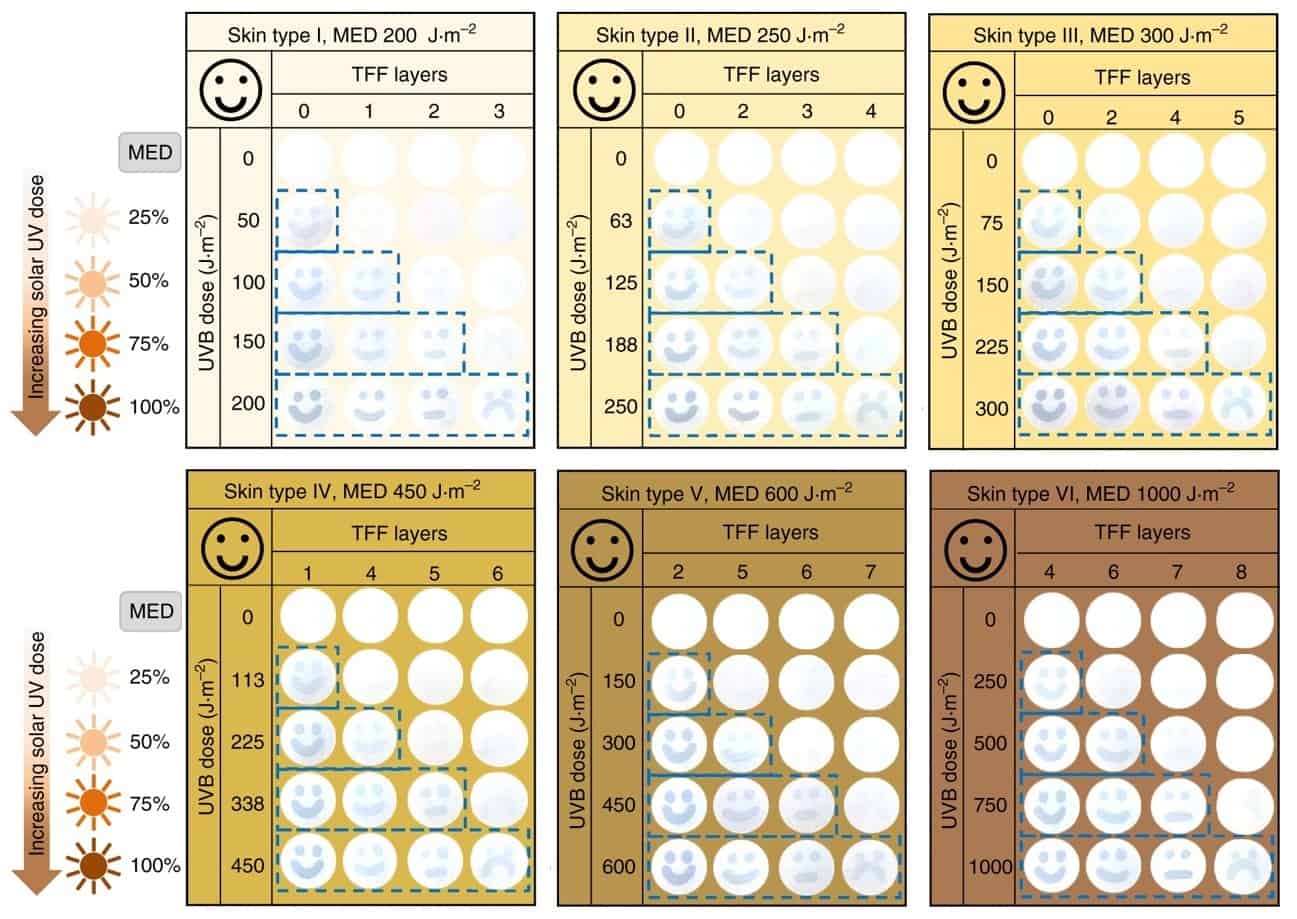
The sensors are made from a photoelectrochromic phosphomolybdic acid--lactic acid (PMA--LA) mixture that turns from transparent to blue upon UV exposure. The researchers used PMA--LA-based ink to draw smileys on four filter paper discs attached to a flexible band. Each smiley is covered with an increasing number of low-cost transparency film filters (TFFs) that increasingly reduce UV transmittance.

In each sensor, the first two smileys are happy faces that appear at 25% and 50% of the UVB MED. The third one is a flat smiley representing 75% MED, which provides a pre-warning of UV exposure threshold. Finally, a frowning face appears, warning that the user has approached the maximum safe threshold and must avoid further exposure.

Personalized UV sensors

By changing the number of TFFs covering each smiley in the sensor strip, the researchers could personalize the UV sensors to specific skin types. They created six sensors for the six skin colour classifications.

Bansal says that this development could help to provide people with an accurate and simple measure of their personal exposure levels throughout the day. Importantly, the fabrication of these skin-specific UV dosimeters only requires readily available, low-cost components such as filter paper, a fountain pen and transparency sheets.

"We can print our ink on any paper-like surface to produce cheap wearable sensors in the form of wrist-bands, head bands or stickers for example," he explains. "The low cost and child-friendly design of these UV sensors will facilitate their use as educational materials to increase awareness around sun safety."

Cool polymer paint saves on air conditioning

The porous polymer passive daytime radiative cooling coating reflects sunlight and emits heat

Air conditioning accounts for 10% of global energy consumption. Now researchers at Columbia University and Argonne National Laboratory in the US have produced a polymer “paint” capable of cooling surfaces to around 6 °C below ambient temperatures without using any energy at all. Used in combination with conventional air conditioning, it could allow significant reductions in the time these units are switched on, as well as providing some cooling relief in areas where air conditioning is not so widely available.

The approach uses a solution process at room temperature to produce a film of a polymer with nanometre- and micrometre-sized air voids trapped inside. “There are a lot of examples of substances that are white from air voids - like snow for example,” says Nanfang Yu associate professor in Applied Physics at Columbia University in the US. “Snow is white because there are a lot of air bubbles inside, otherwise you have ice which is transparent – it’s as simple as that. We are just pushing this to the extreme by this chemical process.”

The solution process they use is based on “phase inversion” and involves mixing the polymer with a solvent alongside water, in which the polymer is insoluble. After painting the mixture onto a surface, the solvent evaporates leaving just the polymer interspersed with water droplets. Finally the water evaporates leaving air voids.

Adjusting the percentage of water in the mix allows precise control over the size and density of the air voids, so that they can be tuned to maximize reflection of solar energy. In addition the micrometre-sized voids give the coating a thermal emissivity close to that of a black body, that is, a perfect radiator of heat. This high thermal emissivity of the polymer coating can be used to cool objects that are already hot.

Yuan Yang, an assistant professor in materials science and engineering at Columbia University describes how he came across the phase-inversion-based chemical process through another strand of his research, which focuses on energy storage. “This method has been known for very many years. Battery people use it to make something called a separator, and as I knew that film is also white I thought why don’t we try this.”

Clear and stable

It is widely known in photonics that structures with a dimension similar to the wavelength of incident light will scatter it strongly, and the Columbia University and Argonne National Laboratory researchers are far from the first to try to exploit this to increase the reflectivity of a coating. However previous work has largely focused on using nanoparticles of high refractive index, TiO2, for example. Although TiO2 nanoparticles are used for white paint, they can be expensive, difficult to disperse evenly and they absorb UV light very strongly, Yu tells Physics World. Using air voids instead provides a “very elegant solution” and is the first time a cooling coating can be applied as paint in this way.

“It’s important that we chose this particular polymer P(Vdf-HFP) because it has essentially zero absorption across the solar spectrum, which includes UV, visible, and infrared components,” says Yu. “So if you start with this polymer and include air voids, the film doesn’t absorb sunlight and backscatters it strongly.”

Another key attribute of the polymer is its stability. Yang points out that while some other polymers may also work, they may degrade in time. “For example if you take cellulose, the main component of paper, it is white but we know it will become yellow over time.” He adds that the researchers have tested porous P(Vdf-HFP) films extensively and observed no change over a month in the field. “There may be other polymers as well – for instance, PMMA may also work or may not. We have tried one but there are more to explore.”

Commercial interest

Although the polymer coating performs best when it is white, optimizing the reflectivity, the researchers were also able to demonstrate benefits of the paint when dyed yellow and blue with pigments. With no discernible compromise in colour to the naked eye, the coloured coatings can remain 10 degrees cooler than commercial counterparts in the same conditions because they reflect much more sunlight in the near infrared part of the spectrum. Incorporating colours makes the coatings even more attractive as a paint. Companies have already approached the researchers expressing an interest in commercializing the paint, and they are looking into the necessary tests for standardization.

Full details are reported in Science

Physicists who move abroad can receive a 17% uplift in citations, study reveals

Physicists who migrate receive up to 17% more citations than colleagues who stay at home, an analysis of the careers of more than 26,000 physics researchers has revealed. Moving abroad boosts your citation record because it diversifies your research interests and collaborations, the study claims, which in turn leads to research with a higher scientific impact.

The study has been carried out by Alexander Petersen, a complex-systems physicist at the University of California, Merced in the US, who analysed data on papers published in American Physical Society (APS) journals between 1980 and 2009. He identified 26,170 researchers who had published 10 or more research articles in APS publications, and who met additional career longevity and productivity criteria.

Using information indicating an author’s geographical location, Petersen was able to compare the citation records of “mobile” researchers -- focused on a 10-year period centred around each mobility event – with those of “non-mobile” researchers. Moving abroad has a significant positive effect on citation impact, Petersen found, and increases the diversity of a scientist's research topics, co-authors and geographical collaborations.

In particular, he discovered that articles published by mobile researchers in the five years after they migrate receive 9%–17% more citations than papers published by non-mobile researchers. This adds up to around 100 additional citations, Petersen claims.

Let’s move

Published in the Journal of the Royal Society Interface, the study also finds that physicists move around a lot in their careers, with two-fifths of those in the study having migrated at least once. Another interesting observation is that 10% of physicists end all former international collaborations following a move abroad, while 34% of those who emigrate go to a country with which they have had no previous collaboration.

Peterson told Physics World that he analysed the effect of mobility during three non-overlapping time periods to see the impact of new channels for knowledge exchange, such as the internet and video-calling technologies such as Skype. “Surprisingly, the virtual channels do not appear to have substituted the value of physical mobility, as the impact of physical mobility has persisted over time,” he says.

The results of this research show that researchers of all tiers can reap the benefits of mobility.

Alexander Petersen

Petersen also looked at the movement of researchers who had won a Nobel prize in either physics, chemistry, physiology and medicine, or economics. He found that almost a quarter (23%) were "foreign-born”, having received the prize for work done in a country different than their birth country. “When you look at the sources and sinks of these migrant Nobelists, most of their trajectories steered towards the US, UK, Germany and France -- likely due to the high levels of funding for basic R&D in these countries,” he says.

According to Peterson, moving abroad makes it easier to exchange not only scientific information but also the “organizational” knowledge that is needed to do research effectively efficiently. “This is particularly true for the exchange of ‘tacit knowledge’ that isn't so easily written down or codified,” he says.

However, Peterson warns that the impact of mobility extends not just to elite scientists and Nobel-prize-winners, but to physicists of all productivity levels, which could have implications for policy makers. “While most high-skilled immigration policy is oriented around attracting and retaining elite scientists,” he says, “the results of this research show that researchers of all tiers can reap the benefits of mobility.”

Memristive metal-organic films made easy

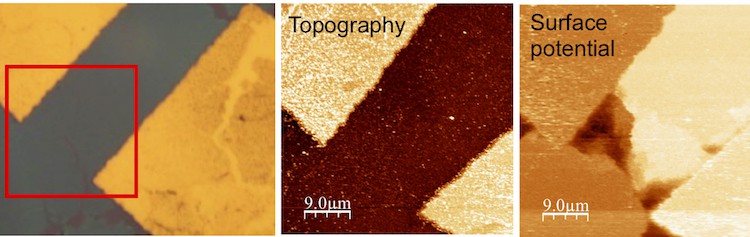
Researchers at the Universidad Autónoma de Madrid in Spain have developed a new, simple, one-pot method to make highly conductive metal-organic ultrathin films that are both flexible and mechanically strong. The films can be produced over areas as large as mm2, are smooth, highly transparent and behave as memristors at low frequencies. They might be used in a wide variety of flexible electronics applications in the future, including health-monitoring devices.

“The future of 2D flexible electronics will rely on making conducting ultrathin films of materials that are mechanically robust and flexible in a simple but controlled manner,” says Miriam Moreno-Moreno, who is the lead author of this study. “In this respect, metal-organic compounds are better than inorganic laminar crystals. While most metal-organic compounds are usually prepared in the bulk, researchers have recently found that some can be processed down to ultrathin, 2D films. In our work, we report on a one-pot technique (carried out on the surface of water) to make ultrathin films (just 4 nm thick) of the metal organic compound [Cu2I2(TAA)]n where TAA is thioacetamide.”

Memristive metal-organic films

The films are homogenous over mmareas, are smooth and highly transparent. They are also mechanically strong, boasting a Young’s modulus of 11 GPa and a yield strength of 1 GPa. They have an electrical conductivity as high as 50 S/cm and behave as memristors at low frequencies, that is, they “remember” the amount of charge that has flowed through them, with this information being stored in their resistance.

The researchers made their films by first preparing a solution containing the building blocks, CuI and thioacetamide, which are cheap and readily available materials. They then added a drop of this solution to ultrapure water in a Petri dish. “The films form immediately on the water surface and are clearly visible at the right light angle,” says Moreno-Moreno. “We then fish out these films and place them on a substrate by carefully bringing the substrate into contact with the water surface containing the film. Finally, we dry the substrate using a flow of argon or nitrogen gas.”

Optical image of film

Moreno-Moreno reckons that the films might be used in a host of flexible and transparent electronics. “One example is in fitness wristbands for monitoring heart rate.”

The team, reporting its work in ACS Nano 10.1021/acsnano.8b05056, says that it is now busy trying to control how the grain boundaries in the films form and migrate. “These grain boundaries are responsible for the films’ electrical properties and controlling these will allow us to tune the electro-mechanical properties of devices based on this material,” Moreno-Moreno tells Physics World.

IBM innovations, Mississippi model and Nobel Prize preview

In this episode of the Physics World Weekly podcast, industry editor Margaret Harris discusses her recent visit to IBM’s R&D facility in Hursley, UK. She explains why industrial research is still a fruitful place for physics research, even though it is sometimes overlooked by the academic community.

Later in the podcast, general physics editor Hamish Johnston is joined by multimedia editor James Dacey. The pair discuss the new film on this website the 1000 m2 model of the Mississippi delta, housed at the Center for River Studies at Louisiana State University. Johnston and Dacey also give their predictions for the Nobel Prize for Physics, which will be announced next Tuesday.

If you enjoy what you hear, then you can subscribe via the Apple podcast app or your chosen podcast host.

Copyright © 2026 by IOP Publishing Ltd and individual contributors