I’ve been immersed in quantum physics this week at the Helgoland 2025 meeting, which is being held to mark Werner Heisenberg’s seminal development of quantum mechanics on the island 100 years ago.
But when it comes to science, Helgoland isn’t only about quantum physics. It’s also home to an outpost of the Alfred Wegener Institute, which is part of the Helmholtz Centre for Polar and Marine Research and named after the German scientist who was the brains behind continental drift.
Dating back to 1892, the Biological Institute Helgoland (BAH) has about 80 permanent staff. They include Sebastian Primpke, a polymer scientist who studies the growing danger of microplastics and microfibres on the oceans.
Microplastics, which are any kind of small plastic materials, generally range in size from one micron to about 5 mm. They are a big danger for fish and other forms of marine life, as Marric Stephens reported in this recent feature.
Primpke studies microplastics using biofilms attached to a grid immersed in a tank containing water piped continuously in from the North Sea. The tank is covered with a lid to keep samples in the dark, mimicking underwater conditions.
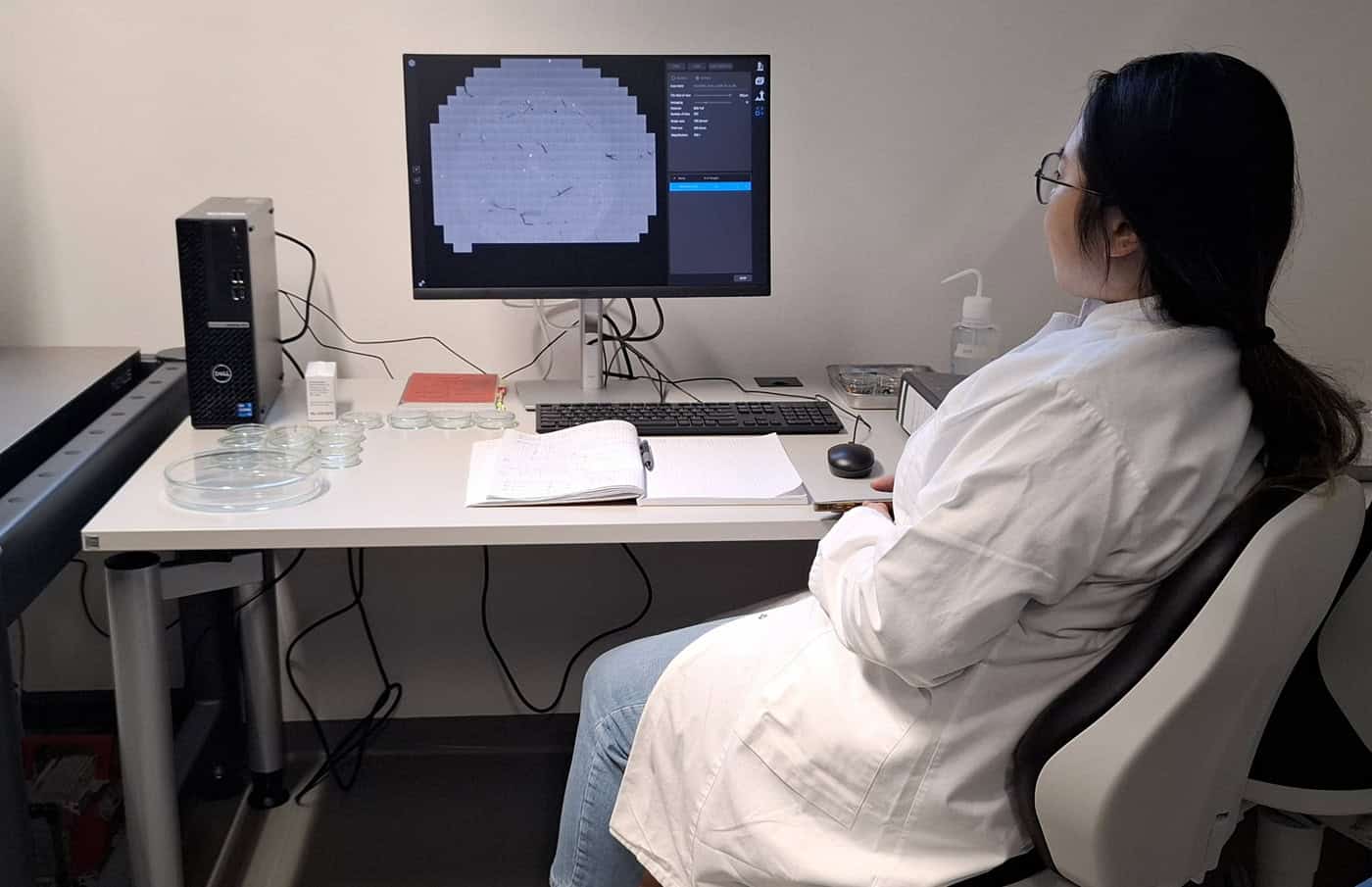
Deep-sea spying A researcher looks at electron micrographs to spot microfibres in seawater samples. (Courtesy: Matin Durrani)
He and his team periodically take samples from the films out, studying them in the lab using infrared and Raman microscopes. They’re able to obtain information such as the length, width, area, perimeter of individual microplastic particles as well as how convex or concave they are.
Other researchers at the Hegloland lab study microfibres, which can come from cellulose and artificial plastics, using electron microscopy. You can find out more information about the lab’s work here.
Primpke, who is a part-time firefighter, has lived and worked on Helgoland for a decade. He says it’s a small community, where everyone knows everyone else, which has its good and bad sides.
With only 1500 residents on the island, which lies 50 km from the mainland, finding good accommodation can be tricky. But with so many tourists, there are more amenities than you’d expect of somewhere of that size.
In this episode of the Physics World Weekly podcast we explore the career opportunities open to physicists and engineers looking to work within healthcare – as medical physicists or clinical engineers.
Physics World’s Tami Freeman is in conversation with two early-career physicists working in the UK’s National Health Service (NHS). They are Rachel Allcock, a trainee clinical scientist at University Hospitals Coventry and Warwickshire NHS Trust, and George Bruce, a clinical scientist at NHS Greater Glasgow and Clyde. We also hear from Chris Watt, head of communications and public affairs at IPEM, about the new IPEM careers guide.
This episode was created in collaboration with IPEM, the Institute of Physics and Engineering in Medicine. IPEM owns the journal Physics in Medicine & Biology.
This episode is supported by Radformation, which is redefining automation in radiation oncology with a full suite of tools designed to streamline clinical workflows and boost efficiency. At the centre of it all is AutoContour, a powerful AI-driven autocontouring solution trusted by centres worldwide.
Jack Harris, a quantum physicist at Yale University in the US, has a fascination with islands. He grew up on Martha’s Vineyard, an island just south of Cape Cod on the east coast of America, and believes that islands shape a person’s thinking. “Your world view has a border – you’re on or you’re off,” Harris said on a recent episode of the Physics World Stories podcast.
It’s perhaps not surprising, then, that Harris is one of the main organizers of a five-day conference taking place this week on Helgoland, where Werner Heisenberg discovered quantum mechanics exactly a century ago. Heisenberg had come to the tiny, windy, pollen-free island, which lies 50 km off the coast of Germany, in June 1925, to seek respite from the hay fever he was suffering from in Göttingen.
According to Heisenberg’s 1971 book Physics and Beyond, he supposedly made his breakthrough early one morning that month. Unable to sleep, Heisenberg left his guest house just before daybreak and climbed a tower at the top of the island’s southern headland. As the Sun rose, Heisenberg pieced together the curious observations of frequencies of light that materials had been seen to absorb and emit.
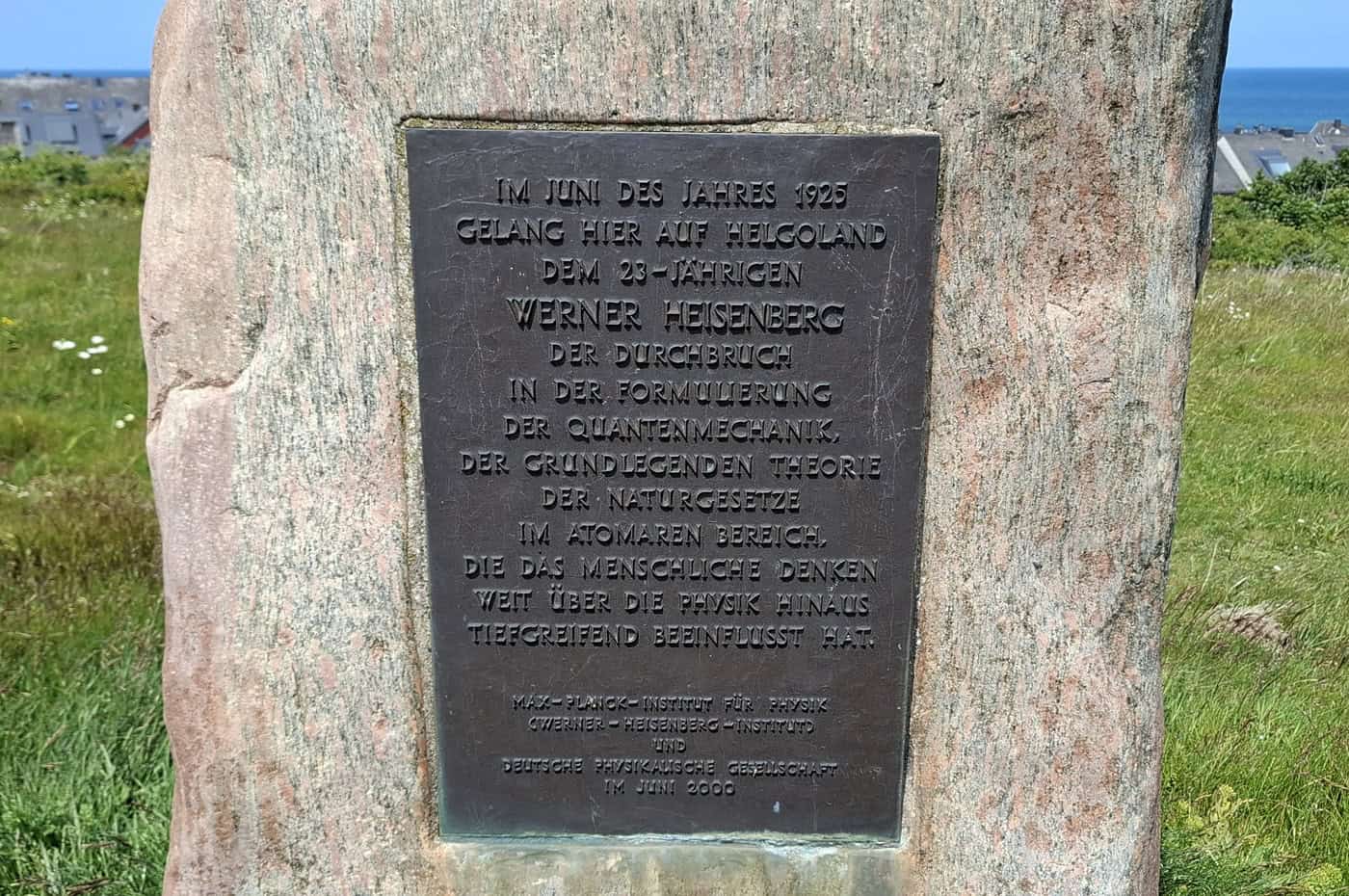
Where it all began This memorial stone and plaque sits at the spot of Werner Heisenberg’s achievements 100 years ago. (Courtesy: Matin Durrani)
While admitting that the real history of the episode isn’t as simple as Heisenberg made out, Harris believes it’s nevertheless a “very compelling” story. “It has a place and a time: an actual, clearly defined, quantized discrete place – an island,” Harris says. “This is a cool story to have as part of the fabric of [the physics] community.” Hardly surprising, then, that more than 300 physicists, myself included, have travelled from across the world to the Helgoland 2025 meeting.
Much time has been spent so far at the event discussing the fundamentals of quantum mechanics, which might seem a touch self-indulgent and esoteric given the burgeoning (and financially lucrative) applications of the subject. Do we really need to concern ourselves with, say, non-locality, the meaning of measurement, or the nature of particles, information and randomness?
Why did we need to hear from Juan Maldacena from the Institute for Advanced Study in Princeton getting so excited talking about information loss and black holes? (Fun fact: a “white” black hole the size of a bacterium would, he claimed, be as hot as the Sun and emit so much light we could see it with the naked eye.)
But the fundamental questions are fascinating in their own right. What’s more, if we want to build, say, a quantum computer, it’s not just a technical and engineering endeavour. “To make it work you have to absorb a lot of the foundational topics of quantum mechanics,” says Harris, pointing to challenges such as knowing what kinds of information alter how a system behaves. “We’re at a point where real-word practical things like quantum computing, code breaking and signal detection hinge on our ability to understand the foundational questions of quantum mechanics.”
The Heisenberg uncertainty principle holds things together. Articulated by the German physicist Werner Heisenberg almost a century ago, it remains the foundation of the physical world. Its name suggests the rule of the vague and temporary. But the principle is quantitative. A high uncertainty about the position of, say, an electron is compensated by a low uncertainty in its momentum. The principle is vital in helping us to understand chemical bonding, which is what holds matter together.
The Trump uncertainty principle, which I hereby coin, does the opposite; it tears things apart. Having taken effect on the US president’s inauguration day back in January, it almost immediately began damaging scientific culture. Researchers can no longer be sure if their grants will be delayed or axed – or if new proposals are even in the ballpark of the potentially fundable. Work is being stalled, erased or doomed, especially in the medical and environmental sciences.
The Trump administration has sought to terminate billions of dollars worth of grants at Harvard University alone. It wants to ban US universities from recruiting international students and has even been cancelling the visas of current students, many of whom are enrolled in the sciences. It also wants to vet what prospective students have posted on social media, despite Trump’s supposed support for free speech. Harvard is already suing the Administration over these actions.
Back in March the Office for Civil Rights of the US Department of Education sent letters to Harvard and 59 other universities, including Columbia, Cornell, Princeton, Stanford and Yale, accusing them of what it considers “discrimination and harassment”. The office threatened “potential enforcement actions if institutions do not fulfil their obligations under Title VI of the Civil Rights Act”, which “prohibits discrimination against or otherwise excluding individuals on the basis of race, color, or national origin”.
“Saddening, traumatic and unnecessary”
But the impact of the Trump uncertainty principle reaches far beyond these 60 institutions because it is destroying the bonding of these institutions through its impact on the labs, institutions and companies that collaborate with them. It is also badly damaging the hiring of postdocs, the ability to attract undergraduates, the retention of skilled support staff, and laboratory maintenance. Most disruptively of all, the Trump uncertainty principle provides no explanation for why or where it shows up, or what it is going to be applied to.
The Trump uncertainty principle provides no explanation for why or where it shows up, or what it is going to be applied to
Stony Brook University, where I teach, is a research incubator not on the list of 60 institutions of higher learning threatened by the Department of Education. But many of my colleagues have had their NIH, NSF or Department of Energy funding paused, left unrenewed, or suspended without explanation, and nobody could tell them whether or when it might be restored or why it was stopped in the first place.
Support for 11 graduate students at Stony Brook was terminated. Though it was later restored after months of uncertainty, nobody knows if it might happen again. I, too, had a grant stopped, though it was due to a crude error and the money started up again. Everyone in the sciences I’ve spoken to – faculty, staff and students – is affected in one way or another by the Trump uncertainty principle even if they haven’t lost funding or jobs.
It is easy to sound hyperbolic. It is possible that Trump’s draconian cuts may be reversed, that the threats won’t be implemented, that they won’t stand up in court, and that the Trump administration will actually respect the court decisions. But that’s not the point. You can’t plan ahead if you are unsure how much money you have, or even why you may be in the administration’s cross-hairs. That’s what is most destructive to US science. It’s also saddening, traumatic and unnecessary.
Maintaining any culture, including an academic research one, requires supporting an active and ongoing dynamic between past, present and future. It consists of an inherited array of resources, a set of ideas about how to go forward, and existing habits and practices about how best to move from one to the other. The Trump administration targets all three. It has slashed budgets and staff of long-standing scientific institutions and redirected future-directed scientific programmes at its whim. The Trump uncertainty principle also comes into play by damaging the existing habits and practices in the present.
The critical point
In his 2016 book The Invention of Science, David Wootton – a historian at the University of York in the UK – defined scientific culture as being “innovative, combative, competitive, but at the same time obsessed with accuracy”. Science isn’t the only kind of culture, he admitted, but it’s “a practical and effective one if your goal is the acquisition of new knowledge”. It seeks to produce knowledge about the world that can withstand criticism – “bomb-proof”, as Wootton put it.
Bomb-proof knowledge is what Trump fears the most, and he is undermining it by injecting uncertainty into the culture that produces it. The administration says that the Trump uncertainty principle is grounded in the fight against financial waste, fraud and discrimination. But proof of the principle is missing.
How do you save money by ending, say, a programme aimed at diagnosing tuberculosis? Why does a study of maternal health promote discrimination? What does research into Alzheimer’s disease have to do with diversity? Has ending scientific study of climate change got anything to do with any of this?
The justifications are not credible, and their lack of credibility is a leading factor in damaging scientific culture. Quite simply, the Trump uncertainty principle is destroying the position and momentum of US science.
Thanks to a new sound-based control system, a microfluidic processor can precisely manipulate droplets with an exceptionally broad range of volumes. The minimalist device is compatible with many substrates, including metals, polymers and glass. It is also biocompatible, and its developers at the Hong Kong Polytechnic University say it could be a transformative tool for applications in biology, chemistry and lab-on-a-chip systems.
Nano- and microfluidic systems use the principles of micro- and nanotechnology, biochemistry, engineering and physics to manipulate the behaviour of liquids on a small scale. Over the past few decades, they have revolutionized fluid processing, enabling researchers in a host of fields to perform tasks on chips that would previously have required painstaking test-tube-based work. The benefits include real-time, high-throughput testing for point-of care diagnostics using tiny sample sizes.
Microfluidics also play a role in several everyday technologies, including inkjet printer heads, pregnancy tests and, as the world recently discovered, tests for viruses like SARS-Cov2, which causes COVID-19. Indeed, the latter example involves a whole series of fluidic operations, as viral RNA is extracted from swabs, amplified and quantified using the polymerase chain reaction (PCR).
In each of these operations, it is vital to avoid contaminating the sample with other fluids. Researchers have therefore been striving to develop contactless techniques – for instance, those that rely on light, heat or magnetic and electric fields to move the fluids around. However, such approaches often require strong fields or high temperatures that can damage delicate chemical or biological samples.
In recent years, scientists have experimented with using acoustic fields instead. However, this method was previously found to work only for certain types of fluids, and with a limited volume range from hundreds of nanolitres (nL) to tens of microlitres (μL).
Versatile, residue-free fluid control
The new sound-controlled fluidic processor (SFP) developed by Liqiu Wang and colleagues is not bound by this limit. Thanks to an ultrasonic transducer and a liquid-infused slippery surface that minimizes adhesion of the samples, it can manipulate droplets with volumes of between 1 nL to 3000 μL. “By adjusting the sound source’s position, we can shape acoustic pressure fields to push, pull, mix or even split droplets on demand,” explains Wang. “This method ensures versatile, residue-free fluid control.”
The technique’s non-invasive nature and precision make it ideal for point-of-care diagnostics, drug screening and automated biochemical assays, Wang adds. “It could also help streamline reagent delivery in high-throughput systems,” he tells Physics World.
A further use, Wang suggests, would be fundamental biological applications such as organoid research. Indeed, the Hong Kong researchers demonstrated this by culturing mouse primary liver organoids and screening for molecules like verapamil, a drug that can protect the liver by preventing harmful calcium buildup.
Wang and colleagues, who report their work in Science Advances, say they now plan to integrate their sound-controlled fluidic processor into fully automated, programmable lab-on-a-chip systems. “Future steps include miniaturization and incorporating multiple acoustic sources for parallel operations, paving the way for next-generation diagnostics and chemical processing,” Wang reveals.
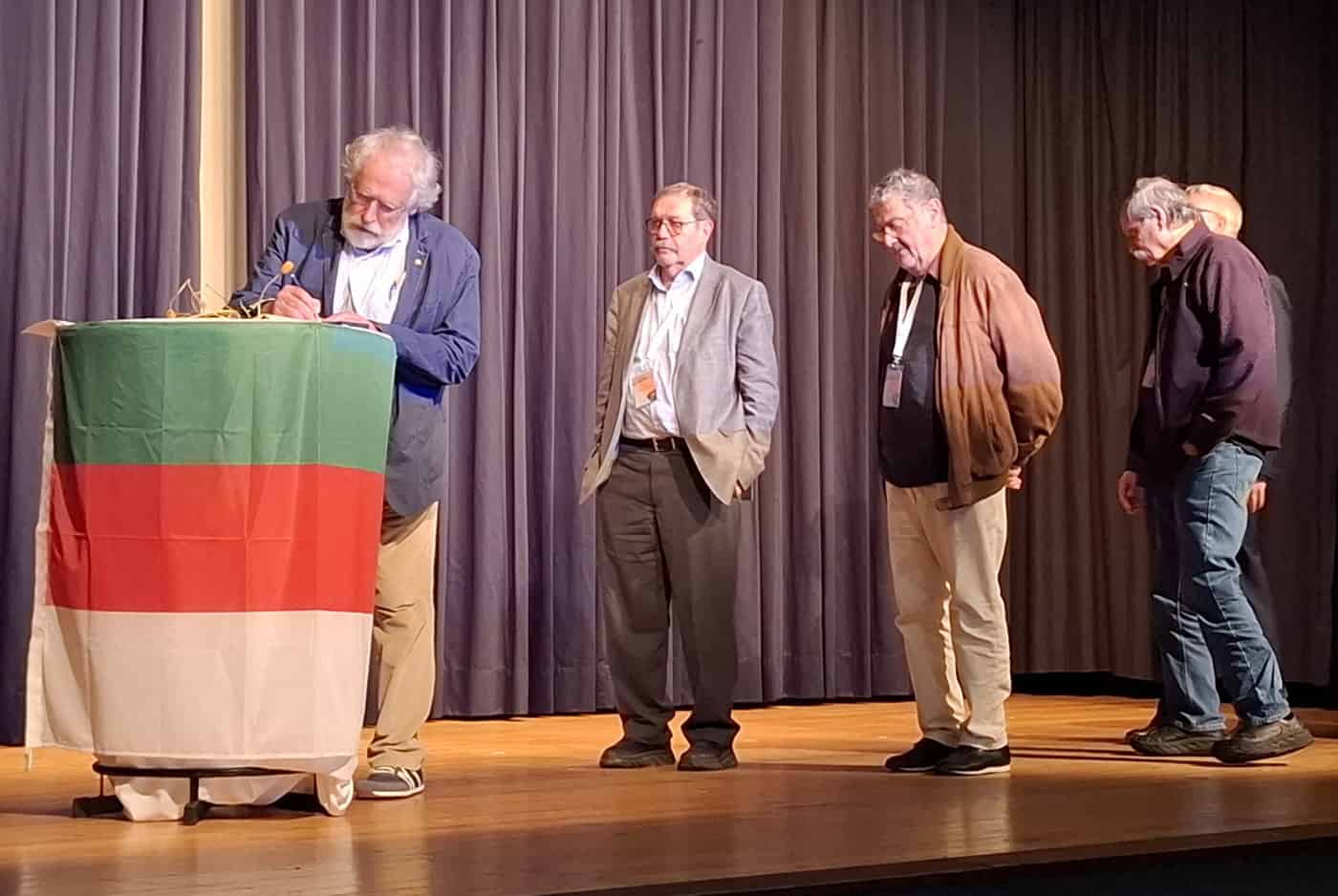
The first session at the Helgoland 2025 meeting marking the centenary of quantum mechanics began with the four Nobel-prize-winning physicsts in attendance being invited on stage to sign the island’s memorial “gold book” and add a short statement to it.
Anton Zeilinger and Alain Aspect, who shared the 2022 Nobel prize with John Clauser for their work on entanglement and quantum information science, were first up on stage. They were followed by Serge Haroche and David Wineland, who shared the 2012 prize for their work on measuring and manipulating quantum systems.
During the coffee break, the book was placed on display for participants to view and add their own signatures if they wished. Naturally, being the nosey person I am, I was keen to see what the Nobel laureates had written.
Signing ceremony (From left to right) Anton Zeilinger, Alain Aspect, Serge Haroche and David Wineland troop on stage to sign the Helgoland book. (Courtesy: Matin Durrani)
Here, for the record, are their comments.
“Great sailing. Great people.” Anton Zeilinger
“C’est une émotion de se trouver à l’endroit où a commencé la méchanique quantique.” Alain Aspect [It’s an emotional feeling to find yourself in the place where quantum mechanics started.]
“Thank you for your warm welcome in Helgoland, an island which is known by all quantum physicists.” Serge Haroche
“An honor to be here.” David Wineland
All the comments made sense to me apart from that of Zeilinger so after the evening’s panel debate on the foundations of quantum mechanics, in which he had taken part, I asked him what the reference to sailing was all about.
Turns out that Zeilinger (as Albert Einstein once was) is a keen sailor in his spare time and he and his wife had come to Helgoland three days before the conference began to see the final stages of a North Sea regatta that takes place in late spring every year.
In fact, Zeilinger explained that the Helgoland meeting had to start on a Tuesday as the day before the venue was host to the regatta’s awards ceremony.
As for the flag, it is that of Helgoland, with the green representing the land, the red for the island’s cliffs and the white for the sand on the beaches.
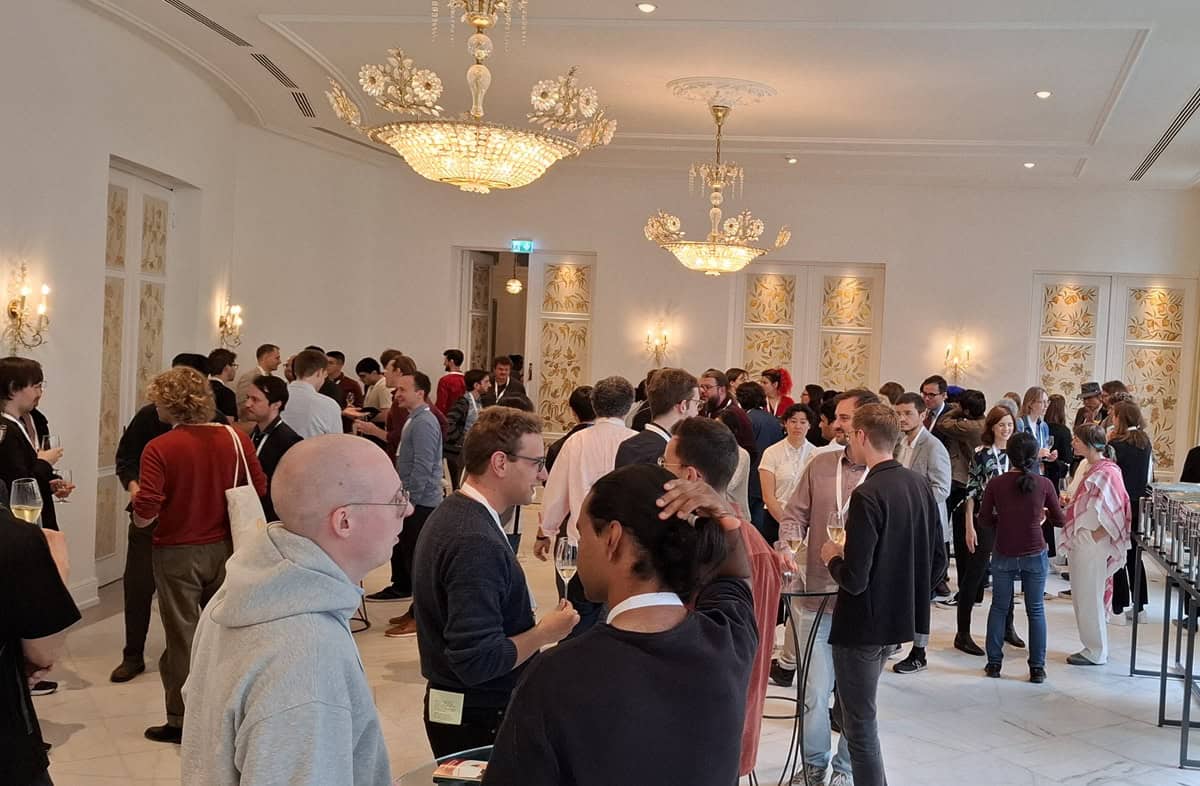
“This is a birthday party! Happy 100th birthday quantum mechanics,” said Jack Harris from Yale University in the US to whoops and cheers in the banqueting suite of the Hotel Atlantic in Hamburg, Germany.
Time to celebrate Participants gather ahead of the conference buffet dinner. (Courtesy: Matin Durrani)
“Heisenberg travelled to Helgoland to escape terrible allergies” Harris told delegates, reminding them of how the young 23-year-old had taken leave of absence from his postdoc supervisor Max Born in Göttingen for the fresh air of the treeless island. “His two weeks there was one of the watershed events in the discovery of quantum mechanics.”
Harris admitted, though, that it’s open to debate if Heisenberg’s fortnight on the island was as significant as is often made out, joking that – like quantum mechanics itself – “there are many interpretations that one can apply to this occasion”.
In one interpretation I hadn’t considered before, Harris pointed out that what might be regarded as an impediment or a disability – Heisenberg’s severe hayfever – turned out to be a positive force for science. “It actually brought him to Helgoland in the first place.”
Harris also took the opportunity to remind the audience of the importance of mentoring and helping each other in science. “How we treat others is as important as what we accomplish”, he said. “Another high standard to keep in mind is that science needs to be international and science needs to be inclusive. I am preaching to the choir but this is important to say out loud.”
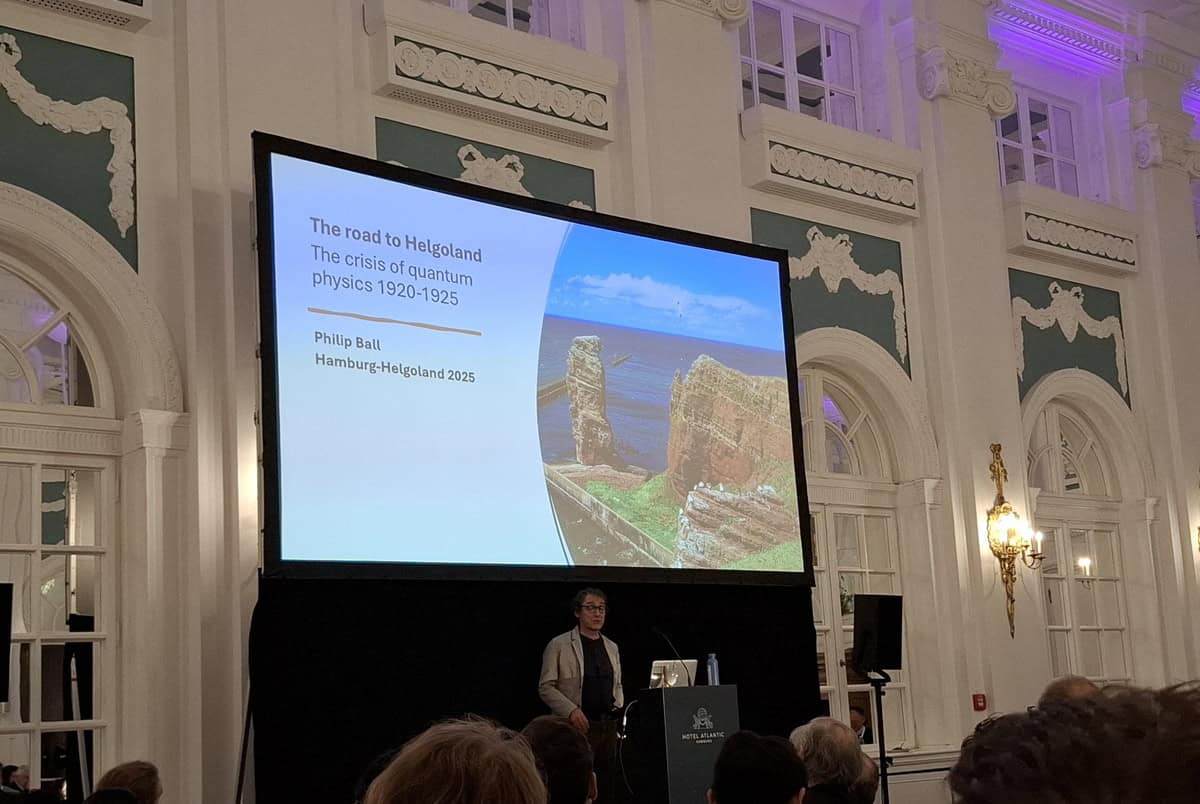
Destination Helgoland Science writer Philip Ball addresses delegates on the early years of quantum mechanics. (Courtesy: Matin Durrani)
Harris’s opening remarks were followed a series of three talks. First was Douglas Stone from Yale University who discussed the historical development of quantum science.
Next up was philosopher of science Elise Crull from the City University of New York, who looked into some of the early debates about the philosophical implications of quantum physics – including the pioneering contributions of Grete Hermann, who Sidney Perkowitz discussed in his recent feature for Physics World.
The final after-dinner speaker was science journalist Philip Ball, who explained how quantum theory developed in 1924–25 in the run-up to Helgoland. He focused, as he did in his recent feature for Physics World, on work carried out by Niels Bohr and others that turned out to be wrong but showed the intense turmoil in physics on the brink of quantum mechanics.
Helgoland 2025 features a packed five days of talks, poster sessions and debates – on the island of Helgoland itself – covering the past, present and future of quantum physics, with five Nobel laureates in attendance. In fact, Harris and his fellow scientific co-organizers – Časlav Brukner, Steven Girvin and Florian Marquardt – had so much to squeeze in that they could easily have “filled two or three solid programmes with people from whom we would have loved to hear”.
I’ll see over the next few days on Helgoland if they made the right speaker choices, but things have certainly got off to a good start.
• Elise Crull is appearing on the next episode of Physics World Live on Tueday 17 June. You can register for free at this link.
Join us for an insightful webinar highlighting cutting-edge research in 2D transition-metal dichalcogenides (TMDs) and their applications in quantum optics.
This session will showcase multimodal imaging techniques, including reflection and time-resolved photoluminescence (TRPL), performed with our high-performance MicroTime 100 microscope. Complementary spectroscopic insights are provided through photoluminescence emission measurements using the FluoTime 300 spectrometer, highlighting the unique characteristics of these advanced materials and their potential in next-generation photonic devices.
Whether you’re a researcher, engineer, or enthusiast in nanophotonics and quantum materials, this webinar will offer valuable insights into the characterization and design of van der Waals materials for quantum optical applications. Don’t miss this opportunity to explore the forefront of 2D material spectroscopy and imaging with a leading expert in the field.
Shengxi Huang is an associate professor in the Department of Electrical and Computer Engineering at Rice University. Huang earned her PhD in electrical engineering and computer science at MIT in 2017, under the supervision of Professors Mildred Dresselhaus and Jing Kong. Following that, she did postdoctoral research at Stanford University with Professors Tony Heinz and Jonathan Fan. She obtained her bachelor’s degree with the highest honors at Tsinghua University, China. Before joining Rice, she was an assistant professor in the Department of Electrical Engineering, Department of Biomedical Engineering, and Materials Research Institute at The Pennsylvania State University.
Huang’s research interests involve light-matter interactions of quantum materials and nanostructures, and the development of new quantum optical platforms and biochemical sensing technologies. In particular, her research focuses on (1) understanding optical and electronic properties of new materials such as 2D materials and Weyl semimetals, (2) developing new biochemical sensing techniques with applications in medical diagnosis, and (3) exploring new quantum optical effects and quantum sensing. She is leading the SCOPE (Sensing, Characterization, and OPtoElectronics) Laboratory.
Year 12 students (aged 16 or 17) often do work experience while studying for their A-levels. It can provide valuable insights into what the working world is like and showcase what potential career routes are available. And that’s exactly why I requested to do my week of work experience at the Institute of Physics (IOP).
I’m studying maths, chemistry and physics, with a particular interest in the latter. I’m hoping to study physics or chemical physics at university so was keen to find out how the subject can be applied to business, and get a better understanding of what I want to do in the future. The IOP was therefore a perfect placement for me and here are a few highlights of what I did.
Monday
My week at the IOP’s headquarters in London began with a brief introduction to the Institute with the head of science and innovation, Anne Crean, and Katherine Platt, manager for the International Year of Quantum Science and Technology (IYQ). Platt, who planned and supervised my week of activities, then gave me a tour of the building and explained more about the IOP’s work, including how it aims to nurture upcoming physics innovation and projects, and give businesses and physicists resources and support.
My first task was working with Jenny Lovell, project manager in the science and innovation team. While helping her organize the latest round of the IOP’s medals and awards, she explained why the IOP honours the physics community in this way and described the different degrees of achievement that it recognizes.
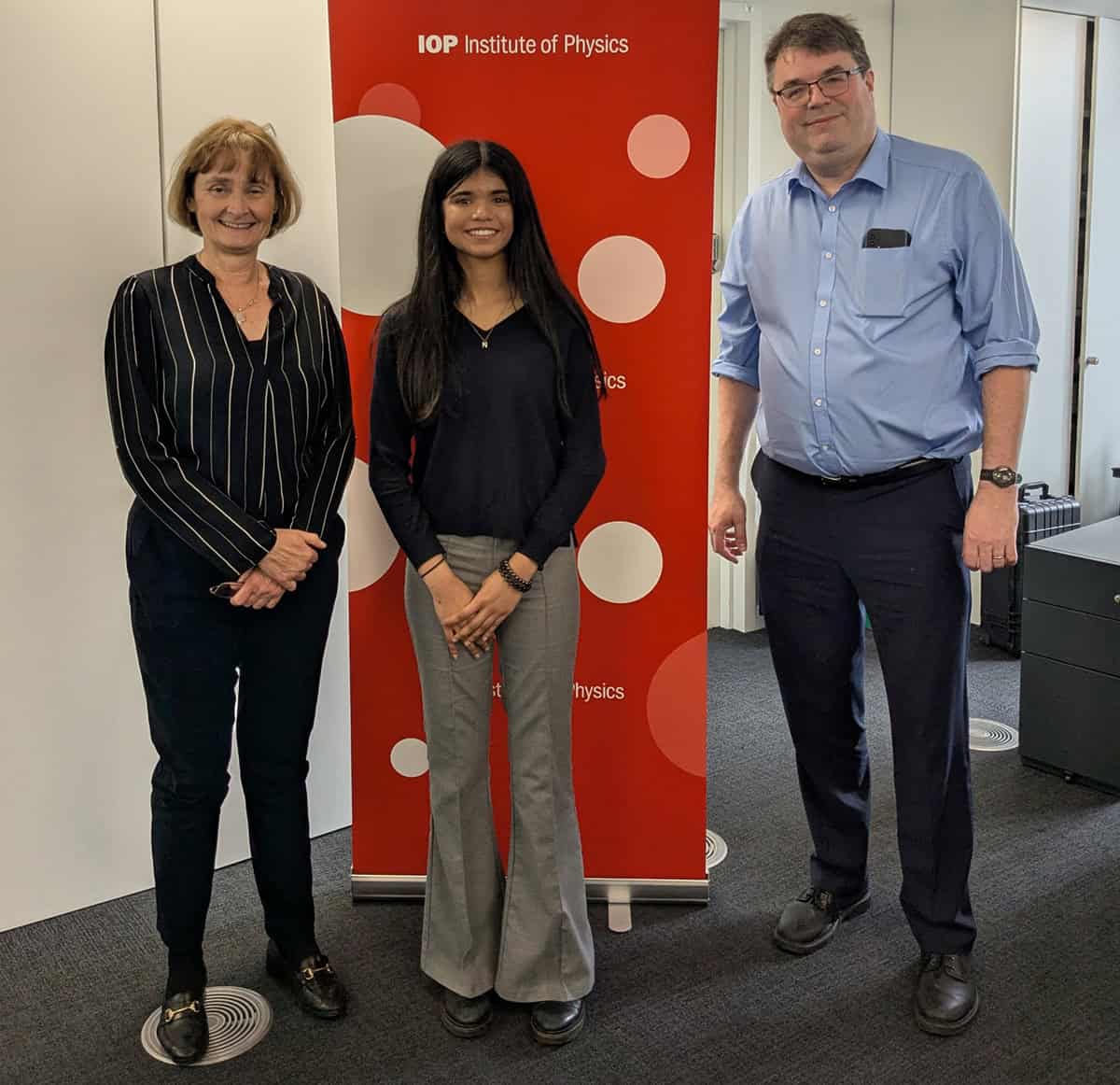
Next I got to meet the IOP’s chief executive officer Tom Grinyer, and unexpectedly the president-elect Michele Dougherty, who is a space physicist at Imperial College London. They are both inspiring people, who gave me some great advice about how I might go about my future in physics. They talked about the exciting opportunities available as a woman in physics, and how no matter where I start, I can go into many different sectors as the subject is so applicable.
Top people Naeya Mistry (centre) got some valuable advice from the chief executive officer of the Institute of Physics, Tom Grinyer (right), and the president-elect, Michele Dougherty (left). (Courtesy: IOP)
To round off the day, I sat in a meeting about how the science and innovation team can increase engagement, before starting on a presentation I was due to make on Thursday about quantum physics and young people.
Tuesday
My second day began with a series of meetings. First up was the science and innovation team’s weekly stand-up meeting. I then attended a larger staff meeting with most of IOP’s employees, which proved informative and gave me a chance to see how different teams interact with each other. Next was the science and innovation managers’ meeting, where I took the minutes as they spoke.
I then met data science lead, Robert Cocking, who went through his work on data insights. He talked about IOP membership statistics in the UK and Ireland, as well as age and gender splits, and how he can do similar breakdowns for the different areas of special interest (such as quantum physics or astronomy). I found the statistics around the representation of girls in the physics community, specifically at A-level, particularly fascinating as it applies to me. Notably, although a lower percentage of girls take A-level physics compared to boys, a higher proportion of those girls go on to study it at university.
The day ended with some time to work on my presentation and research different universities and pathways I could take once I have finished my A-levels.
Wednesday
It was a steady start to Wednesday as I continued with my presentation and research with Platt’s help. Later in the morning, I attended a meeting with the public engagement team about Mimi’s Tiny Adventure, a children’s book written by Toby Shannon-Smith, public programmes manager at IOP, and illustrated by Pauline Gregory. The book, which is the third in the Mimi’s Adventures series, is part of the IOP’s Limit Less campaign to engage young people in physics, and will be published later this year to coincide with the IYQ. It was interesting to see how the IOP advertises physics to a younger audience and makes it more engaging for them.
Platt and I then had a video call with the Physics World team at IOP Publishing in Bristol, joining for their daily news meeting before having an in-depth chat with the editor-in-chief, Matin Durrani, and feature editors, Tushna Commissariat and Sarah Tesh. After giving me a brief introduction to the magazine, website and team structure, we discussed physics careers. It was good hear the editors’ insights as they cover a broad range of jobs in Physics World and all have a background in physics. It was particularly good to hear from Durrani as he studied chemical physics, which combines my three subjects and my passions.
Thursday
On Thursday I met David Curry, founder of Quantum Base Alpha – a start-up using quantum-inspired algorithms to solve issues facing humanity. We talked about physics in a business context, what he and his company do, and what he hopes for the future of quantum.
I then gave my presentation on “Why should young people care about quantum?”. I detailed the importance of quantum physics, the major things happening in the field and what it can become, as well as the careers quantum will offer in the future. I also discussed diversity and representation in the physics community, and how that is translated to what I see in everyday life, such as in my school and class. As a woman of colour going into science, technology, engineering and mathematics (STEM), I think it is important for me to have conversations around diversity of both gender and race, and the combination of two. After my presentation, Curry gave me some feedback, and we discussed what I am aiming to do at university and beyond.
Friday
For my final day, I visited the University of Sussex, where I toured the campus with Curry’s daughter Kitty, an undergraduate student studying social sciences. I then met up again with Curry, who introduced me to Thomas Clarke, a PhD student in Sussex’s ion quantum technologies group. We went to the physics and maths building, where he explained the simple process of quantum computing to me, and the struggles they have implementing that on a larger scale.
Clarke then gave us a tour of the lab that he shares with other PhD students, and showed us his experiments, which consisted of multiple lasers that made up their trapped ion quantum computing platform. As we read off his oscilloscope attached to the laser system, it was interesting to hear that a lot of his work involved trial and error, and the visit helped me realize that I am probably more interested in the experimental side of physics rather than pure theory.
My work experience week at the IOP has been vital in helping me to understand how physics can be applied in both business and academia. Thanks to the IOP’s involvement in the IYQ, I now have a deeper understanding of quantum science and how it might one day be applied to almost every aspect of physics – including chemical physics – as the sector grows in interest and funding. It’s been an eye-opening week, and I’ve returned to school excited and better informed about my potential next career steps.
Now, for the first time, a team at Northwestern Medicine in Illinois has integrated a generative AI tool into a live clinical workflow to draft radiology reports on X-ray images. In routine use, the AI model increased documentation efficiency by an average of 15.5%, while maintaining diagnostic accuracy.
Medical images such as X-ray scans play a central role in diagnosing and staging disease. To interpret an X-ray, a patient’s imaging data are typically input into the hospital’s PACS (picture archiving and communication system) and sent to radiology reporting software. The radiologist then reviews and interprets the imaging and clinical data and creates a report to help guide treatment decisions.
To speed up this process, Mozziyar Etemadi and colleagues proposed that generative AI could create a draft report that radiologists could then check and edit, saving them from having to start from scratch. To enable this, the researchers built a generative AI model specifically for radiology at Northwestern, based on historical data from the 12-hospital Northwestern Medicine network.
They then integrated this AI model into the existing radiology clinical workflow, enabling it to receive data from the PACS and generate a draft AI report. Within seconds of image acquisition, this report is available within the reporting software, enabling radiologists to create a final report from the AI-generated draft.
“Radiology is a great fit [for generative AI] because the practice of radiology is inherently generative – radiologists are looking very carefully at images and then generating text to summarize what is in the image,” Etemadi tells Physics World. “This is similar, if not identical, to what generative models like ChatGPT do today. Our [AI model] is unique in that it is far more accurate than ChatGPT for this task, was developed years earlier and is thousands of times less costly.”
Clinical application
The researchers tested their AI model on radiographs obtained at Northwestern hospitals over a five month period, reporting their findings in JAMA Network Open. They first examined the AI model’s impact on documentation efficiency for 23 960 radiographs. Unlike previous AI investigations that only used chest X-rays, this work covered all anatomies, with 18.3% of radiographs from non-chest sites (including the abdomen, pelvis, spine, and upper and lower extremities).
Use of the AI model increased report completion efficiency by 15.5% on average – reducing mean documentation time from 189.2 s to 159.8 s – with some radiologists achieving gains as high as 40%. The researchers note that this corresponds to a time saving of more than 63 h over the five months, representing a reduction from roughly 79 to 67 radiologist shifts.
To assess the quality of the AI-based documentation, they investigated the rate at which addenda (used to rectify reporting errors) were made to the final reports. Addenda were required in 17 model-assisted reports and 16 non-model reports, suggesting that use of AI did not impact the quality of radiograph interpretation.
To further verify this, the team also conducted a peer review analysis – in which a second radiologist rates a report according to how well they agree with its findings and text quality – in 400 chest and 400 non-chest studies, split evenly between AI-assisted and non-assisted reports. The peer review revealed no differences in clinical accuracy or text quality between AI-assisted and non-assisted interpretations, reinforcing the radiologist’s ability to create high-quality documentation using the AI.
Rapid warning system
Finally, the researchers applied the model to flag unexpected life-threatening pathologies, such as pneumothorax (collapsed lung), using an automated prioritization system that monitors the AI-generated reports. The system exhibited a sensitivity of 72.7% and specificity of 99.9% for detecting unexpected pneumothorax. Importantly, these priority flags were generated between 21 and 45 s after study completion, compared with a median of 24.5 min for radiologist notifications.
Etemadi notes that previous AI systems were designed to detect specific findings and output a “yes” or “no” for each disease type. The team’s new model, on the other hand, creates a full text draft containing detailed comments.
“This precise language can then be searched to make more precise and actionable alerts,” he explains. “For example, we don’t need to know if a patient has a pneumothorax if we already know they have one and it is getting better. This cannot be done with existing systems that just provide a simple yes/no response.”
The team is now working to increase the accuracy of the AI tool, to enable more subtle and rare findings, as well as expand beyond X-ray images. “We currently have CT working and are looking to expand to MRI, ultrasound, mammography, PET and more, as well as modalities beyond radiology like ophthalmology and dermatology,” says Etemadi.
The researchers conclude that their generative AI tool could help alleviate radiologist shortages, with radiologist and AI collaborating to improve clinical care delivery. They emphasize, though, that the technology won’t replace humans. “You still need a radiologist as the gold standard,” says co-author Samir Abboud in a press statement. “Our role becomes ensuring every interpretation is right for the patient.”