Topological insulators are a recently discovered phase of matter that are electrical insulators in the bulk but which can conduct electricity on their surface via special “topologically protected” surface electronic states. These states have remarkable properties, including the fact that they are robust to defects and noise in the surrounding environment. A team of researchers in Australia, Italy and Switzerland have now shown that topological states made from single photons can be used as quantum bits (qubits) to process quantum information in a reliable way. The work could help in the development of more robust quantum computers.
While classical computers store and process information as “bits” that can have one of two states – “0” or “1” – a quantum computer exploits the ability of quantum particles to be in “superposition” of two or more states at the same time. N such qubits could be combined or “entangled” to represent 2N values at once, which could allow for parallel processing of information on a massive scale. Such a device could, in principle, outperform a classical computer for solving some advanced computational problems, such as factoring large numbers or simulating the interactions between many fundamental particles.
There is a problem though: qubits are very fragile and any surrounding noise can easily degrade the quantum nature of the qubits. This process is called decoherence, and if not checked, will prevent a quantum computer from functioning.
Great promise for quantum computing applications
Researchers first discovered topological phases of matter in experiments ten years ago (in the binary alloy bismuth-antimony). The sturdy surface conduction seen in these materials comes from their topology. In fact, the energy difference between the surface states and the bulk states is so big that an electron moving along the surface cannot scatter into the bulk. Topological insulators thus show great promise for quantum computing applications, where scattering from defects will destroy quantum information carried by electrons.
In their study, researchers led by Albert Peruzzo of the RMIT University in Australia studied topologically protected states made of single photons rather than electrons. They began by localizing these states at the opposite edges of a waveguide array, which they made using a femtosecond laser writing technique in borosilicate glass. This technique allows them to control the waveguide coupling coefficients in the device with high precision.
Replicating the Hong-Ou-Mandel experiment
They then quantum mechanically interfered these photonic topological states in their waveguide chip by replicating the so-called Hong-Ou-Mandel (HOM) experiment, which is normally done in a 50:50 beamsplitter. Such quantum interference is a key phenomenon in quantum physics and is at the heart of optical quantum computing, says Peruzzo. “In our experiment, we relocated the photonic topological states from the opposite edges of our waveguide array towards the centre, where they could interfere. We then relocated them back to the edge so we could collect and measure them.
“Our device is in fact the first ‘topological beamsplitter’ – a completely new component of its kind.”
The team, which includes scientists from the Politecnico di Milano and ETH Zurich, says it’s observed HOM interference with over 93% visibility. “Demonstrating such high-fidelity quantum interference is a precursor to transmitting accurate data using single photons for quantum communications – a vital component of a global quantum network,” says study lead author Jean-Luc Tambasco at RMIT.
“We expect that our demonstration will open the way to a new area of topologically robust quantum processing and simulations in integrated photonics technology,” Peruzzo tells Physics World.
(Courtesy: The Quarto Group/Rachel Valentine and Katie Weymouth)
It’s not often that a large, brightly covered children’s book lands on my desk, so it’s sure to catch my eye when one does. Imagine how delighted I was to discover that the book featured a young girl who is an inventor. It’s likely that most folks would be hard-pressed to name any female inventors and a book aimed at young children may be just the way to fix that. Audrey the Inventor, written by Rachel Valentine and illustrated by Katie Weymouth, is the perfect addition.
The short, quirky book tells the story of Audrey who lives with her father and her pet “Happy Cat” and decides to become an inventor. Inquisitive and adventurous Audrey dreams up and creates a number of devices – from an egg collector to a strawberry jam dispenser to a “cat washer” – in the hopes of being helpful. Alas, her builds soon fall apart or, worse, cause chaos. Our young heroine is despondent, convinced that she is the “world’s worst inventor”. Thankfully, daddy steps in with words of encouragement and advice, suggesting that she learn from her mistakes and try again. This time around, Audrey carefully plans her project and repeatedly tests her invention before unleashing it on the household with huge success.
What makes this simple story interesting is first, the fact that our little inventor is a girl, but also that she has a realistic experience of working in science – it includes failure, null results, multiple iterations and, ultimately, success. Parents would do well to read this book as a bedtime story to encourage all little boys and girls into science.
2018 Words & Pictures, 32pp, £11.99hb
(Courtesy: The Quarto Group/Rachel Valentine and Katie Weymouth)
Question time: Stephen Hawking’s final book is due out next month (Courtesy: Andre Pattenden)
Physics Worldturns 30 next month, but it’s not the only big anniversary in physics this year. That’s because 1988 also saw the publication of Stephen Hawking’s best-selling popular-science book A Brief History of Time.
Full details of the book are still under wraps, but according to the publishers, it is “drawn from his extraordinary personal archive and has been completed in collaboration with his academic colleagues, his family and the Stephen Hawking Estate”. The book will comprise Hawking’s “most profound, accessible, and timely reflections” on 10 questions, such as the existence of God, whether we can predict the future and whether artificial intelligence will outsmart us.
To mark its publication, John Murray has also commissioned Josh Kirklin, a PhD student at the Department of Applied Mathematics and Theoretical Physics at the University of Cambridge, where Hawking was based, to set a series of fiendish puzzles inspired by the book.
The puzzles will be released every week starting later today (20 September) on the website briefanswerstothebigquestions.com, but the publishers have given Physics World readers a sneak preview to the first puzzle (see below). The answer to each puzzle is a nine-letter word. The first nine answers, put into a nine-by-nine grid, form the basis for the tenth question.
Get thinking: The first puzzle in a series of 10 linked to Stephen Hawking’s latest book (click to enlarge). Enter the quiz by going to www.briefanswerstobigquestions.com
There’s a prize from John Murray for the first correct entry in the form of an “exclusive Hawking print” provided by the Stephen Hawking Estate. To enter the quiz and for more details, go to briefanswerstothebigquestions.com.
I’m sure Physics World readers will enjoy the challenges, given that you responded in such large numbers to our own set of five puzzles that we created to celebrate the 25th anniversary of Physics World five years ago in conjunction with GCHQ.
Cancers such as prostate cancer can develop and progress because tumour-suppressor genes have either been lost or have mutated, but restoring these suppressors has proved difficult. A team of researchers from Brigham and Women’s Hospital (BWH), Boston Children’s Hospital and Memorial Sloan Kettering Cancer Center has now succeeded in reintroducing “PTEN” messenger RNA (mRNA) into prostate cancer cells by encapsulating it in nanoparticles. The innovative technique effectively restores tumour suppression in vivo, even when the cancer is in the metastatic stage, and might lead to the development of a new type of precision medicine for treating cancer.
PTEN (phosphatase and tensin homologue deleted on chromosome 10) is a tumour-suppressor gene that is lost or mutated in about half of all metastatic castration-resistant prostate cancers and in many other human cancers, explains co-team leader Jinjun Shi of BWH. Restoring functional PTEN as a way to treat prostate cancer has proved to be no easy task though. We have now shown that we can reintroduce functional copies of PTEN mRNA into PTEN-depleted prostate cancer cells both in vitro and in vivo by encapsulating it in polymer-lipid hybrid nanoparticles coated with a polyethylene glycol shell. This mRNA, which can be thought of as a tiny delivery vehicle that can get messages of genetic information into cells, restores the function of the PTEN tumour suppressor gene. It so turns the body’s natural tumour suppressing mechanisms “back on” to kill the cancer cells.
Restoring a function
“We designed the nanoparticles so that they protect the mRNA from degradation, prolong mRNA circulation in blood and improve cellular uptake and cytosolic transport,” says study lead author Mohammad Islam. “The circulating mRNA nanoparticles enter tumour tissue thanks to the naturally leaky vasculature of the tumour. They are then internalized by the cancer cells for efficient mRNA transfection.”
“Most conventional cancer therapies are designed to block something, such as pro-tumorigenic drivers, for instance,” adds co-team leader Bruce Zetter of Boston’s Children Hospital. “Our approach is different in that it restores a function – in this case the lost tumour suppressors. It could thus complement current cancer treatments for correcting both pro-tumorigenic and tumour-supressing pathways at the same time.”
“Since loss of tumour-suppressor function is highly correlated with tumour growth and metastasis, the technique might lead to the development of new types of precision medicine for treating cancer,” Shi tells Physics World.
“Exciting times”
“These are exciting times for the field of nucleic acid therapeutics with the recent regulatory approval of the first siRNA therapeutics and numerous mRNA treatments under clinical investigation,” adds co-team leader Omid Farokhzad, of BWH.
The researchers, reporting their work in Nature Biomedical Engineering s41551-018-0284-0, say they are now busy looking into additional tumour suppressors, such as p53, using their nanoparticle-mediated mRNA delivery strategy. “We also plan to combine this approach with other therapies for more effective overall cancer treatment,” says Shi.
Offshore wind farms may have a greater capacity for coastal protection than first imagined. Scientists had shown previously that arrays of turbines placed in the sea may buffer storm surge and flooding. Now simulations featuring data from Hurricane Harvey suggest that smart wind farm designs have the capacity to protect coastlines from heavy rains.
The researchers, based at the University of Delaware, US, considered six hypothetical wind farm arrays along the coasts of Texas and Louisiana, comparing outputs from the model to a control case where no turbines were deployed. The arrays differed in their turbine size, spacing and site location, among other factors.
The team knew from earlier studies that winds slow down in the vicinity of offshore turbine arrays. “You can picture a scene where moisture is ‘squeezed out’ of the hurricane upstream of hitting land as winds converge at the offshore site,” says Cristina Archer. “But there’s also a second effect that occurs downstream of the farm where winds pick up again, which causes the storm winds to diverge, further reducing precipitation.”
It was important in this first step of the research to confirm this behaviour so that researchers and planners can dig deeper into future designs. Ideas on the table include adjustable turbine blades that could lengthen or shorten depending on whether the objective is energy extraction or storm protection. There’s also more to discover regarding the optimum layout of an offshore array, balancing energy generation efficiency against the performance of the wind farm as a weather defence.
One way to marry the two functions would be to make the setup dynamic. “With floating turbines, you could even think of moving them strategically closer or further apart and varying their distance from the coast depending on the weather,” adds Archer.
In all the group’s simulations, the presence of an offshore wind farm reduced precipitation inland and increased rainfall out at sea. However, the scale of the reduction varied with the layout and location of the turbines.
The most widely-spaced array modelled by the team still featured thousands more turbines than the largest array in use today, making the scenario appear somewhat futuristic. But the researchers acknowledge this and are keen to offer more practical advice.
“The next phase of this study will identify the smallest array size that still has significant benefits, focusing on the optimal layout that would maximize this benefit while, at the same time, minimizing the turbine installation costs,” writes the team in Environmental Research Letters (ERL).
There’s also scope to link the analysis to an ocean model to investigate properties such as surface stress, currents, vertical mixing, sediments and wave behaviour.
Female doctoral students in science subjects are more likely to drop out if there are few other women in their cohort. That is according to an analysis carried out by economists Valerie Bostwick and Bruce Weinberg from Ohio State University, who call on female graduate students to receive additional support if they are in the minority or the only ones entering a doctoral class.
Lonely times: A study by economists at Ohio State University found that lone females in a PhD cohort were up to 16% less likely to graduate than their male counterparts. (Courtesy: iStock/ALLVISIONN)
The study tracked 2541 students who enrolled in graduate programmes in science, technology, engineering and mathematics (STEM) at six public universities in Ohio between 2005 and 2016. For the analysis, which was published on the website of the National Bureau of Economic Research, the students were grouped into cohorts based on a doctoral programme identifier code, known as the Classification of Instructional Programs.
The duo found that when female STEM post graduates were the only women in their intake group, they were 12% less likely to complete their PhD than their male counterparts. Such women were also 10% more likely to drop out in the first year of their doctoral programme than men. A 10% increase in females in a cohort, however, increased the probability of women graduating by more than 2%.
Supportive role
The gender gap in PhD completion rates was found to be larger in subjects that are dominated by men such as physics, chemistry, mathematics and engineering, with lone females being 16% less likely to graduate from these subjects than their male counterparts. They are also 18% more likely than men to drop out in their first year. “We should be concerned about women having systematically higher drop-out rates in more male-intensive STEM programmes,” Weinberg told Physics World.
The researchers found that differences between males and females in first-term grades or the likelihood of obtaining research funding are not enough to explain the drop out and on-time graduation rates. Instead, they say that their findings show that having more female students creates a female-friendly environment that encourages women to persist in doctoral programmes.
Weinberg adds that recruiting more women into programmes, avoiding classes with very low proportions of women and creating more female-friendly environments would all help to reduce the female drop-out rate. “Although this goes beyond our study, my sense is that change often comes from the top, so having faculty and mentors be more supportive, model, and encourage more supportive behaviours would be obvious policies,” says Weinberg.
MILabs, a Dutch developer of molecular imaging systems, has received the “Commercial Innovation of the Year” award at the recent World Molecular Imaging Congress (WMIC) in Seattle, WA. The award was presented for the company’s VECTor6 preclinical imaging system with its new broadband photon tomography technique.
The VECTor6 system advances state-of-the-art PET imaging by increasing PET resolution down to 0.55 mm for 18F and eliminating positron range effects for PET isotopes such as 124I and 82Rb. Moreover, the system can image multiple PET isotopes simultaneously and obtain both spatial and temporal co-registered PET/SPECT and PET/radiotherapy images, including those of all alpha- and beta-isotopes used in theranostics.
The VECTor6 also incorporates best-in-class in vivo optical and X-ray CT modalities, enabling nuclear and optical molecular imaging to be performed on a single platform. By imaging a photon energy range from 1 eV to 1 MeV, MILabs expects its broadband photon tomography technique will extend the applications of in vivo animal imaging far beyond the capabilities of current preclinical imaging systems.
“We are very encouraged that the molecular imaging community, including opinion leaders as well as industry peers, have recognized the technological innovations incorporated in our latest product, the VECTor6 system,” says Frederik Beekman, CEO/CSO of MILabs. “Especially for PET imaging, this product pushes the boundaries of performance beyond the limits of current preclinical systems.”
On 19 September 1985 Mexico City was reduced to rubble by a magnitude-8.0 earthquake. While the epicentre was more than 370 km from the city, about 10,000 people died, with 3000 buildings damaged of which 400 collapsed. It was one of the worst tragedies in the metropolis’s 700-year history. To commemorate the disaster, as well as raise awareness of the danger of earthquakes, the city now holds drills on that same day every year.
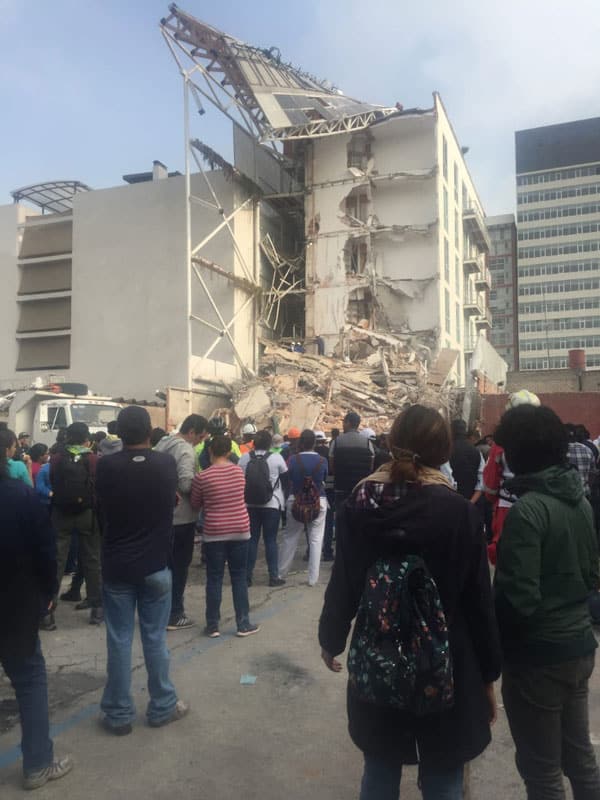
In 2017, however, that year’s drill quickly turned into a real event when two hours later a 7.1-magnitude earthquake struck the city without warning. Mexico City resident Alejandra Castillo recalls the shock when the ground began to shake violently beneath her. “I remember everyone was screaming and we were all trying to reach the safety zones,” she told Physics World. “I couldn’t make it because the movement was too intense, so a colleague dragged me.”
When Castillo returned home, her apartment, which she had just purchased six months earlier, was no longer there. The entire five-storey tower block had collapsed with volunteers still desperately searching for two women trapped inside. “When my husband arrived, we held each other in silence,” she says, adding that all they had left were the clothes they were wearing that day. The earthquake – dubbed 19S – killed 228 people in Mexico City, damaging almost 6000 buildings with more than 40 collapsing.
This was the second big earthquake to hit Mexico that month. At 11.50 p.m. on 7 September 2017 – just 12 days before 19S – Mexico City was awoken to 12,000 loudspeakers warning of an incoming quake. People had two minutes to exit buildings and find safe spots to wait. While the 8.2-magnitude earthquake had devastating effects in the southern states, Mexico City was unharmed.
Getting the message out
Back in 1985, the only early quake-detection system in the world was in Japan, solely introduced so that engineers could stop the country’s high-speed bullet trains before they potentially derailed. But a team of engineers in Mexico realized there was a huge difference between earthquakes in Japan and those in Mexico City. The former occur mainly right underneath the city, whereas the latter mostly occur off Mexico’s coastline, which is hundreds of kilometres away. Mexico City is also particularly vulnerable to earthquakes because the city is built over an ancient lakebed so that the ground amplifies the effects.
Seismic primary waves (P-waves) are the fastest type that are produced by earthquakes and since they are basically sound waves their speed is limited by that of sound. This means that, in principle, once a quake is detected, it is possible to send an alert (via radio waves) faster than the quake approaches. The distance from the quake’s epicentre determines not only the intensity at which it hits locally, but also how much time in advance the alarm can alert people about it.
This was the idea that inspired engineer Juan Manuel Espinosa and his team in the late-1980s to start the Mexican Seismic Alert System (SASMEX) – the very first automated public earthquake alert system in the world. He developed an algorithm to identify quakes from other types of vibrations and installed earthquake sensors along the coastlines of Mexico. If a quake exceeded magnitude five, the system would issue an alert and people would be able to find safe spots in advance, sometimes up to two minutes in advance.
SASMEX is operated with government funding but is owned by Espinosa’s non-profit company CIRES, which develops seismic instrumentation. The system has been working since 1991 and today it interrupts public TV and radio broadcasts to transmit the alarm, while 12,000 speakers relay the news across the city. According to Espinosa, the system now has 97 seismic sensors, mostly distributed along the coastlines where most strong earthquakes are expected to start.
Impact zone: On 19 September 2017 a 7.1-magnitude earthquake struck Mexico City without warning, killing 228 people and damaging almost 6000 buildings. (Courtesy: Alejandra Castillo)
Why the supposedly weaker second quake in 2017 caused so much devastation is due to the make-up of the tectonic plates. Mexico is located over three large tectonic plates, with the country being one of the world’s most seismically active regions. Usually earthquakes in Mexico are caused by the collision of the North American plate with the Cocos plate in the Pacific Ocean, so epicentres are near the coastlines.
This system works well for earthquakes that arise along the coastlines because most of the sensors are located there. Indeed, the epicentre of the earthquake on 7 September was 650 km away from Mexico City in the Gulf of Tehuantepec off the southern coast of Mexico, near the state of Chiapas. 19S, however, was different. It occurred inland within a plate itself and with a epicentre only 120 km away from Mexico City. According to witnesses and local media, the alarm went off only after the impact of 19S was felt in Mexico City.
Espinosa told Physics World that the reason for this was because the epicentre was too close to Mexico City. Espinosa adds that the algorithm they were still testing in that region was not fast enough to send the signal on time before the earthquake. “We’re working on improving our algorithms to make them faster,” says Espinosa, adding that other developments will include extending their network of seismic sensors by 60 to include the state of Chiapas and other regions, as well as developing graphic alerts for people with hearing impairments.
Blazing the trail
Having SASMEX government-funded but not publicly managed has inconveniences. In February 2018 SASMEX suspended its service in Oaxaca, a southern state on Mexico’s coastline that was severely affected by the earthquakes in September 2017, because the government had overdue payments for using the service. Having a state without service affects other cities – including Mexico City – because quakes often strike along Oaxaca’s coastlines.
Given such disadvantages, entrepreneurs are sensing an opportunity. Founded in 2011, SkyAlert is perhaps the most popular earthquake-alerting start-up. The Mexican firm offers a free app that warns users of an incoming quake as well as the local intensity in six different levels ranging from weak to severe. For a subscription of £3.70 per year, it offers a filter so that users only receive alerts relevant to their location.
Álvaro Velasco, SkyAlert’s co-founder and chief technology officer, told Physics World that the number of subscribers doubled after 19S to seven million. He says that recent investment has allowed the firm to expand its network of seismic sensors to 120. These span from Chiapas to the western state of Jalisco – more than 20% larger than SASMEX’s network – and covering 80% of the quake-vulnerable population. “We’re working on changing the algorithm to let people know how much time they have before the quake reaches their location,” says Velasco.
Richard Allen, a seismologist at the University of California, Berkeley, has spent 10 years developing a similar system for the US. Called ShakeAlert, it uses sensors that have been built by the US Geological Survey but has a different algorithm to the Mexican version as earthquakes affecting California have their epicentres right next to the cities. “Mexico really was the first place to do public earthquake early warnings – so Mexico should get all the glory for blazing the trail – and here in the US we are continuing to learn from that system,” Allen told Physics World.
Damage assessment
Mario Ordaz, an engineer at the National Autonomous University of Mexico (UNAM), has been providing seismic-risk assessment services for over 25 years. In 2005 he developed an automated system that, within 10 minutes of an earthquake, delivers Mexico City’s Civil Protection Agency an early damage assessment map so that authorities know where to send aid immediately. This provides information such as local seismic intensities, probable building damage, an estimate of human casualties and possible water-supply interruptions.
It is a one-of-a-kind system that works even if power and communications are down. But Ordaz says Civil Protection – despite being the commissioning agency– has dismantled their reception network and they are not even aware of the system anymore. “The only sector that has truly been interested in these developments, hasn’t been the government or Civil Protection, but rather the insurance industry,” says Ordaz. Civil Protection did not respond to Physics World’s request for comment.
Ordaz’s detailed seismic-loss estimation models have been used by the insurance industry since the 1990s, even setting their natural hazard guidelines. “Many of these developments have been paid by the insurance industry, and since 1998 the National Insurance Commission has used a model we developed, building by building all over the country, to measure risk against their clients, and with that info determine how many reserves they need to insure their clients,” says Ordaz. “It’s pioneering regulation in the world that demands insurance companies have enough money to provide coverage based on real risk estimates.”
A simple version of his model is available through a free app, called quakeRisk. After choosing any given historical earthquake through a database, users input GPS location, type of building, age of construction, number or storeys and a few other parameters, to obtain “risk of loss” for that particular earthquake. Ordaz explains that the technology behind the app can be used for any given purpose, for example, owners checking their construction blueprints against an earthquake. “It could have been complicated to do this assessment for the entire city, but the technology’s been there, so maybe if we had started this in 1985 we would have already finished by now,” adds Ordaz.
Mexico has many systems in place to prevent buildings from collapsing but most of the new buildings that suffered damage did not comply with construction regulations
Even so, in 2004 building regulations in Mexico City were updated to issue specific guidelines for buildings in six different zones divided by ground conditions, adding additional guidelines in the annexes with an even finer mesh. UNAM’s Engineering Institute has a vibratory table where construction companies can test their structures to different quake stresses before starting construction. Mexico has many systems in place to prevent buildings from collapsing but most of the new buildings that suffered damage did not comply with construction regulations. Having all these systems in place does not mean much without law compliance and enforcement.
City strategy
Most people who lost their homes in 2017 are still waiting for reconstruction funds. Only 4.7% of the £467m reconstruction fund for Mexico City has been accounted for, according to the non-profit firms NGO Nosotrxs and Mexico’s Network for Public Accountability (RRC). Liliana Veloz, RRC’s executive director, says that she believes that while Mexico’s emergency response is solid, there are no real strategies in place when it comes to dealing with reconstruction and accountability.
“Mexico simply doesn’t have short- and medium-term strategies to prevent this from happening again,” says Veloz, pointing out that there are buildings that were damaged back in 1985 that are still occupied and people still homeless after all these years. “We’ve seen that even with the current law, if it was enforced, things would work a lot better,” she adds. “What Mexico really needs is to establish controls to ensure law-compliance.”
What happened with Castillo’s building should never have happened. No-one has been held legally responsible for the deaths and damages caused, even though forensic analysis determined the building collapsed because it did not comply with construction regulations. Castillo is now back to being a tenant and hopes justice will serve her soon. “I used to feel angry, but now, I can’t understand how some housing developers can walk around knowing they could be responsible,” she says. “I feel rather disgusted.”
19 September 2018 marks the anniversary of the 2017 Central Mexico earthquake that killed 228 people in Mexico City, damaging almost 6000 buildings with more than 40 collapsing. This video explains why the earthquakes in Mexico City are so strong and how the seismic-warning systems work. Seismic waves in Mexico City are intensified locally because the city is built on the sediments of an ancient lake.
For further reading, Lucina Melesio has written an article for the September 2018 issue of Physics World examining how the development of early-warning smartphone apps could help save lives in the future.
Comparable outcomes: overall survival for patients who underwent thermal ablation or stereotactic radiotherapy as primary treatment for stage 1 NSCLC. (Courtesy: RSNA)
Thermal ablation is a safe, effective treatment for early-stage lung cancer, according to a study from Yale School of Medicine. The results show that ablation may provide an alternative approach for patients who are ineligible for lung cancer surgery (Radiology 10.1148/radiol.2018180979).
Non-small cell lung cancer (NSCLC) accounts for approximately 85% of all lung cancer cases. For early-stage disease, surgery is the treatment of choice. But older patients and those with comorbidities may not be suitable for surgery due to a higher risk of complications. Stereotactic radiotherapy (SRT) is a viable alternative for such patients and can provide high local control rates. Irradiation, however, sometimes harms healthy tissue surrounding the tumour and carries a risk of short-term and long-term toxicities.
Another option is thermal ablation, in which a probe is inserted directly into the tumour under precise image guidance. The tumour is then destroyed via application of extreme heat, extreme cold or radiofrequency (RF) waves.
“Thermal ablation is most often a one-time treatment, unlike SRT, which requires multiple visits,” says senior author Hyun “Kevin” Kim. “In addition, ablation delivers highly accurate and precise localized treatment only to cancer cells, minimizing the effects to surrounding tissue and keeping the toxicity low.”
For the study, Kim led a multidisciplinary team of thoracic oncology investigators in comparing the outcomes of thermal ablation and SRT for treatment of early-stage NSCLC. The study group included almost 29,000 patients from the 2004-2013 National Cancer Database, including more than 1100 who had undergone thermal ablation (cryosurgery, laser ablation or local tissue destruction such as RF ablation).
The researchers performed one-to-one matching of patients, based on their respective propensity to undergo thermal ablation, and obtained a matched cohort of 2140 patients. In this matched cohort, both treatment methods delivered comparable performance in terms of overall survival. The two-year survival rate in the thermal ablation group was 65.2%, compared with 64.5% for the SRT group. At five years, survival rates were 24.6% and 26.1% for thermal ablation and SRT, respectively.
“The outcomes for patients who received thermal ablation for early lung cancer were quite similar to those who received SRT,” says Kim.
The team also examined unplanned hospital readmission within 30 days after treatment, as a surrogate parameter for complications. Readmission rates were higher after thermal ablation than SRT — 3.7% (40 of 1070) versus 0.2% (two of 1070), respectively — possibly due to the more invasive nature of the ablation treatments. The authors note, however, that complications from thermal ablation (mostly pneumothorax) manifest immediately or within a few days, while adverse events after radiotherapy usually occur over a prolonged treatment phase and would not be captured by the 30-day metric.
Other advantages of thermal ablation include direct access to the tumour itself, which enables physicians to collect biopsy samples during the procedure — an option not available with SRT. “This is a real value to our patients, especially as tissue sampling becomes more and more important in personalized, precision cancer treatments,” Kim explains. The one-time treatment also has lower direct costs and could prove a more cost-effective alternative to radiation therapy.
The researchers are now planning further studies of thermal ablation’s potential role in the total care of lung cancer patients. Combining ablation with immunotherapy, for instance, may produce better results than those of ablation or immunotherapy alone.