Elaine DiMasi: running for office

Elaine DiMasi has spent the past year running for the US Congress in New York State’s first Congressional district. Located at the east end of Long Island, it’s a volatile and unpredictable area. I know because I vote there. The inhabitants include fishers and scientists, farmers and professors, migrant workers and wealthy landlords of beachfront summer homes. These different groups each have their own economic, environmental and educational concerns, while unusual alliances and random events can make the district swing from Democratic to Republican from one election to another.

What makes DiMasi interesting is that she’s a physicist who worked for more than two decades as a scientist and project manager at the Brookhaven National Laboratory, which lies in the district. In fact, I’d say she has everything anyone would want in a legislator. DiMasi, who is 49, acquires facts before making a decision. She weighs alternatives carefully. And she explores the feasibility of these alternatives before acting.

But DiMasi will not be my representative at the next US Congress. On 26 June, in the Democratic primary to select a candidate to run against the Republican incumbent in the general election on 6 November, she came fifth out of five. Despite her failure, the good news is that more scientists are running for office in the US this year than in previous years, and support for them now exists in the form of a pro-science advocacy organization called 314 Action.

Trip of a lifetime

During the campaign I caught up with DiMasi, who grew up in Pittsburgh. She studied physics at Pennsylvania State University, where she began reading science fiction during her undergraduate degree. Most fiction she came across was about things like midlife crises, marital infidelities and coping with kids. “Science fiction was different,” she says. “It was about how entire cultures could be transformed.”

DiMasi was particularly entranced by Ursula LeGuin’s novel The Dispossessed. Its main character is a physicist who is pulled into politics against his will, and has to go beyond science to ensure his – and the community’s – survival in a harsh world. At the time, though, DiMasi had no thoughts of politics, and studied low-temperature condensed-matter physics in graduate school at the University of Michigan, Ann Arbor.

After graduating in 1996, DiMasi moved to Brookhaven, where she was known for her hands-on work and no-nonsense descriptions of life as a scientist. In the early 2000s, for example, I heard her speak to female science students, likening life at a user facility such as Brookhaven’s National Synchrotron Light Source to a road trip. “You gather a few friends together and get in a car with a plan to get somewhere at a certain time,” she told them. “You know the plan will change. You also know there is going to be a flat tyre in the middle of the night, which you will be able to fix – or not. You will eat too many short meals and too much junk food, and will get too little sleep. By the end you will either love or intensely dislike your other companions.”

Action stations

In 2010 she began to think about a different kind of trip. The keynote speaker at the annual users meeting for the Advanced Light Source at Berkeley was Vernon Ehlers, the first research physicist elected to the US Congress. Soon to retire, Ehlers was dismayed that members of Congress seemed content to ignore science in formulating policies, resulting in the US adopting inferior approaches to key problems. Ehlers encouraged members of his audience to consider running for political office.

I thought running a campaign wasn’t much different from the project management I was doing

Elaine DiMasi

DiMasi mulled over the idea for years. “I thought running a campaign wasn’t much different from the project management I was doing,” she says. “There are targets; problems to solve; tasks to delegate.” In summer 2016 she was took matters into her own hands, motivated partly by 314 Action, then a new non-profit group that seeks to recruit, train and elect scientists to political office. The group was founded by Shaughnessy Naughton, a chemist who had run unsuccessfully for Congress in Pennsylvania.

“I wanted to encourage scientists to go beyond science advocacy – writing letters – and actually get into politics,” Naughton says. “Lawyers and businessmen have a culture of supporting each other, and don’t suffer much career penalty if they take two years off to run for office. It’s different for scientists. We want to help overcome that.”

DiMasi attended 314 Action’s first training workshop, which covered all facets of running for office, from fundraising campaigns to field strategy to communication. She quit Brookhaven, assembled a team of supporters, learned to delegate tasks that she ordinarily would have done herself, and set out on the campaign trail, attending debates and taking part in community meetings.

In June’s unusually crowded primary election, however, she was vastly outspent by the other more experienced and better funded candidates – especially by the winner, a business executive. Still, it was encouraging that a scientist was on the ballot at all – and according to Naughton more are on ballots this year than in previous years. While candidates for federal offices get the most attention, 314 Action is also working with scientists involved in state and local legislative races. “Even school committee elections are important,” Naughton points out, telling me of one Pennsylvania district that wanted to drop climate change from the curriculum.

The critical point

What is most important about scientists who run for office, however, is the opportunity to force other candidates to address issues they might not otherwise acknowledge, and to call politicians out for untruths and for failing to incorporate science into legislation. “When a scientist runs a credible campaign,” Naughton says, “it improves the political dialogue, whether the candidate wins or loses.”

NIH issues huge database of CT scans for AI testing

© AuntMinnie.com

Following its recent release of a massive database of chest X-rays, the US National Institutes of Health (NIH) has now made nearly 10,600 CT scans publicly available to support the development and testing of artificial intelligence (AI) algorithms for medical applications.

Called DeepLesion, the massive storehouse of imaging data was created by Ronald Summers and colleagues at the NIH by culling clinically relevant annotations from CT scans previously acquired by radiologists at their institution. Summers is a senior investigator and staff radiologist at the NIH Imaging Biomarkers and Computer-Aided Diagnosis Laboratory.

These annotations are often complex and involve a collection of arrows, lines, segmentations and text that describe the size and location of lesions so that clinicians can monitor changes, according to the NIH. Annotating medical images demands extensive clinical experience, and organizing this information manually can be time-consuming.

Indeed, the paucity of large databases of medical images available to train AI algorithms is believed to be one of the major stumbling blocks for the technology. Summers and colleagues helped ameliorate the situation – at least with respect to X-ray – with the release last year of the ChestX-ray8 database, a collection of 100,000 X-ray images.

DeepLesion may help bypass these obstacles by supplying a sufficiently robust database of CT scans and accompanying annotations to train deep neural network algorithms. The NIH suggested that this could one day “enable the scientific community to create a large-scale universal lesion detector with one unified framework”.

DeepLesion database

In all, the database includes approximately 10,600 studies from more than 4400 unique patients at the NIH Clinical Center in Bethesda, MD. Whereas most current databases contain 10 to several hundred lesions of a single type, the group designed DeepLesion to hold more than 32,000 lesions, covering a wide variety of radiological findings such as lung nodules, enlarged lymph nodes and liver tumours.

With a multicategory lesion database, DeepLesion offers researchers the opportunity to develop AI algorithms capable of automating radiological detection and diagnosis for multiple lesion types, the NIH noted. It can also open the possibility of a universal lesion detector that would serve as an initial screening tool and would send its results to other, more specialized algorithms. Furthermore, researchers may be able to study the relationship between distinct kinds of lesions on the same CT scan for whole-body assessment of cancer burden.

To begin demonstrating this potential, Summers and colleagues used the DeepLesion database to train a prototypical universal lesion detector to spot various kinds of lesions. Their detector achieved a sensitivity of 81.1%, with five false positives per image (J. Medical Imaging 5 036501).

The researchers plan to continue adding images to DeepLesion to improve the accuracy of their detector, and they hope to include MRI scans in the database as well as combine data from multiple hospitals in the future. Beyond lesion detection, the database may help train algorithms to classify lesions and predict lesion growth based on existing patterns, the team believes.

The full database is available for download as of July 20.

  • This article was originally published on AuntMinnie.com. © 2018 by AuntMinnie.com. Any copying, republication or redistribution of AuntMinnie.com content is expressly prohibited without the prior written consent of AuntMinnie.com.

Materials probed by ultrasound and a new trio of journals aim high

In this episode of Physics World Weekly, James Dacey visits the department of engineering at the University of Bristol in the UK. He catches up with Bruce Drinkwater, a researcher who uses ultrasound to investigate material structures without damaging them. Bruce explains why ultrasound is such a useful tool for industry — especially aerospace — as well as academic uses for non-destructive analysis in art and archaeology.

Physics World is published by IOP Publishing, which also publishes journals, books, conference proceedings. One of the big recent developments is the launch of three new open-access journals in the fields of energy, materials and photonics. Later in the podcast, James catches up with IOP Publishing’s Daniel Jopling to find out why these journals are designed to innovate and have impact beyond the scientific community.

If you enjoy the podcast then you can subscribe via iTunes or your chosen podcast app.

Action to tackle climate change splits US voters along party lines

A large section of both US Republicans and Democrats agree that climate change is not only happening but is also caused by human activity. That is according to surveys of more than 2000 members of the American public as well as interviews with two former members of Congress (Perspectives in Psychological Science 13 492).  The researchers discovered, however, that while members of both parties agree that tackling carbon-dioxide emissions would reduce climate change they disagree over how to do it — with individuals mostly supporting policies proposed by their own party.

Americans are different from many other countries, not only in the polarization of their beliefs within the major political parties but in the extent to which these beliefs are associated with environmental support for environmental action

Leaf Van Boven

Carried out by David Sherman, a psychologist at the University of California, Santa Barbara (UCSB), together with Leaf Van Boven from the University of Colorado and UCSB graduate student Phillip Ehret, the study found that people’s stances toward climate policy are strongly shaped by political partisanship, not simply by their belief in climate change.

Retired North Carolina Republican Congressman Bob Inglis told the researchers, for example, that because former Democratic vice president Al Gore was for action against climate change, he was against it.

The team’s studies of responses to a potential carbon tax in Washington state also confirmed that view. While individuals supported the tax if prominent party members did so, they were against it if such party members cast doubt on the scheme.

A unique phenomenon

“People want to be good group members, and so they rely on partisan cues so that they can be similar to their own political group and be dissimilar to the opposing political group. They also scrutinize claims from the opposing party more so than their own party,” says Van Boven. “What we showed in our research is that people also exaggerate how much partisanship influences other Democrats or Republicans. They think others will be even more swayed by partisanship, and thus it becomes more difficult to endorse a policy supported by the opposing party.”

Sherman adds that the divide over climate-change policies is likely to be a unique US phenomenon. “Americans are different from many other countries, not only in the polarization of their beliefs within the major political parties but in the extent to which these beliefs are associated with environmental support for environmental action,” he says. He adds, however, that such attitudes to climate change are not seen in other issues related to science and the environment.

“The paper makes several important points, in particular that a lot of opposition to X is based on the fact that X is supported by the opposing party,” says Stephan Lewandowsky, a psychologist at the University of Bristol, who was not involved in the work. Lewandowsky, however, says that he was surprised to see such agreement in terms of supporting climate change despite a “plethora of results that point to intense polarization”. “I don’t know what explains the discrepancy, but it is worthy of exploration,” he adds.

Soil microbes are respiring more

Microbes are moving carbon from the soil to the atmosphere 1.2% more than they did some 25 years ago. That’s according to observations from hundreds of sites around the globe.

“Soils around the globe are responding to a warming climate, which in turn can convert more carbon into carbon dioxide which enters the atmosphere,” says Ben Bond-Lamberty of the Joint Global Change Research Institute, US. “Depending on how other components of the carbon cycle might respond due to climate warming, these soil changes can potentially contribute to even higher temperatures due to a feedback loop.”

Worldwide, soils hold about twice as much carbon as the atmosphere. Plant roots, as well as microbes, contribute to soil respiration. It’s well known that soil respiration increases as temperatures rise; this study aimed to compare the roles of increased plant growth and microbial action. From 1990 to 2014 the proportion of soil respiration due to microbes and other heterotrophs – organisms that don’t photosynthesise – increased from 54% to 63%.

“We know with high precision that global temperatures have risen,” said Bond-Lamberty. “We’d expect that to stimulate microbes to be more active. And that is precisely what we’ve detected. Land is thought to be a robust sink of carbon overall, but with rising soil respiration rates, you won’t have an intact land carbon sink forever.”

Bond-Lamberty, Bailey and colleagues used the Global Soil Respiration Database, FLUXNET for information on factors such as temperature and rainfall, and satellite observations.

“Most studies that address this question look at one individual site which we understand very well,” says Vanessa Bailey. “This study asks the question on a global scale. We’re talking about a huge quantity of carbon. Microbes exert an outsize influence on the world that is very hard to measure on such a large scale.”

“It’s important to note that this is a finding based on observations in the real world,” adds Bond-Lamberty. “This is not a tightly controlled lab experiment.”

The team published the results in Nature.

Weyl phononic crystal negatively refracts sound waves

The interface between two facets of an artificial material known as a “Weyl phononic crystal” can not only negatively refract an airborne sound wave, it does so without reflecting it at all. This hitherto unseen wave behaviour could be important for fundamental studies of condensed matter and find many practical applications in acoustics, electronics and optics too.

Refraction occurs when waves pass from one medium to another and change direction. Although part of the wave’s energy passes through the interface between the two different media during this process, the rest of it is inevitably reflected from the interface. Refraction and reflection are two fundamental interfacial wave phenomena and are exploited when making devices like optical lenses.

In naturally-occurring materials, incident and refracted waves always find themselves on opposite sides of the normal (an imaginary line perpendicular to the interface). However, this is not the case in artificially engineered “negative refractive index” materials (that bend light in the opposite way to normal materials). Here, the refracted wave can emerge on the same side of the normal as the incident one.

Such “metamaterials”, which were put forward in theory in 1968 by Victor Veselago and then actually engineered at the beginning of this century thanks to pioneering work by John Pendry, have allowed for important advances in optics, acoustics and plasmonics (a relatively new field that is based on light-electron interactions in metals). Reflection unsurprisingly occurs in these materials too, but it is unwanted since it reduces the efficiency of devices made out of them.

Topological quantum matter

Zero reflection of light is not seen in natural optical materials, but it does occur in some emerging classes of topological quantum matter – when electrons are quantum-mechanically reflected, for instance. An example of such a material is a topological insulator, which is electrically insulating in its interior but conducting on its surface thanks to electronic waves called topologically protected surface states (induced by the topology of the material’s bulk electronic band structure).

Researchers led by Chunyin Qiu and Zhengyou Liu have now taken inspiration from another recently-discovered topological quantum material: a Weyl semimetal. The topological surface states in this material cannot propagate in all directions but are limited to a certain range of directions. These form so-called Fermi arcs, and because they do not include the direction in which reflection would normally occur, it is inherently forbidden.

Acoustic analogue of a Weyl semimetal

In their work, which they report in Nature, Qiu and colleagues studied an acoustic analogue of a Weyl semimetal by making “woodpile” phononic crystals comprising stacked trilayer-based building blocks. “Each trilayer unit consists of thee identical square epoxy rods that are twisted anticlockwise by 2π/3 along the vertical direction layer-by-layer and associated with a triangular lattice in the horizontal plane,” explains Qiu.

“We found that airborne acoustic waves could be negatively refracted at the interfaces between two adjacent facets of a woodpile crystal without being reflected,” he says. “Ours is also the first experimental observation of negative refraction for topological surface states,” he tells Physics World.

This combination of negative refraction and zero reflection could be put to good use in many applications. One example: improving the resolution of ultrasonic imaging and testing, says Baile Zhang of Nanyang Technological University in Singapore in a related Nature News and Views article. Such “topological acoustics” might also be used to improve biomedical microfluidic devices such as those that trap, sort and deliver cells and drug particles. “Reflection-free acoustic waves are strongly desirable in such applications because reflections at the interfaces and sharp corners of microfluidic channels are currently a huge limitation to device efficiency,” he writes.

Starlight shines on extrasolar life

Researchers in the UK have shown that the nature of ultraviolet radiation emitted by stars could be vital for forming complex life-building molecules on the surfaces of orbiting planets. The joint research team from the University of Cambridge and the Medical Research Council Laboratory of Molecular Biology (MRC LMB) hope that their work could soon aid the search for life beyond our solar system.

In a 2015 study, John Sutherland at the MRC LMB proposed that carbon present in meteorites bombarding the newly-formed Earth may have reacted with hydrogen and nitrogen in its atmosphere, forming molecules of hydrogen cyanide. In the presence of solar UV radiation, these molecules could have reacted with other elements in the Earth’s “primordial soup” to form increasingly complex molecules. Eventually, Sutherland believes, the process resulted in RNA – commonly believed to be the first molecule on Earth to carry genetic information.

Sutherland and colleagues have more recently attempted to recreate these primordial conditions inside the lab by exposing hydrogen cyanide and hydrogen sulphite ions to water under UV lamps. In this study, the researchers measured the time taken for life-forming organic molecules – including lipid precursors, amino acids, and nucleotides – to form in these conditions. Sutherland’s team concluded that UV radiation from the Sun greatly facilitated the chemical reactions that enabled life to form on Earth.

Paul Rimmer and colleagues at Cambridge University realized that Sutherland’s experiment could be easily extended to make predictions on a more astronomical scale. By measuring the number of photons emitted by the UV lamps over time, the researchers calculated the sizes and temperatures of stars that would allow complex molecules to emerge on their orbiting planets. Rimmer’s team found that stars with similar temperatures to the Sun form an “abiogenesis zone” at sufficient orbital distances; regions where liquid water can exist on planetary surfaces, and where the intensity of UV radiation is sufficient to initiate life-forming chemical reactions.

Sutherland, Rimmer, and colleagues are now turning their attention to known exoplanets that fall within the abiogenesis zones of their host stars. We already know of several such planets, including the remarkably Earth-like Kepler 452b. These planets are currently too far away to properly observe the presence of complex organic molecules on their surfaces, but that may soon change. As NASA plans to launch their TESS planet-hunting spacecraft and the James Webb Telescope, the researchers hope their work will provide a better idea than ever before of where to look for extraterrestrial life.

The study is reported in Science Advances.

India cracks down on ‘predatory publishers’ following international investigation

India has vowed to end the “menace of predatory journals” after an investigation by a group of international media organizations discovered that many publishers of such journals are based in Hyderabad. Facilitated by the International Consortium of Investigative Journalists (ICIJ) and carried out by journalists from over a dozen media organizations including the New Yorker and Le Monde, the study found that since 2013 the number of journals run by so-called “predatory publishers” has tripled while some 400,000 scientists have published papers in such journals.

According to the investigation, more than 5000 scientists in Germany published articles in such journals that appeared not to uphold basic standards of quality. The German public broadcaster NDR notes that while the companies publishing such journals claim to follow international standards, the peer-review process is usually skipped with papers frequently being published within days of submission.

According to the NDR, these publishers take advantage of the pressure on scientists to publish and target them by e-mail, adding that while some researchers use the services offered to quickly publish research, many are victims of fraudulent behaviour. Indeed, the ICIJ notes that reporters successfully published numerous non-scientific papers with the publishers they were investigating.

Ending the “menace”

As part of the investigation, The Indian Express visited hundreds of publishers across India, and interviewed owners and editors. All the owners insisted they were running legitimate operations, but some editors noted they were yet to edit a single article. The publishers ranged from a one-person operation publishing 13 journals to OMICS Group, which publishes more than 700 journals. OMICS is currently being sued by the Federal Trade Commission (FTC) in America, which claims it misrepresents its journals and hides publication fees. In September last year a court in Nevada granted a preliminary injunction requested by the FTC and ordered the publisher to stop “deceptive practices”. OMICS denies the allegations.

According to The Indian Express, there are now more than 300 companies in India publishing predatory journals, which charge publishing fees ranging from $30 to $1800. The newspaper says that Hyderabad, the capital of the state of Telangana, is the Indian hub of predatory journals with companies based in the city publishing 1500 journals.

Responding to questions related to the investigation, Prakash Javadekar, India’s human resource development minister, told Indian MPs that the government aims to “end this menace of predatory journals”. The government has now asked all universities to review a list of academic journals approved by the University Grants Commission – a statutory body charged with maintaining research and education standards in Indian universities – by 30 August.

In an apparent response to the investigation, the Max Planck Society issued a press release stating that predatory publishing “is rather a marginal phenomenon”. The society says that compared to the number of articles listed on database Web Of Science in 2017, the total number of articles distributed by OMICS is less than 1%. The organization states that while scientific publishing unfortunately attracts those not committed to scientific integrity the figures show that “predatory publishing does not… jeopardize research excellence in general”.

Meet the ultras: the August 2018 issue of Physics World is now out

The cover of the August 2018 issue of Physics World

The growth in “open-science hardware”, which is letting scientists in developing nations get their hands on cost-effective hi-tech equipment, is the cover story of Physics World magazine – out now in print and digital format.

The August 2018 issue also looks at how measurements of ultrahigh-energy cosmic rays are testing our understanding of high-energy physics, as well as how analogue systems are shedding light on monopoles and black holes.

Elsewhere, discover our tips to create a fulfilling career and don’t miss our reviews of two great new biopics: one of actor-turned-scientist Hedy Lamarr and the other of Pakistani Nobel laureate Abdus Salam.

Remember that if you are a member of the Institute of Physics, you can read the whole of Physics World magazine every month via our digital apps for iOS, Android and Web browsers.

For the record, here’s a run-down of what else is in the issue.

China targets gravitational-wave missions – The National Space Science Center in Beijing has announced the development of two space-based missions, including a fully fledged gravitational-wave detector, as Ling Xin reports

Investing in the climateQuintin Rayer and Richard Millar say that individual investors can play their part in encouraging firms to address climate change

Running for officeRobert P Crease meets a physicist who is trying to get into politics – and finds out what you need to succeed

AC/DC lessonsJames McKenzie reveals what we can learn from the “current wars” between Nikola Tesla and Thomas Edison

Meet the ultras – Ultrahigh-energy cosmic rays are the most energetic and rarest of particles in the universe – and also one of the most enigmatic. Benjamin Skuse reveals how cosmic-ray mysteries are continuing to test our understanding of high-energy physics

Open-science hardware in the developing world – In the developing world it’s difficult to get and maintain the hi-tech equipment we associate with modern laboratories. But could open-science hardware provide a lifeline? Rachel Brazil investigates

Studying impossible systems – How do you study a phenomenon that cannot be replicated on Earth? You study one that has nothing to do with it, but looks incredibly similar mathematically. Matthew R Francis examines how these analogue systems are being used to study monopoles and black holes

A tale of two livesTushna Commissariat reviews Bombshell: the Hedy Lamarr Story, directed by Alexandra Dean

• Abdus Salam back in the spotlightMatin Durrani reviews Salam: the First ****** Nobel Laureate, directed by Anand Kamalakar and produced by Zakir Thaver and Omar Vandal.

Thinking points for career bliss – Graduates and more experienced job-seekers alike need to be aware, willing and able to ensure they find the most fulfilling career path, says Jack Bailey

Once a physicist – meet David Levey, a recently ordained Buddhist monk at the Oxford Buddha Vihara, Oxford, UK.

How to answer cosmic queriesJillian Scudder on the question people pose

Delivering on healthcare’s innovation agenda

The importance of innovative thinking in healthcare services the world over is paramount – new treatments, technology and processes could make a real difference to patients. Yet, in many national structures, it is often complicated and difficult to actually enable new techniques and technologies to reach the end-users. The UK’s National Health Service (NHS), for example, is struggling to deliver on its innovation agenda.

The NHS, and the UK Government, has initiated a number of financial initiatives, prompted by an Accelerated Access Review published in October 2016. But these have not yet had the desired impact.  When it comes to finding local routes to market, regardless of the geography, it’s not all about the money.

In services constrained by capacity issues, developing the capability, culture and creative partnerships required to innovate is crucial to success. The NHS, for example, is full of exceptionally talented and hard-working staff who, in the course of their daily delivery of care to their patients, are working with sub-optimal technologies and processes that could be improved to deliver better services to patients. Capturing these unmet needs and translating them into new life-enhancing technology solutions is the challenge.

Anne Blackwood

Health Enterprise East (HEE) is an example of the sort of body that can help identify these needs; it was set up 13 years ago to help dedicated healthcare staff translate their ideas for new medical technologies into reality. HEE provides professional advice to a network of 30 NHS organizations on patents and intellectual property protection. It also provides access to proof-of-concept funding and support in finding the most appropriate route to market.

Spin-out success

In many countries, there has historically been a lack of funding for early-stage proof-of-principle work. But by working with bodies such as HEE, there is the opportunity to not only help patients, but also support the economic growth agenda in the form of jobs, revenues and the scope to leverage inward investment. Backed by £11m of development funding through HEE’s Medtech Accelerator and Medovate initiatives (set up by HEE with public and private sector partners), HEE ensures that innovations from NHS staff that show the greatest promise can be supported through early-stage feasibility studies to regulatory approval and first-in-man clinical studies.

There are countless innovators working in health services. This is evidenced by the roughly 200 innovation disclosures that HEE receives each year from NHS staff, exploring the commercial potential of these either through a licensing route (to an existing manufacturer or distributor) or the creation of a spin-out company.

EarFold

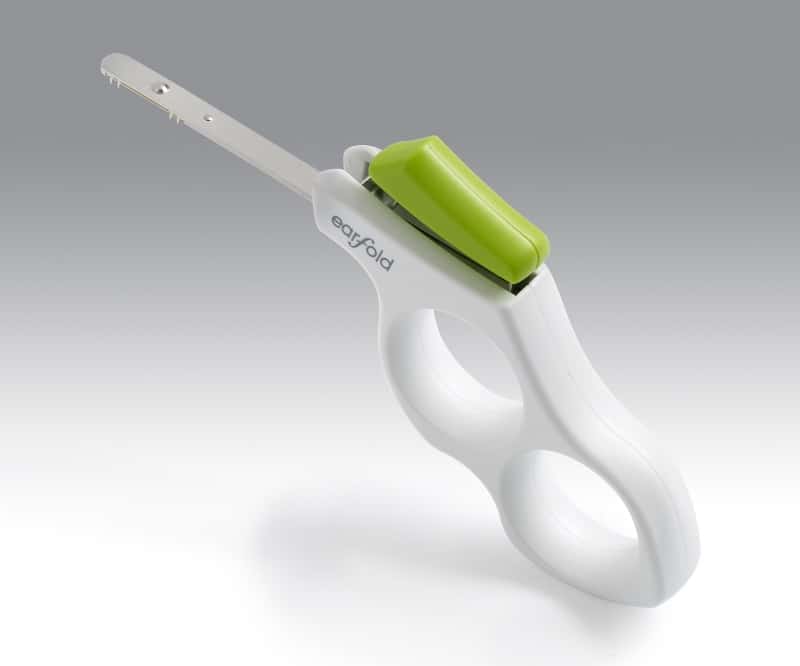
And these spin-outs can thrive – one of HEE’s most successful spin-out companies is EarFold, a pioneering implant technology that provides an alternative to conventional otoplasty surgery in the correction of prominent ears. A minimally invasive technique, the procedure takes 20 minutes under local anaesthetic as an outpatient, compared with the traditional two hours in surgery, and overall patient outcomes are improved. It’s an example of a simple innovation that ticks all the boxes in terms of improving patient care, and is cheaper and safer.

The technology was spun out of West Hertfordshire NHS Foundation Trust in 2010, raising around £1.1m in external investment. HEE invested over £100k to prove the concept, secure patents internationally, undertake detailed market research and define a product development plan. EarFold received a CE mark in April 2015, prior to its parent company Northwood Medical Innovation being acquired by global pharma Allergan in October 2015.

Another example of pioneering innovation is Ablatus Therapeutics, which is commercializing a novel tissue ablation technology to treat the most challenging, and often inoperable, solid cancer tumours. With support from HEE, the company was spun-out of Norfolk & Norwich University Hospitals NHS Foundation Trust, where the technology originated, and has received over £2m investment to date.

Tissue ablation is a surgical procedure used to destroy tissue, such as a tumour, in situ. A needle-like probe is placed inside the tumour; radiofrequency waves passing through the probe increase the temperature within the tissue and result in tumour destruction. Current application of the procedure, however, is limited in terms of the size and location of tumours that can be treated. Ablatus is using a novel technology called bimodal electric tissue ablation (BETA) to address some of the existing problems and increase the size of the treatment zone compared with other technologies.

Nurturing start-ups

Funding initiatives like Medtech Accelerator and Medovate encourage more public-private investment into the healthcare innovation landscape, supporting development of new technologies at greater pace and scale. The question remains: how do you achieve uptake of these ideas into a fragmented service, constrained by resources, where innovation is often stifled at source?

The NHS spends over £1bn on research and development, through the National Institute for Health Research (NIHR), but only a fraction of that on the adoption and diffusion of good ideas. To support the development of the skills and capability required for change, clinicians can now get paid time away from clinical duties, in addition to being given access to mentors and other networking opportunities, through the National Clinical Entrepreneurs programme.

Expanding on this programme and others like it, and ensuring greater co-ordination and accountability across the various initiatives, will support medical staff to work with technology and business experts to deliver on innovation agendas.

Another important player in the landscape, providing further evidence of how start-ups can be nurtured, is NHS England’s SBRI Healthcare programme. Led by the 15 Academic Health Science Networks (AHSNs) across England, SBRI Healthcare works with local clinical networks to identify needs and then funds technology companies to develop solutions.

In the last five years, the programme has dispersed funding of £73m to innovative technology companies to develop solutions for unmet needs. Solutions now on the market include MyCOPD, a digital tool to help patients with chronic obstructive pulmonary disease better self-manage their condition through “My mHealth” app, and the Patient Status Engine, a continuous wireless patient monitoring platform from digital healthcare business Isansys.

A recent independent review of the benefits from the programme indicated that projects had secured savings to date to the healthcare system of between £24.6 and £30.1m. This is despite the early assessment of returns – new medical technologies typically take between three and eight years just to reach market. The small and medium sized companies (SMEs) funded through the programme work closely with the AHSNs to really understand both the clinical needs and business case required to secure successful adoption of solutions when they come to market.

These creative partnerships with SMEs, often identified as the engines of UK economy growth, are just some examples of the new ways that health services can work with industry to meet its innovation aims. Such tactics must be encouraged if our health services are to achieve the modernity and cutting-edge technology they merit.

Copyright © 2026 by IOP Publishing Ltd and individual contributors