

Crystallography characterizes viruses in intact cells

Determining the structure of a virus without having to isolate it from cells first is the dream of many scientists. Helen Duyvesteyn and her colleagues from the University of Oxford, Diamond Light Source and the University of Helsinki are working to make this dream come true.

In their recent study (Scientific Reports 10.1038/s41598-018-21693-3), the researchers described how viruses grew and formed crystalline arrays inside cells. Thanks to the very bright signal of an X-ray free-electron laser (XFEL), they were able to obtain structural information about the viruses directly in the intact cell. Without the need to isolate viruses from the cells that they were grown in, they could avoid potential damage of the virus.

In living cells, viruses form crystals so small that only a microfocus beamline at a synchrotron or an XFEL laser can be used to study them. Of these two, the XFEL is over a billion times brighter, making it the more potent light source.

Analysing virus crystals within cells does, however, also decrease the signal-to-noise ratio, due to the contribution of other cell components. Moreover, the team recorded data using a jet stream of cells flying through the XFEL beam, with images taken at fixed time point – no matter whether there was a cell with viral crystals in the beam or not. This resulted in the recording of thousands of images, from which the ones containing relevant information had to be extracted.

Separating the wheat from the chaff
The researchers realised that images containing the valuable diffraction patterns were all less than 0.3 MB in size. This is because jpeg files compress in size depending upon the information content of the image. Based on this finding, they were able to discard 72% of the images recorded. To ensure that no information was lost, the researchers manually checked a large number of the discarded images and, indeed, found no diffraction patterns on any of them. Of the remaining smaller images, 7.2% showed diffraction patterns. This represented 680 images – and the researchers then recorded every single spot on each one by hand.

The resulting data indicated that the particles in the crystals were so-called procapsids, empty virus shells that contain no DNA. Four virus particles were found per 500 Å. While the obtained data were not of high resolution, the experiments showed that in cellulo crystallization of viruses holds promise for studying viruses without having to isolate them. The authors also hope that their proof-of-concept experiments will enable the investigation of viruses that can only be studied inside living cells.

Many parameters to optimize
Duyvesteyn and her colleagues identified a number of factors that could be improved in the future to obtain better data. A 100-fold improvement of the signal-to-noise ratio can be achieved by optimizing the size of the jet of fluid delivering the cells to the beam of light, and a 25-fold improvement by optimizing the size of the light beam. Alternatively, a method called acoustic droplet ejection technology could be used instead of a fluid jet to deliver the cells into the laser beam.
MEG in motion: a wearable brain scanner

Magnetoencephalography (MEG) enables allows direct imaging of brain activity by measuring magnetic fields generated at the scalp by neural currents. MEG is currently performed using an array of cryogenically-cooled superconducting quantum interference devices (SQUIDs) placed in a one-size-fits-all helmet. Such systems, however, are cumbersome and highly sensitive to head motion – even a 5 mm movement can make the images unusable. As such, they rely on compliant adults who can remain still inside the scanner.

Now, a research team from the University of Nottingham and University College London has developed a wearable MEG system that can record brain activity at millisecond resolution while a subject is moving. The prototype headset opens up new possibilities for scanning any patient group, including infants or patients with movement disorders, and subjects who are free to move and interact with the real world (Nature doi: 10.1038/nature26147).

The system is based on an array of optically pumped magnetometers (OPMs) – magnetic field sensors that can record biomagnetic signals without needing cryogens. Each OPM sensor contains a glass cell containing 87Rb vapour, heated to about 150 °C. A 795-nm laser beam is used to spin-polarize the atoms, and the intensity of light transmitted through the cell is detected using a photodiode.

In zero magnetic field, the spin magnetic moments align with the beam, and transmission of laser light is maximized. However, the presence of a magnetic field perpendicular to the beam causes a measurable drop in light transmission. The sensors have a noise level comparable to that of a SQUID and a dynamic range of ±1.5 nT.

The researchers created a prototype system comprising an array of sensors mounted in a 3D-printed helmet designed using an anatomical MRI scan of the subject’s head. They note that, although the glass cells are heated, the sensors’ external surfaces remain close to body temperature and can thus be placed directly onto the scalp. The lightweight helmet contains 13 OPM sensors mounted on the scalp over the right sensorimotor cortex, and four reference sensors placed close to the head to measure background interference.

Although the wearable MEG system is housed inside a magnetically shielded room, it is still essential to cancel out the remnant Earth’s field. To do this, the team constructed a set of bi-planar electromagnetic coils that generate fields equal and opposite to the remnant Earth’s field. The coils – designed on two 1.6 m2 planes, placed either side of the subject – achieved a 15-fold reduction in the remnant field.

The researchers recorded OPM measurements with and without field nulling and saw that, without field nulling, the OPM sensors saturated during head movement. With field nulling, however, the OPMs could capture MEG data even while the head was moving.

High performance
To test the prototype OPM-MEG system, the researchers measured electrophysiological activity in a subject’s right sensorimotor cortex during visually cued finger motion. This task elicits a reduction in endogenous beta band oscillations during movement and a rebound when the movement stops. Such “beta modulation” is used as a marker of brain plasticity, psychosis and white matter degradation.

The experiment comprised 50 trials, of 1 s of finger abduction and 3 s of rest. Each subject performed the experiment 12 times: six during which they kept as still as possible, and six during which they made natural head movements, such as nodding, stretching, drinking tea and even playing ping pong.

OPM-MEG performed consistently across experiments, with the characteristic beta decrease and rebound clearly delineated and localized to the sensorimotor cortex. Despite head movement of more than ±10 cm, the team saw no significant difference in signal-to-interference ratio between the moving and static runs. Comparison with static experiments recorded using a cryogenic MEG system showed that the spatial resolution of the OPM system was better than that of the cryogenic system.

“This new technology raises exciting new opportunities for a new generation of functional brain imaging,” said Matthew Brookes, who leads the MEG work in Nottingham. “Being able to scan individuals whilst they move around offers new possibilities, for example to measure brain function during real world tasks, or genuine social interactions. This has significant potential for impact on our understanding of not only healthy brain function but also on a range of neurological, neurodegenerative and mental health conditions.”

Edinburgh Biosciences on a mission to restore sight

Edinburgh Biosciences, based in Livingston, Scotland, is on a mission to revolutionize the diagnosis and treatment of cataracts. Millions of people have cataract surgery every year and the benefits of developing a non-invasive, light-based procedure are compelling both for patients and healthcare providers.

As well as providing a quantitative diagnosis of the severity of visible cataracts, photonic tools being commercialized by the talented team of physicists, engineers and biochemists at the firm could warn of the condition in its early stages. The small-footprint spectrometers, designed in-house, feature compact light-emitting diodes (LEDs) and pave the way for gentle photo-bleaching of cataractous material as an alternative to surgery.

Edinburgh Biosciences believe that it is the first company to show that blue LEDs have the potential to replace more expensive, bulky and powerful lasers for rejuvenating cataractous eyes. The company has filed a patent application to register its claim (PCT/GB2016/053780).

We’re preparing to begin preclinical testing on complete living eyes, which will be a major step forwards in the programme.

Alan Kerr, chief scientist at Edinburgh Instruments

Lab tests on non-living lenses revealed that characteristic spectral transmission can be recovered using 430 nm fluorescence emission excited by a UV LED.  Measurements also showed that light scattering is reduced in the treated specimens, which experts attribute to the reduction in the misfolded protein aggregates responsible for a cataract’s milky appearance.

It has been estimated that cost of conventional cataract operations worldwide could amount to more than £6 billion each year. Easy-to-operate LED-based units have the potential to deliver considerable savings by bringing the treatment to high-street opticians, minimizing the need for hospital visits and reducing the burden on the healthcare system. Because the instruments are portable and easily packed into a suitcase, they could play a huge role in providing eye care to the world’s population, whatever their location.

Technology development

Edinburgh Biosciences was formed as part of Edinburgh Instruments – a leader in spectroscopic instrumentation and gas detection solutions – to pursue biological applications of fluorescence spectroscopy. In 2011, the group’s R&D division was instrumental in the development of a novel interference filter together with partner company Delta Optical Thin Film of Denmark. The resulting wedge-profiled combination of optical coatings, which measures just a few centimetres in length, offers an elegant way of selecting precise colours (or wavelengths) of light from a beam passing through the filter.

An ultracompact solution, the filter’s spectral properties vary continuously along its length and allow instrument makers to miniaturize their designs. To give an example, when used with an LED light source, a linear variable filter can reduce the volume of a fluorescence spectrometer by more than 90%. The component’s development represents a key element in the Edinburgh Biosciences backstory, but it’s not the only one.

A major trigger for focusing on cataract diagnosis and treatment was a meeting between Professor Baljean Dhillon – Scotland’s only Professor of Clinical Ophthalmology and a consultant surgeon at Princess Alexandra Eye Pavilion in Edinburgh – and Desmond Smith, the founder of both Edinburgh Biosciences and Edinburgh Instruments. Smith, who was being treated for cataracts, was asked how he could use his photonics knowledge to advance eyecare. The discussion drove research into a quantitative tool that could help surgeons to determine more precisely the severity of a patient’s cataracts.

International network

Motivated by the prospects of photo-bleaching as a non-invasive method for treating cataracts, Edinburgh Biosciences initiated and led a EURO 2.6 million European Union project dubbed CATACURE to explore the technology in more detail. The programme ran from the beginning of 2014 to the end of 2016 and involved six partners across four European countries. Joining Smith and his team on CATACURE were experts from Glostrup Eye Hospital in Copenhagen, St Eriks Eye Hospital in Stockholm, Delta Optical Thin Film, HiTech Prontor of Germany and Heriot-Watt University, which is near Edinburgh Biosciences’ current facility.

“Building a strong network of partners is extremely important and we’re very excited by the results we’ve seen so far,” comments Smith. The company’s founder is a strong believer in the technology’s prospects and is backing the firm with his own money, thanks to the proceeds from the sale of Edinburgh Instruments to TECHCOMP EUROPE. Wai Shing Chen, a director of TECHCOMP, is also an early investor in Edinburgh Biosciences.

Buoyed by the success of the demonstrator unit, Edinburgh Biosciences is working towards its first human trials towards the end of 2019. It’s a busy time for the team. “Currently, we’re preparing to begin preclinical testing on complete living eyes, which will be a major step forwards in the programme,” says Alan Kerr, chief scientist at the company.

Market push

In 2018 the Scottish firm is looking to step up its push to market, which includes opportunities for new partners and investors. The company’s ultimate goal is to supply a combined diagnostic and non-invasive treatment tool for cataracts based on the successful CATACURE demonstrator. Core elements of the device also lend themselves to products in their own right.

A computer-controlled laser attenuator based on the novel linear optical filter is available to purchase now, and the product roadmap includes a wavelength selector followed by a miniature spectrometer. A fluorescence scanner for screening surgical instruments – a successful collaboration with the University of Edinburgh and one of the company’s first R&D products – also represents another revenue opportunity for this ambitious and talented firm.

Visit the Edinburgh Biosciences website for more details, and to get in touch with the team.

Amyloid fibrils undergo liquid-crystalline phase transitions

The class of liquid-crystalline phases known as cholesteric phases can form in amyloid fibrils in the same way as other filamentous biological colloidal systems, such as viruses, cellulose and oligo-DNA, according to new work by researchers at ETH Zurich in Switzerland. Amyloid fibrils are chiral protein-based systems and are very important in biology and medicine, but they are also emerging as promising building blocks for bionanotechnology applications. The new finding could help us better understand the role that these fibrils play in living organisms. The fibrils themselves could help inspire new materials that mimic biological structures and be used to make cholesteric liquid-crystal displays and advanced photonic devices.

“We also discovered that these fibrils undergo a liquid-crystalline transition from the untwisted, regular nematic to cholesteric phases, depending on the volume of the liquid-crystalline droplet,” says team leader Raffaele Mezzenga. “The chirality of the fibrils also inverses from left to right handedness as they go to the cholesteric phase. This behaviour is quite different from that of all other classes of biological filamentous chiral colloids in which the chirality evolves in the opposite way, that is, from right-to-left, or not inverted at all (right-to-right, for example).”

Chirality or handedness is ubiquitous in nature and plays a critical role in biology, medicine, physics and materials science. It refers to a property of structures that exist in two versions – “enantiomers” – that are mirror images of each other but cannot be superimposed. Natural chirality is highly selective and shows distinct preferences. “For example, only D-sugars are included in the formation of DNA, and only L-amino acids in the formation of proteins,” says Mezzenga. “This molecular chirality transfers in a way to control both structure and biological function.”

Experiments on such systems may lead to a better understanding of the mechanisms behind chirality transfer and therefore directly impact on the design of new materials that mimic biological structures, he adds.

Cholesteric phases in amyloids

Amyloid fibrils form into twisted ribbon-like structures through the self-assembly of beta-sheet aggregates. Pathological amyloids are often found in patients with neurodegenerative diseases such as Parkinson’s or Alzheimer’s while functional amyloids are crucial for physical and biological function in living organisms. Researchers are now discovering that they may be used as versatile platforms for making new functional biomaterials too.

Until now, no one had ever seen any chiral colloidal liquid-crystalline phases, also known as the cholesteric phase, in these fibrils. “This was rather puzzling,” says Mezzenga, “because the fibrils have a well-defined chirality at the single fibril level – as do other filamentous biological systems such as DNA, collagen or nanocellulose. Here such chiral nematic phases are regularly observed.

“We spent a lot of time hunting for these cholesteric phases in amyloids, trying out a number of approaches,” he explains; “What finally worked in the end was to break down the amyloids into smaller pieces and then search for the cholesteric droplets at compositions that are predicted by thermodynamics calculations.

Extremely rich phase diagram

“Apart from the unconventional chiral switch pathways (left to right handedness as opposed to the other way around), these systems boast an extremely rich phase diagram in which we can identify at least three types of liquid-crystalline droplets. The cholesteric phase is only one of these three classes. Such rich phase behaviour is unprecedented within a single system.”

The researchers used energy functional theory to try and help explain their results. “We expanded theoretical treatments developed for non-chiral nematic droplets, to the case where the colloidal rods are chiral and thus can undergo collective twisting behaviour,” Mezzenga tells nanotechweb.org. “The extended theory we developed allows us to explain many of our observed experimental findings.”

As well as furthering our fundamental understanding of chiral transfer and helping to develop new materials that mimic biological structures, the new work could have practical applications. “Cholesteric droplets selectively interact and reflect light that is circularly polarized as opposed to normal polarizers that only interact with linearly polarized light,” explains Mezzenga. “This very appealing characteristic might be exploited in cholesteric liquid-crystal displays (ChLCDs) that could be operated with virtually no power. Another immediate possibility is to make photonic devices in which combinations of colours are produced by the combined effect of photonic bandgap and cholesteric liquid-crystal reflection.”

Surface anchoring effects?

This is a very interesting article, comments Rik Wensink of the Laboratoire de Physique des Solides at CNRS and Université Paris-Sud, who was not involved in this work. “The observations hint at a subtle role played by surface anchoring effects in stabilizing cholesteric order in these systems, which is not yet fully understood.”

So, where next? “There are many areas that we are currently exploring,” says Mezzenga. “For example, we are still trying to understand other features of these amyloid cholesterics that are still not completely clear and trying to determine how different parameters affect their overall liquid-crystalline order.”

The research is detailed in Nature Nanotechnology doi:10.1038/s41565-018-0071-9

Importing meat may keep rivers clean

Mmmm – crispy bacon and pancakes for breakfast; but first the dilemma. British bacon or Dutch? Which has the least environmental impact? When it comes to rivers, the Dutch bacon may well be the better option. A new study has shown that some rivers are far more capable of mopping up livestock-related pollution than others. For countries, like the UK, with rivers that are already overloaded, imported meat helps to keep rivers clean at home, but often results in extra river pollution elsewhere.

Intensive livestock farming is a major source of organic pollution. Discharge of farm effluents, rich in organic pollutants, reduces biodiversity in rivers and disrupts aquatic ecosystems by depleting oxygen levels. Over the last 50 years, meat production has increased rapidly, and the upward trend is only likely to continue due to population growth, urbanization and increased income. So what kind of future do the world’s rivers face, what impact is globalization having, and which rivers are already at breaking point?

To answer these questions, Yingrong Wen, from Delft University of Technology in The Netherlands, and her colleagues used global livestock trade figures to calculate the biological oxygen demand associated with pig, chicken and cattle meat for each country. Livestock farm maps identified which river catchments pollution would run-off into, and a hydrological model estimated the amount of organic pollution that each river would receive, taking into account local weather conditions, river flow rates and the level of water treatment in each country.

Immediately the team saw that some countries, including Russia, Japan, Saudi Arabia, Mexico, Hong Kong, Italy and the UK, are heavily dependent on imported meat products, and would suffer a significant increase in river pollution if forced to produce meat locally. Meanwhile, major exporting countries like the US, Brazil, The Netherlands, Australia, Belgium and France must process more organic pollution than their fair share, due to their large meat export markets.

Surprisingly, more livestock farming didn’t always mean dirtier rivers. “Increases in organic pollutant loading do not always translate into more pollution,” said Wen, whose findings are published in Environmental Research Letters (ERL). “We found that rivers in eastern Australia, New Zealand and the Philippines had high enough cleaning capacities – dilution and natural degradation – to assimilate the increased loading.”

But some countries, like the UK, are already at capacity when it comes to river pollution. The results show that despite advanced wastewater treatment techniques, UK rivers would be overwhelmed if livestock farming was to increase. Instead the UK benefits by importing meat, offloading the environmental degradation to countries such as The Netherlands.

Meanwhile, nations that export a large quantity of meat, like The Netherlands, manage their pollution by concentrating livestock farming along particular river segments. This makes it easier to capture the pollution before it reaches the river. But for some countries this form of intensive farming isn’t an option. “Although Russia possesses extensive natural resources, the climate means that livestock farming is limited to the west,” said Wen. Farms must be widely distributed here as the quality of land is poor and can’t support large numbers of animals.

Studies like this show how important it is to quantify the impact of livestock farming on a river by river basis. “It is the actual pollution level in the river that matters, rather than how much pollution enters the river,” said Wen. “The same pollutant load will result in different pollutant levels depending on local conditions – river discharge and natural degradation rates, for example – which may vary significantly within a country.”


Europe picks exoplanet mission for launch

The European Space Agency (ESA) has announced it will launch the first probe dedicated to studying the chemistry of exoplanet atmospheres. Costing €450m, the Atmospheric Remote‐sensing Infrared Exoplanet Large‐survey (ARIEL) mission will launch in 2028 and will observe 1000 exoplanets over a four-year period.

ARIEL beat off two other missions vying for ESA’s latest “medium-class” launch slot. One was the Turbulence Heating Observer, designed to study the interaction of the solar wind with Earth’s magnetic field. The other was the X-ray Imaging Polarimetry Explorer to investigate X-ray emissions from high-energy sources such as supernovas, galaxy jets, black holes and neutron stars.

ARIEL will be launched from French Guiana by an Ariane 6-2 rocket and will be placed at Lagrange Point 2 – a gravitational balance point some 1.5 million kilometres beyond the Earth’s orbit around the Sun. The location will also be home to the James Webb Space Telescope, which is currently set to launch in 2019.

Ariel is a logical next step in exoplanet science

Günther Hasinger

From there ARIEL will study exoplanets that range in size from Jupiter to Earth focussing on hot planets that are in orbits close to their stars. Such intense temperatures keep molecules circulating in the atmosphere and stop them forming cloud layers where they are harder to detect remotely. ARIEL’s 1.1 x 0.7 m primary mirror will collect visible and infrared light while its spectrometer will determine the various gases in a planet’s atmosphere. A photometer will capture information about the presence of clouds and help to point to the target star with high precision.

“Although we’ve now discovered around 3800 planets orbiting other stars, the nature of these exoplanets remains largely mysterious,” says astronomer Giovanna Tinetti from University College London, who is ARIEL’s principal investigator. “ARIEL will study a statistically large sample of exoplanets to give us a truly representative picture of what these planets are like. This will enable us to answer questions about how the chemistry of a planet links to the environment in which it forms, and how its birth and evolution are affected by its parent star.”

Understanding Earth’s place in the universe

ARIEL has been developed by a consortium of over 60 institutes from 15 countries belonging to ESA. “Ariel is a logical next step in exoplanet science, allowing us to progress on key science questions regarding their formation and evolution, while also helping us to understand Earth’s place in the universe,” says Günther Hasinger, ESA’s science director.

ARIEL will now join a number of dedicated exoplanet missions that will launch in the coming decade. Next month, NASA is expected to launch its Transiting Exoplanet Survey Satellite, which will survey the brightest stars near the Earth for exoplanets over a two-year period. ESA, meanwhile, will launch a small mission to study exoplanets – Characterising Exoplanet Satellite –  later this year as well as an exoplanet observatory, dubbed Plato, in 2026.

European XFEL welcomes UK as member state

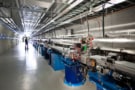
, which is an X-ray free electron laser located in Hamburg, Germany. Although British scientists have already been involved in constructing and operating the multidisciplinary research facility, the UK will now have a greater say in its future.

The UK will contribute €26m towards the cost of building of the facility, which was completed last year. This is about 2% of the total construction cost of €1.22bn (all figures in 2005 equivalent prices). The UK is the twelfth country to join the European XFEL and will also pay for 2% of the future operating costs of the facility.

The European XFEL is a 3.4 km-long underground facility that produces X-rays by accelerating pulses of electrons in a 2.1 km superconducting linear accelerator to 17.5 GeV. The pulses are sent through undulators, where the electrons are accelerated back and forth causing the emission of intense laser-like pulses of coherent X-rays.

Chemical movies

The X-rays are then sent to experimental stations, where they can be used for a wide range of studies in physics, biology, chemistry and materials science.  The facility generates 30,000 X-ray pulses per second, with each pulse lasting less than 100 fs. This ultrafast capability allows researchers to create “movies” of processes such as chemical bonding and vibrational energy flow across materials.

The UK has been involved with the European XFEL since 2008 through technology collaborations and user consortia. The X-ray camera used in the facility’s Femtosecond X-ray Experiments (FXE) experimental station was designed and built by the UK’s Science and Technology Facilities Council (STFC).

The UK’s Diamond Light Source in Oxfordshire hosts an “XFEL hub” where UK users of the European XFEL are given support in terms of training, sample preparation and data processing. There are also plans to create a dedicated fibre link between Diamond and European XFEL so that users can analyse data in the UK.

Giant planets

The Central Laser Facility of the Science and Technology Facilities Council (STFC) in Oxfordshire is currently building a nanosecond high-energy laser for the High Energy Density (HED) experimental station at European XFEL. Dubbed DiPOLE, the laser will be used to compress matter to extreme pressure to recreate conditions found within giant planets such as Jupiter. X-rays from XFEL will then be used to study this compressed matter.

“The UK science community has been very active in the project since the very beginning, and their contribution of ideas and know-how has been always highly appreciated,” said Martin Meedom Nielsen who is chair of the European XFEL. Speaking at a ceremony earlier this week at the British Embassy in Berlin to welcome the UK, he added “Together, we will maintain and develop the European XFEL as a world leading facility for X-ray science”.

Also at the ceremony was STFC chief executive Brian Bowsher, who said “As the UK becomes a full member of XFEL it opens up areas of research for British scientists at the atomic, molecular and nanoscale level that are currently inaccessible”.

Ethnic diversity boosts scientific impact

The impact of scientific work is boosted when it features co-authors who have a diverse range of ethnicities. That is according to an analysis of nine million scientific publications by six million authors carried out by researchers based at Khalifa University in Abu Dhabi, United Arab Emirates. The study looked at five types of diversity — ethnicity, gender, discipline, affiliation and academic age – finding that ethnic diversity is the strongest predictor of scientific impact.

The ethnicity of authors’ in the study was determined using a machine-learning technique that analysed author names. The researchers – Bedoor AlShebli, Talal Rahwan and Wei Lee Woon — looked at two types of ethnic diversity. One type, dubbed “group level”, is the variety among the author list of a paper. The other — “individual level” — is the variety in a researcher’s own set of collaborators.

The study found that group level has a greater effect on scientific impact than individual level. “This matters as it implies that an author’s open-mindedness and inclination to collaborate across ethnic lines is not as important as the mere presence of co-authors of different ethnicities on a paper,” the study says.

AlShebli, Rahwan and Woon say in their study that they were surprised by the findings because other forms of diversity, such as affiliation, are thought to be more related to technical competence. But it turns out that by bringing together people from different cultures and social perspectives could have more of a payoff than just an ethical one.

Missing the point

One limitation of the new study, however, is the method used to determine ethnicity. Although the researchers used a machine-learning technique with a large database of names to classify authors’ ethnicity, this could still result in mistakes creeping in. Another issue is that the study is restricted to papers whose authors are based in the US, UK, Canada and Australia, missing the literature published elsewhere in English and other languages.

[The] underlying message is an inclusive and uplifting one

“There are a number of problems in the study and essential information is missing,” says Ludo Waltman, deputy director of the Centre for Science and Technology Studies at Leiden University in the Netherlands. For instance, he points out that the authors focus on the study’s statistical significance but do not consider the size of the effects. Although there are many benefits of using a large sample of papers, one downside, he notes, is that it is likely to almost always yield statistically significant results.

The authors declined to comment publicly about the study but note that the “underlying message is an inclusive and uplifting one”. “In an era of increasing polarization and identity politics, our findings may contribute positively to the societal conversation and reinforces the conviction that good things happen when people of different backgrounds, cultures, and yes, ethnicities, come together to work towards shared goals and the common good,” they write.

The work backs up another analysis published last year that found that researchers who migrate to other countries and work there are on average cited more than those who do not.

Improving the detection of foetal distress

The health of a foetus is monitored during labour to check for signs of foetal distress. Currently, this is performed using cardiotocography (CTG), a technique that monitors the foetal heart rate (FHR) and uterine activity. CTG is interpreted visually, however, and suffers from high inter- and intra-observer variability and low specificity.

Foetal heart rate variability (HRV) can also provide information on foetal distress, but it is strongly influenced by uterine contractions, particularly during the second stage of labour. A Dutch research team is now investigating whether measuring HRV separately during contractions and rest periods can improve detection of foetal distress (Physiol. Meas. 39 025008).

“In our study, we focused on foetal distress related to oxygen deficiency,” explained Guy Warmerdam from Eindhoven University of Technology. “During labour, uterine contractions can temporarily block of oxygen supply to the foetus. Normally, the foetus can handle such stress well. However, if oxygen deficiency is severe and prolonged this can lead to oxygen deficiency in the central organs of the foetus, potentially damaging them.”

Case comparisons
The researchers studied FHR signals from 20 cases with adverse foetal outcome and 80 healthy cases. Foetal outcome was based on the acid-base balance in the foetal blood after birth (which is related to the oxygen concentration in the foetal blood), with an adverse outcome defined as a pH below 7.05 and healthy as above 7.20. As the effects of oxygen deficiency increase as labour progresses, they only considered FHR segments recorded up to a maximum of 45 minutes before birth.

For each 10 minute FHR segment, they calculated a series of HRV features. These included standard deviation (SD) and root mean square of successive differences (RMSSD), sample entropy (SampEn), a scaling exponent (α) and deceleration capacity (DC) – the average response to a deceleration in heart rate. Using spectral analysis of the FHR, they also calculated power in the low-frequency (LF) and high-frequency (HF) bands, total power (TP) and normalized frequency powers LFn and HFn.

In addition to examining the entire FHR segment, the researchers also calculated HRV features separately during contractions and rest periods and determined the ratios between these. As the length of a contraction or rest period was often less than one minute, this analysis was limited to four features: SD, RMSSD, HF and SampEn. They observed that these features were all higher during contractions than during rest periods.

To select the best combination of HRV features to detect foetal distress, the researchers employed a genetic algorithm (GA). For this, they used the 10 minute FHR segment closest to birth for each foetus, and examined three data sets: S1, HRV features calculated over the entire FHR; S2, only contraction-dependent features; and S3, the combination of features from S1 and S2. Due to the relatively small dataset, they repeated the GA process 50 times using different data splits, generating 50 subsets of HRV features for S1, S2 and S3.

The HRV features most frequently selected by the GA were TP, LFn, HFn and DC for S1; SDratio and RMSSDuc for S2; and SDratio and HF for S3. The top most selected feature was TP for S1, and SDratio for S2 and S3. Both TP and SDratio are related to the presence of heart rate decelerations. SDratio also contains information about how the foetus recovers from contractions: a high value indicates that the foetus recovers quickly and stabilizes its cardiovascular system during rest periods, while a low ratio indicates that the foetus is unable to recover.

The researchers used support vector machines (SVMs) to determine the classification performance of these HRV feature sets. They trained the classifier using the geometric mean (g), which represents a balance between classification accuracy of the healthy majority class (specificity) and the minority class (sensitivity). The average cross-validation performance, g, for classification of FHR segments closest to birth improved from 70% for S1 (which did not include contraction-dependent data), to 76% for S2 and 79% for S3.

Early intervention
The earlier that foetal distress can be predicted, the more useful the information for clinical intervention. Thus, the researchers examined classification performance over time. They trained a classifier for each feature subset using the FHR segments closest to birth, then used the trained classifiers to determine foetal distress for all segments from 45 minutes before until the time of birth.

For all three data sets, the classification performance, g, increased towards the time of birth. The sensitivity also increased nearer to the birth time, while the specificity decreased. At 15 minutes before birth, g was 60% for S1, 69% for S2 and 72% for S3.

“This work showed that separating contractions from rest periods improves HRV analysis for the detection of foetal distress during labour,” said Warmerdam. “The dataset we used contained a relative small number of foetuses with poor outcome; a larger dataset is required to gain more insight into which combination of features works best.”

“In this study, we focused on the second stage of labour, the stage of active pushing. It would be interesting to examine the performance during the first stage of labour,” he told medicalphysicsweb. “Finally, our study was limited to binary classification (good versus bad outcome). Before a classifier can be used in clinical practice, a future study should use a dataset containing all foetal outcomes.”

From nature, with love: a new model of microfluidic chip

An organ-on-a-chip is a microfluidic device with continuously perfused chambers in which cells are cultured to obtain functional units that mimic organ functions. The organ-on-a-chip stands out as a model for investigating the basic mechanisms of physiology and disease.

Since the design of the microfluidic system is key to better control of fluid flow through the organ, a team from Stanford University and Xi’an Jiaotong University have introduced a novel, leaf-templated, microwell-integrated, microfluidic chip. The chip combines a leaf venation layer (the lines on the leaf are called “leaf veins” and are responsible for water, nutrient and sugar transport, together with biomechanical support and protection) for fluent fluid flow, and a microwell-array layer for cells to reside (Biofabrication 10 025008). This leaf-templated design provides a novel tool for high-throughput cell experiments.

When envisioning a novel strategy for developing a microfluidic chip, the authors of this study were inspired by nature. More specifically, they imagined that leaf venation, which represents a hierarchical network involved in flow throughout the entire leaf, could be used as a vascular system for cell experiments. This report is the first to introduce a chip with a leaf as a template.

Device design
The leaf chip is made up of a PDMS (polydimethylsiloxane, the most widely used silicon-based organic polymer) layer with leaf-templated microfluidic channels fabricated through replication of a leaf venation skeleton, and another layer containing microwell arrays, fabricated through PDMS casting on a 3D printed resin mould. These layers are assembled to form the pathway that provides a flowing culture medium for the microwells in which cells are grown.

The microwells are connected to the leaf-templated microfluidic channels so that the cells can receive nutrition and oxygen. The structure of the device was analysed using specialized software, which allows the extraction of statistics concerning the dimension, position and connectivity of all veins in the network.

Testing the device
First, by using a solution of nanobeads, the authors tested the perfusion of medium flowing into the microwells, and confirmed that the culture medium is perfused throughout the entire leaf venation network. To verify the feasibility of the device, they inoculated cells in the microwell arrays and cultured them in a perfusion platform consisting of a syringe pump and a medium reservoir. The authors noticed that the microwells were uniformly seeded with cells and that after two days of perfusion, cells were viable and grew.

Cells in a microwell

The results of this study suggest that the leaf-templated venation microfluidic chip is capable of supporting cell growth, thus offering a novel method for the fabrication of microfluidic chips that meet the requirements of high-throughput experiments and have applications in pharmacological studies.

Copyright © 2026 by IOP Publishing Ltd and individual contributors