Diamond quantum sensor breaks new record

Thanks to a new measurement scheme that makes use of quantum sensors in diamond, the spectral resolution of nuclear magnetic resonance (NMR) spectroscopy has been increased by 100-fold in microscopic volumes. The breakthrough allows researchers to perform NMR chemical analysis at the scale of single biological cells for the first time.

“This work reports the first experimental demonstration of NMR spectroscopy with full chemical specificity at the scale of a single biological cell, which has been a major scientific goal for the last 50 years,” says Ronald Walsworth of Harvard University, who led this research effort. “We use a new measurement scheme employing quantum sensors in diamond to realize a 100X improvement in NMR spectral resolution under ambient conditions for a sample volume comparable to that of a single cell – about 10 trillionths of a litre.”

The quantum sensors used by Walsworth and colleagues are nitrogen vacancy (NV) colour centres in diamond. These defects occur when two neighbouring carbon atoms in diamond are replaced by a nitrogen atom and an empty lattice site.

NV centres act like tiny quantum magnets that are isolated from their surroundings and can be manipulated using laser pulses. They are ideal as biological probes because they are non-toxic, photostable and can easily be inserted into or placed adjacent to living cells and tissues. NV centres are capable of detecting the very weak magnetic fields from a single cell, molecule, or organism, as the intensity of the light they emit changes with the local magnetic field. They can thus be used as highly sensitive magnetic probes that can monitor local spin changes in a material over microscopic distances.

Broad NMR spectral lines

“Over the last few years, we and other research groups have been able to apply NV sensors to NMR of nanometre and micrometre volumes,” explains Walsworth. “But until now the measurement techniques produced broad NMR spectral lines (typically greater than 100 Hz), due to both the short spin state lifetime of the NV centre (around 3 ms) and the fluctuating statistical spin polarization of the sample. This spectral resolution is too coarse to resolve molecular structure fingerprints important in chemistry, structural biology and materials research.”

Micro-NMR spectral resolution reaches 1Hz

Walworth’s team says that it has now overcome these problems by using an ensemble of NV centres combined with thermal spin polarization of the sample and a narrowband synchronized readout measurement that can sense NMR signals for as long as 103 seconds. The new technique produces an NMR spectral resolution of about 1Hz in the sample volume of a typical cell (about 10 trillionths of a litre), which allows observation of the key spectral features needed for chemical analysis.

According to the researchers, with further improvements in sensitivity, it might even allow for NMR spectroscopy of small molecules and proteins at the single-cell level.

Potential applications

Dirk Englund of the Massachusetts Institute of Technology, who was not involved in this work says that the new study is an “amazing advance” in the field of quantum sensing. “It takes magnetic field sensing to a new extreme that now allows for resolution of chemical shift spectra at the micron-scale, which matches the lengths of interest in cells. Just a few years ago, this still seemed far off and progress has been tremendous.”

Potential applications include NMR studies of single-cell metabolomics and NMR fingerprinting of protein expression in tumour cells, for example, say Walsworth and colleagues. “It may even help in the development of new drugs through the study of very small, hard-to-manufacture samples.”

The research is detailed in Nature doi:10.1038/nature25781.

Recognizing the value and values of material science

“We need to consider the cultural, social and environmental impact of new materials,” Lord Haskell told the MRE 2018 plenary attendees, a theme that recurred in talks and discussions with attendees and exhibitors throughout the conference. While the £100bn annual turnover, £50bn exports and 450,000 jobs the materials industry contributes to the UK economy were celebrated as you might expect, there was also clear interest in the values of materials science – beyond its obvious contributions to environmental challenges, such as renewable energy sourcing and storage.

Samuel Jarvis from the recently established Materials Science Institute at Lancaster University – a virtual organization that links several departments involved in materials science at the university – gave as an example one of the alloys used in mobile phones. From sourcing the alloy to its disposal, it is an embarrassing story. It is mined in impoverished, often war-torn regions of Africa that see little of the affluence the alloy bestows, and extracting it from waste is a process so toxic that it ends up back in Africa where regulations are less stringent. Yet while the ensuing “urban mining” of precious metals from waste in developing countries may be hazardous, it can also be a significant contribution to local economies. It may be that the benefits of not using such alloys outweigh economic deficits in the short-term, but as Jarvis added, “we have to start thinking of all the positive and negative outcomes when we come up with an alternative material”. The Institute has a new doctoral training programme to foster an approach to materials research that combines social science, humanities and design with materials science.

As well as launching a framework for “Responsible Research & Innovation”, EPSRC is also allocating resources into tackling diversity, which is particularly low in engineering. Taking gender as a case in point, Richard Gunn, Head of Advanced Materials and formerly Head of Equality, Diversity and Inclusion at EPSRC, pointed out that at just 10%, the UK is at the bottom in Europe when it comes to female representation among engineering professionals. While a discouraging statistic, initiatives such as innovate UK’s Women in Innovation  among others are intended to improve matters.

That said, materials science is clearly making a lot of positive contributions to society, the environment and the economy. As well as the impressive economic statistics, presentations highlighted some of the achievements that materials research and SMEs were helping to deliver. Examples include Realcar, a university–industry collaboration for aluminium that is helping Jaguar towards its goal of using 75% recycled aluminium. In her plenary, chief executive of Innovate UK Ruth McKernon also highlighted the work of CCm Research, which turns industrial CO2 into plastics and fertilizer, and Polysolar, which specializes in organic polymer photovoltaic materials for glazing and has recently produced a heated energy-harvesting bus stop.

But another point Gunn raised is the difficulty the materials community has in distinguishing itself when compared with other sectors, such as quantum technology. Media coverage extolling quantum cryptography clearly celebrates achievements of quantum research, but the praise due to materials science is not so apparent when describing, for example, advances in batteries to enable increased uptake of electric vehicles. Materials science is crucial in a lot of less obvious sectors. As Phil Williams from the Knowledge Transfer Network pointed out in the robotics session, “robotics is so advanced that what will help an amputee to walk now is advances in materials science”.  At the Materials Research Exchange at least both the value and values of materials science were clearly evident.

  • This article was edited 8th November 2018.

Tributes to Stephen Hawking pour in after physicist’s death aged 76

Tributes have been pouring in for the eminent cosmologist Stephen Hawking, who died earlier today at the age of 76. As well as enjoying a successful research career, Hawking also gained a place in popular culture for his bestselling book A Brief History of Time and his television appearances.

The UK’s Astronomer Royal Martin Rees, who was a colleague of Hawking at the University of Cambridge, led the way, saying that Hawking’s name will live on in the annals of science. “Millions have had their cosmic horizons widened by his best-selling books; and even more, around the world, have been inspired by a unique example of achievement against all the odds – a manifestation of amazing will-power and determination.”

Fabiola Gianotti, director general of the CERN particle-physics lab, paid her respects too. “Each time Stephen Hawking visited CERN, we were impressed by his great enthusiasm, vitality and passion for knowledge,” she said. “He was a brilliant example on how to face disease with courage. He was a warrior.”

Paul Hardaker, president of the Institute of Physics, which publishes Physics World, called Hawking “a quite remarkable physicist and certainly a remarkable person [who] made several fundamental and lasting contributions to cosmology but is probably best known by the public for his passion and enthusiasm in sharing his knowledge of how the universe works.”

Books and beyond

Many physicists have commented on the huge impact of Hawking’s book A Brief History of Time, which has reportedly sold 10 million copies. “Hawking, to everybody’s surprise, proved that the public has an interest in esoteric problems like what happens if you fall into a black hole, what happened at the Big Bang, or whether god had any choice when he created the laws of nature,” said theoretical physicist and author Sabine Hossenfelder. She called A Brief History of Time “a daring book about abstract ideas in a fringe area of theoretical physics”.

Many physicists have spoken of how Hawking inspired them to pursue a career in research. They include the astrophysicist Katie Mack who tweeted: “Reading about his work made me realize my dream was to become a cosmologist, and I did.” Physicist and comedian Jessamyn Fairfield tweeted: “I remember sitting in the library at 17 reading A Brief History of Time, fascinating and wonderful ideas that helped inspire me to study physics and math.”

Having been diagnosed with motor neurone disease in 1964 and given just a few years to live, there were also tributes to Hawking as an inspiration to people with disabilities. On BBC Radio 5 Live one visually impaired listener described Hawking as “like Elvis to the disabled world”. The Motor Neurone Disease Association, meanwhile, tweeted: “Throughout his inspirational life Professor Hawking played a vital role in raising awareness of motor neurone disease around the world.”

Hawking also enjoyed a degree of celebrity unknown to his fellow physicists and made guest appearances on television including The Big Bang Theory and The Simpsons. He also appears in  The Hitchhiker’s Guide to the Galaxy: Hexagonal Phase, which is currently airing on BBC Radio 4. Actor and author David Walliams, who appeared in a television skit with Hawking tweeted “Thank you for being – amongst everything else – a great laugh.”

Photonic technologies inspire X-ray innovation

History has seen many notable innovations in the field of medical X-ray imaging. From Wilhelm Conrad Röntgen’s discovery of X-rays in 1895 and Godfrey Hounsfield’s development of CT in 1967, both of which led to the award of Nobel prizes, through to the introduction of dual-energy X-ray absorptiometry in 1971.

But 1971 is a long time ago; perhaps we are overdue for the next disruptive innovation? According to Peter Seitz, from Hamamatsu Photonics Europe, inspiration for new X-ray imaging modalities may come from techniques currently being developed for photonics applications. “I will show five exciting new technologies that could lead to disruptive new medical imaging modalities,” he told the audience at the recent MediSens conference in London.

TOF range imaging

The first inspiration, said Seitz, is optical time-of-flight (TOF) range imaging. This is the technology employed in driverless cars to sense distances to nearby objects, and can also be found in many smartphones for proximity sensing.

TOF range sensing uses the travel time of reflected light to measure distances, and requires nanosecond pulse generation and detection. For optical systems, this is enabled by the use of vertical-cavity surface-emitting lasers (VCSELs) and single-photon avalanche diode (SPAD) photodetectors. But can this be achieved using X-rays?

X-rays are conventionally created using a radioactive element or an X-ray tube. The former requires a shutter to create pulses and cannot provide nanosecond switching. X-ray tubes, meanwhile, can only be switched at 100 ms speeds. Seitz suggested a third option: cold-catheter electron emitters. These miniaturized X-ray tubes are based on carbon nanotubes and can switch at rates of less than 10 ps, creating ultrashort X-ray pulses. He noted that fast detectors with 100 ps resolution also exist.

“TOF X-ray imaging may be around the corner; we have the sources and they are not expensive,” said Seitz. “Perhaps TOF imaging is not only for cars, but also for clinical applications.”

Direct photon detection

Next, Seitz discussed use of perovskite semiconductors for direct detection of visible photons. Perovskites, materials with the same crystal structure as the perovskite mineral CaTiO3, have recently been used to create quantum dots (QDs). Such perovskite QDs can be used to create high-quantum-efficiency light emitters and detectors with tailorable wavelengths.

Direct detection of X-rays remains challenging, however. Silicon detectors are not suitable for X-ray detection, while the more optimal detector – cadmium telluride – is very expensive. So can we use perovskites for direct X-ray photosensing? It appears so, said Seitz.

He explained that it is possible to grow high-quality X-ray detectors based on lead-halide perovskite crystals. Detector crystals with dimensions of 2–10 mm exhibit almost identical absorption properties to cadmium telluride, but at a cost of approximately one Euro per crystal.

“So are we there already? Not quite,” Seitz explained. “The problem is that everything works but it is not stable, something migrates in the perovskite. We need to fix this… then there will be sleepless nights for the cadmium telluride guys! Watch this space.”

Phase contrast imaging

Detecting cancer using X-ray absorption imaging is hindered by the fact that the tumour has the same absorption properties as surrounding tissue. The two tissues do, however, have different refractive indices. Inspired by dark-field optical imaging using phase contrast techniques, Seitz’s third suggestion was X-ray phase contrast imaging.

In optical phase contrast techniques, a small difference in refractive index causes light to be slightly deflected. By imaging this refracted light, it’s possible to distinguish structures of similar transparency and visualize far more detail. This same approach can be applied for X-ray imaging.

Phase-contrast X-ray imaging exploits refraction and interference effects to create images with significantly higher contrast than in conventional X-ray radiography, and can reveal boundaries between materials with differing refractive indices. Using a standard X-ray source, phase-contrast X-ray imaging allows simultaneous detection of a conventional absorption radiograph, a differential phase image and a scattering image.

“This is here – not yet in production, but it has been demonstrated, it’s possible, and it may come soon,” Seitz told the audience.

Content-sensitive spectroscopy

Another recent development in smartphone technology is the incorporation of optical spectroscopy. Phones with built-in spectrometers could be used to sense the environment, to test air quality, for example. “Spectroscopy is next big thing in smartphones,” said Seitz. “Can I have this for X-rays?”

X-rays used in medical applications interact with tissue via either the photoelectric effect or the Compton effect. Does this mean that it’s only possible to create two different images? Not if you can detect individual X-ray photons, Seitz explained. Then it should be possible to measure the energy of each photon and deduce the elemental composition of a target from its absorption spectrum.

“It is possible to do X-ray spectroscopy, provided you have detectors and stable sources and can reliably say for each photon when it arrived at the detector,” said Seitz. He described an experiment employing element-sensitive X-ray radiography to determine the relative content of two materials in a composite sample.

Triboluminescence

The last inspiration on Seitz’s list was triboluminescence – light generated when chemical bonds are broken in a material subjected to friction, impact or breakage. For example, flashes of blue light are produced when crushing a sugar cube, or unrolling adhesive tape.

It has also been shown that, in a vacuum, X-ray flashes with energies of up to 100 keV can be produced simply by unrolling Scotch tape. What’s more, researchers have already demonstrated that such triboluminescence can be used to create X-ray images of a finger, using a dental detector.

“The result is reminiscent of the first image taken by Röntgen,” noted Seitz.

Deaths from storm surges have dropped

Storm surges following windstorms or cyclones are responsible for an average of 8000 deaths every year. New research shows that storm surges have become less deadly over time but will this trend continue as rates of coastal urbanization increase, tropical cyclones intensify and sea level rises?

In 1970 a devastating tropical cyclone struck present day Bangladesh and India’s West Bengal. The storm, and its resulting storm surge, cost more than 300,000 people their lives, and made the Bhola cyclone the deadliest tropical cyclone ever recorded. Today the population living in that region is greater, so how many casualties should we expect if a storm equivalent to Bhola were to strike tomorrow?

To investigate the change in risk, Laurens Bouwer from independent Dutch research institute Deltares and Bas Jonkman from Delft University of Technology, also in The Netherlands, analysed the impact of coastal storm surge events occurring between 1900 and 2015, based on a compilation of events and data on loss of life.

For the 121 events that occurred during this time, Bouwer and Jonkman showed that the occurrence of very substantial loss of life – more than 10,000 people – from a single event has decreased over time. And although population in coastal areas has increased rapidly in most regions (world population has increased six-fold since 1900), there was a striking drop in total number of fatalities over time, suggesting that populations have become better prepared and protected.

“In 1900 coastal protection was still absent in many places, and little or no monitoring, forecasting and early warning of surge events was in place,” said Bouwer. “In many developed countries, since the 1950s, monitoring and early warning has become common practice. And in recent decades cyclones are being monitored and tracked in all large ocean basins using observations (satellite, airplanes), and forecasted using models.”

What’s more, many investments have been made in coastal protection, Bouwer added. “We take these developments to be explanations of better protection of lives around the world.”

However, South East Asia bucked this trend and showed no decrease in mortality. This was the only region of the world to continue having high mortality storm surges after 1992, with events such as Cyclone Nargis in 2008, which killed more than 138,000 people in Myanmar.

“The high mortality in Myanmar can be explained by the absence of sufficient protection, forecasting and early warning systems in this country,” write Bouwer and Jonkman in Environmental Research Letters (ERL) .

By contrast similarly large storm surges in Bangladesh – from Cyclone Sidr in 2007 – and the Philippines – from 2013’s Cyclone Haiyan – were very serious, but better early warning and evacuation procedures meant that they did not kill as high a proportion of the exposed population. As many as 10,000 people lost their lives from Cyclone Sidr, but as Bangladesh’s Bhola cyclone in 1970 demonstrated, it could have been far, far worse.

Looking ahead Bouwer and Jonkman expect the mortality rate from storm surges to fall further as warning and evacuation strategies are improved in developing countries. However, this gain in lives saved could be offset by the impacts of climate change. “Flood hazard may increase, because of sea-level rise, leading to lowered protection levels from coastal defences and potentially higher inundation levels,” said Bouwer. “Also, if cyclones become more intense, they can produce higher waves and surge levels.”

Locations where warning and evacuation procedures continue to be poor, such as Myanmar, will continue to be highly vulnerable to storm surge events, but in addition low-lying countries with few flood defences, such as the Philippines, Bangladesh and small Pacific Ocean islands, are likely to become more vulnerable as sea-level rises and cyclones intensify.

“Further investments must be made to sufficiently protect lives and assets,” said Bouwer. “Also plans need to be made to keep up with projected sea-level rise, in order to guarantee protection in the future.”

A synthetic detergent opens the door for protein research

Using a new detergent called glycol-diosgenin (GDN), Marta Wojnowska and her co-workers have managed to investigate a protein complex that secretes proteins. The team, from the University of Oxford, overcame limitations that other researchers had previously faced by solubilizing the protein complex TatBC in the synthetic detergent GDN, rather than the naturally occurring digitonin. Using GDN enabled the use of biophysical analysis methods such as quantitative lipidomics mass spectrometry, isothermal titration calorimetry and surface plasmon resonance (Biochemistry 57 1663).

Foxglove was not good enough
Until recently, the only way to isolate TatBC was by using a detergent called digitonin, which is derived from the flower foxglove. Similar to soap, it disrupts the membrane and solubilizes TatBC. Unfortunately, digitonin also makes biophysical analysis impossible due to “clouding”. Clouding occurs due to detergent instability in solutions over time, which leads to changing background signals during measurements and clogging of instruments.

The new detergent GDN, first synthesized in 2012, was found to be suitable to isolate the TatBC complex. It is a synthetic detergent, but is similar in structure to digitonin. TatBC, isolated using GDN, can bind its substrates with the same specificity as observed in a living cell. The researchers therefore used it to study the thermodynamics and kinetics of interactions between TatBC and the proteins it transports.

TatBC is part of the twin-arginine translocation pathway (Tat) that allows cells to export folded protein. This process presents a challenge, as the cell’s energy is stored in an ion gradient across the cytoplasmic membrane in bacteria, and across the thylakoid membrane in chloroplasts. Leakage of ions during transport depletes the cell’s energy. The proteins TatB and TatC interact to form a complex in the membrane that recognizes the folded substrate protein – ready to be transported -based on its twin-arginine secretion signal. While the structures of TatB and TatC by themselves are known, the TatBC complex could not be studied in isolation in digitonin.

Questions can now be answered
The researchers hoped to answer several questions. How many TatBCs are needed to bind a protein substrate? How tightly and quickly does it bind substrates? Can TatBC work in isolation or is it dependent on other components present in the cell?

Marta Wojnowska

Wojnowska, from the research group of Ben Berks, showed that isolated TatBC can bind substrates specifically, but that it does so more slowly than in an intact cell. Two to three TatBCs were present for each substrate protein, either indicating that some TatBCs are inactive or that multiple TatBCs are needed per substrate.

The team also found that the lipid mixture that co-purifies with TatBC is not representative of the overall lipid composition of the membrane TatBC in purified from. As it is known that TatBC is sensitive to different lipid composition, it might be that it is found in areas of the membrane with specific lipid composition or even that it recruits its favourite lipids. However, it might also be that the detergent selectively extracts lipids, which are not ideal for TatBC. This could explain the decreased activity.

A missing piece?
Another explanation for the slow binding could be that a component is missing from the system that is present in whole cells. The researchers now want to use the isolated TatBC complex to investigate whether addition of other cell components, like proteins or lipids, restores quick binding for the isolated protein.

Graphene meets the standard for industry

Alongside graphene’s mounting industry appeal there has been increasing interest in setting a standard so that everyone in the conversation is on the same page. In 2017 the International Organization for Standardization released ISO/TS 80004-13:2017, which lists terms and definitions for graphene and related two-dimensional (2D) materials. We spoke to Intellectual Property Specialists at Potter Clarkson and the production company for Nanene+, Versarien, at the Materials Research Exchange 2018 to see how they felt it was helping.

“In the past the rule of thumb has been you know an elephant when you see one,” says Jason Teng, patent attorney for Potter Clarkson. Even so he adds that in the past patents for graphene products have tended to define graphene within the document. “IP needs to be free from ambiguities – the standard really helps here.”

Although graphene hit the scene as a single monolayer carbon lattice of carbon atoms, the richness of the research field soon saw developments on “bilayer” and “multilayer” graphene raising the question – among others – when does multilayer graphene become graphite? The standard defines single layer, bilayer and multilayer graphene so that in terms of patents there should be no doubt what material is involved.

But speaking to David Kerr from Versarien – a company that specializes in producing graphene in large quantities by exfoliation – the standard could go much further. “According to the standard, 10 layers can still be referred to as graphene – we think it should stop at nearer five.” That said he adds that the standard has helped “separate the wheat from the chaff” in the sector. “Now industry is getting really excited about using graphene in products it’s important.”

Before and after the standard

So where does that leave patents placed before the standard was introduced? Teng feels confident that they will be upheld in the context in which they were placed, as must be the case for many fields in materials science where knowledge and understanding are constantly evolving. “That may not stop people trying to use it as the basis of a claim but I don’t think they will be successful.”

The standard is timely for graphene as the first of a growing sea of 2D materials to attract industry attention. Ambiguities remain around others – how many layers of a heterostructure still constitutes a 2D material? How thin is a thin film? While further standards may yet be set, the case is clear now for graphene at least.

Full details on the standard definitions for graphene are available at ISO/TS 80004-13:2017

CdS nanostructure excels for hydrogen generation

Solar cells are a great alternative energy source – when the Sun is out. To reap the benefits of solar power at other times requires some means of energy storage, and a popular choice is splitting water into hydrogen and oxygen – “hydrogen storage”. Researchers at The Australian National University in Canberra have now fabricated an inverse opal structure uniformly coated in CdS as a photoanode for splitting water that outperforms all other reported CdS-based devices.

A compound as common as water is an appealing resource to exploit for alternative energy storage. But splitting water for hydrogen generation requires a semiconductor that can provide charge carriers with the right energy for both the reduction and oxidation reactions of hydrogen and oxygen, and here cadmium sulphide with its low photoconversion efficiency and high tendency to corrode is one of a very short list of candidates. While there are reports of successfully preventing corrosion using co-catalysts in heterostructure configurations with TiO2 and ZnO nanostructures, these heterostructures remain prone to poor control over thickness and uniformity in high aspect-ratio forms.

“Photoelectrochemical generation of hydrogen from water using a semiconductor material involves various important steps including electron-hole pair generation, charge separation, transfer and surface chemical reactions,” explains Siva Karuturi, the lead author on the report of these results. “These processes are highly sensitive to the semiconductor film properties such as uniformity of its distribution in nanostructured surfaces. Thus, achieving uniformity control plays a prominent role in improving the overall photoelectrochemical performance.”

Karuturi and his colleagues, led by Chennupati Jagadish, achieved this uniformity by combining atomic layer deposition (ALD) and solution ion transfer (SIT) to coat TiO2 inverse opals in CdS. “To our understanding, this is the first report of CdS from the SIT method, although various chemical and physical methods of synthesizing CdS have been reported previously including SILAR,” says Karuturi. “Most of the reported methods fail to achieve conformal CdS coating with uniform distribution in a high aspect ratio nanostructure. The SIT method solves this long-standing issue and it can be extended to many semiconductors.”

The resulting structures achieved a saturation photocurrent density of 9.1 mA cm−2 – the highest ever reported for CdS-based photoelectrodes – and paves the way for unassisted solar hydrogen generation.

The precise advantages of ALD with SIT

The researchers created an inverse opal structure of TiO2 by coating polystyrene beads using ALD, a process that exposes the structure to the constituent elements of the desired chemical to build up a coating of one atomic layer at a time. The process is particularly useful for creating uniform, high-quality coatings with excellent thickness control. Subsequent heat treatment removed the beads leaving the TiO2 inverse opal – a structure with many advantages for catalysis.

“Inverse opal is a three-dimensional interconnected nanostructure offering high interfacial surface, which is critical for efficient catalytic reactions and direct charge transport paths,” explains Karuturi. “Besides, its feature size is comparable to the wavelength of incident light providing opportunities to tailor light–matter interactions.”

While direct deposition of CdS with ALD can be an option to achieve uniform CdS coating on high aspect ratio surfaces, ALD metal sulfide processing is shown to be complex and requires handling of toxic substances in gaseous form. Instead the researchers used the same ALD process to coat the TiO2 inverse opal structure with 10 nm of ZnO, before subsequent anion and cation exchange SIT steps to convert the ZnO film first into ZnS and then CdS, respectively.

Adding a further 1.5 nm of amorphous TiO2 helped improve the photoconversion efficiency further by suppressing carrier recombination. The researchers attribute the record saturation photocurrent density of ∼9.0 mA cm−2 and hydrogen gas generation rate of 141.3 μmol cm−2 h−1 at 0.1 V versus RHE to the improved interfacial charge transfer and high quantum efficiency. They also report a photocurrent density of 6.6 mA cm−2 at 0 V versus RHE, which suggests the potential of the structure for unassisted solar hydrogen generation.

Next steps

Previous work has attempted hydrogen solar energy storage by water splitting using either a dual-electrode cell configuration – one for the oxidation and another for the reduction steps – or combining separate photovoltaic light harvesting and electrolytic water splitting systems. Demonstrating this improved photoconversion efficiency with a CdS-based system demonstrates the practical potential of an electrolytic cell based on a single bandgap semiconductor as a simpler and more cost-effective alternative.

The researchers are now working to improve the stability of CdS non-sacrificial electrolytes and the possible extension of this SIT fabrication approach to other semiconductor systems.

Full details are reported in Nano Futures.

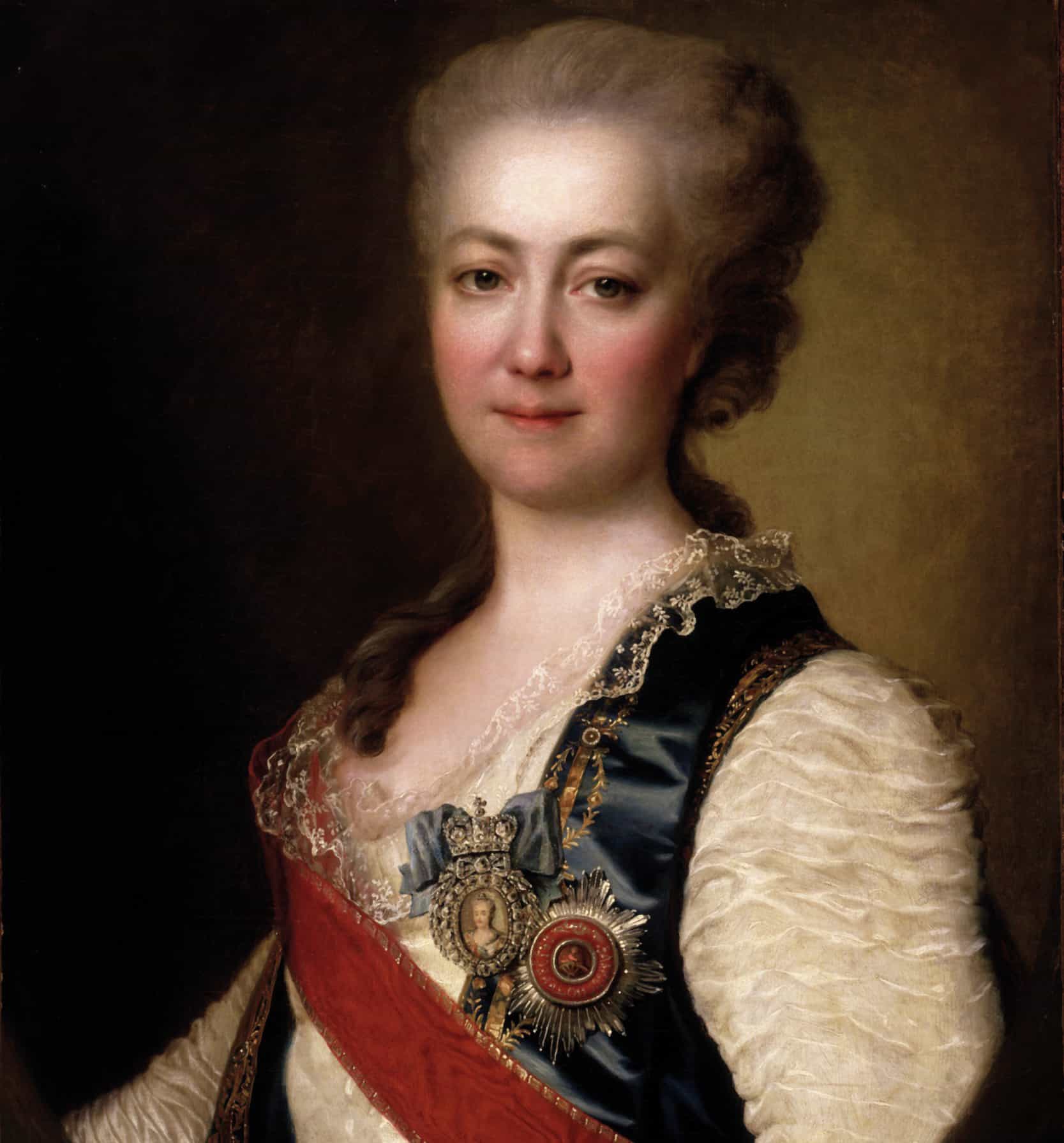
The pioneer princess

Photo of Ekaterina Dashkova

Here’s a quiz question.

It wasn’t the US, where the National Academy of Sciences chose its first female member in 1925 and first female president barely two years ago. It wasn’t Britain. The Royal Society didn’t elect a female fellow until 1945 and has never had a female president. Nor France, whose first female full member of its Academy of Sciences was allowed in 1979, and has also never had a female president.

The answer is Russia, where a princess named Ekaterina Dashkova (1743–1810) served as director of the Imperial Academy of Arts and Sciences from 1783 to 1796. Dashkova enhanced the academy’s reputation, balanced its budget, revamped its printing services and earned the admiration of academy members. Even more importantly, her actions pointed the way towards modern science management.

An extraordinary appointment

Dashkova, the daughter of a Russian count named Vorontsov, was born 275 years ago on 28 March 1743 in St Petersburg. Like many Russian nobility, her native tongue was French. At the age of 15 she married Prince Mikhail Dashkov, and learned Russian to communicate with his family. Independent and intellectually gifted, she played some role in the coup d’état of 1762, which turned the Grand Duchess Catherine Alexeyevna into Catherine the Great, Empress of Russia. Dashkova became Catherine’s closest female friend, but the two fell out as Catherine seemed to suspect that Dashkova was a rival. In 1768, after her husband died, Dashkova embarked on a 14-year excursion through Europe, where she met the likes of Voltaire, Benjamin Franklin and Adam Smith.

Shortly after Dashkova returned to St Petersburg in 1782, Catherine drew her aside at a court ball and announced she was appointing her director of the Imperial St Petersburg Academy of Arts and Sciences. Michael Gordin, a historian of Russian science at Princeton University, told me it was a brilliant stroke. “First, it kept Dashkova occupied so that she wasn’t engaged in court intrigue. Second, it helped Catherine that there was another woman in an important position, for female rule was touchy not just in Russia but across Europe. Finally, the Imperial Academy was in trouble.”

Peter the Great had established the academy in 1725 to import European science. Despite a promising start with luminaries such as Leonhard Euler – the greatest mathematician of the era, who was lured to Russia in 1727 – the academy atrophied. Its nominal president was an absentee administrator with court connections, and it was effectively run by the director, Sergei Domashnev, a petty and vindictive poet who had embezzled funds and alienated members. Things were so bad that Euler refused to come to meetings. Catherine jumped at a chance to solve the academy’s bureaucratic headache, and her own, by firing Domashnev and appointing Dashkova the director.

“I was struck dumb with astonishment,” Dashkova wrote in her memoirs. She initially refused, then bowed to Catherine. The next day she ran into Domashnev, who began “mansplaining” to her – as we would now say – how she should behave. She cut him off. That evening she read through academy reports and memorized the names of its officers. The academy was almost bankrupt, with demoralized and poorly paid employees, a badly functioning print shop and few students at its school, which was supposed to train Russia’s future scientists.

Dashkova’s appointment was so extraordinary – before women in Russia even had access to higher education – that officials were unsure whether to administer to her the usual loyalty oath to the empress

Robert P Crease

Dashkova’s appointment was so extraordinary – before women in Russia even had access to higher education – that officials were unsure whether to administer to her the usual loyalty oath to the empress. But Catherine insisted they treat Dashkova the same as any male.

Dashkova, who was 40 at the time, knew her every slip-up at the academy would become big news, and carefully staged her first meeting. She dropped in on Euler, who was 75 years old, blind and in failing health, but universally adored and respected. She begged him to introduce her on her first visit to the academy. He agreed, and academy members were moved by the warmth and respect shown between the princess and the mathematician.

Using humility and repeated avowals of duty to the empress – and tapping what she had learned from her experiences abroad – Dashkova created for herself the same political space to act that a man would have had. She increased salaries of the academy’s faculty, and integrated them better into the Table of Ranks – a list of formal positions in the government and military.

She made the academy solvent, renovated its printing house and constructed new buildings. The academy’s reputation climbed and school enrolment rose.

Dashkova later founded and became president of another academic institution to deal with matters of the Russian language: the Russian Academy, which she modelled on the Académie Française. She initiated the first comprehensive dictionary of the Russian language, modelled on what Samuel Johnson had done for English in 1755. Dashkova wrote poetry, plays and articles, and edited a journal. Nominated by Franklin, she became a foreign member of the American Philosophical Society.

Dashkova eventually fell out of favour again, after allowing the Imperial Academy to publish a play that Catherine found offensive. She withdrew from active participation in the academy in 1794, and formally stepped down in 1796 after Catherine died.

The critical point

What’s interesting about Dashkova, Gordin told me, is not that she was a glass-ceiling breaker, but that, without explicitly planning to, she personified a new way to govern scientists. When she arrived, the academy was structured as a group of scholars at the whim of the state, paid as a line item in the court budget. Dashkova changed that.
“She did not think that her job was to do research or direct the scientists,” Gordin said. “She carved out a space for them in which they could carry out their work the way they wanted, arranging for resources without intervening in their work.” It was a step towards modern science administration.

Stephen Hawking dies aged 76

The cosmologist Stephen Hawking has died at age 76 at his home in Cambridge, UK. He achieved worldwide fame for his groundbreaking work on black holes and his great success at bringing physics to a wider audience.

Announcing his death, his children Lucy, Robert and Tim said “We are deeply saddened that our beloved father passed away today.”

Famed for his bestselling popular-science book A Brief History of Time and his battle with motor neurone disease, Hawking carried out ground-breaking research in cosmology, quantum gravity and black holes.

“Very easy” first

Stephen William Hawking was born in Oxford, UK, on 8 January 1942 after his parents moved from London for his birth to escape war-time bombardment of the capital. In 1950 Hawking’s family moved to St Albans in Hertfordshire, where he attended St Albans School. He then received what he later described as a “very easy” first-class degree in physics at the University of Oxford, reputedly only working for an average of about an hour a day for his qualification.

After graduating in 1962, Hawking went to the University of Cambridge, UK, to do a PhD in cosmology, hoping to carry out his research under the guidance of astronomer Fred Hoyle, whom he had admired from childhood. Instead, he worked under the supervision of Denis Sciama, a former graduate student of Paul Dirac.

Eponymous radiation

It was while working in the late 1960s with Roger Penrose, who was then also at Cambridge, that Hawking used Einstein’s general theory of relativity to determine the conditions under which there must be singularities in the early universe and in black holes – regions of space where gravity is so strong that not even light can escape. Using a novel geometric approach to these mathematically complex problems, Hawking showed that singularities are not mathematical curiosities but are a fairly generic feature of general relativity.

Hawking’s next big discovery took place in the early 1970s when, building on the work of the late Jacob Bekenstein, he demonstrated that the area of a black hole’s event horizon – the point of no return for matter falling inward – could be linked to its entropy through a simple equation. In 1974 Hawking then showed that black holes are in fact not completely black, as classical general relativity implies, but that they emit radiation, thus indicating a deep connection between gravity and thermodynamics.

This “Hawking radiation” arises from quantum fluctuations taking place near a black hole’s event horizon. The fluctuations generate pairs of short-lived virtual particles, one of which is pulled into the black hole by gravity while the other escapes. Hawking published many further papers on black holes, in particular examining the problems for physics associated with the possibility that information can permanently disappear into a black hole – what is known as the black-hole information paradox – and potential resolutions to this effect. He was also influential in efforts to unify quantum mechanics and general relativity – the enduring quest of theoretical physicists.

Richly recognized

Hawking was recognized with numerous awards throughout his career, becoming a fellow of the Royal Society at the age of 32 and being appointed Lucasian Professor of Mathematics in 1979 at Cambridge – a post once held by Isaac Newton. In 1987 he was the inaugural winner of the Dirac medal of prize of the Institute of Physics and in 2006 was awarded the Copley medal of the Royal Society – its oldest and most prestigious award. Hawking also became only the fourth physicist after Edward Teller, John Bardeen and John von Neumann to be given a US presidential medal of freedom, receiving his honour from Barack Obama at a ceremony in the White House in 2009.

Hawking officially retired in 2009, but despite stepping down as Lucasian professor, he remained as an active scientist as director of research at the Centre for Theoretical Cosmology at Cambridge. That year also saw Hawking accept a visiting professorship at the Perimeter Institute for Theoretical Physics in Waterloo, Canada, which opened a major new extension – known as the Stephen Hawking Centre – in 2011. Later the following year he won a “special fundamental physics prize”, worth some $3m, from the Fundamental Physics Prize Foundation set up by the Russian physicist-turned-entrepreneur Yuri Milner.

Medically challenged

Hawking’s many achievements came despite his motor neurone disease, with which he was diagnosed in 1964 while doing his PhD. Far outlasting doctors’ predictions that he would not survive more than two or three years, he nevertheless became increasingly disabled. Initially confined to a wheelchair, by the early 1970s Hawking was unable even to turn the pages of a book. In 1985 he contracted pneumonia while visiting the CERN particle-physics lab near Geneva and needed an operation known as a tracheotomy that meant he could no longer speak.

Hawking subsequently used a distinctive electronic voice synthesizer to communicate – its androidal American accent became his trademark – and increasingly had to rely on a team of nurses for his day-to-day care. Initially, Hawking was able to use a special hand-controlled lever to operate a computer, which let him scan a dictionary of words and spell out sentences. But in later life he lost the ability to even press a lever and actuated the computer by twitching a face muscle.

Fame and fortune

Hawking had three children by his first wife Jane, whom he met at about the time his condition was diagnosed. However, his marriage to Jane became increasingly bitter as she felt sidelined by his growing public fame from his book A Brief History of Time, which he had written in part to help pay for his ongoing medical and nursing costs. As a strident atheist, Hawking also rowed with Jane about her Christian beliefs and the pair divorced in 1991, with details of their unhappy relationship laid bare in her 1999 book Music to Move the Stars, which later inspired the 2014 film Theory of Everything. Hawking remarried in 1995 to his former nurse Elaine Mason, but he filed for divorce from her in 2006.

Hawking sold an estimated 10 million copies of A Brief History of Time, and wrote several other popular science books, including The Universe in a Nutshell and A Briefer History of Time, which was an attempt to make his landmark work more accessible. In 2007 his daughter Lucy – one of three children from his first marriage – also co-wrote an adventure story entitled George’s Secret Key to the Universe with Hawking and a former PhD student Christophe Galfard. In 2010 Hawking published The Grand Design – which he co-wrote with Leonard Mlodinow from the California Institute of Technology – while three years later his own memoirs, entitled My Brief History, appeared.

Hawking popped up regularly on television – appearing in The Big Bang Theory, The Simpsons and Star Trek – and even took part in advertisements for Specsavers opticians and the GoCompare price-comparison website. Dramas and documentaries about his life also made it onto the stage and screen, including the play God and Stephen Hawking in 2000 and a two-part TV series on the UK’s Channel 4 in 2008, although these were easily eclipsed in quality by the candid 2013 biopic Hawking, which he co-wrote and narrated.

Never one to shy from publicity, in 2007 Hawking left the confines of his wheelchair while travelling in a zero-gravity simulating aeroplane, having been keen to raise awareness of spaceflight so that potential disaster on Earth does not wipe out the human race, which he feared could happen. He also divided opinion in 2013 after accepting – and then declining – an invitation to speak at a prominent conference in Jerusalem in protest against the policies of the Israeli government. Opponents attacked his decision to boycott the Israeli Presidential Conference, saying his criticism should have had more weight had he delivered them in person.

Lasting legacy

Hawking was regarded by some who knew him as stubborn and irreverent. Some also thought him arrogant, particularly when, at the end of A Brief History of Time, he wrote that the development of a unified theory of physics could lead us to knowing “the mind of God”. But he was nevertheless also willing to admit when he was wrong. In 1997 he and Caltech theorist Kip Thorne bet John Preskill, also of Caltech, that information falling into a black hole is lost forever to the outside universe, in contradiction with quantum mechanics. In 2004 he conceded the bet, having worked out a solution to this “black hole paradox“. To honour the bet he presented Preskill with a baseball encyclopaedia “from which information can be recovered with ease”.

At a special dinner held in Hawking’s honour in 2007 at Gonville and Caius College, Cambridge – where Hawking had a been a fellow since his PhD days – the cosmologist Martin Rees tried to answer the question of why Hawking had become such a cult figure. Rees suggested that “the concept of an imprisoned mind roaming the cosmos” had grabbed the public’s imagination and argued that “if [Hawking] had achieved equal distinction in (say) genetics rather than cosmology, his triumph of intellect against adversity probably wouldn’t have achieved the same resonance with a worldwide public”.

Hawking, however, was always at pains to remind people the he was not “another Einstein”. Indeed, when Physics World polled more than 130 of the world’s leading physicists in 1999 to find out who had made “the most important contributions to physics“, Hawking received just one vote. Nevertheless, he had done, in Rees’s view, “at least as much as anyone since Einstein to improve our knowledge of gravity, space and time”.

“His name will live in the annals of science,” concluded Rees, who ranked him as one of the top 10 theoretical physicists of the time. “Millions have had their cosmic horizons widened by his best-selling books; and his unique achievement against all the odds is an inspiration to even more.”


Copyright © 2026 by IOP Publishing Ltd and individual contributors