Jocelyn Bell Burnell wins President’s Medal of the Institute of Physics

The astrophysicist Jocelyn Bell Burnell has been awarded the President’s Medal of the Institute of Physics (IOP) “for her outstanding contributions to physics through pioneering research in astronomy, most notably the discovery of the first pulsars, and through her unparalleled record of leadership within the community”. The award, which is given at the discretion of the IOP president, was presented yesterday in Birmingham at the International Conference on Women in Physics.

While presenting the award, IOP president Roy Sambles said: “Jocelyn is a groundbreaking researcher, an inspirational leader within our community and a distinguished ambassador for physics – particularly for widening participation.”

PhD breakthrough

While a PhD student at the University of Cambridge, Bell Burnell discovered the first four pulsars – an achievement that contributed to the awarding of the Nobel Prize for Physics to Antony Hewish and Martin Ryle in 1974. Controversially, Bell Burnell did not share in that prize.

In addition to her distinguished career as a researcher, Bell Burnell has served as president of the IOP and the Royal Astronomical Society, and is currently president of the Royal Society of Edinburgh. She also played an instrumental role in founding the Athena SWAN Charter, which was established in 2005 to advance the careers of women in science, technology, engineering, mathematics and medicine.

Smart glove translates sign language into digital text

A smart glove that translates American Sign Language (ASL) into digital text has been developed by scientists at the University of California, San Diego. Timothy O’Connor, Darren Lipomi and colleagues reckon that their device can be produced for less than $100 and could also find use in virtual-reality and remote-control systems.

Most systems for monitoring body movement involve using a camera or infrared emitters and sensors to capture motion. While such systems are effective, they can be bulky, inflexible and require large amounts of energy. As a result, researchers are keen to develop wearable motion sensors – and gloves offer a natural way of tracking hand motion.

Strain sensors

The new device is based on strain sensors that are made of a piezoresistive composite material comprising carbon particles embedded in a flexible material. To make a sensor, the team begins with a strip of silicone 3 cm long, 0.5 cm wide and 340 μm thick. This is coated with a special paint that contains carbon particles in a fluoroelastomer resin to create a piezoresitive film that is about 50 μm thick. Copper contacts are added at either end and the sensor is then encapsulated in polyurethane.

Nine sensors are placed on the back of a leather athletic glove – two on each finger and one on the thumb. The sensors detect the bending of the knuckles, and the sensor signals are digitized and then sent to an on-board microcontroller that is attached to the back of the glove at the wrist. The glove also contains an accelerometer and a pressure sensor on the thumb. Information from these two devices is used by the microcontroller to differentiate between ASL gestures for different letters that produce similar signals in the strain sensors.

Bluetooth link

The team has shown that the microcontroller can translate the hand gestures associated with all 26 letters of ASL into digital text. These data can then be exchanged with other electronic devices via a wireless Bluetooth link.

What’s more, signals from the glove were also used to control a “virtual hand”. This, the researchers say, could have a wide range of applications including virtual reality, telesurgery and controlling aerial drones or bomb-disarming robots.

The process for making the glove does not involve chemical synthesis or access to a clean room. This, say the researchers, suggests that the system could be used as a test bed for evaluating other stretchable electronic components for human–machine interfaces. “We’ve innovated a low-cost and straightforward design for smart wearable devices using off-the-shelf components,” says Limpomi, adding: “Our work could enable other researchers to develop similar technologies without requiring costly materials or complex fabrication methods.”

Sense of touch

The team is now incorporating a “sense of touch” into the glove to allow a user to better control either a virtual or robotic hand by sending tactile sensations back to the user. O’Connor explains: “Our ultimate goal is to make this a smart glove that in the future will allow people to use their hands in virtual reality, which is much more intuitive than using a joystick and other existing controllers.”

Jim Kyle, emeritus professor of deaf studies at the University of Bristol in the UK says that while the technology looks interesting, the glove’s “application to sign communication is probably limited”. “People (deaf or hearing) who are able to use the manual [ASL] alphabet are also likely to be literate to the extent of being able to write. Use of a glove for communication is not necessarily the highest priority.” Kyle also points out that an individual’s implementation of ASL can be highly idiosyncratic and will often not involve spelling out entire words – making text capture difficult.

The glove is described in PLOS ONE.

DNA origami delivers shape-shifting nanomachines

The survival and behaviour of all organisms is regulated by the highly specialized functions of molecular nanomachines, such as proteins. These nanomachines perform many different functions, including sensing light, smell and heat; generating muscle contraction; and regulating hormones. Scientists are now developing methods to engineer artificial nanomachines that could form the basis of personalized medicine or shape-shifting materials. One of the most promising approaches, called DNA origami, is centred on folding DNA to create elaborate-yet-predictable DNA nanomachines.

A key feature of natural nanomachines is the ability to change into a variety of shapes in response to diverse yet specific stimuli. But previous attempts to mimic this behaviour have been unable to replicate complex multi-step transformations because shape-shifting DNA nanomachines are typically composed of rigid structures connected by a few mobile regions.

Now, however, a research team from Emory University and Purdue University in the US, and Shanghai University in China, is trying to close this gap by creating DNA nanomachines that can shape-shift in a fundamentally new way. “Think of the shape-shifting robots in Transformers,” says Yonggang Ke, senior author on the study and assistant professor at Emory University. “Transforming from a car to a robot occurs in a complex series of movements. Every part of the machine needs to be able to transform. If a machine only has one moving part, it can’t get much more advanced than a light switch.”

The new work, which was reported in Science, is a big step towards creating machines that can undergo similarly complex transformations. The starting point for the researchers was to take a fresh look at a functional unit called the anti-junction, a diamond-shaped intersection of multiple separate strands of DNA.

Anti-junctions have two useful properties. First, they can switch conformations between two energetically equivalent states. This means that the more anti-junctions you can pack into a DNA nanomachine, the more shape-shifting ability the nanomachine will have. Second, when an anti-junction shape-shifts, its neighbouring anti-junctions will shape-shift too. Once the neighbours shape-shift, they will in turn cause their neighbours to shape-shift. A controlled stimulus on one anti-junction can therefore trigger a cascade of transformations throughout the entire nanomachine.

To demonstrate this, the research team created simple DNA nanomachines composed of 20–100 nm-wide rectangular grids of anti-junctions. Using diverse inputs including heat, mechanical stimulation, solvent conditions and a specific DNA “trigger” strand, they showed that they could drive large-scale transformation within the nanomachine. Importantly, they could reverse the transformation using specific inputs (also DNA strands), and lock the nanomachines in partially transformed conformations.

The researchers hope that this technology will one day lead to engineered nanomachines with multiple parallel functions. “Imagine having nanomachines that you can inject into the human bloodstream. Some of them will end up in the kidneys, and based on the kidney biochemical environment will turn into one type of functional machine. Some will end up in the liver and take on a different shape with a different function,” said Ke. This work could also have future applications in DNA computing, cellular signalling and biophysics. While such futuristic technology may be a long way away, we’re now one step closer to engineering molecular machines that rival those formed over the last millions of years.

Graphene bubbles measure shear forces

The force needed to slide sheets of graphene across each other has been measured using a new technique that involves blowing air bubbles made of the material. Developed by Zhong Zhang of the National Center for Nanoscience and Technology in Beijing and colleagues in China and the US, the technique was also used to measure the force needed to slide graphene across a surface of silicon dioxide.

Graphene is a layer of carbon just one atom thick that has a wide range of potentially useful electronic and mechanical properties. Developing practical graphene-based devices will require an understanding of how well graphene layers stick to each other, and also how they stick to popular substrates such as silicon dioxide. This stickiness is expressed as the shear resistance – the minimum force required to slide one layer over another. This quantity is not well known for graphene because it is extremely difficult to measure for a material just one atom thick.

Tiny bubbles

Now, Zhang and colleagues have adapted a technique called the blister test for use on graphene. One of their measurements involves a single layer of graphene on a silicon-dioxide substrate with micron-sized holes in it. The air pressure in the holes is increased, causing the graphene sheet to form tiny bubbles in the regions above the holes. The size of each bubble is monitored using atomic force microscopy (see figure). As the bubble pushes up, the surrounding graphene on the substrate is pulled and stretched towards the hole – creating a zone where shear occurs. Raman spectroscopy is used to measure the stretching of graphene’s carbon bonds in this “shear zone” as the size of the bubble increases. A similar measurement is made on two layers of graphene on the substrate, which has an additional graphene-on-graphene shear zone that can be analysed.

Small resistance

The team found that the shear resistance between layers of graphene was relatively small at 40 kPa. The value for graphene on silicon dioxide was about 40 times greater at 1.64 MPa. Writing in Physical Review Letters, Zhang and colleagues say that their technique could be used to study the interfaces between other 2D materials.

Proton tomography offers better preparation for therapy

Physicists in the US have shown that protons themselves can be used to provide the complex 3D images essential for tailoring proton therapy to individual patients. Researchers in the US built a prototype detector to carry out “proton computed tomography” (proton CT), and found that in around 6 min it could generate maps of proton stopping power – energy lost per unit distance in a material – that were more accurate and required a much lower radiation dose than existing techniques.

Proton therapy is becoming an increasingly popular tool to treat cancer because it can be used to target tumours very precisely. Unlike most other types of radiation, protons deposit a large fraction of their energy at the point where they stop in the body. By tuning the beam so that protons stop where the tumour is located, therapy can be made more effective and safer.

To deliver the radiation to a particular point in a person’s body, medical physicists must first establish the extent to which protons will be slowed down by intermediate layers of tissue. This is currently done by placing the patient in an X-ray CT scanner and creating a 3D plot of X-ray absorption within the relevant part of their body. But the accuracy of this technique is limited by a mismatch between X-ray absorption and proton energy loss within particular types of tissue.

Direct measurement

Proton CT would overcome this problem by measuring proton energy loss directly. Working scanners would employ the same source of protons used to carry out the therapy, but would require a different set-up – a higher-energy but lower-intensity beam and detectors that could be moved relative to the patient to get a 360° view. And as with X-ray CT, the procedure would be carried out ahead of treatment.

The idea of proton CT has been around ever since computer tomography was first proposed in the early 1960s. But the need for a proton beam makes it more expensive than X-ray CT and it also requires a more complex detector as well as more intense computation to transform measurements into an image, according to Robert Johnson, a particle physicist at the University of California, Santa Cruz.

In the latest work, Johnson and colleagues at Santa Cruz, Loma Linda University, Northern Illinois University, University of Wollongong and Baylor University set out to build a prototype proton CT scanner that was large enough to image a fake (phantom) human head and quick enough to be usable clinically. The system uses a couple of spare silicon detectors from NASA’s Fermi Gamma-ray Space Telescope, which Johnson had previously worked on. The idea was to place these detectors in the path of a proton beam, with one positioned in front of the head in question and the other behind, to plot the trajectory of the protons through the head.

Specific trajectories

By subtracting the known energy of the particle beam from the energy dumped in a series of plastic scintillators placed behind the second silicon detector, the researchers could work out how much energy a head absorbs along specific trajectories. By then rotating the head very slightly and repeating the process, they could build up a detailed 3D image of the head’s proton stopping power.

The team tested its device in the proton beam at the Northwestern Medicine Chicago Proton Center using phantom heads made from various materials with different stopping powers. Recording the trajectory and energy of more than a million protons a second using very fast electronics, within about six minutes they were able to generate an image with stopping powers generally within 1% of their known values.

Johnson says he does not have precise figures for the accuracy of proton stopping powers obtained using X-ray CT. But he thinks that proton CT is probably better suited to certain kinds of tissue. “If the tissues are all soft and fairly uniform, then X-ray CT will likely be just as accurate as proton CT,” he says. “If there are layers of dense material, then I think we can do better, but that is what we are currently trying to prove.”

Lower doses

The researchers also found they could significantly reduce the dose needed to do the scanning. Whereas a typical X-ray scan of the head requires between 30–50 mGy, they needed just 1.4 mGy using protons.

Johnson and collaborators are now applying for grants to develop a more compact detector with even faster electronics, to reduce the necessary exposure time to about a minute. Six minutes, he reckons, “isn’t bad”, but is not ideal. Having been in an MRI scanner for longer than six minutes, he says the duration “is doable but not the most pleasant thing”.

The American group is one of several around the world that are developing proton CT, with others located in Italy, Japan and the UK. Leader of the British group, Nigel Allinson of the University of Lincoln, says that Johnson and colleagues “certainly set a standard for others to follow”, but notes that technical success will need to be followed by clinical trials as well as assessments of cost and the extent to which the technique “fits with radiotherapy workflows”.

“Still a long way”

Likewise, Mohammad Naimuddin of the University of Delhi cautions that “there is still a long way” before proton CT can be used clinically. Naimuddin, who has collaborated with some members of Johnson’s group, says that the latest work represents a “significant improvement compared to past efforts”, but argues that better modelling of proton scattering off tissue is needed to improve the technique’s resolution. “In the current paper the spatial resolution of the phantom image is still not comparable to X-ray CT,” he says.

The research is reported on the arXiv server.

Music and science: a harmonious or discordant duo?

Featured in the podcast is UK recording artist Hannah Peel, along with a track from her 2016 album Awake But Always Dreaming. Peel talks about how that record was inspired by witnessing her grandma’s struggle with dementia and how music helped the pair to communicate when memory began to fail. Peel says her forthcoming album, Mary Casio: Journey to Cassiopeia, is a journey from the mind into space, influenced by a visit to an Alzheimer’s research lab at University College London.

Glester recorded the podcast at the Cheltenham Science Festival 2017, where he met academics with a variety of interests and opinions about music. On the one hand, polymath Raymond Tallis believes that scientific data about people’s physical response to music is of limited value to understanding why we appreciate music. On the other hand, physicist and “rock doctor” Mark Lewney speaks about the useful role acoustics can play a role in designing guitars with the tonal properties desired by musicians. Researcher and science popularizer Alice Roberts speaks about the possible evolutionary functions of music, while violinist Jenny Glester speaks about her experiences taking music into healthcare settings.

Snapping the Milky Way, art inspired by SLAC blueprints, doppelganger magazine covers

By Hamish Johnston

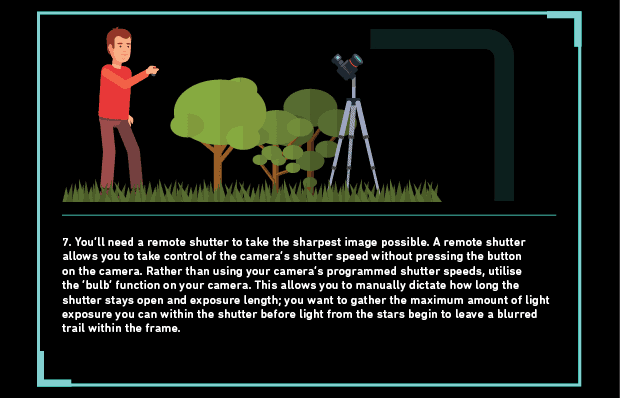
If you are lucky enough to live somewhere with dark skies, you know that the Milky Way is a truly majestic sight. But how exactly would you go about capturing its magnificence with a camera? UK-based Clifton Cameras has put together an infographic with a few helpful hints. The image above is an excerpt and you can view the entire infographic here.

(more…)

Formation of other-worldly ‘hot ice’ observed for first time

The transformation of water freezing into an exotic type of ice has been directly observed for the first time by researchers in the US.

Most of the ice on Earth has a hexagonal crystal structure, but water can transform into more than 15 types of ice, each with a different molecular arrangement. These rare frozen phases require non-atmospheric pressures and controlled temperature environments to form, so can only be produced on Earth in laboratory experiments.

One exotic type is ice VII – a cubic crystal phase that can form at high pressure and high temperature. It is thought that this “hot ice” could be found on the ocean floor of Saturn’s moon Titan and other watery exoplanets. Back on Earth, however, it is difficult to create and maintain ice VII in a lab. Previous studies have attempted to “shock freeze” water using lasers to create pressure changes, but they have not been able to measure its rapid formation or characterize its structure.

Popular topic

“There have been a tremendous number of studies on ice because everyone wants to understand its behaviour,” says team member Wendy Mao from Stanford University. “What our new study demonstrates, and which hasn’t been done before, is the ability to see the ice structure form in real time.”

To create ice VII, the team fire an intense laser at a sample of water sandwiched between a diamond platelet coated with gold and a quartz platelet. The laser light vapourizes the diamond, generating a huge pressure shock 50,000 imes greater than that of Earth’s atmosphere at sea level. The force triggers the phase change to ice VII, with the transformation happening in only 6 ns.

Mao and colleagues recorded the fast phase change with femtosecond-long X-ray pulses generated by the X-ray Free Electron Laser at SLAC’s Linac Coherent Light Source. The X-rays are diffracted by the transforming water, allowing the researchers to characterize the changing molecular structure.

Disorder to order

“These experiments with water are the first of their kind, allowing us to witness a fundamental disorder-to-order transition in one of the most abundant molecules in the universe,” says team member Arianna Gleason. “Learning about the icy interiors [of icy satellites and planets] will help us understand how the worlds in our solar system formed and how at least one of them, so far as we know, came to have all the necessary characteristics for life.”

The work is presented in Physical Review Letters.

Hidden stars affect exoplanet measurements

A significant number of known exoplanets could have larger diameters than previously thought, according to two astronomers in the US. These exoplanets orbit stars that are in a binary system with another star – and it is light from this companion star that has thrown off previous measurements. The work suggests that some known exoplanets are less dense than previously thought, which means that they resemble Jupiter, rather than Earth.

Many of the exoplanets discovered by the Kepler space telescope and other instruments orbit stars in binary systems. It can be difficult to differentiate between the two stars in such systems – which can appear as a single point of light. This is a problem if the exoplanet is studied using the transit method whereby the diameter of the planet relative to that of its star is determined from how much starlight it blocks when it passes between Earth and the star. Astronomers can inadvertently be measuring extra light from the companion star, which means that the measurement yields a smaller diameter for the exoplanet than its actual value.

Large errors

If the exoplanet orbits the brighter of the two stars in a binary system, then the measurement error is small. If the binary stars are the same brightness, the error is about 40% – and can be even larger if the exoplanet orbits the dimmer of the two stars.

The diameter is then used to calculate the density of the exoplanet, which determines whether it is a dense, rocky body like Earth or a gaseous planet like Jupiter. The diameter of the planet is also used to work out how closely the exoplanet orbits its star, which determines whether it lies within the habitable zone where liquid water and life could exist.

Elise Furlan of Caltech and Steve Howell of NASA Ames Research Centre looked into the extent of this problem by looking at Kepler data from 50 exoplanets that had already had their masses and diameters calculated. All of the exoplanets’ stars are in binary systems, but this had only been previously accounted for in seven cases.

Unknown orbit

Furlan and Howell worked out that 35 of the exoplanets orbited the larger star in their binary systems – which meant that their calculated sizes did not change significantly. For the other 15, they were unable to determine which star the exoplanet orbited. Five of these are in systems with stars of similar brightness, suggesting the exoplanets are 40% bigger than previously thought.

“Our understanding of how many planets are small like Earth, and how many are big like Jupiter, may change as we gain more information about the stars they orbit,” says Furlan. “You really have to know the star well to get a good handle on the properties of its planets.”

Howell adds: “In further studies, we want to make sure we are observing the type and size of planet we believe we are.” He adds: “In the big picture, knowing which planets are small and rocky will help us understand how likely we are to find planets the size of our own elsewhere in the galaxy.”

The research will be described in the Astronomical Journal and a preprint is available on arXiv.

Type-II Dirac fermions spotted in two different materials

The first experimental evidence of a quasiparticle known as a type-II Dirac fermion has been found by three independent research groups – one based in South Korea and two in China. Two of the groups found signs of the quasiparticle in the crystalline material palladium ditelluride. This could mean that the material is a topological superconductor – a hypothetical material with unique properties that could be useful as components in the proposed technology known as a topological quantum computer. The third group found evidence for type-II Dirac fermions in a similar material called platinum ditelluride.

Dirac fermions are subatomic particles with half-integer spin that are not their own antiparticles. Electrons in solids can also exhibit particle-like collective behaviour that can be described in terms of Dirac-fermion quasiparticles, which obey the same physics as their subatomic counterparts. These quasiparticles can exist as a so-called topological phase of matter with unique properties that condensed-matter physicists think could eventually be useful in quantum computing.

A type-II Dirac fermion is a special type of Dirac fermion that has a specific electronic band structure resembling a tilted cone. Prior theoretical calculations suggested that they could be lurking in palladium ditelluride, says Han-Jin Noh of Chonnam National University, who is a member of the South Korean group. To confirm this, his team used a technique called angle-resolved photoemission spectroscopy (ARPES), in which high-energy photons strike the material from different directions, causing the material to emit electrons. The researchers measure the energy and momenta of the emitted electrons and use that data to map out the material’s electronic band structure.

Telltale sign

ARPES measurements were also carried out on platinum ditelluride by Mingzhe Yan from Tsinghua University. Both teams found that the conduction and valence bands meet at a single point called a Dirac or Weyl point. This point is the telltale sign that the materials could harbour Dirac fermions – and in this case, type-II Dirac fermions, because of the specific geometries of the materials’ band structures.

Meanwhile, a group that included Xiangang Wan of Nanjing University in China performed a different type of measurement on palladium ditelluride. The researchers placed the material in a magnetic field and measured its resistivity, which oscillated back and forth. These Shubnikov–de Haas oscillations are also a consequence of the Dirac-point geometry in the material’s electronic band structure, Wan says.

Noh says that the evidence for Dirac fermions in palladium ditelluride is exciting, particularly because the material is also a superconductor below 1.7 K. Since it is a superconductor and can host topological states, it could be an exotic new material known as a topological superconductor. “We still don’t know whether it is a topological superconductor, but we expect it might be,” Wan says.

Anyone for anyons?

Topological superconductors have different properties compared with regular superconductors, says Alexey Soluyanov of ETH Zürich in Switzerland, who was not involved in the research. They could host another sought-after quasiparticle known as an anyon. Anyons could be used in topological quantum computers, a proposed type of quantum computer that relies on topological states of matter that should be more stable than the quantum computers currently being built.

But these technologies are all speculative, and now the teams need to show that the palladium ditelluride actually is a topological superconductor. The groups are also focused on understanding the basic science of these quasiparticles and exotic states of matter. Noh’s group plans to introduce impurities into the material to make its exotic properties easier to access in experiments. “Academically, they are really interesting things,” Noh says. “They’re really something new in the condensed-matter physics world.”

The research is described in Physical Review Letters, Physical Review B and arXiv.

Copyright © 2026 by IOP Publishing Ltd and individual contributors