Matin Durrani explains why the “shared future” theme of the American Physical Society’s main meeting this year is opportune
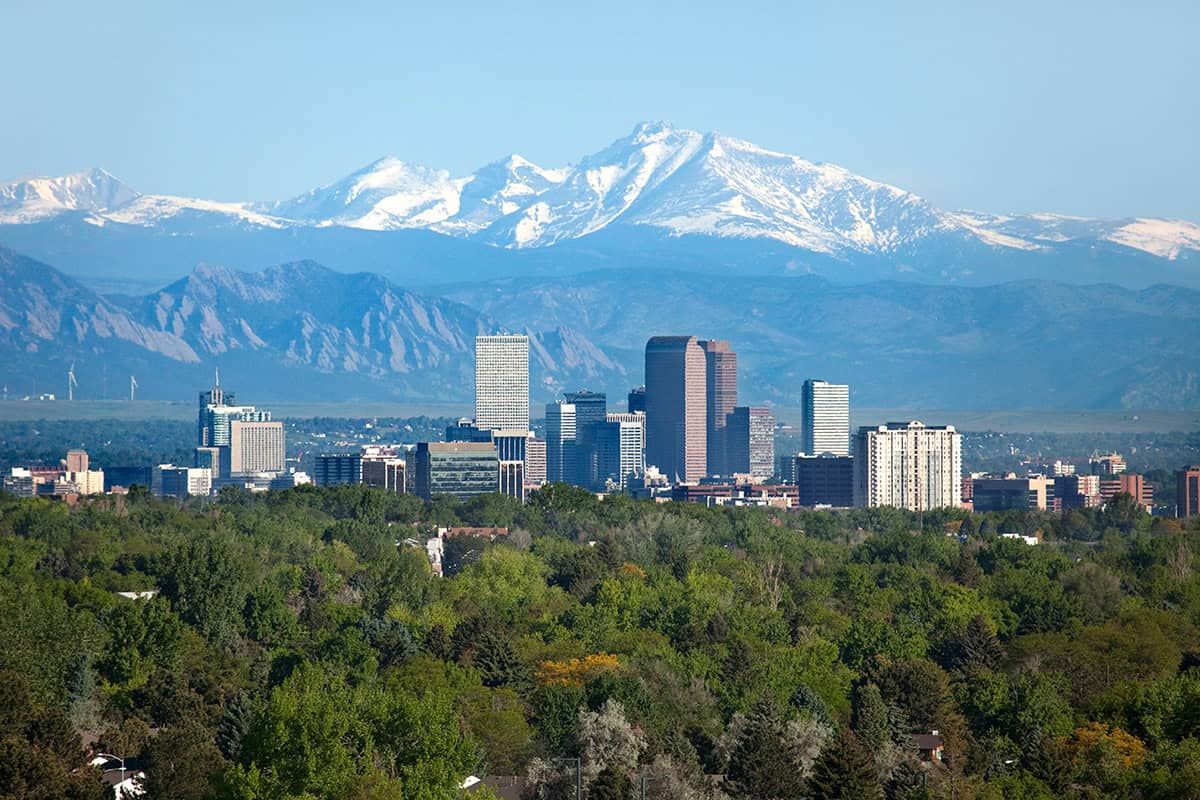
The Global Physics Summit (GPS) bills itself as “the world’s largest physics research conference”. Organized by the American Physical Society (APS), it combines the previously separate APS March and April meetings, with at least 14,000 people expected to attend this year’s event in Denver, Colorado, which has the theme “science for a shared future”.
The two APS meetings (especially APS March) have long been pilgrimages for physicists. They’re a chance to meet people whose papers you’ve read, learn about new research, land a dream job or perhaps decide what your future physics career should look like. They offer unparalleled opportunities for gossiping, networking and making your name.
Sometimes they even host extraordinary announcements, such as in 2023 when one group claimed to have discovered room-temperature superconductors, or in 1987 when several groups really did present the first data on high-temperature ones.
Due to the current state of US politics, however, physicists from many countries may well have second thoughts about travelling to this and other scientific meetings in the US.
Indeed, if you’re from one of almost 40 nations to which the US government has partially or fully suspended issuing visas – supposedly “to protect the security of the United States” – you probably won’t be able to get into the country at all.
Among the countries affected by the Trump administration’s ban is Ethiopia, which is home to people like the physicist Mulugeta Bekele, who almost single-handedly kept Ethiopian physics alive in the 1970s and 1980s despite being jailed and tortured.
As Robert P Crease recounts in his latest feature, Mulugeta was awarded the APS’s Sakharov human-rights prize in 2012, picking up his award at that year’s APS March meeting in Boston. Would Mulugeta, I wonder, be able to enter the US in current circumstances?
Mulugeta Bekele: the jailed and tortured scientist who kept Ethiopian physics alive
One US physicist told me that outsiders should respond to the situation in America by boycotting the US entirely. To me, that’s a step too far, not least because breaking contact would show a lack of solidarity with US-based scientists suffering from funding cuts or worse. After all, physics is a global enterprise, as two recent Physics World articles make clear.
The first is a feature about quantifying the environmental impact of military conflicts by Ben Skuse. Numbers are hard to come by, but according to a 2022 estimate extrapolated from the small number of nations that do share their data, the total military carbon footprint is about 5.5% of global emissions. This would make the world’s militaries the fourth biggest carbon emitter if they were a nation.
In another feature, Michael Allen examines how climate change could trigger extreme changes in the activity of earthquakes and volcanoes. Worryingly, increased volcanic eruptions not only contribute to the build-up of greenhouse gases but also create other problems too. In particular, a warming climate melts ice caps, lowering surface loads and potentially causing more earthquakes to occur.
Both issues – and many more besides – will only be solved through global, interdisciplinary collaborations. As the theme of the GPS quite rightly puts it, we need science for a shared future.
That’s why it’s great that the APS, along with AIP Publishing and IOP Publishing, which together form the Purpose-led Publishing (PLP) coalition, are hosting a network of 23 satellite events in Africa, Asia and South America to expand participation in this year’s GPS.
PLP’s satellite hubs, which will take place both in person and online, aim to let researchers engage with the summit programme, contribute to discussions, and take part in locally organized workshops and presentations.
Taking place in countries ranging from Brazil and Benin to the Philippines and Pakistan, the events will host livestreamed and recorded content from Denver as well as offering debates, expert-led sessions and opportunities for networking.
One event will be held in Ethiopia, which, I hope, Mulugeta at least will be pleased to hear.
- More information about the satellite events can be found by clicking this link.