Astronomers have raised concerns over a decision by the Federal Communications Commission (FCC) to permit the launch of a private satellite that can reflect sunlight onto the Earth’s surface after dark. Astronomers, however, fear that the mirror, and the several thousand that could follow it, will negatively impact both optical and radio astronomy.
The proposal by the Californian company Reflect Orbital involves putting a mirror-carrying-satellite – Eärendil-1 – into low-Earth orbit. Reflect Orbital aims to use the craft to test technology intended to deliver sunlight to solar farms after sunset, thus expanding the production of solar power at a time of peak demand for electricity.
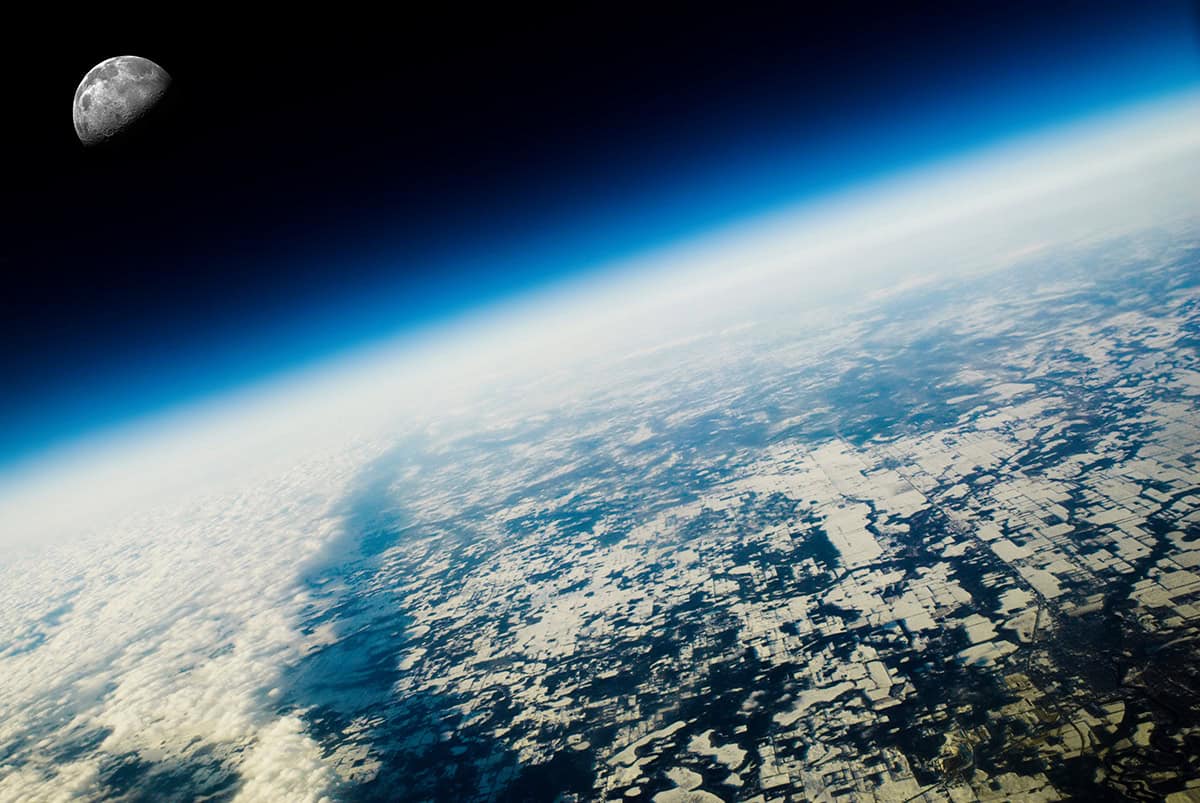
In orbit, the satellite will unfold an 18 × 18 m aluminiumized Mylar reflector that can deliver a roughly 5 km circular spot of light to the ground with about the brightness of a full Moon.
In addition to providing solar power after dark, the company sees its technology as potentially effective for response to disasters, construction work and outdoor events at night.
Assuming Eärendil-1’s flight proves successful, the company plans to launch 1000 larger satellites in 2028, which would be able to reflect as much light as 100 full Moons with 5000 more satellites two years later.
The FCC has approved only the radio operations of “a single demonstration satellite [that is] an example of a potentially groundbreaking technology”. Other aspects of Eärendil-1, however, do not require official authorization.
Ben Nowak, chief executive and co-founder of Reflect Orbital, sees the licence as “the first step toward rigorously testing our technology’s efficacy and the safeguards we have developed”.
Flash points
Orbiting satellites’ impact on astronomy is hardly a new phenomenon. Their burgeoning number has already reduced observing times for optical astronomers, particularly after sunset.
Following the approval, the American Astronomical Society (AAS) has expressed “dismay” at the FCC’s decision. [Eärendil-1] carries the potential for significant harm to our members and the broader community of those who depend on a dark night sky,” the association says in a statement. “[This] could include damage to sensitive research equipment, potential flash-blinding of pilots and drivers, and potential permanent eye damage to anyone looking through a mid-sized telescope.”
While some satellite owners have been open to working with astronomers to reduce the impact on astronomy, astronomer Marcel Agüeros from Columbia University, who is also president of the AAS, told Physics World that Reflect Orbital “has been far less open” to discussing its plans. “We know nothing about the satellite’s orbit, for example,” adds Agüeros.
DarkSky International, a nonprofit organization that aims to preserve and protect the nighttime environment, has now called on the company to commission a “comprehensive, independent environmental impact assessment conducted by qualified experts”. The danger of contaminating the night sky
“The burden of proof rests with the operator to demonstrate that their system will not cause environmental or public harm, and a full, independent assessment is the necessary first step,” notes DarkSky International.
That move is backed by Agüeros, who adds that there doesn’t seem to have been much thought about the consequences of the FCC’s decision. “When you start to mess with the nighttime, there should be a very high bar you have to clear,” he adds. “We’re losing our ability to experience a dark sky – an experience that gives you a sense of your place in the universe that is pretty much unmatched.”
Reflect Orbital spokesperson Christopher Buscombe told Physics World that the company “care deeply” about the night sky and that they “want to preserve astronomical observation”.
“We’re also working with the National Science Foundation to develop a coordination agreement on these questions and look forward to their input,” adds Buscombe.