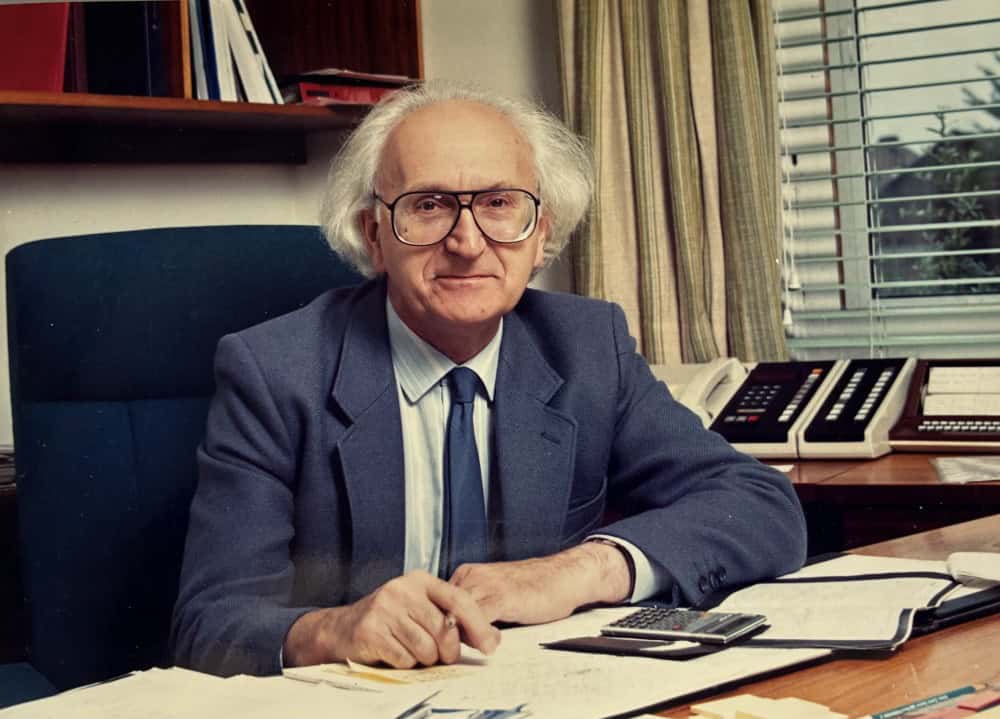
Cyril Hilsum, a former president of the Institute of Physics (IOP), which publishes Physics World, died on 23 September at the age of 101. In the 1970s Hilsum made pioneering contributions to liquid crystals paving the way for TV and computer liquid-crystal displays that are still widely used today.
Hilsum was born on 17 May 1925 and completed a degree in physics at University College London in 1945. He then joined the Admiralty Research Laboratory in Teddington before working at the Services Electronics Research Laboratory in Baldock.
Throughout his career, Hilsum focused on developing commercial applications for many areas of his research including creating the UK’s first semiconductor laser.
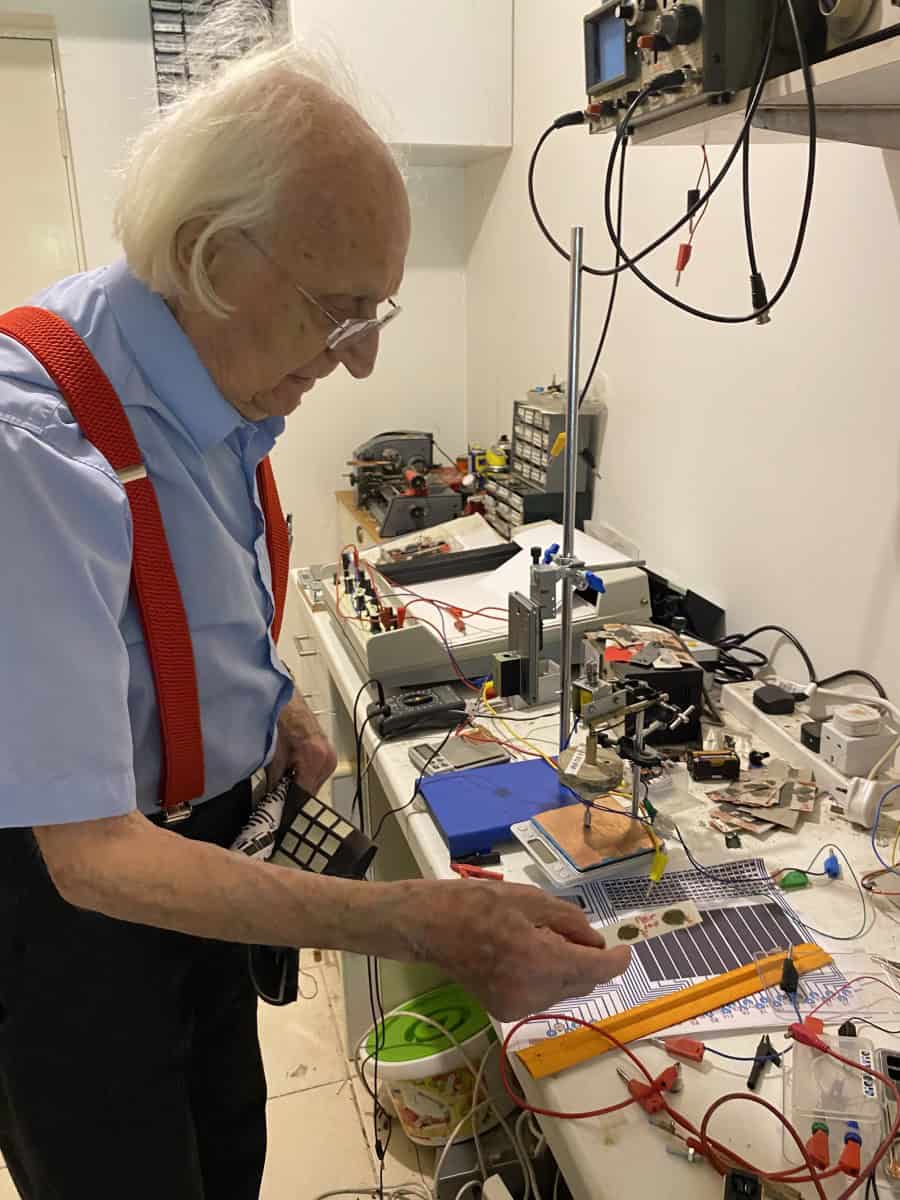
In 1964 he moved to the Royal Radar Research Establishment in Malvern, Worcestershire, developing the first microwave oscillator based on the negative resistance effect in the semiconductor gallium arsenide.
His work on miniature radar systems led to Claribel, a device that detected the trajectory of a bullet and could be used to locate snipers.
He also led a team that developed the first stable liquid crystals that could be used in flat panel displays, an invention that garnered £100m in royalties for the British government.
In 1983 Hilsum was appointed chief scientist of GEC Hirst Research Centre, where he later became research director two years later.
Hilsum officially retired in 1995 aged 70, but worked part-time as chief science officer for Infi-tex Ltd, which produces force sensors for use in textiles.
A life in science
Hilsum served as president of the IOP between 1988 and 1990, in which year he was also appointed a Commander of the Order of the British Empire (CBE) for his “services to the electrical and electronics industry”.
Over his career, Hilsum was honoured with many prizes including three awards from the IOP: the Max Born Prize in 1987, the Faraday Medal (1988) as well as the Richard Glazebrook Medal and Prize (1998).
In 2007 he was awarded the Royal Society’s Royal Medal “for his many outstanding contributions and for continuing to use his prodigious talents on behalf of industry, government and academe to this day”.
Hilsum also encouraged more women to have careers in physics and engineering. He sponsored the Karen Burt Award at the Women’s Engineering Society, which was named after his daughter, an engineer, who died in 1997 aged 42.
Hilsum celebrated his 100th birthday last year at a special event held at the Royal Society of Chemistry.
Former IOP president Frances Saunders, who worked in liquid-crystal displays, told Physics World that Hilsum was a “true pioneer in applied physics”, adding that as well as finding applications for such emerging technologies he always wanted to ensure that the underlying physics or material science was properly understood.
“What also made him stand out was his vision for where a technology might go – in the early developments of LCDs his vision was that the display would become the computer with the computer chips attached to the back of the display and interacted with via touch screens,” adds Saunders. “He was right, of course, as we now have tablets and smart phones that do just that.”