Available to watch now, sponsored by IOP Publishing, explore the current state of climate research, including changes in the field over the last five years since the launch of the journal, and direct us toward the future
Want to learn more?
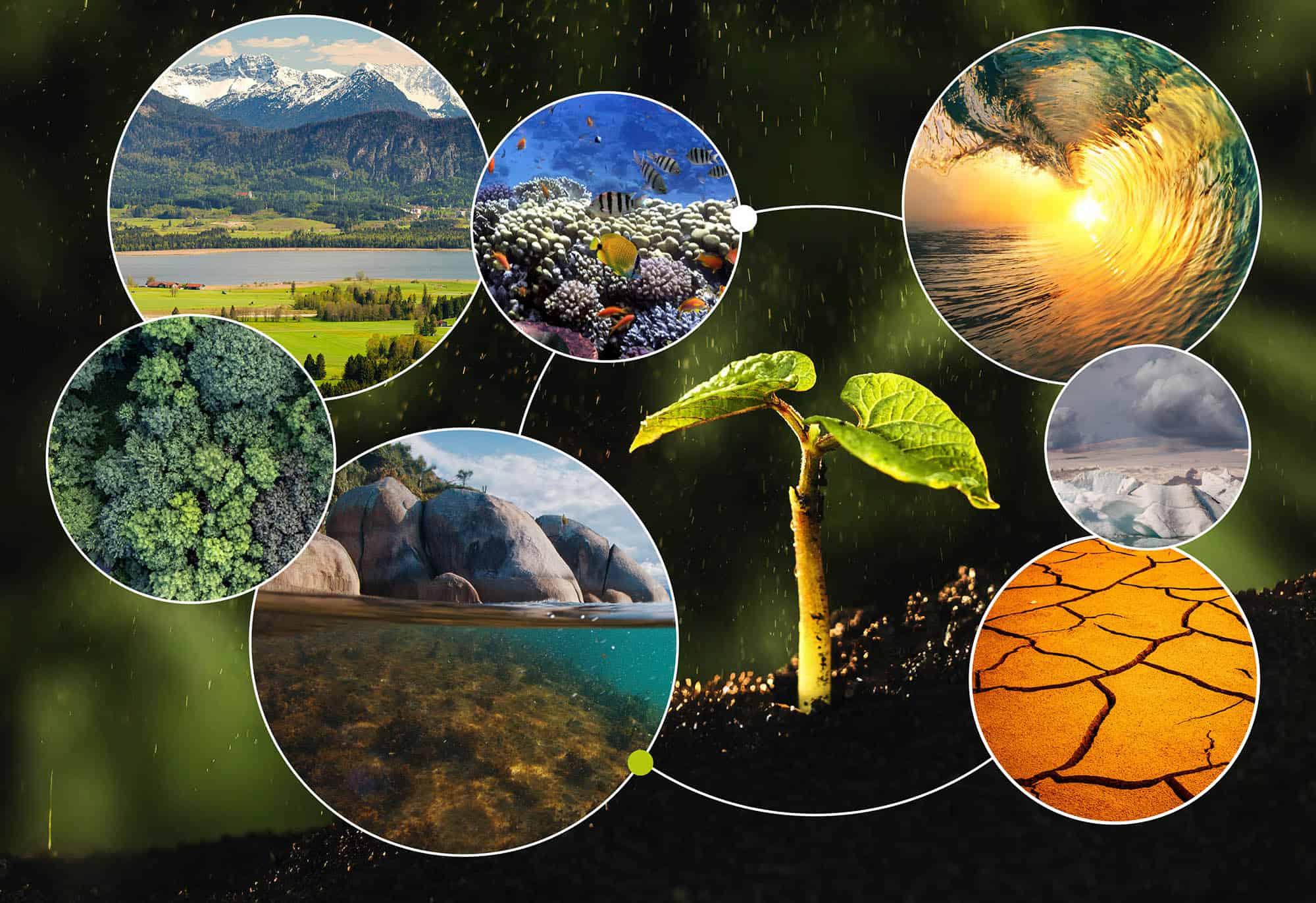
Environmental Research: Climate was launched in 2022, with the aim of uniting multidisciplinary communities. With a scope that is intentionally broad, the mission of the journal is to publish innovative research examining the causes, consequences, and solutions of climate variability and change. Since our launch, we have published more than 270 articles covering physical and biogeochemical processes that shape Earth’s climate across spatial and temporal scales; the human and ecological dimensions that shape climate-related risks and impacts; and the design, analysis and evaluation of climate mitigation, adaptation, and risk-management strategies and solutions. This webinar will explore the current state of climate research, including changes in the field over the last five years since the launch of the journal, and direct us toward the future.
Want to learn more?
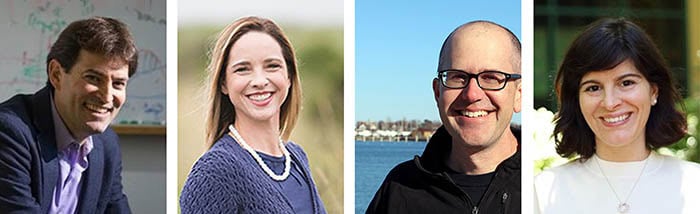
Moderator: Noah Diffenbaugh, Stanford University
Noah Diffenbaugh is the William Wrigley Professor and Kimmelman Family Senior Fellow in Stanford’s Doerr School of Sustainability, and the Olivier Nomellini Family University Fellow in Undergraduate Education. His research is focused on understanding what aspects of the climate system most directly and acutely impact people and ecosystems. Noah has served as a Lead Author for the Intergovernmental Panel on Climate Change (IPCC), and as editor-in-chief of the peer-review journals Geophysical Research Letters and Environmental Research: Climate. He has provided testimony and scientific expertise to federal, state and local officials. Noah is an elected Fellow of the American Geophysical Union (AGU), a recipient of the James R. Holton Award and William Kaula Award from the AGU, and has been recognized as a Kavli Fellow by the U.S. National Academy of Sciences.
Katharine Mach, University of Miami
Katharine Mach is professor and chair of the Department of Environmental Science and Policy at the University of Miami Rosenstiel School of Marine, Atmospheric, & Earth Science. During spring 2025, she was the Coleman P. Burke Distinguished Visiting Professor at the Yale School of Environment. Her research assesses climate-related risks and response options to address increased flooding, extreme heat, wildfire and other hazards. Through innovative approaches to integrating evidence, she informs effective adaptations to the risks.
Katharine was the 2020 recipient of the Piers Sellers Prize for world-leading contribution to solution-focused climate research. She has served as a chapter author or lead in the Fourth through Sixth US National Climate Assessments and the IPCC Sixth Assessment Report and as a member of the National Academies Climate Security Roundtable. She serves as co-editor-in-chief for Climate Risk Management, an editorial board member for Oxford Open Climate Change and Environmental Research: Climate, and an advisory committee member for the Aspen Global Change Institute. Across all of her research projects, she engages in relevant policy processes and explores and discusses climate risk and adaptation with the media, the private sector, nongovernmental organizations and communities.
Andrew Pershing, Climate Central
As chief programme officer, Andrew Pershing, PhD, leads Climate Central’s climate science activity. His role includes bridging primary research and media analysis to amplify critical work on climate change and climate impacts and make it accessible to audiences around the world. As the director of attribution science and climate fingerprinting, Andrew is developing tools like the Climate Shift Index to quantify how climate change has increased the likelihood or severity of conditions in the atmosphere and ocean. He works closely with communications experts at Climate Central and our partners to help the media and others to incorporate this information into their content.
Andrew has led interdisciplinary research teams to study the impact of global warming on marine ecosystems in the northwest Atlantic. More recently, his work has focused on how climate trends interact with decisions that people make and on how marine ecosystems store and process carbon. As a communicator, Andrew has deep experience working with journalists to present climate science on air and in print.
Inês Azevedo, Stanford University
Inês M Lima Azevedo is a professor in the Energy Science & Engineering department at Stanford University. She is a senior fellow at both Stanford Woods Institute for the Environment and for Precourt Institute for Energy. She has a BSc in environmental engineering (2004) and a MSc in engineering policy and management of technology from IST-Portugal, and a PhD in engineering and public policy from Carnegie Mellon University (2009). Inês is passionate about solving problems that include environmental, technical, economic and policy issues, where traditional engineering approaches play an important role but cannot provide a complete answer. In particular, she is interested in assessing how energy systems are likely to evolve, which requires comprehensive knowledge of the technologies that can address future energy needs and the decision-making process followed by various agents in the economy.
About this journal

Environmental Research: Climate explores the causes, consequences, and solutions of climate variability and change, by uniting research communities across the entire spectrum of the climate system.
Editor-in-chief: Noah Diffenbaugh Stanford University, USA