Gleb Yakubov talks to Sarah Bridle, who studies food at the University of York
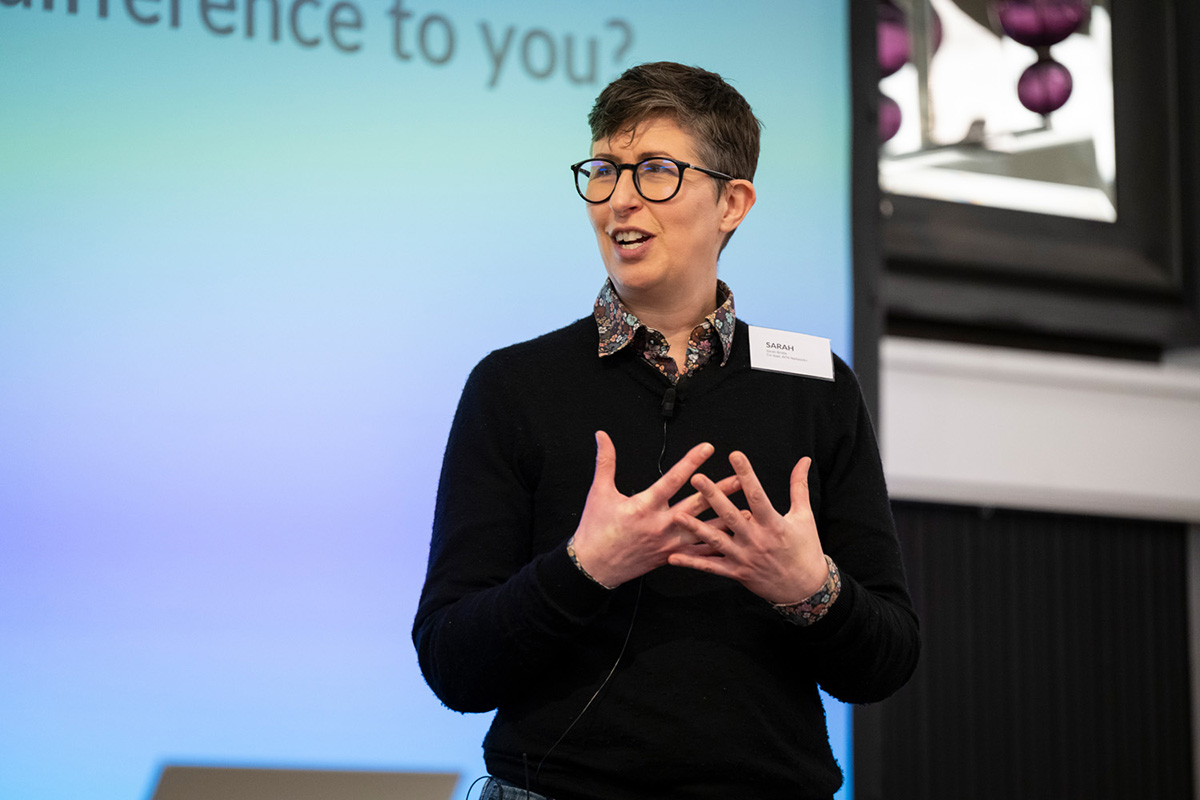
What happens when a cosmologist points their tools at the dinner plate instead of the night sky? One person who has done just that is Sarah Bridle, who studied natural sciences at the University of Cambridge in the UK and then stayed on to do a PhD in cosmology, graduating in 2000. Having spent two decades mapping dark matter and building large collaborations around open data, Bridle is now chair in food, climate and society at the University of York, applying that same quantitative, physics based mindset to food.
Food manufacturing is a huge sector: in the UK, it employs 400,000 people and contributes £28bn to the economy. Physics underpins much in the field – everything from productivity, food safety and food security to health and nutrition, waste reduction and environmental impact. Bridle talks to Gleb Yakubov, a food physicist at the University of Leeds, about what inspired their switch from cosmology to food physics and tips for those looking to follow suit. Yakubov is a committee member of the food physics group of the Institute of Physics (IOP), which bridges industry and academia, raises the profile of physics in food, and represents the community to policymakers.
What attracted you to food physics?
It began when I heard that the late David MacKay, who was working at the University of Cambridge, was ill. He worked on error-correction codes, education and artificial intelligence, before pivoting to sustainability and became chief scientific adviser to the UK energy department. I started thinking hard about why we do what we do, and what would happen without him doing the fantastic work he led on energy and climate.
I began watching his talks and learning about climate change – something I hadn’t really engaged with while immersed in astrophysics. In one of his penultimate presentations, he highlighted food as having huge potential to influence climate change through diets and how we produce food. From that moment on I wanted to understand this area – it was compelling, timely and I got obsessed.
You’ve called land use the “dark matter” of climate solutions – what do you mean by this?
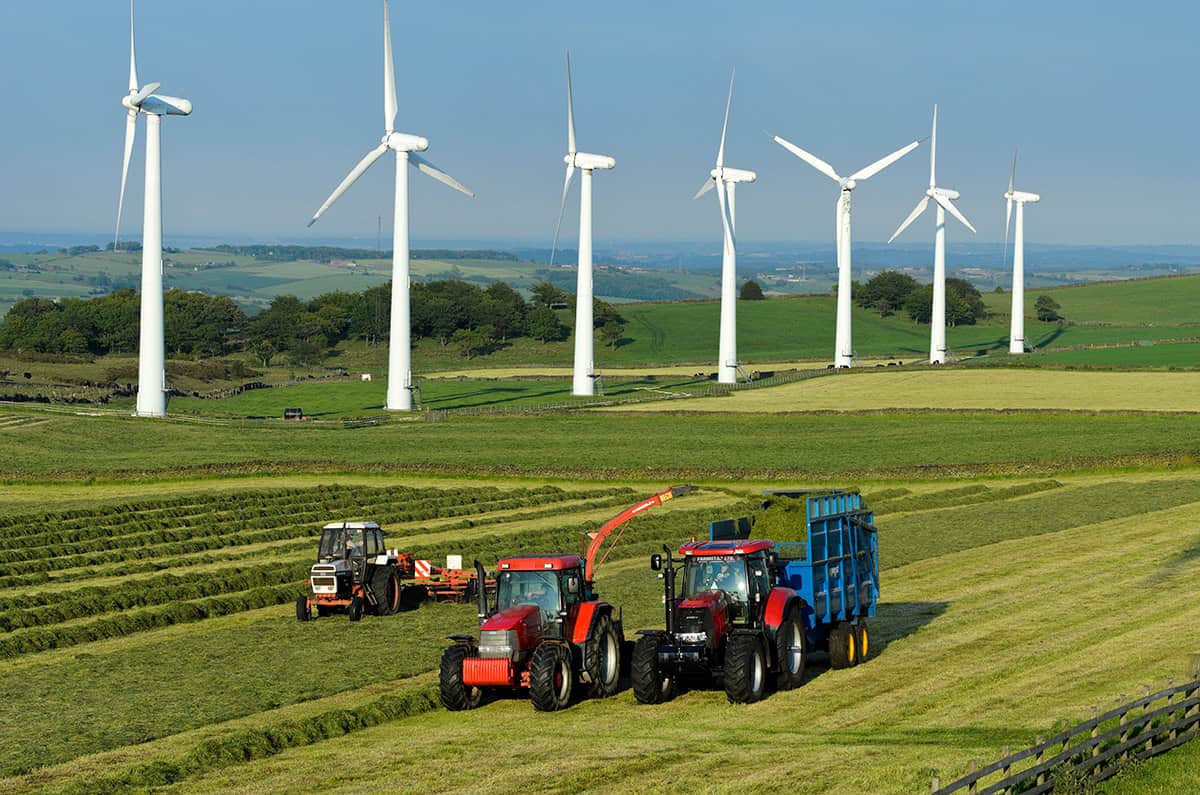
Most people aren’t aware that food is responsible for up to a third of global greenhouse gas emissions and, in the UK, about 70% of land is used for agriculture. Many climate solutions involve land – forests for sequestration, biofuels, solar – and people often say “we can’t spare land, we need it for food”. But the way we use land for food can be extremely inefficient, which blocks those climate solutions. That’s a huge, underappreciated lever.
When you started working in food, what surprised you most?
As a data geek, I expected it to be all about technical solutions but what surprised me was how dominant social and cultural factors are too. You see versions of the so-called “Jevons paradox”: introduce an efficient technology and people just use more of it, cancelling the gains. Unless, that is, you pair it with social and cultural change. Food systems aren’t just complicated; they’re a complex mix of people, incentives, norms and feedback loops.
How did you shift that approach, given that people don’t always behave rationally?
I don’t think people are random; they just use different decision criteria than many models assume. For example, if you raise the price of meat to reduce consumption, some people may see it as more of a luxury and desire it more. You can get perverse responses unless you understand the social context. On top of that, my recent work looks at the potential for civil unrest and even societal collapse – uncertainties we wouldn’t have anticipated five years ago. It pushes us to combine quantitative modelling with deeper social insight.
Can you share an example where astrophysics tools didn’t work in a food context?
Early on I tried to repurpose multispectral satellite-imaging techniques to detect blackgrass in UK wheat fields. Blackgrass is a serious weed that hits yields and this felt like a neat transfer – I’d been analysing astronomical imaging, so why not fields? But it turned out to be too difficult with satellite data alone. Variables like soil moisture, rockiness and other field conditions confounded the signals. That experience nudged me away from a pure imaging approach toward broader system modelling – and, later, back to data with more contextual integration.
Tell us about your “future food calculator”?
About five years ago we started building a quantitative model of the food system to compare interventions on a common footing: on-farm practices such as fertiliser, irrigation, crop management; consumer dietary shifts; and land-use choices. We turned it into a web-based dashboard inspired by MacKay’s energy calculator. Users can move sliders, explore UK production and consumption, greenhouse gas emissions, self-sufficiency and land use, and ask, “Do these choices get us to net zero, and with what trade-offs?”
How do you handle the “people” side – demographics and messaging – in such models and outreach?
You have to meet people where they are. Older generations, on average, are more focused on health than climate. Children and younger people tend to feel invincible about health but are very concerned about climate. If you’re trying to encourage dietary change, those differences matter for messaging and for assumptions in models.
What have you learned about information versus behaviour change?
From obesity research we know that giving people information often doesn’t change behaviour. But it does increase receptiveness to policy. You couldn’t have a sugary drinks tax without enough people accepting that sugary drinks contribute to type 2 diabetes and put pressure on the National Health Service.
I think the same is true for climate and food: we need systemic changes that make sustainable choices easy by default, and public understanding helps make those changes legitimate. Reformulation and choice architecture are good examples – you can reduce beef content in a lasagne by adding pulses, or put low-impact options first in canteens. Many people won’t even notice, but outcomes improve.
While space has an intrinsic “wow” factor, how do you create that for the food industry?
For many people there’s a complete disconnect between food and how it’s produced. Experience helps more than pictures so community garden projects, for example, let people see how hard it is to grow food and how weather drives yields. That fosters respect for food, reduces waste, increases interest in the natural world and builds practical resilience.
You’ve also advised on environmental labelling – what should a good label do?
People already face a lot of labels, and shopping may not be when they’re most receptive. Studies show labels don’t shift individual purchasing as much as you might expect. But labels do change production. In pilot programmes, adding climate labels led operators to change what they offered once they saw the differences. In Canada, when authorities announced a tighter threshold for “red” sugar labels, manufacturers reformulated to avoid red. So the big impact is upstream – on what gets produced.
What’s inside the “digital twin” of UK food you’re building and what can it tell policymakers?
We take UK production and consumption, feed use and losses, and then we test interventions and see how they affect greenhouse-gas emissions and self-sufficiency. An example is soil carbon management practices such as how to reduce tillage – the mechanical manipulation of soil to prepare seedbeds – manage crop residues and control weeds. Another is dietary and consumer preference shifts, such as reducing red meat consumption. The twin helps interrogate trade-offs and unintended consequences, and assess whether a bundle of changes can hit net-zero targets while maintaining resilience.
Herbicides like glyphosate illustrate those trade-offs. How do you manage that complexity?
Exactly. No-till – an agricultural technique that plants crops without disturbing the soil through traditional ploughing or tilling – can reduce emissions but may increase reliance on herbicides if weed pressure rises. The point is to quantify those interactions at the system level and compare pathways transparently, rather than assuming any single intervention is universally better in isolation.
How do the field’s data practices compare with astrophysics – and what would you change tomorrow?
Food physics feels like astrophysics did 20–30 years ago. In astrophysics today everybody codes, collaborations are large and data and code are open. When we released Python code on GitHub for food-system models and invited contributions, basically no-one engaged because the skills weren’t there. Many models live in Excel rather than in transparent, version-controlled code.
We need standards, shared datasets, open code and co-ordinated efforts
Sarah Bridle
Even at the policy interface there are gaps: you might get a major report with spreadsheets but not the underlying code or assumptions, which we then have to reverse-engineer. With a problem as urgent as climate change, that level of opacity isn’t defensible. We need standards, shared datasets, open code and co-ordinated efforts.
What advice do you have for physicists or mathematicians who want to follow in your footsteps?
Quantitative modelling, open-source practices and Python-based tooling are highly sought after right now. Help build transparent models and shared datasets, and join or create collaborative efforts that mirror modern astrophysics consortia. Also, find your people. The best advice I got was to “adopt your own mentors”. I worked with a career coach and asked people for 30-minute calls. Many were lukewarm, but a few were transformative and became long-term collaborators. It was painful but made all the difference.
What is a concrete step someone could take now?
One is to bring open-science habits to food-system work: publish code and assumptions, contribute quantitative skills to cross-disciplinary teams, help build shared datasets and reproducible models, and translate findings into accessible tools – like interactive calculators – for policymakers and the public.
What motivates you now?
My motivation is about doing what I can to help with the crisis we’re walking into. It’s a way to channel worries about the future into practical improvements.
Looking a decade ahead, what would success look like for the UK food system?
Success would mean that UK production and consumption are aligned with net-zero targets and that land is used more efficiently so other climate solutions can scale. Through product reformulation and choice, I hope we can make low-impact diets easy by default. I also hope that self-sufficiency and resilience improve – and that open, quantitative modelling with transparent code and assumptions is embedded in policymaking.