NASA’s Nancy Grace Roman Space Telescope will combine a Hubble-like sharpness with a panoramic view of the infrared sky. But as Richard de Grijs explains, the mission’s biggest impact could be in how it changes the practice of astronomy itself
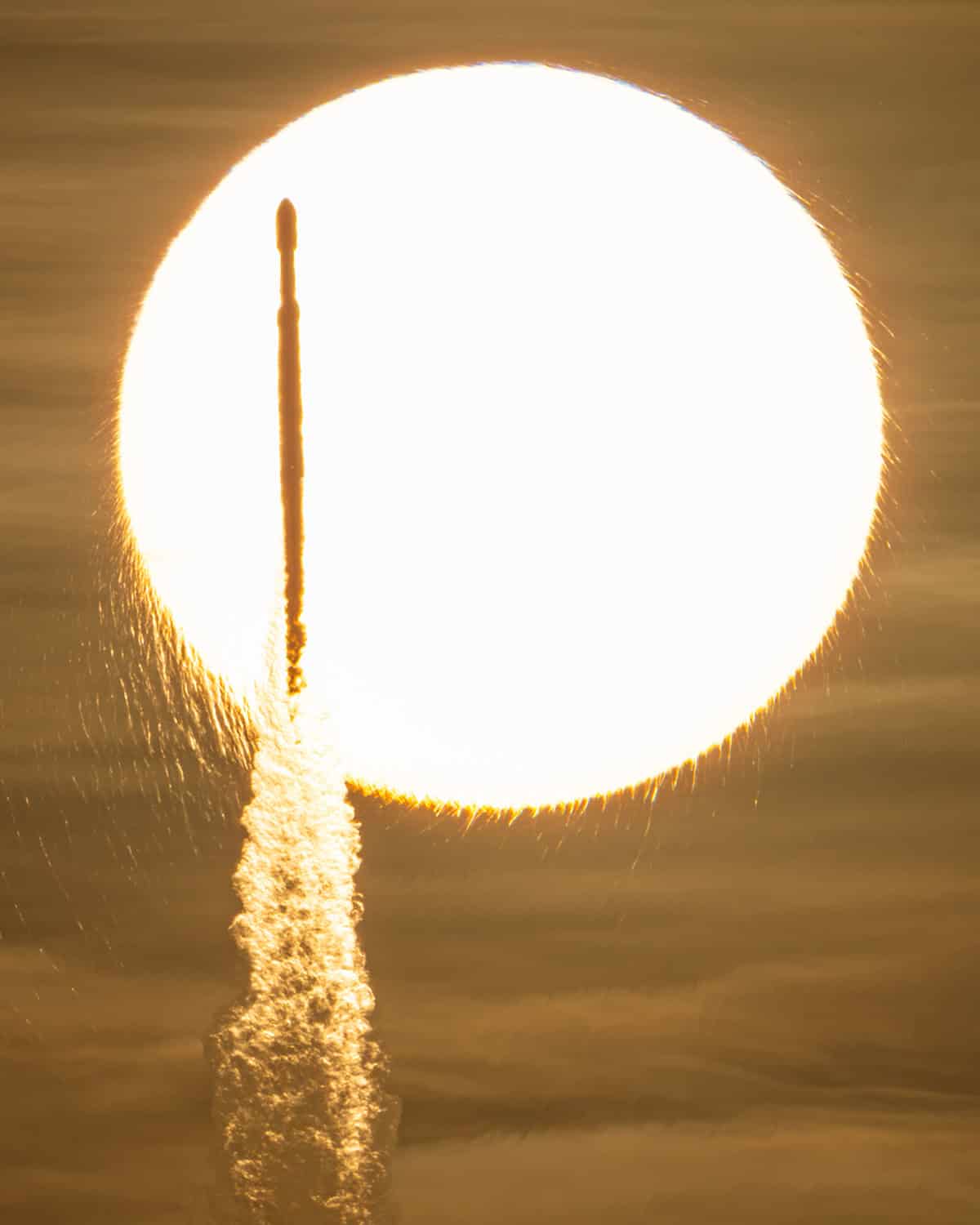
At 7.26 a.m. on Sunday 30 August 2026, a SpaceX Falcon Heavy rocket rose from the Kennedy Space Center in Florida, carrying NASA’s Nancy Grace Roman Space Telescope on its initial three-month journey beyond the Moon. As I watched online from my home in Sydney, Australia, that evening, the launch did not disappoint. There was all the familiar theatre of a rocket taking off: the brilliant column of flame, mission control calling out that it had gone through the point of peak aerodynamic stress, then the booster and main-engine cut-offs, before the fairing finally fell away.
Just 31 minutes after lift-off, Roman separated from its carrier rocket and began its long journey to L2, the second Sun–Earth Lagrange point, 1.5 million kilometres from Earth. Once it arrives there at the end of November, the gravitational balance will let Roman maintain its orbit with relatively little fuel. The Sun, Earth and Moon will all be on the same side of the spacecraft so that a single shield can block their light and heat, while the telescope faces away from them and stays cold.
Yet the most impactful part of Roman’s journey will be less visible. When its first images are released, hopefully in early 2027, the telescope will accelerate a change already long under way in astronomy. Rather than investigating carefully selected objects in the sky, astronomers are now increasingly mapping entire populations – monitoring a changing sky and searching enormous datasets for discoveries no single observer could conceivably find by eye. Roman will speed up that trend much further.
During the launch broadcast, I heard NASA administrator Jared Isaacman say Roman will study the “ecology of the universe”. Some cameras, he suggested, can provide an overview of a forest, while others can zoom in on individual birds and leaves. Roman, however, will combine both approaches. With a 2.4 m-diameter primary mirror, its images will be as sharp as those from the Hubble Space Telescope. But Roman’s Wide Field Instrument (WFI) can cover at least 100 times as much sky in a single pointing.
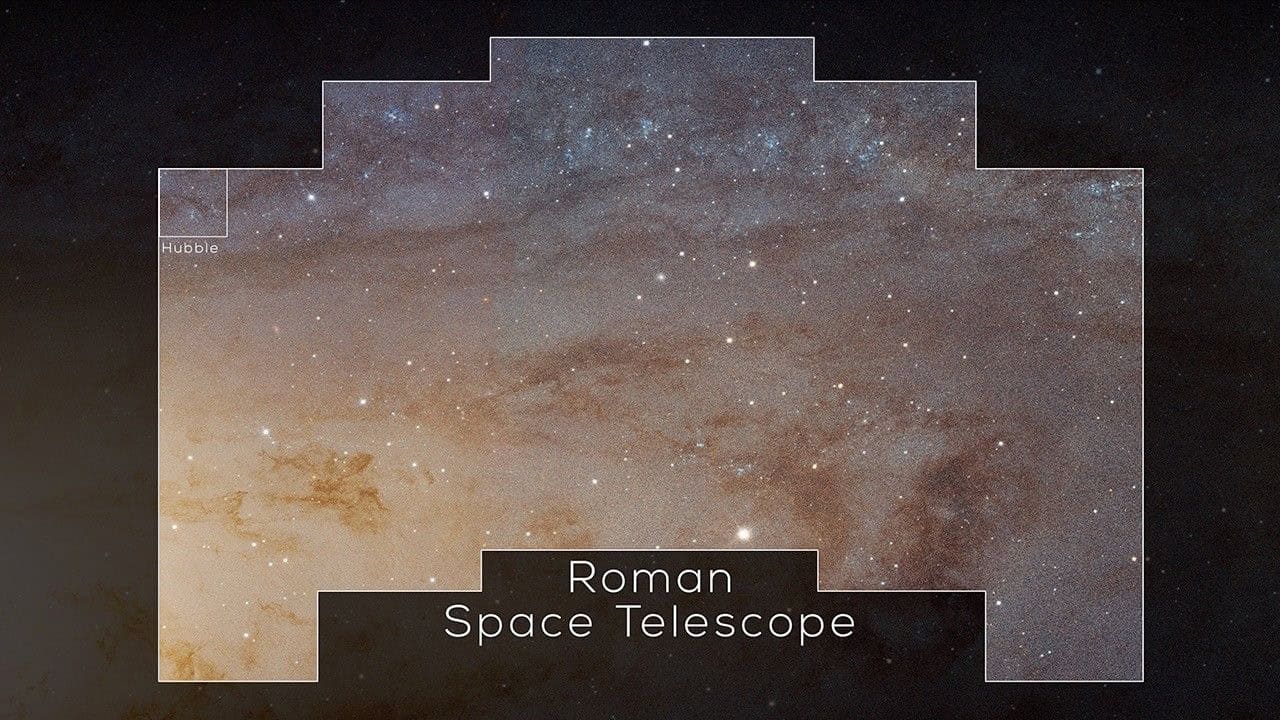
With Roman, the detailed and population views become part of the same observation. Traditionally in astronomy, a sharp image of a single galaxy can reveal its stars, dust and morphology, while a wide but (usually) less detailed survey can tell us how galaxies are distributed. Roman will do both: it will record fine detail while retaining the wider view of the environments and populations to which individual objects belong. It will, in essence, allow astronomers to study in detail entire cosmic ecosystems as well as their constituent objects.
And that is what makes Roman so revolutionary.
From observing targets to interrogating surveys
For much of modern professional astronomy, observing began with a proposal to study an object of scientific interest. If it was accepted by an observatory’s time-allocation committee, the astronomer would travel to the telescope (or, later, log in remotely), collect a manageable quantity of data, reduce and analyse it, and retain exclusive access during a proprietary period while preparing their first research paper. The observer knew why each exposure had been taken.
That model has not disappeared. The Hubble and James Webb space telescopes remain extraordinarily powerful precisely because they can study selected targets in fantastic detail. Roman’s coronagraph, meanwhile, will test active optics that suppress starlight far more effectively than existing space-based coronagraphs, allowing it to image giant planets orbiting nearby stars and paving the way for future missions to photograph smaller, Earth-like worlds.
A new cosmic dawn: peering across the universe with NASA’s James Webb Space Telescope
However, alongside targeted astronomy, a different observing mode has become increasingly important, namely observatories designed to produce systematic, reusable maps of the sky. The Gaia mission of the European Space Agency (ESA) is one such example. Over its 11-year life between 2014 and 2025, Gaia took more than three trillion (3 × 10¹²) observations of roughly two billion stars and other objects. Its public catalogues have allowed researchers to reconstruct the Milky Way’s structure, identify stellar streams and star clusters, examine binary stars and search for rare objects, often without ever applying for new telescope time.
Gaia’s third data release, which was made public in June 2022, included 10.5 million “variable sources” – any objects that change in brightness over time, sometimes regularly and sometimes unpredictably. They were all classified using supervised machine-learning techniques, in which an algorithm learns from previously labelled examples. No astronomer could personally have inspected that many light curves (records of brightness versus time).
The Vera C Rubin Observatory in Chile makes the new approach to professional astronomy even more explicit. Its decade-long Legacy Survey of Space and Time, which began in 2026, is collecting some 10 terabytes of data each and every night. Whenever its software detects that something has changed, it issues an alert. When alerts are triggered, they will be sent to automated “brokers”, which will cross-match them against existing catalogues, classify them and rank candidates for follow-up scrutiny. It is unlikely that an astronomer searching for supernovae, variable stars or hazardous asteroids, for example, will begin with the telescope’s raw images. Throughout modern astronomy, the starting point will instead be a filtered stream produced by a chain of algorithms.
Roman will carry this survey logic into space, beyond the blurring and infrared glow of the Earth’s atmosphere. As Roman’s deputy WFI scientist Ami Choi explained during the launch broadcast, the wide view is essential, especially for cosmologists. They don’t only need sharp measurements of individual galaxy shapes but also data on enough galaxies across a sufficiently large volume. That way they can distinguish the behaviour of the universe on large scales from the peculiarities of one small region.
Roman's three surveys
Roman’s three core surveys will show how a dataset can be designed to answer one question while creating the raw material for many others.
The High-Latitude Wide-Area Survey will map more than 5000 square degrees, which is more than 12% of the sky. It will do this using both imaging and “slitless” spectroscopy, in which spectra are recorded for every suitable object in the field rather than just individually selected targets.
Measuring the subtly distorted shapes of hundreds of millions of galaxies should reveal the distribution of dark matter – the mysterious, invisible stuff that makes up 27% of the universe by mass-energy – and also how cosmic structure has grown over time. Yet the same observations will also contain stars in the Milky Way, nearby galaxies, distant quasars, strong gravitational lenses and objects that no survey committee will ever have thought to put on a target list.
Roman’s High-Latitude Time-Domain Survey, meanwhile will repeatedly image “deep” fields at roughly five-day intervals, producing an anticipated 100,000 transient light curves. Type Ia supernovae, whose luminosities can be standardized to make them cosmic distance indicators, will trace the expansion history of the universe, but the repeated images should also expose variable galactic nuclei and rare explosions.
Finally, the Galactic Bulge Time-Domain Survey will revisit six fields of the sky about every 12 minutes during its most intensive observing seasons. Its main goal is to detect the temporary brightening of a star that occurs when the gravity of an unseen object passes in front and bends its light. Such “gravitational microlensing” events can reveal cold planets orbiting their host stars as well as free-floating planets and isolated black holes. The same sequence becomes a record of stellar variability and motion.
The reuse of data that we’ll see with Roman is not entirely new. Photographs recorded on physical glass plates often preserved far more sky than the astronomer who exposed them intended to study. Indeed, there have been instances of researchers trawling through old plate archives who’ve made discoveries decades after the photos were originally recorded. Electronic detectors, which produce digital images, made searching old data in this way far easier.
But what is new is the scale and the degree to which reuse is built into the Roman observatory from the outset. Many papers about data from the Roman mission will, I am sure, be written years later by researchers who were never involved in choosing the original data collection and may encounter the observation only as a row in a database.
Together, these observatories mark the arrival of what might be called astronomy’s “production era”. The phrase may sound industrial, but it describes a real shift in our professional practice. Telescope time remains precious, but it is no longer the only scarce resource. What will be increasingly hard to come by will be the capacity to process, connect and interpret what surveys have already observed, and to formulate a question sharp enough to extract meaning from an archive built for many purposes.
A picture too large to see
The data that Roman will yield is mind-boggling. Roman’s WFI has 18 infrared detector arrays with a total of about 300 million pixels. Even one field would require three dozen 4K television screens to display at full resolution. But Roman will tile thousands of such fields into surveys. During the pre-launch broadcast, Roman programme scientist Dominic Benford joked that NASA would need more than 500,000 TV sets to display the largest completed survey; laid out together, they’d cover some 45 city blocks.
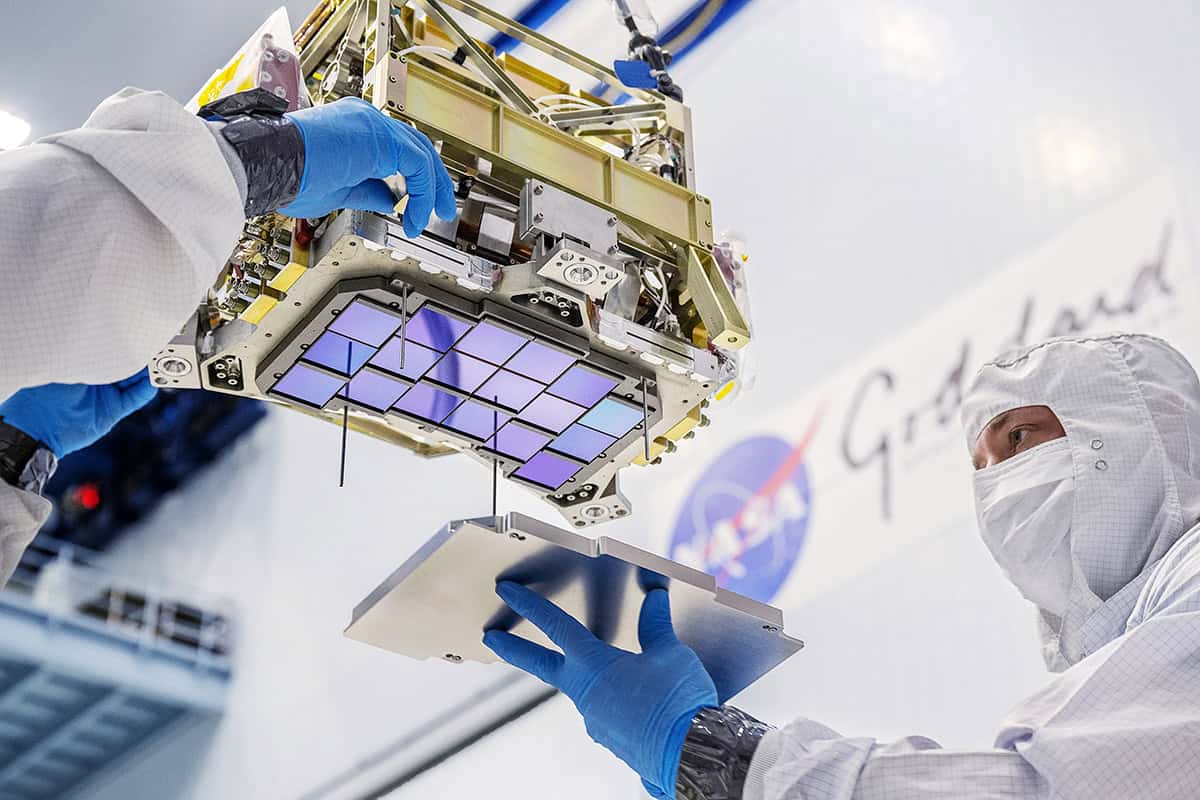
Calling this a single “picture” is convenient but misleading. It will be a computationally constructed portrait assembled from many pointings, observing epochs and filters. The telescope collects photons; processing pipelines calibrate the detectors, remove instrumental signatures, align exposures and turn them into images, mosaics and catalogues. In survey astronomy, computation is not something that happens after the observation; it is part of observing.
During its lifetime, Roman is expected to return around 1.4 terabytes (1.4 × 1012 bytes) of compressed data each and every day. In fact, if you take into account the intermediate data generated when the information is processed, Roman’s archive could top 20 petabytes (20 × 1015 bytes) over its five-year primary mission. NASA expects automated methods, including machine learning, to help explore the torrent of data.
Automation is unavoidable, but it poses a subtle problem. Algorithms are excellent at finding examples of phenomena on which they have been trained. The discoveries that change science, however, often do not fit into established categories. An anomaly-detection system can flag statistical outliers, but deciding which outliers are artefacts, familiar objects in unusual circumstances or genuinely new phenomena remains a scientific assessment.
Human involvement in Roman won’t be entirely superfluous, however, and will still be required to make breakthroughs. Citizen scientists will play their part too. We need to encourage amateur sleuths to follow in the footsteps of people like Hanny van Arkel – the Dutch schoolteacher who in 2007 spotted an unfamiliar green cloud in data gathered by the Sloan Digital Sky Survey. “Hanny’s Voorwerp”, as it became known, is an ionized cloud preserving the light echo of a quasar that had faded dramatically.
Open data, uneven opportunity
Roman will need both kinds of intelligence: machines capable of surveying the statistical forest and people – whether professional astronomers or citizen scientists – willing to pause over a strange bird in one of its trees. But the question is not just how Roman’s data will be searched. It is also who will get to search them.
The Roman space telescope will fundamentally change who gets the first chance to make a discovery
Roman, you see, will fundamentally change who gets the first chance to make a discovery. Hubble observers can receive up to a year of exclusive, “proprietary” access to their new data, which is typical for space- and ground-based professional programmes. Roman, however, will have no such period. Calibrated exposures are intended to become public within days, with more elaborate mosaics and catalogues following in periodic releases.
In principle, therefore, anyone will be able to start looking at observational data as soon as it’s released. The beauty of Roman is that a PhD student, a researcher at a small institution, or members of large international consortium will all be able to get going at the same time. The move to “open data” will also benefit astronomers at institutions who have traditionally lacked access to major telescopes.
However, it also complicates familiar ideas about ownership and priority. Who receives credit when one team designs a survey, another builds the pipeline, a machine identifies a puzzling candidate, and a third group recognizes its significance? Will researchers feel pressure to publish quickly rather than investigate carefully when competitors can access the same data?
Indeed, open access does not automatically create equal opportunity. A 20-petabyte archive cannot simply be downloaded onto a laptop. Researchers need computing resources, efficient code and the expertise to use them. That’s why the Space Telescope Science Institute in Baltimore, Maryland, has developed the cloud-based Roman Research Nexus, which will let users analyse mission data where they are stored.
Rather than trying to transfer vast wodges of raw data to their home institutions, researchers will instead write or upload code to a cloud-based environment where the Roman archive is stored, run the analysis there and then download the results. Essentially, they will take their code to the data, not the data to the code. Without such a platform, nominal access to the archive would be of limited use.
Even so, differences in funding, training, network bandwidth and available time will continue to shape who can exploit the archive most effectively. Astronomers will, in other words, still need to understand telescopes, detectors, calibration and astrophysics. But they will increasingly work alongside software engineers and statisticians, evaluate machine-generated classifications and design searches that can operate across billions of sources. Knowing what not to trust in a catalogue may become as important as knowing where to point a telescope.
From 3596 pixels to 300 million pixels
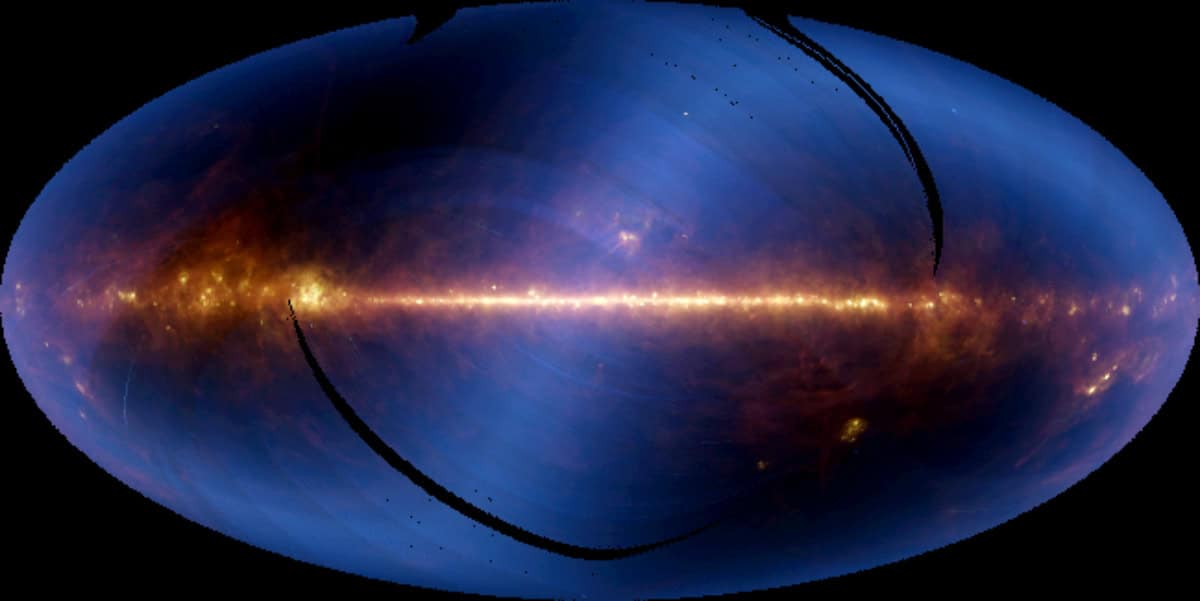
In the early days of optical astronomy, researchers used traditional photographic plates to record individual images of the sky. To look at infrared light, astronomers turned to heat-sensitive detectors, but they’d still have to measure one position at a time, scanning a telescope across a source to build up information sequentially.
That logic changed in 1983 when NASA launched the Infrared Astronomical Satellite, which was the first space-based infrared observatory and had 62 separate detectors. By the 1990s, huge 256 × 256 arrays, encompassing 65,536 detector elements, had become common enough to support detailed infrared imaging of galaxies. Hubble’s Near Infrared Camera and Multi-Object Spectrometer, installed in 1997, used three arrays of this format.
I’ve seen the changes at first hand myself. In 1994 when I was doing my PhD at the University of Groningen in the Netherlands, I published my first paper on near-infrared astronomy, which I’d co-written with an undergraduate student I was supervising. It was based on infrared images of a galaxy taken with a camera on the 2.1 metre telescope at the Kitt Peak National Observatory in Arizona, which used an indium-antimonide detector with just 3596 pixels.
For my PhD itself, however, I observed a sample of galaxies using the European Southern Observatory’s 2.2-metre telescope at La Silla in Chile using a mercury cadmium telluride detector with 65,536 pixels. That was an 18-fold increase over the Kitt Peak camera, yet Roman’s focal plane, with its 18 detector arrays, contains more than 300 million physical pixels.
Progress is not just about pixel count. The advantages of working in space are even bigger because you get none of the atmospheric turbulence or infrared background that you do on Earth. However, it’s not all plain sailing. Space-borne infrared arrays need to be sensitive, uniform, low-noise and reliable; they also have to operate at cryogenic temperatures (roughly 90 K) and endure a harsh radiation environment.
In fact, Roman’s equipment represents decades of progress in materials science, fabrication, electronics, calibration and computing as well as our ability to make pixels ever-smaller. Its infrared detectors are cooled passively by radiators that discharge heat into space rather than by liquid helium.
Larger arrays have also changed what it means to select an astronomical target. A single detector requires an astronomer to decide where to measure: a small array records one selected view. Roman, however, will capture a panoramic field large enough to contain a huge amount of scientifically useful objects. It will transform astronomy, which will be less about choosing what to study and more about working out how to analyse huge data sets.
Looking differently
Roman will not replace targeted observatories or the astronomer’s intuition. Its most intriguing discoveries will often require the James Webb Space Telescope, Hubble or ground-based telescopes to inspect individual objects in greater detail. Instead, these facilities are complementary: one maps entire populations, another inspects exceptional objects, and each changes what the other knows to look for.
Roman’s launch on 30 August lasted little more than half an hour. But the transition the observatory represents has taken decades, driven by larger detectors, faster electronics, public archives and increasingly sophisticated software. I entered professional astronomy when infrared images containing tens of thousands of pixels were normal (see box). Roman will create survey portraits containing trillions of pixels, release its data rapidly to the world and ask humans and machines to explore them together.
When Roman reaches L2 and begins returning science data, its most important legacy may be a way of observing in which the sky becomes a shared, continuously growing dataset. And discovery begins with learning how to explore it.