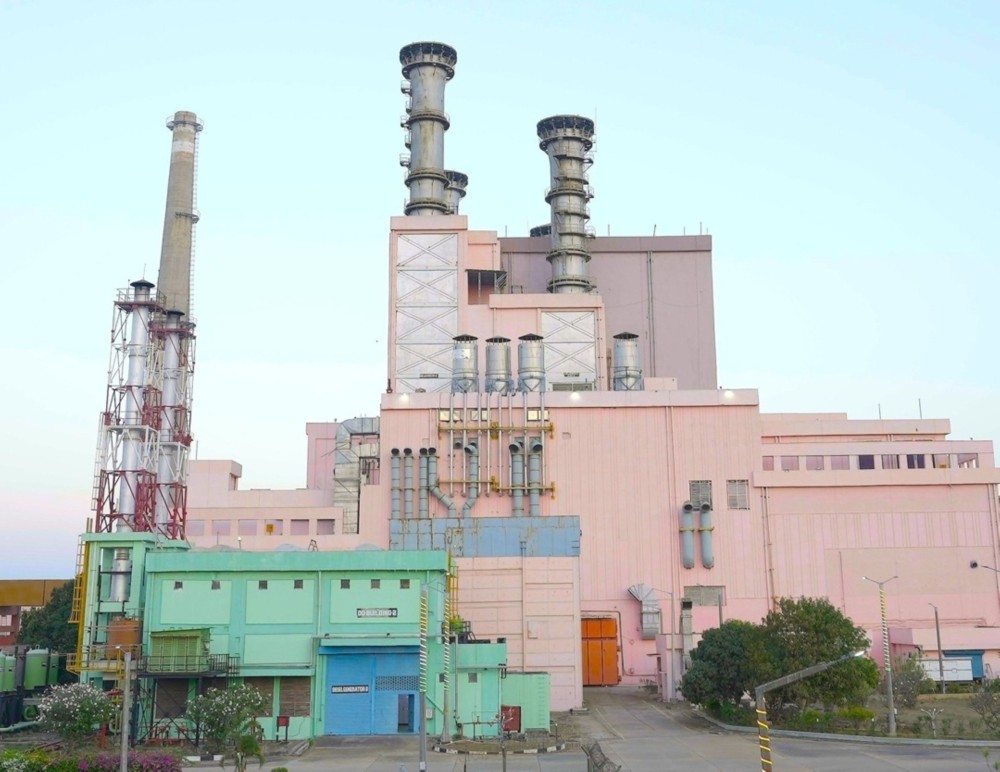
India’s first prototype fast-breeder reactor (PFBR) has achieved criticality, marking a significant boost for the country’s nuclear programme. The 500 MW reactor, which is based at Kalpakkam, about 70 km south of Chennai, is intended to be a forerunner for a fleet of six similar fast-breeder reactors.
India’s currently has almost 9 GW of nuclear capacity from 24 plants, which are mainly pressurised heavy water reactors (PHWRs) that use domestic and imported natural uranium. Long-term, the Indian government wants to expand nuclear capacity to 100 GW by mid-century, quadrupling its share in electricity generation from 3% to 12%.
An Indian parliamentary panel examining the country’s nuclear programme warned earlier this year, however, that current capacity expansion is falling “significantly short” of the 100 GW target. The panel called for a “ring-fenced” funding mechanism and a clear roadmap and timelines to scale up fast-breeder reactors.
The PFBR uses uranium–plutonium mixed oxide (MOX) fuel and is designed to generate more fuel than it consumes. It does this by using a blanket of uranium-238 that surrounds the reactor’s core, absorbs neutrons and is transmuted into fissile plutonium-239. Work started on the PFBR in 2004 and it was originally supposed to open in 2010.
Despite delays and technical issues, the PFBR successfully achieved its first criticality on 6 April. “This is a historic moment,” says Anil Kakodkar, former secretary of India’s Department of Atomic Energy (DAE) who is now chancellor of the Homi Bhabha National Institute, told Physics World.
Three-stage solution
India has a three-stage nuclear strategy, in which PHWRs are the first stage, with the second involving spent fuel from PHWRs bring reprocessed into MOX fuel for fast breeders.
The third stage seeks to exploit India’s abundant thorium reserves – estimated at over a million tonnes of thorium compared to 433 000 tonnes of uranium – to produce uranium-233, potentially supporting energy demand for centuries. India turns to small modular nuclear reactors to meet climate targets
Other countries, such as France, Japan and the US, have scaled back or deprioritised fast-breeder programmes due to technical and economic challenges.
Kakodkar cautions that the pace of future expansion will hinge on a shift from MOX to metallic fuel fast reactors, which use metal alloys and fast neutrons to breed new fuel. This could reduce the fuel doubling time in fast breeders from roughly 30 years to about a decade.
In parallel to the PFBR programme, the Bhabha Atomic Research Centre in Mumbai, has designed an Advanced Heavy Water Reactor (AHWR) to use thorium-based fuels. Kakodkar says that advancing the AHWR would “expedite transition” to the thorium fuel cycle by building institutional and industrial capability.