Join the audience for a live webinar at 3 p.m. GMT/10 a.m. EST on 10 November 2026, sponsored by the IOP Publishing journal, Plasma Physics and Controlled Fusion
Explore the recently published The Roadmap for runaway electron-induced plasma facing component damage in tokamaks
Want to take part in this webinar?
This webinar will present the recently published roadmap The Roadmap for runaway electron-induced plasma facing component damage in tokamaks (S Ratynskaia, M Hoelzl, E Nardon et al., Plasma Physics and Controlled Fusion 68, 053501, 2026).
Runaway electron-induced damage is an intrinsically cross-disciplinary and time-critical problem for present and future tokamaks, requiring closer integration of runaway electron modelling with plasma–surface interaction and material-damage modelling.
The roadmap aims to connect these areas and identify the key physics, modelling, experimental and validation challenges that must be addressed to achieve predictive capability for runaway electron wall loads and material damage. The webinar will highlight the present state of the field, the most important gaps in current modelling chains, and the future challenges for ITER and next-step fusion devices.
Want to take part in this webinar?
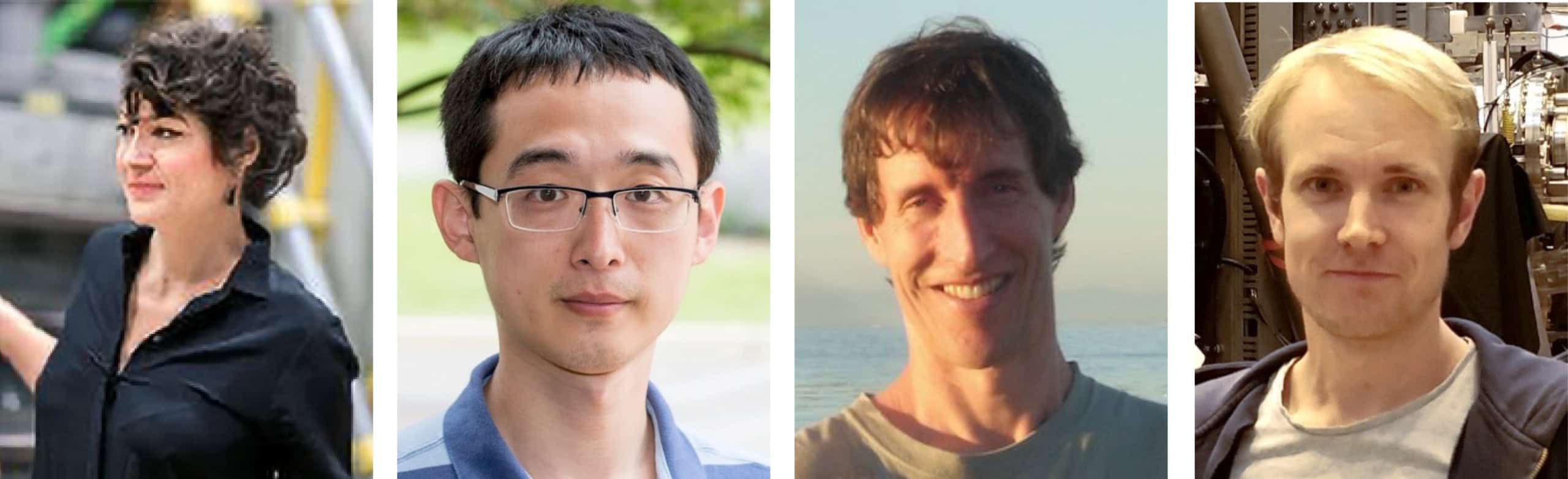
Speakers
Svetlana Ratynskaia is professor at Royal Institute of Technology (KTH), Stockholm, Sweden. Her research area is plasma physics with the focus on plasma-material interactions and tokamak edge plasmas. Her current projects concern PFC damage under high transient heat loads (ELMs, disruptions, runaway electrons), metallic melt generation and melt motion, emissive sheaths in magnetized plasmas as well as powder/dust transport and ablation in reactor-relevant conditions.
Chang Liu is an assistant professor in the School of Physics at Peking University. He earned his bachelor’s degree from Peking University and his PhD in plasma physics from Princeton University, then worked at Princeton Plasma Physics Laboratory before 2025. His research focuses on runaway electrons, energetic particles, plasma instabilities, and computational methods for magnetic confinement fusion. He developed the runaway electron simulation code QUADRE, and is one of the major developers of the M3D-C1 kinetic-MHD code. He has published more than 40 journal articles, and serves as a deputy editor of The European Physical Journal Special Topics and as a Plasma Science and Technology young editorial board member.
Eric Hollmann is a scientist working on fusion energy research. His work is primarily experimental and based dominantly at the DIII-D tokamak in San Diego, USA. In addition to working on tokamaks, he has also assisted with experiments on linear plasma devices and stellarators. His favourite present research topics are tokamak disruptions and also plasma-materials interactions.
Mathias Hoppe received his PhD in plasma physics in 2022 from Chalmers University of Technology in Gothenburg, Sweden, with a thesis titled “Runaway electron model development and validation in tokamaks”, which was later awarded the EPS 2024 PhD Research Award. After a postdoc at the Swiss Plasma Center in Lausanne, Switzerland, he began a tenure track position as assistant professor in fusion plasma physics at the KTH Royal Institute of Technology, Stockholm, Sweden. His main research interests are in the plasma physics of runaway electrons and tokamak disruptions, and he is the lead developer of the DREAM and SOFT codes.
About this journal
Plasma Physics and Controlled Fusion (PPCF) is a monthly publication dedicated to the dissemination of original results on all aspects of plasma physics and associated science and technology.
Editor-in-chief: Jonathan Graves University of York, UK, and EPFL, Switzerland