A major astronomy facility in the Andes has begun a 10-year survey of the Southern sky with the aim of creating the most comprehensive, cinematic record of the universe ever made.
Based in Cerro Pachón in the Andes, the Vera C Rubin Observatory is named in honour of the US astronomer and dark-matter pioneer Vera Rubin.
The observatory contains the Legacy Survey of Space and Time (LSST) – the largest camera ever built. Taking almost two decades to build, the 3200 megapixel instrument forms the heart of the observatory’s 8.4 m Simonyi Survey Telescope.
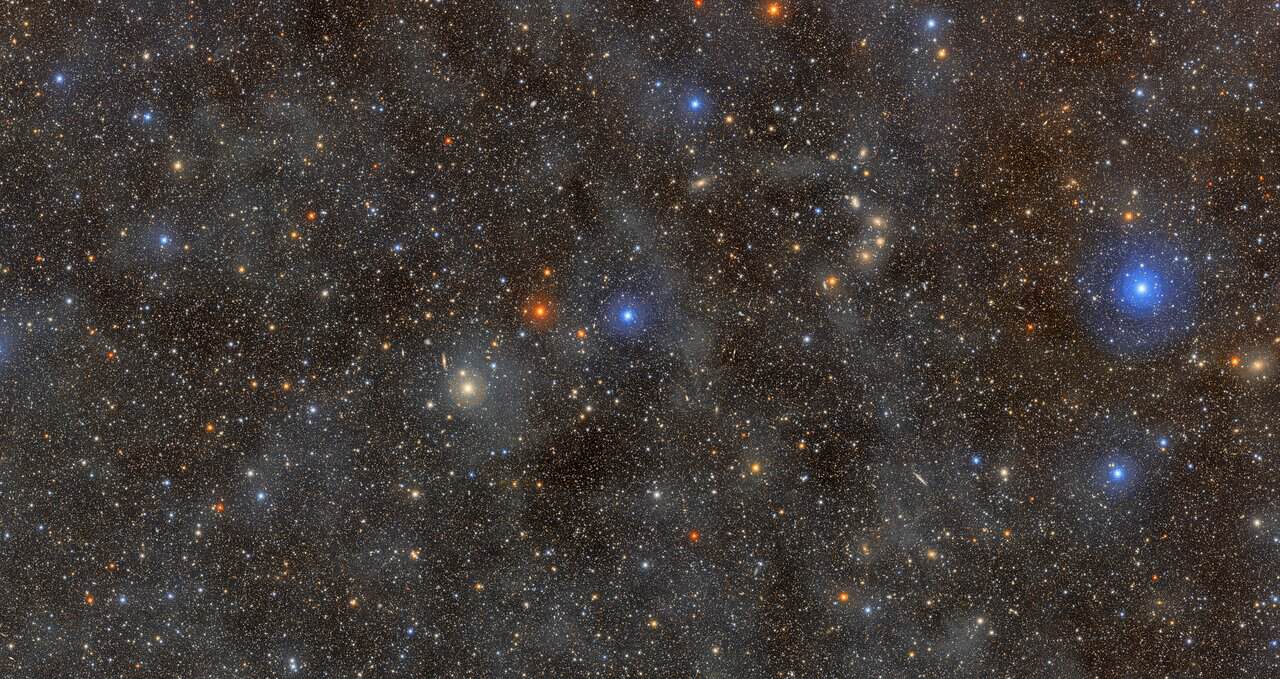
Last year the observatory released its first images, featuring millions of galaxies and Milky Way stars and thousands of asteroids in exquisite detail. This was then followed by further commissioning work as well as an “operational readiness” review.
Now that is complete, the LSST has today begun its 10-year mission. It will now take a ultrawide, ultrahigh-definition picture of the southern night sky every 3–4 nights, replicating the process over a decade to produce almost 1000 full images of sky.
This will be used to plot the positions and measure the brightness of objects in the sky to help improve our understanding of dark matter and dark energy.
The survey will examine 20 billion galaxies as well as produce the most detailed star map of the Milky Way, imaging 17 billion stars and cataloguing some six million small objects within our solar system including asteroids. How Vera Rubin broke barriers and convinced the astronomy community that dark matter exists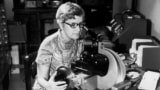
When the LSST survey is complete, the final dataset will contain billions of objects with trillions of measurements, all accessible through regular data releases.
“It is amazing and humbling as we start the Legacy Survey of Space and Time, after more than two decades of incredible work by our dedicated team,” says Vera C Rubin Observatory director Bob Blum. “Rubin Observatory is for everyone; the LSST will change how we do astronomy and astrophysics, allowing researchers anywhere to participate in cutting-edge science.”