

Graphene-based skin patch measures glucose levels
No more finger-pricking blood tests thanks to a sensor array that draws fluid across a single hair follicle
 Read article: Graphene-based skin patch measures glucose levels

No more finger-pricking blood tests thanks to a sensor array that draws fluid across a single hair follicle
Read article: Graphene-based skin patch measures glucose levels
Technique could be a general way to analyse technologically important functionalized 2D carbon materials
 Read article: AFM detects heteroatoms in graphene nanoribbons
New finding could help in the development of next-generation bioactive materials for stem-cell therapies
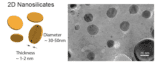 Read article: Nanosilicates stimulate growth of bone and cartilage tissue
Experts at Stanford University review the latest progress and emerging applications for bioprinting, and look ahead to future research directions
 Read article: The past, present and future of 3D bioprinting
Sub-micron architectures in a cellulose derivative produce bright, structural colours
 Read article: Photonic cellulose goes iridescent
Chameleons are researchers’ new best friend
 Read article: Colour-changing hydrogels make heart-on-a-chip
New microscopy measurements reveal why chicken eggshells resist fracture from the outside but weaken during hatching
 Read article: Eggshell nanostructure changes help chicks hatch
New biocompatible material that stiffens when it is stretched and changes colour in the process might be used to make better medical implants
 Read article: Chameleon-inspired polymers behave like skin
Controlling the weight and structure of 3D printed scaffolds makes it possible to match their mechanical properties to those of human cartilage
 Read article: Optimizing 3D polymer scaffolds for cartilage repair
Different surface sites can “talk” to each other in ways that are very similar to catalytic allostery in enzymes – nature’s most efficient nanoscale catalysts
 Read article: Communication is key in nanocatalysts too